
War and Peace

Wilfred Owen
Disabled
He sat in a wheeled chair, waiting for dark,
And shivered in his ghastly suit of grey,
Legless, sewn short at elbow. Through the park
Voices of boys rang saddening like a hymn,
Voices of play and pleasure after day,
Till gathering sleep had mothered them from him.
About this time Town used to swing so gay
When glow-lamps budded in the light blue trees,
And girls glanced lovelier as the air grew dim,-
In the old times, before he threw away his knees.
Now he will never feel again how slim
Girls' waists are, or how warm their subtle hands.
All of them touch him like some queer disease.
There was an artist silly for his face,
For it was younger than his youth, last year.
Now, he is old; his back will never brace;
He's lost his colour very far from here,
Poured it down shell-holes till the veins ran dry,
And half his lifetime lapsed in the hot race
And leap of purple spurted from his thigh.
One time he liked a blood-smear down his leg,
After the matches, carried shoulder-high.
It was after football, when he'd drunk a peg,
He thought he'd better join. - He wonders why.
Someone had said he'd look a god in kilts,
That's why; and maybe, too, to please his Meg,
Aye, that was it, to please the giddy jilts
He asked to join. He didn't have to beg;
Smiling they wrote his lie: aged nineteen years.
Germans he scarcely thought of; all their guilt,
And Austria's, did not move him. And no fears
Of Fear came yet. He drought of jewelled hills
For daggers in plaid socks; of smart salutes;
And care of arms; and leave; and pay arrears;
Esprit de corps; and hints for young recruits.
And soon, he was drafted out with drums and cheers.
Some cheered him home, but not as crowds cheer Goal.
Only a solemn man who brought him fruits
Thanked him; and then enquired about his soul.
Now, he will spend a few sick years in institutes,
And do what things the rules consider wise,
And take whatever pity they may dole.
Tonight he noticed how the women's eyes
Passed from him to the strong men that were whole.
How cold and late it is! Why don't they come
And put him into bed? Why don't they come?
292

John Greenleaf Whittier
The Mantle Of St. John De Matha. A Legend Of
A STRONG and mighty Angel,
Calm, terrible, and bright,
The cross in blended red and blue
Upon his mantle white!
Two captives by him kneeling,
Each on his broken chain,
Sang praise to God who raiseth
The dead to life again!
Dropping his cross-wrought mantle,
'Wear this,' the Angel said;
'Take thou, O Freedom's priest, its sign, —
The white, the blue, and red.'
Then rose up John de Matha
In the strength the Lord Christ gave,
And begged through all the land of France
The ransom of the slave.
The gates of tower and castle
Before him open flew,
The drawbridge at his coming fell,
The door-bolt backward drew.
For all men owned his errand,
And paid his righteous tax;
And the hearts of lord and peasant
Were in his hands as wax.
At last, outbound from Tunis,
His bark her anchor weighed,
Freighted with seven-score Christian souls
Whose ransom he had paid.
But, torn by Paynim hatred,
Her sails in tatters hung;
And on the wild waves, rudderless,
A shattered hulk she swung.
'God save us!' cried the captain,
'For naught can man avail;
Oh, woe betide the ship that lacks
Her rudder and her sail!
'Behind us are the Moormen;
At sea we sink or strand:
There's death upon the water,
There's death upon the land!'
Then up spake John de Matha:
'God's errands never fail!
Take thou the mantle which I wear,
And make of it a sail.'
They raised the cross-wrought mantle,
The blue, the white, the red;
And straight before the wind off-shore
The ship of Freedom sped.
'God help us!' cried the seamen,
'For vain is mortal skill:
The good ship on a stormy sea
Is drifting at its will.'
Then up spake John de Matha:
'My mariners, never fear!
The Lord whose breath has filled her sail
May well our vessel steer!'
So on through storm and darkness
They drove for weary hours;
And lo! the third gray morning shone
On Ostia's friendly towers.
And on the walls the watchers
The ship of mercy knew, —
They knew far off its holy cross,
The red, the white, and blue.
And the bells in all the steeples
Rang out in glad accord,
To welcome home to Christian soil
The ransomed of the Lord.
So runs the ancient legend
By bard and painter told;
And lo! the cycle rounds again,
The new is as the old!
With rudder foully broken,
And sails by traitors torn,
Our country on a midnight sea
Is waiting for the morn.
Before her, nameless terror;
Behind, the pirate foe;
The clouds are black above her,
The sea is white below.
The hope of all who suffer,
The dread of all who wrong,
She drifts in darkness and in storm,
How long, O Lord! how long?
But courage, O my mariners!
Ye shall not suffer wreck,
While up to God the freedman's prayers
Are rising from your deck.
Is not your sail the banner
Which God hath blest anew,
The mantle that De Matha wore,
The red, the white, the blue?
Its hues are all of heaven, —
The red of sunset's dye,
The whiteness of the moon-lit cloud,
The blue of morning's sky.
Wait cheerily, then, O mariners,
For daylight and for land;
The breath of God is in your sail,
Your rudder is His hand.
Sail on, sail on, deep-freighted
With blessings and with hopes;
The saints of old with shadowy hands
Are pulling at your ropes.
Behind ye holy martyrs
Uplift the palm and crown;
Before ye unborn ages send
Their benedictions down.
Take heart from John de Matha! —
God's errands never fail!
Sweep on through storm and darkness,
The thunder and the hail!
Sail on! The morning cometh,
The port ye yet shall win;
And all the bells of God shall ring
The good ship bravely in!
290

Henry Wadsworth Longfellow
The Saga of King Olaf: XIX. King Olaf's War-Horns
'Strike the sails!' King Olaf said;
'Never shall men of mine take flight;
Never away from battle I fled,
Never away from my foes!
Let God dispose
Of my life in the fight!'
'Sound the horns!' said Olaf the King;
And suddenly through the drifting brume
The blare of the horns began to ring,
Like the terrible trumpet shock
Of Regnarock,
On the Day of Doom!
Louder and louder the war-horns sang
Over the level floor of the flood;
All the sails came down with a clang,
And there in the mist overhead
The sun hung red
As a drop of blood.
Drifting down on the Danish fleet
Three together the ships were lashed,
So that neither should turn and retreat;
In the midst, but in front of the rest
The burnished crest
Of the Serpent flashed.
King Olaf stood on the quarter-deck,
With bow of ash and arrows of oak,
His gilded shield was without a fleck,
His helmet inlaid with gold,
And in many a fold
Hung his crimson cloak.
On the forecastle Ulf the Red
Watched the lashing of the ships;
'If the Serpent lie so far ahead,
We shall have hard work of it here,'
Said he with a sneer
On his bearded lips.
King Olaf laid an arrow on string,
'Have I a coward on board?' said he.
'Shoot it another way, O King!'
Sullenly answered Ulf,
The old sea-wolf;
'You have need of me!'
In front came Svend, the King of the Danes,
Sweeping down with his fifty rowers;
To the right, the Swedish king with his thanes;
And on board of the Iron Beard
Earl Eric steered
To the left with his oars.
'These soft Danes and Swedes,' said the King,
'At home with their wives had better stay,
Than come within reach of my Serpent's sting:
But where Eric the Norseman leads
Heroic deeds
Will be done to-day!'
Then as together the vessels crashed,
Eric severed the cables of hide,
With which King Olaf's ships were lashed,
And left them to drive and drift
With the currents swift
Of the outward tide.
Louder the war-horns growl and snarl,
Sharper the dragons bite and sting!
Eric the son of Hakon Jarl
A death-drink salt as the sea
Pledges to thee,
Olaf the King!
290
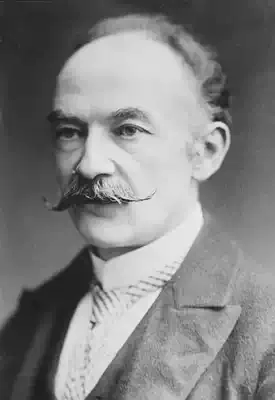
Thomas Hardy
Then and Now
When battles were fought
With a chivalrous sense of should and ought,
In spirit men said,
"End we quick or dead,
Honour is some reward!
Let us fight fair -- for our own best or worst;
So, Gentlemen of the Guard,
Fire first!"
In the open they stood,
Man to man in his knightlihood:
They would not deign
To profit by a stain
On the honourable rules,
Knowing that practise perfidy no man durst
Who in the heroic schools
Was nurst.
But now, behold, what
Is war with those where honour is not!
Rama laments
Its dead innocents;
Herod howls: "Sly slaughter
Rules now! Let us, by modes once called accurst,
Overhead, under water,
Stab first."
292
Thomas Hardy
The Alarm
In Memory of one of the Writer's Family who was a Volunteer during the War
with Napoleon
In a ferny byway
Near the great South-Wessex Highway,
A homestead raised its breakfast-smoke aloft;
The dew-damps still lay steamless, for the sun had made no sky-way,
And twilight cloaked the croft.
'Twas hard to realize on
This snug side the mute horizon
That beyond it hostile armaments might steer,
Save from seeing in the porchway a fair woman weep with eyes on
A harnessed Volunteer.
In haste he'd flown there
To his comely wife alone there,
While marching south hard by, to still her fears,
For she soon would be a mother, and few messengers were known there
In these campaigning years.
'Twas time to be Good-bying,
Since the assembly-hour was nighing
In royal George's town at six that morn;
And betwixt its wharves and this retreat were ten good miles of hieing
Ere ring of bugle-horn.
"I've laid in food, Dear,
And broached the spiced and brewed, Dear;
And if our July hope should antedate,
Let the char-wench mount and gallop by the halterpath and wood, Dear,
And fetch assistance straight.
"As for Buonaparte, forget him;
He's not like to land! But let him,
Those strike with aim who strike for wives and sons!
And the war-boats built to float him; 'twere but wanted to upset him
A slat from Nelson's guns!
"But, to assure thee,
And of creeping fears to cure thee,
If he should be rumored anchoring in the Road,
Drive with the nurse to Kingsbere; and let nothing thence allure thee
Till we've him safe-bestowed.
"Now, to turn to marching matters:--
I've my knapsack, firelock, spatters,
Crossbelts, priming-horn, stock, bay'net, blackball, clay,
Pouch, magazine, flints, flint-box that at every quick-step clatters;
...My heart, Dear; that must stay!"
--With breathings broken
Farewell was kissed unspoken,
And they parted there as morning stroked the panes;
And the Volunteer went on, and turned, and twirled his glove for
token,
And took the coastward lanes.
When above He'th Hills he found him,
He saw, on gazing round him,
The Barrow-Beacon burning--burning low,
As if, perhaps, uplighted ever since he'd homeward bound him;
And it meant: Expect the Foe!
Leaving the byway,
And following swift the highway,
Car and chariot met he, faring fast inland;
"He's anchored, Soldier!" shouted some:
"God save thee, marching thy way,
Th'lt front him on the strand!"
He slowed; he stopped; he paltered
Awhile with self, and faltered,
"Why courting misadventure shoreward roam?
To Molly, surely! Seek the woods with her till times have altered;
Charity favors home.
"Else, my denying
He would come she'll read as lying--
Think the Barrow-Beacon must have met my eyes--
That my words were not unwareness, but deceit of her, while trying
My life to jeopardize.
"At home is stocked provision,
And to-night, without suspicion,
We might bear it with us to a covert near;
Such sin, to save a childing wife, would earn it Christ's remission,
Though none forgive it here!"
While thus he, thinking,
A little bird, quick drinking
Among the crowfoot tufts the river bore,
Was tangled in their stringy arms, and fluttered, well-nigh sinking,
Near him, upon the moor.
He stepped in, reached, and seized it,
And, preening, had released it
But that a thought of Holy Writ occurred,
And Signs Divine ere battle, till it seemed him Heaven had pleased it
As guide to send the bird.
"O Lord, direct me!...
Doth Duty now expect me
To march a-coast, or guard my weak ones near?
Give this bird a flight according, that I thence know to elect me
The southward or the rear."
He loosed his clasp; when, rising,
The bird--as if surmising--
Bore due to southward, crossing by the Froom,
And Durnover Great-Field and Fort, the soldier clear advising--
Prompted he wist by Whom.
Then on he panted
By grim Mai-Don, and slanted
Up the steep Ridge-way, hearkening betwixt whiles,
Till, nearing coast and harbor, he beheld the shore-line planted
With Foot and Horse for miles.
Mistrusting not the omen,
He gained the beach, where Yeomen,
Militia, Fencibles, and Pikemen bold,
With Regulars in thousands, were enmassed to meet the Foemen,
Whose fleet had not yet shoaled.
Captain and Colonel,
Sere Generals, Ensigns vernal,
Were there, of neighbor-natives, Michel, Smith,
Meggs, Bingham, Gambier, Cunningham, roused by the hued nocturnal
Swoop on their land and kith.
But Buonaparte still tarried;
His project had miscarried;
At the last hour, equipped for victory,
The fleet had paused; his subtle combinations had been parried
By British strategy.
Homeward returning
Anon, no beacons burning,
No alarms, the Volunteer, in modest bliss,
Te Deum sang with wife and friends: "We praise Thee, Lord, discerning
That Thou hast helped in this!"
290

Gwendolyn Brooks
the sonnet-ballad
Oh mother, mother, where is happiness?
They took my lover's tallness off to war,
Left me lamenting. Now I cannot guess
What I can use an empty heart-cup for.
He won't be coming back here any more.
Some day the war will end, but, oh, I knew
When he went walking grandly out that door
That my sweet love would have to be untrue.
Would have to be untrue. Would have to court
Coquettish death, whose impudent and strange
Possessive arms and beauty (of a sort)
Can make a hard man hesitate--and change.
And he will be the one to stammer, "Yes."
Oh mother, mother, where is happiness?
289

Henry Lawson
A Fantasy of War
From Australia
.
OH, tell me, God of Battles! Oh, say what is to come!
The King is in his trenches, the millionaire at home;
The Kaiser with his toiling troops, the Czar is at the front.
Oh! Tell me, God of Battles! Who bears the battle’s brunt?
The Queen knits socks for soldiers, the Empress does the same,
And know no more than peasant girls which nation is to blame.
The wounded live to fight again, or live to slave for bread;
The Slain have graves above the Slain—the Dead are with the Dead.
The widowed young shall wed or not, the widowed old remain—
And all the nations of the world prepare for war again!
But ere that time shall be, O God, say what shall here befall!
Ten millions at the battle fronts, and we’re five millions all!
The world You made was wide, O God, the world we made is small.
We toiled not as our fathers toiled, for
Sport was all our boast;
And so we built our cities, Lord, like warts, upon the coast.
From Europe
.
The seer stood on the mountain side, the witch was in her cave;
The gipsy with his caravan, the sailor on the wave;
The sophist in his easy chair, with ne’er a soul to save,
The factory slaves went forth to slave, the peasant to the field;
The women worked in winter there for one-tenth of the yield;
The village Granny nursed their babes to give them time to slave;
The child was in the cradle, and the grandsire in his grave.
The rich man slumbered in his chair, full fed with wine and meat;
The lady in her carriage sat, the harlot walked the street
With paint upon her cheek and neck, through winter’s snow and sleet.
We saw the pride of Wealth go mad, and Misery increase—
And still the God of Gods was dumb and all the world was Peace!
The wizard on the mountain side, he drew a rasping breath,
For he was old and near to life, as he was near to death;
And he looked out and saw the star they saw at Nazareth.
“Two thousand years have passed,” he said. “A thousand years,” he said.
“A hundred years have passed,” he said, “and, lo! the star is red!
The time has come at last,” he said, and bowed his hoary head.
He laid him on the mountain-side—and so the seer was dead.
And so the Eastern Star was red, and it was red indeed—
We saw the Red Star in the South, but we took little heed.
(The Prophet in his garret starved or drank himself to death.)
The witch was mumbling in her hole before the dawn was grey;
The witch she took a crooked stick and prodded in the clay;
She doddered round and mumbled round as is the beldame’s way.
“Four children shall be born,” she said, “four children at a birth;
Four children of a peasant brood—and what shall come on earth?
Four of the poorest peasantry that Europe knows,” she said,
“And all the nations of the world shall count their gory dead!”
The babes are born in Italy—and all the world is red!
The Ship
The world You gave was wide, O Lord, and wars were far away!
The goal was just as near, O Lord, to-morrow or to-day!
The tree You grew was stout and sound to carve the plank and keel.
(And when the darkness hid the sky Your hand was on the wheel.)
The pine You grew was straight and tall to fashion spar and mast.
Our sails and gear from flax and hemp were stout and firm and fast.
You gave the metal from the mine and taught the carpenter
To fasten plank and rib and beam, and sheath and iron her.
The world You made was wide, O Lord, with signs on sea and sky;
And all the stars were true, O Lord, you gave to steer her by.
More graceful than the albatross upon the morning breeze.
Ah me! she was the fairest thing that ever sailed the seas;
And when the madness of mankind burns out at last in war,
The world may yet behold the day she’ll sail the seas once more.
We were not satisfied, O Lord, we were not satisfied;
We stole Your electricity to fortify our pride!
You gave the horse to draw our loads, You gave the horse to ride;
But we must fly above the Alps and race beneath the tide.
We searched in sacred places for the things we did not need;
Your anger shook our cities down—and yet we took no heed.
We robbed the water and the air to give us “energy,”
As we’d exhaust Thy secret store of electricity.
The day may come—and such a day!—when we shall need all three.
And lest Thou shouldst not understand our various ways and whys,
We cut Thy trees for paper, Lord, where-on to print our lies.
We sent the grand Titanic forth, for pleasure, gold and show;
And all her skeletons of wealth and jewels lie below.
For fame or curiosity, for pride, and greed, or trade,
We sought to know all things and make all things that Thou hast made!
From Pole to Pole we sought to speak, and Heaven’s powers employ—
Our cruisers feverishly seek such language to destroy.
We shaped all things for war, and now the Sister Nations wade
Knee-deep in white man’s blood to wreck all things that we have made!
For in the rottenness of Peace—worse than this bitter strife!—
We murdered the Humanity and Poetry of Life.
The Bells and the Child
.
The gongs are in the temple—the bells are in the tower;
The “tom-tom” in the jungle and the town clock tells the hour;
And all Thy feathered kind at morn have testified Thy power.
Did ever statesman save a land or science save a soul?—
Did ever Tower of Babel stand or war-drums cease to roll?—
Or wedding-bells to ring, O Lord—or requiems to toll?
Did ever child in cradle laid—born of a healthy race—
Cease for an hour, all unafraid, to testify Thy grace?
That shook its rattle from its bed in its proud father’s face?
Cathedral bells must cease awhile, because of Pride and Sin,
That never failed a wedding-morn that hailed a king and queen,
Or failed to peal for victory that brave men died to win.
(Or failed to ring the Old Year out and ring the New Year in.)
The world You made was wide, O God!—O God, ’tis narrow now—
And all its ways must run with blood, for we knew more than Thou!
And millions perish at the guns or rot beside the plough,
For we knew more than Thou.
.
OH, tell me, God of Battles! Oh, say what is to come!
The King is in his trenches, the millionaire at home;
The Kaiser with his toiling troops, the Czar is at the front.
Oh! Tell me, God of Battles! Who bears the battle’s brunt?
The Queen knits socks for soldiers, the Empress does the same,
And know no more than peasant girls which nation is to blame.
The wounded live to fight again, or live to slave for bread;
The Slain have graves above the Slain—the Dead are with the Dead.
The widowed young shall wed or not, the widowed old remain—
And all the nations of the world prepare for war again!
But ere that time shall be, O God, say what shall here befall!
Ten millions at the battle fronts, and we’re five millions all!
The world You made was wide, O God, the world we made is small.
We toiled not as our fathers toiled, for
Sport was all our boast;
And so we built our cities, Lord, like warts, upon the coast.
From Europe
.
The seer stood on the mountain side, the witch was in her cave;
The gipsy with his caravan, the sailor on the wave;
The sophist in his easy chair, with ne’er a soul to save,
The factory slaves went forth to slave, the peasant to the field;
The women worked in winter there for one-tenth of the yield;
The village Granny nursed their babes to give them time to slave;
The child was in the cradle, and the grandsire in his grave.
The rich man slumbered in his chair, full fed with wine and meat;
The lady in her carriage sat, the harlot walked the street
With paint upon her cheek and neck, through winter’s snow and sleet.
We saw the pride of Wealth go mad, and Misery increase—
And still the God of Gods was dumb and all the world was Peace!
The wizard on the mountain side, he drew a rasping breath,
For he was old and near to life, as he was near to death;
And he looked out and saw the star they saw at Nazareth.
“Two thousand years have passed,” he said. “A thousand years,” he said.
“A hundred years have passed,” he said, “and, lo! the star is red!
The time has come at last,” he said, and bowed his hoary head.
He laid him on the mountain-side—and so the seer was dead.
And so the Eastern Star was red, and it was red indeed—
We saw the Red Star in the South, but we took little heed.
(The Prophet in his garret starved or drank himself to death.)
The witch was mumbling in her hole before the dawn was grey;
The witch she took a crooked stick and prodded in the clay;
She doddered round and mumbled round as is the beldame’s way.
“Four children shall be born,” she said, “four children at a birth;
Four children of a peasant brood—and what shall come on earth?
Four of the poorest peasantry that Europe knows,” she said,
“And all the nations of the world shall count their gory dead!”
The babes are born in Italy—and all the world is red!
The Ship
The world You gave was wide, O Lord, and wars were far away!
The goal was just as near, O Lord, to-morrow or to-day!
The tree You grew was stout and sound to carve the plank and keel.
(And when the darkness hid the sky Your hand was on the wheel.)
The pine You grew was straight and tall to fashion spar and mast.
Our sails and gear from flax and hemp were stout and firm and fast.
You gave the metal from the mine and taught the carpenter
To fasten plank and rib and beam, and sheath and iron her.
The world You made was wide, O Lord, with signs on sea and sky;
And all the stars were true, O Lord, you gave to steer her by.
More graceful than the albatross upon the morning breeze.
Ah me! she was the fairest thing that ever sailed the seas;
And when the madness of mankind burns out at last in war,
The world may yet behold the day she’ll sail the seas once more.
We were not satisfied, O Lord, we were not satisfied;
We stole Your electricity to fortify our pride!
You gave the horse to draw our loads, You gave the horse to ride;
But we must fly above the Alps and race beneath the tide.
We searched in sacred places for the things we did not need;
Your anger shook our cities down—and yet we took no heed.
We robbed the water and the air to give us “energy,”
As we’d exhaust Thy secret store of electricity.
The day may come—and such a day!—when we shall need all three.
And lest Thou shouldst not understand our various ways and whys,
We cut Thy trees for paper, Lord, where-on to print our lies.
We sent the grand Titanic forth, for pleasure, gold and show;
And all her skeletons of wealth and jewels lie below.
For fame or curiosity, for pride, and greed, or trade,
We sought to know all things and make all things that Thou hast made!
From Pole to Pole we sought to speak, and Heaven’s powers employ—
Our cruisers feverishly seek such language to destroy.
We shaped all things for war, and now the Sister Nations wade
Knee-deep in white man’s blood to wreck all things that we have made!
For in the rottenness of Peace—worse than this bitter strife!—
We murdered the Humanity and Poetry of Life.
The Bells and the Child
.
The gongs are in the temple—the bells are in the tower;
The “tom-tom” in the jungle and the town clock tells the hour;
And all Thy feathered kind at morn have testified Thy power.
Did ever statesman save a land or science save a soul?—
Did ever Tower of Babel stand or war-drums cease to roll?—
Or wedding-bells to ring, O Lord—or requiems to toll?
Did ever child in cradle laid—born of a healthy race—
Cease for an hour, all unafraid, to testify Thy grace?
That shook its rattle from its bed in its proud father’s face?
Cathedral bells must cease awhile, because of Pride and Sin,
That never failed a wedding-morn that hailed a king and queen,
Or failed to peal for victory that brave men died to win.
(Or failed to ring the Old Year out and ring the New Year in.)
The world You made was wide, O God!—O God, ’tis narrow now—
And all its ways must run with blood, for we knew more than Thou!
And millions perish at the guns or rot beside the plough,
For we knew more than Thou.
289
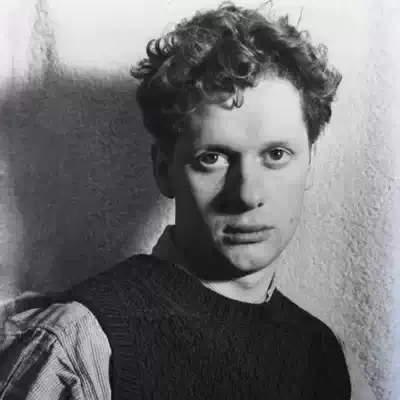
Dylan Thomas
The Hand That Signed the Paper
The hand that signed the paper felled a city;
Five sovereign fingers taxed the breath,
Doubled the globe of dead and halved a country;
These five kings did a king to death.
The mighty hand leads to a sloping shoulder,
The finger joints are cramped with chalk;
A goose's quill has put an end to murder
That put an end to talk.
The hand that signed the treaty bred a fever,
And famine grew, and locusts came;
Great is the hand that holds dominion over
Man by a scribbled name.
The five kings count the dead but do not soften
The crusted wound nor pat the brow;
A hand rules pity as a hand rules heaven;
Hands have no tears to flow.
289
John Greenleaf Whittier
William Francis Bartlett
Oh, well may Essex sit forlorn
Beside her sea-blown shore;
Her well beloved, her noblest born,
Is hers in life no more!
No lapse of years can render less
Her memory's sacred claim;
No fountain of forgetfulness
Can wet the lips of Fame.
A grief alike to wound and heal,
A thought to soothe and pain,
The sad, sweet pride that mothers feel
To her must still remain.
Good men and true she has not lacked,
And brave men yet shall be;
The perfect flower, the crowning fact,
Of all her years was he!
As Galahad pure, as Merlin sage,
What worthier knight was found
To grace in Arthur's golden age
The fabled Table Round?
A voice, the battle's trumpet-note,
To welcome and restore;
A hand, that all unwilling smote,
To heal and build once more;
A soul of fire, a tender heart
Too warm for hate, he knew
The generous victor's graceful part
To sheathe the sword he drew.
When Earth, as if on evil dreams,
Looks back upon her wars,
And the white light of Christ outstreams
From the red disk of Mars,
His fame who led the stormy van
Of battle well may cease,
But never that which crowns the man
Whose victory was Peace.
Mourn, Essex, on thy sea-blown shore
Thy beautiful and brave,
Whose failing hand the olive bore,
Whose dying lips forgave!
Let age lament the youthful chief,
And tender eyes be dim;
The tears are more of joy than grief
That fall for one like him!
290

James Whitcomb Riley
The Drum
O the drum!
There is some
Intonation in thy grum
Monotony of utterance that strikes the spirit dumb,
As we hear
Through the clear
And unclouded atmosphere,
Thy palpitating syllables roll in upon the car!
There's a part
Of the art
Of thy music-throbbing heart
That thrills a something in us that awakens with a start,
And in rhyme
With the chime
And exactitude of time,
Goes marching on to glory to thy melody sublime.
And the guest
Of the breast
That thy rolling robs of rest
Is a patriotic spirit as a Continental dressed;
And he looms
From the glooms
Of a century of tombs,
And the blood he spilled at Lexington in living beauty blooms.
And his eyes
Wear the guise
Of a purpose pure and wise,
As the love of them is lifted to a something in the skies
That is bright
Red and white,
With a blur of starry light,
As it laughs in silken ripples to the breezes day and night.
There are deep
Hushes creep
O'er the pulses as they leap,
As thy tumult, fainter growing, on the silence falls asleep,
While the prayer
Rising there
Wills the sea and earth and air
As a heritage to Freedom's sons and daughters everywhere.
Then, with sound
As profound
As the thunderings resound,
Come thy wild reverberations in a throe that shakes the ground,
And a cry
Flung on high,
Like the flag it flutters by,
Wings rapturously upward till it nestles in the sky.
O the drum!
There is some
Intonation in thy grum
Monotony of utterance that strikes the spirit dumb,
As we hear
Through the clear
And unclouded atmosphere,
Thy palpitating syllables roll in upon the ear!
There is some
Intonation in thy grum
Monotony of utterance that strikes the spirit dumb,
As we hear
Through the clear
And unclouded atmosphere,
Thy palpitating syllables roll in upon the car!
There's a part
Of the art
Of thy music-throbbing heart
That thrills a something in us that awakens with a start,
And in rhyme
With the chime
And exactitude of time,
Goes marching on to glory to thy melody sublime.
And the guest
Of the breast
That thy rolling robs of rest
Is a patriotic spirit as a Continental dressed;
And he looms
From the glooms
Of a century of tombs,
And the blood he spilled at Lexington in living beauty blooms.
And his eyes
Wear the guise
Of a purpose pure and wise,
As the love of them is lifted to a something in the skies
That is bright
Red and white,
With a blur of starry light,
As it laughs in silken ripples to the breezes day and night.
There are deep
Hushes creep
O'er the pulses as they leap,
As thy tumult, fainter growing, on the silence falls asleep,
While the prayer
Rising there
Wills the sea and earth and air
As a heritage to Freedom's sons and daughters everywhere.
Then, with sound
As profound
As the thunderings resound,
Come thy wild reverberations in a throe that shakes the ground,
And a cry
Flung on high,
Like the flag it flutters by,
Wings rapturously upward till it nestles in the sky.
O the drum!
There is some
Intonation in thy grum
Monotony of utterance that strikes the spirit dumb,
As we hear
Through the clear
And unclouded atmosphere,
Thy palpitating syllables roll in upon the ear!
285
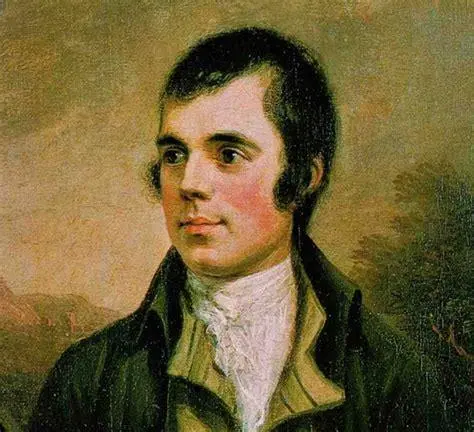
Robert Burns
The Battle Of Sherramuir
"O cam ye here the fight to shun,
Or herd the sheep wi' me, man?
Or were ye at the Sherra-moor,
Or did the battle see, man?"
"I saw the battle, sair and teugh
And reekin-red ran monie a sheugh;
My heart, for fear, gae sough for sough,
To hear the thuds, and see the cluds
O clans frae woods in tartan duds
Wha glaum'd at icingdoms three, man.
"The red-coat lads wi' black cockauds,
To meet them were na slaw, man;
They rush'd and push'd, and bluid outgush'd,
And monie a bouk did fa', man!
The great Argyle led on his files,
I wat they glanc'd for twenty miles;
They hough'd the clans like nine-pin kyles,
They hack'd and hash'd, while braid-swords clashed,
And thro they dash'd, and hew'd and smash'd,
Till fey men died awa, man.
"But had ye seen the philibegs,
And skyrin tartan trews, man;
When in the teeth they daur'd our Whigs,
And Covenant trueblues, man!
In lines extended lang and large,
When baig'nets o'erpower'd the targe,
And thousands hasten'd to the charge,
Wi' Highland wrath and frac the sheath
Drew blades o' death, till, out o' breath.
They fled like frightened dows, man!"
"O, how Deil, Tam, can that be true?
The chase gaed frae the north, man!
I saw mysel, they did pursue
The horseman back to Forth, man:
And at Dunblane, in my ain sight,
They took the brig wi a' their might
And straught to Stirling wing'd their flight;
But, cursed lot! the gates were shut,
And monie a huntit poor red-coat,
For fear amaist did swarf, man!"
My sister Kate came up the gate
Wi' crowdie unto me, man:
She swoor she saw some rebels run
To Perth and to Dundee, man!
Their left-hand general had nae skill;
The Angus lads had nae good will
That day their neebors' bluid to spill;
For fear, by foes, that they should lose
Their cogs o brose; they scar'd at blows,
And hameward fast did flee, man.
"They've lost some gallant gentlemen,
Amang the Highland clans, man!
I fear my Lord Panmure is slain,
Or in his en'mies' hands, man.
Now wad ye sing this double flight,
Some fell for wrang, and some for right,
But monie bade the world guid-night;
Say, pell and mell, wi' muskets' knell
How Tories feil, and Whigs to Hell
Flew off in frightened bands, man!"
287

Anonymous
Beowulf (Episode -)
HASTENED the hardy one, henchmen with him,
sandy strand of the sea to tread
and widespread ways. The world's great candle,
sun shone from south. They strode along
with sturdy steps to the spot they knew
where the battle-king young, his burg within,
slayer of Ongentheow, shared the rings,
shelter-of-heroes. To Hygelac
Beowulf's coming was quickly told, --
that there in the court the clansmen's refuge,
the shield-companion sound and alive,
hale from the hero-play homeward strode.
With haste in the hall, by highest order,
room for the rovers was readily made.
By his sovran he sat, come safe from battle,
kinsman by kinsman. His kindly lord
he first had greeted in gracious form,
with manly words. The mead dispensing,
came through the high hall Haereth's daughter,
winsome to warriors, wine-cup bore
to the hands of the heroes. Hygelac then
his comrade fairly with question plied
in the lofty hall, sore longing to know
what manner of sojourn the Sea-Geats made.
"What came of thy quest, my kinsman Beowulf,
when thy yearnings suddenly swept thee yonder
battle to seek o'er the briny sea,
combat in Heorot? Hrothgar couldst thou
aid at all, the honored chief,
in his wide-known woes? With waves of care
my sad heart seethed; I sore mistrusted
my loved one's venture: long I begged thee
by no means to seek that slaughtering monster,
but suffer the South-Danes to settle their feud
themselves with Grendel. Now God be thanked
that safe and sound I can see thee now!"
Beowulf spake, the bairn of Ecgtheow: --
"'Tis known and unhidden, Hygelac Lord,
to many men, that meeting of ours,
struggle grim between Grendel and me,
which we fought on the field where full too many
sorrows he wrought for the Scylding-Victors,
evils unending. These all I avenged.
No boast can be from breed of Grendel,
any on earth, for that uproar at dawn,
from the longest-lived of the loathsome race
in fleshly fold! -- But first I went
Hrothgar to greet in the hall of gifts,
where Healfdene's kinsman high-renowned,
soon as my purpose was plain to him,
assigned me a seat by his son and heir.
The liegemen were lusty; my life-days never
such merry men over mead in hall
have I heard under heaven! The high-born queen,
people's peace-bringer, passed through the hall,
cheered the young clansmen, clasps of gold,
ere she sought her seat, to sundry gave.
Oft to the heroes Hrothgar's daughter,
to earls in turn, the ale-cup tendered, --
she whom I heard these hall-companions
Freawaru name, when fretted gold
she proffered the warriors. Promised is she,
gold-decked maid, to the glad son of Froda.
Sage this seems to the Scylding's-friend,
kingdom's-keeper: he counts it wise
the woman to wed so and ward off feud,
store of slaughter. But seldom ever
when men are slain, does the murder-spear sink
but briefest while, though the bride be fair!
"Nor haply will like it the Heathobard lord,
and as little each of his liegemen all,
when a thane of the Danes, in that doughty throng,
goes with the lady along their hall,
and on him the old-time heirlooms glisten
hard and ring-decked, Heathobard's treasure,
weapons that once they wielded fair
until they lost at the linden-play
liegeman leal and their lives as well.
Then, over the ale, on this heirloom gazing,
some ash-wielder old who has all in mind
that spear-death of men, -- he is stern of mood,
heavy at heart, -- in the hero young
tests the temper and tries the soul
and war-hate wakens, with words like these: --
Canst thou not, comrade, ken that sword
which to the fray thy father carried
in his final feud, 'neath the fighting-mask,
dearest of blades, when the Danish slew him
and wielded the war-place on Withergild's fall,
after havoc of heroes, those hardy Scyldings?
Now, the son of a certain slaughtering Dane,
proud of his treasure, paces this hall,
joys in the killing, and carries the jewel
that rightfully ought to be owned by thee!_
Thus he urges and eggs him all the time
with keenest words, till occasion offers
that Freawaru's thane, for his father's deed,
after bite of brand in his blood must slumber,
losing his life; but that liegeman flies
living away, for the land he kens.
And thus be broken on both their sides
oaths of the earls, when Ingeld's breast
wells with war-hate, and wife-love now
after the care-billows cooler grows.
"So I hold not high the Heathobards' faith
due to the Danes, or their during love
and pact of peace. -- But I pass from that,
turning to Grendel, O giver-of-treasure,
and saying in full how the fight resulted,
hand-fray of heroes. When heaven's jewel
had fled o'er far fields, that fierce sprite came,
night-foe savage, to seek us out
where safe and sound we sentried the hall.
To Hondscio then was that harassing deadly,
his fall there was fated. He first was slain,
girded warrior. Grendel on him
turned murderous mouth, on our mighty kinsman,
and all of the brave man's body devoured.
Yet none the earlier, empty-handed,
would the bloody-toothed murderer, mindful of bale,
outward go from the gold-decked hall:
but me he attacked in his terror of might,
with greedy hand grasped me. A glove hung by him
wide and wondrous, wound with bands;
and in artful wise it all was wrought,
by devilish craft, of dragon-skins.
Me therein, an innocent man,
the fiendish foe was fain to thrust
with many another. He might not so,
when I all angrily upright stood.
'Twere long to relate how that land-destroyer
I paid in kind for his cruel deeds;
yet there, my prince, this people of thine
got fame by my fighting. He fled away,
and a little space his life preserved;
but there staid behind him his stronger hand
left in Heorot; heartsick thence
on the floor of the ocean that outcast fell.
Me for this struggle the Scyldings'-friend
paid in plenty with plates of gold,
with many a treasure, when morn had come
and we all at the banquet-board sat down.
Then was song and glee. The gray-haired Scylding,
much tested, told of the times of yore.
Whiles the hero his harp bestirred,
wood-of-delight; now lays he chanted
of sooth and sadness, or said aright
legends of wonder, the wide-hearted king;
or for years of his youth he would yearn at times,
for strength of old struggles, now stricken with age,
hoary hero: his heart surged full
when, wise with winters, he wailed their flight.
Thus in the hall the whole of that day
at ease we feasted, till fell o'er earth
another night. Anon full ready
in greed of vengeance, Grendel's mother
set forth all doleful. Dead was her son
through war-hate of Weders; now, woman monstrous
with fury fell a foeman she slew,
avenged her offspring. From Aeschere old,
loyal councillor, life was gone;
nor might they e'en, when morning broke,
those Danish people, their death-done comrade
burn with brands, on balefire lay
the man they mourned. Under mountain stream
she had carried the corpse with cruel hands.
For Hrothgar that was the heaviest sorrow
of all that had laden the lord of his folk.
The leader then, by thy life, besought me
(sad was his soul) in the sea-waves' coil
to play the hero and hazard my being
for glory of prowess: my guerdon he pledged.
I then in the waters -- 'tis widely known --
that sea-floor-guardian savage found.
Hand-to-hand there a while we struggled;
billows welled blood; in the briny hall
her head I hewed with a hardy blade
from Grendel's mother, -- and gained my life,
though not without danger. My doom was not yet.
Then the haven-of-heroes, Healfdene's son,
gave me in guerdon great gifts of price.
285
Dylan Thomas
A Saint About To Fall
A saint about to fall,
The stained flats of heaven hit and razed
To the kissed kite hems of his shawl,
On the last street wave praised
The unwinding, song by rock,
Of the woven wall
Of his father's house in the sands,
The vanishing of the musical ship-work and the chucked bells,
The wound-down cough of the blood-counting clock
Behind a face of hands,
On the angelic etna of the last whirring featherlands,
Wind-heeled foot in the hole of a fireball,
Hymned his shrivelling flock,
On the last rick's tip by spilled wine-wells
Sang heaven hungry and the quick
Cut Christbread spitting vinegar and all
The mazes of his praise and envious tongue were worked in flames and shells.
Glory cracked like a flea.
The sun-leaved holy candlewoods
Drivelled down to one singeing tree
With a stub of black buds,
The sweet, fish-gilled boats bringing blood
Lurched through a scuttled sea
With a hold of leeches and straws,
Heaven fell with his fall and one crocked bell beat the left air.
O wake in me in my house in the mud
Of the crotch of the squawking shores,
Flicked from the carbolic city puzzle in a bed of sores
The scudding base of the familiar sky,
The lofty roots of the clouds.
From an odd room in a split house stare,
Milk in your mouth, at the sour floods
That bury the sweet street slowly, see
The skull of the earth is barbed with a war of burning brains and hair.
Strike in the time-bomb town,
Raise the live rafters of the eardrum,
Throw your fear a parcel of stone
Through the dark asylum,
Lapped among herods wail
As their blade marches in
That the eyes are already murdered,
The stocked heart is forced, and agony has another mouth to feed.
O wake to see, after a noble fall,
The old mud hatch again, the horrid
Woe drip from the dishrag hands and the pressed sponge of the forehead,
The breath draw back like a bolt through white oil
And a stranger enter like iron.
Cry joy that hits witchlike midwife second
Bullies into rough seas you so gentle
And makes with a flick of the thumb and sun
A thundering bullring of your silent and girl-circled island.
286
Henry Wadsworth Longfellow
Tales Of A Wayside Inn : Part 1. Interlude I.
The Landlord ended thus his tale,
Then rising took down from its nail
The sword that hung there, dim with dust
And cleaving to its sheath with rust,
And said, 'This sword was in the fight.'
The Poet seized it, and exclaimed,
'It is the sword of a good knight,
Though homespun was his coat-of-mail;
What matter if it be not named
Joyeuse, Colada, Durindale,
Excalibar, or Aroundight,
Or other name the books record?
Your ancestor, who bore this sword
As Colonel of the Volunteers,
Mounted upon his old gray mare,
Seen here and there and everywhere,
To me a grander shape appears
Than old Sir William, or what not,
Clinking about in foreign lands
With iron gauntlets on his hands,
And on his head an iron pot!'
All laughed; the Landlord's face grew red
As his escutcheon on the wall;
He could not comprehend at all
The drift of what the Poet said;
For those who had been longest dead
Were always greatest in his eyes;
And be was speechless with surprise
To see Sir William's pluméd head
Brought to a level with the rest,
And made the subject of a jest.
And this perceiving, to appease
The Landlord's wrath, the others' fears,
The Student said, with careless ease,
'The ladies and the cavaliers,
The arms, the loves, the courtesies,
The deeds of high emprise, I sing!
Thus Ariosto says, in words
That have the stately stride and ring
Of arméd knights and clashing swords.
Now listen to the tale I bring;
Listen! though not to me belong
The flowing draperies of his song,
The words that rouse, the voice that charms.
The Landlord's tale was one of arms,
Only a tale of love is mine,
Blending the human and divine,
A tale of the Decameron, told
In Palmieri's garden old,
By Fiametta, laurel-crowned,
While her companions lay around,
And heard the intermingled sound
Of airs that on their errands sped,
And wild birds gossiping overhead,
And lisp of leaves, and fountain's fall,
And her own voice more sweet than all,
Telling the tale, which, wanting these,
Perchance may lose its power to please.'
283
Henry Lawson
The Seabolt's Volunteers
They towed the Seabolt down the stream,
And through the harbour’s mouth;
She spread her wings and sailed away
To seek the sunny South.
But, ah! she met with storm on storm
Ere half her course had run;
And all her masts were torn away,
And all her boats save one.
The good old ship had settled far
Beneath her cargo line,
Her riven sides were drinking deep
The draughts of ocean brine.
There gathered round the only boat
The women pale with fear,
And trembling little ones, who clung
To those who held them dear.
Then spoke the captain, brave and true,
His voice rose o’er the roar;
“The boat will save us all but five,
She cannot float with more!”
And backward from the side he stepped—
(He had been born at sea)
“Now who will seek in ocean’s depths
A sailor’s grave with me?”
Then up there stepped a merchant stout,
His face was brown and tan:
“I’ll volunteer to stay on board,
For I’m an Englishman!”
Then spoke a gallant gentleman,
A lover of romance:
“Remain I for the ladies’ sake,
For I’m a son of France!”
And next there spoke a Highlander:
“Go search the wide world round,
You’ll find no spot where on the earth
A Scotsman is not found!”
And then there spoke a lad to whom
Killarney’s lakes were dear:
“It won’t be said that Ireland found
No place of honour here!”
The boat pushed from the vessel’s side
Amid the ringing cheers;
And now beneath Old Ocean sleep
The Seabolt’s volunteers.
279
Henry Lawson
Said the Kaiser to the Spy
“Now tell me what can England do?”
Said the Kaiser to the Spy.
“She can do nought, your Majesty—
You rule the sea and sky.
Her day of destiny is done;
Her path of peace is plain;
For she dare never throw a troop
Across the Strait again.”
The Kaiser sent his mighty host,
With Bombast in advance,
To set his seal on Paris first,
And make an end of France.
Their guns were heard in Paris streets,
And trembling Europe heard;
(They’re staggering back in Belgium now)
And England said no word.
“Now tell me what can England do?”
Said the Kaiser to the Spy.
“She can do nought in Southern seas
Where her possessions lie!
Her colonies are arming now—
They only wait your aid!”
“I’ll send my ships,” the Kaiser said,
“And I will kill her trade!”
The Kaiser sent his cruisers forth
To do their worst or best;
And one made trouble in the North—
The Cocos tell the rest.
He sent a squadron to a coast
Where treachery prevailed—
Gra’mercy! They were stricken hard
On seas that Raleigh sailed!
“Now tell me what can England do?”
Said the Kaiser to the Spy.
“Her ports are all unfortified
And there your chances lie!”
He sent his ships to Scarborough,
And called them back again.
The Blucher lies in Channel ooze
With seven hundred men.
“Oh, tell me what can England do?”
Said the Kaiser to the Spy.
“She can’t hold Egypt for a day—
(I have it from On High.”)
And so the Kaiser paid the Turk
To put the matter through—
And England’s Queen of Egypt now,
And boss of Turkey too.
“Now tell me what shall England do?”
Said the Kaiser to the Spy.
You see that neither of them knew
Much more than you or I.
But the blooming thing that’s troubling me
As the pregnant weeks go by,
Is wotinell shall England do
When the Kaiser hangs that Spy!
Said the Kaiser to the Spy.
“She can do nought, your Majesty—
You rule the sea and sky.
Her day of destiny is done;
Her path of peace is plain;
For she dare never throw a troop
Across the Strait again.”
The Kaiser sent his mighty host,
With Bombast in advance,
To set his seal on Paris first,
And make an end of France.
Their guns were heard in Paris streets,
And trembling Europe heard;
(They’re staggering back in Belgium now)
And England said no word.
“Now tell me what can England do?”
Said the Kaiser to the Spy.
“She can do nought in Southern seas
Where her possessions lie!
Her colonies are arming now—
They only wait your aid!”
“I’ll send my ships,” the Kaiser said,
“And I will kill her trade!”
The Kaiser sent his cruisers forth
To do their worst or best;
And one made trouble in the North—
The Cocos tell the rest.
He sent a squadron to a coast
Where treachery prevailed—
Gra’mercy! They were stricken hard
On seas that Raleigh sailed!
“Now tell me what can England do?”
Said the Kaiser to the Spy.
“Her ports are all unfortified
And there your chances lie!”
He sent his ships to Scarborough,
And called them back again.
The Blucher lies in Channel ooze
With seven hundred men.
“Oh, tell me what can England do?”
Said the Kaiser to the Spy.
“She can’t hold Egypt for a day—
(I have it from On High.”)
And so the Kaiser paid the Turk
To put the matter through—
And England’s Queen of Egypt now,
And boss of Turkey too.
“Now tell me what shall England do?”
Said the Kaiser to the Spy.
You see that neither of them knew
Much more than you or I.
But the blooming thing that’s troubling me
As the pregnant weeks go by,
Is wotinell shall England do
When the Kaiser hangs that Spy!
279
John Greenleaf Whittier
The Hive At Gettysburg
IN the old Hebrew myth the lion's frame,
So terrible alive,
Bleached by the desert's sun and wind, became
The wandering wild bees' hive;
And he who, lone and naked-handed, tore
Those jaws of death apart,
In after time drew forth their honeyed store
To strengthen his strong heart.
Dead seemed the legend: but it only slept
To wake beneath our sky;
Just on the spot whence ravening Treason crept
Back to its lair to die,
Bleeding and torn from Freedom's mountain bounds,
A stained and shattered drum
Is now the hive where, on their flowery rounds,
The wild bees go and come.
Unchallenged by a ghostly sentinel,
They wander wide and far,
Along green hillsides, sown with shot and shell,
Through vales once choked with war.
The low reveille of their battle-drum
Disturbs no morning prayer;
With deeper peace in summer noons their hum
Fills all the drowsy air.
And Samson's riddle is our own to-day,
Of sweetness from the strong,
Of union, peace, and freedom plucked away
From the rent jaws of wrong.
From Treason's death we draw a purer life,
As, from the beast he slew,
A sweetness sweeter for his bitter strife
The old-time athlete drew!
277
James Whitcomb Riley
A Monument For The Soldiers
A monument for the Soldiers!
And what will ye build it of?
Can ye build it of marble, or brass, or bronze,
Outlasting the Soldiers' love?
Can ye glorify it with legends
As grand as their blood hath writ
From the inmost shrine of this land of thine
To the outermost verge of it?
And the answer came: We would build it
Out of our hopes made sure,
And out of our purest prayers and tears,
And out of our faith secure:
We would build it out of the great white truths
Their death hath sanctified,
And the sculptured forms of the men in arms,
And their faces ere they died.
And what heroic figures
Can the sculptor carve in stone?
Can the marble breast be made to bleed,
And the marble lips to moan?
Can the marble brow be fevered?
And the marble eyes be graved
To look their last, as the flag floats past,
On the country they have saved?
And the answer came: The figures
Shall all be fair and brave,
And, as befitting, as pure and white
As the stars above their grave!
The marble lips, and breast and brow
Whereon the laurel lies,
Bequeath us right to guard the flight
Of the old flag in the skies!
A monument for the Soldiers!
Built of a people's love,
And blazoned and decked and panoplied
With the hearts ye build it oft
And see that ye build it stately,
In pillar and niche and gate,
And high in pose as the souls of those
It would commemorate!
277
Anonymous
Johnny, I Hardly Knew Ye
WHILE going the road to sweet Athy,
Hurroo! hurroo!
While going the road to sweet Athy,
Hurroo! hurroo!
While going the road to sweet Athy,
A stick in my hand and a drop in my eye,
A doleful damsel I heard cry:
“Och, Johnny, I hardly knew ye!
“With drums and guns, and guns and drums,
The enemy nearly slew ye;
My darling dear, you look so queer,
Och, Johnny, I hardly knew ye!
“Where are your eyes that looked so mild?
Hurroo! hurroo!
Where are your eyes that looked so mild?
Hurroo! hurroo!
Where are your eyes that looked so mild,
When my poor heart you first beguiled?
Why did you run from me and the child?
Och, Johnny, I hardly knew ye!
With drums, etc.
“Where are the legs with which you run?
Hurroo! hurroo!
Where are thy legs with which you run?
Hurroo! hurroo!
Where are the legs with which you run
When first you went to carry a gun?
Indeed, your dancing days are done!
Och, Johnny, I hardly knew ye!
With drums, etc.
It grieved my heart to see you sail,
Hurroo! hurroo!
It grieved my heart to see you sail,
Hurroo! hurroo!
It grieved my heart to see you sail,
Though from my heart you took leg-bail;
Like a cod you’re doubled up head and tail,
Och, Johnny, I hardly knew ye!
With drums, etc.
“You haven’t an arm and you haven’t a leg,
Hurroo! hurroo!
You haven’t an arm and you haven’t a leg,
Hurroo! hurroo!
You haven’t an arm and you haven’t a leg,
You’re an eyeless, noseless, chickenless egg;
You’ll have to be put with a bowl to beg:
Och, Johnny, I hardly knew ye!
With drums, etc.
“I’m happy for to see you home,
Hurroo! hurroo!
I’m happy for to see you home,
Hurroo! hurroo!
I’m happy for to see you home,
All from the Island of Sulloon;
So low in flesh, so high in bone;
Och, Johnny, I hardly knew ye!
With drums, etc.
“But sad it is to see you so,
Hurroo! hurroo!
But sad it is to see you so,
Hurroo! hurroo!
But sad it is to see you so,
And to think of you now as an object of woe,
Your Peggy’ll still keep you on as her beau;
Och, Johnny, I hardly knew ye!
With drums and guns, and guns and drums,
The enemy nearly slew ye;
My darling dear, you look so queer,
Och, Johnny, I hardly knew ye.
Hurroo! hurroo!
While going the road to sweet Athy,
Hurroo! hurroo!
While going the road to sweet Athy,
A stick in my hand and a drop in my eye,
A doleful damsel I heard cry:
“Och, Johnny, I hardly knew ye!
“With drums and guns, and guns and drums,
The enemy nearly slew ye;
My darling dear, you look so queer,
Och, Johnny, I hardly knew ye!
“Where are your eyes that looked so mild?
Hurroo! hurroo!
Where are your eyes that looked so mild?
Hurroo! hurroo!
Where are your eyes that looked so mild,
When my poor heart you first beguiled?
Why did you run from me and the child?
Och, Johnny, I hardly knew ye!
With drums, etc.
“Where are the legs with which you run?
Hurroo! hurroo!
Where are thy legs with which you run?
Hurroo! hurroo!
Where are the legs with which you run
When first you went to carry a gun?
Indeed, your dancing days are done!
Och, Johnny, I hardly knew ye!
With drums, etc.
It grieved my heart to see you sail,
Hurroo! hurroo!
It grieved my heart to see you sail,
Hurroo! hurroo!
It grieved my heart to see you sail,
Though from my heart you took leg-bail;
Like a cod you’re doubled up head and tail,
Och, Johnny, I hardly knew ye!
With drums, etc.
“You haven’t an arm and you haven’t a leg,
Hurroo! hurroo!
You haven’t an arm and you haven’t a leg,
Hurroo! hurroo!
You haven’t an arm and you haven’t a leg,
You’re an eyeless, noseless, chickenless egg;
You’ll have to be put with a bowl to beg:
Och, Johnny, I hardly knew ye!
With drums, etc.
“I’m happy for to see you home,
Hurroo! hurroo!
I’m happy for to see you home,
Hurroo! hurroo!
I’m happy for to see you home,
All from the Island of Sulloon;
So low in flesh, so high in bone;
Och, Johnny, I hardly knew ye!
With drums, etc.
“But sad it is to see you so,
Hurroo! hurroo!
But sad it is to see you so,
Hurroo! hurroo!
But sad it is to see you so,
And to think of you now as an object of woe,
Your Peggy’ll still keep you on as her beau;
Och, Johnny, I hardly knew ye!
With drums and guns, and guns and drums,
The enemy nearly slew ye;
My darling dear, you look so queer,
Och, Johnny, I hardly knew ye.
277
Henry Lawson
The Vanguard [1]
While the crippled cruisers stagger where the blind horizon dips,
And the ocean ooze is rising round the sunken battle-ships,
While the battered wrecks, unnoticed, with their mangled crews drift past—
Let me fire one gun for Russia, though that gun should be the last.
’Tis a struggle of the Ages, and the White Man’s star is dim,
There is little jubilation, for the game has got too grim;
But though Russia’s hope seems shattered, and the Russian star seems set,
It may mean the Dawn for Russia—and my hope’s in IVAN yet!
Let the Jingo in his blindness cant and cackle as he will;
But across the path from Asia run the Russian trenches still!
And the sahib in his rickshaw may loll back and smoke at ease,
While the haggard, ragged heroes man the battered batteries.
’Tis the first round of the struggle of the East against the West,
Of the fearful war of races—for the White Man could not rest.
Hold them, IVAN! staggering bravely underneath your gloomy sky;
Hold them, IVAN! we shall want you pretty badly by-and-bye!
Fighting for the Indian empire, when the British pay their debt;
Never Britain watched for BLUCHER as he’ll watch for IVAN yet!
It means all to young Australia—it means life or death to us,
For the vanguard of the White Man is the vanguard of the Russ!
273
Dylan Thomas
Among Those Killed in the Dawn Raid Was a Man Aged a Hundred
When the morning was waking over the war
He put on his clothes and stepped out and he died,
The locks yawned loose and a blast blew them wide,
He dropped where he loved on the burst pavement stone
And the funeral grains of the slaughtered floor.
Tell his street on its back he stopped a sun
And the craters of his eyes grew springshots and fire
When all the keys shot from the locks, and rang.
Dig no more for the chains of his grey-haired heart.
The heavenly ambulance drawn by a wound
Assembling waits for the spade's ring on the cage.
O keep his bones away from the common cart,
The morning is flying on the wings of his age
And a hundred storks perch on the sun's right hand.
272
Henry Wadsworth Longfellow
Tales Of A Wayside Inn : Part 1. The Musician's Tale; The Saga of King Olaf XI.
-- Bishop Sigurd At Salten Fiord
Loud the anngy wind was wailing
As King Olaf's ships came sailing
Northward out of Drontheim haven
To the mouth of Salten Fiord.
Though the flying sea-spray drenches
Fore and aft the rowers' benches,
Not a single heart is craven
Of the champions there on board.
All without the Fiord was quiet
But within it storm and riot,
Such as on his Viking cruises
Raud the Strong was wont to ride.
And the sea through all its tide-ways
Swept the reeling vessels sideways,
As the leaves are swept through sluices,
When the flood-gates open wide.
''T is the warlock! 't is the demon
Raud!' cried Sigurd to the seamen;
'But the Lord is not affrighted
By the witchcraft of his foes.'
To the ship's bow he ascended,
By his choristers attended,
Round him were the tapers lighted,
And the sacred incense rose.
On the bow stood Bishop Sigurd,
In his robes, as one transfigured,
And the Crucifix he planted
High amid the rain and mist.
Then with holy water sprinkled
All the ship; the mass-bells tinkled.
Loud the monks around him chanted,
Loud he read the Evangelist.
As into the Fiord they darted,
On each side the water parted;
Down a path like silver molten
Steadily rowed King Olaf's ships;
Steadily burned all night the tapers,
And the White Christ through the vapors
Gleamed across the Fiord of Salten,
As through John's Apocalypse,--
Till at last they reached Raud's dwelling
On the little isle of Gelling;
Not a guard was at the doorway,
Not a glimmer of light was seen.
But at anchor, carved and gilded,
Lay the dragon-ship he builded;
'T was the grandest ship in Norway,
With its crest and scales of green.
Up the stairway, softly creeping,
To the loft where Raud was sleeping,
With their fists they burst asunder
Bolt and bar that held the door.
Drunken with sleep and ale they found him,
Dragged him from his bed and bound him,
While he stared with stupid wonder,
At the look and garb they wore.
Then King Olaf said: 'O Sea-King!
Little time have we for speaking,
Choose between the good and evil;
Be baptized, or thou shalt die!?
But in scorn the heathen scoffer
Answered: 'I disdain thine offer;
Neither fear I God nor Devil;
Thee and thy Gospel I defy!'
Then between his jaws distended,
When his frantic struggles ended,
Through King Olaf's horn an adder,
Touched by fire, they forced to glide.
Sharp his tooth was as an arrow,
As he gnawed through bone and marrow;
But without a groan or shudder,
Raud the Strong blaspheming died.
Then baptized they all that region,
Swarthy Lap and fair Norwegian,
Far as swims the salmon, leaping,
Up the streams of Salten Fiord.
In their temples Thor and Odin
Lay in dust and ashes trodden,
As King Olaf, onward sweeping,
Preached the Gospel with his sword.
Then he took the carved and gilded
Dragon-ship that Raud had builded,
And the tiller single-handed,
Grasping, steered into the main.
Southward sailed the sea-gulls o'er him,
Southward sailed the ship that bore him,
Till at Drontheim haven landed
Olaf and his crew again.
272
John Greenleaf Whittier
The Conquest Of Finland
ACROSS the frozen marshes
The winds of autumn blow,
And the fen-lands of the Wetter
Are white with early snow.
But where the low, gray headlands
Look o'er the Baltic brine,
A bark is sailing in the track
Of England's battle-line.
No wares hath she to barter
For Bothnia's fish and grain;
She saileth not for pleasure,
She saileth not for gain.
But still by isle or mainland
She drops her, anchor down,
Where'er the British cannon
Rained fire on tower and town.
Outspake the ancient Amtman,
At the gate of Helsingfors:
'Why comes this ship a-spying
In the track of England's wars?'
'God bless her,' said the coast-guard, —
'God bless the ship, I say.
The holy angels trim the sails
That speed her on her way!
'Where'er she drops her anchor,
The peasant's heart is glad;
Where'er she spreads her parting sail,
The peasant's heart is sad.
'Each wasted town and hamlet
She visits to restore;
To roof the shattered cabin,
And feed the starving poor.
' The sunken boats of fishers,
The foraged beeves and grain,
The spoil of flake and storehouse,
The good ship brings again.
'And so to Finland's sorrow
The sweet amend is made,
As if the healing hand of Christ
Upon her wounds were laid!'
Then said the gray old Amtman,
'The will of God be done!
The battle lost by England's hate,
By England's love is won!
'We braved the iron tempest
That thundered on our shore;
But when did kindness fail to find
The key to Finland's door?
'No more from Aland's ramparts
Shall warning signal come,
Nor startled Sweaborg hear again
The roll of midnight drum.
'Beside our fierce Black Eagle
The Dove of Peace shall rest;
And in the mouths of cannon
The sea-bird make her nest.
'For Finland, looking seaward,
No coming foe shall scan;
And the holy bells of Abo
Shall ring, 'Good-will to man!'
'Then row thy boat, O fisher!
In peace on lake and bay;
And thou, young maiden, dance again
Around the poles of May!
'Sit down, old men, together,
Old wives, in quiet spin;
Henceforth the Anglo-Saxon
Is the brother of the Finn!'
271
Henry Lawson
The Bush Fire
Ah, better the thud of the deadly gun, and the crash of the bursting shell,
Than the terrible silence where drought is fought out there in the western hell;
And better the rattle of rifles near, or the thunder on deck at sea,
Than the sound—most hellish of all to hear—of a fire where it should not be.
On the runs to the west of the Dingo Scrubs there was drought, and ruin, and death,
And the sandstorm came from the dread north-east with the blast of a furnace-breath;
Till at last one day, at the fierce sunrise, a boundary-rider woke,
And saw, in the place of the distant haze, a curtain of light blue smoke.
There is saddling-up by the cockey’s hut, and out in the station yard,
And away to the north, north-east, north-west, the bushmen are riding hard.
The pickets are out and many a scout, and many a mulga wire,
While Bill and Jim, with their faces grim, are riding to meet the fire.
It roars for days in the hopeless scrubs, and across, where the ground seems bare,
With a cackle and hiss, like the hissing of snakes, the fire is travelling there;
Till at last, exhausted by sleeplessness, and the terrible toil and heat,
The squatter is crying, ‘My God! the wool!’ and the farmer, ‘My God! the wheat!’
But there comes a drunkard (who reels as he rides), with the news from the roadside
pub:—
‘Pat Murphy—the cockey—cut off by the fire!—way back in the Dingo Scrub!’
‘Let the wheat and the woolshed go to——’ Well, they do as each great heart bids;
They are riding a race for the Dingo Scrub—for Pat and his wife and kids.
And who is leading the race with death? An ill-matched three, you’ll allow;
Flash Jim the breaker and Boozing Bill (who is riding steadily now),
And Constable Dunn, of the Mounted Police, is riding between the two
(He wants Flash Jim, but the job can wait till they get the Murphys through).
As they strike the track through the blazing scrub, the trooper is heard to shout:
‘We’ll take them on to the Two-mile Tank, if we cannot bring them out!’
A half-mile more, and the rest rein back, retreating, half-choked, halfblind;
And the three are gone from the sight of men, and the bush fire roars behind.
The Bushman wiped the tears of smoke, and like Bushmen wept and swore;
‘Poor Bill will be wanting his drink to-night as never he did before.
‘And Dunn was the best in the whole damned force!’ says a client of Dunn’s, with pride;
I reckon he’ll serve his summons on Jim—when they get to the other side.
It is daylight again, and the fire is past, and the black scrub silent and grim,
Except for the blaze of an old dead tree, or the crash of a falling limb;
And the Bushmen are riding again on the run, with hearts and with eyes that fill,
To look for the bodies of Constable Dunn, Flash Jim, and Boozing Bill.
They are found in the mud of the Two-mile Tank, where a fiend might scarce survive,
But the Bushmen gather from words they hear that the bodies are much alive.
There is Swearing Pat, with his grey beard singed, and his language of lurid hue,
And his tough old wife, and his half-baked kids, and the three who dragged them
through.
Old Pat is deploring his burnt-out home, and his wife the climate warm;
And Jim the loss of his favourite horse, and Dunn his uniform;
And Boozing Bill, with a raging thirst, is cursing the Dingo Scrub—
He’ll only ask for the loan of a flask and a lift to the nearest pub.
Flash Jim the Breaker is lying low—blue-paper is after him,
And Dunn, the trooper, is riding his rounds with a blind eye out for Jim,
And Boozing Bill is fighting D.Ts. in the township of Sudden Jerk—
When they’re wanted again in the Dingo Scrubs, they’ll be there to do the work.
271