
Humanity and Solidarity

John Greenleaf Whittier
I Was A Stranger, And Ye Took Me In
'Neath skies that winter never knew
The air was full of light and balm,
And warm and soft the Gulf wind blew
Through orange bloom and groves of palm.
A stranger from the frozen North,
Who sought the fount of health in vain,
Sank homeless on the alien earth,
And breathed the languid air with pain.
God's angel came! The tender shade
Of pity made her blue eye dim;
Against her woman's breast she laid
The drooping, fainting head of him.
She bore him to a pleasant room,
Flower-sweet and cool with salt sea air,
And watched beside his bed, for whom
His far-off sisters might not care.
She fanned his feverish brow and smoothed
Its lines of pain with tenderest touch.
With holy hymn and prayer she soothed
The trembling soul that feared so much.
Through her the peace that passeth sight
Came to him, as he lapsed away
As one whose troubled dreams of night
Slide slowly into tranquil day.
The sweetness of the Land of Flowers
Upon his lonely grave she laid
The jasmine dropped its golden showers,
The orange lent its bloom and shade.
And something whispered in her thought,
More sweet than mortal voices be
'The service thou for him hast wrought
O daughter! hath been done for me.'
259

James Whitcomb Riley
Out Of Nazareth
'He shall sleep unscathed of thieves
Who loves Allah and believes.'
Thus heard one who shared the tent,
In the far-off Orient,
Of the Bedouin ben Ahrzz--
Nobler never loved the stars
Through the palm-leaves nigh the dim
Dawn his courser neighed to him!
He said: 'Let the sands be swarmed
With such thieves as I, and thou
Shalt at morning rise unharmed,
Light as eyelash to the brow
Of thy camel amber-eyed,
Ever munching either side,
Striding still, with nestled knees,
Through the midnight's oases.'
'Who can rob thee an thou hast
More than this that thou hast cast
At my feet-- this dust of gold?
Simply this and that, all told!
Hast thou not a treasure of
Such a thing as men call love?'
'Can the dusky band I lead
Rob thee of thy daily need
Of a whiter soul, or steal
What thy lordly prayers reveal?
Who could be enriched of thee
By such hoard of poverty
As thy niggard hand pretends
To dole me-- thy worst of friends?
Therefore shouldst thou pause to bless
One indeed who blesses thee:
Robbing thee, I dispossess
But myself--. Pray thou for me!'
He shall sleep unscathed of thieves
Who loves Allah and believes.
258

Henry Lawson
Skaal
While they struggle on exhausted,
While they plough through bog and flood,
While they drag their sick and wounded
Where the tracks are drenched with blood;
While the Fates seemed joined to crush her
And her bravest hearts lie low,
I might sing one song for Russia,
Even though she be our foe.
Still be generous to foemen,
And have charity for all—
Right or wrong, fill up the wine cup;
‘Skaal!’ unto all brave men—‘Skaal!’
While they suffer, cold and hungry,
All the heart-break of defeat,
And the twice heroic rearguard
Grimly holds the grim retreat;
While they fight the last alive on
Fields where countless corpses are,
We might drop one tear for Ivan,
Dead for Russia and the Czar!
Sullen grief of boorish brother,
Sister’s scalding tears that flow,
Choking grief of grey-haired mother,
Father’s stony face bent low:
Hopeless stare of wife or daughter,
And the sweetheart dumb and white,
And the far-off fields of slaughter
Where their Ivan lies to-night.
Even England feared disaster,
With all Europe in despair,
In the days when Europe’s master
Baited Bruin in his lair.
Greater nations made submission,
And a tyrant’s yoke they earned;
But The Man with curbed ambition
Staggered back while Moscow burned,—
Burned to save the world from ruin
That dark winter long ago;
Ah! the gaunt and hunted Bruin
Hugged the tyrant in the snow!
We can cry the crimes of Russia,
Who know naught of Russia’s work—
We who died to conquer freemen,
We who fought to save the Turk.
Ah! we well may cant and cackle,
In the streets and in the clubs,
While the Russia that we know not
Licks her wounds and feeds her cubs.
But the Fates for ever beckon—
Every nation has its debt,
And her foes may have to reckon,
Reckon with ‘der Russland’ yet.
Through long ages slept the Dragon,
We have roused the ugly beast—
Russia still may stand the vanguard
Of the West against the East.
And though Ivan sees no farther
Than to-night through lurid gloom
Every hour he holds Port Arthur
May postpone the White Man’s doom.
Right or wrong—whate’er in future
May this blundering world befall,
Human kindness will survive it—
Brothers! ‘Skaal!’ to brave men, ‘Skaal!’
258

Robert W. Service
Mad Maria
Mad Maria in the Square
Sits upon a wicker chair.
When the keeper asks the price
Mad Maria counts her lice.
No pesito can she pay,
So he shrugs and goes away;
Hopes she'll pay him with her prayers,
Shabby keeper of the chairs.
Mad Maria counts her lice,
Cracks them once and cracks them twice,
Combs them from her sunny hair;
People stop to turn and stare.
Innocent in thought and deed
Mad Maria pays no heed,
And the Cross upon her breast
Proves her blessed of the blest.
So she sings her little song,
Happy as the day is long,
hunting in her camisole
Shy partakers of her dole;
thinking: Heaven please forgive -
Even lice have leave to live;
(But sweet Reader, do not blame,
For she kills them just the same.)
Mad Maria goes unchid,
Mildest maid in all Madrid;
While around in serried ranks
Rear the bold facades of Banks;
But when wrath of Heaven smites
Hosts of Mammon's parasites,
Mad Maria will not fall,
Being oh so very small.
Pariahs to God belong,
to be weak is to be strong;
Fools are richer than the wise,
And who see with shining eyes
Angels in the sordid street
Deem their happiness complete. . . .
Mad Maria counts her beads,
Cracks her lice and - Heaven heeds.
256

Emily Dickinson
Read—Sweet—how others—strove
Read—Sweet—how others—strove—
Till we—are stouter—
What they—renounced—
Till we—are less afraid—
How many times they—bore the faithful witness—
Till we—are helped—
As if a Kingdom—cared!
Read then—of faith—
That shone above the fagot—
Clear strains of Hymn
The River could not drown—
Brave names of Men—
And Celestial Women—
Passed out—of Record
Into—Renown!
255

Thomas Hardy
Fragment
At last I entered a long dark gallery,
Catacomb-lined; and ranged at the side
Were the bodies of men from far and wide
Who, motion past, were nevertheless not dead.
"The sense of waiting here strikes strong;
Everyone's waiting, waiting, it seems to me;
What are you waiting for so long? --
What is to happen?" I said.
"O we are waiting for one called God," said they,
"(Though by some the Will, or Force, or Laws;
And, vaguely, by some, the Ultimate Cause;)
Waiting for him to see us before we are clay.
Yes; waiting, waiting, for God to know it." ...
"To know what?" questioned I.
"To know how things have been going on earth and below it:
It is clear he must know some day."
I thereon asked them why.
"Since he made us humble pioneers
Of himself in consciousness of Life's tears,
It needs no mighty prophecy
To tell that what he could mindlessly show
His creatures, he himself will know.
"By some still close-cowled mystery
We have reached feeling faster than he,
But he will overtake us anon,
If the world goes on."
254
Robert W. Service
The Song Of The Camp-Fire
Heed me, feed me, I am hungry, I am red-tongued with desire;
Boughs of balsam, slabs of cedar, gummy fagots of the pine,
Heap them on me, let me hug them to my eager heart of fire,
Roaring, soaring up to heaven as a symbol and a sign.
Bring me knots of sunny maple, silver birch and tamarack;
Leaping, sweeping, I will lap them with my ardent wings of flame;
I will kindle them to glory, I will beat the darkness back;
Streaming, gleaming, I will goad them to my glory and my fame.
Bring me gnarly limbs of live-oak, aid me in my frenzied fight;
Strips of iron-wood, scaly blue-gum, writhing redly in my hold;
With my lunge of lurid lances, with my whips that flail the night,
They will burgeon into beauty, they will foliate in gold.
Let me star the dim sierras, stab with light the inland seas;
Roaming wind and roaring darkness! seek no mercy at my hands;
I will mock the marly heavens, lamp the purple prairies,
I will flaunt my deathless banners down the far, unhouseled lands.
In the vast and vaulted pine-gloom where the pillared forests frown,
By the sullen, bestial rivers running where God only knows,
On the starlit coral beaches when the combers thunder down,
In the death-spell of the barrens, in the shudder of the snows;
In a blazing belt of triumph from the palm-leaf to the pine,
As a symbol of defiance lo! the wilderness I span;
And my beacons burn exultant as an everlasting sign
Of unending domination, of the mastery of Man;
I, the Life, the fierce Uplifter, I that weaned him from the mire;
I, the angel and the devil, I, the tyrant and the slave;
I, the Spirit of the Struggle; I, the mighty God of Fire;
I, the Maker and Destroyer; I, the Giver and the Grave.
II
Gather round me, boy and grey-beard, frontiersman of every kind.
Few are you, and far and lonely, yet an army forms behind:
By your camp-fires shall they know you, ashes scattered to the wind.
Peer into my heart of solace, break your bannock at my blaze;
Smoking, stretched in lazy shelter, build your castles as you gaze;
Or, it may be, deep in dreaming, think of dim, unhappy days.
Let my warmth and glow caress you, for your trails are grim and hard;
Let my arms of comfort press you, hunger-hewn and battle-scarred:
O my lovers! how I bless you with your lives so madly marred!
For you seek the silent spaces, and their secret lore you glean:
For you win the savage races, and the brutish Wild you wean;
And I gladden desert places, where camp-fire has never been.
From the Pole unto the Tropics is there trail ye have not dared?
And because you hold death lightly, so by death shall you be spared,
(As the sages of the ages in their pages have declared).
On the roaring Arkilinik in a leaky bark canoe;
Up the cloud of Mount McKinley, where the avalanche leaps through;
In the furnace of Death Valley, when the mirage glimmers blue.
Now a smudge of wiry willows on the weary Kuskoquim;
Now a flare of gummy pine-knots where Vancouver's scaur is grim;
Now a gleam of sunny ceiba, when the Cuban beaches dim.
Always, always God's Great Open: lo! I burn with keener light
In the corridors of silence, in the vestibules of night;
'Mid the ferns and grasses gleaming, was there ever gem so bright?
Not for weaklings, not for women, like my brother of the hearth;
Ring your songs of wrath around me, I was made for manful mirth,
In the lusty, gusty greatness, on the bald spots of the earth.
Men, my masters! men, my lovers! ye have fought and ye have bled;
Gather round my ruddy embers, softly glowing is my bed;
By my heart of solace dreaming, rest ye and be comforted!
III
I am dying, O my masters! by my fitful flame ye sleep;
My purple plumes of glory droop forlorn.
Grey ashes choke and cloak me, and above the pines there creep
The stealthy silver moccasins of morn.
There comes a countless army, it's the Legion of the Light;
It tramps in gleaming triumph round the world;
And before its jewelled lances all the shadows of the night
Back in to abysmal darknesses are hurled.
Leap to life again, my lovers! ye must toil and never tire;
The day of daring, doing, brightens clear,
When the bed of spicy cedar and the jovial camp-fire
Must only be a memory of cheer.
There is hope and golden promise in the vast portentous dawn;
There is glamour in the glad, effluent sky:
Go and leave me; I will dream of you and love you when you're gone;
I have served you, O my masters! let me die.
A little heap of ashes, grey and sodden by the rain,
Wind-scattered, blurred and blotted by the snow:
Let that be all to tell of me, and glorious again,
Ye things of greening gladness, leap and glow!
A black scar in the sunshine by the palm-leaf or the pine,
Blind to the night and dead to all desire;
Yet oh, of life and uplift what a symbol and a sign!
Yet oh, of power and conquest what a destiny is mine!
A little heap of ashes -- Yea! a miracle divine,
The foot-print of a god, all-radiant Fire.
253
Henry Lawson
To Show What a Man Can Do
There has been many a grander deed since man had life to give,
And thousands have gone to certain death, eyes open, that men might live;
And many have gone for their country’s sake, when their numbers were all too few,
And bravely died that their mates may die—to show what a man can do.
Now this is the song of La Bella wreck at the harbour of Warnambool,
And this is the song of a brave, brave man of the grand old simple school:
We all know the forces of circumstance, and we blame not the lifeboat crew—
But this is the song of a fisherman who showed what a man can do.
With a single scull in his strong young hands, and his brave young eyes aglow,
He shot his skill o’er the raging hell, where the lifeboat dared not go!
It was twice and thrice that he went again, and the lives they were only two—
But this is the song of The Man Who Knows, and can show what a man can do.
And we need such deeds in this world of ours, lest the hearts of men might fail—
Oh we need such deeds in this world of ours, and a man to tell the tale!
When the eloquent gestures come from the wreck, and never a word comes through—
Oh, we need such deeds in our land to-day to show what a man can do!
And this is the moral of all that is,
And it’s only known to two
Put out in your dinghy with confidence,
To show what a man can do.
251
Robert W. Service
Ant Hill
Black ants have made a musty mound
My purple pine tree under,
And I am often to be found,
Regarding it with wonder.
Yet as I watch, somehow it;s odd,
Above their busy striving
I feel like an ironic god
Surveying human striving.
Then one day came my serving maid,
And just in time I caught her,
For on each lusty arm she weighed
A pail of boiling water.
She said with glee: "When this I spill,
Of life they'll soon be lacking."
Said I: "If even one you kill,
You bitch! I'll send you packing."
Just think - ten thousand eager lives
In that toil-worn upcasting,
Their homes, their babies and their wives
Destroyed in one fell blasting!
Imagine that swift-scalding hell! . . .
And though, mayhap, it seems a
Fantastic, far-fetched parallel -
Remember . . . Hiroshima.
252
Robert W. Service
The Key Of The Street
"Miss Rosemary," I dourly said,
"Our balance verges on the red,
We must cut down our overhead.
One of the staff will have to go.
There's Mister Jones, he's mighty slow,
Although he does his best, I know.
"A deer old man; I like him well,
But age, alas! will always tell.
Miss Rosemary, please ring the bell
And tell old Jones to step this way . . .
Oh dear, oh dear, it isn't gay
To say the things I have to say.
"Come in and sit down, Mister Jones."
He thanks me in sepulchral tones.
Poor chap! I hear his creaking bones.
"Have a cigar? And how's your wife?
What's that! You're fearing for her life -
A cancer and the surgeon's knife. . . .
"Yes, operations are so dear,
But it's your comfort and your cheer
To know your job's so steady here."
These are his words; so meek and mild,
He looks just like a simple child . . .
Go! darn it! Suddenly I'm riled.
And so I say: "That's just too bad.
But Mister Jones. it's very sad,
You know what losses we have had.
We must cut down in times like these,
So here's a cheque, Oh take it please '
Twill help to pay your doctor's fees.
"And just to show how I appraise
Your work - despite these doleful days
I'm giving you . . . a little raise."
Said Rosemary: "Old Jones is crying."
Thought I: "Yes, each week I'll be sighing,
When from my pocket I am prying
Ten bucks to keep his wife from dying."
252
John Greenleaf Whittier
The Slave Ships
'ALL ready?' cried the captain;
'Ay, ay!' the seamen said;
'Heave up the worthless lubbers, —
The dying and the dead.'
Up from the slave-ship's prison
Fierce, bearded heads were thrust
'Now let the sharks look to it,—
Toss up the dead ones first!'
Corpse after corpse came.up, —
Death had been busy there;
Where every blow is mercy,
Why should the spoiler spare?
Corpse after corpse they cast
Sullenly from the ship,
Yet bloody with the traces
Of fetter-link and whip.
Gloomily stood the captain,
With his arms upon his breast,
With his cold brow sternly knotted,
And his iron lip compressed.
'Are all the dead dogs over?'
Growled through that matted lip;
'The blind ones are no better,
Let's lighten the good ship.'
Hark! from the ship's dark bosom,
The very sounds of hell!
The ringing clank of iron,
The maniac's short, sharp yell!
The hoarse, low curse, throat-stified;
The starving infant's moan,
The horror of a breaking heart
Poured through a mother's groan.
Up from that loathsome prison
The stricken blind ones came:
Below, had all been darkness,
Above, was still the same.
Yet the holy breath of heaven
Was sweetly breathing there,
And the heated brow of fever
Cooled in the soft sea air.
'Overboard with them, shipmates!'
Cutlass and dirk were plied;
Fettered and blind, one after one,
Plunged down the vessel's side.
The sabre smote above,.
Beneath, the lean shark lay,
Waiting with wide and bloody jaw
His quick and human prey.
God of the earth! what cries
Rang upward unto thee?
Voices of agony and blood,
From ship-deck and from sea.
The last dull plunge was heard,
The last wave caught its stain,
And the unsated shark looked up
For human hearts in vain.
. . . . . . . .
Red glowed the western waters,
The setting sun was there,
Scattering alike on wave and cloud
His fiery mesh of hair.
Amidst a group in blindness,
A solitary eye
Gazed, from the burdened slaver's deck,
Into that burning sky.
' A storm,' spoke out the gazer,
'Is gathering and at hand;
Curse on't, I'd give my other eye
For one firm rood of land.'
And then he laughed, but only
His echoed laugh replied,
For the blinded and the suffering
Alone were at his side.
Night settled on the waters,
And on a stormy heaven,
While fiercely on that lone ship's track
The thunder-gust was driven.
'A sail! — thank God, a sail!'
And as the helmsman spoke,
Up through the stormy murmur
A shout of gladness broke.
Down came the stranger vessel,
Unheeding on her way,
So near that on the slaver's deck
Fell off her driven spray.
' Ho! for the love of mercy,
We're perishing and blind!'
A wail of utter agony
Came back upon the wind:
' Help us! for we are stricken
With blindness every one;
Ten days we've floated fearfully,
Unnoting star or sun.
Our ship's the slaver Leon, —
We're but a score on board;
Our slaves are all gone over, —
Help, for the love of God!'
On livid brows of agony
The broad red lightning shone;
But the roar of wind and thunder
Stifled the answering groan;
Wailed from the broken waters
A last despairing cry,
As, kindling in the stormy light,
The stranger ship went by.
. . . . . . . .
In the sunny Guadaloupe
A dark-hulled vessel lay,
With a crew who noted never
The nightfall or the day.
The blossom of the orange
Was white by every stream,
And tropic leaf, and flower, and bird
Were in the warm sunbeam.
And the sky was bright as ever,
And the moonlight slept as well,
On the palm-trees by the hillside,
And the streamlet of the dell:
And the glances of the Creole
Were still as archly deep,
And her smiles as full as ever
Of passion and of sleep.
But vain were bird and blossom,
The green earth and the sky,
And the smile of human faces,
To the slaver's darkened eye;
At the breaking of the morning,
At the star-lit evening time,
O'er a world of light and beauty
Fell the blackness of his crime.
250
Robert W. Service
Worms
Worms finer for fishing you couldn't be wishing;
I delved them dismayed from the velvety sod;
The rich loam upturning I gathered them squirming,
big, fat, gleamy earthworms, all ripe for my rod.
Thinks I, without waiting, my hook I'll be baiting,
And flip me a fish from the foam of the pool;
Then Mother beholding, came crying and scolding:
"You're late, ye young devil! Be off to the school."
So grabbing me bait-tin I dropped them fat worms in,
With globs of green turf for their comfort and cheer;
And there, clean forgotten, no doubt dead and rotten;
I left them to languish for nigh on a year.
One day to be cleaning the byre I was meaning,
When seeing that old rusty can on the shelf,
Says I: "To my thinking, them worms must be stinking:
Begorrah! I'd better find out for myself."
So I opened the tin, held my nose and looked in;
And what did I see? Why, most nothing at all.
Just darkness and dank. and . . . a something that stank,
Tucked down in a corner, a greasy grey ball.
My worms -no, not dead, but thin as a thread,
Each seemed to reproach me, protesting its worth:
So softly I took them and tenderly shook them
Back into the bosom of mothering earth.
I'm now in the City; 'tis grand, but I pity
The weariful wretches that crawl in its grime;
The dregs and the scum and the spawn of the slum,
And the poor little children that's cradled in crime.
Sure I see them in terms of my pitiful worms,
surviving despite desperation and doom,
And I wish I was God, with a smile and a nod
To set them all down in a valley of bloom,
Saying: "Let these rejoice with a wonderful voice
For mothering earth and for fathering sea,
And healing of sun, for each weariful one
Of these poor human worms is a wee bit of me. . . .
Let your be the blame and yours be the shame:
What ye do unto them ye do also to ME."
248

Alice Walker
Don’t be like Those who Ask for Everything
Don’t be like those who ask for everything:
praise, a blurb, a free ride in my rented
limousine. They ask for everything but never offer
anything in return.
Be like those who can see that my feet ache
from across a crowded room
that a foot rub
if I’m agreeable
never mind the staring
is the best way to smile
& say hello
to me.
praise, a blurb, a free ride in my rented
limousine. They ask for everything but never offer
anything in return.
Be like those who can see that my feet ache
from across a crowded room
that a foot rub
if I’m agreeable
never mind the staring
is the best way to smile
& say hello
to me.
248
Robert W. Service
Don't Cheer
Don't cheer, damn you! Don't cheer!
Silence! Your bitterest tear
Is fulsomely sweet to-day. . . .
Down on your knees and pray.
See, they sing as they go,
Marching row upon row.
Who will be spared to return,
Sombre and starkly stern?
Chaps whom we knew - s0 strange,
Distant and dark with change;
Silent as those they slew,
Something in them dead too.
Who will return this way,
To sing as they sing to-day.
Send to the glut of the guns
Bravest and best of you sons.
Hurl a million to slaughter,
Blood flowing like Thames water;
Pile up pyramid high
Your dead to the anguished sky;
A monument down all time
Of hate and horror and crime.
Weep, rage, pity, curse, fear -
Anything, but . . . don't cheer.
Sow to the ploughing guns
Seed of your splendid sons.
Let your heroic slain
Richly manure the plain.
What will the harvest be?
Unborn of Unborn will see. . . .
Dark is the sky and drear. . . .
For the pity of God don't cheer.
Dark and dread is their way.
Who sing as they march to-day. . . .
Humble your hearts and pray.
247
Robert W. Service
Einstein
A little mousey man he was
With board, and chalk in hand;
And millions were awestruck because
They couldn't understand.
Said he: 'E equals Mc2:
I'll prove it true.'
No doubt you can, your marvel man,
But will it serve our good?
Will it prolong our living span
And multiply our food?
Will it bring peace between the nations
To make equations?
Our thanks are due no doubt to you
For truth beyond our ken;
But after all what did you do
To ease the lot of men?
How can a thousand 'yous' be priced
Beside a Christ?
246
Henry Lawson
The Men Who Come Behind
There's a class of men (and women) who are always on their guard—
Cunning, treacherous, suspicious—feeling softly—grasping hard—
Brainy, yet without the courage to forsake the beaten track—
Cautiously they feel their way behind a bolder spirit’s back.
If you save a bit of money, and you start a little store—
Say, an oyster-shop, for instance, where there wasn’t one before—
When the shop begins to pay you, and the rent is off your mind,
You will see another started by a chap that comes behind.
So it is, and so it might have been, my friend, with me and you—
When a friend of both and neither interferes between the two;
They will fight like fiends, forgetting in their passion mad and blind,
That the row is mostly started by the folk who come behind.
They will stick to you like sin will, while your money comes and goes,
But they’ll leave you when you haven’t got a shilling in your clothes.
You may get some help above you, but you’ll nearly always find
That you cannot get assistance from the men who come behind.
There are many, far too many, in the world of prose and rhyme,
Always looking for another’s ‘footsteps on the sands of time.’
Journalistic imitators are the meanest of mankind;
And the grandest themes are hackneyed by the pens that come behind.
If you strike a novel subject, write it up, and do not fail,
They will rhyme and prose about it till your very own is stale,
As they raved about the region that the wattle-boughs perfume
Till the reader cursed the bushman and the stink of wattle-bloom.
They will follow in your footsteps while you’re groping for the light ;
But they’ll run to get before you when they see you’re going right;
And they’ll trip you up and baulk you in their blind and greedy heat,
Like a stupid pup that hasn’t learned to trail behind your feet.
Take your loads of sin and sorrow on more energetic backs!
Go and strike across the country where there are not any tracks!
And—we fancy that the subject could be further treated here,
But we’ll leave it to be hackneyed by the fellows in the rear.
246
Thomas Hardy
At a Lunar Eclipse
Thy shadow, Earth, from Pole to Central Sea,
Now steals along upon the Moon's meek shine
In even monochrome and curving line
Of imperturbable serenity.
How shall I link such sun-cast symmetry
With the torn troubled form I know as thine,
That profile, placid as a brow divine,
With continents of moil and misery?
And can immense Mortality but throw
So small a shade, and Heaven's high human scheme
Be hemmed within the coasts yon arc implies?
Is such the stellar gauge of earthly show,
Nation at war with nation, brains that teem,
Heroes, and women fairer than the skies?
245
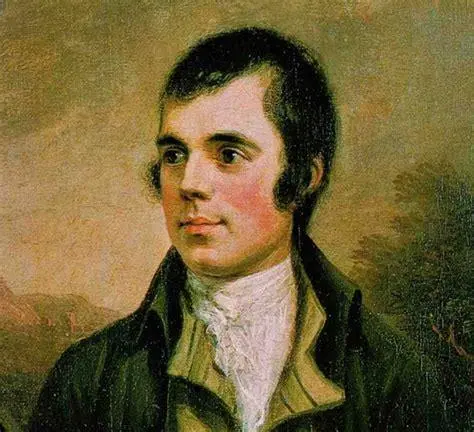
Robert Burns
Tragic Fragment
All devil as I am-a damned wretch,
A hardened, stubborn, unrepenting villain,
Still my heart melts at human wretchedness;
And with sincere but unavailing sighs
I view the helpless children of distress:
With tears indignant I behold the oppressor
Rejoicing in the honest man's destruction,
Whose unsubmitting heart was all his crime. -
Ev'n you, ye hapless crew! I pity you;
Ye, whom the seeming good think sin to pity;
Ye poor, despised, abandoned vagabonds,
Whom Vice, as usual, has turn'd o'er to ruin.
Oh! but for friends and interposing Heaven,
I had been driven forth like you forlorn,
The most detested, worthless wretch among you!
O injured God! Thy goodness has endow'd me
With talents passing most of my compeers,
Which I in just proportion have abused-
As far surpassing other common villains
As Thou in natural parts has given me more.
243
Henry Lawson
The Spirits for Good
We come with peace and reason,
We come with love and light,
To banish black self-treason
And everlasting night.
We know no god nor devil,
We neither drive nor lead—
We come to banish evil
In thought as well as deed.
And this our grandest mission,
And this our purest worth;
To banish superstition,
The blackest curse on earth.
We come to pass no sentence,
For ours is not the power—
The coward’s vain repentance
But wastes the waiting hour.
’Tis not for us to lengthen
The years of wasted lives;
We come to help and strengthen
The goodness that survives.
We promise nought hereafter,
We cannot conquer pain,
But work, and rest, and laughter,
Will soothe the tortured brain.
That which is lost, we cannot
Restore to any one—
But Truth and Right must triumph,
And Justice must be done!
We come in many guises;
But every one is plain
To each pure thought that rises
Again and yet again.
We are ourselves and human,
And ours our destiny;
The souls of Man and Woman
Divorced by Vanity.
242
Emily Dickinson
If I can stop one heart from breaking
If I can stop one heart from breaking,
I shall not live in vain;
If I can ease one life the aching,
Or cool one pain,
Or help one fainting robin
Unto his nest again,
I shall not live in vain.
I shall not live in vain;
If I can ease one life the aching,
Or cool one pain,
Or help one fainting robin
Unto his nest again,
I shall not live in vain.
242
Robert Burns
For a' That and a' That
Is there, for honest poverty,
That hings his head, an' a' that?
The coward slave, we pass him by,
We dare be poor for a' that!
For a' that, an' a' that,
Our toils obscure, an' a' that;
The rank is but the guinea's stamp;
The man's the gowd for a' that,
What tho' on hamely fare we dine,
Wear hoddin-gray, an' a' that;
Gie fools their silks, and knaves their wine,
A man's a man for a' that.
For a' that, an' a' that,
Their tinsel show an' a' that;
The honest man, tho' e'er sae poor,
Is king o' men for a' that.
Ye see yon birkie, ca'd a lord
Wha struts, an' stares, an' a' that;
Tho' hundreds worship at his word,
He's but a coof for a' that:
For a' that, an' a' that,
His riband, star, an' a' that,
The man o' independent mind,
He looks and laughs at a' that.
A prince can mak a belted knight,
A marquis, duke, an' a' that;
But an honest man's aboon his might,
Guid faith he mauna fa' that!
For a' that, an' a' that,
Their dignities, an' a' that,
The pith o' sense, an' pride o' worth,
Are higher rank than a' that.
Then let us pray that come it may,
As come it will for a' that,
That sense and worth, o'er a' the earth,
May bear the gree, an' a' that.
For a' that, an' a' that,
It's coming yet, for a' that,
That man to man, the warld o'er,
Shall brothers be for a' that.
240
Robert W. Service
The Ordinary Man
If you and I should chance to meet,
I guess you wouldn't care;
I'm sure you'd pass me in the street
As if I wasn't there;
You'd never look me in the face,
My modest mug to scan,
Because I'm just a commonplace
And Ordinary Man.
But then, it may be, you are too
A guy of every day,
Who does the job he's told to do
And takes the wife his pay;
Who makes a home and kids his care,
And works with pick or pen. . . .
Why, Pal, I guess we're just a pair
Of Ordinary Men.
We plug away and make no fuss,
Our feats are never crowned;
And yet it's common coves like us
Who make the world go round.
And as we steer a steady course
By God's predestined plan,
Hats off to that almighty Force:
THE ORDINARY MAN.
241
Henry Lawson
Eureka
Roll up, Eureka's heroes, on that grand Old Rush afar,
For Lalor's gone to join you in the big camp where you are;
Roll up and give him welcome such as only diggers can,
For well he battled for the rights of miner and of Man.
In that bright golden country that lies beyond our sight,
The record of his honest life shall be his Miner's Right;
But many a bearded mouth shall twitch, and many a tear be shed,
And many a grey old digger sigh to hear that Lalor's dead.
Yet wipe your eyes, old fossickers, o'er worked-out fields that roam,
You need not weep at parting from a digger going home.
Now from the strange wild seasons past, the days of golden strife,
Now from the Roaring Fifties comes a scene from Lalor's life:
All gleaming white amid the shafts o'er gully, hill and flat
Again I see the tents that form the camp at Ballarat.
I hear the shovels and the picks, and all the air is rife
With the rattle of the cradles and the sounds of digger-life;
The clatter of the windlass-boles, as spinning round they go,
And then the signal to his mate, the digger's cry, "Below!"
From many a busy pointing-forge the sound of labour swells,
The tinkling of the anvils is as clear as silver bells.
I hear the broken English from the mouth of many a one
From every state and nation that is known beneath the sun;
The homely tongue of Scotland and the brogue of Ireland blend
With the dialects of England, right from Berwick to Lands End;
And to the busy concourse here the States have sent a part,
The land of gulches that has been immortalised by Harte;
The land where long from mining-camps the blue smoke upward curled;
The land that gave the "Partner" true and "Mliss" unto the world;
The men from all the nations in the New World and the Old,
All side by side, like brethren here, are delving after gold.
But suddenly the warning cries are heard on every side
As closing in around the field, a ring of troopers ride,
Unlicensed diggers are the game--their class and want are sins,
And so with all its shameful scenes, the digger hunt begins.
The men are seized who are too poor the heavy tax to pay,
Chained man to man as convicts were, and dragged in gangs away.
Though in the eyes of many a man the menace scarce was hid,
The diggers' blood was slow to boil, but scalded when it did.
But now another match is lit that soon must fire the charge
"Roll up! Roll up!" the poignant cry awakes the evening air,
And angry faces surge like waves around the speakers there.
"What are our sins that we should be an outlawed class?" they say,
"Shall we stand by while mates are seized and dragged like lags away?
Shall insult be on insult heaped? Shall we let these things go?"
And with a roar of voices comes the diggers' answer--"No!"
The day has vanished from the scene, but not the air of night
Can cool the blood that, ebbing back, leaves brows in anger white.
Lo, from the roof of Bentley's Inn the flames are leaping high;
They write "Revenge!" in letters red across the smoke-dimmed sky.
"To arms! To arms!" the cry is out; "To arms and play your part;
For every pike upon a pole will find a tyrant's heart!"
Now Lalor comes to take the lead, the spirit does not lag,
And down the rough, wild diggers kneel beneath the Diggers' Flag;
Then, rising to their feet, they swear, while rugged hearts beat high,
To stand beside their leader and to conquer or to die!
Around Eureka's stockade now the shades of night close fast,
Three hundred sleep beside their arms, and thirty sleep their last.
About the streets of Melbourne town the sound of bells is borne
That call the citizens to prayer that fateful Sabbath morn;
But there upon Eureka's hill, a hundred miles away,
The diggers' forms lie white and still above the blood-stained clay.
The bells that toll the diggers' death might also ring a knell
For those few gallant soldiers, dead, who did their duty well.
The sight of murdered heroes is to hero-hearts a goad,
A thousand men are up in arms upon the Creswick road,
And wildest rumours in the air are flying up and down,
'Tis said the men of Ballarat will march on Melbourne town.
But not in vain those diggers died. Their comrades may rejoice,
For o'er the voice of tyranny is heard the people's voice;
It says: "Reform your rotten law, the diggers' wrongs make right,
Or else with them, our brothers now, we'll gather to the fight."
'Twas of such stuff the men were made who saw our nation born,
And such as Lalor were the men who led the vanguard on;
And like such men may we be found, with leaders such as they,
In the roll-up of Australians on our darkest, grandest day!
240
Robert W. Service
Agnostic Apology
I am a stout materialist;
With abstract terms I can't agree,
And so I've made a little list
Of words that don't make sense to me.
To fool my reason I refuse,
For honest thinking is my goal;
And that is why I rarely use
Vague words like Soul.
In terms of matter I am sure
This world of our can be defined;
And so with theories obscure
I will not mystify my mind;
And though I use it more or less,
Describing alcoholic scenes,
I do not know, I must confess,
What Spirit means.
When I survey this cosmic scene,
The term "Creator" seems absurd;
The Universe has always been,
Creation never has occurred.
But in my Lexicon of Doubt
It strikes me definitely odd,
One word I never dare to flout,
One syllable the mountains shout,
Three letters that the stars spell out:
GOD.
239