
Humanity and Solidarity

Henry Lawson
Booth's Drum [1]
They were “ratty” they were hooted by the meanest and the least,
When they woke the Drum of Glory long ago in London East.
They were often mobbed by hoodlums—they were few, but unafraid—
And their Lassies were insulted, but they banged the drum—and prayed.
Prayed in public for the sinners, prayed in private for release,
Till they saved some brawny lumpers—then they banged the drum in peace.
(Saved some prize-fighter and burglars)—and they banged the drum in peace.
Booth’s Drum.
He was hook-nosed, he was “scrawny,”
He was nothing of a Don.
And his business ways seemed Yiddish,
And his speeches “kid”—or kiddish;
And we doubted his “convictions”—
But his drum is going on.
Oh, they drummed it ever onward with old Blood-and-Fire unfurled,
And they drummed it ever outward to the corners of the world.
Till they banged the drum in Greenland and they banged in Ispahan,
And they banged it round to India and China and Japan.
And they banged it through the Islands where each seasoned Son of Rum
Took them for new-fangled Jim Jams when he heard the Army Drum.
(For a bran’ new brand of Horrors, when he saw the Army come.)
So they banged it in the desert, and they banged in the snow—
They’d have banged the Drum to Mecca! with the shadow of a “show.”
(But Mohammed cut their heads off, so they had to let it go.)
Somewhere in the early eighties they had banged the drum to Bourke,
Where the job of fighting Satan was white-hot and dusty work.
Oh, the Local Lass was withered in the heat that bakes and glares,
And we sent her food and firewood but took small heed of her prayers.
We were blasphemous and beery, we were free from Creed or Care,
Till they sent their prettiest Lassies—and they broke our centre there.
So that, moderately sober, we could stand to hear them sing—
And we’d chaff their Testifiers, and throw quids into the ring.
(Never less than bobs or “dollars”—sometimes quids into the ring.)
They have “stormed” our sinful cities—banged for all that they were worth—
From Port Darwin to Port Melbourne, and from Sydney round to Perth.
We’d no need for them (or woman) when we were all right and well,
But they took us out of prison, and they took us out of Hell.
And they helped our fallen sisters who went down for such as we,
And our widows and our orphans in distress and poverty.
And neglected wives and children of the worst of us that be;
And they made us fit for Glory—or another Glorious Spree.
(So I rather think there’s something that is up to you or me.)
Oh! the Blindness of the Future!—Ah, we never reckoned much
That they’d beat the quids we gave them into bayonets and such.
That the coin would be devoted, when our world was looking blue,
To another kind of orphan—wife, or child, or widow too.
But the times have changed a sudden, and the past is very dim;
They Have Found a Real Devil, and They’re Going After Him.
(With a Bible and a Rifle they are going after him.)
For the old Salvation Army, and their Country, and their King,
They are marching to the trenches, shouting, “Comrades! Let us Sing!”
They’ll find foreign “Army” soldiers here and there and everywhere,
Who will speak their tongue and help them. And they’ll surely breathe a prayer
For the Spy—before they shoot him; and another when he’s still.
And they’re going to “fire a volley” in the Land of Kaiser Bill.
But, when all is done and quiet—as before they march away—
They will kneel about their banner, saying “Brethren. Let us pray.”
They have long used army rank-terms, and oh, say what it shall be,
When a few come back the real thing, and when one comes back V.C.!
They will bang the drum at Crow’s Nest, they will bang it on “the Shore,”
They will bang the drum in Kent-street as they never banged before.
And At Last they’ll frighten Satan from the Mansion and the Slum—
He’ll have never heard till that time such a Banging of the Drum.
He was lonely with his thousands,
Lonely in his household too,
For his children had deserted,
And his captains, not a few.
He was old and white and feeble
And his sight was nearly gone,
And he “could not see his people,”
But his drum is rolling on.
Booth’s Drum.
280
Henry Lawson
The Seabolt's Volunteers
They towed the Seabolt down the stream,
And through the harbour’s mouth;
She spread her wings and sailed away
To seek the sunny South.
But, ah! she met with storm on storm
Ere half her course had run;
And all her masts were torn away,
And all her boats save one.
The good old ship had settled far
Beneath her cargo line,
Her riven sides were drinking deep
The draughts of ocean brine.
There gathered round the only boat
The women pale with fear,
And trembling little ones, who clung
To those who held them dear.
Then spoke the captain, brave and true,
His voice rose o’er the roar;
“The boat will save us all but five,
She cannot float with more!”
And backward from the side he stepped—
(He had been born at sea)
“Now who will seek in ocean’s depths
A sailor’s grave with me?”
Then up there stepped a merchant stout,
His face was brown and tan:
“I’ll volunteer to stay on board,
For I’m an Englishman!”
Then spoke a gallant gentleman,
A lover of romance:
“Remain I for the ladies’ sake,
For I’m a son of France!”
And next there spoke a Highlander:
“Go search the wide world round,
You’ll find no spot where on the earth
A Scotsman is not found!”
And then there spoke a lad to whom
Killarney’s lakes were dear:
“It won’t be said that Ireland found
No place of honour here!”
The boat pushed from the vessel’s side
Amid the ringing cheers;
And now beneath Old Ocean sleep
The Seabolt’s volunteers.
279
Henry Lawson
Otherside
Somewhere in the mystic future, on the road to Paradise,
There’s a very pleasant country that I’ve dreamed of once or twice,
It has inland towns, and cities by the ocean’s rocky shelves,
But the people of the country differ somewhat from ourselves;
It is many leagues beyond us, and they call it Otherside.
And there is among its people more Humanity than Pride.
Now, a social system never was complete, without a flaw,
And among the Othersiders there is love and gold and war.
But if one is fairly beaten he can turn upon the track,
For in such a case there isn’t any shame in going back;
And a broken-hearted mortal never thinks of suicide,
For he finds amongst his brothers more Humanity than Pride.
And the lords of that creation never scoff at simple things,
Never scorn the lad who’s tethered to his mother’s apron-strings.
He will speak of “home” and “mother” without shame when he’s inclined,
Yet the blow he strikes in battle mostly leaves a mark behind.
They are brave against invasion; they can die in Otherside,
Though there is among the people more Humanity than Pride.
Poets sing in simple language that a child might understand,
Yet their songs are sung for ages by the elders of the land;
And the people know that Freedom never shall be wanting guards,
For the foremost in the vanguard waves the banner of the Bards.
O the poets march together, and at home in peace abide,
For there is amongst the people more Humanity than Pride.
And when I am very weary, ’neath a load of “worldly care”,
There are times when I’ve a longing just to hump my bluey there;
But alone I could not reach it, for the track is barred to one—
I must take the nations with me—all mankind must go, or none—
And we’d trample one another on the way to Otherside,
For I find among my brothers less Humanity than Pride.
280

John Greenleaf Whittier
The Vision Of Echard
The Benedictine Echard
Sat by the wayside well,
Where Marsberg sees the bridal
Of the Sarre and the Moselle.
Fair with its sloping vineyards
And tawny chestnut bloom,
The happy vale Ausonius sunk
For holy Treves made room.
On the shrine Helena builded
To keep the Christ coat well,
On minster tower and kloster cross,
The westering sunshine fell.
There, where the rock-hewn circles
O'erlooked the Roman's game,
The veil of sleep fell on him,
And his thought a dream became.
He felt the heart of silence
Throb with a soundless word,
And by the inward ear alone
A spirit's voice he heard.
And the spoken word seemed written
On air and wave and sod,
And the bending walls of sapphire
Blazed with the thought of God.
'What lack I, O my children?
All things are in my band;
The vast earth and the awful stars
I hold as grains of sand.
'Need I your alms? The silver
And gold are mine alone;
The gifts ye bring before me
Were evermore my own.
'Heed I the noise of viols,
Your pomp of masque and show?
Have I not dawns and sunsets
Have I not winds that blow?
'Do I smell your gums of incense?
Is my ear with chantings fed?
Taste I your wine of worship,
Or eat your holy bread?
'Of rank and name and honors
Am I vain as ye are vain?
What can Eternal Fulness
From your lip-service gain?
'Ye make me not your debtor
Who serve yourselves alone;
Ye boast to me of homage
Whose gain is all your own.
'For you I gave the prophets,
For you the Psalmist's lay
For you the law's stone tables,
And holy book and day.
'Ye change to weary burdens
The helps that should uplift;
Ye lose in form the spirit,
The Giver in the gift.
'Who called ye to self-torment,
To fast and penance vain?
Dream ye Eternal Goodness
Has joy in mortal pain?
'For the death in life of Nitria,
For your Chartreuse ever dumb,
What better is the neighbor,
Or happier the home?
'Who counts his brother's welfare
As sacred as his own,
And loves, forgives, and pities,
He serveth me alone.
'I note each gracious purpose,
Each kindly word and deed;
Are ye not all my children?
Shall not the Father heed?
'No prayer for light and guidance
Is lost upon mine ear
The child's cry in the darkness
Shall not the Father hear?
'I loathe your wrangling councils,
I tread upon your creeds;
Who made ye mine avengers,
Or told ye of my needs;
'I bless men and ye curse them,
I love them and ye hate;
Ye bite and tear each other,
I suffer long and wait.
'Ye bow to ghastly symbols,
To cross and scourge and thorn;
Ye seek his Syrian manger
Who in the heart is born.
'For the dead Christ, not the living,
Ye watch His empty grave,
Whose life alone within you
Has power to bless and save.
'O blind ones, outward groping,
The idle quest forego;
Who listens to His inward voice
Alone of Him shall know.
'His love all love exceeding
The heart must needs recall,
Its self-surrendering freedom,
Its loss that gaineth all.
'Climb not the holy mountains,
Their eagles know not me;
Seek not the Blessed Islands,
I dwell not in the sea.
'Gone is the mount of Meru,
The triple gods are gone,
And, deaf to all the lama's prayers,
The Buddha slumbers on.
'No more from rocky Horeb
The smitten waters gush;
Fallen is Bethel's ladder,
Quenched is the burning bush.
'The jewels of the Urim
And Thurnmim all are dim;
The fire has left the altar,
The sign the teraphim.
'No more in ark or hill grove
The Holiest abides;
Not in the scroll's dead letter
The eternal secret hides.
'The eye shall fail that searches
For me the hollow sky;
The far is even as the near,
The low is as the high.
'What if the earth is hiding
Her old faiths, long outworn?
What is it to the changeless truth
That yours shall fail in turn?
'What if the o'erturned altar
Lays bare the ancient lie?
What if the dreams and legends
Of the world's childhood die?
'Have ye not still my witness
Within yourselves alway,
My hand that on the keys of life
For bliss or bale I lay?
'Still, in perpetual judgment,
I hold assize within,
With sure reward of holiness,
And dread rebuke of sin.
'A light, a guide, a warning,
A presence ever near,
Through the deep silence of the flesh
I reach the inward ear.
'My Gerizim and Ebal
Are in each human soul,
The still, small voice of blessing,
And Sinai's thunder-roll.
'The stern behest of duty,
The doom-book open thrown,
The heaven ye seek, the hell ye fear,
Are with yourselves alone.'
. . . . .
A gold and purple sunset
Flowed down the broad Moselle;
On hills of vine and meadow lands
The peace of twilight fell.
A slow, cool wind of evening
Blew over leaf and bloom;
And, faint and far, the Angelus
Rang from Saint Matthew's tomb.
Then up rose Master Echard,
And marvelled: 'Can it be
That here, in dream and vision,
The Lord hath talked with me?'
He went his way; behind him
The shrines of saintly dead,
The holy coat and nail of cross,
He left unvisited.
He sought the vale of Eltzbach
His burdened soul to free,
Where the foot-hills of the Eifel
Are glassed in Laachersee.
And, in his Order's kloster,
He sat, in night-long parle,
With Tauler of the Friends of God,
And Nicolas of Basle.
And lo! the twain made answer
'Yea, brother, even thus
The Voice above all voices
Hath spoken unto us.
'The world will have its idols,
And flesh and sense their sign
But the blinded eyes shall open,
And the gross ear be fine.
'What if the vision tarry?
God's time is always best;
The true Light shall be witnessed,
The Christ within confessed.
'In mercy or in judgment
He shall turn and overturn,
Till the heart shall be His temple
Where all of Him shall learn.'
279
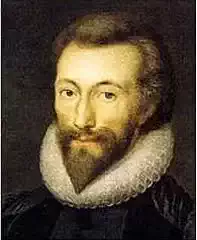
John Donne
Holy Sonnet XII: Why Are We By All Creatures Waited On?
Why are we by all creatures waited on?
Why do the prodigal elements supply
Life and food to me, being more pure than I,
Simple, and further from corruption?
Why brook'st thou, ignorant horse, subjection?
Why dost thou, bull, and bore so seelily,
Dissemble weakness, and by one man's stroke die,
Whose whole kind you might swallow and feed upon?
Weaker I am, woe is me, and worse than you,
You have not sinned, nor need be timorous.
But wonder at a greater wonder, for to us
Created nature doth these things subdue,
But their Creator, whom sin nor nature tied,
For us, His creatures, and His foes, hath died.
276

Gwendolyn Brooks
The Lovers of the Poor
arrive. The Ladies from the Ladies' Betterment League
Arrive in the afternoon, the late light slanting
In diluted gold bars across the boulevard brag
Of proud, seamed faces with mercy and murder hinting
Here, there, interrupting, all deep and debonair,
The pink paint on the innocence of fear;
Walk in a gingerly manner up the hall.
Cutting with knives served by their softest care,
Served by their love, so barbarously fair.
Whose mothers taught: You'd better not be cruel!
You had better not throw stones upon the wrens!
Herein they kiss and coddle and assault
Anew and dearly in the innocence
With which they baffle nature. Who are full,
Sleek, tender-clad, fit, fiftyish, a-glow, all
Sweetly abortive, hinting at fat fruit,
Judge it high time that fiftyish fingers felt
Beneath the lovelier planes of enterprise.
To resurrect. To moisten with milky chill.
To be a random hitching-post or plush.
To be, for wet eyes, random and handy hem.
Their guild is giving money to the poor.
The worthy poor. The very very worthy
And beautiful poor. Perhaps just not too swarthy?
perhaps just not too dirty nor too dim
Nor--passionate. In truth, what they could wish
Is--something less than derelict or dull.
Not staunch enough to stab, though, gaze for gaze!
God shield them sharply from the beggar-bold!
The noxious needy ones whose battle's bald
Nonetheless for being voiceless, hits one down.
But it's all so bad! and entirely too much for them.
The stench; the urine, cabbage, and dead beans,
Dead porridges of assorted dusty grains,
The old smoke, heavy diapers, and, they're told,
Something called chitterlings. The darkness. Drawn
Darkness, or dirty light. The soil that stirs.
The soil that looks the soil of centuries.
And for that matter the general oldness. Old
Wood. Old marble. Old tile. Old old old.
Not homekind Oldness! Not Lake Forest, Glencoe.
Nothing is sturdy, nothing is majestic,
There is no quiet drama, no rubbed glaze, no
Unkillable infirmity of such
A tasteful turn as lately they have left,
Glencoe, Lake Forest, and to which their cars
Must presently restore them. When they're done
With dullards and distortions of this fistic
Patience of the poor and put-upon.
They've never seen such a make-do-ness as
Newspaper rugs before! In this, this 'flat,'
Their hostess is gathering up the oozed, the rich
Rugs of the morning (tattered! the bespattered. . . .)
Readies to spread clean rugs for afternoon.
Here is a scene for you. The Ladies look,
In horror, behind a substantial citizeness
Whose trains clank out across her swollen heart.
Who, arms akimbo, almost fills a door.
All tumbling children, quilts dragged to the floor
And tortured thereover, potato peelings, soft-
Eyed kitten, hunched-up, haggard, to-be-hurt.
Their League is allotting largesse to the Lost.
But to put their clean, their pretty money, to put
Their money collected from delicate rose-fingers
Tipped with their hundred flawless rose-nails seems...
They own Spode, Lowestoft, candelabra,
Mantels, and hostess gowns, and sunburst clocks,
Turtle soup, Chippendale, red satin 'hangings,'
Aubussons and Hattie Carnegie. They Winter
In Palm Beach; cross the Water in June; attend,
When suitable, the nice Art Institute;
Buy the right books in the best bindings; saunter
On Michigan, Easter mornings, in sun or wind.
Oh Squalor! This sick four-story hulk, this fibre
With fissures everywhere! Why, what are bringings
Of loathe-love largesse? What shall peril hungers
So old old, what shall flatter the desolate?
Tin can, blocked fire escape and chitterling
And swaggering seeking youth and the puzzled wreckage
Of the middle passage, and urine and stale shames
And, again, the porridges of the underslung
And children children children. Heavens! That
Was a rat, surely, off there, in the shadows? Long
And long-tailed? Gray? The Ladies from the Ladies'
Betterment League agree it will be better
To achieve the outer air that rights and steadies,
To hie to a house that does not holler, to ring
Bells elsetime, better presently to cater
To no more Possibilities, to get
Away. Perhaps the money can be posted.
Perhaps they two may choose another Slum!
Some serious sooty half-unhappy home!--
Where loathe-love likelier may be invested.
Keeping their scented bodies in the center
Of the hall as they walk down the hysterical hall,
They allow their lovely skirts to graze no wall,
Are off at what they manage of a canter,
And, resuming all the clues of what they were,
Try to avoid inhaling the laden air.
275

Robert W. Service
The Bandit
Upon his way to rob a Bank
He paused to watch a fire;
Though crowds were pressing rank on rank
He pushed a passage nigher;
Then sudden heard, piercing and wild,
The screaming of a child.
A Public Enemy was he,
A hater of the law;
He looked around for bravery
But only fear he saw;
Then to the craven crowds amaze
He plunged into the blaze.
How anguished was the waiting spell
Of horror and of pain!
Then--then from out that fiery hell
He staggered forth again:
The babe was safe, in blankets wrapt,
The man flame lapt.
His record was an evil one,
Of violence and sin.
No good on earth he'd ever done,
Yet--may he Heaven win!
A gangster he . . . Is it not odd?
--With guts of God.
273
Henry Lawson
The Two Samaritans and the Tramp
A TRAMP was trampin’ on the road—
The afternoon was warm an’ muggy—
And by-and-by he chanced to meet
A parsin ridin’ in a buggy.
Said he: “As follerers ov the Loard,
To do good offices we oughter!”
An’ from a water-bag he poured,
An’ guv the tramp, a drink er water.
The parsin he went rattlin’ ’ome
To ware his fam-i-lee was thrivin’,
The tramp went on until he met
A bullick-driver, bullick drivin’—
“It’s bilin’ ’ot,” the driver sed
As soon’s the dirty tramp drawed nearer,
And from a little keg he poured,
And giv the tramp a pint of beer—“ah!”
(P.S.—The “ah” is meant to stand for the tramp a-drinking ov it.)
I ain’t agin the temperance cause,
Nor yet no advocate ov drinkin’—
I only tells the yarn because—
Well, at the time it somehow seemed
Ter kind ov set me thinkin’.
273
John Greenleaf Whittier
By Their Works
Call him not heretic whose works attest
His faith in goodness by no creed confessed.
Whatever in love's name is truly done
To free the bound and lift the fallen one
Is done to Christ. Whoso in deed and word
Is not against Him labours for our Lord.
When he, who, sad and weary, longing sore
For love's sweet service sought the sisters' door
One saw the heavenly, one the human guest
But who shall say which loved the master best?
271
Robert W. Service
The Ape And God
Son put a poser up to me
That made me scratch my head:
"God made the whole wide world," quoth he;
"That's right, my boy," I said.
Said son: "He mad the mountains soar,
And all the plains lie flat;
But Dad, what did he do before
He did all that?
Said I: "Creation was his biz;
He set the stars to shine;
The sun and moon and all that is
Were His unique design.
The Cosmos is his concrete thought,
The Universe his chore..."
Said Son: "I understand, but what
Did He before?"
I gave it up; I could not cope
With his enquiring prod,
And must admit I've little hope
Of understanding God.
Indeed I find more to my mind
The monkey in the tree
In whose crude form Nature defined
Our human destiny.
Thought I: "Why search for Deity
In visionary shape?
'Twould better be if we could see
The angel in the ape.
Let mystic seek a God above:
Far wiser he who delves,
To find in kindliness and love
God in ourselves."
271

Thomas Hardy
In a Wood
In a Wood
Pale beech and pine-tree blue,
Set in one clay,
Bough to bough cannot you
Bide out your day?
When the rains skim and skip,
Why mar sweet comradeship,
Blighting with poison-drip
Neighborly spray?
Heart-halt and spirit-lame,
City-opprest,
Unto this wood I came
As to a nest;
Dreaming that sylvan peace
Offered the harrowed ease—
Nature a soft release
From men’s unrest.
But, having entered in,
Great growths and small
Show them to men akin—
Combatants all!
Sycamore shoulders oak,
Bines the slim sapling yoke,
Ivy-spun halters choke
Elms stout and tall.
Touches from ash, O wych,
Sting you like scorn!
You, too, brave hollies, twitch
Sidelong from thorn.
Even the rank poplars bear
Illy a rival’s air,
Cankering in black despair
If overborne.
Since, then, no grace I find
Taught me of trees,
Turn I back to my kind,
Worthy as these.
There at least smiles abound,
There discourse trills around,
There, now and then, are found
Life-loyalties.
272
John Greenleaf Whittier
The Conquest Of Finland
ACROSS the frozen marshes
The winds of autumn blow,
And the fen-lands of the Wetter
Are white with early snow.
But where the low, gray headlands
Look o'er the Baltic brine,
A bark is sailing in the track
Of England's battle-line.
No wares hath she to barter
For Bothnia's fish and grain;
She saileth not for pleasure,
She saileth not for gain.
But still by isle or mainland
She drops her, anchor down,
Where'er the British cannon
Rained fire on tower and town.
Outspake the ancient Amtman,
At the gate of Helsingfors:
'Why comes this ship a-spying
In the track of England's wars?'
'God bless her,' said the coast-guard, —
'God bless the ship, I say.
The holy angels trim the sails
That speed her on her way!
'Where'er she drops her anchor,
The peasant's heart is glad;
Where'er she spreads her parting sail,
The peasant's heart is sad.
'Each wasted town and hamlet
She visits to restore;
To roof the shattered cabin,
And feed the starving poor.
' The sunken boats of fishers,
The foraged beeves and grain,
The spoil of flake and storehouse,
The good ship brings again.
'And so to Finland's sorrow
The sweet amend is made,
As if the healing hand of Christ
Upon her wounds were laid!'
Then said the gray old Amtman,
'The will of God be done!
The battle lost by England's hate,
By England's love is won!
'We braved the iron tempest
That thundered on our shore;
But when did kindness fail to find
The key to Finland's door?
'No more from Aland's ramparts
Shall warning signal come,
Nor startled Sweaborg hear again
The roll of midnight drum.
'Beside our fierce Black Eagle
The Dove of Peace shall rest;
And in the mouths of cannon
The sea-bird make her nest.
'For Finland, looking seaward,
No coming foe shall scan;
And the holy bells of Abo
Shall ring, 'Good-will to man!'
'Then row thy boat, O fisher!
In peace on lake and bay;
And thou, young maiden, dance again
Around the poles of May!
'Sit down, old men, together,
Old wives, in quiet spin;
Henceforth the Anglo-Saxon
Is the brother of the Finn!'
271
Henry Lawson
Since the Cities are the Cities
FOOLS can parrot-cry the prophet when the proof is close at hand,
And the blind can see the danger when the foe is in the land!
Truth was never cynicism, death or ruin’s not a joke,
“Told-you-so” is not a warning—Patriotism not a croak.
Blame will aid no man nor country when the dark days come at last—
As with men so with a nation, and the warning time is past.
Our great sins were of omission, and the dogs of war are loosed—
And we all must stand together when those sins come home to roost.
Since the cities are the cities and shall stand for evermore,
Let us justify our being, be it peace or be it war.
For because we are the townsfolk, and have never ridden far
Shall we call the bush to aid us that has made us what we are?
Westward went our brothers, fighting distance, drought, and loneliness
While we lived in light and comfort knowing nothing of distress,
We who never shared the hardships when the sunset led them on,
Now’s our time, O street-bred people, with our faces to the dawn!
They have conquered with the cross-cut and the wedges and the maul,
With the spade and axe and mattock and the saddle-packs and all,
They have mighty work before them for the sake of you and me—
Let us stand up to our duty! We’re the Rearguard by the Sea.
Days of gibes at “street-bred people” by the street-bred bards are done—
Shall the man who lays the yard-stick never learn to lay the gun?
Shall the crouched type-writer toiling for his home in days like these
Touch the button the less firmly when we play on other keys?
We have seen in many countries what the street-bred men can do—
In the desert, scrub and jungle they were men who battled through!
Human weeds of grand endurance winning where the strong men quailed,
Pigeon-chested leaders leading on where beef-born courage failed.
Street-bred people down the ages—beggars, mobs and democrats—
Fought through many desperate sieges (fought on horseflesh, dogs and rats)
When their own cowed country failed them, then the city soul was proved—
“Street-bred people” died in thousands for the cities that they loved.
In the days when strength was needed—days of pike and axe and sword—
Daylight found the peaceful burghers ready, keeping watch and ward.
Clerks and tailors fought like heroes at the gates and in the trench—
(Even Falstaff brought his herrings with some slaughter through the French).
Every man should have a cottage and a garden to defend,
But the “should-be” is for ever—cities stand until the end,
Every farmer has a country that he loves when war-drums roll—
Every clerk may have a city that he loves with heart and soul.
Fat or lean, we all are sinners—lean or fat we all would be;
High or low or lean or fatted, ’tis for Nationality.
It will be till all is ended, as it was since all began—
’Tis the head and not the feathers! ’tis the heart and not the “man”!
271
Henry Lawson
The Bush Fire
Ah, better the thud of the deadly gun, and the crash of the bursting shell,
Than the terrible silence where drought is fought out there in the western hell;
And better the rattle of rifles near, or the thunder on deck at sea,
Than the sound—most hellish of all to hear—of a fire where it should not be.
On the runs to the west of the Dingo Scrubs there was drought, and ruin, and death,
And the sandstorm came from the dread north-east with the blast of a furnace-breath;
Till at last one day, at the fierce sunrise, a boundary-rider woke,
And saw, in the place of the distant haze, a curtain of light blue smoke.
There is saddling-up by the cockey’s hut, and out in the station yard,
And away to the north, north-east, north-west, the bushmen are riding hard.
The pickets are out and many a scout, and many a mulga wire,
While Bill and Jim, with their faces grim, are riding to meet the fire.
It roars for days in the hopeless scrubs, and across, where the ground seems bare,
With a cackle and hiss, like the hissing of snakes, the fire is travelling there;
Till at last, exhausted by sleeplessness, and the terrible toil and heat,
The squatter is crying, ‘My God! the wool!’ and the farmer, ‘My God! the wheat!’
But there comes a drunkard (who reels as he rides), with the news from the roadside
pub:—
‘Pat Murphy—the cockey—cut off by the fire!—way back in the Dingo Scrub!’
‘Let the wheat and the woolshed go to——’ Well, they do as each great heart bids;
They are riding a race for the Dingo Scrub—for Pat and his wife and kids.
And who is leading the race with death? An ill-matched three, you’ll allow;
Flash Jim the breaker and Boozing Bill (who is riding steadily now),
And Constable Dunn, of the Mounted Police, is riding between the two
(He wants Flash Jim, but the job can wait till they get the Murphys through).
As they strike the track through the blazing scrub, the trooper is heard to shout:
‘We’ll take them on to the Two-mile Tank, if we cannot bring them out!’
A half-mile more, and the rest rein back, retreating, half-choked, halfblind;
And the three are gone from the sight of men, and the bush fire roars behind.
The Bushman wiped the tears of smoke, and like Bushmen wept and swore;
‘Poor Bill will be wanting his drink to-night as never he did before.
‘And Dunn was the best in the whole damned force!’ says a client of Dunn’s, with pride;
I reckon he’ll serve his summons on Jim—when they get to the other side.
It is daylight again, and the fire is past, and the black scrub silent and grim,
Except for the blaze of an old dead tree, or the crash of a falling limb;
And the Bushmen are riding again on the run, with hearts and with eyes that fill,
To look for the bodies of Constable Dunn, Flash Jim, and Boozing Bill.
They are found in the mud of the Two-mile Tank, where a fiend might scarce survive,
But the Bushmen gather from words they hear that the bodies are much alive.
There is Swearing Pat, with his grey beard singed, and his language of lurid hue,
And his tough old wife, and his half-baked kids, and the three who dragged them
through.
Old Pat is deploring his burnt-out home, and his wife the climate warm;
And Jim the loss of his favourite horse, and Dunn his uniform;
And Boozing Bill, with a raging thirst, is cursing the Dingo Scrub—
He’ll only ask for the loan of a flask and a lift to the nearest pub.
Flash Jim the Breaker is lying low—blue-paper is after him,
And Dunn, the trooper, is riding his rounds with a blind eye out for Jim,
And Boozing Bill is fighting D.Ts. in the township of Sudden Jerk—
When they’re wanted again in the Dingo Scrubs, they’ll be there to do the work.
271
Robert W. Service
Charity
The Princess was of ancient line,
Of royal race was she;
Like cameo her face was fine,
With sad serentiy:
Yet bent she toiled with dimming eye,
Her rice and milk to buy.
With lacework that for pity plead,
So out of date it seemed,
She sought to make her daily bread,
As of her past she dreamed:
And though sometimes I heard her sigh,
I never knew her cry.
Her patient heart was full of hope,
For health she gave God thanks,
Till one day in an envelope
I sealed a thousand francs,
And 'neath her door for her to see
I slipped it secretly.
'Twas long after, I came to know
My gift she never spent,
But gave to one of greater woe,
And wearily she went . . .
To be of charity a part,-That
stabbed her to the heart.
For one dark day we found her dead:
Oh she was sweet to see!
Exalted in her garret bed
With face like ivory . . .
Aye, though from lack of food she died,
Unflawed she flagged her pride.
271
Henry Lawson
The Drums of Ages
Drums of all that’s right and wrong—of love and hate and scorn,
And the new-born baby hears them and it wails when it is born.
Drums of all that is to be, and all that has gone by,
And we hear them when we’re dreaming, and we hear them while we die.
Drums of martyred innocence and drums of driven guilt
Beating backward from the future when the first rude town was built;
Beating louder through the slave days and the dark and hungry nights,
While the hovels filled the valleys and the castles crowned the heights;
Beating louder while the mansions shifted east from miles of slums—
Don’t you hear them? Don’t you hear them? Don’t you hear the alley drums?
Drums of human sacrifice and drums of war at home—
While the Romans conquered nations they were beating loud in Rome.
Children heard them through the ages, mothers paused and glanced behind,
Madmen saw and heard the drummers, but the rest were deaf and blind.
Peasants starved on fields of plenty, workmen rotted in the slums—
Till the drummers came to Paris and the nations heard the drums.
Drums of hope and bursting hearts—the drums of Westward Ho!—
From the homes of generations and their native land they go.
’Groom and bride and grey-haired mother, bent old men who go alone—
Fleeing bitter persecution for the terrible unknown:
Seeking freedom, rest, or justice—and the peace that never comes—
And the wilderness was conquered when the pilgrims beat their drums.
Drums of Greed that followed fast where men had made the way,
Waking drums of stern rebellion when the exiles turned at bay,
Spreading death and desolation, breeding old-world hells anew,
Until England lost a nation for the blindness of a few.
Still the dirty Jewish talon reached from palaces and slums
Till a hundred thousand English died to stop the farmers’ drums.
Drums of tortured hearts o’ men—the drums that never ceased—
Throbbing through the British Empire from the heart of London East;
Growling louder still wherever, in the wake of those who lead,
Comes the murmur of the board-room and the stealthy steps of greed;
Growling through the Southern cities, murmuring in the Western gums,
Till the Empire falls to pieces at the beating of the drums!
Drums of all that’s right and wrong—of love and hate and scorn;
And the new-born baby hears them, and he wails when he is born.
Drums of all that is to be, and all that has gone by—
And we hear there when we’re dreaming, and we hear then while we die.
270

Henry Wadsworth Longfellow
Tales Of A Wayside Inn : The Theologian's Tale; The Legend Beautiful
'Hads't thou stayed, I must have fled!'
That is what the Vision said.
In his chamber all alone,
Kneeling on the floor of stone,
Prayed the Monk in deep contrition
For his sins of indecision,
Prayed for greater self-denial
In temptation and in trial;
It was noonday by the dial,
And the Monk was all alone.
Suddenly, as if it lightened,
An unwonted splendor brightened
All within him and without him
In that narrow cell of stone;
And he saw the Blessed Vision
Of our Lord, with light Elysian
Like a vesture wrapped about him,
Like a garment round him thrown.
Not as crucified and slain,
Not in agonies of pain,
Not with bleeding hands and feet,
Did the Monk his Master see;
But as in the village street,
In the house or harvest-field,
Halt and lame and blind he healed,
When he walked in Galilee.
In an attitude imploring,
Hands upon his bosom crossed,
Wondering, worshipping, adoring,
Knelt the Monk in rapture lost.
Lord, he thought, in heaven that reignest,
Who am I, that thus thou deignest
To reveal thyself to me?
Who am I, that from the centre
Of thy glory thou shouldst enter
This poor cell, my guest to be?
Then amid his exaltation,
Loud the convent bell appalling,
From its belfry calling, calling,
Rang through court and corridor
With persistent iteration
He had never heard before.
It was now the appointed hour
When alike in shine or shower,
Winter's cold or summer's heat,
To the convent portals came
All the blind and halt and lame,
All the beggars of the street,
For their daily dole of food
Dealt them by the brotherhood;
And their almoner was he
Who upon his bended knee,
Rapt in silent ecstasy
Of divinest self-surrender,
Saw the Vision and the Splendor.
Deep distress and hesitation
Mingled with his adoration;_
Should he go, or should he stay?
Should he leave the poor to wait
Hungry at the convent gate,
Till the Vision passed away?
Should he slight his radiant guest,
Slight this visitant celestial,
For a crowd of ragged, bestial
Beggars at the convent gate?
Would the Vision there remain?
Would the Vision come again?
Then a voice within his breast
Whispered, audible and clear
As if to the outward ear:
'Do thy duty; that is best;
Leave unto thy Lord the rest!'
Straightway to his feet he started,
And with longing look intent
On the Blessed Vision bent,
Slowly from his cell departed,
Slowly on his errand went.
At the gate the poor were waiting,
Looking through the iron grating,_
With that terror in the eye
That is only seen in those
Who amid their wants and woes
Hear the sound of doors that close,
And of feet that pass them by;
Grown familiar with disfavor,
Grown familiar with the savor
Of the bread by which men die!
But to-day, they knew not why,
Like the gate of Paradise
Seemed the convent sate to rise,
Like a sacrament divine
Seemed to them the bread and wine.
In his heart the Monk was praying,
Thinking of the homeless poor,
What they suffer and endure;
What we see not, what we see;
And the inward voice was saying:
'Whatsoever thing thou doest
To the least of mine and lowest,
That thou doest unto me!'
Unto me! but had the Vision
Come to him in beggar's clothing,
Come a mendicant imploring,
Would he then have knelt adoring,
Or have listened with derision,
And have turned away with loathing.
Thus his conscience put the question,
Full of troublesome suggestion,
As at length, with hurried pace,
Towards his cell he turned his face,
And beheld the convent bright
With a supernatural light,
Like a luminous cloud expanding
Over floor and wall and ceiling.
But he paused with awe-struck feeling
At the threshold of his door,
For the Vision still was standing
As he left it there before,
When the convent bell appalling,
From its belfry calling, calling,
Summoned him to feed the poor.
Through the long hour intervening
It had waited his return,
And he felt his bosom burn,
Comprehending all the meaning,
When the Blessed Vision said,
'Hadst thou stayed, I must have fled!'
268
Thomas Hardy
The Souls of the Slain
I
The thick lids of Night closed upon me
Alone at the Bill
Of the Isle by the Race {} -
Many-caverned, bald, wrinkled of face -
And with darkness and silence the spirit was on me
To brood and be still.
II
No wind fanned the flats of the ocean,
Or promontory sides,
Or the ooze by the strand,
Or the bent-bearded slope of the land,
Whose base took its rest amid everlong motion
Of criss-crossing tides.
III
Soon from out of the Southward seemed nearing
A whirr, as of wings
Waved by mighty-vanned flies,
Or by night-moths of measureless size,
And in softness and smoothness well-nigh beyond hearing
Of corporal things.
IV
And they bore to the bluff, and alighted -
A dim-discerned train
Of sprites without mould,
Frameless souls none might touch or might hold -
On the ledge by the turreted lantern, farsighted
By men of the main.
V
And I heard them say "Home!" and I knew them
For souls of the felled
On the earth's nether bord
Under Capricorn, whither they'd warred,
And I neared in my awe, and gave heedfulness to them
With breathings inheld.
VI
Then, it seemed, there approached from the northward
A senior soul-flame
Of the like filmy hue:
And he met them and spake: "Is it you,
O my men?" Said they, "Aye! We bear homeward and hearthward
To list to our fame!"
VII
"I've flown there before you," he said then:
"Your households are well;
But--your kin linger less
On your glory arid war-mightiness
Than on dearer things."--"Dearer?" cried these from the dead then,
"Of what do they tell?"
VIII
"Some mothers muse sadly, and murmur
Your doings as boys -
Recall the quaint ways
Of your babyhood's innocent days.
Some pray that, ere dying, your faith had grown firmer,
And higher your joys.
IX
"A father broods: 'Would I had set him
To some humble trade,
And so slacked his high fire,
And his passionate martial desire;
Had told him no stories to woo him and whet him
To this due crusade!"
X
"And, General, how hold out our sweethearts,
Sworn loyal as doves?"
--"Many mourn; many think
It is not unattractive to prink
Them in sables for heroes. Some fickle and fleet hearts
Have found them new loves."
XI
"And our wives?" quoth another resignedly,
"Dwell they on our deeds?"
--"Deeds of home; that live yet
Fresh as new--deeds of fondness or fret;
Ancient words that were kindly expressed or unkindly,
These, these have their heeds."
XII
--"Alas! then it seems that our glory
Weighs less in their thought
Than our old homely acts,
And the long-ago commonplace facts
Of our lives--held by us as scarce part of our story,
And rated as nought!"
XIII
Then bitterly some: "Was it wise now
To raise the tomb-door
For such knowledge? Away!"
But the rest: "Fame we prized till to-day;
Yet that hearts keep us green for old kindness we prize now
A thousand times more!"
XIV
Thus speaking, the trooped apparitions
Began to disband
And resolve them in two:
Those whose record was lovely and true
Bore to northward for home: those of bitter traditions
Again left the land,
XV
And, towering to seaward in legions,
They paused at a spot
Overbending the Race -
That engulphing, ghast, sinister place -
Whither headlong they plunged, to the fathomless regions
Of myriads forgot.
XVI
And the spirits of those who were homing
Passed on, rushingly,
Like the Pentecost Wind;
And the whirr of their wayfaring thinned
And surceased on the sky, and but left in the gloaming
Sea-mutterings and me.
267
Henry Lawson
Will Yer Write It Down for Me?
In the parlour of the shanty where the lives have all gone wrong,
When a singer or reciter gives a story or a song,
Where the poet’s heart is speaking to their hearts in every line,
Till the hardest curse and blubber at the thoughts of Auld Lang Syne;
Then a boozer lurches forward with an oath for all disguise—
Prayers and curses in his soul, and tears and liquor in his eyes—
Grasps the singer or reciter with a death-grip by the hand:
‘That’s the truth, bloke! Sling it at ’em! Oh! Gorbli’me, that was grand!
‘Don’t mind me; I’ve got ’em. You know! What’s yer name, bloke! Don’t yer see?
‘Who’s the bloke what wrote the po’try? Will yer write it down fer me?’
And the backblocks’ bard goes through it, ever seeking as he goes
For the line of least resistance to the hearts of men he knows;
And he tracks their hearts in mateship, and he tracks them out alone—
Seeking for the power to sway them, till he finds it in his own,
Feels what they feel, loves what they love, learns to hate what they condemn,
Takes his pen in tears and triumph, and he writes it down for them.
266
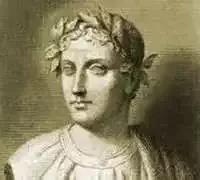
Horácio
BkIII:XXIV Destructive Wealth
Though you’re richer than the untouched
riches of Araby, than wealthy India,
and you fill the land, and inshore
waters, with your deposits of builders’ rubble:
if dread Necessity fixes
her adamantine nails in your highest rooftops,
you’ll not free your spirit from fear,
nor free your very being from the noose of death.
Better to live like Scythians
in the Steppes, whose wagons haul their movable homes,
that’s custom, or the fierce Getae,
whose unallocated acres produce their fruits,
their harvests of rye, in common,
where cultivation’s not decided for more than
a year, and when one turn is done,
it’s carried on by other hands, as a duty.
There, as their own, the unselfish
women raise those children who have lost their mothers:
and the richly dowered wife never
rules her husband, or believes in shining lovers.
Their greatest dowry’s their parents’
virtue, and their own chastity, which is careful
of another’s husband, in pure
loyalty, sin is wrong and death’s its penalty.
O whoever would end impious
killing, and civil disorder, and would desire
to have ‘City Father’ inscribed
on their statues, let them be braver, and rein in
unbridled licence, and win fame
among posterity: since we, alas, for shame,
filled with envy, hate chaste virtue,
and only seek it when it’s hidden from our eyes.
What use are sad lamentations,
if crime is never suppressed by its punishment?
What use are all these empty laws
without the behaviour that should accompany them?
if neither those parts of the Earth
enclosed by heat, nor those far confines of the North,
snow frozen solid on the ground,
deter the trader, if cunning sailors conquer
the stormy seas, if poverty,
is considered a great disgrace, and directs us
to do and to bear everything,
and abandon the arduous paths of virtue?
Let’s send our jewels, our precious
stones, our destructive gold, to the Capitol, while
the crowd applauds, and raises its strident clamour,
or ship them to the nearest sea,
as causes of our deepest ills,
if we truly repent of all our wickedness.
Let the source of our perverted
greed be lost, and then let our inadequate minds
be trained in more serious things.
The inexperienced noble youth is unskilled
at staying in the saddle, he
fears to hunt, and he’s much better at playing games,
whether you order him to fool
with a Greek hoop, or you prefer forbidden dice,
while his father’s perjured trust cheats
his partner and his friends, hurrying to amass
money for his unworthy heir.
While it’s true that in this way his ill-gotten gains
increase, yet there’s always something
lacking in a fortune forever incomplete.
264
Robert W. Service
You And Me
I'm part of people I have known
And they are part of me;
The seeds of thought that I have sown
In other minds I see.
There's something of me in the throne
And in the gallows tree.
There's something of me in each one
With whom I work and play,
For islanded there can be none
In this dynamic day;
And meshed with me perchance may be
A leper in Cathay.
There's me in you and you in me,
For deeply in us delves
Such common thought that never we
Can call ourselves ourselves.
In coils of universal fate
No man is isolate.
For you and I are History,
The all that ever was;
And woven in the tapestry
Of everlasting laws,
Persist will we in Time to be,
Forever you and me.
263
Henry Lawson
The Bill of the Ages
He shall live to the end of this mad old world, he has lived since the world began,
He never has done any good for himself, but was good to every man.
He never has done any good for himself, and I’m sure that he never will,
He drinks and he swears and he fights at times, and his name is mostly Bill.
He carried a freezing mate to his cave, and nursed him, for all I know,
When Europe was mostly a sheet of ice, thousands of years ago.
He has stuck to many a mate since then, he is with us everywhere still
(He loves and gambles when he is young, and the girls stick up for Bill.)
He has rowed to a wreck, when the lifeboat failed, with Jim in a crazy boat;
He has given his lifebelt many a time, and sunk that another might float.
He has ‘stood ’em off’ while others escaped, when the niggers rushed from the hill,
And rescue parties who came too late have found what was left of Bill.
He has thirsted on deserts that others might drink, he has given lest others should
lack,
He has staggered half-blinded through fire or drought with a sick man on his back.
He is first to the rescue in tunnel or shaft, from Newcastle to Broken Hill,
When the water breaks in or the fire breaks out, Oh! a leader of men is Bill.
No humane societies’ medals he wears for the fearful deaths he braved;
He seems ashamed of the good he did, and ashamed of the lives he saved.
If you chance to know of a noble deed he has done, you had best keep still;
If you chance to know of a kindly act, you mustn’t let on to Bill.
He is fierce at a wrong, he is firm in right, he is kind to the weak and mild;
He will slave all day and sit up all night by the side of a neighbour’s child.
For a woman in trouble he’d lay down his life, nor think as another man will;
He’s a man all through, but no other man’s wife has ever been worse for Bill.
He is good for the noblest sacrifice, he can do what few other men can;
He can break his heart that the girl he loves may marry a better man.
There’s many a mother and wife to-night whose heart and whose eyes will fill
When she thinks of the days of the long ago when she well might have stuck to Bill.
Maybe he’s in trouble or hard up now, and travelling far for work,
Or fighting a dead past down to-night in a lone camp west of Bourke.
When he’s happy and flush, take your sorrow to him and borrow as much as you will;
But when he’s in trouble or stony-broke, you never will hear from Bill.
And when, because of its million sins, this earth is cracked like a shell,
He will stand by a mate at the Judgment Seat!—and comfort him down in—Well,
I haven’t much sentiment left, but let the cynic sneer as he will;
Perhaps God will fix up the world again for the sake of the likes of Bill.
264
John Greenleaf Whittier
The Female Martyr
'BRING out your dead!' The midnight street
Heard and gave back the hoarse, low call;
Harsh fell the tread of hasty feet,
Glanced through the dark the coarse white sheet,
Her coffin and her pall.
'What--only one!' the brutal hack-man said,
As, with an oath, he spurned away the dead.
How sunk the inmost hearts of all,
As rolled that dead-cart slowly by,
With creaking wheel and harsh hoof-fall!
The dying turned him to the wall,
To hear it and to die!
Onward it rolled; while oft its driver stayed,
And hoarsely clamored, 'Ho! bring out your dead.'
It paused beside the burial-place;
'Toss in your load!' and it was done.
With quick hand and averted face,
Hastily to the grave's embrace
They cast them, one by one,
Stranger and friend, the evil and the just,
Together trodden in the churchyard dust.
And thou, young martyr! thou wast there;
No white-robed sisters round thee trod,
Nor holy hymn, nor funeral prayer
Rose through the damp and noisome air,
Giving thee to thy God;
Nor flower, nor cross, nor hallowed taper gave
Grace to the dead, and beauty to the grave!
Yet, gentle sufferer! there shall be,
In every heart of kindly feeling,
A rite as holy paid to thee
As if beneath the convent-tree
Thy sisterhood were kneeling,
At vesper hours, like sorrowing angels, keeping
Their tearful watch around thy place of sleeping.
For thou wast one in whom the light
Of Heaven's own love was kindled well;
Enduring with a martyr's might,
Through weary day and wakeful night,
Far more than words may tell
Gentle, and meek, and lowly, and unknown,
Thy mercies measured by thy God alone!
Where manly hearts were failing, where
The throngful street grew foul with death,
O high-souled martyr! thou wast there,
Inhaling, from the loathsome air,
Poison with every breath.
Yet shrinking not from offices of dread
For the wrung dying, and the unconscious dead.
And, where the sickly taper shed
Its light through vapors, damp, confined,
Hushed as a seraph's fell thy tread,
A new Electra by the bed
Of suffering human-kind!
Pointing the spirit, in its dark dismay,
To that pure hope which fadeth not away.
Innocent teacher of the high
And holy mysteries of Heaven!
How turned to thee each glazing eye,
In mute and awful sympathy,
As thy low prayers were given;
And the o'er-hovering Spoiler wore, the while,
An angel's features, a deliverer's smile!
A blessed task! and worthy one
Who, turning from the world, as thou,
Before life's pathway had begun
To leave its spring-time flower and sun,
Had sealed her early vow;
Giving to God her beauty and her youth,
Her pure affections and her guileless truth.
Earth may not claim thee. Nothing here
Could be for thee a meet reward;
Thine is a treasure far more dear
Eye hath not seen it, nor the ear
Of living mortal heard
The joys prepared, the promised bliss above,
The holy presence of Eternal Love!
Sleep on in peace. The earth has not
A nobler name than thine shall be.
The deeds by martial manhood wrought,
The lofty energies of thought,
The fire of poesy,
These have but frail and fading honors; thine
Shall Time unto Eternity consign.
Yea, and when thrones shall crumble down,
And human pride and grandeur fall,
The herald's line of long renown,
The mitre and the kingly crown,-Perishing
glories all!
The pure devotion of thy generous heart
Shall live in Heaven, of which it was a part.
262
Henry Lawson
The Women of the Town
It is up from out the alleys, from the alleys dark and vile—
It is up from out the alleys I have struggled for a while—
Just to breathe the breath of Heaven ere my devil drags me down,
And to sing a song of pity for the women of the town.
Johnnies in the private bar room, weak and silly, vain and blind—
Even they would shrink and shudder if they knew the hell behind,
And the meanest wouldn’t grumble when he’s bilked of half-a-crown
If he knew as much as I do of the women of the town.
For I see the end too plainly of the golden-headed star
Who is smiling like an angel in the gilded private bar—
Drifting to the third-rate houses, drifting, sinking lower down
Till she raves in some foul parlour with the women of the town.
To the dingy beer-stained parlour all day long the outcasts come—
Draggled, dirty, bleared, repulsive, shameless, aye, and rotten some—
They have sold their bodies and would sell their souls for drink to drown
Memories of wrong that haunt them—haunt the women of the town.
I have seen the haunting terror of the ‘horrors’ in their eyes,
Heard them cry to Christ to help them as the mansoul never cries,
While the smirking landlord listened with a grin or with a frown.
Oh, they suffer hell in drinking, do the women of the town.
I have known too well, God help me! to what depths a man can sink,
Sacrificing wife and children, fame and honour, all for drink.
Deeper, deeper sink the women, for the veriest drunken clown
Has his feet upon the shoulders of the women of the town.
There’s a heavy cloud that’s lying on my spirit like a pall—
’Tis the horror and injustice and the hopelessness of all—
There’s the love of one for ever that no sea of sin can drown,
And she loves a brute, God help her! does the woman of the town.
O my sisters, O my sisters, I am powerless to aid;
’Tis a world of prostitution, it is business, it is trade,
And they profit from the brewer and the smirking landlord down
To the bully and the bludger, on the women of the town.
Oh, the heart of one great poet* called to heaven in a line—
Crying, ‘Mary, pity women!’—You have whiter souls than mine.
And if in the grand Hereafter there is one shall wear a crown—
For the hell that men made for her—’tis the Woman of the Town.
261