
Childhood

James Whitcomb Riley
The Days Gone By
O the days gone by! O the days gone by!
The apples in the orchard, and the pathway through the rye;
The chirrup of the robin, and the whistle of the quail
As he piped across the meadows sweet as any nightingale;
When the bloom was on the clover, and the blue was in the sky,
And my happy heart brimmed over in the days gone by.
In the days gone by, when my naked feet were tripped
By the honey-suckle's tangles where the water-lilies dipped,
And the ripples of the river lipped the moss along the brink
Where the placid-eyed and lazy-footed cattle came to drink,
And the tilting snipe stood fearless of the truant's wayward cry
And the splashing of the swimmer, in the days gone by.
O the days gone by! O the days gone by!
The music of the laughing lip, the luster of the eye;
The childish faith in fairies, and Aladdin's magic ring--
The simple, soul-reposing, glad belief in everything,--
When life was like a story, holding neither sob nor sigh,
In the golden olden glory of the days gone by.
270

Christina Rossetti
Maiden-Song
Long ago and long ago,
And long ago still,
There dwelt three merry maidens
Upon a distant hill.
One was tall Megan,
And one was dainty May,
But one was fair Margaret,
More fair than I can say,
Long ago and long ago.
When Megan plucked the thorny rose,
And when May pulled the brier,
Half the birds would swoop to see,
Half the beasts draw nigher;
Half the fishes of the streams
Would dart up to admire:
But when Margaret plucked a flag-flower,
Or poppy hot aflame,
All the beasts and all the birds
And all the fishes came
To her hand more soft than snow.
Strawberry leaves and May-dew
In brisk morning air,
Strawberry leaves and May-dew
Make maidens fair.
'I go for strawberry leaves,'
Megan said one day:
'Fair Margaret can bide at home,
But you come with me, May;
Up the hill and down the hill,
Along the winding way 30
You and I are used to go.'
So these two fair sisters
Went with innocent will
Up the hill and down again,
And round the homestead hill:
While the fairest sat at home,
Margaret like a queen,
Like a blush-rose, like the moon
In her heavenly sheen,
Fragrant-breathed as milky cow
Or field of blossoming bean,
Graceful as an ivy bough
Born to cling and lean;
Thus she sat to sing and sew.
When she raised her lustrous eyes
A beast peeped at the door;
When she downward cast her eyes
A fish gasped on the floor;
When she turned away her eyes
A bird perched on the sill,
Warbling out its heart of love,
Warbling warbling still,
With pathetic pleadings low.
Light-foot May with Megan
Sought the choicest spot,
Clothed with thyme-alternate grass:
Then, while day waxed hot,
Sat at ease to play and rest,
A gracious rest and play;
The loveliest maidens near or far,
When Margaret was away,
Who sat at home to sing and sew.
Sun-glow flushed their comely cheeks,
Wind-play tossed their hair,
Creeping things among the grass
Stroked them here and there;
Megan piped a merry note,
A fitful wayward lay,
While shrill as bird on topmost twig
Piped merry May;
Honey-smooth the double flow.
Sped a herdsman from the vale,
Mounting like a flame,
All on fire to hear and see,
With floating locks he came.
Looked neither north nor south,
Neither east nor west,
But sat him down at Megan's feet
As love-bird on his nest,
And wooed her with a silent awe,
With trouble not expressed;
She sang the tears into his eyes,
The heart out of his breast:
So he loved her, listening so.
She sang the heart out of his breast,
The words out of his tongue;
Hand and foot and pulse he paused
Till her song was sung.
Then he spoke up from his place
Simple words and true:
'Scanty goods have I to give,
Scanty skill to woo;
But I have a will to work,
And a heart for you:
Bid me stay or bid me go.'
Then Megan mused within herself:
'Better be first with him,
Than dwell where fairer Margaret sits,
Who shines my brightness dim,
For ever second where she sits,
However fair I be:
I will be lady of his love,
And he shall worship me;
I will be lady of his herds
And stoop to his degree,
At home where kids and fatlings grow.'
Sped a shepherd from the height
Headlong down to look,
(White lambs followed, lured by love
Of their shepherd's crook):
He turned neither east nor west,
Neither north nor south,
But knelt right down to May, for love
Of her sweet-singing mouth;
Forgot his flocks, his panting flocks
In parching hill-side drouth;
Forgot himself for weal or woe.
Trilled her song and swelled her song
With maiden coy caprice
In a labyrinth of throbs,
Pauses, cadences;
Clear-noted as a dropping brook,
Soft-noted like the bees,
Wild-noted as the shivering wind
Forlorn through forest trees:
Love-noted like the wood-pigeon
Who hides herself for love,
Yet cannot keep her secret safe,
But coos and coos thereof:
Thus the notes rang loud or low.
He hung breathless on her breath;
Speechless, who listened well;
Could not speak or think or wish
Till silence broke the spell.
Then he spoke, and spread his hands,
Pointing here and there:
'See my sheep and see the lambs,
Twin lambs which they bare.
All myself I offer you,
All my flocks and care,
Your sweet song hath moved me so.'
In her fluttered heart young May
Mused a dubious while:
'If he loves me as he says'--
Her lips curved with a smile:
'Where Margaret shines like the sun
I shine but like a moon;
If sister Megan makes her choice
I can make mine as soon;
At cockcrow we were sister-maids,
We may be brides at noon.'
Said Megan, 'Yes;' May said not 'No.'
Fair Margaret stayed alone at home,
Awhile she sang her song,
Awhile sat silent, then she thought:
'My sisters loiter long.'
That sultry noon had waned away,
Shadows had waxen great:
'Surely,' she thought within herself,
'My sisters loiter late.'
She rose, and peered out at the door,
With patient heart to wait,
And heard a distant nightingale
Complaining of its mate;
Then down the garden slope she walked,
Down to the garden gate,
Leaned on the rail and waited so.
The slope was lightened by her eyes
Like summer lightning fair,
Like rising of the haloed moon
Lightened her glimmering hair,
While her face lightened like the sun
Whose dawn is rosy white.
Thus crowned with maiden majesty
She peered into the night,
Looked up the hill and down the hill,
To left hand and to right,
Flashing like fire-flies to and fro.
Waiting thus in weariness
She marked the nightingale
Telling, if any one would heed,
Its old complaining tale.
Then lifted she her voice and sang,
Answering the bird:
Then lifted she her voice and sang,
Such notes were never heard
From any bird when Spring's in blow.
The king of all that country
Coursing far, coursing near,
Curbed his amber-bitted steed,
Coursed amain to hear;
All his princes in his train,
Squire, and knight, and peer,
With his crown upon his head,
His sceptre in his hand,
Down he fell at Margaret's knees
Lord king of all that land,
To her highness bending low.
Every beast and bird and fish
Came mustering to the sound,
Every man and every maid
From miles of country round:
Megan on her herdsman's arm,
With her shepherd May,
Flocks and herds trooped at their heels
Along the hill-side way;
No foot too feeble for the ascent,
Not any head too grey;
Some were swift and none were slow.
So Margaret sang her sisters home
In their marriage mirth;
Sang free birds out of the sky,
Beasts along the earth,
Sang up fishes of the deep--
All breathing things that move
Sang from far and sang from near
To her lovely love;
Sang together friend and foe;
Sang a golden-bearded king
Straightway to her feet,
Sang him silent where he knelt
In eager anguish sweet.
But when the clear voice died away,
When longest echoes died,
He stood up like a royal man
And claimed her for his bride.
So three maids were wooed and won
In a brief May-tide,
Long ago and long ago.
269

Henry Lawson
The Memories They Bring
I would never waste the hours
Of the time that is mine own,
Writing verses about flowers
For their own sweet sakes alone;
Gushing as a schoolgirl gushes
Over babies at their best—
Or as poets trill of thrushes,
Larks, and starlings and the rest.
I am not a man who praises
Beauty that he cannot see,
But the buttercups and daisies
Bring my childhood back to me;
And before life’s bitter battle,
That breaks lion hearts and kills,
Oh the waratah and wattle
Saw my boyhood on the hills.
It was “Cissy” or Cecilia,
And I loved her very much,
When I wore the white camelia
That will wither at a touch.
Ah, the fairest chapter closes
With lilies white and blue,
When the wild days with the roses
Cast their glamour over you!
Vine leaves fall and laurels wither
(Madd’ning drink and pride insane),
And the fate that sends us hither
Ever takes us back again.
Fading flowers—slow pulsations—
Flowers pressed for memory
But the red and pink carnations
Speak most bitter things to me.
262

Emily Dickinson
Of nearness to her sundered Things
Of nearness to her sundered Things
The Soul has special times-
When Dimness-looks the OddityDistinctness-
easy-seems-
The Shapes we buried, dwell about,
Familiar, in the Rooms-
Untarnished by the Sepulchre,
The Mouldering Playmate comes-
In just the Jacket that he wore-
Long buttoned in the Mold
Since we-old mornings, Children-played
Divided-
by a world-
The Grave yields back her Robberies-
The Years, our pilfered Things-
Bright Knots of Apparitions
Salute us, with their wings-
As we-it were-that perished
Themself-
had just remained till we rejoin them-
And 'twas they, and not ourself
That mourned.
261
Christina Rossetti
Under The Rose
'The iniquity of the fathers upon the children.'
Oh the rose of keenest thorn!
One hidden summer morn
Under the rose I was born.
I do not guess his name
Who wrought my Mother's shame,
And gave me life forlorn,
But my Mother, Mother, Mother,
I know her from all other.
My Mother pale and mild,
Fair as ever was seen,
She was but scarce sixteen,
Little more than a child,
When I was born
To work her scorn.
With secret bitter throes,
In a passion of secret woes,
She bore me under the rose.
One who my Mother nursed
Took me from the first:—
'O nurse, let me look upon
This babe that costs so dear;
To-morrow she will be gone:
Other mothers may keep
Their babes awake and asleep,
But I must not keep her here.'—
Whether I know or guess,
I know this not the less.
So I was sent away
That none might spy the truth:
And my childhood waxed to youth
And I left off childish play.
I never cared to play
With the village boys and girls;
And I think they thought me proud,
I found so little to say
And kept so from the crowd:
But I had the longest curls
And I had the largest eyes
And my teeth were small like pearls;
The girls might flout and scout me,
But the boys would hang about me
In sheepish mooning wise.
Our one-street village stood
A long mile from the town,
A mile of windy down
And bleak one-sided wood,
With not a single house.
Our town itself was small,
With just the common shops,
And throve in its small way.
Our neighbouring gentry reared
The good old-fashioned crops,
And made old-fashioned boasts
Of what John Bull would do
If Frenchman Frog appeared,
And drank old-fashioned toasts,
And made old-fashioned bows
To my Lady at the Hall.
My Lady at the Hall
Is grander than they all:
Hers is the oldest name
In all the neighbourhood;
But the race must die with her
Though she's a lofty dame,
For she's unmarried still.
Poor people say she's good
And has an open hand
As any in the land,
And she's the comforter
Of many sick and sad;
My nurse once said to me
That everything she had
Came of my Lady's bounty:
'Though she's greatest in the county
She's humble to the poor,
No beggar seeks her door
But finds help presently.
I pray both night and day
For her, and you must pray:
But she'll never feel distress
If needy folk can bless.'
I was a little maid
When here we came to live
From somewhere by the sea.
Men spoke a foreign tongue
There where we used to be
When I was merry and young,
Too young to feel afraid;
The fisher folk would give
A kind strange word to me,
There by the foreign sea:
I don't know where it was,
But I remember still
Our cottage on a hill,
And fields of flowering grass
On that fair foreign shore.
I liked my old home best,
But this was pleasant too:
So here we made our nest
And here I grew.
And now and then my Lady
In riding past our door
Would nod to Nurse and speak,
Or stoop and pat my cheek;
And I was always ready
To hold the field-gate wide
For my Lady to go through;
My Lady in her veil
So seldom put aside,
My Lady grave and pale.
I often sat to wonder
Who might my parents be,
For I knew of something under
My simple-seeming state.
Nurse never talked to me
Of mother or of father,
But watched me early and late
With kind suspicious cares:
Or not suspicious, rather
Anxious, as if she knew
Some secret I might gather
And smart for unawares.
Thus I grew.
But Nurse waxed old and grey,
Bent and weak with years.
There came a certain day
That she lay upon her bed
Shaking her palsied head,
With words she gasped to say
Which had to stay unsaid.
Then with a jerking hand
Held out so piteously
She gave a ring to me
Of gold wrought curiously,
A ring which she had worn
Since the day I was born,
She once had said to me:
I slipped it on my finger;
Her eyes were keen to linger
On my hand that slipped it on;
Then she sighed one rattling sigh
And stared on with sightless eye:—
The one who loved me was gone.
How long I stayed alone
With the corpse I never knew,
For I fainted dead as stone:
When I came to life once more
I was down upon the floor,
With neighbours making ado
To bring me back to life.
I heard the sexton's wife
Say: 'Up, my lad, and run
To tell it at the Hall;
She was my Lady's nurse,
And done can't be undone.
I'll watch by this poor lamb.
I guess my Lady's purse
Is always open to such:
I'd run up on my crutch
A cripple as I am,'
(For cramps had vexed her much)
'Rather than this dear heart
Lack one to take her part.'
For days day after day
On my weary bed I lay
Wishing the time would pass;
Oh, so wishing that I was
Likely to pass away:
For the one friend whom I knew
Was dead, I knew no other,
Neither father nor mother;
And I, what should I do?
One day the sexton's wife
Said: 'Rouse yourself, my dear:
My Lady has driven down
From the Hall into the town,
And we think she's coming here.
Cheer up, for life is life.'
But I would not look or speak,
Would not cheer up at all.
My tears were like to fall,
So I turned round to the wall
And hid my hollow cheek
Making as if I slept,
As silent as a stone,
And no one knew I wept.
What was my Lady to me,
The grand lady from the Hall?
She might come, or stay away,
I was sick at heart that day:
The whole world seemed to be
Nothing, just nothing to me,
For aught that I could see.
Yet I listened where I lay:
A bustle came below,
A clear voice said: 'I know;
I will see her first alone,
It may be less of a shock
If she's so weak to-day:'—
A light hand turned the lock,
A light step crossed the floor,
One sat beside my bed:
But never a word she said.
For me, my shyness grew
Each moment more and more:
So I said never a word
And neither looked nor stirred;
I think she must have heard
My heart go pit-a-pat:
Thus I lay, my Lady sat,
More than a mortal hour—
(I counted one and two
By the house-clock while I lay):
I seemed to have no power
To think of a thing to say,
Or do what I ought to do,
Or rouse myself to a choice.
At last she said: 'Margaret,
Won't you even look at me?'
A something in her voice
Forced my tears to fall at last,
Forced sobs from me thick and fast;
Something not of the past,
Yet stirring memory;
A something new, and yet
Not new, too sweet to last,
Which I never can forget.
I turned and stared at her:
Her cheek showed hollow-pale;
Her hair like mine was fair,
A wonderful fall of hair
That screened her like a veil;
But her height was statelier,
Her eyes had depth more deep;
I think they must have had
Always a something sad,
Unless they were asleep.
While I stared, my Lady took
My hand in her spare hand
Jewelled and soft and grand,
And looked with a long long look
Of hunger in my face;
As if she tried to trace
Features she ought to know,
And half hoped, half feared, to find.
Whatever was in her mind
She heaved a sigh at last,
And began to talk to me.
'Your nurse was my dear nurse,
And her nursling's dear,' said she:
'I never knew that she was worse
Till her poor life was past'
(Here my Lady's tears dropped fast):
'I might have been with her,
But she had no comforter.
She might have told me much
Which now I shall never know,
Never never shall know.'
She sat by me sobbing so,
And seemed so woe-begone,
That I laid one hand upon
Hers with a timid touch,
Scarce thinking what I did,
Not knowing what to say:
That moment her face was hid
In the pillow close by mine,
Her arm was flung over me,
She hugged me, sobbing so
As if her heart would break,
And kissed me where I lay.
After this she often came
To bring me fruit or wine,
Or sometimes hothouse flowers.
And at nights I lay awake
Often and often thinking
What to do for her sake.
Wet or dry it was the same:
She would come in at all hours,
Set me eating and drinking
And say I must grow strong;
At last the day seemed long
And home seemed scarcely home
If she did not come.
Well, I grew strong again:
In time of primroses,
I went to pluck them in the lane;
In time of nestling birds,
I heard them chirping round the house;
And all the herds
Were out at grass when I grew strong,
And days were waxen long,
And there was work for bees
Among the May-bush boughs,
And I had shot up tall,
And life felt after all
Pleasant, and not so long
When I grew strong.
I was going to the Hall
To be my Lady's maid:
'Her little friend,' she said to me,
'Almost her child,'
She said and smiled
Sighing painfully;
Blushing, with a second flush
As if she blushed to blush.
Friend, servant, child: just this
My standing at the Hall;
The other servants call me 'Miss,'
My Lady calls me 'Margaret,'
With her clear voice musical.
She never chides when I forget
This or that; she never chides.
Except when people come to stay,
(And that's not often) at the Hall,
I sit with her all day
And ride out when she rides.
She sings to me and makes me sing;
Sometimes I read to her,
Sometimes we merely sit and talk.
She noticed once my ring
And made me tell its history:
That evening in our garden walk
She said she should infer
The ring had been my father's first,
Then my mother's, given for me
To the nurse who nursed
My mother in her misery,
That so quite certainly
Some one might know me, who…
Then she was silent, and I too.
I hate when people come:
The women speak and stare
And mean to be so civil.
This one will stroke my hair,
That one will pat my cheek
And praise my Lady's kindness,
Expecting me to speak;
I like the proud ones best
Who sit as struck with blindness,
As if I wasn't there.
But if any gentleman
Is staying at the Hall
(Though few come prying here),
My Lady seems to fear
Some downright dreadful evil,
And makes me keep my room
As closely as she can:
So I hate when people come,
It is so troublesome.
In spite of all her care,
Sometimes to keep alive
I sometimes do contrive
To get out in the grounds
For a whiff of wholesome air,
Under the rose you know:
It's charming to break bounds,
Stolen waters are sweet,
And what's the good of feet
If for days they mustn't go?
Give me a longer tether,
Or I may break from it.
Now I have eyes and ears
And just some little wit:
'Almost my Lady's child;'
I recollect she smiled,
Sighed and blushed together;
Then her story of the ring
Sounds not improbable,
She told it me so well
It seemed the actual thing:—
Oh, keep your counsel close,
But I guess under the rose,
In long past summer weather
When the world was blossoming,
And the rose upon its thorn:
I guess not who he was
Flawed honour like a glass,
And made my life forlorn,
But my Mother, Mother, Mother,
Oh, I know her from all other.
My Lady, you might trust
Your daughter with your fame.
Trust me, I would not shame
Our honourable name,
For I have noble blood
Though I was bred in dust
And brought up in the mud.
I will not press my claim,
Just leave me where you will:
But you might trust your daughter,
For blood is thicker than water
And you're my mother still.
So my Lady holds her own
With condescending grace,
and fills her lofty place
With an untroubled face
As a queen may fill a throne.
While I could hint a tale—
(But then I am her child)—
Would make her quail;
Would set her in the dust,
Lorn with no comforter,
Her glorious hair defiled
And ashes on her cheek:
The decent world would thrust
Its finger out at her,
Not much displeased I think
To make a nine days' stir;
The decent world would sink
Its voice to speak of her.
Now this is what I mean
To do, no more, no less:
Never to speak, or show
Bare sign of what I know.
Let the blot pass unseen;
Yea, let her never guess
I hold the tangled clue
She huddles out of view.
Friend, servant, almost child,
So be it and nothing more
On this side of the grave.
Mother, in Paradise,
You'll see with clearer eyes;
Perhaps in this world even
When you are like to die
And face to face with Heaven
You'll drop for once the lie:
But you must drop the mask, not I.
My Lady promises
Two hundred pounds with me
Whenever I may wed
A man she can approve:
And since besides her bounty
I'm fairest in the county
(For so I've heard it said,
Though I don't vouch for this),
Her promised pounds may move
Some honest man to see
My virtues and my beauties;
Perhaps the rising grazier,
Or temperance publican,
May claim my wifely duties.
Meanwhile I wait their leisure
And grace-bestowing pleasure,
I wait the happy man;
But if I hold my head
And pitch my expectations
Just higher than their level,
They must fall back on patience:
I may not mean to wed,
Yet I'll be civil.
Now sometimes in a dream
My heart goes out of me
To build and scheme,
Till I sob after things that seem
So pleasant in a dream:
A home such as I see
My blessed neighbours live in
With father and with mother,
All proud of one another,
Named by one common name
From baby in the bud
To full-blown workman father;
It's little short of Heaven.
I'd give my gentle blood
To wash my special shame
And drown my private grudge;
I'd toil and moil much rather
The dingiest cottage drudge
Whose mother need not blush,
Than live here like a lady
And see my Mother flush
And hear her voice unsteady
Sometimes, yet never dare
Ask to share her care.
Of course the servants sneer
Behind my back at me;
Of course the village girls,
Who envy me my curls
And gowns and idleness,
Take comfort in a jeer;
Of course the ladies guess
Just so much of my history
As points the emphatic stress
With which they laud my Lady;
The gentlemen who catch
A casual glimpse of me
And turn again to see,
Their valets on the watch
To speak a word with me,
All know and sting me wild;
Till I am almost ready
To wish that I were dead,
No faces more to see,
No more words to be said,
My Mother safe at last
Disburdened of her child,
And the past past.
'All equal before God'—
Our Rector has it so,
And sundry sleepers nod:
It may be so; I know
All are not equal here,
And when the sleepers wake
They make a difference.
'All equal in the grave'—
That shows an obvious sense:
Yet something which I crave
Not death itself brings near;
Now should death half atone
For all my past; or make
The name I bear my own?
I love my dear old Nurse
Who loved me without gains;
I love my mistress even,
Friend, Mother, what you will:
But I could almost curse
My Father for his pains;
And sometimes at my prayer
Kneeling in sight of Heaven
I almost curse him still:
Why did he set his snare
To catch at unaware
My Mother's foolish youth;
Load me with shame that's hers,
And her with something worse,
A lifelong lie for truth?
I think my mind is fixed
On one point and made up:
To accept my lot unmixed;
Never to drug the cup
But drink it by myself.
I'll not be wooed for pelf;
I'll not blot out my shame
With any man's good name;
But nameless as I stand,
My hand is my own hand,
And nameless as I came
I go to the dark land.
'All equal in the grave'—
I bide my time till then:
'All equal before God'—
To-day I feel His rod,
To-morrow He may save:
Amen.
253

Robert W. Service
Belated Conscience
To buy for school a copy-book
I asked my Dad for two-pence;
He gave it with a gentle look,
Although he had but few pence.
'Twas then I proved myself a crook
And came a moral cropper,
I bought a penny copy-book
And blued the other copper.
I spent it on a sausage roll
Gulped down with guilt suggestion,
To the damnation of my soul
And awful indigestion.
Poor Dad! His job was hard to hold;
His mouths to feed were many;
Were he alive a millionfold
I'd pay him for his penny.
Now nigh the grave I think with grief,
Though other sins are many,
I am a liar and a thief
'Cause once I stole a penny:
Yet be he pious as a friar
It is my firm believing,
That every man has been a liar
And most of us done thieving.
246
Robert W. Service
Little Moccasins
Come out, O Little Moccasins, and frolic on the snow!
Come out, O tiny beaded feet, and twinkle in the light!
I'll play the old Red River reel, you used to love it so:
Awake, O Little Moccasins, and dance for me to-night!
Your hair was all a gleamy gold, your eyes a corn-flower blue;
Your cheeks were pink as tinted shells, you stepped light as a fawn;
Your mouth was like a coral bud, with seed pearls peeping through;
As gladdening as Spring you were, as radiant as dawn.
Come out, O Little Moccasins! I'll play so soft and low,
The songs you loved, the old heart-songs that in my mem'ry ring;
O child, I want to hear you now beside the campfire glow!
With all your heart a-throbbing in the simple words you sing.
For there was only you and I, and you were all to me;
And round us were the barren lands, but little did we fear;
Of all God's happy, happy folks the happiest were we. . . .
(Oh, call her, poor old fiddle mine, and maybe she will hear!)
Your mother was a half-breed Cree, but you were white all through;
And I, your father was -- but well, that's neither here nor there;
I only know, my little Queen, that all my world was you,
And now that world can end to-night, and I will never care.
For there's a tiny wooden cross that pricks up through the snow:
(Poor Little Moccasins! you're tired, and so you lie at rest.)
And there's a grey-haired, weary man beside the campfire glow:
(O fiddle mine! the tears to-night are drumming on your breast.)
242

D.H. Lawrence
Baby Tortoise
You know what it is to be born alone,
Baby tortoise!
The first day to heave your feet little by little from the shell,
Not yet awake,
And remain lapsed on earth,
Not quite alive.
A tiny, fragile, half-animate bean.
To open your tiny beak-mouth, that looks as if it would never open,
Like some iron door;
To lift the upper hawk-beak from the lower base
And reach your skinny little neck
And take your first bite at some dim bit of herbage,
Alone, small insect,
Tiny bright-eye,
Slow one.
To take your first solitary bite
And move on your slow, solitary hunt.
Your bright, dark little eye,
Your eye of a dark disturbed night,
Under its slow lid, tiny baby tortoise,
So indomitable.
No one ever heard you complain.
You draw your head forward, slowly, from your little wimple
And set forward, slow-dragging, on your four-pinned toes, Rowing slowly forward.
Whither away, small bird?
Rather like a baby working its limbs,
Except that you make slow, ageless progress
And a baby makes none.
The touch of sun excites you,
And the long ages, and the lingering chill
Make you pause to yawn,
Opening your impervious mouth,
Suddenly beak-shaped, and very wide, like some suddenly gaping pincers;
Soft red tongue, and hard thin gums,
Then close the wedge of your little mountain front,
Your face, baby tortoise.
Do you wonder at the world, as slowly you turn your head in its wimple
And look with laconic, black eyes?
Or is sleep coming over you again,
The non-life?
You are so hard to wake.
Are you able to wonder?
Or is it just your indomitable will and pride of the first life
Looking round
And slowly pitching itself against the inertia
Which had seemed invincible?
The vast inanimate,
And the fine brilliance of your so tiny eye,
Challenger.
Nay, tiny shell-bird,
What a huge vast inanimate it is, that you must row against,
What an incalculable inertia.
Challenger,
Little Ulysses, fore-runner,
No bigger than my thumb-nail,
Buon viaggio.
All animate creation on your shoulder,
Set forth, little Titan, under your battle-shield.
The ponderous, preponderate,
Inanimate universe;
And you are slowly moving, pioneer, you alone.
How vivid your travelling seems now, in the troubled sunshine,
Stoic, Ulyssean atom;
Suddenly hasty, reckless, on high toes.
Voiceless little bird,
Resting your head half out of your wimple
In the slow dignity of your eternal pause.
Alone, with no sense of being alone,
And hence six times more solitary;
Fulfilled of the slow passion of pitching through immemorial ages
Your little round house in the midst of chaos.
Over the garden earth,
Small bird,
Over the edge of all things.
Traveller,
With your tail tucked a little on one side
Like a gentleman in a long-skirted coat.
All life carried on your shoulder,
Invincible fore-runner.
240
James Whitcomb Riley
What Chris'mas Fetched The Wigginses
Wintertime, er Summertime,
Of late years I notice I'm,
Kindo'-like, more subjec' to
What the _weather_ is. Now, you
Folks 'at lives in town, I s'pose,
Thinks its bully when it snows;
But the chap 'at chops and hauls
Yer wood fer ye, and then stalls,
And snapps tuggs and swingletrees,
And then has to walk er freeze,
Haint so much 'stuck on' the snow
As stuck _in_ it--Bless ye, no!--
When its packed, and sleighin's good,
And _church_ in the neighborhood,
Them 'at's _got_ their girls, I guess,
Takes 'em, likely, more er less,
Tell the plain facts o' the case,
No men-folks about our place
On'y me and Pap--and he
'Lows 'at young folks' company
Allus made him sick! So I
Jes don't want, and jes don't try!
Chinkypin, the dad-burn town,
'S too fur off to loaf aroun'
Either day er night--and no
Law compellin' me to go!-'
Less 'n some Old-Settlers' Day,
Er big-doin's thataway-_
Then_, to tell the p'inted fac',
I've went more so's to come back
By old Guthrie's 'still-house, where
Minors _has_ got licker there-That's
pervidin' we could show 'em
Old folks sent fer it from home!
Visit roun' the neighbors some,
When the boys wants me to come.-Coon-
hunt with 'em; er set traps
Fer mussrats; er jes, perhaps,
Lay in roun' the stove, you know,
And parch corn, and let her snow!
Mostly, nights like these, you'll be
(Ef you' got a writ fer _me_)
Ap' to skeer me up, I guess,
In about the Wigginses.
Nothin' roun' _our_ place to keep
Me at home--with Pap asleep
'Fore it's dark; and Mother in
Mango pickles to her chin;
And the girls, all still as death,
Piecin' quilts.--Sence I drawed breath
Twenty year' ago, and heerd
Some girls whispern' so's it 'peared
Like they had a row o' pins
In their mouth--right there begins
My first rickollections, built
On that-air blame old piece-quilt!
Summertime, it's jes the same-'
Cause I've noticed,--and I claim,
As I said afore, I'm more
Subjec' to the weather, _shore_,
'Proachin' my majority,
Than I ever ust to be!
Callin' back _last_ Summer, say,-Don't
seem hardly past away--
With night closin' in, and all
S' lonesome-like in the dew-fail:
Bats--ad-drat their ugly muggs!--
Flickern' by; and lightnin'-bugs
Huckstern' roun' the airly night
Little sickly gasps o' light;-Whip-
poor-wills, like all possessed,
Moanin' out their mournfullest;--
Frogs and katydids and things
Jes clubs in and sings and sings
Their _ding-dangdest_!--Stock's all fed,
And Pap's washed his feet fer bed;--
Mother and the girls all down
At the milk-shed, foolin' roun'--
No wunder 'at I git blue,
And lite out--and so would you!
I caint stay aroun' no place
Whur they haint no livin' face:-'
Crost the fields and thue the gaps
Of the hills they's friends, perhaps,
Waitin' somers, 'at kin be
Kindo' comfertin' to me!
Neighbors all 'is plenty good,
Scattered thue this neighberhood;
Yit, of all, I like to jes
Drap in on the Wigginses.--
Old man, and old lady too,
'Pear-like, makes so much o' you--,
Least, they've allus pampered me
Like one of the fambily.--
The boys, too, 's all thataway--
Want you jes to come and stay;--
Price, and Chape, and Mandaville,
Poke, Chasteen, and 'Catfish Bill'-Poke's
the runt of all the rest,
But he's jes the beatinest
Little schemer, fer fourteen,
Anybody ever seen!-
'Like his namesake,' old man claims,
'Jeems K. Poke, the first o' names!
Full o' tricks and jokes--and you
Never know what _Poke's_ go' do!'
Genius, too, that-air boy is,
With them awk'ard hands o' his:
Gits this blame pokeberry-juice,
Er some stuff, fer ink--and goose-
Quill pen-p'ints: And then he'll draw
Dogdest pictures yevver saw!
Er make deers and eagles good
As a writin'-teacher could!
Then they's two twin boys they've riz
Of old Coonrod Wigginses
'At's deceast--and glad of it,
'Cause his widder's livin' yit!
Course _the boys_ is mostly jes'
Why I go to Wigginses.---
Though _Melviney_, sometimes, _she_
Gits her slate and algebry
And jes' sets there ciphern' thue
Sums old Ray hisse'f caint do!--
Jes' sets there, and tilts her chair
Forreds tel, 'pear-like, her hair
Jes' _spills_ in her lap--and then
She jes' dips it up again
With her hands, as white, I swan,
As the apern she's got on!
Talk o' hospitality!--
Go to Wigginses with me--
Overhet, or froze plum thue,
You'll find welcome waitin' you:-Th'ow
out yer tobacker 'fore
You set foot acrost that floor,-'
Got to eat whatever's set--
Got to drink whatever's wet!'
Old man's sentimuns--them's his---
And means jes the best they is!
Then he lights his pipe; and she,
The old lady, presen'ly
She lights her'n; and Chape and Poke.
I haint got none, ner don't smoke,-(
In the crick afore their door--
Sorto so's 'at I'd be shore--
Drownded mine one night and says
'I won't smoke at _Wigginses_!')
Price he's mostly talkin' 'bout
Politics, and 'thieves turned out'--
What he's go' to be, ef he
Ever 'gits there'--and 'we'll see!'-
Poke he 'lows they's blame few men
Go' to hold their breath tel then!
Then Melviney smiles, as she
Goes on with her algebry,
And the clouds clear, and the room's
Sweeter 'n crabapple-blooms!
(That Melviney, she' got some
Most surprisin' ways, I gum!-Don't
'pear like she ever _says_
Nothin', yit you'll _listen_ jes
Like she was a-talkin', and
Half-way seem to understand,
But not quite,--_Poke_ does, I know,
'Cause he good as told me so,-Poke's
her favo-rite; and he--
That is, confidentially-He's
_my_ favo-rite--and I
Got my whurfore and my why!)
I haint never ben no hand
Much at talkin', understand,
But they's _thoughts_ o' mine 'at's jes
Jealous o' them Wigginses!--
Gift o' talkin 's what they got,
Whether they want to er not-F'r
instunce, start the old man on
Huntin'-scrapes, 'fore game was gone,
'Way back in the Forties, when
Bears stold pigs right out the pen,
Er went waltzin' 'crost the farm
With a bee-hive on their arm!-And--
sir, _ping_! the old man's gun
Has plumped-over many a one,
Firin' at him from afore
That-air very cabin-door!
Yes--and _painters_, prowlin' 'bout,
Allus darkest nights.--Lay out
Clost yer cattle.--Great, big red
Eyes a-blazin' in their head,
Glittern' 'long the timber-line--
Shine out some, and then _un_-shine,
And shine back--Then, stiddy! whizz!
'N there yer Mr. Painter is
With a hole bored spang between
Them-air eyes! Er start Chasteen,
Say, on blooded racin'-stock,
Ef you want to hear him talk;
Er tobacker--how to raise,
Store, and k-yore it, so's she pays:
The old lady--and she'll cote
Scriptur' tel she'll git yer vote!
Prove to you 'at wrong is right,
Jes as plain as black is white:
Prove when you're asleep in bed
You're a-standin' on yer head,
And yer train 'at's goin' West,
'S goin' East its level best;
And when bees dies, it's their wings
Wears out--and a thousand things!
And the boys is 'chips,' you know;
'Off the old block'--So I go
To the Wigginses, 'cause--jes
'Cause I _like_ the Wigginses--
Even ef Melviney _she_
Hardly 'pears to notice me!
Rid to Chinkypin this week-Yisterd'y.--
No snow to speak
Of, and didn't have no sleigh
Anyhow; so, as I say,
I rid in--and froze one ear
And both heels--and I don't keer!-'
Mother and the girls kin jes
Bother 'bout their Chris'mases
_Next_ time fer _theirse'vs_, I jack!'
Thinks-says-I, a-startin' back,--
Whole durn meal-bag full of things
Wrapped in paper-sacks, and strings
Liable to snap their holt
Jes at any little jolt!
That in front o' me, and _wind_
With _nicks_ in it, 'at jes skinned
Me alive!--I'm here to say
Nine mile' hossback thataway
Would a-walked my log! But, as
Somepin' allus comes to pass,
As I topped old Guthrie's hill.
Saw a buggy, front the 'Still,
P'inted home'ards, and a thin
Little chap jes climbin' in.
Six more minutes I were there
On the groun's'--And course it were--
It were little Poke--and he
Nearly fainted to see me!-'
You ben in to Chinky, too?'
'Yes; and go' ride back with you,'
I-says-I. He he'pped me find
Room fer my things in behind--
Stript my hoss's reins down, and
Put his mitt' on the right hand
So's to lead--'Pile in!' says he,
'But you 've struck pore company!'
Noticed he was pale--looked sick,
Kindo-like, and had a quick
Way o' flickin' them-air eyes
0' his roun' 'at didn't size
Up right with his usual style-s'
I, 'You well?' He tried to smile,
But his chin shuck and tears come.-'_
I've run 'Viney 'way from home_!'
Don't know jes what all occurred
Next ten seconds--Nary word,
But my heart jes drapt, stobbed thue,
And whirlt over and come to.--
Wrenched a big quart bottle from
That fool-boy!--and cut my thumb
On his little fiste-teeth--helt
Him snug in one arm, and felt
That-air little heart o' his
Churn the blood o' Wigginses
Into that old bead 'at spun
Roun' her, spilt at Lexington!
His k'niptions, like enough,
He'pped us both,--though it was rough--
Rough on him, and rougher on
Me when last his nerve was gone,
And he laid there still, his face
Fishin' fer some hidin'-place
Jes a leetle lower down
In my breast than he 'd yit foun'!
Last I kindo' soothed him, so's
He could talk.--And what you s'pose
Them-air revelations of
Poke's was? . . . He'd ben writin' love-
Letters to Melviney, and
Givin her to understand
They was from 'a young man who
Loved her,' and--'the violet's blue
'N sugar's sweet'--and Lord knows what!
Tel, 'peared-like, Melviney got
S' interested in 'the young
Man,' Poke _he_ says, 'at she brung
A' answer onc't fer him to take,
Statin' 'she'd die fer his sake,'
And writ fifty xs 'fer
Love-kisses fer him from her!'
I was standin' in the road
By the buggy, all I knowed
When Poke got that fer.--'That's why,'
Poke says, 'I 'fessed up the lie-_
Had_ to--'cause I see,' says he,
''Viney was in airnest--she
Cried, too, when I told her.--Then
She swore me, and smiled again,
And got Pap and Mother to
Let me hitch and drive her thue
Into Chinkypin, to be
At Aunt 'Rindy's Chris'mas-tree-That's
to-night.' Says I, 'Poke--durn
Your lyin' soul!--'s that beau o' hern--
That--_she_--loves--Does _he_ live in
That hellhole o' Chinkypin?'
'No,' says Poke, 'er 'Viney would
Went some _other_ neighborhood.'
'Who _is_ the blame whelp?' says I.
'Promised 'Viney, hope I'd die
Ef I ever told!' says Poke,
Pittiful and jes heart-broke-''
Sides that's why she left the place,-'
She caint look him in the face
Now no more on earth!' she says.--'
And the child broke down and jes
Sobbed! Says I, 'Poke, I p'tend
T' be _your_ friend, and your _Pap's_ friend,
And your _Mother's_ friend, and all
The _boys_' friend, little, large and small--
The _whole fambily's_ friend--and you
Know that means _Melviney_, too.-Now--
you hush yer troublin!'--I'm
Go' to he'p friends ever' time-On'y
in _this_ case, _you_ got
To he'p _me_--and, like as not
I kin he'p Melviney then,
And we'll have her home again.
And now, Poke, with your consent,
I'm go' go to that-air gent
She's in love with, and confer
With _him_ on his views o' _her_.--
Blast him! give the man _some_ show.--
Who is he?--_I'm go' to know_!'
Somepin' struck the little chap
Funny, 'peared-like.--Give a slap
On his leg--laughed thue the dew
In his eyes, and says: 'It's you!'
Yes, and--'cordin' to the last
Love-letters of ours 'at passed
Thue his hands--we was to be
Married Chris'mas.--'Gee-mun-_nee_!
Poke,' says I, 'it's _suddent_--yit
We _kin_ make it! You're to git
Up tomorry, say, 'bout _three_--
Tell your folks you're go' with me:-We'll
hitch up, and jes drive in
'N take the town o' Chinkypin!'
237
Robert W. Service
Innocence
The height of wisdom seems to me
That of a child;
So let my ageing vision be
Serene and mild.
The depth of folly, I aver,
Is to fish deep
In that dark pool of science where
Truth-demons sleep.
Let me not be a bearded sage
Seeing too clear;
In issues of the atom age
Man-doom I fear.
So long as living's outward show
To me is fair,
What lies behind I do not know,
And do not care.
Of woeful fears of future ill
That earth-folk haunt,
Let me, as radiant meadow rill,
Be ignorant.
Aye, though a sorry dunce I be
In learning's school,
Lord, marvellously make of me
Your Happy Fool!
232
Robert W. Service
The Wildy Ones
The sheep are in the silver wood,
The cows are in the broom;
The goats are in the wild mountain
And won't be home by noon.
My mother sang that olden tune
Most every night,
And to her newest she would croon
By candle light;
While cuddling in the velvet gloom
I'd dream of cows
That sought each dawn 'mid golden broom
To gently browse.
Or I would glimpse the silver wood,
The birchen glade,
Where pearly sheep in quiet mood
Cropped unafraid;
But how I loved in lapsing drowse
The mountain wild!
The goats were more than sheep and cows
To one wee child.
For cows and sheep are shelter-wise,
And love the lea;
While goats have starlight in their eyes,
In cragland free . . .
And now on edge of endless sleep
Wryly I note
How less I'm kin to kine and sheep
Than rebel goat!
228
Robert W. Service
Window Shopper
I stood before a candy shop
Which with a Christmas radiance shone;
I saw my parents pass and stop
To grin at me and then go on.
The sweets were heaped in gleamy rows;
On each I feasted - what a game!
Against the glass with flatted nose,
Gulping my spittle as it came;
So still I stood, and stared and dreamed,
Savouring sweetness with my eyes,
Devouring dainties till it seemed
My candy shop was paradise.
I had, I think, but five years old,
And though three-score and ten have passed,
I still recall the craintive cold,
The grimy street, the gritty blast;
And how I stared into that shop,
Its gifts so near and yet so far,
Of marzipan and toffee drop,
Of chocolate and walnut bar;
Imagining what I would buy
Amid delights so rich and rare . . .
The glass was misted with my sigh:
"If just one penny Pop could spare!"
And then when I went home to tea
Of bread and butter sparsely spread,
Oh, how my parents twitted me:
"You stood for full an hour," they said.
"We saw you as we passed again;
Your eyes upon the sweets were glued;
Your nose was flattened to the pane,
Like someone hypnotized you stood."
But when they laughed as at a joke,
A bitterness I could not stem
Within my little heart awoke. . . .
Oh, I have long forgiven them;
For though I know they did no own
Pennies to spare, they might, it seems
More understanding love have shown
More sympathy for those vain dreams,
Which make of me with wistful gaze
God's Window Shopper all days.
224
Robert W. Service
Maids In May
Three maids there were in meadow bright,
The eldest less then seven;
Their eyes were dancing with delight,
And innocent as Heaven.
Wild flowers they wound with tender glee,
Their cheeks with rapture rosy;
All radiant they smiled at me,
When I besought a posy.
She gave me a columbine,
And one a poppy brought me;
The tiniest, with eyes ashine,
A simple daisy sought me.
And as I went my sober way,
I heard their careless laughter;
Their hearts too happy with to-day
To care for what comes after.
. . . . . . .
That's long ago; they're gone, all three,
To walk amid the shadows;
Forgotten is their lyric glee
In still and sunny meadows.
For Columbine loved life too well,
And went adventure fairing;
And sank into the pit of hell,
And passed but little caring.
While Poppy was a poor man's wife,
And children had a-plenty;
And went, worn out with toil and strife
When she was five-and-twenty.
And Daisy died while yet a child,
As fragile blossoms perish,
When Winter winds are harsh and wild,
With none to shield and cherish.
Ah me! How fate is dark and dour
To little Children of the Poor.
213

William Wordsworth
The Prelude, Book : School-time (Continued)
. Thus far, O Friend! have we, though leaving much
Unvisited, endeavour'd to retrace
My life through its first years, and measured back
The way I travell'd when I first began
To love the woods and fields; the passion yet
Was in its birth, sustain'd, as might befal,
By nourishment that came unsought, for still,
From week to week, from month to month, we liv'd
A round of tumult: duly were our games
Prolong'd in summer till the day-light fail'd;
No chair remain'd before the doors, the bench
And threshold steps were empty; fast asleep
The Labourer, and the old Man who had sate,
A later lingerer, yet the revelry
Continued, and the loud uproar: at last,
When all the ground was dark, and the huge clouds
Were edged with twinkling stars, to bed we went,
With weary joints, and with a beating mind.
Ah! is there one who ever has been young,
Nor needs a monitory voice to tame
The pride of virtue, and of intellect?
And is there one, the wisest and the best
Of all mankind, who does not sometimes wish
For things which cannot be, who would not give,
If so he might, to duty and to truth
The eagerness of infantine desire?
A tranquillizing spirit presses now
On my corporeal frame: so wide appears
The vacancy between me and those days,
Which yet have such self-presence in my mind
That, sometimes, when I think of them, I seem
Two consciousnesses, conscious of myself
And of some other Being. A grey Stone
Of native rock, left midway in the Square
Of our small market Village, was the home
And centre of these joys, and when, return'd
After long absence, thither I repair'd,
I found that it was split, and gone to build
A smart Assembly-room that perk'd and flar'd
With wash and rough-cast elbowing the ground
Which had been ours. But let the fiddle scream,
And be ye happy! yet, my Friends! I know
That more than one of you will think with me
Of those soft starry nights, and that old Dame
From whom the stone was nam'd who there had sate
And watch'd her Table with its huckster's wares
Assiduous, thro' the length of sixty years.
We ran a boisterous race; the year span round
With giddy motion. But the time approach'd
That brought with it a regular desire
For calmer pleasures, when the beauteous forms
Of Nature were collaterally attach'd
To every scheme of holiday delight,
And every boyish sport, less grateful else,
And languidly pursued. When summer came
It was the pastime of our afternoons
To beat along the plain of Windermere
With rival oars, and the selected bourne
Was now an Island musical with birds
That sang for ever; now a Sister Isle
Beneath the oaks' umbrageous covert, sown
With lillies of the valley, like a field;
And now a third small Island where remain'd
An old stone Table, and a moulder'd Cave,
A Hermit's history. In such a race,
So ended, disappointment could be none,
Uneasiness, or pain, or jealousy:
We rested in the shade, all pleas'd alike,
Conquer'd and Conqueror. Thus the pride of strength,
And the vain-glory of superior skill
Were interfus'd with objects which subdu'd
And temper'd them, and gradually produc'd
A quiet independence of the heart.
And to my Friend, who knows me, I may add,
Unapprehensive of reproof, that hence
Ensu'd a diffidence and modesty,
And I was taught to feel, perhaps too much,
The self-sufficing power of solitude.
No delicate viands sapp'd our bodily strength;
More than we wish'd we knew the blessing then
Of vigorous hunger, for our daily meals
Were frugal, Sabine fare! and then, exclude
A little weekly stipend, and we lived
Through three divisions of the quarter'd year
In pennyless poverty. But now, to School
Return'd, from the half-yearly holidays,
We came with purses more profusely fill'd,
Allowance which abundantly suffic'd
To gratify the palate with repasts
More costly than the Dame of whom I spake,
That ancient Woman, and her board supplied.
Hence inroads into distant Vales, and long
Excursions far away among the hills,
Hence rustic dinners on the cool green ground,
Or in the woods, or near a river side,
Or by some shady fountain, while soft airs
Among the leaves were stirring, and the sun
Unfelt, shone sweetly round us in our joy.
Nor is my aim neglected, if I tell
How twice in the long length of those half-years
We from our funds, perhaps, with bolder hand
Drew largely, anxious for one day, at least,
To feel the motion of the galloping Steed;
And with the good old Inn-keeper, in truth,
On such occasion sometimes we employ'd
Sly subterfuge; for the intended bound
Of the day's journey was too distant far
For any cautious man, a Structure famed
Beyond its neighbourhood, the antique Walls
Of that large Abbey which within the vale
Of Nightshade, to St. Mary's honour built,
Stands yet, a mouldering Pile, with fractured Arch,
Belfry, and Images, and living Trees,
A holy Scene! along the smooth green turf
Our Horses grazed: to more than inland peace
Left by the sea wind passing overhead
(Though wind of roughest temper) trees and towers
May in that Valley oftentimes be seen,
Both silent and both motionless alike;
Such is the shelter that is there, and such
The safeguard for repose and quietness.
Our steeds remounted, and the summons given,
With whip and spur we by the Chauntry flew
In uncouth race, and left the cross-legg'd Knight,
And the stone-Abbot, and that single Wren
Which one day sang so sweetly in the Nave
Of the old Church, that, though from recent showers
The earth was comfortless, and, touch'd by faint
Internal breezes, sobbings of the place,
And respirations, from the roofless walls
The shuddering ivy dripp'd large drops, yet still,
So sweetly 'mid the gloom the invisible Bird
Sang to itself, that there I could have made
My dwelling-place, and liv'd for ever there
To hear such music. Through the Walls we flew
And down the valley, and a circuit made
In wantonness of heart, through rough and smooth
We scamper'd homeward. Oh! ye Rocks and Streams,
And that still Spirit of the evening air!
Even in this joyous time I sometimes felt
Your presence, when with slacken'd step we breath'd
Along the sides of the steep hills, or when,
Lighted by gleams of moonlight from the sea,
We beat with thundering hoofs the level sand.
Upon the Eastern Shore of Windermere,
Above the crescent of a pleasant Bay,
There stood an Inn, no homely-featured Shed,
Brother of the surrounding Cottages,
But 'twas a splendid place, the door beset
With Chaises, Grooms, and Liveries, and within
Decanters, Glasses, and the blood-red Wine.
In ancient times, or ere the Hall was built
On the large Island, had this Dwelling been
More worthy of a Poet's love, a Hut,
Proud of its one bright fire, and sycamore shade.
But though the rhymes were gone which once inscribed
The threshold, and large golden characters
On the blue-frosted Signboard had usurp'd
The place of the old Lion, in contempt
And mockery of the rustic painter's hand,
Yet to this hour the spot to me is dear
With all its foolish pomp. The garden lay
Upon a slope surmounted by the plain
Of a small Bowling-green; beneath us stood
A grove; with gleams of water through the trees
And over the tree-tops; nor did we want
Refreshment, strawberries and mellow cream.
And there, through half an afternoon, we play'd
On the smooth platform, and the shouts we sent
Made all the mountains ring. But ere the fall
Of night, when in our pinnace we return'd
Over the dusky Lake, and to the beach
Of some small Island steer'd our course with one,
The Minstrel of our troop, and left him there,
And row'd off gently, while he blew his flute
Alone upon the rock; Oh! then the calm
And dead still water lay upon my mind
Even with a weight of pleasure, and the sky
Never before so beautiful, sank down
Into my heart, and held me like a dream.
Thus daily were my sympathies enlarged,
And thus the common range of visible things
Grew dear to me: already I began
To love the sun, a Boy I lov'd the sun,
Not as I since have lov'd him, as a pledge
And surety of our earthly life, a light
Which while we view we feel we are alive;
But, for this cause, that I had seen him lay
His beauty on the morning hills, had seen
The western mountain touch his setting orb,
In many a thoughtless hour, when, from excess
Of happiness, my blood appear'd to flow
With its own pleasure, and I breath'd with joy.
And from like feelings, humble though intense,
To patriotic and domestic love
Analogous, the moon to me was dear;
For I would dream away my purposes,
Standing to look upon her while she hung
Midway between the hills, as if she knew
No other region; but belong'd to thee,
Yea, appertain'd by a peculiar right
To thee and thy grey huts, my darling Vale!
Those incidental charms which first attach'd
My heart to rural objects, day by day
Grew weaker, and I hasten on to tell
How Nature, intervenient till this time,
And secondary, now at length was sought
For her own sake. But who shall parcel out
His intellect, by geometric rules,
Split, like a province, into round and square?
Who knows the individual hour in which
His habits were first sown, even as a seed,
Who that shall point, as with a wand, and say,
'This portion of the river of my mind
Came from yon fountain?' Thou, my Friend! art one
More deeply read in thy own thoughts; to thee
Science appears but, what in truth she is,
Not as our glory and our absolute boast,
But as a succedaneum, and a prop
To our infirmity. Thou art no slave
Of that false secondary power, by which,
In weakness, we create distinctions, then
Deem that our puny boundaries are things
Which we perceive, and not which we have made.
To thee, unblinded by these outward shows,
The unity of all has been reveal'd
And thou wilt doubt with me, less aptly skill'd
Than many are to class the cabinet
Of their sensations, and, in voluble phrase,
Run through the history and birth of each,
As of a single independent thing.
Hard task to analyse a soul, in which,
Not only general habits and desires,
But each most obvious and particular thought,
Not in a mystical and idle sense,
But in the words of reason deeply weigh'd,
Hath no beginning. Bless'd the infant Babe,
(For with my best conjectures I would trace
The progress of our Being) blest the Babe,
Nurs'd in his Mother's arms, the Babe who sleeps
Upon his Mother's breast, who, when his soul
Claims manifest kindred with an earthly soul,
Doth gather passion from his Mother's eye!
Such feelings pass into his torpid life
Like an awakening breeze, and hence his mind
Even [in the first trial of its powers]
Is prompt and watchful, eager to combine
In one appearance, all the elements
And parts of the same object, else detach'd
And loth to coalesce. Thus, day by day,
Subjected to the discipline of love,
His organs and recipient faculties
Are quicken'd, are more vigorous, his mind spreads,
Tenacious of the forms which it receives.
In one beloved presence, nay and more,
In that most apprehensive habitude
And those sensations which have been deriv'd
From this beloved Presence, there exists
A virtue which irradiates and exalts
All objects through all intercourse of sense.
No outcast he, bewilder'd and depress'd;
Along his infant veins are interfus'd
The gravitation and the filial bond
Of nature, that connect him with the world.
Emphatically such a Being lives,
An inmate of this active universe;
From nature largely he receives; nor so
Is satisfied, but largely gives again,
For feeling has to him imparted strength,
And powerful in all sentiments of grief,
Of exultation, fear, and joy, his mind,
Even as an agent of the one great mind,
Creates, creator and receiver both,
Working but in alliance with the works
Which it beholds.--Such, verily, is the first
Poetic spirit of our human life;
By uniform control of after years
In most abated or suppress'd, in some,
Through every change of growth or of decay,
Pre-eminent till death. From early days,
Beginning not long after that first time
In which, a Babe, by intercourse of touch,
I held mute dialogues with my Mother's heart
I have endeavour'd to display the means
Whereby this infant sensibility,
Great birthright of our Being, was in me
Augmented and sustain'd. Yet is a path
More difficult before me, and I fear
That in its broken windings we shall need
The chamois' sinews, and the eagle's wing:
For now a trouble came into my mind
From unknown causes. I was left alone,
Seeking the visible world, nor knowing why.
The props of my affections were remov'd,
And yet the building stood, as if sustain'd
By its own spirit! All that I beheld
Was dear to me, and from this cause it came,
That now to Nature's finer influxes
My mind lay open, to that more exact
And intimate communion which our hearts
Maintain with the minuter properties
Of objects which already are belov'd,
And of those only. Many are the joys
Of youth; but oh! what happiness to live
When every hour brings palpable access
Of knowledge, when all knowledge is delight,
And sorrow is not there. The seasons came,
And every season to my notice brought
A store of transitory qualities
Which, but for this most watchful power of love
Had been neglected, left a register
Of permanent relations, else unknown,
Hence life, and change, and beauty, solitude
More active, even, than 'best society',
Society made sweet as solitude
By silent inobtrusive sympathies,
And gentle agitations of the mind
From manifold distinctions, difference
Perceived in things, where to the common eye,
No difference is; and hence, from the same source
Sublimer joy; for I would walk alone,
In storm and tempest, or in starlight nights
Beneath the quiet Heavens; and, at that time,
Have felt whate'er there is of power in sound
To breathe an elevated mood, by form
Or image unprofaned; and I would stand,
Beneath some rock, listening to sounds that are
The ghostly language of the ancient earth,
Or make their dim abode in distant winds.
Thence did I drink the visionary power.
I deem not profitless those fleeting moods
Of shadowy exultation: not for this,
That they are kindred to our purer mind
And intellectual life; but that the soul,
Remembering how she felt, but what she felt
Remembering not, retains an obscure sense
Of possible sublimity, to which,
With growing faculties she doth aspire,
With faculties still growing, feeling still
That whatsoever point they gain, they still
Have something to pursue. And not alone,
In grandeur and in tumult, but no less
In tranquil scenes, that universal power
And fitness in the latent qualities
And essences of things, by which the mind
Is mov'd by feelings of delight, to me
Came strengthen'd with a superadded soul,
A virtue not its own. My morning walks
Were early; oft, before the hours of School
I travell'd round our little Lake, five miles
Of pleasant wandering, happy time! more dear
For this, that one was by my side, a Friend
Then passionately lov'd; with heart how full
Will he peruse these lines, this page, perhaps
A blank to other men! for many years
Have since flow'd in between us; and our minds,
Both silent to each other, at this time
We live as if those hours had never been.
Nor seldom did I lift our cottage latch
Far earlier, and before the vernal thrush
Was audible, among the hills I sate
Alone, upon some jutting eminence
At the first hour of morning, when the Vale
Lay quiet in an utter solitude.
How shall I trace the history, where seek
The origin of what I then have felt?
Oft in these moments such a holy calm
Did overspread my soul, that I forgot
That I had bodily eyes, and what I saw
Appear'd like something in myself, a dream,
A prospect in my mind. 'Twere long to tell
What spring and autumn, what the winter snows,
And what the summer shade, what day and night,
The evening and the morning, what my dreams
And what my waking thoughts supplied, to nurse
That spirit of religious love in which
I walked with Nature. But let this, at least
Be not forgotten, that I still retain'd
My first creative sensibility,
That by the regular action of the world
My soul was unsubdu'd. A plastic power
Abode with me, a forming hand, at times
Rebellious, acting in a devious mood,
A local spirit of its own, at war
With general tendency, but for the most
Subservient strictly to the external things
With which it commun'd. An auxiliar light
Came from my mind which on the setting sun
Bestow'd new splendor, the melodious birds,
The gentle breezes, fountains that ran on,
Murmuring so sweetly in themselves, obey'd
A like dominion; and the midnight storm
Grew darker in the presence of my eye.
Hence by obeisance, my devotion hence,
And hence my transport. Nor should this, perchance,
Pass unrecorded, that I still have lov'd
The exercise and produce of a toil
Than analytic industry to me
More pleasing, and whose character I deem
Is more poetic as resembling more
Creative agency. I mean to speak
Of that interminable building rear'd
By observation of affinities
In objects where no brotherhood exists
To common minds. My seventeenth year was come
And, whether from this habit, rooted now
So deeply in my mind, or from excess
Of the great social principle of life,
Coercing all things into sympathy,
To unorganic natures I transferr'd
My own enjoyments, or, the power of truth
Coming in revelation, I convers'd
With things that really are, I, at this time
Saw blessings spread around me like a sea.
Thus did my days pass on, and now at length
From Nature and her overflowing soul
I had receiv'd so much that all my thoughts
Were steep'd in feeling; I was only then
Contented when with bliss ineffable
I felt the sentiment of Being spread
O'er all that moves, and all that seemeth still,
O'er all, that, lost beyond the reach of thought
And human knowledge, to the human eye
Invisible, yet liveth to the heart,
O'er all that leaps, and runs, and shouts, and sings,
Or beats the gladsome air, o'er all that glides
Beneath the wave, yea, in the wave itself
And mighty depth of waters. Wonder not
If such my transports were; for in all things
I saw one life, and felt that it was joy.
One song they sang, and it was audible,
Most audible then when the fleshly ear,
O'ercome by grosser prelude of that strain,
Forgot its functions, and slept undisturb'd.
If this be error, and another faith
Find easier access to the pious mind,
Yet were I grossly destitute of all
Those human sentiments which make this earth
So dear, if I should fail, with grateful voice
To speak of you, Ye Mountains and Ye Lakes,
And sounding Cataracts! Ye Mists and Winds
That dwell among the hills where I was born.
If, in my youth, I have been pure in heart,
If, mingling with the world, I am content
With my own modest pleasures, and have liv'd,
With God and Nature communing, remov'd
From little enmities and low desires,
The gift is yours; if in these times of fear,
This melancholy waste of hopes o'erthrown,
If, 'mid indifference and apathy
And wicked exultation, when good men,
On every side fall off we know not how,
To selfishness, disguis'd in gentle names
Of peace, and quiet, and domestic love,
Yet mingled, not unwillingly, with sneers
On visionary minds; if in this time
Of dereliction and dismay, I yet
Despair not of our nature; but retain
A more than Roman confidence, a faith
That fails not, in all sorrow my support,
The blessing of my life, the gift is yours,
Ye mountains! thine, O Nature! Thou hast fed
My lofty speculations; and in thee,
For this uneasy heart of ours I find
A never-failing principle of joy,
And purest passion. Thou, my Friend! wert rear'd
In the great City, 'mid far other scenes;
But we, by different roads at length have gain'd
The self-same bourne. And for this cause to Thee
I speak, unapprehensive of contempt,
The insinuated scoff of coward tongues,
And all that silent language which so oft
In conversation betwixt man and man
Blots from the human countenance all trace
Of beauty and of love. For Thou hast sought
The truth in solitude, and Thou art one,
The most intense of Nature's worshippers
In many things my Brother, chiefly here
In this my deep devotion. Fare Thee well!
Health, and the quiet of a healthful mind
Attend thee! seeking oft the haunts of men,
And yet more often living with Thyself,
And for Thyself, so haply shall thy days
Be many, and a blessing to mankind.
212
Henry Lawson
Introduction – A Glimpse of Boyhood
“Boys out there by the western creeks,
Who hurry away from school,
To climb the spurs of the breezy peaks,
Or dive in the shaded pool”
Who hurry away from school,
To climb the spurs of the breezy peaks,
Or dive in the shaded pool”
205
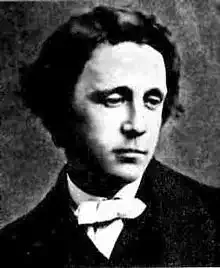
Lewis Carroll
A Boat beneath a Sunny Sky
A BOAT beneath a sunny sky,
Lingering onward dreamily
In an evening of July Children
three that nestle near,
Eager eye and willing ear,
Pleased a simple tale to hear Long
has paled that sunny sky:
Echoes fade and memories die:
Autumn frosts have slain July.
Still she haunts me, phantomwise,
Alice moving under skies
Never seen by waking eyes.
Children yet, the tale to hear,
Eager eye and willing ear,
Lovingly shall nestle near.
In a Wonderland they lie,
Dreaming as the days go by,
Dreaming as the summers die:
Ever drifting down the stream Lingering
in the golden dream Life,
what is it but a dream?
199
Robert W. Service
The Sceptic
My Father Christmas passed away
When I was barely seven.
At twenty-one, alack-a-day,
I lost my hope of heaven.
Yet not in either lies the curse:
The hell of it's because
I don't know which loss hurt the worse --
My God or Santa Claus.
When I was barely seven.
At twenty-one, alack-a-day,
I lost my hope of heaven.
Yet not in either lies the curse:
The hell of it's because
I don't know which loss hurt the worse --
My God or Santa Claus.
199
Robert W. Service
Two Children
Give me your hand, oh little one!
Like children be we two;
Yet I am old, my day is done
That barely breaks for you.
A baby-basket hard you hold,
With in it cherries four:
You cherish them as men do gold,
And count them o'er.
And then you stumble in your walk;
The cherries scattered lie.
You pick them up with foolish talk
And foolish glad am I,
When you wipe one quite clean of dust
And give it unto me;
So in the baby-basket just
Are three.
All this is simple, I confess,
A moment piled with peace;
Yet loving men have died for less,
And will till time shall cease. . . .
A silken hand in crinkled one-O
Little Innocence!
O blessed moment in the son
E'er I go hence!
188

Siegfried Sassoon
Prelude to an Unwritten Masterpiece
You like my bird-sung gardens: wings and flowers;
Calm landscapes for emotion; star-lit lawns;
And Youth against the sun-rise ... ‘Not profound;
‘But such a haunting music in the sound:
‘Do it once more; it helps us to forget’.
Last night I dreamt an old recurring scene—
Some complex out of childhood; (sex, of course!)
I can’t remember how the trouble starts;
And then I’m running blindly in the sun
Down the old orchard, and there’s something cruel
Chasing me; someone roused to a grim pursuit
Of clumsy anger ... Crash! I’m through the fence
And thrusting wildly down the wood that’s dense
With woven green of safety; paths that wind
Moss-grown from glade to glade; and far behind,
One thwarted yell; then silence. I’ve escaped.
That’s where it used to stop. Last night I went
Onward until the trees were dark and huge,
And I was lost, cut off from all return
By swamps and birdless jungles. I’d no chance
Of getting home for tea. I woke with shivers,
And thought of crocodiles in crawling rivers.
Some day I’ll build (more ruggedly than Doughty)
A dark tremendous song you’ll never hear.
My beard will be a snow-storm, drifting whiter
On bowed, prophetic shoulders, year by year.
And some will say, ‘His work has grown so dreary.’
Others, ‘He used to be a charming writer’.
And you, my friend, will query—
‘Why can’t you cut it short, you pompous blighter?’
149
Anne Brontë
Memory
Brightly the sun of summer shone,
Green fields and waving woods upon,
And soft winds wandered by;
Above, a sky of purest blue,
Around, bright flowers of loveliest hue,
Allured the gazer's eye.
But what were all these charms to me,
When one sweet breath of memory
Came gently wafting by?
I closed my eyes against the day,
And called my willing soul away,
From earth, and air, and sky;
That I might simply fancy there
One little flower a
primrose fair,
Just opening into sight;
As in the days of infancy,
An opening primrose seemed to me
A source of strange delight.
Sweet Memory! ever smile on me;
Nature's chief beauties spring from thee,
Oh, still thy tribute bring!
Still make the golden crocus shine
Among the flowers the most divine,
The glory of the spring.
Still in the wallflower's
fragrance dwell;
And hover round the slight blue bell,
My childhood's darling flower.
Smile on the little daisy still,
The buttercup's bright goblet fill
With all thy former power.
For ever hang thy dreamy spell
Round mountain star and heather bell,
And do not pass away
From sparkling frost, or wreathed snow,
And whisper when the wild winds blow,
Or rippling waters play.
Is childhood, then, so all divine?
Or Memory, is the glory thine,
That haloes thus the past?
Not all divine; its pangs of grief,
(Although, perchance, their stay be brief,)
Are bitter while they last.
Nor is the glory all thine own,
For on our earliest joys alone
That holy light is cast.
With such a ray, no spell of thine
Can make our later pleasures shine,
Though long ago they passed.
Acton
120
Anne Brontë
Verses To A Child
O raise those eyes to me again
And smile again so joyously,
And fear not, love; it was not pain
Nor grief that drew these tears from me;
Beloved child, thou canst not tell
The thoughts that in my bosom dwell
Whene'er I look on thee!
2
Thou knowest not that a glance of thine
Can bring back long departed years
And that thy blue eyes' magic shine
Can overflow my own with tears,
And that each feature soft and fair
And every curl of golden hair,
Some sweet remembrance bears.
3
Just then thou didst recall to me
A distant long forgotten scene,
One smile, and one sweet word from thee
Dispelled the years that rolled between;
I was a little child again,
And every after joy and pain
Seemed never to have been.
4
Tall forest trees waved over me,
To hide me from the heat of day,
And by my side a child like thee
Among the summer flowerets lay.
He was thy sire, thou merry child.
Like thee he spoke, like thee he smiled,
Like thee he used to play.
5
O those were calm and happy days,
We loved each other fondly then;
But human love too soon decays,
And ours can never bloom again.
I never thought to see the day
When Florian's friendship would decay
Like those of colder men.
6
Now, Flora, thou hast but begun
To sail on life's deceitful sea,
O do not err as I have done,
For I have trusted foolishly;
The faith of every friend I loved
I never doubted till I proved
Their heart's inconstancy.
7
'Tis mournful to look back upon
Those long departed joys and cares,
But I will weep since thou alone
Art witness to my streaming tears.
This lingering love will not depart,
I cannot banish from my heart
The friend of childish years.
8
But though thy father loves me not,
Yet I shall still be loved by thee,
And though I am by him forgot,
Say wilt thou not remember me!
I will not cause thy heart to ache;
For thy regretted father's sake
I'll love and cherish thee.
Alexandrina Zenobia
109
Previous
Page 5