
Childhood

James Whitcomb Riley
Old Winters On The Farm
I have jest about decided
It 'ud keep a _town-boy_ hoppin'
Fer to work all winter, choppin'
Fer a' old fire-place, like _I_ did!
Lawz! them old times wuz contrairy!--
Blame backbone o' winter, 'peared-like,
_Wouldn't_ break!--and I wuz skeerd-like
Clean on into _Febuary_!
Nothin' ever made we madder
Than fer Pap to stomp in, layin'
On a' extra fore-stick, sayin'
'Groun'hog's out and seed his shadder!'
325
James Whitcomb Riley
The Old Swimmin' Hole
2
3
4
6
7
8
Oh! the old swimmin'-hole! whare the crick so still and deep
Looked like a baby-river that was laying half asleep,
And the gurgle of the worter round the drift jest below
Sounded like the laugh of something we onc't ust to know
Before we could remember anything but the eyes
Of the angels lookin' out as we left Paradise;
But the merry days of youth is beyond our controle,
And it's hard to part ferever with the old swimmin'-hole.
9 Oh! the old swimmin'-hole! In the happy days of yore,
When I ust to lean above it on the old sickamore,
11
12
13
14
16
Oh! it showed me a face in its warm sunny tide
That gazed back at me so gay and glorified,
It made me love myself, as I leaped to caress
My shadder smilin' up at me with sich tenderness.
But them days is past and gone, and old Time's tuck his toll
From the old man come back to the old swimmin'-hole.
17
18
19
21
22
23
24
Oh! the old swimmin'-hole! In the long, lazy days
When the humdrum of school made so many run-a-ways,
How plesant was the jurney down the old dusty lane,
Whare the tracks of our bare feet was all printed so plane
You could tell by the dent of the heel and the sole
They was lots o' fun on hands at the old swimmin'-hole.
But the lost joys is past! Let your tears in sorrow roll
Like the rain that ust to dapple up the old swimmin'-hole.
26
Thare the bullrushes growed, and the cattails so tall,
And the sunshine and shadder fell over it all;
27
28
29
31
32
And it mottled the worter with amber and gold
Tel the glad lilies rocked in the ripples that rolled;
And the snake-feeder's four gauzy wings fluttered by
Like the ghost of a daisy dropped out of the sky,
Or a wownded apple-blossom in the breeze's controle
As it cut acrost some orchard to'rds the old swimmin'-hole.
33
34
36
37
38
39
Oh! the old swimmin'-hole! When I last saw the place,
The scenes was all changed, like the change in my face;
The bridge of the railroad now crosses the spot
Whare the old divin'-log lays sunk and fergot.
And I stray down the banks whare the trees ust to be --
But never again will theyr shade shelter me!
And I wish in my sorrow I could strip to the soul,
And dive off in my grave like the old swimmin'-hole.
324
James Whitcomb Riley
The Stepmother
First she come to our house,
Tommy run and hid;
And Emily and Bob and me
We cried jus' like we did
When Mother died,--and we all said
'At we all wisht 'at we was dead!
And Nurse she couldn't stop us,
And Pa he tried and tried,--
We sobbed and shook and wouldn't look,
But only cried and cried;
And nen someone--we couldn't jus'
Tell who--was cryin' same as us!
Our Stepmother! Yes, it was her,
Her arms around us all-'
Cause Tom slid down the bannister
And peeked in from the hall.--
And we all love her, too, because
She's purt nigh good as Mother was!
320

John Greenleaf Whittier
To My Sister
WITH A COPY OF 'THE SUPERNATURALISM OF NEW ENGLAND.'
Dear Sister! while the wise and sage
Turn coldly from my playful page,
And count it strange that ripened age
Should stoop to boyhood's folly;
I know that thou wilt judge aright
Of all which makes the heart more light,
Or lends one star-gleam to the night
Of clouded Melancholy.
Away with weary cares and themes!
Swing wide the moonlit gate of dreams!
Leave free once more the land which teems
With wonders and romances
Where thou, with clear discerning eyes,
Shalt rightly read the truth which lies
Beneath the quaintly masking guise
Of wild and wizard fancies.
Lo! once again our feet we set
On still green wood-paths, twilight wet,
By lonely brooks, whose waters fret
The roots of spectral beeches;
Again the hearth-fire glimmers o'er
Home's whitewashed wall and painted floor,
And young eyes widening to the lore
Of faery-folks and witches.
Dear heart! the legend is not vain
Which lights that holy hearth again,
And calling back from care and pain,
And death's funereal sadness,
Draws round its old familiar blaze
The clustering groups of happier days,
And lends to sober manhood's gaze
A glimpse of childish gladness.
And, knowing how my life hath been
A weary work of tongue and pen,
A long, harsh strife with strong-willed men,
Thou wilt not chide my turning
To con, at times, an idle rhyme,
To pluck a flower from childhood's clime,
Or listen, at Life's noonday chime,
For the sweet bells of Morning!
316
James Whitcomb Riley
Company Manners
When Bess gave her Dollies a Tea, said she,-'
It's unpolite, when they's Company,
To say you've drinked _two_ cups, you see,--
But say you've drinked _a couple_ of tea.'
It's unpolite, when they's Company,
To say you've drinked _two_ cups, you see,--
But say you've drinked _a couple_ of tea.'
313

Henry Wadsworth Longfellow
By The Fireside : The Open Window
The old house by the lindens
Stood silent in the shade,
And on the gravelled pathway
The light and shadow played.
I saw the nursery windows
Wide open to the air;
But the faces of the children,
They were no longer there.
The large Newfoundland house-dog
Was standing by the door;
He looked for his little playmates,
Who would return no more.
They walked not under the lindens,
They played not in the hall;
But shadow, and silence, and sadness
Were hanging over all.
The birds sang in the branches,
With sweet, familiar tone;
But the voices of the children
Will be heard in dreams alone!
And the boy that walked beside me,
He could not understand
Why closer in mine, ah! closer,
I pressed his warm, soft hand!
310
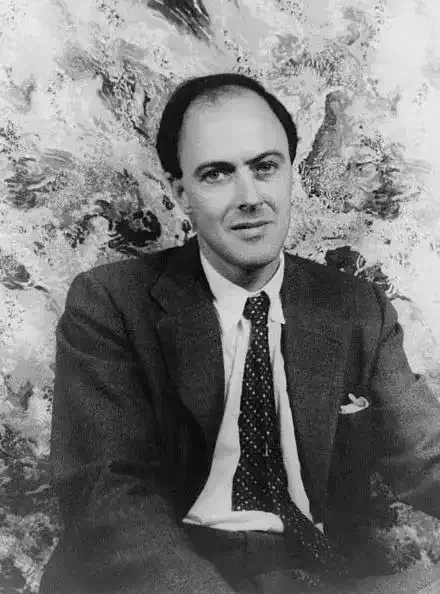
Roald Dahl
Of dragons, gypsies, queens, and whales
And treasure isles, and distant shores
Where smugglers rowed with muffled oars,
And pirates wearing purple pants,
And sailing ships and elephants,
And cannibals crouching 'round the pot,
Stirring away at something hot.
(It smells so good, what can it be?
Good gracious, it's Penelope.)
The younger ones had Beatrix Potter
With Mr. Tod, the dirty rotter,
And Squirrel Nutkin, Pigling Bland,
And Mrs. Tiggy-Winkle and-
Just How The Camel Got His Hump,
And How the Monkey Lost His Rump,
And Mr. Toad, and bless my soul,
There's Mr. Rat and Mr. Mole-
Oh, books, what books they used to know,
Those children living long ago!
So please, oh please, we beg, we pray,
Go throw your TV set away,
And in its place you can install
A lovely bookshelf on the wall.
Then fill the shelves with lots of books,
Ignoring all the dirty looks,
The screams and yells, the bites and kicks,
And children hitting you with sticks-
Fear not, because we promise you
That, in about a week or two
Of having nothing else to do,
They'll now begin to feel the need
Of having something to read.
And once they start -- oh boy, oh boy!
You watch the slowly growing joy
That fills their hearts. They'll grow so keen
They'll wonder what they'd ever seen
In that ridiculous machine,
That nauseating, foul, unclean,
Repulsive television screen!
And later, each and every kid
Will love you more for what you did.
308
James Whitcomb Riley
A Song Of Long Ago
A song of Long Ago:
Sing it lightly--sing it low--
Sing it softly--like the lisping of the lips we used to know
When our baby-laughter spilled
From the glad hearts ever filled
With music blithe as robin ever trilled!
Let the fragrant summer-breeze,
And the leaves of locust-trees,
And the apple-buds and blossoms, and the wings of honey-bees,
All palpitate with glee,
Till the happy harmony
Brings back each childish joy to you and me.
Let the eyes of fancy turn
Where the tumbled pippins burn
Like embers in the orchard's lap of tangled grass and fern,--
There let the old path wind
In and out and on behind
The cider-press that chuckles as we grind.
Blend in the song the moan
Of the dove that grieves alone,
And the wild whir of the locust, and the bumble's drowsy drone;
And the low of cows that call
Through the pasture-bars when all
The landscape fades away at evenfall.
Then, far away and clear,
Through the dusky atmosphere,
Let the wailing of the kildee be the only sound we hear:
O sad and sweet and low
As the memory may know
Is the glad-pathetic song of Long Ago!
310
James Whitcomb Riley
The Lost Kiss
I put by the half-written poem,
While the pen, idly trailed in my hand,
Writes on--, 'Had I words to complete it,
Who'd read it, or who'd understand?'
But the little bare feet on the stairway,
And the faint, smothered laugh in the hall,
And the eerie-low lisp on the silence,
Cry up to me over it all.
So I gather it up-- where was broken
The tear-faded thread of my theme,
Telling how, as one night I sat writing,
A fairy broke in on my dream,
A little inquisitive fairy--
My own little girl, with the gold
Of the sun in her hair, and the dewy
Blue eyes of the fairies of old.
'Twas the dear little girl that I scolded-'
For was it a moment like this,'
I said, 'when she knew I was busy,
To come romping in for a kiss--?
Come rowdying up from her mother,
And clamoring there at my knee
For 'One 'ittle kiss for my dolly,
And one 'ittle uzzer for me!'
God pity, the heart that repelled her,
And the cold hand that turned her away,
And take, from the lips that denied her,
This answerless prayer of to-day!
Take Lord, from my mem'ry forever
That pitiful sob of despair,
And the patter and trip of the little bare feet,
And the one piercing cry on the stair!
I put by the half-written poem,
While the pen, idly trailed in my hand
Writes on--, 'Had I words to complete it
Who'd read it, or who'd understand?'
But the little bare feet on the stairway,
And the faint, smothered laugh in the hall,
And the eerie-low lisp on the silence,
Cry up to me over it all.
305
James Whitcomb Riley
When Old Jack Died
I.
When old Jack died, we staid from school (they said,
At home, we needn't go that day), and none
Of us ate any breakfast--only one,
And that was Papa--and his eyes were red
When he came round where we were, by the shed
Where Jack was lying, half way in the sun
And half way in the shade. When we begun
To cry out loud, Pa turned and dropped his head
And went away; and Mamma, she went back
Into the kitchen. Then, for a long while,
All to ourselves, like, we stood there and cried.
We thought so many good things of Old Jack,
And funny things--although we didn't smile--We
couldn't only cry when Old Jack died.
II.
When Old Jack died, it seemed a human friend
Had suddenly gone from us; that some face
That we had loved to fondle and embrace
From babyhood, no more would condescend
To smile on us forever. We might bend
With tearful eyes above him, interlace
Our chubby fingers o'er him, romp and race,
Plead with him, call and coax--aye, we might send
The old halloo up for him, whistle, hist,
(If sobs had let us) or, as wildly vain,
Snapped thumbs, called 'speak,' and he had not replied;
We might have gone down on our knees and kissed
The tousled ears, and yet they must remain
Deaf, motionless, we knew--when Old Jack died.
III.
When Old Jack died, it seemed to us, some way,
That all the other dogs in town were pained
With our bereavement, and some that were chained,
Even, unslipped their collars on that day
To visit Jack in state, as though to pay
A last, sad tribute there, while neighbors craned
Their heads above the high board fence, and deigned
To sigh 'Poor dog!' remembering how they
Had cuffed him, when alive, perchance, because,
For love of them he leaped to lick their hands--
Now, that he could not, were they satisfied?
We children thought that, as we crossed his paws,
And o'er his grave, 'way down the bottom-lands,
Wrote 'Our First Love Lies Here,' when Old Jack died.
305
James Whitcomb Riley
Who Santy-Claus Wuz
Jes' a little bit o' feller--I remember still--
Ust to almost cry fer Christmas, like a youngster will.
Fourth o' July's nothin' to it!--New Year's ain't a smell!
Easter-Sunday--Circus-day--jes' all dead in the shell!
Lawzy, though! at night, you know, to set around an' hear
The old folks work the story off about the sledge an' deer,
An' 'Santy' skootin' round the roof, all wrapt in fur an' fuzz--
Long afore
I knowed who
'Santy-Claus' wuz!
Ust to wait, an' set up late, a week er two ahead;
Couldn't hardly keep awake, ner wouldn't go to bed;
Kittle stewin' on the fire, an' Mother settin' here
Darnin' socks, an' rockin' in the skreeky rockin'-cheer;
Pap gap', an' wonder where it wuz the money went,
An' quar'l with his frosted heels, an' spill his liniment;
An' me a-dreamin' sleigh-bells when the clock 'ud whir an' buzz,
Long afore
I knowed who
'Santy-Claus' wuz!
Size the fire-place up an' figger how 'Ole Santy' could
Manage to come down the chimbly, like they said he would;
Wisht 'at I could hide an' see him--wunderd what he'd say
Ef he ketched a feller layin' fer him thataway!
But I _bet_ on him, an' _liked_ him, same as ef he had
Turned to pat me on the back an' say, 'Look here, my lad,
Here's my pack,--jes' he'p yourse'f, like all good boys does!'
Long afore
I knowed who
'Santy-Claus' wuz!
Wisht that yarn was true about him, as it 'peared to be--
Truth made out o' lies like that-un's good enough fer me!--
Wisht I still wuz so confidin' I could jes' go wild
Over hangin' up my stockin's, like the little child
Climbin' in my lap to-night, an' beggin' me to tell
'Bout them reindeers, and 'Old Santy' that she loves so well
I'm half sorry fer this little-girl-sweetheart of his--
Long afore
She knows who
'Santy-Claus' is!
301
James Whitcomb Riley
Up And Down Old Brandywine
Up and down old Brandywine,
In the days 'at's past and gone--
With a dad-burn hook-and line
And a saplin' pole--swawn!
I've had more fun, to the square
Inch, than ever ANYwhere!
Heaven to come can't discount MINE
Up and down old Brandywine!
Hain't no sense in WISHIN'--yit
Wisht to goodness I COULD jes
'Gee' the blame' world round and git
Back to that old happiness!--
Kindo' drive back in the shade
'The old Covered Bridge' there laid
'Crosst the crick, and sorto' soak
My soul over, hub and spoke!
Honest, now!--it hain't no DREAM
'At I'm wantin',--but THE FAC'S
As they wuz; the same old stream,
And the same old times, i jacks!--
Gim me back my bare feet--and
Stonebruise too!--And scratched and tanned!
And let hottest dog-days shine
Up and down old Brandywine!
In and on betwixt the trees
'Long the banks, pour down yer noon,
Kindo' curdled with the breeze
And the yallerhammer's tune;
And the smokin', chokin' dust
O' the turnpike at its wusst--
SATURD'YS, say, when it seems
Road's jes jammed with country teams!--
Whilse the old town, fur away
'Crosst the hazy pastur'-land,
Dozed-like in the heat o' day
Peaceful' as a hired hand.
Jolt the gravel th'ough the floor
O' the old bridge!--grind and roar
With yer blame percession-line--
Up and down old Brandywine!
Souse me and my new straw-hat
Off the foot-log!--what _I_ care?--
Fist shoved in the crown o' that--
Like the old Clown ust to wear.
Wouldn't swop it fer a' old
Gin-u-wine raal crown o' gold!--
Keep yer KING ef you'll gim me
Jes the boy I ust to be!
Spill my fishin'-worms! er steal
My best 'goggle-eye!'--but you
Can't lay hands on joys I feel
Nibblin' like they ust to do!
So, in memory, to-day
Same old ripple lips away
At my 'cork' and saggin' line,
Up and down old Bradywine!
There the logs is, round the hill,
Where 'Old Irvin' ust to lift
Out sunfish from daylight till
Dewfall--'fore he'd leave 'The Drift'
And give US a chance--and then
Kindo' fish back home again,
Ketchin' 'em jes left and right
Where WE hadn't got 'a bite!'
Er, 'way windin' out and in,--
Old path th'ough the iurnweeds
And dog-fennel to yer chin--
Then come suddent, th'ough the reeds
And cat-tails, smack into where
Them--air woods--hogs ust to scare
Us clean 'crosst the County-line,
Up and down old Brandywine!
But the dim roar o' the dam
It 'ud coax us furder still
To'rds the old race, slow and ca'm,
Slidin' on to Huston's mill--
Where, I'spect, 'The Freeport crowd'
Never WARMED to us er 'lowed
We wuz quite so overly
Welcome as we aimed to be.
Still it 'peared like ever'thing--
Fur away from home as THERE--
Had more RELISH-like, i jing!--
Fish in stream, er bird in air!
O them rich old bottom-lands,
Past where Cowden's Schoolhouse stands!
Wortermelons--MASTER-MINE!
Up and down old Brandywine!
And sich pop-paws!--Lumps o' raw
Gold and green,--jes oozy th'ough
With ripe yaller--like you've saw
Custard-pie with no crust to:
And jes GORGES o' wild plums,
Till a feller'd suck his thumbs
Clean up to his elbows! MY!--
ME SOME MORE ER LEM ME DIE!
Up and down old Brandywine! ...
Stripe me with pokeberry-juice!--
Flick me with a pizenvine
And yell 'Yip!' and lem me loose!
--Old now as I then wuz young,
'F I could sing as I HAVE sung,
Song 'ud surely ring DEE-VINE
Up and down old Brandywine!
296
James Whitcomb Riley
An Out-Worn Sappho
How tired I am! I sink down all alone
Here by the wayside of the Present. Lo,
Even as a child I hide my face and moan--
A little girl that may no farther go;
The path above me only seems to grow
More rugged, climbing still, and ever briered
With keener thorns of pain than these below;
And O the bleeding feet that falter so
And are so very tired!
Why, I have journeyed from the far-off Lands
Of Babyhood--where baby-lilies blew
Their trumpets in mine ears, and filled my hands
With treasures of perfume and honey-dew,
And where the orchard shadows ever drew
Their cool arms round me when my cheeks were fired
With too much joy, and lulled mine eyelids to,
And only let the starshine trickle through
In sprays, when I was tired!
Yet I remember, when the butterfly
Went flickering about me like a flame
That quenched itself in roses suddenly,
How oft I wished that _I_ might blaze the same,
And in some rose-wreath nestle with my name,
While all the world looked on it and admired.--
Poor moth!--Along my wavering flight toward fame
The winds drive backward, and my wings are lame
And broken, bruised and tired!
I hardly know the path from those old times;
I know at first it was a smoother one
Than this that hurries past me now, and climbs
So high, its far cliffs even hide the sun
And shroud in gloom my journey scarce begun.
I could not do quite all the world required--
I could not do quite all I should have done,
And in my eagerness I have outrun
My strength--and I am tired....
Just tired! But when of old I had the stay
Of mother-hands, O very sweet indeed
It was to dream that all the weary way
I should but follow where I now must lead--
For long ago they left me in my need,
And, groping on alone, I tripped and mired
Among rank grasses where the serpents breed
In knotted coils about the feet of speed.--
There first it was I tired.
And yet I staggered on, and bore my load
Right gallantly: The sun, in summer-time,
In lazy belts came slipping down the road
To woo me on, with many a glimmering rhyme
Rained from the golden rim of some fair clime,
That, hovering beyond the clouds, inspired
My failing heart with fancies so sublime
I half forgot my path of dust and grime,
Though I was growing tired.
And there were many voices cheering me:
I listened to sweet praises where the wind
Went laughing o'er my shoulders gleefully
And scattering my love-songs far behind;--
Until, at last, I thought the world so kind--
So rich in all my yearning soul desired--
So generous--so loyally inclined,
I grew to love and trust it.... I was blind--
Yea, blind as I was tired!
And yet one hand held me in creature-touch:
And O, how fair it was, how true and strong,
How it did hold my heart up like a crutch,
Till, in my dreams, I joyed to walk along
The toilsome way, contented with a song-'
Twas all of earthly things I had acquired,
And 'twas enough, I feigned, or right or wrong,
Since, binding me to man--a mortal thong--
It stayed me, growing tired....
Yea, I had e'en resigned me to the strait
Of earthly rulership--had bowed my head
Acceptant of the master-mind--the great
One lover--lord of all,--the perfected
Kiss-comrade of my soul;--had stammering said
My prayers to him;--all--all that he desired
I rendered sacredly as we were wed.-Nay--
nay!--'twas but a myth I worshipped.--
And--God of love!--how tired!
For, O my friends, to lose the latest grasp--
To feel the last hope slipping from its hold--
To feel the one fond hand within your clasp
Fall slack, and loosen with a touch so cold
Its pressure may not warm you as of old
Before the light of love had thus expired--
To know your tears are worthless, though they rolled
Their torrents out in molten drops of gold.-God's
pity! I am tired!
And I must rest.--Yet do not say 'She _died_,'
In speaking of me, sleeping here alone.
I kiss the grassy grave I sink beside,
And close mine eyes in slumber all mine own:
Hereafter I shall neither sob nor moan
Nor murmur one complaint;--all I desired,
And failed in life to find, will now be known--
So let me dream. Good night! And on the stone
Say simply: She was tired.
296
James Whitcomb Riley
The Orchard Lands Of Long Ago
The orchard lands of Long Ago!
O drowsy winds, awake, and blow
The snowy blossoms back to me,
And all the buds that used to be!
Blow back along the grassy ways
Of truant feet, and lift the haze
Of happy summer from the trees
That trail their tresses in the seas
Of grain that float and overflow
The orchard lands of Long Ago!
Blow back the melody that slips
In lazy laughter from the lips
That marvel much if any kiss
Is sweeter than the apple's is.
Blow back the twitter of the birds--
The lisp, the titter, and the words
Of merriment that found the shine
Of summer-time a glorious wine
That drenched the leaves that loved it so,
In orchard lands of Long Ago!
O memory! alight and sing
Where rosy-bellied pippins cling,
And golden russets glint and gleam,
As, in the old Arabian dream,
The fruits of that enchanted tree
The glad Aladdin robbed for me!
And, drowsy winds, awake and fan
My blood as when it overran
A heart ripe as the apples grow
In orchard lands of Long Ago!
298
James Whitcomb Riley
Harlie
Fold the little waxen hands
Lightly. Let your warmest tears
Speak regrets, but never fears,--
Heaven understands!
Let the sad heart, o'er the tomb,
Lift again and burst in bloom
Fragrant with a prayer as sweet
As the lily at your feet.
Bend and kiss the folded eyes--
They are only feigning sleep
While their truant glances peep
Into Paradise.
See, the face, though cold and white,
Holds a hint of some delight
E'en with Death, whose finger-tips
Rest upon the frozen lips.
When, within the years to come,
Vanished echoes live once more--
Pattering footsteps on the floor,
And the sounds of home,--
Let your arms in fancy fold
Little Harlie as of old--
As of old and as he waits
At the City's golden gates.
293
James Whitcomb Riley
Jack-In-The-Box
_(Grandfather, musing.)_
In childish days! O memory,
You bring such curious things to me!--
Laughs to the lip--tears to the eye,
In looking on the gifts that lie
Like broken playthings scattered o'er
Imagination's nursery floor!
Did these old hands once click the key
That let 'Jack's' box-lid upward fly,
And that blear-eyed, fur-whiskered elf
Leap, as though frightened at himself,
And quiveringly lean and stare
At me, his jailer, laughing there?
A child then! Now--I only know
They call me very old; and so
They will not let me have my way,--
But uselessly I sit all day
Here by the chimney-jamb, and poke
The lazy fire, and smoke and smoke,
And watch the wreaths swoop up the flue,
And chuckle--ay, I often do--
Seeing again, all vividly,
Jack-in-the-box leap, as in glee
To see how much he looks like me!
... They talk. I can't hear what they say--
But I am glad, clean through and through
Sometimes, in fancying that they
Are saying, 'Sweet, that fancy strays
In age back to our childish days!'
292

Emily Dickinson
It was given to me by the Gods
It was given to me by the Gods-
When I was a little Girl-
They given us Presents most-you know-
When we are new-and small.
I kept it in my Hand-
I never put it down-
I did not dare to eat-or sleep-
For fear it would be gone-
I heard such words as "Rich"-
When hurrying to school-
From lips at Corners of the Streets-
And wrestled with a smile.
Rich! 'Twas Myself-was rich-
To take the name of Gold-
And Gold to own-in solid Bars-
The Difference-made me bold-
290
James Whitcomb Riley
There Was a Cherry-Tree
There was a cherry-tree. Its bloomy snows
Cool even now the fevered sight that knows
No more its airy visions of pure joy --
As when you were a boy.
There was a cherry-tree. The Bluejay sat
His blue against its white -- O blue as jet
He seemed there then!-- But now -- Whoever knew
He was so pale a blue!
There was a cherry-tree -- our child-eyes saw
The miracle:-- Its pure white snows did thaw
Into a crimson fruitage, far too sweet
But for a boy to eat.
There was a cherry-tree, give thanks and joy!--
There was a bloom of snow -- There was a boy --
There was a bluejay of the realest blue --
And fruit for both of you.
285

Robert Browning
Overhead the Tree-Tops Meet
Overhead the tree-tops meet,
Flowers and grass spring 'neath one's feet;
There was nought above me, and nought below,
My childhood had not learned to know:
For what are the voices of birds
—Ay, and of beasts,—but words—our words,
Only so much more sweet?
The knowledge of that with my life begun!
But I had so near made out the sun,
And counted your stars, the Seven and One,
Like the fingers of my hand:
Nay, I could all but understand
Wherefore through heaven the white moon ranges,
And just when out of her soft fifty changes
No unfamiliar face might overlook me—
Suddenly God took me!
286
James Whitcomb Riley
Waitin' Fer The Cat To Die
Lawzy! don't I rickollect
That-'air old swing in the lane!
Right and proper, I expect,
Old times _can't_ come back again;
But I want to state, ef they
_Could_ come back, and I could say
What _my_ pick 'ud be, i jing!
I'd say, Gimme the old swing
'Nunder the old locus'-trees
On the old place, ef you please!--
Danglin' there with half-shet eye,
Waitin' fer the cat to die!
I'd say, Gimme the old gang
Of barefooted, hungry, lean,
Ornry boys you want to hang
When you're growed up twic't as mean!
The old gyarden-patch, the old
Truants, and the stuff we stol'd!
The old stompin'-groun', where we
Wore the grass off, wild and free
As the swoop of the old swing,
Where we ust to climb and cling,
And twist roun', and fight, and lie--
Waitin' fer the cat to die!
'Pears like I 'most allus could
Swing the highest of the crowd--
Jes sail up there tel I stood
Downside-up, and screech out loud,--
Ketch my breath, and jes drap back
Fer to let the old swing slack,
Yit my tow-head dippin' still
In the green boughs, and the chill
Up my backbone taperin' down,
With my shadder on the ground'
Slow and slower trailin' by--
Waitin' fer the cat to die!
Now my daughter's little Jane's
Got a kind o' baby-swing
On the porch, so's when it rains
She kin play there--little thing!
And I'd limped out t'other day
With my old cheer this-a-way,
Swingin' _her_ and rockin' too,
Thinkin' how _I_ ust to do
At _her_ age, when suddently,
'Hey, Gran'pap!' she says to me,
'Why you rock so slow?' ... Says I,
'Waitin' fer the cat to die!'
282
James Whitcomb Riley
Green Fields And Running Brooks
Ho! green fields and running brooks!
Knotted strings and fishing-hooks
Of the truant, stealing down
Weedy backways of the town.
Where the sunshine overlooks,
By green fields and running brooks,
All intruding guests of chance
With a golden tolerance,
Cooing doves, or pensive pair
Of picnickers, straying there--
By green fields and running brooks,
Sylvan shades and mossy nooks!
And--O Dreamer of the Days,
Murmurer of roundelays
All unsung of words or books,
Sing green fields and running brooks!
280
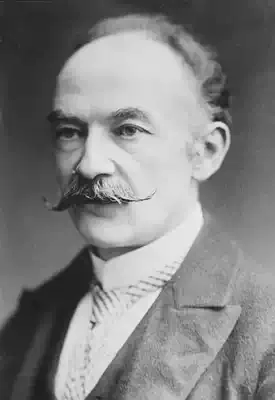
Thomas Hardy
The Self-Unseeing
Here is the ancient floor,
Footworn and hollowed and thin,
Here was the former door
Where the dead feet walked in.
She sat here in her chair,
Smiling into the fire;
He who played stood there,
Bowing it higher and higher.
Childlike, I danced in a dream;
Blessings emblazoned that day;
Everything glowed with a gleam;
Yet we were looking away!
273

Henry Lawson
A Bush Girl
She's milking in the rain and dark,
As did her mother in the past.
The wretched shed of poles and bark,
Rent by the wind, is leaking fast.
She sees the “home-roof” black and low,
Where, balefully, the hut-fire gleams—
And, like her mother, long ago,
She has her dreams; she has her dreams.
The daybreak haunts the dreary scene,
The brooding ridge, the blue-grey bush,
The “yard” where all her years have been,
Is ankle-deep in dung and slush;
She shivers as the hour drags on,
Her threadbare dress of sackcloth seems—
But, like her mother, years agone,
She has her dreams; she has her dreams.
The sullen “breakfast” where they cut
The blackened “junk.” The lowering face,
As though a crime were in the hut,
As though a curse was on the place;
The muttered question and reply,
The tread that shakes the rotting beams,
The nagging mother, thin and dry—
God help the girl! She has her dreams.
Then for “th’ separator” start,
Most wretched hour in all her life,
With “horse” and harness, dress and cart,
No Chinaman would give his “wife”;
Her heart is sick for light and love,
Her face is often fair and sweet,
And her intelligence above
The minds of all she’s like to meet.
She reads, by slush-lamp light, may be,
When she has dragged her dreary round,
And dreams of cities by the sea
(Where butter’s up, so much the pound),
Of different men from those she knows,
Of shining tides and broad, bright streams;
Of theatres and city shows,
And her release! She has her dreams.
Could I gain her a little rest,
A little light, if but for one,
I think that it would be the best
Of any good I may have done.
But, after all, the paths we go
Are not so glorious as they seem,
And—if t’will help her heart to know—
I’ve had my dream. ’Twas but a dream.
274
Henry Lawson
The Soldier Birds
I mind the river from Mount Frome
To Ballanshantie’s Bridge,
The Mudgee Hills, and Buckaroo,
Lowe’s Peak, and Granite Ridge.
The “tailers” in the creek beneath,
The rugged she-oak boles,
The river cod where shallows linked,
The willowed water-holes.
I mind the blacksoil river flats,
The red soil levels, too,
The sidings where below the scrub
The golden wattles grew;
The track that ran by Tierney’s Gap,
The dusk and ghost alarms,
The glorious morning on the hills,
And all the German farms.
I mind the blue-grey gully bush,
The slab-and-shingle school,
The “soldier birds” that picked the crumbs
Beneath the infants’ stool.
(Ah! did those little soldier birds,
That whispered, ever know
That one of us should rise so high
And sadly sink so low?)
I mind the lessons that we droned
In books from Irish schools,
The canings and the keepings-in
For breaking bounds and rules.
Ah! little did the teacher dream
That one of us, perchance,
Might write in London to be read
In Germany and France.
I mind the days we played at camp
With billy-can and swag,
I mind the notes sent home by girls
When someone “played the wag.”
Ah! little did the master think
(Who’d lost the roving star)
What truants in their after years
Would play the wag so far.
I mind when first he gave to me
A pen and ink to write,
And, last, the “Fourth Class Forms” he made
I shared with Lucy White.
The other boys were other boys,
With cricket ball and bat,
They had a fine contempt for girls,
But they got over that.
The “rounders” where the girls came in—
The Tomboy and the rest—
The earnest game of Pris’ners’ Base—
The game that I liked best.
The kangarooing on the ridge,
And in the brown moonlight,
The “possuming” across the flats,
With dogs and gun at night.
The “specking” in old diggers’ heaps
For “colours” after rain,
The horse-shoes saved against the time
The circus came again,
And sold to Jimmy Siver-right—
The blacksmith on the flat;
The five-corners, the swimming hole—
Oh! I remember that!
I mind the holland “dinner bags”—
A book bag of green baize—
The bread and dripping, bread and meat,
And bread and treacle days.
The bread and butter swopped for meat,
The crumb we swopped for crust—
We’ve married—and divorced—since then,
And most old homes are dust.
It was the time, it was the place—
Australia’s hardest page—
When boys were cast for farming work
At fourteen years of age.
It was the time, it was the place,
The latter “Early Day,”
When boys ride home from old bark schools
And to the world away.
I’ve drifted through Port Said since then,
Naples and Leicester Square,
And Collins and Macquarie Streets—
I know the secrets there.
Ah me! The country boy and girl,
The country lass and lad,
As innocent as soldier birds,
Though we thought we were bad!
But, spite of all their daring truth,
And some work that shall last,
The bitter years of my brave youth
Are better in the past.
This does not call for bitterness,
Nor does it call for tears,
The purest little thing perhaps
I’ve printed here for years.
The railway runs by Mudgee Hills,
Old farms are lost or lone,
And children’s children sadly go
To schools of brick and stone.
Yet are the same. The Mudgee Hills
And Mudgee skies as fair—
And the little grey-clad soldier birds
Are just as busy there.
272