
Freedom

Rudyard Kipling
Toomai of the Elephants
I will remember what I was. I am sick of rope and chain--
I will remember my old strength and all my forest-affairs.
I will not sell my back to man for a bundle of sugarcane.
I will go out to my own kind, and the wood-folk in their lairs.
I will go out until the day, until the morning break,
Out to the winds 'untainted kiss, the waters' clean caress.
I will forget my ankle-ring and snap my picket-stake.
I will revisit my lost loves, and playmates masterless!
556

Elizabeth Barrett Browning
Stanzas on the Death of Lord Byron
He was, and is not! Graecia's trembling shore,
Sighing through all her palmy groves, shall tell
That Harold's pilgrimage at last is o'er—
Mute the impassioned tongue, and tuneful shell,
That erst was wont in noblest strains to swell—
Hush'd the proud shouts that rode Aegaea's wave!
For lo! the great Deliv'rer breathes farewell!
Gives to the world his mem'ry and a grave—
Expiring in the land he only lived to save!
Mourn, Hellas, mourn! and o'er thy widow'd brow,
For aye, the cypress wreath of sorrow twine;
And in thy new-form'd beauty, desolate, throw
The fresh-cull'd flowers on his sepulchral shrine.
Yes! let that heart whose fervour was all thine,
In consecrated urn lamented be!
That generous heart where genius thrill'd divine,
Hath spent its last most glorious throb for thee—
Then sank amid the storm that made thy children free!
Britannia's Poet! Graecia's hero, sleeps!
And Freedom, bending o'er the breathless clay,
Lifts up her voice, and in her anguish weeps!
For us, a night hath clouded o'er our day,
And hush'd the lips that breath'd our fairest lay.
Alas! and must the British lyre resound
A requiem, while the spirit wings away
Of him who on its strings such music found,
And taught its startling chords to give so sweet a sound!
The theme grows sadder — but my soul shall find
A language in those tears! No more — no more!
Soon, 'midst the shriekings of the tossing wind,
The 'dark blue depths' he sang of, shall have bore
Our all of Byron to his native shore!
His grave is thick with voices — to the ear
Murm'ring an awful tale of greatness o'er;
But Memory strives with Death, and lingering near,
Shall consecrate the dust of Harold's lonely bier!
553

Lord Byron
The Island: Canto III.
I.
The fight was o'er; the flashing through the gloom,
Which robes the cannon as he wings a tomb,
Had ceased; and sulphury vapours upward driven
Had left the Earth, and but polluted Heaven:
The rattling roar which rung in every volley
Had left the echoes to their melancholy;
No more they shrieked their horror, boom for boom;
The strife was done, the vanquished had their doom;
The mutineers were crushed, dispersed, or ta'en,
Or lived to deem the happiest were the slain.
Few, few escaped, and these were hunted o'er
The isle they loved beyond their native shore.
No further home was theirs, it seemed, on earth,
Once renegades to that which gave them birth;
Tracked like wild beasts, like them they sought the wild,
As to a Mother's bosom flies the child;
But vainly wolves and lions seek their den,
And still more vainly men escape from men,
II.
Beneath a rock whose jutting base protrudes
Far over Ocean in its fiercest moods,
When scaling his enormous crag the wave
Is hurled down headlong, like the foremost brave,
And falls back on the foaming crowd behind,
Which fight beneath the banners of the wind,
But now at rest, a little remnant drew
Together, bleeding, thirsty, faint, and few;
But still their weapons in their hands, and still
With something of the pride of former will,
As men not all unused to meditate,
And strive much more than wonder at their fate.
Their present lot was what they had foreseen,
And dared as what was likely to have been;
Yet still the lingering hope, which deemed their lot
Not pardoned, but unsought for or forgot,
Or trusted that, if sought, their distant caves
Might still be missed amidst the world of waves,
Had weaned their thoughts in part from what they saw
And felt, the vengeance of their country's law.
Their seagreen
isle, their guiltwon
Paradise,
No more could shield their Virtue or their Vice:
Their better feelings, if such were, were thrown
Back on themselves,their
sins remained alone.
Proscribed even in their second country, they
Were lost; in vain the World before them lay;
All outlets seemed secured. Their new allies
Had fought and bled in mutual sacrifice;
But what availed the club and spear, and arm
Of Hercules, against the sulphury charm,
The magic of the thunder, which destroyed
The warrior ere his strength could be employed?
Dug, like a spreading pestilence, the grave
No less of human bravery than the brave!
Their own scant numbers acted all the few
Against the many oft will dare and do;
But though the choice seems native to die free,
Even Greece can boast but one Thermopylae,
Till now, when she has forged her broken chain
Back to a sword, and dies and lives again!
III.
Beside the jutting rock the few appeared,
Like the last remnant of the reddeer's
herd;
Their eyes were feverish, and their aspect worn,
But still the hunter's blood was on their horn.
A little stream came tumbling from the height,
And straggling into ocean as it might,
Its bounding crystal frolicked in the ray,
And gushed from cliff to crag with saltless spray;
Close on the wild, wide ocean, yet as pure
And fresh as Innocettce, and more secure,
Its silver torrent glittered o'er the deep,
As the shy chamois' eye o'erlooks the steep,
While far below the vast and sullen swell
Of Ocean's alpine azure rose and fell.
To this young spring they rushed,all
feelings first
Absorbed in Passion's and in Nature's thirst,
Drank
as they do who drink their last, and threw
Their arms aside to revel in its dew;
Cooled their scorched throats, and washed the gory stains
From wounds whose only bandage might be chains;
Then,when their drought was quenched, looked sadly round,
As wondering how so many still were found
Alive and fetterless:but
silent all,
Each sought his fellow's eyes, as if to call
On him for language which his lips denied,
As though their voices with their cause had died.
IV.
Stern, and aloof a little from the rest,
Stood Christian, with his arms across his chest.
The ruddy, reckless, dauntless hue once spread
Along his cheek was livid now as lead;
His lightbrown
locks, so graceful in their flow,
Now rose like startled vipers o'er his brow.
Still as a statue, with his lips coinprest
To stifle even the breath within his breast,
Fast by the rock, all menacing, but mute,
He stood; and, save a slight beat of his foot,
Which deepened now and then the sandy dint
Beneath his heel, his form seemed turned to flint.
Some paces further Torquil leaned his head
Against a bank, and spoke not, but he bled,
Not
mortally:his
worst wound was within;
His brow was pale, his blue eyes sunken in,too
And blooddrops,
sprinkled o'er his yellow hair,
Showed that his faintness came not from despair,
But Nature's ebb. Beside him was another,
Rough as a bear, but willing as a brother,
Ben
Bunting, who essayed to wash, and wipe,
And bind his woundthen
calmly lit his pipe,
A trophy which survived a hundred fights,
A beacon which had cheered ten thousand nights.
The fourth and last of this deserted group
Walked up and downat
times would stand, then stoop
To pick a pebble upthen
let it drop
Then
hurry as in hastethen
quickly stop
Then
cast his eyes on his companionsthen
Half whistle half a tune, and pause again
And
then his former movements would redouble,
With something between carelessness and trouble.
This is a long description, but applies
To scarce five minutes passed before the eyes;
But yet what minutes! Moments like to these
Rend men's lives into immortalities.
V.
At length Jack Skyscrape, a mercurial man,
Who fluttered over all things like a fan,
More brave than firm, and more disposed to dare
And die at once than wrestle with despair,
Exclaimed, 'Gd
damn I'those
syllables intense,
Nucleus
of England's native eloquence,
As the Turk's 'Allah!' or the Roman's more
Pagan 'Proh Jupiter!' was wont of yore
To give their first impressions such a vent,
By way of echo to embarrassment.
Jack was embarrassed,never
hero more,
Till on the surf their skimming paddles play,
Buoyant as wings, and flitting through the spray;
Now
perching on the wave's high curl, and now
Dashed downward in the thundering foam below,
Which flings it broad and boiling sheet on sheet,
And slings its high flakes, shivered into sleet:
But floating still through surf and swell, drew nigh
The barks, like small birds through a lowering sky.
Their art seemed naturesuch
the skill to sweep
The wave of these born playmates of the deep.
VIII.
And who the first that, springing on the strand,
Leaped like a Nereid from her shell to land,
With dark but brilliant skin, and dewy eye
Shining with love, and, hope, and constancy?
Neuhathe
fond, the faithful, the adored
Her
heart on Torquil's like a torrent poured;
And smiled, and wept, and near, and nearer clasped,
As if to be assured 'twas him she grasped;
Shuddered to see his yet warm wound, and then,
To find it trivial, smiled and wept again.
She was a warrior's daughter, and could bear
Such sights, and feel, and mourn, but not despair.
Her lover lived,nor
foes nor fears could blight
That fullblown
moment in its all delight:
Joy trickled in her tears, joy filled the sob
That rocked her heart till almost HEARD to throb;
And Paradise was breathing in the sigh
Of Nature's child in Nature's ecstasy.
IX.
The sterner spirits who beheld that meeting
Were not unmoved; who are, when hearts are greeting?
Even Christian gazed upon the maid and boy
With tearless eye, but yet a gloomy joy
Mixed with those bitter thoughts the soul arrays
In hopeless visions of our better days,
When all 's goneto
the rainbow's latest ray.
'And but for me!' he said, and turned away;
Then gazed upon the pair, as in his den
A lion looks upon his cubs again;
And then relapsed into his sullen guise,
As heedless of his further destinies.
X.
But brief their time for good or evil thought;
The billows round the promontory brought
The plash of hostile oars.
Alas!
who made
That sound a dread? All around them seemed arrayed
Against them, save the bride of Toobonai
She, as she caught the first glimpse o'er the bay
Of the armed boats, which hurried to complete
The remnant's ruin with their flying feet,
Beckoned the natives round her to their prows,
Embarked their guests and launched their light canoes;
In one placed Christian and his comrades twain
But
she and Torquil must not part again.
She fixed him in her own.
Away!
away!
They cleared the breakers, dart along the bay,
And towards a group of islets, such as bear
The seabird's
nest and seal's surfhollowed
lair,
They skim the blue tops of the billows; fast
They flew, and fast their fierce pursuers chased.
They gain upon themnow
they lose again,
Again
make way and menace o'er the main;
And now the two canoes in chase divide,
Arid follow different courses o'er the tide,
To baffle the pursuit.
Away!
away!
As Life is on each paddle's flight today,
And more than Life or lives to Neuha: Love
Freights the frail bark and urges to the cove;
And now the refuge and the foe are nigh
Yet,
yet a moment! Fly, thou light ark, fly!
558
Lord Byron
Ode To Napoleon Buonaparte
'Expends Annibalem:quot
libras in duce summo
Invenies? — JUVENAL., Sat. X.
I.
Tis donebut
yesterday a King!
And arm'd with Kings to strive
And
now thou art a nameless thing:
So abjectyet
alive!
Is this the man of thousand thrones,
Who strew'd our earth with hostile bones,
And can he thus survive?
Since he, miscall'd the Morning Star,
Nor man nor fiend bath fallen so far.
II.
Illminded
man! why scourge thy kind
Who bow'd so low the knee?
By gazing on thyself grown blind,
Thou taught'st the rest to see.
With might unquestion'd,power
to save,
Thine
only gift hath been the grave
To those that worshipp'd thee;
Nor till thy fall could mortals guess
Ambition's less than littleness!
III.
Thanks for that lesson
It
will teach
To afterwarriors
more
Than high Philosophy can preach,
And vainly preach 'd before.
That spell upon the minds of men
Breaks never to unite again,
That led them to adore
Those Pagod things of sabre sway
With fronts of brass, and feet of clay.
IV.
The triumph and the vanity,
The rapture of the strife
The
earthquake voice of Victory,
To thee the breath of life;
The sword, the sceptre, and that sway
Which man seem'd made but to obey,
Wherewith renown was rife
All
quell'd!Dark
Spirit! what must be
The madness of thy memory!
V.
The Desolator desolate!
The Victor overthrown!
The Arbiter of others' fate
A Suppliant for his own!
Is it some yet imperial hope
That with such change can calmly cope?
Or dread of death alone?
To die a princeor
live a slave
Thy
choice is most ignobly brave!
VI.
He who of old would rend the oak,
Dream'd not of the rebound:
Chain'd by the trunk he vainly broke
Alonehow
look'd he round?
Thou, in the sternness of thy strength,
An equal deed halt done at length,
And darker fate hast found:
He fell, the forest prowlers' prey;
But thou must eat thy heart away!
VII.
The Roman, when his burning heart
Was slaked with blood of Rome,
Threw down the daggerdared
depart,
In savage grandeur, home
He
dared depart in utter scorn
Of men that such a yoke had borne,
Yet left him such a doom!
His only glory was that hour
Of selfupheld
abandon'd power.
VIII.
The Spaniard, when the lust of sway
Had lost its quickening spell,
Cast crowns for rosaries away,
An empire for a cell;
A strict accountant of his beads,
A subtle disputant on creeds,
His dotage trifled well:
Yet better had he neither known
A bigot's shrine, nor despot's throne.
IX.
But thoufrom
thy reluctant hand
The thunderbolt is wrung
Too
late thou leav'st the high command
To which thy weakness clung;
All Evil Spirit as thou art,
It is enough to grieve the heart
To see thine own unstrung;
To think that God's fair world hath been
The footstool of a thing so mean;
X.
And Earth hath spilt her blood for him,
Who thus can hoard his own!
And Monarchs bow'd the trembling limb,
And thank'd him for a throne!
Fair Freedom! we may hold thee dear,
When thus thy mightiest foes their fear
In humblest guise have shown.
Oh! ne'er may tyrant leave behind
A brighter name to lure mankind!
XI.
Thine evil deeds are writ in gore,
Nor written thus in vain
Thy
triumphs tell of fame no more,
Or deepen every stain:
If thou hadst died as honour dies,
Some new Napoleon might arise,
To shame the world again
But
who would soar the solar height,
To set in such a starless night?
XII.
Weigh'd in the balance, hero dust
Is vile as vulgar clay;
Thy scales, Mortality! are just
To all that pass away:
But yet methought the living great
Some higher sparks should animate,
To dazzle and dismay:
Nor deem'd Contempt could thus make mirth
Of these, the Conquerors of the earth.
XIII.
And she, proud Austria's mournful flower,
Thy still imperial bride;
How bears her breast the torturing hour?
Still clings she to thy side?
Must she too bend, must she too share
Thy late repentance, long despair,
Thou throneless Homicide?
If still she loves thee, hoard that gem,'
Tisworth thy vanish'd diadem!
XIV.
Then haste thee to thy sullen Isle,
And gaze upon the sea;
That element may meet thy smile
It
ne'er was ruled by thee!
Or trace with thine all idle hand
In loitering mood upon the sand
That Earth is now as free!
That Corinth's pedagogue hath now
Transferr'd his byword
to thy brow.
XV.
Thou Timour! in his captive's cage
What thoughts will there be thine,
While brooding in thy prison'd rage?
But one'
The world was mine!'
Unless, like he of Babylon,
All sense is with thy sceptre gone,
Life will not long confine
That spirit pour'd so widely forth
So
long obey'dso
little worth!
XVI.
Or, like the thief of fire from heaven,
Wilt thou withstand the shock?
And share with him the unforgiven,
His vulture and his rock!
Foredoom'd by Godby
man accurst,
And that last act, though not thy worst,
The very Fiend's arch mock
He in his fall preserved his pride,
And, if a mortal, had as proudly died!
XVII.
There was a daythere
was an hour,
While earth was Gaul'sGaul
thine
When
that immeasurable power
Unsated to resign
Had been an act of purer fame
Than gathers round Marengo's name,
And gilded thy decline,
Through the long twilight of all time,
Despite some passing clouds of crime.
XVIII.
But thou forsooth must be a king,
And don the purple vest,
As !f that foolish robe could wring
Remembrance from thy breast.
Where is that faded garment? where
The gewgaws thou Overt fond to wear,
The star, the string the crest?
Vain froward child of empire! say,
Are all thy playthings snatched away?
XIX.
Where may the wearied eye repose
When gazing on the Great;
Where neither guilty glory glows,
Nor despicable state?
Yesonethe
firstthe
lastthe
best
The
Cincinnatus of the West,
Whom envy dared not hate,
Bequeath'd the name of Washington,
To make man blush there was but one!
543

John Greenleaf Whittier
Lexington
1775.
No Berserk thirst of blood had they,
No battle-joy was theirs, who set
Against the alien bayonet
Their homespun breasts in that old day.
Their feet had trodden peaceful, ways;
They loved not strife, they dreaded pain;
They saw not, what to us is plain,
That God would make man's wrath his praise.
No seers were they, but simple men;
Its vast results the future hid
The meaning of the work they did
Was strange and dark and doubtful then.
Swift as their summons came they left
The plough mid-furrow standing still,
The half-ground corn grist in the mill,
The spade in earth, the axe in cleft.
They went where duty seemed to call,
They scarcely asked the reason why;
They only knew they could but die,
And death was not the worst of all!
Of man for man the sacrifice,
All that was theirs to give, they gave.
The flowers that blossomed from their grave
Have sown themselves beneath all skies.
Their death-shot shook the feudal tower,
And shattered slavery's chain as well;
On the sky's dome, as on a bell,
Its echo struck the world's great hour.
That fateful echo is not dumb
The nations listening to its sound
Wait, from a century's vantage-ground,
The holier triumphs yet to come,-
The bridal time of Law and Love,
The gladness of the world's release,
When, war-sick, at the feet of Peace
The hawk shall nestle with the dove!-
The golden age of brotherhood
Unknown to other rivalries
Than of the mild humanities,
And gracious interchange of good,
When closer strand shall lean to strand,
Till meet, beneath saluting flags,
The eagle of our mountain-crags,
The lion of our Motherland!
540

Alfred Lord Tennyson
The Princess (part 5)
Now, scarce three paces measured from the mound,
We stumbled on a stationary voice,
And 'Stand, who goes?' 'Two from the palace' I.
'The second two: they wait,' he said, 'pass on;
His Highness wakes:' and one, that clashed in arms,
By glimmering lanes and walls of canvas led
Threading the soldier-city, till we heard
The drowsy folds of our great ensign shake
From blazoned lions o'er the imperial tent
Whispers of war.
Entering, the sudden light
Dazed me half-blind: I stood and seemed to hear,
As in a poplar grove when a light wind wakes
A lisping of the innumerous leaf and dies,
Each hissing in his neighbour's ear; and then
A strangled titter, out of which there brake
On all sides, clamouring etiquette to death,
Unmeasured mirth; while now the two old kings
Began to wag their baldness up and down,
The fresh young captains flashed their glittering teeth,
The huge bush-bearded Barons heaved and blew,
And slain with laughter rolled the gilded Squire.
At length my Sire, his rough cheek wet with tears,
Panted from weary sides 'King, you are free!
We did but keep you surety for our son,
If this be he,--or a dragged mawkin, thou,
That tends to her bristled grunters in the sludge:'
For I was drenched with ooze, and torn with briers,
More crumpled than a poppy from the sheath,
And all one rag, disprinced from head to heel.
Then some one sent beneath his vaulted palm
A whispered jest to some one near him, 'Look,
He has been among his shadows.' 'Satan take
The old women and their shadows! (thus the King
Roared) make yourself a man to fight with men.
Go: Cyril told us all.'
As boys that slink
From ferule and the trespass-chiding eye,
Away we stole, and transient in a trice
From what was left of faded woman-slough
To sheathing splendours and the golden scale
Of harness, issued in the sun, that now
Leapt from the dewy shoulders of the Earth,
And hit the Northern hills. Here Cyril met us.
A little shy at first, but by and by
We twain, with mutual pardon asked and given
For stroke and song, resoldered peace, whereon
Followed his tale. Amazed he fled away
Through the dark land, and later in the night
Had come on Psyche weeping: 'then we fell
Into your father's hand, and there she lies,
But will not speak, or stir.'
He showed a tent
A stone-shot off: we entered in, and there
Among piled arms and rough accoutrements,
Pitiful sight, wrapped in a soldier's cloak,
Like some sweet sculpture draped from head to foot,
And pushed by rude hands from its pedestal,
All her fair length upon the ground she lay:
And at her head a follower of the camp,
A charred and wrinkled piece of womanhood,
Sat watching like the watcher by the dead.
Then Florian knelt, and 'Come' he whispered to her,
'Lift up your head, sweet sister: lie not thus.
What have you done but right? you could not slay
Me, nor your prince: look up: be comforted:
Sweet is it to have done the thing one ought,
When fallen in darker ways.' And likewise I:
'Be comforted: have I not lost her too,
In whose least act abides the nameless charm
That none has else for me?' She heard, she moved,
She moaned, a folded voice; and up she sat,
And raised the cloak from brows as pale and smooth
As those that mourn half-shrouded over death
In deathless marble. 'Her,' she said, 'my friend--
Parted from her--betrayed her cause and mine--
Where shall I breathe? why kept ye not your faith?
O base and bad! what comfort? none for me!'
To whom remorseful Cyril, 'Yet I pray
Take comfort: live, dear lady, for your child!'
At which she lifted up her voice and cried.
'Ah me, my babe, my blossom, ah, my child,
My one sweet child, whom I shall see no more!
For now will cruel Ida keep her back;
And either she will die from want of care,
Or sicken with ill-usage, when they say
The child is hers--for every little fault,
The child is hers; and they will beat my girl
Remembering her mother: O my flower!
Or they will take her, they will make her hard,
And she will pass me by in after-life
With some cold reverence worse than were she dead.
Ill mother that I was to leave her there,
To lag behind, scared by the cry they made,
The horror of the shame among them all:
But I will go and sit beside the doors,
And make a wild petition night and day,
Until they hate to hear me like a wind
Wailing for ever, till they open to me,
And lay my little blossom at my feet,
My babe, my sweet Aglaïa, my one child:
And I will take her up and go my way,
And satisfy my soul with kissing her:
Ah! what might that man not deserve of me
Who gave me back my child?' 'Be comforted,'
Said Cyril, 'you shall have it:' but again
She veiled her brows, and prone she sank, and so
Like tender things that being caught feign death,
Spoke not, nor stirred.
By this a murmur ran
Through all the camp and inward raced the scouts
With rumour of Prince Arab hard at hand.
We left her by the woman, and without
Found the gray kings at parle: and 'Look you' cried
My father 'that our compact be fulfilled:
You have spoilt this child; she laughs at you and man:
She wrongs herself, her sex, and me, and him:
But red-faced war has rods of steel and fire;
She yields, or war.'
Then Gama turned to me:
'We fear, indeed, you spent a stormy time
With our strange girl: and yet they say that still
You love her. Give us, then, your mind at large:
How say you, war or not?'
'Not war, if possible,
O king,' I said, 'lest from the abuse of war,
The desecrated shrine, the trampled year,
The smouldering homestead, and the household flower
Torn from the lintel--all the common wrong--
A smoke go up through which I loom to her
Three times a monster: now she lightens scorn
At him that mars her plan, but then would hate
(And every voice she talked with ratify it,
And every face she looked on justify it)
The general foe. More soluble is this knot,
By gentleness than war. I want her love.
What were I nigher this although we dashed
Your cities into shards with catapults,
She would not love;--or brought her chained, a slave,
The lifting of whose eyelash is my lord,
Not ever would she love; but brooding turn
The book of scorn, till all my flitting chance
Were caught within the record of her wrongs,
And crushed to death: and rather, Sire, than this
I would the old God of war himself were dead,
Forgotten, rusting on his iron hills,
Rotting on some wild shore with ribs of wreck,
Or like an old-world mammoth bulked in ice,
Not to be molten out.'
And roughly spake
My father, 'Tut, you know them not, the girls.
Boy, when I hear you prate I almost think
That idiot legend credible. Look you, Sir!
Man is the hunter; woman is his game:
The sleek and shining creatures of the chase,
We hunt them for the beauty of their skins;
They love us for it, and we ride them down.
Wheedling and siding with them! Out! for shame!
Boy, there's no rose that's half so dear to them
As he that does the thing they dare not do,
Breathing and sounding beauteous battle, comes
With the air of the trumpet round him, and leaps in
Among the women, snares them by the score
Flattered and flustered, wins, though dashed with death
He reddens what he kisses: thus I won
You mother, a good mother, a good wife,
Worth winning; but this firebrand--gentleness
To such as her! if Cyril spake her true,
To catch a dragon in a cherry net,
To trip a tigress with a gossamer
Were wisdom to it.'
'Yea but Sire,' I cried,
'Wild natures need wise curbs. The soldier? No:
What dares not Ida do that she should prize
The soldier? I beheld her, when she rose
The yesternight, and storming in extremes,
Stood for her cause, and flung defiance down
Gagelike to man, and had not shunned the death,
No, not the soldier's: yet I hold her, king,
True woman: you clash them all in one,
That have as many differences as we.
The violet varies from the lily as far
As oak from elm: one loves the soldier, one
The silken priest of peace, one this, one that,
And some unworthily; their sinless faith,
A maiden moon that sparkles on a sty,
Glorifying clown and satyr; whence they need
More breadth of culture: is not Ida right?
They worth it? truer to the law within?
Severer in the logic of a life?
Twice as magnetic to sweet influences
Of earth and heaven? and she of whom you speak,
My mother, looks as whole as some serene
Creation minted in the golden moods
Of sovereign artists; not a thought, a touch,
But pure as lines of green that streak the white
Of the first snowdrop's inner leaves; I say,
Not like the piebald miscellany, man,
Bursts of great heart and slips in sensual mire,
But whole and one: and take them all-in-all,
Were we ourselves but half as good, as kind,
As truthful, much that Ida claims as right
Had ne'er been mooted, but as frankly theirs
As dues of Nature. To our point: not war:
Lest I lose all.'
'Nay, nay, you spake but sense'
Said Gama. 'We remember love ourself
In our sweet youth; we did not rate him then
This red-hot iron to be shaped with blows.
You talk almost like Ida: she can talk;
And there is something in it as you say:
But you talk kindlier: we esteem you for it.--
He seems a gracious and a gallant Prince,
I would he had our daughter: for the rest,
Our own detention, why, the causes weighed,
Fatherly fears--you used us courteously--
We would do much to gratify your Prince--
We pardon it; and for your ingress here
Upon the skirt and fringe of our fair land,
you did but come as goblins in the night,
Nor in the furrow broke the ploughman's head,
Nor burnt the grange, nor bussed the milking-maid,
Nor robbed the farmer of his bowl of cream:
But let your Prince (our royal word upon it,
He comes back safe) ride with us to our lines,
And speak with Arac: Arac's word is thrice
As ours with Ida: something may be done--
I know not what--and ours shall see us friends.
You, likewise, our late guests, if so you will,
Follow us: who knows? we four may build some plan
Foursquare to opposition.'
Here he reached
White hands of farewell to my sire, who growled
An answer which, half-muffled in his beard,
Let so much out as gave us leave to go.
Then rode we with the old king across the lawns
Beneath huge trees, a thousand rings of Spring
In every bole, a song on every spray
Of birds that piped their Valentines, and woke
Desire in me to infuse my tale of love
In the old king's ears, who promised help, and oozed
All o'er with honeyed answer as we rode
And blossom-fragrant slipt the heavy dews
Gathered by night and peace, with each light air
On our mailed heads: but other thoughts than Peace
Burnt in us, when we saw the embattled squares,
And squadrons of the Prince, trampling the flowers
With clamour: for among them rose a cry
As if to greet the king; they made a halt;
The horses yelled; they clashed their arms; the drum
Beat; merrily-blowing shrilled the martial fife;
And in the blast and bray of the long horn
And serpent-throated bugle, undulated
The banner: anon to meet us lightly pranced
Three captains out; nor ever had I seen
Such thews of men: the midmost and the highest
Was Arac: all about his motion clung
The shadow of his sister, as the beam
Of the East, that played upon them, made them glance
Like those three stars of the airy Giant's zone,
That glitter burnished by the frosty dark;
And as the fiery Sirius alters hue,
And bickers into red and emerald, shone
Their morions, washed with morning, as they came.
And I that prated peace, when first I heard
War-music, felt the blind wildbeast of force,
Whose home is in the sinews of a man,
Stir in me as to strike: then took the king
His three broad sons; with now a wandering hand
And now a pointed finger, told them all:
A common light of smiles at our disguise
Broke from their lips, and, ere the windy jest
Had laboured down within his ample lungs,
The genial giant, Arac, rolled himself
Thrice in the saddle, then burst out in words.
'Our land invaded, 'sdeath! and he himself
Your captive, yet my father wills not war:
And, 'sdeath! myself, what care I, war or no?
but then this question of your troth remains:
And there's a downright honest meaning in her;
She flies too high, she flies too high! and yet
She asked but space and fairplay for her scheme;
She prest and prest it on me--I myself,
What know I of these things? but, life and soul!
I thought her half-right talking of her wrongs;
I say she flies too high, 'sdeath! what of that?
I take her for the flower of womankind,
And so I often told her, right or wrong,
And, Prince, she can be sweet to those she loves,
And, right or wrong, I care not: this is all,
I stand upon her side: she made me swear it-'
Sdeath--and with solemn rites by candle-light--
Swear by St something--I forget her name--
Her that talked down the fifty wisest men;
She was a princess too; and so I swore.
Come, this is all; she will not: waive your claim:
If not, the foughten field, what else, at once
Decides it, 'sdeath! against my father's will.'
I lagged in answer loth to render up
My precontract, and loth by brainless war
To cleave the rift of difference deeper yet;
Till one of those two brothers, half aside
And fingering at the hair about his lip,
To prick us on to combat 'Like to like!
The woman's garment hid the woman's heart.'
A taunt that clenched his purpose like a blow!
For fiery-short was Cyril's counter-scoff,
And sharp I answered, touched upon the point
Where idle boys are cowards to their shame,
'Decide it here: why not? we are three to three.'
Then spake the third 'But three to three? no more?
No more, and in our noble sister's cause?
More, more, for honour: every captain waits
Hungry for honour, angry for his king.
More, more some fifty on a side, that each
May breathe himself, and quick! by overthrow
Of these or those, the question settled die.'
'Yea,' answered I, 'for this wreath of air,
This flake of rainbow flying on the highest
Foam of men's deeds--this honour, if ye will.
It needs must be for honour if at all:
Since, what decision? if we fail, we fail,
And if we win, we fail: she would not keep
Her compact.' ''Sdeath! but we will send to her,'
Said Arac, 'worthy reasons why she should
Bide by this issue: let our missive through,
And you shall have her answer by the word.'
'Boys!' shrieked the old king, but vainlier than a hen
To her false daughters in the pool; for none
Regarded; neither seemed there more to say:
Back rode we to my father's camp, and found
He thrice had sent a herald to the gates,
To learn if Ida yet would cede our claim,
Or by denial flush her babbling wells
With her own people's life: three times he went:
The first, he blew and blew, but none appeared:
He battered at the doors; none came: the next,
An awful voice within had warned him thence:
The third, and those eight daughters of the plough
Came sallying through the gates, and caught his hair,
And so belaboured him on rib and cheek
They made him wild: not less one glance he caught
Through open doors of Ida stationed there
Unshaken, clinging to her purpose, firm
Though compassed by two armies and the noise
Of arms; and standing like a stately Pine
Set in a cataract on an island-crag,
When storm is on the heights, and right and left
Sucked from the dark heart of the long hills roll
The torrents, dashed to the vale: and yet her will
Bred will in me to overcome it or fall.
But when I told the king that I was pledged
To fight in tourney for my bride, he clashed
His iron palms together with a cry;
Himself would tilt it out among the lads:
But overborne by all his bearded lords
With reasons drawn from age and state, perforce
He yielded, wroth and red, with fierce demur:
And many a bold knight started up in heat,
And sware to combat for my claim till death.
All on this side the palace ran the field
Flat to the garden-wall: and likewise here,
Above the garden's glowing blossom-belts,
A columned entry shone and marble stairs,
And great bronze valves, embossed with Tomyris
And what she did to Cyrus after fight,
But now fast barred: so here upon the flat
All that long morn the lists were hammered up,
And all that morn the heralds to and fro,
With message and defiance, went and came;
Last, Ida's answer, in a royal hand,
But shaken here and there, and rolling words
Oration-like. I kissed it and I read.
'O brother, you have known the pangs we felt,
What heats of indignation when we heard
Of those that iron-cramped their women's feet;
Of lands in which at the altar the poor bride
Gives her harsh groom for bridal-gift a scourge;
Of living hearts that crack within the fire
Where smoulder their dead despots; and of those,-Mothers,--
that, with all prophetic pity, fling
Their pretty maids in the running flood, and swoops
The vulture, beak and talon, at the heart
Made for all noble motion: and I saw
That equal baseness lived in sleeker times
With smoother men: the old leaven leavened all:
Millions of throats would bawl for civil rights,
No woman named: therefore I set my face
Against all men, and lived but for mine own.
Far off from men I built a fold for them:
I stored it full of rich memorial:
I fenced it round with gallant institutes,
And biting laws to scare the beasts of prey
And prospered; till a rout of saucy boys
Brake on us at our books, and marred our peace,
Masked like our maids, blustering I know not what
Of insolence and love, some pretext held
Of baby troth, invalid, since my will
Sealed not the bond--the striplings! for their sport!--
I tamed my leopards: shall I not tame these?
Or you? or I? for since you think me touched
In honour--what, I would not aught of false--
Is not our case pure? and whereas I know
Your prowess, Arac, and what mother's blood
You draw from, fight; you failing, I abide
What end soever: fail you will not. Still
Take not his life: he risked it for my own;
His mother lives: yet whatsoe'er you do,
Fight and fight well; strike and strike him. O dear
Brothers, the woman's Angel guards you, you
The sole men to be mingled with our cause,
The sole men we shall prize in the after-time,
Your very armour hallowed, and your statues
Reared, sung to, when, this gad-fly brushed aside,
We plant a solid foot into the Time,
And mould a generation strong to move
With claim on claim from right to right, till she
Whose name is yoked with children's, know herself;
And Knowledge in our own land make her free,
And, ever following those two crownèd twins,
Commerce and conquest, shower the fiery grain
Of freedom broadcast over all the orbs
Between the Northern and the Southern morn.'
Then came a postscript dashed across the rest.
See that there be no traitors in your camp:
We seem a nest of traitors--none to trust
Since our arms failed--this Egypt-plague of men!
Almost our maids were better at their homes,
Than thus man-girdled here: indeed I think
Our chiefest comfort is the little child
Of one unworthy mother; which she left:
She shall not have it back: the child shall grow
To prize the authentic mother of her mind.
I took it for an hour in mine own bed
This morning: there the tender orphan hands
Felt at my heart, and seemed to charm from thence
The wrath I nursed against the world: farewell.'
I ceased; he said, 'Stubborn, but she may sit
Upon a king's right hand in thunder-storms,
And breed up warriors! See now, though yourself
Be dazzled by the wildfire Love to sloughs
That swallow common sense, the spindling king,
This Gama swamped in lazy tolerance.
When the man wants weight, the woman takes it up,
And topples down the scales; but this is fixt
As are the roots of earth and base of all;
Man for the field and woman for the hearth:
Man for the sword and for the needle she:
Man with the head and woman with the heart:
Man to command and woman to obey;
All else confusion. Look you! the gray mare
Is ill to live with, when her whinny shrills
From tile to scullery, and her small goodman
Shrinks in his arm-chair while the fires of Hell
Mix with his hearth: but you--she's yet a colt--
Take, break her: strongly groomed and straitly curbed
She might not rank with those detestable
That let the bantling scald at home, and brawl
Their rights and wrongs like potherbs in the street.
They say she's comely; there's the fairer chance:
I like her none the less for rating at her!
Besides, the woman wed is not as we,
But suffers change of frame. A lusty brace
Of twins may weed her of her folly. Boy,
The bearing and the training of a child
Is woman's wisdom.'
Thus the hard old king:
I took my leave, for it was nearly noon:
I pored upon her letter which I held,
And on the little clause 'take not his life:'
I mused on that wild morning in the woods,
And on the 'Follow, follow, thou shalt win:'
I thought on all the wrathful king had said,
And how the strange betrothment was to end:
Then I remembered that burnt sorcerer's curse
That one should fight with shadows and should fall;
And like a flash the weird affection came:
King, camp and college turned to hollow shows;
I seemed to move in old memorial tilts,
And doing battle with forgotten ghosts,
To dream myself the shadow of a dream:
And ere I woke it was the point of noon,
The lists were ready. Empanoplied and plumed
We entered in, and waited, fifty there
Opposed to fifty, till the trumpet blared
At the barrier like a wild horn in a land
Of echoes, and a moment, and once more
The trumpet, and again: at which the storm
Of galloping hoofs bare on the ridge of spears
And riders front to front, until they closed
In conflict with the crash of shivering points,
And thunder. Yet it seemed a dream, I dreamed
Of fighting. On his haunches rose the steed,
And into fiery splinters leapt the lance,
And out of stricken helmets sprang the fire.
Part sat like rocks: part reeled but kept their seats:
Part rolled on the earth and rose again and drew:
Part stumbled mixt with floundering horses. Down
From those two bulks at Arac's side, and down
From Arac's arm, as from a giant's flail,
The large blows rained, as here and everywhere
He rode the mellay, lord of the ringing lists,
And all the plain,--brand, mace, and shaft, and shield--
Shocked, like an iron-clanging anvil banged
With hammers; till I thought, can this be he
From Gama's dwarfish loins? if this be so,
The mother makes us most--and in my dream
I glanced aside, and saw the palace-front
Alive with fluttering scarfs and ladies' eyes,
And highest, among the statues, statuelike,
Between a cymballed Miriam and a Jael,
With Psyche's babe, was Ida watching us,
A single band of gold about her hair,
Like a Saint's glory up in heaven: but she
No saint--inexorable--no tenderness--
Too hard, too cruel: yet she sees me fight,
Yea, let her see me fall! and with that I drave
Among the thickest and bore down a Prince,
And Cyril, one. Yea, let me make my dream
All that I would. But that large-moulded man,
His visage all agrin as at a wake,
Made at me through the press, and, staggering back
With stroke on stroke the horse and horseman, came
As comes a pillar of electric cloud,
Flaying the roofs and sucking up the drains,
And shadowing down the champaign till it strikes
On a wood, and takes, and breaks, and cracks, and splits,
And twists the grain with such a roar that Earth
Reels, and the herdsmen cry; for everything
Game way before him: only Florian, he
That loved me closer than his own right eye,
Thrust in between; but Arac rode him down:
And Cyril seeing it, pushed against the Prince,
With Psyche's colour round his helmet, tough,
Strong, supple, sinew-corded, apt at arms;
But tougher, heavier, stronger, he that smote
And threw him: last I spurred; I felt my veins
Stretch with fierce heat; a moment hand to hand,
And sword to sword, and horse to horse we hung,
Till I struck out and shouted; the blade glanced,
I did but shear a feather, and dream and truth
Flowed from me; darkness closed me; and I fell.
Home they brought her warrior dead:
She nor swooned, nor uttered cry:
All her maidens, watching, said,
'She must weep or she will die.'
Then they praised him, soft and low,
Called him worthy to be loved,
Truest friend and noblest foe;
Yet she neither spoke nor moved.
Stole a maiden from her place,
Lightly to the warrior stept,
Took the face-cloth from the face;
Yet she neither moved nor wept.
Rose a nurse of ninety years,
Set his child upon her knee--
Like summer tempest came her tears-'
Sweet my child, I live for thee.'
545

Rabindranath Tagore
Where The Mind Is Without Fear
Where the mind is without fear and the head is held high
Where knowledge is free
Where the world has not been broken up into fragments
By narrow domestic walls
Where words come out from the depth of truth
Where tireless striving stretches its arms towards perfection
Where the clear stream of reason has not lost its way
Into the dreary desert sand of dead habit
Where the mind is led forward by thee
Into ever-widening thought and action
Into that heaven of freedom, my Father, let my country awake
544
Rudyard Kipling
The Reeds of Runnymede
Magna Charta, June ,
At Runnymede, At Runnymede,
What say the reeds at Runnymede?
The lissom reeds that give and take,
That bend so far, but never break,
They keep the sleepy Thames awake
With tales of John at Runnymede.
At Runnymede, at Runnymede,
Oh, hear the reeds at Runnymede:--
"You mustn't sell, delay, deny,
A freeman's right or liberty.
It makes the stubborn Englishry,
We saw 'em roused at Runnymede!
"When through our ranks the Barons came,
With little thought of praise or blame,
But resolute to pay a game,
They lumbered up to Runnymede;
And there they launched in solid time
The first attack on Right Divine--
The curt, uncompromising 'Sign!'
That settled John at Runnymede.
"At Runnymede, at Runnymede,
Your rights were won at Runnymede!
No freeman shall be fined or bound,
Or dispossessed or freehold ground,
Except by lawful judgment found
And passed upon him by his peers.
Forget not, after all these years,
The Charter Signed at Runnymede."
And still when Mob or Monarch lays
Too rude hand on English ways,
The whisper wakes, the shudder plays,
Across the reeds at Runnymede.
And Tames, that knows the moods of kings,
And crowds and priests and suchlike things,
Rolls deep and dreadful as he brings
Their warning down from Runnymede!
533
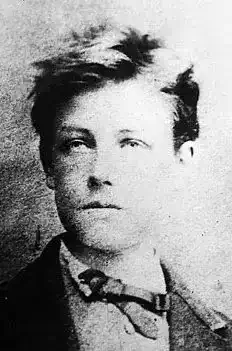
Arthur Rimbaud
May Banners
In the bright lime-tree branches
Dies a fainting mort. But lively song
Flutters among the currant bushes.
So that our bloods may laugh in our veins,
See the vines tangling themselves.
The sky is as pretty as an angel,
The azure and the wave commune.
I go out. If a sunbeam wounds me
I shall succumb on the moss.
Being patient and being bored
Are too simple. To the devil with my cares.
I want dramatic summer
To bind me to its chariot of fortune.
Let me most because of you, o Nature, -
Ah ! less alone and less useless ! - die.
There where the Shepherds, it's strange,
Die more or less because of the world.
I am willing that the seasons should wear me out.
To you, Nature, I surrender ;
With my hunger and all my thirst.
And, if it please you, feed and water me.
Nothing, nothing at all deceives me ;
To laugh at the sun is to laugh at one's parents,
But I do not wish to laugh at anything ;
And may this misfortune go free.
~~
May Banners
(alternative translation
)
In the bright branches of the lindens dies a sickly hunting call.
But the lively songs fly about in the currant bushes.
So that our blood will laugh in our veins, here are the vines all entangled.
The sky is pretty as an angel.
The azure and the wave commune.
I go out. If a ray of light wounds me, I will expire on the moss
To be patient and to be bored are to simple. Fie* on my cares.
I want a dramatic summer to bind me to it's chariot of fortune.
Let me, o nature, mostly through you
-Ah ! less alone and less worthless ! - die.
In the place where the shepherds, it is strange,
die approximately through out the world
I am willing that the seasons wear me out.
To you nature, I give myself over;
And my hunger and all my thirst.
And, if you will, feed and water me.
Nothing at all deceives me;
To laugh at the sun is to laugh at one's parents,
but I do not want to laugh at anything;
And may this misfortune be free.
538

Kazi Nazrul Islam
Those Iron Gates of Prison
Destroy those iron gates of prison,
demolisth the blood-stained stony altars
of chain worshipping!
O youthful Shiva,
blow your horn of universal cataclysm!
Let the flag of destruction
rise amidst the rubble of prison walls
of the East! !
Play the music of the festival of Shiva!
Who's the master? Who's the king?
Who is it
that punishes the truth of freedom?
Ha! Ha! Ha! It's a laugh-
God is to be hanged?
Rumor-mongerwho
teaches this pitiful 'trugh'?
O you forgetful Madman shake
- shake the prisons
with your forceful cataclysmic pulls!
Send your Haidari call,
play your war-drumscall
Death
towards Life!
There, the Baishakhi storm is dancingare
you just going to sit through your days?
Let's see
you shake up the foundation
of that terrible prison.
Kick - break the locks!
All those prisonsset
them on fire,
burn them down, uproot them forever!
Translation: Sajed Kamal
529

Walt Whitman
We Two-How Long We Were Fool'd
WE two--how long we were fool'd!
Now transmuted, we swiftly escape, as Nature escapes;
We are Nature--long have we been absent, but now we return;
We become plants, leaves, foliage, roots, bark;
We are bedded in the ground--we are rocks;
We are oaks--we grow in the openings side by side;
We browse--we are two among the wild herds, spontaneous as any;
We are two fishes swimming in the sea together;
We are what the locust blossoms are--we drop scent around the lanes,
mornings and evenings;
We are also the coarse smut of beasts, vegetables, minerals;
We are two predatory hawks--we soar above, and look down;
We are two resplendent suns--we it is who balance ourselves, orbic
and stellar--we are as two comets;
We prowl fang'd and four-footed in the woods--we spring on prey;
We are two clouds, forenoons and afternoons, driving overhead;
We are seas mingling--we are two of those cheerful waves, rolling
over each other, and interwetting each other;
We are what the atmosphere is, transparent, receptive, pervious,
impervious:
We are snow, rain, cold, darkness--we are each product and influence
of the globe;
We have circled and circled till we have arrived home again--we two
have;
We have voided all but freedom, and all but our own joy.
529
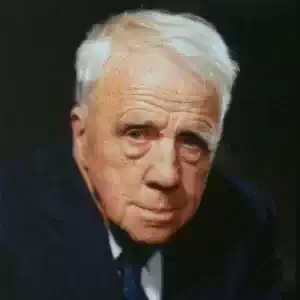
Robert Frost
The Bear
The bear puts both arms around the tree above her
And draws it down as if it were a lover
And its chokecherries lips to kiss good-by,
Then lets it snap back upright in the sky.
Her next step rocks a boulder on the wall
(She's making her cross-country in the fall).
Her great weight creaks the barbed wire in its staples
As she flings over and off down through the maples,
Leaving on one wire tooth a lock of hair.
Such is the uncaged progress of the bear.
The world has room to make a bear feel free;
The universe seems cramped to you and me.
Man acts more like the poor bear in a cage,
That all day fights a nervous inward rage,
His mood rejecting all his mind suggests.
He paces back and forth and never rests
The me-nail click and shuffle of his feet,
The telescope at one end of his beat,
And at the other end the microscope,
Two instruments of nearly equal hope,
And in conjunction giving quite a spread.
Or if he rests from scientific tread,
'Tis only to sit back and sway his head
Through ninety-odd degrees of arc, it seems,
Between two metaphysical extremes.
He sits back on his fundamental butt
With lifted snout and eyes (if any) shut
(He almost looks religious but he's not),
And back and forth he sways from cheek to cheek,
At one extreme agreeing with one Greek
At the other agreeing with another Greek
Which may be thought, but only so to speak.
A baggy figure, equally pathetic
When sedentary and when peripatetic.
528
Rudyard Kipling
Chant-Pagan
ENGLISH IRREGULAR, DISCHARGED
Me that 'ave been what I've been --
Me that 'ave gone where I've gone --
Me that 'ave seen what I've seen --
'Ow can I ever take on
With awful old England again,
An' 'ouses both sides of the street,
And 'edges two sides of the lane,
And the parson an' gentry between,
An' touchin' my 'at when we meet --
Me that 'ave been what I've been?
Me that 'ave watched 'arf a world
'Eave up all shiny with dew,
Kopje on kop to the sun,
An' as soon as the mist let 'em through
Our 'elios winkin' like fun --
Three sides of a ninety-mile square,
Over valleys as big as a shire --
"Are ye there? Are ye there? Are ye there?"
An' then the blind drum of our fire . . .
An' I'm rollin' 'is lawns for the Squire,
Me!
Me htat 'ave rode through the dark
Forty mile, often, on end,
Along the Ma'ollisberg Range,
With only the stars for my mark
An' only the night for my friend,
An' things runnin' off as you pass,
An' things jumpin' up in the grass,
An' the silence, the shine an' the size
Of the 'igh, unexpressible skies --
I am takin' some letters almost
As much as a mile to the post,
An' "mind you come back with the change!"
Me!
Me that saw Barberton took
When we dropped through the clouds on their 'ead,
An' they 'ove the guns over and fled --
Me that was through Di'mond I'll,
An' Pieters an' Springs an' Belfast --
From Dundee to Vereeniging all --
Me that stuck out to the last
(An' five bloomin' bars on my chest) --
I am doin' my Sunday-school best,
By the 'elp of the Squire an' 'is wife
(Not to mention the 'ousemaid an' cook),
To come in an' 'ands up an' be still,
An' honestly work for my bread,
My livin' in that state of life
To which it shall please God to call
Me!
Me that 'ave followed my trade
In the place where the Lightnin's are made;
"Twixt the Rains and the Sun and the Moon --
Me that lay down an' got up
Three years with the sky for my roof --
That 'ave ridden my 'unger an' thirst
Six thousand raw mile on the hoof,
With the Vaal and the Orange for cup,
An' the Brandwater Basin for dish, --
Oh! it's 'ard to be'ave as they wish
(Too 'ard, an' a little too soon),
I'll 'ave to think over it first --
Me!
I will arise an' get 'ence --
I will trek South and make sure
If it's only my fancy or not
That the sunshine of England is pale,
And the breezes of England are stale,
An' there's something' gone small with the lot.
For I know of a sun an' a wind,
An' some plains and a mountain be'ind,
An' some graves by a barb-wire fence,
An' a Dutchman I've fought 'oo might give
Me a job where I ever inclined
To look in an' offsaddle an' live
Where there's neither a road nor a tree --
But only my Maker an' me,
An I think it will kill me or cure,
So I think I will go there an' see.
520
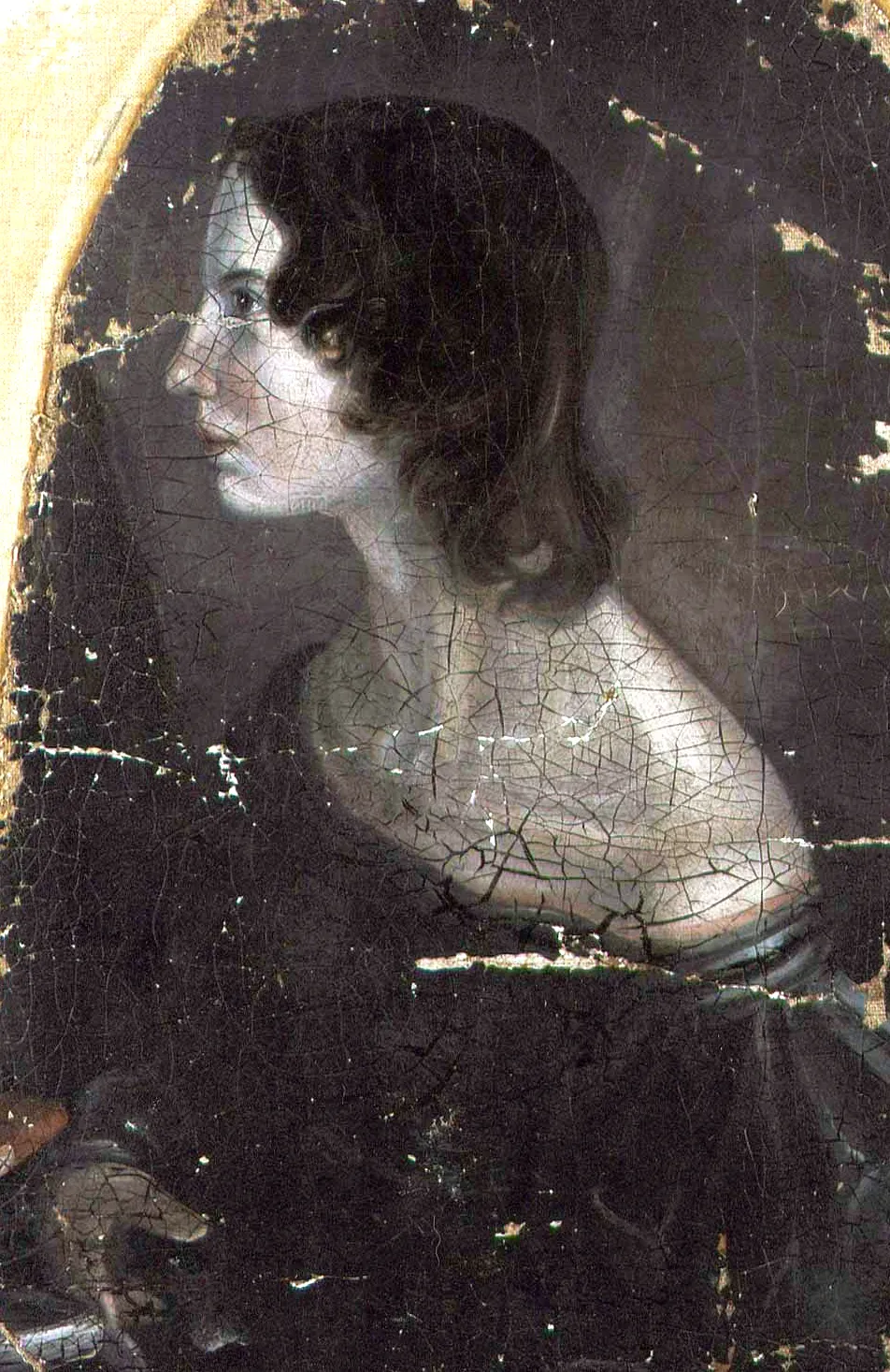
Emily Jane Brontë
No Coward Soul Is Mine
No coward soul is mine,
No trembler in the world,s storm-troubled sphere:
I see Heaven's glories shine,
And Faith shines equal arming me from Fear.
O God within my breast.
Almighty ever-present Deity!
Life , that in me has rest,
As I Undying Life, have power in thee!
Vain are the thousand creeds
That move men's hearts, unutterably vain;
Worthless as withered weeds,
Or idlest froth amid the boundless main,
To waken doubt in one
Holding so fast by Thy infinity;
So surely anchored on
The steadfast rock of Immortality.
With wide-embracing love
Thy Spirit animates eternal years,
Pervades and broods above,
Changes, sustains, dissolves, creates, and rears.
Though Earth and moon were gone,
And suns and universes ceased to be,
And Thou wert left alone,
Every Existence would exist in thee.
There is not room for Death,
Nor atom that his might could render void:
Since thou art Being and Breath,
And what thou art may never be destroyed.
514
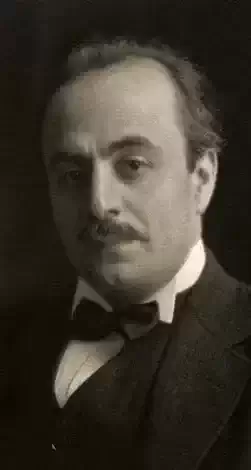
Khalil Gibran
The Beauty of Death XIV
Part One - The Calling
Let me sleep, for my soul is intoxicated with love and
Let me rest, for my spirit has had its bounty of days and nights;
Light the candles and burn the incense around my bed, and
Scatter leaves of jasmine and roses over my body;
Embalm my hair with frankincense and sprinkle my feet with perfume,
And read what the hand of Death has written on my forehead.
Let me rest in the arms of Slumber, for my open eyes are tired;
Let the silver-stringed lyre quiver and soothe my spirit;
Weave from the harp and lute a veil around my withering heart.
Sing of the past as you behold the dawn of hope in my eyes, for
It's magic meaning is a soft bed upon which my heart rests.
Dry your tears, my friends, and raise your heads as the flowers
Raise their crowns to greet the dawn.
Look at the bride of Death standing like a column of light
Between my bed and the infinite;
Hold your breath and listen with me to the beckoning rustle of
Her white wings.
Come close and bid me farewell; touch my eyes with smiling lips.
Let the children grasp my hands with soft and rosy fingers;
Let the ages place their veined hands upon my head and bless me;
Let the virgins come close and see the shadow of God in my eyes,
And hear the echo of His will racing with my breath.
Part Two - The Ascending
I have passed a mountain peak and my soul is soaring in the
Firmament of complete and unbound freedom;
I am far, far away, my companions, and the clouds are
Hiding the hills from my eyes.
The valleys are becoming flooded with an ocean of silence, and the
Hands of oblivion are engulfing the roads and the houses;
The prairies and fields are disappearing behind a white specter
That looks like the spring cloud, yellow as the candlelight
And red as the twilight.
The songs of the waves and the hymns of the streams
Are scattered, and the voices of the throngs reduced to silence;
And I can hear naught but the music of Eternity
In exact harmony with the spirit's desires.
I am cloaked in full whiteness;
I am in comfort; I am in peace.
Part Three - The Remains
Unwrap me from this white linen shroud and clothe me
With leaves of jasmine and lilies;
Take my body from the ivory casket and let it rest
Upon pillows of orange blossoms.
Lament me not, but sing songs of youth and joy;
Shed not tears upon me, but sing of harvest and the winepress;
Utter no sigh of agony, but draw upon my face with your
Finger the symbol of Love and Joy.
Disturb not the air's tranquility with chanting and requiems,
But let your hearts sing with me the song of Eternal Life;
Mourn me not with apparel of black,
But dress in color and rejoice with me;
Talk not of my departure with sighs in your hearts; close
Your eyes and you will see me with you forevermore.
Place me upon clusters of leaves and
Carry my upon your friendly shoulders and
Walk slowly to the deserted forest.
Take me not to the crowded burying ground lest my slumber
Be disrupted by the rattling of bones and skulls.
Carry me to the cypress woods and dig my grave where violets
And poppies grow not in the other's shadow;
Let my grave be deep so that the flood will not
Carry my bones to the open valley;
Let my grace be wide, so that the twilight shadows
Will come and sit by me.
Take from me all earthly raiment and place me deep in my
Mother Earth; and place me with care upon my mother's breast.
Cover me with soft earth, and let each handful be mixed
With seeds of jasmine, lilies and myrtle; and when they
Grow above me, and thrive on my body's element they will
Breathe the fragrance of my heart into space;
And reveal even to the sun the secret of my peace;
And sail with the breeze and comfort the wayfarer.
Leave me then, friends - leave me and depart on mute feet,
As the silence walks in the deserted valley;
Leave me to God and disperse yourselves slowly, as the almond
And apple blossoms disperse under the vibration of Nisan's breeze.
Go back to the joy of your dwellings and you will find there
That which Death cannot remove from you and me.
Leave with place, for what you see here is far away in meaning
From the earthly world. Leave me.
505
Walt Whitman
Apostroph
O MATER! O fils!
O brood continental!
O flowers of the prairies!
O space boundless! O hum of mighty products!
O you teeming cities! O so invincible, turbulent, proud!
O race of the future! O women!
O fathers! O you men of passion and the storm!
O native power only! O beauty!
O yourself! O God! O divine average!
O you bearded roughs! O bards! O all those slumberers!
O arouse! the dawn bird's throat sounds shrill! Do you not hear the
cock crowing?
O, as I walk'd the beach, I heard the mournful notes foreboding a
tempest--the low, oft-repeated shriek of the diver, the long
lived loon;
O I heard, and yet hear, angry thunder;--O you sailors! O ships! make
quick preparation!
O from his masterful sweep, the warning cry of the eagle!
(Give way there, all! It is useless! Give up your spoils;)
O sarcasms! Propositions! (O if the whole world should prove indeed a
sham, a sell!)
O I believe there is nothing real but America and freedom!
O to sternly reject all except Democracy!
O imperator! O who dare confront you and me?
O to promulgate our own! O to build for that which builds for
mankind!
O feuillage! O North! O the slope drained by the Mexican sea!
O all, all inseparable--ages, ages, ages!
O a curse on him that would dissever this Union for any reason
whatever!
O climates, labors! O good and evil! O death!
O you strong with iron and wood! O Personality!
O the village or place which has the greatest man or woman! even if
it be only a few ragged huts;
O the city where women walk in public processions in the streets, the
same as the men;
O a wan and terrible emblem, by me adopted!
O shapes arising! shapes of the future centuries!
O muscle and pluck forever for me!
O workmen and workwomen forever for me!
O farmers and sailors! O drivers of horses forever for me!
O I will make the new bardic list of trades and tools!
O you coarse and wilful! I love you!
O South! O longings for my dear home! O soft and sunny airs!
O pensive! O I must return where the palm grows and the mocking-bird
sings, or else I die!
O equality! O organic compacts! I am come to be your born poet!
O whirl, contest, sounding and resounding! I am your poet, because I
am part of you;
O days by-gone! Enthusiasts! Antecedents!
O vast preparations for These States! O years!
O what is now being sent forward thousands of years to come!
O mediums! O to teach! to convey the invisible faith!
To promulge real things! to journey through all The States!
O creation! O to-day! O laws! O unmitigated adoration!
O for mightier broods of orators, artists, and singers!
O for native songs! carpenter's, boatman's, ploughman's songs!
shoemaker's songs!
O haughtiest growth of time! O free and extatic!
O what I, here, preparing, warble for!
O you hastening light! O the sun of the world will ascend, dazzling,
and take his height--and you too will ascend;
O so amazing and so broad! up there resplendent, darting and
burning;
O prophetic! O vision staggered with weight of light! with pouring
glories!
O copious! O hitherto unequalled!
O Libertad! O compact! O union impossible to dissever!
O my Soul! O lips becoming tremulous, powerless!
O centuries, centuries yet ahead!
O voices of greater orators! I pause--I listen for you
O you States! Cities! defiant of all outside authority! I spring at
once into your arms! you I most love!
O you grand Presidentiads! I wait for you!
New history! New heroes! I project you!
Visions of poets! only you really last! O sweep on! sweep on!
O Death! O you striding there! O I cannot yet!
O heights! O infinitely too swift and dizzy yet!
O purged lumine! you threaten me more than I can stand!
O present! I return while yet I may to you!
O poets to come, I depend upon you!
508
Walt Whitman
Turn, O Libertad
TURN, O Libertad, for the war is over,
(From it and all henceforth expanding, doubting no more, resolute,
sweeping the world,)
Turn from lands retrospective, recording proofs of the past;
From the singers that sing the trailing glories of the past;
From the chants of the feudal world--the triumphs of kings, slavery,
caste;
Turn to the world, the triumphs reserv'd and to come--give up that
backward world;
Leave to the singers of hitherto--give them the trailing past;
But what remains, remains for singers for you--wars to come are for
you;
(Lo! how the wars of the past have duly inured to you--and the wars
of the present also inure:)
--Then turn, and be not alarm'd, O Libertad--turn your undying
face,
To where the future, greater than all the past,
Is swiftly, surely preparing for you.
509

William Blake
Jerusalem: I see the Four-fold Man, The Humanity in deadly sleep
I see the Four-fold Man, The Humanity in deadly sleep
And its fallen Emanation, the Spectre and its cruel Shadow.
I see the Past, Present and Future existing all at once
Before me. O Divine Spirit, sustain me on thy wings,
That I may awake Albion from his long and cold repose;
For Bacon and Newton, sheath'd in dismal steel, their terrors hang
Like iron scourges over Albion: reasonings like vast serpents
Infold around my limbs, bruising my minute articulations.
I turn my eyes to the schools and universities of Europe
And there behold the Loom of Locke, whose Woof rages dire,
Wash'd by the Water-wheels of Newton: black the cloth
In heavy wreaths folds over every nation: cruel works
Of many Wheels I view, wheel without wheel, with cogs tyrannic
Moving by compulsion each other, not as those in Eden, which,
Wheel within wheel, in freedom revolve in harmony and peace.
505

John Milton
Sonnet 12
XII. On the same.
I did but prompt the age to quit their cloggs
By the known rules of antient libertie,
When strait a barbarous noise environs me
Of Owles and Cuckoes, Asses, Apes and Doggs.
As when those Hinds that were transform'd to Froggs
Raild at Latona's twin-born progenie
Which after held the Sun and Moon in fee.
But this is got by casting Pearl to Hoggs;
That bawle for freedom in their senceless mood,
And still revolt when truth would set them free.
Licence they mean when they cry libertie;
For who loves that, must first be wise and good;
But from that mark how far they roave we see
For all this wast of wealth, and loss of blood.
504

John Clare
A vision
I lost the love of heaven above,
I spurned the lust of earth below,
I felt the sweets of fancied love
And hell itself my only foe.
I lost earth's joys but felt the glow
Of heaven's flame abound in me
Till loveliness and I did grow
The bard of immortality.
I loved but woman fell away
I hid me from her faded fame,
I snatched the sun's eternal ray
And wrote till earth was but a name
In every language upon earth,
On every shore, o'er every sea,
I give my name immortal birth
And kept my spirit with the free.
504
Arthur Rimbaud
Clearance Sale
For what the Jews have not sold,
what neither nobility nor crime have tasted,
what is unknown to monstrous love
and to the infernal probity of the masses!
what neither time nor science need recognize: The Voices restored;
fraternal awakening of all choral and orchestral energies
and their instantaneous application; the opportunity, the only one,
for the release of our senses! For sale Bodies without price,
outside any race, any world, any sex, any lineage! Riches gushing at every step!
Uncontrolled sale of diamonds!
For sale anarchy for the masses;
irrepressible satisfaction for rare connoisseurs;
agonizing death for the faithful and for lovers!
For sale colonization and migrations, sports,
fairylands and incomparable comforts,
and the noise and the movement
and the future they make!
For sale the application of calculations
and the incredible leaps of harmony.
Discoveries and terms never dreamed of,
-- immediate possession.
Wild and infinite flight toward invisible splendors,
toward intangible delights-and
its maddening secrets for every vice
-- and its terrifying gaiety for the mob.
For sale, the bodies, the voices,
the enormous and unquestionable wealth,
that which will never be sold.
Salesmen are not at the end of their stock!
It will be some time before travelers have to turn in their accounts.
498
Robert Frost
The Hill Wife
It was too lonely for her there,
And too wild,
And since there were but two of them,
And no child.
And work was little in the house,
She was free,
And followed where he furrowed field,
Or felled log.
She rested on a log and tossed
The fresh chips,
With a song only to herself
On her lips.
And once she went to break a bough
Of black alder.
She strayed so far she scarcely heard
When he called her -
And didn't answer - didn't speak -
Or return.
She stood, and then she ran and hid
In the fern.
He never found her, though he looked
Everywhere,
And he asked at her mother's house
Was she there.
Sudden and swift and light as that
The ties gave,
And he learned of finalities
Besides the grave.
492

Sara Teasdale
Morning Song
A diamond of a morning
Waked me an hour too soon;
Dawn had taken in the stars
And left the faint white moon.
O white moon, you are lonely,
It is the same with me,
But we have the world to roam over,
Only the lonely are free.
Waked me an hour too soon;
Dawn had taken in the stars
And left the faint white moon.
O white moon, you are lonely,
It is the same with me,
But we have the world to roam over,
Only the lonely are free.
492

Ezra Pound
The Flame
‘Tis not a game that plays at mates and mating,
Provençe knew;
'Tis not a game of barter, lands and houses,
Provençe knew.
We who are wise beyond your dream of wisdom,
Drink our immortal moments; we 'pass through'.
We have gone forth beyond your bonds and borders,
Provençe knew;
And all the tales of Oisin say but this:
That man doth pass the net of days and hours.
Where time is shrivelled down to time's seed corn
We of the Ever-living, in that light
Meet through our veils and whisper, and of love.
O smoke and shadow of a darkling world,
These, and the rest, and all the rest we knew.
'Tis not a game that plays at mates and mating,
'Tis not a game of barter, lands and houses,
'Tis not 4of days and nights' and troubling years,
Of cheeks grown sunken and glad hair gone gray;
There is the subtler music, the clear light
Where time burns back about th' eternal embers.
We are not shut from all the thousand heavens:
Lo, there are many gods whom we have seen,
Folk of unearthly fashion, places splendid,
Bulwarks of beryl and of chrysoprase.
Sapphire Benacus, in thy mists and thee
Nature herself's turned metaphysical,
Who can look on that blue and not believe?
Thou hooded opal, thou eternal pearl,
O thou dark secret with a shimmering floor,
Through all thy various mood I know thee mine;
If I have merged my soul, or utterly
Am solved and bound in, through aught here on earth,
There canst thou find me, O thou anxious thou,
Who call’st about my gates for some lost me;
I say my soul flowed back, became translucent.
Search not my lips, O Love, let go my hands,
This thing that moves as man is no more mortal.
If thou hast seen my shade sans character,
If thou hast seen that mirror of all moments,
That glass to all things that o'ershadow it,
Call not that mirror me, for I have slipped
Your grasp, I have eluded.
Provençe knew;
'Tis not a game of barter, lands and houses,
Provençe knew.
We who are wise beyond your dream of wisdom,
Drink our immortal moments; we 'pass through'.
We have gone forth beyond your bonds and borders,
Provençe knew;
And all the tales of Oisin say but this:
That man doth pass the net of days and hours.
Where time is shrivelled down to time's seed corn
We of the Ever-living, in that light
Meet through our veils and whisper, and of love.
O smoke and shadow of a darkling world,
These, and the rest, and all the rest we knew.
'Tis not a game that plays at mates and mating,
'Tis not a game of barter, lands and houses,
'Tis not 4of days and nights' and troubling years,
Of cheeks grown sunken and glad hair gone gray;
There is the subtler music, the clear light
Where time burns back about th' eternal embers.
We are not shut from all the thousand heavens:
Lo, there are many gods whom we have seen,
Folk of unearthly fashion, places splendid,
Bulwarks of beryl and of chrysoprase.
Sapphire Benacus, in thy mists and thee
Nature herself's turned metaphysical,
Who can look on that blue and not believe?
Thou hooded opal, thou eternal pearl,
O thou dark secret with a shimmering floor,
Through all thy various mood I know thee mine;
If I have merged my soul, or utterly
Am solved and bound in, through aught here on earth,
There canst thou find me, O thou anxious thou,
Who call’st about my gates for some lost me;
I say my soul flowed back, became translucent.
Search not my lips, O Love, let go my hands,
This thing that moves as man is no more mortal.
If thou hast seen my shade sans character,
If thou hast seen that mirror of all moments,
That glass to all things that o'ershadow it,
Call not that mirror me, for I have slipped
Your grasp, I have eluded.
493