
Freedom

Alfred Lord Tennyson
Sir Galahad
MY good blade carves the casques of men,
My tough lance thrusteth sure,
My strength is as the strength of ten,
Because my heart is pure.
The shattering trumpet shrilleth high,
The hard brands shiver on the steel,
The splinter'd spear-shafts crack and fly,
The horse and rider reel:
They reel, they roll in clanging lists,
And when the tide of combat stands,
Perfume and flowers fall in showers,
That lightly rain from ladies' hands.
How sweet are looks that ladies bend
On whom their favours fall !
For them I battle till the end,
To save from shame and thrall:
But all my heart is drawn above,
My knees are bow'd in crypt and shrine:
I never felt the kiss of love,
Nor maiden's hand in mine.
More bounteous aspects on me beam,
Me mightier transports move and thrill;
So keep I fair thro' faith and prayer
A virgin heart in work and will.
When down the stormy crescent goes,
A light before me swims,
Between dark stems the forest glows,
I hear a noise of hymns:
Then by some secret shrine I ride;
I hear a voice but none are there;
The stalls are void, the doors are wide,
The tapers burning fair.
Fair gleams the snowy altar-cloth,
The silver vessels sparkle clean,
The shrill bell rings, the censer swings,
And solemn chaunts resound between.
Sometimes on lonely mountain-meres
I find a magic bark;
I leap on board: no helmsman steers:
I float till all is dark.
A gentle sound, an awful light !
Three arngels bear the holy Grail:
With folded feet, in stoles of white,
On sleeping wings they sail.
Ah, blessed vision! blood of God!
My spirit beats her mortal bars,
As down dark tides the glory slides,
And star-like mingles with the stars.
When on my goodly charger borne
Thro' dreaming towns I go,
The cock crows ere the Christmas morn,
The streets are dumb with snow.
The tempest crackles on the leads,
And, ringing, springs from brand and mail;
But o'er the dark a glory spreads,
And gilds the driving hail.
I leave the plain, I climb the height;
No branchy thicket shelter yields;
But blessed forms in whistling storms
Fly o'er waste fens and windy fields.
A maiden knight--to me is given
Such hope, I know not fear;
I yearn to breathe the airs of heaven
That often meet me here.
I muse on joy that will not cease,
Pure spaces clothed in living beams,
Pure lilies of eternal peace,
Whose odours haunt my dreams;
And, stricken by an angel's hand,
This mortal armour that I wear,
This weight and size, this heart and eyes,
Are touch'd, are turn'd to finest air.
The clouds are broken in the sky,
And thro' the mountain-walls
A rolling organ-harmony
Swells up, and shakes and falls.
Then move the trees, the copses nod,
Wings flutter, voices hover clear:
'O just and faithful knight of God!
Ride on ! the prize is near.'
So pass I hostel, hall, and grange;
By bridge and ford, by park and pale,
All-arm'd I ride, whate'er betide,
Until I find the holy Grail.
707

Lord Byron
Song For The Luddites
I.
As the Liberty lads o'er the sea
Bought their freedom, and cheaply, with blood,
So we, boys, we
Will die fighting, or live free,
And down with all kings but King Ludd!
II.
When the web that we weave is complete,
And the shuttle exchanged for the sword,
We will fling the winding sheet
O'er the despot at our feet,
And dye it deep in the gore he has pour'd.
III.
Though black as his heart its hue,
Since his veins are corrupted to mud,
Yet this is the dew
Which the tree shall renew
Of Liberty, planted by Ludd!
695

Elizabeth Barrett Browning
The Runaway Slave at Pilgrim's Point
I.
I stand on the mark beside the shore
Of the first white pilgrim's bended knee,
Where exile turned to ancestor,
And God was thanked for liberty.
I have run through the night, my skin is as dark,
I bend my knee down on this mark . . .
I look on the sky and the sea.
II.
O pilgrim-souls, I speak to you!
I see you come out proud and slow
From the land of the spirits pale as dew. . .
And round me and round me ye go!
O pilgrims, I have gasped and run
All night long from the whips of one
Who in your names works sin and woe.
III.
And thus I thought that I would come
And kneel here where I knelt before,
And feel your souls around me hum
In undertone to the ocean's roar;
And lift my black face, my black hand,
Here, in your names, to curse this land
Ye blessed in freedom's evermore.
IV.
I am black, I am black;
And yet God made me, they say.
But if He did so, smiling back
He must have cast His work away
Under the feet of His white creatures,
With a look of scorn,--that the dusky features
Might be trodden again to clay.
V.
And yet He has made dark things
To be glad and merry as light.
There's a little dark bird sits and sings;
There's a dark stream ripples out of sight;
And the dark frogs chant in the safe morass,
And the sweetest stars are made to pass
O'er the face of the darkest night.
VI.
But we who are dark, we are dark!
Ah, God, we have no stars!
About our souls in care and cark
Our blackness shuts like prison bars:
The poor souls crouch so far behind,
That never a comfort can they find
By reaching through the prison-bars.
VII.
Indeed, we live beneath the sky, . . .
That great smooth Hand of God, stretched out
On all His children fatherly,
To bless them from the fear and doubt,
Which would be, if, from this low place,
All opened straight up to His face
Into the grand eternity.
VIII.
And still God's sunshine and His frost,
They make us hot, they make us cold,
As if we were not black and lost:
And the beasts and birds, in wood and fold,
Do fear and take us for very men!
Could the weep-poor-will or the cat of the glen
Look into my eyes and be bold?
IX.
I am black, I am black!--
But, once, I laughed in girlish glee;
For one of my colour stood in the track
Where the drivers drove, and looked at me--
And tender and full was the look he gave:
Could a slave look so at another slave?--
I look at the sky and the sea.
X.
And from that hour our spirits grew
As free as if unsold, unbought:
Oh, strong enough, since we were two
To conquer the world, we thought!
The drivers drove us day by day;
We did not mind, we went one way,
And no better a liberty sought.
XI.
In the sunny ground between the canes,
He said 'I love you' as he passed:
When the shingle-roof rang sharp with the rains,
I heard how he vowed it fast:
While others shook, he smiled in the hut
As he carved me a bowl of the cocoa-nut,
Through the roar of the hurricanes.
XII.
I sang his name instead of a song;
Over and over I sang his name--
Upward and downward I drew it along
My various notes; the same, the same!
I sang it low, that the slave-girls near
Might never guess from aught they could hear,
It was only a name.
XIII.
I look on the sky and the sea--
We were two to love, and two to pray,--
Yes, two, O God, who cried to Thee,
Though nothing didst Thou say.
Coldly Thou sat'st behind the sun!
And now I cry who am but one,
How wilt Thou speak to-day?--
XIV.
We were black, we were black!
We had no claim to love and bliss:
What marvel, if each turned to lack?
They wrung my cold hands out of his,--
They dragged him . . . where ? . . . I crawled to touch
His blood's mark in the dust! . . . not much,
Ye pilgrim-souls, . . . though plain as this!
XV.
Wrong, followed by a deeper wrong!
Mere grief's too good for such as I.
So the white men brought the shame ere long
To strangle the sob of my agony.
They would not leave me for my dull
Wet eyes!--it was too merciful
To let me weep pure tears and die.
XVI.
I am black, I am black!--
I wore a child upon my breast
An amulet that hung too slack,
And, in my unrest, could not rest:
Thus we went moaning, child and mother,
One to another, one to another,
Until all ended for the best:
XVII.
For hark ! I will tell you low . . . Iow . . .
I am black, you see,--
And the babe who lay on my bosom so,
Was far too white . . . too white for me;
As white as the ladies who scorned to pray
Beside me at church but yesterday;
Though my tears had washed a place for my knee.
XVIII.
My own, own child! I could not bear
To look in his face, it was so white.
I covered him up with a kerchief there;
I covered his face in close and tight:
And he moaned and struggled, as well might be,
For the white child wanted his liberty--
Ha, ha! he wanted his master right.
XIX.
He moaned and beat with his head and feet,
His little feet that never grew--
He struck them out, as it was meet,
Against my heart to break it through.
I might have sung and made him mild--
But I dared not sing to the white-faced child
The only song I knew.
XX.
I pulled the kerchief very close:
He could not see the sun, I swear,
More, then, alive, than now he does
From between the roots of the mango . . . where
. . . I know where. Close! a child and mother
Do wrong to look at one another,
When one is black and one is fair.
XXI.
Why, in that single glance I had
Of my child's face, . . . I tell you all,
I saw a look that made me mad . . .
The master's look, that used to fall
On my soul like his lash . . . or worse!
And so, to save it from my curse,
I twisted it round in my shawl.
XXII.
And he moaned and trembled from foot to head,
He shivered from head to foot;
Till, after a time, he lay instead
Too suddenly still and mute.
I felt, beside, a stiffening cold, . . .
I dared to lift up just a fold . . .
As in lifting a leaf of the mango-fruit.
XXIII.
But my fruit . . . ha, ha!--there, had been
(I laugh to think on't at this hour! . . .)
Your fine white angels, who have seen
Nearest the secret of God's power, . . .
And plucked my fruit to make them wine,
And sucked the soul of that child of mine,
As the humming-bird sucks the soul of the flower.
XXIV.
Ha, ha, for the trick of the angels white!
They freed the white child's spirit so.
I said not a word, but, day and night,
I carried the body to and fro;
And it lay on my heart like a stone . . . as chill.
--The sun may shine out as much as he will:
I am cold, though it happened a month ago.
XXV.
From the white man's house, and the black man's hut,
I carried the little body on,
The forest's arms did round us shut,
And silence through the trees did run:
They asked no question as I went,--
They stood too high for astonishment,--
They could see God sit on His throne.
XXVI.
My little body, kerchiefed fast,
I bore it on through the forest . . . on:
And when I felt it was tired at last,
I scooped a hole beneath the moon.
Through the forest-tops the angels far,
With a white sharp finger from every star,
Did point and mock at what was done.
XXVII.
Yet when it was all done aright, . . .
Earth, 'twixt me and my baby, strewed,
All, changed to black earth, . . . nothing white, . . .
A dark child in the dark,--ensued
Some comfort, and my heart grew young:
I sate down smiling there and sung
The song I learnt in my maidenhood.
XXVIII.
And thus we two were reconciled,
The white child and black mother, thus:
For, as I sang it, soft and wild
The same song, more melodious,
Rose from the grave whereon I sate!
It was the dead child singing that,
To join the souls of both of us.
XXIX.
I look on the sea and the sky!
Where the pilgrims' ships first anchored lay,
The free sun rideth gloriously;
But the pilgrim-ghosts have slid away
Through the earliest streaks of the morn.
My face is black, but it glares with a scorn
Which they dare not meet by day.
XXX.
Ah!--in their 'stead, their hunter sons!
Ah, ah! they are on me--they hunt in a ring--
Keep off! I brave you all at once--
I throw off your eyes like snakes that sting!
You have killed the black eagle at nest, I think:
Did you never stand still in your triumph, and shrink
From the stroke of her wounded wing?
XXXI.
(Man, drop that stone you dared to lift!--)
I wish you, who stand there five a-breast,
Each, for his own wife's joy and gift,
A little corpse as safely at rest
As mine in the mangos!--Yes, but she
May keep live babies on her knee,
And sing the song she liketh best.
XXXll.
I am not mad: I am black.
I see you staring in my face--
I know you, staring, shrinking back--
Ye are born of the Washington-race:
And this land is the free America:
And this mark on my wrist . . . (I prove what I say)
Ropes tied me up here to the flogging-place.
XXXIII.
You think I shrieked then? Not a sound!
I hung, as a gourd hangs in the sun.
I only cursed them all around,
As softly as I might have done
My very own child!--From these sands
Up to the mountains, lift your hands,
O slaves, and end what I begun!
XXXIV.
Whips, curses; these must answer those!
For in this UNION, you have set
Two kinds of men in adverse rows,
Each loathing each: and all forget
The seven wounds in Christ's body fair;
While HE sees gaping everywhere
Our countless wounds that pay no debt.
XXXV.
Our wounds are different. Your white men
Are, after all, not gods indeed,
Nor able to make Christs again
Do good with bleeding. We who bleed . . .
(Stand off!) we help not in our loss!
We are too heavy for our cross,
And fall and crush you and your seed.
XXXVI.
I fall, I swoon! I look at the sky:
The clouds are breaking on my brain;
I am floated along, as if I should die
Of liberty's exquisite pain--
In the name of the white child, waiting for me
In the death-dark where we may kiss and agree,
White men, I leave you all curse-free
In my broken heart's disdain!
680
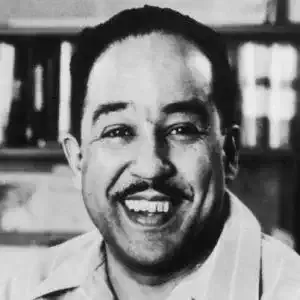
Langston Hughes
I Dream A World
I dream a world where man
No other man will scorn,
Where love will bless the earth
And peace its paths adorn
I dream a world where all
Will know sweet freedom's way,
Where greed no longer saps the soul
Nor avarice blights our day.
A world I dream where black or white,
Whatever race you be,
Will share the bounties of the earth
And every man is free,
Where wretchedness will hang its head
And joy, like a pearl,
Attends the needs of all mankind-
Of such I dream, my world!
675

John Milton
Paradise Lost: Book 02
High on a throne of royal state, which far
Outshone the wealth or Ormus and of Ind,
Or where the gorgeous East with richest hand
Showers on her kings barbaric pearl and gold,
Satan exalted sat, by merit raised
To that bad eminence; and, from despair
Thus high uplifted beyond hope, aspires
Beyond thus high, insatiate to pursue
Vain war with Heaven; and, by success untaught,
His proud imaginations thus displayed:-
"Powers and Dominions, Deities of Heaven!--
For, since no deep within her gulf can hold
Immortal vigour, though oppressed and fallen,
I give not Heaven for lost: from this descent
Celestial Virtues rising will appear
More glorious and more dread than from no fall,
And trust themselves to fear no second fate!--
Me though just right, and the fixed laws of Heaven,
Did first create your leader--next, free choice
With what besides in council or in fight
Hath been achieved of merit--yet this loss,
Thus far at least recovered, hath much more
Established in a safe, unenvied throne,
Yielded with full consent. The happier state
In Heaven, which follows dignity, might draw
Envy from each inferior; but who here
Will envy whom the highest place exposes
Foremost to stand against the Thunderer's aim
Your bulwark, and condemns to greatest share
Of endless pain? Where there is, then, no good
For which to strive, no strife can grow up there
From faction: for none sure will claim in Hell
Precedence; none whose portion is so small
Of present pain that with ambitious mind
Will covet more! With this advantage, then,
To union, and firm faith, and firm accord,
More than can be in Heaven, we now return
To claim our just inheritance of old,
Surer to prosper than prosperity
Could have assured us; and by what best way,
Whether of open war or covert guile,
We now debate. Who can advise may speak."
He ceased; and next him Moloch, sceptred king,
Stood up--the strongest and the fiercest Spirit
That fought in Heaven, now fiercer by despair.
His trust was with th' Eternal to be deemed
Equal in strength, and rather than be less
Cared not to be at all; with that care lost
Went all his fear: of God, or Hell, or worse,
He recked not, and these words thereafter spake:-
"My sentence is for open war. Of wiles,
More unexpert, I boast not: them let those
Contrive who need, or when they need; not now.
For, while they sit contriving, shall the rest--
Millions that stand in arms, and longing wait
The signal to ascend--sit lingering here,
Heaven's fugitives, and for their dwelling-place
Accept this dark opprobrious den of shame,
The prison of his ryranny who reigns
By our delay? No! let us rather choose,
Armed with Hell-flames and fury, all at once
O'er Heaven's high towers to force resistless way,
Turning our tortures into horrid arms
Against the Torturer; when, to meet the noise
Of his almighty engine, he shall hear
Infernal thunder, and, for lightning, see
Black fire and horror shot with equal rage
Among his Angels, and his throne itself
Mixed with Tartarean sulphur and strange fire,
His own invented torments. But perhaps
The way seems difficult, and steep to scale
With upright wing against a higher foe!
Let such bethink them, if the sleepy drench
Of that forgetful lake benumb not still,
That in our porper motion we ascend
Up to our native seat; descent and fall
To us is adverse. Who but felt of late,
When the fierce foe hung on our broken rear
Insulting, and pursued us through the Deep,
With what compulsion and laborious flight
We sunk thus low? Th' ascent is easy, then;
Th' event is feared! Should we again provoke
Our stronger, some worse way his wrath may find
To our destruction, if there be in Hell
Fear to be worse destroyed! What can be worse
Than to dwell here, driven out from bliss, condemned
In this abhorred deep to utter woe!
Where pain of unextinguishable fire
Must exercise us without hope of end
The vassals of his anger, when the scourge
Inexorably, and the torturing hour,
Calls us to penance? More destroyed than thus,
We should be quite abolished, and expire.
What fear we then? what doubt we to incense
His utmost ire? which, to the height enraged,
Will either quite consume us, and reduce
To nothing this essential--happier far
Than miserable to have eternal being!--
Or, if our substance be indeed divine,
And cannot cease to be, we are at worst
On this side nothing; and by proof we feel
Our power sufficient to disturb his Heaven,
And with perpetual inroads to alarm,
Though inaccessible, his fatal throne:
Which, if not victory, is yet revenge."
He ended frowning, and his look denounced
Desperate revenge, and battle dangerous
To less than gods. On th' other side up rose
Belial, in act more graceful and humane.
A fairer person lost not Heaven; he seemed
For dignity composed, and high exploit.
But all was false and hollow; though his tongue
Dropped manna, and could make the worse appear
The better reason, to perplex and dash
Maturest counsels: for his thoughts were low-To
vice industrious, but to nobler deeds
Timorous and slothful. Yet he pleased the ear,
And with persuasive accent thus began:-"
I should be much for open war, O Peers,
As not behind in hate, if what was urged
Main reason to persuade immediate war
Did not dissuade me most, and seem to cast
Ominous conjecture on the whole success;
When he who most excels in fact of arms,
In what he counsels and in what excels
Mistrustful, grounds his courage on despair
And utter dissolution, as the scope
Of all his aim, after some dire revenge.
First, what revenge? The towers of Heaven are filled
With armed watch, that render all access
Impregnable: oft on the bodering Deep
Encamp their legions, or with obscure wing
Scout far and wide into the realm of Night,
Scorning surprise. Or, could we break our way
By force, and at our heels all Hell should rise
With blackest insurrection to confound
Heaven's purest light, yet our great Enemy,
All incorruptible, would on his throne
Sit unpolluted, and th' ethereal mould,
Incapable of stain, would soon expel
Her mischief, and purge off the baser fire,
Victorious. Thus repulsed, our final hope
Is flat despair: we must exasperate
Th' Almighty Victor to spend all his rage;
And that must end us; that must be our cure--
To be no more. Sad cure! for who would lose,
Though full of pain, this intellectual being,
Those thoughts that wander through eternity,
To perish rather, swallowed up and lost
In the wide womb of uncreated Night,
Devoid of sense and motion? And who knows,
Let this be good, whether our angry Foe
Can give it, or will ever? How he can
Is doubtful; that he never will is sure.
Will he, so wise, let loose at once his ire,
Belike through impotence or unaware,
To give his enemies their wish, and end
Them in his anger whom his anger saves
To punish endless? 'Wherefore cease we, then?'
Say they who counsel war; 'we are decreed,
Reserved, and destined to eternal woe;
Whatever doing, what can we suffer more,
What can we suffer worse?' Is this, then, worst--
Thus sitting, thus consulting, thus in arms?
What when we fled amain, pursued and struck
With Heaven's afflicting thunder, and besought
The Deep to shelter us? This Hell then seemed
A refuge from those wounds. Or when we lay
Chained on the burning lake? That sure was worse.
What if the breath that kindled those grim fires,
Awaked, should blow them into sevenfold rage,
And plunge us in the flames; or from above
Should intermitted vengeance arm again
His red right hand to plague us? What if all
Her stores were opened, and this firmament
Of Hell should spout her cataracts of fire,
Impendent horrors, threatening hideous fall
One day upon our heads; while we perhaps,
Designing or exhorting glorious war,
Caught in a fiery tempest, shall be hurled,
Each on his rock transfixed, the sport and prey
Or racking whirlwinds, or for ever sunk
Under yon boiling ocean, wrapt in chains,
There to converse with everlasting groans,
Unrespited, unpitied, unreprieved,
Ages of hopeless end? This would be worse.
War, therefore, open or concealed, alike
My voice dissuades; for what can force or guile
With him, or who deceive his mind, whose eye
Views all things at one view? He from Heaven's height
All these our motions vain sees and derides,
Not more almighty to resist our might
Than wise to frustrate all our plots and wiles.
Shall we, then, live thus vile--the race of Heaven
Thus trampled, thus expelled, to suffer here
Chains and these torments? Better these than worse,
By my advice; since fate inevitable
Subdues us, and omnipotent decree,
The Victor's will. To suffer, as to do,
Our strength is equal; nor the law unjust
That so ordains. This was at first resolved,
If we were wise, against so great a foe
Contending, and so doubtful what might fall.
I laugh when those who at the spear are bold
And venturous, if that fail them, shrink, and fear
What yet they know must follow--to endure
Exile, or igominy, or bonds, or pain,
The sentence of their Conqueror. This is now
Our doom; which if we can sustain and bear,
Our Supreme Foe in time may much remit
His anger, and perhaps, thus far removed,
Not mind us not offending, satisfied
With what is punished; whence these raging fires
Will slacken, if his breath stir not their flames.
Our purer essence then will overcome
Their noxious vapour; or, inured, not feel;
Or, changed at length, and to the place conformed
In temper and in nature, will receive
Familiar the fierce heat; and, void of pain,
This horror will grow mild, this darkness light;
Besides what hope the never-ending flight
Of future days may bring, what chance, what change
Worth waiting--since our present lot appears
For happy though but ill, for ill not worst,
If we procure not to ourselves more woe."
Thus Belial, with words clothed in reason's garb,
Counselled ignoble ease and peaceful sloth,
Not peace; and after him thus Mammon spake:-"
Either to disenthrone the King of Heaven
We war, if war be best, or to regain
Our own right lost. Him to unthrone we then
May hope, when everlasting Fate shall yield
To fickle Chance, and Chaos judge the strife.
The former, vain to hope, argues as vain
The latter; for what place can be for us
Within Heaven's bound, unless Heaven's Lord supreme
We overpower? Suppose he should relent
And publish grace to all, on promise made
Of new subjection; with what eyes could we
Stand in his presence humble, and receive
Strict laws imposed, to celebrate his throne
With warbled hyms, and to his Godhead sing
Forced hallelujahs, while he lordly sits
Our envied sovereign, and his altar breathes
Ambrosial odours and ambrosial flowers,
Our servile offerings? This must be our task
In Heaven, this our delight. How wearisome
Eternity so spent in worship paid
To whom we hate! Let us not then pursue,
By force impossible, by leave obtained
Unacceptable, though in Heaven, our state
Of splendid vassalage; but rather seek
Our own good from ourselves, and from our own
Live to ourselves, though in this vast recess,
Free and to none accountable, preferring
Hard liberty before the easy yoke
Of servile pomp. Our greatness will appear
Then most conspicuous when great things of small,
Useful of hurtful, prosperous of adverse,
We can create, and in what place soe'er
Thrive under evil, and work ease out of pain
Through labour and endurance. This deep world
Of darkness do we dread? How oft amidst
Thick clouds and dark doth Heaven's all-ruling Sire
Choose to reside, his glory unobscured,
And with the majesty of darkness round
Covers his throne, from whence deep thunders roar.
Mustering their rage, and Heaven resembles Hell!
As he our darkness, cannot we his light
Imitate when we please? This desert soil
Wants not her hidden lustre, gems and gold;
Nor want we skill or art from whence to raise
Magnificence; and what can Heaven show more?
Our torments also may, in length of time,
Become our elements, these piercing fires
As soft as now severe, our temper changed
Into their temper; which must needs remove
The sensible of pain. All things invite
To peaceful counsels, and the settled state
Of order, how in safety best we may
Compose our present evils, with regard
Of what we are and where, dismissing quite
All thoughts of war. Ye have what I advise."
He scarce had finished, when such murmur filled
Th' assembly as when hollow rocks retain
The sound of blustering winds, which all night long
Had roused the sea, now with hoarse cadence lull
Seafaring men o'erwatched, whose bark by chance
Or pinnace, anchors in a craggy bay
After the tempest. Such applause was heard
As Mammon ended, and his sentence pleased,
Advising peace: for such another field
They dreaded worse than Hell; so much the fear
Of thunder and the sword of Michael
Wrought still within them; and no less desire
To found this nether empire, which might rise,
By policy and long process of time,
In emulation opposite to Heaven.
Which when Beelzebub perceived--than whom,
Satan except, none higher sat--with grave
Aspect he rose, and in his rising seemed
A pillar of state. Deep on his front engraven
Deliberation sat, and public care;
And princely counsel in his face yet shone,
Majestic, though in ruin. Sage he stood
With Atlantean shoulders, fit to bear
The weight of mightiest monarchies; his look
Drew audience and attention still as night
Or summer's noontide air, while thus he spake:-
"Thrones and Imperial Powers, Offspring of Heaven,
Ethereal Virtues! or these titles now
Must we renounce, and, changing style, be called
Princes of Hell? for so the popular vote
Inclines--here to continue, and build up here
A growing empire; doubtless! while we dream,
And know not that the King of Heaven hath doomed
This place our dungeon, not our safe retreat
Beyond his potent arm, to live exempt
From Heaven's high jurisdiction, in new league
Banded against his throne, but to remain
In strictest bondage, though thus far removed,
Under th' inevitable curb, reserved
His captive multitude. For he, to be sure,
In height or depth, still first and last will reign
Sole king, and of his kingdom lose no part
By our revolt, but over Hell extend
His empire, and with iron sceptre rule
Us here, as with his golden those in Heaven.
What sit we then projecting peace and war?
War hath determined us and foiled with loss
Irreparable; terms of peace yet none
Vouchsafed or sought; for what peace will be given
To us enslaved, but custody severe,
And stripes and arbitrary punishment
Inflicted? and what peace can we return,
But, to our power, hostility and hate,
Untamed reluctance, and revenge, though slow,
Yet ever plotting how the Conqueror least
May reap his conquest, and may least rejoice
In doing what we most in suffering feel?
Nor will occasion want, nor shall we need
With dangerous expedition to invade
Heaven, whose high walls fear no assault or siege,
Or ambush from the Deep. What if we find
Some easier enterprise? There is a place
(If ancient and prophetic fame in Heaven
Err not)--another World, the happy seat
Of some new race, called Man, about this time
To be created like to us, though less
In power and excellence, but favoured more
Of him who rules above; so was his will
Pronounced among the Gods, and by an oath
That shook Heaven's whole circumference confirmed.
Thither let us bend all our thoughts, to learn
What creatures there inhabit, of what mould
Or substance, how endued, and what their power
And where their weakness: how attempted best,
By force of subtlety. Though Heaven be shut,
And Heaven's high Arbitrator sit secure
In his own strength, this place may lie exposed,
The utmost border of his kingdom, left
To their defence who hold it: here, perhaps,
Some advantageous act may be achieved
By sudden onset--either with Hell-fire
To waste his whole creation, or possess
All as our own, and drive, as we were driven,
The puny habitants; or, if not drive,
Seduce them to our party, that their God
May prove their foe, and with repenting hand
Abolish his own works. This would surpass
Common revenge, and interrupt his joy
In our confusion, and our joy upraise
In his disturbance; when his darling sons,
Hurled headlong to partake with us, shall curse
Their frail original, and faded bliss--
Faded so soon! Advise if this be worth
Attempting, or to sit in darkness here
Hatching vain empires." Thus beelzebub
Pleaded his devilish counsel--first devised
By Satan, and in part proposed: for whence,
But from the author of all ill, could spring
So deep a malice, to confound the race
Of mankind in one root, and Earth with Hell
To mingle and involve, done all to spite
The great Creator? But their spite still serves
His glory to augment. The bold design
Pleased highly those infernal States, and joy
Sparkled in all their eyes: with full assent
They vote: whereat his speech he thus renews:-"
Well have ye judged, well ended long debate,
Synod of Gods, and, like to what ye are,
Great things resolved, which from the lowest deep
Will once more lift us up, in spite of fate,
Nearer our ancient seat--perhaps in view
Of those bright confines, whence, with neighbouring arms,
And opportune excursion, we may chance
Re-enter Heaven; or else in some mild zone
Dwell, not unvisited of Heaven's fair light,
Secure, and at the brightening orient beam
Purge off this gloom: the soft delicious air,
To heal the scar of these corrosive fires,
Shall breathe her balm. But, first, whom shall we send
In search of this new World? whom shall we find
Sufficient? who shall tempt with wandering feet
The dark, unbottomed, infinite Abyss,
And through the palpable obscure find out
His uncouth way, or spread his airy flight,
Upborne with indefatigable wings
Over the vast abrupt, ere he arrive
The happy Isle? What strength, what art, can then
Suffice, or what evasion bear him safe,
Through the strict senteries and stations thick
Of Angels watching round? Here he had need
All circumspection: and we now no less
Choice in our suffrage; for on whom we send
The weight of all, and our last hope, relies."
This said, he sat; and expectation held
His look suspense, awaiting who appeared
To second, or oppose, or undertake
The perilous attempt. But all sat mute,
Pondering the danger with deep thoughts; and each
In other's countenance read his own dismay,
Astonished. None among the choice and prime
Of those Heaven-warring champions could be found
So hardy as to proffer or accept,
Alone, the dreadful voyage; till, at last,
Satan, whom now transcendent glory raised
Above his fellows, with monarchal pride
Conscious of highest worth, unmoved thus spake:-"
O Progeny of Heaven! Empyreal Thrones!
With reason hath deep silence and demur
Seized us, though undismayed. Long is the way
And hard, that out of Hell leads up to light.
Our prison strong, this huge convex of fire,
Outrageous to devour, immures us round
Ninefold; and gates of burning adamant,
Barred over us, prohibit all egress.
These passed, if any pass, the void profound
Of unessential Night receives him next,
Wide-gaping, and with utter loss of being
Threatens him, plunged in that abortive gulf.
If thence he scape, into whatever world,
Or unknown region, what remains him less
Than unknown dangers, and as hard escape?
But I should ill become this throne, O Peers,
And this imperial sovereignty, adorned
With splendour, armed with power, if aught proposed
And judged of public moment in the shape
Of difficulty or danger, could deter
Me from attempting. Wherefore do I assume
These royalties, and not refuse to reign,
Refusing to accept as great a share
Of hazard as of honour, due alike
To him who reigns, and so much to him due
Of hazard more as he above the rest
High honoured sits? Go, therefore, mighty Powers,
Terror of Heaven, though fallen; intend at home,
While here shall be our home, what best may ease
The present misery, and render Hell
More tolerable; if there be cure or charm
To respite, or deceive, or slack the pain
Of this ill mansion: intermit no watch
Against a wakeful foe, while I abroad
Through all the coasts of dark destruction seek
Deliverance for us all. This enterprise
None shall partake with me." Thus saying, rose
The Monarch, and prevented all reply;
Prudent lest, from his resolution raised,
Others among the chief might offer now,
Certain to be refused, what erst they feared,
And, so refused, might in opinion stand
His rivals, winning cheap the high repute
Which he through hazard huge must earn. But they
Dreaded not more th' adventure than his voice
Forbidding; and at once with him they rose.
Their rising all at once was as the sound
Of thunder heard remote. Towards him they bend
With awful reverence prone, and as a God
Extol him equal to the Highest in Heaven.
Nor failed they to express how much they praised
That for the general safety he despised
His own: for neither do the Spirits damned
Lose all their virtue; lest bad men should boast
Their specious deeds on earth, which glory excites,
Or close ambition varnished o'er with zeal.
Thus they their doubtful consultations dark
Ended, rejoicing in their matchless Chief:
As, when from mountain-tops the dusky clouds
Ascending, while the north wind sleeps, o'erspread
Heaven's cheerful face, the louring element
Scowls o'er the darkened landscape snow or shower,
If chance the radiant sun, with farewell sweet,
Extend his evening beam, the fields revive,
The birds their notes renew, and bleating herds
Attest their joy, that hill and valley rings.
O shame to men! Devil with devil damned
Firm concord holds; men only disagree
Of creatures rational, though under hope
Of heavenly grace, and, God proclaiming peace,
Yet live in hatred, enmity, and strife
Among themselves, and levy cruel wars
Wasting the earth, each other to destroy:
As if (which might induce us to accord)
Man had not hellish foes enow besides,
That day and night for his destruction wait!
The Stygian council thus dissolved; and forth
In order came the grand infernal Peers:
Midst came their mighty Paramount, and seemed
Alone th' antagonist of Heaven, nor less
Than Hell's dread Emperor, with pomp supreme,
And god-like imitated state: him round
A globe of fiery Seraphim enclosed
With bright emblazonry, and horrent arms.
Then of their session ended they bid cry
With trumpet's regal sound the great result:
Toward the four winds four speedy Cherubim
Put to their mouths the sounding alchemy,
By herald's voice explained; the hollow Abyss
Heard far adn wide, and all the host of Hell
With deafening shout returned them loud acclaim.
Thence more at ease their minds, and somewhat raised
By false presumptuous hope, the ranged Powers
Disband; and, wandering, each his several way
Pursues, as inclination or sad choice
Leads him perplexed, where he may likeliest find
Truce to his restless thoughts, and entertain
The irksome hours, till his great Chief return.
Part on the plain, or in the air sublime,
Upon the wing or in swift race contend,
As at th' Olympian games or Pythian fields;
Part curb their fiery steeds, or shun the goal
With rapid wheels, or fronted brigades form:
As when, to warn proud cities, war appears
Waged in the troubled sky, and armies rush
To battle in the clouds; before each van
Prick forth the airy knights, and couch their spears,
Till thickest legions close; with feats of arms
From either end of heaven the welkin burns.
Others, with vast Typhoean rage, more fell,
Rend up both rocks and hills, and ride the air
In whirlwind; Hell scarce holds the wild uproar:--
As when Alcides, from Oechalia crowned
With conquest, felt th' envenomed robe, and tore
Through pain up by the roots Thessalian pines,
And Lichas from the top of Oeta threw
Into th' Euboic sea. Others, more mild,
Retreated in a silent valley, sing
With notes angelical to many a harp
Their own heroic deeds, and hapless fall
By doom of battle, and complain that Fate
Free Virtue should enthrall to Force or Chance.
Their song was partial; but the harmony
(What could it less when Spirits immortal sing?)
Suspended Hell, and took with ravishment
The thronging audience. In discourse more sweet
(For Eloquence the Soul, Song charms the Sense)
Others apart sat on a hill retired,
In thoughts more elevate, and reasoned high
Of Providence, Foreknowledge, Will, and Fate--
Fixed fate, free will, foreknowledge absolute,
And found no end, in wandering mazes lost.
Of good and evil much they argued then,
Of happiness and final misery,
Passion and apathy, and glory and shame:
Vain wisdom all, and false philosophy!--
Yet, with a pleasing sorcery, could charm
Pain for a while or anguish, and excite
Fallacious hope, or arm th' obdured breast
With stubborn patience as with triple steel.
Another part, in squadrons and gross bands,
On bold adventure to discover wide
That dismal world, if any clime perhaps
Might yield them easier habitation, bend
Four ways their flying march, along the banks
Of four infernal rivers, that disgorge
Into the burning lake their baleful streams--
Abhorred Styx, the flood of deadly hate;
Sad Acheron of sorrow, black and deep;
Cocytus, named of lamentation loud
Heard on the rueful stream; fierce Phlegeton,
Whose waves of torrent fire inflame with rage.
Far off from these, a slow and silent stream,
Lethe, the river of oblivion, rolls
Her watery labyrinth, whereof who drinks
Forthwith his former state and being forgets--
Forgets both joy and grief, pleasure and pain.
Beyond this flood a frozen continent
Lies dark and wild, beat with perpetual storms
Of whirlwind and dire hail, which on firm land
Thaws not, but gathers heap, and ruin seems
Of ancient pile; all else deep snow and ice,
A gulf profound as that Serbonian bog
Betwixt Damiata and Mount Casius old,
Where armies whole have sunk: the parching air
Burns frore, and cold performs th' effect of fire.
Thither, by harpy-footed Furies haled,
At certain revolutions all the damned
Are brought; and feel by turns the bitter change
Of fierce extremes, extremes by change more fierce,
From beds of raging fire to starve in ice
Their soft ethereal warmth, and there to pine
Immovable, infixed, and frozen round
Periods of time,--thence hurried back to fire.
They ferry over this Lethean sound
Both to and fro, their sorrow to augment,
And wish and struggle, as they pass, to reach
The tempting stream, with one small drop to lose
In sweet forgetfulness all pain and woe,
All in one moment, and so near the brink;
But Fate withstands, and, to oppose th' attempt,
Medusa with Gorgonian terror guards
The ford, and of itself the water flies
All taste of living wight, as once it fled
The lip of Tantalus. Thus roving on
In confused march forlorn, th' adventurous bands,
With shuddering horror pale, and eyes aghast,
Viewed first their lamentable lot, and found
No rest. Through many a dark and dreary vale
They passed, and many a region dolorous,
O'er many a frozen, many a fiery alp,
Rocks, caves, lakes, fens, bogs, dens, and shades of death--
A universe of death, which God by curse
Created evil, for evil only good;
Where all life dies, death lives, and Nature breeds,
Perverse, all monstrous, all prodigious things,
Obominable, inutterable, and worse
Than fables yet have feigned or fear conceived,
Gorgons, and Hydras, and Chimeras dire.
Meanwhile the Adversary of God and Man,
Satan, with thoughts inflamed of highest design,
Puts on swift wings, and toward the gates of Hell
Explores his solitary flight: sometimes
He scours the right hand coast, sometimes the left;
Now shaves with level wing the deep, then soars
Up to the fiery concave towering high.
As when far off at sea a fleet descried
Hangs in the clouds, by equinoctial winds
Close sailing from Bengala, or the isles
Of Ternate and Tidore, whence merchants bring
Their spicy drugs; they on the trading flood,
Through the wide Ethiopian to the Cape,
Ply stemming nightly toward the pole: so seemed
Far off the flying Fiend. At last appear
Hell-bounds, high reaching to the horrid roof,
And thrice threefold the gates; three folds were brass,
Three iron, three of adamantine rock,
Impenetrable, impaled with circling fire,
Yet unconsumed. Before the gates there sat
On either side a formidable Shape.
The one seemed woman to the waist, and fair,
But ended foul in many a scaly fold,
Voluminous and vast--a serpent armed
With mortal sting. About her middle round
A cry of Hell-hounds never-ceasing barked
With wide Cerberean mouths full loud, and rung
A hideous peal; yet, when they list, would creep,
If aught disturbed their noise, into her womb,
And kennel there; yet there still barked and howled
Within unseen. Far less abhorred than these
Vexed Scylla, bathing in the sea that parts
Calabria from the hoarse Trinacrian shore;
Nor uglier follow the night-hag, when, called
In secret, riding through the air she comes,
Lured with the smell of infant blood, to dance
With Lapland witches, while the labouring moon
Eclipses at their charms. The other Shape--
If shape it might be called that shape had none
Distinguishable in member, joint, or limb;
Or substance might be called that shadow seemed,
For each seemed either--black it stood as Night,
Fierce as ten Furies, terrible as Hell,
And shook a dreadful dart: what seemed his head
The likeness of a kingly crown had on.
Satan was now at hand, and from his seat
The monster moving onward came as fast
With horrid strides; Hell trembled as he strode.
Th' undaunted Fiend what this might be admired--
Admired, not feared (God and his Son except,
Created thing naught valued he nor shunned),
And with disdainful look thus first began:-
"Whence and what art thou, execrable Shape,
That dar'st, though grim and terrible, advance
Thy miscreated front athwart my way
To yonder gates? Through them I mean to pass,
That be assured, without leave asked of thee.
Retire; or taste thy folly, and learn by proof,
Hell-born, not to contend with Spirits of Heaven."
To whom the Goblin, full of wrath, replied:-"
Art thou that traitor Angel? art thou he,
Who first broke peace in Heaven and faith, till then
Unbroken, and in proud rebellious arms
Drew after him the third part of Heaven's sons,
Conjured against the Highest--for which both thou
And they, outcast from God, are here condemned
To waste eternal days in woe and pain?
And reckon'st thou thyself with Spirits of Heaven
Hell-doomed, and breath'st defiance here and scorn,
Where I reign king, and, to enrage thee more,
Thy king and lord? Back to thy punishment,
False fugitive; and to thy speed add wings,
Lest with a whip of scorpions I pursue
Thy lingering, or with one stroke of this dart
Strange horror seize thee, and pangs unfelt before."
So spake the grisly Terror, and in shape,
So speaking and so threatening, grew tenfold,
More dreadful and deform. On th' other side,
Incensed with indignation, Satan stood
Unterrified, and like a comet burned,
That fires the length of Ophiuchus huge
In th' arctic sky, and from his horrid hair
Shakes pestilence and war. Each at the head
Levelled his deadly aim; their fatal hands
No second stroke intend; and such a frown
Each cast at th' other as when two black clouds,
With heaven's artillery fraught, came rattling on
Over the Caspian,--then stand front to front
Hovering a space, till winds the signal blow
To join their dark encounter in mid-air.
So frowned the mighty combatants that Hell
Grew darker at their frown; so matched they stood;
For never but once more was wither like
To meet so great a foe. And now great deeds
Had been achieved, whereof all Hell had rung,
Had not the snaky Sorceress, that sat
Fast by Hell-gate and kept the fatal key,
Risen, and with hideous outcry rushed between.
"O father, what intends thy hand," she cried,
"Against thy only son? What fury, O son,
Possesses thee to bend that mortal dart
Against thy father's head? And know'st for whom?
For him who sits above, and laughs the while
At thee, ordained his drudge to execute
Whate'er his wrath, which he calls justice, bids--
His wrath, which one day will destroy ye both!"
She spake, and at her words the hellish Pest
Forbore: then these to her Satan returned:-
"So strange thy outcry, and thy words so strange
Thou interposest, that my sudden hand,
Prevented, spares to tell thee yet by deeds
What it intends, till first I know of thee
What thing thou art, thus double-formed, and why,
In this infernal vale first met, thou call'st
Me father, and that phantasm call'st my son.
I know thee not, nor ever saw till now
Sight more detestable than him and thee."
T' whom thus the Portress of Hell-gate replied:-"
Hast thou forgot me, then; and do I seem
Now in thine eye so foul?--once deemed so fair
In Heaven, when at th' assembly, and in sight
Of all the Seraphim with thee combined
In bold conspiracy against Heaven's King,
All on a sudden miserable pain
Surprised thee, dim thine eyes and dizzy swum
In darkness, while thy head flames thick and fast
Threw forth, till on the left side opening wide,
Likest to thee in shape and countenance bright,
Then shining heavenly fair, a goddess armed,
Out of thy head I sprung. Amazement seized
All th' host of Heaven; back they recoiled afraid
At first, and called me Sin, and for a sign
Portentous held me; but, familiar grown,
I pleased, and with attractive graces won
The most averse--thee chiefly, who, full oft
Thyself in me thy perfect image viewing,
Becam'st enamoured; and such joy thou took'st
With me in secret that my womb conceived
A growing burden. Meanwhile war arose,
And fields were fought in Heaven: wherein remained
(For what could else?) to our Almighty Foe
Clear victory; to our part loss and rout
Through all the Empyrean. Down they fell,
Driven headlong from the pitch of Heaven, down
Into this Deep; and in the general fall
I also: at which time this powerful key
Into my hands was given, with charge to keep
These gates for ever shut, which none can pass
Without my opening. Pensive here I sat
Alone; but long I sat not, till my womb,
Pregnant by thee, and now excessive grown,
Prodigious motion felt and rueful throes.
At last this odious offspring whom thou seest,
Thine own begotten, breaking violent way,
Tore through my entrails, that, with fear and pain
Distorted, all my nether shape thus grew
Transformed: but he my inbred enemy
Forth issued, brandishing his fatal dart,
Made to destroy. I fled, and cried out Death!
Hell trembled at the hideous name, and sighed
From all her caves, and back resounded Death!
I fled; but he pursued (though more, it seems,
Inflamed with lust than rage), and, swifter far,
Me overtook, his mother, all dismayed,
And, in embraces forcible and foul
Engendering with me, of that rape begot
These yelling monsters, that with ceaseless cry
Surround me, as thou saw'st--hourly conceived
And hourly born, with sorrow infinite
To me; for, when they list, into the womb
That bred them they return, and howl, and gnaw
My bowels, their repast; then, bursting forth
Afresh, with conscious terrors vex me round,
That rest or intermission none I find.
Before mine eyes in opposition sits
Grim Death, my son and foe, who set them on,
And me, his parent, would full soon devour
For want of other prey, but that he knows
His end with mine involved, and knows that I
Should prove a bitter morsel, and his bane,
Whenever that shall be: so Fate pronounced.
But thou, O father, I forewarn thee, shun
His deadly arrow; neither vainly hope
To be invulnerable in those bright arms,
Through tempered heavenly; for that mortal dint,
Save he who reigns above, none can resist."
She finished; and the subtle Fiend his lore
Soon learned, now milder, and thus answered smooth:-
"Dear daughter--since thou claim'st me for thy sire,
And my fair son here show'st me, the dear pledge
Of dalliance had with thee in Heaven, and joys
Then sweet, now sad to mention, through dire change
Befallen us unforeseen, unthought-of--know,
I come no enemy, but to set free
From out this dark and dismal house of pain
Both him and thee, and all the heavenly host
Of Spirits that, in our just pretences armed,
Fell with us from on high. From them I go
This uncouth errand sole, and one for all
Myself expose, with lonely steps to tread
Th' unfounded Deep, and through the void immense
To search, with wandering quest, a place foretold
Should be--and, by concurring signs, ere now
Created vast and round--a place of bliss
In the purlieus of Heaven; and therein placed
A race of upstart creatures, to supply
Perhaps our vacant room, though more removed,
Lest Heaven, surcharged with potent multitude,
Might hap to move new broils. Be this, or aught
Than this more secret, now designed, I haste
To know; and, this once known, shall soon return,
And bring ye to the place where thou and Death
Shall dwell at ease, and up and down unseen
Wing silently the buxom air, embalmed
With odours. There ye shall be fed and filled
Immeasurably; all things shall be your prey."
He ceased; for both seemed highly pleased, and Death
Grinned horrible a ghastly smile, to hear
His famine should be filled, and blessed his maw
Destined to that good hour. No less rejoiced
His mother bad, and thus bespake her sire:-
"The key of this infernal Pit, by due
And by command of Heaven's all-powerful King,
I keep, by him forbidden to unlock
These adamantine gates; against all force
Death ready stands to interpose his dart,
Fearless to be o'ermatched by living might.
But what owe I to his commands above,
Who hates me, and hath hither thrust me down
Into this gloom of Tartarus profound,
To sit in hateful office here confined,
Inhabitant of Heaven and heavenly born--
Here in perpetual agony and pain,
With terrors and with clamours compassed round
Of mine own brood, that on my bowels feed?
Thou art my father, thou my author, thou
My being gav'st me; whom should I obey
But thee? whom follow? Thou wilt bring me soon
To that new world of light and bliss, among
The gods who live at ease, where I shall reign
At thy right hand voluptuous, as beseems
Thy daughter and thy darling, without end."
Thus saying, from her side the fatal key,
Sad instrument of all our woe, she took;
And, towards the gate rolling her bestial train,
Forthwith the huge portcullis high up-drew,
Which, but herself, not all the Stygian Powers
Could once have moved; then in the key-hole turns
Th' intricate wards, and every bolt and bar
Of massy iron or solid rock with ease
Unfastens. On a sudden open fly,
With impetuous recoil and jarring sound,
Th' infernal doors, and on their hinges grate
Harsh thunder, that the lowest bottom shook
Of Erebus. She opened; but to shut
Excelled her power: the gates wide open stood,
That with extended wings a bannered host,
Under spread ensigns marching, mibht pass through
With horse and chariots ranked in loose array;
So wide they stood, and like a furnace-mouth
Cast forth redounding smoke and ruddy flame.
Before their eyes in sudden view appear
The secrets of the hoary Deep--a dark
Illimitable ocean, without bound,
Without dimension; where length, breadth, and height,
And time, and place, are lost; where eldest Night
And Chaos, ancestors of Nature, hold
Eternal anarchy, amidst the noise
Of endless wars, and by confusion stand.
For Hot, Cold, Moist, and Dry, four champions fierce,
Strive here for mastery, and to battle bring
Their embryon atoms: they around the flag
Of each his faction, in their several clans,
Light-armed or heavy, sharp, smooth, swift, or slow,
Swarm populous, unnumbered as the sands
Of Barca or Cyrene's torrid soil,
Levied to side with warring winds, and poise
Their lighter wings. To whom these most adhere
He rules a moment: Chaos umpire sits,
And by decision more embroils the fray
By which he reigns: next him, high arbiter,
Chance governs all. Into this wild Abyss,
The womb of Nature, and perhaps her grave,
Of neither sea, nor shore, nor air, nor fire,
But all these in their pregnant causes mixed
Confusedly, and which thus must ever fight,
Unless th' Almighty Maker them ordain
His dark materials to create more worlds--
Into this wild Abyss the wary Fiend
Stood on the brink of Hell and looked a while,
Pondering his voyage; for no narrow frith
He had to cross. Nor was his ear less pealed
With noises loud and ruinous (to compare
Great things with small) than when Bellona storms
With all her battering engines, bent to rase
Some capital city; or less than if this frame
Of Heaven were falling, and these elements
In mutiny had from her axle torn
The steadfast Earth. At last his sail-broad vans
He spread for flight, and, in the surging smoke
Uplifted, spurns the ground; thence many a league,
As in a cloudy chair, ascending rides
Audacious; but, that seat soon failing, meets
A vast vacuity. All unawares,
Fluttering his pennons vain, plumb-down he drops
Ten thousand fathom deep, and to this hour
Down had been falling, had not, by ill chance,
The strong rebuff of some tumultuous cloud,
Instinct with fire and nitre, hurried him
As many miles aloft. That fury stayed--
Quenched in a boggy Syrtis, neither sea,
Nor good dry land--nigh foundered, on he fares,
Treading the crude consistence, half on foot,
Half flying; behoves him now both oar and sail.
As when a gryphon through the wilderness
With winged course, o'er hill or moory dale,
Pursues the Arimaspian, who by stealth
Had from his wakeful custody purloined
The guarded gold; so eagerly the Fiend
O'er bog or steep, through strait, rough, dense, or rare,
With head, hands, wings, or feet, pursues his way,
And swims, or sinks, or wades, or creeps, or flies.
At length a universal hubbub wild
Of stunning sounds, and voices all confused,
Borne through the hollow dark, assaults his ear
With loudest vehemence. Thither he plies
Undaunted, to meet there whatever Power
Or Spirit of the nethermost Abyss
Might in that noise reside, of whom to ask
Which way the nearest coast of darkness lies
Bordering on light; when straight behold the throne
Of Chaos, and his dark pavilion spread
Wide on the wasteful Deep! With him enthroned
Sat sable-vested Night, eldest of things,
The consort of his reign; and by them stood
Orcus and Ades, and the dreaded name
Of Demogorgon; Rumour next, and Chance,
And Tumult, and Confusion, all embroiled,
And Discord with a thousand various mouths.
T' whom Satan, turning boldly, thus:--"Ye Powers
And Spirtis of this nethermost Abyss,
Chaos and ancient Night, I come no spy
With purpose to explore or to disturb
The secrets of your realm; but, by constraint
Wandering this darksome desert, as my way
Lies through your spacious empire up to light,
Alone and without guide, half lost, I seek,
What readiest path leads where your gloomy bounds
Confine with Heaven; or, if some other place,
From your dominion won, th' Ethereal King
Possesses lately, thither to arrive
I travel this profound. Direct my course:
Directed, no mean recompense it brings
To your behoof, if I that region lost,
All usurpation thence expelled, reduce
To her original darkness and your sway
(Which is my present journey), and once more
Erect the standard there of ancient Night.
Yours be th' advantage all, mine the revenge!"
Thus Satan; and him thus the Anarch old,
With faltering speech and visage incomposed,
Answered: "I know thee, stranger, who thou art--***
That mighty leading Angel, who of late
Made head against Heaven's King, though overthrown.
I saw and heard; for such a numerous host
Fled not in silence through the frighted Deep,
With ruin upon ruin, rout on rout,
Confusion worse confounded; and Heaven-gates
Poured out by millions her victorious bands,
Pursuing. I upon my frontiers here
Keep residence; if all I can will serve
That little which is left so to defend,
Encroached on still through our intestine broils
Weakening the sceptre of old Night: first, Hell,
Your dungeon, stretching far and wide beneath;
Now lately Heaven and Earth, another world
Hung o'er my realm, linked in a golden chain
To that side Heaven from whence your legions fell!
If that way be your walk, you have not far;
So much the nearer danger. Go, and speed;
Havoc, and spoil, and ruin, are my gain."
He ceased; and Satan stayed not to reply,
But, glad that now his sea should find a shore,
With fresh alacrity and force renewed
Springs upward, like a pyramid of fire,
Into the wild expanse, and through the shock
Of fighting elements, on all sides round
Environed, wins his way; harder beset
And more endangered than when Argo passed
Through Bosporus betwixt the justling rocks,
Or when Ulysses on the larboard shunned
Charybdis, and by th' other whirlpool steered.
So he with difficulty and labour hard
Moved on, with difficulty and labour he;
But, he once passed, soon after, when Man fell,
Strange alteration! Sin and Death amain,
Following his track (such was the will of Heaven)
Paved after him a broad and beaten way
Over the dark Abyss, whose boiling gulf
Tamely endured a bridge of wondrous length,
From Hell continued, reaching th' utmost orb
Of this frail World; by which the Spirits perverse
With easy intercourse pass to and fro
To tempt or punish mortals, except whom
God and good Angels guard by special grace.
But now at last the sacred influence
Of light appears, and from the walls of Heaven
Shoots far into the bosom of dim Night
A glimmering dawn. Here Nature first begins
Her farthest verge, and Chaos to retire,
As from her outmost works, a broken foe,
With tumult less and with less hostile din;
That Satan with less toil, and now with ease,
Wafts on the calmer wave by dubious light,
And, like a weather-beaten vessel, holds
Gladly the port, though shrouds and tackle torn;
Or in the emptier waste, resembling air,
Weighs his spread wings, at leisure to behold
Far off th' empyreal Heaven, extended wide
In circuit, undetermined square or round,
With opal towers and battlements adorned
Of living sapphire, once his native seat;
And, fast by, hanging in a golden chain,
This pendent World, in bigness as a star
Of smallest magnitude close by the moon.
Thither, full fraught with mischievous revenge,
Accursed, and in a cursed hour, he hies.
661

Rabindranath Tagore
Vocation
When the gong sounds ten in the morning and I walk to school by our
lane.
Every day I meet the hawker crying, "Bangles, crystal
bangles!"
There is nothing to hurry him on, there is no road he must
take, no place he must go to, no time when he must come home.
I wish I were a hawker, spending my day in the road, crying,
"Bangles, crystal bangles!"
When at four in the afternoon I come back from the school,
I can see through the gate of that house the gardener digging
the ground.
He does what he likes with his spade, he soils his clothes
with dust, nobody takes him to task if he gets baked in the sun or
gets wet.
I wish I were a gardener digging away at the garden with
nobody to stop me from digging.
Just as it gets dark in the evening and my mother sends me to
bed,
I can see through my open window the watchman walking up and
down.
The lane is dark and lonely, and the street-lamp stands like
a giant with one red eye in its head.
The watchman swings his lantern and walks with his shadow at
his side, and never once goes to bed in his life.
I wish I were a watchman walking the streets all night,
chasing the shadows with my lantern.
630
Lord Byron
Ode (From The French)
I.
We do not curse thee, Waterloo!
Though Freedom's blood thy plain bedew;
There 'twas shed, but is not sunk
Rising
from each gory trunk,
Like the waterspout
from ocean,
With a strong and growing motion
It
soars, and mingles in the air,
With that of lost LabedoyèreWith
that of him whose honour'd grave
Contains the 'bravest of the brave.
A crimson cloud it spreads and glows,
But shall return to whence it rose;
When 'tis full 'twill burst asunder
Never
yet was heard such thunder
As then shall shake the world with wonder
Never yet was seen such lightning
As o'er heaven shall then be bright'ning!
Like the Wormwood Star foretold
By the sainted Seer of old,
Show'ring down a fiery flood,
Turning rivers into blood.
II.
The Chief has fallen, but not by you,
Vanquishers of Waterloo!
When the soldier citizen
Sway'd not o'er his fellowmen
Save
in deeds that led them on
Where Glory smiled on Freedom's son
Who,
of all the despots banded,
With that youthful chief competed?
Who could boast o'er France defeated,
Till lone Tyranny commanded?
Till, goaded by ambition's sting,
The Hero sunk into the King?
Then he fell:so
perish all,
Who would men by man enthral!
III.
And thou, too, of the snowwhite
plume!
Whose realm refused thee ev'n a tomb;
Better hadst thou still been leading
France o'er hosts of hirelings bleeding,
Than sold thyself to death and shame
For a meanly royal name;
Such as he of Naples wears,
Who thy bloodbought
title bears.
Little didst thou deem, when dashing
On thy warhorse
through the ranks,
Like a stream which burst its banks,
While helmets cleft, and sabres clashing,
Shone and shiver'd fast around thee
Of
the fate at last which found thee:
Was that haughty plume laid low
By a slave's dishonest blow?
Once as
the moon sways o'er the tide;
It roll'd in air, the warrior's guide;
Through the smokecreated
night
Of the black and sulphurous fight,
The soldier raised his seeking eye
To catch that crest's ascendancy,
And,
as it onward rolling rose
So moved his heart upon our foes.
There, where death's brief pang was quickest,
And the battle's wreck lay thickest,
Strew 'd beneath the advancing banner
Of the eagles burning crest(
There thunderclouds
to fan her,
Who could then her wing arrest
Victory
beaming from her breast?)
While the broken line enlarging
Fell, or fled along the plain;
There be sure was Murat charging!
There he ne'er shall charge again!
IV.
O'er glories gone the invaders march,
Weeps Triumph o'er each levell'd arch
But
let Freedom rejoice,
With her heart in her voice
But, her hand on her sword,
Doubly shall she be adored
France hath twice too well been taught
The 'moral lesson' dearly bought
Her
safety sits not on a throne,
With Capet or Napoleon!
But in equal rights and laws,
Hearts and hands in one great cause
Freedom,
such as God hath given
Unto all beneath his heaven,
With their breath, and from their birth,
Though guilt would sweep it from the earth;
With a fierce and lavish hand
Scattering nations' wealth like sand;
Pouring nations' blood like water,
In imperial seas of slaughter!
V.
But the heart and the mind,
And the voice of mankind,
Shall arise in communion
And
who shall resist that proud union?
The time is past when swords subdued
Man may die the
soul's renew'd:
Even in this low world of care
Freedom ne'er shall want an heir;
Millions breathe but to inherit
Her for ever bounding spirit
When
once more her hosts assemble,
Tyrants shall believe and tremble
Smile
they at this idle threat?
Crimson tears will follow yet.
633
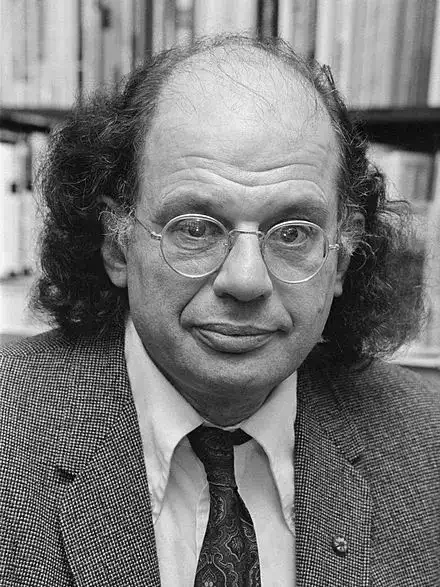
Allen Ginsberg
Cosmopolitan Greetings
Stand up against governments, against God.
Stay irresponsible.
Say only what we know & imagine.
Absolutes are Coercion.
Change is absolute.
Ordinary mind includes eternal perceptions.
Observe what’s vivid.
Notice what you notice.
Catch yourself thinking.
Vividness is self-selecting.
If we don’t show anyone, we’re free to write anything.
Remember the future.
Freedom costs little in the U.S.
Asvise only myself.
Don’t drink yourself to death.
Two molecules clanking us against each other require an observer to become
scientific data.
The measuring instrument determines the appearance of the phenomenal
world (after Einstein).
The universe is subjective..
Walt Whitman celebrated Person.
We are observer, measuring instrument, eye, subject, Person.
Universe is Person.
Inside skull is vast as outside skull.
What’s in between thoughts?
Mind is outer space.
What do we say to ourselves in bed at night, making no sound?
“First thought, best thought.”
Mind is shapely, Art is shapely.
Maximum information, minimum number of syllables.
Syntax condensed, sound is solid.
Intense fragments of spoken idiom, best.
Move with rhythm, roll with vowels.
Consonants around vowels make sense.
Savour vowels, appreciate consonants.
Subject is known by what she sees.
Others can measure their vision by what we see.
Candour ends paranoia.
605
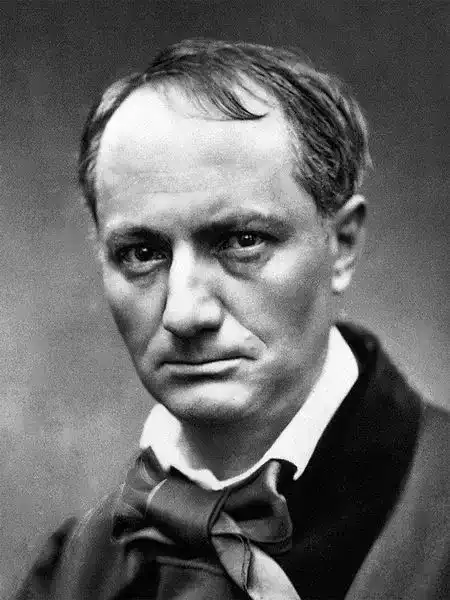
Charles Baudelaire
The Albatross
Often to pass the time on board, the crew
will catch an albatross, one of those big birds
which nonchalently chaperone a ship
across the bitter fathoms of the sea.
Tied to the deck, this sovereign of space,
as if embarrassed by its clumsiness,
pitiably lets its great white wings
drag at its sides like a pair of unshipped oars.
How weak and awkward, even comical
this traveller but lately so adoit -
one deckhand sticks a pipestem in its beak,
another mocks the cripple that once flew!
The Poet is like this monarch of the clouds
riding the storm above the marksman's range;
exiled on the ground, hooted and jeered,
he cannot walk because of his great wings.
601
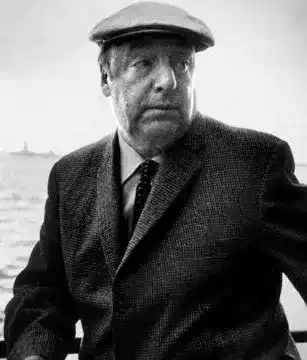
Pablo Neruda
Poor Creatures
What it takes on this planet,
to make love to each other in peace.
Everyone pries under your sheets,
everyone interferes with your loving.
They say terrible things about a man and a woman,
who after much milling about,
all sorts of compunctions,
do something unique,
they both lie with each other in one bed.
I ask myself whether frogs are so furtive,
or sneeze as they please.
Whether they whisper to each other in swamps about illegitimate frogs,
or the joys of amphibious living.
I ask myself if birds single out enemy birds,
or bulls gossip with bullocks before they go out in public with cows.
Even the roads have eyes and the parks their police.
Hotels spy on their guests,
windows name names,
canons and squadrons debark on missions to liquidate love.
All those ears and those jaws working incessantly,
till a man and his girl
have to raise their climax,
full tilt,
on a bicycle.
606
Rabindranath Tagore
Prisoner
`Prisoner, tell me, who was it that bound you?'
`It was my master,' said the prisoner.
`I thought I could outdo everybody in the world in wealth and power,
and I amassed in my own treasure-house the money due to my king.
When sleep overcame me I lay upon the bed that was for my lord,
and on waking up I found I was a prisoner in my own treasure-house.'
`Prisoner, tell me, who was it that wrought this unbreakable chain?'
`It was I,' said the prisoner, `who forged this chain very carefully.
I thought my invincible power would hold the world captive
leaving me in a freedom undisturbed.
Thus night and day I worked at the chain
with huge fires and cruel hard strokes.
When at last the work was done
and the links were complete and unbreakable,
I found that it held me in its grip.'
608

Kazi Nazrul Islam
Irrepressible Youth
O restless and impetuous youth!
Who hid thy face with the mask of wisdom
And clothed thee with the apparel of patience?
All the morality-mongers advise restraint
For the arrogant power of youth
Only to hide their own inner fears.
O thou impetuous! Who fettered thy flying wings?
Fearless youth! Thou, who from the crowd
Of begging weaklings, used to snatch light
Out of the womb of darkness, dost rest today
In thy nest,
How couldst thou check
Thy terrific onrush of life at the bidding
Of those whose spine is broken by
The cold touch of the polar wind and
Whose life is made powerless by the shadow of
hardened frost.
How strange to see the lion of the desert
Meekly enter the cage and submit to punishment!
Those who to want create to and yet are afraid to destroy
Are themselves victims of destruction first.
What fool says that thou canst kindle the fire
Without burning firewood? How
Canst thou get the shade of the forest
If the seed does not supply the life?
The swift flowing river as it rushes madly on
Impelled by its richness of life erodes the
two banks
And yet, at the same time, makes the flowers blossom.
She is thirsty for the sea and knows not
Who is her friend or foe. She cares
Not how many boats she sinks. All she
Wants is ever to be on the move, for that is
Her religion, Who ever heard that the breakers
Of the sea quietly slept lest two merchant ships sank?
Will not the elephant walk on the roads
Lest it tramples an ant under its feet?
Will not the mighty fire burn lest
It destroys healths and homes?
Will the sight of gaping, tattered roofs
Make the rains cease its heavy downpour?
Will the summer storms fail to come
Lest the trees in the woods tumble arid break?
Will there be no eagle because the timid
Baby-Lamb might take fright at his sight ?
O uncalculating youth,
Thou dost never waste thy time making out
The balance sheet of loss and gain !
O tempestuous youth, wake up!
Come like a tornado, trampling everything that falls
In front of thee, in causeless glee.
Bring generous life, wide as the horizons,
And a mighty current of motion strong enough
To wash tile debris off the banks
In a wild rush.
Embrace sorrow with a stout heart
And laugh loudly with frankness and joy.
Freedom will come later, but sing now
Of the fresh and the young. Untimely and
Ugly sickness has attacked the kingdom of youth.
This nation is inert as the dead
Long before its real decease. Open the iron door
And let joy unbounded flow
Like the smooth easy flight of the pigeons
In the blue firmament. Rush into the ocean
For no reason and climb the peak
Of that distant hill! If thou meetest
Death round the corner, embrace him as thy comrade.
Get rid of all the prejudices that reside
Inside thy heart and outside of thee, All the swords
Of Ali are rusted today and gone to seed!
[Original: Durbar joubon; Translation: Kabir Chowdhury]
611
Rabindranath Tagore
The Gardener XLII: O Mad, Superbly Drunk
O mad, superbly drunk;
If you kick open your doors and
play the fool in public;
If you empty your bag in a night,
and snap your fingers at prudence;
If you walk in curious paths and
play with useless things;
Reck not rhyme or reason;
If unfurling your sails before the
storm you snap the rudder in two,
Then I will follow you, comrade,
and be drunken and go to the dogs.
I have wasted my days and nights
in the company of steady wise neighbours.
Much knowing has turned my hair
grey, and much watching has made
my sight dim.
For years I have gathered and
heaped up scraps and fragments of
things:
Crush them and dance upon them,
and scatter them all to the winds.
For I know 'tis the height of wisdom
to be drunken and go the dogs.
Let all crooked scruples vanish,
let me hopelessly lose my way.
Let a gust of wild giddiness come
and sweep me away from my anchors.
The world is peopled with worthies,
and workers, useful and clever.
There are men who are easily first,
and men who come decently after.
Let them be happy and prosper,
and let me be foolishly futile.
For I know 'tis the end of all works
to be drunken and go to the dogs.
I swear to surrender this moment
all claims to the ranks of the decent.
I let go my pride of learning and
judgment of right and of wrong.
I'll shatter memory's vessel, scattering
the last drop of tears.
With the foam of the berry-red
wine I will bathe and brighten my
laughter.
The badge of the civil and staid
I'll tear into shreds for the nonce.
I'll take the holy vow to be worthless,
to be drunken and go to the dogs.
589
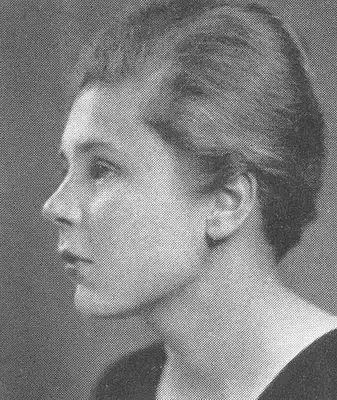
Elizabeth Bishop
Songs for a Colored Singer
I
A washing hangs upon the line,
but it's not mine.
None of the things that I can see
belong to me.
The neighbors got a radio with an aerial;
we got a little portable.
They got a lot of closet space;
we got a suitcase.
I say, "Le Roy, just how much are we owing?
Something I can't comprehend,
the more we got the more we spend...."
He only answers, "Let's get going."
Le Roy, you're earning too much money now.
I sit and look at our backyard
and find it very hard.
What have we got for all his dollars and cents?
--A pile of bottles by the fence.
He's faithful and he's kind
but he sure has an inquiring mind.
He's seen a lot; he's bound to see the rest,
and if I protest
Le Roy answers with a frown,
"Darling, when I earns I spends.
The world is wide; it still extends....
I'm going to get a job in the next town."
Le Roy, you're earning too much money now.
II
The time has come to call a halt;
and so it ends.
He's gone off with his other friends.
He needn't try to make amends,
this occasion's all his fault.
Through rain and dark I see his face
across the street at Flossie's place.
He's drinking in the warm pink glow
to th' accompaniment of the piccolo.
The time has come to call a halt.
I met him walking with Varella
and hit him twice with my umbrella.
Perhaps that occasion was my fault,
but the time has come to call a halt.
Go drink your wine and go get tight.
Let the piccolo play.
I'm sick of all your fussing anyway.
Now I'm pursuing my own way.
I'm leaving on the bus tonight.
Far down the highway wet and black
I'll ride and ride and not come back.
I'm going to go and take the bus
and find someone monogamous.
The time has come to call a halt.
I've borrowed fifteen dollars fare
and it will take me anywhere.
For this occasion's all his fault.
The time has come to call a halt.
III
Lullaby.
Adult and child
sink to their rest.
At sea the big ship sinks and dies,
lead in its breast.
Lullaby.
Let mations rage,
let nations fall.
The shadow of the crib makes an enormous cage
upon the wall.
Lullaby.
Sleep on and on,
war's over soon.
Drop the silly, harmless toy,
pick up the moon.
Lullaby.
If they should say
you have no sense,
don't you mind them; it won't make
much difference.
Lullaby.
Adult and child
sink to their rest.
At sea the big ship sinks and dies,
lead in its breast.
IV
What's that shining in the leaves,
the shadowy leaves,
like tears when somebody grieves,
shining, shining in the leaves?
Is it dew or is it tears,
dew or tears,
hanging there for years and years
like a heavy dew of tears?
Then that dew begins to fall,
roll down and fall,
Maybe it's not tears at all.
See it, see it roll and fall.
Hear it falling on the ground,
hear, all around.
That is not a tearful sound,
beating, beating on the ground.
See it lying there like seeds,
like black seeds.
see it taking root like weeds,
faster, faster than the weeds,
all the shining seeds take root,
conspiring root,
and what curious flower or fruit
will grow from that conspiring root?
fruit or flower? It is a face.
Yes, a face.
In that dark and dreary place
each seed grows into a face.
Like an army in a dream
the faces seem,
darker, darker, like a dream.
They're too real to be a dream.
595
Langston Hughes
Democracy
Democracy will not come
Today, this year
Nor ever
Through compromise and fear.
I have as much right
As the other fellow has
To stand
On my two feet
And own the land.
I tire so of hearing people say,
Let things take their course.
Tomorrow is another day.
I do not need my freedom when I'm dead.
I cannot live on tomorrow's bread.
Freedom
Is a strong seed
Planted
In a great need.
I live here, too.
I want freedom
Just as you.
589
Rabindranath Tagore
Stray Birds 31 - 40
THE trees come up to my window
like the yearning voice of the dumb earth.
32
HIS own mornings are new surprises to God.
33
LIFE finds its wealth by the claims of the world,
and its worth by the claims of love.
34
THE dry river-bed finds no thanks for its past.
35
THE bird wishes it were a cloud.
The cloud wishes it were a bird.
36
THE waterfall sings,
'I find my song,
when I find my freedom.'
37
I CANNOT tell why this heart languishes in silence.
It is for small needs it never asks,
or knows or remembers.
38
WOMAN,
when you move about in your household service
your limbs sing like a hill stream among its pebbles.
39
THE sun goes to cross the Western sea,
leaving its last salutation to the East.
40
DO not blame your food because you have no appetite.
581
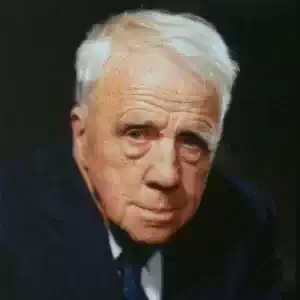
Robert Frost
The Gift Outright
The land was ours before we were the land's.
She was our land more than a hundred years
Before we were her people. She was ours
In Massachusetts, in Virginia,
But we were England's, still colonials,
Possessing what we still were unpossessed by,
Possessed by what we now no more possessed.
Something we were withholding made us weak
Until we found out that it was ourselves
We were withholding from our land of living,
And forthwith found salvation in surrender.
Such as we were we gave ourselves outright
(The deed of gift was many deeds of war)
To the land vaguely realizing westward,
But still unstoried, artless, unenhanced,
Such as she was, such as she would become.
588

John Keats
Sonnet. On Peace
O PEACE! and dost thou with thy presence bless
The dwellings of this war-surrounded Isle;
Soothing with placid brow our late distress,
Making the triple kingdom brightly smile?
Joyful I hail thy presence; and I hail
The sweet companions that await on thee;
Complete my joy let not my first wish fail,
Let the sweet mountain nymph thy favourite be,
With England's happiness proclaim Europa's Liberty.
O Europe! let not sceptred tyrants see
That thou must shelter in thy former state;
Keep thy chains burst, and boldly say thou art free;
Give thy kings law leave not uncurbed the great ;
So with the horrors past thou'lt win thy happier fate!
579
Alfred Lord Tennyson
The Mermaid
I
Who would be
A mermaid fair,
Singing alone,
Combing her hair
Under the sea,
In a golden curl
With a comb of pearl,
On a throne?
II
I would be a mermaid fair;
I would sing to myself the whole of the day;
With a comb of pearl I would comb my hair;
And still as I comb'd I would sing and say,
'Who is it loves me? who loves not me?'
I would comb my hair till my ringlets would fall
Low adown, low adown,
From under my starry sea-bud crown
Low adown and around,
And I should look like a fountain of gold
Springing alone
With a shrill inner sound
Over the throne
In the midst of the hall;
Till that great sea-snake under the sea
From his coiled sleeps in the central deeps
Would slowly trail himself sevenfold
Round the hall where I sate, and look in at the gate
With his large calm eyes for the love of me.
And all the mermen under the sea
Would feel their immortality
Die in their hearts for the love of me.
III
But at night I would wander away, away,
I would fling on each side my low-flowing locks,
And lightly vault from the throne and play
With the mermen in and out of the rocks;
We would run to and fro, and hide and seek,
On the broad sea-wolds in the crimson shells,
Whose silvery spikes are nighest the sea.
But if any came near I would call and shriek,
And adown the steep like a wave I would leap
From the diamond-ledges that jut from the dells;
For I would not be kiss'd by all who would list
Of the bold merry mermen under the sea.
They would sue me, and woo me, and flatter me,
In the purple twilights under the sea;
But the king of them all would carry me,
Woo me, and win me, and marry me,
In the branching jaspers under the sea.
Then all the dry-pied things that be
In the hueless mosses under the sea
Would curl round my silver feet silently,
All looking up for the love of me.
And if I should carol aloud, from aloft
All things that are forked, and horned, and soft
Would lean out from the hollow sphere of the sea,
All looking down for the love of me.
575
Lord Byron
On Chillon
Eternal Spirit of the chainless Mind!
Brightest in dungeons, Liberty, thou art;
For there thy habitation is the heart—
The heart which love of thee alone can bind;
And when thy sons to fetters are consigned,
To
fetters, and the damp vault's dayless gloom—
Their country conquers with their martyrdom,
And Freedom's fame finds wings on every wind.
Chillon! thy prison is a holy place,
And thy sad floor and altar, for 'twas trod,
Until his very steps have left a trace,
Worn, as if thy cold pavement were a sod,
By Bonnivard.—May none those marks efface!
For they appeal from tyranny to God.
578
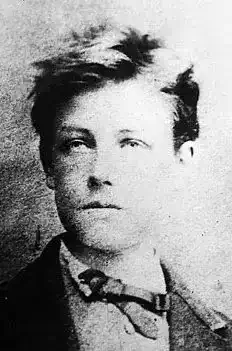
Arthur Rimbaud
LINES, an excerpt from
When the world comes down to this one dark wood
Before our four astonished eyes...
To a beach for two faithful children...
To a house of music, for our clear accord...
I will find you.
Let there be no one here below but one old man,
Beautiful and calm, surrounded with 'unimagined luxury'...
I will be at your feet.
Let me penetrate all of your memories...
Let me be that woman who can bind you hand and foot...
I will strangle you.
When we are very strong - who can hold us back?
And very gay - how can ridicule harm us?
When we are very bad - what can they do to us?
Dress yourself up,
And dance,
And laugh.
I could never throw Love out the window.
(translated by Paul Schmidt)
567

Rudyard Kipling
A Child's Garden
R. L. Stevenson
Now there is nothing wrong with me
Except -- I think it's called T.B.
And that is why I have to lay
Out in the garden all the day.
Our garden is not very wide
And cars go by on either side,
And make an angry-hooty noise
That rather startles little boys.
But worst of all is when they take
Me out in cars that growl and shake,
With charabancs so dreadful-near
I have to shut my eyes for fear.
But when I'm on my back again,
I watch the Croydon aeroplane
That flies across to France, and sings
Like hitting thick piano-strings.
When I am strong enough to do
The things I'm truly wishful to,
I'll never use a car or train
But always have an aeroplane;
And just go zooming round and round,
And frighten Nursey with the sound,
And see the angel-side of clouds,
And spit on all those motor-crowds!
567
Lord Byron
The Island: Canto I.
I.
The morning watch was come; the vessel lay
Her course, and gently made her liquid way;
The cloven billow flashed from off her prow
In furrows formed by that majestic plough;
The waters with their world were all before;
Behind, the South Sea's many an islet shore.
The quiet night, now dappling, 'gan to wane,
Dividing darkness from the dawning main;
The dolphins, not unconscious of the day,
Swam high, as eager of the coming ray;
The stars from broader beams began to creep,
And lift their shining eyelids from the deep;
The sail resumed its lately shadowed white,
And the wind fluttered with a freshening flight;
The purpling Ocean owns the coming Sun,
But ere he breaka
deed is to be done.
e
II.
The gallant Chief within his cabin slept,
Secure in those by whom the watch was kept:
His dreams were of Old England's welcome shore,
Of toils rewarded, and of dangers o'er;
His name was added to the glorious roll
Of those who search the stormsurrounded
Pole.
The worst was over, and the rest seemed sure,
And why should not his slumber be secure?
Alas! his deck was trod by unwilling feet,
And wilder hands would hold the vessel's sheet;
Young hearts, which languished for some sunny isle,
Where summer years and summer women smile;
Men without country, who, too long estranged,
Had found no native home, or found it changed,
And, half uncivilised, preferred the cave
Of some soft savage to the uncertain wave
The
gushing fruits that nature gave untilled;
The wood without a pathbut
where they willed;
The field o'er which promiscuous Plenty poured
Her horn; the equal land without a lord;
The wishwhich
ages have not yet subdued
In manto
have no master save his mood
The earth, whose mine was on its face, unsold,
The glowing sun and produce all its gold;
The Freedom which can call each grot a home;
The general garden, where all steps may roam,
Where Nature owns a nation as her child,
Exulting in the enjoyment of the wild
Their shells, their fruits, the only wealth they know,
Their unexploring navy, the canoe
Their sport, the dashing breakers and the chase;
Their strangest sight, an European face
Such was the country which these strangers yearned
To see againa
sight they dearly earned.
III.
Awake, bold Bligh! the foe is at the gate!
Awake! awake!
Alas!
it is too late!
Fiercely beside thy cot the mutineer
Stands, and proclaims the reign of rage and fear.
Thy limbs are bound, the bayonet at thy breast;
The hands, which trembled at thy voice, arrest;
Dragged o'er the deck, no more at thy command
The obedient helm shall veer, the sail expand;
That savage Spirit, which would lull by wrath
Its desperate escape from Duty's path,
Glares round thee, in the scarce believing eyes
Of those who fear the Chief they sacrifice:
For ne'er can Man his conscience all assuage,
Unless he drain the wine of PassionRage.
IV.
In vain, not silenced by the eye of Death,
Thou call'st the loyal with thy menaced breath
They come not; they are few, and, overawed,
Must acquiesce, while sterner hearts applaud.
In vain thou dost demand the cause: a curse
Is all the answer, with the threat of worse.
Full in thine eyes is waved the glittering blade,
Close to thy throat the pointed bayonet laid.
The levelled muskets circle round thy breast
In hands as steeled to do the deadly rest.
Thou dar'st them to their worst, exclaiming'
Fire!'
But they who pitied not could yet admire;
Some lurking remnant of their former awe
Restrained them longer than their broken law;
They would not dip their souls at once in blood,
But left thee to the mercies of the flood.
V.
'Hoist out the boat!' was now the leader's cry;
And who dare answer 'No!' to Mutiny,
In the first dawning of the drunken hour,
The Saturnalia of unhopedfor
power?
The boat is lowered with all the haste of hate,
With its slight plank between thee and thy fate;
Her only cargo such a scant supply
As promises the death their hands deny;
And just enough of water and of bread
To keep, some days, the dying from the dead:
Some cordage, canvass, sails, and lines, and twine,
But treasures all to hermits of the brine,
Were added after, to the earnest prayer
Of those who saw no hope, save sea and air;
And last, that trembling vassal of the Pole
The feeling compass
Navigation's
soul.
VI.
And now the selfelected
Chief finds time
To stun the first sensation of his crime,
And raise it in his followers'
Ho! the bowl!'
Lest passion should return to reason's shoal.
'Brandy for heroes!' Burke could once exclaim
No
doubt a liquid path to Epic fame;
And such the newborn
heroes found it here,
And drained the draught with an applauding cheer,
'Huzza! for Otaheite!' was the cry.
How strange such shouts from sons of Mutiny!
The gentle island, and the genial soil,
The friendly hearts, the feasts without a toil,
The courteous manners but from nature caught,
The wealth unhoarded, and the love unbought; sic
Could these have charms for rudest seaboys,
driven
Before the mast by every wind of heaven?
And now, even now prepared with others' woes
To earn mild Virtue's vain desire, repose?
Alas! such is our nature! all but aim
At the same end by pathways not the same;
Our meansour
birthour
nation, and our name,
Our fortunetempereven
our outward frame,
Are far more potent o'er our yielding clay
Than aught we know beyond our little day.
Yet still there whispers the small voice within,
Heard through Gain's silence, and o'er Glory's din:
Whatever creed be taught, or land be trod,
Man's conscience is the Oracle of God.
VII.
The launch is crowded with the faithful few
Who wait their Chief, a melancholy crew:
But some remained reluctant on the deck
Of that proud vesselnow
a moral wreck
And
viewed their Captain's fate with piteous eyes;
While others scoffed his augured miseries,
Sneered at the prospect of his pigmy sail,
And the slight bark so laden and so frail.
The tender nautilus, who steers his prow,
The seaborn
sailor of his shell canoe,
The ocean Mab, the fairy of the sea,
Seems far less fragile, and, alas! more free.
He, when the lightningwinged
Tornados sweep
The surge, is safehis
port is in the deep
And
triumphs o'er the armadas of Mankind,
Which shake the World, yet crumble in the wind.
VIII.
When all was now prepared, the vessel clear
Which hailed her master in the mutineer,
A seaman, less obdurate than his mates,
Showed the vain pity which but irritates;
Watched his late Chieftain with exploring eye,
And told, in signs, repentant sympathy;
Held the moist shaddock to his parchéd mouth,
Which felt Exhaustion's deep and bitter drouth.
But soon observed, this guardian was withdrawn,
Nor further Mercy clouds Rebellion's dawn.
Then forward stepped the bold and froward boy
His Chief had cherished only to destroy,
And, pointing to the helpless prow beneath,
Exclaimed, 'Depart at once! delay is death!'
Yet then, even then, his feelings ceased not all:
In that last moment could a word recall
Remorse for the black deed as yet half done,
And what he hid from many showed to one:
When Bligh in stern reproach demanded where
Was now his grateful sense of former care?
Where all his hopes to see his name aspire,
And blazon Britain's thousand glories higher?
His feverish lips thus broke their gloomy spell,
''Tis that! 'Tis that! I am in hell! in hell!'
No more he said; but urging to the bark
His Chief, commits him to his fragile ark;
These the sole accents from his tongue that fell,
But volumes lurked below his fierce farewell.
IX.
The arctic Sun rose broad above the wave;
The breeze now sank, now whispered from his cave;
As on the Aeolian harp, his fitful wings
Now swelled, now fluttered o'er his Ocean strings.
With slow, despairing oar, the abandoned skiff
Ploughs its drear progress to the scarce seen cliff,
Which lifts its peak a cloud above the main:
That boat and ship shall never meet again!
But 'tis not mine to tell their tale of grief,
Their constant peril, and their scant relief;
Their days of danger, and their nights of pain;
Their manly courage even when deemed in vain;
The sapping famine, rendering scarce a son
Known to his mother in the skeleton;
The ills that lessened still their little store,
And starved even Hunger till he wrung no more;
The varying frowns and favours of the deep,
That now almost ingulfs, then leaves to creep
With crazy oar and shattered strength along
The tide that yields reluctant to the strong;
The incessant fever of that arid thirst
Which welcomes, as a well, the clouds that burst
Above their naked bones, and feels delight
In the cold drenching of the stormy night,
And from the outspread canvass gladly wrings
A drop to moisten Life's allgasping
springs;
The savage foe escaped, to seek again
More hospitable shelter from the main;
The ghastly Spectres which were doomed at last
To tell as true a tale of dangers past,
As ever the dark annals of the deep
Disclosed for man to dread or woman weep.
X.
We leave them to their fate, but not unknown
Nor unredressed. Revenge may have her own:
Roused Discipline aloud proclaims their cause,
And injured Navies urge their broken laws.
Pursue we on his track the mutineer,
Whom distant vengeance had not taught to fear.
Wide o'er the waveaway!
away! away!
Once more his eyes shall hail the welcome bay;
Once more the happy shores without a law
Receive the outlaws whom they lately saw;
Nature, and Nature's goddess
Womanwoos
To lands where, save their conscience, none accuse;
Where all partake the earth without dispute,
And bread itself is gathered as a fruit;
Where none contest the fields, the woods, the streams
The goldless Age, where Gold disturbs no dreams,
Inhabits or inhabited the shore,
Till Europe taught them better than before;
Bestowed her customs, and amended theirs,
But left her vices also to their heirs.
Away with this! behold them as they were,
Do good with Nature, or with Nature err.
'Huzza! for Otaheite!' was the cry,
As stately swept the gallant vessel by.
The breeze springs up; the lately flapping sail
Extends its arch before the growing gale;
In swifter ripples stream aside the seas,
Which her bold bow flings off with dashing ease.
Thus Argo ploughed the Euxine's virgin foam,
But those she wafted still looked back to home;
These spurn their country with their rebel bark,
And fly her as the raven fled the Ark;
And yet they seek to nestle with the dove,
And tame their fiery spirits down to Love.
569
Lord Byron
The Island: Canto III.
I.
The fight was o'er; the flashing through the gloom,
Which robes the cannon as he wings a tomb,
Had ceased; and sulphury vapours upward driven
Had left the Earth, and but polluted Heaven:
The rattling roar which rung in every volley
Had left the echoes to their melancholy;
No more they shrieked their horror, boom for boom;
The strife was done, the vanquished had their doom;
The mutineers were crushed, dispersed, or ta'en,
Or lived to deem the happiest were the slain.
Few, few escaped, and these were hunted o'er
The isle they loved beyond their native shore.
No further home was theirs, it seemed, on earth,
Once renegades to that which gave them birth;
Tracked like wild beasts, like them they sought the wild,
As to a Mother's bosom flies the child;
But vainly wolves and lions seek their den,
And still more vainly men escape from men,
II.
Beneath a rock whose jutting base protrudes
Far over Ocean in its fiercest moods,
When scaling his enormous crag the wave
Is hurled down headlong, like the foremost brave,
And falls back on the foaming crowd behind,
Which fight beneath the banners of the wind,
But now at rest, a little remnant drew
Together, bleeding, thirsty, faint, and few;
But still their weapons in their hands, and still
With something of the pride of former will,
As men not all unused to meditate,
And strive much more than wonder at their fate.
Their present lot was what they had foreseen,
And dared as what was likely to have been;
Yet still the lingering hope, which deemed their lot
Not pardoned, but unsought for or forgot,
Or trusted that, if sought, their distant caves
Might still be missed amidst the world of waves,
Had weaned their thoughts in part from what they saw
And felt, the vengeance of their country's law.
Their seagreen
isle, their guiltwon
Paradise,
No more could shield their Virtue or their Vice:
Their better feelings, if such were, were thrown
Back on themselves,their
sins remained alone.
Proscribed even in their second country, they
Were lost; in vain the World before them lay;
All outlets seemed secured. Their new allies
Had fought and bled in mutual sacrifice;
But what availed the club and spear, and arm
Of Hercules, against the sulphury charm,
The magic of the thunder, which destroyed
The warrior ere his strength could be employed?
Dug, like a spreading pestilence, the grave
No less of human bravery than the brave!
Their own scant numbers acted all the few
Against the many oft will dare and do;
But though the choice seems native to die free,
Even Greece can boast but one Thermopylae,
Till now, when she has forged her broken chain
Back to a sword, and dies and lives again!
III.
Beside the jutting rock the few appeared,
Like the last remnant of the reddeer's
herd;
Their eyes were feverish, and their aspect worn,
But still the hunter's blood was on their horn.
A little stream came tumbling from the height,
And straggling into ocean as it might,
Its bounding crystal frolicked in the ray,
And gushed from cliff to crag with saltless spray;
Close on the wild, wide ocean, yet as pure
And fresh as Innocettce, and more secure,
Its silver torrent glittered o'er the deep,
As the shy chamois' eye o'erlooks the steep,
While far below the vast and sullen swell
Of Ocean's alpine azure rose and fell.
To this young spring they rushed,all
feelings first
Absorbed in Passion's and in Nature's thirst,
Drank
as they do who drink their last, and threw
Their arms aside to revel in its dew;
Cooled their scorched throats, and washed the gory stains
From wounds whose only bandage might be chains;
Then,when their drought was quenched, looked sadly round,
As wondering how so many still were found
Alive and fetterless:but
silent all,
Each sought his fellow's eyes, as if to call
On him for language which his lips denied,
As though their voices with their cause had died.
IV.
Stern, and aloof a little from the rest,
Stood Christian, with his arms across his chest.
The ruddy, reckless, dauntless hue once spread
Along his cheek was livid now as lead;
His lightbrown
locks, so graceful in their flow,
Now rose like startled vipers o'er his brow.
Still as a statue, with his lips coinprest
To stifle even the breath within his breast,
Fast by the rock, all menacing, but mute,
He stood; and, save a slight beat of his foot,
Which deepened now and then the sandy dint
Beneath his heel, his form seemed turned to flint.
Some paces further Torquil leaned his head
Against a bank, and spoke not, but he bled,
Not
mortally:his
worst wound was within;
His brow was pale, his blue eyes sunken in,too
And blooddrops,
sprinkled o'er his yellow hair,
Showed that his faintness came not from despair,
But Nature's ebb. Beside him was another,
Rough as a bear, but willing as a brother,
Ben
Bunting, who essayed to wash, and wipe,
And bind his woundthen
calmly lit his pipe,
A trophy which survived a hundred fights,
A beacon which had cheered ten thousand nights.
The fourth and last of this deserted group
Walked up and downat
times would stand, then stoop
To pick a pebble upthen
let it drop
Then
hurry as in hastethen
quickly stop
Then
cast his eyes on his companionsthen
Half whistle half a tune, and pause again
And
then his former movements would redouble,
With something between carelessness and trouble.
This is a long description, but applies
To scarce five minutes passed before the eyes;
But yet what minutes! Moments like to these
Rend men's lives into immortalities.
V.
At length Jack Skyscrape, a mercurial man,
Who fluttered over all things like a fan,
More brave than firm, and more disposed to dare
And die at once than wrestle with despair,
Exclaimed, 'Gd
damn I'those
syllables intense,
Nucleus
of England's native eloquence,
As the Turk's 'Allah!' or the Roman's more
Pagan 'Proh Jupiter!' was wont of yore
To give their first impressions such a vent,
By way of echo to embarrassment.
Jack was embarrassed,never
hero more,
Till on the surf their skimming paddles play,
Buoyant as wings, and flitting through the spray;
Now
perching on the wave's high curl, and now
Dashed downward in the thundering foam below,
Which flings it broad and boiling sheet on sheet,
And slings its high flakes, shivered into sleet:
But floating still through surf and swell, drew nigh
The barks, like small birds through a lowering sky.
Their art seemed naturesuch
the skill to sweep
The wave of these born playmates of the deep.
VIII.
And who the first that, springing on the strand,
Leaped like a Nereid from her shell to land,
With dark but brilliant skin, and dewy eye
Shining with love, and, hope, and constancy?
Neuhathe
fond, the faithful, the adored
Her
heart on Torquil's like a torrent poured;
And smiled, and wept, and near, and nearer clasped,
As if to be assured 'twas him she grasped;
Shuddered to see his yet warm wound, and then,
To find it trivial, smiled and wept again.
She was a warrior's daughter, and could bear
Such sights, and feel, and mourn, but not despair.
Her lover lived,nor
foes nor fears could blight
That fullblown
moment in its all delight:
Joy trickled in her tears, joy filled the sob
That rocked her heart till almost HEARD to throb;
And Paradise was breathing in the sigh
Of Nature's child in Nature's ecstasy.
IX.
The sterner spirits who beheld that meeting
Were not unmoved; who are, when hearts are greeting?
Even Christian gazed upon the maid and boy
With tearless eye, but yet a gloomy joy
Mixed with those bitter thoughts the soul arrays
In hopeless visions of our better days,
When all 's goneto
the rainbow's latest ray.
'And but for me!' he said, and turned away;
Then gazed upon the pair, as in his den
A lion looks upon his cubs again;
And then relapsed into his sullen guise,
As heedless of his further destinies.
X.
But brief their time for good or evil thought;
The billows round the promontory brought
The plash of hostile oars.
Alas!
who made
That sound a dread? All around them seemed arrayed
Against them, save the bride of Toobonai
She, as she caught the first glimpse o'er the bay
Of the armed boats, which hurried to complete
The remnant's ruin with their flying feet,
Beckoned the natives round her to their prows,
Embarked their guests and launched their light canoes;
In one placed Christian and his comrades twain
But
she and Torquil must not part again.
She fixed him in her own.
Away!
away!
They cleared the breakers, dart along the bay,
And towards a group of islets, such as bear
The seabird's
nest and seal's surfhollowed
lair,
They skim the blue tops of the billows; fast
They flew, and fast their fierce pursuers chased.
They gain upon themnow
they lose again,
Again
make way and menace o'er the main;
And now the two canoes in chase divide,
Arid follow different courses o'er the tide,
To baffle the pursuit.
Away!
away!
As Life is on each paddle's flight today,
And more than Life or lives to Neuha: Love
Freights the frail bark and urges to the cove;
And now the refuge and the foe are nigh
Yet,
yet a moment! Fly, thou light ark, fly!
558