
Freedom

John Greenleaf Whittier
Expostulation
OUR fellow-countrymen in chains!
Slaves, in a land of light and law!
Slaves, crouching on the very plains
Where rolled the storm of Freedom's war!
A groan from Eutaw's haunted wood,
A. wail where Camden's martyrs fell,
By every shrine of patriot blood,
From Moultrie's wall and Jasper's well!
By storied hill and hallowed grot,
By mossy wood and marshy glen,
Whence rang of old the rifle-shot,
And hurrying shout of Marion's men!
The groan of breaking hearts is there,
The falling lash, the fetter's clank!
Slaves, slaves are breathing in that air
Which old De Kalb and Sumter drank!
What, ho! our countrymen in chains!
The whip on woman's shrinking flesh!
Our soil yet reddening with the stains
Caught from her scourging, warm and fresh!
What! mothers from their children riven!
What! God's own image bought and sold!
Americans to market driven,
And bartered as the brute for gold!
Speak! shall their agony of prayer
Come thrilling to our hearts in vain?
To us whose fathers scorned to bear
The paltry menace of a chain;
To us, whose boast is loud and long
Of holy Liberty and Light;
Say, shall these writhing slaves of Wrong
Plead vainly for their plundered Right?
What! shall we send, with lavish breath,
Our sympathies across the wave,
Where Manhood, on the field of death,
Strikes for his freedom or a grave?
Shall prayers go up, and hymns be sung
For Greece, the Moslem fetter spurning,
And millions hail with pen and tongue
Our light on all her altars burning?
Shall Belgium feel, and gallant France,
By Vendome's pile and Schoenbrun's wall,
And Poland, gasping on her lance,
The impulse of our cheering call?
And shall the slave, beneath our eye,
Clank o'er our fields his hateful chain?
And toss his fettered arms on high,
And groan for Freedom's gift, in vain?
Oh, say, shall Prussia's banner be
A refuge for the stricken slave?
And shall the Russian serf go free
By Baikal's lake and Neva's wave?
And shall the wintry-bosomed Dane
Relax the iron hand of pride,
And bid his bondmen cast the chain
From fettered soul and limb aside?
Shall every flap of England's flag
Proclaim that all around are free,
From farthest Ind to each blue crag
That beetles o'er the Western Sea?
And shall we scoff at Europe's kings,
When Freedom's fire is dim with us,
And round our country's altar clings
The damning shade of Slavery's curse?
Go, let us ask of Constantine
To loose his grasp on Poland's throat;
And beg the lord of Mahmoud's line
To spare the struggling Suliote;
Will not the scorching answer come
From turbaned Turk, and scornful Russ
'Go, loose your fettered slaves at home,
Then turn, and ask the like of us!'
Just God! and shall we calmly rest,
The Christian's scorn, the heathen's mirth,
Content to live the lingering jest
And by-word of a mocking Earth?
Shall our own glorious land retain
That curse which Europe scorns to bear?
Shall our own brethren drag the chain
Which not even Russia's menials wear?
Up, then, in Freedom's manly part,
From graybeard eld to fiery youth,
And on the nation's naked heart
Scatter the living coals of Truth!
Up! while ye slumber, deeper yet
The shadow of our fame is growing!
Up! while ye pause, our sun may set
In blood, around our altars flowing!
Oh! rouse ye, ere the storm comes forth,
The gathered wrath of God and man,
Like that which wasted Egypt's earth,
When hail and fire above it ran.
Hear ye no warnings in the air?
Feel ye no earthquake underneath?
Up, up! why will ye slumber where
The sleeper only wakes in death?
Rise now for Freedom! not in strife
Like that your sterner fathers saw,
The awful waste of human life,
The glory and the guilt of war:'
But break the chain, the yoke remove,
And smite to earth Oppression's rod,
With those mild arms of Truth and Love,
Made mighty through the living God!
Down let the shrine of Moloch sink,
And leave no traces where it stood;
Nor longer let its idol drink
His daily cup of human blood;
But rear another altar there,
To Truth and Love and Mercy given,
And Freedom's gift, and Freedom's prayer,
Shall call an answer down from Heaven!
326
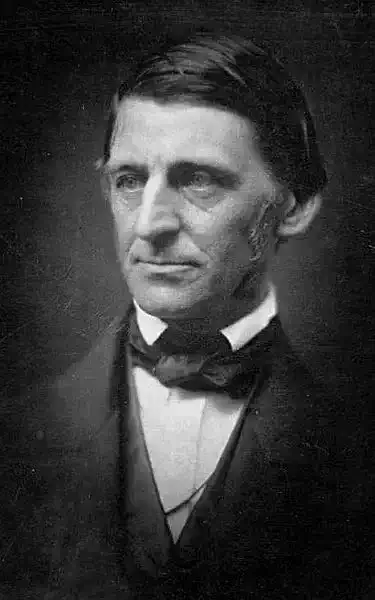
Ralph Waldo Emerson
The Romany Girl
The sun goes down, and with him takes
The coarseness of my por attire;
The fair moon mounts, and aye the flame
Of Gypsy beauty blazes higher.
Pale Northern girls! you scorn our race;
You captives of your air-tight halls,
Wear out in-doors your sickly days,
But leave us the horizon walls.
And if I take you, dames, to task,
And say it frankly without guile,
Then you are Gypsies in a mask,
And I the lady all the while.
If, on the heath, below the moon,
I court and play with paler blood,
Me false to mine dare whisper none,--
One sallow horseman knows me good.
Go, keep your cheek's rose from the rain,
For teeth and hair with shopmen deal;
My swarthy tint is in the grain,
The rocks and forest knoww it real.
The wild air bloweth in out lungs,
The keen stars twinkle in our eyes,
The birds gave us our wily tongues,
The panther in our dances flies.
You doubt we read the stars on high,
Nathless we read your fortunes true;
The stars may hide in the upper sky,
But without glass we fathom you.
324
Henry Van Dyke
Liberty Enlightening the World
Thou warden of the western gate, above Manhatten Bay,
The fogs of doubt that hid thy face are driven clean away:
Thine eyes at last look far and clear, thou liftest high thy hand
To spread the light of liberty world-wide for every land.
No more thou dreamest of a peace reserved alone for thee,
While friends are fighting for thy cause beyond the guardian sea:
The battle that they wage is thine; thou fallest if they fall;
The swollen flood of Prussian pride will sweep unchecked o'er all.
O cruel is the conquer-lust in Hohenzollern brains;
The paths they plot to gain their goal are dark with shameful stains:
No faith they keep, no law revere, no god but naked Might; --
They are the foemen of mankind. Up, Liberty, and smite!
Britain, and France, and Italy, and Russia newly born,
Have waited for thee in the night. Oh, come as comes the morn.
Serene and strong and full of faith, America, arise,
With steady hope and mighty help to join th brave Allies.
O dearest country of my heart, home of the high desire,
Make clean thy soul for sacrifice on Freedom's altar-fire:
For thou must suffer, thou must fight, until the warlords cease,
And all the peoples lift their heads in liberty and peace.
324

Henry Wadsworth Longfellow
The Slave In The Dismal Swamp
In dark fens of the Dismal Swamp
The hunted Negro lay;
He saw the fire of the midnight camp,
And heard at times a horse's tramp
And a bloodhound's distant bay.
Where will-o'-the-wisps and glow-worms shine,
In bulrush and in brake;
Where waving mosses shroud the pine,
And the cedar grows, and the poisonous vine
Is spotted like the snake;
Where hardly a human foot could pass,
Or a human heart would dare,
On the quaking turf of the green morass
He crouched in the rank and tangled grass,
Like a wild beast in his lair.
A poor old slave, infirm and lame;
Great scars deformed his face;
On his forehead he bore the brand of shame,
And the rags, that hid his mangled frame,
Were the livery of disgrace.
All things above were bright and fair,
All things were glad and free;
Lithe squirrels darted here and there,
And wild birds filled the echoing air
With songs of Liberty!
On him alone was the doom of pain,
From the morning of his birth;
On him alone the curse of Cain
Fell, like a flail on the garnered grain,
And struck him to the earth!
324
Henry Wadsworth Longfellow
The Herons Of Elmwood. (Birds Of Passage. Flight The Fifth)
Warm and still is the summer night,
As here by the river's brink I wander;
White overhead are the stars, and white
The glimmering lamps on the hillside yonder.
Silent are all the sounds of day;
Nothing I hear but the chirp of crickets,
And the cry of the herons winging their way
O'er the poet's house in the Elmwood thickets.
Call to him, herons, as slowly you pass
To your roosts in the haunts of the exiled thrushes,
Sing him the song of the green morass;
And the tides that water the reeds and rushes.
Sing him the mystical Song of the Hern,
And the secret that baffles our utmost seeking;
For only a sound of lament we discern,
And cannot interpret the words you are speaking.
Sing of the air, and the wild delight
Of wings that uplift and winds that uphold you,
The joy of freedom, the rapture of flight
Through the drift of the floating mists that infold you.
Of the landscape lying so far below,
With its towns and rivers and desert places;
And the splendor of light above, and the glow
Of the limitless, blue, ethereal spaces.
Ask him if songs of the Troubadours,
Or of Minnesingers in old black-letter,
Sound in his ears more sweet than yours,
And if yours are not sweeter and wilder and better.
Sing to him, say to him, here at his gate,
Where the boughs of the stately elms are meeting,
Some one hath lingered to meditate,
And send him unseen this friendly greeting;
That many another hath done the same,
Though not by a sound was the silence broken;
The surest pledge of a deathless name
Is the silent homage of thoughts unspoken.
319
John Greenleaf Whittier
What the Birds Said
The birds against the April wind
Flew northward, singing as they flew;
They sang, "The land we leave behind
Has swords for corn-blades, blood for dew."
"O wild-birds, flying from the South,
What saw and heard ye, gazing down?"
"We saw the mortar's upturned mouth,
The sickened camp, the blazing town!
"Beneath the bivouac's starry lamps,
We saw your march-worn children die;
In shrouds of moss, in cypress swamps,
We saw your dead uncoffined lie.
"We heard the starving prisoner's sighs
And saw, from line and trench, your sons
Follow our flight with home-sick eyes
Beyond the battery's smoking guns."
"And heard and saw ye only wrong
And pain," I cried, "O wing-worn flocks?"
"We heard," they sang, "the freedman's song,
The crash of Slavery's broken locks!
"We saw from new, uprising States
The treason-nursing mischief spurned,
As, crowding Freedom's ample gates,
The long-estranged and lost returned.
"O'er dusky faces, seamed and old,
And hands horn-hard with unpaid toil,
With hope in every rustling fold,
We saw your star-dropt flag uncoil.
"And struggling up through sounds accursed,
A grateful murmur clomb the air;
A whisper scarcely heard at first,
It filled the listening heavens with prayer.
"And sweet and far, as from a star,
Replied a voice which shall not cease,
Till, drowning all the noise of war,
It sings the blessed song of peace!"
So to me, in a doubtful day
Of chill and slowly greening spring,
Low stooping from the cloudy gray,
The wild-birds sang or seemed to sing.
They vanished in the misty air,
The song went with them in their flight;
But lo! they left the sunset fair,
And in the evening there was light.
319
John Greenleaf Whittier
A Greeting
Thrice welcome from the Land of Flowers
And golden-fruited orange bowers
To this sweet, green-turfed June of ours!
To her who, in our evil time,
Dragged into light the nation's crime
With strength beyond the strength of men,
And, mightier than their swords, her pen!
To her who world-wide entrance gave
To the log-cabin of the slave;
Made all his wrongs and sorrows known,
And all earth's languages his own,-North,
South, and East and West, made all
The common air electrical,
Until the o'ercharged bolts of heaven
Blazed down, and every chain was riven!
Welcome from each and all to her
Whose Wooing of the Minister
Revealed the warm heart of the man
Beneath the creed-bound Puritan,
And taught the kinship of the love
Of man below and God above;
To her whose vigorous pencil-strokes
Sketched into life her Oldtown Folks;
Whose fireside stories, grave or gay,
In quaint Sam Lawson's vagrant way,
With old New England's flavor rife,
Waifs from her rude idyllic life,
Are racy as the legends old
By Chaucer or Boccaccio told;
To her who keeps, through change of place
And time, her native strength and grace,
Alike where warm Sorrento smiles,
Or where, by birchen-shaded isles,
Whose summer winds have shivered o'er
The icy drift of Labrador,
She lifts to light the priceless Pearl
Of Harpswell's angel-beckoned girl!
To her at threescore years and ten
Be tributes of the tongue and pen;
Be honor, praise, and heart-thanks given,
The loves of earth, the hopes of heaven!
Ah, dearer than the praise that stirs
The air to-day, our love is hers!
She needs no guaranty of fame
Whose own is linked with Freedom's name.
Long ages after ours shall keep
Her memory living while we sleep;
The waves that wash our gray coast lines,
The winds that rock the Southern pines,
Shall sing of her; the unending years
Shall tell her tale in unborn ears.
And when, with sins and follies past,
Are numbered color-hate and caste,
White, black, and red shall own as one
The noblest work by woman done.
317
Henry Wadsworth Longfellow
The Fugitive. (Tartar Song, From The Prose Version Of Chodzko)
I.
'He is gone to the desert land
I can see the shining mane
Of his horse on the distant plain,
As he rides with his Kossak band!
'Come back, rebellious one!
Let thy proud heart relent;
Come back to my tall, white tent,
Come back, my only son!
'Thy hand in freedom shall
Cast thy hawks, when morning breaks,
On the swans of the Seven Lakes,
On the lakes of Karajal.
'I will give thee leave to stray
And pasture thy hunting steeds
In the long grass and the reeds
Of the meadows of Karaday.
'I will give thee my coat of mail,
Of softest leather made,
With choicest steel inlaid;
Will not all this prevail?'
II.
'This hand no longer shall
Cast my hawks, when morning breaks,
On the swans of the Seven Lakes,
On the lakes of Karajal.
'I will no longer stray
And pasture my hunting steeds
In the long grass and the reeds
Of the meadows of Karaday.
'Though thou give me thy coat of mall,
Of softest leather made,
With choicest steel inlaid,
All this cannot prevail.
'What right hast thou, O Khan,
To me, who am mine own,
Who am slave to God alone,
And not to any man?
'God will appoint the day
When I again shall be
By the blue, shallow sea,
Where the steel-bright sturgeons play.
'God, who doth care for me,
In the barren wilderness,
On unknown hills, no less
Will my companion be.
'When I wander lonely and lost
In the wind; when I watch at night
Like a hungry wolf, and am white
And covered with hoar-frost;
'Yea, wheresoever I be,
In the yellow desert sands,
In mountains or unknown lands,
Allah will care for me!'
III.
Then Sobra, the old, old man,--
Three hundred and sixty years
Had he lived in this land of tears,
Bowed down and said, 'O Khan!
'If you bid me, I will speak.
There's no sap in dry grass,
No marrow in dry bones! Alas,
The mind of old men is weak!
'I am old, I am very old:
I have seen the primeval man,
I have seen the great Gengis Khan,
Arrayed in his robes of gold.
'What I say to you is the truth;
And I say to you, O Khan,
Pursue not the star-white man,
Pursue not the beautiful youth.
'Him the Almighty made,
And brought him forth of the light,
At the verge and end of the night,
When men on the mountain prayed.
'He was born at the break of day,
When abroad the angels walk;
He hath listened to their talk,
And he knoweth what they say.
'Gifted with Allah's grace,
Like the moon of Ramazan
When it shines in the skies, O Khan,
Is the light of his beautiful face.
'When first on earth he trod,
The first words that he said
Were these, as he stood and prayed,
There is no God but God!
'And he shall be king of men,
For Allah hath heard his prayer,
And the Archangel in the air,
Gabriel, hath said, Amen!'
315
John Greenleaf Whittier
To Ronge
Strike home, strong-hearted man! Down to the root
Of old oppression sink the Saxon steel.
Thy work is to hew down. In God's name then
Put nerve into thy task. Let other men
Plant, as they may, that better tree whose fruit
The wounded bosom of the Church shall heal.
Be thou the image-breaker. Let thy blows
Fall heavy as the Suabian's iron hand,
On crown or crosier, which shall interpose
Between thee and the weal of Fatherland.
Leave creeds to closet idlers. First of all,
Shake thou all German dream-land with the fall
Of that accursed tree, whose evil trunk
Was spared of old by Erfurt's stalwart monk.
Fight not with ghosts and shadows. Let us hear
The snap of chain-links. Let our gladdened ear
Catch the pale prisoner's welcome, as the light
Follows thy axe-stroke, through his cell of night.
Be faithful to both worlds; nor think to feed
Earth's starving millions with the husks of creed.
Servant of Him whose mission high and holy
Was to the wronged, the sorrowing, and the lowly,
Thrust not his Eden promise from our sphere,
Distant and dim beyond the blue sky's span;
Like him of Patmos, see it, now and here,
The New Jerusalem comes down to man
Be warned by Luther's error. Nor like him,
When the roused Teuton dashes from his limb
The rusted chain of ages, help to bind
His hands for whom thou claim'st the freedom of
the mind
313
John Greenleaf Whittier
Mithridates At Chios
KNOW'ST thou, O slave-cursed land!
How, when the Chian's cup of guilt
Was full to overflow, there came
God's justice in the sword of flame
That, red with slaughter to its hilt,
Blazed in the Cappadocian victor's hand?
The heavens are still and far;
But, not unheard of awful Jove,
The sighing of the island slave
Was answered, when the Ægean wave
The keels of Mithridates clove,
And the vines shrivelled in the breath of war.
'Robbers of Chios! hark,'
The victor cried, 'to Heaven's decree!
Pluck your last cluster from the vine,
Drain your last cup of Chian wine;
Slaves of your slaves, your doom shall be,
In Colchian mines by Phasis rolling dark.'
Then rose the long lament
From the hoar sea-god's dusky caves:
The priestess rent her hair and cried,
'Woe! woe! The gods are sleepless-eyed!'
And, chained and scourged, the slaves of slaves,
The lords of Chios into exile went.
'The gods at last pay well,'
So Hellas sang her taunting song,
'The fisher in his net is caught,
The Chian hath his master bought;'
And isle from isle, with laughter long,
Took up and sped the mocking parable.
Once more the slow, dumb years
Bring their avenging cycle round,
And, more than Hellas taught of old,
Our wiser lesson shall be told,
Of slaves uprising, freedom-crowned,
To break, not wield, the scourge wet with their blood and tears.
312

Emily Dickinson
The Soul has Bandaged moments
The Soul has Bandaged moments-
When too appalled to stir-
She feels some ghastly Fright come up
And stop to look at her-
Salute her-with long fingers-
Caress her freezing hair-
Sip, Goblin, from the very lips
The Lover-hovered-o'er-
Unworthy, that a thought so mean
Accost a Theme-so-fair-
The soul has moments of Escape-
When bursting all the doors-
She dances like a Bomb, abroad,
And swings upon the Hours,
As do the Bee-delirious borne-
Long Dungeoned from his Rose-
Touch Liberty-then know no more,
But Noon, and Paradise-
The Soul's retaken moments-
When, Felon led along,
With shackles on the plumed feet,
And staples, in the Song,
The Horror welcomes her, again,
These, are not brayed of Tongue-
309
Emily Dickinson
Publication
Publication -- is the Auction
Of the Mind of Man --
Poverty -- be justifying
For so foul a thing
Possibly -- but We -- would rather
From Our Garret go
White -- Unto the White Creator --
Than invest -- Our Snow --
Thought belong to Him who gave it --
Then -- to Him Who bear
Its Corporeal illustration -- Sell
The Royal Air --
In the Parcel -- Be the Merchant
Of the Heavenly Grace --
But reduce no Human Spirit
To Disgrace of Price --
308

Edna St. Vincent Millay
Being Young And Green
Being Young and Green, I said in love's despite:
Never in the world will I to living wight
Give over, air my mind
To anyone,
Hang out its ancient secrets in the strong wind
To be shredded and faded—
Oh, me, invaded
And sacked by the wind and the sun!
Never in the world will I to living wight
Give over, air my mind
To anyone,
Hang out its ancient secrets in the strong wind
To be shredded and faded—
Oh, me, invaded
And sacked by the wind and the sun!
309
John Greenleaf Whittier
Hymn of The Dunkers
KLOSTER KEDAR, EPHRATA, PENNSYLVANIA (1738)
SISTER MARIA CHRISTINA sings
Wake, sisters, wake! the day-star shines;
Above Ephrata's eastern pines
The dawn is breaking, cool and calm.
Wake, sisters, wake to prayer and psalm!
Praised be the Lord for shade and light,
For toil by day, for rest by night!
Praised be His name who deigns to bless
Our Kedar of the wilderness!
Our refuge when the spoiler's hand
Was heavy on our native land;
And freedom, to her children due,
The wolf and vulture only knew.
We praised Him when to prison led,
We owned Him when the stake blazed red;
We knew, whatever might befall,
His love and power were over all.
He heard our prayers; with outstretched arm
He led us forth from cruel harm;
Still, wheresoe'er our steps were bent,
His cloud and fire before us went!
The watch of faith and prayer He set,
We kept it then, we keep it yet.
At midnight, crow of cock, or noon,
He cometh sure, He cometh soon.
He comes to chasten, not destroy,
To purge the earth from sin's alloy.
At last, at last shall all confess
His mercy as His righteousness.
The dead shall live, the sick be whole,
The scarlet sin be white as wool;
No discord mar below, above,
The music of eternal love!
Sound, welcome trump, the last alarm!
Lord God of hosts, make bare thine arm,
Fulfil this day our long desire,
Make sweet and clean the world with fire!
Sweep, flaming besom, sweep from sight
The lies of time; be swift to smite,
Sharp sword of God, all idols down,
Genevan creed and Roman crown.
Quake, earth, through all thy zones, till all
The fanes of pride and priesteraft fall;
And lift thou up in place of them
Thy gates of pearl, Jerusalem!
Lo! rising from baptismal flame,
Transfigured, glorious, yet the same,
Within the heavenly city's bound
Our Kloster Kedar shall be found.
He cometh soon! at dawn or noon
Or set of sun, He cometh soon.
Our prayers shall meet Him on His way;
Wake, sisters, wake! arise and pray!
306

William Butler Yeats
Her Triumph
I did the dragon's will until you came
Because I had fancied love a casual
Improvisation, or a settled game
That followed if I let the kerchief fall:
Those deeds were best that gave the minute wings
And heavenly music if they gave it wit;
And then you stood among the dragon-rings.
I mocked, being crazy, but you mastered it
And broke the chain and set my ankles free,
Saint George or else a pagan Perseus;
And now we stare astonished at the sea,
And a miraculous strange bird shrieks at us.
305

Gwendolyn Brooks
The Independent Man
Now who could take you off to tiny life
In one room or in two rooms or in three
And cork you smartly, like the flask of wine
You are? Not any woman. Not a wife.
You'd let her twirl you, give her a good glee
Showing your leaping ruby to a friend.
Though twirling would be meek. Since not a cork
Could you allow, for being made so free.
A woman would be wise to think it well
If once a week you only rang the bell.
303
Edna St. Vincent Millay
Not Even My Pride Shall Suffer Much
Not even my pride shall suffer much;
Not even my pride at all, maybe,
If this ill-timed, intemperate clutch
Be loosed by you and not by me,
Will suffer; I have been so true
A vestal to that only pride
Wet wood cannot extinguish, nor
Sand, nor its embers scattered, for,
See all these years, it has not died.
And if indeed, as I dare think,
You cannot push this patient flame,
By any breath your lungs could store,
Even for a moment to the floor
To crawl there, even for a moment crawl,
What can you mix for me to drink
That shall deflect me? What you do
Is either malice, crude defense
Of ego, or indifference:
I know these things as well as you;
You do not dazzle me at all—
Some love, and some simplicity,
Might well have been the death of me—
303

John Keats
Sonnet XIII. Addressed To Haydon
High-mindedness, a jealousy for good,
A loving-kindness for the great man's fame,
Dwells here and there with people of no name,
In noisome alley, and in pathless wood:
And where we think the truth least understood,
Oft may be found a 'singleness of aim,'
That ought to frighten into hooded shame
A money-mongering, pitiable brood.
How glorious this affection for the cause
Of steadfast genius, toiling gallantly!
What when a stout unbending champion awes
Envy and malice to their native sty?
Unnumbered souls breathe out a still applause,
Proud to behold him in his country's eye.
304
Henry Wadsworth Longfellow
The Slave's Dream
Beside the ungathered rice he lay,
His sickle in his hand;
His breast was bare, his matted hair
Was buried in the sand.
Again, in the mist and shadow of sleep,
He saw his Native Land.
Wide through the landscape of his dreams
The lordly Niger flowed;
Beneath the palm-trees on the plain
Once more a king he strode;
And heard the tinkling caravans
Descend the mountain-road.
He saw once more his dark-eyed queen
Among her children stand;
They clasped his neck, they kissed his cheeks,
They held him by the hand!--
A tear burst from the sleeper's lids
And fell into the sand.
And then at furious speed he rode
Along the Niger's bank;
His bridle-reins were golden chains,
And, with a martial clank,
At each leap he could feel his scabbard of steel
Smiting his stallion's flank.
Before him, like a blood-red flag,
The bright flamingoes flew;
>From morn till night he followed their flight,
O'er plains where the tamarind grew,
Till he saw the roofs of Caffre huts,
And the ocean rose to view.
At night he heard the lion roar,
And the hyena scream,
And the river-horse, as he crushed the reeds
Beside some hidden stream;
And it passed, like a glorious roll of drums,
Through the triumph of his dream.
The forests, with their myriad tongues,
Shouted of liberty;
And the Blast of the Desert cried aloud,
With a voice so wild and free,
That he started in his sleep and smiled
At their tempestuous glee.
He did not feel the driver's whip,
Nor the burning heat of day;
For Death had illumined the Land of Sleep,
And his lifeless body lay
A worn-out fetter, that the soul
Had broken and thrown away!
302
John Greenleaf Whittier
Howard At Atlanta
RIGHT in the track where Sherman
Ploughed his red furrow,
Out of the narrow cabin,
Up from the cellar's burrow,
Gathered the little black people,
With freedom newly dowered,
Where, beside their Northern teacher,
Stood the soldier, Howard.
He listened and heard the children
Of the poor and long-enslavëd
Reading the words of Jesus,
Singing the songs of David.
Behold! —the dumb lips speaking,
The blind eyes seeing!
Bones of the Prophet's vision
Warmed into being!
Transformed he saw them passing
Their new life's portal!
Almost it seemed the mortal
Put on the immortal.
No more with the beasts of burden,
No more with stone and clod,
But crowned with glory and honor
In the image of God!
There was the human chattel
Its manhood taking;
There, in each dark, brown statue,
A soul was waking!
The man of many battles,
With tears his eyelids pressing,
Stretched over those dusky foreheads
His one-armed blessing.
And he said: 'Who hears can never
Fear for or doubt you;
What shall I tell the children
Up North about you?'
Then ran round a whisper, a murmur,
Some answer devising;
And a little boy stood up: 'General,
Tell'em we're rising!'
O black boy of Atlanta!
But half was spoken:
The slave's chain and the master's
Alike are broken.
The one curse of the races
Held both in tether:
They are rising, — all are rising,
The black and white together!
O brave men and fair women!
Ill comes of hate and scorning:
Shall the dark faces only
Be turned to morning? —
Make Time your sole avenger,
All-healing, all-redressing;
Meet Fate half-way, and make it
A joy and blessing!
303
John Greenleaf Whittier
Massachusetts To Virginia
The blast from Freedom's Northern hills, upon its Southern way,
Bears greeting to Virginia from Massachusetts Bay:
No word of haughty challenging, nor battle bugle's peal,
Nor steady tread of marching files, nor clang of horsemen's steel,
No trains of deep-mouthed cannon along our highways go;
Around our silent arsenals untrodden lies the snow;
And to the land-breeze of our ports, upon their errands far,
A thousand sails of commerce swell, but none are spread for war.
We hear thy threats, Virginia! thy stormy words and high
Swell harshly on the Southern winds which melt along our sky;
Yet not one brown, hard hand foregoes its honest labor here,
No hewer of our mountain oaks suspends his axe in fear.
Wild are the waves which lash the reefs along St. George's bank;
Cold on the shores of Labrador the fog lies white and dank;
Through storm, and wave, and blinding mist, stout are the hearts which man
The fishing-smacks of Marblehead, the sea-boats of Cape Ann.
The cold north light and wintry sun glare on their icy forms,
Bent grimly o'er their straining lines or wrestling with the storms;
Free as the winds they drive before, rough as the waves they roam,
They laugh to scorn the slaver's threat against their rocky home.
What means the Old Dominion? Hath she forgot the day
When o'er her conquered valleys swept the Briton's steel array?
How, side by side with sons of hers, the Massachusetts men
Encountered Tarleton's charge of fire, and stout Cornwallis, then?
Forgets she how the Bay State, in answer to the call
Of her old House of Burgesses, spoke out from Faneuil Hall?
When, echoing back her Henry's cry, came pulsing on each breath
Of Northern winds the thrilling sounds of 'Liberty or Death!'
What asks the Old Dominion? If now her sons have proved
False to their fathers' memory, false to the faith they loved;
If she can scoff at Freedom, and its great charter spurn,
Must we of Massachusetts from truth and duty turn?
We hunt your bondmen, flying from Slavery's hateful hell;
Our voices, at your bidding, take up the bloodhound's yell;
We gather, at your summons, above our fathers' graves,
From Freedom's holy altar-horns to tear your wretched slaves!
Thank God! not yet so vilely can Massachusetts bow;
The spirit of her early time is with her even now;
Dream not because her Pilgrim blood moves slow and calm and cool,
She thus can stoop her chainless neck, a sister's slave and tool!
All that a sister State should do, all that a free State may,
Heart, hand, and purse we proffer, as in our early day;
But that one dark loathsome burden ye must stagger with alone,
And reap the bitter harvest which ye yourselves have sown!
Hold, while ye may, your struggling slaves, and burden God's free air
With woman's shriek beneath the lash, and manhood's wild despair;
Cling closer to the 'cleaving curse' that writes upon your plains
The blasting of Almighty wrath against a land of chains.
Still shame your gallant ancestry, the cavaliers of old,
By watching round the shambles where human flesh is sold;
Gloat o'er the new-born child, and count his market value, when
The maddened mother's cry of woe shall pierce the slaver's den!
Lower than plummet soundeth, sink the Virginia name;
Plant, if ye will, your fathers' graves with rankest weeds of shame;
Be, if ye will, the scandal of God's fair universe;
We wash our hands forever of your sin and shame and curse.
A voice from lips whereon the coal from Freedom's shrine hath been,
Thrilled, as but yesterday, the hearts of Berkshire's mountain men:
The echoes of that solemn voice are sadly lingering still
In all our sunny valleys, on every wind-swept hill.
And when the prowling man-thief came hunting for his prey
Beneath the very shadow of Bunker's shaft of gray,
How, through the free lips of the son, the father's warning spoke;
How, from its bonds of trade and sect, the Pilgrim city broke!
A hundred thousand right arms were lifted up on high,
A hundred thousand voices sent back their loud reply;
Through the thronged towns of Essex the startling summons rang,
And up from bench and loom and wheel her young mechanics sprang!
The voice of free, broad Middlesex, of thousands as of one,
The shaft of Bunker calling to that Lexington;
From Norfolk's ancient villages, from Plymouth's rocky bound
To where Nantucket feels the arms of ocean close to her round;
From rich and rural Worcester, where through the calm repose
Of cultured vales and fringing woods the gentle Nashua flows,
To where Wachuset's wintry blasts the mountain larches stir,
Swelled up to Heaven the thrilling cry of 'God save Latimer!'
And sandy Barnstable rose up, wet with the salt sea spray;
And Bristol sent her answering shout down Narragansett Bay!
Along the broad Connecticut old Hampden felt the thrill,
And the cheer of Hampshire's woodmen swept down from Holyoke Hill.
The voice of Massachusetts! Of her free sons and daughters,
Deep calling unto deep aloud, the sound of many waters!
Against the burden of that voice what tyrant power shall stand?
No fetters in the Bay State! No slave upon her land!
Look to it well, Virginians! In calmness we have borne,
In answer to our faith and trust, your insult and your scorn;
You've spurned our kindest counsels; you've hunted for our lives;
And shaken round our hearths and homes your manacles and gyves!
We wage no war, we lift no arm, we fling no torch within
The fire-damps of the quaking mine beneath your soil of sin;
We leave ye with your bondmen, to wrestle, while ye can,
With the strong upward tendencies and God-like soul of man!
But for us and for our children, the vow which we have given
For freedom and humanity is registered in heaven;
No slave-hunt in our borders, - no pirate on our strand!
No fetters in the Bay State, - no slave upon our land!
301
John Greenleaf Whittier
Proem
I LOVE the old melodious lays
Which softly melt the ages through,
The songs of Spenser’s golden days,
Arcadian Sidney’s silvery phrase,
Sprinkling our noon of time with freshest morning dew.
Yet, vainly in my quiet hours
To breathe their marvellous notes I try;
I feel them, as the leaves and flowers
In silence feel the dewy showers,
And drink with glad, still lips the blessing of the sky.
The rigor of a frozen clime,
The harshness of an untaught ear,
The jarring words of one whose rhyme
Beat often Labor’s hurried time,
Or Duty’s rugged march through storm and strife, are here.
Of mystic beauty, dreamy grace,
No rounded art the lack supplies;
Unskilled the subtle lines to trace,
Or softer shades of Nature’s face,
I view her common forms with unanointed eyes.
Nor mine the seer-like power to show
The secrets of the heart and mind;
To drop the plummet-line below
Our common world of joy and woe,
A more intense despair or brighter hope to find.
Yet here at least an earnest sense
Of human right and weal is shown;
A hate of tyranny intense,
And hearty in its vehemence,
As if my brother’s pain and sorrow were my own.
O Freedom! if to me belong
Nor mighty Milton’s gift divine,
Nor Marvell’s wit and graceful song,
Still with a love as deep and strong
As theirs, I lay, like them, my best gifts on thy shrine!
302

Charlotte Brontë
The Wood
BUT two miles more, and then we rest !
Well, there is still an hour of day,
And long the brightness of the West
Will light us on our devious way;
Sit then, awhile, here in this wood
So
total is the solitude,
We safely may delay.
These massive roots afford a seat,
Which seems for weary travellers made.
There rest. The air is soft and sweet
In this sequestered forest glade,
And there are scents of flowers around,
The evening dew draws from the ground;
How soothingly they spread !
Yes; I was tired, but not at heart;
Nothat
beats full of sweet content,
For now I have my natural part
Of action with adventure blent;
Cast forth on the wide vorld with thee,
And all my once waste energy
To weighty purpose bent.
Yetsay'st
thou, spies around us roam,
Our aims are termed conspiracy ?
Haply, no more our English home
An anchorage for us may be ?
That there is risk our mutual blood
May redden in some lonely wood
The knife of treachery ?
Say'st thouthat
where we lodge each night,
In each lone farm, or lonelier hall
Of Norman Peerere
morning light
Suspicion must as duly fall,
As day returnssuch
vigilance
Presides and watches over France,
Such rigour governs all ?
I fear not, William; dost thou fear ?
So that the knife does not divide,
It may be ever hovering near:
I could not tremble at thy side,
And strenuous lovelike
mine for thee
Is
buckler strong, 'gainst treachery,
And turns its stab aside.
I am resolved that thou shalt learn
To trust my strength as I trust thine;
I am resolved our souls shall burn,
With equal, steady, mingling shine;
Part of the field is conquered now,
Our lives in the same channel flow,
Along the selfsame
line;
And while no groaning storm is heard,
Thou seem'st content it should be so,
But soon as comes a warning word
Of dangerstraight
thine anxious brow
Bends over me a mournful shade,
As doubting if my powers are made
To ford the floods of woe.
Know, then it is my spirit swells,
And drinks, with eager joy, the air
Of freedomwhere
at last it dwells,
Chartered, a common task to share
With thee, and then it stirs alert,
And pants to learn what menaced hurt
Demands for thee its care.
Remember, I have crossed the deep,
And stood with thee on deck, to gaze
On waves that rose in threatening heap,
While stagnant lay a heavy haze,
Dimly confusing sea with sky,
And baffling, even, the pilot's eye,
Intent to thread the maze
Of rocks, on Bretagne's dangerous coast,
And find a way to steer our band
To the one point obscure, which lost,
Flung us, as victims, on the strand;
All,
elsewhere, gleamed the Gallic sword,
And not a wherry could be moored
Along the guarded land.
I feared not then
I
fear not now;
The interest of each stirring scene
Wakes a new sense, a welcome glow,
In every nerve and bounding vein;
Alike on turbid Channel sea,
Or in still wood of Normandy,
I feel as born again.
The rain descended that wild morn
When, anchoring in the cove at last,
Our band, all weary and forlorn,
Ashore, like waveworn
sailors, cast
Sought
for a sheltering roof in vain,
And scarce could scanty food obtain
To break their morning fast.
Thou didst thy crust with me divide,
Thou didst thy cloak around me fold;
And, sitting silent by thy side,
I ate the bread in peace untold:
Given kindly from thy hand, 'twas sweet
As costly fare or princely treat
On royal plate of gold.
Sharp blew the sleet upon my face,
And, rising wild, the gusty wind
Drove on those thundering waves apace,
Our crew so late had left behind;
But, spite of frozen shower and storm,
So close to thee, my heart beat warm,
And tranquil slept my mind.
So nownor
footsore
nor opprest
With walking all this August day,
I taste a heaven in this brief rest,
This gipsyhalt
beside the way.
England's wild flowers are fair to view,
Like balm is England's summer dew,
Like gold her sunset ray.
But the white violets, growing here,
Are sweeter than I yet have seen,
And ne'er did dew so pure and clear
Distil on forest mosses green,
As now, called forth by summer heat,
Perfumes our cool and fresh retreat
These fragrant limes between.
That sunset ! Look beneath the boughs,
Over the copsebeyond
the hills;
How soft, yet deep and warm it glows,
And heaven with rich suffusion fills;
With hues where still the opal's tint,
Its gleam of poisoned fire is blent,
Where flame through azure thrills !
Depart we nowfor
fast will fade
That solemn splendour of decline,
And deep must be the aftershade
As stars alone tonight
will shine;
No moon is destinedpaleto
gaze
On such a day's vast Phoenix blaze,
A day in fires decayed !
Therehandinhand
we tread again
The mazes of this varying wood,
And soon, amid a cultured plain,
Girt in with fertile solitude,
We shall our restingplace
descry,
Marked by one rooftree,
towering high
Above a farmstead
rude.
Refreshed, erelong, with rustic fare,
We'll seek a couch of dreamless ease;
Courage will guard thy heart from fear,
And Love give mine divinest peace:
Tomorrow
brings more dangerous toil,
And through its conflict and turmoil
We'll pass, as God shall please.
298
Emily Dickinson
Renunciation
Renunciation -- is a piercing Virtue --
The letting go
A Presence -- for an Expectation --
Not now --
The putting out of Eyes --
Just Sunrise --
Lest Day -Day's
Great Progenitor --
Outvie
Renunciation -- is the Choosing
Against itself --
Itself to justify
Unto itself --
When larger function --
Make that appear --
Smaller -- that Covered Vision -- Here --
299