
Sea, Rivers and Oceans

Walt Whitman
In Cabin'd Ships At Sea
IN cabin'd ships, at sea,
The boundless blue on every side expanding,
With whistling winds and music of the waves--the large imperious
waves--In such,
Or some lone bark, buoy'd on the dense marine,
Where, joyous, full of faith, spreading white sails,
She cleaves the ether, mid the sparkle and the foam of day, or under
many a star at night,
By sailors young and old, haply will I, a reminiscence of the land,
be read,
In full rapport at last.
Here are our thoughts--voyagers' thoughts,
Here not the land, firm land, alone appears, may then by them be
said;
The sky o'erarches here--we feel the undulating deck beneath our
feet,
We feel the long pulsation--ebb and flow of endless motion;
The tones of unseen mystery--the vague and vast suggestions of the
briny world--the liquid-flowing syllables,
The perfume, the faint creaking of the cordage, the melancholy
rhythm,
The boundless vista, and the horizon far and dim, are all here,
And this is Ocean's poem.
Then falter not, O book! fulfil your destiny!
You, not a reminiscence of the land alone,
You too, as a lone bark, cleaving the ether--purpos'd I know
not whither--yet ever full of faith,
Consort to every ship that sails--sail you!
Bear forth to them, folded, my love--(Dear mariners! for you I fold
it here, in every leaf;)
Speed on, my Book! spread your white sails, my little bark, athwart
the imperious waves!
Chant on--sail on--bear o'er the boundless blue, from me, to every
shore,
This song for mariners and all their ships.
464
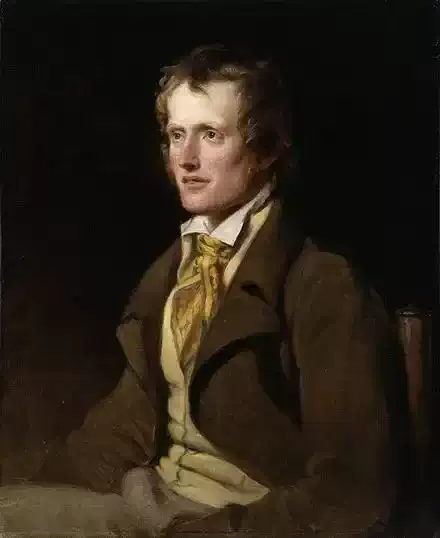
John Clare
The Sailor-Boy
Tis three years and a quarter since I left my own fireside
To go aboard a ship through love, and plough the ocean wide.
I crossed my native fields, where the scarlet poppies grew,
And the groundlark left his nest like a neighbour which I knew.
The pigeons from the dove cote cooed over the old lane,
The crow flocks from the oakwood went flopping oer the grain;
Like lots of dear old neighbours whom I shall see no more
They greeted me that morning I left the English shore.
The sun was just a-rising above the heath of furze,
And the shadows grow to giants; that bright ball never stirs:
There the shepherds lay with their dogs by their side,
And they started up and barked as my shadow they espied.
A maid of early morning twirled her mop upon the moor;
I wished her my farewell before she closed the door.
My friends I left behind me for other places new,
Crows and pigeons all were strangers as oer my head they flew.
Trees and bushes were all strangers, the hedges and the lanes,
The steeples and the houses and broad untrodden plains.
I passed the pretty milkmaid with her red and rosy face;
I knew not where I met her, I was strange to the place.
At last I saw the ocean, a pleasing sight to me:
I stood upon the shore of a mighty glorious sea.
The waves in easy motion went rolling on their way,
English colours were a-flying where the British squadron lay.
I left my honest parents, the church clock and the village;
I left the lads and lasses, the labour and the tillage;
To plough the briny ocean, which soon became my joy--
I sat and sang among the shrouds, a lonely sailor-boy.
463

William Wordsworth
By the Seaside
The sun is couched, the sea-fowl gone to rest,
And the wild storm hath somewhere found a nest;
Air slumbers--wave with wave no longer strives,
Only a heaving of the deep survives,
A tell-tale motion! soon will it be laid,
And by the tide alone the water swayed.
Stealthy withdrawings, interminglings mild
Of light with shade in beauty reconciled--
Such is the prospect far as sight can range,
The soothing recompence, the welcome change.
Where, now, the ships that drove before the blast,
Threatened by angry breakers as they passed;
And by a train of flying clouds bemocked;
Or, in the hollow surge, at anchor rocked
As on a bed of death? Some lodge in peace,
Saved by His care who bade the tempest cease;
And some, too heedless of past danger, court
Fresh gales to waft them to the far-off port
But near, or hanging sea and sky between,
Not one of all those winged powers is seen,
Seen in her course, nor 'mid this quiet heard;
Yet oh! how gladly would the air be stirred
By some acknowledgment of thanks and praise,
Soft in its temper as those vesper lays
Sung to the Virgin while accordant oars
Urge the slow bark along Calabrian shores;
A sea-born service through the mountains felt
Till into one loved vision all things melt:
Or like those hymns that soothe with graver sound
The gulfy coast of Norway iron-bound;
And, from the wide and open Baltic, rise
With punctual care, Lutherian harmonies.
Hush, not a voice is here! but why repine,
Now when the star of eve comes forth to shine
On British waters with that look benign?
Ye mariners, that plough your onward way,
Or in the haven rest, or sheltering bay,
May silent thanks at least to God be given
With a full heart; "our thoughts are 'heard' in heaven."
460

William Butler Yeats
The White Birds
I WOULD that we were, my beloved, white birds on the foam of the sea!
We tire of the flame of the meteor, before it can fade and flee;
And the flame of the blue star of twilight, hung low on the rim of the sky,
Has awaked in our hearts, my beloved, a sadness that may not die.
A weariness comes from those dreamers, dew-dabbled, the lily and rose;
Ah, dream not of them, my beloved, the flame of the meteor that goes,
Or the flame of the blue star that lingers hung low in the fall of the dew:
For I would we were changed to white birds on the wandering foam: I and you!
I am haunted by numberless islands, and many a Danaan shore,
Where Time would surely forget us, and Sorrow come near us no more;
Soon far from the rose and the lily and fret of the flames would we be,
Were we only white birds, my beloved, buoyed out on the foam of the sea!
457

John Keats
Staffa
Not Aladdin magian
Ever such a work began;
Not the wizard of the Dee
Ever such a dream could see;
Not St. John, in Patmos' Isle,
In the passion of his toil,
When he saw the churches seven,
Golden aisl'd, built up in heaven,
Gaz'd at such a rugged wonder.
As I stood its roofing under
Lo! I saw one sleeping there,
On the marble cold and bare.
While the surges wash'd his feet,
And his garments white did beat.
Drench'd about the sombre rocks,
On his neck his well-grown locks,
Lifted dry above the main,
Were upon the curl again.
'What is this? and what art thou?'
Whisper'd I, and touch'd his brow;
'What art thou? and what is this?'
Whisper'd I, and strove to kiss
The spirit's hand, to wake his eyes;
Up he started in a trice:
'I am Lycidas,' said he,
'Fam'd in funeral minstrely!
This was architectur'd thus
By the great Oceanus!--
Here his mighty waters play
Hollow organs all the day;
Here by turns his dolphins all,
Finny palmers great and small,
Come to pay devotion due--
Each a mouth of pearls must strew.
Many a mortal of these days,
Dares to pass our sacred ways,
Dares to touch audaciously
This Cathedral of the Sea!
I have been the pontiff-priest
Where the waters never rest,
Where a fledgy sea-bird choir
Soars for ever; holy fire
I have hid from mortal man;
Proteus is my Sacristan.
But the dulled eye of mortal
Hath pass'd beyond the rocky portal;
So for ever will I leave
Such a taint, and soon unweave
All the magic of the place.'
* * * * * *
So saying, with a Spirit's glance
He dived!
455

John Greenleaf Whittier
The Dead Ship Of Harpswell
What flecks the outer gray beyond
The sundown's golden trail?
The white flash of a sea-bird's wing,
Or gleam of slanting sail?
Let young eyes watch from Neck and Point,
And sea-worn elders pray,-The
ghost of what was once a ship
Is sailing up the bay.
From gray sea-fog, from icy drift,
From peril and from pain,
The home-bound fisher greets thy lights,
O hundred-harbored Maine!
But many a keel shall seaward turn,
And many a sail outstand,
When, tall and white, the Dead Ship looms
Against the dusk of land.
She rounds the headland's bristling pines;
She threads the isle-set bay;
No spur of breeze can speed her on,
Nor ebb of tide delay.
Old men still walk the Isle of Orr
Who tell her date and name,
Old shipwrights sit in Freeport yards
Who hewed her oaken frame.
What weary doom of baffled quest,
Thou sad sea-ghost, is thine?
What makes thee in the haunts of home
A wonder and a sign?
No foot is on thy silent deck,
Upon thy helm no hand;
No ripple hath the soundless wind
That smites thee from the land!
For never comes the ship to port,
Howe'er the breeze may be;
Just when she nears the waiting shore
She drifts again to sea.
No tack of sail, nor turn of helm,
Nor sheer of veering side;
Stern-fore she drives to sea and night,
Against the wind and tide.
In vain o'er Harpswell Neck the star
Of evening guides her in;
In vain for her the lamps are lit
Within thy tower, Seguin!
In vain the harbor-boat shall hail,
In vain the pilot call;
No hand shall reef her spectral sail,
Or let her anchor fall.
Shake, brown old wives, with dreary joy,
Your gray-head hints of ill;
And, over sick-beds whispering low,
Your prophecies fulfil.
Some home amid yon birchen trees
Shall drape its door with woe;
And slowly where the Dead Ship sails,
The burial boat shall row!
From Wolf Neck and from Flying Point,
From island and from main,
From sheltered cove and tided creek,
Shall glide the funeral train.
The dead-boat with the bearers four,
The mourners at her stern,-And
one shall go the silent way
Who shall no more return!
And men shall sigh, and women weep,
Whose dear ones pale and pine,
And sadly over sunset seas
Await the ghostly sign.
They know not that its sails are filled
By pity's tender breath,
Nor see the Angel at the helm
Who steers the Ship of Death!
. . . . .
'Chill as a down-east breeze should be,'
The Book-man said. 'A ghostly touch
The legend has. I'm glad to see
Your flying Yankee beat the Dutch.'
'Well, here is something of the sort
Which one midsummer day I caught
In Narragansett Bay, for lack of fish.'
'We wait,' the Traveller said;
'serve hot or cold your dish.'
454

Rudyard Kipling
The Last Chantey
"And there was no more sea."
Thus said The Lord in the Vault above the Cherubim
Calling to the Angels and the Souls in their degree:
"Lo! Earth has passed away
On the smoke of Judgment Day.
That Our word may be established shall We gather up the sea?"
Loud sang the souls of the jolly, jolly mariners:
"Plague upon the hurricane that made us furl and flee!
But the war is done between us,
In the deep the Lord hath seen us --
Our bones we'll leave the barracout', and God may sink the sea!"
Then said the soul of Judas that betray]\ed Him:
"Lord, hast Thou forgotten Thy covenant with me?
How once a year I go
To cool me on the floe?
And Ye take my day of mercy if Ye take away the sea!"
Then said the soul of the Angel of the Off-shore Wind:
(He that bits the thunder when the bull-mouthed breakers flee):
"I have watch and ward to keep
O'er Thy wonders on the deep,
And Ye take mine honour from me if Ye take away the sea!"
Loud sang the souls of the jolly, jolly mariners:
"Nay, but we were angry, and a hasty folk are we!
If we worked the ship together
Till she foundered in foul weather,
Are we babes that we should clamour for a vengeance on the sea?"
Then said the souls of the slaves that men threw overboard:
"Kennelled in the picaroon a weary band were we;
But Thy arm was strong to save,
And it touched us on the wave,
And we drowsed the long tides idle till Thy Trumpets tore the sea."
Then cried the soul of the stout Apostle Paul to God:
"Once we frapped a ship, and she laboured woundily.
There were fourteen score of these,
And they blessed Thee on their knees,
When they learned Thy Grace and Glory under Malta by the sea!"
Loud sang the souls of the jolly, jolly mariners,
Plucking at their harps, and they plucked unhandily:
"Our thumbs are rough and tarred,
And the tune is something hard --
May we lift a Deep-sea Chantey such as seamen use at sea?"
Then said the souls of the gentlemen-adventurers --
Fettered wrist to bar all for red iniquity:
"Ho, we revel in our chains
O'er the sorrow that was Spain's;
Heave or sink it, leave or drink it, we were masters of the sea!"
Up spake the soul of a gray Gothavn 'speckshioner --
(He that led the flinching in the fleets of fair Dundee):
"Oh, the ice-blink white and near,
And the bowhead breaching clear!
Will Ye whelm them all for wantonness that wallow in the sea?"
Loud sang the souls of the jolly, jolly mariners,
Crying: "Under Heaven, here is neither lead nor lee!
Must we sing for evermore
On the windless, glassy floor?
Take back your golden fiddles and we'll beat to open sea!"
Then stooped the Lord, and He called the good sea up to Him,
And 'stablished his borders unto all eternity,
That such as have no pleasure
For to praise the Lord by measure,
They may enter into galleons and serve Him on the sea.
Sun, wind, and cloud shall fail not from the face of it,
Stinging, ringing spindrift, nor the fulmar flying free;
And the ships shall go abroad
To the Glory of the Lord
Who heard the silly sailor-folk and gave them back their sea!
450

Anne Brontë
Lines Composed in a Wood on a Windy Day
My soul is awakened, my spirit is soaring
And carried aloft on the wings of the breeze;
For above and around me the wild wind is roaring,
Arousing to rapture the earth and the seas.
The long withered grass in the sunshine is glancing,
The bare trees are tossing their branches on high;
The dead leaves, beneath them, are merrily dancing,
The white clouds are scudding across the blue sky.
I wish I could see how the ocean is lashing
The foam of its billows to whirlwinds of spray;
I wish I could see how its proud waves are dashing,
And hear the wild roar of their thunder today!
Acton
444
Walt Whitman
As A Strong Bird On Pinious Free
AS a strong bird on pinions free,
Joyous, the amplest spaces heavenward cleaving,
Such be the thought I'd think to-day of thee, America,
Such be the recitative I'd bring to-day for thee.
The conceits of the poets of other lands I bring thee not,
Nor the compliments that have served their turn so long,
Nor rhyme--nor the classics--nor perfume of foreign court, or indoor
library;
But an odor I'd bring to-day as from forests of pine in the north, in
Maine--or breath of an Illinois prairie,
With open airs of Virginia, or Georgia, or Tennessee--or from Texas
uplands, or Florida's glades,
With presentment of Yellowstone's scenes, or Yosemite;
And murmuring under, pervading all, I'd bring the rustling sea-sound,
That endlessly sounds from the two great seas of the world.
And for thy subtler sense, subtler refrains, O Union!
Preludes of intellect tallying these and thee--mind-formulas fitted
for thee--real, and sane, and large as these and thee;
Thou, mounting higher, diving deeper than we knew--thou
transcendental Union!
By thee Fact to be justified--blended with Thought;
Thought of Man justified--blended with God:
Through thy Idea--lo! the immortal Reality!
Through thy Reality--lo! the immortal Idea!
Brain of the New World! what a task is thine!
To formulate the Modern.....Out of the peerless grandeur of the
modern,
Out of Thyself--comprising Science--to recast Poems, Churches, Art,
(Recast--may-be discard them, end them--May-be their work is done-
who knows?)
By vision, hand, conception, on the background of the mighty past,
the dead,
To limn, with absolute faith, the mighty living present.
(And yet, thou living, present brain! heir of the dead, the Old World
brain!
Thou that lay folded, like an unborn babe, within its folds so long!
Thou carefully prepared by it so long!--haply thou but unfoldest it-
only maturest it;
It to eventuate in thee--the essence of the by-gone time contain'd in
thee;
Its poems, churches, arts, unwitting to themselves, destined with
reference to thee,
The fruit of all the Old, ripening to-day in thee.)
Sail--sail thy best, ship of Democracy!
Of value is thy freight--'tis not the Present only,
The Past is also stored in thee!
Thou holdest not the venture of thyself alone--not of thy western
continent alone;
Earth's résumé entire floats on thy keel, O ship--is steadied by thy
spars;
With thee Time voyages in trust--the antecedent nations sink or swim
with thee;
With all their ancient struggles, martyrs, heroes, epics, wars, thou
bear'st the other continents;
Theirs, theirs as much as thine, the destination-port triumphant:
--Steer, steer with good strong hand and wary eye, O helmsman--thou
carryest great companions,
Venerable, priestly Asia sails this day with thee,
And royal, feudal Europe sails with thee.
Beautiful World of new, superber Birth, that rises to my eyes,
Like a limitless golden cloud, filling the western sky;
Emblem of general Maternity, lifted above all;
Sacred shape of the bearer of daughters and sons;
Out of thy teeming womb, thy giant babes in ceaseless procession
issuing,
Acceding from such gestation, taking and giving continual strength
and life;
World of the Real! world of the twain in one!
World of the Soul--born by the world of the real alone--led to
identity, body, by it alone;
Yet in beginning only--incalculable masses of composite, precious
materials,
By history's cycles forwarded--by every nation, language, hither
sent,
Ready, collected here--a freer, vast, electric World, to be
constructed here,
(The true New World--the world of orbic Science, Morals, Literatures
to come,)
Thou Wonder World, yet undefined, unform'd--neither do I define thee;
How can I pierce the impenetrable blank of the future?
I feel thy ominous greatness, evil as well as good;
I watch thee, advancing, absorbing the present, transcending the
past;
I see thy light lighting and thy shadow shadowing, as if the entire
globe;
But I do not undertake to define thee--hardly to comprehend thee;
I but thee name--thee prophecy--as now!
I merely thee ejaculate!
Thee in thy future;
Thee in thy only permanent life, career--thy own unloosen'd mind--thy
soaring spirit;
Thee as another equally needed sun, America--radiant, ablaze, swiftmoving,
fructifying all;
Thee! risen in thy potent cheerfulness and joy--thy endless, great
hilarity!
(Scattering for good the cloud that hung so long--that weigh'd so
long upon the mind of man,
The doubt, suspicion, dread, of gradual, certain decadence of man;)
Thee in thy larger, saner breeds of Female, Male--thee in thy
athletes, moral, spiritual, South, North, West, East,
(To thy immortal breasts, Mother of All, thy every daughter, son,
endear'd alike, forever equal;)
Thee in thy own musicians, singers, artists, unborn yet, but certain;
Thee in thy moral wealth and civilization (until which thy proudest
material wealth and civilization must remain in vain;)
Thee in thy all-supplying, all-enclosing Worship--thee in no single
bible, saviour, merely,
Thy saviours countless, latent within thyself--thy bibles incessant,
within thyself, equal to any, divine as any;
Thee in an education grown of thee--in teachers, studies, students,
born of thee;
Thee in thy democratic fetes, en masse--thy high original festivals,
operas, lecturers, preachers;
Thee in thy ultimata, (the preparations only now completed--the
edifice on sure foundations tied,)
Thee in thy pinnacles, intellect, thought--thy topmost rational
joys--thy love, and godlike aspiration,
In thy resplendent coming literati--thy full-lung'd orators--thy
sacerdotal bards--kosmic savans,
These! these in thee, (certain to come,) to-day I prophecy.
Land tolerating all--accepting all--not for the good alone--all good
for thee;
Land in the realms of God to be a realm unto thyself;
Under the rule of God to be a rule unto thyself.
(Lo! where arise three peerless stars,
To be thy natal stars, my country--Ensemble--Evolution--Freedom,
Set in the sky of Law.)
Land of unprecedented faith--God's faith!
Thy soil, thy very subsoil, all upheav'd;
The general inner earth, so long, so sedulously draped over, now and
hence for what it is, boldly laid bare,
Open'd by thee to heaven's light, for benefit or bale.
Not for success alone;
Not to fair-sail unintermitted always;
The storm shall dash thy face--the murk of war, and worse than war,
shall cover thee all over;
(Wert capable of war--its tug and trials? Be capable of peace, its
trials;
For the tug and mortal strain of nations come at last in peace--not
war;)
In many a smiling mask death shall approach, beguiling thee--thou in
disease shalt swelter;
The livid cancer spread its hideous claws, clinging upon thy breasts,
seeking to strike thee deep within;
Consumption of the worst--moral consumption--shall rouge thy face
with hectic:
But thou shalt face thy fortunes, thy diseases, and surmount them
all,
Whatever they are to-day, and whatever through time they may be,
They each and all shall lift, and pass away, and cease from thee;
While thou, Time's spirals rounding--out of thyself, thyself still
extricating, fusing,
Equable, natural, mystical Union thou--(the mortal with immortal
blent,)
Shalt soar toward the fulfilment of the future--the spirit of the
body and the mind,
The Soul--its destinies.
The Soul, its destinies--the real real,
(Purport of all these apparitions of the real;)
In thee, America, the Soul, its destinies;
Thou globe of globes! thou wonder nebulous!
By many a throe of heat and cold convuls'd--(by these thyself
solidifying;)
Thou mental, moral orb! thou New, indeed new, Spiritual World!
The Present holds thee not--for such vast growth as thine--for such
unparallel'd flight as thine,
The Future only holds thee, and can hold thee.
444
Rudyard Kipling
The Rhyme Of The Three Captains
. . . At the close of a winter day,
Their anchors down, by London town, the Three Great Captains lay;
And one was Admiral of the North from Solway Firth to Skye,
And one was Lord of the Wessex coast and all the lands thereby,
And one was Master of the Thames from Limehouse to Blackwall,
And he was Captain of the Fleet -- the bravest of them all.
Their good guns guarded their great gray sides
that were thirty foot in the sheer,
When there came a certain trading-brig with news of a privateer.
Her rigging was rough with the clotted drift that drives in a Northern breeze,
Her sides were clogged with the lazy weed that spawns in the Eastern seas.
Light she rode in the rude tide-rip, to left and right she rolled,
And the skipper sat on the scuttle-butt and stared at an empty hold.
"I ha' paid Port dues for your Law," quoth he, "and where is the Law ye boast
If I sail unscathed from a heathen port to be robbed on a Christian coast?
Ye have smoked the hives of the Laccadives as we burn the lice in a bunk,
We tack not now to a Gallang prow or a plunging Pei-ho junk;
I had no fear but the seas were clear as far as a sail might fare
Till I met with a lime-washed Yankee brig that rode off Finisterre.
There were canvas blinds to his bow-gun ports to screen the weight he bore,
And the signals ran for a merchantman from Sandy Hook to the Nore.
He would not fly the Rovers' flag -- the bloody or the black,
But now he floated the Gridiron and now he flaunted the Jack.
He spoke of the Law as he crimped my crew -- he swore it was only a loan;
But when I would ask for my own again, he swore it was none of my own.
He has taken my little parrakeets that nest beneath the Line,
He has stripped my rails of the shaddock-frails and the green unripened pine;
He has taken my bale of dammer and spice I won beyond the seas,
He has taken my grinning heathen gods -- and what should he want o' these?
My foremast would not mend his boom, my deckhouse patch his boats;
He has whittled the two, this Yank Yahoo, to peddle for shoe-peg oats.
I could not fight for the failing light and a rough beam-sea beside,
But I hulled him once for a clumsy crimp and twice because he lied.
Had I had guns (as I had goods) to work my Christian harm,
I had run him up from his quarter-deck to trade with his own yard-arm;
I had nailed his ears to my capstan-head, and ripped them off with a saw,
And soused them in the bilgewater, and served them to him raw;
I had flung him blind in a rudderless boat to rot in the rocking dark,
I had towed him aft of his own craft, a bait for his brother shark;
I had lapped him round with cocoa husk, and drenched him with the oil,
And lashed him fast to his own mast to blaze above my spoil;
I had stripped his hide for my hammock-side,
and tasselled his beard i' the mesh,
And spitted his crew on the live bamboo
that grows through the gangrened flesh;
I had hove him down by the mangroves brown,
where the mud-reef sucks and draws,
Moored by the heel to his own keel to wait for the land-crab's claws!
He is lazar within and lime without, ye can nose him far enow,
For he carries the taint of a musky ship -- the reek of the slaver's dhow!"
The skipper looked at the tiering guns and the bulwarks tall and cold,
And the Captains Three full courteously peered down at the gutted hold,
And the Captains Three called courteously from deck to scuttle-butt: --
"Good Sir, we ha' dealt with that merchantman or ever your teeth were cut.
Your words be words of a lawless race, and the Law it standeth thus:
He comes of a race that have never a Law, and he never has boarded us.
We ha' sold him canvas and rope and spar -- we know that his price is fair,
And we know that he weeps for the lack of a Law as he rides off Finisterre.
And since he is damned for a gallows-thief by you and better than you,
We hold it meet that the English fleet should know that we hold him true."
The skipper called to the tall taffrail: -- "And what is that to me?
Did ever you hear of a Yankee brig that rifled a Seventy-three?
Do I loom so large from your quarter-deck that I lift like a ship o' the Line?
He has learned to run from a shotted gun and harry such craft as mine.
There is never a Law on the Cocos Keys to hold a white man in,
But we do not steal the niggers' meal, for that is a nigger's sin.
Must he have his Law as a quid to chaw, or laid in brass on his wheel?
Does he steal with tears when he buccaneers?
'Fore Gad, then, why does he steal?"
The skipper bit on a deep-sea word, and the word it was not sweet,
For he could see the Captains Three had signalled to the Fleet.
But three and two, in white and blue, the whimpering flags began: --
"We have heard a tale of a -- foreign sail, but he is a merchantman."
The skipper peered beneath his palm and swore by the Great Horn Spoon: --
"'Fore Gad, the Chaplain of the Fleet would bless my picaroon!"
By two and three the flags blew free to lash the laughing air: --
"We have sold our spars to the merchantman -- we know that his price is fair."
The skipper winked his Western eye, and swore by a China storm: --
"They ha' rigged him a Joseph's jury-coat to keep his honour warm."
The halliards twanged against the tops, the bunting bellied broad,
The skipper spat in the empty hold and mourned for a wasted cord.
Masthead -- masthead, the signal sped by the line o' the British craft;
The skipper called to his Lascar crew, and put her about and laughed: --
"It's mainsail haul, my bully boys all -- we'll out to the seas again --
Ere they set us to paint their pirate saint, or scrub at his grapnel-chain.
It's fore-sheet free, with her head to the sea,
and the swing of the unbought brine --
We'll make no sport in an English court till we come as a ship o' the Line:
Till we come as a ship o' the Line, my lads, of thirty foot in the sheer,
Lifting again from the outer main with news of a privateer;
Flying his pluck at our mizzen-truck for weft of Admiralty,
Heaving his head for our dipsey-lead in sign that we keep the sea.
Then fore-sheet home as she lifts to the foam -- we stand on the outward tack,
We are paid in the coin of the white man's trade --
the bezant is hard, ay, and black.
The frigate-bird shall carry my word to the Kling and the Orang-Laut
How a man may sail from a heathen coast to be robbed in a Christian port;
How a man may be robbed in Christian port while Three Great Captains there
Shall dip their flag to a slaver's rag -- to show that his trade is fair!"
435

Ella Wheeler Wilcox
A Fisherman's Baby
Oh hush, little baby, thy papa's at sea;
The big billows rock him as mamma rocks thee.
He hastes to his dear ones o'er billows of foam;
Then sleep, little darling, till papa comes home.
Sleep, little baby; hush, little baby;
Papa is coming, no longer to roam.
The shells and the pebbles, all day tossed about,
Are lulled into sleep by the tide ebbing out.
The tired shore slumbers, stretched out in the sand,
While the waves hurry off at mid-ocean's command.
Then hush, little darling; sleep, little darling;
Sleep, baby, rocked by thy mother's own hand.
The winds that have rollicked all day in the west
Are hushed into sleep on the calm evening's breast.
The boats that were out with the wild sea at play
Are now rocked to sleep in the arms of the bay.
Then rest, little baby; sleep, little baby;
Papa will come at the break of the day.
Sleep, little darling; too soon thou wilt be
A man like thy father, to sail o'er the sea.
Then sleep will not come at thy bidding or prayer,
For thou wilt be harassed by danger and care.
Then sleep, little darling; rest, little baby;
Rest whilst thou may, dear, and sleep whilst thou dare.
433

Robert Louis Stevenson
Swallows Travel To And Fro
SWALLOWS travel to and fro,
And the great winds come and go,
And the steady breezes blow,
Bearing perfume, bearing love.
Breezes hasten, swallows fly,
Towered clouds forever ply,
And at noonday, you and I
See the same sunshine above.
Dew and rain fall everywhere,
Harvests ripen, flowers are fair,
And the whole round earth is bare
To the moonshine and the sun;
And the live air, fanned with wings,
Bright with breeze and sunshine, brings
Into contact distant things,
And makes all the countries one.
Let us wander where we will,
Something kindred greets us still;
Something seen on vale or hill
Falls familiar on the heart;
So, at scent or sound or sight,
Severed souls by day and night
Tremble with the same delight -
Tremble, half the world apart.
432
Lewis Carroll
A Sea Dirge
There are certain things as,
a spider, a ghost,
The incometax,
gout, an umbrella for three That
I hate, but the thing that I hate the most
Is a thing they call the Sea.
Pour some salt water over the floor Ugly
I'm sure you'll allow it to be:
Suppose it extended a mile or more,
THAT'S very like the Sea.
Beat a dog till it howls outright Cruel,
but all very well for a spree:
Suppose that he did so day and night,
THAT would be like the Sea.
I had a vision of nurserymaids;
Tens of thousands passed by me All
leading children with wooden spades,
And this was by the Sea.
Who invented those spades of wood?
Who was it cut them out of the tree?
None, I think, but an idiot could Or
one that loved the Sea.
It is pleasant and dreamy, no doubt, to float
With 'thoughts as boundless, and souls as free':
But, suppose you are very unwell in the boat,
How do you like the Sea?
There is an insect that people avoid
(Whence is derived the verb 'to flee').
Where have you been by it most annoyed?
In lodgings by the Sea.
If you like your coffee with sand for dregs,
A decided hint of salt in your tea,
And a fishy taste in the very eggs By
all means choose the Sea.
And if, with these dainties to drink and eat,
You prefer not a vestige of grass or tree,
And a chronic state of wet in your feet,
Then I
recommend the Sea.
For I have friends who dwell by the coast Pleasant
friends they are to me!
It is when I am with them I wonder most
That anyone likes the Sea.
They take me a walk: though tired and stiff,
To climb the heights I madly agree;
And, after a tumble or so from the cliff,
They kindly suggest the Sea.
I try the rocks, and I think it cool
That they laugh with such an excess of glee,
As I heavily slip into every pool
That skirts the cold cold Sea.
433
Rudyard Kipling
The Gift Of The Sea
The dead child lay in the shroud,
And the widow watched beside;
And her mother slept, and the Channel swept
The gale in the teeth of the tide.
But the mother laughed at all.
"I have lost my man in the sea,
And the child is dead. Be still," she said,
"What more can ye do to me?"
The widow watched the dead,
And the candle guttered low,
And she tried to sing the Passing Song
That bids the poor soul go.
And "Mary take you now," she sang,
"That lay against my heart."
And "Mary smooth your crib to-night,"
But she could not say "Depart."
Then came a cry from the sea,
But the sea-rime blinded the glass,
And "Heard ye nothing, mother?" she said,
"'Tis the child that waits to pass."
And the nodding mother sighed.
"'Tis a lambing ewe in the whin,
For why should the christened soul cry out
That never knew of sin?"
"O feet I have held in my hand,
O hands at my heart to catch,
How should they know the road to go,
And how should they lift the latch?"
They laid a sheet to the door,
With the little quilt atop,
That it might not hurt from the cold or the dirt,
But the crying would not stop.
The widow lifted the latch
And strained her eyes to see,
And opened the door on the bitter shore
To let the soul go free.
There was neither glimmer nor ghost,
There was neither spirit nor spark,
And "Heard ye nothing, mother?" she said,
"'Tis crying for me in the dark."
And the nodding mother sighed:
"'Tis sorrow makes ye dull;
Have ye yet to learn the cry of the tern,
Or the wail of the wind-blown gull?"
"The terns are blown inland,
The gray gull follows the plough.
'Twas never a bird, the voice I heard,
O mother, I hear it now!"
"Lie still, dear lamb, lie still;
The child is passed from harm,
'Tis the ache in your breast that broke your rest,
And the feel of an empty arm."
She put her mother aside,
"In Mary's name let be!
For the peace of my soul I must go," she said,
And she went to the calling sea.
In the heel of the wind-bit pier,
Where the twisted weed was piled,
She came to the life she had missed by an hour,
For she came to a little child.
She laid it into her breast,
And back to her mother she came,
But it would not feed and it would not heed,
Though she gave it her own child's name.
And the dead child dripped on her breast,
And her own in the shroud lay stark;
And "God forgive us, mother," she said,
"We let it die in the dark!"
432

Carl Sandburg
Sea-Wash
The sea-wash never ends.
The sea-wash repeats, repeats.
Only old songs? Is that all the sea knows?
Only the old strong songs?
Is that all?
The sea-wash repeats, repeats.
The sea-wash repeats, repeats.
Only old songs? Is that all the sea knows?
Only the old strong songs?
Is that all?
The sea-wash repeats, repeats.
426

Henry Wadsworth Longfellow
The Phantom Ship. (Birds Of Passage. Flight The First)
In Mather's Magnalia Christi,
Of the old colonial time,
May be found in prose the legend
That is here set down in rhyme.
A ship sailed from New Haven,
And the keen and frosty airs,
That filled her sails at parting,
Were heavy with good men's prayers.
'O Lord! if it be thy pleasure'--
Thus prayed the old divine-'
To bury our friends in the ocean,
Take them, for they are thine!'
But Master Lamberton muttered,
And under his breath said he,
'This ship is so crank and walty
I fear our grave she will be!'
And the ships that came from England,
When the winter months were gone,
Brought no tidings of this vessel
Nor of Master Lamberton.
This put the people to praying
That the Lord would let them hear
What in his greater wisdom
He had done with friends so dear.
And at last their prayers were answered:--
It was in the month of June,
An hour before the sunset
Of a windy afternoon,
When, steadily steering landward,
A ship was seen below,
And they knew it was Lamberton, Master,
Who sailed so long ago.
On she came, with a cloud of canvas,
Right against the wind that blew,
Until the eye could distinguish
The faces of the crew.
Then fell her straining topmasts,
Hanging tangled in the shrouds,
And her sails were loosened and lifted,
And blown away like clouds.
And the masts, with all their rigging,
Fell slowly, one by one,
And the hulk dilated and vanished,
As a sea-mist in the sun!
And the people who saw this marvel
Each said unto his friend,
That this was the mould of their vessel,
And thus her tragic end.
And the pastor of the village
Gave thanks to God in prayer,
That, to quiet their troubled spirits,
He had sent this Ship of Air.
417
Walt Whitman
Patroling Barnegat
WILD, wild the storm, and the sea high running,
Steady the roar of the gale, with incessant undertone muttering,
Shouts of demoniac laughter fitfully piercing and pealing,
Waves, air, midnight, their savagest trinity lashing,
Out in the shadows there milk-white combs careering,
On beachy slush and sand spirts of snow fierce slanting,
Where through the murk the easterly death-wind breasting,
Through cutting swirl and spray watchful and firm advancing,
(That in the distance! is that a wreck? is the red signal flaring?)
Slush and sand of the beach tireless till daylight wending,
Steadily, slowly, through hoarse roar never remitting,
Along the midnight edge by those milk-white combs careering,
A group of dim, weird forms, struggling, the night confronting,
That savage trinity warily watching.
414
John Clare
Bantry Bay
On the eighteenth of October we lay in Bantry Bay,
All ready to set sail, with a fresh and steady gale:
A fortnight and nine days we in the harbour lay,
And no breeze ever reached us or strained a single sail.
Three ships of war had we, and the great guns loaded all;
But our ships were dead and beaten that had never feared a foe.
The winds becalmed around us cared for no cannon ball;
They locked us in the harbour and would not let us go.
On the nineteenth of October, by eleven of the clock,
The sky turned black as midnight and a sudden storm came on--
Awful and sudden--and the cables felt the shock;
Our anchors they all broke away and every sheet was gone.
The guns fired off amid the strife, but little hope had we;
The billows broke above the ship and left us all below.
The crew with one consent cried 'Bear further out to sea,'
But the waves obeyed no sailor's call, and we knew not where to go.
She foundered on a rock, while we clambered up the shrouds,
And staggered like a mountain drunk, wedged in the waves almost.
The red hot boiling billows foamed in the stooping clouds,
And in that fatal tempest the whole ship's crew were lost.
Have pity for poor mariners, ye landsmen, in a storm.
O think what they endure at sea while safe at home you stay.
All ye that sleep on beds at night in houses dry and warm,
O think upon the whole ship's crew, all lost at Bantry Bay.
410
Carl Sandburg
All Day Long
All day long in fog and wind,
The waves have flung their beating crests
Against the palisades of adamant.
My boy, he went to sea, long and long ago,
Curls of brown were slipping underneath his cap,
He looked at me from blue and steely eyes;
Natty, straight and true, he stepped away,
My boy, he went to sea.
All day long in fog and wind,
The waves have flung their beating crests
Against the palisades of adamant.
The waves have flung their beating crests
Against the palisades of adamant.
My boy, he went to sea, long and long ago,
Curls of brown were slipping underneath his cap,
He looked at me from blue and steely eyes;
Natty, straight and true, he stepped away,
My boy, he went to sea.
All day long in fog and wind,
The waves have flung their beating crests
Against the palisades of adamant.
411
Henry Wadsworth Longfellow
The Sea Diver
My way is on the bright blue sea,
My sleep upon its rocking tide;
And many an eye has followed me
Where billows clasp the worn seaside.
My plumage bears the crimson blush,
When ocean by the sun is kissed!
When fades the evening's purple flush,
My dark wing cleaves the silver mist.
Full many a fathom down beneath
The bright arch of the splendid deep
My ear has heard the sea-shell breathe
O'er living myriads in their sleep.
They rested by the coral throne,
And by the pearly diadem;
Where the pale sea-grape had o'ergrown
The glorious dwellings made for them.
At night upon my storm-drench'd wing,
I poised above a helmless bark,
And soon I saw the shattered thing
Had passed away and left no mark.
And when the wind and storm were done,
a ship, that had rode out the gale,
Sunk down, without a signal-gun,
And none was left to tell the tale.
I saw the pomp of day depart--
The cloud resign its golden crown,
When to the ocean's beating heart
The sailor's wasted corse went down.
Peace be to those whose graves are made
Beneath the bright and silver sea!
Peace - that their relics there were laid
With no vain pride and pageantry.
410
Carl Sandburg
Baltic Fog Notes
Seven days all fog, all mist, and the turbines pounding through high seas.
I was a plaything, a rat’s neck in the teeth of a scuffling mastiff.
Fog and fog and no stars, sun, moon.
Then an afternoon in fjords, low-lying lands scrawled in granite languages on a gray
sky,
A night harbor, blue dusk mountain shoulders against a night sky,
And a circle of lights blinking: Ninety thousand people here.
Among the Wednesday night thousands in goloshes and coats slickered for rain,
I learned how hungry I was for streets and people.
I would rather be water than anything else.
I saw a drive of salt fog and mist in the North Atlantic and an iceberg dusky as a cloud
in the gray of morning.
And I saw the dream pools of fjords in Norway … and the scarf of dancing water on the
rocks and over the edges of mountain shelves.
Bury me in a mountain graveyard in Norway.
Three tongues of water sing around it with snow from the mountains.
Bury me in the North Atlantic.
A fog there from Iceland will be a murmur in gray over me and a long deep wind sob
always.
Bury me in an Illinois cornfield.
The blizzards loosen their pipe organ voluntaries in winter stubble and the spring rains
and the fall rains bring letters from the sea.
407
Henry Wadsworth Longfellow
By The Seaside : The Lighthouse
The rocky ledge runs far into the sea,
And on its outer point, some miles away,
The Lighthouse lifts its massive masonry,
A pillar of fire by night, of cloud by day.
Even at this distance I can see the tides,
Upheaving, break unheard along its base,
A speechless wrath, that rises and subsides
In the white lip and tremor of the face.
And as the evening darkens, lo! how bright,
Through the deep purple of the twilight air,
Beams forth the sudden radiance of its light
With strange, unearthly splendor in the glare!
Not one alone; from each projecting cape
And perilous reef along the ocean's verge,
Starts into life a dim, gigantic shape,
Holding its lantern o'er the restless surge.
Like the great giant Christopher it stands
Upon the brink of the tempestuous wave,
Wading far out among the rocks and sands,
The night-o'ertaken mariner to save.
And the great ships sail outward and return,
Bending and bowing o'er the billowy swells,
And ever joyful, as they see it burn,
They wave their silent welcomes and farewells.
They come forth from the darkness, and their sails
Gleam for a moment only in the blaze,
And eager faces, as the light unveils,
Gaze at the tower, and vanish while they gaze.
The mariner remembers when a child,
On his first voyage, he saw it fade and sink;
And when, returning from adventures wild,
He saw it rise again o'er ocean's brink.
Steadfast, serene, immovable, the same
Year after year, through all the silent night
Burns on forevermore that quenchless flame,
Shines on that inextinguishable light!
It sees the ocean to its bosom clasp
The rocks and sea-sand with the kiss of peace;
It sees the wild winds lift it in their grasp,
And hold it up, and shake it like a fleece.
The startled waves leap over it; the storm
Smites it with all the scourges of the rain,
And steadily against its solid form
Press the great shoulders of the hurricane.
The sea-bird wheeling round it, with the din
Of wings and winds and solitary cries,
Blinded and maddened by the light within,
Dashes himself against the glare, and dies.
A new Prometheus, chained upon the rock,
Still grasping in his hand the fire of Jove,
It does not hear the cry, nor heed the shock,
But hails the mariner with words of love.
'Sail on!' it says, 'sail on, ye stately ships!
And with your floating bridge the ocean span;
Be mine to guard this light from all eclipse,
Be yours to bring man nearer unto man!'
408
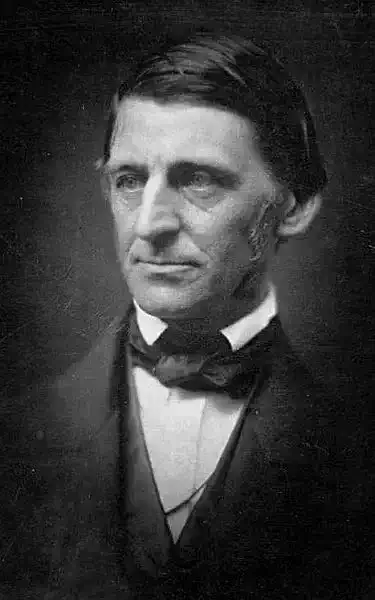
Ralph Waldo Emerson
Seashore
I heard or seemed to hear the chiding Sea
Say, Pilgrim, why so late and slow to come?
Am I not always here, thy summer home?
Is not my voice thy music, morn and eve?
My breath thy healthful climate in the heats,
My touch thy antidote, my bay thy bath?
Was ever building like my terraces?
Was ever couch magnificent as mine?
Lie on the warm rock-ledges, and there learn
A little hut suffices like a town.
I make your sculptured architecture vain,
Vain beside mine. I drive my wedges home,
And carve the coastwise mountain into caves.
Lo! here is Rome and Nineveh and Thebes,
Karnak and Pyramid and Giant's Stairs
Half piled or prostrate; and my newest slab
Older than all thy race.
Behold the Sea,
The opaline, the plentiful and strong,
Yet beautiful as is the rose in June,
Fresh as the trickling rainbow of July;
Sea full of food, the nourisher of kinds,
Purger of earth, and medicine of men;
Creating a sweet climate by my breath,
Washing out harms and griefs from memory,
And, in my mathematic ebb and flow,
Giving a hint of that which changes not.
Rich are the sea-gods:--who gives gifts but they?
They grope the sea for pearls, but more than pearls:
They pluck Force thence, and give it to the wise.
For every wave is wealth to Dædalus,
Wealth to the cunning artist who can work
This matchless strength. Where shall he find, O waves!
A load your Atlas shoulders cannot lift?
I with my hammer pounding evermore
The rocky coast, smite Andes into dust,
Strewing my bed, and, in another age,
Rebuild a continent of better men.
Then I unbar the doors: my paths lead out
The exodus of nations: I dispersed
Men to all shores that front the hoary main.
I too have arts and sorceries;
Illusion dwells forever with the wave.
I know what spells are laid. Leave me to deal
With credulous and imaginative man;
For, though he scoop my water in his palm,
A few rods off he deems it gems and clouds.
Planting strange fruits and sunshine on the shore,
I make some coast alluring, some lone isle,
To distant men, who must go there, or die.
405