
Sea, Rivers and Oceans

Henry Wadsworth Longfellow
Milton
I pace the sounding sea-beach and behold
How the voluminous billows roll and run,
Upheaving and subsiding, while the sun
Shines through their sheeted emerald far unrolled,
And the ninth wave, slow gathering fold by fold
All its loose-flowing garments into one,
Plunges upon the shore, and floods the dun
Pale reach of sands, and changes them to gold.
So in majestic cadence rise and fall
The mighty undulations of thy song,
O sightless bard, England's Mæonides!
And ever and anon, high over all
Uplifted, a ninth wave superb and strong,
Floods all the soul with its melodious seas.
397
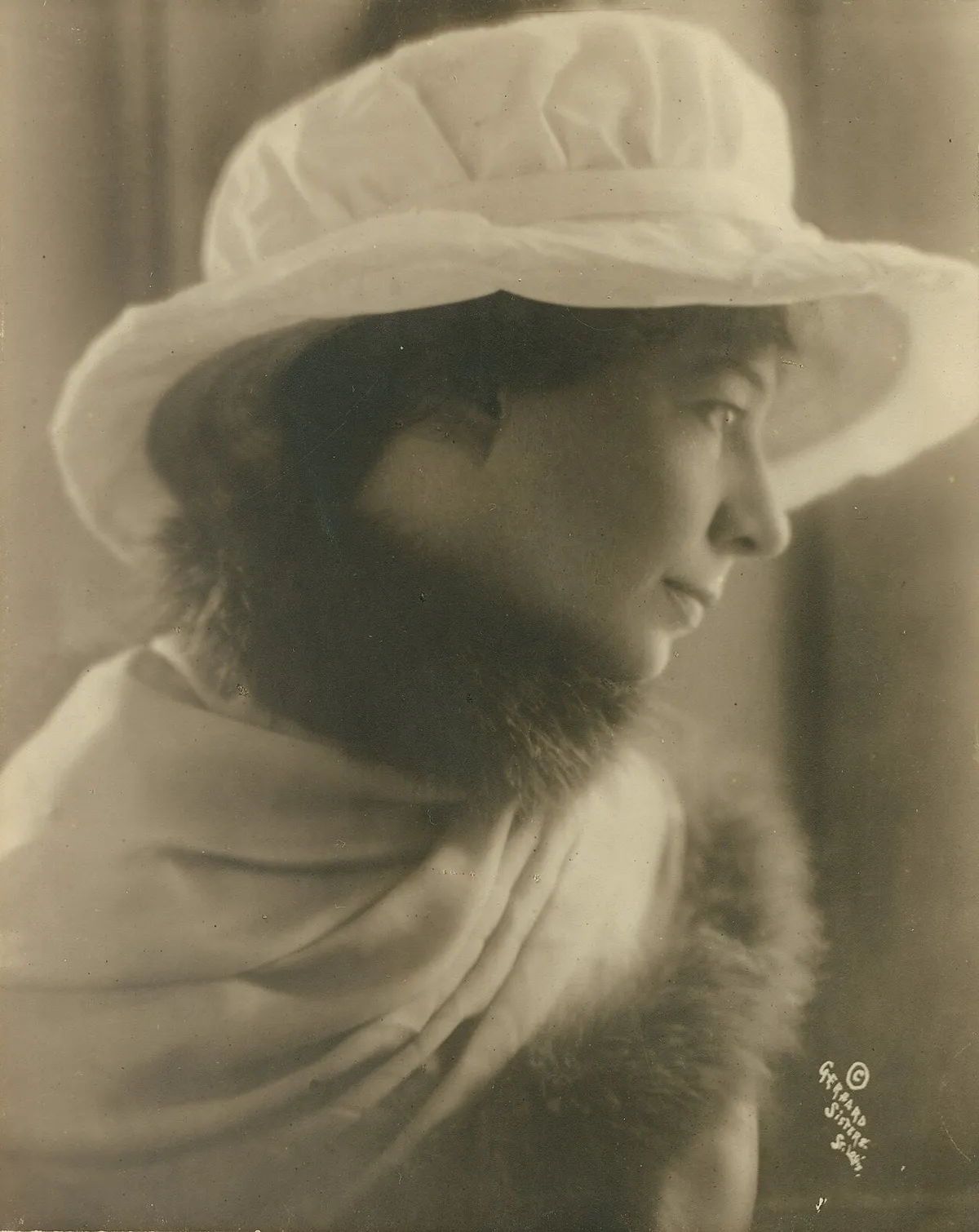
Sara Teasdale
Tides
Love in my heart was a fresh tide flowing
Where the starlike sea gulls soar;
The sun was keen and the foam was blowing
High on the rocky shore.
But now in the dusk the tide is turning,
Lower the sea gulls soar,
And the waves that rose in resistless yearning
Are broken forevermore.
Where the starlike sea gulls soar;
The sun was keen and the foam was blowing
High on the rocky shore.
But now in the dusk the tide is turning,
Lower the sea gulls soar,
And the waves that rose in resistless yearning
Are broken forevermore.
395
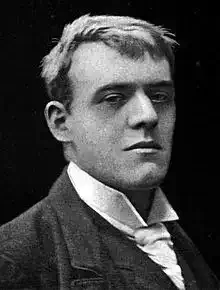
Hilaire Belloc
From: Dedicatory Ode
I will not try the reach again,
I will not set my sail alone,
To moor a boat bereft of men
At Yarnton's tiny docks of stone.
But I will sit beside the fire,
And put my hand before my eyes,
And trace, to fill my heart's desire,
The last of all our Odysseys.
The quiet evening kept her tryst:
Beneath an open sky we rode,
And passed into a wandering mist
Along the perfect Evenlode.
The tender Evenlode that makes
Her meadows hush to hear the sound
Of waters mingling in the brakes,
And binds my heart to English ground.
A lovely river, all alone,
She lingers in the hills and holds
A hundred little towns of stone,
Forgotten in the western wolds.
388

Johann Wolfgang von Goethe
Calm At Sea
SILENCE deep rules o'er the waters,
Calmly slumb'ring lies the main,
While the sailor views with trouble
Nought but one vast level plain.
Not a zephyr is in motion!
Silence fearful as the grave!
In the mighty waste of ocean
Sunk to rest is ev'ry wave.
Calmly slumb'ring lies the main,
While the sailor views with trouble
Nought but one vast level plain.
Not a zephyr is in motion!
Silence fearful as the grave!
In the mighty waste of ocean
Sunk to rest is ev'ry wave.
389
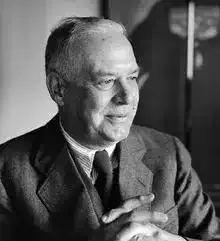
Wallace Stevens
Continual Conversation With A Silent Man
The old brown hen and the old blue sky,
Between the two we live and die--
The broken cartwheel on the hill.
As if, in the presence of the sea,
We dried our nets and mended sail
And talked of never-ending things,
Of the never-ending storm of will,
One will and many wills, and the wind,
Of many meanings in the leaves,
Brought down to one below the eaves,
Link, of that tempest, to the farm,
The chain of the turquoise hen and sky
And the wheel that broke as the cart went by.
It is not a voice that is under the eaves.
It is not speech, the sound we hear
In this conversation, but the sound
Of things and their motion: the other man,
A turquoise monster moving round.
388
Henry Van Dyke
The Glory of Ships
The glory of ships is an old, old song,
since the days when the sea-rovers ran
In their open boats through the roaring surf,
and the spread of the world began;
The glory of ships is a light on the sea,
and a star in the story of man.
When Homer sang of the galleys of Greece
that conquered the Trojan shore,
And Solomon lauded the barks of Tyre that
brought great wealth to his door,
'Twas little they knew, those ancient men,
what would come of the sail and the oar.
The Greek ships rescued the West from the East,
when they harried the Persians home;
And the Roman ships were the wings of strength
that bore up the empire, Rome;
And the ships of Spain found a wide new world,
far over the fields of foam.
Then the tribes of courage at last saw clear
that the ocean was not a bound,
But a broad highway, and a challenge to seek
for treasure as yet unfound;
So the fearless ships fared forth to the search,
in joy that the globe was round.
Their hulls were heightened, their sails spread out,
they grew with the growth of their quest;
They opened the secret doors of the East,
and the golden gates of the West;
And many a city of high renown
was proud of a ship on its crest.
The fleets of England and Holland and France
were at strife with each other and Spain;
And battle and storm sent a myriad ships
to sleep in the depths of the main;
But the seafaring spirit could never be drowned,
and it filled up the fleets again.
They greatened and grew, with the aid of steam,
to a wonderful, vast array,
That carries the thoughts and the traffic of men
into every harbor and bay;
And now in the world-wide work of the ships
'tis England that leads the way.
O well for the leading that follows the law
of a common right on the sea!
But ill for the leader who tries to hold
what belongs to mankind in fee!
The way of the ships is an open way,
and the ocean must ever be free!
Remember, O first of the maritime folk,
how the rise of your greatness began.
It will live if you safeguard the round-the-world road
from the shame of a selfish ban;
For the glory of ships is a light on the sea,
and a star in the story of man!
384

John Keats
To Ailsa Rock
Hearken, thou craggy ocean-pyramid,
Give answer by thy voice-the sea-fowls' screams!
When were thy shoulders mantled in huge streams?
When from the sun was thy broad forehead hid?
How long is't since the mighty Power bid
Thee heave to airy sleep from fathom dreams-
Sleep in the lap of thunder or sunbeams-
Or when grey clouds are thy cold coverlid!
Thou answer'st not; for thou art dead asleep.
Thy life is but two dead eternities,
The last in air, the former in the deep!
First with the whales, last with the eagle-skies!
Drowned wast thou till an earthquake made thee steep,
Another cannot wake thy giant-size!
385
Henry Wadsworth Longfellow
By The Seaside : Twilight
The twilight is sad and cloudy,
The wind blows wild and free,
And like the wings of sea-birds
Flash the white caps of the sea.
But in the fisherman's cottage
There shines a ruddier light,
And a little face at the window
Peers out into the night.
Close, close it is pressed to the window,
As if those childish eyes
Were looking into the darkness,
To see some form arise.
And a woman's waving shadow
Is passing to and fro,
Now rising to the ceiling,
Now bowing and bending low.
What tale do the roaring ocean,
And the night-wind, bleak and wild,
As they beat at the crazy casement,
Tell to that little child?
And why do the roaring ocean,
And the night-wind, wild and bleak,
As they beat at the heart of the mother,
Drive the color from her cheek?
376

Robert Louis Stevenson
Know You The River NEar To Grez
KNOW you the river near to Grez,
A river deep and clear?
Among the lilies all the way,
That ancient river runs to-day
From snowy weir to weir.
Old as the Rhine of great renown,
She hurries clear and fast,
She runs amain by field and town
From south to north, from up to down,
To present on from past.
The love I hold was borne by her;
And now, though far away,
My lonely spirit hears the stir
Of water round the starling spur
Beside the bridge at Grez.
So may that love forever hold
In life an equal pace;
So may that love grow never old,
But, clear and pure and fountain-cold,
Go on from grace to grace.
374
Henry Wadsworth Longfellow
To The River Yvette. (Birds Of Passage. Flight The Fifth)
O lovely river of Yvette!
O darling river! like a bride,
Some dimpled, bashful, fair Lisette,
Thou goest to wed the Orge's tide.
Maincourt, and lordly Dampierre,
See and salute thee on thy way,
And, with a blessing and a prayer,
Ring the sweet bells of St. Forget.
The valley of Chevreuse in vain
Would hold thee in its fond embrace;
Thou glidest from its arms again
And hurriest on with swifter pace.
Thou wilt not stay; with restless feet,
Pursuing still thine onward flight,
Thou goest as one in haste to meet
Her sole desire, her heart's delight.
O lovely river of Yvette!
O darling stream! on balanced wings
The wood-birds sang the chansonnette
That here a wandering poet sings.
368

Walt Whitman
The Ship Starting
LO! THE unbounded sea!
On its breast a Ship starting, spreading all her sails--an ample
Ship, carrying even her moonsails;
The pennant is flying aloft, as she speeds, she speeds so stately-below,
emulous waves press forward,
They surround the Ship, with shining curving motions, and foam.
On its breast a Ship starting, spreading all her sails--an ample
Ship, carrying even her moonsails;
The pennant is flying aloft, as she speeds, she speeds so stately-below,
emulous waves press forward,
They surround the Ship, with shining curving motions, and foam.
363
Henry Wadsworth Longfellow
In The Harbour: To The Avon
Flow on, sweet river! like his verse
Who lies beneath this sculptured hearse;
Nor wait beside the churchyard wall
For him who cannot hear thy call.
Thy playmate once; I see him now
A boy with sunshine on his brow,
And hear in Stratford's quiet street
The patter of his little feet.
I see him by thy shallow edge
Wading knee-deep amid the sedge;
And lost in thought, as if thy stream
Were the swift river of a dream.
He wonders whitherward it flows;
And fain would follow where it goes,
To the wide world, that shall erelong
Be filled with his melodious song.
Flow on, fair stream! That dream is o'er;
He stands upon another shore;
A vaster river near him flows,
And still he follows where it goes.
362
Henry Wadsworth Longfellow
The Saga of King Olaf: XVIII. King Olaf And Earl Sigvald
On the gray sea-sands
King Olaf stands,
Northward and seaward
He points with his hands.
With eddy and whirl
The sea-tides curl,
Washing the sandals
Of Sigvald the Earl.
The mariners shout,
The ships swing about,
The yards are all hoisted,
The sails flutter out.
The war-horns are played,
The anchors are weighed,
Like moths in the distance
The sails flit and fade.
The sea is like lead
The harbor lies dead,
As a corse on the sea-shore,
Whose spirit has fled!
On that fatal day,
The histories say,
Seventy vessels
Sailed out of the bay.
But soon scattered wide
O'er the billows they ride,
While Sigvald and Olaf
Sail side by side.
Cried the Earl: 'Follow me!
I your pilot will be,
For I know all the channels
Where flows the deep sea!'
So into the strait
Where his foes lie in wait,
Gallant King Olaf
Sails to his fate!
Then the sea-fog veils
The ships and their sails;
Queen Sigrid the Haughty,
Thy vengeance prevails!
363

John Greenleaf Whittier
The Wreck Of Rivermouth
Rivermouth Rocks are fair to see,
By dawn or sunset shone across,
When the ebb of the sea has left them free,
To dry their fringes of gold-green moss
For there the river comes winding down,
From salt sea-meadows and uplands brown,
And waves on the outer rocks afoam
Shout to its waters, 'Welcome home!'
And fair are the sunny isles in view
East of the grisly Head of the Boar,
And Agamenticus lifts its blue
Disk of a cloud the woodlands o'er;
And southerly, when the tide is down,
'Twixt white sea-waves and sand-hills brown,
The beach-birds dance and the gray gulls wheel
Over a floor of burnished steel.
Once, in the old Colonial days,
Two hundred years ago and more,
A boat sailed down through the winding ways
Of Hampton River to that low shore,
Full of a goodly company
Sailing out on the summer sea,
Veering to catch the land-breeze light,
With the Boar to left and the Rocks to right.
In Hampton meadows, where mowers laid
Their scythes to the swaths of salted grass,
'Ah, well-a-day! our hay must be made!'
A young man sighed, who saw them pass.
Loud laughed his fellows to see him stand
Whetting his scythe with a listless hand,
Hearing a voice in a far-off song,
Watching a white hand beckoning long.
'Fie on the witch!' cried a merry girl,
As they rounded the point where Goody Cole
Sat by her door with her wheel atwirl,
A bent and blear-eyed poor old soul.
'Oho!' she muttered, 'ye 're brave to-day!
But I hear the little waves laugh and say,
'The broth will be cold that waits at home;
For it 's one to go, but another to come!''
'She's cursed,' said the skipper; 'speak her fair:
I'm scary always to see her shake
Her wicked head, with its wild gray hair,
And nose like a hawk, and eyes like a snake.'
But merrily still, with laugh and shout,
From Hampton River the boat sailed out,
Till the huts and the flakes on Star seemed nigh,
And they lost the scent of the pines of Rye.
They dropped their lines in the lazy tide,
Drawing up haddock and mottled cod;
They saw not the Shadow that walked beside,
They heard not the feet with silence shod.
But thicker and thicker a hot mist grew,
Shot by the lightnings through and through;
And muffled growls, like the growl of a beast,
Ran along the sky from west to east.
Then the skipper looked from the darkening sea
Up to the dimmed and wading sun;
But he spake like a brave man cheerily,
'Yet there is time for our homeward run.'
Veering and tacking, they backward wore;
And just as a breath-from the woods ashore
Blew out to whisper of danger past,
The wrath of the storm came down at last!
The skipper hauled at the heavy sail
'God be our help!' he only cried,
As the roaring gale, like the stroke of a flail,
Smote the boat on its starboard side.
The Shoalsmen looked, but saw alone
Dark films of rain-cloud slantwise blown,
Wild rocks lit up by the lightning's glare,
The strife and torment of sea and air.
Goody Cole looked out from her door
The Isles of Shoals were drowned and gone,
Scarcely she saw the Head of the Boar
Toss the foam from tusks of stone.
She clasped her hands with a grip of pain,
The tear on her cheek was not of rain
'They are lost,' she muttered, 'boat and crew!
Lord, forgive me! my words were true!'
Suddenly seaward swept the squall;
The low sun smote through cloudy rack;
The Shoals stood clear in the light, and all
The trend of the coast lay hard and black.
But far and wide as eye could reach,
No life was seen upon wave or beach;
The boat that went out at morning never
Sailed back again into Hampton River.
O mower, lean on thy bended snath,
Look from the meadows green and low
The wind of the sea is a waft of death,
The waves are singing a song of woe!
By silent river, by moaning sea,
Long and vain shall thy watching be
Never again shall the sweet voice call,
Never the white hand rise and fall!
O Rivermouth Rocks, how sad a sight
Ye saw in the light of breaking day
Dead faces looking up cold and white
From sand and seaweed where they lay.
The mad old witch-wife wailed and wept,
And cursed the tide as it backward crept
'Crawl back, crawl back, blue water-snake
Leave your dead for the hearts that break!'
Solemn it was in that old day
In Hampton town and its log-built church,
Where side by side the coffins lay
And the mourners stood in aisle and porch.
In the singing-seats young eyes were dim,
The voices faltered that raised the hymn,
And Father Dalton, grave and stern,
Sobbed through his prayer and wept in turn.
But his ancient colleague did not pray;
Under the weight of his fourscore years
He stood apart with the iron-gray
Of his strong brows knitted to hide his tears;
And a fair-faced woman of doubtful fame,
Linking her own with his honored name,
Subtle as sin, at his side withstood
The felt reproach of her neighborhood.
Apart with them, like them forbid,
Old Goody Cole looked drearily round,
As, two by two, with their faces hid,
The mourners walked to the burying-ground.
She let the staff from her clasped hands fall
'Lord, forgive us! we're sinners all!'
And the voice of the old man answered her
'Amen!' said Father Bachiler.
So, as I sat upon Appledore
In the calm of a closing summer day,
And the broken lines of Hampton shore
In purple mist of cloudland lay,
The Rivermouth Rocks their story told;
And waves aglow with sunset gold,
Rising and breaking in steady chime,
Beat the rhythm and kept the time.
And the sunset paled, and warmed once more
With a softer, tenderer after-glow;
In the east was moon-rise, with boats off-shore
And sails in the distance drifting slow.
The beacon glimmered from Portsmouth bar,
The White Isle kindled its great red star;
And life and death in my old-time lay
Mingled in peace like the night and day!
. . . . .
'Well!' said the Man of Books, 'your story
Is really not ill told in verse.
As the Celt said of purgatory,
One might go farther and fare worse.'
The Reader smiled; and once again
With steadier voice took up his strain,
While the fair singer from the neighboring tent
Drew near, and at his side a graceful listener bent.
363
Henry Wadsworth Longfellow
Italian Scenery
Night rests in beauty on Mont Alto.
Beneath its shade the beauteous Arno sleeps
In vallombrosa's bosom, and dark trees
Bend with a calm and quiet shadow down
Upon the beauty of that silent river.
Still in the west a melancholy smile
Mantles the lips of day, and twilight pale
Moves like a spectre in the dusky sky,
While eve's sweet star on the fast-fading year
Smiles calmly. Music steals at intervals
Across the water, with a tremulous swell,
From out the upland dingle of tall firs;
And a faint footfall sounds, where, dim and dark,
Hangs the gray willow from the river's brink,
O'ershadowing its current. Slowly there
The lover's gondola drops down the stream,
Silent, save when its dipping oar is heard,
Or in its eddy sighs the rippling wave.
Mouldering and moss-grown through the lapse of years,
In motionless beauty stands the giant oak;
Whilst those that saw its green and flourishing youth
Are gone and are forgotten. Soft the fount,
Whose secret springs the star-light pale discloses,
Gushes in hollow music; and beyond
The broader river sweeps its silent way,
Mingling a silver current with that sea,
Whose waters have no tides, coming nor going.
On noiseless wing along that fair blue sea
The halcyon flits; and where the wearied storm
Left a loud moaning, all is peace again.
A calm is on the deep. The winds that came
O'er the dark sea-surge with a tremulous breathing,
And mourned on the dark cliff where weeds grew rank,
And to the autumnal death-dirge the deep sea
Heaved its long billows, with a cheerless song
Have passed away to the cold earth again,
Like a wayfaring mourner. Silently
Up from the calm sea's dim and distant verge,
Full and unveiled, the moon's broad disk emerges.
On Tivoli, and where the fairy hues
Of autumn glow upon Abruzzi's woods,
The silver light is spreading. Far above,
Encompassed with their thin, cold atmosphere,
The Apennines uplift their snowy brows,
Glowing with colder beauty, where unheard
The eagle screams in the fathomless, ether,
And stays his wearied wing. Here let us pause.
The spirit of these solitudes -- the soul
That dwells within these steep and difficult places--
Spearks a mysterious language to mine own,
And brings unutterable musings. Earth
Sleeps in the shades of nightfall, and the sea
Spreads like a thin blue haze beneath my feet;
Whilst the gray columns and the mouldering tombs
Of the Imperial City, hidden deep
Beneath the mantle of their shadows, rest.
My spirit looks on earth. A heavnly voice
Comes silently: 'Dreamer, is earth thy dwelling?
Lo! Nursed within that fair and fruitful bosom,
Which has sustained thy being, and within
The colder breast of Ocean, lie the germs
Of thine own dissolution! E'en the air,
That fans the clear blue sky, and gives thee strength,
Up from the sullen lake of mouldering reeds,
And the wide waste of forest, where the osier
Thrives in the damp and motionless atmosphere,
Shall bring the dire and wasting pestilence,
And blight they cheek. Dram thou of higher things:
This world is not thy home!' And yet my eye
Rests upon earth again. How beautiful,
Where wild Velino heaves its sullen aves
Down the high cliff of gray and shapeless granite,
Hung on the curling mist, the moonlight bow
Arches the perilous river! A soft light
Silvers the Albanian mountains, and the haze
That rests upon their summits mellows down
The austerer features of their beauty. Faint
And dim-discovered glow, the Sabine hills;
And, listening to the sea's monotonous shell,
High on the cliffs of Terracina stands
The castle of the royal Goth* in ruins.
But night is in her wane: day's early flush
Glows like a hectic on her fading cheek,
Wasting its beauty. And the opening dawn
With cheerful luster lights the royal city,
Where, with its proud tiara of dark towers,
It sleeps upon its own romantic bay.
359
Walt Whitman
Had I the Choice
Had I the choice to tally greatest bards,
To limn their portraits, stately, beautiful, and emulate at will,
Homer with all his wars and warriors--Hector, Achilles, Ajax,
Or Shakespeare's woe-entangled Hamlet, Lear, Othello--Tennyson's fair ladies,
Meter or wit the best, or choice conceit to weild in perfect rhyme, delight of singers;
These, these, O sea, all these I'd gladly barter,
Would you the undulation of one wave, its trick to me transfer,
Or breathe one breath of yours upon my verse,
And leave its odor there.
360
Henry Wadsworth Longfellow
Tales Of A Wayside Inn : Part 2. The Musician's Tale; The Ballad of Carmilhan -
II.
The jolly skipper paused awhile,
And then again began;
'There is a Spectre Ship,' quoth he,
'A ship of the Dead that sails the sea,
And is called the Carmilhan.
'A ghostly ship, with a ghostly crew,
In tempests she appears;
And before the gale, or against the gale,
She sails without a rag of sail,
Without a helmsman steers.
'She haunts the Atlantic north and south,
But mostly the mid-sea,
Where three great rocks rise bleak and bare
Like furnace-chimneys in the air,
And are called the Chimneys Three.
'And ill betide the luckless ship
That meets the Carmilhan;
Over her decks the seas will leap,
She must go down into the deep,
And perish mouse and man.'
The captain of the Valdemar
Laughed loud with merry heart.
'I should like to see this ship,' said he;
'I should like to find these Chimneys Three,
That are marked down in the chart.
'I have sailed right over the spot,' he said
'With a good stiff breeze behind,
When the sea was blue, and the sky was clear,--
You can follow my course by these pinholes here,--
And never a rock could find.'
And then he swore a dreadful oath,
He swore by the Kingdoms Three,
That, should he meet the Carmilhan,
He would run her down, although he ran
Right into Eternity!
All this, while passing to and fro,
The cabin-boy had heard;
He lingered at the door to hear,
And drank in all with greedy ear,
And pondered every word.
He was a simple country lad,
But of a roving mind.
'Oh, it must be like heaven,' thought he,
'Those far-off foreign lands to see,
And fortune seek and find!'
But in the fo'castle, when he heard
The mariners blaspheme,
He thought of home, he thought of God,
And his mother under the churchyard sod,
And wished it were a dream.
One friend on board that ship had he;
T was the Klaboterman,
Who saw the Bible in his chest,
And made a sign upon his breast,
All evil things to ban.
354

Robert Browning
Thus the Mayne glideth
THUS the Mayne glideth
Where my Love abideth;
Sleep 's no softer: it proceeds
On through lawns, on through meads,
On and on, whate'er befall,
Meandering and musical,
Though the niggard pasturage
Bears not on its shaven ledge
Aught but weeds and waving grasses
To view the river as it passes,
Save here and there a scanty patch
Of primroses too faint to catch
A weary bee.... And scarce it pushes
Its gentle way through strangling rushes
Where the glossy kingfisher
Flutters when noon-heats are near,
Glad the shelving banks to shun,
Red and steaming in the sun,
Where the shrew-mouse with pale throat
Burrows, and the speckled stoat;
Where the quick sandpipers flit
In and out the marl and grit
That seems to breed them, brown as they:
Naught disturbs its quiet way,
Save some lazy stork that springs,
Trailing it with legs and wings,
Whom the shy fox from the hill
Rouses, creep he ne'er so still.
353

Alfred Lord Tennyson
Minnie and Winnie
Minnie and Winnie
Slept in a shell.
Sleep, little ladies!
And they slept well.
Pink was the shell within,
Silver without;
Sounds of the great sea
Wander'd about.
Sleep, little ladies!
Wake not soon!
Echo on echo
Dies to the moon.
Two bright stars
Peep'd into the shell.
"What are you dreaming of?
Who can tell?"
Started a green linnet
Out of the croft;
Wake, little ladies,
The sun is aloft!
347

Anonymous
Sir Patrick Spens
I. The Sailing
THE king sits in Dunfermline town
Drinking the blude-red wine;
'O whare will I get a skeely skipper
To sail this new ship o' mine?'
O up and spak an eldern knight,
Sat at the king's right knee;
'Sir Patrick Spens is the best sailor
That ever sail'd the sea.'
Our king has written a braid letter,
And seal'd it with his hand,
And sent it to Sir Patrick Spens,
Was walking on the strand.
'To Noroway, to Noroway,
To Noroway o'er the faem;
The king's daughter o' Noroway,
'Tis thou must bring her hame.'
The first word that Sir Patrick read
So loud, loud laugh'd he;
The neist word that Sir Patrick read
The tear blinded his e'e.
'O wha is this has done this deed
And tauld the king o' me,
To send us out, at this time o' year,
To sail upon the sea?
'Be it wind, be it weet, be it hail, be it sleet,
Our ship must sail the faem;
The king's daughter o' Noroway,
'Tis we must fetch her hame.'
They hoysed their sails on Monenday morn
Wi' a' the speed they may;
They hae landed in Noroway
Upon a Wodensday.
II. The Return
'Mak ready, mak ready, my merry men a'!
Our gude ship sails the morn.'
'Now ever alack, my master dear,
I fear a deadly storm.
'I saw the new moon late yestreen
Wi' the auld moon in her arm;
And if we gang to sea, master,
I fear we'll come to harm.'
They hadna sail'd a league, a league,
A league but barely three,
When the lift grew dark, and the wind blew loud,
And gurly grew the sea.
The ankers brak, and the topmast lap,
It was sic a deadly storm:
And the waves cam owre the broken ship
Till a' her sides were torn.
'Go fetch a web o' the silken claith,
Another o' the twine,
And wap them into our ship's side,
And let nae the sea come in.'
They fetch'd a web o' the silken claith,
Another o' the twine,
And they wapp'd them round that gude ship's side,
But still the sea came in.
O laith, laith were our gude Scots lords
To wet their cork-heel'd shoon;
But lang or a' the play was play'd
They wat their hats aboon.
And mony was the feather bed
That flatter'd on the faem;
And mony was the gude lord's son
That never mair cam hame.
O lang, lang may the ladies sit,
Wi' their fans into their hand,
Before they see Sir Patrick Spens
Come sailing to the strand!
And lang, lang may the maidens sit
Wi' their gowd kames in their hair,
A-waiting for their ain dear loves!
For them they'll see nae mair.
Half-owre, half-owre to Aberdour,
'Tis fifty fathoms deep;
And there lies gude Sir Patrick Spens,
Wi' the Scots lords at his feet!
344
Henry Wadsworth Longfellow
My Lost Youth
Often I think of the beautiful town
That is seated by the sea;
Often in thought go up and down
The pleasant streets of that dear old town,
And my youth comes back to me.
And a verse of a Lapland song
Is haunting my memory still:
"A boy's will is the wind's will,
And the thoughts of youth are long, long thoughts."
I can see the shadowy lines of its trees,
And catch, in sudden gleams,
The sheen of the far-surrounding seas,
And islands that were the Hesperides
Of all my boyish dreams.
And the burden of that old song,
It murmurs and whispers still:
"A boy's will is the wind's will,
And the thoughts of youth are long, long thoughts."
I remember the black wharves and the ships,
And the sea-tides tossing free;
And Spanish sailors with bearded lips,
And the beauty and mystery of the ships,
And the magic of the sea.
And the voice of that wayward song
Is singing and saying still:
"A boy's will is the wind's will,
And the thoughts of youth are long, long thoughts."
I remember the bulwarks by the shore,
And the fort upon the hill;
The sunrise gun, with its hollow roar,
The drum-beat repeated o'er and o'er,
And the bugle wild and shrill.
And the music of that old song
Throbs in my memory still:
"A boy's will is the wind's will,
And the thoughts of youth are long, long thoughts."
I remember the sea-fight far away,
How it thundered o'er the tide!
And the dead captains, as they lay
In their graves, o'erlooking the tranquil bay
Where they in battle died.
And the sound of that mournful song
Goes through me with a thrill:
"A boy's will is the wind's will,
And the thoughts of youth are long, long thoughts."
I can see the breezy dome of groves,
The shadows of Deering's Woods;
And the friendships old and the early loves
Come back with a Sabbath sound, as of doves
In quiet neighborhoods.
And the verse of that sweet old song,
It flutters and murmurs still:
"A boy's will is the wind's will,
And the thoughts of youth are long, long thoughts."
I remember the gleams and glooms that dart
Across the school-boy's brain;
The song and the silence in the heart,
That in part are prophecies, and in part
Are longings wild and vain.
And the voice of that fitful song
Sings on, and is never still:
"A boy's will is the wind's will,
And the thoughts of youth are long, long thoughts."
There are things of which I may not speak;
There are dreams that cannot die;
There are thoughts that make the strong heart weak,
And bring a pallor into the cheek,
And a mist before the eye.
And the words of that fatal song
Come over me like a chill:
"A boy's will is the wind's will,
And the thoughts of youth are long, long thoughts."
Strange to me now are the forms I meet
When I visit the dear old town;
But the native air is pure and sweet,
And the trees that o'ershadow each well-known street,
As they balance up and down,
Are singing the beautiful song,
Are sighing and whispering still:
"A boy's will is the wind's will,
And the thoughts of youth are long, long thoughts."
And Deering's Woods are fresh and fair,
And with joy that is almost pain
My heart goes back to wander there,
And among the dreams of the days that were,
I find my lost youth again.
And the strange and beautiful song,
The groves are repeating it still:
"A boy's will is the wind's will,
And the thoughts of youth are long, long thoughts."
345
John Greenleaf Whittier
The Palatine
Leagues north, as fly the gull and auk,
Point Judith watches with eye of hawk;
Leagues south, thy beacon flames, Montauk!
Lonely and wind-shorn, wood-forsaken,
With never a tree for Spring to waken,
For tryst of lovers or farewells taken,
Circled by waters that never freeze,
Beaten by billow and swept by breeze,
Lieth the island of Manisees,
Set at the mouth of the Sound to hold
The coast lights up on its turret old,
Yellow with moss and sea-fog mould.
Dreary the land when gust and sleet
At its doors and windows howl and beat,
And Winter laughs at its fires of peat!
But in summer time, when pool and pond,
Held in the laps of valleys fond,
Are blue as the glimpses of sea beyond;
When the hills are sweet with the brier-rose,
And, hid in the warm, soft dells, unclose
Flowers the mainland rarely knows;
When boats to their morning fishing go,
And, held to the wind and slanting low,
Whitening and darkening the small sails show,-
Then is that lonely island fair;
And the pale health-seeker findeth there
The wine of life in its pleasant air.
No greener valleys the sun invite,
On smoother beaches no sea-birds light,
No blue waves shatter to foam more white!
There, circling ever their narrow range,
Quaint tradition and legend strange
Live on unchallenged, and know no change.
Old wives spinning their webs of tow,
Or rocking weirdly to and fro
In and out of the peat's dull glow,
And old men mending their nets of twine,
Talk together of dream and sign,
Talk of the lost ship Palatine,-
The ship that, a hundred years before,
Freighted deep with its goodly store,
In the gales of the equinox went ashore.
The eager islanders one by one
Counted the shots of her signal gun,
And heard the crash when she drove right on!
Into the teeth of death she sped
(May God forgive the hands that fed
The false lights over the rocky Head!)
O men and brothers! what sights were there!
White upturned faces, hands stretched in prayer!
Where waves had pity, could ye not spare?
Down swooped the wreckers, like birds of prey
Tearing the heart of the ship away,
And the dead had never a word to say.
And then, with ghastly shimmer and shine
Over the rocks and the seething brine,
They burned the wreck of the Palatine.
In their cruel hearts, as they homeward sped,
'The sea and the rocks are dumb,' they said
'There 'll be no reckoning with the dead.'
But the year went round, and when once more
Along their foam-white curves of shore
They heard the line-storm rave and roar,
Behold! again, with shimmer and shine,
Over the rocks and the seething brine,
The flaming wreck of the Palatine!
So, haply in fitter words than these,
Mending their nets on their patient knees
They tell the legend of Manisees.
Nor looks nor tones a doubt betray;
'It is known to us all,' they quietly say;
'We too have seen it in our day.'
Is there, then, no death for a word once spoken?
Was never a deed but left its token
Written on tables never broken?
Do the elements subtle reflections give?
Do pictures of all the ages live
On Nature's infinite negative,
Which, half in sport, in malice half,
She shows at times, with shudder or laugh,
Phantom and shadow in photograph?
For still, on many a moonless night,
From Kingston Head and from Montauk light
The spectre kindles and burns in sight.
Now low and dim, now clear and higher,
Leaps up the terrible Ghost of Fire,
Then, slowly sinking, the flames expire.
And the wise Sound skippers, though skies be fine,
Reef their sails when they see the sign
Of the blazing wreck of the Palatine!
. . . . .
'A fitter tale to scream than sing,'
The Book-man said. 'Well, fancy, then,'
The Reader answered, 'on the wing
The sea-birds shriek it, not for men,
But in the ear of wave and breeze!'
The Traveller mused: 'Your Manisees
Is fairy-land: off Narragansett shore
Who ever saw the isle or heard its name before?
''T is some strange land of Flyaway,
Whose dreamy shore the ship beguiles,
St. Brandan's in its sea-mist gray,
Or sunset loom of Fortunate Isles!'
'No ghost, but solid turf and rock
Is the good island known as Block,'
The Reader said. 'For beauty and for ease
I chose its Indian name, soft-flowing Manisees!
'But let it pass; here is a bit
Of unrhymed story, with a hint
Of the old preaching mood in it,
The sort of sidelong moral squint
Our friend objects to, which has grown,
I fear, a habit of my own.
'Twas written when the Asian plague drew near,
And the land held its breath and paled with sudden fear.'
338
Robert Louis Stevenson
Where Go the Boats?
Dark brown is the river,
Golden is the sand.
It flows along for ever,
With trees on either hand.
Green leaves a-floating,
Castles of the foam,
Boats of mine a-boating -
Where will all come home?
On goes the river
And out past the mill,
Away down the valley,
Away down the hill.
Away down the river,
A hundred miles or more,
Other little children
Shall bring my boats ashore.
338
