
Sea, Rivers and Oceans

John Greenleaf Whittier
A Sea Dream
We saw the slow tides go and come,
The curving surf-lines lightly drawn,
The gray rocks touched with tender bloom
Beneath the fresh-blown rose of dawn.
We saw in richer sunsets lost
The sombre pomp of showery noons;
And signalled spectral sails that crossed
The weird, low light of rising moons.
On stormy eves from cliff and head
We saw the white spray tossed and spurned;
While over all, in gold and red,
Its face of fire the lighthouse turned.
The rail-car brought its daily crowds,
Half curious, half indifferent,
Like passing sails or floating clouds,
We saw them as they came and went.
But, one calm morning, as we lay
And watched the mirage-lifted wall
Of coast, across the dreamy bay,
And heard afar the curlew call,
And nearer voices, wild or tame,
Of airy flock and childish throng,
Up from the water's edge there came
Faint snatches of familiar song.
Careless we heard the singer's choice
Of old and common airs; at last
The tender pathos of his voice
In one low chanson held us fast.
A song that mingled joy and pain,
And memories old and sadly sweet;
While, timing to its minor strain,
The waves in lapsing cadence beat.
. . . . .
The waves are glad in breeze and sun;
The rocks are fringed with foam;
I walk once more a haunted shore,
A stranger, yet at home,
A land of dreams I roam.
Is this the wind, the soft sea wind
That stirred thy locks of brown?
Are these the rocks whose mosses knew
The trail of thy light gown,
Where boy and girl sat down?
I see the gray fort's broken wall,
The boats that rock below;
And, out at sea, the passing sails
We saw so long ago
Rose-red in morning's glow.
The freshness of the early time
On every breeze is blown;
As glad the sea, as blue the sky,-The
change is ours alone;
The saddest is my own.
A stranger now, a world-worn man,
Is he who bears my name;
But thou, methinks, whose mortal life
Immortal youth became,
Art evermore the same.
Thou art not here, thou art not there,
Thy place I cannot see;
I only know that where thou art
The blessed angels be,
And heaven is glad for thee.
Forgive me if the evil years
Have left on me their sign;
Wash out, O soul so beautiful,
The many stains of mine
In tears of love divine!
I could not look on thee and live,
If thou wert by my side;
The vision of a shining one,
The white and heavenly bride,
Is well to me denied.
But turn to me thy dear girl-face
Without the angel's crown,
The wedded roses of thy lips,
Thy loose hair rippling down
In waves of golden brown.
Look forth once more through space and time,
And let thy sweet shade fall
In tenderest grace of soul and form
On memory's frescoed wall,
A shadow, and yet all!
Draw near, more near, forever dear!
Where'er I rest or roam,
Or in the city's crowded streets,
Or by the blown sea foam,
The thought of thee is home!
. . . . .
At breakfast hour the singer read
The city news, with comment wise,
Like one who felt the pulse of trade
Beneath his finger fall and rise.
His look, his air, his curt speech, told
The man of action, not of books,
To whom the corners made in gold
And stocks were more than seaside nooks.
Of life beneath the life confessed
His song had hinted unawares;
Of flowers in traffic's ledgers pressed,
Of human hearts in bulls and bears.
But eyes in vain were turned to watch
That face so hard and shrewd and strong;
And ears in vain grew sharp to catch
The meaning of that morning song.
In vain some sweet-voiced querist sought
To sound him, leaving as she came;
Her baited album only caught
A common, unromantic name.
No word betrayed the mystery fine,
That trembled on the singer's tongue;
He came and went, and left no sign
Behind him save the song he sung.
335

Ella Wheeler Wilcox
When
I dwell in the western inland,
Afar from the sounding sea,
But I seem to hear it sobbing
And calling aloud to me,
And my heart cries out for the ocean
As a child for its mother's breast,
And I long to lie on its waters
And be lulled in its arms to rest.
I can close my eyes and fancy
That I hear its mighty roar,
And I see its blue waves splashing
And plunging against the shore;
And the white foam caps the billow,
And the sea-gulls wheel and cry,
And the cool wild wind is blowing,
And the ships go sailing by.
Oh, wonderful, mighty ocean!
When shall I ever stand,
Where my heart has gone already,
There on thy gleaming strand!
When shall I ever wander
Away from the inland west,
And strand by thy side, dear ocean,
And rock on thy heaving breast?
331

Emily Dickinson
Twas such a little—little boat
'Twas such a little—little boat
That toddled down the bay!
'Twas such a gallant—gallant sea
That beckoned it away!
'Twas such a greedy, greedy wave
That licked it from the Coast—
Nor ever guessed the stately sails
My little craft was lost!
That toddled down the bay!
'Twas such a gallant—gallant sea
That beckoned it away!
'Twas such a greedy, greedy wave
That licked it from the Coast—
Nor ever guessed the stately sails
My little craft was lost!
328

Henry Wadsworth Longfellow
In The Harbour: The City And The Sea
The panting City cried to the Sea,
'I am faint with heat,--O breathe on me!'
And the Sea said, 'Lo, I breathe! but my breath
To some will be life, to others death!'
As to Prometheus, bringing ease
In pain, come the Oceanides,
So to the City, hot with the flame
Of the pitiless sun, the east wind came.
It came from the heaving breast of the deep,
Silent as dreams are, and sudden as sleep.
Life-giving, death-giving, which will it be;
O breath of the merciful, merciless Sea?
326
Emily Dickinson
An everywhere of silver
An everywhere of silver,
With ropes of sand
To keep it from effacing
The track called land.
With ropes of sand
To keep it from effacing
The track called land.
321

William Butler Yeats
The Meditation Of The Old Fisherman
YOU waves, though you dance by my feet like children at play,
Though you glow and you glance, though you purr and you dart;
In the Junes that were warmer than these are, the waves were more gay,
When I was a boy with never a crack in my heart.
The herring are not in the tides as they were of old;
My sorrow! for many a creak gave the creel in the-cart
That carried the take to Sligo town to be sold,
When I was a boy with never a crack in my heart.
And ah, you proud maiden, you are not so fair when his oar
Is heard on the water, as they were, the proud and apart,
Who paced in the eve by the nets on the pebbly shore,
When I was a boy with never a crack in my heart.
321
Henry Wadsworth Longfellow
The Terrestrial Paradise. (From Dante. Purgatorio, XXVIII.)
Longing already to search in and round
The heavenly forest, dense and living-green,
Which tempered to the eyes the newborn day,
Withouten more delay I left the bank,
Crossing the level country slowly, slowly,
Over the soil, that everywhere breathed fragrance.
A gently-breathing air, that no mutation
Had in itself, smote me upon the forehead,
No heavier blow, than of a pleasant breeze,
Whereat the tremulous branches readily
Did all of them bow downward towards that side
Where its first shadow casts the Holy Mountain;
Yet not from their upright direction bent
So that the little birds upon their tops
Should cease the practice of their tuneful art;
But with full-throated joy, the hours of prime
Singing received they in the midst of foliage
That made monotonous burden to their rhymes,
Even as from branch to branch it gathering swells,
Through the pine forests on the shore of Chiassi,
When Aeolus unlooses the Sirocco.
Already my slow steps had led me on
Into the ancient wood so far, that I
Could see no more the place where I had entered.
And lo! my further course cut off a river,
Which, tow'rds the left hand, with its little waves,
Bent down the grass, that on its margin sprang.
All waters that on earth most limpid are,
Would seem to have within themselves some mixture,
Compared with that, which nothing doth conceal,
Although it moves on with a brown, brown current,
Under the shade perpetual, that never
Ray of the sun lets in, nor of the moon.
322
Henry Wadsworth Longfellow
By The Seaside : Sir Humphrey Gilbert
Southward with fleet of ice
Sailed the corsair Death;
Wild and gast blew the blast,
And the east-wind was his breath.
His lordly ships of ice
Glisten in the sun;
On each side, like pennons wide,
Flashing crystal streamlets run.
His sails of white sea-mist
Dripped with silver rain;
But where he passed there were cast
Leaden shadows o'er the main.
Eastward from Campobello
Sir Humphrey Gilbert sailed;
Three days or more seaward he bore,
Then, alas! the land-wind failed.
Alas! the land-wind failed,
And ice-cold grew the night;
And nevermore, on sea or shore,
Should Sir Humphrey see the light.
He sat upon the deck,
The Book was in his hand;
'Do not fear! Heaven is as near,'
He said, 'by water as by land!'
In the first watch of the night,
Without a signal's sound,
Out of the sea, mysteriously,
The fleet of Death rose all around.
The moon and the evening star
Were hanging in the shrouds;
Every mast, as it passed,
Seemed to rake the passing clouds.
They grappled with their prize,
At midnight black and cold!
As of a rock was the shock;
Heavily the ground-swell rolled.
Southward through day and dark,
They drift in cold embrace,
With mist and rain, o'er the open main;
Yet there seems no change of place.
Southward, forever southward,
They drift through dark and day;
And like a dream, in the Gulf-Stream
Sinking, vanish all away.
312
Henry Wadsworth Longfellow
Tales Of A Wayside Inn : Part 2. The Musician's Tale; The Ballad of Carmilhan -
IV.
And now along the horizon's edge
Mountains of cloud uprose,
Black as with forests underneath,
Above their sharp and jagged teeth
Were white as drifted snows.
Unseen behind them sank the sun,
But flushed each snowy peak
A little while with rosy light
That faded slowly from the sight
As blushes from the cheek.
Black grew the sky,--all black, all black;
The clouds were everywhere;
There was a feeling of suspense
In nature, a mysterious sense
Of terror in the air.
And all on board the Valdemar
Was still as still could be;
Save when the dismal ship-bell tolled,
As ever and anon she rolled,
And lurched into the sea.
The captain up and down the deck
Went striding to and fro;
Now watched the compass at the wheel,
Now lifted up his hand to feel
Which way the wind might blow.
And now he looked up at the sails,
And now upon the deep;
In every fibre of his frame
He felt the storm before it came,
He had no thought of sleep.
Eight bells! and suddenly abaft,
With a great rush of rain,
Making the ocean white with spume,
In darkness like the day of doom,
On came the hurricane.
The lightning flashed from cloud to cloud,
And rent the sky in two;
A jagged flame, a single jet
Of white fire, like a bayonet_
That pierced the eyeballs through.
Then all around was dark again,
And blacker than before;
But in that single flash of light
He had beheld a fearful sight,
And thought of the oath he swore.
For right ahead lay the Ship of the Dead,
The ghostly Carmilhan!
Her masts were stripped, her yards were bare,
And on her bowsprit, poised in air,
Sat the Klaboterman.
Her crew of ghosts was all on deck
Or clambering up the shrouds;
The boatswain's whistle, the captain's hail,
Were like the piping of the gale,
And thunder in the clouds.
And close behind the Carmilhan
There rose up from the sea,
As from a foundered ship of stone,
Three bare and splintered masts alone:
They were the Chimneys Three.
And onward dashed the Valdemar
And leaped into the dark;
A denser mist, a colder blast,
A little shudder, and she had passed
Right through the Phantom Bark.
She cleft in twain the shadowy hulk,
But cleft it unaware;
As when, careering to her nest,
The sea-gull severs with her breast
The unresisting air.
Again the lightning flashed; again
They saw the Carmilhan,
Whole as before in hull and spar;
But now on board of the Valdemar
Stood the Klaboterman.
And they all knew their doom was sealed;
They knew that death was near;
Some prayed who never prayed before,
And some they wept, and some they swore,
And some were mute with fear.
Then suddenly there came a shock,
And louder than wind or sea
A cry burst from the crew on deck,
As she dashed and crashed, a hopeless wreck,
Upon the Chimneys Three.
The storm and night were passed, the light
To streak the east began;
The cabin-boy, picked up at sea,
Survived the wreck, and only he,
To tell of the Carmilhan.
310
Henry Wadsworth Longfellow
Flower-De-Luce: Palingenesis
I lay upon the headland-height, and listened
To the incessant sobbing of the sea
In caverns under me,
And watched the waves, that tossed and fled and glistened,
Until the rolling meadows of amethyst
Melted away in mist.
Then suddenly, as one from sleep, I started;
For round about me all the sunny capes
Seemed peopled with the shapes
Of those whom I had known in days departed,
Apparelled in the loveliness which gleams
On faces seen in dreams.
A moment only, and the light and glory
Faded away, and the disconsolate shore
Stood lonely as before;
And the wild-roses of the promontory
Around me shuddered in the wind, and shed
Their petals of pale red.
There was an old belief that in the embers
Of all things their primordial form exists,
And cunning alchemists
Could re-create the rose with all its members
From its own ashes, but without the bloom,
Without the lost perfume.
Ah me! what wonder-working, occult science
Can from the ashes in our hearts once more
The rose of youth restore?
What craft of alchemy can bid defiance
To time and change, and for a single hour
Renew this phantom-flower?
'O, give me back,' I cried, 'the vanished splendors,
The breath of morn, and the exultant strife,
When the swift stream of life
Bounds o'er its rocky channel, and surrenders
The pond, with all its lilies, for the leap
Into the unknown deep!'
And the sea answered, with a lamentation,
Like some old prophet wailing, and it said,
'Alas! thy youth is dead!
It breathes no more, its heart has no pulsation;
In the dark places with the dead of old
It lies forever cold!'
Then said I, 'From its consecrated cerements
I will not drag this sacred dust again,
Only to give me pain;
But, still remembering all the lost endearments,
Go on my way, like one who looks before,
And turns to weep no more.'
Into what land of harvests, what plantations
Bright with autumnal foliage and the glow
Of sunsets burning low;
Beneath what midnight skies, whose constellations
Light up the spacious avenues between
This world and the unseen!
Amid what friendly greetings and caresses,
What households, though not alien, yet not mine,
What bowers of rest divine;
To what temptations in lone wildernesses,
What famine of the heart, what pain and loss,
The bearing of what cross!
I do not know; nor will I vainly question
Those pages of the mystic book which hold
The story still untold,
But without rash conjecture or suggestion
Turn its last leaves in reverence and good heed,
Until 'The End' I read.
307
Emily Dickinson
My Garden—like the Beach
My Garden—like the Beach—
Denotes there be—a Sea—
That's Summer—
Such as These—the Pearls
She fetches—such as Me
Denotes there be—a Sea—
That's Summer—
Such as These—the Pearls
She fetches—such as Me
303

D.H. Lawrence
The Ocean's Song
We walked amongst the ruins famed in story
Of Rozel-Tower,
And saw the boundless waters stretch in glory
And heave in power.
O Ocean vast! We heard thy song with wonder,
Whilst waves marked time.
"Appear, O Truth!" thou sang'st with tone of thunder,
"And shine sublime!
"The world's enslaved and hunted down by beagles,
To despots sold.
Souls of deep thinkers, soar like mighty eagles!
The Right uphold.
"Be born! arise! o'er the earth and wild waves bounding,
Peoples and suns!
Let darkness vanish; tocsins be resounding,
And flash, ye guns!
"And you who love no pomps of fog or glamour,
Who fear no shocks,
Brave foam and lightning, hurricane and clamour,--
Exiles: the rocks!"
304
John Greenleaf Whittier
The Fishermen
HURRAH! the seaward breezes
Sweep down the bay amain;
Heave up, my lads, the anchor!
Run up the sail again!
Leave to the lubber landsmen
The rail-car and the steed;
The stars of heaven shall guide us,
The breath of heaven shall speed.
From the hill-top looks the steeple,
And the lighthouse from the sand;
And the scattered pines are waving
Their farewell from the land.
One glance, my lads, behind us,
For the homes we leave one sigh,
Ere we take the change and chances
Of the ocean and the sky.
Now, brothers, for the icebergs
Of frozen Labrador,
Floating spectral in the moonshine,
Along the low, black shore!
Where like snow the gannet's feathers
On Brador's rocks are shed,
And the noisy murr are flying,
Like black scuds, overhead;
Where in mist the rock is hiding,
And the sharp reef lurks below,
And the white squall smites in summer,
And the autumn tempests blow;
Where, through gray and rolling vapor,
From evening unto morn,
A thousand, boats are hailing,
Horn answering unto horn.
Hurrah! for the Red Island,
With the white cross on its crown!
Hurrah! for Meccatina,
And its mountains bare and brown!
Where the Caribou's tall antlers
O'er the dwarf-wood freely toss,
And the footstep of the Mickmack
Has no sound upon the moss.
There we'll drop our lines, and gather
Old Ocean's treasures in,
Where'er the mottled mackerel
Turns up a steel-dark fin.
The sea's our field of harvest,
Its scaly tribes our grain;
We'll reap the teeming waters
As at home they reap the plain!
Our wet hands spread the carpet,
And light the hearth of home;
From our fish, as in the old time,
The silver coin shall come.
As the demon fled the chamber
Where the fish of Tobit lay,
So ours from all our dwellings
Shall frighten Want away.
Though the mist upon our jackets
In the bitter air congeals,
And our lines wind stiff and slowly
From off the frozen reels;
Though the fog be dark around us,
And the storm blow high and loud,
We will whistle down the wild wind,
And laugh beneath the cloud!
In the darkness as in daylight,
On the water as on land,
God's eye is looking on us,
And beneath us is His hand!
Death will find us soon or later,
On the deck or in the cot;
And we cannot meet him better
Than in working out our lot.
Hurrah! hurrah! the west-wind
Comes freshening down the bay,
The rising sails are filling;
Give way, my lads, give way!
Leave the coward landsman clinging
To the dull earth, like a weed;
The stars of heaven shall guide us,
The breath of heaven shall speed!
301
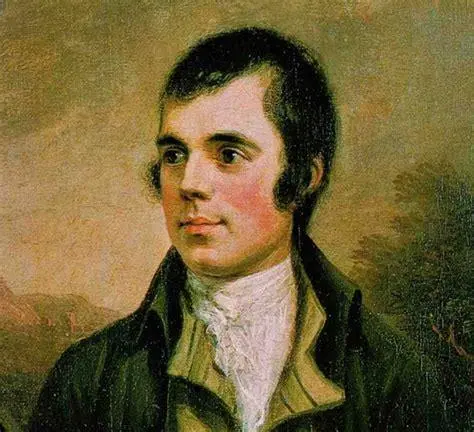
Robert Burns
Lines on the Fall of Fyers Near Loch Ness
Among the heathy hills and ragged woods
The roaring Fyers pours his mossy floods;
Till full he dashes on the rocky mounds,
Where, thro' a shapeless breach, his stream resounds.
As high in air the bursting torrents flow,
As deep recoiling surges foam below,
Prone down the rock the whitening sheet descends,
And viewless Echo's ear, astonished, rends.
Dim-seen, through rising mists and ceaseless show'rs,
The hoary cavern, wide surrounding, lours:
Still thro' the gap the struggling river toils,
And still, below, the horrid cauldron boils -
293
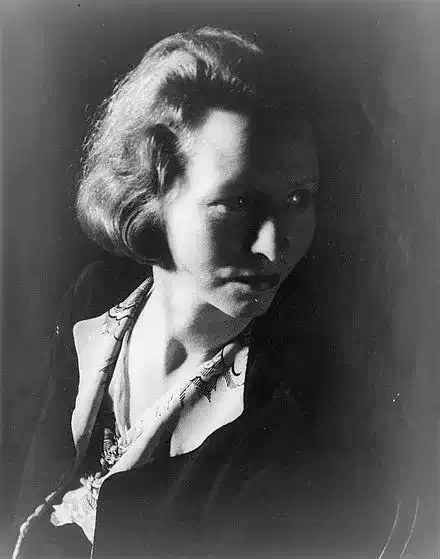
Edna St. Vincent Millay
Inland
People that build their houses inland,
People that buy a plot of ground
Shaped like a house, and build a house there,
Far from the sea-board, far from the sound
Of water sucking the hollow ledges,
Tons of water striking the shore,—
What do they long for, as I long for
One salt smell of the sea once more?
People the waves have not awakened,
Spanking the boats at the harbour's head,
What do they long for, as I long for,—
Starting up in my inland bed,
Beating the narrow walls, and finding
Neither a window nor a door,
Screaming to God for death by drowning,—
One salt taste of the sea once more?
293

James Whitcomb Riley
While The Musician Played
O it was but a dream I had
While the musician played!--
And here the sky, and here the glad
Old ocean kissed the glade--
And here the laughing ripples ran,
And here the roses grew
That threw a kiss to every man
That voyaged with the crew.
Our silken sails in lazy folds
Drooped in the breathless breeze:
As o'er a field of marigolds
Our eyes swam o'er the seas;
While here the eddies lisped and purled
Around the island's rim,
And up from out the underworld
We saw the mermen swim.
And it was dawn and middle-day
And midnight--for the moon
On silver rounds across the bay
Had climbed the skies of June--
And there the glowing, glorious king
Of day ruled o'er his realm,
With stars of midnight glittering
About his diadem.
The seagull reeled on languid wing
In circles round the mast,
We heard the songs the sirens sing
As we went sailing past;
And up and down the golden sands
A thousand fairy throngs
Flung at us from their flashing hands
The echoes of their songs.
O it was but a dream I had
While the musician played--
For here the sky, and here the glad
Old ocean kissed the glade;
And here the laughing ripples ran,
And here the roses grew
That threw a kiss to every man
That voyaged with the crew.
292
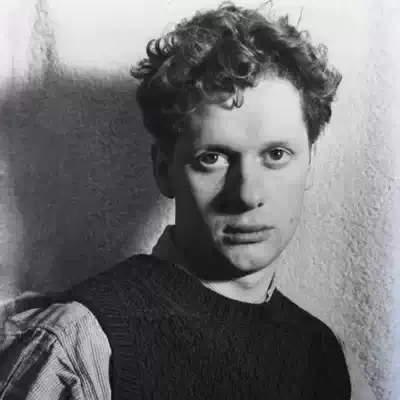
Dylan Thomas
Lie Still, Sleep Becalmed
Lie still, sleep becalmed, sufferer with the wound
In the throat, burning and turning. All night afloat
On the silent sea we have heard the sound
That came from the wound wrapped in the salt sheet.
Under the mile off moon we trembled listening
To the sea sound flowing like blood from the loud wound
And when the salt sheet broke in a storm of singing
The voices of all the drowned swam on the wind.
Open a pathway through the slow sad sail,
Throw wide to the wind the gates of the wandering boat
For my voyage to begin to the end of my wound,
We heard the sea sound sing, we saw the salt sheet tell.
Lie still, sleep becalmed, hide the mouth in the throat,
Or we shall obey, and ride with you through the drowned.
290

Robert Louis Stevenson
It Blows A Snowing Gale
IT blows a snowing gale in the winter of the year;
The boats are on the sea and the crews are on the pier.
The needle of the vane, it is veering to and fro,
A flash of sun is on the veering of the vane.
Autumn leaves and rain,
The passion of the gale.
The boats are on the sea and the crews are on the pier.
The needle of the vane, it is veering to and fro,
A flash of sun is on the veering of the vane.
Autumn leaves and rain,
The passion of the gale.
278

Billy Collins
The Iron Bridge
I am standing on a disused iron bridge
that was erected in 1902,
according to the iron plaque bolted into a beam,
the year my mother turned one.
Imagine--a mother in her infancy,
and she was a Canadian infant at that,
one of the great infants of the province of Ontario.
But here I am leaning on the rusted railing
looking at the water below,
which is flat and reflective this morning,
sky-blue and streaked with high clouds,
and the more I look at the water,
which is like a talking picture,
the more I think of 1902
when workmen in shirts and caps
riveted this iron bridge together
across a thin channel joining two lakes
where wildflowers blow along the shore now
and pairs of swans float in the leafy coves.
1902--my mother was so tiny
she could have fit into one of those oval
baskets for holding apples,
which her mother could have lined with a soft cloth
and placed on the kitchen table
so she could keep an eye on infant Katherine
while she scrubbed potatoes or shelled a bag of peas,
the way I am keeping an eye on that cormorant
who just broke the glassy surface
and is moving away from me and the iron bridge,
swiveling his curious head,
slipping out to where the sun rakes the water
and filters through the trees that crowd the shore.
And now he dives,
disappears below the surface,
and while I wait for him to pop up,
I picture him flying underwater with his strange wings,
as I picture you, my tiny mother,
who disappeared last year,
flying somewhere with your strange wings,
your wide eyes, and your heavy wet dress,
kicking deeper down into a lake
with no end or name, some boundless province of water.
274

Henry Lawson
The Briny Grave
You wonder why so many would be buried in the sea,
In this world of froth and bubble,
But I don’t wonder, for it seems to me
That it saves such a lot of trouble.
And there ain’t no undertaker—
Oh! there ain’t no order that your friends can give
On the quiet to the coffin-maker—
To a gimcrack coffin-maker,
They make no differ twixt the absentee swell
And the clerk that cut from a “shortage”—
Oh! there ain’t no pauper funer-el,
And there ain’t no “impressive cortege.”
It may be a chap from the for’ard crowd,
Or a member of the British Peerage,
But they sew his nibs in a canvas shroud
Just the same as the bloke from the steerage—
As that poor bloke from the steerage.
There ain’t no need for a gravedigger there,
For you dig your own grave! Lord love yer!
And there ain’t no use for a headstone fair
When the waters close above yer!
The little headstone where they come to weep,
May be right for the land’s dry-rotters,
But you rest just as sound when you’re anchored deep
With the pigiron at your trotters—
(Our fathers had iron at their trotters).
The sea is democratic the wide world round,
And it don’t give a hang for no man,
There ain’t no Church of England burial ground,
Nor yet there ain’t no Roman.
Orthodox and het’rodox by wreck-strewn cliffs,
At peace in the stormiest weather,
Might bob up and down like two brother “stiffs,”
And rest in one shark together—
And mix up their bones together.
The bare-headed skipper is as good any day
As an authorised shifter of sin is,
And the tear of shipmate is better anyway
Than the tear of the next-of-kin is.
It saves your friends, and it fills your needs,
It is best when all is reckoned,
And she can’t come there in her widder weeds,
With her eyes on a likely second—
And a spot for the likely second.
265
Emily Dickinson
Escaping backward to perceive
Escaping backward to perceive
The Sea upon our place-
Escaping forward, to confront
His glittering Embrace-
Retreating up, a Billow's height
Retreating blinded down
Our undermining feet to meet
Instructs to the Divine.
The Sea upon our place-
Escaping forward, to confront
His glittering Embrace-
Retreating up, a Billow's height
Retreating blinded down
Our undermining feet to meet
Instructs to the Divine.
260
Henry Lawson
Coomera
THERE’S a pretty little story with a touch of moonlit glory
Comes from Beenleigh on the Logan, but we don’t know if it’s true;
For we scarcely dare to credit ev’rything they say who edit
Those unhappy country papers ’twixt the ocean and Barcoo.
’Twas the man who owned the wherry at the first Coomera ferry
Who was sitting cold and lonely while he counted out his tin;
When the cloudy curtain lifting let the moonlight on a drifting
Boat, that floated down the river with a pallid form therein.
And they say that Sergeant Carey (with the man who ran the ferry),
Started down to save the body from the cruel heartless sea,
And in spite of wind and water, soon they reached the barque and caught her;
And they tied the boat behind them while they wondered “who was he?”
O the moon shone bright as ever as they towed him up the river,
And they found within the pocket that was nearest to his breast—
Just an antidote for sorrow, that would tide him o’er the morrow—
(Flask of Brandy); but we’d better draw the curtain o’er the rest.
Yet, in case the point’s too finely drawn (we know we joke divinely),
And the reader fails to see it with a magnifying glass,
We will say the man who floated, while the moonlight o’er him gloated,
Was not dead and gone to heaven—he was only drunk, alas!THERE’S a pretty little
story with a touch of moonlit glory
Comes from Beenleigh on the Logan, but we don’t know if it’s true;
For we scarcely dare to credit ev’rything they say who edit
Those unhappy country papers ’twixt the ocean and Barcoo.
’Twas the man who owned the wherry at the first Coomera ferry
Who was sitting cold and lonely while he counted out his tin;
When the cloudy curtain lifting let the moonlight on a drifting
Boat, that floated down the river with a pallid form therein.
And they say that Sergeant Carey (with the man who ran the ferry),
Started down to save the body from the cruel heartless sea,
And in spite of wind and water, soon they reached the barque and caught her;
And they tied the boat behind them while they wondered “who was he?”
O the moon shone bright as ever as they towed him up the river,
And they found within the pocket that was nearest to his breast—
Just an antidote for sorrow, that would tide him o’er the morrow—
(Flask of Brandy); but we’d better draw the curtain o’er the rest.
Yet, in case the point’s too finely drawn (we know we joke divinely),
And the reader fails to see it with a magnifying glass,
We will say the man who floated, while the moonlight o’er him gloated,
Was not dead and gone to heaven—he was only drunk, alas!
Comes from Beenleigh on the Logan, but we don’t know if it’s true;
For we scarcely dare to credit ev’rything they say who edit
Those unhappy country papers ’twixt the ocean and Barcoo.
’Twas the man who owned the wherry at the first Coomera ferry
Who was sitting cold and lonely while he counted out his tin;
When the cloudy curtain lifting let the moonlight on a drifting
Boat, that floated down the river with a pallid form therein.
And they say that Sergeant Carey (with the man who ran the ferry),
Started down to save the body from the cruel heartless sea,
And in spite of wind and water, soon they reached the barque and caught her;
And they tied the boat behind them while they wondered “who was he?”
O the moon shone bright as ever as they towed him up the river,
And they found within the pocket that was nearest to his breast—
Just an antidote for sorrow, that would tide him o’er the morrow—
(Flask of Brandy); but we’d better draw the curtain o’er the rest.
Yet, in case the point’s too finely drawn (we know we joke divinely),
And the reader fails to see it with a magnifying glass,
We will say the man who floated, while the moonlight o’er him gloated,
Was not dead and gone to heaven—he was only drunk, alas!THERE’S a pretty little
story with a touch of moonlit glory
Comes from Beenleigh on the Logan, but we don’t know if it’s true;
For we scarcely dare to credit ev’rything they say who edit
Those unhappy country papers ’twixt the ocean and Barcoo.
’Twas the man who owned the wherry at the first Coomera ferry
Who was sitting cold and lonely while he counted out his tin;
When the cloudy curtain lifting let the moonlight on a drifting
Boat, that floated down the river with a pallid form therein.
And they say that Sergeant Carey (with the man who ran the ferry),
Started down to save the body from the cruel heartless sea,
And in spite of wind and water, soon they reached the barque and caught her;
And they tied the boat behind them while they wondered “who was he?”
O the moon shone bright as ever as they towed him up the river,
And they found within the pocket that was nearest to his breast—
Just an antidote for sorrow, that would tide him o’er the morrow—
(Flask of Brandy); but we’d better draw the curtain o’er the rest.
Yet, in case the point’s too finely drawn (we know we joke divinely),
And the reader fails to see it with a magnifying glass,
We will say the man who floated, while the moonlight o’er him gloated,
Was not dead and gone to heaven—he was only drunk, alas!
For we scarcely dare to credit ev’rything they say who edit
Those unhappy country papers ’twixt the ocean and Barcoo.
’Twas the man who owned the wherry at the first Coomera ferry
Who was sitting cold and lonely while he counted out his tin;
When the cloudy curtain lifting let the moonlight on a drifting
Boat, that floated down the river with a pallid form therein.
And they say that Sergeant Carey (with the man who ran the ferry),
Started down to save the body from the cruel heartless sea,
And in spite of wind and water, soon they reached the barque and caught her;
And they tied the boat behind them while they wondered “who was he?”
O the moon shone bright as ever as they towed him up the river,
And they found within the pocket that was nearest to his breast—
Just an antidote for sorrow, that would tide him o’er the morrow—
(Flask of Brandy); but we’d better draw the curtain o’er the rest.
Yet, in case the point’s too finely drawn (we know we joke divinely),
And the reader fails to see it with a magnifying glass,
We will say the man who floated, while the moonlight o’er him gloated,
Was not dead and gone to heaven—he was only drunk, alas!
259
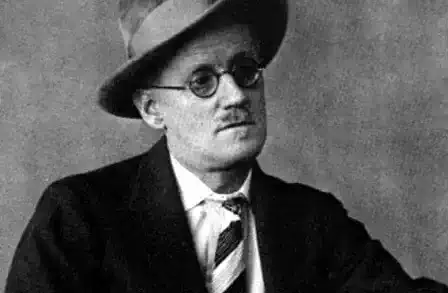
James Joyce
All Day I Hear the Noise of Waters
All day I hear the noise of waters
Making moan,
Sad as the sea-bird is when, going
Forth alone,
He hears the winds cry to the water's
Monotone.
The grey winds, the cold winds are blowing
Where I go.
I hear the noise of many waters
Far below.
All day, all night, I hear them flowing
To and fro.
Making moan,
Sad as the sea-bird is when, going
Forth alone,
He hears the winds cry to the water's
Monotone.
The grey winds, the cold winds are blowing
Where I go.
I hear the noise of many waters
Far below.
All day, all night, I hear them flowing
To and fro.
255
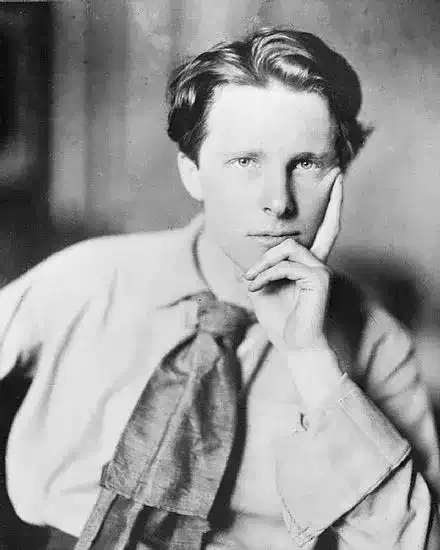
Rupert Brooke
The Fish
In a cool curving world he lies
And ripples with dark ecstasies.
The kind luxurious lapse and steal
Shapes all his universe to feel
And know and be; the clinging stream
Closes his memory, glooms his dream,
Who lips the roots o’ the shore, and glides
Superb on unreturning tides.
Those silent waters weave for him
A fluctuant mutable world and dim,
Where wavering masses bulge and gape
Mysterious, and shape to shape
Dies momently through whorl and hollow,
And form and line and solid follow
Solid and line and form to dream
Fantastic down the eternal stream;
An obscure world, a shifting world,
Bulbous, or pulled to thin, or curled,
Or serpentine, or driving arrows,
Or serene slidings, or March narrows.
There slipping wave and shore are one,
And weed and mud. No ray of sun,
But glow to glow fades down the deep
(As dream to unknown dream in sleep);
Shaken translucency illumes
The hyaline of drifting glooms;
The strange soft-handed depth subdues
Drowned colour there, but black to hues,
As death to living, decomposes—
Red darkness of the heart of roses,
Blue brilliant from dead starless skies,
And gold that lies behind the eyes,
The unknown unnameable sightless white
That is the essential flame of night,
Lustreless purple, hooded green,
The myriad hues that lie between
Darkness and darkness!…
And all’s one.
Gentle, embracing, quiet, dun,
The world he rests in, world he knows,
Perpetual curving. Only—grows
An eddy in that ordered falling,
A knowledge from the gloom, a calling
Weed in the wave, gleam in the mud—
The dark fire leaps along his blood;
Dateless and deathless, blind and still,
The intricate impulse works its will;
His woven world drops back; and he,
Sans providence, sans memory,
Unconscious and directly driven,
Fades to some dank sufficient heaven.
O world of lips, O world of laughter,
Where hope is fleet and thought flies after,
Of lights in the clear night, of cries
That drift along the wave and rise
Thin to the glittering stars above,
You know the hands, the eyes of love!
The strife of limbs, the sightless clinging,
The infinite distance, and the singing
Blown by the wind, a flame of sound,
The gleam, the flowers, and vast around
The horizon, and the heights above—
You know the sigh, the song of love!
But there the night is close, and there
Darkness is cold and strange and bare;
And the seered deeps are whisperless;
And rhythm is all deliciousness;
And joy is in the throbbing tide,
Whose intricate fingers beat and glide
In felt bewildering harmonies
Of trembling touch; and music is
The exquisite knocking of the blood.
Space is no more, under the mud;
His bliss is older than the sun.
Silent and straight the waters run.
The lights, the cries, the willows dim,
And the dark tide are one with him.
247