
Memories and Recollections

Sara Teasdale
I Thought of You
I thought of you and how you love this beauty,
And walking up the long beach all alone
I heard the waves breaking in measured thunder
As you and I once heard their monotone.
Around me were the echoing dunes, beyond me
The cold and sparkling silver of the sea --
We two will pass through death and ages lengthen
Before you hear that sound again with me.
445

Ella Wheeler Wilcox
Daft
In the warm yellow smile of the morning,
She stands at the lattice pane,
And watches the strong young binders
Stride down to the fields of grain.
And she counts them over and over
As they pass her cottage door:
Are they six, she counts them seven;
Are they seven, she counts one more.
When the sun swings high in the heavens,
And the reapers go shouting home,
She calls to the household, saying,
'Make haste! for the binders have come
And Johnnie will want his dinner He
was always a hungry child';
And they answer, 'Yes, it ia waiting';
Then tell you, 'Her brain is wild.'
Again, in the hush of the evening,
When the work of the day is done,
And the binders go singing homeward
In the last red rays of the sun,
She will sit at the threshold waiting,
And with her withered face lights with joy:
'Come, Johnnie, ' she says, as they pass her,
'Come into the house, my boy.'
Five summers ago her Johnnie
Went out in the smile of the morn,
Singing across the meadow,
Striding down through the corn -
He towered above the binders,
Walking on either side,
And the mother's heart within her
Swelled with exultant pride.
For he was the light of the household His
brown eyes were wells of truth,
And his face was the face of the morning,
Lit with its pure, fresh youth,
And his song rang out from the hilltops
Like the mellow blast of a horn,
And he strode o'er the fresh shorn meadows,
And down through the rows of corn.
But hushed were the voices of singing,
Hushed by the presence of death,
As back to the cottage they bore him In
the noontide's scorching breath,
For the heat of the sun had slain him,
Had smitten the heart in his breast,
And he who towered above them
Lay lower than all the rest.
The grain grows ripe in the sunshine,
And the summers ebb and flow,
And the binders stride to their labour
And sing as they come and go;
But never again from the hilltops
Echoes the voice like a horn;
Never up from the meadows,
Never back from the corn.
Yet the poor, crazed brain of the mother
Fancies him always near;
She is blest in her strange delusion,
For she knoweth no pain nor fear,
And always she counts the binders
As they pass by her cottage door;
Are they six, she counts them seven;
Are they seven, she counts one more.
443
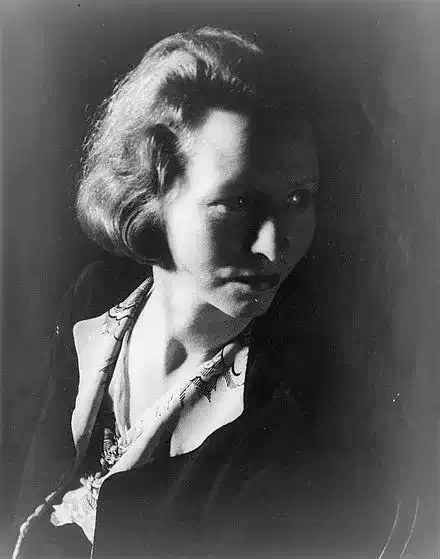
Edna St. Vincent Millay
Interim
The room is full of you!—As I came in
And closed the door behind me, all at once
A something in the air, intangible,
Yet stiff with meaning, struck my senses sick!—
Sharp, unfamiliar odors have destroyed
Each other room's dear personality.
The heavy scent of damp, funereal flowers,—
The very essence, hush-distilled, of Death—
Has strangled that habitual breath of home
Whose expiration leaves all houses dead;
And wheresoe'er I look is hideous change.
Save here. Here 'twas as if a weed-choked gate
Had opened at my touch, and I had stepped
Into some long-forgot, enchanted, strange,
Sweet garden of a thousand years ago
And suddenly thought, "I have been here before!"
You are not here. I know that you are gone,
And will not ever enter here again.
And yet it seems to me, if I should speak,
Your silent step must wake across the hall;
If I should turn my head, that your sweet eyes
Would kiss me from the door.—So short a time
To teach my life its transposition to
This difficult and unaccustomed key!—
The room is as you left it; your last touch—
A thoughtless pressure, knowing not itself
As saintly—hallows now each simple thing;
Hallows and glorifies, and glows between
The dust's grey fingers like a shielded light.
There is your book, just as you laid it down,
Face to the table,—I cannot believe
That you are gone!—Just then it seemed to me
You must be here. I almost laughed to think
How like reality the dream had been;
Yet knew before I laughed, and so was still.
That book, outspread, just as you laid it down!
Perhaps you thought, "I wonder what comes next,
And whether this or this will be the end";
So rose, and left it, thinking to return.
Perhaps that chair, when you arose and passed
Out of the room, rocked silently a while
Ere it again was still. When you were gone
Forever from the room, perhaps that chair,
Stirred by your movement, rocked a little while,
Silently, to and fro...
And here are the last words your fingers wrote,
Scrawled in broad characters across a page
In this brown book I gave you. Here your hand,
Guiding your rapid pen, moved up and down.
Here with a looping knot you crossed a "t,"
And here another like it, just beyond
These two eccentric "e's." You were so small,
And wrote so brave a hand!
How strange it seems
That of all words these are the words you chose!
And yet a simple choice; you did not know
You would not write again. If you had known—
But then, it does not matter,—and indeed
If you had known there was so little time
You would have dropped your pen and come to me
And this page would be empty, and some phrase
Other than this would hold my wonder now.
Yet, since you could not know, and it befell
That these are the last words your fingers wrote,
There is a dignity some might not see
In this, "I picked the first sweet-pea to-day."
To-day! Was there an opening bud beside it
You left until to-morrow?—O my love,
The things that withered,—and you came not back
That day you filled this circle of my arms
That now is empty. (O my empty life!)
That day—that day you picked the first sweet-pea,—
And brought it in to show me! I recall
With terrible distinctness how the smell
Of your cool gardens drifted in with you.
I know, you held it up for me to see
And flushed because I looked not at the flower,
But at your face; and when behind my look
You saw such unmistakable intent
You laughed and brushed your flower against my lips.
(You were the fairest thing God ever made,
I think.) And then your hands above my heart
Drew down its stem into a fastening,
And while your head was bent I kissed your hair.
I wonder if you knew. (Beloved hands!
Somehow I cannot seem to see them still.
Somehow I cannot seem to see the dust
In your bright hair.) What is the need of Heaven
When earth can be so sweet?—If only God
Had let us love,—and show the world the way!
Strange cancellings must ink th' eternal books
When love-crossed-out will bring the answer right!
That first sweet-pea! I wonder where it is.
It seems to me I laid it down somewhere,
And yet,—I am not sure. I am not sure,
Even, if it was white or pink; for then
'Twas much like any other flower to me
Save that it was the first. I did not know
Then, that it was the last. If I had known—
But then, it does not matter. Strange how few,
After all's said and done, the things that are
Of moment.
Few indeed! When I can make
Of ten small words a rope to hang the world!
"I had you and I have you now no more."
There, there it dangles,—where's the little truth
That can for long keep footing under that
When its slack syllables tighten to a thought?
Here, let me write it down! I wish to see
Just how a thing like that will look on paper!
"I had you and I have you now no more."
O little words, how can you run so straight
Across the page, beneath the weight you bear?
How can you fall apart, whom such a theme
Has bound together, and hereafter aid
In trivial expression, that have been
So hideously dignified?—Would God
That tearing you apart would tear the thread
I strung you on! Would God—O God, my mind
Stretches asunder on this merciless rack
Of imagery! O, let me sleep a while!
Would I could sleep, and wake to find me back
In that sweet summer afternoon with you.
Summer? Tis summer still by the calendar!
How easily could God, if He so willed,
Set back the world a little turn or two!
Correct its griefs, and bring its joys again!
We were so wholly one I had not thought
That we could die apart. I had not thought
That I could move,—and you be stiff and still!
That I could speak,—and you perforce be dumb!
I think our heart-strings were, like warp and woof
In some firm fabric, woven in and out;
Your golden filaments in fair design
Across my duller fibre. And to-day
The shining strip is rent; the exquisite
Fine pattern is destroyed; part of your heart
Aches in my breast; part of my heart lies chilled
In the damp earth with you. I have been tom
In two, and suffer for the rest of me.
What is my life to me? And what am I
To life,—a ship whose star has guttered out?
A Fear that in the deep night starts awake
Perpetually, to find its senses strained
Against the taut strings of the quivering air,
Awaiting the return of some dread chord?
Dark, Dark, is all I find for metaphor;
All else were contrast,—save that contrast's wall
Is down, and all opposed things flow together
Into a vast monotony, where night
And day, and frost and thaw, and death and life,
Are synonyms. What now—what now to me
Are all the jabbering birds and foolish flowers
That clutter up the world? You were my song!
Now, let discord scream! You were my flower!
Now let the world grow weeds! For I shall not
Plant things above your grave—(the common balm
Of the conventional woe for its own wound!)
Amid sensations rendered negative
By your elimination stands to-day,
Certain, unmixed, the element of grief;
I sorrow; and I shall not mock my truth
With travesties of suffering, nor seek
To effigy its incorporeal bulk
In little wry-faced images of woe.
I cannot call you back; and I desire
No utterance of my immaterial voice.
I cannot even turn my face this way
Or that, and say, "My face is turned to you";
I know not where you are, I do not know
If Heaven hold you or if earth transmute,
Body and soul, you into earth again;
But this I know:—not for one second's space
Shall I insult my sight with visionings
Such as the credulous crowd so eager-eyed
Beholds, self-conjured, in the empty air.
Let the world wail! Let drip its easy tears!
My sorrow shall be dumb!
—What do I say?
God! God!—God pity me! Am I gone mad
That I should spit upon a rosary?
Am I become so shrunken? Would to God
I too might feel that frenzied faith whose touch
Makes temporal the most enduring grief;
Though it must walk a while, as is its wont,
With wild lamenting! Would I too might weep
Where weeps the world and hangs its piteous wreaths
For its new dead! Not Truth, but Faith, it is
That keeps the world alive. If all at once
Faith were to slacken,—that unconscious faith
Which must, I know, yet be the corner-stone
Of all believing,—birds now flying fearless
Across would drop in terror to the earth;
Fishes would drown; and the all-governing reins
Would tangle in the frantic hands of God
And the worlds gallop headlong to destruction!
O God, I see it now, and my sick brain
Staggers and swoons! How often over me
Flashes this breathlessness of sudden sight
In which I see the universe unrolled
Before me like a scroll and read thereon
Chaos and Doom, where helpless planets whirl
Dizzily round and round and round and round,
Like tops across a table, gathering speed
With every spin, to waver on the edge
One instant—looking over—and the next
To shudder and lurch forward out of sight—
* * * * * * *
Ah, I am worn out—I am wearied out—
It is too much—I am but flesh and blood,
And I must sleep. Though you were dead again,
I am but flesh and blood and I must sleep.
440

Robert Louis Stevenson
Picture-Books in Winter
Summer fading, winter comes--
Frosty mornings, tingling thumbs,
Window robins, winter rooks,
And the picture story-books.
Water now is turned to stone
Nurse and I can walk upon;
Still we find the flowing brooks
In the picture story-books.
All the pretty things put by,
Wait upon the children's eye,
Sheep and shepherds, trees and crooks,
In the picture story-books.
We may see how all things are
Seas and cities, near and far,
And the flying fairies' looks,
In the picture story-books.
How am I to sing your praise,
Happy chimney-corner days,
Sitting safe in nursery nooks,
Reading picture story-books?
442

Claude Mckay
The Spanish Needle
Lovely dainty Spanish needle
With your yellow flower and white,
Dew bedecked and softly sleeping,
Do you think of me to-night?
Shadowed by the spreading mango,
Nodding o'er the rippling stream,
Tell me, dear plant of my childhood,
Do you of the exile dream?
Do you see me by the brook's side
Catching crayfish 'neath the stone,
As you did the day you whispered:
Leave the harmless dears alone?
Do you see me in the meadow
Coming from the woodland spring
With a bamboo on my shoulder
And a pail slung from a string?
Do you see me all expectant
Lying in an orange grove,
While the swee-swees sing above me,
Waiting for my elf-eyed love?
Lovely dainty Spanish needle,
Source to me of sweet delight,
In your far-off sunny southland
Do you dream of me to-night?
442

Henry Wadsworth Longfellow
Holidays
The holiest of all holidays are those
Kept by ourselves in silence and apart;
The secret anniversaries of the heart,
When the full river of feeling overflows;--
The happy days unclouded to their close;
The sudden joys that out of darkness start
As flames from ashes; swift desires that dart
Like swallows singing down each wind that blows!
White as the gleam of a receding sail,
White as a cloud that floats and fades in air,
White as the whitest lily on a stream,
These tender memories are;--a fairy tale
Of some enchanted land we know not where,
But lovely as a landscape in a dream.
440

Emily Dickinson
That is solemn we have ended
That is solemn we have ended
Be it but a Play
Or a Glee among the Garret
Or a Holiday
Or a leaving Home, or later,
Parting with a World
We have understood for better
Still to be explained.
Be it but a Play
Or a Glee among the Garret
Or a Holiday
Or a leaving Home, or later,
Parting with a World
We have understood for better
Still to be explained.
442
Robert Frost
In a Disused Graveyard
The living come with grassy tread
To read the gravestones on the hill;
The graveyard draws the living still,
But never anymore the dead.
The verses in it say and say:
"The ones who living come today
To read the stones and go away
Tomorrow dead will come to stay."
So sure of death the marbles rhyme,
Yet can't help marking all the time
How no one dead will seem to come.
What is it men are shrinking from?
It would be easy to be clever
And tell the stones: Men hate to die
And have stopped dying now forever.
I think they would believe the lie.
442
Ella Wheeler Wilcox
Little Queen
Do you remember the name I wore –
The old pet-name of Little Queen –
In the dear, dead days that are no more,
The happiest days of our lives, I ween?
For we loved with that passionate love of youth
That blesses but once with its perfect bliss, -
A love that, in spite of its trust and truth,
Seems never to thrive, in a world like this.
I lived for you, and you lived for me;
All was centred in “Little Queen”;
And never a thought in our hearts had we
That strife or trouble could come between,
What utter sinking of self it was!
How little we cared for the world of men!
For love’s fair kingdom, and loves’ sweet laws,
Were all of the world and life to us then.
But a love like ours was a challenge to fate;
She rang down the curtains and shifted the scene;
Yet sometimes now, when the day grows late,
I can hear you calling for Little Queen;
For a happy home and a busy life
Can never wholly crowd out our past;
In the twilight pauses that come from strife,
You will think of me while life shall last.
And however sweet the voice of fame
May sing to me of a great world’s praise,
I shall long sometimes for the old pet-name
That you gave to me in the dear, dead days;
And nothing the angel band can say,
When I reach the shores of the great Unseen,
Can please me so much as on that day
To hear your greeting of “Little Queen.”
441

John Clare
Remembrances
Summer pleasures they are gone like to visions every one
And the cloudy days of autumn and of winter cometh on
I tried to call them back but unbidden they are gone
Far away from heart and eye and for ever far away
Dear heart and can it be that such raptures meet decay
I thought them all eternal when by Langley Bush I lay
I thought them joys eternal when I used to shout and play
On its bank at 'clink and bandy' 'chock' and 'taw' and
ducking stone
Where silence sitteth now on the wild heath as her own
Like a ruin of the past all alone
When I used to lie and sing by old eastwells boiling spring
When I used to tie the willow boughs together for a 'swing'
And fish with crooked pins and thread and never catch a
thing
With heart just like a feather- now as heavy as a stone
When beneath old lea close oak I the bottom branches broke
To make our harvest cart like so many working folk
And then to cut a straw at the brook to have a soak
O I never dreamed of parting or that trouble had a sting
Or that pleasures like a flock of birds would ever take to
wing
Leaving nothing but a little naked spring
When jumping time away on old cross berry way
And eating awes like sugar plumbs ere they had lost the may
And skipping like a leveret before the peep of day
On the rolly polly up and downs of pleasant swordy well
When in round oaks narrow lane as the south got black again
We sought the hollow ash that was shelter from the rain
With our pockets full of peas we had stolen from the grain
How delicious was the dinner time on such a showry day
O words are poor receipts for what time hath stole away
The ancient pulpit trees and the play
When for school oer 'little field' with its brook and wooden
brig
Where I swaggered like a man though I was not half so big
While I held my little plough though twas but a willow twig
And drove my team along made of nothing but a name
'Gee hep' and 'hoit' and 'woi'- O I never call to mind
These pleasant names of places but I leave a sigh behind
While I see the little mouldywharps hang sweeing to the wind
On the only aged willow that in all the field remains
And nature hides her face where theyre sweeing in their
chains
And in a silent murmuring complains
Here was commons for the hills where they seek for
freedom still
Though every commons gone and though traps are set to kill
The little homeless miners- O it turns my bosom chill
When I think of old 'sneap green' puddocks nook and hilly
snow
Where bramble bushes grew and the daisy gemmed in dew
And the hills of silken grass like to cushions to the view
When we threw the pissmire crumbs when we's nothing
else to do
All leveled like a desert by the never weary plough
All vanished like the sun where that cloud is passing now
All settled here for ever on its brow
I never thought that joys would run away from boys
Or that boys would change their minds and forsake such
summer joys
But alack I never dreamed that the world had other toys
To petrify first feelings like the fable into stone
Till I found the pleasure past and a winter come at last
Then the fields were sudden bare and the sky got overcast
And boyhoods pleasing haunts like a blossom in the blast
Was shrivelled to a withered weed and trampled down and
done
Till vanished was the morning spring and set that summer
sun
And winter fought her battle strife and won
By Langley bush I roam but the bush hath left its hill
On cowper green I stray tis a desert strange and chill
And spreading lea close oak ere decay had penned its will
To the axe of the spoiler and self interest fell a prey
And cross berry way and old round oaks narrow lane
With its hollow trees like pulpits I shall never see again
Inclosure like a Buonaparte let not a thing remain
It levelled every bush and tree and levelled every hill
And hung the moles for traitors - though the brook is
running still
It runs a naked brook cold and chill
O had I known as then joy had left the paths of men
I had watched her night and day besure and never slept agen
And when she turned to go O I'd caught her mantle then
And wooed her like a lover by my lonely side to stay
Aye knelt and worshipped on as love in beautys bower
And clung upon her smiles as a bee upon her flower
And gave her heart my poesys all cropt in a sunny hour
As keepsakes and pledges to fade away
But love never heeded to treasure up the may
So it went the comon road with decay.
440

Dorothy Parker
The False Friends
They laid their hands upon my head,
They stroked my cheek and brow;
And time could heal a hurt, they said,
And time could dim a vow.
And they were pitiful and mild
Who whispered to me then,
"The heart that breaks in April, child,
Will mend in May again."
Oh, many a mended heart they knew.
So old they were, and wise.
And little did they have to do
To come to me with lies!
Who flings me silly talk of May
Shall meet a bitter soul;
For June was nearly spent away
Before my heart was whole.
436

Alfred Lord Tennyson
In Memoriam A. H. H.: 105. To-night ungather'd let us leave
To-night ungather'd let us leave
This laurel, let this holly stand:
We live within the stranger's land,
And strangely falls our Christmas-eve.
Our father's dust is left alone
And silent under other snows:
There in due time the woodbine blows,
The violet comes, but we are gone.
No more shall wayward grief abuse
The genial hour with mask and mime;
For change of place, like growth of time,
Has broke the bond of dying use.
Let cares that petty shadows cast,
By which our lives are chiefly proved,
A little spare the night I loved,
And hold it solemn to the past.
But let no footstep beat the floor,
Nor bowl of wassail mantle warm;
For who would keep an ancient form
Thro' which the spirit breathes no more?
Be neither song, nor game, nor feast;
Nor harp be touch'd, nor flute be blown;
No dance, no motion, save alone
What lightens in the lucid east
Of rising worlds by yonder wood.
Long sleeps the summer in the seed;
Run out your measured arcs, and lead
The closing cycle rich in good.
437
Alfred Lord Tennyson
Recollections of the Arabian Nights.
When the breeze of a joyful dawn blew free
In the silken sail of infancy,
The tide of time flow'd back with me,
The forward-flowing tide of time;
And many a sheeny summer-morn,
Adown the Tigris I was borne,
By Bagdat's shrines of fretted gold,
High-walled gardens green and old;
True Mussulman was I and sworn,
For it was in the golden prime
Of good Haroun Alraschid.
Anight my shallop, rustling thro'
The low and bloomed foliage, drove
The fragrant, glistening deeps, and clove
The citron-shadows in the blue:
By garden porches on the brim,
The costly doors flung open wide,
Gold glittering thro' lamplight dim,
And broider'd sofas on each side:
In sooth it was a goodly time,
For it was in the golden prime
Of good Haroun Alraschid.
Often, where clear-stemm'd platans guard
The outlet, did I turn away
The boat-head down a broad canal
From the main river sluiced, where all
The sloping of the moon-lit sward
Was damask-work, and deep inlay
Of braided blooms unmown, which crept
Adown to where the water slept.
A goodly place, a goodly time,
For it was in the golden prime
Of good Haroun Alraschid.
A motion from the river won
Ridged the smooth level, bearing on
My shallop thro' the star-strown calm,
Until another night in night
I enter'd, from the clearer light,
Imbower'd vaults of pillar'd palm,
Imprisoning sweets, which, as they clomb
Heavenward, were stay'd beneath the dome
Of hollow boughs.--A goodly time,
For it was in the golden prime
Of good Haroun Alraschid.
Still onward; and the clear canal
Is rounded to as clear a lake.
From the green rivage many a fall
Of diamond rillets musical,
Thro' little crystal arches low
Down from the central fountain's flow
Fall'n silver-chiming, seem'd to shake
The sparkling flints beneath the prow.
A goodly place, a goodly time,
For it was in the golden prime
Of good Haroun Alraschid.
Above thro' many a bowery turn
A walk with vary-colour'd shells
Wander'd engrain'd. On either side
All round about the fragrant marge
From fluted vase, and brazen urn
In order, eastern flowers large,
Some dropping low their crimson bells
Half-closed, and others studded wide
With disks and tiars, fed the time
With odour in the golden prime
Of good Haroun Alraschid.
Far off, and where the lemon-grove
In closest coverture upsprung,
The living airs of middle night
Died round the bulbul as he sung;
Not he: but something which possess'd
The darkness of the world, delight,
Life, anguish, death, immortal love,
Ceasing not, mingled, unrepress'd,
Apart from place, withholding time,
But flattering the golden prime
Of good Haroun Alraschid.
Black the garden-bowers and grots
Slumber'd: the solemn palms were ranged
Above, unwoo'd of summer wind:
A sudden splendour from behind
Flush'd all the leaves with rich gold-green,
And, flowing rapidly between
Their interspaces, counterchanged
The level lake with diamond-plots
Of dark and bright. A lovely time,
For it was in the golden prime
Of good Haroun Alraschid.
Dark-blue the deep sphere overhead,
Distinct with vivid stars inlaid,
Grew darker from that under-flame:
So, leaping lightly from the boat,
With silver anchor left afloat,
In marvel whence that glory came
Upon me, as in sleep I sank
In cool soft turf upon the bank,
Entranced with that place and time,
So worthy of the golden prime
Of good Haroun Alraschid.
Thence thro' the garden I was drawn-A
realm of pleasance, many a mound,
And many a shadow-chequer'd lawn
Full of the city's stilly sound,
And deep myrrh-thickets blowing round
The stately cedar, tamarisks,
Thick rosaries of scented thorn,
Tall orient shrubs, and obelisks
Graven with emblems of the time,
In honour of the golden prime
Of good Haroun Alraschid.
With dazed vision unawares
From the long alley's latticed shade
Emerged, I came upon the great
Pavilion of the Caliphat.
Right to the carven cedarn doors,
Flung inward over spangled floors,
Broad-based flights of marble stairs
Ran up with golden balustrade,
After the fashion of the time,
And humour of the golden prime
Of good Haroun Alraschid.
The fourscore windows all alight
As with the quintessence of flame,
A million tapers flaring bright
From twisted silvers look'd to shame
The hollow-vaulted dark, and stream'd
Upon the mooned domes aloof
In inmost Bagdat, till there seem'd
Hundreds of crescents on the roof
Of night new-risen, that marvellous time,
To celebrate the golden prime
Of good Haroun Alraschid.
Then stole I up, and trancedly
Gazed on the Persian girl alone,
Serene with argent-lidded eyes
Amorous, and lashes like to rays
Of darkness, and a brow of pearl
Tressed with redolent ebony,
In many a dark delicious curl,
Flowing beneath her rose-hued zone;
The sweetest lady of the time,
Well worthy of the golden prime
Of good Haroun Alraschid.
Six columns, three on either side,
Pure silver, underpropt a rich
Throne of the massive ore, from which
Down-droop'd, in many a floating fold,
Engarlanded and diaper'd
With inwrought flowers, a cloth of gold.
Thereon, his deep eye laughter-stirr'd
With merriment of kingly pride,
Sole star of all that place and time,
I saw him--in his golden prime,
THE GOOD HAROUN ALRASCHID!
437

Rudyard Kipling
The Moon of Other Days
Beneath the deep veranda's shade,
When bats begin to fly,
I sit me down and watch -- alas! --
Another evening die.
Blood-red behind the sere ferash
She rises through the haze.
Sainted Diana! can that be
The Moon of Other Days?
Ah! shade of little Kitty Smith,
Sweet Saint of Kensington!
Say, was it ever thus at Home
The Moon of August shone,
When arm in arm we wandered long
Through Putney's evening haze,
And Hammersmith was Heaven beneath
The moon of Other Days?
But Wandle's stream is Sutlej now,
And Putney's evening haze
The dust that half a hundered kine
Before my window raise.
Unkempt, unclean, athwart the mist
The seething city looms,
In place of Putney's golden gorse
The sickly babul blooms.
Glare down, old Hecate, through the dust,
And bid the pie-dog yell,
Draw from the drain its typhoid-term,
From each bazaar its smell;
Yea, suck the fever from the tank
And sap my strength therewith:
Thank Heaven, you show a smiling face
To little Kitty Smith!
437

Carl Sandburg
A.E.F.
There will be a rusty gun on the wall, sweetheart,
The rifle grooves curling with flakes of rust.
A spider will make a silver string nest in the
darkest, warmest corner of it.
The trigger and the range-finder, they too will be rusty.
And no hands will polish the gun, and it will hang on the wall.
Forefingers and thumbs will point casually toward it.
It will be spoken among half-forgotten, whished-to-be-forgotten things.
They will tell the spider: Go on, you're doing good work.
438

Ezra Pound
Liu Ch'e
The rustling of the silk is discontinued,
Dust drifts over the court-yard,
There is no sound of foot-fall, and the leaves
Scurry into heaps and lie still,
And she the rejoicer of the heart is beneath them:
A wet leaf that clings to the threshold.
Dust drifts over the court-yard,
There is no sound of foot-fall, and the leaves
Scurry into heaps and lie still,
And she the rejoicer of the heart is beneath them:
A wet leaf that clings to the threshold.
439

William Butler Yeats
The Lamentation Of The Old Pensioner
ALTHOUGH I shelter from the rain
Under a broken tree,
My chair was nearest to the fire
In every company
That talked of love or politics,
Ere Time transfigured me.
Though lads are making pikes again
For some conspiracy,
And crazy rascals rage their fill
At human tyranny,
My contemplations are of Time
That has transfigured me.
There's not a woman turns her face
Upon a broken tree,
And yet the beauties that I loved
Are in my memory;
I spit into the face of Time
That has transfigured me.
439

Elizabeth Barrett Browning
Sonnet XVIII: I Never Gave a Lock of Hair
I never gave a lock of hair away
To a man, dearest, except this to thee,
Which now upon my fingers thoughtfully,
I ring out to the full brown length and say
Take it. My day of youth went yesterday;
My hair no longer bounds to my foot's glee,
Nor plant I it from rose or myrtle-tree,
As girls do, any more: it only may
Now shade on two pale cheeks the mark of tears,
Taught drooping from the head that hangs aside
Through sorrow's trick. I thought the funeral-shears
Would take this first, but Love is justified,--
Take it thou,--finding pure, from all those years,
The kiss my mother left here when she died.
837
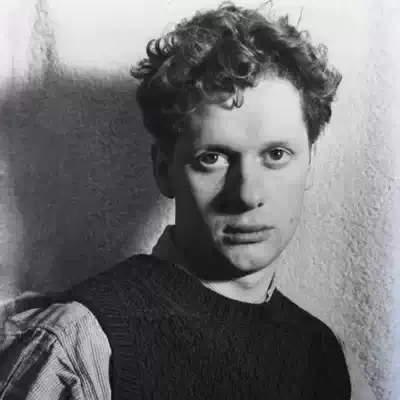
Dylan Thomas
All That I Owe the Fellows of the Grave
All that I owe the fellows of the grave
And all the dead bequeathed from pale estates
Lies in the fortuned bone, the flask of blood,
Like senna stirs along the ravaged roots.
O all I owe is all the flesh inherits,
My fathers' loves that pull upon my nerves,
My sisters tears that sing upon my head
My brothers' blood that salts my open wounds
Heir to the scalding veins that hold love's drop,
My fallen filled, that had the hint of death,
Heir to the telling senses that alone
Acquaint the flesh with a remembered itch,
I round this heritage as rounds the sun
His winy sky, and , as the candles moon,
Cast light upon my weather. I am heir
To women who have twisted their last smile,
To children who were suckled on a plague,
To young adorers dying on a kiss.
All such disease I doctor in my blood,
And all such love's a shrub sown in the breath.
Then look, my eyes, upon this bonehead fortune
And browse upon the postures of the dead;
All night and day I eye the ragged globe
Through periscopes rightsighted from the grave;
All night and day I wander in these same
Wax clothes that wax upon the ageing ribs;
All night my fortune slumbers in its sheet.
Then look, my heart, upon the scarlet trove,
And look, my grain, upon the falling wheat;
All night my fortune slumbers in its sheet.
435

Lord Byron
Lines Written Beneath An Elm In The Churchyard Of Harrow On The Hill, Sept.
2, 1807
Spot of my youth! whose hoary branches sigh,
Swept by the breeze that fans thy cloudless sky;
Where now alone I muse, who oft have trod,
With those I loved, thy soft and verdant sod;
With those who, scattered far, perchance deplore,
Like me, the happy scenes they knew before:
Oh! as I trace again thy winding hill,
Mine eyes admire, my heart adores thee still,
Thou drooping Elm! beneath whose boughs I lay,
And frequent mused the twilight hours away;
Where, as they once were wont, my limbs recline,
But ah! without the thoughts which then were mine.
How do thy branches, moaning to the blast,
Invite the bosom to recall the past,
And seem to whisper, as the gently swell,
'Take, while thou canst, a lingering, last farewell!'
When fate shall chill, at length, this fevered breast,
And calm its cares and passions into rest,
Oft have I thought, 'twould soothe my dying hour,—
If aught may soothe when life resigns her power,—
To know some humbler grave, some narrow cell,
Would hide my bosom where it loved to dwell.
With this fond dream, methinks, 'twere sweet to die—
And here it lingered, here my heart might lie;
Here might I sleep, where all my hopes arose,
Scene of my youth, and couch of my repose;
For ever stretched beneath this mantling shade,
Pressed by the turf where once my childhood played;
Wrapped by the soil that veils the spot I loved,
Mixed with the earth o'er which my footsteps moved;
Blest by the tongues that charmed my youthful ear,
Mourned by the few my soul acknowledged here;
Deplored by those in early days allied,
And unremembered by the world beside.
433
Henry Wadsworth Longfellow
Woods in Winter
When winter winds are piercing chill,
And through the hawthorn blows the gale,
With solemn feet I tread the hill,
That overbrows the lonely vale.
O'er the bare upland, and away
Through the long reach of desert woods,
The embracing sunbeams chastely play,
And gladden these deep solitudes.
Where, twisted round the barren oak,
The summer vine in beauty clung,
And summer winds the stillness broke,
The crystal icicle is hung.
Where, from their frozen urns, mute springs
Pour out the river's gradual tide,
Shrilly the skater's iron rings,
And voices fill the woodland side.
Alas! how changed from the fair scene,
When birds sang out their mellow lay,
And winds were soft, and woods were green,
And the song ceased not with the day!
But still wild music is abroad,
Pale, desert woods! within your crowd;
And gathering winds, in hoarse accord,
Amid the vocal reeds pipe loud.
Chill airs and wintry winds! my ear
Has grown familiar with your song;
I hear it in the opening year,
I listen, and it cheers me long.
435
Henry Wadsworth Longfellow
In The Harbour: Memories
Oft I remember those I have known
In other days, to whom my heart was lead
As by a magnet, and who are not dead,
But absent, and their memories overgrown
With other thoughts and troubles of my own,
As graves with grasses are, and at their head
The stone with moss and lichens so o'er spread,
Nothing is legible but the name alone.
And is it so with them? After long years.
Do they remember me in the same way,
And is the memory pleasant as to me?
I fear to ask; yet wherefore are my fears?
Pleasures, like flowers, may wither and decay,
And yet the root perennial may be.
429
Ella Wheeler Wilcox
Worldly Wisdom
If it were in my dead Past’s power
To let my Present bask
In some lost pleasure for an hour,
This is the boon I’d ask:
Re-pedestal from out the dust
Where long ago ‘twas hurled,
My beautiful incautious trust
In this unworthy world.
The symbol of my souls own truth –
I saw it go with tears –
The sweet unwisdom of my youth –
That vanished with the years.
Since knowledge brings us only grief,
I would return again
To happy ignorance and belief
In motives and in men.
For worldly wisdom learned in pain
Is in itself a cross,
Significant mayhap of gain,
Yet sign of saddest loss.
428
William Butler Yeats
Meditations In Time Of Civil War
I
Ancestral Houses
SURELY among a rich man s flowering lawns,
Amid the rustle of his planted hills,
Life overflows without ambitious pains;
And rains down life until the basin spills,
And mounts more dizzy high the more it rains
As though to choose whatever shape it wills
And never stoop to a mechanical
Or servile shape, at others' beck and call.
Mere dreams, mere dreams! Yet Homer had not Sung
Had he not found it certain beyond dreams
That out of life's own self-delight had sprung
The abounding glittering jet; though now it seems
As if some marvellous empty sea-shell flung
Out of the obscure dark of the rich streams,
And not a fountain, were the symbol which
Shadows the inherited glory of the rich.
Some violent bitter man, some powerful man
Called architect and artist in, that they,
Bitter and violent men, might rear in stone
The sweetness that all longed for night and day,
The gentleness none there had ever known;
But when the master's buried mice can play.
And maybe the great-grandson of that house,
For all its bronze and marble, 's but a mouse.
O what if gardens where the peacock strays
With delicate feet upon old terraces,
Or else all Juno from an urn displays
Before the indifferent garden deities;
O what if levelled lawns and gravelled ways
Where slippered Contemplation finds his ease
And Childhood a delight for every sense,
But take our greatness with our violence?
What if the glory of escutcheoned doors,
And buildings that a haughtier age designed,
The pacing to and fro on polished floors
Amid great chambers and long galleries, lined
With famous portraits of our ancestors;
What if those things the greatest of mankind
Consider most to magnify, or to bless,
But take our greatness with our bitterness?
II
My House
An ancient bridge, and a more ancient tower,
A farmhouse that is sheltered by its wall,
An acre of stony ground,
Where the symbolic rose can break in flower,
Old ragged elms, old thorns innumerable,
The sound of the rain or sound
Of every wind that blows;
The stilted water-hen
Crossing Stream again
Scared by the splashing of a dozen cows;
A winding stair, a chamber arched with stone,
A grey stone fireplace with an open hearth,
A candle and written page.
Il Penseroso's Platonist toiled on
In some like chamber, shadowing forth
How the daemonic rage
Imagined everything.
Benighted travellers
From markets and from fairs
Have seen his midnight candle glimmering.
Two men have founded here. A man-at-arms
Gathered a score of horse and spent his days
In this tumultuous spot,
Where through long wars and sudden night alarms
His dwinding score and he seemed castaways
Forgetting and forgot;
And I, that after me
My bodily heirs may find,
To exalt a lonely mind,
Befitting emblems of adversity.
III
My Table
Two heavy trestles, and a board
Where Sato's gift, a changeless sword,
By pen and paper lies,
That it may moralise
My days out of their aimlessness.
A bit of an embroidered dress
Covers its wooden sheath.
Chaucer had not drawn breath
When it was forged. In Sato's house,
Curved like new moon, moon-luminous
It lay five hundred years.
Yet if no change appears
No moon; only an aching heart
Conceives a changeless work of art.
Our learned men have urged
That when and where 'twas forged
A marvellous accomplishment,
In painting or in pottery, went
From father unto son
And through the centuries ran
And seemed unchanging like the sword.
Soul's beauty being most adored,
Men and their business took
Me soul's unchanging look;
For the most rich inheritor,
Knowing that none could pass Heaven's door,
That loved inferior art,
Had such an aching heart
That he, although a country's talk
For silken clothes and stately walk.
Had waking wits; it seemed
Juno's peacock screamed.
IV
My Descendants
Having inherited a vigorous mind
From my old fathers, I must nourish dreams
And leave a woman and a man behind
As vigorous of mind, and yet it seems
Life scarce can cast a fragrance on the wind,
Scarce spread a glory to the morning beams,
But the torn petals strew the garden plot;
And there's but common greenness after that.
And what if my descendants lose the flower
Through natural declension of the soul,
Through too much business with the passing hour,
Through too much play, or marriage with a fool?
May this laborious stair and this stark tower
Become a roofless min that the owl
May build in the cracked masonry and cry
Her desolation to the desolate sky.
The primum Mobile that fashioned us
Has made the very owls in circles move;
And I, that count myself most prosperous,
Seeing that love and friendship are enough,
For an old neighbour's friendship chose the house
And decked and altered it for a girl's love,
And know whatever flourish and decline
These stones remain their monument and mine.
V
The Road at My Door
An affable Irregular,
A heavily-built Falstaffian man,
Comes cracking jokes of civil war
As though to die by gunshot were
The finest play under the sun.
A brown Lieutenant and his men,
Half dressed in national uniform,
Stand at my door, and I complain
Of the foul weather, hail and rain,
A pear-tree broken by the storm.
I count those feathered balls of soot
The moor-hen guides upon the stream.
To silence the envy in my thought;
And turn towards my chamber, caught
In the cold snows of a dream.
VI
The Stare's Nest by My Window
The bees build in the crevices
Of loosening masonry, and there
The mother birds bring grubs and flies.
My wall is loosening; honey-bees,
Come build in the empty house of the state.
We are closed in, and the key is turned
On our uncertainty; somewhere
A man is killed, or a house burned,
Yet no cleat fact to be discerned:
Come build in he empty house of the stare.
A barricade of stone or of wood;
Some fourteen days of civil war;
Last night they trundled down the road
That dead young soldier in his blood:
Come build in the empty house of the stare.
We had fed the heart on fantasies,
The heart's grown brutal from the fare;
More Substance in our enmities
Than in our love; O honey-bees,
Come build in the empty house of the stare.
VII
I see Phantoms of Hatred and of the Heart's
Fullness and of the Coming Emptiness
I climb to the tower-top and lean upon broken stone,
A mist that is like blown snow is sweeping over all,
Valley, river, and elms, under the light of a moon
That seems unlike itself, that seems unchangeable,
A glittering sword out of the east. A puff of wind
And those white glimmering fragments of the mist sweep by.
Frenzies bewilder, reveries perturb the mind;
Monstrous familiar images swim to the mind's eye.
'Vengeance upon the murderers,' the cry goes up,
'Vengeance for Jacques Molay.' In cloud-pale rags, or in lace,
The rage-driven, rage-tormented, and rage-hungry troop,
Trooper belabouring trooper, biting at arm or at face,
Plunges towards nothing, arms and fingers spreading wide
For the embrace of nothing; and I, my wits astray
Because of all that senseless tumult, all but cried
For vengeance on the murderers of Jacques Molay.
Their legs long, delicate and slender, aquamarine their eyes,
Magical unicorns bear ladies on their backs.
The ladies close their musing eyes. No prophecies,
Remembered out of Babylonian almanacs,
Have closed the ladies' eyes, their minds are but a pool
Where even longing drowns under its own excess;
Nothing but stillness can remain when hearts are full
Of their own sweetness, bodies of their loveliness.
The cloud-pale unicorns, the eyes of aquamarine,
The quivering half-closed eyelids, the rags of cloud or of lace,
Or eyes that rage has brightened, arms it has made lean,
Give place to an indifferent multitude, give place
To brazen hawks. Nor self-delighting reverie,
Nor hate of what's to come, nor pity for what's gone,
Nothing but grip of claw, and the eye's complacency,
The innumerable clanging wings that have put out the moon.
I turn away and shut the door, and on the stair
Wonder how many times I could have proved my worth
In something that all others understand or share;
But O! ambitious heart, had such a proof drawn forth
A company of friends, a conscience set at ease,
It had but made us pine the more. The abstract joy,
The half-read wisdom of daemonic images,
Suffice the ageing man as once the growing boy.
427