
Memories and Recollections

Ezra Pound
Fan-Piece, For Her Imperial Lord
O fan of white silk,
clear as frost on the grass-blade,
You also are laid aside.
clear as frost on the grass-blade,
You also are laid aside.
490

Elizabeth Barrett Browning
Minstrelsy
For ever, since my childish looks
Could rest on Nature's pictured books;
For ever, since my childish tongue
Could name the themes our bards have sung;
So long, the sweetness of their singing
Hath been to me a rapture bringing!
Yet ask me not the reason why
I have delight in minstrelsy.
I know that much whereof I sing,
Is shapen but for vanishing;
I know that summer's flower and leaf
And shine and shade are very brief,
And that the heart they brighten, may,
Before them all, be sheathed in clay! --
I do not know the reason why
I have delight in minstrelsy.
A few there are, whose smile and praise
My minstrel hope, would kindly raise:
But, of those few -- Death may impress
The lips of some with silentness;
While some may friendship's faith resign,
And heed no more a song of mine. --
Ask not, ask not the reason why
I have delight in minstrelsy.
The sweetest song that minstrels sing,
Will charm not Joy to tarrying;
The greenest bay that earth can grow,
Will shelter not in burning woe;
A thousand voices will not cheer,
When one is mute that aye is dear! --
Is there, alas! no reason why
I have delight in minstrelsy.
I do not know! The turf is green
Beneath the rain's fast-dropping sheen,
Yet asks not why that deeper hue
Doth all its tender leaves renew; --
And I, like-minded, am content,
While music to my soul is sent,
To question not the reason why
I have delight in minstrelsy.
Years pass -- my life with them shall pass:
And soon, the cricket in the grass
And summer bird, shall louder sing
Than she who owns a minstrel's string.
Oh then may some, the dear and few,
Recall her love, whose truth they knew;
When all forget to question why
She had delight in minstrelsy!
489

Rudyard Kipling
The Consolations of Memory
Circa -- Done out of Boethius by Geoffrey Chaucer
Blessed was our first age and morning-time. Then were no
waies tarren, ne no cars numberen, but each followed his owne
playing-busyness to go about singly or by large interspaces,
for to leden his viage after his luste and layen under clene hedge.
Jungling there was not, nor the overtaking wheele, and all those
now cruel clarions were full-hushed and full-still. Then nobile
horses, lest they should make the chariots moveable to run by
cause of this new feare, we did not press, and were apayed by
sweete thankes of him that drave. There was not cursings ne
adventure of death blinded bankes betweene, but good-fellowship
of yoke-mates at ignorance equal, and a one pillar of dust covered
all exodus.... But, see now how the blacke road hath
strippen herself of hearte and beauty where the dumbe lampe of
Tartarus winketh red, etc.
488
Rudyard Kipling
Four-Feet
I have done mostly what most men do,
And pushed it out of my mind;
But I can't forget, if I wanted to,
Four-Feet trotting behind.
Day after day, the whole day through --
Wherever my road inclined --
Four-feet said, "I am coming with you!"
And trotted along behind.
Now I must go by some other round, --
Which I shall never find --
Somewhere that does not carry the sound
Of Four-Feet trotting behind.
491

Sara Teasdale
Change
Remember me as I was then;
Turn from me now, but always see
The laughing shadowy girl who stood
At midnight by the flowering tree,
With eyes that love had made as bright
As the trembling stars of the summer night.
Turn from me now, but always hear
The muted laughter in the dew
Of that one year of youth we had,
The only youth we ever knew --
Turn from me now, or you will see
What other years have done to me.
489

Walt Whitman
The Centerarian's Story
GIVE me your hand, old Revolutionary;
The hill-top is nigh--but a few steps, (make room, gentlemen;)
Up the path you have follow'd me well, spite of your hundred and
extra years;
You can walk, old man, though your eyes are almost done;
Your faculties serve you, and presently I must have them serve me.
Rest, while I tell what the crowd around us means;
On the plain below, recruits are drilling and exercising;
There is the camp--one regiment departs to-morrow;
Do you hear the officers giving the orders?
Do you hear the clank of the muskets?
Why, what comes over you now, old man?
Why do you tremble, and clutch my hand so convulsively?
The troops are but drilling--they are yet surrounded with smiles;
Around them, at hand, the well-drest friends, and the women;
While splendid and warm the afternoon sun shines down;
Green the midsummer verdure, and fresh blows the dallying breeze,
O'er proud and peaceful cities, and arm of the sea between.
But drill and parade are over--they march back to quarters;
Only hear that approval of hands! hear what a clapping!
As wending, the crowds now part and disperse--but we, old man,
Not for nothing have I brought you hither--we must remain;
You to speak in your turn, and I to listen and tell.
THE CENTENARIAN.
When I clutch'd your hand, it was not with terror;
But suddenly, pouring about me here, on every side,
And below there where the boys were drilling, and up the slopes they
ran,
And where tents are pitch'd, and wherever you see, south and south
east and south-west,
Over hills, across lowlands, and in the skirts of woods,
And along the shores, in mire (now fill'd over), came again, and
suddenly raged,
As eighty-five years agone, no mere parade receiv'd with applause of
friends,
But a battle, which I took part in myself--aye, long ago as it is, I
took part in it,
Walking then this hill-top, this same ground.
Aye, this is the ground;
My blind eyes, even as I speak, behold it re-peopled from graves;
The years recede, pavements and stately houses disappear;
Rude forts appear again, the old hoop'd guns are mounted;
I see the lines of rais'd earth stretching from river to bay;
I mark the vista of waters, I mark the uplands and slopes:
Here we lay encamp'd--it was this time in summer also.
As I talk, I remember all--I remember the Declaration;
It was read here--the whole army paraded--it was read to us here;
By his staff surrounded, the General stood in the middle--he held up
his unsheath'd sword,
It glitter'd in the sun in full sight of the army.
'Twas a bold act then;
The English war-ships had just arrived--the king had sent them from
over the sea;
We could watch down the lower bay where they lay at anchor,
And the transports, swarming with soldiers.
A few days more, and they landed--and then the battle.
Twenty thousand were brought against us,
A veteran force, furnish'd with good artillery.
I tell not now the whole of the battle;
But one brigade, early in the forenoon, order'd forward to engage the
red-coats;
Of that brigade I tell, and how steadily it march'd,
And how long and how well it stood, confronting death.
Who do you think that was, marching steadily, sternly confronting
death?
It was the brigade of the youngest men, two thousand strong,
Rais'd in Virginia and Maryland, and many of them known personally to
the General.
Jauntily forward they went with quick step toward Gowanus' waters;
Till of a sudden, unlook'd for, by defiles through the woods, gain'd
at night,
The British advancing, wedging in from the east, fiercely playing
their guns,
That brigade of the youngest was cut off, and at the enemy's
mercy.
The General watch'd them from this hill;
They made repeated desperate attempts to burst their environment;
Then drew close together, very compact, their flag flying in the
middle;
But O from the hills how the cannon were thinning and thinning them!
It sickens me yet, that slaughter!
I saw the moisture gather in drops on the face of the General;
I saw how he wrung his hands in anguish.
Meanwhile the British maneuver'd to draw us out for a pitch'd battle;
But we dared not trust the chances of a pitch'd battle.
We fought the fight in detachments;
Sallying forth, we fought at several points--but in each the luck was
against us;
Our foe advancing, steadily getting the best of it, push'd us back to
the works on this hill;
Till we turn'd, menacing, here, and then he left us.
That was the going out of the brigade of the youngest men, two
thousand strong;
Few return'd--nearly all remain in Brooklyn.
That, and here, my General's first battle;
No women looking on, nor sunshine to bask in--it did not conclude
with applause;
Nobody clapp'd hands here then.
But in darkness, in mist, on the ground, under a chill rain,
Wearied that night we lay, foil'd and sullen;
While scornfully laugh'd many an arrogant lord, off against us
encamp'd,
Quite within hearing, feasting, klinking wine-glasses together over
their victory.
So, dull and damp, and another day;
But the night of that, mist lifting, rain ceasing,
Silent as a ghost, while they thought they were sure of him, my
General retreated.
I saw him at the river-side,
Down by the ferry, lit by torches, hastening the embarcation;
My General waited till the soldiers and wounded were all pass'd over;
And then, (it was just ere sunrise,) these eyes rested on him for the
last time.
Every one else seem'd fill'd with gloom;
Many no doubt thought of capitulation.
But when my General pass'd me,
As he stood in his boat, and look'd toward the coming sun,
I saw something different from capitulation.
TERMINUS.
Enough--the Centenarian's story ends;
The two, the past and present, have interchanged;
I myself, as connecter, as chansonnier of a great future, am now
speaking.
And is this the ground Washington trod?
And these waters I listlessly daily cross, are these the waters he
cross'd,
As resolute in defeat, as other generals in their proudest
triumphs?
It is well--a lesson like that, always comes good;
I must copy the story, and send it eastward and westward;
I must preserve that look, as it beam'd on you, rivers of Brooklyn.
See! as the annual round returns, the phantoms return;
It is the 27th of August, and the British have landed;
The battle begins, and goes against us--behold! through the smoke,
Washington's face;
The brigade of Virginia and Maryland have march'd forth to intercept
the enemy;
They are cut off--murderous artillery from the hills plays upon them;
Rank after rank falls, while over them silently droops the flag,
Baptized that day in many a young man's bloody wounds,
In death, defeat, and sisters', mothers' tears.
Ah, hills and slopes of Brooklyn! I perceive you are more valuable
than your owners supposed;
Ah, river! henceforth you will be illumin'd to me at sunrise with
something besides the sun.
Encampments new! in the midst of you stands an encampment very old;
Stands forever the camp of the dead brigade.
484

Ella Wheeler Wilcox
Through The Valley
(After James Thomson)
As I came through the Valley of Despair,
As I came through the valley, onmy sight,
More awful that the darkness of the night,
Shone glimpses of a Past that had been fair,
And memories of eyes that used to smile,
And wafts of perfume from a vanished isle,
As I came through the valley.
As I came through the valley I could see,
As I came through the valley, fair and far,
As drowning men look up and see a star,
The fading shore of my lost Used-to-be;
And like an arrow in my heart I heard
The last sad notes of Hope’s expiring bird,
As I came through the valley.
As I came through the valley desolate,
As I came through the valley, like a beam
Of lurid lightning I beheld a gleam
Of Love’s great eyes that now were full of hate.
Dear God! dear God! I could bear all but that;
But I fell down soul-stricken, dead, thereat,
As I came through the valley.
484

William Wordsworth
Fountain, The: A Conversation
We talked with open heart, and tongue
Affectionate and true,
A pair of friends, though I was young,
And Matthew seventy-two.
We lay beneath a spreading oak,
Beside a mossy seat;
And from the turf a fountain broke,
And gurgled at our feet.
"Now, Matthew!" said I, "let us match
This water's pleasant tune
With some old border-song, or catch
That suits a summer's noon;
"Or of the church-clock and the chimes
Sing here beneath the shade,
That half-mad thing of witty rhymes
Which you last April made!"
In silence Matthew lay, and eyed
The spring beneath the tree;
And thus the dear old Man replied,
The grey-haired man of glee:
"No check, no stay, this Streamlet fears;
How merrily it goes!
'Twill murmur on a thousand years,
And flow as now it flows.
"And here, on this delightful day,
I cannot choose but think
How oft, a vigorous man, I lay
Beside this fountain's brink.
"My eyes are dim with childish tears,
My heart is idly stirred,
For the same sound is in my ears
Which in those days I heard.
"Thus fares it still in our decay:
And yet the wiser mind
Mourns less for what age takes away
Than what it leaves behind.
"The blackbird amid leafy trees,
The lark above the hill,
Let loose their carols when they please
Are quiet when they will.
"With Nature never do 'they' wage
A foolish strife; they see
A happy youth, and their old age
Is beautiful and free:
"But we are pressed by heavy laws;
And often, glad no more,
We wear a face of joy, because
We have been glad of yore.
"If there be one who need bemoan
His kindred laid in earth,
The household hearts that were his own;
It is the man of mirth.
"My days, my Friend, are almost gone,
My life has been approved,
And many love me; but by none
Am I enough beloved."
"Now both himself and me he wrongs,
The man who thus complains;
I live and sing my idle songs
Upon these happy plains;
"And, Matthew, for thy children dead
I'll be a son to thee!"
At this he grasped my hand, and said,
"Alas! that cannot be."
We rose up from the fountain-side;
And down the smooth descent
Of the green sheep-track did we glide;
And through the wood we went;
And, ere we came to Leonard's rock,
He sang those witty rhymes
About the crazy old church-clock,
And the bewildered chimes.
484

Alfred Lord Tennyson
The Grandmother
I.
And Willy, my eldest-born, is gone, you say, little Anne?
Ruddy and white, and strong on his legs, he looks like a man.
And Willy's wife has written: she never was over-wise,
Never the wife for Willy: he would n't take my advice.
II.
For, Annie, you see, her father was not the man to save,
Had n't a head to manage, and drank himself into his grave.
Pretty enough, very pretty! but I was against it for one.
Eh!--but he would n't hear me--and Willy, you say, is gone.
III.
Willy, my beauty, my eldest-born, the flower of the flock;
Never a man could fling him: for Willy stood like a rock.
`Here's a leg for a babe of a week!' says doctor; and he would be bound,
There was not his like that year in twenty parishes round.
IV.
Strong of his hands, and strong on his legs, but still of his tongue!
I ought to have gone before him: I wonder he went so young.
I cannot cry for him, Annie: I have not long to stay;
Perhaps I shall see him the sooner, for he lived far away.
V.
Why do you look at me, Annie? you think I am hard and cold;
But all my children have gone before me, I am so old:
I cannot weep for Willy, nor can I weep for the rest;
Only at your age, Annie, I could have wept with the best.
VI.
For I remember a quarrel I had with your father, my dear,
All for a slanderous story, that cost me many a tear.
I mean your grandfather, Annie: it cost me a world of woe,
Seventy years ago, my darling, seventy years ago.
VII.
For Jenny, my cousin, had come to the place, and I knew right well
That Jenny had tript in her time: I knew, but I would not tell.
And she to be coming and slandering me, the base little liar!
But the tongue is a fire as you know, my dear, the tongue is a fire.
VIII.
And the parson made it his text that week, and he said likewise,
That a lie which is half a truth is ever the blackest of lies,
That a lie which is all a lie may be met and fought with outright,
But a lie which is part a truth is a harder matter to fight.
IX.
And Willy had not been down to the farm for a week and a day;
And all things look'd half-dead, tho' it was the middle of May.
Jenny, to slander me, who knew what Jenny had been!
But soiling another, Annie, will never make oneself clean.
X.
And I cried myself well-nigh blind, and all of an evening late
I climb'd to the top of the garth, and stood by the road at the gate.
The moon like a rick on fire was rising over the dale,
And whit, whit, whit, in the bush beside me chirrupt the nightingale.
XI.
All of a sudden he stopt: there past by the gate of the farm,
Willy,--he did n't see me,--and Jenny hung on his arm.
Out into the road I started, and spoke I scarce knew how;
Ah, there's no fool like the old one -- it makes me angry now.
XII.
Willy stood up like a man, and look'd the thing that he meant;
Jenny, the viper, made me a mocking courtesy and went.
And I said, `Let us part: in a hundred years it'll all be the same,
You cannot love me at all, if you love not my good name.'
XIII.
And he turn'd, and I saw his eyes all wet, in the sweet moonshine:
Sweetheart, I love you so well that your good name is mine.
And what do I care for Jane, let her speak of you well of ill;
But marry me out of hand: we two shall be happy still.'
XIV.
`Marry you, Willy!' said I, `but I needs must speak my mind,
And I fear you'll listen to tales, be jealous and hard and unkind.'
But he turn'd and claspt me in his arms, and answer'd, `No, love, no;'
Seventy years ago, my darling, seventy years ago.
XV.
So Willy and I were wedded: I wore a lilac gown;
And the ringers rang with a will, and he gave the ringers a crown.
But the first that ever I bare was dead before he was born,
Shadow and shine is life, little Annie, flower and thorn.
XVI.
That was the first time, too, that ever I thought of death.
There lay the sweet little body that never had drawn a breath.
I had not wept, little Anne, not since I had been a wife;
But I wept like a child that day, for the babe had fought for his life.
XVII.
His dear little face was troubled, as if with anger or pain:
I look'd at the still little body--his trouble had all been in vain.
For Willy I cannot weep, I shall see him another morn:
But I wept like a child for the child that was dead before he was born.
XVIII.
But he cheer'd me, my good man, for he seldom said me nay:
Kind, like a man, was he; like a man, too, would have his way:
Never jealous--not he: we had many a happy year;
And he died, and I could not weep--my own time seem'd so near.
XIX.
But I wish'd it had been God's will that I, too, then could have died:
I began to be tired a little, and fain had slept at his side.
And that was ten years back, or more, if I don't forget:
But as to the children, Annie, they're all about me yet.
XX.
Pattering over the boards, my Annie who left me at two,
Patter she goes, my own little Annie, an Annie like you:
Pattering over the boards, she comes and goes at her will,
While Harry is in the five-acre and Charlie ploughing the hill.
XXI.
And Harry and Charlie, I hear them too--they sing to their team:
Often they come to the door in a pleasant kind of a dream.
They come and sit by my chair, they hover about my bed--
I am not always certain if they be alive or dead.
XXII.
And yet I know for a truth, there's none of them left alive;
For Harry went at sixty, your father at sixty- five:
And Willy, my eldest born, at nigh threescore and ten;
I knew them all as babies, and now they're elderly men.
XXIII.
For mine is a time of peace, it is not often I grieve;
I am oftener sitting at home in my father's farm at eve:
And the neighbors come and laugh and gossip, and so do I;
I find myself often laughing at things that have long gone by.
XXIV.
To be sure the preacher says, our sins should make us sad:
But mine is a time of peace, and there is Grace to be had;
And God, not man, is the Judge of us all when life shall cease;
And in this Book, little Annie, the message is one of Peace.
XXV.
And age is a time of peace, so it be free from pain,
And happy has been my life; but I would not live it again.
I seem to be tired a little, that's all, and long for rest;
Only at your age, Annie, I could have wept with the best.
XXVI.
So Willy has gone, my beauty, my eldest-born, my flower;
But how can I weep for Willy, he has but gone for an hour,--
Gone for a minute, my son, from this room into the next;
I, too, shall go in a minute. What time have I to be vext?
XXVII.
And Willy's wife has written, she never was over-wise.
Get me my glasses, Annie: thank God that I keep my eyes.
There is but a trifle left you, when I shall have past away.
But stay with the old woman now: you cannot have long to stay.
482
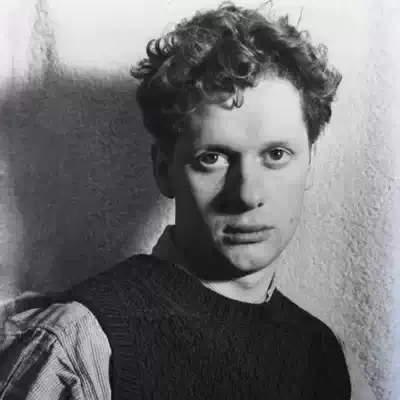
Dylan Thomas
In The White Giant's Thigh
Through throats where many rivers meet, the curlews cry,
Under the conceiving moon, on the high chalk hill,
And there this night I walk in the white giant's thigh
Where barren as boulders women lie longing still
To labour and love though they lay down long ago.
Through throats where many many rivers meet, the women pray,
Pleading in the waded bay for the seed to flow
Though the names on their weed grown stones are rained away,
And alone in the night's eternal, curving act
They yearn with tongues of curlews for the unconceived
And immemorial sons of the cudgelling, hacked
Hill. Who once in gooseskin winter loved all ice leaved
In the courters' lanes, or twined in the ox roasting sun
In the wains tonned so high that the wisps of the hay
Clung to the pitching clouds, or gay with any one
Young as they in the after milking moonlight lay
Under the lighted shapes of faith and their moonshade
Petticoats galed high, or shy with the rough riding boys,
Now clasp me to their grains in the gigantic glade,
Who once, green countries since, were a hedgerow of joys.
Time by, their dust was flesh the swineherd rooted sly,
Flared in the reek of the wiving sty with the rush
Light of his thighs, spreadeagle to the dunghill sky,
Or with their orchard man in the core of the sun's bush
Rough as cows' tongues and thrashed with brambles their buttermilk
Manes, under the quenchless summer barbed gold to the bone,
Or rippling soft in the spinney moon as the silk
And ducked and draked white lake that harps to a hail stone.
Who once were a bloom of wayside brides in the hawed house
And heard the lewd, wooed field flow to the coming frost,
The scurrying, furred small friars squeal, in the dowse
Of day, in the thistle aisles, till the white owl crossed
Their breast, the vaulting does roister, the horned bucks climb
Quick in the wood at love, where a torch of foxes foams,
All birds and beasts of the linked night uproar and chime
And the mole snout blunt under his pilgrimage of domes,
Or, butter fat goosegirls, bounced in a gambo bed,
Their breasts full of honey, under their gander king
Trounced by his wings in the hissing shippen, long dead
And gone that barley dark where their clogs danced in the spring,
And their firefly hairpins flew, and the ricks ran round-
(But nothing bore, no mouthing babe to the veined hives
Hugged, and barren and bare on Mother Goose's ground
They with the simple Jacks were a boulder of wives)--
Now curlew cry me down to kiss the mouths of their dust.
The dust of their kettles and clocks swings to and fro
Where the hay rides now or the bracken kitchens rust
As the arc of the billhooks that flashed the hedges low
And cut the birds' boughs that the minstrel sap ran red.
They from houses where the harvest kneels, hold me hard,
Who heard the tall bell sail down the Sundays of the dead
And the rain wring out its tongues on the faded yard,
Teach me the love that is evergreen after the fall leaved
Grave, after Belovéd on the grass gulfed cross is scrubbed
Off by the sun and Daughters no longer grieved
Save by their long desires in the fox cubbed
Streets or hungering in the crumbled wood: to these
Hale dead and deathless do the women of the hill
Love for ever meridian through the courters' trees
And the daughters of darkness flame like Fawkes fires still.
480
Ella Wheeler Wilcox
Now I lay Me
When I pass from earth away,
Palsied though I be and gray,
May my spirit keep so young
That my failing, faltering tongue
Frames that prayer so dear to me
Taught me at my mother's knee:
'Now I lay me down to sleep,'
(Passing to Eternal rest
On the loving parent breast)
'I pray the Lord my soul to keep;'
(From all danger safe and calm
In the hollow of His palm
'If I should die before I wake,'
(Drifting with a bated breath
Out of slumber into death,)
'I pray the Lord my soul to take.'
(From the body's claim set free
Sheltered in the Great to be.)
Simple prayer of trust and truth
Taught me in my early youth-
Let my soul its beauty keep
When I lay me down to sleep.
478
Ezra Pound
Of Jacopo Del Sellaio
This man knew out the secret ways of love,
No man could paint such things who did not know.
And now she's gone, who was his Cyprian,
And you are here, who are ‘The Isles’ to me.
And here's the thing that lasts the whole thing out:
The eyes of this dead lady speak to me.
No man could paint such things who did not know.
And now she's gone, who was his Cyprian,
And you are here, who are ‘The Isles’ to me.
And here's the thing that lasts the whole thing out:
The eyes of this dead lady speak to me.
479
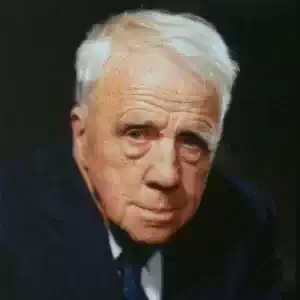
Robert Frost
After Apple-Picking
My long two-pointed ladder's sticking through a tree
Toward heaven still,
And there's a barrel that I didn't fill
Beside it, and there may be two or three
Apples I didn't pick upon some bough.
But I am done with apple-picking now.
Essence of winter sleep is on the night,
The scent of apples: I am drowsing off.
I cannot rub the strangeness from my sight
I got from looking through a pane of glass
I skimmed this morning from the drinking trough
And held against the world of hoary grass.
It melted, and I let it fall and break.
But I was well
Upon my way to sleep before it fell,
And I could tell
What form my dreaming was about to take.
Magnified apples appear and disappear,
Stem end and blossom end,
And every fleck of russet showing clear.
My instep arch not only keeps the ache,
It keeps the pressure of a ladder-round.
I feel the ladder sway as the boughs bend.
And I keep hearing from the cellar bin
The rumbling sound
Of load on load of apples coming in.
For I have had too much
Of apple-picking: I am overtired
Of the great harvest I myself desired.
There were ten thousand thousand fruit to touch,
Cherish in hand, lift down, and not let fall.
For all
That struck the earth,
No matter if not bruised or spiked with stubble,
Went surely to the cider-apple heap
As of no worth.
One can see what will trouble
This sleep of mine, whatever sleep it is.
Were he not gone,
The woodchuck could say whether it's like his
Long sleep, as I describe its coming on,
Or just some human sleep.
477

Rabindranath Tagore
I Found A Few Old Letters
XIV
I found a few old letters of mine carefully hidden in thy box—a few small toys for thy
memory to play with. With a timorous heart thou didst try to steal these trifles from
the turbulent stream of time which washes away planets and stars, and didst say,
“These are only mine!” Alas, there is no one now who can claim them—who is able to
pay their price; yet they are still here. Is there no love in this world to rescue thee
from utter loss, even like this love of thine that saved these letters with such fond
care?
O woman, thou camest for a moment to my side and touched me with the great
mystery of the woman that there is in the heart of creation—she who ever gives back
to God his own outflow of sweetness; who is the eternal love and beauty and youth;
who dances in bubbling streams and sings in the morning light; who with heaving
waves suckles the thirsty earth and whose mercy melts in rain; in whom the eternal
one breaks in two in joy that can contain itself no more and overflows in the pain of
love.
477

Boris Pasternak
Out of Superstition
A box of glazed sour fruit compact,
My narrow room.
And oh the grime of lodging rooms
This side the tomb!
This cubbyhole, out of superstition,
I chose once more.
The walls seem dappled oaks; the door,
A singing door.
You strove to leave; my hand was steady
Upon the latch.
My forelock touched a wondrous forehead;
My lips felt violets.
O Sweet! Your dress as on a day
Not long ago
To April, like a snowdrop, chirps
A gay 'Hello!'
No vestal-you, I know: You came
With a chair today,
Took down my life as from a shelf,
And blew the dust away.
474
Robert Frost
They Were Welcome To Their Belief
Grief may have thought it was grief.
Care may have thought it was care.
They were welcome to their belief,
The overimportant pair.
No, it took all the snows that clung
To the low roof over his bed,
Beginning when he was young,
To induce the one snow on his head.
But whenever the roof camme white
The head in the dark below
Was a shade less the color of night,
A shade more the color of snow.
Grief may have thought it was grief.
Care may have thought it was care.
But neither one was the thief
Of his raven color of hair.
Care may have thought it was care.
They were welcome to their belief,
The overimportant pair.
No, it took all the snows that clung
To the low roof over his bed,
Beginning when he was young,
To induce the one snow on his head.
But whenever the roof camme white
The head in the dark below
Was a shade less the color of night,
A shade more the color of snow.
Grief may have thought it was grief.
Care may have thought it was care.
But neither one was the thief
Of his raven color of hair.
475
Sara Teasdale
Old Tunes
As the waves of perfume, heliotrope, rose,
Float in the garden when no wind blows,
Come to us, go from us, whence no one knows;
So the old tunes float in my mind,
And go from me leaving no trace behind,
Like fragrance borne on the hush of the wind.
But in the instant the airs remain
I know the laughter and the pain
Of times that will not come again.
I try to catch at many a tune
Like petals of light fallen from the moon,
Broken and bright on a dark lagoon,
But they float away -- for who can hold
Youth, or perfume or the moon's gold?
474
Rudyard Kipling
To the Companions
How comes it that, at even-tide,
When level beams should show most truth,
Man, failing, takes unfailing pride
In memories of his frolic youth?
Venus and Liber fill their hour;
The games engage, the law-courts prove;
Till hardened life breeds love of power
Or Avarice, Age's final love.
Yet at the end, these comfort not--
Nor any triumph Fate decrees--
Compared with glorious, unforgot--
Ten innocent enormities
Of frontless days before the beard,
When, instant on the casual jest,
The God Himself of Mirth appeared
And snatched us to His heaving breast
And we--not caring who He was
But certain He would come again--
Accepted all He brought to pass
As Gods accept the lives of men...
Then He withdrew from sight and speech,
Nor left a shrine. How comes it now,
While Charon's keel grates on the beach,
He calls so clear: "Rememberest thou?"
474

Lord Byron
To The Earl Of Clare
'Tu semper amoris
Sisd memor, etcari comitis ne abscedat imago' — Val Flac
Friend of my youth! when young we roved,
Like striplings mutually beloved,
With friendship's purest glow,
The bliss which wing'd those rosy hours
Was such as pleasure seldom showers
On mortals here below.
The recollectlon seems alone
Dearer than all the joys I've known,
When distant far from you:
Though pain, 'tis still a pleasing pain,
To trace those days and hours again,
And sigh again, adieu!
My pensive memory lingers o'er
Those scenes to be enjoy'd no more,
Those scenes regretted ever
The measure of our youth is full,
Life's evening dream is dark and dull,
And we rnay meet ah!
never!
As when one parent spring supplies
Two strearns which from one fountain rise
Together join'd in 'vain;
How soon' diverging from their source,
Each murmuring, seeks another course,
Till mingled in the main!
Our vital streams of weal or woe,
Though near, alas! distinctly flow,
Nor mingle as before:
Now swift or slow, now black or clear,
Till death's unfathom'd gulf appear,
And both shall quit the shore.
Our souls, my friend! which once supplied
One wish, nor breathed a thought beside,
Now flow in different channels:
Disdaining humbler rural sports,
'Tis yours to mix in polish'd courts,
And shine in fashion's annals
;'Tis mine to waste on love my time,
Or vent my reveries in rhyme,
Without the aid of reason;
For sense and reason (critics know it)
Have quitted every amorous poet,
Nor left a thought to seize on.
Poor LITTLE! sweet, melodlous bard!
Of late esteem'd it monstrous hard
That he, who sang before all,
He
who the lore of love expanded,
By
dire reviewers should be branded
As void of wit and moral.
And yet, while Beauty's praise is thine,
Harmonious favourite of the nine,
Repine not at thy lot.
Thy soothing lays may still be read,
When Persecution's arm is dead,
And critics are forgot.
Still I must yield those worthies merit,
Who chasten, with unsparing spirit,
Bad rhymes, and those who write them;
And though myself may be the next
By criticism to be vext,
I really will not fight them.
Perhaps they wouid do quite as well
To break the rudely sounding shell
Of such a young beginner:
He who offends at pert nineteen,
Ere thirty may become, I ween,
A very harden'd sinner.
Now, Clare, I must return to you;
And, sure, apologies are due:
Accept, then, my concession
In truth dear Clare, in fancy's flight
I soar along from left to right;
My muse admires digression
I think I said 'twould he your fate
To add one star to royal state;
May
regal smiles attend you!
And should a noble monarch reign,
You will not seek his smiles in vain,
If worth can recommend you.
Yet since in danger courts abound,
Where specious rivals glitter round,
From snares may saints preserve you;
And grant your love or friendship ne'er
From any claim a kindred care,
But those who best deserve you!
Not for a moment may you stray
From truth's secure, unerring way!
May no delights decoy!
O'er roses may your footsteps move,
Your smiles be ever smiles of love,
Your tears be tears of joy!
Oh! if you wish that happiness
Your coming days and years may bless,
And virtues crown your brow;
Be still as you were wont to be,
Spotless as you've been known to me,
Be
still as you are now.
And though some trifling share of praise,
To cheer my last declining days,
To me were doubly dear;
Whilst blessing your beloved name
I'd waive at once a poet's fame,
To prove a prophet here.
476
Walt Whitman
The Artilleryman's Vision
WHILE my wife at my side lies slumbering, and the wars are over long,
And my head on the pillow rests at home, and the vacant midnight
passes,
And through the stillness, through the dark, I hear, just hear, the
breath of my infant,
There in the room, as I wake from sleep, this vision presses upon me:
The engagement opens there and then, in fantasy unreal;
The skirmishers begin--they crawl cautiously ahead--I hear the
irregular snap! snap!
I hear the sounds of the different missiles--the short t-h-t! t-h-t!
of the rifle balls;
I see the shells exploding, leaving small white clouds--I hear the
great shells shrieking as they pass;
The grape, like the hum and whirr of wind through the trees, (quick,
tumultuous, now the contest rages!)
All the scenes at the batteries themselves rise in detail before me
again;
The crashing and smoking--the pride of the men in their pieces;
The chief gunner ranges and sights his piece, and selects a fuse of
the right time;
After firing, I see him lean aside, and look eagerly off to note the
effect;
--Elsewhere I hear the cry of a regiment charging--(the young colonel
leads himself this time, with brandish'd sword;)
I see the gaps cut by the enemy's volleys, (quickly fill'd up, no
delay;)
I breathe the suffocating smoke--then the flat clouds hover low,
concealing all;
Now a strange lull comes for a few seconds, not a shot fired on
either side;
Then resumed, the chaos louder than ever, with eager calls, and
orders of officers;
While from some distant part of the field the wind wafts to my ears a
shout of applause, (some special success;)
And ever the sound of the cannon, far or near, (rousing, even in
dreams, a devilish exultation, and all the old mad joy, in the
depths of my soul;)
And ever the hastening of infantry shifting positions--batteries,
cavalry, moving hither and thither;
(The falling, dying, I heed not--the wounded, dripping and red, I
heed not--some to the rear are hobbling;)
Grime, heat, rush--aid-de-camps galloping by, or on a full run;
With the patter of small arms, the warning s-s-t of the rifles,
(these in my vision I hear or see,)
And bombs busting in air, and at night the vari-color'd rockets.
473
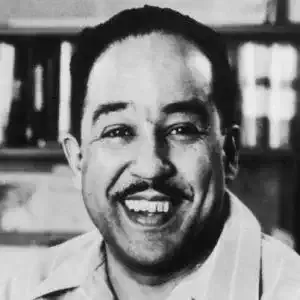
Langston Hughes
Negro Speaks of Rivers
I've known rivers:
I've known rivers ancient as the world and older than the
flow of human blood in human veins
My soul has grown deep like the rivers.
I bathed in the Euphrates when dawns were young
I built my hut near the Congo and it lulled me to sleep.
I looked upon the Nile and raised the pyramids above it.
I heard the singing of the Mississippi when Abe Lincoln
went down to New Orleans, and I've seen its muddy
bosom turn all golden in the sunset
I've known rivers:
Ancient, dusky rivers.
My soul has grown deep like the rivers.
473
Sara Teasdale
Places
Places I love come back to me like music,
Hush me and heal me when I am very tired;
I see the oak woods at Saxton's flaming
In a flare of crimson by the frost newly fired;
And I am thirsty for the spring in the valley
As for a kiss ungiven and long desired.
I know a bright world of snowy hills at Boonton,
A blue and white dazzling light on everything one sees,
The ice-covered branches of the hemlocks sparkle
Bending low and tinkling in the sharp thin breeze,
And iridescent crystals fall and crackle on the snow-crust
With the winter sun drawing cold blue shadows from the trees.
Violet now, in veil on veil of evening
The hills across from Cromwell grow dreamy and far;
A wood-thrush is singing soft as a viol
In the heart of the hollow where the dark pools are;
The primrose has opened her pale yellow flowers
And heaven is lighting star after star.
Places I love come back to me like music --
Mid-ocean, midnight, the waves buzz drowsily;
In the ship's deep churning the eerie phosphorescence
Is like the souls of people who were drowned at sea,
And I can hear a man's voice, speaking, hushed, insistent,
At midnight, in mid-ocean, hour on hour to me.
472

Matsuo Bashō
Collection of Six Haiku
Waking in the night;
the lamp is low,
the oil freezing.
It has rained enough
to turn the stubble on the field
black.
Winter rain
falls on the cow-shed;
a cock crows.
The leeks
newly washed white,-
how cold it is!
The sea darkens;
the voices of the wild ducks
are faintly white.
Ill on a journey;
my dreams wander
over a withered moor.
472

William Butler Yeats
In Memory Of Alfred Pollexfen
FIVE-AND-TWENTY years have gone
Since old William pollexfen
Laid his strong bones down in death
By his wife Elizabeth
In the grey stone tomb he made.
And after twenty years they laid
In that tomb by him and her
His son George, the astrologer;
And Masons drove from miles away
To scatter the Acacia spray
Upon a melancholy man
Who had ended where his breath began.
Many a son and daughter lies
Far from the customary skies,
The Mall and Eades's grammar school,
In London or in Liverpool;
But where is laid the sailor John
That so many lands had known,
Quiet lands or unquiet seas
Where the Indians trade or Japanese?
He never found his rest ashore,
Moping for one voyage more.
Where have they laid the sailor John?
And yesterday the youngest son,
A humorous, unambitious man,
Was buried near the astrologer,
Yesterday in the tenth year
Since he who had been contented long.
A nobody in a great throng,
Decided he would journey home,
Now that his fiftieth year had come,
And 'Mr. Alfred' be again
Upon the lips of common men
Who carried in their memory
His childhood and his family.
At all these death-beds women heard
A visionary white sea-bird
Lamenting that a man should die;
And with that cry I have raised my cry.
466