
Memories and Recollections
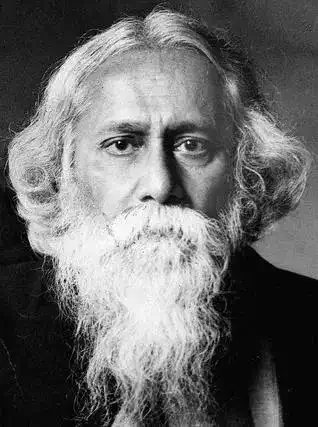
Rabindranath Tagore
Signet of Eternity
The day was when I did not keep myself in readiness for thee;
and entering my heart unbidden even as one of the common crowd,
unknown to me, my king, thou didst press the signet of eternity upon
many a fleeting moment of my life.
And today when by chance I light upon them and see thy signature,
I find they have lain scattered in the dust mixed with the memory of
joys and sorrows of my trivial days forgotten.
Thou didst not turn in contempt from my childish play among dust,
and the steps that I heard in my playroom
are the same that are echoing from star to star.
519

Robert Browning
Heap cassia, sandal-buds and stripes
Heap cassia, sandal-buds and stripes
Of labdanum, and aloe-balls,
Smeared with dull nard an Indian wipes
From out her hair: such balsam falls
Down sea-side mountain pedestals,
From tree-tops where tired winds are fain,
Spent with the vast and howling main,
To treasure half their island-gain.
And strew faint sweetness from some old
Egyptian's fine worm-eaten shroud
Which breaks to dust when once unrolled;
Or shredded perfume, like a cloud
From closet long to quiet vowed,
With mothed and dropping arras hung,
Mouldering her lute and books among,
As when a queen, long dead, was young.
517

John Keats
Sonnet. To A Lady Seen For A Few Moments At Vauxhall
Time's sea hath been five years at its slow ebb,
Long hours have to and fro let creep the sand,
Since I was tangled in thy beauty's web,
And snared by the ungloving of thine hand.
And yet I never look on midnight sky,
But I behold thine eyes' well memory'd light;
I cannot look upon the rose's dye,
But to thy cheek my soul doth take its flight.
I cannot look on any budding flower,
But my fond ear, in fancy at thy lips
And hearkening for a love-sound, doth devour
Its sweets in the wrong sense: -- Thou dost eclipse
Every delight with sweet remembering,
And grief unto my darling joys dost bring.
517

Lord Byron
Remind Me Not, Remind Me Not
Remind me not, remind me not,
Of those beloved, those vanish'd hours,
When all my soul was given to thee;
Hours that may never be forgot,
Till Time unnerves our vital powers,
And thou and I shall cease to be.
Can I forgetcanst
thou forget,
When playing with thy golden hair,
How quick thy fluttering heart did move?
Oh! by my soul, I see thee yet,
With eyes so languid, breast so fair,
And lips, though silent, breathing love.
When thus reclining on my breast,
Those eyes threw back a glance so sweet,
As half reproach'd yet rais'd desire,
And still we near and nearer prest,
And still our glowing lips would meet,
As if in kisses to expire.
And then those pensive eyes would close,
And bid their lids each other seek,
Veiling the azure orbs below;
While their long lashes' darken'd gloss
Seem'd stealing o'er thy brilliant cheek,
Like raven's plumage smooth'd on snow.
I dreamt last night our love return'd,
And, sooth to say, that very dream
Was sweeter in its phantasy,
Than if for other hearts I burn'd,
For eyes that ne'er like thine could beam
In Rapture's wild reality.
Then tell me not, remind me not,
Of hours which, though for ever gone,
Can still a pleasing dream restore,
Till Thou and I shall be forgot,
And senseless, as the mouldering stone
Which tells that we shall be no more.
516
Lord Byron
The Adieu
Written Under The Impression That The Author Would Soon Die.
Adieu, thou Hill! where early joy
Spread roses o'er my brow;
Where Science seeks each loitering boy
With knowledge to endow.
Adieu, my youthful friends or foes,
Partners of former bliss or woes;
No more through Ida's paths we stray;
Soon must I share the gloomy cell,
Whose ever‑slumbering inmates dwell
Unconscious of the day.
Adieu, ye hoary Regal Fanes,
Ye spires of Granta's vale,
Where Learning robed in sable reigns,
And Melancholy pale.
Ye comrades of the jovial hour,
Ye tenants of the classic bower,
On Cama's verdant margin placed,
Adieu! while memory still is mine,
For, offerings on Oblivion's shrine,
These scenes must be effaced.
Adieu, ye mountains of the clime
Where grew my youthful years;
Where Loch na Garr in snows sublime
His giant summit rears.
Why did my childhood wander forth
From you, ye regions of the North,
With sons of pride to roam?
Why did I quit my Highland cave,
Mar's dusky heath, and Dee's clear wave,
To seek a Sotheron home!
Hall of my Sires! a long farewell
Yet
why to thee adieu?
Thy vaults will echo back my knell,
Thy towers my tomb will view:
The faltering tongue which sung thy fall,
And former glories of thy Hall,
Forgets its wonted simple note
But
yet the Lyre retains the strings,
And sometimes, on Æolian wings,
In dying strains may float.
Fields which surround yon rustic cot,
While yet I linger here,
Adieu! you are not now forgot,
To retrospection dear.
Streamlet! along whose rippling surge
My youthful limbs were wont to urge,
At noontide heat, their pliant course;
Plunging with ardour from the shore,
Thy springs will lave these limbs no more,
Deprived of active force.
And shall I here forget the scene,
Still nearest to my breast?
Rocks rise and rivers roll between
The spot which passion blest;
Yet, Mary, all thy beauties seem
Fresh as in Love's bewitching dream,
To me in smiles display'd;
Till slow disease resigns his prey
To Death, the parent of decay,
Thine image cannot fade.
And thou, my Friend! whose gentle love
Yet thrills my bosom's chords,
How much thy friendship was above
Description's power of words!
Still near my breast thy gift I wear
Which sparkled once with Feeling's tear,
Of Love the pure, the sacred gem;
Our souls were equal, and our lot
In that dear moment quite forgot;
Let Pride alone condemn!
All, all is dark and cheerless now!
No smile of Love's deceit
Can warm my veins with wonted glow,
Can bid Life's pulses beat:
Not e'en the hope of future fame
Can wake my faint, exhausted frame,
Or crown with fancied wreaths my head.
Mine is a short inglorious race,
To
humble in the dust my face,
And mingle with the dead.
Oh Fame! thou goddess of my heart;
On him who gains thy praise,
Pointless must fall the Spectre's dart,
Consumed in Glory's blaze;
But me she beckons from the earth,
My name obscure, unmark'd my birth,
My life a short and vulgar dream:
Lost in the dull, ignoble crowd,
My hopes recline within a shroud,
My fate is Lathe's stream.
When I repose beneath the sod,
Unheeded in the clay,
Where once my playful footsteps trod,
Where now my head must lay,
The weed of Pity will be shed
In dewdrops
o'er my narrow bed,
By nightly skies, and storms alone;
No mortal eye will deign to steep
With tears the dark sepulchral deep
Which hides a name unknown.
Forget this world, my restless sprite,
Turn, turn thy thoughts to Heaven:
There must thou soon direct thy flight,
If errors are forgiven.
To bigots and to sects unknown,
Bow down beneath the Almighty's Throne;
To Him address thy trembling prayer:
He, who is merciful and just,
Will not reject a child of dust,
Although his meanest care.
Father of Light! to Thee I call;
My soul is dark within:
Thou who canst mark the sparrow's fall,
Avert the death of sin.
Thou, who canst guide the wandering star,
Who calm'st the elemental war,
Whose mantle is yon boundless sky,
My thoughts, my words, my crimes forgive:
And, since I soon must cease to live,
Instruct me how to die.
514
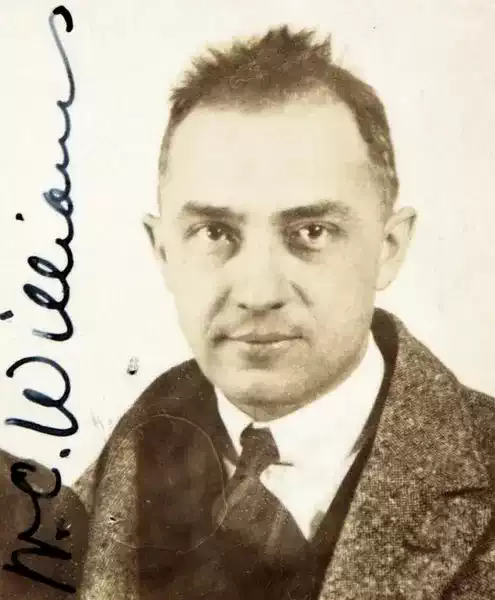
William Carlos Williams
From Asphodel, That Greeny Flower
Of asphodel, that greeny flower,
like a buttercup
upon its branching stemsave
that it's green and wooden-
I come, my sweet,
to sing to you.
We lived long together
a life filled,
if you will,
with flowers. So that
I was cheered
when I came first to know
that there were flowers also
in hell.
Today
I'm filled with the fading memory of those flowers
that we both loved,
even to this poor
colorless thing-
I saw it
when I was a childlittle
prized among the living
but the dead see,
asking among themselves:
What do I remember
that was shaped
as this thing is shaped?
while our eyes fill
with tears.
Of love, abiding love
it will be telling
though too weak a wash of crimson
colors it
to make it wholly credible.
There is something
something urgent
I have to say to you
and you alone
but it must wait
while I drink in
the joy of your approach,
perhaps for the last time.
And so
with fear in my heart
I drag it out
and keep on talking
for I dare not stop.
Listen while I talk on
against time.
It will not be
for long.
I have forgot
and yet I see clearly enough
something
central to the sky
which ranges round it.
An odor
springs from it!
A sweetest odor!
Honeysuckle! And now
there comes the buzzing of a bee!
and a whole flood
of sister memories!
Only give me time,
time to recall them
before I shall speak out.
Give me time,
time.
When I was a boy
I kept a book
to which, from time
to time,
I added pressed flowers
until, after a time,
I had a good collection.
The asphodel,
forebodingly,
among them.
I bring you,
reawakened,
a memory of those flowers.
They were sweet
when I pressed them
and retained
something of their sweetness
a long time.
It is a curious odor,
a moral odor,
that brings me
near to you.
The color
was the first to go.
There had come to me
a challenge,
your dear self,
mortal as I was,
the lily's throat
to the hummingbird!
Endless wealth,
I thought,
held out its arms to me.
A thousand tropics
in an apple blossom.
The generous earth itself
gave us lief.
The whole world
became my garden!
But the sea
which no one tends
is also a garden
when the sun strikes it
and the waves
are wakened.
I have seen it
and so have you
when it puts all flowers
to shame.
Too, there are the starfish
stiffened by the sun
and other sea wrack
and weeds. We knew that
along with the rest of it
for we were born by the sea,
knew its rose hedges
to the very water's brink.
There the pink mallow grows
and in their season
strawberries
and there, later,
we went to gather
the wild plum.
I cannot say
that I have gone to hell
for your love
but often
found myself there
in your pursuit.
I do not like it
and wanted to be
in heaven. Hear me out.
Do not turn away.
I have learned much in my life
from books
and out of them
about love.
Death
is not the end of it.
There is a hierarchy
which can be attained,
I think,
in its service.
Its guerdon
is a fairy flower;
a cat of twenty lives.
If no one came to try it
the world
would be the loser.
It has been
for you and me
as one who watches a storm
come in over the water.
We have stood
from year to year
before the spectacle of our lives
with joined hands.
The storm unfolds.
Lightning
plays about the edges of the clouds.
The sky to the north
is placid,
blue in the afterglow
as the storm piles up.
It is a flower
that will soon reach
the apex of its bloom.
We danced,
in our minds,
and read a book together.
You remember?
It was a serious book.
And so books
entered our lives.
The sea! The sea!
Always
when I think of the sea
there comes to mind
the Iliad
and Helen's public fault
that bred it.
Were it not for that
there would have been
no poem but the world
if we had remembered,
those crimson petals
spilled among the stones,
would have called it simply
murder.
The sexual orchid that bloomed then
sending so many
disinterested
men to their graves
has left its memory
to a race of fools
or heroes
if silence is a virtue.
The sea alone
with its multiplicity
holds any hope.
The storm
has proven abortive
but we remain
after the thoughts it roused
to
re-cement our lives.
It is the mind
the mind
that must be cured
short of death's
intervention,
and the will becomes again
a garden. The poem
is complex and the place made
in our lives
for the poem.
Silence can be complex too,
but you do not get far
with silence.
Begin again.
It is like Homer's
catalogue of ships:
it fills up the time.
I speak in figures,
well enough, the dresses
you wear are figures also,
we could not meet
otherwise. When I speak
of flowers
it is to recall
that at one time
we were young.
All women are not Helen,
I know that,
but have Helen in their hearts.
My sweet,
you have it also, therefore
I love you
and could not love you otherwise.
Imagine you saw
a field made up of women
all silver-white.
What should you do
but love them?
The storm bursts
or fades! it is not
the end of the world.
Love is something else,
or so I thought it,
a garden which expands,
though I knew you as a woman
and never thought otherwise,
until the whole sea
has been taken up
and all its gardens.
It was the love of love,
the love that swallows up all else,
a grateful love,
a love of nature, of people,
of animals,
a love engendering
gentleness and goodness
that moved me
and that I saw in you.
I should have known,
though I did not,
that the lily-of-the-valley
is a flower makes many ill
who whiff it.
We had our children,
rivals in the general onslaught.
I put them aside
though I cared for them.
as well as any man
could care for his children
according to my lights.
You understand
I had to meet you
after the event
and have still to meet you.
Love
to which you too shall bow
along with mea
flower
a weakest flower
shall be our trust
and not because
we are too feeble
to do otherwise
but because
at the height of my power
I risked what I had to do,
therefore to prove
that we love each other
while my very bones sweated
that I could not cry to you
in the act.
Of asphodel, that greeny flower,
I come, my sweet,
to sing to you!
My heart rouses
thinking to bring you news
of something
that concerns you
and concerns many men. Look at
what passes for the new.
You will not find it there but in
despised poems.
It is difficult
to get the news from poems
yet men die miserably every day
for lack
of what is found there.
Hear me out
for I too am concerned
and every man
who wants to die at peace in his bed
besides.
505

Ella Wheeler Wilcox
Memory's Mansion
In Memory's Mansion are wonderful rooms,
And I wander about them at will;
And I pause at the casements, where boxes of blooms
Are sending sweet scents o'er the sill.
I lean from a window that looks on a lawn;
From a turret that looks on the wave.
But I draw down the shade when I see on some glade
A stone standing guard by a grave.
To Memory's attic I clambered one day
When the roof was resounding with rain,
And there, among relics long hidden away,
I rummaged with heart ache and pain.
A hope long surrendered and covered with dust,
A pastime, out-grown and forgot,
And a fragment of love all corroded with rust,
Were lying heaped up in one spot.
And there on the floor of that garret was tossed
A friendship too fragile to last,
With pieces of dearly bought pleasures that cost
Vast fortunes of pain in the past,
A fabric of passion, once vivid and bright,
As the breast of a robin in Spring,
Was spread out before me-a terrible sight-
A moth-eaten rag of a thing.
Then down the deep stairway I hurriedly went,
And into fair chambers below;
But the mansion seemed filled with the old attic scent
Wherever my footsteps would go.
Though in Memory's House I still wander full oft,
No more to the garret I climb;
And I leave all the rubbish heaped there in the loft
To the hands of the Housekeeper, Time.
508
John Keats
Sonnet IX. Keen, Fitful Gusts Are
Keen, fitful gusts are whisp'ring here and there
Among the bushes half leafless, and dry;
The stars look very cold about the sky,
And I have many miles on foot to fare.
Yet feel I little of the cool bleak air,
Or of the dead leaves rustling drearily,
Or of those silver lamps that burn on high,
Or of the distance from home's pleasant lair:
For I am brimfull of the friendliness
That in a little cottage I have found;
Of fair-hair'd Milton's eloquent distress,
And all his love for gentle Lycid drown'd;
Of lovely Laura in her light green dress,
And faithful Petrarch gloriously crown'd.
507
Rabindranath Tagore
The Gardener LV: It Was Mid-Day
It was mid-day when you went
away .
The sun was strong in the sky.
I had done my work and sat alone
on my balcony when you went away.
Fitful gusts came winnowing
through the smells of may distant
fields.
The doves cooed tireless in the shade,
and a bee strayed in my room humming
the news of many distant fields.
The village slept in the noonday
heat. The road lay deserted.
In sudden fits the rustling of the
leaves rose and died.
I gazed at the sky and wove in the
blue the letters of a name I had known,
while the village slept in the noonday
heat.
I had forgotten to braid my hair.
The languid breeze played with it upon
my cheek.
The river ran unruffled under the
shady bank.
The lazy white clouds did not move.
I had forgotten to braid my hair.
It was mid-day when you went
away.
The dust of the road was hot and
the fields panting.
The doves cooed among the dense
leaves.
I was alone in my balcony when you
went away.
507
Boris Pasternak
The Patient's Sweater
A life of its own and a long one is led
By this penguin, with nothing to do with the breast-
The wingless pullover, the patient's old vest;
Now pass it some warmth, move the lamp to the bed.
It dreams of the skiing; in darkness it poured
From shaftbows, from harness, from bodies; it seemed
That Christmas itself also sweated and snored;
The walking, the riding-all squeaked and all steamed.
A homestead, and horror and bareness beside,
Cut-glass in the sideboards, and carpets and chests;
The house was inflamed; this attracted the fence;
The lights swam in pleurisy, seen from outside.
Consumed by the sky, bloated shrubs on the way
Were white as a scare and had ice in their looks.
The blaze from the kitchen laid down by the sleigh
On the snow the enormous hands of the cooks.
502

Alfred Lord Tennyson
The Splendor Falls
The splendor falls on castle walls
And snowy summits old in story:
The long light shakes across the lakes
And the wild cataract leaps in glory.
Blow, bugle, blow, set the wild echoes flying,
Blow, bugle; answer, echoes dying, dying, dying.
O hark, O hear! how thin and clear,
And thinner, clearer, farther going!
O sweet and far from cliff and scar
The horns of Elfland faintly blowing!
Blow, let us hear the purple glens replying,
Blow, bugle; answer, echoes dying, dying, dying.
O love they die in yon rich sky,
They faint on hill or field, or river:
Our echoes roll from soul to soul,
And grow forever and forever.
Blow, bugle, blow, set the wild echoes flying,
And answer, echoes, answer, dying, dying, dying.
503
Lord Byron
To A Lady, Who Presented The Author With The Velvet Band Which Bound Her Tresses
This Band, which bound thy yellow hair,
Is mine, sweet girl! Thy pledge of love;
It claims my warmest, dearest care,
Like relics left of saints above.
Oh! I will wear it next my heart;
'Twill blind my soul in bonds to thee;
From me again 't will ne'er depart,
But mingle in the grave with me.
The dew I gather from thy lip
Is not so dear to me as this;
That I but for a moment sip,
And banquet on a transient bliss:
This will recall each youthful scene,
E'en when our lives are on the wane;
The leaves of Love will still be green
When Memory bids them bud again.
Oh! little lock of golden hue,
In gently waving ringlet curl'd
By the dear head on which you grow,
I would not lose you for a world.
Not though a thousand more adorn
The polish'd brow where once you shone,
Like rays which gild a cloudless morn,
Beneath Columbia's fervid zone.
500
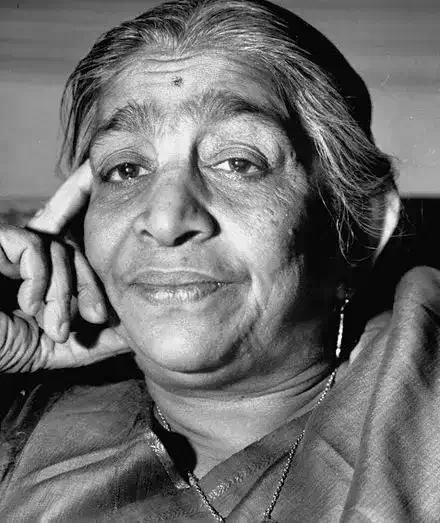
Sarojini Naidu
My Dead Dream
HAVE YOU found me, at last, O my Dream? Seven eons ago
You died and I buried you deep under forests of snow.
Why have you come hither? Who bade you awake from your sleep
And track me beyond the cerulean foam of the deep?
Would you tear from my lintels these sacred green garlands of leaves?
Would you scare the white, nested, wild pigeons of joy from my eaves?
Would you touch and defile with dead fingers the robes of my priest?
Would you weave your dim moan with the chantings of love at my feast?
Go back to your grave, O my Dream, under forests of snow,
Where a heart-riven child hid you once, seven eons ago.
Who bade you arise from your darkness? I bid you depart!
Profane not the shrines I have raised in the clefts of my heart.
500
John Keats
The Eve Of Saint Mark. A Fragment
Upon a Sabbath-day it fell;
Twice holy was the Sabbath-bell
That call'd the folk to evening prayer;
The city streets were clean and fair
From wholesome drench of April rains;
And, on the western window panes,
The chilly sunset faintly told
Of unmatur'd green vallies cold,
Of the green thorny bloomless hedge,
Of rivers new with spring-tide sedge,
Of primroses by shelter'd rills,
And daisies on the aguish hills.
Twice holy was the Sabbath-bell:
The silent streets were crowded well
With staid and pious companies,
Warm from their fire-side orat'ries,
And moving with demurest air
To even-song and vesper prayer.
Each arched porch and entry low
Was fill'd with patient folk and slow,
With whispers hush, and shuffling feet,
While play'd the organ loud and sweet.
The bells had ceas'd, the prayers begun,
And Bertha had not yet half done
A curious volume, patch'd and torn,
That all day long, from earliest morn,
Had taken captive her two eyes
Among its golden broideries;
Perplex'd her with a thousand things,--
The stars of Heaven, and angels' wings,
Martyrs in a fiery blaze,
Azure saints in silver rays,
Moses' breastplate, and the seven
Candlesticks John saw in Heaven,
The winged Lion of Saint Mark,
And the Covenantal Ark
With its many mysteries,
Cherubim and golden mice.
Bertha was a maiden fair,
Dwelling in the old Minster-square;
From her fire-side she could see
Sidelong its rich antiquity,
Far as the Bishop's garden-wall;
Where sycamores and elm-trees tall,
Full-leav'd, the forest had outstript,
By no sharp north-wind ever nipt,
So shelter'd by the mighty pile.
Bertha arose, and read awhile
With forehead 'gainst the window-pane.
Again she try'd, and then again,
Until the dusk eve left her dark
Upon the legend of St. Mark.
From plaited lawn-frill, fine and thin,
She lifted up her soft warm chin,
With aching neck and swimming eyes,
And daz'd with saintly imageries.
All was gloom, and silent all,
Save now and then the still foot-fall
Of one returning homewards late
Past the echoing minster-gate.
The clamorous daws, that all the day
Above tree-tops and towers play,
Pair by pair had gone to rest,
Each in its ancient belfry-nest,
Where asleep they fall betimes
To music of the drowsy chimes.
All was silent, all was gloom
Abroad and in the homely room:
Down she sat, poor cheated soul!
And struck a lamp from the dismal coal;
Lean'd forward with bright drooping hair
And slant book full against the glare.
Her shadow, in uneasy guise,
hover'd about, a giant size,
On ceiling-beam and old oak chair,
The parrot's cage, and panel square;
And the warm angled winter screen,
On which were many monsters seen,
Call'd doves of Siam, Lima mice,
And legless birds of Paradise,
Macaw, and tender Avadavat,
And silken-furr'd Angora cat.
Untir'd she read, her shadow still
Glower'd about as it would fill
The room with wildest forms and shades,
As though some ghostly queen of spades
Had come to mock behind her back,
And dance, and ruffle her garments black.
Untir'd she read the legend page
Of holy Mark, from youth to age,
On land, on sea, in pagan chains,
Rejoicing for his many pains.
Sometimes the learned Eremite
With golden star, or dagger bright,
Referr'd to pious poesies
Written in smallest crow-quill size
Beneath the text; and thus the rhyme
Was parcell'd out from time to time:
---- 'Als writith he of swevenis,
Men han beforne they wake in bliss,
Whanne that hir friendes thinke him bound
In crimped shroude farre under grounde;
And how a litling child mote be
A saint er its nativitie,
Gif that the modre (God her blesse!)
Kepen in solitarinesse,
And kissen devoute the holy croce.
Of Goddes love, and Sathan's force,--
He writith; and thinges many mo
Of swiche thinges I may not show.
Bot I must tellen verilie
Somdel of Sainte Cicilie,
And chieftie what he auctorethe
Of Sainte Markis life and dethe:'
At length her constant eyelids come
Upon the fervent martyrdom;
Then lastly to his holy shrine,
Exalt amid the tapers' shine
At Venice,--
504
Lord Byron
Childe Harold's Pilgrimage: A Romaunt. Canto IV.
I.
I stood in Venice, on the Bridge of Sighs;
A palace and a prison on each hand:
I saw from out the wave her structures rise
As from the stroke of the enchanter's wand:
A thousand years their cloudy wings expand
Around me, and a dying Glory smiles
O'er the far times, when many a subject land
Look'd to the winged Lion's marble piles,
Where Venice sate in state, thron'd on her hundred isles!
II.
She looks a sea Cybele, fresh from ocean,
Rising with her tiara of proud towers
At airy distance, with majestic motion,
A ruler of the waters and their powers:
And such she was; her daughters had their dowers
From spoils of nations, and the exhaustless East
Pour'd in her lap all gems in sparkling showers.
In purple was she rob'd, and of her feast
Monarchs partook, and deem'd their dignity increas'd.
III.
In Venice Tasso's echoes are no more,
And silent rows the songless gondolier;
Her palaces are crumbling to the shore,
And music meets not always now the ear:
Those days are gone but
Beauty still is here.
States fall, arts fade but
Nature doth not die,
Nor yet forget how Venice once was dear,
The pleasant place of all festivity,
The revel of the earth, the masque of Italy!
IV.
But unto us she hath a spell beyond
Her name in story, and her long array
Of mighty shadows, whose dim forms despond
Above the dogeless city's vanish'd sway;
Ours is a trophy which will not decay
With the Rialto; Shylock and the Moor,
And Pierre, cannot be swept or worn away The
keystones of the arch! though all were o'er,
For us repeopl'd were the solitary shore.
V.
The beings of the mind are not of clay;
Essentially immortal, they create
And multiply in us a brighter ray
And more belov'd existence: that which Fate
Prohibits to dull life, in this our state
Of mortal bondage, by these spirits supplied,
First exiles, then replaces what we hate;
Watering the heart whose early flowers have died,
And with a fresher growth replenishing the void.
VI.
Such is the refuge of our youth and age,
The first from Hope, the last from Vacancy;
And this worn feeling peoples many a page,
And, maybe, that which grows beneath mine eye:
Yet there are things whose strong reality
Outshines our fairyland;
in shape and hues
More beautiful than our fantastic sky,
And the strange constellations which the Muse
O'er her wild universe is skilful to diffuse:
VII.
I saw or dream'd of such but
let them go;
They came like truth and
disappear'd like dreams;
And whatsoe'er they were are
now but so:
I could replace them if I would; still teems
My mind with many a form which aptly seems
Such as I sought for, and at moments found;
Let these too go for
waking Reason deems
Such overweening fantasies unsound,
And other voices speak, and other sights surround.
VIII.
I've taught me other tongues, and in strange eyes
Have made me not a stranger; to the mind
Which is itself, no changes bring surprise;
Nor is it harsh to make, nor hard to find
A country with ay,
or without mankind;
Yet was I born where men are proud to be Not
without cause; and should I leave behind
The inviolate island of the sage and free,
And seek me out a home by a remoter sea,
IX.
Perhaps I lov'd it well: and should I lay
My ashes in a soil which is not mine,
My spirit shall resume it if
we may
Unbodied choose a sanctuary. I twine
My hopes of being remember'd in my line
With my land's language: if too fond and far
These aspirations in their scope incline,
If my fame should be, as my fortunes are,
Of hasty growth and blight, and dull Oblivion bar
X.
My name from out the temple where the dead
Are honour'd by the nations let
it be And
light the laurels on a loftier head!
And be the Spartan's epitaph on me
'Sparta hath many a worthier son than he.'
Meantime I seek no sympathies, nor need;
The thorns which I have reap'd are of the tree
I planted: they have torn me, and I bleed:
I should have known what fruit would spring from such a seed.
XI.
The spouseless Adriatic mourns her lord;
And annual marriage now no more renew'd,
The Bucentaur lies rotting unrestored,
Neglected garment of her widowhood!
St. Mark yet sees his lion where he stood
Stand, but in mockery of his wither'd power,
Over he proud Place where an Emperor sued,
And monarchs gaz'd and envied in the hour
When Venice was a queen with an unequall'd dower.
XII.
The Suabian sued, and now the Austrian reigns An
Emperor tramples where an Emperor knelt;
Kingdoms are shrunk to provinces, and chains
Clank over sceptred cities, nations melt
From power's high pinnacle, when they have felt
The sunshine for a while, and downward go
Like Lauwine loosen'd from the mountain's belt;
Oh for one hour of blind old Dandolo!
Th' octogenarian chief, Byzantium's conquering foe!
XIII.
Before St. Mark still glow his steeds of brass,
Their gilded collars glittering in the sun;
But is not Doria's menace come to pass?
Are they not bridled? Venice,
lost and won,
Her thirteen hundred years of freedom done,
Sinks, like a seaweed,
into whence she rose!
Better be whelm'd beneath the waves, and shun,
Even in destruction's depth, her foreign foes,
From whom submission wrings an infamous repose.
XIV.
In youth she was all glory, a new Tyre,
Her very byword
sprung from victory,
The 'Planter of the Lion,' which through fire
And blood she bore o'er subject earth and sea;
Though making many slaves, herself still free,
And Europe's bulwark 'gainst the Ottomite;
Witness Troy's rival, Candia! Vouch it, ye
Immortal waves that saw Lepanto's fight!
For ye are names no time nor tyranny can blight.
XV.
Statues of glass all
shiver'd the
long file
Of her dead Doges are declin'd to dust;
But where they dwelt, the vast and sumptuous pile
Bespeaks the pageant of their splendid trust;
Their sceptre broken, and their sword in rust,
Have yielded to the stranger: empty halls,
Thin streets, and foreign aspects, such as must
Too oft remind her who and what enthralls,
Have flung a desolate cloud o'er Venice' lovely walls.
XVI.
When Athens' armies fell at Syracuse,
And fetter'd thousands bore the yoke of war,
Redemption rose up in the Attic Muse,
Her voice their only ransom from afar:
See! as they chant the tragic hymn, the car
Of the o'ermaster'd victor stops, the reins
Fall from his hands his
idle scimitar
Starts from its belt he
rends his captive's chains,
And bids him thank the bard for freedom and his strains.
XVII.
Thus, Venice! if no stronger claim were thine,
Were all thy proud historic deeds forgot,
Thy choral memory of the Bard divine,
Thy love of Tasso, should have cut the knot
Which ties thee to thy tyrants; and thy lot
Is shameful to the nations most
of all,
Albion, to thee: the Ocean queen should not
Abandon Ocean's children; in the fall
Of Venice think of thine, despite thy watery wall.
XVIII.
I loved her from my boyhood; she to me
Was as a fairy city of the heart,
Rising like watercolumns
from the sea,
Of joy the sojourn, and of wealth the mart;
And Otway, Radcliffe, Schiller, Shakespeare's art,
Had stamp'd her image in me, and even so,
Although I found her thus, we did not part;
Perchance even dearer in her day of woe,
Than when she was a boast, a marvel, and a show.
XIX.
I can repeople with the past and
of
The present there is still for eye and thought,
And meditation chasten'd down, enough;
And more, it may be, than I hoped or sought;
And of the happiest moments which were wrought
Within the web of my existence, some
From thee, fair Venice! have their colours caught:
There are some feelings Time cannot benumb,
Nor Torture shake, or mine would now be cold and dumb.
XX.
But from their nature will the Tannen grow
Loftiest on loftiest and least shelter'd rocks,
Rooted in barrenness, where nought below
Of soil supports them 'gainst the Alpine shocks
Of eddying storms; yet springs the trunk, and mocks
The howling tempest, till its height and frame
Are worthy of the mountains from whose blocks
Of bleak, gray granite into life it came,
And grew a giant tree; the
mind may grow the same.
XXI
Existence may be borne, and the deep root
Of life and sufferance make its firm abode
The bare and desolated bosoms: mute
The camel labours with the heaviest load,
And the wolf dies in silence, not
bestow'd
In vain should such example be; if they,
Things of ignoble or of savage mood,
Endure and shrink not, we of nobler clay
May temper it to bear, it
is but for a day.
XXII
All suffering doth destroy, or is destroy'd,
Even by the sufferer; and, in each event,
Ends: Some,
with hope replenish'd and rebuoy'd,
Return to whence they came with
like intent,
And weave their web again; some, bow'd and bent,
Wax gray and ghastly, withering ere their time,
And perish with the reed on which they leant;
Some seek devotion, toil, war, good or crime,
According as their souls were form'd to sink or climb.
XXIII
But ever and anon of griefs subdued
There comes a token like a scorpion's sting,
Scarce seen, but with fresh bitterness imbued;
And slight withal may be the things which bring
Back on the heart the weight which it would fling
Aside for ever: it may be a sound A
tone of music summer's
eve or
spring A
flower the
wind the
ocean which
shall wound,
Striking the electric chain wherewith we are darkly bound;
XXIV
And how and why we know not, nor can trace
Home to its cloud this lightning of the mind,
But feel the shock renew'd, nor can efface
The blight and blackening which it leaves behind,
Which out of things familiar, undesign'd,
When least we deem of such, calls up to view
The spectres whom no exorcism can bind, The
cold, the changed, perchance the dead anew,
The mourn'd, the loved, the lost too
many! yet how few!
XXV
But my soul wanders: I demand it back
To meditate amongst decay, and stand
A ruin amidst ruins; there to track
Fall'n states and buried greatness, o'er a land
Which was the mightiest in its old command,
And is the loveliest, and must ever be
The master mould of Nature's heavenly hand;
Wherein were cast the heroic and the free,
The beautiful, the brave, the lords of earth and sea,
XXVI
The commonwealth of kings, the men of Rome!
And even since, and now, fair Italy!
Thou art the garden of the world, the home
Of all Art yields, and Nature can decree;
Even in thy desert, what is like to thee?
Thy very weeds are beautiful, thy waste
More rich than other climes' fertility;
Thy wreck a glory, and thy ruin graced
With an immaculate charm which cannot be defaced.
XXVII
The moon is up, and yet it is not night;
Sunset divides the sky with her; a sea
Of glory streams along the Alpine height
Of blue Friuli's mountains; Heaven is free
From clouds, but of all colours seems to be, Melted
to one vast Iris of the West, Where
the Day joins the past Eternity,
While, on the other hand, meek Dian's crest
Floats through the azure air an
island of the blest!
XXVIII
A single star is at her side, and reigns
With her o'er half the lovely heaven; but still
Yon sunny sea heaves brightly, and remains
Roll'd o'er the peak of the far Rhætian hill,
As Day and Night contending were, until
Nature reclaim'd her order: gently
flows
The deepdyed
Brenta, where their hues instil
The odorous purple of a newborn
rose,
Which streams upon her stream, and glass'd within it glows,
XXIX
Fill'd with the face of heaven, which, from afar,
Comes down upon the waters; all its hues,
From the rich sunset to the rising star,
Their magical variety diffuse:
And now they change; a paler shadow strews
Its mantle o'er the mountains; parting day
Dies like the dolphin, whom each pang imbues
With a new colour as it gasps away The
last still loveliest, till
'
tis gone and
all is gray.
XXX
There is a tomb at Arqua; rear'd
in air,
Pillar'd in their sarcophagus, repose
The bones of Laura's lover: here repair
Many familiar with his wellsung
woes,
The pilgrims of his genius. He arose
To raise a language, and his land reclaim
From the dull yoke of her barbaric foes:
Watering the tree which bears his lady's name
With his melodious tears, he gave himself to fame.
XXXI
They keep his dust in Arqua, where he died;
The mountainvillage
where his latter days
Went down the vale of years; and 'tis their pride An
honest pride and
let it be their praise,
To offer to the passing stranger's gaze
His mansion and his sepulchre; both plain
And venerably simple, such as raise
A feeling more accordant with his train
Than if a pyramid form'd his monumental fane.
XXXII
And the soft quiet hamlet where he dwelt
Is one of that complexion which seems made
For those who their mortality have felt,
And sought a refuge from their hopes decay'd
In the deep umbrage of a green hill's shade,
Which shows a distant prospect far away
Of busy cities, now in vain display'd,
For they can lure no further; and the ray
Of a bright sun can make sufficient holiday,
XXXIII
Developing the mountains, leaves, and flowers,
And shining in the brawling brook, whereby,
Clear as its current, glide the sauntering hours
With a calm languor, which, though to the eye
Idlesse it seem, hath its mortality.
If from society we learn to live,
'Tis solitude should teach us how to die;
It hath no flatters; vanity can give
No hollow aid; alone man
with his God must strive:
XXXIV
Or, it may be, with demons, who impair
The strength of better thoughts, and seek their prey
In melancholy bosoms, such as were
Of moody texture, from their earliest day,
And loved to dwell in darkness and dismay,
Deeming themselves predestined to a doom
Which is not of the pangs that pass away;
Making the sun like blood, the earth a tomb,
The tomb a hell, and hell itself a murkier gloom.
XXXV
Ferrara! in thy wide and grassgrown
streets,
Whose symmetry was not for solitude,
There seems as 'twere a curse upon the seats
Of former sovereigns, and the antique brood
Of Este, which for many an age made good
Its strength within thy walls, ad was of yore
Patron or tyrant, as the changing mood
Of petty power impell'd, of those who wore
The wreath which Dante's brow alone had worn before.
XXXVI
And Tasso is their glory and their shame.
Hark to his strain! and then survey his cell!
And see how dearly earn'd Torquato's fame,
And where Alfonso bade his poet dwell:
The miserable despot could not quell
The insulted mind he sought to quench, and blend
With the surrounding maniacs, in the hell
Where he had plunged it. Glory without end
Scatter'd the clouds away; and on that name attend
XXXVII
The tears and praises of all time; while thine
Would rot in its oblivion in
the sink
Of worthless dust, which from thy boasted line
Is shaken into nothing but
the link
Thou formest in his fortunes bids us think
Of thy poor malice, naming thee with scorn:
Alfonso! how thy ducal pageants shrink
From thee! if in another station born,
Scarce fit to be the slave of him thou madest to mourn:
XXXVIII
Thou! form'd to eat, and be despised, and die,
Even as the beasts that perish, save that thou
Hadst a more splendid trough and wider sty:
He! with a glory round his furrow'd brow,
Which emanated then, and dazzles now,
In face of all his foes, the Cruscan quire,
And Boileau, whose rash envy could allow
No strain which shamed his country's creaking lyre,
That whetstone of the teeth monotony
in wire!
XXXIX
Peace to Torquato's injured shade! twas his
In life and death to be the mark where Wrong
Aim'd with her poison'd arrows, but to miss.
O, victor unsurpass'd in modern song!
Each year brings forth its millions; but how long
The tide of generations shall roll on,
And not the whole combined and countless throng
Compose a mind like thine? though all in one
Condensed their scatter'd rays, they would not form a sun.
XL
Great as thou art, yet parallel'd by those,
Thy countrymen, before thee born to shine,
The Bards of Hell and Chivalry: first rose
The Tuscan father's Comedy Divine;
Then, not unequal to the Florentine,
The southern Scott, the minstrel who call'd forth
A new creation with his magic line,
And, like the Ariosto of the North,
Sang ladyelove
and war, romance and knightly worth.
XLI
The lightning rent from Ariosto's bust
The iron crown of laurel's mimick'd leaves;
Nor was the ominous element unjust
For the true laurelwreath
which Glory weaves
Is of the tree no bolt of thunder cleaves,
And the false semblance but disgraced his brow;
Yet still, if fondly Superstition grieves,
Know, that the lightning sanctifies below
Whate'er it strikes; yon
head is doubly sacred now.
XLII
Italia! oh Italia! thou who hast
The fatal gift of beauty, which became
A funeral dower of present woes and past,
On thy sweet brow is sorrow plough'd by shame,
And annals graved in characters of flame.
Oh, God! that thou wert in thy nakedness
Less lovely or more powerful, and couldst claim
Thy right, and awe the robbers back, who press
To shed thy blood, and drink the tears of thy distress;
XLIII
Then might'st thou more appal; or, less desired,
Be homely and be peaceful, undeplored
For thy destructive charms; then, still untired,
Would not be seen the armed torrents pour'd
Down the deep Alps; nor would the hostile horde
Of manynation'd
spoilers from the Po
Quaff blood and water; nor the stranger's sword
Be thy sad weapon of defence, and so,
Victor or vanquish'd, thou the slave of friend or foe.
XLIV
Wandering in youth, I traced the path of him,
The Roman friend of Rome's leastmortal
mind,
The friend of Tully: as my bark did skim
The bright blue waters with a fanning wind,
Came Megara before me, and behind
Ægina lay, Piræus on the right,
And Corinth on the left; I lay reclined
Along the prow, and saw all these unite
In ruin, even as he had seen the desolate sight;
XLV
For Time hath not rebuilt them, but uprear'd
Barbaric dwellings on their shatter'd site,
Which only make more mourn'd and more endear'd
The few last rays of their farscatter'd
light,
And the crush'd relics of their vanish'd might.
The Roman saw these tombs in his own age,
These sepulchres of cities, which excite
Sad wonder, and his yet surviving page
The moral lesson bears, drawn from such pilgrimage.
XLVI
That page is now before me, and on mine
His country's ruin added to the mass
Of perish'd states he mourn'd in their decline,
And I in desolation: all that was
Of then destruction is; and now, alas!
Rome Rome
imperial, bows her to the storm,
In the same dust and blackness, and we pass
The skeleton of her Titanic form,
Wrecks of another world, whose ashes still are warm.
XLVII
Yet, Italy! through every other land
Thy wrongs should ring, and shall, from side to side;
Mother of Arts! as once of arms; thy hand
Was then our guardian, and is still our guide;
Parent of our religion! whom the wide
Nations have knelt to for the keys of heaven!
Europe, repentent of her parricide,
Shall yet redeem thee, and, all backward driven,
Roll the barbarian tide, and sue to be forgiven.
XLVIII
But Arno wins us to the fair white walls,
Where the Etrurian Athens claims and keeps
A softer feeling for her fairy halls.
Girt by her theatre of hills, she reaps
Her corn, and wine, and oil, and Plenty leaps
To laughing life, with her redundant horn.
Along the banks where smiling Arno sweeps
Was modern Luxury of Commerce born,
And buried Learning rose, redeem'd to new morn.
XLIX
There, too, the Goddess loves in stone, and fills
The air around with beauty; we inhale
The ambrosial aspect, which, beheld, instils
Part of its immortality; the veil
Of heaven is half undrawn; within the pale
We stand, and in that form and face behold
What Mind can make, when Nature's self would fail;
And to the fond idolators of old
Envy the innate flash which such a soul could mould:
L
We gaze and turn away, and know not where,
Dazzled and drunk with beauty, till the heart
Reels with its fulness; there for
ever there Chain'd
to the chariot of triumphal Art,
We stand as captives, and would not depart.
Away! there
needs no words nor terms precise,
The paltry jargon of the marble mart,
Where Pedantry gulls Folly we
have eyes:
Blood, pulse, and breast confirm the Dardan Shepherd's prize.
LI
Appear'dst thou not to Paris in this guise?
Or to more deeply blest Anchises? or,
In all thy perfect Goddessship,
when lies
Before thee thy own vanquish'd Lord of War?
And gazing in thy face as toward a star,
Laid on thy lap, his eyes to thee upturn,
Feeding on thy sweet cheek! while thy lips are
With lava kisses melting while they burn,
Shower'd on his eyelids, brow, and mouth, as from an urn?
LII
Glowing, and circumfused in speechless love
Their full divinity inadequate
That feeling to express, or to improve,
The gods become as mortals, and man's fate
Has moments like their brightest; but the weight
Of earth recoils upon us; let
it go!
We can recall such visions, and create,
From what has been, or might be, things which grow
Into thy statue's form, and look like gods below.
LIII
I leave to learned fingers and wise hands,
The artist and his ape, to teach and tell
How well his connoisseurship understands
The graceful bend, and the voluptuous swell:
Let these describe the undescribable:
I would not their vile breath should crisp the stream
Wherein that image shall for ever dwell;
The unruffled mirror of the loveliest dream
That ever left the sky on the deep soul to beam.
LIV
In Santa Croce's holy precincts lie
Ashes which make it holier, dust which is
Even in itself an immortality,
Though there were nothing save the past, and this,
The particle of those sublimities
Which have relapsed to chaos: here repose
Angelo's, Alfieri's bones, and his,
The starry Galileo, with his woes;
Here Machiavelli's earth return'd to whence it rose.
LV
These are four minds, which, like the elements,
Might furnish forth creation: Italy!
Time, which hath wrong'd thee with ten thousand rents
Of thine imperal garment, shall deny,
And hath denied, to every other sky,
Spirits which soar from ruin: thy decay
Is still impregnate with divinity,
Which gilds it with revivifying ray;
Such as the great of yore, Canova is today.
LVI
But where repose the all Etruscan three Dante,
and Petrarch, and, scarce less thatn they,
The Bard of Prose, creative spirit! he
Of the Hundred Tales of love where
did they lay
Their bones, distinguish'd from our common clay
In death as life? Are they resolved to dust,
And have their country's marbles nought to say?
Could not her quarries furnish forth one bust?
Did they not to her breast their filial earth entrust?
LVII
Ungrateful Florence! Dante sleeps afar,
Like Scipio, buried by the upbraiding shore:
Thy factions, in their worse than civil war,
Proscribed the bard whose name forevermore
Their children's children would in vain adore
With the remorse of ages; and the crown
Which Petrarch's laureate brow supremely wore,
Upon a far and foreign soil had grown,
His life, his fame, his grave, though rifled not
thine own.
LVIII
Boccaccio to his parent earth bequeath'd
His dust, and
lies it not her great among,
With many a sweet and solemn requiem breathed
O'er him who form'd the Tuscan's siren tongue?
That music in itself, whose sounds are song,
The poetry of speech? No; even
his tomb
Uptorn, must bear the hyæna bigot's wrong,
No more amidst the meaner dead find room,
Nor claim a passing sigh, because it told for whom!
LIX
And Santa Croce wants their mighty dust;
Yet for this want more noted, as of yore
The Cæsar's pageant, shorn of Brutus' bust,
Did but of Rome's best Son remind her more:
Happier Ravenna! on thy hoary shore,
Fortress of falling empire! honour'd sleeps
The immortal exile; Arqua,
too her store
Of tuneful relics proudly claims and keeps,
While Florence vainly begs her banish'd dead and weeps.
LX
What is her pyramid of precious stones?
Of porphyry, jasper, agate, and all hues
Of gem and marble, to encrust the bones
Of merchantdukes?
the momentary dews
Which, sparkling to the twilight stars, infuse
Freshness in the green turf that wraps the dead,
Whose names are mausoleums of the Muse,
Are gently prest with far more reverent tread
Than ever paced the slab which paves the princely head.
LXI
There be more things to greet the heart and eyes
In Arno's dome of Art's most princely shrine,
Where Sculpture with her rainbow sister vies;
There be more marvels yet but
not for mine;
For I have been accustom'd to entwine
My thoughts with Nature rather in the fields,
Than Art in galleries; though a work divine
Calls for my spirit's homage, yet it yields
Less than it feels, because the weapon which it wields
LXII
Is of another temper, and I roam
By Thrasimene's lake, in the defiles
Fatal to Roman rashness, more at home;
For there the Carthaginian's warlike wiles
Come back before me, as his skill beguiles
The host between the mountains the the shore,
Where Courage falls in her despairing files,
And torrents swoll'n to rivers with their gore,
Reek through the sultry plain, with legions scatter'd o'er,
LXIII
Like to a forest fell'd by mountain winds;
And such the storm of battle on this day,
And such the frenzy, whose convulsion blinds
To all save carnage, that, beneath the fray,
An earthquake reel'd unheededly away!
None felt stern Nature rocking at his feet,
And yawning forth a grave for those who lay
Upon their bucklers for a windingsheet;
Such is the absorbing hate when warring nations meet!
LXIV
The Earth to them was as a rolling bark
Which bore them to Eternity; they saw
The Ocean round, but had not time to mark
The motions of their vessel; Nature's law,
In them suspended, reck'd not of the awe
Which reigns when mountains tremble, and the birds
Plunge in the clouds for refuge, and withdraw
From their downtoppling
nests; and bellowing herds
Stumble o'er heaving plains, and man's dread hath no words.
LXV
Far other scene is Thrasimene now;
Her lake a sheet of silver, and her plain
Rent by no ravage save the gentle plough;
Her aged trees rise thick as once the slain
Lay where their roots are; but a brook hath ta'en A
little rill of scanty stream and bed A
name of blood from that day's sanguine rain;
And Sanguinetto tells ye where the dead
Made the earth wet, and turn'd the unwilling waters red.
LXVI
But thou, Clitumnus! in thy sweetest wave
Of the most living crystal that was e'er
The haunt of river nymph, to gaze and lave
Her limbs where nothing hid them, thou dost rear
Thy grassy banks whereon the milkwhite
steer
Grazes; the purest god of gentle waters!
And most serene of aspect, and most clear;
Surely that stream was unprofaned by slaughters,
A mirror and a bath for Beauty's youngest daughters!
LXVII
And on thy happy shore a Temple still,
Of small and delicate proportion, keeps,
Upon a mild declivity of hill,
Its memory of thee; beneath it sweeps
Thy current's calmness; oft from out it leaps
The finny darter with the glittering scales,
Who dwells and revels in thy glassy deeps;
While, chance, some scatter'd waterlily sails
Down were the shallower wave still tells its bubbling tales.
LXVIII
Pass not unblest the Genius of the place!
If through the air a zephyr more serene
Win to the brow, 'tis his; and if ye trace
Along his margin a more eloquent green,
If on the heart the freshness of the scene
Sprinkle its coolness, and from the dry dust
Of weary life a moment lave it clean
With Nature's baptism, '
tis to him ye must
Pay orisons for this suspension of disgust.
LXIX
The roar of waters! from
the headlong height
Velino cleaves the waveworn
precipice;
The fall of waters! rapid as the light
The flashing mass foams shaking the abyss;
The hell of waters! where they howl and hiss,
And boil in endless torture; while the sweat
Of their great agony, wrung out from this
Their Phlegethon, curls round the rocks of jet
That guard the gulf around, in pitiless horror set,
LXX
And mounts in spray the skies, and thence again
Returns in an unceasing shower, which round,
With its unemptied cloud of gentle rain,
Is an eternal April to the ground,
Making it all one emerald: how
profound
The gulf! and how the giant element
From rock to rock leaps with delirious bound,
Crushing the cliffs, which, downward worn and rent
With his fierce footsteps, yields in chasms a fearful vent
LXXI
To the broad column which rolls on, and shows
More like the fountain of an infant sea
Torn from the womb of mountains by the throes
Of a new world, than only thus to be
Parent of rivers, which glow gushingly,
With many windings, through the vale: Look
back!
Lo! where it comes like an eternity,
As if to sweep down all things in its track,
Charming the eye with dread, a
matchless cataract,
LXXII
Horribly beautiful! but on the verge,
From side to side, beneath the glittering morn,
An Iris sits, amidst the infernal surge,
Like Hope upon a deathbed,
and, unworn
Its steady dyes, while all around is torn
By the distracted waters, bears serene
Its brilliant hues with all their beams unshorn:
Resembling, 'mid the torture of the scene,
Love watching Madness with unalterable mien.
LXXIII
Once more upon the woody Apennine,
The infant Alps, which had
I not before
Gazed on their mightier parents, where the pine
Sits on more shaggy summits, and where roar
The thundering Lauwine might
be worshipp'd more;
But I have seen the soaring Jungfrau rear
Her nevertrodden
snow, and seen the hoar
Glaciers of bleak Mont Blanc both far and near,
And in Chimari heard the thunderhills
of fear,
LXXIV
Th' Acroceraunian mountains of old name;
And on Parnassus seen the eagles fly
Like spirits of the spot, as 'twere for fame,
For still they soared unutterably high:
I've look'd on Ida with a Trojan's eye;
Athos, Olympus, Ætna, Atlas, made
These hills seem things of lesser dignity,
All, save the lone Soracte's height, display'd
Not now in snow, which asks the lyric Roman's aid
LXXV
For our remembrance, and from out the plain
Heaves like a longswept
wave about to break,
And on the curl hangs pausing: not in vain
May he, who will, his recollections rake,
And quote in classic raptures, and awake
The hills with Latian echoes; I abhorr'd
Too much, to conquer for the poet's sake,
The drill'd dull lesson, forced down word by word
In my repugnant youth, with pleasure to record
LXXVI
Aught that recalls the daily drug which turn'd
My sickening memory; and, though Time hath taught
My mind to meditate what then it learn'd,
Yet such the fix'd inveteracy, wrought
By the impatience of my early thought,
That with the freshness wearing out before
My mind could relish what it might have sought,
If free to choose, I cannot now restore
Its health; but what it then detested, still abhor.
LXXVII
Then farewell, Horace; whom I hated so,
Not for thy faults, but mine; it is a curse
To understand, not feel thy lyric flow,
To comprehend, but never love thy verse:
Although no deeper Moralist rehearse
Our little life, nor Bard prescribe his art,
Nor livelier Satirist the conscience pierce,
Awakening without wounding the touch'd heart,
Yet fare thee well upon
Soracte's ridge we part.
LXXVIII
Oh Rome! my country! city of the soul!
The orphans of the heart must turn to thee,
Lone mother of dead empires! and control
In their shut breasts their petty misery.
What are our woes and sufferance? Come and see
The cypress, hear the owl, and plod your way
O'er steps of broken thrones and temples, Ye!
Whose agonies are evils of day A
world is at our feet as fragile as our clay.
LXXIX
The Niobe of nations! there she stands,
Childless and crownless, in her voiceless woe;
An empty urn within her wither'd hands,
Whose holy dust was scatter'd long ago;
The Scipios' tomb contains no ashes now;
The very sepulchres lie tenantless
Of their heroic dwellers: dost thou flow,
Old Tiber! through a marble wilderness?
Rise, with thy yellow waves, and mantle her distress.
LXXX
The Goth, the Christian, Time, War, Flood, and Fire,
Have dealt upon the sevenhill'd
city's pride;
She saw her glories star by star expire,
And up the steep barbarian monarchs ride,
Where the car climb'd the Capitol; far and wide
Temple and tower went down, nor left a site:
Chaos of ruins! who shall trace the void,
O'er the dim fragments cast a lunar light,
And say, 'here was, or is,' where all is doubly night?
LXXXI
The double night of ages, and of her,
Night's daughter, Ignorance, hath wrapt and wrap
All round us: we but feel our way to err:
The ocean hath his chart, and stars their map,
And Knowledge spreads them on her ample lap;
But Rome is as the desert, where we steer
Stumbling o'er recollections; now we clap
Our hands, and cry 'Eureka!' it is clear When
but some false mirage or ruin rises near.
LXXXII
Alas! the lofty city! and alas!
The trebly hundred triumphs! and the day
When Brutus made the dagger's edge surpass
The conqueror's sword in bearing fame away!
Alas, for Tully's voice, and Virgil's lay,
And Livy's pictured page! but
these shall be
Her resurrection; all beside decay.
Alas for Earth, for never shall we see
That brightness in her eye she bore when Rome was free!
LXXXIII
O thou, whose chariot roll'd on Fortune's wheel,
Triumphant Sylla! Thou, who didst subdue
Thy country's foes ere thou wouldst pause to feel
The wrath of thy own wrongs, or reap the due
Of hoarded vengeance till thine eagles flew
O'er prostrate Asia; thou,
who with thy frown
Annihilated senates Roman,
too.
With all thy vices, for thou didst lay down
With an atoning smile a more than earthly crown
LXXXIV
The dictatorial wreath couldst
thou divine
To what would one day dwindle that which made
Thee more than mortal? and that so supine
By aught than Romans Rome should thus be laid?
She who was named Eternal, and array'd
Her warriors but to conquer she
who veil'd
Earth with her haughty shadow, and display'd,
Until the o'ercanopied
horizon fail'd,
Her rushing wings Oh!
she who was Almighty hail'd!
LXXXV
Sylla was first of victors; but our own,
The sagest of usurpers, Cromwell! he
Too swept off senates while he hew'd the throne
Down to a block immortal
rebel! See
What crimes it costs to be a moment free,
And famous through all ages! but beneath
His fate the moral lurks of destiny;
His day of double victory and death
Beheld him win two realms, and, happier, yield his breath.
LXXXVI
The third of the same moon whose former course
Had all but crown'd him, on the selfsame day
Deposed him gently from his throne of force,
And laid him with the earth's preceding clay.
And show'd not Fortune thus how fame and sway,
And all we deem delightful, and consume
Our souls to compass through each arduous way,
Are in her eyes less happy than the tomb?
Were they but so in man's how different were his doom!
LXXXVII
And thou, dread statue! yet existent in
The austerest form of naked majesty,
Thou who beheldest, 'mid the assassins' din,
At thy bathed base the bloody Cæsar lie,
Folding his robe in dying dignity,
An offering to thine altar from the queen
Of gods and men, great Nemesis! did he die,
And thou, too, perish, Pompey? have ye been
Victors of countless kings, or puppets of a scene?
LXXXVIII
And thou, the thunderstricken
nurse of Rome!
Shewolf!
whose brazenimaged
dugs impart
The milk of conquest yet within the dome
Where, as a monument of antique art,
Thou standest: Mother
of the mighty heart,
Which the great founder suck'd from thy wild teat,
Scorch'd by the Roman Jove's ethereal dart,
And thy limbs black with lightning dost
thou yet
Guard thine immoral cubs, nor thy fond charge forget?
LXXXIX
Thou dost; but all thy fosterbabes
are dead The
men of iron: and the world hath rear'd
Cities from out their sepulchres: men bled
In imitation of the things they fear'd,
And fought and conquer'd, and the same course steer'd,
At apish distance; but as yet none have,
Nor could the same supremacy have near'd,
Save one vain man, who is not in the grave,
But, vanquish'd by himself, to his own slaves a slave
XC
The fool of false dominion and
a kind
Of bastard Cæsar, following him of old
With steps unequal; for the Roman's mind
Was modell'd in a less terrestrial mould,
With passions fiercer, yet a judgment cold,
And an immortal instinct which redeem'd
The frailties of a heart so soft, yet bold,
Alcides with the distaff now he seem'd
At Cleopatra's feet, and
now himself he beam'd,
XCI
And came and
saw and
conquer'd ! But the man
Who would have tamed his eagles down to flee,
Like a train'd falcon, in the Gallic van,
Which he, in sooth, long led to victory
With a deaf heart, which never seem'd to be
A listener to itself, was strangely framed;
With but one weakest weakness vanity,
Coquettish in ambition, still he aim'd At
what? can he avouch, or answer what he claim'd?
XCII
And would be all or nothing nor
could wait
For the sure grave to level him; few years
Had fix'd him with the Cæsars in his fate,
On whom we tread; for this the conqueror rears
The arch of triumph and for this the tears
And blood of earth flow on as they have flow'd,
An universal deluge, which appears
Without an ark for wretched man's abode,
And ebbs but to reflow! Renew thy rainbow, God!
XCIII
What from this barren being do we reap?
Our senses narrow, and our reason frail,
Life short, and truth a gem which loves the deep,
And all things weigh'd in custom's falsest scale;
Opinion an omnipotence, whose
veil
Mantles the earth with darkness, until right
And wrong are accidents, and men grow pale
Lest their own judgments should become too bright,
And their free thoughts be crimes, and earth have too much light.
XCIV
And thus they plod in sluggish misery,
Rotting from sire to son, and age to age,
Proud of their trampled nature, and so die,
Bequeathing their hereditary rage
To the new race of inborn slaves, who wage
War for their chains, and rather than be free,
Bleed gladiatorlike,
and still engage
Within the same arena where they see
Their fellows fall before, like leaves of the same tree.
XCV
I speak not of men's creeds they
rest between
Man and his Maker but
of things allow'd,
Averr'd, and known, and daily, hourly seen The
yoke that is upon us doubly bow'd,
And the intent of tyranny avow'd,
The edict of Earth's rulers, who are grown
The apes of him who humbled once the proud,
And shook them from their slumbers on the throne:
Too glorious, were this all his mighty arm had done.
XCVI
Can tyrants but by tyrants conquer'd be,
And Freedom find no champion and no child
Such as Columbia saw arise when she
Sprung forth a Pallas, arm'd and undefiled?
Or must such minds be nourish'd in the wild,
Deep in the unpruned forest, 'midst the roar
Of cataracts, where nursing Nature smiled
On infant Washington? Has Earth no more
Such seeds within her breast, or Europe no such shore?
XCVII
But France got drunk with blood to vomit crime,
And fatal have her Saturnalia been
To Freedom's cause, in every age an clime;
Because the deadly days which we have seen,
And vile Ambition, that built up between
Man and his hopes an adamantine wall,
And the base pageant last upon the scene,
Are grown the pretext for the eternal thrall
Which nips life's tree, and dooms man's worst his
second fall.
XCVIII
Yet, Freedom! yet thy banner, torn, but flying,
Streams like the thunderstorm
against the wind;
Thy trumpet voice, though broken now and dying,
The loudest still the tempest leaves behind;
Thy tree hath lost its blossoms, and the rind,
Chopp'd by the axe, looks rough and little worth,
But the sap lasts, and
still the seed we find
Sown deep, even in the bosom of the North;
So shall a better spring less better fruit bring forth.
XCIX
There is a stern round tower of other days,
Firm as a fortress, with its fence of stone,
Such as an army's baffled strength delays,
Standing with half its battlements alone,
And with two thousand years of ivy grown,
The garland of eternity, where wave
The green leaves over all by time o'er thrown; Where
was this tower of strength? within its case
What treasure lay, so lock'd, so hid? A
woman's grave.
C
But who was she, the lady of the dead,
Tomb'd in a palace? Was she chaste and fair?
Worthy a king's, or more a
Roman's bed?
What race of chiefs and heroes did she bear?
What daughter of her beauties was she heir?
How lived, how loved, how died she? Was she not
So honoured and
conspicuously there,
Where meaner relics must not dare to rot,
Placed to commemorate a more than mortal lot?
CI
Was she as those who love their lords, or they
Who love the lords of others? such have been
Even in the olden time, Rome's annals say.
Was she a matron of Cornelia's mien,
Or the light air of Egypt's graceful queen,
Profuse of joy or
'gainst it did she war
Inveterate in virtue? Did she lean
To the soft side of the heart, or wisely bar
Love from amongst her griefs? for
such the affections are.
CII
Perchance she died in youth: it may be, bow'd
With woes far heavier than the ponderous tomb
That weigh'd upon her gentle dust, a cloud
Might gather o'er her beauty, and a gloom
In her dark eye, prophetic of the doom
Heaven gives its favourites early
death; yet shed
A sunset charm around her, and illume
With hectic light, the Hesperus of the dead,
Of her consuming cheek the autumnal leaflike
red.
CIII
Perchance she died in age surviving
all,
Charms, kindred, children with
the silver gray
On her long tresses, which might yet recall,
It may be, still a something of the day
When they were braided, and her proud array
And lovely form were envied, praised, and eyed
By Rome But
whither would Conjecture stray?
Thus much alone we know Metella
died,
The wealthiest Roman's wife: Behold his love or pride!
CIV
I know not why but
standing thus by thee
It seems as if I had thine inmate known,
Thou Tomb! and other days come back on me
With recollected music, though the tone
Is changed and solemn, like the cloudy groan
Of dying thunder on the distant wind;
Yet could I set me by this ivied stone
Till I had bodied forth the heated mind,
Forms from the floating wreck which Ruin leaves behind;
CV
And from the planks, far shatter'd o'er the rocks,
Built me a little bark of hope, once more
To battle with the ocean and the shocks
Of the loud breakers, and the ceaseless roar
Which rushes on the solitary shore
Where all lies founder'd that was ever dear:
But could I gather from the waveworn
store
Enough for my rude boat, where should I steer?
There woos no home, nor hope, nor life, save what is here.
CVI
Then let the winds howl on! their harmony
Shall henceforth be my music, and the night
The sound shall temper with the owlets' cry,
As I now hear them, in the fading light
Dim o'er the bird of darkness' native site,
Answering each other on the Palatine,
With their large eyes, all glistening gray and bright,
And sailing pinions. Upon
such a shrine
What are our petty griefs? let
me not number mine.
CVII
Cypress and ivy, weed and wallflower grown,
Matted and mass'd together, hillocks heap'd
On what were chambers, arch crush'd, column strown
In fragments, choked up vaults, and frescos steep'd
In subterranean damps, where the owl peep'd,
Deeming it midnight: Temples,
baths, or halls?
Pronounce who can; for all that Learning reap'd
From her research hath been, that these are walls Behold
thee Imperial Mount! 'tis thus the mighty falls.
CVIII
There is the moral of all human tales;
'Tis but the same rehearsal of the past,
First Freedom, and then Glory when
that fails,
Wealth, vice , corruption, barbarism
at last.
And History, with all her volumes vast,
Hath but one page, '
tis better written here
Where gorgeous Tyranny hath thus amass'd
All treasures, all delights, that eye or ear,
Heart, soul, could seek, tongue ask Away
with words! draw near,
CIX
Admire, exult, despise, laugh, weep, for
here
There is such matter for all feeling: Man!
Thou pendulum betwixt a smile and tear,
Ages and realms are crowded in this span,
This mountain, whose obliterated plan
The pyramid of empires pinnacled,
Of Glory's gewgaws shining in the van
Till the sun's rays with added flame were fill'd!
Where are its golden roofs? where those who dared to build?
CX
Tully was not so eloquent as thou,
Thou nameless column with the buried base!
What are the laurels of the Cæsar's brow?
Crown me with ivy from his dwellingplace.
Whose arch or pillar meets me in the face,
Titus or Trajan's? No '
tis that of Time:
Triumph, arch, pillar, all he doth displace
Scoffing; and apostolic statues climb
To crush the imperial urn, whose ashes slept sublime,
CXI
Buried in air, the deep blue sky of Rome,
And looking to the stars; they had contain'd
A spirit which with thee would find a home,
The last of those who o'er the whole earth reign'd,
The Roman globe, for after none sustain'd,
But yielded back his conquests: he
was more
Than a mere Alexander, and unstain'd
With household blood and wine, serenely wore
His sovereign virtues still
we Trajan's name adore.
CXII
Where is the rock of Triumph, the high place
Where Rome embraced her heroes? where the steep
Tarpeian? fittest goal of Treason's race,
The promontory whence the Traitor's Leap
Cured all ambition. Did the conquerors heap
Their spoils here? Yes; and in yon field below,
A thousand years of silenced faction sleep The
Forum, where the immortal accents glow,
And still the eloquent air breathes burns
with Cicero!
CXIII
The field of freedom, faction, fame, and blood:
Here a proud people's passions were exhaled,
From the first hour of empire in the bud
To that when further worlds to conquer fail'd;
But long before had Freedom's face been veil'd,
And Anarchy assumed her attributes;
Till every lawless soldier who assail'd
Trod on the trembling senate's slavish mutes,
Or raised the venal voice of baser prostitutes.
CXIV
Then turn we to her latest tribune's name,
From her ten thousand tyrants turn to thee,
Redeemer of dark centuries of shame The
friend of Petrarch hope
of Italy
Rienzi! last of Romans! While the tree
Of freedom's wither'd trunk puts forth a leaf
Even for thy tomb a garland let it be The
forum's champion, and the people's chief Her
newborn
Numa thou with
reign, alas! too brief.
CXV
Egeria! sweet creation of some heart
Which found no mortal restingplace
so fair
As thine ideal breast; whate'er thou art
Or wert, a
young Aurora of the air,
The nympholepsy of some fond despair;
Or, it might be, a beauty of the earth,
Who found a more than common votary there
Too much adoring; whatsoe'er thy birth,
Thou wert a beautiful thought, and softly bodied forth.
CXVI
The mosses of thy fountain still are sprinkled
With thine Elysian waterdrops;
the face
Of thy caveguarded
spring with years unwrinkled,
Reflects the meekeyed
genius of the place,
Whose green, wild margin now no more erase
Art's works; nor must the delicate waters sleep,
Prison'd in marble bubbling
from the base
Of the cleft statue, with a gentle leap
The rill runs o'er and
round fern,
flowers, and ivy creep,
CXVII
Fantastically tangled: the green hills
Are clothed with early blossoms, through the grass
The quickeyed
lizard rustles, and the bills
Of summerbirds
sing welcome as ye pass;
Flowers fresh in hue, and many in their class,
Implore the pausing step, and with their dyes,
Dance in the soft breeze in a fairy mass;
The sweetness of the violet's deep blue eyes,
Kiss'd by the breath of heaven, seems colour'd by its skies.
CXVIII
Here didst thou dwell, in this enchanted cover,
Egeria! thy all heavenly bosom beating
For the far footsteps of thy mortal lover;
The purple Midnight veil'd that mystic meeting
With her most starry canopy, and seating
Thyself by thine adorer, what befell?
This cave was surely shaped out for the greeting
Of an enamour'd Goddess, and the cell
Haunted by holy Love the
earliest oracle!
CXIX
And didst thou not, thy breast to his replying,
Blend a celestial with a human heart;
And Love, which dies as it was born, in sighing,
Share with immortal transports? could thine art
Make them indeed immortal, and impart
The purity of heaven to earthly joys,
Expel the venom and not blunt the dart The
dull satiety which all destroys And
root from out the soul the deadly weed which cloys?
CXX
Alas! our young affections run to waste,
Or water but the desert; whence arise
But weeds of dark luxuriance, tares of haste,
Rank at the core, though tempting to the eyes,
Flowers whose wild odours breathe but agonies,
And trees whose gums are poisons; such the plants
Which spring beneath her steps as Passion flies
O'er the world's wilderness, and vainly pants
For some celestial fruit forbidden to our wants.
CXXI
Oh, Love! no habitant of earth thou art An
unseen seraph, we believe in thee, A
faith whose martyrs are the broken heart, But
never yet hath seen, nor e'er shall see
The naked eye, thy form, as it should be;
The mind hath made thee, as it peopled heaven,
Even with its own desiring phantasy,
And to a thought such shape and image given,
As haunts the unquench'd soul parch'd,
wearied, wrung, and riven.
CXXII
Of its own beauty is the mind diseased,
And fevers into false creation: where,
Where are the forms the sculptor's soul hath seiz'd?
In him alone. Can Nature show so fair?
Where are the charms and virtues which we dare
Conceive in boyhood and pursue as men,
The unreach'd Paradise of our despair,
Which o'erinforms
the pencil and the pen,
And overpowers the page where it would bloom again?
CXXIII
Who loves, raves '
tis youth's frenzy but
the cure
Is bitterer still, as charm by charm unwinds
Which robed our idols, and we see too sure
Nor worth nor beauty dwells from out the mind's
Ideal shape of such; yet still it binds
The fatal spell, and still it draws us on,
Reaping the whirlwind from the oftsown winds;
The stubborn heart, its alchemy begun,
Seems ever near the prize wealthiest
when most undone.
CXXIV
We wither from our youth, we gasp away Sick
sick;
unfound the boon, unslaked the thirst,
Though to the last, in verge of our decay,
Some phantom lures, such as we sought at first But
all too late, so
are we doubly curst.
Love, fame, ambition, avarice '
tis the same,
Each idle, and all ill, and none the worst For
we all are meteors with a different name,
And Death the sable smoke where vanishes the flame.
CXXV
Few none
find
what they love or could have loved,
Though accident, blind contact, and the strong
Necessity of loving, have removed
Antipathies but
to recur, ere long,
Envenom'd with irrevocable wrong;
And Circumstance, that unspiritual god
And miscreator, makes and helps along
Our coming evils with a crutchlike
rod,
Whose touch turns Hope to dust, the
dust we all have trod.
CXXVI
Our life is a false nature: 'tis not in
The harmony of things, this
hard decree,
This uneradicable taint of sin
This boundless upas, this allblasting
tree,
Whose root is earth, whose leaves and branches be
The skies which rain their plagues on men like dew Disease,
death, bondage all
the woes we see,
And worse, the woes we see not which
throb through
The immedicable soul, with heartaches
ever new.
CXXVII
Yet let us ponder boldly '
tis a base
Abandonment of reason to resign
Our right of thought our
last and only place
Of refuge; this, at least, shall still be mine:
Though from our birth the faculty divine
Is chain'd and tortured cabin'd,
cribb'd, confined,
And bred in darkness, lest the truth should shine
Too brightly on the unpreparèd mind,
The beam pours in, for time and skill will couch the blind.
CXXVIII
Arches on arches! as it were that Rome,
Collecting the chief trophies of her line,
Would build up all her triumphs in one dome,
Her coliseum stands; the moonbeams shine
As 'twere its natural torches, for divine
Should be the light which streams here to illume
This longexplored
but still exhaustless mine
Of contemplation; and the azure gloom
Of an Italian night, where the deep skies assume
CXXIX
Hues which have words, and speak to ye of heaven,
Floats o'er this vast and wondrous monument,
And shadows forth its glory. There is given
Unto the things of earth, which Time hath bent
A spirit's feeling, and where he hath leant
His hand, but broke his scythe, there is a power
And magic in the ruin'd battlement,
For which the palace of the present hour
Must yield its pomp, and wait till ages are its dower.
CXXX
Oh Time! the beautifier of the dead,
Adorner of the ruin, comforter
And only healer when the heart hath bled;
Time! the corrector where our judgments err,
The test of truth, love, sole
philosopher,
For all beside are sophists from
thy thrift,
Which never loses though it doth defer Time,
the avenger! unto thee I lift
My hands, and eyes, and heart, and crave of thee a gift:
CXXXI
Amidst this wreck, where thou hast made a shrine
And temple more divinely desolate,
Among thy mightier offerings here are mine,
Ruins of years, though few, yet full of fate:
If thou hast ever seen me too elate,
Hear me not; but if calmly I have borne
Good, and reserved my pride against the hate
Which shall not whelm me, let me not have worn
This iron in my soul in vain shall
they not mourn?
CXXXII
And thou, who never yet of human wrong
Left the unbalanced scale, great Nemesis!
Here, where the ancient paid thee homage long Thou
who didst call the Furies from the abyss,
And round Orestes bade them howl and hiss
For that unnatural retribution just,
Had it but been from hands less near in
this
Thy former realm, I call thee from the dust!
Dost thou not hear my heart? Awake!
thou shalt, and must.
CXXXIII
It is not that I may not have incurr'd
For my ancestral faults or mine the wound
I bleed withal, and, had it been conferr'd
With a just weapon, it had flow'd unbound;
But now my blood shall not sink in the ground;
To thee I do devote it. thou
shalt take
The vengeance, which shall yet be sought and found,
Which if I have not taken for the sake But
let that pass I
sleep, but thou shalt yet awake.
CXXXIV
And if my voice break forth, 'tis not that now
I shrink from what is suffer'd: let him speak
Who hath beheld decline upon my brow,
Or seen my mind's convulsion leave it weak;
But in this page a record will I seek.
Not in the air shall these my words disperse,
Though I be ashes; a far hour shall wreak
The deep prophetic fulness of this verse,
And pile on human heads the mountain of my curse!
CXXXV
That curse shall be Forgiveness. Have
I not Hear
me, my mother Earth! behold it, Heaven!
Have I not had to wrestle with my lot?
Have I not suffer'd things to be forgiven?
Have I not had my brain sear'd, my heart riven,
Hopes sapp'd, name blighted, Life's life lied away?
And only not to desperation driven,
Because not altogether of such clay
As rots into the souls of those whom I survey.
CXXXVI
From mighty wrongs to petty perfidy
Have I not seen what human things could do?
From the loud roar of foaming calumny
To the small whisper of the as paltry few,
And subtler venom of the reptile crew,
The Janus glance of whose significant eye,
Learning to lie with silence, would seem true,
And without utterance, save the shrug or sign,
Deal round to happy fools its speechless obloquy.
CXXXVII
But I have lived, and have not lived in vain:
My mind may lose its force, my blood its fire,
And my frame perish even in conquering pain;
But there is that within me which shall tire
Torture and Time, and breathe when I expire;
Something unearthly, which they deem not of,
Like the remember'd tone of a mute lyre,
Shall on their soften'd spirits sink, and move
In hearts all rocky now the late remorse of love.
CXXXVIII
The seal is set. Now
welcome, thou dread power!
Nameless, yet thus omnipotent, which here
Walk'st in the shadow of the midnight hour
With a deep awe, yet all distinct from fear;
Thy haunts are ever where the dead walls rear
Their ivy mantles, and the solemn scene
Derives from thee a sense so deep and clear
That we become a part of what has been,
And grow unto the spot, allseeing
but unseen.
CXXXIX
And here the buzz of eager nations ran,
In murmur'd pity, or loudroar'd
applause,
As man was slaughter'd by his fellowman.
And wherefore slaughter'd? wherefore, but because
Such were the bloody Circus' genial laws,
And the imperial pleasure. Wherefore
not?
What matters where we fall to fill the maws
Of worms on
battleplains
or listed spot?
Both are but theatres where
the chief actors rot.
CXL
I see before me the Gladiator lie:
He leans upon his hand his
manly brow
Consents to death, but conquers agony,
And his droop'd head sinks gradually low And
through his side the last drops, ebbing slow
From the red gash, fall heavy, one by one,
Like the first of a thundershower;
and now
The arena swims around him he
is gone,
Ere ceased the inhuman shout which hail'd the wretch who won.
CXLI
He heard it, but he heeded not his
eyes
Were with his heart, and that was far away;
He reck'd not of the life he lost nor prize,
But where his rude hut by the Danube lay,
There where his young barbarians all at play,
There was their Dacian mother he,
their sire,
Butcher'd to make a Roman holiday All
this rush'd with his blood Shall
he expire
And unavenged? Arise! ye Goths, and glut your ire!
CXLII
But here, where Murder breathed her bloody steam;
And here, where buzzing nations choked the ways,
And roar'd or murmur'd like a mountain stream
Dashing or winding as its torrent strays;
Here, where the Roman million's blame or praise
Was death or life, the playthings of a crowd,
My voice sounds much and
fall the stars faint rays
On the arena void seats
crush'd walls
bow'd
And galleries, where my steps seem echoes strangely loud.
CXLIII
A ruin yet
what a ruin! from its mass
Walls, palaces, halfcities,
have been rear'd;
Yet oft the enormous skeleton ye pass,
And marvel where the spoil could have appear'd.
Hath it indeed been plunder'd, or but clear'd?
Alas! developed, opens the decay,
When the colossal fabric's form is near'd:
It will not bear the brightness of the day,
Which streams too much on all years
man
have
reft away.
CXLIV
But when the rising moon begins to climb
Its topmost arch, and gently pauses there;
When the stars twinkle through the loops of time,
And the low nightbreeze
waves along the air
The garlandforest,
which the gray walls wear,
Like laurels on the bald first Cæsar's head;
When the light shines serene but doth not glare,
Then in this magic circle raise the dead:
Heroes have trod this spot '
tis on their dust ye tread.
CXLV
'While stands the Coliseum, Rome shall stand;
'When falls the Coliseum, Rome shall fall;
'And when Rome falls the
World.' From our own land
Thus spake the pilgrims o'er this mighty wall
In Saxon times, which we are wont to call
Ancient; and these three mortal things are still
On their foundations, and unalter'd all;
Rome and her Ruin past Redemption's skill,
The World, the same wide den of
thieves, or what ye will.
CXLVI
Simple, erect, severe, austere, sublime Shrine
of all saints and temple of all gods,
From Jove to Jesus spared
and blest by time;
Looking tranquillity, while falls or nods
Arch, empire, each thing round thee, and man plods
His way through thorns to ashes glorious
dome!
Shalt thou not last? Time's scythe and tyrants' rods
Shiver upon thee sanctuary
and home
Of art and piety Pantheon!
pride
of Rome!
CXLVII
Relic of nobler days, and noblest arts!
Despoil'd yet perfect, with thy circle spreads
A holiness appealing to all hearts To
art a model; and to him who treads
Rome for the sake of ages, Glory sheds
Her light through thy sole aperture; to those
Who worship, here are altars for their beads;
And they who feel for genius may repose
Their eyes on honour'd forms, whose busts around them close.
CXLVIII
There is a dungeon, in whose dim drear light
What do I gaze on? Nothing: Look again!
Two forms are slowly shadow'd on my sight Two
insulated phantoms of the brain:
It is not so; I see them full and plain An
old man, and a female young and fair,
Fresh as a nursing mother, in whose vein
The blood is nectar: but
what doth she there,
With her unmantled neck, and bosom white and bare?
CXLIX
Full swells the deep pure fountain of young life,
Where on the heart and from the heart we took
Our first and sweetest nurture, when the wife,
Blest into mother, in the innocent look,
Or even the piping cry of lips that brook
No pain and small suspense, a joy perceives
Man knows not, when from out its cradled nook
She sees her little bud put forth its leaves What
may the fruit be yet? I know not Cain
was Eve's.
CL
But here youth offers to old age the food,
The milk of his own gift: it is her sire
To whom she renders back the debt of blood
Born with her birth. No; he shall not expire
While in those warm and lovely veins the fire
Of health and holy feeling can provide
Great Nature's Nile, whose deep stream rises higher
Than Egypt's river: from that gentle side
Drink, drink and live, old man! Heaven's realm holds no such tide.
CLI
The starry fable of the milky way
Has not thy story's purity; it is
A constellation of a sweeter ray,
And sacred Nature triumphs more in this
Reverse of her decree, than in the abyss
Where sparkle distant worlds: Oh,
holiest nurse!
No drop of that clear stream its way shall miss
To thy sire's heart, replenishing its source
With life, as our freed souls rejoin the universe.
CLII
Turn to the mole which Hadrian rear'd on high,
Imperial mimic of old Egypt's piles,
Colossal copyist of deformity
Whose travell'd phantasy from the far Nile's
Enormous model, doom'd the artist's toils
To build for giants, and for his vain earth,
His shrunken ashes, raise this dome: How smiles
The gazer's eyes with philosophic mirth,
To view the huge design which sprung from such a birth!
CLIII
But lo! the dome the
vast and wondrous dome,
To which Diana's marvel was a cell Christ's
mighty shrine above his martyr's tomb!
I have beheld the Ephesian's miracle; Its
columns strew the wilderness, and dwell
The hyæna and the jackal in their shade;
I have beheld Sophia's bright roofs swell
Their glittering mass i' the sun, and have survey'd
Its sanctuary the while the usurping Moslem pray'd;
CLIV
But thou, of temples old, or altars new,
Standest alone, with nothing like to thee Worthiest
of God, the holy and the true.
Since Zion's desolation, when that He
Forsook his former city, what could be,
Of earthly structures, in his honour piled,
Of a sublimer aspect? Majesty,
Power, Glory, Strength, and Beauty all are aisled
In this eternal ark of worship undefiled.
CLV
Enter: its grandeur overwhelms thee not;
And why? It is not lessen'd; but thy mind,
Expanded by the genius of the spot,
Has grown colossal, and can only find
A fit abode wherein appear enshrined
Thy hopes of immortality; and thou
Shalt one day, if found worthy, so defined,
See thy God face to face, as thou dost now
His Holy of Holies, nor be blasted by his brow.
CLVI
Thou movest, but increasing with the advance,
Like climbing some great Alp, which still doth rise,
Deceived by its gigantic elegance;
Vastness which grows, but grows to harmonise All
musical in its immensities;
Rich marbles, richer painting shrines
where flame
The lamps of gold and
haughty dome which view
In air with Earth's chief structures, though their frame
Sits on the firmset
ground, and this the clouds must claim.
CLVII
Thou seest not all; but piecemeal thou must break,
To separate contemplation, the great whole;
And as the ocean many bays will make
That ask the eye so
here condense thy soul
To more immediate objects, and control
Thy thoughts until thy mind hath got by heart
Its eloquent proportions, and unroll
In mighty graduations, part by part,
The glory which at once upon thee did not dart,
CLVIII
Not by its fault but
thine: Our outward sense
Is but of gradual grasp and
as it is
That what we have of feeling most intense
Outstrips our faint expression; even so this
Outshining and o'erwhelming edifice
Fools our fond gaze,and greatest of the great
Defies at first our Nature's littleness,
Till growing with its growth, we thus dilate
Our spirits to the size of that they contemplate.
CLVIX
Then pause, and be enlighten'd; there is more
In such a survey than the sating gaze
Of wonder pleased, or awe which would adore
The worship of the place, or the mere praise
Of art and its great masters, who could raise
What former time, nor skill, nor thought could plan;
The fountain of sublimity displays
Its depth, and thence may draw the mind of man
Its golden sands, and learn what great conceptions can.
CLX
Or, turning to the Vatican, go see
Laocoön's torture dignifying pain A
father's love and mortal's agony
With an immortal's patience blending: Vain
The struggle vain, against the coiling strain
And gripe, and deepening of the dragon's grasp,
The old man's clench; the long unvenom'd chain
Rivets the living links, the
enormous asp
Enforces pang on pang, and stifles gasp on gasp.
CLXI
Or view the Lord of the unerring bow,
The God of life, and poesy, and light The
Sun in human limbs array'd, and brow
All radiant from his triumph in the fight;
The shaft hath just been shot the
arrow bright
With an immortal's vengeance; in his eye
And nostril beautiful disdain, and might
And majesty, flash their full lightnings by,
Developing in that once glance the Deity.
CLXII
But in his delicate form a
dream of Love,
Shaped by some solitary nymph, whose breast
Long'd for a deathless lover from above,
And madden'd in that vision are
exprest
All that ideal beauty ever bless'd
The mind with in its most unearthly mood,
When each conception was a heavenly guest A
ray of immortality and
stood
Starlike, around, until they gather'd to a god!
CLXIII
And if it be Prometheus stole from Heaven
The fire which we endure, it was repaid
By him to whom the energy was given
Which this poetic marble hath array'd
With an eternal glory which,
if made
By human hands, is not of human thought;
And Time himself hath hallow'd it, nor laid
One ringlet in the dust nor
hath it caught
A tinge of years, but breathes the flame with which 'twas wrought.
CLXIV
But where is he, the Pilgrim of my song,
The being who upheld it through the past?
Methinks he cometh late and tarries long.
He is no more these
breathings are his last;
His wanderings done, his visions ebbing fast,
And he himself as nothing: if
he was
Aught but a phantasy, and could be class'd
With forms which live and suffer let
that pass His
shadow fades away into Destruction's mass,
CLXV
Which gathers shadow, substance, life, and all
That we inherit in its mortal shroud,
And spreads the dim and universal pall
Through which all things grow phantoms; and the cloud
Between us sinks and all which ever glow'd,
Till Glory's self is twilight, and displays
A melancholy halo scarce allow'd
To hover on the verge of darkness; rays
Sadder than saddest night, for they distract the gaze,
CLXVI
And send us prying into the abyss,
To gather what we shall be when the frame
Shall be resolved to something less than this
Its wretched essence; and to dream of fame,
And wipe the dust from off the idle name
We never more shall hear, but
never more
Oh, happier thought! can we be made the same:
It is enough in sooth that once we bore
These fardels of the heart the
heart whose sweat was gore.
CLXVII
Hark! forth from the abyss a voice proceeds,
A long low distant murmur of dread sound,
Such as arises when a nation bleeds
With some deep and immedicable wound;
Through storm and darkness yawns the rending ground,
The gulf is thick with phantoms, but the chief
Seems royal still, though with her head discrown'd,
And pale, but lovely, with maternal grief
She clasps a babe, to whom her breast yields no relief.
CLXVIII
Scion of chiefs and monarchs, where art thou?
Fond hope of many nations, art thou dead?
Could not the grave forget thee, and lay low
Some less majestic, less beloved head?
In the sad midnight, while thy heart still bled,
The mother of a moment, o'er thy boy,
Death hush'd that pang for ever: with thee fled
The present happiness and promised joy
Which fill'd the imperial isles so full it seem'd to cloy.
CLXIX
Peasants bring forth in safety. Can
it be,
Oh thou that wert so happy, so adored!
Those who weep not for kings shall weep for thee,
And Freedom's heart, grown heavy, cease to hoard
Her many griefs for ONE; for she had pour'd
Her orisons for thee, and o'er thy head
Beheld her Iris. Thou,
too, lonely lord,
And desolate consort vainly
wert thou wed!
The husband of a year! the father of the dead!
CLXX
Of sackcloth was thy wedding garment made;
Thy bridal's fruit is ashes: in the dust
The fairhair'd
Daughter of the Isles is laid,
The love of millions! How we did intrust
Futurity to her! and, though it must
Darken above our bones, yet fondly deem'd
Our children should obey her child, and bless'd
Her and her hopedfor
seed, whose promise seem'd
Like stars to shepherds' eyes: '
twas but a meteor beam'd.
CLXXI
Woe unto us, not her; for she sleeps well:
The fickle reek of popular breath, the tongue
Of hollow counsel, the false oracle,
Which from the birth of monarchy hath run
Its knell in princely ears, till the o'erstung
Nations have arm'd in madness, the strange fate
Which tumbles mightiest sovereigns, and hath flung
Against their blind omnipotence a weight
Within the opposing scale, which crushes soon or late,
CLXXII
These might have been her destiny; but no,
Our hearts deny it: and so young, so fair,
Good without effort, great without a foe;
But now a bride and mother and
now there!
How many ties did that stern moment tear!
From thy Sire's to his humblest subject's breast
Is link'd the electric chain of that despair,
Whose shock was as an earthquake's, and opprest
The land which loved thee so that none could love thee best.
CLXXIII
Lo, Nemi! navell'd in the woody hills
So far, that the uprooting wind which tears
The oak from his foundation, and which spills
The ocean o'er its boundary, and bears
Its foam against the skies, reluctant spares
The oval mirror of thy glassy lake;
And calm as cherish'd hate, its surface wears
A deep cold settled aspect nought can shake,
All coil'd into itself and round, as sleeps the snake.
CLXXIV
And near, Albano's scarce divided waves
Shine from a sister valley; and
afar
The Tiber winds, and the broad ocean laves
The Latian coast where sprung the Epic war,
'Arms and the Man,' whose reascending
star
Rose o'er an empire: but
beneath thy right
Tully reposed from Rome; and
where yon bar
Of girdling mountains intercepts the sight
The Sabine farm was till'd, the weary bard's delight.
CLXXV
But I forget. My
Pilgrim's shrine is won,
And he and I must part, so
let it be, His
task and mine alike are nearly done;
Yet once more let us look upon the sea;
The midland ocean breaks on him and me,
And from the Alban Mount we now behold
Our friend of youth, that Ocean, which when we
Beheld it last by Calpe's rock unfold
Those waves, we follow'd on till the dark Euxine roll'd
CLXXVI
Upon the blue Symplegades: long years Long,
though not very many since
have done
Their work on both; some suffering and some tears
Have left us nearly where we had begun:
Yet not in vain our mortal race hath run;
We have had our reward, and it is here, That
we can yet feel gladden'd by the sun,
And reap from earth, sea, joy almost as dear
As if there were no man to trouble what is clear.
CLXXVII
Oh! that the Desert were my dwellingplace,
With one fair Spirit for my minister,
That I might all forget the human race,
And, hating no one, love but only her!
Ye elements! in
whose enobling stir
I feel myself exalted Can
ye not
Accord me such a being? Do I err
In deeming such inhabit many a spot?
Though with them to converse can rarely be our lot.
CLXXVIII
There is a pleasure in the pathless woods,
There is a rapture on the lonely shore,
There is society, where none intrudes,
By the deep Sea, and music in its roar;
I love not Man the less, but Nature more,
From these our interviews, in which I steal
From all I may be, or have been before,
To mingle with the Universe, and feel
What I can ne'er express, yet cannot all conceal.
CLXXIX
Roll on, thou deep and dark blue Ocean roll!
Ten thousand fleets sweep over thee in vain;
Man marks the earth with ruin his
control
Stops with the shore; upon the watery plain
The wrecks are all thy deed, nor doth remain
A shadow of man's ravage, save his own,
When, for a moment, like a drop of rain,
He sinks into thy depths with bubbling groan,
Without a grave, unknell'd, uncoffin'd, and unknown.
CLXXX
His steps are not upon thy paths, thy
fields
Are not a spoil for him thou
dost arise
And shake him from thee; the vile strength he wields
For earth's destruction thou dost all despise,
Spurning him from thy bosom to the skies,
And send'st him shivering in thy playful spray
And howling, to his Gods, where haply lies
His petty hope in some near port or bay,
And dashest him again to earth: there
let him lay.
CLXXXI
The armaments which thunderstrike the walls
Of rockbuilt
cities. bidding nations quake,
And monarchs tremble in their capitals,
The oak leviathons, whose huge ribs make
Their clay creator the vain title take
Of lord of thee, and arbiter of war These
are thy toys, and, as the snowy flake,
They melt into thy yeast of waves, which mar
Alike the Armada's pride or spoils of Trafalgar.
CLXXXII
Thy shores are empires, changed in all save thee Assyria,
Greece, Rome, Carthage, what are they?
Thy waters wash'd them power while they were free,
And many a tyrant since; their shores obey
The stranger, slave, or savage; their decay
Has dried up realms to deserts: not
so thou; Unchangeable,
save to thy wild waves' play,
Time writes no wrinkle on thine azure brow:
Such as creation's dawn beheld, thou rollest now.
CLXXXIII
Thou glorious mirror, where the Almighty's form
Glasses itself in tempests; in all time, Calm
or convulsed, in breeze, or gale, or storm,
Icing the pole, or in the torrid clime
Darkheaving
boundless,
endless, and sublime,
The image of eternity, the throne
Of the Invisible; even from out thy slime
The monsters of the deep are made; each zone
Obeys thee; thou goest forth, dread, fathomless, alone.
CLXXXIV
And I have loved thee, Ocean! and my joy
Of youthful sports was on thy breast to be
Borne, like thy bubbles, onward: from a boy
I wanton'd with thy breakers they
to me
Were a delight; and if the freshening sea
Made them a terror '
twas a pleasing fear,
For I was as it were a child of thee,
And trusted to thy billows far and near,
And laid my hand upon thy mane as
I do here.
CLXXXV
My task is done, my song hath ceased, my theme
Has died into an echo; it is fit
The spell should break of this protracted dream.
The torch shall be extinguish'd which hath lit
My midnight lamp and
what is writ, is writ;
Would it were worthier! but I am not now
That which I have been and
my visions flit
Less palpably before me and
the glow
Which, in my spirit dwelt is fluttering, faint, and low.
CLXXXVI
Farewell! a word that must be, and hath been A
sound which makes us linger; yet
farewell!
Ye! who have traced the Pilgrim to the scene
Which is his last, if in your memories dwell
A thought which once was his, if on ye swell
A single recollection, not in vain
He wore his sandalshoon
and scallopshell;
Farewell! with him alone may rest the pain
If such there were with
you, the moral of his strain.
500

Rudyard Kipling
Philadelphia
If you're off to Philadelphia in the morning,
You mustn't take my stories for a guide.
There's little left, indeed, of the city you will read of,
And all the folk I write about have died.
Now few will understand if you mention Talleyrand,
Or remember what his cunning and his skill did;
And the cabmen at the wharf do not know Count Zinzendorf,
Nor the Church in Philadelphia he builded.
It is gone, gone, gone with lost Atlantis,
(Never say I didn't give you warning).
In Seventeen Ninety-three 'twas there for all to see,
But it's not in Philadelphia this morning.
If you're off to Philadelphia in the morning,
You mustn't go by anything I've said.
Bob Bicknell's Southern Stages have been laid aside for ages,
But the Limited will take you there instead.
Toby Hirte can't be seen at One Hundred and Eighteen
North Second Street--no matter when you call;
And I fear you'll search in vain for the wash-house down the lane
Where Pharaoh played the fiddle at the ball.
It is gone, gone, gone with Thebes the Golden,
(Never say I didn't give you warning).
In Seventeen Ninety-four 'twas a famous dancing floor--
But it's not in Philadelphia this morning.
If you're off to Philadelphia in the morning,
You must telegraph for rooms at some Hotel.
You needn't try your luck at Epply's or "The Buck,"
Though the Father of his Country liked them well.
It is not the slightest use to inquire for Adam Goos,
Or to ask where Pastor Meder has removed--so
You must treat as out of date the story I relate
Of the Church in Philadelphia he loved so.
He is gone, gone, gone with Martin Luther
(Never say I didn't give you warning)
In Seventeen Ninety-five he was, (rest his soul!) alive.
But he's not in Philadelphia this morning.
If you're off to Philadelphia this morning,
And wish to prove the truth of what I say,
I pledge my word you'll find the pleasant land behind
Unaltered since Red Jacket rode that way.
Still the pine-woods scent the noon; still the catbird sings his
tune;
Still autumn sets the maple-forest blazing;
Still the grape-vine through the dusk flings her soul-compelling
musk;
Still the fire-flies in the corn make night amazing!
They are there, there, there with Earth immortal
( Citizens, I give you friendly warning )
The thins that truly last when men and times have passed,
They are all in Pennsylvania this morning!
503
Arthur Rimbaud
The Sideboard
It is a high, carved sideboard made of oak.
The dark old wood, like old folks, seems kind;
Its drawers are open, and its odours soak
The darkness with the scent of strong old wine.
Its drawers are full, a final resting place
For scented, yellowed linens, scraps of clothes
Foe wives or children, worn and faded bows,
Grandmothers' collars made of figured lace;
There you will find old medals, locks of grey
Or yellow hair, and portraits, and a dried bouquet
Whose perfume mingles with the smell of fruit.
-O sideboard of old, you know a great deal more
And could tell us your tales, yet you stand mute
As we slowly open your old dark door.
496

William Butler Yeats
Towards Break Of Day
WAS it the double of my dream
The woman that by me lay
Dreamed, or did we halve a dream
Under the first cold gleam of day?
I thought: 'There is a waterfall
Upon Ben Bulben side
That all my childhood counted dear;
Were I to travel far and wide
I could not find a thing so dear.'
My memories had magnified
So many times childish delight.
I would have touched it like a child
But knew my finger could but have touched
Cold stone and water. I grew wild.
Even accusing Heaven because
It had set down among its laws:
Nothing that we love over-much
Is ponderable to our touch.
I dreamed towards break of day,
The cold blown spray in my nostril.
But she that beside me lay
Had watched in bitterer sleep
The marvellous stag of Arthur,
That lofty white stag, leap
From mountain steep to steep.
499
Rudyard Kipling
The Changelings
R.N.V.R, Sea Constables
Or ever the battered liners sank
With their passengers to the dark
I was head of a Walworth Bank,
And you were a grocer's clerk.
I was a dealer in stocks and shares,
And you in butters and teas;
And we both abandoned our own affairs
And took to the dreadful seas.
Wet and worry about our ways--
Panic, onset and flight--
Had us in charge for a thousand days
And thousand-year-long night.
We saw more than the nights could hide--
More than the waves could keep--
And--certain faces over the side
Which do not go from our sleep.
We were more tired than words can tell
While the pied craft fled by,
And the swinging mounds of the Western swell
Hoisted us Heavens-high...
Now there is nothing -- not even our rank--
To witness what we have been;
And I am returned to my Walworth Bank
And you to your margarine!
496

Ezra Pound
For E. McC
Gone while your tastes were keen to you,
Gone where the grey winds call to you,
By that high fencer, even Death,
Struck of the blade that no man parrieth;
Such is your fence, one saith,
One that hath known you.
Drew you your sword most gallantly
Made you your pass most valiantly
'Gainst that grey fencer, even Death.
Gone as a gust of breath
Faith! no man tarrieth,
‘Se il cor ti manca,’ but it failed thee not!
'Non ti fidar,’ it is the sword that speaks
‘In me.’
Thou trusted'st in thyself and met the blade
'Thout mask or gauntlet, and art laid
As memorable broken blades that be
Kept as bold trophies of old pageantry.
As old Toledos past their days of war
Are kept mnemonic of the strokes they bore,
So art thou with us, being good to keep
In our heart's sword-rack, though thy sword-arm sleep.
ENVOI
Struck of the blade that no man parrieth
Pierced of the point that toucheth lastly all,
'Gainst that grey fencer, even Death,
Behold the shield! He shall not take thee all.
492
Alfred Edward Housman
The Winds Out of the West Land Blow
The winds out of the west land blow,
My friends have breathed them there;
Warm with the blood of lads I know
Comes east the sighing air.
It fanned their temples, filled their lungs,
Scattered their forelocks free;
My friends made words of it with tongues
That talk no more to me.
Their voices, dying as they fly,
Thick on the wind are sown;
The names of men blow soundless by,
My fellows' and my own.
Oh lads, at home I heard you plain,
But here your speech is still,
And down the sighing wind in vain
You hollo from the hill.
The wind and I, we both were there,
But neither long abode;
Now through the friendless world we fare
And sigh upon the road.
495
Bertolt Brecht
Ich habe dich nie je so geliebt...
[Original]
Ich habe dich nie je so geliebt, ma soeur
Als wie ich fortging von dir in jenem Abendrot.
Der Wald schluckte mich, der blaue Wald, ma soeur
Über dem immer schon die bleichen Gestirne im Westen standen.
Ich lachte kein klein wenig, gar nicht, ma soeur
Der ich spielend dunklem Schicksal entgegenging -W&
auml;hrend schon die Gesichter hinter mir
Langsam im Abend des blauen Walds verblaßten.
Alles war schön an diesem einzigen Abend, ma soeur
Nachher nie wieder und nie zuvor --
Freilich: mir blieben nur mehr die großen Vögel
Die abends im dunklen Himmel Hunger haben.
[Translation]
I never loved you more, ma soeur
Than as I walked away from you that evening.
The forest swallowed me, the blue forest, ma soeur
The blue forest and above it pale stars in the west.
I did not laugh, not one little bit, ma soeur
As I playfully walked towards a dark fate --
While the faces behind me
Slowly paled in the evening of the blue forest.
Everything was grand that one night, ma soeur
Never thereafter and never before --
I admit it: I was left with nothing but the big birds
And their hungry cries in the dark evening sky.
495
William Butler Yeats
All Souls' Night
Epilogue to 'A Vision'
MIDNIGHT has come, and the great Christ Church Bell
And may a lesser bell sound through the room;
And it is All Souls' Night,
And two long glasses brimmed with muscatel
Bubble upon the table. A ghost may come;
For it is a ghost's right,
His element is so fine
Being sharpened by his death,
To drink from the wine-breath
While our gross palates drink from the whole wine.
I need some mind that, if the cannon sound
From every quarter of the world, can stay
Wound in mind's pondering
As mummies in the mummy-cloth are wound;
Because I have a marvellous thing to say,
A certain marvellous thing
None but the living mock,
Though not for sober ear;
It may be all that hear
Should laugh and weep an hour upon the clock.
Horton's the first I call. He loved strange thought
And knew that sweet extremity of pride
That's called platonic love,
And that to such a pitch of passion wrought
Nothing could bring him, when his lady died,
Anodyne for his love.
Words were but wasted breath;
One dear hope had he:
The inclemency
Of that or the next winter would be death.
Two thoughts were so mixed up I could not tell
Whether of her or God he thought the most,
But think that his mind's eye,
When upward turned, on one sole image fell;
And that a slight companionable ghost,
Wild with divinity,
Had so lit up the whole
Immense miraculous house
The Bible promised us,
It seemed a gold-fish swimming in a bowl.
On Florence Emery I call the next,
Who finding the first wrinkles on a face
Admired and beautiful,
And knowing that the future would be vexed
With 'minished beauty, multiplied commonplace,
preferred to teach a school
Away from neighbour or friend,
Among dark skins, and there
permit foul years to wear
Hidden from eyesight to the unnoticed end.
Before that end much had she ravelled out
From a discourse in figurative speech
By some learned Indian
On the soul's journey. How it is whirled about,
Wherever the orbit of the moon can reach,
Until it plunge into the sun;
And there, free and yet fast,
Being both Chance and Choice,
Forget its broken toys
And sink into its own delight at last.
And I call up MacGregor from the grave,
For in my first hard springtime we were friends.
Although of late estranged.
I thought him half a lunatic, half knave,
And told him so, but friendship never ends;
And what if mind seem changed,
And it seem changed with the mind,
When thoughts rise up unbid
On generous things that he did
And I grow half contented to be blind!
He had much industry at setting out,
Much boisterous courage, before loneliness
Had driven him crazed;
For meditations upon unknown thought
Make human intercourse grow less and less;
They are neither paid nor praised.
but he d object to the host,
The glass because my glass;
A ghost-lover he was
And may have grown more arrogant being a ghost.
But names are nothing. What matter who it be,
So that his elements have grown so fine
The fume of muscatel
Can give his sharpened palate ecstasy
No living man can drink from the whole wine.
I have mummy truths to tell
Whereat the living mock,
Though not for sober ear,
For maybe all that hear
Should laugh and weep an hour upon the clock.
Such thought -- such thought have I that hold it tight
Till meditation master all its parts,
Nothing can stay my glance
Until that glance run in the world's despite
To where the damned have howled away their hearts,
And where the blessed dance;
Such thought, that in it bound
I need no other thing,
Wound in mind's wandering
As mummies in the mummy-cloth are wound.
493
Alfred Edward Housman
I Hoed and Trenched and Weeded
I hoed and trenched and weeded,
And took the flowers to fair:
I brought them home unheeded;
The hue was not the wear.
So up and down I sow them
For lads like me to find,
When I shall lie below them,
A dead man out of mind.
Some seed the birds devour,
And some the season mars,
But here and there will flower,
The solitary stars,
And fields will yearly bear them
As light-leaved spring comes on,
And luckless lads will wear them
When I am dead and gone.
491