
Memories and Recollections
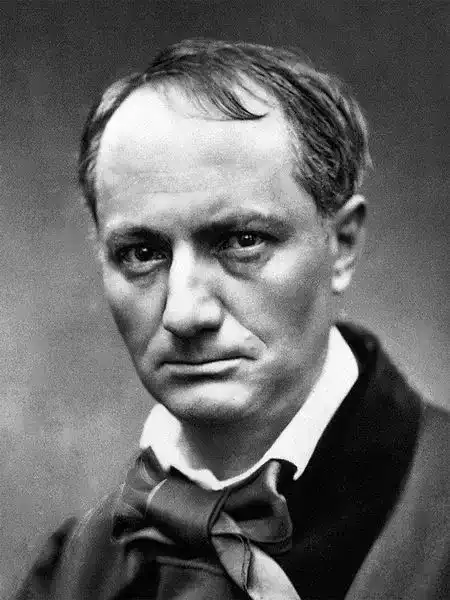
Charles Baudelaire
The Balcony
Mother of memories, mistress of mistresses,
O you, all my pleasures! O you, all my learning!
You will remember the joy of caresses,
the sweetness of home and the beauty of evening,
Mother of memories, mistress of mistresses!
On evenings lit by the glow of the ashes
and on the balcony, veiled, rose-coloured, misted,
how gentle your breast was, how good your heart to me!
We have said things meant for eternity,
on evenings lit by the glow of the ashes.
How lovely the light is on sultry evenings!
How deep the void grows! How powerful the heart is!
As I leaned towards you, queen of adored ones
I thought I breathed perfume from your blood’s kiss.
How lovely the light is on sultry evenings!
The night it was thickening and closing around us,
and my eyes in the dark were divining your glance,
and I drank your nectar. Oh sweetness! Oh poison!
your feet held, here, in these fraternal hands.
The night it was thickening and closing around us.
I know how to summon up happiest moments,
and relive my past, there, curled, touching your knees.
What good to search for your languorous beauties
but in your dear body, and your heart so sweet?
I know how to summon up happiest moments!
Those vows, those perfumes, those infinite kisses,
will they be reborn, from gulfs beyond soundings,
as the suns that are young again climb in the sky,
after they’ve passed through the deepest of drownings?
-O vows! O perfumes! O infinite kisses
595
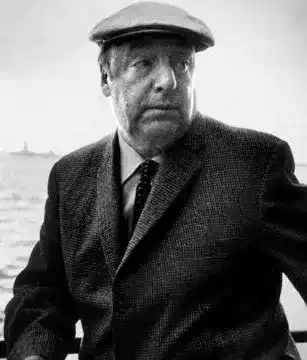
Pablo Neruda
Clenched Soul
We have lost even this twilight.
No one saw us this evening hand in hand
while the blue night dropped on the world.
I have seen from my window
the fiesta of sunset in the distant mountain tops.
Sometimes a piece of sun
burned like a coin in my hand.
I remembered you with my soul clenched
in that sadness of mine that you know.
Where were you then?
Who else was there?
Saying what?
Why will the whole of love come on me suddenly
when I am sad and feel you are far away?
The book fell that always closed at twilight
and my blue sweater rolled like a hurt dog at my feet.
Always, always you recede through the evenings
toward the twilight erasing statues.
588

Robert Frost
Ghost House
I dwell in a lonely house I know
That vanished many a summer ago,
And left no trace but the cellar walls,
And a cellar in which the daylight falls,
And the purple-stemmed wild raspberries grow.
O'er ruined fences the grape-vines shield
The woods come back to the mowing field;
The orchard tree has grown one copse
Of new wood and old where the woodpecker chops;
The footpath down to the well is healed.
I dwell with a strangely aching heart
In that vanished abode there far apart
On that disused and forgotten road
That has no dust-bath now for the toad.
Night comes; the black bats tumble and dart;
The whippoorwill is coming to shout
And hush and cluck and flutter about:
I hear him begin far enough away
Full many a time to say his say
Before he arrives to say it out.
It is under the small, dim, summer star.
I know not who these mute folk are
Who share the unlit place with me--
Those stones out under the low-limbed tree
Doubtless bear names that the mosses mar.
They are tireless folk, but slow and sad,
Though two, close-keeping, are lass and lad,--
With none among them that ever sings,
And yet, in view of how many things,
As sweet companions as might be had.
584
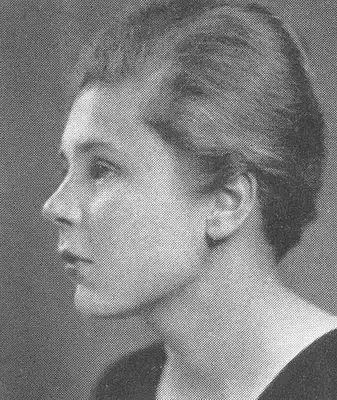
Elizabeth Bishop
Five Flights Up
Still dark.
The unknown bird sits on his usual branch.
The little dog next door barks in his sleep
inquiringly, just once.
Perhaps in his sleep, too, the bird inquires
once or twice, quavering.
Questions---if that is what they are--answered
directly, simply,
by day itself.
Enormous morning, ponderous, meticulous;
gray light streaking each bare branch,
each single twig, along one side,
making another tree, of glassy veins...
The bird still sits there. Now he seems to yawn.
The little black dog runs in his yard.
His owner's voice arises, stern,
"You ought to be ashamed!"
What has he done?
He bounces cheerfully up and down;
he rushes in circles in the fallen leaves.
Obviously, he has no sense of shame.
He and the bird know everything is answered,
all taken care of,
no need to ask again.
---Yesterday brought to today so lightly!
(A yesterday I find almost impossible to lift.)
588
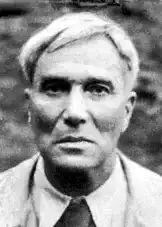
Boris Pasternak
Meeting
The snow will dust the roadway,
And load the roofs still more.
I'll stretch my legs a little:
You're there outside the door.
Autumn, not winter coat,
Hat-none, galoshes-none.
You struggle with excitement
Out there all on your own.
Far, far into the darkness
Fences and trees withdraw.
You stand there on the corner,
Under the falling snow.
The water trickles down from
The kerchief that you wear
Into your sleeves, while dewdrops
Shine sparkling in your hair.
And now illumined by
A single strand of light
Are features, kerchief, figure
And coat of autumn cut.
There's wet snow on your lashes
And in your eyes, distress,
And your external image
Is all, all of apiece.
As if an iron point
With truly consummate art,
Dipped into antimony,
Had scribed you on my heart.
Those modest, humble features
Are in it now to stay,
And if the world's cruel-hearted,
That's merely by the way.
And therefore it is doubled,
All this night in snow;
To draw frontiers between us
Is more than I can do.
But who are we and whence,
If, of those years gone by,
Scandal alone remains
And we have ceased to be.
573

Lord Byron
Epistle To Augusta
I.
My sister! my sweet sister! if a name
Dearer and purer were, it should be thine;
Mountains and seas divide us, but I claim
No tears, but tenderness to answer mine:
Go where I will, to me thou art the same
A
loved regret which I would not resign,
There yet are two things in my destiny,
A
world to roam through, and a home with thee.
II.
The first were nothinghad
I still the last,
It were the haven of my happiness;
But other claims and other ties thou hast,
And mine is not the wish to make them less.
A strange doom is thy father's son's, and past
Recalling, as it lies beyond redress;
Reversed for him our grandsire's fate of yore,
He had no rest at sea, nor I on shore.
III.
If my inheritance of storms hath been
In other elements, and on the rocks
Of perils, overlook'd or unforeseen,
I have sustain'd my share of worldly shocks,
The fault was mine; nor do I seek to screen
My errors with defensive paradox;
I have been cunning in mine overthrow,
The careful pilot of my proper woe.
IV.
Mine were my faults, and mine be their reward.
My whole life was a contest, since the day
That gave me being, gave me that which marr'd
The gift,a
fate, or will, that walk'd astray;
And I at times have found the struggle hard,
And thought of shaking off my bonds of clay:
But now I fain would for a time survive,
If but to see what next can well arrive.
V.
Kingdoms and empires in my little day
I have outlived, and yet I am not old;
And when I look on this, the petty spray
Of my own years of trouble, which have roll'd
Like a wild bay of breakers, melts away
SomethingI
know not whatdoes
still uphold
A spirit of slight patience; not in vain,
Even for its own sake, do we purchase pain.
VI.
Perhaps the workings of defiance stir
Within me or
perhaps a cold despair,
Brought on when ills habitually recur,
Perhaps a kinder clime, or purer air,
(For even to this may change of soul refer,
And with light armour we may learn to bear,)
Have taught me a strange quiet, which was not
The chief companion of a calmer lot.
VII.
I feel almost at times as I have felt
In happy childhood; trees, and flowers, and brooks,
Which do remember me of where I dwelt
Ere my young mind was sacrificed to books,
Come as of yore upon me, and can melt
My heart with recognition of their looks;
And even at moments I could think I see
Some living thing to lovebut
none like thee.
VIII.
Here are the Alpine landscapes which create
A fund for contemplation;to
admire
Is a brief feeling of a trivial date;
But something worthier do such scenes inspire:
Here to be lonely is not desolate'
For much I view which I could most desire,
And, above all, a lake I can behold
Lovelier, not dearer, than our own of old.
IX.
Oh that thou wert but with me! but
I grow
The fool of my own wishes, and forget
The solitude which I have vaunted so
Has lost its praise in this but one regret;
There may be others which I less may show
I am not of the plaintive mood, and yet
I feel an ebb in my philosophy,
And the tide rising in my alter'd eye.
X.
I did remind thee of our own dear Lake,
By the old Hall which may be mine no more.
Leman's is fair; but think not I forsake
The sweet remembrance of a dearer shore:
Sad havoc Time must with my memory make,
Ere that or thou can fade these eyes before;
Though, like all things which I have loved they are
Resign 'd For ever, or divided far.
XI.
The world is all before me; I but ask
Of Nature that with which she will comply
It is but in her summer's sun to bask,
To mingle with the quiet of her sky,
To see her gentle face without a mask,
And never gaze on it with apathy.
She was my early friend, and now shall be
My sister till
I look again on thee.
XII.
I can reduce all feelings but this one;
And that I would not; for at length I see
Such scenes as those wherein my life begun.
The earliest even
the only paths for me Had
I but sooner learnt the crowd to shun,
I had been better than I now can be;
The passions which have torn me would have slept;
I had not suffer'd, and thou hadst not wept.
XIII.
With false Ambition what had I to do?
Little with Love, and least of all with Fame;
And yet they came unsought, and with me grew,
And made me all which they can make a
name.
Yet this was not the end I did pursue;
Surely I once beheld a nobler aim.
But all is over I
am one the more
To baffled millions which have gone before.
XIV.
And for the future, this world's future may
From me demand but little of my care;
I have outlived myself by many a day;
Having survived so many things that were;
My years have been no slumber, but the prey
Of ceaseless vigils; for I had the share
Of life which might have fill'd a century,
Before its fourth in time had pass'd me by.
XV.
And for the remnant which may be to come
I am content; and for the past I feel
Not thankless,for
within the crowded sum
Of struggles, happiness at times would steal,
And for the present, I would not benumb
My feelings further. Nor
shall I conceal
That with all this I still can look around,
And worship Nature with a thought profound.
XVI.
For thee, my own sweet sister, in thy heart
I know myself secure, as thou in mine;
We were and are I
am, even as thou art
Beings who ne'er each other can resign;
It is the same, together or apart,
From life's commencement to its slow decline
We are entwinedlet
death come slow or fast,
The tie which bound the first endures the last!
564
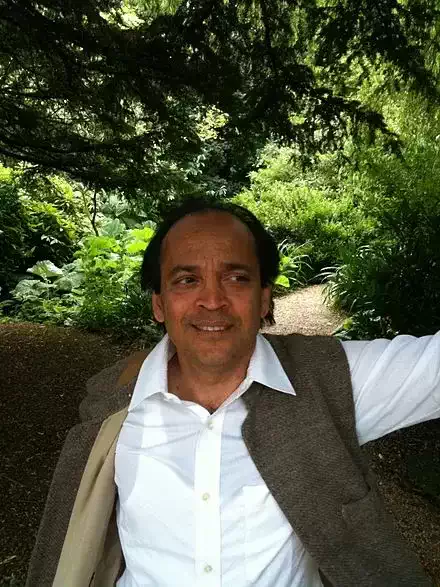
Vikram Seth
Song 'Coast Starlight'
Some days I feel a sadness not of grief
The shadows lengthen on the earth's relief
Salinas flows by like a silver shawl
A girl waves from the mission wall.
The shadows lengthen on the earth's relief
Salinas flows by like a silver shawl
A girl waves from the mission wall.
565
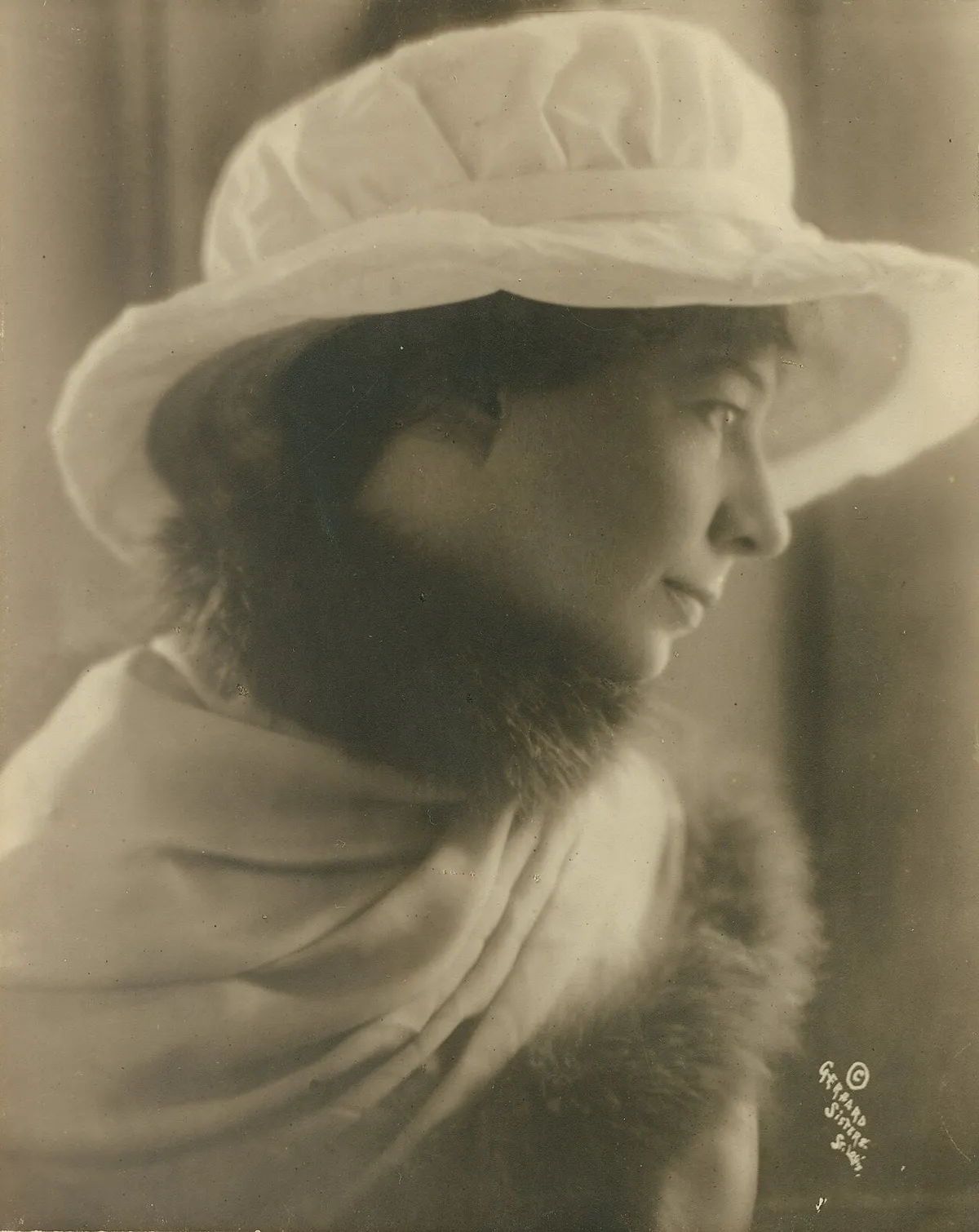
Sara Teasdale
A November Night
There! See the line of lights,
A chain of stars down either side the street --
Why can't you lift the chain and give it to me,
A necklace for my throat? I'd twist it round
And you could play with it. You smile at me
As though I were a little dreamy child
Behind whose eyes the fairies live. . . . And see,
The people on the street look up at us
All envious. We are a king and queen,
Our royal carriage is a motor bus,
We watch our subjects with a haughty joy. . . .
How still you are! Have you been hard at work
And are you tired to-night? It is so long
Since I have seen you -- four whole days, I think.
My heart is crowded full of foolish thoughts
Like early flowers in an April meadow,
And I must give them to you, all of them,
Before they fade. The people I have met,
The play I saw, the trivial, shifting things
That loom too big or shrink too little, shadows
That hurry, gesturing along a wall,
Haunting or gay -- and yet they all grow real
And take their proper size here in my heart
When you have seen them. . . . There's the Plaza now,
A lake of light! To-night it almost seems
That all the lights are gathered in your eyes,
Drawn somehow toward you. See the open park
Lying below us with a million lamps
Scattered in wise disorder like the stars.
We look down on them as God must look down
On constellations floating under Him
Tangled in clouds. . . . Come, then, and let us walk
Since we have reached the park. It is our garden,
All black and blossomless this winter night,
But we bring April with us, you and I;
We set the whole world on the trail of spring.
I think that every path we ever took
Has marked our footprints in mysterious fire,
Delicate gold that only fairies see.
When they wake up at dawn in hollow tree-trunks
And come out on the drowsy park, they look
Along the empty paths and say, "Oh, here
They went, and here, and here, and here! Come, see,
Here is their bench, take hands and let us dance
About it in a windy ring and make
A circle round it only they can cross
When they come back again!" . . . Look at the lake --
Do you remember how we watched the swans
That night in late October while they slept?
Swans must have stately dreams, I think. But now
The lake bears only thin reflected lights
That shake a little. How I long to take
One from the cold black water -- new-made gold
To give you in your hand! And see, and see,
There is a star, deep in the lake, a star!
Oh, dimmer than a pearl -- if you stoop down
Your hand could almost reach it up to me. . . .
There was a new frail yellow moon to-night --
I wish you could have had it for a cup
With stars like dew to fill it to the brim. . . .
How cold it is! Even the lights are cold;
They have put shawls of fog around them, see!
What if the air should grow so dimly white
That we would lose our way along the paths
Made new by walls of moving mist receding
The more we follow. . . . What a silver night!
That was our bench the time you said to me
The long new poem -- but how different now,
How eerie with the curtain of the fog
Making it strange to all the friendly trees!
There is no wind, and yet great curving scrolls
Carve themselves, ever changing, in the mist.
Walk on a little, let me stand here watching
To see you, too, grown strange to me and far. . . .
I used to wonder how the park would be
If one night we could have it all alone --
No lovers with close arm-encircled waists
To whisper and break in upon our dreams.
And now we have it! Every wish comes true!
We are alone now in a fleecy world;
Even the stars have gone. We two alone!
563
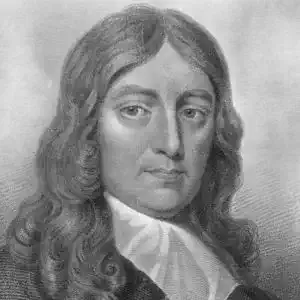
John Milton
On the Religious Memory of Mrs. Catherine Thomson, my Christian Friend
Deceased Dec. 16, 1646
When Faith and Love, which parted from thee never,
Had ripened thy just soul to dwell with God,
Meekly thou didst resign this earthly load
Of death, called life, which us from life doth sever.
Thy works, and alms, and all thy good endeavour,
Stayed not behind, nor in the grave were trod;
But, as Faith pointed with her golden rod,
Followed thee up to joy and bliss for ever.
Love led them on; and Faith, who knew them best
Thy handmaids, clad them o’er with purple beams
And azure wings, that up they flew so drest,
And speak the truth of thee on glorious themes
Before the Judge; who henceforth bid thee rest,
And drink thy fill of pure immortal streams.
568

William Shakespeare
Sonnet 122: Thy gift, thy tables, are within my brain
Thy gift, thy tables, are within my brain
Full charactered with lasting memory,
Which shall above that idle rank remain
Beyond all date even to eternity—
Or at the least, so long as brain and heart
Have faculty by nature to subsist;
Till each to razed oblivion yield his part
Of thee, thy record never can be missed.
That poor retention could not so much hold,
Nor need I tallies thy dear love to score;
Therefore to give them from me was I bold,
To trust those tables that receive thee more.
To keep an adjunct to remember thee
Were to import forgetfulness in me.
566
Boris Pasternak
Spasskoe
In Spasskoe, unforgettable September sheds its leaves.
Isn’t it time to close up the summer-house?
Echo traps the thudding of axe-blows in the trees,
and, past the fence, barters a herd-boy’s shout.
Last night the marsh by the park shivered, too.
The moment the sun rises it vanishes.
The bluebell can’t drink the rheumatic dew,
and a dirty lilac stain soils the birches.
The wood’s downcast. It wants to sleep, as well,
under the snow, in the deep quiet of the bear’s den.
The park, gaping, framed by tree-trunks stands still,
in neat obituary-columns, its edges blackened.
Has the birch copse stopped fading, staining,
its shade more watery still, and growing thin?
And again, you’re, fifteen – it’s still complaining –
again – ‘oh child, oh, what shall we do with them?’
They’re already so many it’s time to stop playing.
They’re – birds in the bushes, mushrooms in the trees.
Already we’ve veiled our horizon with them, shrouding
each other’s landscape with fog-bound mysteries.
The comic, on the night of his death, typhus-stricken,
hears a peal: it’s Homeric laughter from the box.
Today in Spasskoe, the same grief, in hallucination,
stares, from the road, at a house of weathered logs.
556
Lord Byron
To An Oak At Newstead
Young Oak! when I planted thee deep in the ground,
I hoped that thy days would be longer than mine;
That thy dark‑waving branches would flourish around,
And ivy thy trunk with its mantle entwine.
Such, such was my hope, when in infancy's
On the land of my fathers I rear'd thee with pride;
They are past, and I water thy stem with my tears,
Thy decay not the weeds that surround thee can hide.
I left thee, my Oak, and, since that fatal hour,
A stranger has dwelt in the hall of my sire;
Till manhood shall crown me, not mine is the power,
But his, whose neglect may have bade thee expire.
Oh! hardy thou wenteven
now little care
Might revive thy young head, and thy wounds gently heal:
But thou went not fated affection to share
For
who could suppose that a stranger would feel!
Ah, droop not, my Oak! lift thy head for a while;
Ere twice round yon Glory this planet shall run,
The hand of thy Master will teach thee to smile,
When Infancy's years of probation are done.
Oh, live then, my Oak! tow'r aloft from the weeds,
That clog thy young growth, and assist thy decay,
For still in thy bosom are life's early seeds,
And still may thy branches their beauty display.
Oh! yet, if maturity's years may be thine,
Though I shall lie low in the cavern of death,
On thy leaves yet the day‑beam of ages may shine,
Uninjured by time, or the rude winter's breath.
For centuries still may thy boughs lightly wave
O'er the Gorse of thy lord in thy canopy laid;
While the branches thus gratefully shelter his grave,
The chief who survives may recline in thy shade.
And as he, with his boys, shall revisit this spot,
He will tell them is whispers more softly to tread.
Oh! surely, by these I shall ne'er be forgot;
Remembrance still hallows the dust of the dead.
And here, will they say, when in life's glowing prime,
Perhaps he has pour'd forth his young simple lay,
And here must he sleep, till the moments of time
Are lost in the hours of Eternity's day.
556

Alfred Lord Tennyson
Dedication
Dedication
These to His Memory--since he held them dear,
Perchance as finding there unconsciously
Some image of himself--I dedicate,
I dedicate, I consecrate with tears--
These Idylls.
And indeed He seems to me
Scarce other than my king's ideal knight,
`Who reverenced his conscience as his king;
Whose glory was, redressing human wrong;
Who spake no slander, no, nor listened to it;
Who loved one only and who clave to her--'
Her--over all whose realms to their last isle,
Commingled with the gloom of imminent war,
The shadow of His loss drew like eclipse,
Darkening the world. We have lost him: he is gone:
We know him now: all narrow jealousies
Are silent; and we see him as he moved,
How modest, kindly, all-accomplished, wise,
With what sublime repression of himself,
And in what limits, and how tenderly;
Not swaying to this faction or to that;
Not making his high place the lawless perch
Of winged ambitions, nor a vantage-ground
For pleasure; but through all this tract of years
Wearing the white flower of a blameless life,
Before a thousand peering littlenesses,
In that fierce light which beats upon a throne,
And blackens every blot: for where is he,
Who dares foreshadow for an only son
A lovelier life, a more unstained, than his?
Or how should England dreaming of HIS sons
Hope more for these than some inheritance
Of such a life, a heart, a mind as thine,
Thou noble Father of her Kings to be,
Laborious for her people and her poor--
Voice in the rich dawn of an ampler day-
Far-sighted summoner of War and Waste
To fruitful strifes and rivalries of peace--
Sweet nature gilded by the gracious gleam
Of letters, dear to Science, dear to Art,
Dear to thy land and ours, a Prince indeed,
Beyond all titles, and a household name,
Hereafter, through all times, Albert the Good.
Break not, O woman's-heart, but still endure;
Break not, for thou art Royal, but endure,
Remembering all the beauty of that star
Which shone so close beside Thee that ye made
One light together, but has past and leaves
The Crown a lonely splendour.
May all love,
His love, unseen but felt, o'ershadow Thee,
The love of all Thy sons encompass Thee,
The love of all Thy daughters cherish Thee,
The love of all Thy people comfort Thee,
Till God's love set Thee at his side again!
556
E. E. Cummings
my sweet old etcetera
my sweet old etcetera
aunt lucy during the recent
war could and what
is more did tell you just
what everybody was fighting
for,
my sister
Isabel created hundreds
(and
hundreds)of socks not to
mention fleaproof earwarmers
etcetera wristers etcetera, my
mother hoped that
i would die etcetera
bravely of course my father used
to become hoarse talking about how it was
a privilege and if only he
could meanwhile my
self etcetera lay quietly
in the deep mud et
cetera
(dreaming,
et
cetera, of
Your smile
eyes knees and of your Etcetera)
552

Emily Dickinson
Heart! We will forget him!
Heart! We will forget him!
You and I-tonight!
You may forget the warmth he gave-
I will forget the light!
When you have done, pray tell me
That I may straight begin!
Haste! lest while you're lagging
I remember him!
You and I-tonight!
You may forget the warmth he gave-
I will forget the light!
When you have done, pray tell me
That I may straight begin!
Haste! lest while you're lagging
I remember him!
548
Lord Byron
Don Juan: Canto The Sixteenth
The antique Persians taught three useful things,
To draw the bow, to ride, and speak the truth.
This was the mode of Cyrus, best of kings
A
mode adopted since by modern youth.
Bows have they, generally with two strings;
Horses they ride without remorse or ruth;
At speaking truth perhaps they are less clever,
But draw the long bow better now than ever.
The cause of this effect, or this defect,'
For this effect defective comes by cause,'Is
what I have not leisure to inspect;
But this I must say in my own applause,
Of all the Muses that I recollect,
Whate'er may be her follies or her flaws
In some things, mine's beyond all contradiction
The most sincere that ever dealt in fiction.
And as she treats all things, and ne'er retreats
From any thing, this epic will contain
A wilderness of the most rare conceits,
Which you might elsewhere hope to find in vain.
'Tis true there be some bitters with the sweets,
Yet mix'd so slightly, that you can't complain,
But wonder they so few are, since my tale is
'De rebus cunctis et quibusdam aliis.'
But of all truths which she has told, the most
True is that which she is about to tell.
I said it was a story of a ghost
What
then? I only know it so befell.
Have you explored the limits of the coast,
Where all the dwellers of the earth must dwell?
'Tis time to strike such puny doubters dumb as
The sceptics who would not believe Columbus.
Some people would impose now with authority,
Turpin's or Monmouth Geoffry's Chronicle;
Men whose historical superiority
Is always greatest at a miracle.
But Saint Augustine has the great priority,
Who bids all men believe the impossible,
Because 'tis so. Who nibble, scribble, quibble, he
Quiets at once with 'quia impossibile.'
And therefore, mortals, cavil not at all;
Believe:if
'tis improbable you must,
And if it is impossible, you shall:
'Tis always best to take things upon trust.
I do not speak profanely, to recall
Those holier mysteries which the wise and just
Receive as gospel, and which grow more rooted,
As all truths must, the more they are disputed:
I merely mean to say what Johnson said,
That in the course of some six thousand years,
All nations have believed that from the dead
A visitant at intervals appears;
And what is strangest upon this strange head,
Is, that whatever bar the reason rears
'Gainst such belief, there's something stronger still
In its behalf, let those deny who will.
The dinner and the soiree too were done,
The supper too discuss'd, the dames admired,
The banqueteers had dropp'd off one by one The
song was silent, and the dance expired:
The last thin petticoats were vanish'd, gone
Like fleecy Clouds into the sky retired,
And nothing brighter gleam'd through the saloon
Than dying tapers and
the peeping moon.
The evaporation of a joyous day
Is like the last glass of champagne, without
The foam which made its virgin bumper gay;
Or like a system coupled with a doubt;
Or like a soda bottle when its spray
Has sparkled and let half its spirit out;
Or like a billow left by storms behind,
Without the animation of the wind;
Or like an opiate, which brings troubled rest,
Or none; or likelike
nothing that I know
Except itself;such
is the human breast;
A thing, of which similitudes can show
No real likeness,like
the old Tyrian vest
Dyed purple, none at present can tell how,
If from a shellfish
or from cochineal.
So perish every tyrant's robe piece meal!
But next to dressing for a rout or ball,
Undressing is a woe; our robe de chambre
May sit like that of Nessus, and recall
Thoughts quite as yellow, but less clear than amber.
Titus exclaim'd, 'I've lost a day!' Of all
The nights and days most people can remember
(I have had of both, some not to be disdain'd),
I wish they 'd state how many they have gain'd.
And Juan, on retiring for the night,
Felt restless, and perplex'd, and compromised:
He thought Aurora Raby's eyes more bright
Than Adeline (such is advice) advised;
If he had known exactly his own plight,
He probably would have philosophised:
A great resource to all, and ne'er denied
Till wanted; therefore Juan only sigh'd.
He sigh'd;the
next resource is the full moon,
Where all sighs are deposited; and now
It happen'd luckily, the chaste orb shone
As clear as such a climate will allow;
And Juan's mind was in the proper tone
To hail her with the apostrophe'
O thou!'
Of amatory egotism the Tuism,
Which further to explain would be a truism.
But lover, poet, or astronomer,
Shepherd, or swain, whoever may behold,
Feel some abstraction when they gaze on her:
Great thoughts we catch from thence (besides a cold
Sometimes, unless my feelings rather err);
Deep secrets to her rolling light are told;
The ocean's tides and mortals' brains she sways,
And also hearts, if there be truth in lays.
Juan felt somewhat pensive, and disposed
For contemplation rather than his pillow:
The Gothic chamber, where he was enclosed,
Let in the rippling sound of the lake's billow,
With all the mystery by midnight caused;
Below his window waved (of course) a willow;
And he stood gazing out on the cascade
That flash'd and after darken'd in the shade.
Upon his table or his toilet,which
Of these is not exactly ascertain'd
(I state this, for I am cautious to a pitch
Of nicety, where a fact is to be gain'd),A
lamp burn'd high, while he leant from a niche,
Where many a Gothic ornament remain'd,
In chisell'd stone and painted glass, and all
That time has left our fathers of their hall.
Then, as the night was clear though cold, he threw
His chamber door wide open and
went forth
Into a gallery, of a sombre hue,
Long, furnish'd with old pictures of great worth,
Of knights and dames heroic and chaste too,
As doubtless should be people of high birth.
But by dim lights the portraits of the dead
Have something ghastly, desolate, and dread.
The forms of the grim knight and pictured saint
Look living in the moon; and as you turn
Backward and forward to the echoes faint
Of your own footsteps voices
from the urn
Appear to wake, and shadows wild and quaint
Start from the frames which fence their aspects stern,
As if to ask how you can dare to keep
A vigil there, where all but death should sleep.
And the pale smile of beauties in the grave,
The charms of other days, in starlight gleams,
Glimmer on high; their buried locks still wave
Along the canvas; their eyes glance like dreams
On ours, or spars within some dusky cave,
But death is imaged in their shadowy beams.
A picture is the past; even ere its frame
Be gilt, who sate hath ceased to be the same.
As Juan mused on mutability,
Or on his mistress terms
synonymous No
sound except the echo of his sigh
Or step ran sadly through that antique house;
When suddenly he heard, or thought so, nigh,
A supernatural agent or
a mouse,
Whose little nibbling rustle will embarrass
Most people as it plays along the arras.
It was no mouse, but lo! a monk, array'd
In cowl and beads and dusky garb, appear'd,
Now in the moonlight, and now lapsed in shade,
With steps that trod as heavy, yet unheard;
His garments only a slight murmur made;
He moved as shadowy as the sisters weird,
But slowly; and as he pass'd Juan by,
Glanced, without pausing, on him a bright eye.
Juan was petrified; he had heard a hint
Of such a spirit in these halls of old,
But thought, like most men, there was nothing in't
Beyond the rumour which such spots unfold,
Coin'd from surviving superstition's mint,
Which passes ghosts in currency like gold,
But rarely seen, like gold compared with paper.
And did he see this? or was it a vapour?
Once, twice, thrice pass'd, repass'dthe
thing of air,
Or earth beneath, or heaven, or t'other place;
And Juan gazed upon it with a stare,
Yet could not speak or move; but, on its base
As stands a statue, stood: he felt his hair
Twine like a knot of snakes around his face;
He tax'd his tongue for words, which were not granted,
To ask the reverend person what he wanted.
The third time, after a still longer pause,
The shadow pass'd awaybut
where? the hall
Was long, and thus far there was no great cause
To think his vanishing unnatural:
Doors there were many, through which, by the laws
Of physics, bodies whether short or tall
Might come or go; but Juan could not state
Through which the spectre seem'd to evaporate.
He stood how
long he knew not, but it seem'd
An age expectant,
powerless, with his eyes
Strain'd on the spot where first the figure gleam'd;
Then by degrees recall'd his energies,
And would have pass'd the whole off as a dream,
But could not wake; he was, he did surmise,
Waking already, and return'd at length
Back to his chamber, shorn of half his strength.
All there was as he left it: still his taper
Burnt, and not blue, as modest tapers use,
Receiving sprites with sympathetic vapour;
He rubb'd his eyes, and they did not refuse
Their office; he took up an old newspaper;
The paper was right easy to peruse;
He read an article the king attacking,
And a long eulogy of 'patent blacking.'
This savour'd of this world; but his hand shook
He
shut his door, and after having read
A paragraph, I think about Horne Tooke,
Undrest, and rather slowly went to bed.
There, couch'd all snugly on his pillow's nook,
With what he had seen his phantasy he fed;
And though it was no opiate, slumber crept
Upon him by degrees, and so he slept.
He woke betimes; and, as may be supposed,
Ponder'd upon his visitant or vision,
And whether it ought not to be disclosed,
At risk of being quizz'd for superstition.
The more he thought, the more his mind was posed:
In the mean time, his valet, whose precision
Was great, because his master brook'd no less,
Knock'd to inform him it was time to dress.
He dress'd; and like young people he was wont
To take some trouble with his toilet, but
This morning rather spent less time upon't;
Aside his very mirror soon was put;
His curls fell negligently o'er his front,
His clothes were not curb'd to their usual cut,
His very neckcloth's Gordian knot was tied
Almost an hair's breadth too much on one side.
And when he walk'd down into the saloon,
He sate him pensive o'er a dish of tea,
Which he perhaps had not discover'd soon,
Had it not happen'd scalding hot to be,
Which made him have recourse unto his spoon;
So much distrait he was, that all could see
That something was the matter Adeline
The first but
what she could not well divine.
She look'd, and saw him pale, and turn'd as pale
Herself; then hastily look'd down, and mutter'd
Something, but what's not stated in my tale.
Lord Henry said his muffin was ill butter'd;
The Duchess of FitzFulke
play'd with her veil,
And look'd at Juan hard, but nothing utter'd.
Aurora Raby with her large dark eyes
Survey'd him with a kind of calm surprise.
But seeing him all cold and silent still,
And everybody wondering more or less,
Fair Adeline enquired, 'If he were ill?'
He started, and said, 'Yesnoratheryes.'
The family physician had great skill,
And being present, now began to express
His readiness to feel his pulse and tell
The cause, but Juan said, 'He was quite well.'
'Quite well; yes,no.'
These
answers were mysterious,
And yet his looks appear'd to sanction both,
However they might savour of delirious;
Something like illness of a sudden growth
Weigh'd on his spirit, though by no means serious:
But for the rest, as he himself seem'd loth
To state the case, it might be ta'en for granted
It was not the physician that he wanted.
Lord Henry, who had now discuss'd his chocolate,
Also the muffin whereof he complain'd,
Said, Juan had not got his usual look elate,
At which he marvell'd, since it had not rain'd;
Then ask'd her Grace what news were of the duke of late?
Her Grace replied, his Grace was rather pain'd
With some slight, light, hereditary twinges
Of gout, which rusts aristocratic hinges.
Then Henry turn'd to Juan, and address'd
A few words of condolence on his state:
'You look,' quoth he, 'as if you had had your rest
Broke in upon by the Black Friar of late.'
'What friar?' said Juan; and he did his best
To put the question with an air sedate,
Or careless; but the effort was not valid
To hinder him from growing still more pallid.
'Oh! have you never heard of the Black Friar?
The spirit of these walls?''
In truth not I.'
'Why Famebut
Fame you know 's sometimes a liar
Tells
an odd story, of which by and by:
Whether with time the spectre has grown shyer,
Or that our sires had a more gifted eye
For such sights, though the tale is half believed,
The friar of late has not been oft perceived.
(Who watch'd the changes of Don Juan's brow,
And from its context thought she could divine
Connexions stronger then he chose to avow
With this same legend)'
if you but design
To jest, you'll choose some other theme just now,
Because the present tale has oft been told,
And is not much improved by growing old.'
'Jest!' quoth Milor; 'why, Adeline, you know
That we ourselves '
twas in the honeymoon
But,
come, I'll set your story to a tune.'
Graceful as Dian, when she draws her bow,
She seized her harp, whose strings were kindled soon
As touch'd, and plaintively began to play
The air of ''Twas a Friar of Orders Gray.'
'But add the words,' cried Henry, 'which you made;
For Adeline is half a poetess,'
Turning round to the rest, he smiling said.
Of course the others could not but express
In courtesy their wish to see display'd
By one three talents, for there were no less
The
voice, the words, the harper's skill, at once
Could hardly be united by a dunce.
After some fascinating hesitation,
The
charming of these charmers, who seem bound,
I can't tell why, to this dissimulation,
Fair
Adeline, with eyes fix'd on the ground
At first, then kindling into animation,
Added her sweet voice to the lyric sound,
And sang with much simplicity,a
merit
Not the less precious, that we seldom hear it.
Beware! beware! of the Black Friar,
Who sitteth by Norman stone,
For he mutters his prayer in the midnight air,
And his mass of the days that are gone.
When the Lord of the Hill, Amundeville,
Made Norman Church his prey,
And expell'd the friars, one friar still
Would not be driven away.
Though he came in his might, with King Henry's right,
To turn church lands to lay,
With sword in hand, and torch to light
Their walls, if they said nay;
A monk remain'd, unchased, unchain'd,
And he did not seem form'd of clay,
For he's seen in the porch, and he 's seen in the church,
Though he is not seen by day.
And whether for good, or whether for ill,
It is not mine to say;
But still with the house of Amundeville
He abideth night and day.
By the marriagebed
of their lords, 'tis said,
He flits on the bridal eve;
And 'tis held as faith, to their bed of death
He comes but
not to grieve.
When an heir is born, he's heard to mourn,
And when aught is to befall
That ancient line, in the 'we moonshine
He walks from hall to hall.
His form you may trace, but not his face,
'Tis shadow'd by his cowl;
But his eyes may be seen from the folds between,
And they seem of a parted soul.
But beware! beware! of the Black Friar,
He still retains his sway,
For he is yet the church's heir
Whoever may be the lay.
Amundeville is lord by day,
But the monk is lord by night;
Nor wine nor wassail could raise a vassal
To question that friar's right.
Say nought to him as he walks the hall,
And he'll say nought to you;
He sweeps along in his dusky pall,
As o'er the grass the dew.
Then grammercy! for the Black Friar;
Heaven sain him, fair or foul!
And whatsoe'er may be his prayer,
Let ours be for his soul.
The lady's voice ceased, and the thrilling wires
Died from the touch that kindled them to sound;
And the pause follow'd, which when song expires
Pervades a moment those who listen round;
And then of course the circle much admires,
Nor less applauds, as in politeness bound,
The tones, the feeling, and the execution,
To the performer's diffident confusion.
Fair Adeline, though in a careless way,
As if she rated such accomplishment
As the mere pastime of an idle day,
Pursued an instant for her own content,
Would now and then as 'twere without display,
Yet with display in fact, at times relent
To such performances with haughty smile,
To show she could, if it were worth her while.
Now this (but we will whisper it aside)
Was pardon
the pedantic illustration
Trampling
on Plato's pride with greater pride,
As did the Cynic on some like occasion;
Deeming the sage would be much mortified,
Or thrown into a philosophic passion,
For a spoil'd carpet but
the 'Attic Bee'
Was much consoled by his own repartee.
Thus Adeline would throw into the shade
(By doing easily, whene'er she chose,
What dilettanti do with vast parade)
Their sort of half profession; for it grows
To something like this when too oft display'd;
And that it is so everybody knows
Who have heard Miss That or This, or Lady T'other,
Show off to
please their company or mother.
Oh! the long evenings of duets and trios!
The admirations and the speculations;
The 'Mamma Mia's!' and the 'Amor Mio's!'
The 'Tanti palpiti's' on such occasions:
The 'Lasciami's,' and quavering 'Addio's!'
Amongst our own most musical of nations;
With 'Tu mi chamas's' from Portingale,
To soothe our ears, lest Italy should fail.
In Babylon's bravuras as
the home
Heartballads
of Green Erin or Gray Highlands,
That bring Lochaber back to eyes that roam
O'er far Atlantic continents or islands,
The calentures of music which o'ercome
All mountaineers with dreams that they are nigh lands,
No more to be beheld but in such visions Was
Adeline well versed, as compositions.
She also had a twilight tinge of 'Blue,'
Could write rhymes, and compose more than she wrote,
Made epigrams occasionally too
Upon her friends, as everybody ought.
But still from that sublimer azure hue,
So much the present dye, she was remote;
Was weak enough to deem Pope a great poet,
And what was worse, was not ashamed to show it.
Aurora since
we are touching upon taste,
Which nowadays
is the thermometer
By whose degrees all characters are class'd Was
more Shakspearian, if I do not err.
The worlds beyond this world's perplexing waste
Had more of her existence, for in her
There was a depth of feeling to embrace
Thoughts, boundless, deep, but silent too as Space.
Not so her gracious, graceful, graceless Grace,
The fullgrown
Hebe of FitzFulke,
whose mind,
If she had any, was upon her face,
And that was of a fascinating kind.
A little turn for mischief you might trace
Also thereon,but
that's not much; we find
Few females without some such gentle leaven,
For fear we should suppose us quite in heaven.
I have not heard she was at all poetic,
Though once she was seen reading the 'Bath Guide,'
And 'Hayley's Triumphs,' which she deem'd pathetic,
Because she said her temper had been tried
So much, the bard had really been prophetic
Of what she had gone through with since
a bride.
But of all verse, what most ensured her praise
Were sonnets to herself, or 'bouts rimes.'
'Twere difficult to say what was the object
Of Adeline, in bringing this same lay
To bear on what appear'd to her the subject
Of Juan's nervous feelings on that day.
Perhaps she merely had the simple project
To laugh him out of his supposed dismay;
Perhaps she might wish to confirm him in it,
Though why I cannot say at
least this minute.
But so far the immediate effect
Was to restore him to his self propriety,
A thing quite necessary to the elect,
Who wish to take the tone of their society:
In which you cannot be too circumspect,
Whether the mode be persiflage or piety,
But wear the newest mantle of hypocrisy,
On pain of much displeasing the gynocracy.
And therefore Juan now began to rally
His spirits, and without more explanation
To jest upon such themes in many a sally.
Her Grace, too, also seized the same occasion,
With various similar remarks to tally,
But wish'd for a still more detail'd narration
Of this same mystic friar's curious doings,
About the present family's deaths and wooings.
Of these few could say more than has been said;
They pass'd as such things do, for superstition
With some, while others, who had more in dread
The theme, half credited the strange tradition;
And much was talk'd on all sides on that head:
But Juan, when crossquestion'd
on the vision,
Which some supposed (though he had not avow'd it)
Had stirr'd him, answer'd in a way to cloud it.
And then, the midday
having worn to one,
The company prepared to separate;
Some to their several pastimes, or to none,
Some wondering 'twas so early, some so late.
There was a goodly match too, to be run
Between some greyhounds on my lord's estate,
And a young racehorse
of old pedigree
Match'd for the spring, whom several went to see.
There was a picturedealer
who had brought
A special Titian, warranted original,
So precious that it was not to be bought,
Though princes the possessor were besieging all.
The king himself had cheapen'd it, but thought
The civil list he deigns to accept (obliging all
His subjects by his gracious acceptation)
Too scanty, in these times of low taxation.
But as Lord Henry was a connoisseur,
The
friend of artists, if not arts,the
owner,
With motives the most classical and pure,
So that he would have been the very donor,
Rather than seller, had his wants been fewer,
So much he deem'd his patronage an honour,
Had brought the capo d'opera, not for sale,
But for his judgment never
known to fail.
There was a modern Goth, I mean a Gothic
Bricklayer of Babel, call'd an architect,
Brought to survey these grey walls, which though so thick,
Might have from time acquired some slight defect;
Who after rummaging the Abbey through thick
And thin, produced a plan whereby to erect
New buildings of correctest conformation,
And throw down old which
he call'd restoration.
The cost would be a trifle an
'old song,'
Set to some thousands ('tis the usual burden
Of that same tune, when people hum it long)The
price would speedily repay its worth in
An edifice no less sublime than strong,
By which Lord Henry's good taste would go forth in
Its glory, through all ages shining sunny,
For Gothic daring shown in English money.
There were two lawyers busy on a mortgage
Lord Henry wish'd to raise for a new purchase;
Also a lawsuit upon tenures burgage,
And one on tithes, which sure are Discord's torches,
Kindling Religion till she throws down her gage,
'Untying' squires 'to fight against the churches;'
There was a prize ox, a prize pig, and ploughman,
For Henry was a sort of Sabine showman.
There were two poachers caught in a steel trap,
Ready for gaol, their place of convalescence;
There was a country girl in a close cap
And scarlet cloak (I hate the sight to see, since
Sincesincein
youth, I had the sad mishap
But
luckily I have paid few parish fees since):
That scarlet cloak, alas! unclosed with rigour,
Presents the problem of a double figure.
A reel within a bottle is a mystery,
One can't tell how it e'er got in or out;
Therefore the present piece of natural history
I leave to those who are fond of solving doubt;
And merely state, though not for the consistory,
Lord Henry was a justice, and that Scout
The constable, beneath a warrant's banner,
Had bagg'd this poacher upon Nature's manor.
Now justices of peace must judge all pieces
Of mischief of all kinds, and keep the game
And morals of the country from caprices
Of those who have not a license for the same;
And of all things, excepting tithes and leases,
Perhaps these are most difficult to tame:
Preserving partridges and pretty wenches
Are puzzles to the most precautious benches.
The present culprit was extremely pale,
Pale as if painted so; her cheek being red
By nature, as in higher dames less hale
'Tis white, at least when they just rise from bed.
Perhaps she was ashamed of seeming frail,
Poor soul! for she was country born and bred,
And knew no better in her immorality
Than to wax white for
blushes are for quality.
Her black, bright, downcast, yet espiegle eye,
Had gather'd a large tear into its corner,
Which the poor thing at times essay'd to dry,
For she was not a sentimental mourner
Parading all her sensibility,
Nor insolent enough to scorn the scorner,
But stood in trembling, patient tribulation,
To be call'd up for her examination.
Of course these groups were scatter'd here and there,
Not nigh the gay saloon of ladies gent.
The lawyers in the study; and in air
The prize pig, ploughman, poachers; the men sent
From town, viz., architect and dealer, were
Both busy (as a general in his tent
Writing despatches) in their several stations,
Exulting in their brilliant lucubrations.
But this poor girl was left in the great hall,
While Scout, the parish guardian of the frail,
Discuss'd (he hated beer yclept the 'small')
A mighty mug of moral double ale.
She waited until justice could recall
Its kind attentions to their proper pale,
To name a thing in nomenclature rather
Perplexing for most virgins a
child's father.
You see here was enough of occupation
For the Lord Henry, link'd with dogs and horses.
There was much bustle too, and preparation
Below stairs on the score of second courses;
Because, as suits their rank and situation,
Those who in counties have great land resources
Have 'Public days,' when all men may carouse,
Though not exactly what's call'd 'open house.'
But once a week or fortnight, uninvited
(Thus we translate a general invitation),
All country gentlemen, esquired or knighted,
May drop in without cards, and take their station
At the full board, and sit alike delighted
With fashionable wines and conversation;
And, as the isthmus of the grand connection,
Talk o'er themselves the past and next election.
Lord Henry was a great electioneerer,
Burrowing for boroughs like a rat or rabbit;
But county contests cost him rather dearer,
Because the neighbouring Scotch Earl of Giftgabbit
Had English influence in the selfsame
sphere here;
His son, the Honourable Dick Dicedrabbit,
Was member for the 'other interest' (meaning
The same selfinterest,
with a different leaning).
Courteous and cautious therefore in his county,
He was all things to all men, and dispensed
To some civility, to others bounty,
And promises to all which
last commenced
To gather to a somewhat large amount, he
Not calculating how much they condensed;
But what with keeping some, and breaking others,
His word had the same value as another's.
A friend to freedom and freeholdersyet
No less a friend to governmenthe
held,
That he exactly the just medium hit
'Twixt place and patriotismalbeit
compell'd,
Such was his sovereign's pleasure (though unfit,
He added modestly, when rebels rail'd),
To hold some sinecures he wish'd abolish'd,
But that with them all law would be demolish'd.
He was 'free to confess' (whence comes this phrase?
Is't English? No'
tis only parliamentary)
That innovation's spirit nowadays
Had made more progress than for the last century.
He would not tread a factious path to praise,
Though for the public weal disposed to venture high;
As for his place, he could but say this of it,
That the fatigue was greater than the profit.
Heaven, and his friends, knew that a private life
Had ever been his sole and whole ambition;
But could he quit his king in times of strife,
Which threaten'd the whole country with perdition?
When demagogues would with a butcher's knife
Cut through and through (oh! damnable incision!)
The Gordian or the Geordian
knot, whose strings
Have tied together commons, lords, and kings.
Sooner 'come lace into the civil list
And champion him to the utmost'he
would keep it,
Till duly disappointed or dismiss'd:
Profit he care not for, let others reap it;
But should the day come when place ceased to exist,
The country would have far more cause to weep it:
For how could it go on? Explain who can!
He gloried in the name of Englishman.
He was as independentay,
much more
Than those who were not paid for independence,
As common soldiers, or a commonshore,
Have in their several arts or parts ascendance
O'er the irregulars in lust or gore,
Who do not give professional attendance.
Thus on the mob all statesmen are as eager
To prove their pride, as footmen to a beggar.
All this (save the last stanza) Henry said,
And thought. I say no more
I've
said too much;
For all of us have either heard or read
Offor
upon the hustingssome
slight such
Hints from the independent heart or head
Of the official candidate. I'll touch
No more on thisthe
dinnerbell
hath rung,
And grace is said; the grace I should have sung
But I'm too late, and therefore must make play.
'Twas a great banquet, such as Albion old
Was wont to boastas
if a glutton's tray
Were something very glorious to behold.
But 'twas a public feast and public day,
Quite
full, right dull, guests hot, and dishes cold,
Great plenty, much formality, small cheer,
And every body out of their own sphere.
The squires familiarly formal, and
My lords and ladies proudly condescending;
The very servants puzzling how to hand
Their plateswithout
it might be too much bending
From their high places by the sideboard's stand
Yet,
like their masters, fearful of offending.
For any deviation from the graces
Might cost both man and master tootheir
places.
There were some hunters bold, and coursers keen,
Whose hounds ne'er err'd, nor greyhounds deign'd to lurch;
Some deadly shots too, Septembrizers, seen
Earliest to rise, and last to quit the search
Of the poor partridge through his stubble screen.
There were some massy members of the church,
Takers of tithes, and makers of good matches,
And several who sung fewer psalms than catches.
There were some country wags too and,
alas!
Some exiles from the town, who had been driven
To gaze, instead of pavement, upon grass,
And rise at nine in lieu of long eleven.
And lo! upon that day it came to pass,
I sate next that o'erwhelming son of heaven,
The very powerful parson, Peter Pith,
The loudest wit I e'er was deafen'd with.
I knew him in his livelier London days,
A brilliant diner out, though but a curate;
And not a joke he cut but earn'd its praise,
Until preferment, coming at a sure rate
(O Providence! how wondrous are thy ways!
Who would suppose thy gifts sometimes obdurate?),
Gave him, to lay the devil who looks o'er Lincoln,
A fat fen vicarage, and nought to think on.
His jokes were sermons, and his sermons jokes;
But both were thrown away amongst the fens;
For wit hath no great friend in aguish folks.
No longer ready ears and shorthand
pens
Imbibed the gay bonmot,
or happy hoax:
The poor priest was reduced to common sense,
Or to coarse efforts very loud and long,
To hammer a horse laugh from the thick throng.
There is a difference, says the song, 'between
A beggar and a queen,' or was (of late
The latter worse used of the two we've seen
But
we'll say nothing of affairs of state);
A difference ''twixt a bishop and a dean,'
A difference between crockery ware and plate,
As between English beef and Spartan broth
And
yet great heroes have been bred by both.
But of all nature's discrepancies, none
Upon the whole is greater than the difference
Beheld between the country and the town,
Of which the latter merits every preference
From those who have few resources of their own,
And only think, or act, or feel, with reference
To some small plan of interest or ambition
Both
which are limited to no condition.
But 'en avant!' The light loves languish o'er
Long banquets and too many guests, although
A slight repast makes people love much more,
Bacchus and Ceres being, as we know
Even from our grammar upwards, friends of yore
With vivifying Venus, who doth owe
To these the invention of champagne and truffles:
Temperance delights her, but long fasting ruffles.
Dully past o'er the dinner of the day;
And Juan took his place, he knew not where,
Confused, in the confusion, and distrait,
And sitting as if nail'd upon his chair:
Though knives and forks clank'd round as in a fray,
He seem'd unconscious of all passing there,
Till some one, with a groan, exprest a wish
(Unheeded twice) to have a fin of fish.
On which, at the third asking of the bans,
He started; and perceiving smiles around
Broadening to grins, he colour'd more than once,
And hastilyas
nothing can confound
A wise man more than laughter from a dunce
Inflicted
on the dish a deadly wound,
And with such hurry, that ere he could curb it
He had paid his neighbour's prayer with half a turbot.
This was no bad mistake, as it occurr'd,
The supplicator being an amateur;
But others, who were left with scarce a third,
Were angryas
they well might, to be sure.
They wonder'd how a young man so absurd
Lord Henry at his table should endure;
And this, and his not knowing how much oats
Had fallen last market, cost his host three votes.
They little knew, or might have sympathised,
That he the night before had seen a ghost,
A prologue which but slightly harmonised
With the substantial company engross'd
By matter, and so much materialised,
That one scarce knew at what to marvel most
Of two thingshow
(the question rather odd is)
Such bodies could have souls, or souls such bodies.
But what confused him more than smile or stare
From all the 'squires and 'squiresses around,
Who wonder'd at the abstraction of his air,
Especially as he had been renown'd
For some vivacity among the fair,
Even in the country circle's narrow bound
(For little things upon my lord's estate
Were good small talk for others still less great)
Was, that he caught Aurora's eye on his,
And something like a smile upon her cheek.
Now this he really rather took amiss:
In those who rarely smile, their smiles bespeak
A strong external motive; and in this
Smile of Aurora's there was nought to pique
Or hope, or love, with any of the wiles
Which some pretend to trace in ladies' smiles.
'Twas a mere quiet smile of contemplation,
Indicative of some surprise and pity;
And Juan grew carnation with vexation,
Which was not very wise, and still less witty,
Since he had gain'd at least her observation,
A most important outwork of the city
As
Juan should have known, had not his senses
By last night's ghost been driven from their defences.
But what was bad, she did not blush in turn,
Nor seem embarrass'dquite
the contrary;
Her aspect was as usual, stillnot
stern
And
she withdrew, but cast not down, her eye,
Yet grew a little palewith
what? concern?
I know not; but her colour ne'er was high
Though
sometimes faintly flush'dand
always clear,
As deep seas in a sunny atmosphere.
But Adeline was occupied by fame
This day; and watching, witching, condescending
To the consumers of fish, fowl, and game,
And dignity with courtesy so blending,
As all must blend whose part it is to aim
(Especially as the sixth year is ending)
At their lord's, son's, or similar connection's
Safe conduct through the rocks of reelections.
Though this was most expedient on the whole,
And usual
Juan,
when he cast a glance
On Adeline while playing her grand role,
Which she went through as though it were a dance,
Betraying only now and then her soul
By a look scarce perceptibly askance
(Of weariness or scorn), began to feel
Some doubt how much of Adeline was real;
So well she acted all and every part
By turnswith
that vivacious versatility,
Which many people take for want of heart.
They err'
tis merely what is call'd mobility,
A thing of temperament and not of art,
Though seeming so, from its supposed facility;
And falsethough
true; for surely they 're sincerest
Who are strongly acted on by what is nearest.
This makes your actors, artists, and romancers,
Heroes sometimes, though seldomsages
never;
But speakers, bards, diplomatists, and dancers,
Little that's great, but much of what is clever;
Most orators, but very few financiers,
Though all Exchequer chancellors endeavour,
Of late years, to dispense with Cocker's rigours,
And grow quite figurative with their figures.
The poets of arithmetic are they
Who, though they prove not two and two to be
Five, as they might do in a modest way,
Have plainly made it out that four are three,
Judging by what they take, and what they pay.
The Sinking Fund's unfathomable sea,
That most unliquidating liquid, leaves
The debt unsunk, yet sinks all it receives.
While Adeline dispensed her airs and graces,
The fair FitzFulke
seem'd very much at ease;
Though too well bred to quiz men to their faces,
Her laughing blue eyes with a glance could seize
The ridicules of people in all places That
honey of your fashionable bees And
store it up for mischievous enjoyment;
And this at present was her kind employment.
However, the day closed, as days must close;
The evening also waned and
coffee came.
Each carriage was announced, and ladies rose,
And curtsying off, as curtsies country dame,
Retired: with most unfashionable bows
Their docile esquires also did the same,
Delighted with their dinner and their host,
But with the Lady Adeline the most.
Some praised her beauty; others her great grace;
The warmth of her politeness, whose sincerity
Was obvious in each feature of her face,
Whose traits were radiant with the rays of verity.
Yes; she was truly worthy her high place!
No one could envy her deserved prosperity.
And then her dress what
beautiful simplicity
Draperied her form with curious felicity!
Meanwhile Sweet Adeline deserved their praises,
By an impartial indemnification
For all her past exertion and soft phrases,
In a most edifying conversation,
Which turn'd upon their late guests' miens and faces,
And families, even to the last relation;
Their hideous wives, their horrid selves and dresses,
And truculent distortion of their tresses.
True, she said little '
twas the rest that broke
Forth into universal epigram;
But then 'twas to the purpose what she spoke:
Like Addison's 'faint praise,' so wont to damn,
Her own but served to set off every joke,
As music chimes in with a melodrame.
How sweet the task to shield an absent friend!
I ask but this of mine, to not
defend.
There were but two exceptions to this keen
Skirmish of wits o'er the departed; one
Aurora, with her pure and placid mien;
And Juan, too, in general behind none
In gay remark on what he had heard or seen,
Sate silent now, his usual spirits gone:
In vain he heard the others rail or rally,
He would not join them in a single sally.
'Tis true he saw Aurora look as though
She approved his silence; she perhaps mistook
Its motive for that charity we owe
But seldom pay the absent, nor would look
Farther it
might or might not be so.
But Juan, sitting silent in his nook,
Observing little in his reverie,
Yet saw this much, which he was glad to see.
The ghost at least had done him this much good,
In making him as silent as a ghost,
If in the circumstances which ensued
He gain'd esteem where it was worth the most.
And certainly Aurora had renew'd
In him some feelings he had lately lost,
Or harden'd; feelings which, perhaps ideal,
Are so divine, that I must deem them real:
The love of higher things and better days;
The unbounded hope, and heavenly ignorance
Of what is call'd the world, and the world's ways;
The moments when we gather from a glance
More joy than from all future pride or praise,
Which kindle manhood, but can ne'er entrance
The heart in an existence of its own,
Of which another's bosom is the zone.
Who would not sigh Ai ai Tan Kuuerheian
That hath a memory, or that had a heart?
Alas! her star must fade like that of Dian:
Ray fades on ray, as years on years depart.
Anacreon only had the soul to tie an
Unwithering myrtle round the unblunted dart
Of Eros: but though thou hast play'd us many tricks,
Still we respect thee, 'Alma Venus Genetrix!'
And full of sentiments, sublime as billows
Heaving between this world and worlds beyond,
Don Juan, when the midnight hour of pillows
Arrived, retired to his; but to despond
Rather than rest. Instead of poppies, willows
Waved o'er his couch; he meditated, fond
Of those sweet bitter thoughts which banish sleep,
And make the worldling sneer, the youngling weep.
The night was as before: he was undrest,
Saving his nightgown,
which is an undress;
Completely 'sans culotte,' and without vest;
In short, he hardly could be clothed with less:
But apprehensive of his spectral guest,
He sate with feelings awkward to express
(By those who have not had such visitations),
Expectant of the ghost's fresh operations.
And not in vain he listen'd;Hush!
what's that?
I see
I
see
Ah,
no!'
tis notyet
'tisYe
powers! it is thethethe
Pooh!
the cat!
The devil may take that stealthy pace of his!
So like a spiritual pitapat,
Or tiptoe of an amatory Miss,
Gliding the first time to a rendezvous,
And dreading the chaste echoes of her shoe.
Againwhat
is't? The wind? No, nothis
time
It is the sable friar as before,
With awful footsteps regular as rhyme,
Or (as rhymes may be in these days) much more.
Again through shadows of the night sublime,
When deep sleep fell on men, and the world wore
The starry darkness round her like a girdle
Spangled with gemsthe
monk made his blood curdle.
A noise like to wet fingers drawn on glass,
Which sets the teeth on edge; and a slight clatter,
Like showers which on the midnight gusts will pass,
Sounding like very supernatural water,
Came over Juan's ear, which throbb'd, alas!
For immaterialism's a serious matter;
So that even those whose faith is the most great
In souls immortal, shun them teteatete.
Were his eyes open?
Yes!
and his mouth too.
Surprise has this effectto
make one dumb,
Yet leave the gate which eloquence slips through
As wide as if a long speech were to come.
Nigh and more nigh the awful echoes drew,
Tremendous to a mortal tympanum:
His eyes were open, and (as was before
Stated) his mouth. What open'd next?the
door.
It open'd with a most infernal creak,
Like that of hell. 'Lasciate ogni speranza
Voi che entrate!' The hinge seem'd to speak,
Dreadful as Dante's rhima, or this stanza;
Or but
all words upon such themes are weak:
A single shade's sufficient to entrance
Hero for
what is substance to a spirit?
Or how is't matter trembles to come near it?
The door flew wide,not
swiftly, but, as fly
The sea gulls,
with a steady, sober flight,
And then swung back, nor close, but stood awry,
Half letting in long shadows on the light,
Which still in Juan's candlesticks burned high,
For he had two, both tolerably bright,
And in the doorway, darkening darkness, stood
The sable Friar in his solemn hood.
Between two worlds life hovers like a star,
'Twixt night and morn, upon the horizon's verge.
How little do we know that which we are!
How less what we may be! The eternal surge
Of time and tide rolls on, and bears afar
Our bubbles; as the old burst, new emerge,
Lash'd from the foam of ages; while the graves
Of empires heave but like some passing waves.
Don Juan shook, as erst he had been shaken
The night before, but being sick of shaking,
He first inclined to think he had been mistaken,
And then to be ashamed of such mistaking.
His own internal ghost began to awaken
Within him and to quell his corporal quaking,
Hinting that soul and body on the whole
Were odds against a disembodied soul.
And then his dread grew wrath, and his wrath fierce,
And he arose, advanced. The shade retreated,
But Juan, eager now the truth to pierce,
Followed, his veins no longer cold, but heated,
Resolved to thrust the mystery carte and tierce,
At whatsoever risk of being defeated.
The ghost stopped, menaced, then retired, until
He reached the ancient wall, then stood stone still.
Juan put forth one arm. Eternal powers!
It touched no soul nor body, but the wall,
On which the moonbeams fell in silvery showers
Checkered with all the tracery of the hall.
He shuddered, as no doubt the bravest cowers
When he can't tell what 'tis that doth appal.
How odd, a single hobgoblin's nonentity
Should cause more fear than a whole host's identity.
But still the shade remained, the blue eyes glared,
And rather variably for stony death.
Yet one thing rather good the grave had spared;
The ghost had a remarkably sweet breath.
A straggling curl showed he had been fairhaired.
A red lip with two rows of pearls beneath
Gleamed forth, as through the casement's ivy shroud
The moon peeped, just escaped from a grey cloud.
And Juan, puzzled but still curious, thrust
His other arm forth. Wonder upon wonder!
It pressed upon a hard but glowing bust,
Which beat as if there was a warm heart under.
He found, as people on most trials must,
That he had made at first a silly blunder
And that in his confusion he had caught
Only the wall, instead of what he sought
The ghost, if ghost it were, seemed a sweet soul
As ever lurked beneath a holy hood.
A dimpled chin, a neck of ivory stole
Forth into something much like flesh and blood.
Back fell the sable frock and dreary cowl
And they revealed, alas, that ere they should,
In full, voluptuous, but not o'ergrown bulk,
The phantom of her frolic Grace FitaFulke!
549
Lord Byron
To Edward Noel Long, Esq.
'Nil ego contulerim jucundo sanus amico.' — Horace.
Dear Long, in this sequester'd scene,
While all around in slumber lie,
The joyous days, which ours have been
Come rolling fresh on Fancy's eye;
Thus, if, amidst the gathering storm,
While clouds the darken'd noon deform,
Yon heaven assumes a varied glow,
I hail the sky's celestial bow,
Which spreads the sign of future peace,
And bids the war of tempests cease.
Ah! though the present brings but pain,
I think those days may come again;
Or if, in melancholy mood,
Some lurking envious fear intrude,
To check my bosom's fondest thought,
And interrupt the golden dream
I crush the fiend with malice fraught,
And, still, indulge my wonted theme.
Although we ne'er again can trace,
In Granta's vale, the pedant's lore,
Nor through the groves of Ida chace
Our raptured visions, as before;
Though Youth has flown on rosy pinion,
And Manhood claims his stern dominion,
Age will not every hope destroy,
But yields some hours of sober joy.
Yes, I will hope that Time's broad wing
Will shed around some dews of spring:
But, if his scythe must sweep the flowers
Which bloom among the fairy bowers,
Where smiling Youth delights to dwell,
And hearts with early rapture swell;
In frowning Age, with cold control,
Confines the current of the soul,
Congeals the tear of Pity's eye,
Or checks the sympathetic sigh,
Or hears, unmov'd, Misfortune's groan,
And bids me feel for self alone;
Oh! may my bosom never learn
To soothe its wonted heedless flow;
Still may I rove untutor'd, wild,
But ne'er forget another's woe.
Yes, as you knew me in the days
O'er which Remembrance yet delays
And even in age, at heart a child.
Though, now, on airy visions borne,
To you my soul is still the same.
Oft has it ben my fate to mourn,
And all my former joys are tame:
But, hence! ye hours of sabl hue!
Your frowns are gone, my sorrows o'er:
By every bliss my childhood knew,
I'll think upon your shade no more.
Thus, when the whirlwind's rage is past,
And caves their sullen roar enclose,
We heed no more the wintery blast,
When lull'd by zephyr to repose.
Full often has my infant Muse
Attun'd to love her languid lyre;
But, now, without a theme to choose,
The strains in stolen sighs expire.
My youthful nymps, alas! are flown;
E — is a wife, and C — a mother,
And Carolina sighs alone,
And Mary's given to another;
And Cora's eye, which roll'd on me,
Can now no more my love recall In
truth, dear LONG, 'twas time to flee For
Cora's eye will shine on all.
And though the Sun, with genial rays,
His beams aike to all displays,
And every lady's eye's a sun,
These last should be confin'd to one.
The souls' meridian don't become her,
Whose sun desplays a general summer!
Thus faint is every former flame,
And Passion's self is now a name;
As, when the ebbing flames are low,
The aid which once improv'd their light,
And bade them burn with fiercer glow,
Now quenches all their sparks in night;
Thus has it been with Passion's fires,
As many a boy and girl remembers,
While all the force of love expires,
Extinguish'd with the dying embers.
But now, dear LONG, 'tis midnight's noon,
And clouds obscure the watery moon,
Whose beauties I shall not rehearse,
Describ'd in every stripling's verse;
For why should I the path go o'er
Which every bard has trod before?
Yet ere yon silver lamp of night
Has thrice perform'd her stated round,
Has thrice retraced her path of light,
And chased away the gloom profound,
I trust that we, my gentle Friend,
Shall see her rolling orbit wend,
Above the dearloved
peaceful seat,
Which once contain'd our youth's retreat;
And then, with those our childhood knew,
We'll mingle in the festive crew;
While many a tale of former day
Shall wing the laughing hours away;
And all the flow of souls shall pour
Tha sacred intellectual shower,
Nor cease, till Luna's waning horn
Scarce glimmers through the mist of Morn.
542
Alfred Lord Tennyson
The Princess (prologue)
Sir Walter Vivian all a summer's day
Gave his broad lawns until the set of sun
Up to the people: thither flocked at noon
His tenants, wife and child, and thither half
The neighbouring borough with their Institute
Of which he was the patron. I was there
From college, visiting the son,--the son
A Walter too,--with others of our set,
Five others: we were seven at Vivian-place.
And me that morning Walter showed the house,
Greek, set with busts: from vases in the hall
Flowers of all heavens, and lovelier than their names,
Grew side by side; and on the pavement lay
Carved stones of the Abbey-ruin in the park,
Huge Ammonites, and the first bones of Time;
And on the tables every clime and age
Jumbled together; celts and calumets,
Claymore and snowshoe, toys in lava, fans
Of sandal, amber, ancient rosaries,
Laborious orient ivory sphere in sphere,
The cursed Malayan crease, and battle-clubs
From the isles of palm: and higher on the walls,
Betwixt the monstrous horns of elk and deer,
His own forefathers' arms and armour hung.
And 'this' he said 'was Hugh's at Agincourt;
And that was old Sir Ralph's at Ascalon:
A good knight he! we keep a chronicle
With all about him'--which he brought, and I
Dived in a hoard of tales that dealt with knights,
Half-legend, half-historic, counts and kings
Who laid about them at their wills and died;
And mixt with these, a lady, one that armed
Her own fair head, and sallying through the gate,
Had beat her foes with slaughter from her walls.
'O miracle of women,' said the book,
'O noble heart who, being strait-besieged
By this wild king to force her to his wish,
Nor bent, nor broke, nor shunned a soldier's death,
But now when all was lost or seemed as lost--
Her stature more than mortal in the burst
Of sunrise, her arm lifted, eyes on fire--
Brake with a blast of trumpets from the gate,
And, falling on them like a thunderbolt,
She trampled some beneath her horses' heels,
And some were whelmed with missiles of the wall,
And some were pushed with lances from the rock,
And part were drowned within the whirling brook:
O miracle of noble womanhood!'
So sang the gallant glorious chronicle;
And, I all rapt in this, 'Come out,' he said,
'To the Abbey: there is Aunt Elizabeth
And sister Lilia with the rest.' We went
(I kept the book and had my finger in it)
Down through the park: strange was the sight to me;
For all the sloping pasture murmured, sown
With happy faces and with holiday.
There moved the multitude, a thousand heads:
The patient leaders of their Institute
Taught them with facts. One reared a font of stone
And drew, from butts of water on the slope,
The fountain of the moment, playing, now
A twisted snake, and now a rain of pearls,
Or steep-up spout whereon the gilded ball
Danced like a wisp: and somewhat lower down
A man with knobs and wires and vials fired
A cannon: Echo answered in her sleep
From hollow fields: and here were telescopes
For azure views; and there a group of girls
In circle waited, whom the electric shock
Dislinked with shrieks and laughter: round the lake
A little clock-work steamer paddling plied
And shook the lilies: perched about the knolls
A dozen angry models jetted steam:
A petty railway ran: a fire-balloon
Rose gem-like up before the dusky groves
And dropt a fairy parachute and past:
And there through twenty posts of telegraph
They flashed a saucy message to and fro
Between the mimic stations; so that sport
Went hand in hand with Science; otherwhere
Pure sport; a herd of boys with clamour bowled
And stumped the wicket; babies rolled about
Like tumbled fruit in grass; and men and maids
Arranged a country dance, and flew through light
And shadow, while the twangling violin
Struck up with Soldier-laddie, and overhead
The broad ambrosial aisles of lofty lime
Made noise with bees and breeze from end to end.
Strange was the sight and smacking of the time;
And long we gazed, but satiated at length
Came to the ruins. High-arched and ivy-claspt,
Of finest Gothic lighter than a fire,
Through one wide chasm of time and frost they gave
The park, the crowd, the house; but all within
The sward was trim as any garden lawn:
And here we lit on Aunt Elizabeth,
And Lilia with the rest, and lady friends
From neighbour seats: and there was Ralph himself,
A broken statue propt against the wall,
As gay as any. Lilia, wild with sport,
Half child half woman as she was, had wound
A scarf of orange round the stony helm,
And robed the shoulders in a rosy silk,
That made the old warrior from his ivied nook
Glow like a sunbeam: near his tomb a feast
Shone, silver-set; about it lay the guests,
And there we joined them: then the maiden Aunt
Took this fair day for text, and from it preached
An universal culture for the crowd,
And all things great; but we, unworthier, told
Of college: he had climbed across the spikes,
And he had squeezed himself betwixt the bars,
And he had breathed the Proctor's dogs; and one
Discussed his tutor, rough to common men,
But honeying at the whisper of a lord;
And one the Master, as a rogue in grain
Veneered with sanctimonious theory.
But while they talked, above their heads I saw
The feudal warrior lady-clad; which brought
My book to mind: and opening this I read
Of old Sir Ralph a page or two that rang
With tilt and tourney; then the tale of her
That drove her foes with slaughter from her walls,
And much I praised her nobleness, and 'Where,'
Asked Walter, patting Lilia's head (she lay
Beside him) 'lives there such a woman now?'
Quick answered Lilia 'There are thousands now
Such women, but convention beats them down:
It is but bringing up; no more than that:
You men have done it: how I hate you all!
Ah, were I something great! I wish I were
Some might poetess, I would shame you then,
That love to keep us children! O I wish
That I were some great princess, I would build
Far off from men a college like a man's,
And I would teach them all that men are taught;
We are twice as quick!' And here she shook aside
The hand that played the patron with her curls.
And one said smiling 'Pretty were the sight
If our old halls could change their sex, and flaunt
With prudes for proctors, dowagers for deans,
And sweet girl-graduates in their golden hair.
I think they should not wear our rusty gowns,
But move as rich as Emperor-moths, or Ralph
Who shines so in the corner; yet I fear,
If there were many Lilias in the brood,
However deep you might embower the nest,
Some boy would spy it.'
At this upon the sward
She tapt her tiny silken-sandaled foot:
'That's your light way; but I would make it death
For any male thing but to peep at us.'
Petulant she spoke, and at herself she laughed;
A rosebud set with little wilful thorns,
And sweet as English air could make her, she:
But Walter hailed a score of names upon her,
And 'petty Ogress', and 'ungrateful Puss',
And swore he longed at college, only longed,
All else was well, for she-society.
They boated and they cricketed; they talked
At wine, in clubs, of art, of politics;
They lost their weeks; they vext the souls of deans;
They rode; they betted; made a hundred friends,
And caught the blossom of the flying terms,
But missed the mignonette of Vivian-place,
The little hearth-flower Lilia. Thus he spoke,
Part banter, part affection.
'True,' she said,
'We doubt not that. O yes, you missed us much.
I'll stake my ruby ring upon it you did.'
She held it out; and as a parrot turns
Up through gilt wires a crafty loving eye,
And takes a lady's finger with all care,
And bites it for true heart and not for harm,
So he with Lilia's. Daintily she shrieked
And wrung it. 'Doubt my word again!' he said.
'Come, listen! here is proof that you were missed:
We seven stayed at Christmas up to read;
And there we took one tutor as to read:
The hard-grained Muses of the cube and square
Were out of season: never man, I think,
So mouldered in a sinecure as he:
For while our cloisters echoed frosty feet,
And our long walks were stript as bare as brooms,
We did but talk you over, pledge you all
In wassail; often, like as many girls--
Sick for the hollies and the yews of home--
As many little trifling Lilias--played
Charades and riddles as at Christmas here,
And what's my thought and when and where and how,
As here at Christmas.'
She remembered that:
A pleasant game, she thought: she liked it more
Than magic music, forfeits, all the rest.
But these--what kind of tales did men tell men,
She wondered, by themselves?
A half-disdain
Perched on the pouted blossom of her lips:
And Walter nodded at me; 'He began,
The rest would follow, each in turn; and so
We forged a sevenfold story. Kind? what kind?
Chimeras, crotchets, Christmas solecisms,
Seven-headed monsters only made to kill
Time by the fire in winter.'
'Kill him now,
The tyrant! kill him in the summer too,'
Said Lilia; 'Why not now?' the maiden Aunt.
'Why not a summer's as a winter's tale?
A tale for summer as befits the time,
And something it should be to suit the place,
Heroic, for a hero lies beneath,
Grave, solemn!'
Walter warped his mouth at this
To something so mock-solemn, that I laughed
And Lilia woke with sudden-thrilling mirth
An echo like a ghostly woodpecker,
Hid in the ruins; till the maiden Aunt
(A little sense of wrong had touched her face
With colour) turned to me with 'As you will;
Heroic if you will, or what you will,
Or be yourself you hero if you will.'
'Take Lilia, then, for heroine' clamoured he,
'And make her some great Princess, six feet high,
Grand, epic, homicidal; and be you
The Prince to win her!'
'Then follow me, the Prince,'
I answered, 'each be hero in his turn!
Seven and yet one, like shadows in a dream.--
Heroic seems our Princess as required--
But something made to suit with Time and place,
A Gothic ruin and a Grecian house,
A talk of college and of ladies' rights,
A feudal knight in silken masquerade,
And, yonder, shrieks and strange experiments
For which the good Sir Ralph had burnt them all--
This were a medley! we should have him back
Who told the "Winter's tale" to do it for us.
No matter: we will say whatever comes.
And let the ladies sing us, if they will,
From time to time, some ballad or a song
To give us breathing-space.'
So I began,
And the rest followed: and the women sang
Between the rougher voices of the men,
Like linnets in the pauses of the wind:
And here I give the story and the songs.
539

Rudyard Kipling
En-Dor
Behold there is a woman that hath a familiar spirit at En-dor. -- I Samuel, xxviii.
The road to En-dor is easy to tread
For Mother or yearning Wife.
There, it is sure, we shall meet our Dead
As they were even in life.
Earth has not dreamed of the blessing in store
For desolate hearts on the road to En-dor.
Whispers shall comfort us out of the dark--
Hands--ah God!--that we knew!
Visions .and voices --look and hark!--
Shall prove that the tale is true,
An that those who have passed to the further shore
May' be hailed--at a price--on the road to En-dor.
But they are so deep in their new eclipse
Nothing they say can reach,
Unless it be uttered by alien lips
And I framed in a stranger's speech.
The son must send word to the mother that bore,
'Through an hireling's mouth. 'Tis the rule of En-dor.
And not for nothing these gifts are shown
By such as delight our dead.
They must twitch and stiffen and slaver and groan
Ere the eyes are set in the head,
And the voice from the belly begins. Therefore,
We pay them a wage where they ply at En-dor.
Even so, we have need of faith
And patience to follow the clue.
Often, at first, what the dear one saith
Is babble, or jest, or untrue.
(Lying spirits perplex us sore
Till our loves--and their lives--are well-known at
En-dor). . . .
Oh the road to En-dor is the oldest road
And the craziest road of all!
Straight it runs to the Witch's abode,
As it did in the days of Saul,
And nothing has changed of the sorrow in store
For such as go down on the road to En-dor!
536

William Wordsworth
The Sparrow's Nest
BEHOLD, within the leafy shade,
Those bright blue eggs together laid!
On me the chance-discovered sight
Gleamed like a vision of delight.
I started---seeming to espy
The home and sheltered bed,
The Sparrow's dwelling, which, hard by
My Father' house, in wet or dry
My sister Emmeline and I
Together visited.
She looked at it and seemed to fear it;
Dreading, tho' wishing, to be near it:
Such heart was in her, being then
A little Prattler among men.
The Blessing of my later year
Was with me when a boy:
She gave me eyes, she gave me ears;
And humble care, and delicate fears;
A heart, the fountain of sweet tears;
And love, and thought, and joy.
540
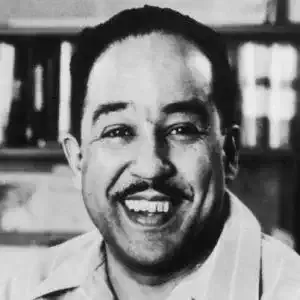
Langston Hughes
Cultural Exchange
In the Quarter of the Negroes
Where the doors are doors of paper
Dust of dingy atoms
Blows a scratchy sound.
Amorphous jack-o'-Lanterns caper
And the wind won't wait for midnight
For fun to blow doors down.
By the river and the railroad
With fluid far-off goind
Boundaries bind unbinding
A whirl of whisteles blowing.
No trains or steamboats going--
Yet Leontyne's unpacking.
In the Quarter of the Negroes
Where the doorknob lets in Lieder
More than German ever bore,
Her yesterday past grandpa--
Not of her own doing--
In a pot of collard greens
Is gently stewing.
Pushcarts fold and unfold
In a supermarket sea.
And we better find out, mama,
Where is the colored laundromat
Since we move dup to Mount Vernon.
In the pot begind the paper doors
on the old iron stove what's cooking?
What's smelling, Leontyne?
Lieder, lovely Lieder
And a leaf of collard green.
Lovely Lieder, Leontyne.
You know, right at Christmas
They asked me if my blackness,
Would it rub off?
I said, Ask your mama.
Dreams and nightmares!
Nightmares, dreams, oh!
Dreaming that the Negroes
Of the South have taken over--
Voted all the Dixiecrats
Right out of power--
Comes the COLORED HOUR:
Martin Luther King is Governor of Georgia,
Dr. Rufus Clement his Chief Adviser,
A. Philip Randolph the High Grand Worthy.
In white pillared mansions
Sitting on their wide verandas,
Wealthy Negroes have white servants,
White sharecroppers work the black plantations,
And colored children have white mammies:
Mammy Faubus
Mammy Eastland
Mammy Wallace
Dear, dear darling old white mammies--
Sometimes even buried with our family.
Dear old
Mammy Faubus!
Culture, they say, is a two-way street:
Hand me my mint julep, mammny.
Hurry up!
Make haste!
528

Robert Browning
By The Fire-Side
I.
How well I know what I mean to do
When the long dark autumn-evenings come:
And where, my soul, is thy pleasant hue?
With the music of all thy voices, dumb
In life's November too!
II.
I shall be found by the fire, suppose,
O'er a great wise book as beseemeth age,
While the shutters flap as the cross-wind blows
And I turn the page, and I turn the page,
Not verse now, only prose!
III.
Till the young ones whisper, finger on lip,
``There he is at it, deep in Greek:
``Now then, or never, out we slip
``To cut from the hazels by the creek
``A mainmast for our ship!''
IV.
I shall be at it indeed, my friends:
Greek puts already on either side
Such a branch-work forth as soon extends
To a vista opening far and wide,
And I pass out where it ends.
V.
The outside-frame, like your hazel-trees:
But the inside-archway widens fast,
And a rarer sort succeeds to these,
And we slope to Italy at last
And youth, by green degrees.
VI.
I follow wherever I am led,
Knowing so well the leader's hand:
Oh woman-country, wooed not wed,
Loved all the more by earth's male-lands,
Laid to their hearts instead!
VII.
Look at the ruined chapel again
Half-way up in the Alpine gorge!
Is that a tower, I point you plain,
Or is it a mill, or an iron-forge
Breaks solitude in vain?
VIII.
A turn, and we stand in the heart of things:
The woods are round us, heaped and dim;
From slab to slab how it slips and springs,
The thread of water single and slim,
Through the ravage some torrent brings!
IX.
Does it feed the little lake below?
That speck of white just on its marge
Is Pella; see, in the evening-glow,
How sharp the silver spear-heads charge
When Alp meets heaven in snow!
X.
On our other side is the straight-up rock;
And a path is kept 'twixt the gorge and it
By boulder-stones where lichens mock
The marks on a moth, and small ferns fit
Their teeth to the polished block.
XI.
Oh the sense of the yellow mountain-flowers,
And thorny balls, each three in one,
The chestnuts throw on our path in showers!
For the drop of the woodland fruit's begun,
These early November hours,
XII.
That crimson the creeper's leaf across
Like a splash of blood, intense, abrupt,
O'er a shield else gold from rim to boss,
And lay it for show on the fairy-cupped
Elf-needled mat of moss,
XIII.
By the rose-flesh mushrooms, undivulged
Last evening---nay, in to-day's first dew
Yon sudden coral nipple bulged,
Where a freaked fawn-coloured flaky crew
Of toadstools peep indulged.
XIV.
And yonder, at foot of the fronting ridge
That takes the turn to a range beyond,
Is the chapel reached by the one-arched bridge
Where the water is stopped in a stagnant pond
Danced over by the midge.
XV.
The chapel and bridge are of stone alike,
Blackish-grey and mostly wet;
Cut hemp-stalks steep in the narrow dyke.
See here again, how the lichens fret
And the roots of the ivy strike!
XVI.
Poor little place, where its one priest comes
On a festa-day, if he comes at all,
To the dozen folk from their scattered homes,
Gathered within that precinct small
By the dozen ways one roams---
XVII.
To drop from the charcoal-burners' huts,
Or climb from the hemp-dressers' low shed,
Leave the grange where the woodman stores his nuts,
Or the wattled cote where the fowlers spread
Their gear on the rock's bare juts.
XVIII.
It has some pretension too, this front,
With its bit of fresco half-moon-wise
Set over the porch, Art's early wont:
'Tis John in the Desert, I surmise,
But has borne the weather's brunt---
XIX.
Not from the fault of the builder, though,
For a pent-house properly projects
Where three carved beams make a certain show,
Dating---good thought of our architect's---
'Five, six, nine, he lets you know.
XX.
And all day long a bird sings there,
And a stray sheep drinks at the pond at times;
The place is silent and aware;
It has had its scenes, its joys and crimes,
But that is its own affair.
XXI.
My perfect wife, my Leonor,
Oh heart, my own, oh eyes, mine too,
Whom else could I dare look backward for,
With whom beside should I dare pursue
The path grey heads abhor?
XXII.
For it leads to a crag's sheer edge with them;
Youth, flowery all the way, there stops---
Not they; age threatens and they contemn,
Till they reach the gulf wherein youth drops,
One inch from life's safe hem!
XXIII.
With me, youth led ... I will speak now,
No longer watch you as you sit
Reading by fire-light, that great brow
And the spirit-small hand propping it,
Mutely, my heart knows how---
XXIV.
When, if I think but deep enough,
You are wont to answer, prompt as rhyme;
And you, too, find without rebuff
Response your soul seeks many a time
Piercing its fine flesh-stuff.
XXV.
My own, confirm me! If I tread
This path back, is it not in pride
To think how little I dreamed it led
To an age so blest that, by its side,
Youth seems the waste instead?
XXVI.
My own, see where the years conduct!
At first, 'twas something our two souls
Should mix as mists do; each is sucked
In each now: on, the new stream rolls,
Whatever rocks obstruct.
XXVII.
Think, when our one soul understands
The great Word which makes all things new,
When earth breaks up and heaven expands,
How will the change strike me and you
ln the house not made with hands?
XXVIII.
Oh I must feel your brain prompt mine,
Your heart anticipate my heart,
You must be just before, in fine,
See and make me see, for your part,
New depths of the divine!
XXIX.
But who could have expected this
When we two drew together first
Just for the obvious human bliss,
To satisfy life's daily thirst
With a thing men seldom miss?
XXX.
Come back with me to the first of all,
Let us lean and love it over again,
Let us now forget and now recall,
Break the rosary in a pearly rain,
And gather what we let fall!
XXXI.
What did I say?---that a small bird sings
All day long, save when a brown pair
Of hawks from the wood float with wide wings
Strained to a bell: 'gainst noon-day glare
You count the streaks and rings.
XXXII.
But at afternoon or almost eve
'Tis better; then the silence grows
To that degree, you half believe
It must get rid of what it knows,
Its bosom does so heave.
XXXIII.
Hither we walked then, side by side,
Arm in arm and cheek to cheek,
And still I questioned or replied,
While my heart, convulsed to really speak,
Lay choking in its pride.
XXXIV.
Silent the crumbling bridge we cross,
And pity and praise the chapel sweet,
And care about the fresco's loss,
And wish for our souls a like retreat,
And wonder at the moss.
XXXV.
Stoop and kneel on the settle under,
Look through the window's grated square:
Nothing to see! For fear of plunder,
The cross is down and the altar bare,
As if thieves don't fear thunder.
XXXVI.
We stoop and look in through the grate,
See the little porch and rustic door,
Read duly the dead builder's date;
Then cross the bridge that we crossed before,
Take the path again---but wait!
XXXVII.
Oh moment, one and infinite!
The water slips o'er stock and stone;
The West is tender, hardly bright:
How grey at once is the evening grown---
One star, its chrysolite!
XXXVIII.
We two stood there with never a third,
But each by each, as each knew well:
The sights we saw and the sounds we heard,
The lights and the shades made up a spell
Till the trouble grew and stirred.
XXXIX.
Oh, the little more, and how much it is!
And the little less, and what worlds away!
How a sound shall quicken content to bliss,
Or a breath suspend the blood's best play,
And life be a proof of this!
XL.
Had she willed it, still had stood the screen
So slight, so sure, 'twixt my love and her:
I could fix her face with a guard between,
And find her soul as when friends confer,
Friends---lovers that might have been.
XLI.
For my heart had a touch of the woodland-time,
Wanting to sleep now over its best.
Shake the whole tree in the summer-prime,
But bring to the Iast leaf no such test!
``Hold the last fast!'' runs the rhyme.
XLII.
For a chance to make your little much,
To gain a lover and lose a friend,
Venture the tree and a myriad such,
When nothing you mar but the year can mend:
But a last leaf---fear to touch!
XLIII.
Yet should it unfasten itself and fall
Eddying down till it find your face
At some slight wind---best chance of all!
Be your heart henceforth its dwelling-place
You trembled to forestall!
XLIV.
Worth how well, those dark grey eyes,
That hair so dark and dear, how worth
That a man should strive and agonize,
And taste a veriest hell on earth
For the hope of such a prize!
XIIV.
You might have turned and tried a man,
Set him a space to weary and wear,
And prove which suited more your plan,
His best of hope or his worst despair,
Yet end as he began.
XLVI.
But you spared me this, like the heart you are,
And filled my empty heart at a word.
If two lives join, there is oft a scar,
They are one and one, with a shadowy third;
One near one is too far.
XLVII.
A moment after, and hands unseen
Were hanging the night around us fast
But we knew that a bar was broken between
Life and life: we were mixed at last
In spite of the mortal screen.
XLVIII.
The forests had done it; there they stood;
We caught for a moment the powers at play:
They had mingled us so, for once and good,
Their work was done---we might go or stay,
They relapsed to their ancient mood.
XLIX.
How the world is made for each of us!
How all we perceive and know in it
Tends to some moment's product thus,
When a soul declares itself---to wit,
By its fruit, the thing it does
L.
Be hate that fruit or love that fruit,
It forwards the general deed of man,
And each of the Many helps to recruit
The life of the race by a general plan;
Each living his own, to boot.
LI.
I am named and known by that moment's feat;
There took my station and degree;
So grew my own small life complete,
As nature obtained her best of me---
One born to love you, sweet!
LII.
And to watch you sink by the fire-side now
Back again, as you mutely sit
Musing by fire-light, that great brow
And the spirit-small hand propping it,
Yonder, my heart knows how!
LIII.
So, earth has gained by one man the more,
And the gain of earth must be heaven's gain too;
And the whole is well worth thinking o'er
When autumn comes: which I mean to do
One day, as I said before.
522
Lord Byron
To Emma
Since now the hour is come at last,
When you must quit your anxious lover;
Since now our dream of bliss is past,
One pang, my girl, and all is over.
Alas! that pang will be severe,
Which bids us part to meet no more;
Which tears me far from one so dear,
Departing for a distant shore.
Well! we have pass'd some happy hours,
And joy will mingle with our tears;
When thinking on these ancient towers,
We shelter of our infant years;
Where from this Gothic casement's height,
We view's the lake, the park, the dell,
And still, though tears obstruct our sight,
We lingering look a last farewell,
O'er fields through which we used to run,
And spend the hours in childish play;
O'er shades where, when our race was done,
Reposing on my breast you lay;
Whilst I, admiring, too remiss,
Forgot to scare the hovering flies,
Yet envied every fly the kiss
It dared to give your slumbering eyes:
See still the little painted bark,
In which I row'd you o'er the lake;
See there, high waving o'er the park,
The elm I clamber'd for your sake.
These times are past — our joys are gone,
You leave me, leave this happy vale;
These scenes I must retrace alone:
Without thee what will they avail?
Who can conceive, who has not proved,
The anguish of a last embrace?
When, torn from all you fondly loved,
You bid a long adieu to peace.
This is the deepest of our woes,
For this these tears our cheeks bedew;
This is of love the final close,
Oh, God! the fondest, last adieu!
518
Rudyard Kipling
Prelude
I have eaten your bread and salt.
I have drunk your water and wine.
In deaths ye died I have watched beside,
And the lives ye led were mine.
Was there aught that I did not share
In vigil or toil or ease, --
One joy or woe that I did not know,
Dear hearts across the seas?
I have written the tale of our life
For a sheltered people's mirth,
In jesting guise -- but ye are wise,
And ye know what the jest is worth.
521