
Memories and Recollections

Boris Pasternak
In Memory of Marina Tsvetaeva
Dismal day, with the weather inclement.
Inconsolably rivulets run
Down the porch in front of the doorway;
Through my wide-open windows they come.
But behind the old fence on the roadside,
See, the public gardens are flooded.
Like wild beasts in a den, the rainclouds
Sprawl about in shaggy disorder.
In such weather, I dream of a volume
On the beauties of Earth in our age,
And I draw an imp of the forest
Just for you on the title-page.
Oh, Marina, I'd find it no burden,
And the time has been long overdue:
Your sad clay should be brought from Yelabuga
By a requiem written for you.
All the triumph of your homecoming
I considered last year in a place
Near a snow-covered bend in the river
Where boats winter, locked in the ice.
What can I do to be of service?
Convey somehow your own request,
For in the silence of your going
There's a reproach left unexpressed.
A loss is always enigmatic.
I hunt for clues to no avail,
And rack my brains in fruitless torment:
Death has no lineaments at all.
Words left half-spoken, self-deception,
Promises, shadows-all are vain,
And only faith in resurrection
Can give the semblance of a sign.
Step out into the open country:
Winter's a sumptuous funeral wake.
Add currants to the dusk, then wine,
And there you have your funeral cake.
The apple-tree stands in a snowdrift
Outside. All this year long, to me,
The snow-clad city's been a massive
Monument to your memory.
With your face turned to meet your Maker.
You yearn for Him from here on Earth,
As in the days when those upon it
Were yet to appreciate your worth
677
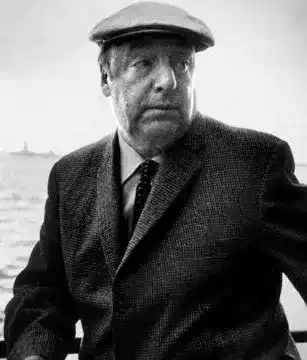
Pablo Neruda
Lost In The Forest
Lost in the forest, I broke off a dark twig
and lifted its whisper to my thirsty lips:
maybe it was the voice of the rain crying,
a cracked bell, or a torn heart.
Something from far off it seemed
deep and secret to me, hidden by the earth,
a shout muffled by huge autumns,
by the moist half-open darkness of the leaves.
Wakening from the dreaming forest there, the hazel-sprig
sang under my tongue, its drifting fragrance
climbed up through my conscious mind
as if suddenly the roots I had left behind
cried out to me, the land I had lost with my childhood-and
I stopped, wounded by the wandering scent.
670
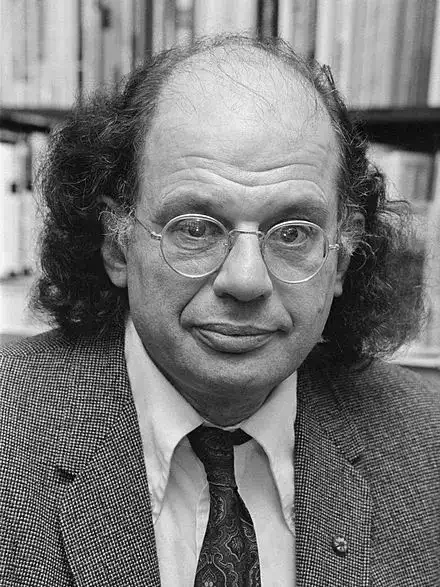
Allen Ginsberg
Hospital Window
At gauzy dusk, thin haze like cigarette smoke
ribbons past Chrysler Building's silver fins
tapering delicately needletopped, Empire State's
taller antenna filmed milky lit amid blocks
black and white apartmenting veil'd sky over Manhattan,
offices new built dark glassed in blueish heaven--The East
50's & 60's covered with castles & watertowers, seven storied
tar-topped house-banks over York Avenue, late may-green trees
surrounding Rockefellers' blue domed medical arbor--
Geodesic science at the waters edge--Cars running up
East River Drive, & parked at N.Y. Hospital's oval door
where perfect tulips flower the health of a thousand sick souls
trembling inside hospital rooms. Triboro bridge steel-spiked
penthouse orange roofs, sunset tinges the river and in a few
Bronx windows, some magnesium vapor brilliances're
spotted five floors above E 59th St under grey painted bridge
trestles. Way downstream along the river, as Monet saw Thames
100 years ago, Con Edison smokestacks 14th street,
& Brooklyn Bridge's skeined dim in modern mists--
Pipes sticking up to sky nine smokestacks huge visible--
U.N. Building hangs under an orange crane, & red lights on
vertical avenues below the trees turn green at the nod
of a skull with a mild nerve ache. Dim dharma, I return
to this spectacle after weeks of poisoned lassitude, my thighs
belly chest & arms covered with poxied welts,
head pains fading back of the neck, right eyebrow cheek
mouth paralyzed--from taking the wrong medicine, sweated
too much in the forehead helpless, covered my rage from
gorge to prostate with grinding jaw and tightening anus
not released the weeping scream of horror at robot Mayaguez
World self ton billions metal grief unloaded
Pnom Penh to Nakon Thanom, Santiago & Tehran.
Fresh warm breeze in the window, day's release
>from pain, cars float downside the bridge trestle
and uncounted building-wall windows multiplied a mile
deep into ash-delicate sky beguile
my empty mind. A seagull passes alone wings
spread silent over roofs.
668
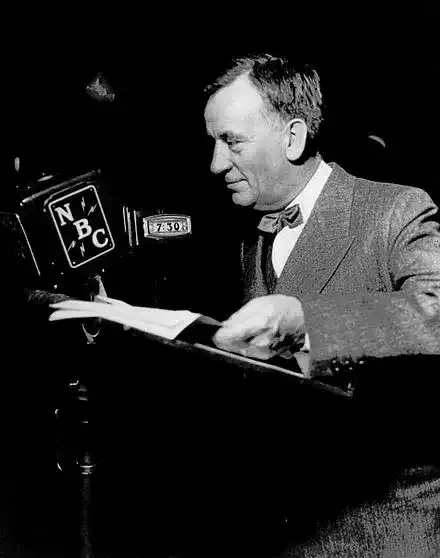
Edgar Albert Guest
When Father Shook The Stove
'Twas not so many years ago,
Say, twenty-two or three,
When zero weather or below
Held many a thrill for me.
Then in my icy room I slept
A youngster's sweet repose,
And always on my form I kept
My flannel underclothes.
Then I was roused by sudden shock
Though still to sleep I strove,
I knew that it was seven o'clock
When father shook the stove.
I never heard him quit his bed
Or his alarm clock ring;
I never heard his gentle tread,
Or his attempts to sing;
The sun that found my window pane
On me was wholly lost,
Though many a sunbeam tried in vain
To penetrate the frost.
To human voice I never stirred,
But deeper down I dove
Beneath the covers, when I heard
My father shake the stove.
To-day it all comes back to me
And I can hear it still;
He seemed to take a special glee
In shaking with a will.
He flung the noisy dampers back,
Then rattled steel on steel,
Until the force of his attack
The building seemed to feel.
Though I'd a youngster's heavy eyes
All sleep from them he drove;
It seemed to me the dead must rise
When father shook the stove.
Now radiators thump and pound
And every room is warm,
And modern men new ways have found
To shield us from the storm.
The window panes are seldom glossed
The way they used to be;
The pictures left by old Jack Frost
Our children never see.
And now that he has gone to rest
In God's great slumber grove,
I often think those days were best
When father shook the stove.
670

Oscar Wilde
My Voice
Within this restless, hurried, modern world
We took our hearts' full pleasure - You and I,
And now the white sails of our ship are furled,
And spent the lading of our argosy.
Wherefore my cheeks before their time are wan,
For very weeping is my gladness fled,
Sorrow has paled my young mouth's vermilion,
And Ruin draws the curtains of my bed.
But all this crowded life has been to thee
No more than lyre, or lute, or subtle spell
Of viols, or the music of the sea
That sleeps, a mimic echo, in the shell.
676
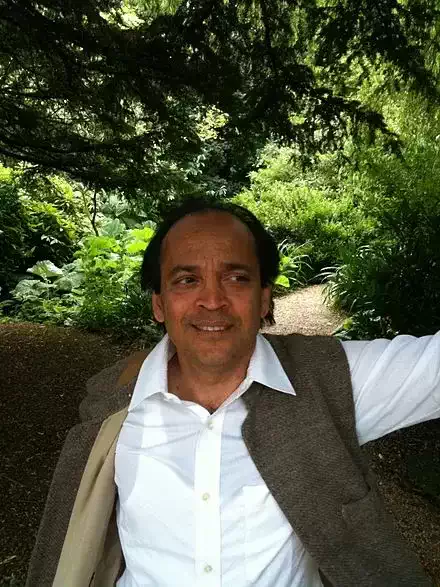
Vikram Seth
From California
Sunday night in the house.
The blinds drawn, the phone dead.
The sound of the kettle, the rain.
Supper: cheese, celery, bread.
For company, old letters
In the same disjointed script.
Old love wells up again,
All that I thought had slipped
Through the sieve of long absence
Is here with me again:
The long stone walls, the green
Hillsides renewed with rain.
The way you would lick your finger
And touch your forehead, the way
You hummed a phrase from the flute
Sonatas, or turned to say,
"Larches--the only conifers
That honestly blend with Wales."
I walk with you again
Along these settled trails.
It seems I started this poem
So many years ago
I cannt follow its ending
And must begin anew.
Blame, some bitterness,
I recall there were these.
Yet what survives is Bach
And a few blackberries
Something of the "falling starlight",
In the phrase of Wang Wei,
Falls on my shadowed self.
I thank you that today
His words are open to me.
How much you have inspired
You cannot know. The end
Left much to be desired.
"There is a comfort in
The strength of love." I quote
Another favourite
You vouchsafed me. Please note
The lack of hope or faith:
Neither is justified.
I have closed out the night.
The random rain outside
Rejuvenates the parched
Foothills along the Bay.
Anaesthetised by years
I think of you today
Not with impassionedness
So much as half a smile
To see the weathered past
Still worth my present while.
668

Kazi Nazrul Islam
A Call from Behind
Dear! Wilt thou remember me in thy new home?
There dost thou begin the world under
new auspices with new offerings
Deserted is now the leafy cottage; its
shady neighborhood where we two
first exchanged our looks, where
every particle of dust, every.
creeper and leaf is redolent
of the wealth of eternal acquaintance
in the worship of hearts,
And a dismal void now cries in the wilderness.
As didst thou forget me, many a man could
come to thee,
Then out of sympathy for me would that
cottage weep out an offended heart,
Wherever dist thou turn thy eyes,
my reminiscences there made thy heart ache,
Thou wilt drown that reproach here
in the depths of new field;
I alone am lost in the woods' of oblivion.
The distance between thee and me was so
long no real distance,
As that old mansion would bring my
distance into nearness.
Now hast thou formed new ties,
Opened a new fountain of laughter and tears,
New performance and new revelry of song,
Under the impulse of new welcome!
To the cold storage my own tune is consigned.
Dear! Mine is today forlorn hope, as
pre-ordained by the divinity,
Today on my grave will be built thy bridal
sanctum sanatorium
In the air is echoed and re-echoed
The music of the Sylvan flute in the mouth
of some cow-herd,
Lost, lost am I in the western horizon!
Farewell, Dear, our role comes to an end
with the setting sun,
Now art thou a new one in a new home!
[Translation: Abdul Hakim]
680

Carl Sandburg
Chicago Poet
I saluted a nobody.
I saw him in a looking-glass.
He smiled--so did I.
He crumpled the skin on his forehead, frowning--so did I.
Everything I did he did.
I said, "Hello, I know you."
And I was a liar to say so.
Ah, this. looking-glass man!
Liar, fool, dreamer, play-actor,
Soldier, dusty drinker of dust--
Ah! he will go with me
Down the dark stairway
When nobody else is looking,
When everybody else is gone.
He locks his elbow in mine,
I lose all--but not him.
660
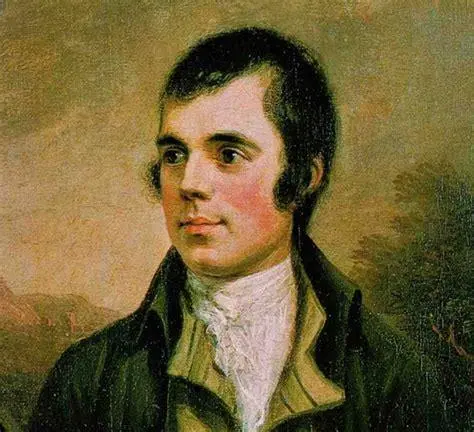
Robert Burns
The Auld Farmer's New-Year-Morning Salutation to His Auld Mare , Maggie
A Guide New-year I wish thee, Maggie!
Hae, there's a ripp to thy auld baggie:
Tho' thou's howe-backit now, an' knaggie,
I've seen the day
There could hae gaen like ony staggie,
Out-owre the lay.
Tho' now thou's dowie, stiff an' crazy,
An' thy auld hide as white's a daisie,
I've seen the dappl't, sleek an' glaizie,
A bonie gray:
He should been tight that daur't to raize thee,
Ance in a day.
Thou ance was i' the foremost rank,
A filly buirdly, steeve an' swank;
An' set weel down a shapely shank,
As e'er tread yird;
An' could hae flown out-owre a stank,
Like ony bird.
It's now some nine-an'-twenty year,
Sin' thou was my guid-father's mear;
He gied me thee, o' tocher clear,
An' fifty mark;
Tho' it was sma', 'twas weel-won gear,
An' thou was stark.
When first I gaed to woo my Jenny,
Ye then was trotting wi' your minnie:
Tho' ye was trickie, slee, an funnie,
Ye ne'er was donsie;
But hamely, tawie, quiet, an' cannie,
An' unco sonsie.
That day, ye pranc'd wi' muckle pride,
When ye bure hame my bonie bride:
An' sweet an' gracefu' she did ride,
Wi' maiden air!
Kyle-Stewart I could bragged wide
For sic a pair.
Tho' now ye dow but hoyte and hobble,
An' wintle like a saumont coble,
That day, ye was a jinker noble,
For heels an' win'!
An' ran them till they a' did wauble,
Far, far, behin'!
When thou an' I were young an' skeigh
An' stable-meals at fairs were dreigh,
How thou wad prance, and snore, an' skreigh
An' tak the road!
Town's-bodies ran, an' stood abeigh,
An' ca't thee mad.
When thou was corn't, an' I was mellow,
We took the road aye like a swallow:
At brooses thou had ne'er a fellow,
For pith an' speed;
But ev'ry tail thou pay't them hollow,
Whare'er thou gaed.
The sma', droop-rumpl't, hunter cattle
Might aiblins waurt thee for a brattle;
But sax Scotch mile, thou try't their mettle,
An' gar't them whaizle:
Nae whip nor spur, but just a wattle
O' saugh or hazel.
Thou was a noble fittie-lan',
As e'er in tug or tow was drawn!
Aft thee an' I, in aught hours' gaun,
In guid March-weather,
Hae turn'd sax rood beside our han',
For days thegither.
Thou never braing't, an' fetch't, an' fliskit;
But thy auld tail thou wad hae whiskit,
An' spread abreed thy weel-fill'd brisket,
Wi' pith an' power;
Till sprittie knowes wad rair't an' riskit
An' slypet owre.
When frosts lay lang, an' snaws were deep,
An' threaten'd labour back to keep,
I gied thy cog a wee bit heap
Aboon the timmer:
I ken'd my Maggie wad na sleep,
For that, or simmer.
In cart or car thou never reestit;
The steyest brae thou wad hae fac't it;
Thou never lap, an' sten't, and breastit,
Then stood to blaw;
But just thy step a wee thing hastit,
Thou snoov't awa.
My pleugh is now thy bairn-time a',
Four gallant brutes as e'er did draw;
Forbye sax mae I've sell't awa,
That thou hast nurst:
They drew me thretteen pund an' twa,
The vera warst.
Mony a sair daurk we twa hae wrought,
An' wi' the weary warl' fought!
An' mony an anxious day, I thought
We wad be beat!
Yet here to crazy age we're brought,
Wi' something yet.
An' think na', my auld trusty servan',
That now perhaps thou's less deservin,
An' thy auld days may end in starvin;
For my last fow,
A heapit stimpart, I'll reserve ane
Laid by for you.
We've worn to crazy years thegither;
We'll toyte about wi' ane anither;
Wi' tentie care I'll flit thy tether
To some hain'd rig,
Whare ye may nobly rax your leather,
Wi' sma' fatigue.
656
Boris Pasternak
White Night
I keep thinking of times that are long past,
Of a house in the Petersburg Quarter.
You had come from the steppeland Kursk Province,
Of a none-too-rich mother the daughter.
You were nice, you had many admirers.
On that distant white night we were sitting
On your window-sill, looking from high on
On the phantom-like scene of the city.
The street-lamps, like gauze butterflies fluttering,
Had been touched by the chill of the morning.
My soft words, as I opened my heart to you,
Matched the slumbering vistas before us.
We were plighted with timid fidelity
To the very same nebulous mystery
As the cityscape spreading unendingly
Far beyond the Neva, through the distances.
In that far-off impregnable wilderness,
Wrapped in springtime twilight ethereal,
Woodland glades and dense thickets were quivering
With mad nightingales' thunderous paeans.
Crazy resonant warbling ran riot,
And the voice of this plain-looking songster
Sowed derangement, ecstatic delight
In the depth of the mesmerised copsewood.
To those parts Night, a barefoot vagabond,
Stole its way along ditches and fences.
From our window-sill, after it tagging,
Was the trail of our cooed confidences.
To the words of this colloquy echoing
In the orchards beyond the tall palings
Spreading branches of apple and cherry trees
Swathed themselves in their pearly-white raiment.
And the trees, like so many pale phantoms,
Waved their farewell, along the road thronging,
To White Night, that all-seeing enchanter,
Who was now to North Regions withdrawing.
647

Rabindranath Tagore
Broken Song
Kasinath the new young singer fills the hall with sound:
The seven notes dance in his throat like seven tame birds.
His voice is a sharp sword slicing and thrusting everywhere,
It darts like lightening - no knowing where it will go when.
He sets deadly traps for himself, then cuts them away:
The courtiers listen in amazement, give frequent gasps of praise.
Only the old king Pratap Ray sits like wood, unmoved.
Haraj Lal is the only singer he likes, all others leave him cold.
From childhood he has spent so long listening to him sing -
Rag Kafi during holi, cloud-songs during the rains,
Songs for Durga at dawn in autumn, songs to bid her farewell -
His heart swelled when he heard them and his eyes swam with tears.
And on days when friends gathered and filled the hall
There were cowherds' songs of Krsna, in raags Bhupali and Multan.
So many nights of wedding-festivity have passed in that royal house:
Servants dressed in red, hundreds of lamps alight:
The bridegroom sitting shyly in his finery and jewels,
Young friends teasing him and whispering in his ear:
Before him, singing raag Sahana, sits Baraj Lal.
The king's heart is full of all those days and songs.
When he hears some other singer, he feels no chord inside,
No sudden magical awakening of memories of the past.
When Pratap Ray watches Kasinath he just sees his wagging head:
Tune after tune after tune, bu none with any echo in the heart.
Kasinath asks for a rest and the singing stops for a space.
Pratap Ray smilingly turns his eyes to Baraj Lal.
He puts his mouth to his ear and says, 'Dear ustad,
Give us a song as songs ought to be, this is no song at all.
It's all tricks and games, like a cat hunting a bird.
We used to hear songs in the old days, today they have no idea.'
Old Baraj Lal, white-haired, white turban on his head,
Bows to the assembled courtiers and slowly takes his seat.
He takes the tanpura in his wasted, heavily veined hand
And with lowered head and closed eyes begins raag Yaman-kalyap.
His quavering voice is swallowed by the enormous hall,
Is like a tiny bird in a storm, unable to fly for all it tries.
Pratap Ray, sitting to the left, encourages him again and again:
'Superb, bravo!' he says in his ear, 'sing out loud.'
The courtiers are inattentive, some whisper amongst themselves,
Some of them yawn, some doze, some go off to their rooms;
Some of them call to servants, 'Bring the bookah, bring some pan.'
Some fan themselves furiously and complain of the heat.
They cannot keep still for a minute, they shuffle or walk about -
The hall was quiet before, but every sort of noise has grown.
The old man's singing is swamped, like a frail boat in a typhoon:
Only his shaky fingering of the tanpura shows it is there.
Music that should rise on its own joy from the depths of the heart
Is crushed by heedless clamour, like a fountain under a stone.
The song and Baraj Lal's feelings go separate ways,
But he sings for all he is worth, to keep up the honour of his king.
One of the verses of the song has somehow slipped from his mind.
He quickly goes back, tries to get it right this time.
Again he forgets, it is lost, he shakes his head at the shame;
He starts the song at the beginning - again he has to stop.
His hand trembles doubly as he prays to his teachers name.
His voice quakes with distress, like a lamp guttering in a breeze.
He abandons the words of the song and tries to salvage the tune,
But suddenly his wide-mouthed singing breaks into loud cries.
The intricate melody goes to the winds, the rhythm is swept away -
Tears snap the thread of the song, cascade like pearls.
In shame he rests his head on the old tanpura in his lap -
He has failed to remember a song: he weeps as he did as a child.
With brimming eyes king Pratap Ray tenderly touches his friend:
'Come, let us go from here,' he says with kindness and love.
They leave that festive hall with its hundreds of blinding lights.
The two old friends go outside, holding each other's hands.
Baraj says with hands clasped, 'Master, our days are gone.
New men have come now, new styles and customs in the world.
The court we kept is deserted - only the two of us are left.
Don't ask anyone to listen to me now, I beg you at your feet, my lord.
The singer along does not make a song, there has to be someone who hears:
One man opens his throat to sing, the other sings in his mind.
Only when waves fall on the shore do they make a harmonious sound;
Only when breezes shake the woods do we hear a rustling in the leaves.
Only from a marriage of two forces does music arise in the world.
Where there is no love, where listeners are dumb, there never can be song.'
649

William Shakespeare
Sonnet 63: Against my love shall be, as I am now
Against my love shall be, as I am now,
With Time's injurious hand crushed and o'erworn;
When hours have drained his blood and filled his brow
With lines and wrinkles; when his youthful morn
Hath travelled on to age's steepy night,
And all those beauties whereof now he's king
Are vanishing, or vanished out of sight,
Stealing away the treasure of his spring;
For such a time do I now fortify
Against confounding age's cruel knife,
That he shall never cut from memory
My sweet love's beauty, though my lover's life.
His beauty shall in these black lines be seen,
And they shall live, and he in them still green.
642
Boris Pasternak
August
This was its promise, held to faithfully:
The early morning sun came in this way
Until the angle of its saffron beam
Between the curtains and the sofa lay,
And with its ochre heat it spread across
The village houses, and the nearby wood,
Upon my bed and on my dampened pillow
And to the corner where the bookcase stood.
Then I recalled the reason why my pillow
Had been so dampened by those tears that fell
I'd
dreamt I saw you coming one by one
Across the wood to wish me your farewell.
You came in ones and twos, a straggling crowd;
Then suddenly someone mentioned a word:
It was the sixth of August, by Old Style,
And the Transfiguration of Our Lord.
For from Mount Tabor usually this day
There comes a light without a flame to shine,
And autumn draws all eyes upon itself
As clear and unmistaken as a sign.
But you came forward through the tiny, stripped,
The pauperly and trembling alder grove,
Into the graveyard's coppice, russet-red,
Which, like stamped gingerbread, lay there and glowed.
And with the silence of those high treetops
Was neighbour only the imposing sky
And in the echoed crowing of the cocks
The distances and distances rang by:
There in the churchyard underneath the trees,
Like some surveyor from the government
Death gazed on my pale face to estimate
How large a grave would suit my measurement.
All those who stood there could distinctly hear
A quiet voice emerge from where I lay:
The voice was mine, my past; prophetic words
That sounded now, unsullied by decay:
'Farewell, wonder of azure and of gold
Surrounding the Transfiguration's power:
Assuage now with a woman's last caress
The bitterness of my predestined hour!
'Farewell timeless expanse of passing years!
Farewell, woman who flung your challenge steeled
Against the abyss of humiliations:
For it is I who am your battlefield!
'Farewell, you span of open wings outspread,
The voluntary obstinacy of flight,
O figure of the world revealed in speech,
Creative genius, wonder-working might!'
644
Pablo Neruda
I Remember You As You Were
I remember you as you were in the last autumn.
You were the grey beret and the still heart.
In your eyes the flames of the twilight fought on.
And the leaves fell in the water of your soul.
Clasping my arms like a climbing plant
the leaves garnered your voice, that was slow and at peace.
Bonfire of awe in which my thirst was burning.
Sweet blue hyacinth twisted over my soul.
I feel your eyes traveling, and the autumn is far off:
Grey beret, voice of a bird, heart like a house
Towards which my deep longings migrated
And my kisses fell, happy as embers.
Sky from a ship. Field from the hills:
Your memory is made of light, of smoke, of a still pond!
Beyond your eyes, farther on, the evenings were blazing.
Dry autumn leaves revolved in your soul.
627

Henry Wadsworth Longfellow
Haunted Houses. (Birds Of Passage. Flight The First)
All houses wherein men have lived and died
Are haunted houses. Through the open doors
The harmless phantoms on their errands glide,
With feet that make no sound upon the floors.
We meet them at the doorway, on the stair,
Along the passages they come and go,
Impalpable impressions on the air,
A sense of something moving to and fro.
There are more guests at table, than the hosts
Invited; the illuminated hall
Is thronged with quiet, inoffensive ghosts,
As silent as the pictures on the wall.
The stranger at my fireside cannot see
The forms I see, nor hear the sounds I hear;
He but perceives what is; while unto me
All that has been is visible and clear.
We have no title-deeds to house or lands;
Owners and occupants of earlier dates
From graves forgotten stretch their dusty hands,
And hold in mortmain still their old estates.
The spirit-world around this world of sense
Floats like an atmosphere, and everywhere
Wafts through these earthly mists and vapors dense
A vital breath of more ethereal air.
Our little lives are kept in equipoise
By opposite attractions and desires;
The struggle of the instinct that enjoys,
And the more noble instinct that aspires.
These perturbations, this perpetual jar
Of earthly wants and aspirations high,
Come from the influence of an unseen star,
An undiscovered planet in our sky.
And as the moon from some dark gate of cloud
Throws o'er the sea a floating bridge of light,
Across whose trembling planks our fancies crowd
Into the realm of mystery and night,--
So from the world of spirits there descends
A bridge of light, connecting it with this,
O'er whose unsteady floor, that sways and bends,
Wander our thoughts above the dark abyss.
627

Paul Laurence Dunbar
If I Could But Forget
If I could but forget
The fullness of those first sweet days,
When you burst sun-like thro' the haze
Of unacquaintance, on my sight,
And made the wet, gray day seem bright
While clouds themselves grew fair to see.
And since, no day is gray or wet
But all the scene comes back to me,
If I could but forget.
If I could but forget
How your dusk eyes look into mine,
And how I thrilled as with strong wine
Beneath your touch; while sped amain
The quickened stream thro' ev'ry vein;
How near my breath fell to a gasp,
When for a space our fingers met
In one electric vibrant clasp,
If I could but forget.
If I could but forget
The months of passion and of pain,
And all that followed in their train--
Rebellious thoughts that would arise,
Rebellious tears that dimmed mine eyes,
The prayers that I might set love's fire
Aflame within your bosom yet--
The death at last of that desire--
If I could but forget.
635
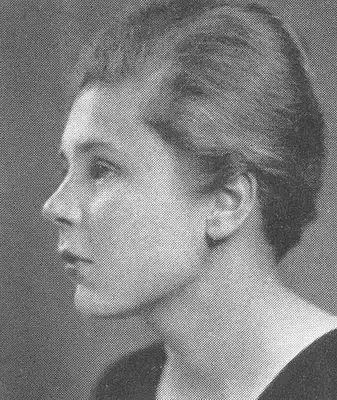
Elizabeth Bishop
Arrival At Santos
Here is a coast; here is a harbor;
here, after a meager diet of horizon, is some scenery:
impractically shaped and--who knows?--self-pitying mountains,
sad and harsh beneath their frivolous greenery,
with a little church on top of one. And warehouses,
some of them painted a feeble pink, or blue,
and some tall, uncertain palms. Oh, tourist,
is this how this country is going to answer you
and your immodest demands for a different world,
and a better life, and complete comprehension
of both at last, and immediately,
after eighteen days of suspension?
Finish your breakfast. The tender is coming,
a strange and ancient craft, flying a strange and brilliant rag.
So that's the flag. I never saw it before.
I somehow never thought of there being a flag,
but of course there was, all along. And coins, I presume,
and paper money; they remain to be seen.
And gingerly now we climb down the ladder backward,
myself and a fellow passenger named Miss Breen,
descending into the midst of twenty-six freighters
waiting to be loaded with green coffee beaus.
Please, boy, do be more careful with that boat hook!
Watch out! Oh! It has caught Miss Breen's
skirt! There! Miss Breen is about seventy,
a retired police lieutenant, six feet tall,
with beautiful bright blue eyes and a kind expression.
Her home, when she is at home, is in Glens Fall
s, New York. There. We are settled.
The customs officials will speak English, we hope,
and leave us our bourbon and cigarettes.
Ports are necessities, like postage stamps, or soap,
but they seldom seem to care what impression they make,
or, like this, only attempt, since it does not matter,
the unassertive colors of soap, or postage stamps-wasting
away like the former, slipping the way the latter
do when we mail the letters we wrote on the boat,
either because the glue here is very inferior
or because of the heat. We leave Santos at once;
we are driving to the interior.
631
Henry Wadsworth Longfellow
The Song Of Hiawatha XIV: Picture-Writing
In those days said Hiawatha,
'Lo! how all things fade and perish!
From the memory of the old men
Pass away the great traditions,
The achievements of the warriors,
The adventures of the hunters,
All the wisdom of the Medas,
All the craft of the Wabenos,
All the marvellous dreams and visions
Of the Jossakeeds, the Prophets!
'Great men die and are forgotten,
Wise men speak; their words of wisdom
Perish in the ears that hear them,
Do not reach the generations
That, as yet unborn, are waiting
In the great, mysterious darkness
Of the speechless days that shall be!
'On the grave-posts of our fathers
Are no signs, no figures painted;
Who are in those graves we know not,
Only know they are our fathers.
Of what kith they are and kindred,
From what old, ancestral Totem,
Be it Eagle, Bear, or Beaver,
They descended, this we know not,
Only know they are our fathers.
'Face to face we speak together,
But we cannot speak when absent,
Cannot send our voices from us
To the friends that dwell afar off;
Cannot send a secret message,
But the bearer learns our secret,
May pervert it, may betray it,
May reveal it unto others.'
Thus said Hiawatha, walking
In the solitary forest,
Pondering, musing in the forest,
On the welfare of his people.
From his pouch he took his colors,
Took his paints of different colors,
On the smooth bark of a birch-tree
Painted many shapes and figures,
Wonderful and mystic figures,
And each figure had a meaning,
Each some word or thought suggested.
Gitche Manito the Mighty,
He, the Master of Life, was painted
As an egg, with points projecting
To the four winds of the heavens.
Everywhere is the Great Spirit,
Was the meaning of this symbol.
Gitche Manito the Mighty,
He the dreadful Spirit of Evil,
As a serpent was depicted,
As Kenabeek, the great serpent.
Very crafty, very cunning,
Is the creeping Spirit of Evil,
Was the meaning of this symbol.
Life and Death he drew as circles,
Life was white, but Death was darkened;
Sun and moon and stars he painted,
Man and beast, and fish and reptile,
Forests, mountains, lakes, and rivers.
For the earth he drew a straight line,
For the sky a bow above it;
White the space between for daytime,
Filled with little stars for night-time;
On the left a point for sunrise,
On the right a point for sunset,
On the top a point for noontide,
And for rain and cloudy weather
Waving lines descending from it.
Footprints pointing towards a wigwam
Were a sign of invitation,
Were a sign of guests assembling;
Bloody hands with palms uplifted
Were a symbol of destruction,
Were a hostile sign and symbol.
All these things did Hiawatha
Show unto his wondering people,
And interpreted their meaning,
And he said: 'Behold, your grave-posts
Have no mark, no sign, nor symbol,
Go and paint them all with figures;
Each one with its household symbol,
With its own ancestral Totem;
So that those who follow after
May distinguish them and know them.'
And they painted on the grave-posts
On the graves yet unforgotten,
Each his own ancestral Totem,
Each the symbol of his household;
Figures of the Bear and Reindeer,
Of the Turtle, Crane, and Beaver,
Each inverted as a token
That the owner was departed,
That the chief who bore the symbol
Lay beneath in dust and ashes.
And the Jossakeeds, the Prophets,
The Wabenos, the Magicians,
And the Medicine-men, the Medas,
Painted upon bark and deer-skin
Figures for the songs they chanted,
For each song a separate symbol,
Figures mystical and awful,
Figures strange and brightly colored;
And each figure had its meaning,
Each some magic song suggested.
The Great Spirit, the Creator,
Flashing light through all the heaven;
The Great Serpent, the Kenabeek,
With his bloody crest erected,
Creeping, looking into heaven;
In the sky the sun, that listens,
And the moon eclipsed and dying;
Owl and eagle, crane and hen-hawk,
And the cormorant, bird of magic;
Headless men, that walk the heavens,
Bodies lying pierced with arrows,
Bloody hands of death uplifted,
Flags on graves, and great war-captains
Grasping both the earth and heaven!
Such as these the shapes they painted
On the birch-bark and the deer-skin;
Songs of war and songs of hunting,
Songs of medicine and of magic,
All were written in these figures,
For each figure had its meaning,
Each its separate song recorded.
Nor forgotten was the Love-Song,
The most subtle of all medicines,
The most potent spell of magic,
Dangerous more than war or hunting!
Thus the Love-Song was recorded,
Symbol and interpretation.
First a human figure standing,
Painted in the brightest scarlet;
`T Is the lover, the musician,
And the meaning is, 'My painting
Makes me powerful over others.'
Then the figure seated, singing,
Playing on a drum of magic,
And the interpretation, 'Listen!
`T Is my voice you hear, my singing!'
Then the same red figure seated
In the shelter of a wigwam,
And the meaning of the symbol,
'I will come and sit beside you
In the mystery of my passion!'
Then two figures, man and woman,
Standing hand in hand together
With their hands so clasped together
That they seemed in one united,
And the words thus represented
Are, 'I see your heart within you,
And your cheeks are red with blushes!'
Next the maiden on an island,
In the centre of an Island;
And the song this shape suggested
Was, 'Though you were at a distance,
Were upon some far-off island,
Such the spell I cast upon you,
Such the magic power of passion,
I could straightway draw you to me!'
Then the figure of the maiden
Sleeping, and the lover near her,
Whispering to her in her slumbers,
Saying, 'Though you were far from me
In the land of Sleep and Silence,
Still the voice of love would reach you!'
And the last of all the figures
Was a heart within a circle,
Drawn within a magic circle;
And the image had this meaning:
'Naked lies your heart before me,
To your naked heart I whisper!'
Thus it was that Hiawatha,
In his wisdom, taught the people
All the mysteries of painting,
All the art of Picture-Writing,
On the smooth bark of the birch-tree,
On the white skin of the reindeer,
On the grave-posts of the village.
634
Allen Ginsberg
Death & Fame
When I die
I don't care what happens to my body
throw ashes in the air, scatter 'em in East River
bury an urn in Elizabeth New Jersey, B'nai Israel Cemetery
But l want a big funeral
St. Patrick's Cathedral, St. Mark's Church, the largest synagogue in
Manhattan
First, there's family, brother, nephews, spry aged Edith stepmother
96, Aunt Honey from old Newark,
Doctor Joel, cousin Mindy, brother Gene one eyed one ear'd, sisterin-
law blonde Connie, five nephews, stepbrothers & sisters
their grandchildren,
companion Peter Orlovsky, caretakers Rosenthal & Hale, Bill Morgan--
Next, teacher Trungpa Vajracharya's ghost mind, Gelek Rinpoche,
there Sakyong Mipham, Dalai Lama alert, chance visiting
America, Satchitananda Swami
Shivananda, Dehorahava Baba, Karmapa XVI, Dudjom Rinpoche,
Katagiri & Suzuki Roshi's phantoms
Baker, Whalen, Daido Loorie, Qwong, Frail White-haired Kapleau
Roshis, Lama Tarchen --
Then, most important, lovers over half-century
Dozens, a hundred, more, older fellows bald & rich
young boys met naked recently in bed, crowds surprised to see each
other, innumerable, intimate, exchanging memories
"He taught me to meditate, now I'm an old veteran of the thousand
day retreat --"
"I played music on subway platforms, I'm straight but loved him he
loved me"
"I felt more love from him at 19 than ever from anyone"
"We'd lie under covers gossip, read my poetry, hug & kiss belly to belly
arms round each other"
"I'd always get into his bed with underwear on & by morning my
skivvies would be on the floor"
"Japanese, always wanted take it up my bum with a master"
"We'd talk all night about Kerouac & Cassady sit Buddhalike then
sleep in his captain's bed."
"He seemed to need so much affection, a shame not to make him happy"
"I was lonely never in bed nude with anyone before, he was so gentle my
stomach
shuddered when he traced his finger along my abdomen nipple to hips-- "
"All I did was lay back eyes closed, he'd bring me to come with mouth
& fingers along my waist"
"He gave great head"
So there be gossip from loves of 1948, ghost of Neal Cassady commingling
with flesh and youthful blood of 1997
and surprise -- "You too? But I thought you were straight!"
"I am but Ginsberg an exception, for some reason he pleased me."
"I forgot whether I was straight gay queer or funny, was myself, tender
and affectionate to be kissed on the top of my head,
my forehead throat heart & solar plexus, mid-belly. on my prick,
tickled with his tongue my behind"
"I loved the way he'd recite 'But at my back allways hear/ time's winged
chariot hurrying near,' heads together, eye to eye, on a
pillow --"
Among lovers one handsome youth straggling the rear
"I studied his poetry class, 17 year-old kid, ran some errands to his
walk-up flat,
seduced me didn't want to, made me come, went home, never saw him
again never wanted to... "
"He couldn't get it up but loved me," "A clean old man." "He made
sure I came first"
This the crowd most surprised proud at ceremonial place of honor--
Then poets & musicians -- college boys' grunge bands -- age-old rock
star Beatles, faithful guitar accompanists, gay classical conductors,
unknown high Jazz music composers, funky trumpeters,
bowed bass & french horn black geniuses, folksinger
fiddlers with dobro tamborine harmonica mandolin autoharp
pennywhistles & kazoos
Next, artist Italian romantic realists schooled in mystic 60's India,
Late fauve Tuscan painter-poets, Classic draftsman Massachusets
surreal jackanapes with continental wives, poverty
sketchbook gesso oil watercolor masters from American
provinces
Then highschool teachers, lonely Irish librarians, delicate bibliophiles,
sex liberation troops nay armies, ladies of either sex
"I met him dozens of times he never remembered my name I loved
him anyway, true artist"
"Nervous breakdown after menopause, his poetry humor saved me
from suicide hospitals"
"Charmant, genius with modest manners, washed sink, dishes my
studio guest a week in Budapest"
Thousands of readers, "Howl changed my life in Libertyville Illinois"
"I saw him read Montclair State Teachers College decided be a poet-- "
"He turned me on, I started with garage rock sang my songs in Kansas
City"
"Kaddish made me weep for myself & father alive in Nevada City"
"Father Death comforted me when my sister died Boston l982"
"I read what he said in a newsmagazine, blew my mind, realized
others like me out there"
Deaf & Dumb bards with hand signing quick brilliant gestures
Then Journalists, editors's secretaries, agents, portraitists & photography
aficionados, rock critics, cultured laborors, cultural
historians come to witness the historic funeral
Super-fans, poetasters, aging Beatnicks & Deadheads, autographhunters,
distinguished paparazzi, intelligent gawkers
Everyone knew they were part of 'History" except the deceased
who never knew exactly what was happening even when I was alive
February 22, 1997
615
Elizabeth Bishop
North Haven
In Memoriam: Robert Lowell
I can make out the rigging of a schooner
a mile off; I can count
the new cones on the spruce. It is so still
the pale bay wears a milky skin; the sky
no clouds except for one long, carded horse¹s tail.
The islands haven't shifted since last summer,
even if I like to pretend they have-drifting,
in a dreamy sort of way,
a little north, a little south, or sidewise-and
that they¹re free within the blue frontiers of bay.
This month our favorite one is full of flowers:
buttercups, red clover, purple vetch,
hackweed still burning, daisies pied, eyebright,
the fragrant bedstraw's incandescent stars,
and more, returned, to paint the meadows with delight.
The goldfinches are back, or others like them,
and the white-throated sparrow's five-note song,
pleading and pleading, brings tears to the eyes.
Nature repeats herself, or almost does:
repeat, repeat, repeat; revise, revise, revise.
Years ago, you told me it was here
(in 1932?) you first "discovered girls"
and learned to sail, and learned to kiss.
You had "such fun," you said, that classic summer.
("Fun"--it always seemed to leave you at a loss...)
You left North Haven, anchored in its rock,
afloat in mystic blue...And now--you've left
for good. You can't derange, or rearrange,
your poems again. (But the sparrows can their song.)
The words won't change again. Sad friend, you cannot change.
625

Rudyard Kipling
With Scindia To Delhi
More than a hundred years ago, in a great battle fought near Delhi,
an Indian Prince rode fifty miles after the day was lost
with a beggar-girl, who had loved him and followed him in all his camps,
on his saddle-bow. He lost the girl when almost within sight of safety.
A Maratta trooper tells the story: --
The wreath of banquet overnight lay withered on the neck,
Our hands and scarfs were saffron-dyed for signal of despair,
When we went forth to Paniput to battle with the Mlech, --
Ere we came back from Paniput and left a kingdom there.
Thrice thirty thousand men were we to force the Jumna fords --
The hawk-winged horse of Damajee, mailed squadrons of the Bhao,
Stark levies of the southern hills, the Deccan's sharpest swords,
And he the harlot's traitor son the goatherd Mulhar Rao!
Thrice thirty thousand men were we before the mists had cleared,
The low white mists of morning heard the war-conch scream and bray;
We called upon Bhowani and we gripped them by the beard,
We rolled upon them like a flood and washed their ranks away.
The children of the hills of Khost before our lances ran,
We drove the black Rohillas back as cattle to the pen;
'Twas then we needed Mulhar Rao to end what we began,
A thousand men had saved the charge; he fled the field with ten!
There was no room to clear a sword -- no power to strike a blow,
For foot to foot, ay, breast to breast, the battle held us fast --
Save where the naked hill-men ran, and stabbing from below
Brought down the horse and rider and we trampled them and passed.
To left the roar of musketry rang like a falling flood --
To right the sunshine rippled red from redder lance and blade --
Above the dark Upsaras* flew, beneath us plashed the blood,
And, bellying black against the dust, the Bhagwa Jhanda swayed.
* The Choosers of the Slain.
I saw it fall in smoke and fire, the banner of the Bhao;
I heard a voice across the press of one who called in vain: --
"Ho! Anand Rao Nimbalkhur, ride! Get aid of Mulhar Rao!
Go shame his squadrons into fight -- the Bhao -- the Bhao is slain!"
Thereat, as when a sand-bar breaks in clotted spume and spray --
When rain of later autumn sweeps the Jumna water-head,
Before their charge from flank to flank our riven ranks gave way;
But of the waters of that flood the Jumna fords ran red.
I held by Scindia, my lord, as close as man might hold;
A Soobah of the Deccan asks no aid to guard his life;
But Holkar's Horse were flying, and our chiefest chiefs were cold,
And like a flame among us leapt the long lean Northern knife.
I held by Scindia -- my lance from butt to tuft was dyed,
The froth of battle bossed the shield and roped the bridle-chain --
What time beneath our horses' feet a maiden rose and cried,
And clung to Scindia, and I turned a sword-cut from the twain.
(He set a spell upon the maid in woodlands long ago,
A hunter by the Tapti banks she gave him water there:
He turned her heart to water, and she followed to her woe.
What need had he of Lalun who had twenty maids as fair?)
Now in that hour strength left my lord; he wrenched his mare aside;
He bound the girl behind him and we slashed and struggled free.
Across the reeling wreck of strife we rode as shadows ride
From Paniput to Delhi town, but not alone were we.
'Twas Lutuf-Ullah Populzai laid horse upon our track,
A swine-fed reiver of the North that lusted for the maid;
I might have barred his path awhile, but Scindia called me back,
And I -- O woe for Scindia! -- I listened and obeyed.
League after league the formless scrub took shape and glided by --
League after league the white road swirled behind the white mare's feet --
League after league, when leagues were done, we heard the Populzai,
Where sure as Time and swift as Death the tireless footfall beat.
Noon's eye beheld that shame of flight, the shadows fell, we fled
Where steadfast as the wheeling kite he followed in our train;
The black wolf warred where we had warred, the jackal mocked our dead,
And terror born of twilight-tide made mad the labouring brain.
I gasped: -- "A kingdom waits my lord; her love is but her own.
A day shall mar, a day shall cure for her, but what for thee?
Cut loose the girl: he follows fast. Cut loose and ride alone!"
Then Scindia 'twixt his blistered lips: -- "My Queens' Queen shall she be!
"Of all who ate my bread last night 'twas she alone that came
To seek her love between the spears and find her crown therein!
One shame is mine to-day, what need the weight of double shame?
If once we reach the Delhi gate, though all be lost, I win!"
We rode -- the white mare failed -- her trot a staggering stumble grew, --
The cooking-smoke of even rose and weltered and hung low;
And still we heard the Populzai and still we strained anew,
And Delhi town was very near, but nearer was the foe.
Yea, Delhi town was very near when Lalun whispered: -- "Slay!
Lord of my life, the mare sinks fast -- stab deep and let me die!"
But Scindia would not, and the maid tore free and flung away,
And turning as she fell we heard the clattering Populzai.
Then Scindia checked the gasping mare that rocked and groaned for breath,
And wheeled to charge and plunged the knife a hand's-breadth in her side --
The hunter and the hunted know how that last pause is death --
The blood had chilled about her heart, she reared and fell and died.
Our Gods were kind. Before he heard the maiden's piteous scream
A log upon the Delhi road, beneath the mare he lay --
Lost mistress and lost battle passed before him like a dream;
The darkness closed about his eyes -- I bore my King away.
607
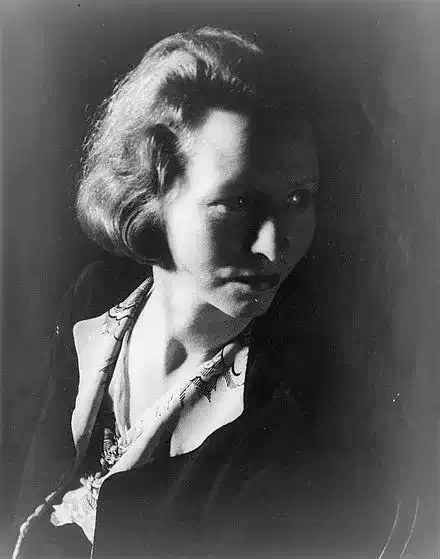
Edna St. Vincent Millay
Sonnet III: Mindful of you the sodden earth
Mindful of you the sodden earth in spring,
And all the flowers that in the springtime grow,
And dusty roads, and thistles, and the slow
Rising of the round moon, all throats that sing
The summer through, and each departing wing,
And all the nests that the bared branches show,
And all winds that in any weather blow,
And all the storms that the four seasons bring.
You go no more on your exultant feet
Up paths that only mist and morning knew,
Or watch the wind, or listen to the beat
Of a bird's wings too high in air to view,--
But you were something more than young and sweet
And fair,--and the long year remembers you.
603

William Butler Yeats
Coole Park And Ballylee, 1931
Under my window-ledge the waters race,
Otters below and moor-hens on the top,
Run for a mile undimmed in Heaven's face
Then darkening through 'dark' Raftery's 'cellar' drop,
Run underground, rise in a rocky place
In Coole demesne, and there to finish up
Spread to a lake and drop into a hole.
What's water but the generated soul?
Upon the border of that lake's a wood
Now all dry sticks under a wintry sun,
And in a copse of beeches there I stood,
For Nature's pulled her tragic buskin on
And all the rant's a mirror of my mood:
At sudden thunder of the mounting swan
I turned about and looked where branches break
The glittering reaches of the flooded lake.
Another emblem there! That stormy white
But seems a concentration of the sky;
And, like the soul, it sails into the sight
And in the morning's gone, no man knows why;
And is so lovely that it sets to right
What knowledge or its lack had set awry,
So atrogantly pure, a child might think
It can be murdered with a spot of ink.
Sound of a stick upon the floor, a sound
From somebody that toils from chair to chair;
Beloved books that famous hands have bound,
Old marble heads, old pictures everywhere;
Great rooms where travelled men and children found
Content or joy; a last inheritor
Where none has reigned that lacked a name and fame
Or out of folly into folly came.
A spot whereon the founders lived and died
Seemed once more dear than life; ancestral trees,
Or gardens rich in memory glorified
Marriages, alliances and families,
And every bride's ambition satisfied.
Where fashion or mere fantasy decrees
We shift about - all that great glory spent -
Like some poor Arab tribesman and his tent.
We were the last romantics - chose for theme
Traditional sanctity and loveliness;
Whatever's written in what poets name
The book of the people; whatever most can bless
The mind of man or elevate a rhyme;
But all is changed, that high horse riderless,
Though mounted in that saddle Homer rode
Where the swan drifts upon a darkening flood.
608
Allen Ginsberg
Haiku (Never Published)
Drinking my tea
Without sugar
No
difference.
The sparrow shits
upside down
--ah! my brain & eggs
Mayan head in a
Pacific driftwood bole
--Someday I'll live in N.Y.
Looking over my shoulder
my behind was covered
with cherry blossoms.
Winter Haiku
I didn't know the names
of the flowers--now
my garden is gone.
I slapped the mosquito
and missed.
What made me do that?
Reading haiku
I am unhappy,
longing for the Nameless.
A frog floating
in the drugstore jar:
summer rain on grey pavements.
(after Shiki)
On the porch
in my shorts;
auto lights in the rain.
Another year
has past-the world
is no different.
The first thing I looked for
in my old garden was
The Cherry Tree.
My old desk:
the first thing I looked for
in my house.
My early journal:
the first thing I found
in my old desk.
My mother's ghost:
the first thing I found
in the living room.
I quit shaving
but the eyes that glanced at me
remained in the mirror.
The madman
emerges from the movies:
the street at lunchtime.
Cities of boys
are in their graves,
and in this town...
Lying on my side
in the void:
the breath in my nose.
On the fifteenth floor
the dog chews a bone-
Screech of taxicabs.
A hardon in New York,
a boy
in San Fransisco.
The moon over the roof,
worms in the garden.
I rent this house.
[Haiku composed in the backyard cottage at 1624
Milvia Street, Berkeley 1955, while reading R.H.
Blyth's 4 volumes, "Haiku."]
607