
Death and Mourning
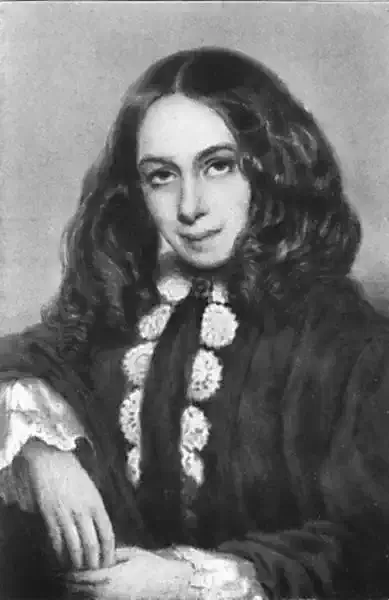
Elizabeth Barrett Browning
I
I thought once how Theocritus had sung
Of the sweet years, the dear and wished-for years,
Who each one in a gracious hand appears
To bear a gift for mortals, old or young:
And, as I mused it in his antique tongue,
I saw, in gradual vision through my tears,
The sweet, sad years, the melancholy years,
Those of my own life, who by turns had flung
A shadow across me. Straightway I was 'ware,
So weeping, how a mystic Shape did move
Behind me, and drew me backward by the hair:
And a voice said in mastery, while I strove,-'
Guess now who holds thee ? '--' Death,' I said. But, there,
The silver answer rang,--' Not Death, but Love.'
Read more →
463

William Butler Yeats
In Memory Of Alfred Pollexfen
FIVE-AND-TWENTY years have gone
Since old William pollexfen
Laid his strong bones down in death
By his wife Elizabeth
In the grey stone tomb he made.
And after twenty years they laid
In that tomb by him and her
His son George, the astrologer;
And Masons drove from miles away
To scatter the Acacia spray
Upon a melancholy man
Who had ended where his breath began.
Many a son and daughter lies
Far from the customary skies,
The Mall and Eades's grammar school,
In London or in Liverpool;
But where is laid the sailor John
That so many lands had known,
Quiet lands or unquiet seas
Where the Indians trade or Japanese?
He never found his rest ashore,
Moping for one voyage more.
Where have they laid the sailor John?
And yesterday the youngest son,
A humorous, unambitious man,
Was buried near the astrologer,
Yesterday in the tenth year
Since he who had been contented long.
A nobody in a great throng,
Decided he would journey home,
Now that his fiftieth year had come,
And 'Mr. Alfred' be again
Upon the lips of common men
Who carried in their memory
His childhood and his family.
At all these death-beds women heard
A visionary white sea-bird
Lamenting that a man should die;
And with that cry I have raised my cry.
Read more →
466
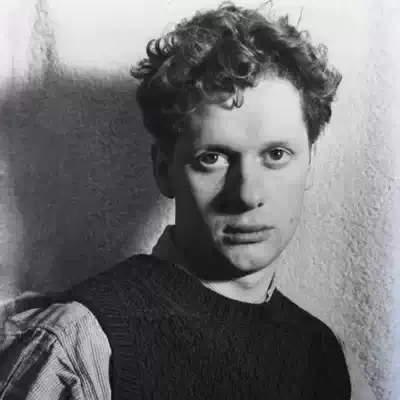
Dylan Thomas
When, Like a Running Grave
When, like a running grave, time tracks you down,
Your calm and cuddled is a scythe of hairs,
Love in her gear is slowly through the house,
Up naked stairs, a turtle in a hearse,
Hauled to the dome,
Comes, like a scissors stalking, tailor age,
Deliver me who timid in my tribe,
Of love am barer than Cadaver's trap
Robbed of the foxy tongue, his footed tape
Of the bone inch
Deliver me, my masters, head and heart,
Heart of Cadaver's candle waxes thin,
When blood, spade-handed, and the logic time
Drive children up like bruises to the thumb,
From maid and head,
For, sunday faced, with dusters in my glove,
Chaste and the chaser, man with the cockshut eye,
I, that time's jacket or the coat of ice
May fail to fasten with a virgin o
In the straight grave,
Stride through Cadaver's country in my force,
My pickbrain masters morsing on the stone
Despair of blood faith in the maiden's slime,
Halt among eunuchs, and the nitric stain
On fork and face.
Time is a foolish fancy, time and fool.
No, no, you lover skull, descending hammer
Descends, my masters, on the entered honour.
You hero skull, Cadaver in the hangar
Tells the stick, 'fail.'
Joy is no knocking nation, sir and madam,
The cancer's fashion, or the summer feather
Lit on the cuddled tree, the cross of fever,
Not city tar and subway bored to foster
Man through macadam.
I dump the waxlights in your tower dome.
Joy is the knock of dust, Cadaver's shoot
Of bud of Adam through his boxy shift,
Love's twilit nation and the skull of state,
Sir, is your doom.
Everything ends, the tower ending and,
(Have with the house of wind), the leaning scene,
Ball of the foot depending from the sun,
(Give, summer, over), the cemented skin,
The actions' end.
All, men my madmen, the unwholesome wind
With whistler's cough contages, time on track
Shapes in a cinder death; love for his trick,
Happy Cadaver's hunger as you take
The kissproof world.
Read more →
464
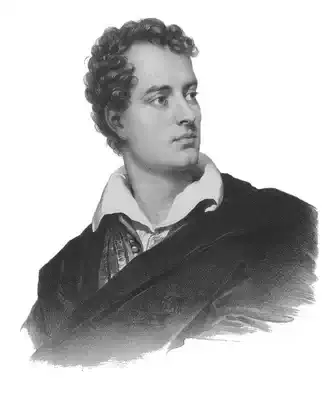
Lord Byron
To Caroline: When I Hear That You Express An Affection So Warm
When I hear that you express an affection so warm,
Ne'er think, my beloved, that I do not believe;
For your lip would the soul of suspicion disarm,
And your eye beams a ray which can never deceive.
Yet, still, this fond bosom regrets, while adoring,
That love, like the leaf, must fall into the sear;
That age will come on, when remembrance, deploring,
Contemplates the scenes of her youth with a tear;
That the time must arrive, when, no longer retaining
Their auburn, those locks must wave thin to the breeze,
When a few silver hairs of those tresses remaining
Prove nature a prey to decay and disease.
'Tis this, my beloved, which spreads gloom o'er my features,
Though I ne'er shall presume to arraign the decree,
Which God has proclaim'd as the fate of his creatures,
In the death which will one day deprive you of me.
Mistake not, sweet sceptic, the cause of emotion,
No doubt can the mind of your lover invade;
He worships each look with such faithful devotion,
A smile can enchant, or a tear can dissuade.
But as death, my beloved, soon or late shall o'ertake us,
And our breasts, which alive with such sympathy glow,
Will sleep in the grave till the blast shall awake us,
When calling the dead, in earth's bosom laid low,
Oh! then let us drain, while we may, draughts of pleasure,
Which from passion like ours may unceasingly flow;
Let us pass round the cup of love's bliss in full measure,
And quaff the contents as our nectar below.
1805
Read more →
459
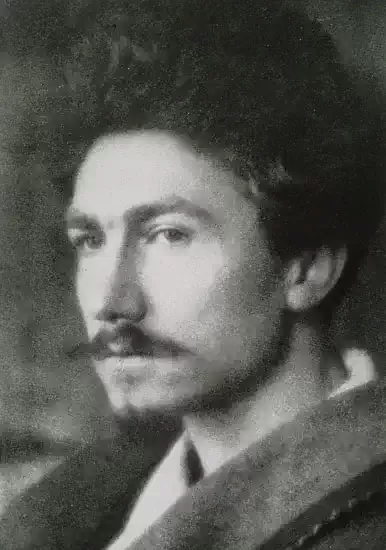
Ezra Pound
Coda
O My songs,
Why do you look so eagerly and so curiously into
people's faces,
Will you find your lost dead among them?
Read more →
460
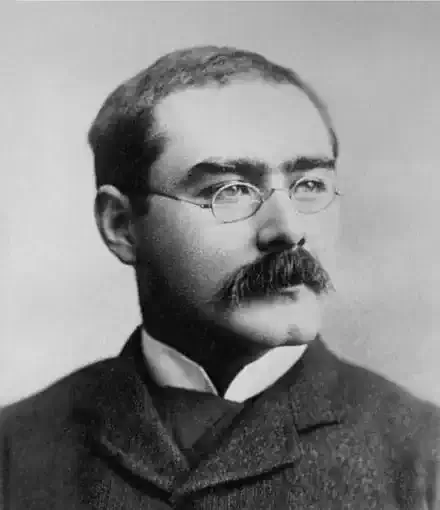
Rudyard Kipling
Heriot's Ford
"What's that that hirples at my side?"
The foe that you must fight, my lord.
"That rides as fast as I can ride?"
The shadow of your might, my lord.
"Then wheel my horse against the foe!"
He's down and overpast, my lord.
You war against the sunset-glow,
The judgment follows fast, my lord!
"Oh, who will stay the sun's descent?"
King Joshua he is dead, my lord.
"I need an hour to repent!"
'Tis what our sister said, my lord.
"Oh, do not slay me in my sins!"
You're safe awhile with us, my lord.
"Nay, kill me ere my fear begins!"
We would not serve you thus, my lord.
"Where is the doom that I must face?"
Three little leagues away, my lord.
"Then mend the horses' laggard pace!"
We need them for next day, my lord.
"Next day--next day! Unloose my cords!"
Our sister needed none, my lord.
You had no mind to face our swords,
And--where can cowards run, my lord?
"You would not kill the soul alive?"
'Twas thus our sister cried, my lord.
"I dare not die with none to shrive."
But so our sister died, my lord.
"Then wipe the sweat from brow and cheek."
It runnels forth afresh, my lord.
"Uphold me--for the flesh is weak."
You've finished with the Flesh, my lord!
Read more →
461
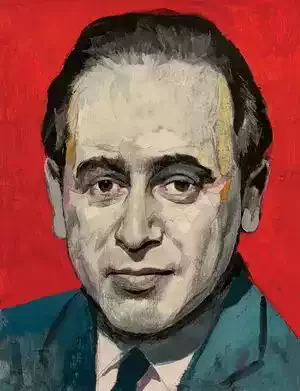
Paul Celan
In Front of a Candle
I formed the holder of gold,
as you told me to mother,
gold, out of which She comes,
a shade, to me, in the middle
of fracturing hours,
your
being-dead’s daughter.
Slender in shape,
a thin, almond-eyed shadow,
her mouth and her sex
danced round by creatures from sleep,
out of the cave of the gold,
she rises up,
to the summit of Now.
With night-dark-shrouded
lips,
I speak the Prayer:
In the name of the Three
who fight with each other, until
heaven reaches down into the graveyard of feeling,
in the name of the Three, whose rings
gleam on my finger, whenever
I loose the hair of the trees into the abyss,
so that the richer floods rush down through the deeps
in the name of the first of the Three
who shrieked,
when he was called on to live,
where his word went before him,
in the name of the second, who watched it and wept,
in the name of the third, who piles
white stones in the middle –
I say you are free
of the amen that overpowers us,
of the ice-filled light at its rim,
there, where tower-high it enters the sea,
there, where the grey one, the dove
picks at the names
this side and that side of dying:
You still, you still, you still,
a dead woman’s child,
sealed to the No of my yearning,
wedded to a cleft in time
to which the mother-word led me,
so that a single spasm
would pass through the hand
that now, and now, grasps at my heart!
Read more →
460
William Butler Yeats
The Ballad Of The Foxhunter
'Lay me in a cushioned chair;
Carry me, ye four,
With cushions here and cushions there,
To see the world once more.
'To stable and to kennel go;
Bring what is there to bring;
Lead my Lollard to and fro,
Or gently in a ring.
'Put the chair upon the grass:
Bring Rody and his hounds,
That I may contented pass
From these earthly bounds.'
His eyelids droop, his head falls low,
His old eyes cloud with dreams;
The sun upon all things that grow
Falls in sleepy streams.
Brown Lollard treads upon the lawn,
And to the armchair goes,
And now the old man's dreams are gone,
He smooths the long brown nose.
And now moves many a pleasant tongue
Upon his wasted hands,
For leading aged hounds and young
The huntsman near him stands.
'Huntsmam Rody, blow the horn,
Make the hills reply.'
The huntsman loosens on the morn
A gay wandering cry.
Fire is in the old man's eyes,
His fingers move and sway,
And when the wandering music dies
They hear him feebly say,
'Huntsman Rody, blow the horn,
Make the hills reply.'
'I cannot blow upon my horn,
I can but weep and sigh.'
Servants round his cushioned place
Are with new sorrow wrung;
Hounds are gazing on his face,
Aged hounds and young.
One blind hound only lies apart
On the sun-smitten grass;
He holds deep commune with his heart:
The moments pass and pass:
The blind hound with a mournful din
Lifts slow his wintry head;
The servants bear the body in;
The hounds wail for the dead.
Read more →
459

Wilfred Owen
The Send-off
Down the close, darkening lanes they sang their way
To the siding-shed,
And lined the train with faces grimly gay.
Their breasts were stuck all white with wreath and spray
As men's are, dead.
Dull porters watched them, and a casual tramp
Stood staring hard,
Sorry to miss them from the upland camp.
Then, unmoved, signals nodded, and a lamp
Winked to the guard.
So secretly, like wrongs hushed-up, they went.
They were not ours:
We never heard to which front these were sent.
Nor there if they yet mock what women meant
Who gave them flowers.
Shall they return to beatings of great bells
In wild trainloads?
A few, a few, too few for drums and yells,
May creep back, silent, to still village wells
Up half-known roads.
Read more →
457

Ella Wheeler Wilcox
The Little White Hearse
Somebody’s baby was buried to-day –
The empty white hearse from the grave rumbled back,
And the morning somehow seemed less smiling and gay
As I paused on the sidewalk while it crossed on its way,
And a shadow seemed drawn o’er the sun’s golden track.
Somebody’s baby was laid out to rest,
White as a snowdrop, and fair to behold,
And the soft little hands were crossed over the breast,
And those hands and the lips and the eyelids were pressed
With kisses as hot as the eyelids were cold.
Somebody saw it go out of her sight,
Under the coffin lid – out through the door;
Somebody finds only darkness and blight
All through the glory of summer-sun light;
Somebody’s baby will waken no more.
Somebody’s sorrow is making me weep:
I know not her name, but I echo her cry,
For the dearly bought baby she longed so to keep,
The baby that rode to its long-lasting sleep
In the little white hearse that went rumbling by.
I know not her name, but her sorrow I know;
While I paused on the crossing I lived it once more,
And back to my heart surged that river of woe
That but in the breast of a mother can flow;
For the little white hearse has been, too, at my door.
Read more →
458
Lord Byron
To Thyrza: And Thou Art Dead, As Young And Fair
And thou art dead, as young and fair
As aught of mortal birth;
And form so soft, and charms so rare,
Too soon return'd to Earth!
Though Earth received them in her bed
And o'er the spot the crowd may tread
In carelessness or mirth,
There is an eye which could not brook
A moment on that grave to look.
I will not ask where thou liest low,
Nor gaze upon the spot;
There flowers or weeds at will may grow,
So I behold them not:
It is enough for me to prove
That what I loved, and long must love,
Like common earth can rot;
To me there needs no stone to tell,
'Tis Nothing that I loved so well.
Yet did I love thee to the last
As fervently as thou,
Who didst not change through all the past,
And cans't not alter now.
The love where Death has set his seal,
Nor age can chill, nor rival steal,
Nor falsehood disavow:
And, what were worse, thou canst not see
Or wrong, or change, or fault in me.
The better days of life were ours;
The worst can be but mine:
The sun that cheers, the storm that lowers,
Shall never more be thine.
The silence of that dreamless sleep
I envy now too much to weep;
Nor need I to repine,
That all those charms have pass'd away
I might have watch'd through long decay.
The flower in ripen'd bloom unmatch'd
Must fall the earliest prey;
Though by no hand untimely snatch'd,
The leaves must drop away:
And yet it were a greater grief
To watch it withering, leaf by leaf,
Than see it pluck'd today;
Since earthly eye but ill can bear
To trace the change to foul from fair.
I know not if I could have borne
To see thy beauties fade;
The night that followed such a morn
Had worn a deeper shade:
Thy day without a cloud hath passed
And thou wert lovely to the last;
Extinguish'd, not decay'd;
As stars that shoot along the sky
Shine brightest as they fall from high.
As once I wept, if I could weep,
My tears might well be shed,
To think I was not near to keep
One vigil o'er thy bed;
To gaze, how fondly! on thy face,
To fold thee in a faint embrace,
Uphold thy drooping head;
And show that love, however vain,
Nor thou nor I can feel again.
Yet how much less it were to gain,
Though thou hast left me free,
The loveliest things that still remain,
Than thus remember thee!
The all of thine that cannot die
Through dark and dread Eternity
Returns again to me,
And more thy buried love endears
Than aught except its living years.
Read more →
455
William Butler Yeats
In Memory of Major Robert Gregory
Now that we're almost settled in our house
I'll name the friends that cannot sup with us
Beside a fire of turf in th' ancient tower,
And having talked to some late hour
Climb up the narrow winding stairs to bed:
Discoverers of forgotten truth
Or mere companions of my youth,
All, all are in my thoughts to-night being dead.
Always we'd have the new friend meet the old
And we are hurt if either friend seem cold,
And there is salt to lengthen out the smart
In the affections of our heart,
And quarrels are blown up upon that head;
But not a friend that I would bring
This night can set us quarrelling,
For all that come into my mind are dead.
Lionel Johnson comes the first to mind,
That loved his learning better than mankind.
Though courteous to the worst; much falling he
Brooded upon sanctity
Till all his Greek and Latin learning seemed
A long blast upon the horn that brought
A little nearer to his thought
A measureless consummation that he dreamed.
And that enquiring man John Synge comes next,
That dying chose the living world for text
And never could have rested in the tomb
But that, long travelling, he had come
Towards nightfall upon certain set apart
In a most desolate stony place,
Towards nightfall upon a race
Passionate and simple like his heart.
And then I think of old George Pollexfen,
In muscular youth well known to Mayo men
For horsemanship at meets or at racecourses,
That could have shown how pure-bred horses
And solid men, for all their passion, live
But as the outrageous stars incline
By opposition, square and trine;
Having grown sluggish and contemplative.
They were my close companions many a year.
A portion of my mind and life, as it were,
And now their breathless faces seem to look
Out of some old picture-book;
I am accustomed to their lack of breath,
But not that my dear friend's dear son,
Our Sidney and our perfect man,
Could share in that discourtesy of death.
For all things the delighted eye now sees
Were loved by him: the old storm-broken trees
That cast their shadows upon road and bridge;
The tower set on the stream's edge;
The ford where drinking cattle make a stir
Nightly, and startled by that sound
The water-hen must change her ground;
He might have been your heartiest welcomer.
When with the Galway foxhounds he would ride
From Castle Taylor to the Roxborough side
Or Esserkelly plain, few kept his pace;
At Mooneen he had leaped a place
So perilous that half the astonished meet
Had shut their eyes; and where was it
He rode a race without a bit?
And yet his mind outran the horses' feet.
We dreamed that a great painter had been born
To cold Clare rock and Galway rock and thorn,
To that stern colour and that delicate line
That are our secret discipline
Wherein the gazing heart doubles her might.
Soldier, scholar, horseman, he,
And yet he had the intensity
To have published all to be a world's delight.
What other could so well have counselled us
In all lovely intricacies of a house
As he that practised or that understood
All work in metal or in wood,
In moulded plaster or in carven stone?
Soldier, scholar, horseman, he,
And all he did done perfectly
As though he had but that one trade alone.
Some burn damp faggots, others may consume
The entire combustible world in one small room
As though dried straw, and if we turn about
The bare chimney is gone black out
Because the work had finished in that flare.
Soldier, scholar, horseman, he,
As 'twere all life's epitome.
What made us dream that he could comb grey hair?
I had thought, seeing how bitter is that wind
That shakes the shutter, to have brought to mind
All those that manhood tried, or childhood loved
Or boyish intellect approved,
With some appropriatc commentary on each;
Until imagination brought
A fitter welcome; but a thought
Of that late death took all my heart for speech.
Read more →
457

Robert Browning
The Bishop Orders His Tomb At Saint Praxed's Church
Vanity, saith the preacher, vanity!
Draw round my bed: is Anselm keeping back?
Nephews -- sons mine -- ah God, I know not! Well --
She, men would have to be your mother once,
Old Gandolf envied me, so fair she was!
What's done is done, and she is dead beside,
Dead long ago, and I am Bishop since,
And as she died so must we die ourselves,
And thence ye may perceive the world's a dream.
Life, how and what is it? As here I lie
In this state-chamber, dying by degrees,
Hours and long hours in the dead night, I ask
"Do I live, am I dead?" Peace, peace seems all.
Saint Praxed's ever was the church for peace;
And so, about this tomb of mine. I fought
With tooth and nail to save my niche, ye know:
-- Old Gandolf cozened me, despite my care;
Shrewd was that snatch from out the corner South
He graced his carrion with, God curse the same!
Yet still my niche is not so cramped but thence
One sees the pulpit o' the epistle-side,
And somewhat of the choir, those silent seats,
And up into the very dome where live
The angels, and a sunbeam's sure to lurk:
And I shall fill my slab of basalt there,
And 'neath my tabernacle take my rest,
With those nine columns round me, two and two,
The odd one at my feet where Anselm stands:
Peach-blossom marble all, the rare, the ripe
As fresh poured red wine of a mighty pulse
-- Old Gandolf with his paltry onion-stone,
Put me where I may look at him! True peach,
Rosy and flawless: how I earned the prize!
Draw close: that conflagration of my church
-- What then? So much was saved if aught were missed!
My sons, ye would not be my death? Go dig
The white-grape vineyard where the oil-press stood,
Drop water gently till the surface sink,
And if ye find -- Ah God, I know not, I! --
Bedded in store of rotten fig-leaves soft,
And corded up in a tight olive-frail,
Some lump, ah God, of lapis lazuli,
Big as a Jew's head cut off at the nape,
Blue as a vein o'er the Madonna's breast
Sons, all have I bequeathed you, villas, all,
That brave Frascati villa with its bath,
So, let the blue lump poise between my knees,
Like God the Father's globe on both his hands
Ye worship in the Jesu Church so gay,
For Gandolf shall not choose but see and burst!
Swift as a weaver's shuttle fleet our years:
Man goeth to the grave, and where is he?
Did I say basalt for my slab, sons? Black --
'Twas ever antique-black I meant! How else
Shall ye contrast my frieze to come beneath?
The bas-relief in bronze ye promised me.
Those Pans and Nymphs ye wot of, and perchance
Some tripod, thyrsus, with a vase or so,
The Saviour at his sermon on the mount,
Saint Praxed in a glory, and one Pan
Ready to twitch the Nymph's last garment off,
And Moses with the tables -- but I know
Ye mark me not! What do they whisper thee,
Child of my bowels, Anselm? Ah, ye hope
To revel down my villas while I gasp
Bricked o'er with beggar's mouldy travertine
Which Gandolf from his tomb-top chuckles at!
Nay, boys, ye love me -- all of jasper, then!
'Tis jasper ye stand pledged to, lest I grieve.
My bath must needs be left behind, alas!
One block, pure green as a pistachio-nut,
There's plenty jasper somewhere in the world --
And have I not Saint Praxed's ear to pray
Horses for ye, and brown Greek manuscripts,
And mistresses with great smooth marbly limbs?
-- That's if ye carve my epitaph aright,
Choice Latin, picked phrase, Tully's every word,
No gaudy ware like Gandolf's second line --
Tully, my masters? Ulpian serves his need!
And then how I shall lie through centuries,
And hear the blessed mutter of the mass,
And see God made and eaten all day long,
And feel the steady candle-flame, and taste
Good strong thick stupefying incense-smoke!
For as I lie here, hours of the dead night,
Dying in state and by such slow degrees,
I fold my arms as if they clasped a crook,
And stretch my feet forth straight as stone can point,
And let the bedclothes, for a mortcloth, drop
Into great laps and folds of sculptor's work:
And as yon tapers dwindle, and strange thoughts
Grow, with a certain humming in my ears,
About the life before I lived this life,
And this life too, popes, cardinals and priests,
Saint Praxed at his sermon on the mount,
Your tall pale mother with her talking eyes,
And new-found agate urns as fresh as day,
And marble's language, Latin pure, discreet,
-- Aha, ELUCESCEBAT quoth our friend?
No Tully, said I, Ulpian at the best!
Evil and brief hath been my pilgrimage.
All lapis, all, sons! Else I give the Pope
My villas! Will ye ever eat my heart?
Ever your eyes were as a lizard's quick,
They glitter like your mother's for my soul,
Or ye would heighten my impoverished frieze,
Piece out its starved design, and fill my vase
With grapes, and add a visor and a Term,
And to the tripod ye would tie a lynx
That in his struggle throws the thyrsus down,
To comfort me on my entablature
Whereon I am to lie till I must ask
"Do I live, am I dead?" There, leave me, there!
For ye have stabbed me with ingratitude
To death -- ye wish it -- God, ye wish it! Stone --
Gritstone, a crumble! Clammy squares which sweat
As if the corpse they keep were oozing through --
And no more lapis to delight the world!
Well, go! I bless ye. Fewer tapers there,
But in a row: and, going, turn your backs
-- Ay, like departing altar-ministrants,
And leave me in my church, the church for peace,
That I may watch at leisure if he leers --
Old Gandolf -- at me, from his onion-stone,
As still he envied me, so fair she was!
Read more →
456
Ezra Pound
Song in the Manner of Housman
O woe, woe,
People are born and die,
We also shall be dead pretty soon
Therefore let us act as if we were
dead already.
The bird sits on the hawthorn tree
But he dies also, presently.
Some lads get hung, and some get shot.
Woeful is this human lot.
Woe! woe, etcetera . . . .
London is a woeful place,
Shropshire is much pleasanter.
Then let us smile a little space
Upon fond nature's morbid grace.
Oh, Woe, woe, woe, etcetera . . .
Read more →
452

John Greenleaf Whittier
The Dead Ship Of Harpswell
What flecks the outer gray beyond
The sundown's golden trail?
The white flash of a sea-bird's wing,
Or gleam of slanting sail?
Let young eyes watch from Neck and Point,
And sea-worn elders pray,-The
ghost of what was once a ship
Is sailing up the bay.
From gray sea-fog, from icy drift,
From peril and from pain,
The home-bound fisher greets thy lights,
O hundred-harbored Maine!
But many a keel shall seaward turn,
And many a sail outstand,
When, tall and white, the Dead Ship looms
Against the dusk of land.
She rounds the headland's bristling pines;
She threads the isle-set bay;
No spur of breeze can speed her on,
Nor ebb of tide delay.
Old men still walk the Isle of Orr
Who tell her date and name,
Old shipwrights sit in Freeport yards
Who hewed her oaken frame.
What weary doom of baffled quest,
Thou sad sea-ghost, is thine?
What makes thee in the haunts of home
A wonder and a sign?
No foot is on thy silent deck,
Upon thy helm no hand;
No ripple hath the soundless wind
That smites thee from the land!
For never comes the ship to port,
Howe'er the breeze may be;
Just when she nears the waiting shore
She drifts again to sea.
No tack of sail, nor turn of helm,
Nor sheer of veering side;
Stern-fore she drives to sea and night,
Against the wind and tide.
In vain o'er Harpswell Neck the star
Of evening guides her in;
In vain for her the lamps are lit
Within thy tower, Seguin!
In vain the harbor-boat shall hail,
In vain the pilot call;
No hand shall reef her spectral sail,
Or let her anchor fall.
Shake, brown old wives, with dreary joy,
Your gray-head hints of ill;
And, over sick-beds whispering low,
Your prophecies fulfil.
Some home amid yon birchen trees
Shall drape its door with woe;
And slowly where the Dead Ship sails,
The burial boat shall row!
From Wolf Neck and from Flying Point,
From island and from main,
From sheltered cove and tided creek,
Shall glide the funeral train.
The dead-boat with the bearers four,
The mourners at her stern,-And
one shall go the silent way
Who shall no more return!
And men shall sigh, and women weep,
Whose dear ones pale and pine,
And sadly over sunset seas
Await the ghostly sign.
They know not that its sails are filled
By pity's tender breath,
Nor see the Angel at the helm
Who steers the Ship of Death!
. . . . .
'Chill as a down-east breeze should be,'
The Book-man said. 'A ghostly touch
The legend has. I'm glad to see
Your flying Yankee beat the Dutch.'
'Well, here is something of the sort
Which one midsummer day I caught
In Narragansett Bay, for lack of fish.'
'We wait,' the Traveller said;
'serve hot or cold your dish.'
Read more →
454
Ella Wheeler Wilcox
If I Should Die
If I should die, how kind you all would grow!
In that strange hour I would not have one foe.
There are no words too beautiful to say
Of one who goes forevermore away
Across that ebbing tide which has no flow.
With what new lustre my good deeds would glow!
If faults were mine, no one would call them so,
Or speak of me in aught but praise that day,
If I should die.
Ah, friends! before my listening ear lies low,
While I can hear and understand, bestow
That gentle treatment and fond love, I pray,
The lustre of whose late though radiant way
Would gild my grave with mocking light, I know,
If I should die.
Read more →
454
William Butler Yeats
The Magi
NOW as at all times I can see in the mind's eye,
In their stiff, painted clothes, the pale unsatisfied ones
Appear and disappear in the blue depth of the sky
With all their ancient faces like rain-beaten stones,
And all their helms of Silver hovering side by side,
And all their eyes still fixed, hoping to find once more,
Being by Calvary's turbulence unsatisfied,
The uncontrollable mystery on the bestial floor.
Read more →
454
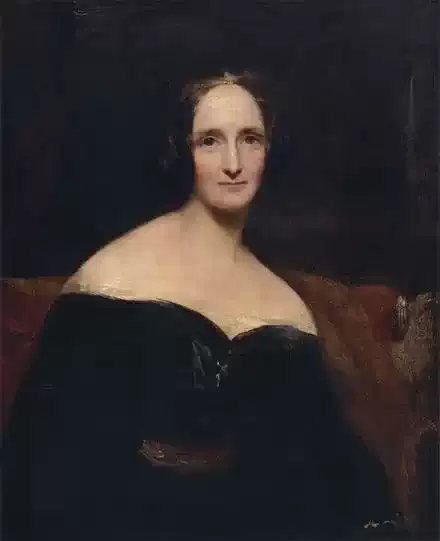
Percy Bysshe Shelley
Autumn: A Dirge
The warm sun is falling, the bleak wind is wailing,
The bare boughs are sighing, the pale flowers are dying,
And the Year
On the earth is her death-bed, in a shroud of leaves dead,
Is lying.
Come, Months, come away,
From November to May,
In your saddest array;
Follow the bier
Of the dead cold Year,
And like dim shadows watch by her sepulchre.
The chill rain is falling, the nipped worm is crawling,
The rivers are swelling, the thunder is knelling
For the Year;
The blithe swallows are flown, and the lizards each gone
To his dwelling.
Come, Months, come away;
Put on white, black and gray;
Let your light sisters play--
Ye, follow the bier
Of the dead cold Year,
And make her grave green with tear on tear.
Read more →
455
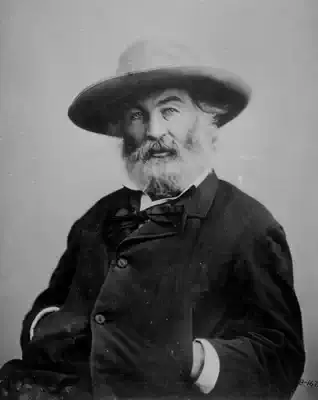
Walt Whitman
As Toilsome I Wander'd
AS TOILSOME I wander'd Virginia's woods,
To the music of rustling leaves, kick'd by my feet, (for 'twas
autumn,)
I mark'd at the foot of a tree the grave of a soldier,
Mortally wounded he, and buried on the retreat, (easily all could I
understand;)
The halt of a mid-day hour, when up! no time to lose--yet this sign
left,
On a tablet scrawl'd and nail'd on the tree by the grave,
Bold, cautious, true, and my loving comrade.
Long, long I muse, then on my way go wandering;
Many a changeful season to follow, and many a scene of life;
Yet at times through changeful season and scene, abrupt, alone, or in
the crowded street,
Comes before me the unknown soldier's grave--comes the inscription
rude in Virginia's woods,
Bold, cautious, true, and my loving comrade.
Read more →
452
Lord Byron
On A Nun
Of two fair virgins, modest, though admired,
Heaven made us happy; and now, wretched sires,
Heaven for a nobler doom their worth desires,
And gazing upon either, both required.
Mine, while the torch of Hymen newly fired
Becomes extinguish'd, soon too
soon expires:
But thine, within the closing grate retired,
Eternal captive, to her God aspires.
But thou at least from out the jealous door,
Which shuts between your never meeting
eyes,
May'st hear her sweet and pious voice once more:
I to the marble, where my daughter lies,
Rush, the
swoln flood of bitterness I pour,
And knock, and knock, and knock but none replies.
Read more →
453
Walt Whitman
Ashes Of Soldiers
Again a verse for sake of you,
You soldiers in the ranks--you Volunteers,
Who bravely fighting, silent fell,
To fill unmention'd graves.
ASHES of soldiers!
As I muse, retrospective, murmuring a chant in thought,
Lo! the war resumes--again to my sense your shapes,
And again the advance of armies.
Noiseless as mists and vapors,
From their graves in the trenches ascending,
From the cemeteries all through Virginia and Tennessee,
From every point of the compass, out of the countless unnamed graves,
In wafted clouds, in myraids large, or squads of twos or threes, or
single ones, they come,
And silently gather round me.
Now sound no note, O trumpeters!
Not at the head of my cavalry, parading on spirited horses,
With sabres drawn and glist'ning, and carbines by their thighs--(ah,
my brave horsemen!
My handsome, tan-faced horsemen! what life, what joy and pride,
With all the perils, were yours!)
Nor you drummers--neither at reveille, at dawn,
Nor the long roll alarming the camp--nor even the muffled beat for a
burial;
Nothing from you, this time, O drummers, bearing my warlike drums.
But aside from these, and the marts of wealth, and the crowded
promenade,
Admitting around me comrades close, unseen by the rest, and
voiceless,
The slain elate and alive again--the dust and debris alive,
I chant this chant of my silent soul, in the name of all dead
soldiers.
Faces so pale, with wondrous eyes, very dear, gather closer yet;
Draw close, but speak not.
Phantoms of countless lost!
Invisible to the rest, henceforth become my companions!
Follow me ever! desert me not, while I live.
Sweet are the blooming cheeks of the living! sweet are the musical
voices sounding!
But sweet, ah sweet, are the dead, with their silent eyes.
Dearest comrades! all is over and long gone;
But love is not over--and what love, O comrades!
Perfume from battle-fields rising--up from foetor arising.
Perfume therefore my chant, O love! immortal Love!
Give me to bathe the memories of all dead soldiers,
Shroud them, embalm them, cover them all over with tender pride!
Perfume all! make all wholesome!
Make these ashes to nourish and blossom,
O love! O chant! solve all, fructify all with the last chemistry.
Give me exhaustless--make me a fountain,
That I exhale love from me wherever I go, like a moist perennial dew,
For the ashes of all dead soldiers.
Read more →
454
Walt Whitman
In Midnight Sleep
IN midnight sleep, of many a face of anguish,
Of the look at first of the mortally wounded--of that indescribable
look;
Of the dead on their backs, with arms extended wide,
I dream, I dream, I dream.
Of scenes of nature, fields and mountains;
Of skies, so beauteous after a storm--and at night the moon so
unearthly bright,
Shining sweetly, shining down, where we dig the trenches and gather
the heaps,
I dream, I dream, I dream.
Long, long have they pass'd--faces and trenches and fields;
Where through the carnage I moved with a callous composure--or away
from the fallen,
Onward I sped at the time--But now of their forms at night,
I dream, I dream, I dream.
Read more →
455
Lord Byron
Substitute For An Epitaph
Kind Reader! take your choice to cry or laugh;
Here HAROLD lies, but where's his Epitaph?
If such you seek, try Westminster, and view
Ten thousand just as fit for him as you.
Athens
Read more →
454
Percy Bysshe Shelley
Alastor: or, the Spirit of Solitude
Earth, Ocean, Air, belovèd brotherhood!
If our great Mother has imbued my soul
With aught of natural piety to feel
Your love, and recompense the boon with mine;
If dewy morn, and odorous noon, and even,
With sunset and its gorgeous ministers,
And solemn midnight's tingling silentness;
If Autumn's hollow sighs in the sere wood,
And Winter robing with pure snow and crowns
Of starry ice the gray grass and bare boughs;
If Spring's voluptuous pantings when she breathes
Her first sweet kisses,--have been dear to me;
If no bright bird, insect, or gentle beast
I consciously have injured, but still loved
And cherished these my kindred; then forgive
This boast, belovèd brethren, and withdraw
No portion of your wonted favor now!
Mother of this unfathomable world!
Favor my solemn song, for I have loved
Thee ever, and thee only; I have watched
Thy shadow, and the darkness of thy steps,
And my heart ever gazes on the depth
Of thy deep mysteries. I have made my bed
In charnels and on coffins, where black death
Keeps record of the trophies won from thee,
Hoping to still these obstinate questionings
Of thee and thine, by forcing some lone ghost,
Thy messenger, to render up the tale
Of what we are. In lone and silent hours,
When night makes a weird sound of its own stillness,
Like an inspired and desperate alchemist
Staking his very life on some dark hope,
Have I mixed awful talk and asking looks
With my most innocent love, until strange tears,
Uniting with those breathless kisses, made
Such magic as compels the charmèd night
To render up thy charge; and, though ne'er yet
Thou hast unveiled thy inmost sanctuary,
Enough from incommunicable dream,
And twilight phantasms, and deep noonday thought,
Has shone within me, that serenely now
And moveless, as a long-forgotten lyre
Suspended in the solitary dome
Of some mysterious and deserted fane,
I wait thy breath, Great Parent, that my strain
May modulate with murmurs of the air,
And motions of the forests and the sea,
And voice of living beings, and woven hymns
Of night and day, and the deep heart of man.
There was a Poet whose untimely tomb
No human hands with pious reverence reared,
But the charmed eddies of autumnal winds
Built o'er his mouldering bones a pyramid
Of mouldering leaves in the waste wilderness:
A lovely youth,--no mourning maiden decked
With weeping flowers, or votive cypress wreath,
The lone couch of his everlasting sleep:
Gentle, and brave, and generous,--no lorn bard
Breathed o'er his dark fate one melodious sigh:
He lived, he died, he sung in solitude.
Strangers have wept to hear his passionate notes,
And virgins, as unknown he passed, have pined
And wasted for fond love of his wild eyes.
The fire of those soft orbs has ceased to burn,
And Silence, too enamoured of that voice,
Locks its mute music in her rugged cell.
By solemn vision and bright silver dream
His infancy was nurtured. Every sight
And sound from the vast earth and ambient air
Sent to his heart its choicest impulses.
The fountains of divine philosophy
Fled not his thirsting lips, and all of great,
Or good, or lovely, which the sacred past
In truth or fable consecrates, he felt
And knew. When early youth had passed, he left
His cold fireside and alienated home
To seek strange truths in undiscovered lands.
Many a wide waste and tangled wilderness
Has lured his fearless steps; and he has bought
With his sweet voice and eyes, from savage men,
His rest and food. Nature's most secret steps
He like her shadow has pursued, where'er
The red volcano overcanopies
Its fields of snow and pinnacles of ice
With burning smoke, or where bitumen lakes
On black bare pointed islets ever beat
With sluggish surge, or where the secret caves,
Rugged and dark, winding among the springs
Of fire and poison, inaccessible
To avarice or pride, their starry domes
Of diamond and of gold expand above
Numberless and immeasurable halls,
Frequent with crystal column, and clear shrines
Of pearl, and thrones radiant with chrysolite.
Nor had that scene of ampler majesty
Than gems or gold, the varying roof of heaven
And the green earth, lost in his heart its claims
To love and wonder; he would linger long
In lonesome vales, making the wild his home,
Until the doves and squirrels would partake
From his innocuous band his bloodless food,
Lured by the gentle meaning of his looks,
And the wild antelope, that starts whene'er
The dry leaf rustles in the brake, suspend
Her timid steps, to gaze upon a form
More graceful than her own.
His wandering step,
Obedient to high thoughts, has visited
The awful ruins of the days of old:
Athens, and Tyre, and Balbec, and the waste
Where stood Jerusalem, the fallen towers
Of Babylon, the eternal pyramids,
Memphis and Thebes, and whatsoe'er of strange,
Sculptured on alabaster obelisk
Or jasper tomb or mutilated sphinx,
Dark Æthiopia in her desert hills
Conceals. Among the ruined temples there,
Stupendous columns, and wild images
Of more than man, where marble daemons watch
The Zodiac's brazen mystery, and dead men
Hang their mute thoughts on the mute walls around,
He lingered, poring on memorials
Of the world's youth: through the long burning day
Gazed on those speechless shapes; nor, when the moon
Filled the mysterious halls with floating shades
Suspended he that task, but ever gazed
And gazed, till meaning on his vacant mind
Flashed like strong inspiration, and he saw
The thrilling secrets of the birth of time.
Meanwhile an Arab maiden brought his food,
Her daily portion, from her father's tent,
And spread her matting for his couch, and stole
From duties and repose to tend his steps,
Enamoured, yet not daring for deep awe
To speak her love, and watched his nightly sleep,
Sleepless herself, to gaze upon his lips
Parted in slumber, whence the regular breath
Of innocent dreams arose; then, when red morn
Made paler the pale moon, to her cold home
Wildered, and wan, and panting, she returned.
The Poet, wandering on, through Arabie,
And Persia, and the wild Carmanian waste,
And o'er the aërial mountains which pour down
Indus and Oxus from their icy caves,
In joy and exultation held his way;
Till in the vale of Cashmire, far within
Its loneliest dell, where odorous plants entwine
Beneath the hollow rocks a natural bower,
Beside a sparkling rivulet he stretched
His languid limbs. A vision on his sleep
There came, a dream of hopes that never yet
Had flushed his cheek. He dreamed a veilèd maid
Sate near him, talking in low solemn tones.
Her voice was like the voice of his own soul
Heard in the calm of thought; its music long,
Like woven sounds of streams and breezes, held
His inmost sense suspended in its web
Of many-colored woof and shifting hues.
Knowledge and truth and virtue were her theme,
And lofty hopes of divine liberty,
Thoughts the most dear to him, and poesy,
Herself a poet. Soon the solemn mood
Of her pure mind kindled through all her frame
A permeating fire; wild numbers then
She raised, with voice stifled in tremulous sobs
Subdued by its own pathos; her fair hands
Were bare alone, sweeping from some strange harp
Strange symphony, and in their branching veins
The eloquent blood told an ineffable tale.
The beating of her heart was heard to fill
The pauses of her music, and her breath
Tumultuously accorded with those fits
Of intermitted song. Sudden she rose,
As if her heart impatiently endured
Its bursting burden; at the sound he turned,
And saw by the warm light of their own life
Her glowing limbs beneath the sinuous veil
Of woven wind, her outspread arms now bare,
Her dark locks floating in the breath of night,
Her beamy bending eyes, her parted lips
Outstretched, and pale, and quivering eagerly.
His strong heart sunk and sickened with excess
Of love. He reared his shuddering limbs, and quelled
His gasping breath, and spread his arms to meet
Her panting bosom:--she drew back awhile,
Then, yielding to the irresistible joy,
With frantic gesture and short breathless cry
Folded his frame in her dissolving arms.
Now blackness veiled his dizzy eyes, and night
Involved and swallowed up the vision; sleep,
Like a dark flood suspended in its course,
Rolled back its impulse on his vacant brain.
Roused by the shock, he started from his trance--
The cold white light of morning, the blue moon
Low in the west, the clear and garish hills,
The distinct valley and the vacant woods,
Spread round him where he stood. Whither have fled
The hues of heaven that canopied his bower
Of yesternight? The sounds that soothed his sleep,
The mystery and the majesty of Earth,
The joy, the exultation? His wan eyes
Gaze on the empty scene as vacantly
As ocean's moon looks on the moon in heaven.
The spirit of sweet human love has sent
A vision to the sleep of him who spurned
Her choicest gifts. He eagerly pursues
Beyond the realms of dream that fleeting shade;
He overleaps the bounds. Alas! alas!
Were limbs and breath and being intertwined
Thus treacherously? Lost, lost, forever lost
In the wide pathless desert of dim sleep,
That beautiful shape! Does the dark gate of death
Conduct to thy mysterious paradise,
O Sleep? Does the bright arch of rainbow clouds
And pendent mountains seen in the calm lake
Lead only to a black and watery depth,
While death's blue vault with loathliest vapors hung,
Where every shade which the foul grave exhales
Hides its dead eye from the detested day,
Conducts, O Sleep, to thy delightful realms?
This doubt with sudden tide flowed on his heart;
The insatiate hope which it awakened stung
His brain even like despair.
While daylight held
The sky, the Poet kept mute conference
With his still soul. At night the passion came,
Like the fierce fiend of a distempered dream,
And shook him from his rest, and led him forth
Into the darkness. As an eagle, grasped
In folds of the green serpent, feels her breast
Burn with the poison, and precipitates
Through night and day, tempest, and calm, and cloud,
Frantic with dizzying anguish, her blind flight
O'er the wide aëry wilderness: thus driven
By the bright shadow of that lovely dream,
Beneath the cold glare of the desolate night,
Through tangled swamps and deep precipitous dells,
Startling with careless step the moon-light snake,
He fled. Red morning dawned upon his flight,
Shedding the mockery of its vital hues
Upon his cheek of death. He wandered on
Till vast Aornos seen from Petra's steep
Hung o'er the low horizon like a cloud;
Through Balk, and where the desolated tombs
Of Parthian kings scatter to every wind
Their wasting dust, wildly he wandered on,
Day after day, a weary waste of hours,
Bearing within his life the brooding care
That ever fed on its decaying flame.
And now his limbs were lean; his scattered hair,
Sered by the autumn of strange suffering,
Sung dirges in the wind; his listless hand
Hung like dead bone within its withered skin;
Life, and the lustre that consumed it, shone,
As in a furnace burning secretly,
From his dark eyes alone. The cottagers,
Who ministered with human charity
His human wants, beheld with wondering awe
Their fleeting visitant. The mountaineer,
Encountering on some dizzy precipice
That spectral form, deemed that the Spirit of Wind,
With lightning eyes, and eager breath, and feet
Disturbing not the drifted snow, had paused
In its career; the infant would conceal
His troubled visage in his mother's robe
In terror at the glare of those wild eyes,
To remember their strange light in many a dream
Of after times; but youthful maidens, taught
By nature, would interpret half the woe
That wasted him, would call him with false names
Brother and friend, would press his pallid hand
At parting, and watch, dim through tears, the path
Of his departure from their father's door.
At length upon the lone Chorasmian shore
He paused, a wide and melancholy waste
Of putrid marshes. A strong impulse urged
His steps to the sea-shore. A swan was there,
Beside a sluggish stream among the reeds.
It rose as he approached, and, with strong wings
Scaling the upward sky, bent its bright course
High over the immeasurable main.
His eyes pursued its flight:--'Thou hast a home,
Beautiful bird! thou voyagest to thine home,
Where thy sweet mate will twine her downy neck
With thine, and welcome thy return with eyes
Bright in the lustre of their own fond joy.
And what am I that I should linger here,
With voice far sweeter than thy dying notes,
Spirit more vast than thine, frame more attuned
To beauty, wasting these surpassing powers
In the deaf air, to the blind earth, and heaven
That echoes not my thoughts?' A gloomy smile
Of desperate hope wrinkled his quivering lips.
For sleep, he knew, kept most relentlessly
Its precious charge, and silent death exposed,
Faithless perhaps as sleep, a shadowy lure,
With doubtful smile mocking its own strange charms.
Startled by his own thoughts, he looked around.
There was no fair fiend near him, not a sight
Or sound of awe but in his own deep mind.
A little shallop floating near the shore
Caught the impatient wandering of his gaze.
It had been long abandoned, for its sides
Gaped wide with many a rift, and its frail joints
Swayed with the undulations of the tide.
A restless impulse urged him to embark
And meet lone Death on the drear ocean's waste;
For well he knew that mighty Shadow loves
The slimy caverns of the populous deep.
The day was fair and sunny; sea and sky
Drank its inspiring radiance, and the wind
Swept strongly from the shore, blackening the waves.
Following his eager soul, the wanderer
Leaped in the boat; he spread his cloak aloft
On the bare mast, and took his lonely seat,
And felt the boat speed o'er the tranquil sea
Like a torn cloud before the hurricane.
As one that in a silver vision floats
Obedient to the sweep of odorous winds
Upon resplendent clouds, so rapidly
Along the dark and ruffled waters fled
The straining boat. A whirlwind swept it on,
With fierce gusts and precipitating force,
Through the white ridges of the chafèd sea.
The waves arose. Higher and higher still
Their fierce necks writhed beneath the tempest's scourge
Like serpents struggling in a vulture's grasp.
Calm and rejoicing in the fearful war
Of wave ruining on wave, and blast on blast
Descending, and black flood on whirlpool driven
With dark obliterating course, he sate:
As if their genii were the ministers
Appointed to conduct him to the light
Of those belovèd eyes, the Poet sate,
Holding the steady helm. Evening came on;
The beams of sunset hung their rainbow hues
High 'mid the shifting domes of sheeted spray
That canopied his path o'er the waste deep;
Twilight, ascending slowly from the east,
Entwined in duskier wreaths her braided locks
O'er the fair front and radiant eyes of Day;
Night followed, clad with stars. On every side
More horribly the multitudinous streams
Of ocean's mountainous waste to mutual war
Rushed in dark tumult thundering, as to mock
The calm and spangled sky. The little boat
Still fled before the storm; still fled, like foam
Down the steep cataract of a wintry river;
Now pausing on the edge of the riven wave;
Now leaving far behind the bursting mass
That fell, convulsing ocean; safely fled--
As if that frail and wasted human form
Had been an elemental god.
At midnight
The moon arose; and lo! the ethereal cliffs
Of Caucasus, whose icy summits shone
Among the stars like sunlight, and around
Whose caverned base the whirlpools and the waves
Bursting and eddying irresistibly
Rage and resound forever.--Who shall save?--
The boat fled on,--the boiling torrent drove,--
The crags closed round with black and jagged arms,
The shattered mountain overhung the sea,
And faster still, beyond all human speed,
Suspended on the sweep of the smooth wave,
The little boat was driven. A cavern there
Yawned, and amid its slant and winding depths
Ingulfed the rushing sea. The boat fled on
With unrelaxing speed.--'Vision and Love!'
The Poet cried aloud, 'I have beheld
The path of thy departure. Sleep and death
Shall not divide us long.'
The boat pursued
The windings of the cavern. Daylight shone
At length upon that gloomy river's flow;
Now, where the fiercest war among the waves
Is calm, on the unfathomable stream
The boat moved slowly. Where the mountain, riven,
Exposed those black depths to the azure sky,
Ere yet the flood's enormous volume fell
Even to the base of Caucasus, with sound
That shook the everlasting rocks, the mass
Filled with one whirlpool all that ample chasm;
Stair above stair the eddying waters rose,
Circling immeasurably fast, and laved
With alternating dash the gnarlèd roots
Of mighty trees, that stretched their giant arms
In darkness over it. I' the midst was left,
Reflecting yet distorting every cloud,
A pool of treacherous and tremendous calm.
Seized by the sway of the ascending stream,
With dizzy swiftness, round and round and round,
Ridge after ridge the straining boat arose,
Till on the verge of the extremest curve,
Where through an opening of the rocky bank
The waters overflow, and a smooth spot
Of glassy quiet 'mid those battling tides
Is left, the boat paused shuddering.--Shall it sink
Down the abyss? Shall the reverting stress
Of that resistless gulf embosom it?
Now shall it fall?--A wandering stream of wind
Breathed from the west, has caught the expanded sail,
And, lo! with gentle motion between banks
Of mossy slope, and on a placid stream,
Beneath a woven grove, it sails, and, hark!
The ghastly torrent mingles its far roar
With the breeze murmuring in the musical woods.
Where the embowering trees recede, and leave
A little space of green expanse, the cove
Is closed by meeting banks, whose yellow flowers
Forever gaze on their own drooping eyes,
Reflected in the crystal calm. The wave
Of the boat's motion marred their pensive task,
Which naught but vagrant bird, or wanton wind,
Or falling spear-grass, or their own decay
Had e'er disturbed before. The Poet longed
To deck with their bright hues his withered hair,
But on his heart its solitude returned,
And he forbore. Not the strong impulse hid
In those flushed cheeks, bent eyes, and shadowy frame,
Had yet performed its ministry; it hung
Upon his life, as lightning in a cloud
Gleams, hovering ere it vanish, ere the floods
Of night close over it.
The noonday sun
Now shone upon the forest, one vast mass
Of mingling shade, whose brown magnificence
A narrow vale embosoms. There, huge caves,
Scooped in the dark base of their aëry rocks,
Mocking its moans, respond and roar forever.
The meeting boughs and implicated leaves
Wove twilight o'er the Poet's path, as, led
By love, or dream, or god, or mightier Death,
He sought in Nature's dearest haunt some bank,
Her cradle and his sepulchre. More dark
And dark the shades accumulate. The oak,
Expanding its immense and knotty arms,
Embraces the light beech. The pyramids
Of the tall cedar overarching frame
Most solemn domes within, and far below,
Like clouds suspended in an emerald sky,
The ash and the acacia floating hang
Tremulous and pale. Like restless serpents, clothed
In rainbow and in fire, the parasites,
Starred with ten thousand blossoms, flow around
The gray trunks, and, as gamesome infants' eyes,
With gentle meanings, and most innocent wiles,
Fold their beams round the hearts of those that love,
These twine their tendrils with the wedded boughs,
Uniting their close union; the woven leaves
Make network of the dark blue light of day
And the night's noontide clearness, mutable
As shapes in the weird clouds. Soft mossy lawns
Beneath these canopies extend their swells,
Fragrant with perfumed herbs, and eyed with blooms
Minute yet beautiful. One darkest glen
Sends from its woods of musk-rose twined with jasmine
A soul-dissolving odor to invite
To some more lovely mystery. Through the dell
Silence and Twilight here, twin-sisters, keep
Their noonday watch, and sail among the shades,
Like vaporous shapes half-seen; beyond, a well,
Dark, gleaming, and of most translucent wave,
Images all the woven boughs above,
And each depending leaf, and every speck
Of azure sky darting between their chasms;
Nor aught else in the liquid mirror laves
Its portraiture, but some inconstant star,
Between one foliaged lattice twinkling fair,
Or painted bird, sleeping beneath the moon,
Or gorgeous insect floating motionless,
Unconscious of the day, ere yet his wings
Have spread their glories to the gaze of noon.
Hither the Poet came. His eyes beheld
Their own wan light through the reflected lines
Of his thin hair, distinct in the dark depth
Of that still fountain; as the human heart,
Gazing in dreams over the gloomy grave,
Sees its own treacherous likeness there. He heard
The motion of the leaves--the grass that sprung
Startled and glanced and trembled even to feel
An unaccustomed presence--and the sound
Of the sweet brook that from the secret springs
Of that dark fountain rose. A Spirit seemed
To stand beside him--clothed in no bright robes
Of shadowy silver or enshrining light,
Borrowed from aught the visible world affords
Of grace, or majesty, or mystery;
But undulating woods, and silent well,
And leaping rivulet, and evening gloom
Now deepening the dark shades, for speech assuming,
Held commune with him, as if he and it
Were all that was; only--when his regard
Was raised by intense pensiveness--two eyes,
Two starry eyes, hung in the gloom of thought,
And seemed with their serene and azure smiles
To beckon him.
Obedient to the light
That shone within his soul, he went, pursuing
The windings of the dell. The rivulet,
Wanton and wild, through many a green ravine
Beneath the forest flowed. Sometimes it fell
Among the moss with hollow harmony
Dark and profound. Now on the polished stones
It danced, like childhood laughing as it went;
Then, through the plain in tranquil wanderings crept,
Reflecting every herb and drooping bud
That overhung its quietness.--'O stream!
Whose source is inaccessibly profound,
Whither do thy mysterious waters tend?
Thou imagest my life. Thy darksome stillness,
Thy dazzling waves, thy loud and hollow gulfs,
Thy searchless fountain and invisible course,
Have each their type in me; and the wide sky
And measureless ocean may declare as soon
What oozy cavern or what wandering cloud
Contains thy waters, as the universe
Tell where these living thoughts reside, when stretched
Upon thy flowers my bloodless limbs shall waste
I' the passing wind!'
Beside the grassy shore
Of the small stream he went; he did impress
On the green moss his tremulous step, that caught
Strong shuddering from his burning limbs. As one
Roused by some joyous madness from the couch
Of fever, he did move; yet not like him
Forgetful of the grave, where, when the flame
Of his frail exultation shall be spent,
He must descend. With rapid steps he went
Beneath the shade of trees, beside the flow
Of the wild babbling rivulet; and now
The forest's solemn canopies were changed
For the uniform and lightsome evening sky.
Gray rocks did peep from the spare moss, and stemmed
The struggling brook; tall spires of windlestrae
Threw their thin shadows down the rugged slope,
And nought but gnarlèd roots of ancient pines
Branchless and blasted, clenched with grasping roots
The unwilling soil. A gradual change was here
Yet ghastly. For, as fast years flow away,
The smooth brow gathers, and the hair grows thin
And white, and where irradiate dewy eyes
Had shone, gleam stony orbs:--so from his steps
Bright flowers departed, and the beautiful shade
Of the green groves, with all their odorous winds
And musical motions. Calm he still pursued
The stream, that with a larger volume now
Rolled through the labyrinthine dell; and there
Fretted a path through its descending curves
With its wintry speed. On every side now rose
Rocks, which, in unimaginable forms,
Lifted their black and barren pinnacles
In the light of evening, and its precipice
Obscuring the ravine, disclosed above,
'Mid toppling stones, black gulfs and yawning caves,
Whose windings gave ten thousand various tongues
To the loud stream. Lo! where the pass expands
Its stony jaws, the abrupt mountain breaks,
And seems with its accumulated crags
To overhang the world; for wide expand
Beneath the wan stars and descending moon
Islanded seas, blue mountains, mighty streams,
Dim tracts and vast, robed in the lustrous gloom
Of leaden-colored even, and fiery hills
Mingling their flames with twilight, on the verge
Of the remote horizon. The near scene,
In naked and severe simplicity,
Made contrast with the universe. A pine,
Rock-rooted, stretched athwart the vacancy
Its swinging boughs, to each inconstant blast
Yielding one only response at each pause
In most familiar cadence, with the howl,
The thunder and the hiss of homeless streams
Mingling its solemn song, whilst the broad river
Foaming and hurrying o'er its rugged path,
Fell into that immeasurable void,
Scattering its waters to the passing winds.
Yet the gray precipice and solemn pine
And torrent were not all;--one silent nook
Was there. Even on the edge of that vast mountain,
Upheld by knotty roots and fallen rocks,
It overlooked in its serenity
The dark earth and the bending vault of stars.
It was a tranquil spot that seemed to smile
Even in the lap of horror. Ivy clasped
The fissured stones with its entwining arms,
And did embower with leaves forever green
And berries dark the smooth and even space
Of its inviolated floor; and here
The children of the autumnal whirlwind bore
In wanton sport those bright leaves whose decay,
Red, yellow, or ethereally pale,
Rivals the pride of summer. 'T is the haunt
Of every gentle wind whose breath can teach
The wilds to love tranquillity. One step,
One human step alone, has ever broken
The stillness of its solitude; one voice
Alone inspired its echoes;--even that voice
Which hither came, floating among the winds,
And led the loveliest among human forms
To make their wild haunts the depository
Of all the grace and beauty that endued
Its motions, render up its majesty,
Scatter its music on the unfeeling storm,
And to the damp leaves and blue cavern mould,
Nurses of rainbow flowers and branching moss,
Commit the colors of that varying cheek,
That snowy breast, those dark and drooping eyes.
The dim and hornèd moon hung low, and poured
A sea of lustre on the horizon's verge
That overflowed its mountains. Yellow mist
Filled the unbounded atmosphere, and drank
Wan moonlight even to fulness; not a star
Shone, not a sound was heard; the very winds,
Danger's grim playmates, on that precipice
Slept, clasped in his embrace.--O storm of death,
Whose sightless speed divides this sullen night!
And thou, colossal Skeleton, that, still
Guiding its irresistible career
In thy devastating omnipotence,
Art king of this frail world! from the red field
Of slaughter, from the reeking hospital,
The patriot's sacred couch, the snowy bed
Of innocence, the scaffold and the throne,
A mighty voice invokes thee! Ruin calls
His brother Death! A rare and regal prey
He hath prepared, prowling around the world;
Glutted with which thou mayst repose, and men
Go to their graves like flowers or creeping worms,
Nor ever more offer at thy dark shrine
The unheeded tribute of a broken heart.
When on the threshold of the green recess
The wanderer's footsteps fell, he knew that death
Was on him. Yet a little, ere it fled,
Did he resign his high and holy soul
To images of the majestic past,
That paused within his passive being now,
Like winds that bear sweet music, when they breathe
Through some dim latticed chamber. He did place
His pale lean hand upon the rugged trunk
Of the old pine; upon an ivied stone
Reclined his languid head; his limbs did rest,
Diffused and motionless, on the smooth brink
Of that obscurest chasm;--and thus he lay,
Surrendering to their final impulses
The hovering powers of life. Hope and Despair,
The torturers, slept; no mortal pain or fear
Marred his repose; the influxes of sense
And his own being, unalloyed by pain,
Yet feebler and more feeble, calmly fed
The stream of thought, till he lay breathing there
At peace, and faintly smiling. His last sight
Was the great moon, which o'er the western line
Of the wide world her mighty horn suspended,
With whose dun beams inwoven darkness seemed
To mingle. Now upon the jagged hills
It rests; and still as the divided frame
Of the vast meteor sunk, the Poet's blood,
That ever beat in mystic sympathy
With Nature's ebb and flow, grew feebler still;
And when two lessening points of light alone
Gleamed through the darkness, the alternate gasp
Of his faint respiration scarce did stir
The stagnate night:--till the minutest ray
Was quenched, the pulse yet lingered in his heart.
It paused--it fluttered. But when heaven remained
Utterly black, the murky shades involved
An image silent, cold, and motionless,
As their own voiceless earth and vacant air.
Even as a vapor fed with golden beams
That ministered on sunlight, ere the west
Eclipses it, was now that wondrous frame--
No sense, no motion, no divinity--
A fragile lute, on whose harmonious strings
The breath of heaven did wander--a bright stream
Once fed with many-voicèd waves--a dream
Of youth, which night and time have quenched forever--
Still, dark, and dry, and unremembered now.
Oh, for Medea's wondrous alchemy,
Which wheresoe'er it fell made the earth gleam
With bright flowers, and the wintry boughs exhale
From vernal blooms fresh fragrance! Oh, that God,
Profuse of poisons, would concede the chalice
Which but one living man has drained, who now,
Vessel of deathless wrath, a slave that feels
No proud exemption in the blighting curse
He bears, over the world wanders forever,
Lone as incarnate death! Oh, that the dream
Of dark magician in his visioned cave,
Raking the cinders of a crucible
For life and power, even when his feeble hand
Shakes in its last decay, were the true law
Of this so lovely world! But thou art fled,
Like some frail exhalation, which the dawn
Robes in its golden beams,--ah! thou hast fled!
The brave, the gentle and the beautiful,
The child of grace and genius. Heartless things
Are done and said i' the world, and many worms
And beasts and men live on, and mighty Earth
From sea and mountain, city and wilderness,
In vesper low or joyous orison,
Lifts still its solemn voice:--but thou art fled--
Thou canst no longer know or love the shapes
Of this phantasmal scene, who have to thee
Been purest ministers, who are, alas!
Now thou art not! Upon those pallid lips
So sweet even in their silence, on those eyes
That image sleep in death, upon that form
Yet safe from the worm's outrage, let no tear
Be shed--not even in thought. Nor, when those hues
Are gone, and those divinest lineaments,
Worn by the senseless wind, shall live alone
In the frail pauses of this simple strain,
Let not high verse, mourning the memory
Of that which is no more, or painting's woe
Or sculpture, speak in feeble imagery
Their own cold powers. Art and eloquence,
And all the shows o' the world, are frail and vain
To weep a loss that turns their lights to shade.
It is a woe "too deep for tears," when all
Is reft at once, when some surpassing Spirit,
Whose light adorned the world around it, leaves
Those who remain behind, not sobs or groans,
The passionate tumult of a clinging hope;
But pale despair and cold tranquillity,
Nature's vast frame, the web of human things,
Birth and the grave, that are not as they were.
Read more →
452