
Death and Mourning
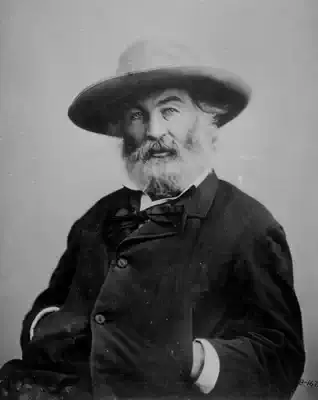
Walt Whitman
Come Up From The Fields, Father
Come up from the fields, father, here's a letter from our Pete;
And come to the front door, mother-here's a letter from thy dear
son.
Lo, 'tis autumn;
Lo, where the trees, deeper green, yellower and redder,
Cool and sweeten Ohio's villages, with leaves fluttering in the
moderate wind;
Where apples ripe in the orchards hang, and grapes on the trellis'd
vines;
(Smell you the smell of the grapes on the vines?
Smell you the buckwheat, where the bees were lately buzzing?)
Above all, lo, the sky, so calm, so transparent after the rain, and
with wondrous clouds;
Below, too, all calm, all vital and beautiful-and the farm prospers
well.
Down in the fields all prospers well;
But now from the fields come, father-come at the daughter's call;
And come to the entry, mother-to the front door come, right away.
Fast as she can she hurries-something ominous-her steps trembling;
She does not tarry to smoothe her hair, nor adjust her cap.
Open the envelope quickly;
O this is not our son's writing, yet his name is sign'd;
O a strange hand writes for our dear son-O stricken mother's soul!
All swims before her eyes-flashes with black-she catches the main
words only;
Sentences broken-gun-shot wound in the breast, cavalry skirmish,
taken to hospital,
At present low, but will soon be better.
Ah, now, the single figure to me,
Amid all teeming and wealthy Ohio, with all its cities and farms,
Sickly white in the face, and dull in the head, very faint,
By the jamb of a door leans.
Grieve not so, dear mother, (the just-grown daughter speaks through
her sobs;
The little sisters huddle around, speechless and dismay'd ;)
See, dearest mother, the letter says Pete will soon be better.
Alas, poor boy, he will never be better, (nor may-be needs to be
better, that brave and simple soul ;)
While they stand at home at the door, he is dead already;
The only son is dead.
But the mother needs to be better;
She, with thin form, presently drest in black;
By day her meals untouch'd-then at night fitfully sleeping, often
waking,
In the midnight waking, weeping, longing with one deep longing,
O that she might withdraw unnoticed-silent from life, escape and
withdraw,
To follow, to seek, to be with her dear dead son.
Read more →
454
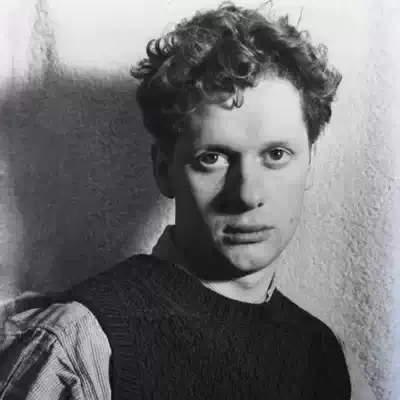
Dylan Thomas
Twenty Four Years
Twenty-four years remind the tears of my eyes.
(Bury the dead for fear that they walk to the grave in labour.)
In the groin of the natural doorway I crouched like a tailor
Sewing a shroud for a journey
By the light of the meat-eating sun.
Dressed to die, the sensual strut begun,
With my red veins full of money,
In the final direction of the elementary town
I advance as long as forever is.
Read more →
449
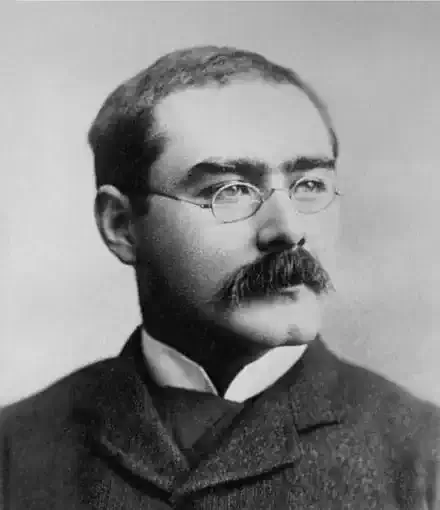
Rudyard Kipling
The Widower
For a season there must be pain--
For a little, little space
I shall lose the sight of her face,
Take back the old life again
While She is at rest in her place.
For a season this pain must endure,
For a little, little while
I shall sigh more often than smile
Till time shall work me a cure,
And the pitiful days beguile.
For that season we must be apart,
For a little length of years,
Till my life's last hour nears,
And, above the beat of my heart,
I hear Her voice in my ears.
But I shall not understand--
Being set on some later love,
Shall not know her for whom I strove,
Till she reach me forth her hand,
Saying, "Who but I have the right?"
And out of a troubled night
Shall draw me safe to the land.
Read more →
451
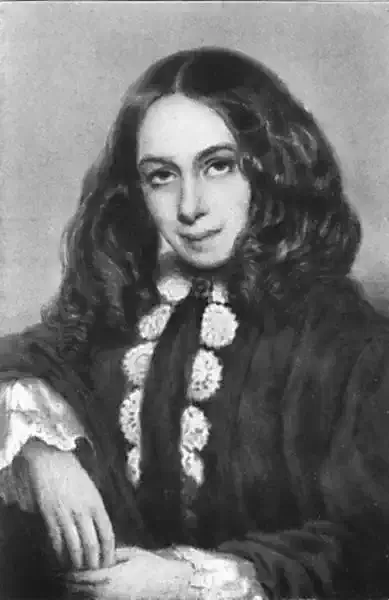
Elizabeth Barrett Browning
The Look
The Saviour looked on Peter. Ay, no word,
No gesture of reproach; the Heavens serene
Though heavy with armed justice, did not lean
Their thunders that way: the forsaken Lord
Looked only, on the traitor. None record
What that look was, none guess; for those who have seen
Wronged lovers loving through a death-pang keen,
Or pale-cheeked martyrs smiling to a sword,
Have missed Jehovah at the judgment-call.
And Peter, from the height of blasphemy-'
I never knew this man '--did quail and fall
As knowing straight THAT GOD; and turned free
And went out speechless from the face of all
And filled the silenc, weeping bitterly.
Read more →
450
Walt Whitman
As At Thy Portals Also Death
AS at thy portals also death,
Entering thy sovereign, dim, illimitable grounds,
To memories of my mother, to the divine blending, maternity,
To her, buried and gone, yet buried not, gone not from me,
(I see again the calm benignant face fresh and beautiful still,
I sit by the form in the coffin,
I kiss and kiss convulsively again the sweet old lips, the cheeks,
the closed eyes in the coffin;)
To her, the ideal woman, practical, spiritual, of all of earth, life,
love, to me the best,
I grave a monumental line, before I go, amid these songs,
And set a tombstone here.
Read more →
449

Johann Wolfgang von Goethe
Sameness
Over all hilltops
is peace
in all the treetops
you feel
barely a breeze;
The birds in the forest have
stopped their song
Wait, before long
you too will be still.
Read more →
450

Ella Wheeler Wilcox
Mesalliance
I am troubled to-night with a curious pain;
It is not of the flesh, it is not of the brain,
Nor yet of a heart that is breaking:
But down still deeper, and out of sight—
In the place where the soul and the body unite—
There lies the scat of the aching.
They have been lovers in days gone by;
But the soul is fickle, and longs to fly
From the fettering mesalliance:
And she tears at the bonds which are binding her so,
And pleads with the body to let her go,
But he will not yield compliance.
For the body loves, as he loved in the past,
When he wedded the soul; and he holds her fast,
And swears that he will not loose her;
That he will keep her and hide her away
For ever and ever and for a day
From the arms of Death, the seducer.
Ah! this is the strife that is wearying me—
The strife 'twixt a soul that would be free
And a body that will not let her.
And I say to my soul, 'Be calm, and wait;
For I tell ye truly that soon or late
Ye surely shall drop each fetter.'
And I say to the body, 'Be kind, I pray;
For the soul is not of thy mortal clay,
But is formed in spirit fashion.'
And still through the hours of the solemn night
I can hear my sad soul's plea for flight,
And my body's reply of passion.
Read more →
448
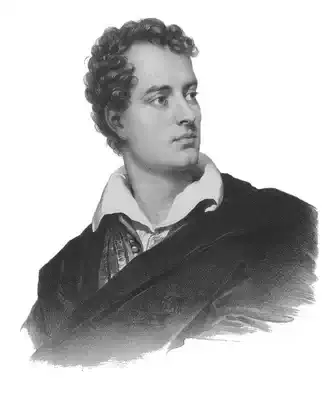
Lord Byron
Windsor Poetics : Lines Composed On The Occasion Of His Royal Highness The
Prince Regent Being Seen Standing Between The Coffins Of Henry VIII And
Charles I, In The Royal Vault At Windsor
Famed for contemptuous breach of sacred ties,
By headless Charles see heartless Henry lies;
Between them stands another sceptred thing
It
moves, it reignsin
all but name, a king:
Charles to his people, Henry to his wife,
In
him the double tyrant starts to life:
Justice and death have mix'd their dust in vain,
Each royal vampire wakes to life again.
Ah, what can tombs avail!since
these disgorge
The blood and dust of bothto
mould a George.
Read more →
446
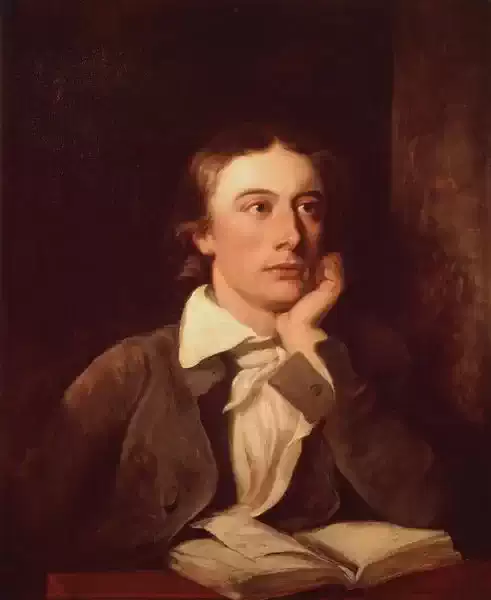
John Keats
Faery Songs
I.
Shed no tear! oh, shed no tear!
The flower will bloom another year.
Weep no more! oh, weep no more!
Young buds sleep in the root's white core.
Dry your eyes! oh, dry your eyes!
For I was taught in Paradise
To ease my breast of melodies,--
Shed no tear.
Overhead! look overhead!
'Mong the blossoms white and red--
Look up, look up! I flutter now
On this fresh pomegranate bough.
See me! 'tis this silvery bill
Ever cures the good man's ill.
Shed no tear! oh, shed no tear!
The flower will bloom another year.
Adieu, adieu -- I fly -- adieu!
I vanish in the heaven’s blue,--
Adieu, adieu!
II.
Ah! woe is me! poor silver-wing!
That I must chant thy lady's dirge,
And death to this fair haunt of spring,
Of melody, and streams of flowery verge,--
Poor silver-wing! ah! woe is me!
That I must see
These blossoms snow upon thy lady's pall!
Go, pretty page! and in her ear
Whisper that the hour is near!
Softly tell her not to fear
Such calm favonian burial!
Go, pretty page! and soothly tell,--
The blossoms hang by a melting spell,
And fall they must, ere a star wink thrice
Upon her closed eyes,
That now in vain are weeping their last tears,
At sweet life leaving, and these arbours green,--
Rich dowry from the Spirit of the Spheres,
Alas! poor Queen!
Read more →
448
Walt Whitman
Despairing Cries
DESPAIRING cries float ceaselessly toward me, day and night,
The sad voice of Death--the call of my nearest lover, putting forth,
alarmed, uncertain,
This sea I am quickly to sail, come tell me,
Come tell me where I am speeding--tell me my destination.
I understand your anguish, but I cannot help you,
I approach, hear, behold--the sad mouth, the look out of the eyes,
your mute inquiry,
Whither I go from the bed I now recline on, come tell me;
Old age, alarmed, uncertain--A young woman's voice appealing to me,
for comfort,
A young man's voice, Shall I not escape?
Read more →
448

Kabir
Tentacles of Time
Sadho Ye Murdon Ka Gaon
Peer Mare, Pygambar Mari Hain
Mari Hain Zinda Jogi
Raja Mari Hain, Parja Mari Hain
Mari Hain Baid Aur Rogi
Chanda Mari Hain, Suraj Mari Hain
Mari Hain Dharni Akasa
Chaudan Bhuvan Ke Chaudhry Mari Hain
In Hun Ki Ka Asa
Nauhun Mari Hain, Dus Hun Mari Hain
Mari Hain Sahaj Athasi
Tethis Koti Devata Mari Hain
Badi Kaal Ki Bazi
Naam Anam Anant Rehat Hai
Duja Tatva Na Hoi
Kahe Kabir Suno Bhai Sadho
Bhatak Maro Mat Koi
English Translation
Oh Sadhu This is the Village of the Dead
The Saints Have Died, The God-Messengers Die
The Life-Filled Yogis Die Too |
The Kings Die, The Subjects Die
The Healers and the Sick Die Too ||
The Moon Dies, The Sun Dies
The Earth and Sky Die Too |
Even the Caretakers of the Fourteen Worlds Die
Why Hope For Any of These ||
The Nine Die, The Ten Die
The Eighty Eight Die Easily Too |
The Thirty Three Crore Devatas Die
It's a Big Game of Time ||
The Un-Named Naam Lives Without Any End
There is No Other Truth ||
Says Kabir Listen Oh Sadhu
Don't Get Lost and Die ||
Read more →
448

William Butler Yeats
The Black Tower
SAY that the men of the old black tower,
Though they but feed as the goatherd feeds,
Their money spent, their wine gone sour,
Lack nothing that a soldier needs,
That all are oath-bound men:
Those banners come not in.
There in the tomb stand the dead upright,
But winds come up from the shore:
They shake when the winds roar,
Old bones upon the mountain shake.
Those banners come to bribe or threaten,
Or whisper that a man's a fool
Who, when his own right king's forgotten,
Cares what king sets up his rule.
If he died long ago
Why do yopu dread us so?
There in the tomb drops the faint moonlight,
But wind comes up from the shore:
They shake when the winds roar,
Old bones upon the mountain shake.
The tower's old cook that must climb and clamber
Catching small birds in the dew of the morn
When we hale men lie stretched in slumber
Swears that he hears the king's great horn.
But he's a lying hound:
Stand we on guard oath-bound!
There in the tomb the dark grows blacker,
But wind comes up from the shore:
They shake when the winds roar,
Old bones upon the mountain shake.
Read more →
447

Henry Wadsworth Longfellow
The Reaper And The Flowers
There is a Reaper whose name is Death,
And, with his sickle keen,
He reaps the bearded grain at a breath,
And the flowers that grow between.
``Shall I have nought that is fair?'' saith he;
``Have nought but the bearded grain?
Though the breath of these flowers is sweet to me,
I will give them all back again.''
He gazed at the flowers with tearful eyes,
He kissed their drooping leaves;
It was for the Lord of Paradise
He bound them in his sheaves.
``My Lord has need of these flowerets gay,''
The Reaper said, and smiled;
``Dear tokens of the earth are they,
Where he was once a child.
``They shall all bloom in fields of light,
Transplanted by my care,
And saints, upon their garments white,
These sacred blossoms wear.''
And the mother gave, in tears and pain,
The flowers she most did love;
She knew she should find them all again
In the fields of light above.
O, not in cruelty, not in wrath,
The Reaper came that day;
'Twas an angel visited the green earth,
And took the flowers away.
Read more →
443
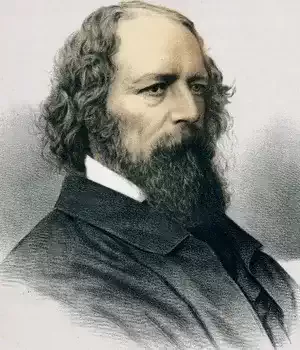
Alfred Lord Tennyson
In Memoriam A. H. H.: 45. The baby new to earth and sky
The baby new to earth and sky,
What time his tender palm is prest
Against the circle of the breast,
Has never thought that "this is I":
But as he grows he gathers much,
And learns the use of "I," and "me,"
And finds "I am not what I see,
And other than the things I touch."
So rounds he to a separate mind
From whence clear memory may begin,
As thro' the frame that binds him in
His isolation grows defined.
This use may lie in blood and breath
Which else were fruitless of their due,
Had man to learn himself anew
Beyond the second birth of Death.
Read more →
442
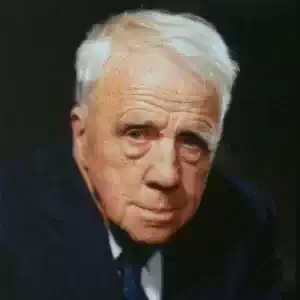
Robert Frost
In a Disused Graveyard
The living come with grassy tread
To read the gravestones on the hill;
The graveyard draws the living still,
But never anymore the dead.
The verses in it say and say:
"The ones who living come today
To read the stones and go away
Tomorrow dead will come to stay."
So sure of death the marbles rhyme,
Yet can't help marking all the time
How no one dead will seem to come.
What is it men are shrinking from?
It would be easy to be clever
And tell the stones: Men hate to die
And have stopped dying now forever.
I think they would believe the lie.
Read more →
442
Walt Whitman
President Lincoln's Burial Hymn
When Lilacs Last in the Door-yard Bloom'd
WHEN lilacs last in the door-yard bloom'd,
And the great star early droop'd in the western sky in the night,
I mourn'd--and yet shall mourn with ever-returning spring.
O ever-returning spring! trinity sure to me you bring;
Lilac blooming perennial, and drooping star in the west,
And thought of him I love.
O powerful, western, fallen star!
O shades of night! O moody, tearful night!
O great star disappear'd! O the black murk that hides the star!
O cruel hands that hold me powerless! O helpless soul of me!
O harsh surrounding cloud, that will not free my soul!
In the door-yard fronting an old farm-house, near the white-wash'd
palings,
Stands the lilac bush, tall-growing, with heart-shaped leaves of rich
green,
With many a pointed blossom, rising, delicate, with the perfume
strong I love,
With every leaf a miracle......and from this bush in the door-yard,
With delicate-color'd blossoms, and heart-shaped leaves of rich
green,
A sprig, with its flower, I break.
In the swamp, in secluded recesses,
A shy and hidden bird is warbling a song.
Solitary, the thrush,
The hermit, withdrawn to himself, avoiding the settlements,
Sings by himself a song.
Song of the bleeding throat!
Death's outlet song of life--(for well, dear brother, I know
If thou wast not gifted to sing, thou would'st surely die.)
Over the breast of the spring, the land, amid cities,
Amid lanes, and through old woods, (where lately the violets peep'd
from the ground, spotting the gray debris;)
Amid the grass in the fields each side of the lanes--passing the
endless grass;
Passing the yellow-spear'd wheat, every grain from its shroud in the
dark-brown fields uprising;
Passing the apple-tree blows of white and pink in the orchards;
Carrying a corpse to where it shall rest in the grave,
Night and day journeys a coffin.
Coffin that passes through lanes and streets,
Through day and night, with the great cloud darkening the land,
With the pomp of the inloop'd flags, with the cities draped in black,
With the show of the States themselves, as of crape-veil'd women,
standing,
With processions long and winding, and the flambeaus of the night,
With the countless torches lit--with the silent sea of faces, and the
unbared heads,
With the waiting depot, the arriving coffin, and the sombre faces,
With dirges through the night, with the thousand voices rising strong
and solemn;
With all the mournful voices of the dirges, pour'd around the coffin,
The dim-lit churches and the shuddering organs--Where amid these you
journey,
With the tolling, tolling bells' perpetual clang;
Here! coffin that slowly passes,
I give you my sprig of lilac.
(Nor for you, for one, alone;
Blossoms and branches green to coffins all I bring:
For fresh as the morning--thus would I carol a song for you, O sane
and sacred death.
All over bouquets of roses,
O death! I cover you over with roses and early lilies;
But mostly and now the lilac that blooms the first,
Copious, I break, I break the sprigs from the bushes;
With loaded arms I come, pouring for you,
For you, and the coffins all of you, O death.)
O western orb, sailing the heaven!
Now I know what you must have meant, as a month since we walk'd,
As we walk'd up and down in the dark blue so mystic,
As we walk'd in silence the transparent shadowy night,
As I saw you had something to tell, as you bent to me night after
night,
As you droop'd from the sky low down, as if to my side, (while the
other stars all look'd on;)
As we wander'd together the solemn night, (for something, I know not
what, kept me from sleep;)
As the night advanced, and I saw on the rim of the west, ere you
went, how full you were of woe;
As I stood on the rising ground in the breeze, in the cold
transparent night,
As I watch'd where you pass'd and was lost in the netherward black of
the night,
As my soul, in its trouble, dissatisfied, sank, as where you, sad
orb,
Concluded, dropt in the night, and was gone.
Sing on, there in the swamp!
O singer bashful and tender! I hear your notes--I hear your call;
I hear--I come presently--I understand you;
But a moment I linger--for the lustrous star has detain'd me;
The star, my departing comrade, holds and detains me.
O how shall I warble myself for the dead one there I loved?
And how shall I deck my song for the large sweet soul that has gone?
And what shall my perfume be, for the grave of him I love?
Sea-winds, blown from east and west,
Blown from the eastern sea, and blown from the western sea, till
there on the prairies meeting:
These, and with these, and the breath of my chant,
I perfume the grave of him I love.
O what shall I hang on the chamber walls?
And what shall the pictures be that I hang on the walls,
To adorn the burial-house of him I love?
Pictures of growing spring, and farms, and homes,
With the Fourth-month eve at sundown, and the gray smoke lucid and
bright,
With floods of the yellow gold of the gorgeous, indolent, sinking
sun, burning, expanding the air;
With the fresh sweet herbage under foot, and the pale green leaves of
the trees prolific;
In the distance the flowing glaze, the breast of the river, with a
wind-dapple here and there;
With ranging hills on the banks, with many a line against the sky,
and shadows;
And the city at hand, with dwellings so dense, and stacks of
chimneys,
And all the scenes of life, and the workshops, and the workmen
homeward returning.
Lo! body and soul! this land!
Mighty Manhattan, with spires, and the sparkling and hurrying tides,
and the ships;
The varied and ample land--the South and the North in the light-Ohio's
shores, and flashing Missouri,
And ever the far-spreading prairies, cover'd with grass and corn.
Lo! the most excellent sun, so calm and haughty;
The violet and purple morn, with just-felt breezes;
The gentle, soft-born, measureless light;
The miracle, spreading, bathing all--the fulfill'd noon;
The coming eve, delicious--the welcome night, and the stars,
Over my cities shining all, enveloping man and land.
Sing on! sing on, you gray-brown bird!
Sing from the swamps, the recesses--pour your chant from the bushes;
Limitless out of the dusk, out of the cedars and pines.
Sing on, dearest brother--warble your reedy song;
Loud human song, with voice of uttermost woe.
O liquid, and free, and tender!
O wild and loose to my soul! O wondrous singer!
You only I hear......yet the star holds me, (but will soon depart;)
Yet the lilac, with mastering odor, holds me.
Now while I sat in the day, and look'd forth,
In the close of the day, with its light, and the fields of spring,
and the farmer preparing his crops,
In the large unconscious scenery of my land, with its lakes and
forests,
In the heavenly aerial beauty, (after the perturb'd winds, and the
storms;)
Under the arching heavens of the afternoon swift passing, and the
voices of children and women,
The many-moving sea-tides,--and I saw the ships how they sail'd,
And the summer approaching with richness, and the fields all busy
with labor,
And the infinite separate houses, how they all went on, each with its
meals and minutia of daily usages;
And the streets, how their throbbings throbb'd, and the cities pent-lo!
then and there,
Falling upon them all, and among them all, enveloping me with the
rest,
Appear'd the cloud, appear'd the long black trail;
And I knew Death, its thought, and the sacred knowledge of death.
Then with the knowledge of death as walking one side of me,
And the thought of death close-walking the other side of me,
And I in the middle, as with companions, and as holding the hands of
companions,
I fled forth to the hiding receiving night, that talks not,
Down to the shores of the water, the path by the swamp in the
dimness,
To the solemn shadowy cedars, and ghostly pines so still.
And the singer so shy to the rest receiv'd me;
The gray-brown bird I know, receiv'd us comrades three;
And he sang what seem'd the carol of death, and a verse for him I
love.
From deep secluded recesses,
From the fragrant cedars, and the ghostly pines so still,
Came the carol of the bird.
And the charm of the carol rapt me,
As I held, as if by their hands, my comrades in the night;
And the voice of my spirit tallied the song of the bird.
DEATH CAROL.
Come, lovely and soothing Death,
Undulate round the world, serenely arriving, arriving,
In the day, in the night, to all, to each,
Sooner or later, delicate Death.
Prais'd be the fathomless universe,
For life and joy, and for objects and knowledge curious;
And for love, sweet love--But praise! praise! praise!
For the sure-enwinding arms of cool-enfolding Death.
Dark Mother, always gliding near, with soft feet,
Have none chanted for thee a chant of fullest welcome?
Then I chant it for thee--I glorify thee above all;
I bring thee a song that when thou must indeed come, come
unfalteringly.
Approach, strong Deliveress!
When it is so--when thou hast taken them, I joyously sing the dead,
Lost in the loving, floating ocean of thee,
Laved in the flood of thy bliss, O Death.
From me to thee glad serenades,
Dances for thee I propose, saluting thee--adornments and feastings
for thee;
And the sights of the open landscape, and the high-spread sky, are
fitting,
And life and the fields, and the huge and thoughtful night.
The night, in silence, under many a star;
The ocean shore, and the husky whispering wave, whose voice I know;
And the soul turning to thee, O vast and well-veil'd Death,
And the body gratefully nestling close to thee.
Over the tree-tops I float thee a song!
Over the rising and sinking waves--over the myriad fields, and the
prairies wide;
Over the dense-pack'd cities all, and the teeming wharves and ways,
I float this carol with joy, with joy to thee, O Death!
To the tally of my soul,
Loud and strong kept up the gray-brown bird,
With pure, deliberate notes, spreading, filling the night.
Loud in the pines and cedars dim,
Clear in the freshness moist, and the swamp-perfume;
And I with my comrades there in the night.
While my sight that was bound in my eyes unclosed,
As to long panoramas of visions.
I saw askant the armies;
And I saw, as in noiseless dreams, hundreds of battle-flags;
Borne through the smoke of the battles, and pierc'd with missiles, I
saw them,
And carried hither and yon through the smoke, and torn and bloody;
And at last but a few shreds left on the staffs, (and all in
silence,)
And the staffs all splinter'd and broken.
I saw battle-corpses, myriads of them,
And the white skeletons of young men--I saw them;
I saw the debris and debris of all the dead soldiers of the war;
But I saw they were not as was thought;
They themselves were fully at rest--they suffer'd not;
The living remain'd and suffer'd--the mother suffer'd,
And the wife and the child, and the musing comrade suffer'd,
And the armies that remain'd suffer'd.
Passing the visions, passing the night;
Passing, unloosing the hold of my comrades' hands;
Passing the song of the hermit bird, and the tallying song of my
soul,
(Victorious song, death's outlet song, yet varying, ever-altering
song,
As low and wailing, yet clear the notes, rising and falling, flooding
the night,
Sadly sinking and fainting, as warning and warning, and yet again
bursting with joy,
Covering the earth, and filling the spread of the heaven,
As that powerful psalm in the night I heard from recesses,)
Passing, I leave thee, lilac with heart-shaped leaves;
I leave thee there in the door-yard, blooming, returning with spring,
I cease from my song for thee;
From my gaze on thee in the west, fronting the west, communing with
thee,
O comrade lustrous, with silver face in the night.
Yet each I keep, and all, retrievements out of the night;
The song, the wondrous chant of the gray-brown bird,
And the tallying chant, the echo arous'd in my soul,
With the lustrous and drooping star, with the countenance full of
woe,
With the lilac tall, and its blossoms of mastering odor;
With the holders holding my hand, nearing the call of the bird,
Comrades mine, and I in the midst, and their memory ever I keep--for
the dead I loved so well;
For the sweetest, wisest soul of all my days and lands...and this for
his dear sake;
Lilac and star and bird, twined with the chant of my soul,
There in the fragrant pines, and the cedars dusk and dim.
Read more →
444
Alfred Lord Tennyson
Claribel
Where Claribel low-lieth
The breezes pause and die,
Letting the rose-leaves fall:
But the solemn oak-tree sigheth,
Thick-leaved, ambrosial,
With an ancient melody
Of an inward agony,
Where Claribel low-lieth.
At eve the beetle boometh
Athwart the thicket lone:
At noon the wild bee hummeth
About the moss'd headstone:
At midnight the moon cometh,
And looketh down alone.
Her song the lintwhite swelleth,
The clear-voiced mavis dwelleth,
The callow throstle lispeth,
The slumbrous wave outwelleth,
The babbling runnel crispeth,
The hollow grot replieth
Where Claribel low-lieth.
Read more →
441
William Butler Yeats
Crazy Jane And Jack The Journeyman
I know, although when looks meet
I tremble to the bone,
The more I leave the door unlatched
The sooner love is gone,
For love is but a skein unwound
Between the dark and dawn.
A lonely ghost the ghost is
That to God shall come;
I - love's skein upon the ground,
My body in the tomb -
Shall leap into the light lost
In my mother's womb.
But were I left to lie alone
In an empty bed,
The skein so bound us ghost to ghost
When he turned his head
passing on the road that night,
Mine must walk when dead.
Read more →
443
Ella Wheeler Wilcox
Daft
In the warm yellow smile of the morning,
She stands at the lattice pane,
And watches the strong young binders
Stride down to the fields of grain.
And she counts them over and over
As they pass her cottage door:
Are they six, she counts them seven;
Are they seven, she counts one more.
When the sun swings high in the heavens,
And the reapers go shouting home,
She calls to the household, saying,
'Make haste! for the binders have come
And Johnnie will want his dinner He
was always a hungry child';
And they answer, 'Yes, it ia waiting';
Then tell you, 'Her brain is wild.'
Again, in the hush of the evening,
When the work of the day is done,
And the binders go singing homeward
In the last red rays of the sun,
She will sit at the threshold waiting,
And with her withered face lights with joy:
'Come, Johnnie, ' she says, as they pass her,
'Come into the house, my boy.'
Five summers ago her Johnnie
Went out in the smile of the morn,
Singing across the meadow,
Striding down through the corn -
He towered above the binders,
Walking on either side,
And the mother's heart within her
Swelled with exultant pride.
For he was the light of the household His
brown eyes were wells of truth,
And his face was the face of the morning,
Lit with its pure, fresh youth,
And his song rang out from the hilltops
Like the mellow blast of a horn,
And he strode o'er the fresh shorn meadows,
And down through the rows of corn.
But hushed were the voices of singing,
Hushed by the presence of death,
As back to the cottage they bore him In
the noontide's scorching breath,
For the heat of the sun had slain him,
Had smitten the heart in his breast,
And he who towered above them
Lay lower than all the rest.
The grain grows ripe in the sunshine,
And the summers ebb and flow,
And the binders stride to their labour
And sing as they come and go;
But never again from the hilltops
Echoes the voice like a horn;
Never up from the meadows,
Never back from the corn.
Yet the poor, crazed brain of the mother
Fancies him always near;
She is blest in her strange delusion,
For she knoweth no pain nor fear,
And always she counts the binders
As they pass by her cottage door;
Are they six, she counts them seven;
Are they seven, she counts one more.
Read more →
443
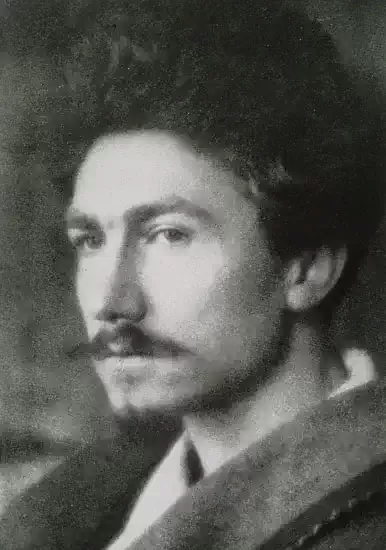
Ezra Pound
Liu Ch'e
The rustling of the silk is discontinued,
Dust drifts over the court-yard,
There is no sound of foot-fall, and the leaves
Scurry into heaps and lie still,
And she the rejoicer of the heart is beneath them:
A wet leaf that clings to the threshold.
Read more →
439
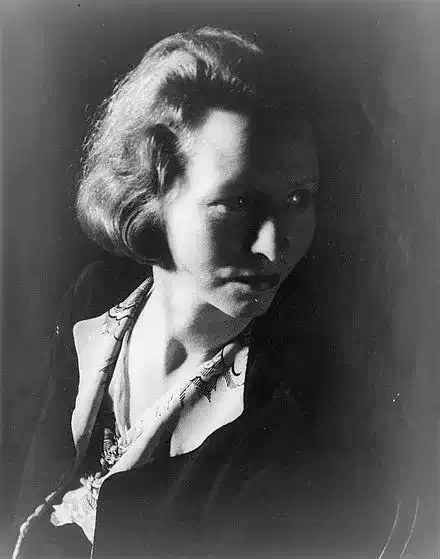
Edna St. Vincent Millay
Interim
The room is full of you!—As I came in
And closed the door behind me, all at once
A something in the air, intangible,
Yet stiff with meaning, struck my senses sick!—
Sharp, unfamiliar odors have destroyed
Each other room's dear personality.
The heavy scent of damp, funereal flowers,—
The very essence, hush-distilled, of Death—
Has strangled that habitual breath of home
Whose expiration leaves all houses dead;
And wheresoe'er I look is hideous change.
Save here. Here 'twas as if a weed-choked gate
Had opened at my touch, and I had stepped
Into some long-forgot, enchanted, strange,
Sweet garden of a thousand years ago
And suddenly thought, "I have been here before!"
You are not here. I know that you are gone,
And will not ever enter here again.
And yet it seems to me, if I should speak,
Your silent step must wake across the hall;
If I should turn my head, that your sweet eyes
Would kiss me from the door.—So short a time
To teach my life its transposition to
This difficult and unaccustomed key!—
The room is as you left it; your last touch—
A thoughtless pressure, knowing not itself
As saintly—hallows now each simple thing;
Hallows and glorifies, and glows between
The dust's grey fingers like a shielded light.
There is your book, just as you laid it down,
Face to the table,—I cannot believe
That you are gone!—Just then it seemed to me
You must be here. I almost laughed to think
How like reality the dream had been;
Yet knew before I laughed, and so was still.
That book, outspread, just as you laid it down!
Perhaps you thought, "I wonder what comes next,
And whether this or this will be the end";
So rose, and left it, thinking to return.
Perhaps that chair, when you arose and passed
Out of the room, rocked silently a while
Ere it again was still. When you were gone
Forever from the room, perhaps that chair,
Stirred by your movement, rocked a little while,
Silently, to and fro...
And here are the last words your fingers wrote,
Scrawled in broad characters across a page
In this brown book I gave you. Here your hand,
Guiding your rapid pen, moved up and down.
Here with a looping knot you crossed a "t,"
And here another like it, just beyond
These two eccentric "e's." You were so small,
And wrote so brave a hand!
How strange it seems
That of all words these are the words you chose!
And yet a simple choice; you did not know
You would not write again. If you had known—
But then, it does not matter,—and indeed
If you had known there was so little time
You would have dropped your pen and come to me
And this page would be empty, and some phrase
Other than this would hold my wonder now.
Yet, since you could not know, and it befell
That these are the last words your fingers wrote,
There is a dignity some might not see
In this, "I picked the first sweet-pea to-day."
To-day! Was there an opening bud beside it
You left until to-morrow?—O my love,
The things that withered,—and you came not back
That day you filled this circle of my arms
That now is empty. (O my empty life!)
That day—that day you picked the first sweet-pea,—
And brought it in to show me! I recall
With terrible distinctness how the smell
Of your cool gardens drifted in with you.
I know, you held it up for me to see
And flushed because I looked not at the flower,
But at your face; and when behind my look
You saw such unmistakable intent
You laughed and brushed your flower against my lips.
(You were the fairest thing God ever made,
I think.) And then your hands above my heart
Drew down its stem into a fastening,
And while your head was bent I kissed your hair.
I wonder if you knew. (Beloved hands!
Somehow I cannot seem to see them still.
Somehow I cannot seem to see the dust
In your bright hair.) What is the need of Heaven
When earth can be so sweet?—If only God
Had let us love,—and show the world the way!
Strange cancellings must ink th' eternal books
When love-crossed-out will bring the answer right!
That first sweet-pea! I wonder where it is.
It seems to me I laid it down somewhere,
And yet,—I am not sure. I am not sure,
Even, if it was white or pink; for then
'Twas much like any other flower to me
Save that it was the first. I did not know
Then, that it was the last. If I had known—
But then, it does not matter. Strange how few,
After all's said and done, the things that are
Of moment.
Few indeed! When I can make
Of ten small words a rope to hang the world!
"I had you and I have you now no more."
There, there it dangles,—where's the little truth
That can for long keep footing under that
When its slack syllables tighten to a thought?
Here, let me write it down! I wish to see
Just how a thing like that will look on paper!
"I had you and I have you now no more."
O little words, how can you run so straight
Across the page, beneath the weight you bear?
How can you fall apart, whom such a theme
Has bound together, and hereafter aid
In trivial expression, that have been
So hideously dignified?—Would God
That tearing you apart would tear the thread
I strung you on! Would God—O God, my mind
Stretches asunder on this merciless rack
Of imagery! O, let me sleep a while!
Would I could sleep, and wake to find me back
In that sweet summer afternoon with you.
Summer? Tis summer still by the calendar!
How easily could God, if He so willed,
Set back the world a little turn or two!
Correct its griefs, and bring its joys again!
We were so wholly one I had not thought
That we could die apart. I had not thought
That I could move,—and you be stiff and still!
That I could speak,—and you perforce be dumb!
I think our heart-strings were, like warp and woof
In some firm fabric, woven in and out;
Your golden filaments in fair design
Across my duller fibre. And to-day
The shining strip is rent; the exquisite
Fine pattern is destroyed; part of your heart
Aches in my breast; part of my heart lies chilled
In the damp earth with you. I have been tom
In two, and suffer for the rest of me.
What is my life to me? And what am I
To life,—a ship whose star has guttered out?
A Fear that in the deep night starts awake
Perpetually, to find its senses strained
Against the taut strings of the quivering air,
Awaiting the return of some dread chord?
Dark, Dark, is all I find for metaphor;
All else were contrast,—save that contrast's wall
Is down, and all opposed things flow together
Into a vast monotony, where night
And day, and frost and thaw, and death and life,
Are synonyms. What now—what now to me
Are all the jabbering birds and foolish flowers
That clutter up the world? You were my song!
Now, let discord scream! You were my flower!
Now let the world grow weeds! For I shall not
Plant things above your grave—(the common balm
Of the conventional woe for its own wound!)
Amid sensations rendered negative
By your elimination stands to-day,
Certain, unmixed, the element of grief;
I sorrow; and I shall not mock my truth
With travesties of suffering, nor seek
To effigy its incorporeal bulk
In little wry-faced images of woe.
I cannot call you back; and I desire
No utterance of my immaterial voice.
I cannot even turn my face this way
Or that, and say, "My face is turned to you";
I know not where you are, I do not know
If Heaven hold you or if earth transmute,
Body and soul, you into earth again;
But this I know:—not for one second's space
Shall I insult my sight with visionings
Such as the credulous crowd so eager-eyed
Beholds, self-conjured, in the empty air.
Let the world wail! Let drip its easy tears!
My sorrow shall be dumb!
—What do I say?
God! God!—God pity me! Am I gone mad
That I should spit upon a rosary?
Am I become so shrunken? Would to God
I too might feel that frenzied faith whose touch
Makes temporal the most enduring grief;
Though it must walk a while, as is its wont,
With wild lamenting! Would I too might weep
Where weeps the world and hangs its piteous wreaths
For its new dead! Not Truth, but Faith, it is
That keeps the world alive. If all at once
Faith were to slacken,—that unconscious faith
Which must, I know, yet be the corner-stone
Of all believing,—birds now flying fearless
Across would drop in terror to the earth;
Fishes would drown; and the all-governing reins
Would tangle in the frantic hands of God
And the worlds gallop headlong to destruction!
O God, I see it now, and my sick brain
Staggers and swoons! How often over me
Flashes this breathlessness of sudden sight
In which I see the universe unrolled
Before me like a scroll and read thereon
Chaos and Doom, where helpless planets whirl
Dizzily round and round and round and round,
Like tops across a table, gathering speed
With every spin, to waver on the edge
One instant—looking over—and the next
To shudder and lurch forward out of sight—
* * * * * * *
Ah, I am worn out—I am wearied out—
It is too much—I am but flesh and blood,
And I must sleep. Though you were dead again,
I am but flesh and blood and I must sleep.
Read more →
440
Edna St. Vincent Millay
Three Songs Of Shattering
I
The first rose on my rose-tree
Budded, bloomed, and shattered,
During sad days when to me
Nothing mattered.
Grief of grief has drained me clean;
Still it seems a pity
No one saw,—it must have been
Very pretty.
II
Let the little birds sing;
Let the little lambs play;
Spring is here; and so 'tis spring;—
But not in the old way!
I recall a place
Where a plum-tree grew;
There you lifted up your face,
And blossoms covered you.
If the little birds sing,
And the little lambs play,
Spring is here; and so 'tis spring—
But not in the old way!
III
All the dog-wood blossoms are underneath the tree!
Ere spring was going—ah, spring is gone!
And there comes no summer to the like of you and me,—
Blossom time is early, but no fruit sets on.
All the dog-wood blossoms are underneath the tree,
Browned at the edges, turned in a day;
And I would with all my heart they trimmed a mound for me,
And weeds were tall on all the paths that led that way!
Read more →
439
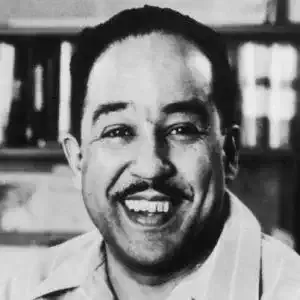
Langston Hughes
Sick Room
How quiet
It is in this sick room
Where on the bed
A silent woman lies between two lovers-
Life and Death,
And all three covered with a sheet of pain.
Read more →
441
Dylan Thomas
All That I Owe the Fellows of the Grave
All that I owe the fellows of the grave
And all the dead bequeathed from pale estates
Lies in the fortuned bone, the flask of blood,
Like senna stirs along the ravaged roots.
O all I owe is all the flesh inherits,
My fathers' loves that pull upon my nerves,
My sisters tears that sing upon my head
My brothers' blood that salts my open wounds
Heir to the scalding veins that hold love's drop,
My fallen filled, that had the hint of death,
Heir to the telling senses that alone
Acquaint the flesh with a remembered itch,
I round this heritage as rounds the sun
His winy sky, and , as the candles moon,
Cast light upon my weather. I am heir
To women who have twisted their last smile,
To children who were suckled on a plague,
To young adorers dying on a kiss.
All such disease I doctor in my blood,
And all such love's a shrub sown in the breath.
Then look, my eyes, upon this bonehead fortune
And browse upon the postures of the dead;
All night and day I eye the ragged globe
Through periscopes rightsighted from the grave;
All night and day I wander in these same
Wax clothes that wax upon the ageing ribs;
All night my fortune slumbers in its sheet.
Then look, my heart, upon the scarlet trove,
And look, my grain, upon the falling wheat;
All night my fortune slumbers in its sheet.
Read more →
435