
Death and Mourning
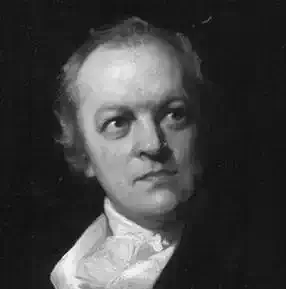
William Blake
The Book of Urizen: Chapter VIII
. Urizen explor'd his dens
Mountain, moor, & wilderness,
With a globe of fire lighting his journey
A fearful journey, annoy'd
By cruel enormities: forms
Of life on his forsaken mountains
. And his world teemd vast enormities
Frightning; faithless; fawning
Portions of life; similitudes
Of a foot, or a hand, or a head
Or a heart, or an eye, they swam mischevous
Dread terrors! delighting in blood
. Most Urizen sicken'd to see
His eternal creations appear
Sons & daughters of sorrow on mountains
Weeping! wailing! first Thiriel appear'd
Astonish'd at his own existence
Like a man from a cloud born, & Utha
From the waters emerging, laments!
Grodna rent the deep earth howling
Amaz'd! his heavens immense cracks
Like the ground parch'd with heat; then Fuzon
Flam'd out! first begotten, last born.
All his eternal sons in like manner
His daughters from green herbs & cattle
From monsters, & worms of the pit.
. He in darkness clos'd, view'd all his race,
And his soul sicken'd! he curs'd
Both sons & daughters; for he saw
That no flesh nor spirit could keep
His iron laws one moment.
. For he saw that life liv'd upon death
The Ox in the slaughter house moans
The Dog at the wintry door
And he wept, & he called it Pity
And his tears flowed down on the winds
. Cold he wander'd on high, over their cities
In weeping & pain & woe!
And where-ever he wanderd in sorrows
Upon the aged heavens
A cold shadow follow'd behind him
Like a spiders web, moist, cold, & dim
Drawing out from his sorrowing soul
The dungeon-like heaven dividing.
Where ever the footsteps of Urizen
Walk'd over the cities in sorrow.
. Till a Web dark & cold, throughout all
The tormented element stretch'd
From the sorrows of Urizens soul
And the Web is a Female in embrio
None could break the Web, no wings of fire.
. So twisted the cords, & so knotted
The meshes: twisted like to the human brain
. And all calld it, The Net of Religion
Read more →
436

Matsuo Bashō
In this world of ours
Yo no naka wa kutte hako shite nete okite
Sate sono ato wa shinuru bakari zo
In this world of ours,
We eat only to cast out,
Sleep only to wake,
And what comes after all that
Is simply to die at last.
Read more →
438

Dylan Thomas
Vision and Prayer
Who
Are you
Who is born
In the next room
So loud to my own
That I can hear the womb
Opening and the dark run
Over the ghost and the dropped son
Behind the wall thin as a wren's bone?
In the birth bloody room unknown
To the burn and turn of time
And the heart print of man
Bows no baptism
But dark alone
Blessing on
The wild
Child.
Read more →
436
Dylan Thomas
All That I Owe the Fellows of the Grave
All that I owe the fellows of the grave
And all the dead bequeathed from pale estates
Lies in the fortuned bone, the flask of blood,
Like senna stirs along the ravaged roots.
O all I owe is all the flesh inherits,
My fathers' loves that pull upon my nerves,
My sisters tears that sing upon my head
My brothers' blood that salts my open wounds
Heir to the scalding veins that hold love's drop,
My fallen filled, that had the hint of death,
Heir to the telling senses that alone
Acquaint the flesh with a remembered itch,
I round this heritage as rounds the sun
His winy sky, and , as the candles moon,
Cast light upon my weather. I am heir
To women who have twisted their last smile,
To children who were suckled on a plague,
To young adorers dying on a kiss.
All such disease I doctor in my blood,
And all such love's a shrub sown in the breath.
Then look, my eyes, upon this bonehead fortune
And browse upon the postures of the dead;
All night and day I eye the ragged globe
Through periscopes rightsighted from the grave;
All night and day I wander in these same
Wax clothes that wax upon the ageing ribs;
All night my fortune slumbers in its sheet.
Then look, my heart, upon the scarlet trove,
And look, my grain, upon the falling wheat;
All night my fortune slumbers in its sheet.
Read more →
435
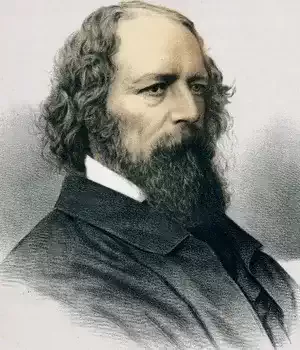
Alfred Lord Tennyson
In Memoriam A. H. H.: 2. Old Yew, which graspest at the sto
Old Yew, which graspest at the stones
That name the under-lying dead,
Thy fibres net the dreamless head,
Thy roots are wrapt about the bones.
The seasons bring the flower again,
And bring the firstling to the flock;
And in the dusk of thee, the clock
Beats out the little lives of men.
O not for thee the glow, the bloom,
Who changest not in any gale,
Nor branding summer suns avail
To touch thy thousand years of gloom:
And gazing on thee, sullen tree,
Sick for thy stubborn hardihood,
I seem to fail from out my blood
And grow incorporate into thee.
Read more →
436
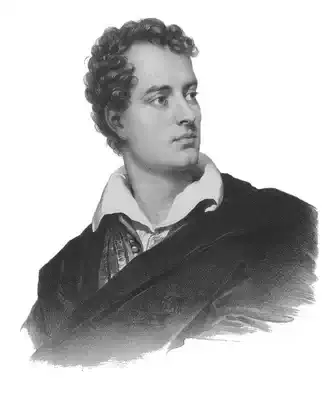
Lord Byron
Lines Written Beneath An Elm In The Churchyard Of Harrow On The Hill, Sept.
2, 1807
Spot of my youth! whose hoary branches sigh,
Swept by the breeze that fans thy cloudless sky;
Where now alone I muse, who oft have trod,
With those I loved, thy soft and verdant sod;
With those who, scattered far, perchance deplore,
Like me, the happy scenes they knew before:
Oh! as I trace again thy winding hill,
Mine eyes admire, my heart adores thee still,
Thou drooping Elm! beneath whose boughs I lay,
And frequent mused the twilight hours away;
Where, as they once were wont, my limbs recline,
But ah! without the thoughts which then were mine.
How do thy branches, moaning to the blast,
Invite the bosom to recall the past,
And seem to whisper, as the gently swell,
'Take, while thou canst, a lingering, last farewell!'
When fate shall chill, at length, this fevered breast,
And calm its cares and passions into rest,
Oft have I thought, 'twould soothe my dying hour,—
If aught may soothe when life resigns her power,—
To know some humbler grave, some narrow cell,
Would hide my bosom where it loved to dwell.
With this fond dream, methinks, 'twere sweet to die—
And here it lingered, here my heart might lie;
Here might I sleep, where all my hopes arose,
Scene of my youth, and couch of my repose;
For ever stretched beneath this mantling shade,
Pressed by the turf where once my childhood played;
Wrapped by the soil that veils the spot I loved,
Mixed with the earth o'er which my footsteps moved;
Blest by the tongues that charmed my youthful ear,
Mourned by the few my soul acknowledged here;
Deplored by those in early days allied,
And unremembered by the world beside.
Read more →
434
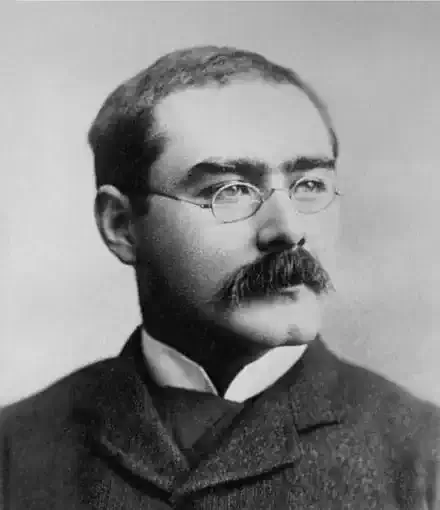
Rudyard Kipling
The Gift Of The Sea
The dead child lay in the shroud,
And the widow watched beside;
And her mother slept, and the Channel swept
The gale in the teeth of the tide.
But the mother laughed at all.
"I have lost my man in the sea,
And the child is dead. Be still," she said,
"What more can ye do to me?"
The widow watched the dead,
And the candle guttered low,
And she tried to sing the Passing Song
That bids the poor soul go.
And "Mary take you now," she sang,
"That lay against my heart."
And "Mary smooth your crib to-night,"
But she could not say "Depart."
Then came a cry from the sea,
But the sea-rime blinded the glass,
And "Heard ye nothing, mother?" she said,
"'Tis the child that waits to pass."
And the nodding mother sighed.
"'Tis a lambing ewe in the whin,
For why should the christened soul cry out
That never knew of sin?"
"O feet I have held in my hand,
O hands at my heart to catch,
How should they know the road to go,
And how should they lift the latch?"
They laid a sheet to the door,
With the little quilt atop,
That it might not hurt from the cold or the dirt,
But the crying would not stop.
The widow lifted the latch
And strained her eyes to see,
And opened the door on the bitter shore
To let the soul go free.
There was neither glimmer nor ghost,
There was neither spirit nor spark,
And "Heard ye nothing, mother?" she said,
"'Tis crying for me in the dark."
And the nodding mother sighed:
"'Tis sorrow makes ye dull;
Have ye yet to learn the cry of the tern,
Or the wail of the wind-blown gull?"
"The terns are blown inland,
The gray gull follows the plough.
'Twas never a bird, the voice I heard,
O mother, I hear it now!"
"Lie still, dear lamb, lie still;
The child is passed from harm,
'Tis the ache in your breast that broke your rest,
And the feel of an empty arm."
She put her mother aside,
"In Mary's name let be!
For the peace of my soul I must go," she said,
And she went to the calling sea.
In the heel of the wind-bit pier,
Where the twisted weed was piled,
She came to the life she had missed by an hour,
For she came to a little child.
She laid it into her breast,
And back to her mother she came,
But it would not feed and it would not heed,
Though she gave it her own child's name.
And the dead child dripped on her breast,
And her own in the shroud lay stark;
And "God forgive us, mother," she said,
"We let it die in the dark!"
Read more →
433

Ella Wheeler Wilcox
When Love Is Lost
When love is lost, the day sets towards the night,
Albeit the morning sun may still be bright,
And not one cloud-ship sails across the sky.
Yet from the places where it used to lie
Gone is the lustrous glory of the light.
No splendour rests in any mountain height,
No scene spreads fair and beauteous to the sight;
All, all seems dull and dreary to the eye
When love is lost.
Love lends to life its grandeur and its might;
Love goes, and leaves behind it gloom and blight;
Like ghosts of time the pallid hours drag by,
And grief's one happy thought is that we die.
Ah, what can recompense us for its flight
When love is lost?
Read more →
431

Henry Wadsworth Longfellow
Ultima Thule: Bayard Taylor
Dead he lay among his books!
The peace of God was in his looks.
As the statues in the gloom
Watch o'er Maximilian's tomb,
So those volumes from their shelves
Watched him, silent as themselves.
Ah! his hand will nevermore
Turn their storied pages o'er;
Nevermore his lips repeat
Songs of theirs, however sweet.
Let the lifeless body rest!
He is gone, who was its guest;
Gone, as travellers haste to leave
An inn, nor tarry until eve.
Traveller! in what realms afar,
In what planet, in what star,
In what vast, aerial space,
Shines the light upon thy face?
In what gardens of delight
Rest thy weary feet to-night?
Poet! thou, whose latest verse
Was a garland on thy hearse;
Thou hast sung, with organ tone,
In Deukalion's life, thine own;
On the ruins of the Past
Blooms the perfect flower at last.
Friend! but yesterday the bells
Rang for thee their loud farewells;
And to-day they toll for thee,
Lying dead beyond the sea;
Lying dead among thy books,
The peace of God in all thy looks!
Read more →
431
William Blake
The Book of Urizen: Chapter III
. The voice ended, they saw his pale visage
Emerge from the darkness; his hand
On the rock of eternity unclasping
The Book of brass. Rage siez'd the strong
. Rage, fury, intense indignation
In cataracts of fire blood & gall
In whirlwinds of sulphurous smoke:
And enormous forms of energy;
All the seven deadly sins of the soul
In living creations appear'd
In the flames of eternal fury.
. Sund'ring, dark'ning, thund'ring!
Rent away with a terrible crash
Eternity roll'd wide apart
Wide asunder rolling
Mountainous all around
Departing; departing; departing:
Leaving ruinous fragments of life
Hanging frowning cliffs & all between
An ocean of voidness unfathomable.
. The roaring fires ran o'er the heav'ns
In whirlwinds & cataracts of blood
And o'er the dark desarts of Urizen
Fires pour thro' the void on all sides
On Urizens self-begotten armies.
. But no light from the fires. all was darkness
In the flames of Eternal fury
. In fierce anguish & quenchless flames
To the desarts and rocks He ran raging
To hide, but He could not: combining
He dug mountains & hills in vast strength,
He piled them in incessant labour,
In howlings & pangs & fierce madness
Long periods in burning fires labouring
Till hoary, and age-broke, and aged,
In despair and the shadows of death.
. And a roof, vast petrific around,
On all sides He fram'd: like a womb;
Where thousands of rivers in veins
Of blood pour down the mountains to cool
The eternal fires beating without
From Eternals; & like a black globe
View'd by sons of Eternity, standing
On the shore of the infinite ocean
Like a human heart strugling & beating
The vast world of Urizen appear'd.
. And Los round the dark globe of Urizen,
Kept watch for Eternals to confine,
The obscure separation alone;
For Eternity stood wide apart,
As the stars are apart from the earth
. Los wept howling around the dark Demon:
And cursing his lot; for in anguish,
Urizen was rent from his side;
And a fathomless void for his feet;
And intense fires for his dwelling.
. But Urizen laid in a stony sleep
Unorganiz'd, rent from Eternity
. The Eternals said: What is this? Death
Urizen is a clod of clay.
. Los howld in a dismal stupor,
Groaning! gnashing! groaning!
Till the wrenching apart was healed
. But the wrenching of Urizen heal'd not
Cold, featureless, flesh or clay,
Rifted with direful changes
He lay in a dreamless night
. Till Los rouz'd his fires, affrighted
At the formless unmeasurable death.
Read more →
434

Johann Wolfgang von Goethe
Venetian Epigrams I
Sarcophagi, urns, were all covered with lifelike scenes,
fauns dancing with girls from a Bacchanalian choir,
paired-off, goat-footed creatures puffing their cheeks,
forcing ear-splitting notes from the blaring horns.
Cymbals and drumbeats, the marble is seen and is heard.
How delightful the fruit in the beaks of fluttering birds!
No startling noise can scare them, or scare away love,
Amor, whose torch waves more gladly in this happy throng.
So fullness overcomes death, and the ashes within
seem still, in their silent house, to feel love’s delight.
So may the Poet’s sarcophagus be adorned,
with this book the writer has filled with the beauty of life.
Read more →
434

Claude Mckay
My Mother
I
Reg wished me to go with him to the field,
I paused because I did not want to go;
But in her quiet way she made me yield
Reluctantly, for she was breathing low.
Her hand she slowly lifted from her lap
And, smiling sadly in the old sweet way,
She pointed to the nail where hung my cap.
Her eyes said: I shall last another day.
But scarcely had we reached the distant place,
When o'er the hills we heard a faint bell ringing;
A boy came running up with frightened face;
We knew the fatal news that he was bringing.
I heard him listlessly, without a moan,
Although the only one I loved was gone.
II
The dawn departs, the morning is begun,
The trades come whispering from off the seas,
The fields of corn are golden in the sun,
The dark-brown tassels fluttering in the breeze;
The bell is sounding and the children pass,
Frog-leaping, skipping, shouting, laughing shrill,
Down the red road, over the pasture-grass,
Up to the school-house crumbling on the hill.
The older folk are at their peaceful toil,
Some pulling up the weeds, some plucking corn,
And others breaking up the sun-baked soil.
Float, faintly-scented breeze, at early morn
Over the earth where mortals sow and reap--
Beneath its breast my mother lies asleep.
Read more →
429
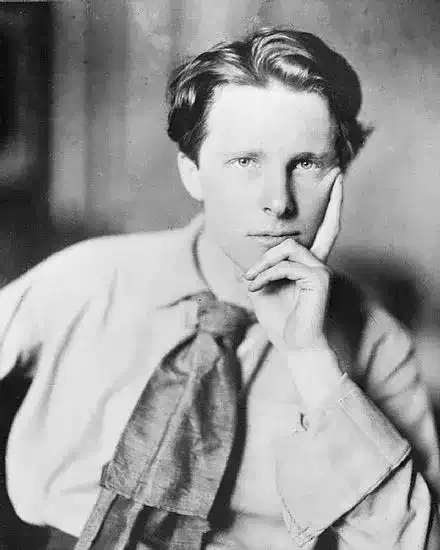
Rupert Brooke
The Vision of the Archangels
Slowly up silent peaks, the white edge of the world,
Trod four archangels, clear against the unheeding sky,
Bearing, with quiet even steps, and great wings furled,
A little dingy coffin; where a child must lie,
It was so tiny. (Yet, you had fancied, God could never
Have bidden a child turn from the spring and the sunlight,
And shut him in that lonely shell, to drop for ever
Into the emptiness and silence, into the night.…)
They then from the sheer summit cast, and watched it fall,
Through unknown glooms, that frail black coffin—and therein
God’s little pitiful Body lying, worn and thin,
And curled up like some crumpled, lonely flower petal—
Till it was no more visible; then turned again
With sorrowful quiet faces downward to the plain.
Read more →
428
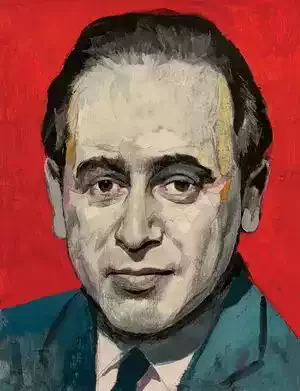
Paul Celan
Fugue of Death
Black milk of daybreak we drink it at nightfall
we drink it at noon in the morning we drink it at night
we drink it and drink it
we are digging a grave in the sky it is ample to lie there
A man in the house he plays with the serpents he writes
he writes when the night falls to Germany your golden
hair Margarete
he writes it and walks from the house the stars glitter he
whistles his dogs up
he whistles his Jews out and orders a grave to be dug in
the earth
he commands us strike up for the dance
Black milk of daybreak we drink you at night
we drink you in the morning at noon we drink you at
nightfall
drink you and drink you
A man in the house he plays with the serpents he writes
he writes when the night falls to Germany your golden
hair Margarete
Your ashen hair Shulamith we are digging a grave in the
sky it is
ample to lie there
He shouts stab deeper in earth you there and you others
you sing and you play
he grabs at the iron in his belt and swings it and blue are
his eyes
stab deeper your spades you there and you others play on
for the dancing
Black milk of daybreak we drink you at nightfall
we drink you at noon in the mornings we drink you at
nightfall
drink you and drink you
a man in the house your golden hair Margarete
your ashen hair Shulamith he plays with the serpents
He shouts play sweeter death's music death comes as a
master from Germany
he shouts stroke darker the strings and as smoke you
shall climb to the sky
then you'll have a grave in the clouds it is ample to lie
there
Black milk of daybreak we drink you at night
we drink you at noon death comes as a master from
Germany
we drink you at nightfall and morning we drink you and
drink you
a master from Germany death comes with eyes that are
blue
with a bullet of lead he will hit in the mark he will hit
you
a man in the house your golden hair Margarete
he hunts us down with his dogs in the sky he gives us a
grave
he plays with the serpents and dreams death comes as a
master from Germany
your golden hair Margarete
your ashen hair Shulamith.
Read more →
429
Paul Celan
When You Lie
When you lie
in the Bed of lost Flag-Cloth,
with blue-black Syllables, in Snow-Eyelash-Shadow,
the Crane through Thoughtshowers,
comes gliding, steelyyou
open for him.
His beak ticks the Hour for you
at every Mouth – at every
bell-stroke, with red-hot Rope, a Silent-
Millennium,
Un-Pulse and Pulse
mint each other to death,
the Dollars, the Cents,
rain hard through your Pores,
in
Second-Shapes
you fly there and bar
the Doors Yesterday and Tomorrow – phosphorescent,
Forever-Teeth,
buds the one, and buds the
other breast,
towards the Grasping, under
the Thrusts –: so thick,
so deeply
strewn
the starry
Crane-
Seed.
Read more →
431
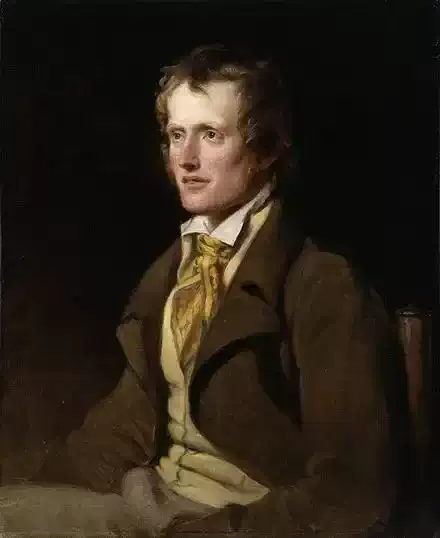
John Clare
The Maid Of Ocram, Or, Lord Gregory
Gay was the Maid of Ocram
As lady eer might be
Ere she did venture past a maid
To love Lord Gregory.
Fair was the Maid of Ocram
And shining like the sun
Ere her bower key was turned on two
Where bride bed lay for none.
And late at night she sought her love--
The snow slept on her skin--
Get up, she cried, thou false young man,
And let thy true love in.
And fain would he have loosed the key
All for his true love's sake,
But Lord Gregory then was fast asleep,
His mother wide awake.
And up she threw the window sash,
And out her head put she:
And who is that which knocks so late
And taunts so loud to me?
It is the Maid of Ocram,
Your own heart's next akin;
For so you've sworn, Lord Gregory,
To come and let me in.
O pause not thus, you know me well,
Haste down my way to win.
The wind disturbs my yellow locks,
The snow sleeps on my skin.--
If you be the Maid of Ocram,
As much I doubt you be,
Then tell me of three tokens
That passed with you and me.--
O talk not now of tokens
Which you do wish to break;
Chilled are those lips you've kissed so warm,
And all too numbed to speak.
You know when in my father's bower
You left your cloak for mine,
Though yours was nought but silver twist
And mine the golden twine.--
If you're the lass of Ocram,
As I take you not to be,
The second token you must tell
Which past with you and me.--
O know you not, O know you not
Twas in my father's park,
You led me out a mile too far
And courted in the dark?
When you did change your ring for mine
My yielding heart to win,
Though mine was of the beaten gold
Yours but of burnished tin,
Though mine was all true love without,
Yours but false love within?
O ask me no more tokens
For fast the snow doth fall.
Tis sad to strive and speak in vain,
You mean to break them all.--
If you are the Maid of Ocram,
As I take you not to be,
You must mention the third token
That passed with you and me.--
Twas when you stole my maidenhead;
That grieves me worst of all.--
Begone, you lying creature, then
This instant from my hall,
Or you and your vile baby
Shall in the deep sea fall;
For I have none on earth as yet
That may me father call.--
O must none close my dying feet,
And must none close my hands,
And may none bind my yellow locks
As death for all demands?
You need not use no force at all,
Your hard heart breaks the vow;
You've had your wish against my will
And you shall have it now.
And must none close my dying feet,
And must none close my hands,
And will none do the last kind deeds
That death for all demands?--
Your sister, she may close your feet,
Your brother close your hands,
Your mother, she may wrap your waist
In death's fit wedding bands;
Your father, he may tie your locks
And lay you in the sands.--
My sister, she will weep in vain,
My brother ride and run,
My mother, she will break her heart;
And ere the rising sun
My father will be looking out-
But find me they will none.
I go to lay my woes to rest,
None shall know where I'm gone.
God must be friend and father both,
Lord Gregory will be none.--
Lord Gregory started up from sleep
And thought he heard a voice
That screamed full dreadful in his ear,
And once and twice and thrice.
Lord Gregory to his mother called:
O mother dear, said he,
I've dreamt the Maid of Ocram
Was floating on the sea.
Lie still, my son, the mother said,
Tis but a little space
And half an hour has scarcely passed
Since she did pass this place.--
O cruel, cruel mother,
When she did pass so nigh
How could you let me sleep so sound
Or let her wander bye?
Now if she's lost my heart must break-I'll
seek her till I die.
He sought her east, he sought her west,
He sought through park and plain;
He sought her where she might have been
But found her not again.
I cannot curse thee, mother,
Though thine's the blame, said he
I cannot curse thee, mother,
Though thou'st done worse to me.
Yet do I curse thy pride that aye
So tauntingly aspires;
For my love was a gay knight's heir,
And my father was a squire's.
And I will sell my park and hall;
And if ye wed again
Ye shall not wed for titles twice
That made ye once so vain.
So if ye will wed, wed for love,
As I was fain to do;
Ye've gave to me a broken heart,
And I'll give nought to you.
Your pride has wronged your own heart's blood;
For she was mine by grace,
And now my lady love is gone
None else shall take her place.
I'll sell my park and sell my hall
And sink my titles too.
Your pride's done wrong enough as now
To leave it more to do.
She owneth none that owned them all
And would have graced them well;
None else shall take the right she missed
Nor in my bosom dwell.--
And then he took and burnt his will
Before his mother's face,
And tore his patents all in two,
While tears fell down apace--
But in his mother's haughty look
Ye nought but frowns might trace.
And then he sat him down to grieve,
But could not sit for pain.
And then he laid him on the bed
And ne'er got up again.
Read more →
427
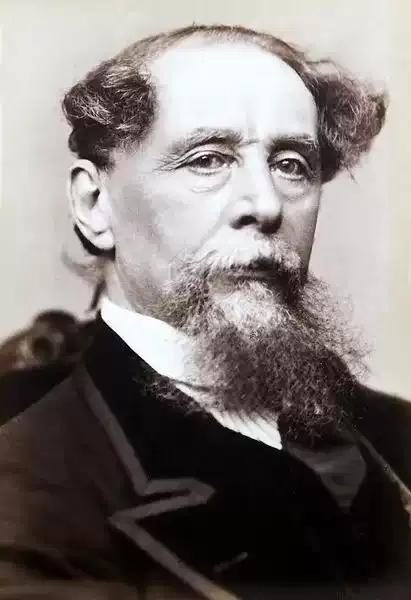
Charles Dickens
The Song Of The Wreck
The wind blew high, the waters raved,
A ship drove on the land,
A hundred human creatures saved
Kneel'd down upon the sand.
Threescore were drown'd, threescore were thrown
Upon the black rocks wild,
And thus among them, left alone,
They found one helpless child.
A seaman rough, to shipwreck bred,
Stood out from all the rest,
And gently laid the lonely head
Upon his honest breast.
And travelling o'er the desert wide
It was a solemn joy,
To see them, ever side by side,
The sailor and the boy.
In famine, sickness, hunger, thirst,
The two were still but one,
Until the strong man droop'd the first
And felt his labors done.
Then to a trusty friend he spake,
'Across the desert wide,
Oh, take this poor boy for my sake!'
And kiss'd the child and died.
Toiling along in weary plight
Through heavy jungle, mire,
These two came later every night
To warm them at the fire.
Until the captain said one day
'O seaman, good and kind,
To save thyself now come away,
And leave the boy behind!'
The child was slumbering near the blaze:
'O captain, let him rest
Until it sinks, when God's own ways
Shall teach us what is best!'
They watch'd the whiten'd, ashy heap,
They touch'd the child in vain;
They did not leave him there asleep,
He never woke again.
Read more →
426
Rudyard Kipling
Tiger--Tiger!
What of the hunting, hunter bold?
Brother, the watch was long and cold.
What of the quarry ye went to kill?
Brother, he crops in the jungle still.
Where is the power that made your pride?
Brother, it ebbs from my flank and side.
Where is the haste that ye hurry by?
Brother, I go to my lair to die!
Read more →
426
Rudyard Kipling
The Miracle of Purun Bhagat
The night we felt the earth would move
We stole and plucked him by the hand,
Because we loved him with the love
That knows but cannot understand.
And when the roaring hillside broke,
And all our world fell down in rain,
We saved him, we the Little Folk;
But lo! he does not come again!
Mourn now, we saved him for the sake
Of such poor love as wild ones may.
Mourn ye! Our brother will not wake,
And his own kind drive us away!
Read more →
427
Rupert Brooke
IV: The Dead
These hearts were woven of human joys and cares,
Washed marvellously with sorrow, swift to mirth.
The years had given them kindness. Dawn was theirs,
And sunset, and the colours of the earth.
These had seen movement, and heard music; known
Slumber and waking; loved; gone proudly friended;
Felt the quick stir of wonder; sat alone;
Touched flowers and furs and cheeks. All this is ended.
There are waters blown by changing winds to laughter
And lit by the rich skies, all day. And after,
Frost, with a gesture, stays the waves that dance
And wandering loveliness. He leaves a white
Unbroken glory, a gathered radiance,
A width, a shining peace, under the night.
Read more →
425
Ella Wheeler Wilcox
Fading*
She sits beside the window. All who pass
Turn once again to gaze on her sweet face.
She is so fair; but soon, too soon, alas,
To lie down in her last resting-place.
No gems are brighter than her sparkling eyes,
Her brow like polished marble, white and fair -
Her cheeks are glowing as the sunset skies You
would not dream that Death was lurking there.
But, Oh! he lingers closely at her side,
And when the forest dons her Autumn dress,
We know that he will claim her as his bride,
And earth will number one fair spirit less.
She sees the meadow robed in richest green The
laughing stream - the willows bending o'er.
With tear-dimmed eyes she views each sylvan scene,
And thinks earth never was so fair before.
We do not sigh for heaven, till we have known
Something of sorrow, something of grief and woe,
And as a summer day her life has flown.
Oh, can we wonder she is loth to go?
She has no friends in heaven: all are here.
No lost one waits her in that unknown land,
And life grows doubly, trebly sweet and dear
As day by day she nears the mystic strand.
We love her and we grieve to see her go.
But it is Christ who calls her to His breast,
And He shall greet her, and she soon shall know
The joys of souls that dwell among the blest.
Read more →
421
Ella Wheeler Wilcox
One By One
Little by little and one by one,
Out of the ether, were worlds created;
Star and planet and sea and sun,
All in the nebulous Nothing waited
Till the Nameless One Who has many a name
Called them to being and forth they came.
All things mighty and all things small,
Stone and flower and sentient being,
Each is an answer to that one call,
A part of Himself that His will is freeing-
Freeing to go on the long, long way
That winds back home at the end of the day.
Little by little does mortal man
Build his castles for joy and glory,
And one by one time shatters each plan
And lowers his palaces, story by story-
Story by story, till earth is just
A row of graves in the lowly dust.
One by one, whatever was called,
Must be called back to the primal Centre.
Let no soul tremble or be appalled,
For the heart of the Maker is where we enter-
Is where we enter to gain new force
Before we are sent on another course.
And one by one, as He calls us back,
We shall find the souls that we loved with passion,
In the great way-stations along the track,
And clasp them again in the old, sweet fashion-
In the old, sweet fashion when earth we trod-
And journey along with them up to God.
Read more →
423
Alfred Lord Tennyson
In Memoriam A. H. H.: 67. When on my bed the moonlight fall
When on my bed the moonlight falls,
I know that in thy place of rest
By that broad water of the west,
There comes a glory on the walls:
Thy marble bright in dark appears,
As slowly steals a silver flame
Along the letters of thy name,
And o'er the number of thy years.
The mystic glory swims away;
From off my bed the moonlight dies;
And closing eaves of wearied eyes
I sleep till dusk is dipt in gray:
And then I know the mist is drawn
A lucid veil from coast to coast,
And in the dark church like a ghost
Thy tablet glimmers to the dawn.
Read more →
423
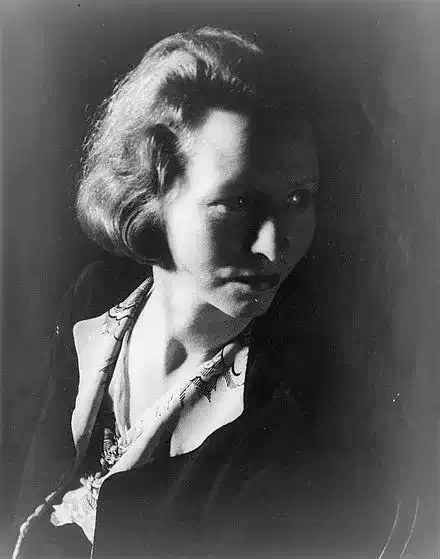
Edna St. Vincent Millay
Spring
To what purpose, April, do you return again?
Beauty is not enough.
You can no longer quiet me with the redness
Of little leaves opening stickily.
I know what I know.
The sun is hot on my neck as I observe
The spikes of the crocus.
The smell of the earth is good.
It is apparent that there is no death.
But what does that signify?
Not only under ground are the brains of men
Eaten by maggots.
Life in itself
Is nothing,
An empty cup, a flight of uncarpeted stairs.
It is not enough that yearly, down this hill,
April
Comes like an idiot, babbling and strewing flowers.
Read more →
423