
Death and Mourning
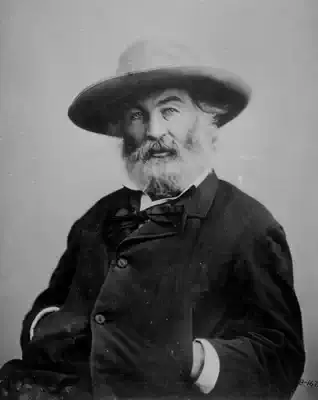
Walt Whitman
Pensive On Her Dead Gazing, I Heard The Mother Of All
PENSIVE, on her dead gazing, I heard the Mother of All,
Desperate, on the torn bodies, on the forms covering the battle
fields gazing;
(As the last gun ceased--but the scent of the powder-smoke linger'd;)
As she call'd to her earth with mournful voice while she stalk'd:
Absorb them well, O my earth, she cried--I charge you, lose not my
sons! lose not an atom;
And you streams, absorb them well, taking their dear blood;
And you local spots, and you airs that swim above lightly,
And all you essences of soil and growth--and you, my rivers' depths;
And you, mountain sides--and the woods where my dear children's
blood, trickling, redden'd;
And you trees, down in your roots, to bequeath to all future
trees,
My dead absorb--my young men's beautiful bodies absorb--and their
precious, precious, precious blood;
Which holding in trust for me, faithfully back again give me, many a
year hence,
In unseen essence and odor of surface and grass, centuries hence;
In blowing airs from the fields, back again give me my darlings--give
my immortal heroes;
Exhale me them centuries hence--breathe me their breath--let not an
atom be lost;
O years and graves! O air and soil! O my dead, an aroma sweet!
Exhale them perennial, sweet death, years, centuries hence.
Read more →
405
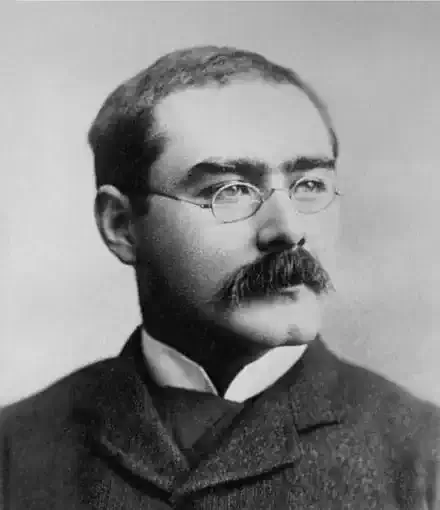
Rudyard Kipling
Follow Me 'Ome
There was no one like 'im, 'Orse or Foot,
Nor any o' the Guns I knew;
An' because it was so, why, o' course 'e went an' died,
Which is just what the best men do.
So it's knock out your pipes an' follow me!
An' it's finish up your swipes an' follow me!
Oh, 'ark to the big drum callin',
Follow me -- follow me 'ome!
'Is mare she neighs the 'ole day long,
She paws the 'ole night through,
An' she won't take 'er feed 'cause o' waitin' for 'is step,
Which is just what a beast would do.
'Is girl she goes with a bombardier
Before 'er month is through;
An' the banns are up in church, for she's got the beggar hooked,
Which is just what a girl would do.
We fought 'bout a dog -- last week it were --
No more than a round or two;
But I strook 'im cruel 'ard, an' I wish I 'adn't now,
Which is just what a man can't do.
'E was all that I 'ad in the way of a friend,
An' I've 'ad to find one new;
But I'd give my pay an' stripe for to get the beggar back,
Which it's just too late to do.
So it's knock out your pipes an' follow me!
An' it's finish off your swipes an' follow me!
Oh, 'ark to the fifes a-crawlin'!
Follow me -- follow me 'ome!
Take 'im away! 'E's gone where the best men go.
Take 'im away! An' the gun-wheels turnin' slow.
Take 'im away! There's more from the place 'e come.
Take 'im away, with the limber an' the drum.
For it's "Three rounds blank" an' follow me,
An' it's "Thirteen rank" an' follow me;
Oh, passin' the love o' women,
Follow me -- follow me 'ome!
Read more →
404

John Clare
An Invite, to Eternity
Wilt thou go with me, sweet maid,
Say, maiden, wilt thou go with me
Through the valley-depths of shade,
Of night and dark obscurity;
Where the path has lost its way,
Where the sun forgets the day,
Where there's nor life nor light to see,
Sweet maiden, wilt thou go with me!
Where stones will turn to flooding streams,
Where plains will rise like ocean waves,
Where life will fade like visioned dreams
And mountains darken into caves,
Say, maiden, wilt thou go with me
Through this sad non-identity,
Where parents live and are forgot,
And sisters live and know us not!
Say, maiden; wilt thou go with me
In this strange death of life to be,
To live in death and be the same,
Without this life or home or name,
At once to be and not to be -
That was and is not -yet to see
Things pass like shadows, and the sky
Above, below, around us lie?
Read more →
403

William Wordsworth
'Tis Said, That Some Have Died For Love
'Tis said, that some have died for love:
And here and there a churchyard grave is found
In the cold north's unhallowed ground,
Because the wretched man himself had slain,
His love was such a grievous pain.
And there is one whom I five years have known;
He dwells alone
Upon Helvellyn's side:
He loved--the pretty Barbara died;
And thus he makes his moan:
Three years had Barbara in her grave been laid
When thus his moan he made:
"Oh, move, thou Cottage, from behind that oak!
Or let the aged tree uprooted lie,
That in some other way yon smoke
May mount into the sky!
The clouds pass on; they from the heavens depart.
I look--the sky is empty space;
I know not what I trace;
But when I cease to look, my hand is on my heart.
"Oh! what a weight is in these shades! Ye leaves,
That murmur once so dear, when will it cease?
Your sound my heart of rest bereaves,
It robs my heart of peace.
Thou Thrush, that singest loud--and loud and free,
Into yon row of willows flit,
Upon that alder sit;
Or sing another song, or choose another tree.
"Roll back, sweet Rill! back to thy mountain-bounds,
And there for ever be thy waters chained!
For thou dost haunt the air with sounds
That cannot be sustained;
If still beneath that pine-tree's ragged bough
Headlong yon waterfall must come,
Oh let it then be dumb!
Be anything, sweet Rill, but that which thou art now.
"Thou Eglantine, so bright with sunny showers,
Proud as a rainbow spanning half the vale,
Thou one fair shrub, oh! shed thy flowers,
And stir not in the gale.
For thus to see thee nodding in the air,
To see thy arch thus stretch and bend,
Thus rise and thus descend,--
Disturbs me till the sight is more than I can dear."
The Man who makes this feverish complaint
Is one of giant stature, who could dance
Equipped from head to foot in iron mail.
Ah gentle Love! if ever thought was thine
To store up kindred hours for me, thy face
Turn from me, gentle Love! nor let me walk
Within the sound of Emma's voice, nor know
Such happiness as I have known to-day.
Read more →
403

Ella Wheeler Wilcox
Slain
Hollow a grave where the willows wave,
And lay him under the grasses,
Where the pitying breeze bloweth up from the seas,
And murmurs a chant as it passes.
Lay the beautiful face and the form of grace
Away from the gaze of mortal.
Let us hope that his soul has gained the goal
Over the shining portal.
Hope! Ah! we thrill with a terrible chill.
Ah! pen, can you tell the story
Of the one who died in his manhood's pride,
Slain in the morn of his glory?
There's a blemish of shame on the dear one's name,
For he died as the drunkard dieth.
The ruddy wine-mug was the fiend who dug
The grave where our darling lieth.
O God! and his soul, was it lost in the bowl?
Has it gone where the wicked goeth?
Shall he bear the sin, and the tempter go in
Where the beautiful city gloweth?
Hush! O my heart! act well thy part,
Nor question a Father's kindness,
And strive not to see the thing hid from thee
By a veil of earthly blindness.
But all through the wine may there shimmer and shine,
As it glimmers and glows in the glasses,
A coffin and grave, and the willows that wave
Over our dead 'neath the grasses.
Read more →
400

Phillis Wheatley
On The Death Of A Young Lady Of Five Years Of Age
FROM dark abodes to fair etherial light
Th' enraptur'd innocent has wing'd her flight;
On the kind bosom of eternal love
She finds unknown beatitude above.
This known, ye parents, nor her loss deplore,
She feels the iron hand of pain no more;
The dispensations of unerring grace,
Should turn your sorrows into grateful praise;
Let then no tears for her henceforward flow,
No more distress'd in our dark vale below,
Her morning sun, which rose divinely bright,
Was quickly mantled with the gloom of night;
But hear in heav'n's blest bow'rs your Nancy fair,
And learn to imitate her language there.
"Thou, Lord, whom I behold with glory crown'd,
"By what sweet name, and in what tuneful sound
"Wilt thou be prais'd? Seraphic pow'rs are faint
"Infinite love and majesty to paint.
"To thee let all their graceful voices raise,
"And saints and angels join their songs of praise."
Perfect in bliss she from her heav'nly home
Looks down, and smiling beckons you to come;
Why then, fond parents, why these fruitless groans?
Restrain your tears, and cease your plaintive moans.
Freed from a world of sin, and snares, and pain,
Why would you wish your daughter back again?
No--bow resign'd. Let hope your grief control,
And check the rising tumult of the soul.
Calm in the prosperous, and adverse day,
Adore the God who gives and takes away;
Eye him in all, his holy name revere,
Upright your actions, and your hearts sincere,
Till having sail'd through life's tempestuous sea,
And from its rocks, and boist'rous billows free,
Yourselves, safe landed on the blissful shore,
Shall join your happy babe to part no more.
Read more →
400
William Wordsworth
There was a Boy
There was a Boy; ye knew him well, ye cliffs
And islands of Winander!--many a time,
At evening, when the earliest stars began
To move along the edges of the hills,
Rising or setting, would he stand alone,
Beneath the trees, or by the glimmering lake;
And there, with fingers interwoven, both hands
Pressed closely palm to palm and to his mouth
Uplifted, he, as through an instrument,
Blew mimic hootings to the silent owls,
That they might answer him.--And they would shout
Across the watery vale, and shout again,
Responsive to his call,--with quivering peals,
And long halloos, and screams, and echoes loud
Redoubled and redoubled; concourse wild
Of jocund din! And, when there came a pause
Of silence such as baffled his best skill:
Then, sometimes, in that silence, while he hung
Listening, a gentle shock of mild surprise
Has carried far into his heart the voice
Of mountain-torrents; or the visible scene
Would enter unawares into his mind
With all its solemn imagery, its rocks,
Its woods, and that uncertain heaven received
Into the bosom of the steady lake.
This boy was taken from his mates, and died
In childhood, ere he was full twelve years old.
Pre-eminent in beauty is the vale
Where he was born and bred: the churchyard hangs
Upon a slope above the village-school;
And, through that church-yard when my way has led
On summer-evenings, I believe, that there
A long half-hour together I have stood
Mute--looking at the grave in which he lies!
Read more →
401

Emily Dickinson
I bring an unaccustomed wine
I bring an unaccustomed wine
To lips long parching
Next to mine,
And summon them to drink;
Crackling with fever, they Essay,
I turn my brimming eyes away,
And come next hour to look.
The hands still hug the tardy glass-
The lips I would have cooled, alas-
Are so superfluous Cold-
I would as soon attempt to warm
The bosoms where the frost has lain
Ages beneath the mould-
Some other thirsty there may be
To whom this would have pointed me
Had it remained to speak-
And so I always bear the cup
If, haply, mine may be the drop
Some pilgrim thirst to slake-
If, haply, any say to me
"Unto the little, unto me,"
When I at last awake.
Read more →
401
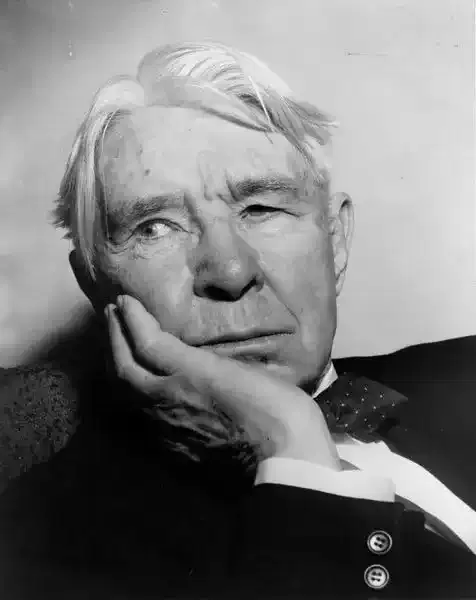
Carl Sandburg
A Million Young Work Men
A million young workmen straight and strong lay stiff on the grass and roads,
And the million are now under soil and their rottening flesh will in the years feed roots
of blood-red roses.
Yes, this million of young workmen slaughtered one another and never saw their red
hands.
And oh, it would have been a great job of killing and a new and beautiful thing under
the sun if the million knew why they hacked and tore each other to death.
The kings are grinning, the Kaiser and the czar—they are alive riding in leather-seated
motor cars, and they have their women and roses for ease, and they eat fresh-poached
eggs for breakfast, new butter on toast, sitting in tall water-tight houses reading the
news of war.
I dreamed a million ghosts of the young workmen rose in their shirts all soaked in
crimson … and yelled:
God damn the grinning kings, God damn the kaiser and the czar.
Read more →
399
Carl Sandburg
Salvage
Guns on the battle lines have pounded now a year
between Brussels and Paris.
And, William Morris, when I read your old chapter on
the great arches and naves and little whimsical
corners of the Churches of Northern France--Brr-rr!
I'm glad you're a dead man, William Morris, I'm glad
you're down in the damp and mouldy, only a memory
instead of a living man--I'm glad you're gone.
You never lied to us, William Morris, you loved the
shape of those stones piled and carved for you to
dream over and wonder because workmen got joy
of life into them,
Workmen in aprons singing while they hammered, and
praying, and putting their songs and prayers into
the walls and roofs, the bastions and cornerstones
and gargoyles--all their children and kisses of
women and wheat and roses growing.
I say, William Morris, I'm glad you're gone, I'm glad
you're a dead man.
Guns on the battle lines have pounded a year now between
Brussels and Paris.
Read more →
402

Kabir
The Last Flight
Ud Jayega Huns Akela,
Jug Darshan Ka Mela
Jaise Paat Gire Taruvar Se,
Milna Bahut Duhela
Naa Jane Kidhar Girega,
Lageya Pawan Ka Rela
Jub Howe Umur Puri,
Jab Chute Ga Hukum Huzuri
Jum Ke Doot Bade Mazboot,
Jum Se Pada Jhamela
Das Kabir Har Ke Gun Gawe,
Wah Har Ko Paran Pawe
Guru Ki Karni Guru Jayega,
Chele Ki Karni Chela
English Translation
The Swan Will Fly Away All Alone,
Spectacle of the World Will Be a Mere Fair
As the Leaf Falls from the Tree
Is Difficult to Find
Who Knows Where it Will Fall
Once it is Struck with a Gust Of Wind
When Life Span is Complete
Then Listening to Orders, Following Others, Will Be Over
The Messengers of Yama are Very Strong
It's an Entanglement with the Yama
Servant Kabir Praises the Attributes of the Lord
He Finds the Lord Soon
Guru Will Go According to His Doings
The Disciple According to His
Read more →
400
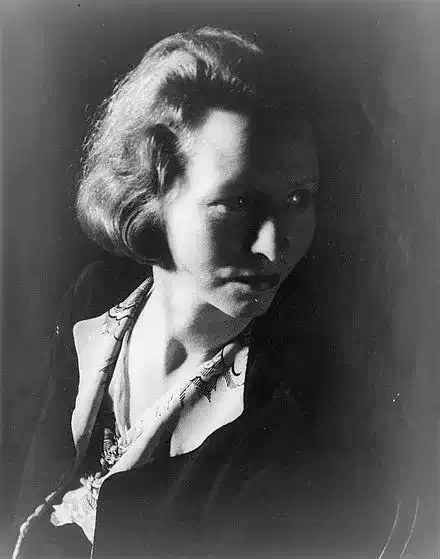
Edna St. Vincent Millay
Passer Mortuus Est
Death devours all lovely things;
Lesbia with her sparrow
Shares the darkness,—presently
Every bed is narrow.
Unremembered as old rain
Dries the sheer libation,
And the little petulant hand
Is an annotation.
After all, my erstwhile dear,
My no longer cherished,
Need we say it was not love,
Now that love is perished?
Read more →
398
Walt Whitman
Virgil Strange I Kept On The Field
VIGIL strange I kept on the field one night:
When you, my son and my comrade, dropt at my side that day,
One look I but gave, which your dear eyes return'd, with a look I
shall never forget;
One touch of your hand to mine, O boy, reach'd up as you lay on the
ground;
Then onward I sped in the battle, the even-contested battle;
Till late in the night reliev'd, to the place at last again I made my
way;
Found you in death so cold, dear comrade--found your body, son of
responding kisses, (never again on earth responding;)
Bared your face in the starlight--curious the scene--cool blew the
moderate night-wind;
Long there and then in vigil I stood, dimly around me the battlefield
spreading;
Vigil wondrous and vigil sweet, there in the fragrant silent
night;
But not a tear fell, not even a long-drawn sigh--Long, long I gazed;
Then on the earth partially reclining, sat by your side, leaning my
chin in my hands;
Passing sweet hours, immortal and mystic hours with you, dearest
comrade--Not a tear, not a word;
Vigil of silence, love and death--vigil for you my son and my
soldier,
As onward silently stars aloft, eastward new ones upward stole;
Vigil final for you, brave boy, (I could not save you, swift was your
death,
I faithfully loved you and cared for you living--I think we shall
surely meet again;)
Till at latest lingering of the night, indeed just as the dawn
appear'd,
My comrade I wrapt in his blanket, envelop'd well his form,
Folded the blanket well, tucking it carefully over head, and
carefully under feet;
And there and then, and bathed by the rising sun, my son in his
grave, in his rude-dug grave I deposited;
Ending my vigil strange with that--vigil of night and battlefield
dim;
Vigil for boy of responding kisses, (never again on earth
responding;)
Vigil for comrade swiftly slain--vigil I never forget, how as day
brighten'd,
I rose from the chill ground, and folded my soldier well in his
blanket,
And buried him where he fell.
Read more →
398
Emily Dickinson
A Death blow is a Life blow to Some
A Death blow is a Life blow to Some
Who till they died, did not alive become-
Who had they lived, had died but when
They died, Vitality begun.
Read more →
397
Emily Dickinson
If anybody's friend be dead
If anybody's friend be dead
It's sharpest of the theme
The thinking how they walked alive-
At such and such a time-
Their costume, of a Sunday,
Some manner of the Hair-
A prank nobody knew but them
Lost, in the Sepulchre-
How warm, they were, on such a day,
You almost feel the date-
So short way off it seems-
And now-they're Centuries from that-
How pleased they were, at what you said-
You try to touch the smile
And dip your fingers in the frost-
When was it-Can you tell-
You asked the Company to tea
Acquaintance-
just a few-
And chatted close with this Grand Thing
That don't remember you-
Past Bows, and Invitations-
Past Interview, and Vow-
Past what Ourself can estimate
That-
makes the Quick of Woe!
Read more →
396

Henry Wadsworth Longfellow
Flower-De-Luce: Hawthorne
How beautiful it was, that one bright day
In the long week of rain!
Though all its splendor could not chase away
The omnipresent pain.
The lovely town was white with apple-blooms,
And the great elms o'erhead
Dark shadows wove on their aerial looms
Shot through with golden thread.
Across the meadows, by the gray old manse,
The historic river flowed:
I was as one who wanders in a trance,
Unconscious of his road.
The faces of familiar friends seemed strange;
Their voices I could hear,
And yet the words they uttered seemed to change
Their meaning to my ear.
For the one face I looked for was not there,
The one low voice was mute;
Only an unseen presence filled the air,
And baffled my pursuit.
Now I look back, and meadow, manse, and stream
Dimly my thought defines;
I only see--a dream within a dream--
The hill-top hearsed with pines.
I only hear above his place of rest
Their tender undertone,
The infinite longings of a troubled breast,
The voice so like his own.
There in seclusion and remote from men
The wizard hand lies cold,
Which at its topmost speed let fall the pen,
And left the tale half told.
Ah! who shall lift that wand of magic power,
And the lost clew regain?
The unfinished window in Aladdin's tower
Unfinished must remain!
Read more →
395

William Butler Yeats
Cuchulain Comforted
A MAN that had six mortal wounds, a man
Violent and famous, strode among the dead;
Eyes stared out of the branches and were gone.
Then certain Shrouds that muttered head to head
Came and were gone. He leant upon a tree
As though to meditate on wounds and blood.
A Shroud that seemed to have authority
Among those bird-like things came, and let fall
A bundle of linen. Shrouds by two and thrce
Came creeping up because the man was still.
And thereupon that linen-carrier said:
'Your life can grow much sweeter if you will
'Obey our ancient rule and make a shroud;
Mainly because of what we only know
The rattle of those arms makes us afraid.
'We thread the needles' eyes, and all we do
All must together do.' That done, the man
Took up the nearest and began to sew.
'Now must we sing and sing the best we can,
But first you must be told our character:
Convicted cowards all, by kindred slain
'Or driven from home and left to dic in fear.'
They sang, but had nor human tunes nor words,
Though all was done in common as before;
They had changed their thtoats and had the throats of birds.
Read more →
395
Sara Teasdale
Love and Death
Shall we, too, rise forgetful from our sleep,
And shall my soul that lies within your hand
Remember nothing, as the blowing sand
Forgets the palm where long blue shadows creep
When winds along the darkened desert sweep?
Or would it still remember, tho' it spanned
A thousand heavens, while the planets fanned
The vacant ether with their voices deep?
Soul of my soul, no word shall be forgot,
Nor yet alone, beloved, shall we see
The desolation of extinguished suns,
Nor fear the void wherethro' our planet runs,
For still together shall we go and not
Fare forth alone to front eternity.
Read more →
394

Wilfred Owen
Futility
Move him into the sun--
Gently its touch awoke him once,
At home, whispering of fields unsown.
Always it awoke him, even in France,
Until this morning and this snow.
If anything might rouse him now
The kind old sun will know.
Think how it wakes the seeds--
Woke, once, the clays of a cold star.
Are limbs so dear-achieved, are sides
Full-nerved,--still warm,--too hard to stir?
Was it for this the clay grew tall?
--O what made fatuous sunbeams toil
To break earth's sleep at all?
Read more →
393
Rupert Brooke
I: Peace
Now, God be thanked Who has watched us with His hour,
And caught our youth, and wakened us from sleeping,
With hand made sure, clear eye, and sharpened power,
To turn, as swimmers into cleanness leaping,
Glad from a world grown old and cold and weary,
Leave the sick hearts that honour could not move,
And half-men, and their dirty songs and dreary,
And all the little emptiness of love!
Oh! we, who have known shame, we have found release there,
Where there's no ill, no grief, but sleep has mending,
Naught broken save this body, lost but breath;
Nothing to shake the laughing heart's long peace there
But only agony, and that has ending;
And the worst friend and enemy is but Death.
Read more →
394
Edgar Allan Poe
Lenore
Ah, broken is the golden bowl! the spirit flown forever!
Let the bell toll!- a saintly soul floats on the Stygian river;
And, Guy de Vere, hast thou no tear?- weep now or nevermore!
See! on yon drear and rigid bier low lies thy love, Lenore!
Come! let the burial rite be read- the funeral song be sung!
An
anthem for the queenliest dead that ever died so young
A
dirge for her the doubly dead in that she died so young.
"Wretches! ye loved her for her wealth and hated her for her pride,
And when she fell in feeble health, ye blessed her- that she died!
How shall the ritual, then, be read?- the requiem how be sung
By you- by yours, the evil eye,- by yours, the slanderous tongue
That did to death the innocence that died, and died so young?"
Peccavimus; but rave not thus! and let a Sabbath song
Go up to God so solemnly the dead may feel no wrong.
The sweet Lenore hath "gone before," with Hope, that flew beside,
Leaving thee wild for the dear child that should have been thy
bride.
For her, the fair and debonair, that now so lowly lies,
The life upon her yellow hair but not within her eyes
The life still there, upon her hair- the death upon her eyes.
"Avaunt! avaunt! from fiends below, the indignant ghost is riven
From
Hell unto a high estate far up within the HeavenFrom
grief and groan, to a golden throne, beside the King of
Heaven!
Let no bell toll, then,- lest her soul, amid its hallowed mirth,
Should catch the note as it doth float up from the damned Earth!
And I!- to-night my heart is light!- no dirge will I upraise,
But waft the angel on her flight with a Paean of old days!"
Read more →
393
Ella Wheeler Wilcox
The Messenger
She rose up in the early dawn,
And white and silently she moved
About the house. Four men had gone
To battle for the land they loved,
And she, the mother and the wife,
Waited for tidings from the strife.
How still the house seemed! and her tread
Was like the footsteps of the dead.
The long day passed; the dark night came.
She had not seen a human face.
Some voice spoke suddenly her name.
How loud it echoed in that place,
Where, day on day, no sound was heard
But her own footsteps. 'Bring you word,'
She cried to whom she could not see,
'Word from the battle-plain to me?'
A soldier entered at the door,
And stood within the dim firelight;
'I bring you tidings of the four,'
He said, 'who left you for the fight.'
'God bless you, friend,' she cried, 'speak on!
For I can bear it. One is gone?'
'Ay, one is gone!' he said. 'Which one?'
'Dear lady, he, your eldest son.'
A deathly pallor shot across
Her withered face; she did not weep.
She said: 'It is a grievous loss,
But God gives His belovèd sleep.
What of the living-of the three?
And when can they come back to me?'
The soldier turned away his head:
'Lady, your husband, too, is dead.'
She put her hand upon her brow;
A wild, sharp pain was in her eyes.
'My husband! Oh, God, help me now!'
The soldier heard her shuddering sighs.
The task was harder than he thought.
'Your youngest son, dear madam, fought
Close at his father's side; both fell
Dead, by the bursting of a shell.'
She moved her lips and seemed to moan.
Her face had paled to ashen gray:
'Then one is left me-one alone,'
She said, 'of four who marched away.
Oh, overruling, All-wise God,
How can I pass beneath Thy rod!'
The soldier walked across the floor,
Paused at the window, at the door,
Wiped the cold dew-drops from his cheek
And sought the mourner's side again.
'Once more, dear lady, I must speak:
Your last remaining son was slain
Just at the closing of the fight,
'Twas he who sent me here to-night.'
'God knows,' the man said afterward,
'The fight itself was not so hard.'
Read more →
390

Safo
We put the urn abord ship
We put the urn aboard ship
with this inscription:
This is the dust of little
Timas who unmarried was led
into Persephone's dark bedroom
And she being far from home, girls
her age took new-edged blades
to cut, in mourning for her,
these curls of their soft hair
Read more →
392