

Poems in this topic
Change and Transformation
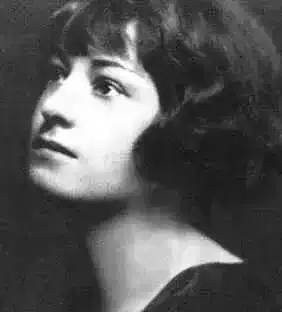
Dorothy Parker
August
August
When my eyes are weeds,
And my lips are petals, spinning
Down the wind that has beginning
Where the crumpled beeches start
In a fringe of salty reeds;
When my arms are elder-bushes,
And the rangy lilac pushes
Upward, upward through my heart;
Summer, do your worst!
Light your tinsel moon, and call on
Your performing stars to fall on
Headlong through your paper sky;
Nevermore shall I be cursed
By a flushed and amorous slattern,
With her dusty laces' pattern
Trailing, as she straggles by.
When my eyes are weeds,
And my lips are petals, spinning
Down the wind that has beginning
Where the crumpled beeches start
In a fringe of salty reeds;
When my arms are elder-bushes,
And the rangy lilac pushes
Upward, upward through my heart;
Summer, do your worst!
Light your tinsel moon, and call on
Your performing stars to fall on
Headlong through your paper sky;
Nevermore shall I be cursed
By a flushed and amorous slattern,
With her dusty laces' pattern
Trailing, as she straggles by.
386

Derek Walcott
A City's Death By Fire
A City's Death By Fire
After that hot gospeller has levelled all but the churched sky,
I wrote the tale by tallow of a city's death by fire;
Under a candle's eye, that smoked in tears, I
Wanted to tell, in more than wax, of faiths that were snapped like wire.
All day I walked abroad among the rubbled tales,
Shocked at each wall that stood on the street like a liar;
Loud was the bird-rocked sky, and all the clouds were bales
Torn open by looting, and white, in spite of the fire.
By the smoking sea, where Christ walked, I asked, why
Should a man wax tears, when his wooden world fails?
In town, leaves were paper, but the hills were a flock of faiths;
To a boy who walked all day, each leaf was a green breath
Rebuilding a love I thought was dead as nails,
Blessing the death and the baptism by fire.
After that hot gospeller has levelled all but the churched sky,
I wrote the tale by tallow of a city's death by fire;
Under a candle's eye, that smoked in tears, I
Wanted to tell, in more than wax, of faiths that were snapped like wire.
All day I walked abroad among the rubbled tales,
Shocked at each wall that stood on the street like a liar;
Loud was the bird-rocked sky, and all the clouds were bales
Torn open by looting, and white, in spite of the fire.
By the smoking sea, where Christ walked, I asked, why
Should a man wax tears, when his wooden world fails?
In town, leaves were paper, but the hills were a flock of faiths;
To a boy who walked all day, each leaf was a green breath
Rebuilding a love I thought was dead as nails,
Blessing the death and the baptism by fire.
1,435

D.H. Lawrence
The Ship of Death
The Ship of Death
I
Now it is autumn and the falling fruit
and the long journey towards oblivion.
The apples falling like great drops of dew
to bruise themselves an exit from themselves.
And it is time to go, to bid farewell
to one's own self, and find an exit
from the fallen self.
II
Have you built your ship of death, O have you?
O build your ship of death, for you will need it.
The grim frost is at hand, when the apples will fall
thick, almost thundrous, on the hardened earth.
And death is on the air like a smell of ashes!
Ah! can't you smell it?
And in the bruised body, the frightened soul
finds itself shrinking, wincing from the cold
that blows upon it through the orifices.
III
And can a man his own quietus make
with a bare bodkin?
With daggers, bodkins, bullets, man can make
a bruise or break of exit for his life;
but is that a quietus, O tell me, is it quietus?
Surely not so! for how could murder, even self-murder
ever a quietus make?
IV
O let us talk of quiet that we know,
that we can know, the deep and lovely quiet
of a strong heart at peace!
How can we this, our own quietus, make?
V
Build then the ship of death, for you must take
the longest journey, to oblivion.
And die the death, the long and painful death
that lies between the old self and the new.
Already our bodies are fallen, bruised, badly bruised,
already our souls are oozing through the exit
of the cruel bruise.
Already the dark and endless ocean of the end
is washing in through the breaches of our wounds,
Already the flood is upon us.
Oh build your ship of death, your little ark
and furnish it with food, with little cakes, and wine
for the dark flight down oblivion.
VI
Piecemeal the body dies, and the timid soul
has her footing washed away, as the dark flood rises.
We are dying, we are dying, we are all of us dying
and nothing will stay the death-flood rising within us
and soon it will rise on the world, on the outside world.
We are dying, we are dying, piecemeal our bodies are dying
and our strength leaves us,
and our soul cowers naked in the dark rain over the flood,
cowering in the last branches of the tree of our life.
VII
We are dying, we are dying, so all we can do
is now to be willing to die, and to build the ship
of death to carry the soul on the longest journey.
A little ship, with oars and food
and little dishes, and all accoutrements
fitting and ready for the departing soul.
Now launch the small ship, now as the body dies
and life departs, launch out, the fragile soul
in the fragile ship of courage, the ark of faith
with its store of food and little cooking pans
and change of clothes,
upon the flood's black waste
upon the waters of the end
upon the sea of death, where still we sail
darkly, for we cannot steer, and have no port.
There is no port, there is nowhere to go
only the deepening blackness darkening still
blacker upon the soundless, ungurgling flood
darkness at one with darkness, up and down
and sideways utterly dark, so there is no direction any more
and the little ship is there; yet she is gone.
She is not seen, for there is nothing to see her by.
She is gone! gone! and yet
somewhere she is there.
Nowhere!
VIII
And everything is gone, the body is gone
completely under, gone, entirely gone.
The upper darkness is heavy as the lower,
between them the little ship
is gone
It is the end, it is oblivion.
IX
And yet out of eternity a thread
separates itself on the blackness,
a horizontal thread
that fumes a little with pallor upon the dark.
Is it illusion? or does the pallor fume
A little higher?
Ah wait, wait, for there's the dawn
the cruel dawn of coming back to life
out of oblivion
Wait, wait, the little ship
drifting, beneath the deathly ashy grey
of a flood-dawn.
Wait, wait! even so, a flush of yellow
and strangely, O chilled wan soul, a flush of rose.
A flush of rose, and the whole thing starts again.
X
The flood subsides, and the body, like a worn sea-shell
emerges strange and lovely.
And the little ship wings home, faltering and lapsing
on the pink flood,
and the frail soul steps out, into the house again
filling the heart with peace.
Swings the heart renewed with peace
even of oblivion.
Oh build your ship of death. Oh build it!
for you will need it.
For the voyage of oblivion awaits you.
I
Now it is autumn and the falling fruit
and the long journey towards oblivion.
The apples falling like great drops of dew
to bruise themselves an exit from themselves.
And it is time to go, to bid farewell
to one's own self, and find an exit
from the fallen self.
II
Have you built your ship of death, O have you?
O build your ship of death, for you will need it.
The grim frost is at hand, when the apples will fall
thick, almost thundrous, on the hardened earth.
And death is on the air like a smell of ashes!
Ah! can't you smell it?
And in the bruised body, the frightened soul
finds itself shrinking, wincing from the cold
that blows upon it through the orifices.
III
And can a man his own quietus make
with a bare bodkin?
With daggers, bodkins, bullets, man can make
a bruise or break of exit for his life;
but is that a quietus, O tell me, is it quietus?
Surely not so! for how could murder, even self-murder
ever a quietus make?
IV
O let us talk of quiet that we know,
that we can know, the deep and lovely quiet
of a strong heart at peace!
How can we this, our own quietus, make?
V
Build then the ship of death, for you must take
the longest journey, to oblivion.
And die the death, the long and painful death
that lies between the old self and the new.
Already our bodies are fallen, bruised, badly bruised,
already our souls are oozing through the exit
of the cruel bruise.
Already the dark and endless ocean of the end
is washing in through the breaches of our wounds,
Already the flood is upon us.
Oh build your ship of death, your little ark
and furnish it with food, with little cakes, and wine
for the dark flight down oblivion.
VI
Piecemeal the body dies, and the timid soul
has her footing washed away, as the dark flood rises.
We are dying, we are dying, we are all of us dying
and nothing will stay the death-flood rising within us
and soon it will rise on the world, on the outside world.
We are dying, we are dying, piecemeal our bodies are dying
and our strength leaves us,
and our soul cowers naked in the dark rain over the flood,
cowering in the last branches of the tree of our life.
VII
We are dying, we are dying, so all we can do
is now to be willing to die, and to build the ship
of death to carry the soul on the longest journey.
A little ship, with oars and food
and little dishes, and all accoutrements
fitting and ready for the departing soul.
Now launch the small ship, now as the body dies
and life departs, launch out, the fragile soul
in the fragile ship of courage, the ark of faith
with its store of food and little cooking pans
and change of clothes,
upon the flood's black waste
upon the waters of the end
upon the sea of death, where still we sail
darkly, for we cannot steer, and have no port.
There is no port, there is nowhere to go
only the deepening blackness darkening still
blacker upon the soundless, ungurgling flood
darkness at one with darkness, up and down
and sideways utterly dark, so there is no direction any more
and the little ship is there; yet she is gone.
She is not seen, for there is nothing to see her by.
She is gone! gone! and yet
somewhere she is there.
Nowhere!
VIII
And everything is gone, the body is gone
completely under, gone, entirely gone.
The upper darkness is heavy as the lower,
between them the little ship
is gone
It is the end, it is oblivion.
IX
And yet out of eternity a thread
separates itself on the blackness,
a horizontal thread
that fumes a little with pallor upon the dark.
Is it illusion? or does the pallor fume
A little higher?
Ah wait, wait, for there's the dawn
the cruel dawn of coming back to life
out of oblivion
Wait, wait, the little ship
drifting, beneath the deathly ashy grey
of a flood-dawn.
Wait, wait! even so, a flush of yellow
and strangely, O chilled wan soul, a flush of rose.
A flush of rose, and the whole thing starts again.
X
The flood subsides, and the body, like a worn sea-shell
emerges strange and lovely.
And the little ship wings home, faltering and lapsing
on the pink flood,
and the frail soul steps out, into the house again
filling the heart with peace.
Swings the heart renewed with peace
even of oblivion.
Oh build your ship of death. Oh build it!
for you will need it.
For the voyage of oblivion awaits you.
270
D.H. Lawrence
Craving for Spring
Craving for Spring
I wish it were spring in the world.
Let it be spring!
Come, bubbling, surging tide of sap!
Come, rush of creation!
Come, life! surge through this mass of mortification!
Come, sweep away these exquisite, ghastly first-flowers,
which are rather last-flowers!
Come, thaw down their cool portentousness, dissolve them:
snowdrops, straight, death-veined exhalations of white and purple crocuses,
flowers of the penumbra, issue of corruption, nourished in mortification,
jets of exquisite finality;
Come, spring, make havoc of them!
I trample on the snowdrops, it gives me pleasure to tread down the jonquils,
to destroy the chill Lent lilies;
for I am sick of them, their faint-bloodedness,
slow-blooded, icy-fleshed, portentous.
I want the fine, kindling wine-sap of spring,
gold, and of inconceivably fine, quintessential brightness,
rare almost as beams, yet overwhelmingly potent,
strong like the greatest force of world-balancing.
This is the same that picks up the harvest of wheat
and rocks it, tons of grain, on the ripening wind;
the same that dangles the globe-shaped pleiads of fruit
temptingly in mid-air, between a playful thumb and finger;
oh, and suddenly, from out of nowhere, whirls the pear-bloom,
upon us, and apple- and almond- and apricot- and quince-blossom,
storms and cumulus clouds of all imaginable blossom
about our bewildered faces,
though we do not worship.
I wish it were spring
cunningly blowing on the fallen sparks, odds and ends of the old, scattered fire,
and kindling shapely little conflagrations
curious long-legged foals, and wide-eared calves, and naked sparrow-bubs.
I wish that spring
would start the thundering traffic of feet
new feet on the earth, beating with impatience.
I wish it were spring, thundering
delicate, tender spring.
I wish these brittle, frost-lovely flowers of passionate, mysterious corruption
were not yet to come still more from the still-flickering discontent.
Oh, in the spring, the bluebell bows him down for very exuberance,
exulting with secret warm excess,
bowed down with his inner magnificence!
Oh, yes, the gush of spring is strong enough
to toss the globe of earth like a ball on a water-jet
dancing sportfully;
as you see a tiny celluloid ball tossing on a squirt of water
for men to shoot at, penny-a-time, in a booth at a fair.
The gush of spring is strong enough
to play with the globe of earth like a ball on a fountain;
At the same time it opens the tiny hands of the hazel
with such infinite patience.
The power of the rising, golden, all-creative sap could take the earth
and heave it off among the stars, into the invisible;
the same sets the throstle at sunset on a bough
singing against the blackbird;
comes out in the hesitating tremor of the primrose,
and betrays its candour in the round white strawberry flower,
is dignified in the foxglove, like a Red-Indian brave.
Ah come, come quickly, spring!
come and lift us towards our culmination, we myriads;
we who have never flowered, like patient cactuses.
Come and lift us to our end, to blossom, bring us to our summer
we who are winter-weary in the winter of the of the world.
Come making the chaffinch nests hollow and cosy,
come and soften the willow buds till they are puffed and furred,
then blow them over with gold.
Coma and cajole the gawky colt’s-foot flowers.
Come quickly, and vindicate us.
against too much death.
Come quickly, and stir the rotten globe of the world from within,
burst it with germination, with world anew.
Come now, to us, your adherents, who cannot flower from the ice.
All the world gleams with the lilies of death the Unconquerable,
but come, give us our turn.
Enough of the virgins and lilies, of passionate, suffocating perfume of corruption,
no more narcissus perfume, lily harlots, the blades of sensation
piercing the flesh to blossom of death.
Have done, have done with this shuddering, delicious business
of thrilling ruin in the flesh, of pungent passion, of rare, death-edged ecstasy.
Give us our turn, give us a chance, let our hour strike,
O soon, soon!
Let the darkness turn violet with rich dawn.
Let the darkness be warmed, warmed through to a ruddy violet,
incipient purpling towards summer in the world of the heart of man.
Are the violets already here!
Show me! I tremble so much to hear it, that even now
on the threshold of spring, I fear I shall die.
Show me the violets that are out.
Oh, if it be true, and the living darkness of the blood of man is purpling with violets,
if the violets are coming out from under the rack of men, winter-rotten and fallen,
we shall have spring.
Pray not to die on this Pisgah blossoming with violets.
Pray to live through.
If you catch a whiff of violets from the darkness of the shadow of man
it will be spring in the world,
it will be spring in the world of the living;
wonderment organising itself, heralding itself with the violets,
stirring of new seasons.
Ah, do not let me die on the brink of such anticipation!
Worse, let me not deceive myself.
I wish it were spring in the world.
Let it be spring!
Come, bubbling, surging tide of sap!
Come, rush of creation!
Come, life! surge through this mass of mortification!
Come, sweep away these exquisite, ghastly first-flowers,
which are rather last-flowers!
Come, thaw down their cool portentousness, dissolve them:
snowdrops, straight, death-veined exhalations of white and purple crocuses,
flowers of the penumbra, issue of corruption, nourished in mortification,
jets of exquisite finality;
Come, spring, make havoc of them!
I trample on the snowdrops, it gives me pleasure to tread down the jonquils,
to destroy the chill Lent lilies;
for I am sick of them, their faint-bloodedness,
slow-blooded, icy-fleshed, portentous.
I want the fine, kindling wine-sap of spring,
gold, and of inconceivably fine, quintessential brightness,
rare almost as beams, yet overwhelmingly potent,
strong like the greatest force of world-balancing.
This is the same that picks up the harvest of wheat
and rocks it, tons of grain, on the ripening wind;
the same that dangles the globe-shaped pleiads of fruit
temptingly in mid-air, between a playful thumb and finger;
oh, and suddenly, from out of nowhere, whirls the pear-bloom,
upon us, and apple- and almond- and apricot- and quince-blossom,
storms and cumulus clouds of all imaginable blossom
about our bewildered faces,
though we do not worship.
I wish it were spring
cunningly blowing on the fallen sparks, odds and ends of the old, scattered fire,
and kindling shapely little conflagrations
curious long-legged foals, and wide-eared calves, and naked sparrow-bubs.
I wish that spring
would start the thundering traffic of feet
new feet on the earth, beating with impatience.
I wish it were spring, thundering
delicate, tender spring.
I wish these brittle, frost-lovely flowers of passionate, mysterious corruption
were not yet to come still more from the still-flickering discontent.
Oh, in the spring, the bluebell bows him down for very exuberance,
exulting with secret warm excess,
bowed down with his inner magnificence!
Oh, yes, the gush of spring is strong enough
to toss the globe of earth like a ball on a water-jet
dancing sportfully;
as you see a tiny celluloid ball tossing on a squirt of water
for men to shoot at, penny-a-time, in a booth at a fair.
The gush of spring is strong enough
to play with the globe of earth like a ball on a fountain;
At the same time it opens the tiny hands of the hazel
with such infinite patience.
The power of the rising, golden, all-creative sap could take the earth
and heave it off among the stars, into the invisible;
the same sets the throstle at sunset on a bough
singing against the blackbird;
comes out in the hesitating tremor of the primrose,
and betrays its candour in the round white strawberry flower,
is dignified in the foxglove, like a Red-Indian brave.
Ah come, come quickly, spring!
come and lift us towards our culmination, we myriads;
we who have never flowered, like patient cactuses.
Come and lift us to our end, to blossom, bring us to our summer
we who are winter-weary in the winter of the of the world.
Come making the chaffinch nests hollow and cosy,
come and soften the willow buds till they are puffed and furred,
then blow them over with gold.
Coma and cajole the gawky colt’s-foot flowers.
Come quickly, and vindicate us.
against too much death.
Come quickly, and stir the rotten globe of the world from within,
burst it with germination, with world anew.
Come now, to us, your adherents, who cannot flower from the ice.
All the world gleams with the lilies of death the Unconquerable,
but come, give us our turn.
Enough of the virgins and lilies, of passionate, suffocating perfume of corruption,
no more narcissus perfume, lily harlots, the blades of sensation
piercing the flesh to blossom of death.
Have done, have done with this shuddering, delicious business
of thrilling ruin in the flesh, of pungent passion, of rare, death-edged ecstasy.
Give us our turn, give us a chance, let our hour strike,
O soon, soon!
Let the darkness turn violet with rich dawn.
Let the darkness be warmed, warmed through to a ruddy violet,
incipient purpling towards summer in the world of the heart of man.
Are the violets already here!
Show me! I tremble so much to hear it, that even now
on the threshold of spring, I fear I shall die.
Show me the violets that are out.
Oh, if it be true, and the living darkness of the blood of man is purpling with violets,
if the violets are coming out from under the rack of men, winter-rotten and fallen,
we shall have spring.
Pray not to die on this Pisgah blossoming with violets.
Pray to live through.
If you catch a whiff of violets from the darkness of the shadow of man
it will be spring in the world,
it will be spring in the world of the living;
wonderment organising itself, heralding itself with the violets,
stirring of new seasons.
Ah, do not let me die on the brink of such anticipation!
Worse, let me not deceive myself.
211

Claude Mckay
Baptism
Baptism
Into the furnace let me go alone;
Stay you without in terror of the heat.
I will go naked in--for thus ''tis sweet--
Into the weird depths of the hottest zone.
I will not quiver in the frailest bone,
You will not note a flicker of defeat;
My heart shall tremble not its fate to meet,
My mouth give utterance to any moan.
The yawning oven spits forth fiery spears;
Red aspish tongues shout wordlessly my name.
Desire destroys, consumes my mortal fears,
Transforming me into a shape of flame.
I will come out, back to your world of tears,
A stronger soul within a finer frame.
Into the furnace let me go alone;
Stay you without in terror of the heat.
I will go naked in--for thus ''tis sweet--
Into the weird depths of the hottest zone.
I will not quiver in the frailest bone,
You will not note a flicker of defeat;
My heart shall tremble not its fate to meet,
My mouth give utterance to any moan.
The yawning oven spits forth fiery spears;
Red aspish tongues shout wordlessly my name.
Desire destroys, consumes my mortal fears,
Transforming me into a shape of flame.
I will come out, back to your world of tears,
A stronger soul within a finer frame.
454

Christina Rossetti
Song II
Song II
Oh roses for the flush of youth,
And laurel for the perfect prime;
But pluck an ivy branch for me
Grown old before my time.
Oh violets for the grave of youth,
And bay for those dead in their prime;
Give me the withered leaves I chose
Before in the old time.
Oh roses for the flush of youth,
And laurel for the perfect prime;
But pluck an ivy branch for me
Grown old before my time.
Oh violets for the grave of youth,
And bay for those dead in their prime;
Give me the withered leaves I chose
Before in the old time.
254
Christina Rossetti
In Progress
In Progress
Ten years ago it seemed impossible
That she should ever grow so calm as this,
With self-remembrance in her warmest kiss
And dim dried eyes like an exhausted well.
Slow-speaking when she had some fact to tell,
Silent with long-unbroken silences,
Centered in self yet not unpleased to please,
Gravely monotonous like a passing bell.
Mindful of drudging daily common things,
Patient at pastime, patient at her work,
Wearied perhaps but strenuous certainly.
Sometimes I fancy we may one day see
Her head shoot forth seven stars from where they lurk
And her eyes lightnings and her shoulders wings.
Ten years ago it seemed impossible
That she should ever grow so calm as this,
With self-remembrance in her warmest kiss
And dim dried eyes like an exhausted well.
Slow-speaking when she had some fact to tell,
Silent with long-unbroken silences,
Centered in self yet not unpleased to please,
Gravely monotonous like a passing bell.
Mindful of drudging daily common things,
Patient at pastime, patient at her work,
Wearied perhaps but strenuous certainly.
Sometimes I fancy we may one day see
Her head shoot forth seven stars from where they lurk
And her eyes lightnings and her shoulders wings.
386
Christina Rossetti
A Diamond Or A Coal?
A Diamond Or A Coal?
A diamond or a coal?
A diamond, if you please:
Who cares about a clumsy coal
Beneath the summer trees?
A diamond or a coal?
A coal, sir, if you please:
One comes to care about the coal
What time the waters freeze.
A diamond or a coal?
A diamond, if you please:
Who cares about a clumsy coal
Beneath the summer trees?
A diamond or a coal?
A coal, sir, if you please:
One comes to care about the coal
What time the waters freeze.
228
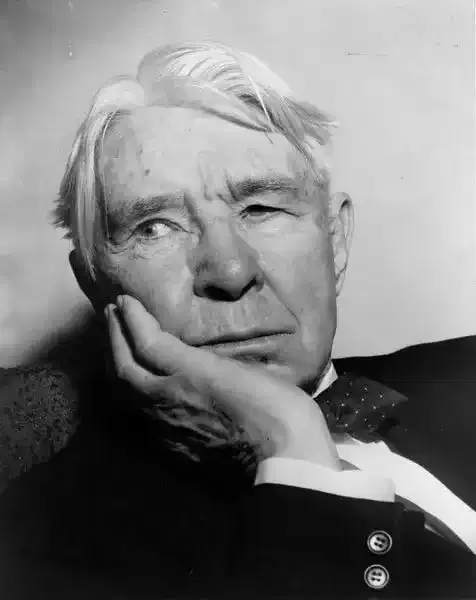
Carl Sandburg
Pool
Pool
Out of the fire
Came a man sunken
To less than cinders,
A tea-cup of ashes or so.
And I,
The gold in the house,
Writhed into a stiff pool.
Out of the fire
Came a man sunken
To less than cinders,
A tea-cup of ashes or so.
And I,
The gold in the house,
Writhed into a stiff pool.
397
Carl Sandburg
Kin
Kin
Brother, I am fire
Surging under the ocean floor.
I shall never meet you, brother—
Not for years, anyhow;
Maybe thousands of years, brother.
Then I will warm you,
Hold you close, wrap you in circles,
Use you and change you—
Maybe thousands of years, brother.
Brother, I am fire
Surging under the ocean floor.
I shall never meet you, brother—
Not for years, anyhow;
Maybe thousands of years, brother.
Then I will warm you,
Hold you close, wrap you in circles,
Use you and change you—
Maybe thousands of years, brother.
427
Carl Sandburg
Bath
Bath
A man saw the whole world as a grinning skull and cross-bones. The rose flesh of life
shriveled from all faces. Nothing counts. Everything is a fake. Dust to dust and ashes
to ashes and then an old darkness and a useless silence. So he saw it all. Then he went
to a Mischa Elman concert. Two hours waves of sound beat on his eardrums. Music
washed something or other inside him. Music broke down and rebuilt something or
other in his head and heart. He joined in five encores for the young Russian Jew with
the fiddle. When he got outside his heels hit the sidewalk a new way. He was the same
man in the same world as before. Only there was a singing fire and a climb of roses
everlastingly over the world he looked on.
A man saw the whole world as a grinning skull and cross-bones. The rose flesh of life
shriveled from all faces. Nothing counts. Everything is a fake. Dust to dust and ashes
to ashes and then an old darkness and a useless silence. So he saw it all. Then he went
to a Mischa Elman concert. Two hours waves of sound beat on his eardrums. Music
washed something or other inside him. Music broke down and rebuilt something or
other in his head and heart. He joined in five encores for the young Russian Jew with
the fiddle. When he got outside his heels hit the sidewalk a new way. He was the same
man in the same world as before. Only there was a singing fire and a climb of roses
everlastingly over the world he looked on.
391
Carl Sandburg
Autumn Movement
Autumn Movement
I cried over beautiful things knowing no beautiful thing lasts.
The field of cornflower yellow is a scarf at the neck of the copper
sunburned woman, the mother of the year, the taker of seeds.
The northwest wind comes and the yellow is torn full of holes,
new beautiful things come in the first spit of snow on the northwest wind,
and the old things go, not one lasts.
I cried over beautiful things knowing no beautiful thing lasts.
The field of cornflower yellow is a scarf at the neck of the copper
sunburned woman, the mother of the year, the taker of seeds.
The northwest wind comes and the yellow is torn full of holes,
new beautiful things come in the first spit of snow on the northwest wind,
and the old things go, not one lasts.
406
Boris Pasternak
Wet Paint
Wet Paint
'Look out! Wet paint.' My soul was blind,
I have to pay the price,
All marked with stains of calves and cheeks
And hands and lips and eyes.
I loved you more than luck or grief
Because with you in sight
The old and yellowed world became
As white as painters' white.
I swear my friend, my gloom-it will
One day still whiter gleam,
Than lampshades, than a bandaged brow,
Than a delirious dream.
~~~~~~~~~~~
Не трогать
'Не трогать,
свежевыкрk
2;шен', &#
1044;уша не
береглась,
И память - в
пятнах икр
и щек,
И рук, и губ, и
глаз.
Я больше
всех удач и
бед
За то тебя
любил,
Что
пожелтелыl
1; белый свет
С тобой &#
1073;елей
белил.
И мгла моя,
мой друг,
божусь,
Он станет
как-нибудь
Белей, чем
бред, чем
абажур,
Чем белый
бинт на лбу!
'Look out! Wet paint.' My soul was blind,
I have to pay the price,
All marked with stains of calves and cheeks
And hands and lips and eyes.
I loved you more than luck or grief
Because with you in sight
The old and yellowed world became
As white as painters' white.
I swear my friend, my gloom-it will
One day still whiter gleam,
Than lampshades, than a bandaged brow,
Than a delirious dream.
~~~~~~~~~~~
Не трогать
'Не трогать,
свежевыкрk
2;шен', &#
1044;уша не
береглась,
И память - в
пятнах икр
и щек,
И рук, и губ, и
глаз.
Я больше
всех удач и
бед
За то тебя
любил,
Что
пожелтелыl
1; белый свет
С тобой &#
1073;елей
белил.
И мгла моя,
мой друг,
божусь,
Он станет
как-нибудь
Белей, чем
бред, чем
абажур,
Чем белый
бинт на лбу!
481
Boris Pasternak
Storm-Wind
Storm-Wind
I am finished, but you live on.
And the wind, crying and moaning,
rocks the house and the clearing,
not each pine alone,
but all the trees together,
with the vast distance, whole,
like the hulls of vessels,
moored in a bay, storm-blown.
And it shakes them not from mischief,
and not with an aimless tone,
but to find, for you, from its grief,
the words of a cradle-song.
I am finished, but you live on.
And the wind, crying and moaning,
rocks the house and the clearing,
not each pine alone,
but all the trees together,
with the vast distance, whole,
like the hulls of vessels,
moored in a bay, storm-blown.
And it shakes them not from mischief,
and not with an aimless tone,
but to find, for you, from its grief,
the words of a cradle-song.
526
Boris Pasternak
So they begin. With two years gone...
So they begin. With two years gone...
So they begin. With two years gone
From nurse to countless tunes they scuttle.
They chirp and whistle. Then comes on
The third year, and they start to prattle.
So they begin to see and know.
In din of started turbines roaring
Mother seems not their mother now,
And you not you, and home is foreign.
What meaning has the menacing
Beauty beneath the lilac seated,
If to steal children's not the thing?
So first they fear that they are cheated.
So ripen fears. Can he endure
A star to beat him in successes,
When he's a Faust, a sorcerer?
So first his gipsy life progresses.
So from the fence where home should lie
In flight above are found to hover
Seas unexpected as a sigh.
So first iambics they discover.
So summer nights fall down and pray
'Thy will be done' where oats are sprouting,
And menace with your eyes the day.
So with the sun they start disputing.
So verses start them on their way.
So they begin. With two years gone
From nurse to countless tunes they scuttle.
They chirp and whistle. Then comes on
The third year, and they start to prattle.
So they begin to see and know.
In din of started turbines roaring
Mother seems not their mother now,
And you not you, and home is foreign.
What meaning has the menacing
Beauty beneath the lilac seated,
If to steal children's not the thing?
So first they fear that they are cheated.
So ripen fears. Can he endure
A star to beat him in successes,
When he's a Faust, a sorcerer?
So first his gipsy life progresses.
So from the fence where home should lie
In flight above are found to hover
Seas unexpected as a sigh.
So first iambics they discover.
So summer nights fall down and pray
'Thy will be done' where oats are sprouting,
And menace with your eyes the day.
So with the sun they start disputing.
So verses start them on their way.
480
Boris Pasternak
I hang limp on the Creator's pen
I hang limp on the Creator's pen
I hang limp on the Creator's pen
Like a large drop of lilac gloss-paint.
Underneath are dykes' secrets; the air
From the railways is sodden and sticky,
Of the fumes of coal and night fires reeking.
But the moment night kills sunset's glare,
It turns pink itself, tinged with far flares,
And the fence stands stiff, paradox-stricken.
It keeps muttering: stop it till dawn.
Let the dry whiting finally settle.
Hard as nails is the worm-eaten ground,
And the echo's as keen as a skittle.
Warm spring wind, spots of cheviot and mud,
Early naileries' hoots faraway,
On the grater of cobble-stones road,
As on radishes lavishly sprayed,
Tears stand out clearly at break of day.
Like an acrid drop of thick lead paint,
I hang on to the Creator's pen.
I hang limp on the Creator's pen
Like a large drop of lilac gloss-paint.
Underneath are dykes' secrets; the air
From the railways is sodden and sticky,
Of the fumes of coal and night fires reeking.
But the moment night kills sunset's glare,
It turns pink itself, tinged with far flares,
And the fence stands stiff, paradox-stricken.
It keeps muttering: stop it till dawn.
Let the dry whiting finally settle.
Hard as nails is the worm-eaten ground,
And the echo's as keen as a skittle.
Warm spring wind, spots of cheviot and mud,
Early naileries' hoots faraway,
On the grater of cobble-stones road,
As on radishes lavishly sprayed,
Tears stand out clearly at break of day.
Like an acrid drop of thick lead paint,
I hang on to the Creator's pen.
483
Boris Pasternak
Craft
Craft
When, having finished, I shall move my armchair,
The page will gasp, awakened from the strain.
Delirious, she is half asleep at present,
Obedient to suspense and to the rain.
The heaviness of burnt-out ships has numbed her,
Prostrated, weighted down her senseless form;
You cannot dupe this one by false pretences-
It is the poet who will keep her warm.
I told her at an hour (its secret shudder
Vouchsafed by fancy) when the winter will
Light up green screeching ice, fed up with waiting
Behind an office worker's window sill,
And clocks in banks and other public places,
While drinking in the snow and outside's dark,
Will suddenly jump up and strike-their faces
Crossed by the clockhands at the 'seven' mark-
At such a deep, at such a fateful hour,
I made the page wake up and take her chance,
To put on hood and scarf, and venture out to
Descendants, strangers, shaking off her trance.
When, having finished, I shall move my armchair,
The page will gasp, awakened from the strain.
Delirious, she is half asleep at present,
Obedient to suspense and to the rain.
The heaviness of burnt-out ships has numbed her,
Prostrated, weighted down her senseless form;
You cannot dupe this one by false pretences-
It is the poet who will keep her warm.
I told her at an hour (its secret shudder
Vouchsafed by fancy) when the winter will
Light up green screeching ice, fed up with waiting
Behind an office worker's window sill,
And clocks in banks and other public places,
While drinking in the snow and outside's dark,
Will suddenly jump up and strike-their faces
Crossed by the clockhands at the 'seven' mark-
At such a deep, at such a fateful hour,
I made the page wake up and take her chance,
To put on hood and scarf, and venture out to
Descendants, strangers, shaking off her trance.
550
Boris Pasternak
Change
Change
I used to glorify the poor,
Not simply lofty views expressing:
Their lives alone, I felt, were true,
Devoid of pomp and window-dressing.
No stranger to the manor house,
Its finery and lordly tenor,
I was a friend of down-and-outs,
And shunned the idly sponging manner.
For choosing friendship in the ranks
Of working people, though no rebel,
I had the honour to be stamped
As also one among the rabble.
The state of basements, unadorned,
Of attics with no frills or curtains
Was tangible without pretence
And full of substance, weighty, certain.
And I went bad when rot defaced
Our time, and life became infested,
When grief was censured as disgrace
And all played optimists and yes-men.
My faith in those who seemed my friends
Was broken and our ties were sundered.
I, too, lost Man, the Human, since
He had been lost by all and sundry.
I used to glorify the poor,
Not simply lofty views expressing:
Their lives alone, I felt, were true,
Devoid of pomp and window-dressing.
No stranger to the manor house,
Its finery and lordly tenor,
I was a friend of down-and-outs,
And shunned the idly sponging manner.
For choosing friendship in the ranks
Of working people, though no rebel,
I had the honour to be stamped
As also one among the rabble.
The state of basements, unadorned,
Of attics with no frills or curtains
Was tangible without pretence
And full of substance, weighty, certain.
And I went bad when rot defaced
Our time, and life became infested,
When grief was censured as disgrace
And all played optimists and yes-men.
My faith in those who seemed my friends
Was broken and our ties were sundered.
I, too, lost Man, the Human, since
He had been lost by all and sundry.
618
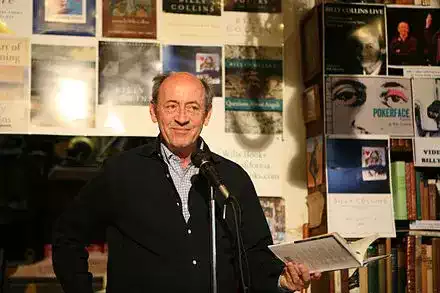
Billy Collins
Litany
Litany
You are the bread and the knife,
The crystal goblet and the wine...
-Jacques Crickillon
You are the bread and the knife,
the crystal goblet and the wine.
You are the dew on the morning grass
and the burning wheel of the sun.
You are the white apron of the baker,
and the marsh birds suddenly in flight.
However, you are not the wind in the orchard,
the plums on the counter,
or the house of cards.
And you are certainly not the pine-scented air.
There is just no way that you are the pine-scented air.
It is possible that you are the fish under the bridge,
maybe even the pigeon on the general's head,
but you are not even close
to being the field of cornflowers at dusk.
And a quick look in the mirror will show
that you are neither the boots in the corner
nor the boat asleep in its boathouse.
It might interest you to know,
speaking of the plentiful imagery of the world,
that I am the sound of rain on the roof.
I also happen to be the shooting star,
the evening paper blowing down an alley
and the basket of chestnuts on the kitchen table.
I am also the moon in the trees
and the blind woman's tea cup.
But don't worry, I'm not the bread and the knife.
You are still the bread and the knife.
You will always be the bread and the knife,
not to mention the crystal goblet and--somehow--the wine.
You are the bread and the knife,
The crystal goblet and the wine...
-Jacques Crickillon
You are the bread and the knife,
the crystal goblet and the wine.
You are the dew on the morning grass
and the burning wheel of the sun.
You are the white apron of the baker,
and the marsh birds suddenly in flight.
However, you are not the wind in the orchard,
the plums on the counter,
or the house of cards.
And you are certainly not the pine-scented air.
There is just no way that you are the pine-scented air.
It is possible that you are the fish under the bridge,
maybe even the pigeon on the general's head,
but you are not even close
to being the field of cornflowers at dusk.
And a quick look in the mirror will show
that you are neither the boots in the corner
nor the boat asleep in its boathouse.
It might interest you to know,
speaking of the plentiful imagery of the world,
that I am the sound of rain on the roof.
I also happen to be the shooting star,
the evening paper blowing down an alley
and the basket of chestnuts on the kitchen table.
I am also the moon in the trees
and the blind woman's tea cup.
But don't worry, I'm not the bread and the knife.
You are still the bread and the knife.
You will always be the bread and the knife,
not to mention the crystal goblet and--somehow--the wine.
397
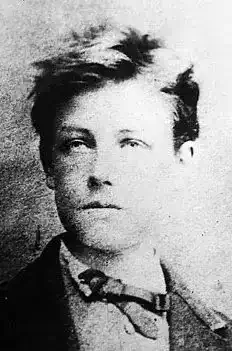
Arthur Rimbaud
To A Reason
To A Reason
A rap of your finger on the drum
fires all the sounds
and starts a new harmony.
A step of yours: the levy of new men
and their marching on.
Your head turns away:
O the new love!
Your head turns back:
O the new love!
'Change our lots, confound the plagues,
beginning with time,'
to you these children sing.
'Raise no matter where the substance
of our fortune and our desires,'
they beg you.
Arrival of all time,
who will go everywhere.
A rap of your finger on the drum
fires all the sounds
and starts a new harmony.
A step of yours: the levy of new men
and their marching on.
Your head turns away:
O the new love!
Your head turns back:
O the new love!
'Change our lots, confound the plagues,
beginning with time,'
to you these children sing.
'Raise no matter where the substance
of our fortune and our desires,'
they beg you.
Arrival of all time,
who will go everywhere.
547
Arthur Rimbaud
Drunken Morning
Drunken Morning
Oh, my Beautiful! Oh, my Good!
Hideous fanfare where yet I do not stumble!
Oh, rack of enchantments!
For the first time, hurrah for the unheard-of work,
For the marvelous body! For the first time!
It began with the laughter of children, and there it will end.
This poison will stay in our veins even when, as the fanfares depart,
We return to our former disharmony.
Oh, now, we who are so worthy of these tortures!
Let us re-create ourselves after that superhuman promise
Made to our souls and our bodies at their creation:
That promise, that madness!
Elegance, silence, violence!
They promised to bury in shadows the tree of good and evil,
To banish tyrannical honesty,
So that we might flourish in our very pure love.
It began with a certain disgust, and it ended -
Since we could not immediately seize upon eternity -
It ended in a scattering of perfumes.
Laughter of children, discretion of slaves, austerity of virgins,
Horror of faces and objects here below,
Be sacred in the memory of the evening past.
It began in utter boorishness, and now it ends
In angels of fire and ice.
Little drunken vigil, blessed!
If only for the mask you have left us!
Method, we believe in you! We never forgot that yesterday
You glorified all of our ages.
We have faith in poison.
We will give our lives completely, every day.
FOR THIS IS THE ASSASSIN'S HOUR.
(translated by Paul Schmidt)
Oh, my Beautiful! Oh, my Good!
Hideous fanfare where yet I do not stumble!
Oh, rack of enchantments!
For the first time, hurrah for the unheard-of work,
For the marvelous body! For the first time!
It began with the laughter of children, and there it will end.
This poison will stay in our veins even when, as the fanfares depart,
We return to our former disharmony.
Oh, now, we who are so worthy of these tortures!
Let us re-create ourselves after that superhuman promise
Made to our souls and our bodies at their creation:
That promise, that madness!
Elegance, silence, violence!
They promised to bury in shadows the tree of good and evil,
To banish tyrannical honesty,
So that we might flourish in our very pure love.
It began with a certain disgust, and it ended -
Since we could not immediately seize upon eternity -
It ended in a scattering of perfumes.
Laughter of children, discretion of slaves, austerity of virgins,
Horror of faces and objects here below,
Be sacred in the memory of the evening past.
It began in utter boorishness, and now it ends
In angels of fire and ice.
Little drunken vigil, blessed!
If only for the mask you have left us!
Method, we believe in you! We never forgot that yesterday
You glorified all of our ages.
We have faith in poison.
We will give our lives completely, every day.
FOR THIS IS THE ASSASSIN'S HOUR.
(translated by Paul Schmidt)
560
Arthur Rimbaud
Dawn
Dawn
I have kissed the summer dawn. Before the palaces, nothing moved. The water lay
dead. Battalions of shadows still kept the forest road.
I walked, walking warm and vital breath, While stones watched, and wings rose
soundlessly.
My first adventure, in a path already gleaming With a clear pale light, Was a flower
who told me its name.
I laughted at the blond Wasserfall That threw its hair across the pines: On the silvered
summit, I came upon the goddess.
Then one by one, I lifted her veils. In the long walk, waving my arms.
Across the meadow, where I betrayed her to the cock. In the heart of town she fled
among the steeples and domes, And I hunted her, scrambling like a beggar on marble
wharves.
Above the road, near a thicket of laurel, I caught her in her gathered veils, And smelled
the scent of her immense body. Dawn and the child fell together at the bottom of the
wood.
When I awoke, it was noon.
I have kissed the summer dawn. Before the palaces, nothing moved. The water lay
dead. Battalions of shadows still kept the forest road.
I walked, walking warm and vital breath, While stones watched, and wings rose
soundlessly.
My first adventure, in a path already gleaming With a clear pale light, Was a flower
who told me its name.
I laughted at the blond Wasserfall That threw its hair across the pines: On the silvered
summit, I came upon the goddess.
Then one by one, I lifted her veils. In the long walk, waving my arms.
Across the meadow, where I betrayed her to the cock. In the heart of town she fled
among the steeples and domes, And I hunted her, scrambling like a beggar on marble
wharves.
Above the road, near a thicket of laurel, I caught her in her gathered veils, And smelled
the scent of her immense body. Dawn and the child fell together at the bottom of the
wood.
When I awoke, it was noon.
1,650
Arthur Rimbaud
After The Flood
After The Flood
As soon as the idea of the Deluge had subsided,
A hare stopped in the clover and swaying flowerbells,
and said a prayer to the rainbow,
through the spider's web.
Oh! the precious stones that began to hide,-and
the flowers that already looked around.
In the dirty main street, stalls were set up
and boats were hauled toward the sea,
high tiered as in old prints.
Blood flowed at Blue Beard's,-through
slaughterhouses, in circuses,
where the windows were blanched by God's seal.
Blood and milk flowed. Beavers built.
'Mazagrans' smoked in the little bars.
In the big glass house, still dripping,
children in mourning looked
at the marvelous pictures.
A door banged; and in the village square
the little boy waved his arms,
understood by weather vanes
and cocks on steeples everywhere,
in the bursting shower.
Madame *** installed a piano in the Alps.
Mass and first communions were celebrated
at the hundred thousand altars of the cathedral.
Caravans set out. And Hotel Splendid was built
in the chaos of ice and of the polar night.
Ever after the moon heard jackals howling
across the deserts of thyme,
and eclogues in wooden shoes growling in the orchard.
Then in the violet and budding forest,
Eucharis told me it was spring.
Gush, pond,-- Foam, roll on the bridge and over the woods;-black
palls and organs, lightening and thunder, rise and roll;-waters
and sorrows rise and launch the Floods again.
For since they have been dissipated-oh!
the precious stones being buried and the opened flowers!-it's
unbearable! and the Queen, the Witch who lights her fire
in the earthen pot will never tell us what she knows,
and what we do not know.
As soon as the idea of the Deluge had subsided,
A hare stopped in the clover and swaying flowerbells,
and said a prayer to the rainbow,
through the spider's web.
Oh! the precious stones that began to hide,-and
the flowers that already looked around.
In the dirty main street, stalls were set up
and boats were hauled toward the sea,
high tiered as in old prints.
Blood flowed at Blue Beard's,-through
slaughterhouses, in circuses,
where the windows were blanched by God's seal.
Blood and milk flowed. Beavers built.
'Mazagrans' smoked in the little bars.
In the big glass house, still dripping,
children in mourning looked
at the marvelous pictures.
A door banged; and in the village square
the little boy waved his arms,
understood by weather vanes
and cocks on steeples everywhere,
in the bursting shower.
Madame *** installed a piano in the Alps.
Mass and first communions were celebrated
at the hundred thousand altars of the cathedral.
Caravans set out. And Hotel Splendid was built
in the chaos of ice and of the polar night.
Ever after the moon heard jackals howling
across the deserts of thyme,
and eclogues in wooden shoes growling in the orchard.
Then in the violet and budding forest,
Eucharis told me it was spring.
Gush, pond,-- Foam, roll on the bridge and over the woods;-black
palls and organs, lightening and thunder, rise and roll;-waters
and sorrows rise and launch the Floods again.
For since they have been dissipated-oh!
the precious stones being buried and the opened flowers!-it's
unbearable! and the Queen, the Witch who lights her fire
in the earthen pot will never tell us what she knows,
and what we do not know.
593

Anaïs Nin
The Diary of Anaïs Nin, Volume 1: 1931-1934
The Diary of Anaïs Nin, Volume 1: 1931-1934
"Am I, at bottom, that fervent little Spanish Catholic child who chastised herself for
loving toys, who forbade herself the enjoyment of sweet foods, who practiced silence,
who humiliated her pride, who adored symbols, statues, burning candles, incense, the
caress of nuns, organ music, for whom Communion was a great event? I was so
exalted by the idea of eating Jesus's flesh and drinking His blood that I couldn't
swallow the host well, and I dreaded harming the it. I visualized Christ descending into
my heart so realistically (I was a realist then!) that I could see Him walking down the
stairs and entering the room of my heart like a sacred Visitor. That state of this room
was a subject of great preoccupation for me. . . At the ages of nine, ten, eleven, I
believe I approximated sainthood. And then, at sixteen, resentful of controls,
disillusioned with a God who had not granted my prayers (the return of my father),
who performed no miracles, who left me fatherless in a strange country, I rejected all
Catholicism with exaggeration. Goodness, virtue, charity, submission, stifled me. I took
up the words of Lawrence: "They stress only pain, sacrifice, suffering and death. They
do not dwell enough on the resurrection, on joy and life in the present." Today I feel
my past like an unbearable weight, I feel that it interferes with my present life, that it
must be the cause for this withdrawal, this closing of doors. . . I am embalmed
because a nun leaned over me, enveloped me in her veils, kissed me. The chill curse of
Christianity. I do not confess any more, I have no remorse, yet am I doing penance for
my enjoyments? Nobody knows what a magnificent prey I was for Christian legends,
because of my compassion and my tenderness for human beings. Today it divides me
from enjoyment in life."
p. 70-71
"As June walked towards me from the darkness of the garden into the light of the door,
I saw for the first time the most beautiful woman on earth. A startling white face,
burning dark eyes, a face so alive I felt it would consume itself before my eyes. Years
ago I tried to imagine true beauty; I created in my mind an image of just such a
woman. I had never seen her until last night. Yet I knew long ago the phosphorescent
color of her skin, her huntress profile, the evenness of her teeth. She is bizarre,
fantastic, nervous, like someone in a high fever. Her beauty drowned me. As I sat
before her, I felt I would do anything she asked of me. Henry suddenly faded. She was
color and brilliance and strangeness. By the end of the evening I had extricated myself
from her power. She killed my admiration by her talk. Her talk. The enormous ego,
false, weak, posturing. She lacks the courage of her personality, which is sensual,
heavy with experience. Her role alone preoccupies her. She invents dramas in which
she always stars. I am sure she creates genuine dramas, genuine chaos and whirlpools
of feelings, but I feel that her share in it is a pose. That night, in spite of my response
to her, she sought to be whatever she felt I wanted her to be. She is an actress every
moment. I cannot grasp the core of June. Everything Henry has said about her is true."
I wanted to run out and kiss her fanatastic beauty and say: 'June, you have killed my
sincerity too. I will never know again who I am, what I am, what I love, what I want.
Your beauty has drowned me, the core of me. You carry away with you a part of me
reflected in you. When your beauty struck me, it dissolved me. Deep down, I am not
different from you. I dreamed you, I wished for your existance. You are the woman I
want to be. I see in you that part of me which is you. I feel compassion for your
childlike pride, for your trembling unsureness, your dramatization of events, your
enhancing of the loves given to you. I surrender my sincerity because if I love you it
means we share the same fantasies, the same madnesses"
"Am I, at bottom, that fervent little Spanish Catholic child who chastised herself for
loving toys, who forbade herself the enjoyment of sweet foods, who practiced silence,
who humiliated her pride, who adored symbols, statues, burning candles, incense, the
caress of nuns, organ music, for whom Communion was a great event? I was so
exalted by the idea of eating Jesus's flesh and drinking His blood that I couldn't
swallow the host well, and I dreaded harming the it. I visualized Christ descending into
my heart so realistically (I was a realist then!) that I could see Him walking down the
stairs and entering the room of my heart like a sacred Visitor. That state of this room
was a subject of great preoccupation for me. . . At the ages of nine, ten, eleven, I
believe I approximated sainthood. And then, at sixteen, resentful of controls,
disillusioned with a God who had not granted my prayers (the return of my father),
who performed no miracles, who left me fatherless in a strange country, I rejected all
Catholicism with exaggeration. Goodness, virtue, charity, submission, stifled me. I took
up the words of Lawrence: "They stress only pain, sacrifice, suffering and death. They
do not dwell enough on the resurrection, on joy and life in the present." Today I feel
my past like an unbearable weight, I feel that it interferes with my present life, that it
must be the cause for this withdrawal, this closing of doors. . . I am embalmed
because a nun leaned over me, enveloped me in her veils, kissed me. The chill curse of
Christianity. I do not confess any more, I have no remorse, yet am I doing penance for
my enjoyments? Nobody knows what a magnificent prey I was for Christian legends,
because of my compassion and my tenderness for human beings. Today it divides me
from enjoyment in life."
p. 70-71
"As June walked towards me from the darkness of the garden into the light of the door,
I saw for the first time the most beautiful woman on earth. A startling white face,
burning dark eyes, a face so alive I felt it would consume itself before my eyes. Years
ago I tried to imagine true beauty; I created in my mind an image of just such a
woman. I had never seen her until last night. Yet I knew long ago the phosphorescent
color of her skin, her huntress profile, the evenness of her teeth. She is bizarre,
fantastic, nervous, like someone in a high fever. Her beauty drowned me. As I sat
before her, I felt I would do anything she asked of me. Henry suddenly faded. She was
color and brilliance and strangeness. By the end of the evening I had extricated myself
from her power. She killed my admiration by her talk. Her talk. The enormous ego,
false, weak, posturing. She lacks the courage of her personality, which is sensual,
heavy with experience. Her role alone preoccupies her. She invents dramas in which
she always stars. I am sure she creates genuine dramas, genuine chaos and whirlpools
of feelings, but I feel that her share in it is a pose. That night, in spite of my response
to her, she sought to be whatever she felt I wanted her to be. She is an actress every
moment. I cannot grasp the core of June. Everything Henry has said about her is true."
I wanted to run out and kiss her fanatastic beauty and say: 'June, you have killed my
sincerity too. I will never know again who I am, what I am, what I love, what I want.
Your beauty has drowned me, the core of me. You carry away with you a part of me
reflected in you. When your beauty struck me, it dissolved me. Deep down, I am not
different from you. I dreamed you, I wished for your existance. You are the woman I
want to be. I see in you that part of me which is you. I feel compassion for your
childlike pride, for your trembling unsureness, your dramatization of events, your
enhancing of the loves given to you. I surrender my sincerity because if I love you it
means we share the same fantasies, the same madnesses"
186