
Nation and Patriotism
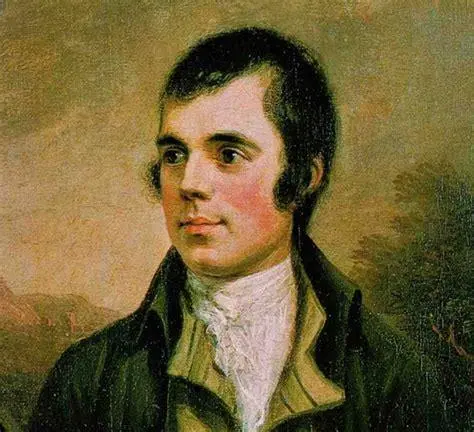
Robert Burns
Scots, Wha Hae Wi' Wallace Bled
Scots, wha hae wi' Wallace bled,
Scots, wham Bruce has aften led,
Welcome to your gory bed,
Or to victory!
Now's the day, and now's the hour;
See the front o' battle lour,
See approach proud Edward's power—
Chains and slavery!
Wha will be a traitor-knave?
Wha can fill a coward's grave?
Wha sae base as be a slave?
Let him turn and flee!
Wha for Scotland's king and law
Freedom's sword will strongly draw,
Freeman stand or freeman fa',
Let him follow me!
By oppression's woes and pains,
By your sons in servile chains,
We will drain our dearest veins,
But they shall be free!
Lay the proud usurpers low!
Tyrants fall in ev'ry foe!
Liberty's in ev'ry blow!
Let us do or die!
Read more →
254
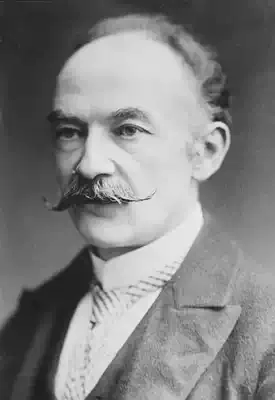
Thomas Hardy
The Pity Of It
I walked in loamy Wessex lanes, afar
From rail-track and from highway, and I heard
In field and farmstead many an ancient word
Of local lineage like "Thu bist," "Er war,"
"Ich woll," "Er sholl," and by-talk similar,
Nigh as they speak who in this month's moon gird
At England's very loins, thereunto spurred
By gangs whose glory threats and slaughters are.
Then seemed a Heart crying: "Whosoever they be
At root and bottom of this, who flung this flame
Between kin folk kin tongued even as are we,
Sinister, ugly, lurid, be their fame;
May their familiars grow to shun their name,
And their brood perish everlastingly."
Read more →
251

John Greenleaf Whittier
The Rock In El Ghor
Dead Petra in her hill-tomb sleeps,
Her stones of emptiness remain;
Around her sculptured mystery sweeps
The lonely waste of Edom's plain.
From the doomed dwellers in the cleft
The bow of vengeance turns not back;
Of all her myriads none are left
Along the Wady Mousa's track.
Clear in the hot Arabian day
Her arches spring, her statues climb;
Unchanged, the graven wonders pay
No tribute to the spoiler, Time!
Unchanged the awful lithograph
Of power and glory undertrod;
Of nations scattered like the chaff
Blown from the threshing-floor of God.
Yet shall the thoughtful stranger turn
From Petra's gates with deeper awe,
To mark afar the burial urn
Of Aaron on the cliffs of Hor;
And where upon its ancient guard
Thy Rock, El Ghor, is standing yet,-Looks
from its turrets desertward,
And keeps the watch that God has set.
The same as when in thunders loud
It heard the voice of God to man,
As when it saw in fire and cloud
The angels walk in Israel's van,
Or when from Ezion-Geber's way
It saw the long procession file,
And heard the Hebrew timbrels play
The music of the lordly Nile;
Or saw the tabernacle pause,
Cloud-bound, by Kadesh Barnea's wells,
While Moses graved the sacred laws,
And Aaron swung his golden bells.
Rock of the desert, prophet-sung!
How grew its shadowing pile at length,
A symbol, in the Hebrew tongue,
Of God's eternal love and strength.
On lip of bard and scroll of seer,
From age to age went down the name,
Until the Shiloh's promised year,
And Christ, the Rock of Ages, came!
The path of life we walk to-day
Is strange as that the Hebrews trod;
We need the shadowing rock, as they,-We
need, like them, the guides of God.
God send His angels, Cloud and Fire,
To lead us o'er the desert sand!
God give our hearts their long desire,
His shadow in a weary land!
Read more →
250

Henry Lawson
John Cornstalk
Jack Cornstalk lives in the Southern Land—
What says Cornstalk John?
Jack Cornstalk says in a loud firm voice:
“Land of the South, lead on.”
CHORUS:
Land of the South, lead on, lead on,
Land of the South, lead on!
Land of the South, lead on, lead on,
Lead on, Land of the South!
John Bull lays claim to the Southern Land.
Jack, is the South Land thine?
John Cornstalk cries in a loud, firm voice:
“The Land of the South is mine!”
Land of the South, lead on, lead on,
Land of the South, lead on!
Land of the South, lead on, lead on,
Lead on, Land of the South!
“By the long, long years my father toiled
In the pioneering band;
By the hardships of those early days,
I claim the Southern Land!”
Land of the South, lead on, lead on,
Land of the South, lead on!
Land of the South, lead on, lead on,
Lead on, Land of the South!
But where shall the Land of the South lead to?
Where lead the nation’s van?
Jack Cornstalk cries from his strong young heart:
“To the Dynasty of Man.”
Land of the South, lead on, lead on,
Land of the South, lead on!
Land of the South, lead on, lead on,
Lead on, Land of the South!
Read more →
251
Henry Lawson
The Iron Wedding Rings
In these days of peace and money, free to all the Commonweal,
There are ancient dames in Buckland wearing wedding rings of steel;
Wedding rings of steel and iron, worn on wrinkled hands and old,
And the wearers would not give them, not for youth nor wealth untold.
In the days of black oppression, when the best abandoned hope,
And all Buckland crouched in terror of the prison and the rope,
Many fair young wives in Buckland prayed beside their lonely beds
For the absent ones who knew not where to lay their outlawed heads.
But a whisper went through Buckland, to the rebels only known,
That the man across the border had a chance to hold his own.
There were men that came in darkness, quiet, grim and travel-worn,
And, by twos, and threes, the young men stole away to join Kinghorn.
Slipping powder-horns and muskets from beneath the floors and thatch,
There were boys who kissed their mothers ere they softly dropped the latch;
There were hunters' wives in backwoods who sat strangely still and white
Till the dawn, because their men-folk went a-hunting in the night.
But the rebels needed money, and so, through the Buckland hills,
Came again, by night, the gloomy men of monosyllables;
And the ladies gave their jewels to be smuggled out and sold,
And the homely wives of Buckland gave their wedding rings of gold.
And a Buckland smith in secret, and in danger, in his shed
Made them rings of baser metals (from the best he had, to lead),
To be gilt and worn to market, or to meetings where they.prayed,
Lest the spies should get an inkling, and the husbands be betrayed.
Then a silence fell on Buckland; there was peace throughout the land,
And a loyalty that puzzled all the captains in command;
There was too much Law and Order for the men who weren't blind,
And the greatest of the king's men wasn't easy in his mind.
They were hunting rebels, certes, and the troops were understood
To be searching for a stronghold like a needle in a wood;
But whene'er the king was prayed for in the meeting-houses, then
It was strange with how much unction ancient sinners cried "Ah-men!"
Till at last, when all was quiet, through the gloomy Buckland hills
Once again there came those furtive men of monosyllables;
And their message was – "Take warning what the morrow may reveal,
Death and Freedom may be married with a wedding ring of steel."
In the morning, from the marshes, rose the night-mist, cold and damp,
From the shipping in the harbour and the sleeping royal camp;
From the lanes and from the by-streets and the high streets of the town,
And above the hills of Buckland, where the rebel guns looked down.
And the first one sent a message to the camp to fight or yield,
And the wintry sun looked redly on a bloody battlefield;
Till the man from 'cross the border marched through Buckland once again,
With a charter for the people and ten thousand fighting men.
There are ancient dames in Buckland with old secrets to reveal,
Wearing wedding rings of iron, wearing wedding rings of steel;
And their tears drop on the metal when their thoughts are far away
In the past where their young husbands died on Buckland field that day.
Read more →
251
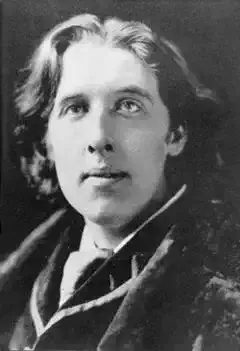
Oscar Wilde
Ave Imperatrix
SET in this stormy Northern sea,
Queen of these restless fields of tide,
England! what shall men say of thee,
Before whose feet the worlds divide?
The earth, a brittle globe of glass,
Lies in the hollow of thy hand,
And through its heart of crystal pass,
Like shadows through a twilight land,
The spears of crimson-suited war,
The long white-crested waves of fight,
And all the deadly fires which are
The torches of the lords of Night.
The yellow leopards, strained and lean,
The treacherous Russian knows so well,
With gaping blackened jaws are seen
Leap through the hail of screaming shell.
The strong sea-lion of England's wars
Hath left his sapphire cave of sea,
To battle with the storm that mars
The star of England's chivalry.
The brazen-throated clarion blows
Across the Pathan's reedy fen,
And the high steeps of Indian snows
Shake to the tread of armèd men.
And many an Afghan chief, who lies
Beneath his cool pomegranate-trees,
Clutches his sword in fierce surmise
When on the mountain-side he sees
The fleet-foot Marri scout, who comes
To tell how he hath heard afar
The measured roll of English drums
Beat at the gates of Kandahar.
For southern wind and east wind meet
Where, girt and crowned by sword and fire,
England with bare and bloody feet
Climbs the steep road of wide empire.
O lonely Himalayan height,
Grey pillar of the Indian sky,
Where saw'st thou last in clanging fight
Our wingèd dogs of Victory?
The almond groves of Samarcand,
Bokhara, where red lilies blow,
And Oxus, by whose yellow sand
The grave white-turbaned merchants go:
And on from thence to Ispahan,
The gilded garden of the sun,
Whence the long dusty caravan
Brings cedar and vermilion;
And that dread city of Cabool
Set at the mountain's scarpèd feet,
Whose marble tanks are ever full
With water for the noonday heat:
Where through the narrow straight Bazaar
A little maid Circassian
Is led, a present from the Czar
Unto some old and bearded khan,--
Here have our wild war-eagles flown,
And flapped wide wings in fiery fight;
But the sad dove, that sits alone
In England--she hath no delight.
In vain the laughing girl will lean
To greet her love with love-lit eyes:
Down in some treacherous black ravine,
Clutching his flag, the dead boy lies.
And many a moon and sun will see
The lingering wistful children wait
To climb upon their father's knee;
And in each house made desolate
Pale women who have lost their lord
Will kiss the relics of the slain--
Some tarnished epaulette--some sword--
Poor toys to soothe such anguished pain.
For not in quiet English fields
Are these, our brothers, lain to rest,
Where we might deck their broken shields
With all the flowers the dead love best.
For some are by the Delhi walls,
And many in the Afghan land,
And many where the Ganges falls
Through seven mouths of shifting sand.
And some in Russian waters lie,
And others in the seas which are
The portals to the East, or by
The wind-swept heights of Trafalgar.
O wandering graves! O restless sleep!
O silence of the sunless day!
O still ravine! O stormy deep!
Give up your prey! Give up your prey!
And thou whose wounds are never healed,
Whose weary race is never won,
O Cromwell's England! must thou yield
For every inch of ground a son?
Go! crown with thorns thy gold-crowned head,
Change thy glad song to song of pain;
Wind and wild wave have got thy dead,
And will not yield them back again.
Wave and wild wind and foreign shore
Possess the flower of English land--
Lips that thy lips shall kiss no more,
Hands that shall never clasp thy hand.
What profit now that we have bound
The whole round world with nets of gold,
If hidden in our heart is found
The care that groweth never old?
What profit that our galleys ride,
Pine-forest-like, on every main?
Ruin and wreck are at our side,
Grim warders of the House of pain.
Where are the brave, the strong, the fleet?
Where is our English chivalry?
Wild grasses are their burial-sheet,
And sobbing waves their threnody.
O loved ones lying far away,
What word of love can dead lips send!
O wasted dust! O senseless clay!
Is this the end! is this the end!
Peace, peace! we wrong the noble dead
To vex their solemn slumber so;
Though childless, and with thorn-crowned head,
Up the steep road must England go,
Yet when this fiery web is spun,
Her watchmen shall descry from far
The young Republic like a sun
Rise from these crimson seas of war.
Read more →
247
Horácio
BkIV:XIV Drusus and Tiberius
What care the Citizens and the Senators
shall take in immortalising your virtues,
granting you full honours, Augustus,
with titles and memorial plaques, O,
greatest of princes, wherever the sun shines
over the countries where people can live, you,
whose power in war the Vindelici
free of our Roman laws, till now, have learnt.
For, with your army, brave Drusus, demolished
the Genauni, that implacable race, in more
direct retaliation, the swift
Breuni, and their defences, established
on the formidable Alpine heights: and soon
Tiberius, the elder Nero, entered
that fierce fight, with his favourable
omens, defeating the wild Rhaetians:
it was wonderful to see with what destruction,
in contesting the war, he exhausted those minds
intent on the deaths of our freemen,
as the south wind, almost, when it troubles
the ungovernable waves, while the Pleiades’
constellation pierces the clouds, he was eager
to attack the hostile ranks, and drive
his neighing horse through the midst of their fire.
As, bull-like, the Aufidus rolls on, flowing
by the domains of Apulian Daunus,
when it rages and threatens fearful
destruction to their cultivated fields,
so Tiberius overwhelmed the armoured
ranks of barbarians, his fierce impetus
covering the earth, mowing down front
and rear, and conquering them without loss,
yours the troops, the strategy and the friendly
gods. For on that date when Alexandria
opened all its harbour, and empty
palaces to you, in supplication,
good Fortune, fifteen years later, delivered
a favourable outcome to the campaign,
and awarded fame, and the glory
hoped-for, to your imperial action.
The Spaniards, never conquered before, the Medes,
the Indians, marvel at you, the roving
Scythians, O eager protector
of Italy and Imperial Rome.
The Nile, that conceals its origin, hears you,
the Danube hears, and the swift-flowing Tigris,
the Ocean, filled with monsters, roaring
around the distant island of Britain,
and the regions of Gaul, unafraid of death,
and the stubborn Iberian land, hear you:
Sygambri, delighting in slaughter,
stand, with grounded weapons, worshipping you.
Read more →
248
Henry Lawson
The Man Who Raised Charlestown
They were hanging men in Buckland who would not cheer King George –
The parson from his pulpit and the blacksmith from his forge;
They were hanging men and brothers, and the stoutest heart was down,
When a quiet man from Buckland rode at dusk to raise Charlestown.
Not a young man in his glory filled with patriotic fire,
Not an orator or soldier, or a known man in his shire;
He was just the Unexpected – one of Danger's Volunteers,
At a time for which he'd waited, all unheard of, many years.
And Charlestown met in council, the quiet man to hear –
The town was large and wealthy, but the folks were filled with fear,
The fear of death and plunder; and none to lead had they,
And Self fought Patriotism as will always be the way.
The man turned to the people, and he spoke in anger then.
And crooked his finger here and there to those he marked as men.
And many gathered round him to see what they could do –
For men know men in danger, as they know the cowards too.
He chose his men and captains, and sent them here and there,
The arms and ammunition were gathered in the square;
While peaceful folk were praying or croaking, every one,
He was working with his blacksmiths at the carriage of a gun.
While the Council sat on Sunday, and the church bells rang their peal,
The quiet man was mending a broken waggon wheel;
While they passed their resolutions on his doings (and the likes),
From a pile his men brought to him he was choosing poles for pikes.
(They were hanging men in Buckland who would not cheer King George –
They were making pikes in Charlestown at every blacksmith's forge:
While the Council sat in session and the same old song they sang,
They heard the horsemen gallop out, and the blacksmiths' hammers clang.)
And a thrill went through the city ere the drums began to roll,
And the coward found his courage, and the drunkard found his soul.
So a thrill went through the city that would go through all the land,
For the quiet man from Buckland held men's hearts in his right hand.
And he caught a Charlestown poet (there are many tell the tale),
And he took him by the collar when he'd filled him up with ale;
"Now, then, write a song for Charlestown that shall lift her on her way,
For she's marching out to Buckland and to Death at break o' day."
And he set the silenced women tearing sheet and shift and shirt
To make bandages and roll them for the men that would get hurt.
And he called out his musicians and he told them what to play:
"For I want my men excited when they march at break o' day."
And he set the women cooking – with a wood-and-water crew –
"For I want no empty stomachs for the work we have to do."
Then he said to his new soldiers: "Eat your fill while yet you may;
'Tis a heavy road to Buckland that we'll march at break o' day."
And a shout went through the city when the drums began to roll
(And the coward was a brave man and the beggar had a soul),
And the drunken Charlestown poet cared no more if he should hang,
For his song of "Charlestown's Coming" was the song the soldiers sang.
And they cursed the King of England, and they shouted in their glee,
And they swore to drive the British and their friends into the sea;
But when they'd quite finished swearing, said their leader "Let us pray,
For we march to Death and Freedom, and it's nearly dawn of day."
There were marching feet at daybreak, and close upon their heels
Came the scuffling tread of horses and the heavy crunch of wheels;
So they took the road to Buckland, with their scout out to take heed,
And a quiet man of fifty on a grey horse in the lead.
There was silence in the city, there was silence as of night –
Women in the ghostly daylight, kneeling, praying, deathly white,
As their mothers knelt before them, as their daughters knelt since then,
And as ours shall, in the future, kneel and pray for fighting men.
For their men had gone to battle, as our sons and grandsons too
Must go out, for Life and Freedom, as all nations have to do.
And the Charlestown women waited for the sounds that came too soon –
Though they listened, almost breathless, till the early afternoon.
Then they heard the tones of danger for their husbands, sweethearts, sons,
And they stopped their ears in terror, crying, "Oh, my God! The guns!"
Then they strained their ears to listen through the church-bells' startled chime –
Far along the road to Buckland, Charlestown's guns were marking time.
"They advance!" "They halt!" "Retreating!" "They come back!" The guns are done!"
But the calmer spirits, listening, said: "Our guns are going on."
And the friend and foe in Buckland felt two different kinds of thrills
When they heard the Charlestown cannon talking on the Buckland hills.
And the quiet man of Buckland sent a message in that day,
And he gave the British soldiers just two hours to march away.
And they hang men there no longer, there is peace on land and wave;
On the sunny hills of Buckland there is many a quiet grave.
There is peace upon the land, and there is friendship on the waves –
On the sunny hills of Buckland there are rows of quiet graves.
And an ancient man in Buckland may be seen in sunny hours,
Pottering round about his garden, and his kitchen stuff and flowers.
Read more →
247
Henry Lawson
The Loveable Characters
I long for the streets but the Lord knoweth best,
For there I am never a saint;
There are lovable characters out in the West,
With humour heroic and quaint;
And, be it Up Country, or be it Out Back,
When I shall have gone to my Home,
I trust to be buried 'twixt River and Track
Where my lovable characters roam.
There are lovable characters drag through the scrub,
Where the Optimist ever prevails;
There are lovable characters hang round the pub,
There are lovable jokers at sales
Where the auctioneer's one of the lovable wags
(Maybe from his "order" estranged),
And the beer is on tap, and the pigs in the bags
Of the purchasing cockies are changed.
There were lovable characters out in the West,
Of fifty hot summers, or more,
Who could not be proved, when it came to the test,
Too old to be sent to the war;
They were all forty-five and were orphans, they said,
With no one to keep them, or keep;
And mostly in France, with the world's bravest dead,
Those lovable characters sleep.
I long for the streets, but the Lord knoweth best,
For there I am never a saint;
There are lovable characters out in the West,
With humour heroic and quaint;
And, be it Up Country, or be it Out Back,
When I shall have gone to my Home,
I trust to be buried 'twixt River and Track
Where my lovable characters roam.
Read more →
245
Henry Lawson
To Jack
SO, I’ve battled it through on my own, Jack,
I have done with all dreaming and doubt.
Though “stoney” to-night and alone, Jack,
I am watching the Old Year out.
I have finished with brooding and fears,
Jack, And the spirit is rising in me,
For the sake of the old New Years, Jack,
And the bright New Years to be.
I have fallen in worldly disgrace, Jack,
And I know very well that you heard;
They have blackened my name in this place, Jack,
And I answered them never a word.
But why should I bluster or grieve,
Jack? So narrow and paltry they be—
I knew you would never believe, Jack,
The lies that were said against me.
That is done which shall never be undone,
And I blame not, I blame not my land,
But I’m hearing the Calling of London,
And I long for the roar of the Strand.
It was always the same with our race,
Jack; You know how a vagabond feels—
We can fight a straight man face to face, Jack.
But we can’t keep the curs from our heels.
You know I loved women and drink, Jack,
And that’s how the trouble began;
But you know that I never would shrink,
Jack, From a deed that was worthy a man!
I never was paltry or mean, Jack.
And cruel I never could be,
I will give you a hand which is clean,
Jack, When we meet again over the sea.
I will bring a few wrinkles of care,
Jack; I have altered a lot, I am told;
The steel-filings show in my hair, Jack;
But my heart is as young as of old.
I have faith still in women, and men, Jack,
Though selfish and blind they may be.
I still have my soul and my pen, Jack,
And my country seems dearer to me.
I will sail when your summer sets in, Jack,
And good-bye to my own native land;
Oh, I long for a glimpse of your grin, Jack,
And I long for the grip of your hand.
We both suffered sorrow and pain, Jack,
And sinned in the days that are done;
But we’ll fight the old battle again, Jack,
Where the battle is worth being won.
Read more →
246

Robert W. Service
Raising The Flag
Behold! the Spanish flag they're raising
Before the Palace courtyard gate;
To watch its progress bold and blazing
Two hundred patient people wait.
Though bandsmen play the anthem bravely
The silken emblem seems to lag;
Two hundred people watch it gravely -
But only two salute the flag.
Fine-clad and arrogant of manner
The twain are like dark dons of old,
And to that high and haughty banner
Uplifted palms they proudly hold.
The others watch them glumly, grimly;
No sullen proletariat these,
but middle-class, well clad though dimly,
Who seem to live in decent ease.
Then sadly they look at each other,
And sigh ans shrug and turn away.
What is the feeling that they smother?
I wonder, but it's none too gay.
And as with puzzlement I bide me,
Beneath that rich, resplendent rag,
I hear a bitter voice beside me:
"It isn't ours - it's Franco's flag.
"I'm Right: I have no Left obsession.
I hate the Communists like hell,
But after ten years of oppression
I hate our Franco twice as well.
And hush! I keep (do not reprove me)
His portrait in a private place,
And every time my bowels move me
I - spit in El Caudillo's face."
These were the words I heard, I swear,
But when I turned around to stare,
Believe me - there was no one there.
Read more →
246
Henry Lawson
In the Storm that is to come
By our place in the midst of the furthest seas we were fated to stand alone -
When the nations fly at each other's throats let Australia look to her own;
Let her spend her gold on the barren west, let her keep her men at home;
For the South must look to the South for strength in the storm that is to come.
Now who shall gallop from cape to cape, and who shall defend our shores -
The crowd that stand on the kerb agape and glares at the cricket scores?
And who will hold the invader back when the shells tear up the ground -
The weeds that yelp by the cycling track while a nigger scorches round?
There may be many to man the forts in the big towns beside the sea -
But the East will call to the West for scouts in the storm that is to be:
The West cries out to the East in drought, but the coastal towns are dumb;
And the East must look to the West for food in the war that is to come.
The rain comes down on the Western land and the rivers run to waste,
When the city folk rush for the special tram in their childless, senseless haste,
And never a pile of a lock we drive - but a few mean tanks we scratch -
For the fate of a nation is nought compared with the turn of a cricket match!
There's a gutter of mud where there spread a flood from the land-long western creeks,
There is dust and drought on the plains far out where the water lay for weeks,
There's a pitiful dam where a dyke should stretch and a tank where a lake should be,
And the rain goes down through the silt and sand and the floods waste into the seas.
We'll fight for Britain or for Japan, we will fling the land's wealth out;
While every penny and every man should be used to fight the drought.
God helps the nation that helps itself, and the water brings the rain,
And a deadlier foe than the world could send is loose on the western plain.
I saw a vision in days gone by and would dream that dream again
Of the days when the Darling shall not back her billabongs up in vain.
There were reservoirs and grand canals where the Dry Country had been,
And a glorious network of aqueducts, and the fields were always green.
I have seen so long in the land I love what the land I love might be,
Where the Darling rises from Queensland rains and the floods run into the sea.
And it is our fate that we'll wake to late to the truth that we were blind,
With a foreign foe at our harbour gate and a blazing drought behind!
Read more →
244
Robert Burns
Here's A Health To Them That's Awa
Here's a health to them that's awa,
Here's a health to them that's awa
And wha winna wish guid luck to our cause,
May never guid luck be their fa'!
It's guid to be merry and wise,
It's guid to be honest and true,
It's guid to support Caledonia's cause
And bide by the buff and the blue.
Here's a health to them that's awa,
Here's a health to them that's awa!
Here's a health to Charlie, the chief o' the clan,
Altho that his band be sma'!
May Liberty meet wi success,
May Prudence protect her frae evil!
May tyrants and Tyranny tine i' the mist
And wander their way to the Devil!
Here's a health to them that's awa,
Here's a health to them that's awa;
Here's a health to Tammie, the Norlan' laddie,
That lives at the lug o' the Law!
Here's freedom to thern that wad read,
Here's freedom to them that would write!
There's nane ever fear'd that the truth should be heard,
But they whom the truth would indite!
Here's a health to them that's awa,
An here's to them that's awa!
Here's to Maitland and Wycombe! let wha does na like 'em
Be built in a hole in the wa'!
Here's timmer that's red at the heart,
Here's fruit that is sound at the core,
And may he that wad turn the buff and blue coat
Be turn'd to the back o' the door!
Here's a health to them that's awa,
Here's a health to them that's awa,
Here's Chieftain M'Leod, a chieftain worth gowd,
Tho' bred amang mountains o' snaw!
Here's friends on baith sides o' the Firth,
And friends on baith sides o' the Tweed,
And wha wad betray old Albion's right,
May they never eat of her bread!
Read more →
242
Horácio
BkIV:V To Augustus
Son of the blessed gods, and greatest defender
of Romulus’ people, you’ve been away too long:
make that swift return you promised, to the sacred
councils of the City Fathers,
Blessed leader, bring light to your country again:
when your face shines on the people, like the shining
springtime, then the day itself is more welcoming,
and the sun beams down more brightly.
As a mother, with vows and omens and prayers,
calls to the son whom a southerly wind’s envious
gales have kept far from his home, for more than a year,
lingering there, beyond the waves
of the Carpathian Sea: she who never turns
her face away from the curving line of the shore:
so, smitten with the deep longing of loyalty,
the country yearns for its Caesar.
Then the ox will wander the pastures in safety,
Ceres, and kindly Increase, will nourish the crops,
our sailors will sail across the waters in peace,
trust will shrink from the mark of shame,
the chaste house will be unstained by debauchery,
law and morality conquer the taint of sin,
mothers win praise for new-born so like their fathers,
and punishment attend on guilt.
Who’ll fear the Parthians, or the cold Scythians,
and who’ll fear the offspring savage Germany breeds,
if Caesar’s unharmed? Who’ll worry about battles
in the wilds of Iberia?
Every man passes the day among his own hills,
as he fastens his vines to the waiting branches:
from there he gladly returns to his wine, calls on
you, as god, at the second course:
He worships you with many a prayer, with wine
poured out, joins your name to those of his household gods,
as the Greeks were accustomed to remembering
Castor and mighty Hercules.
‘O blessed leader, bring Italy endless peace!’
That’s what we say, mouths parched, at the start of the day,
that’s what we say, lips wetted with wine, when the sun
sinks to rest under the Ocean.
Read more →
243
Henry Lawson
The Men Who Made Australia
There'll be royal times in Sydney for the Cuff and Collar Push,
There’ll be lots of dreary drivel and clap-trap
From the men who own Australia, but who never knew the Bush,
And who could not point their runs out on the map.
Oh, the daily Press will grovel as it never did before,
There’ll be many flags of welcome in the air,
And the Civil Service poet, he shall write odes by the score—
But the men who made the land will not be there.
You shall meet the awful Lady of the latest Birthday Knight—
(She is trying to be English, don’t-cher-know?)
You shall hear the empty mouthing of the champion blatherskite,
You shall hear the boss of local drapers blow.
There’ll be ‘majahs’ from the counter, tailors’ dummies from the fleet,
And to represent Australia here to-day,
There’s the today with his card-case and his cab in Downing-street;
But the men who made Australia—where are they?
Call across the blazing sand wastes of the Never-Never Land!
There are some who will not answer yet awhile,
Some whose bones rot in the mulga or lie bleaching on the sand,
Died of thirst to win the land another mile.
Thrown from horses, ripped by cattle, lost on deserts; and the weak,
Mad through loneliness or drink (no matter which),
Drowned in floods or dead of fever by the sluggish slimy creek—
These are men who died to make the Wool-Kings rich.
Call across the scrubby ridges where they clear the barren soil,
And the gaunt Bush-women share the work of men—
Toil and loneliness for ever—hardship, loneliness and toil—
Where the brave drought-ruined farmer starts again!
Call across the boundless sheep-runs of a country cursed for sheep—
Call across the awful scrublands west of Bourke!
But they have no time to listen—they have scarcely time to sleep—
For the men who conquer deserts have to work.
Dragged behind the crawling sheep-flock on the hot and dusty plain,
They must make a cheque to feed the wife and kids—
Riding night-watch round the cattle in the pelting, freezing rain,
While world-weariness is pressing down the lids.
And away on far out-stations, seldom touched by Heaven’s breath,
In a loneliness that smothers love and hate—
Where they never take white women—there they live the living death
With a half-caste or a black-gin for a mate.
They must toil to save the gaunt stock in the blazing months of drought,
When the stinging, blinding blight is in men’s eyes—
On the wretched, burnt selections, on the big runs further out
Where the sand-storm rises lurid to the skies.
Not to profit when the grass is waving waist-high after rain,
And the mighty clip of wool comes rolling in—
For the Wool-King goes to Paris with his family again
And the gold that souls are sacrificed to win.
There are carriages in waiting for the swells from over-sea,
There are banquets in the latest London style,
While the men who made Australia live on damper, junk and tea—
But the quiet voices whisper, ‘Wait a while!’
For the sons of all Australia, they were born to conquer fate—
And, where charity and friendship are sincere,
Where a sinner is a brother and a stranger is a mate,
There the future of a nation’s written clear.
Aye, the cities claim the triumphs of a land they do not know,
But all empty is the day they celebrate!
For the men who made Australia federated long ago,
And the men to rule Australia—they can wait.
Though the bed may be the rough bunk or the gum leaves or the sand,
And the roof for half the year may be the sky—
There are men amongst the Bushmen who were born to save the land!
And they’ll take their places sternly by-and-by.
There’s a whisper on the desert though the sunset breeze hath died
In the scrubs, though not a breath to stir a bough,
There’s a murmur, not of waters, down the Lachlan River side,
’Tis the spirit of Australia waking now!
There’s the weird hymn of the drought-night on the western water-shed,
Where the beds of unlocked rivers crack and parch;
’Tis the dead that we have buried, and our great unburied dead,
Who are calling now on living men to march!
Round the camp fire of the fencers by the furthest panel west,
In the men’s hut by the muddy billabong,
On the Great North-Western Stock-routes where the drovers never rest,
They are sorting out the right things from the wrong.
In the shearers’ hut the slush lamp shows a haggard, stern-faced man
Preaching war against the Wool-King to his mates;
And wherever go the billy, water-bag and frying-pan,
They are drafting future histories of states!
Read more →
243
Horácio
BkIV:IV Drusus and the Claudians
Like the winged agent of the bright lightning-bolt,
to whom Jove granted power over wandering
birds, once the divine king had found him
faithful in snatching blond Ganymede:
youth and his native vigour first launching him
fresh to his labours, out from the nest: spring winds,
despite his fears, when the storms were past,
teaching him, then, unaccustomed effort:
now with a fierce, hostile assault sweeping down
on the sheepfold, and love of spoils, and the fight,
hurling him at writhing snakes: or like
a lion-cub newly weaned from rich milk
and its tawny mother, seeing a roe deer
intent on its browsing, that’s fated to die
in his inexperienced jaws, such
was Drusus, as the Vindelici found
waging war beneath the Rhaetian Alps:
(where the custom’s derived from that, as long as
is known, has forced them to arm themselves,
clutch, in their right hands, Amazonian
battle-axes, I’ve not tried to ascertain,
it’s not right to know everything) but those hordes,
triumphant everywhere, for so long,
were conquered by the young man’s strategies:
they came to realise what mind, and character
nurtured, with care, in a fortunate household,
by Augustus’ fatherly feelings
towards his stepsons, the Neros, could do.
By the brave and good, are the brave created:
their sire’s virtues exist in horses and men,
while the ferocious golden eagles
don’t produce shy doves, but education
improves inborn qualities, and its proper
cultivation strengthens the mind: whenever
moral behaviour falls short, its faults
dishonour whatever was good at birth.
The Metaurus river’s a witness, O Rome
to what you owe to the Neros, so too is
defeated Hasdrubal, and that day
as sweet, when the shadows fled Latium,
the first day to smile in its kindly glory,
since dread Hannibal rode through Italy’s
cities, a fire among the pine-trees,
or an East wind on Sicilian seas.
And after that, through favourable efforts,
the Roman youth grew in stature, and the shrines
destroyed by Carthaginians’
impious uproar, had their gods restored.
At last that treacherous Hannibal proclaimed:
‘Of our own will, like deer who become the prey
of ravening wolves, we’re chasing those
whom it’s a triumph to flee and evade.
Their race, still strong despite the burning of Troy,
brought their children, sacred icons, and aged
fathers, tossed about on Tuscan seas,
to the towns of Italy, as some oak,
rich in its dark leaves, high on Mount Algidus,
trimmed back by the double-bladed axe, draws strength
and life, despite loss and destruction,
from the very steel itself. The Hydra,
as its body was lopped, grew no mightier,
in grief at being conquered by Hercules,
nor was any greater monster reared
by Colchis or Echionian Thebes.
Drowned in the deep, it emerges lovelier:
contend, it defeats the freshest opponent,
with great glory, and wages wars
that the housewives will tell of in story.
I’ll send no more proud messages to Carthage:
every hope of mine is ended, and ended
the fortunes of all my family,
since my brother Hasdrubal’s destruction.
There’s nothing that Claudian power can’t achieve,
protected by Jove, protected by the god’s
authority, power for which shrewd minds
clear the way through the harsh dangers of war.’
Read more →
240
Henry Lawson
Republican Pioneers
We're marching along, we're gath'ring strong'
We place on our right reliance,
We fling in the air, for all who care,
Our first loud notes of defiance!
We fling in the air,
For all who care,
Our first loud notes of defiance!
Laugh long and loud, you toady crowd,
At the men you call benighted,
In spite of your sneers, we are pioneers
Of "Australian States United"!
In spite of your sneers, We are pioneers
Of "Australian States United"!
Not long we'll stand as an outlaw band,
And be in our country lonely,
For soon to the sky shall ring our cry,
Our cry of "Australia only"!
For soon to the sky
Shall mount our cry,
Our cry of "Australia only"!
And we'll sleep sound in Australian ground,
'Neath the blue-cross flag star lighted,
When it freely waves o'er the grass-grown graves
Of the pioneers united!
When it floats and veers
O'er the pioneers
Of "Australian States United"!
Read more →
240

Wilfred Owen
Smile, Smile, Smile
Head to limp head, the sunk-eyed wounded scanned
Yesterday's Mail; the casualties (typed small)
And (large) Vast Booty from our Latest Haul.
Also, they read of Cheap Homes, not yet planned;
For, said the paper, "When this war is done
The men's first instinct will be making homes.
Meanwhile their foremost need is aerodromes,
It being certain war has just begun.
Peace would do wrong to our undying dead, --
The sons we offered might regret they died
If we got nothing lasting in their stead.
We must be solidly indemnified.
Though all be worthy Victory which all bought,
We rulers sitting in this ancient spot
Would wrong our very selves if we forgot
The greatest glory will be theirs who fought,
Who kept this nation in integrity."
Nation? -- The half-limbed readers did not chafe
But smiled at one another curiously
Like secret men who know their secret safe.
This is the thing they know and never speak,
That England one by one had fled to France
(Not many elsewhere now save under France).
Pictures of these broad smiles appear each week,
And people in whose voice real feeling rings
Say: How they smile! They're happy now, poor things.
rd September .
Read more →
236
John Greenleaf Whittier
The Homestead
AGAINST the wooded hills it stands,
Ghost of a dead home, staring through
Its broken lights on wasted lands
Where old-time harvests grew.
Unploughed, unsown, by scythe unshorn,
The poor, forsaken farm-fields lie,
Once rich and rife with golden corn
And pale green breadths of rye.
Of healthful herb and flower bereft,
The garden plot no housewife keeps;
Through weeds and tangle only left,
The snake, its tenant, creeps.
A lilac spray, still blossom-clad,
Sways slow before the empty rooms;
Beside the roofless porch a sad
Pathetic red rose blooms.
His track, in mould and dust of drouth,
On floor and hearth the squirrel leaves,
And in the fireless chimney's mouth
His web the spider weaves.
The leaning barn, about to fall,
Resounds no more on husking eves;
No cattle low in yard or stall,
No thresher beats his sheaves.
So sad, so drear! It seems almost
Some haunting Presence makes its sign;
That down yon shadowy lane some ghost
Might drive his spectral kine!
O home so desolate and lorn!
Did all thy memories die with thee?
Were any wed, were any born,
Beneath this low roof-tree?
Whose axe the wall of forest broke,
And let the waiting sunshine through?
What goodwife sent the earliest smoke
Up the great chimney flue?
Did rustic lovers hither come?
Did maidens, swaying back and forth
In rhythmic grace, at wheel and loom,
Make light their toil with mirth?
Did child feet patter on the stair?
Did boyhood frolic in the snow?
Did gray age, in her elbow chair,
Knit, rocking to and fro?
The murmuring brook, the sighing breeze,
The pine's slow whisper, cannot tell;
Low mounds beneath the hemlock-trees
Keep the home secrets well.
Cease, mother-land, to fondly boast
Of sons far off who strive and thrive,
Forgetful that each swarming host
Must leave an emptier hive.
O wanderers from ancestral soil,
Leave noisome mill and chaffering store:
Gird up your loins for sturdier toil,
And build the home once more!
Come back to bayberry-scented slopes,
And fragrant fern, and ground-nut vine;
Breathe airs blown over holt and copse
Sweet with black birch and pine.
What matter if the gains are small
That life's essential wants supply?
Your homestead's title gives you all
That idle wealth can buy.
All that the many-dollared crave,
The brick-walled slaves of 'Change and mart,
Lawns, trees, fresh air, and flowers, you have,
More dear for lack of art.
Your own sole masters, freedom-willed,
With none to bid you go or stay,
Till the old fields your fathers tilled,
As manly men as they!
With skill that spares your toiling hands,
And chemic aid that science brings,
Reclaim the waste and outworn lands,
And reign thereon as kings
Read more →
237
Henry Lawson
Heed Not!
Heed not the cock-sure tourist,
Seeing with English eyes;
Stroked at the banquet table
Still, with the old stock lies—
Pet of a social circle,
Guest in a garden fair—
Free of the first-class carriage—
He learns no Australia there.
Heed not the Southern humbugs
By the first saloons who come—
From his work in the wide, hot scrub-lands
The Australian goes not home.
Give them the toadies’ knighthood,
Fit for the souls they’ve got;
Fear not to shame Australia
For Australia knows them not.
Heed not the Sydney ‘dailies,’
Naught for the land they do;
Heed not the Melbourne street crowd,
For they know no more than you!
Pent in the coastal cities,
Still on the old-world track—
They know naught of Australia,
Of the heart of the great Out-Back.
But wait for the voice that gathers
Strength by the western creeks!
Heed ye the Out-Back shearers—
List when the Great Bush speaks!
Heed ye the black-sheep, working
His own salvation free—
And Oh! heed ye the sons of the exiles
When they speak of the things to be!
Read more →
230
John Greenleaf Whittier
Theirs
I.
Fate summoned, in gray-bearded age, to act
A history stranger than his written fact,
Him who portrayed the splendor and the gloom
Of that great hour when throne and altar fell
With long death-groan which still is audible.
He, when around the walls of Paris rung
The Prussian bugle like the blast of doom,
And every ill which follows unblest war
Maddened all France from Finistere to Var,
The weight of fourscore from his shoulders flung,
And guided Freedom in the path he saw
Lead out of chaos into light and law,
Peace, not imperial, but republican,
And order pledged to all the Rights of Man.
II.
Death called him from a need as imminent
As that from which the Silent William went
When powers of evil, like the smiting seas
On Holland's dikes, assailed her liberties.
Sadly, while yet in doubtful balance hung
The weal and woe of France, the bells were rung
For her lost leader. Paralyzed of will,
Above his bier the hearts of men stood still.
Then, as if set to his dead lips, the horn
Of Roland wound once more to rouse and warn,
The old voice filled the air! His last brave word
Not vainly France to all her boundaries stirred.
Strong as in life, he still for Freedom wrought,
As the dead Cid at red Toloso fought.
Read more →
230
Robert W. Service
Clancy Of The Mounted Police
In the little Crimson Manual it's written plain and clear
That who would wear the scarlet coat shall say good-bye to fear;
Shall be a guardian of the right, a sleuth-hound of the trail--
In the little Crimson Manual there's no such word as "fail"--
Shall follow on though heavens fall, or hell's top-turrets freeze,
Half round the world, if need there be, on bleeding hands and knees.
It's duty, duty, first and last, the Crimson Manual saith;
The Scarlet Rider makes reply: "It's duty--to the death."
And so they sweep the solitudes, free men from all the earth;
And so they sentinel the woods, the wilds that know their worth;
And so they scour the startled plains and mock at hurt and pain,
And read their Crimson Manual, and find their duty plain.
Knights of the lists of unrenown, born of the frontier's need,
Disdainful of the spoken word, exultant in the deed;
Unconscious heroes of the waste, proud players of the game,
Props of the power behind the throne, upholders of the name:
For thus the Great White Chief hath said, "In all my lands be peace",
And to maintain his word he gave his West the Scarlet Police.
Livid-lipped was the valley, still as the grave of God;
Misty shadows of mountain thinned into mists of cloud;
Corpselike and stark was the land, with a quiet that crushed and awed,
And the stars of the weird sub-arctic glimmered over its shroud.
Deep in the trench of the valley two men stationed the Post,
Seymour and Clancy the reckless, fresh from the long patrol;
Seymour, the sergeant, and Clancy--Clancy who made his boast
He could cinch like a bronco the Northland, and cling to the prongs of the Pole.
Two lone men on detachment, standing for law on the trail;
Undismayed in the vastness, wise with the wisdom of old--
Out of the night hailed a half-breed telling a pitiful tale,
"White man starving and crazy on the banks of the Nordenscold."
Up sprang the red-haired Clancy, lean and eager of eye;
Loaded the long toboggan, strapped each dog at its post;
Whirled his lash at the leader; then, with a whoop and a cry,
Into the Great White Silence faded away like a ghost.
The clouds were a misty shadow, the hills were a shadowy mist;
Sunless, voiceless and pulseless, the day was a dream of woe;
Through the ice-rifts the river smoked and bubbled and hissed;
Behind was a trail fresh broken, in front the untrodden snow.
Ahead of the dogs ploughed Clancy, haloed by steaming breath;
Through peril of open water, through ache of insensate cold;
Up rivers wantonly winding in a land affianced to death,
Till he came to a cowering cabin on the banks of the Nordenscold.
Then Clancy loosed his revolver, and he strode through the open door;
And there was the man he sought for, crouching beside the fire;
The hair of his beard was singeing, the frost on his back was hoar,
And ever he crooned and chanted as if he never would tire:-
"I panned and I panned in the shiny sand, and I sniped on the river bar;
But I know, I know, that it's down below that the golden treasures are;
So I'll wait and wait till the floods abate, and I'll sink a shaft once more,
And I'd like to bet that I'll go home yet with a brass band playing before."
He was nigh as thin as a sliver, and he whined like a Moose-hide cur;
So Clancy clothed him and nursed him as a mother nurses a child;
Lifted him on the toboggan, wrapped him in robes of fur,
Then with the dogs sore straining started to face the Wild.
Said the Wild, "I will crush this Clancy, so fearless and insolent;
For him will I loose my fury, and blind and buffet and beat;
Pile up my snows to stay him; then when his strength is spent,
Leap on him from my ambush and crush him under my feet.
"Him will I ring with my silence, compass him with my cold;
Closer and closer clutch him unto mine icy breast;
Buffet him with my blizzards, deep in my snows enfold,
Claiming his life as my tribute, giving my wolves the rest."
Clancy crawled through the vastness; o'er him the hate of the Wild;
Full on his face fell the blizzard; cheering his huskies he ran;
Fighting, fierce-hearted and tireless, snows that drifted and piled,
With ever and ever behind him singing the crazy man.
"Sing hey, sing ho, for the ice and snow,
And a heart that's ever merry;
Let us trim and square with a lover's care
(For why should a man be sorry?)
A grave deep, deep, with the moon a-peep,
A grave in the frozen mould.
Sing hey, sing ho, for the winds that blow,
And a grave deep down in the ice and snow,
A grave in the land of gold."
Day after day of darkness, the whirl of the seething snows;
Day after day of blindness, the swoop of the stinging blast;
On through a blur of fury the swing of staggering blows;
On through a world of turmoil, empty, inane and vast.
Night with its writhing storm-whirl, night despairingly black;
Night with its hours of terror, numb and endlessly long;
Night with its weary waiting, fighting the shadows back,
And ever the crouching madman singing his crazy song.
Cold with its creeping terror, cold with its sudden clinch;
Cold so utter you wonder if 'twill ever again be warm;
Clancy grinned as he shuddered, "Surely it isn't a cinch
Being wet-nurse to a looney in the teeth of an arctic storm.
"The blizzard passed and the dawn broke, knife-edged and crystal clear;
The sky was a blue-domed iceberg, sunshine outlawed away;
Ever by snowslide and ice-rip haunted and hovered the Fear;
Ever the Wild malignant poised and panted to slay.
The lead-dog freezes in harness--cut him out of the team!
The lung of the wheel-dog's bleeding--shoot him and let him lie!
On and on with the others--lash them until they scream!
"Pull for your lives, you devils! On! To halt is to die."
There in the frozen vastness Clancy fought with his foes;
The ache of the stiffened fingers, the cut of the snowshoe thong;
Cheeks black-raw through the hood-flap, eyes that tingled and closed,
And ever to urge and cheer him quavered the madman's song.
Colder it grew and colder, till the last heat left the earth,
And there in the great stark stillness the bale fires glinted and gleamed,
And the Wild all around exulted and shook with a devilish mirth,
And life was far and forgotten, the ghost of a joy once dreamed.
Death! And one who defied it, a man of the Mounted Police;
Fought it there to a standstill long after hope was gone;
Grinned through his bitter anguish, fought without let or cease,
Suffering, straining, striving, stumbling, struggling on.
Till the dogs lay down in their traces, and rose and staggered and fell;
Till the eyes of him dimmed with shadows, and the trail was so hard to see;
Till the Wild howled out triumphant, and the world was a frozen hell-Then
said Constable Clancy: "I guess that it's up to me."
Far down the trail they saw him, and his hands they were blanched like bone;
His face was a blackened horror, from his eyelids the salt rheum ran;
His feet he was lifting strangely, as if they were made of stone,
But safe in his arms and sleeping he carried the crazy man.
So Clancy got into Barracks, and the boys made rather a scene;
And the O. C. called him a hero, and was nice as a man could be;
But Clancy gazed down his trousers at the place where his toes had been,
And then he howled like a husky, and sang in a shaky key:
"When I go back to the old love that's true to the finger-tips,
I'll say: `Here's bushels of gold, love,' and I'll kiss my girl on the lips;
It's yours to have and to hold, love.' It's the proud, proud boy I'll be,
When I go back to the old love that's waited so long for me."
Read more →
229

Anonymous
Will He No Come Back Again?
Royal Charlie's now awa,
Safely owre the friendly main;
Mony a heart will break in twa,
Should he ne'er come back again.
Will you no come back again?
Will you no come back again?
Better lo'ed you'll never be,
And will you no come back again?
Mony a traitor 'mang the isles
Brak the band o' nature's law;
Mony a traitor, wi' his wiles,
Sought to wear his life awa.
Will he no come back again?
Will he no come back again?
Better lo'ed he'll never be,
And will he no come back again?
The hills he trode were a' his ain,
And bed beneath the birken tree;
The bush that hid him on the plain,
There's none on earth can claim but he.
Will he no come back again?
Will he no come back again?
Better lo'ed he'll never be,
And will he no come back again?
Whene'er I hear the blackbird sing,
Unto the e'ening sinking down,
Or merl that makes the woods to ring,
To me they hae nae ither soun',
Than, Will he no come back again?
Will he no come back again?
Better lo'ed he'll never be,
And will he no come back again?
Mony a gallant sodger fought,
Mony a gallant chief did fa';
Death itself were dearly bought,
A' for Scotland's king and law.
Will he no come back again?
Will he no come back again?
Better lo'ed he'll never be,
And will he no come back again?
Sweet the lav'rock's note and lang,
Lilting wildly up the glen;
And aye the o'erword o' the sang
Is "Will he no come back again?"
Will he no come back again?
Will he no come back again?
Better lo'ed he'll never be,
And will he no come back again?
Read more →
226

Mao Tsé-Tung
Against the First Encirclement Campaign
Forests blaze red beneath the frosty sky,
The wrath of Heaven's armies soars to the clouds.
Mist veils Lungkang, its thousand peaks blurred.
All cry out in unison:
Our van has taken Chang Hui-tsan!
The enemy returns to Kiangsi two hundred thousand strong,
Fumes billowing in the wind in mid-sky.
Workers and peasants are wakened in their millions
To fight as one man,
Under the riot of red flags round the foot of Puchou !
Read more →
226