
Nation and Patriotism

Henry Lawson
Freedom on the Wallaby
Australia's a big country
An' Freedom's humping bluey,
An' Freedom's on the wallaby
Oh! don't you hear 'er cooey?
She's just begun to boomerang,
She'll knock the tyrants silly,
She's goin' to light another fire
And boil another billy.
Our fathers toiled for bitter bread
While loafers thrived beside 'em,
But food to eat and clothes to wear,
Their native land denied 'em.
An' so they left their native land
In spite of their devotion,
An' so they came, or if they stole,
Were sent across the ocean.
Then Freedom couldn't stand the glare
O' Royalty's regalia,
She left the loafers where they were,
An' came out to Australia.
But now across the mighty main
The chains have come ter bind her –
She little thought to see again
The wrongs she left behind her.
Our parents toil'd to make a home –
Hard grubbin 'twas an' clearin' –
They wasn't crowded much with lords
When they was pioneering.
But now that we have made the land
A garden full of promise,
Old Greed must crook 'is dirty hand
And come ter take it from us.
So we must fly a rebel flag,
As others did before us,
And we must sing a rebel song
And join in rebel chorus.
We'll make the tyrants feel the sting
O' those that they would throttle;
They needn't say the fault is ours
If blood should stain the wattle!
Read more →
272

John Greenleaf Whittier
The Conquest Of Finland
ACROSS the frozen marshes
The winds of autumn blow,
And the fen-lands of the Wetter
Are white with early snow.
But where the low, gray headlands
Look o'er the Baltic brine,
A bark is sailing in the track
Of England's battle-line.
No wares hath she to barter
For Bothnia's fish and grain;
She saileth not for pleasure,
She saileth not for gain.
But still by isle or mainland
She drops her, anchor down,
Where'er the British cannon
Rained fire on tower and town.
Outspake the ancient Amtman,
At the gate of Helsingfors:
'Why comes this ship a-spying
In the track of England's wars?'
'God bless her,' said the coast-guard, —
'God bless the ship, I say.
The holy angels trim the sails
That speed her on her way!
'Where'er she drops her anchor,
The peasant's heart is glad;
Where'er she spreads her parting sail,
The peasant's heart is sad.
'Each wasted town and hamlet
She visits to restore;
To roof the shattered cabin,
And feed the starving poor.
' The sunken boats of fishers,
The foraged beeves and grain,
The spoil of flake and storehouse,
The good ship brings again.
'And so to Finland's sorrow
The sweet amend is made,
As if the healing hand of Christ
Upon her wounds were laid!'
Then said the gray old Amtman,
'The will of God be done!
The battle lost by England's hate,
By England's love is won!
'We braved the iron tempest
That thundered on our shore;
But when did kindness fail to find
The key to Finland's door?
'No more from Aland's ramparts
Shall warning signal come,
Nor startled Sweaborg hear again
The roll of midnight drum.
'Beside our fierce Black Eagle
The Dove of Peace shall rest;
And in the mouths of cannon
The sea-bird make her nest.
'For Finland, looking seaward,
No coming foe shall scan;
And the holy bells of Abo
Shall ring, 'Good-will to man!'
'Then row thy boat, O fisher!
In peace on lake and bay;
And thou, young maiden, dance again
Around the poles of May!
'Sit down, old men, together,
Old wives, in quiet spin;
Henceforth the Anglo-Saxon
Is the brother of the Finn!'
Read more →
271
Henry Lawson
The City Bushman
It was pleasant up the country, City Bushman, where you went,
For you sought the greener patches and you travelled like a gent;
And you curse the trams and buses and the turmoil and the push,
Though you know the squalid city needn't keep you from the bush;
But we lately heard you singing of the `plains where shade is not',
And you mentioned it was dusty -- `all was dry and all was hot'.
True, the bush `hath moods and changes' -- and the bushman hath 'em, too,
For he's not a poet's dummy -- he's a man, the same as you;
But his back is growing rounder -- slaving for the absentee --
And his toiling wife is thinner than a country wife should be.
For we noticed that the faces of the folks we chanced to meet
Should have made a greater contrast to the faces in the street;
And, in short, we think the bushman's being driven to the wall,
And it's doubtful if his spirit will be `loyal thro' it all'.
Though the bush has been romantic and it's nice to sing about,
There's a lot of patriotism that the land could do without --
Sort of BRITISH WORKMAN nonsense that shall perish in the scorn
Of the drover who is driven and the shearer who is shorn,
Of the struggling western farmers who have little time for rest,
And are ruined on selections in the sheep-infested West;
Droving songs are very pretty, but they merit little thanks
From the people of a country in possession of the Banks.
And the `rise and fall of seasons' suits the rise and fall of rhyme,
But we know that western seasons do not run on schedule time;
For the drought will go on drying while there's anything to dry,
Then it rains until you'd fancy it would bleach the sunny sky --
Then it pelters out of reason, for the downpour day and night
Nearly sweeps the population to the Great Australian Bight.
It is up in Northern Queensland that the seasons do their best,
But it's doubtful if you ever saw a season in the West;
There are years without an autumn or a winter or a spring,
There are broiling Junes, and summers when it rains like anything.
In the bush my ears were opened to the singing of the bird,
But the `carol of the magpie' was a thing I never heard.
Once the beggar roused my slumbers in a shanty, it is true,
But I only heard him asking, `Who the blanky blank are you?'
And the bell-bird in the ranges -- but his `silver chime' is harsh
When it's heard beside the solo of the curlew in the marsh.
Yes, I heard the shearers singing `William Riley', out of tune,
Saw 'em fighting round a shanty on a Sunday afternoon,
But the bushman isn't always `trapping brumbies in the night',
Nor is he for ever riding when `the morn is fresh and bright',
And he isn't always singing in the humpies on the run --
And the camp-fire's `cheery blazes' are a trifle overdone;
We have grumbled with the bushmen round the fire on rainy days,
When the smoke would blind a bullock and there wasn't any blaze,
Save the blazes of our language, for we cursed the fire in turn
Till the atmosphere was heated and the wood began to burn.
Then we had to wring our blueys which were rotting in the swags,
And we saw the sugar leaking through the bottoms of the bags,
And we couldn't raise a chorus, for the toothache and the cramp,
While we spent the hours of darkness draining puddles round the camp.
Would you like to change with Clancy -- go a-droving? tell us true,
For we rather think that Clancy would be glad to change with you,
And be something in the city; but 'twould give your muse a shock
To be losing time and money through the foot-rot in the flock,
And you wouldn't mind the beauties underneath the starry dome
If you had a wife and children and a lot of bills at home.
Did you ever guard the cattle when the night was inky-black,
And it rained, and icy water trickled gently down your back
Till your saddle-weary backbone fell a-aching to the roots
And you almost felt the croaking of the bull-frog in your boots --
Sit and shiver in the saddle, curse the restless stock and cough
Till a squatter's irate dummy cantered up to warn you off?
Did you fight the drought and pleuro when the `seasons' were asleep,
Felling sheoaks all the morning for a flock of starving sheep,
Drinking mud instead of water -- climbing trees and lopping boughs
For the broken-hearted bullocks and the dry and dusty cows?
Do you think the bush was better in the `good old droving days',
When the squatter ruled supremely as the king of western ways,
When you got a slip of paper for the little you could earn,
But were forced to take provisions from the station in return --
When you couldn't keep a chicken at your humpy on the run,
For the squatter wouldn't let you -- and your work was never done;
When you had to leave the missus in a lonely hut forlorn
While you `rose up Willy Riley' -- in the days ere you were born?
Ah! we read about the drovers and the shearers and the like
Till we wonder why such happy and romantic fellows strike.
Don't you fancy that the poets ought to give the bush a rest
Ere they raise a just rebellion in the over-written West?
Where the simple-minded bushman gets a meal and bed and rum
Just by riding round reporting phantom flocks that never come;
Where the scalper -- never troubled by the `war-whoop of the push' --
Has a quiet little billet -- breeding rabbits in the bush;
Where the idle shanty-keeper never fails to make a draw,
And the dummy gets his tucker through provisions in the law;
Where the labour-agitator -- when the shearers rise in might --
Makes his money sacrificing all his substance for The Right;
Where the squatter makes his fortune, and `the seasons rise and fall',
And the poor and honest bushman has to suffer for it all;
Where the drovers and the shearers and the bushmen and the rest
Never reach the Eldorado of the poets of the West.
And you think the bush is purer and that life is better there,
But it doesn't seem to pay you like the `squalid street and square'.
Pray inform us, City Bushman, where you read, in prose or verse,
Of the awful `city urchin who would greet you with a curse'.
There are golden hearts in gutters, though their owners lack the fat,
And we'll back a teamster's offspring to outswear a city brat.
Do you think we're never jolly where the trams and buses rage?
Did you hear the gods in chorus when `Ri-tooral' held the stage?
Did you catch a ring of sorrow in the city urchin's voice
When he yelled for Billy Elton, when he thumped the floor for Royce?
Do the bushmen, down on pleasure, miss the everlasting stars
When they drink and flirt and so on in the glow of private bars?
You've a down on `trams and buses', or the `roar' of 'em, you said,
And the `filthy, dirty attic', where you never toiled for bread.
(And about that self-same attic -- Lord! wherever have you been?
For the struggling needlewoman mostly keeps her attic clean.)
But you'll find it very jolly with the cuff-and-collar push,
And the city seems to suit you, while you rave about the bush.
. . . . .
You'll admit that Up-the Country, more especially in drought,
Isn't quite the Eldorado that the poets rave about,
Yet at times we long to gallop where the reckless bushman rides
In the wake of startled brumbies that are flying for their hides;
Long to feel the saddle tremble once again between our knees
And to hear the stockwhips rattle just like rifles in the trees!
Long to feel the bridle-leather tugging strongly in the hand
And to feel once more a little like a native of the land.
And the ring of bitter feeling in the jingling of our rhymes
Isn't suited to the country nor the spirit of the times.
Let us go together droving, and returning, if we live,
Try to understand each other while we reckon up the div.
Read more →
270
Henry Lawson
Since the Cities are the Cities
FOOLS can parrot-cry the prophet when the proof is close at hand,
And the blind can see the danger when the foe is in the land!
Truth was never cynicism, death or ruin’s not a joke,
“Told-you-so” is not a warning—Patriotism not a croak.
Blame will aid no man nor country when the dark days come at last—
As with men so with a nation, and the warning time is past.
Our great sins were of omission, and the dogs of war are loosed—
And we all must stand together when those sins come home to roost.
Since the cities are the cities and shall stand for evermore,
Let us justify our being, be it peace or be it war.
For because we are the townsfolk, and have never ridden far
Shall we call the bush to aid us that has made us what we are?
Westward went our brothers, fighting distance, drought, and loneliness
While we lived in light and comfort knowing nothing of distress,
We who never shared the hardships when the sunset led them on,
Now’s our time, O street-bred people, with our faces to the dawn!
They have conquered with the cross-cut and the wedges and the maul,
With the spade and axe and mattock and the saddle-packs and all,
They have mighty work before them for the sake of you and me—
Let us stand up to our duty! We’re the Rearguard by the Sea.
Days of gibes at “street-bred people” by the street-bred bards are done—
Shall the man who lays the yard-stick never learn to lay the gun?
Shall the crouched type-writer toiling for his home in days like these
Touch the button the less firmly when we play on other keys?
We have seen in many countries what the street-bred men can do—
In the desert, scrub and jungle they were men who battled through!
Human weeds of grand endurance winning where the strong men quailed,
Pigeon-chested leaders leading on where beef-born courage failed.
Street-bred people down the ages—beggars, mobs and democrats—
Fought through many desperate sieges (fought on horseflesh, dogs and rats)
When their own cowed country failed them, then the city soul was proved—
“Street-bred people” died in thousands for the cities that they loved.
In the days when strength was needed—days of pike and axe and sword—
Daylight found the peaceful burghers ready, keeping watch and ward.
Clerks and tailors fought like heroes at the gates and in the trench—
(Even Falstaff brought his herrings with some slaughter through the French).
Every man should have a cottage and a garden to defend,
But the “should-be” is for ever—cities stand until the end,
Every farmer has a country that he loves when war-drums roll—
Every clerk may have a city that he loves with heart and soul.
Fat or lean, we all are sinners—lean or fat we all would be;
High or low or lean or fatted, ’tis for Nationality.
It will be till all is ended, as it was since all began—
’Tis the head and not the feathers! ’tis the heart and not the “man”!
Read more →
271
Henry Lawson
Fighting Hard
Rolling out to fight for England, singing songs across the sea;
Rolling North to fight for England, and to fight for you and me.
Fighting hard for France and England, where the storms of Death are hurled;
Fighting hard for Australasia and the honour of the World!
Fighting hard.
Fighting hard for Sunny Queensland—fighting for Bananaland,
Fighting hard for West Australia, and the mulga and the sand;
Fighting hard for Plain and Wool-Track, and the haze of western heat—
Fighting hard for South Australia and the bronze of Farrar’s Wheat!
Fighting hard.
Fighting hard for fair Victoria, and the mountain and the glen;
(And the Memory of Eureka—there were other tyrants then),
For the glorious Gippsland forests and the World’s great Singing Star—
For the irrigation channels where the cabbage gardens are—
Fighting hard.
Fighting hard for gale and earthquake, and the wind-swept ports between;
For the wild flax and manuka and the terraced hills of green.
Fighting hard for wooden homesteads, where the mighty kauris stand—
Fighting hard for fern and tussock!—Fighting hard for Maoriland!
Fighting hard.
Fighting hard for little Tassy, where the apple orchards grow;
(And the Northern Territory just to give the place a show),
Fighting hard for Home and Empire, while the Commonwealth prevails—
And, in spite of all her blunders, dying hard for New South Wales.
Dying hard.
Fighting for the Pride of Old Folk, and the people that you know;
And the girl you left behind you—(ah! the time is passing slow).
For the proud tears of a sister! come you back, or never come!
And the weary Elder Brother, looking after things at home—
Fighting Hard!
You Lucky Devils
!
Fighting hard.
Read more →
270
Henry Lawson
Above Crow's Nest [Sydney]
A BLANKET low and leaden,
Though rent across the west,
Whose darkness seems to deaden
The brightest and the best;
A sunset white and staring
On cloud-wrecks far away—
And haggard house-walls glaring
A farewell to the day.
A light on tower and steeple,
Where sun no longer shines—
My people, Oh my people!
Rise up and read the signs!
Low looms the nearer high-line
(No sign of star or moon),
The horseman on the skyline
Rode hard this afternoon!
(Is he—and who shall know it?—
The spectre of a scout?
The spirit of a poet,
Whose truths were met with doubt?
Who sought and who succeeded
In marking danger’s track—
Whose warnings were unheeded
Till all the sky was black?)
It is a shameful story
For our young, generous home—
Without the rise and glory
We’d go as Greece and Rome.
Without the sacrifices
That make a nation’s name,
The elder nation’s vices
And luxuries we claim.
Grown vain without a conquest,
And sure without a fort,
And maddened in the one quest
For pleasure or for sport.
Self-blinded to our starkness
We’d fling the time away
To fight, half-armed, in darkness
Who should be armed to-day.
This song is for the city,
The city in its pride—
The coming time shall pity
And shield the countryside.
Shall we live in the present
Till fearful war-clouds loom,
And till the sullen peasant
Shall leave us to our doom?
Cloud-fortresses titanic
Along the western sky—
The tired, bowed mechanic
And pallid clerk flit by.
Lit by a light unhealthy—
The ghastly after-glare—
The veiled and goggled wealthy
Drive fast—they know not where.
Night’s sullen spirit rouses,
The darkening gables lour
From ugly four-roomed houses
Verandah’d windows glower;
The last long day-stare dies on
The scrub-ridged western side,
And round the near horizon
The spectral horsemen ride.
Read more →
270
Henry Lawson
To Be Amused
You ask me to be gay and glad
While lurid clouds of danger loom,
And vain and bad and gambling mad,
Australia races to her doom.
You bid me sing the light and fair,
The dance, the glance on pleasure's wings –
While you have wives who will not bear,
And beer to drown the fear of things.
A war with reason you would wage
To be amused for your short span,
Until your children's heritage
Is claimed for China by Japan.
The football match, the cricket score,
The "scraps", the tote, the mad'ning Cup –
You drunken fools that evermore
"To-morrow morning" sober up!
I see again with haggard eyes,
The thirsty land, the wasted flood;
Unpeopled plains beyond the skies,
And precious streams that run to mud;
The ruined health, the wasted wealth,
In our mad cities by the seas,
The black race suicide by stealth,
The starved and murdered industries!
You bid me make a farce of day,
And make a mockery of death;
While not five thousand miles away
The yellow millions pant for breath!
But heed me now, nor ask me this –
Lest you too late should wake to find
That hopeless patriotism is
The strongest passion in mankind!
You'd think the seer sees, perhaps,
While staring on from days like these,
Politeness in the conquering Japs,
Or mercy in the banned Chinese!
I mind the days when parents stood,
And spake no word, while children ran
From Christian lanes and deemed it good
To stone a helpless Chinaman.
I see the stricken city fall,
The fathers murdered at their doors,
The sack, the massacre of all
Save healthy slaves and paramours –
The wounded hero at the stake,
The pure girl to the leper's kiss –
God, give us faith, for Christ's own sake
To kill our womankind ere this.
I see the Bushman from Out Back,
From mountain range and rolling downs,
And carts race on each rough bush track
With food and rifles from the towns;
I see my Bushmen fight and die
Amongst the torn blood-spattered trees,
And hear all night the wounded cry
For men! More men and batteries!
I see the brown and yellow rule
The southern lands and southern waves,
White children in the heathen school,
And black and white together slaves;
I see the colour-line so drawn
(I see it plain and speak I must),
That our brown masters of the dawn
Might, aye, have fair girls for their lusts!
With land and life and race at stake –
No matter which race wronged, or how –
Let all and one Australia make
A superhuman effort now.
Clear out the blasting parasites,
The paid-for-one-thing manifold,
And curb the goggled "social-lights"
That "scorch" to nowhere with our gold.
Store guns and ammunition first,
Build forts and warlike factories,
Sink bores and tanks where drought is worst,
Give over time to industries.
The outpost of the white man's race,
Where next his flag shall be unfurled,
Make clean the place! Make strong the place!
Call white men in from all the world!
Read more →
269
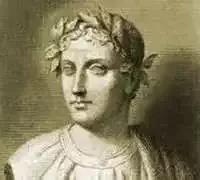
Horácio
BkIII:XIV Augustus Returns
O citizens, conquering Caesar is home
from the Spanish shores, who, like Hercules, now
was said to be seeking that laurel, that’s bought
at the price of death.
May his wife rejoice in a matchless husband,
having sacrificed to true gods, appear now
with our famous leader’s sister, and, all dressed
in holy ribbons,
the mothers of virgins and youths, now safe and
sound. And you, O you boys and you young girls who
are still without husbands, spare us any of
your ill-omened words
This day will be a true holiday for me,
and banish dark care: I’ll not fear civil war,
nor sudden death by violence, while Caesar has
command of the earth.
Go, now, you boys, seek out perfumes and garlands
and a jar that’s old as the Marsian War,
if any of them have managed to escape
Spartacus’s eyes.
And tell that graceful Neaera to hurry
and fasten all her perfumed hair in a knot:
if her hateful doorkeeper causes
delay, come away.
My greying hair softens a spirit eager
for arguments and passionate fights:
I’d not have endured it in my hot youth, while
Plancus was Consul.
Read more →
268
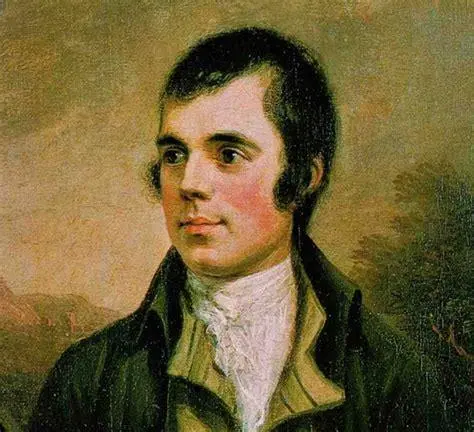
Robert Burns
Fareweel To A'Our Scottish Fame
Fareweel to a' our Scottish fame,
Fareweel our ancient glory;
Fareweel ev'n to the Scottish name,
Sae famed in martial story!
Now Sark rins over Solway sands,
And Tweed rins to the ocean,
To mark where England's province stands—
Such a parcel of rogues in a nation!
What force or guile could not subdue
Thro' many warlike ages,
Is wrought now by a coward few,
For hireling traitor's wages.
The English steel we could disdain,
Secure in valour's station;
But English gold has been our bane—
Such a parcel of rogues in a nation!
O, would or I had seen the day
That treason thus could sell us,
My auld grey head had lien in clay
Wi' Bruce and loyal Wallace!
But pith and power, till my last hour,
I'll mak this declaration:
We're bought and sold for English gold—
Such a parcel of rogues in a nation!
Read more →
268
Henry Lawson
As far as your Rifles Cover
Do you think, you slaves of a thousand years to poverty, wealth and pride,
You can crush the spirit that has been free in a land that's new and wide?
When you've scattered the last of the farmer bands, and the war for a while is over,
You will hold the land – ay, you'll hold the land – the land that your rifles cover.
Till your gold has levelled each mountain range where a wounded man can hide,
Till your gold has lighted the moonless night on the plains where the rebels ride;
Till the future is proved, and the past is bribed from the son of the land's dead lover –
You may hold the land – you may hold the land just as far as your rifles cover.
Read more →
266

Jonathan Swift
Jack Frenchman’s Lamentation
Ye Commons and Peers,
Pray lend me your ears,
I'll sing you a song, (if I can,)
How Lewis le Grand
Was put to a stand,
By the arms of our gracious Queen Anne.
How his army so great,
Had a total defeat,
And close by the river Dender:
Where his grandchildren twain,
For fear of being slain,
Gallop'd off with the Popish Pretender.
To a steeple on high,
The battle to spy,
Up mounted these clever young men;
But when from the spire,
They saw so much fire,
Most cleverly came down again.
Then on horseback they got
All on the same spot,
By advice of their cousin Vendosme,
O Lord! cried out he,
Unto young Burgundy,
Would your brother and you were at home!
While this he did say,
Without more delay,
Away the young gentry fled;
Whose heels for that work,
Were much lighter than cork,
Though their hearts were as heavy as lead.
Not so did behave
Young Hanover brave,
In this bloody field I assure ye:
When his war-horse was shot
He valued it not,
But fought it on foot like a fury.
Full firmly he stood,
As became his high blood,
Which runs in his veins so blue:
For this gallant young man,
Being a-kin to QUEEN ANNE,
Did as (were she a man) she would do.
What a racket was here,
(I think 'twas last year,)
For a little misfortune in Spain!
For by letting 'em win,
We have drawn the puts in,
To lose all they're worth this campaign.
Though Bruges and Ghent
To Monsieur we lent,
With interest they shall repay 'em;
While Paris may sing,
With her sorrowful king,
Nunc dimittis instead of Te Deum.
From this dream of success,
They'll awaken, we guess,
At the sound of great Marlborough's drums,
They may think, if they will,
Of Ahnanza still,
But 'tis Blenheim wherever he comes.
O Lewis perplex'd,
What general next!
Thou hast hitherto changed in vain;
He has beat 'em all round,
If no new one's found,
He shall beat 'em over again.
We'll let Tallard out,
If he'll take t'other bout;
And much he's improved, let me tell ye,
With Nottingham ale
At every meal,
And good beef and pudding in belly.
But as losers at play,
Their dice throw away,
While the winners do still win on;
Let who will command,
Thou hadst better disband,
For, old Bully, thy doctors are gone.
Read more →
268
John Greenleaf Whittier
The Vow Of Washington
The sword was sheathed: in April's sun
Lay green the fields by Freedom won;
And severed sections, weary of debates,
Joined hands at last and were United States.
O City sitting by the Sea
How proud the day that dawned on thee,
When the new era, long desired, began,
And, in its need, the hour had found the man!
One thought the cannon salvos spoke,
The resonant bell-tower's vibrant stroke,
The voiceful streets, the plaudit-echoing halls,
And prayer and hymn borne heavenward from St. Paul's!
How felt the land in every part
The strong throb of a nation's heart,
As its great leader gave, with reverent awe,
His pledge to Union, Liberty, and Law.
That pledge the heavens above him heard,
That vow the sleep of centuries stirred;
In world-wide wonder listening peoples bent
Their gaze on Freedom's great experiment.
Could it succeed? Of honor sold
And hopes deceived all history told.
Above the wrecks that strewed the mournful past,
Was the long dream of ages true at last?
Thank God! the people's choice was just,
The one man equal to his trust,
Wise beyond lore, and without weakness good,
Calm in the strength of flawless rectitude.
His rule of justice, order, peace,
Made possible the world's release;
Taught prince and serf that power is but a trust,
And rule, alone, which serves the ruled, is just;
That Freedom generous is, but strong
In hate of fraud and selfish wrong,
Pretence that turns her holy truths to lies,
And lawless license masking in her guise.
Land of his love! with one glad voice
Let thy great sisterhood rejoice;
A century's suns o'er thee have risen and set,
And, God be praised, we are one nation yet.
And still we trust the years to be
Shall prove his hope was destiny,
Leaving our flag, with all its added stars,
Unrent by faction and unstained by wars.
Lo! where with patient toil he nursed
And trained the new-set plant at first,
The widening branches of a stately tree
Stretch from the sunrise to the sunset sea.
And in its broad and sheltering shade,
Sitting with none to make afraid,
Were we now silent, through each mighty limb,
The winds of heaven would sing the praise of him.
Our first and best!--his ashes lie
Beneath his own Virginian sky.
Forgive, forget, O true and just and brave,
The storm that swept above thy sacred grave.
For, ever in the awful strife
And dark hours of the nation's life,
Through the fierce tumult pierced his warning word,
Their father's voice his erring children heard.
The change for which he prayed and sought
In that sharp agony was wrought;
No partial interest draws its alien line
'Twixt North and South, the cypress and the pine!
One people now, all doubt beyond,
His name shall be our Union-bond;
We lift our hands to Heaven, and here and now.
Take on our lips the old Centennial vow.
For rule and trust must needs be ours;
Chooser and chosen both are powers
Equal in service as in rights; the claim
Of Duty rests on each and all the same.
Then let the sovereign millions, where
Our banner floats in sun and air,
From the warm palm-lands to Alaska's cold,
Repeat with us the pledge a century old?
Read more →
267
Horácio
BkI:II To Augustus
The Father’s sent enough dread hail
and snow to earth already, striking
sacred hills with fiery hand,
to scare the city,
and scare the people, lest again
we know Pyrrha’s age of pain
when Proteus his sea-herds drove
across high mountains,
and fishes lodged in all the elms,
that used to be the haunt of doves,
and the trembling roe-deer swam
the whelming waters.
We saw the yellow Tiber’s waves
hurled backwards from the Tuscan shore,
toppling Numa’s Regia and
the shrine of Vesta,
far too fierce now, the fond river,
in his revenge of wronged Ilia,
drowning the whole left bank, deep,
without permission.
Our children, fewer for their father’s
vices, will hear metal sharpened
that’s better destined for the Persians,
and of battles too.
Which gods shall the people call on
when the Empire falls in ruins?
With what prayer shall the virgins
tire heedless Vesta?
Whom will Jupiter assign to
expiate our sins? We pray you,
come, cloud veiling your bright shoulders,
far-sighted Apollo:
or laughing Venus Erycina,
if you will, whom Cupid circles,
or you, if you see your children
neglected, Leader,
you sated from the long campaign,
who love the war-shouts and the helmets,
and the Moor’s cruel face among his
blood-stained enemies.
Or you, winged son of kindly Maia,
changing shape on earth to human
form, and ready to be named as
Caesar’s avenger:
Don’t rush back to the sky, stay long
among the people of Quirinus,
no swifter breeze take you away,
unhappy with our
sins: here to delight in triumphs,
in being called our prince and father,
making sure the Medes are punished,
lead us, O Caesar.
Read more →
264
John Greenleaf Whittier
Voice Of New England
UP the hillside, down the glen,
Rouse the sleeping citizen;
Summon out the might of men!
Like a lion growling low,
Like a night-storm rising slow,
Like the tread of unseen foe;
It is coming, it is nigh!
Stand your homes and altars by;
On your own free thresholds die.
Clang the bells in all your spires;
On the gray hills of your sires
Fling to heaven your signal-fires.
From Wachuset, lone and bleak,
Unto Berkshire's tallest peak,
Let the flame-tougued heralds speak.
Oh, for God and duty stand,
Heart to heart and hand to hand,
Round the old graves of the land.
Whoso shrinks or falters now,
Whoso to the yoke would bow,
Brand the craven on his brow!
Freedom's soil hath only place
For a free and fearless race,
None for traitors false and base.
Perish party, perish clan;
Strike together while ye can,
Like the arm of one strong man.
Like that angel's voice sublime,
Heard above a world of crime,
Crying of the end of time;
With one heart and with one mouth,
Let the North unto the South
Speak the word befitting both:
'What though Issachar be strong!
Ye may load his back with wrong
Overmuch and over long:
'Patience with her cup o'errun,
With her weary thread outspun,
Murmurs that her work is done.
'Make our Union-bond a chain,
Weak as tow in Freedom's strain
Link by link shall snap in twain.
'Vainly shall your sand-wrought rope
Bind the starry cluster up,
Shattered over heaven's blue cope!
'Give us bright though broken rays,
Rather than eternal haze,
Clouding o'er the full-orbed blaze.
'Take your land of sun and bloom;
Only leave to Freedom room
For her plough, and forge, and loom;
'Take your slavery-blackened vales;
Leave us but our own free gales,
Blowing on our thousand sails.
'Boldly, or with treacherous art,
Strike the blood-wrought chain apart;
Break the Union's mighty heart;
'Work the ruin, if ye will;
Pluck upon your heads an ill
Which shall grow and deepen still.
'With your bondman's right arm bare,
With his heart of black despair,
Stand alone, if stand ye dare!
'Onward with your fell design;
Dig the gulf and draw the line:
Fire beneath your feet the mine:
'Deeply, when the wide abyss
Yawns between your land and this,
Shall ye feel your helplessness.
'By the hearth, and in the bed,
Shaken by a look or tread,
Ye shall own a guilty dread.
'And the curse of unpaid toil,
Downward through your generous soil
Like a fire shall burn and spoil.
'Our bleak hills shall bud and blow,
VInes our rocks shall overgrow,
Plenty in our valleys flow; —
'And when vengeance clouds your skies,
Hither shall ye turn your eyes,
As the lost on Paradise!
'We but ask our rocky strand,
Freedom's true and brother band,
Freedom's strong and honest hand;
'Valleys by the slave untrod,
And the Pilgrim's mountain sod,
Blessed of our fathers' God!'
Read more →
265
Henry Lawson
The Waving of the Red
It is a sad and cruel fate the country’s coming to,
And there’s no use in striking, ‘so what are we to do?’
“I know what we could do, but then, there might be traitors near,
And things are running in my head that only mates should hear!”
The world cannot go on like this, in spite of all that’s said,
And millions now are waiting for – the Waving of the Red.
“Last night as I lay slipping out a vision came to me;
A girl with face as fair and grand as ever man might see –
Her form was like the statues raised to Liberty in France,
And in her hand a blood-red flag was wrapped around a lance.
She shook the grand old colour loose, she smiled at me and said;
“Go bid your brothers gather for the Waving of the Red.”
Read more →
263
Henry Lawson
The New Chum Jackeroo
Let bushmen think as bushmen will,
And say whate’er they choose,
I hate to hear the stupid sneer
At New Chum Jackaroos.
He may not ride as you can ride,
Or do what you can do;
But sometimes you’d seem small beside
The New Chum Jackaroo.
His share of work he never shirks,
And through the blazing drought,
He lives the old things down, and works
His own salvation out.
When older, wiser chums despond
He battles brave of heart—
’Twas he who sailed of old beyond
The margin of the chart.
’Twas he who proved the world was round—
In crazy square canoes;
The lands you’re living in were found
By New Chum Jackaroos.
He crossed the deserts hot and bare,
From barren, hungry shores—
The plains that you would scarcely dare
With all your tanks and bores.
He fought a way through stubborn hills
Towards the setting sun—
Your fathers all and Burke and Wills
Were New Chums, every one.
When England fought with all the world
In those brave days gone by,
And all its strength against her hurled,
He held her honour high.
By Southern palms and Northern pines—
Where’er was life to lose—
She held her own with thin red lines
Of New Chum Jackaroos.
Through shot and shell and solitudes,
Wherever feet have gone,
The New Chums fought while eye-glass dudes
And Johnnies led them on.
And though he wear a foppish coat,
And these old things forget,
In stormy times I’d give a vote
For Cuffs and Collars yet.
Read more →
263
Henry Lawson
Wide Lies Australia
Wide lies Australia! The seas that surround her
Flow for her unity – all states in one.
Never has Custom nor Tyranny bound her –
Never was conquest so peacefully won.
Fair lies Australia! with all things within her
Meet for a Nation, the greatest to be:
Free to the White Man to woo and to win her:
Those who'd be happy and those who'd be free.
Free to live fully and free to live cleanly,
Free to give learning to daughter and son;
Free to act nobly but not to act meanly,
Free to forget what the old lands had done.
Free to be Brothers! Our hymn and our sermon
To keep for the White World the balance of Power,
Welcoming all, be they British or German,
All come to help us – we'll wait for the hour.
Out in the West where the flood-water gathers –
Out in the drought on the sand desert lone –
Went the brave English and brave foreign fathers
Fearlessly facing the fearful unknown.
Gemmed with their names lies the great past behind us.
Dark lie the storm clouds before us today,
Let us so live the future shall find us
Facing the danger as dauntless as they.
Read more →
261
Henry Lawson
Skaal
While they struggle on exhausted,
While they plough through bog and flood,
While they drag their sick and wounded
Where the tracks are drenched with blood;
While the Fates seemed joined to crush her
And her bravest hearts lie low,
I might sing one song for Russia,
Even though she be our foe.
Still be generous to foemen,
And have charity for all—
Right or wrong, fill up the wine cup;
‘Skaal!’ unto all brave men—‘Skaal!’
While they suffer, cold and hungry,
All the heart-break of defeat,
And the twice heroic rearguard
Grimly holds the grim retreat;
While they fight the last alive on
Fields where countless corpses are,
We might drop one tear for Ivan,
Dead for Russia and the Czar!
Sullen grief of boorish brother,
Sister’s scalding tears that flow,
Choking grief of grey-haired mother,
Father’s stony face bent low:
Hopeless stare of wife or daughter,
And the sweetheart dumb and white,
And the far-off fields of slaughter
Where their Ivan lies to-night.
Even England feared disaster,
With all Europe in despair,
In the days when Europe’s master
Baited Bruin in his lair.
Greater nations made submission,
And a tyrant’s yoke they earned;
But The Man with curbed ambition
Staggered back while Moscow burned,—
Burned to save the world from ruin
That dark winter long ago;
Ah! the gaunt and hunted Bruin
Hugged the tyrant in the snow!
We can cry the crimes of Russia,
Who know naught of Russia’s work—
We who died to conquer freemen,
We who fought to save the Turk.
Ah! we well may cant and cackle,
In the streets and in the clubs,
While the Russia that we know not
Licks her wounds and feeds her cubs.
But the Fates for ever beckon—
Every nation has its debt,
And her foes may have to reckon,
Reckon with ‘der Russland’ yet.
Through long ages slept the Dragon,
We have roused the ugly beast—
Russia still may stand the vanguard
Of the West against the East.
And though Ivan sees no farther
Than to-night through lurid gloom
Every hour he holds Port Arthur
May postpone the White Man’s doom.
Right or wrong—whate’er in future
May this blundering world befall,
Human kindness will survive it—
Brothers! ‘Skaal!’ to brave men, ‘Skaal!’
Read more →
258
Henry Lawson
For Australia
Now, with the wars of the world begun, they'll listen to you and me,
Now while the frightened nations run to the arms of democracy,
Now, when our blathering fools are scared, and the years have proved us right –
All unprovided and unprepared, the Outpost of the White!
"Get the people – no matter how," that is the way they rave,
Could a million paupers aid us now, or a tinpot squadron save?
The "loyal" drivel, the blatant boast are as shames that used to be –
Our fight shall be a fight for the coast, with the future for the sea!
We must turn our face to the only track that will take us through the worst –
Cable to charter that we lack, guns and cartridges first,
New machines that will make machines till our factories are complete –
Block the shoddy and Brummagem, pay them with wool and wheat.
Build to-morrow the foundry shed ['tis a task we dare not shirk],
Lay the runs and the engine-bed, and get the gear to work.
Have no fear when we raise the steam in the hurried factory –
We are not lacking in the brains that teem with originality.
Have no fear for the way is clear – we'll shackle the hands of greed –
Every lad is an engineer in his country's hour of need;
Many are brilliant, swift to learn, quick at invention too,
Born inventors whose young hearts burn to show what the South can do!
To show what the South can do, done well, and more than the North can do.
They'll make us the cartridge and make the shell, and the gun to carry true,
Give us the gear and the South is strong - and the docks shall yield us more;
The national arm like the national song comes with the first great war.
Books of science from every land, volumes on gunnery,
Practical teachers we have at hand, masters of chemistry.
Clear young heads that will sift and think in spite of authorities,
And brains that shall leap from invention's brink at the clash of factories.
Still be noble in peace or war, raise the national spirit high;
And this be our watchword for evermore: "For Australia – till we die!"
Read more →
259

William Wordsworth
England ii
MILTON! thou shouldst be living at this hour:
England hath need of thee: she is a fen
Of stagnant waters: altar, sword, and pen,
Fireside, the heroic wealth of hall and bower,
Have forfeited their ancient English dower
Of inward happiness. We are selfish men;
O raise us up, return to us again,
And give us manners, virtue, freedom, power!
Thy soul was like a Star, and dwelt apart;
Thou hadst a voice whose sound was like the sea:
Pure as the naked heavens, majestic, free,
So didst thou travel on life's common way,
In cheerful godliness; and yet thy heart
The lowliest duties on herself did lay.
Read more →
259
Henry Lawson
Queen Hilda of Virland
PART I
Queen Hilda rode along the lines,
And she was young and fair;
And forward on her shoulders fell
The heavy braids of hair:
No gold was ever dug from earth
Like that burnished there –
No sky so blue as were her eyes
Had man seen anywhere.
'Twas so her gay court poets sang,
And we believed it true.
But men must fight for golden hair
And die for eyes of blue!
Cheer after cheer, the long half mile
(It has been ever thus),
And evermore her winsome smile
She turned and turned on us.
The Spring-burst over wood and sea,
The day was warm and bright –
Young Clarence stood on my left hand,
Old Withen on the right.
With fifteen thousand men, or more,
With plumes and banners gay,
To sail that day to foreign war,
And our ships swarmed on the bay.
Old Withen muttered in his beard I listened with a sigh –
"Good Faith! for such a chit as that
Strong men must kill and die.
She'll back to her embroideree,
And fools that bow and smirk,
And we must sail across the sea
And go to other work.
"And wherefore? Wherefore," Withen said,
"Is this red quarrel sought?
Because of clacking painted hags
And foreign fops at Court!
Because 'tis said a drunken king,
In lands we've never seen,
Said something foolish in his cups
Of our young silly queen!
"Good faith! in her old great-aunt's time
'Twere different, I vow:
If old Dame Ruth were here, she'd get
Some sharp advising now!"
(At this a grim smile went about
For men could say in sooth
That none who'd seen her face could doubt
The fair fame of Dame Ruth.)
If Clarence heard, he said no word;
His soul was fresh and clean;
The glory in his boyish eyes
Was shining for his Queen!
And as she passed, he gazed as one
An angel might regard.
(Old Withen looked as if he'd like
To take and smack her hard.)
We only smiled at anything
That good old Withen said,
For he, half blind, through smoke and flame
Had borne her grandsire dead;
And he, in Virland's danger time,
Where both her brothers died,
Had ridden to red victory
By her brave father's side.
Queen Hilda rode along the lines
'Mid thundering cheers the while,
And each man sought – and seemed to get –
Her proud and happy smile.
Queen Hilda little dreamed – Ah, me! –
On what dark miry plain,
And what blood-blinded eyes would see
Her girlish smile again!
Queen Hilda rode on through the crowd,
We heard the distant roar;
We heard the clack of gear and plank,
The sailors on the shore.
Queen Hilda sought her "bower" to rest,
(For her day's work was done),
We kissed our wives – or others' wives –
And sailed ere set of sun.
(Some sail because they're married men,
And some because they're free –
To come or not come back agen,
And such of old were we.
Some sail for fame and some for loot
And some for love – or lust –
And some to fish and some to shoot
And some because they must.
(Some sail who know not why they roam
When they are come aboard,
And some for wives and loves at home,
And some for those abroad.
Some sail because the path is plain,
And some because they choose,
And some with nothing left to gain
And nothing left to lose.
(And we have sailed from Virland, we,
For a woman's right or wrong,
And we are One, and One, and Three,
And Fifteen Thousand strong.
For Right or Wrong and Virland's fame –
You dared us and we come
To write in blood a woman's name
And take a letter home.)
PART II
King Death came riding down the lines
And broken lines were they,
With scarce a soldier who could tell
Where friend or foeman lay:
The storm cloud looming over all,
Save where the west was red,
And on the field, of friend and foe,
Ten thousand men lay dead.
Boy Clarence lay in slush and blood
With his face deathly white;
Old Withen lay by his left side
And I knelt at his right.
And Clarence ever whispered,
Though with dying eyes serene:
"I loved her for her girlhood,.
Will someone tell the Queen?"
And this old Withen's message,
When his time shortly came:
"I loved her for her father's sake
But I fought for Virland's fame:
Go, take you this, a message
From me," Old Withen said,
"Who knelt beside her father,
And his when they were dead:
"I who in sport or council,
I who as boy and man,
Would aye speak plainly to them
Were it Court, or battle's van –
(Nay! fear not, she will listen
And my words be understood,
And she will heed my message,
For I know her father's blood.)
"If shame there was – (I judge not
As I'd not be judged above:
The Royal blood of Virland
Was ever hot to love,
Or fight.) – the slander's wiped out,
As witness here the slain:
But, if shame there was, then tell her
Let it not be again."
At home once more in Virland
The glorious Spring-burst shines:
Queen Hilda rides right proudly
Down our victorious lines.
The gaps were filled with striplings,
And Hilda wears a rose:
And what the wrong or right of it
Queen Hilda only knows.
But, be it state or nation
Or castle, town, or shed,
Or be she wife or monarch
Or widowed or unwed –
Now this is for your comfort,
And it has ever been:
That, wrong or right, a man must fight
For his country and his queen.
Read more →
259
Henry Lawson
As Ireland Wore the Green
BY RIGHT of birth in southern land I send my warning forth.
I see my country ruined by the wrongs that damned the North.
And shall I stand with fireless eyes and still and silent mouth
While Mammon builds his Londons on the fair fields of the South?
CHORUS:
O must we hide our colour
In fear of Mammon’s spleen?
Or shall we wear the bonnie blue
As Ireland wore the green?
As Ireland wore the green, my friends!
As Ireland wore the green!
Aye, we will wear our colour still,
As Ireland wore the green!
I see the shade of poverty fall on each sunny scene.
And slums and alley-ways extend where fields were evergreen.
There is a law that stamps the flower of freedom as it springs;
And this upon a soil that’s trod by prouder feet than kings’.
And must I hide my colour
In fear of Mammon’s spleen?
Or shall I wear the bonnie blue
As Ireland wore the green?
As Ireland wore the green, my friends!
As Ireland swore the green!
Aye, I will wear my colour yet,
As Ireland wore the green!
Out there beyond the lonely range our fathers toiled for years
’Neath all the hardships that beset true-hearted pioneers;
And our brave mothers journeyed there to do the work of men
On those great awful plains that were unfit for women then.
Then must we hide our colour
In fear of Mammon’s spleen?
Or shall we wear the bonnie blue
As Ireland swore the green?
As Ireland wore the green, my friends!
As Ireland wore the green!
Aye, we shall wear our colour still,
As Ireland wore the green!
O shall the fields our fathers won be yielded to the few
Who never touched the axe or spade, and hardships never knew?
Shall lordly robbers rule the land and build their mansions high,
And ladies flaunt their jewelled plumes where our brave mothers lie?
O must we hide our colour
In fear of Mammnon’s spleen?
Or shall the wear the bonnie blue
As Ireland wore the green?
As Ireland wore the green, my friends!
As Ireland wore the green!
Aye, the will wear our colour yet,
As Ireland wore the green!
What though our stalwart fathers came from every land on earth,
We will be loyal to the land that gives our children birth.
We’ll show our banner to the sun—the Southern Cross displayed—
And join our strength together for the home our fathers made.
Let cowards hide their colour
For fear of Mammon’s spleen!
But I will wear my bonnie blue
As Ireland swore the green!
As Ireland swore the green, my friends!
As Ireland wore the green!
Aye, I will wear my colour still,
As Ireland swore the green!
We’ll light the lamp of hope above the alley and the slum,
And teach the poor and drill them for the war that is to come.
We’ll send our songs recruiting far beneath the western sky,
And wake the towns and let them know the day of deeds is nigh.
And the twill wear our colour
In spite of Mammon’s spleen!
O the will wear the bonnie blue
As Ireland wore the green!
As Ireland wore the green, my friends!
As Ireland wore the green!
Aye, the will wear our colour yet,
As Ireland wore the green!
Read more →
256
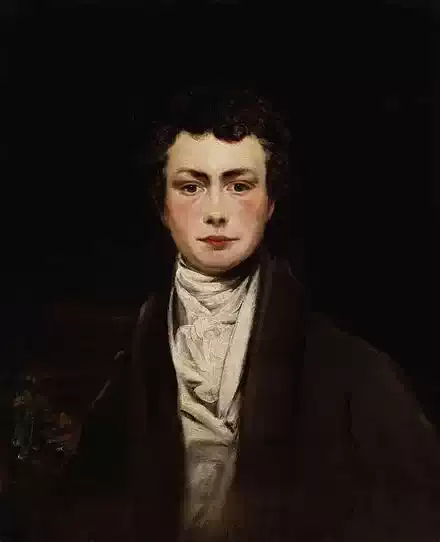
Thomas Moore
The Parallel
Yes, sad one of Sion, if closely resembling,
In shame and in sorrow, thy wither'd-up heart --
If drinking deep, deep, of the same "cup of trembling"
Could make us thy children, our parent thou art.
Like thee doth our nation lie conquer'd and broken,
And fall'n from her head is the once royal crown;
In her streets, in her halls, Desolation hath spoken,
And "while it is day yet, her sun hath gone down."
Like thine doth her exile, 'mid dreams of returning,
Die far from the home it were life to behold;
Like thine do her sons, in the day of their mourning
Remember the bright things that bless'd them of old.
Ah, well may we call her, like thee, "the Forsaken,"
Her boldest are vanquish'd, her proudest are slaves;
And the harps of her minstrels, when gayest they waken,
Have tones 'mid their mirth like the wind over graves!
Yet hadst thou thy vengeance -- yet came there the morrow,
That shines out, at last, on the longest dark night,
When the sceptre, that smote thee with slavery and sorrow,
Was shiver'd at once, like a reed, in thy sight.
When that cup, which for others the proud Golden City
Had brimm'd full of bitterness, drench'd her own lips;
And the world she had trampled on heard, without pity,
The howl in her halls, and the cry from her ships.
When the curse Heaven keeps for the haughty came over,
Her merchants rapacious, her rulers unjust,
And a ruin at last for the earthworm to cover,
The Lady of Kingdoms lay low in the dust.
Read more →
257
Henry Lawson
At The Beating Of A Drum
Fear ye not the stormy future, for the Battle Hymn is strong,
And the armies of Australia shall not march without a song;
The glorious words and music of Australia's song shall come
When her true hearts rush together at the beating of a drum.
We may not be there to hear it – 'twill be written in the night,
And Australia's foes shall fear it in the hour before the fight.
The glorious words and music from a lonely heart shall come
When our sons shall rush to danger at the beating of the drum.
He shall be unknown who writes it; he shall soon forgotten be,
But the song shall ring through ages as a song of liberty.
And I say the words and music of our battle hymn shall come,
When Australia wakes in anger at the beating of a drum.
Read more →
255