
Nation and Patriotism

Henry Lawson
The Gathering of the Brown-Eyed
The brown eyes came from Asia, where all mystery is true,
Ere the masters of Soul Secrets dreamed of hazel, grey, and blue;
And the Brown Eyes came to Egypt, which is called the gypsies’ home,
And the Brown Eyes went from Egypt and Jerusalem to Rome.
There was strife amongst the Brown Eyes for the false things and the true;
There was war amongst the Brown Eyes for the old gods and the new;
But the old gods live for ever, and their goddesses are bright
In the temples of Old Passions with the Brown Eyes of the White.
The Brown Eyes east, by Africa, they saw and conquered Spain,
And the Brown Eyes marched as Christians till a Brown Eye met a Dane,
The Dane had Brown-Eyed children who in blue eyes took delight—
And a son of blue-eyed sailors, brown-eyed, reads the stars to-night.
Oh, Knowledge from Old Deserts, where the great stars rocked the world!
Oh, courage from grim seaboards, where the Viking ships were hurled!
The clear skin of the Norseman, and the desert strength and sight,
The power to fathom mankind, and the glorious gift to write!
We can look in souls of women, aye! and let them know we do;
We can fix the false eyes earthward; we can meet and match the true;
We can startle Voice from Silence, and from Darkness flash the Light—
And the eyes to fathom Asia are the Brown Eyes of the White.
There’s a legend in the nations that all Brown Eyes once were true,
But were taught in love and warfare by the sinful shades of blue;
There’s a story amongst sinners that all Brown Eyes once were kind,
Till the Steel-Blue struck the Red-Fire in a hatred that was blind.
But the Brown Eyes are the saddest at the death of Love and Truth.
And the Brown Eyes are the grandest and the dreamiest of Youth.
They have risen in rebellion unto leadership sublime—
And the grey-eyed queens of women loved, and love them for all time!
Brown Eyes never married Brown Eyes but unhappiness held sway,
For the real mates of the Brown Eyes have for ever been the grey.
But though Brown Eyes quarrel hotly, though their very souls be wrenched,
Never Blue-Eye wronged a Brown-Eye but the Brown-Eye was avenged!
Through the breadth of wide Australia, waiting desert-like and vast,
We have sent our Brown-Eyed children, who are multiplying fast.
Patriots, picture-writers, sages, fill the Brown-Eyed rolls to-night—
’Tis the gathering from all ages of the Brown-Eyed of the White.
Read more →
301
Henry Lawson
Middleton's Rouseabout
Tall and freckled and sandy,
Face of a country lout;
This was the picture of Andy,
Middleton's Rouseabout.
Type of a coming nation,
In the land of cattle and sheep,
Worked on Middleton's station,
`Pound a week and his keep.'
On Middleton's wide dominions
Plied the stockwhip and shears;
Hadn't any opinions,
Hadn't any `idears'.
Swiftly the years went over,
Liquor and drought prevailed;
Middleton went as a drover,
After his station had failed.
Type of a careless nation,
Men who are soon played out,
Middleton was: -- and his station
Was bought by the Rouseabout.
Flourishing beard and sandy,
Tall and robust and stout;
This is the picture of Andy,
Middleton's Rouseabout.
Now on his own dominions
Works with his overseers;
Hasn't any opinions,
Hasn't any `idears'.
Read more →
299
Henry Lawson
To Tom Bracken
O had you tracked where Kendall* trod
I think you would be kneelin’
Three times a week and thankin’ God
That you are of New Zealan’!
For this I’ll say, to make it short,
An’ keep my tongue from clacken—
The people are a kinder sort
You’re singin’ for, Tom Bracken.
Read more →
298

John Greenleaf Whittier
Randolph Of Roanoke
O Mother Earth! upon thy lap
Thy weary ones receiving,
And o'er them, silent as a dream,
Thy grassy mantle weaving,
Fold softly in thy long embrace
That heart so worn and broken,
And cool its pulse of fire beneath
Thy shadows old and oaken.
Shut out from him the bitter word
And serpent hiss of scorning;
Nor let the storms of yesterday
Disturb his quiet morning.
Breathe over him forgetfulness
Of all save deeds of kindness,
And, save to smiles of grateful eyes,
Press down his lids in blindness.
There, where with living ear and eye
He heard Potomac's flowing,
And, through his tall ancestral trees,
Saw autumn's sunset glowing,
He sleeps, still looking to the west,
Beneath the dark wood shadow,
As if he still would see the sun
Sink down on wave and meadow.
Bard, Sage, and Tribune! in himself
All moods of mind contrasting, The
tenderest wail of human woe,
The scorn like lightning blasting;
The pathos which from rival eyes
Unwilling tears could summon,
The stinging taunt, the fiery burst
Of hatred scarcely human!
Mirth, sparkling like a diamond shower,
From lips of life-long sadness;
Clear picturings of majestic thought
Upon a ground of madness;
And over all Romance and Song
A classic beauty throwing,
And laurelled Clio at his side
Her storied pages showing.
All parties feared him: each in turn
Beheld its schemes disjointed,
As right or left his fatal glance
And spectral finger pointed.
Sworn foe of Cant, he smote it down
With trenchant wit unsparing,
And, mocking, rent with ruthless hand
The robe Pretence was wearing.
Too honest or too proud to feign
A love he never cherished,
Beyond Virginia's border line
His patriotism perished.
While others hailed in distant skies
Our eagle's dusky pinion,
He only saw the mountain bird
Stoop o'er his Old Dominion!
Still through each change of fortune strange
Racked nerve, and brain all burning,
His loving faith in Mother-land
Knew never shade of turning;
By Britain's lakes, by Neva's tide,
Whatever sky was o'er him,
He heard her rivers' rushing sound,
Her blue peaks rose before him.
He held his slaves, yet made withal
No false and vain pretences,
Nor paid a lying priest to seek
For Scriptural defences.
His harshest words of proud rebuke,
His bitterest taunt and scorning,
Fell fire-like on the Northern brow
That bent to him in fawning.
He held his slaves; yet kept the while
His reverence for the Human;
In the dark vassals of his will
He saw but Man and Woman!
No hunter of God's outraged poor
His Roanoke valley entered;
No trader in the souls of men
Across his threshold ventured.
And when the old and wearied man
Lay down for his last sleeping,
And at his side, a slave no more,
His brother-man stood weeping,
His latest thought, his latest breath,
To Freedom's duty giving,
With failing tongue and trembling hand
The dying blest the living.
Oh, never bore his ancient State
A truer son or braver!
None trampling with a calmer scorn
On foreign hate or favor.
He knew her faults, yet never stooped
His proud and manly feeling
To poor excuses of the wrong
Or meanness of concealing.
But none beheld with clearer eye
The plague-spot o'er her spreading
None heard more sure the steps of Doom
Along her future treading.
For her as for himself he spake,
When, his gaunt frame upbracing,
He traced with dying hand 'Remorse!'
And perished in the tracing.
As from the grave where Henry sleeps,
From Vernon's weeping willow,
And from the grassy pall which hides
The Sage of Monticello,
So from the leaf-strewn burial-stone
Of Randolph's lowly dwelling,
Virginia! o'er thy land of slaves
A warning voice is swelling!
And hark! from thy deserted fields
Are sadder warnings spoken,
From quenched hearths, where thy exiled sons
Their household gods have broken.
The curse is on thee, - wolves for men,
And briers for corn-sheaves giving!
Oh, more than all thy dead renown
Were now one hero living!
Read more →
299
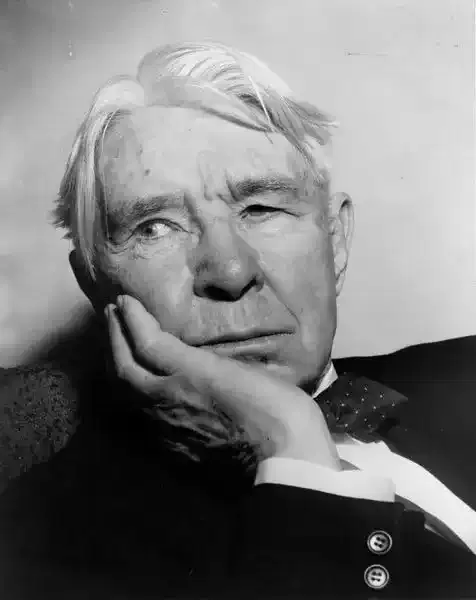
Carl Sandburg
I Am The People, The Mob
I Am the people--the mob--the crowd--the mass.
Do you know that all the great work of the world is
done through me?
I am the workingman, the inventor, the maker of the
world's food and clothes.
I am the audience that witnesses history. The Napoleons
come from me and the Lincolns. They die. And
then I send forth more Napoleons and Lincolns.
I am the seed ground. I am a prairie that will stand
for much plowing. Terrible storms pass over me.
I forget. The best of me is sucked out and wasted.
I forget. Everything but Death comes to me and
makes me work and give up what I have. And I
forget.
Sometimes I growl, shake myself and spatter a few red
drops for history to remember. Then--I forget.
When I, the People, learn to remember, when I, the
People, use the lessons of yesterday and no longer
forget who robbed me last year, who played me for
a fool--then there will be no speaker in all the world
say the name: 'The People,' with any fleck of a
sneer in his voice or any far-off smile of derision.
The mob--the crowd--the mass--will arrive then.
Read more →
296
John Greenleaf Whittier
The Kansas Emigrants
THE KANSAS EMIGRANTS.
WE cross the prairie as of old
The pilgrims crossed the sea,
To make the West, as they the East,
The homestead of the free!
We go to rear a wall of men
On Freedom's southern line,
And plant beside the cotton-tree
The rugged Northern pine!
We're flowing from our native hills
As our free rivers flow;
The blessing of our Mother-land
Is on us as we go.
We go to plant her common schools,
On distant prairie swells,
And give the Sabbaths of the wild
The music of her bells.
Upbearing, like the Ark of old,
The Bible in our van,
We go to test the truth of God
Against the fraud of man.
No pause, nor rest, save where the streams
That feed the Kansas run,
Save where our Pilgrim gonfalon
Shall flout the setting sun!
We'll tread the prairie as of old
Our fathers sailed the sea,
And make the West, as they the East,
The homestead of the free!
Read more →
295
John Greenleaf Whittier
Our Country
WE give thy natal day to hope,
O Country of our love and prayer!
Thy way is down no fatal slope,
But up to freer sun and air.
Tried as by furnace-fires, and yet
By God's grace only stronger made,
In future tasks before thee set
Thou shalt not lack the old-time aid.
The fathers sleep, but men remain
As wise, as true, and brave as they;
Why count the loss and not the gain?
The best is that we have to-day.
Whate'er of folly, shame, or crime,
Withhin thy mighty bounds transpires,
With speed defying space and time
Comes to us on the accusing wires;
While of thy wealth of noble deeds,
Thy homes of peace, thy votes unsold,
The love that pleads for human needs,
The wrong redressed, but half is told!
We read each felon's chronicle,
His acts, his words, his gallows-mood;
We know the single sinner well
And not the nine and ninety good.
Yet if, on daily scandals fed,
We seem at times to doubt thy worth,
We know thee still, when all is said,
The best and dearest spot on earth.
From the warm Mexic Gulf, or where
Belted with flowers Los Angeles
Basks in the semi-tropic air,
To where Katahdin's cedar trees
Are dwarfed and bent by Northern winds,
Thy plenty's horn is yearly filled;
Alone, the rounding century finds
Thy liberal soil by free hands tilled.
A refuge for the wronged and poor,
Thy generous heart has borne the blame
That, with them, through thy open door,
The old world's evil outcasts came.
But, with thy just and equal rule,
And labor's need and breadth of lands,
Free press and rostrum, church and school,
Thy sure, if slow, transforming hands
Shall mould even them to thy design,
Making a blessing of the ban;
And Freedom's chemistry combine
The alien elements of man.
The power that broke their prison bar
And set the dusky millions free,
And welded in the flame of war
The Union fast to Liberty,
Shall if not deal with other ills,
Redress the red man's grievance, break
The Circean cup which shames and kills
And Labor full requital make?
Alone to such as fitly bear
Thy civic honors bid them fall?
And call thy daughters forth to share
The rights and duties pledged to all?
Give every child his right of school,
Merge private greed in public good,
And spare a treasury overfull
The tax upon a poor man's food?
No lack was in thy primal stock,
No weakling founders builded here;
Thine were the men of Plymouth Rock,
The Huguenot and Cavalier;
And they whose firm endurance gained
The freedom of the souls of men,
Whose hands, unstained with blood, maintained
The swordless commonwealth of Penn.
And thine shall be the power of all
To do the work which duty bids,
And make the people's council hall
As lasting as the Pyramids!
Well have thy later years made good
Thy brave-said word a century back,
The pledge of human brotherhood,
The equal claim of white and black.
That word still echoes round the world,
And all who hear it turn to thee,
And read upon thy flag unfurled
The prophecies of destiny.
Thy great world-lesson all shall learn,
The nations in thy school shall sit,
Earth's farthest mountain-tops shall burn
With watch-fires from thy own uplit.
Great without seeking to be great
By fraud or conquest, rich in gold,
But richer in the large estate
Of virtue which thy children hold,
With peace that comes of purity
And strength to simple justice due,
So runs our loyal dream of thee;
God of our fathers! make it true.
O Land of lands! to thee we give
Our prayers, our hopes, our service free;
For thee thy sons shall nobly live,
And at thy need shall die for thee!
Read more →
297
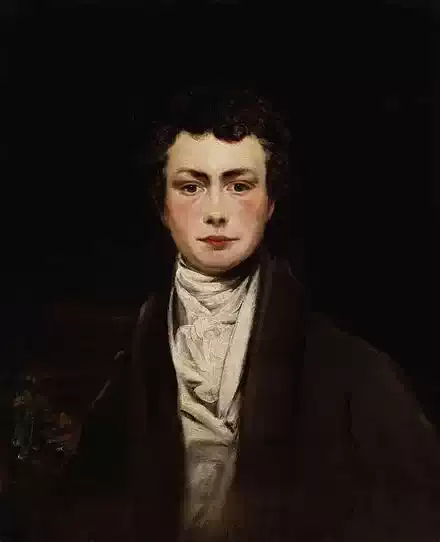
Thomas Moore
Remember Thee!
Remember thee! yes, while there's life in this heart,
It shall never forget thee, all lorn as thou art;
More dear in thy sorrow, thy gloom, and thy showers,
Than the rest of the world in their sunniest hours.
Wert thou all that I wish thee, great, glorious, and free,
First flower of the earth, and first gem of the sea,
I might hail thee with prouder, with happier brow,
But oh! could I love thee more deeply tha now?
No, thy chains as they rankle, thy blood as it runs,
But make thee more painfully dear to thy sons --
Whose hearts, like the young of the desert-bird's nest,
Drink love in each life-drop that flows from thy breast.
Read more →
296

Jonathan Swift
Ballad
A WONDERFUL age
Is now on the stage:
I'll sing you a song, if I can,
How modern Whigs,
Dance forty-one jigs,
But God bless our gracious Queen Anne.
The kirk with applause
Is established by laws
As the orthodox church of the nation.
The bishops do own
It's as good as their own.
And this, Sir, is call'd moderation.
It's no riddle now
To let you see how
A church by oppression may speed;
Nor is't banter or jest,
That the kirk faith is best
On the other side of the Tweed.
For no soil can suit
With every fruit,
Even so, Sir, it is with religion;
The best church by far
Is what grows where you are,
Were it Mahomet's ass or his pigeon.
Another strange story
That vexes the Tory,
But sure there's no mystery in it,
That a pension and place
Give communicants grace,
Who design to turn tail the next minute.
For if it be not strange,
That religion should change,
As often as climates and fashions;
Then sure there's no harm,
That one should conform.
To serve their own private occasions.
Another new dance,
Which of late they advance,
Is to cry up the birth of Pretender,
And those that dare own
The queen heir to the crown,
Are traitors, not fit to defend her.
The subject's most loyal
That hates the blood royal,
And they for employments have merit,
Who swear queen and steeple
Were made by the people,
And neither have right to inherit.
The monarchy's fixt,
By making on't mixt,
And by non-resistance o'erthrown;
And preaching obedience
Destroys our allegiance,
And thus the Whigs prop up the throne.
That viceroy is best,
That would take off the test,
And made a sham speech to attempt it;
But being true blue,
When he found 'twould not do,
Swore, damn him, if ever he meant it.
'Tis no news that Tom Double
The nation should bubble,
Nor is't any wonder or riddle,
That a parliament rump
Should play hop, step, and jump,
And dance any jig to his fiddle.
But now, sir, they tell,
How Sacheverell,
By bringing old doctrines in fashion,
Hath, like a damn'd rogue,
Brought religion in vogue,
And so open'd the eyes of the nation.
Then let's pray without spleen,
May God bless the queen,
And her fellow-monarchs the people;
May they prosper and thrive,
Whilst I am alive,
And so may the church with the steeple.
Read more →
295
John Greenleaf Whittier
To Pennsylvania
O STATE prayer-founded! never hung
Such choice upon a people's tongue,
Such power to bless or ban,
As that which makes thy whisper Fate,
For which on thee the centuries wait,
And destinies of man!
Across thy Alleghanian chain,
With groanings from a land in pain,
The west-wind finds its way:
Wild-wailing from Missouri's flood
The crying of thy children's blood
Is in thy ears to-day!
And unto thee in Freedom's hour
Of sorest need God gives the power
To ruin or to save;
To wound or heal, to blight or bless
With fertile field or wilderness,
A free home or a grave!
Then let thy virtue match the crime,
Rise to a level with the time;
And, if a son of thine
Betray or tempt thee, Brutus-like
For Fatherland and Freedom strike
As Justice gives the sign.
Wake, sleeper, from thy dream of ease,
The great occasion's forelock seize;
And let the north-wind strong,
And golden leaves of autumn, be
Thy coronal of Victory
And thy triumphal song.
Read more →
292

Mao Tsé-Tung
Chingkangshan
Below the hills fly our flags and banners,
Above the hilltops sound our bugles and drums.
The foe encircles us thousands strong,
Steadfastly we stand our ground.
Already our defence is iron-clad,
Now our wills unite like a fortress.
From Huangyangchieh roars the thunder of guns,
Word comes the enemy has fled into the night.
Read more →
293
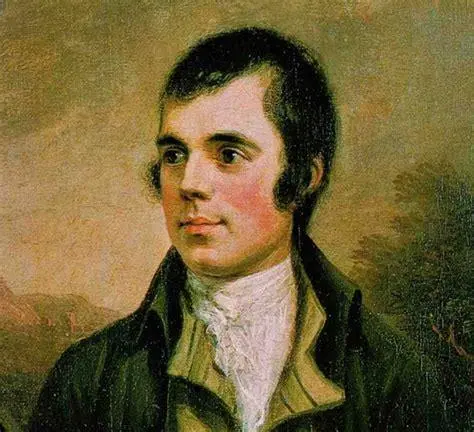
Robert Burns
The Battle Of Sherramuir
"O cam ye here the fight to shun,
Or herd the sheep wi' me, man?
Or were ye at the Sherra-moor,
Or did the battle see, man?"
"I saw the battle, sair and teugh
And reekin-red ran monie a sheugh;
My heart, for fear, gae sough for sough,
To hear the thuds, and see the cluds
O clans frae woods in tartan duds
Wha glaum'd at icingdoms three, man.
"The red-coat lads wi' black cockauds,
To meet them were na slaw, man;
They rush'd and push'd, and bluid outgush'd,
And monie a bouk did fa', man!
The great Argyle led on his files,
I wat they glanc'd for twenty miles;
They hough'd the clans like nine-pin kyles,
They hack'd and hash'd, while braid-swords clashed,
And thro they dash'd, and hew'd and smash'd,
Till fey men died awa, man.
"But had ye seen the philibegs,
And skyrin tartan trews, man;
When in the teeth they daur'd our Whigs,
And Covenant trueblues, man!
In lines extended lang and large,
When baig'nets o'erpower'd the targe,
And thousands hasten'd to the charge,
Wi' Highland wrath and frac the sheath
Drew blades o' death, till, out o' breath.
They fled like frightened dows, man!"
"O, how Deil, Tam, can that be true?
The chase gaed frae the north, man!
I saw mysel, they did pursue
The horseman back to Forth, man:
And at Dunblane, in my ain sight,
They took the brig wi a' their might
And straught to Stirling wing'd their flight;
But, cursed lot! the gates were shut,
And monie a huntit poor red-coat,
For fear amaist did swarf, man!"
My sister Kate came up the gate
Wi' crowdie unto me, man:
She swoor she saw some rebels run
To Perth and to Dundee, man!
Their left-hand general had nae skill;
The Angus lads had nae good will
That day their neebors' bluid to spill;
For fear, by foes, that they should lose
Their cogs o brose; they scar'd at blows,
And hameward fast did flee, man.
"They've lost some gallant gentlemen,
Amang the Highland clans, man!
I fear my Lord Panmure is slain,
Or in his en'mies' hands, man.
Now wad ye sing this double flight,
Some fell for wrang, and some for right,
But monie bade the world guid-night;
Say, pell and mell, wi' muskets' knell
How Tories feil, and Whigs to Hell
Flew off in frightened bands, man!"
Read more →
287
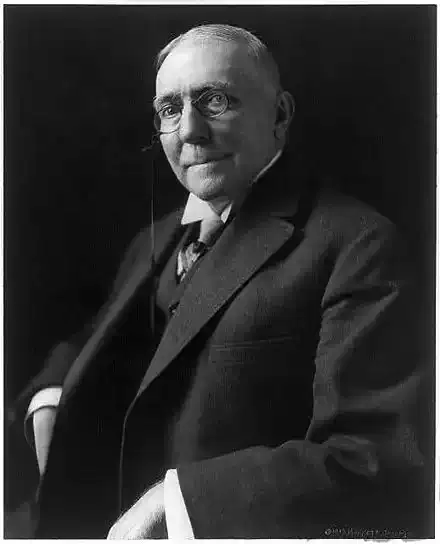
James Whitcomb Riley
The Drum
O the drum!
There is some
Intonation in thy grum
Monotony of utterance that strikes the spirit dumb,
As we hear
Through the clear
And unclouded atmosphere,
Thy palpitating syllables roll in upon the car!
There's a part
Of the art
Of thy music-throbbing heart
That thrills a something in us that awakens with a start,
And in rhyme
With the chime
And exactitude of time,
Goes marching on to glory to thy melody sublime.
And the guest
Of the breast
That thy rolling robs of rest
Is a patriotic spirit as a Continental dressed;
And he looms
From the glooms
Of a century of tombs,
And the blood he spilled at Lexington in living beauty blooms.
And his eyes
Wear the guise
Of a purpose pure and wise,
As the love of them is lifted to a something in the skies
That is bright
Red and white,
With a blur of starry light,
As it laughs in silken ripples to the breezes day and night.
There are deep
Hushes creep
O'er the pulses as they leap,
As thy tumult, fainter growing, on the silence falls asleep,
While the prayer
Rising there
Wills the sea and earth and air
As a heritage to Freedom's sons and daughters everywhere.
Then, with sound
As profound
As the thunderings resound,
Come thy wild reverberations in a throe that shakes the ground,
And a cry
Flung on high,
Like the flag it flutters by,
Wings rapturously upward till it nestles in the sky.
O the drum!
There is some
Intonation in thy grum
Monotony of utterance that strikes the spirit dumb,
As we hear
Through the clear
And unclouded atmosphere,
Thy palpitating syllables roll in upon the ear!
Read more →
285
Henry Lawson
Jack Cornstalk
Jack Cornstalk as a drover born,
Jack Cornstalk gaunt and tan,
Jack Cornstalk leaves his love forlorn,
Jack Cornstalk man to man.
Jack Cornstalk as a careless scamp,
With day-dreams in his head;
Jack Cornstalk on his lone, wide camp,
Jack Cornstalk with his dead,
Jack Cornstalk at his best and worst.
The day dawns on his brow,
Jack Cornstalk’s country must be first –
Advance Australia now!
Read more →
282

Anonymous
Beowulf (The Prelude)
PRELUDE OF THE FOUNDER OF THE DANISH HOUSE
LO, praise of the prowess of people-kings
of spear-armed Danes, in days long sped,
we have heard, and what honor the athelings won!
Oft Scyld the Scefing from squadroned foes,
from many a tribe, the mead-bench tore,
awing the earls. Since erst he lay
friendless, a foundling, fate repaid him:
for he waxed under welkin, in wealth he throve,
till before him the folk, both far and near,
who house by the whale-path, heard his mandate,
gave him gifts: a good king he!
To him an heir was afterward born,
a son in his halls, whom heaven sent
to favor the folk, feeling their woe
that erst they had lacked an earl for leader
so long a while; the Lord endowed him,
the Wielder of Wonder, with world's renown.
Famed was this Beowulf: far flew the boast of him,
son of Scyld, in the Scandian lands.
So becomes it a youth to quit him well
with his father's friends, by fee and gift,
that to aid him, aged, in after days,
come warriors willing, should war draw nigh,
liegemen loyal: by lauded deeds
shall an earl have honor in every clan.
Forth he fared at the fated moment,
sturdy Scyld to the shelter of God.
Then they bore him over to ocean's billow,
loving clansmen, as late he charged them,
while wielded words the winsome Scyld,
the leader beloved who long had ruled....
In the roadstead rocked a ring-dight vessel,
ice-flecked, outbound, atheling's barge:
there laid they down their darling lord
on the breast of the boat, the breaker-of-rings,
by the mast the mighty one. Many a treasure
fetched from far was freighted with him.
No ship have I known so nobly dight
with weapons of war and weeds of battle,
with breastplate and blade: on his bosom lay
a heaped hoard that hence should go
far o'er the flood with him floating away.
No less these loaded the lordly gifts,
thanes' huge treasure, than those had done
who in former time forth had sent him
sole on the seas, a suckling child.
High o'er his head they hoist the standard,
a gold-wove banner; let billows take him,
gave him to ocean. Grave were their spirits,
mournful their mood. No man is able
to say in sooth, no son of the halls,
no hero 'neath heaven, -- who harbored that freight!
Read more →
280
Henry Lawson
Said the Kaiser to the Spy
“Now tell me what can England do?”
Said the Kaiser to the Spy.
“She can do nought, your Majesty—
You rule the sea and sky.
Her day of destiny is done;
Her path of peace is plain;
For she dare never throw a troop
Across the Strait again.”
The Kaiser sent his mighty host,
With Bombast in advance,
To set his seal on Paris first,
And make an end of France.
Their guns were heard in Paris streets,
And trembling Europe heard;
(They’re staggering back in Belgium now)
And England said no word.
“Now tell me what can England do?”
Said the Kaiser to the Spy.
“She can do nought in Southern seas
Where her possessions lie!
Her colonies are arming now—
They only wait your aid!”
“I’ll send my ships,” the Kaiser said,
“And I will kill her trade!”
The Kaiser sent his cruisers forth
To do their worst or best;
And one made trouble in the North—
The Cocos tell the rest.
He sent a squadron to a coast
Where treachery prevailed—
Gra’mercy! They were stricken hard
On seas that Raleigh sailed!
“Now tell me what can England do?”
Said the Kaiser to the Spy.
“Her ports are all unfortified
And there your chances lie!”
He sent his ships to Scarborough,
And called them back again.
The Blucher lies in Channel ooze
With seven hundred men.
“Oh, tell me what can England do?”
Said the Kaiser to the Spy.
“She can’t hold Egypt for a day—
(I have it from On High.”)
And so the Kaiser paid the Turk
To put the matter through—
And England’s Queen of Egypt now,
And boss of Turkey too.
“Now tell me what shall England do?”
Said the Kaiser to the Spy.
You see that neither of them knew
Much more than you or I.
But the blooming thing that’s troubling me
As the pregnant weeks go by,
Is wotinell shall England do
When the Kaiser hangs that Spy!
Read more →
279
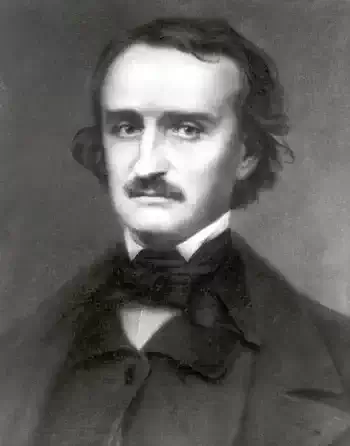
Edgar Allan Poe
Hymn to Aristogeiton and Harmodius
Wreathed in myrtle, my sword I'll conceal
Like those champions devoted and brave,
When they plunged in the tyrant their steel,
And to Athens deliverance gave.
Beloved heroes! your deathless souls roam
In the joy breathing isles of the blest;
Where the mighty of old have their home -
Where Achilles and Diomed rest.
In fresh myrtle my blade I'll entwine,
Like Harmodious, the gallant and good,
When he made at the tutelar shrine
A libation of Tyranny's blood.
Ye deliverers of Athens from shame!
Ye avengers of Liberty's wrongs!
Endless ages shall cherish your fame
Embalmed in their echoing songs!
Read more →
278
John Greenleaf Whittier
New Hampshire
GOD bless New Hampshire! from her granite peaks
Once more the voice of Stark and Langdon speaks.
The long-bound vassal of the exulting South
For very shame her self-forged chain has broken;
Turn the black seal of slavery from her mouth,
And in the clear tones of her old time spoken!
Oh, all undreamed-of, all unhoped for changes!
The tyrants's ally proves his sternest foe;
To all his biddings, from her mountain ranges,
New Hampshire thunders an indignant No!
Who is it now despairs? Oh, faint of heart,
Look upward to those Northern mountain cold,
Flouted by Freedom's victor-flag unrolled
And gather strength to bear a manlier part!
All is not lost. The angel of God's blessing
Encamps with Freedom on the field of fight;
Still to her banner, day by day, are pressing,
Unlooked-for allies, striking for the right!
Courage, then, Northern hearts! Be firm, be true:
What one brave State hath done, can ye not also do?
Read more →
278
Henry Lawson
The King (II)
And now a son has come again
To keep the peace or strike the blow,
And have a long, great, glorious reign,
Through calm or tempest, weal or woe.
And strange things set me wondering –
As man and youth, we knew him here,
The one the only British King,
To see his Southern Hemisphere.
‘Midst pealing bells and cannons’ din
The countless thousands cheer and strive
To catch one glance of their new King
And queenly Mary, his fair bride;
‘Til on their knees, within the Fane,
The Royal couple meekly kneel,
The Great God’s clemency to claim,
And pray Him for their people’s weal.
And so I see, in vision clear,
The long reign of this noble line,
How on and on, from year to year
The star of peace shall brighter shine,
How men and nations, without fear
Shall hope and labour, strive and sing:
“The day of liberty is here!
The King is Dead! Long Live the King”
Read more →
277
John Greenleaf Whittier
To Englishmen
You flung your taunt across the wave;
We bore it as became us,
Well knowing that the fettered slave
Left friendly lips no option save
To pity or to blame us.
You scoffed our plea. 'Mere lack of will,
Not lack of power,' you told us:
We showed our free-state records; still
You mocked, confounding good and ill,
Slave-haters and slaveholders.
We struck at Slavery; to the verge
Of power and means we checked it;
Lo! — presto, change! its claims you urge,
Send greetings to it o'er the surge,
And comfort and protect it.
But yesterday you scarce could shake,
In slave-abhorring rigor,
Our Northern palms for conscience' sake:
To-day you clasp the hands that ache
With 'walloping the nigger!'
O Englishmen! — in hope and creed,
In blood and tongue our brothers!
We too are heirs of Runnymede;
And Shakespeare's fame and Cromwell's deed
Are not alone our mother's.
'Thicker than water,' in one rill
Through centuries of story
Our Saxon blood has flowed, and still
We share with you its good and ill,
The shadow and the glory.
Joint heirs and kinfolk, leagues of wave
Nor length of years can part us:
Your right is ours to shrine and grave,
The common freehold of the brave,
The gift of saints and martyrs.
Our very sins and follies teach
Our kindred frail and human:
We carp at faults with bitter speech,
The while, for one unshared by each,
We have a score in common.
We bowed the heart, if not the knee,
To England's Queen, God bless her!
We praised you when your slaves went free:
We seek to unchain ours. Will ye
Join hands with the oppressor?
And is it Christian England cheers
The bruiser, not the bruisëd?
And must she run, despite the tears
And prayers of eighteen hundred years,
Amuck in Slavery's crusade?
Oh, black disgrace! Oh, shame and loss
Too deep for tongue to phrase on!
Tear from your flag its holy cross,
And in your van of battle toss
The pirate's skull-bone blazon!
Read more →
274
Henry Lawson
Cromwell
They took dead Cromwell from his grave,
And stuck his head on high;
The Merry Monarch and his men,
They laughed as they passed by
The common people cheered and jeered,
To England’s deep disgrace—
The crowds who’d ne’er have dared to look
Live Cromwell in the face.
He came in England’s direst need
With law and fire and sword,
He thrashed her enemies at home
And crushed her foes abroad;
He kept his word by sea and land,
His parliament he schooled,
He made the nations understand
A Man in England ruled!
Van Tromp, with twice the English ships,
And flushed by victory—
A great broom to his masthead bound—
Set sail to sweep the sea.
But England’s ruler was a man
Who needed lots of room—
So Blake soon lowered the Dutchman’s tone,
And smashed the Dutchman’s broom.
He sent a bill to Tuscany
For sixty thousand pounds,
For wrong done to his subjects there,
And merchants in her bounds.
He sent by Debt Collector Blake,
And—you need but be told
That, by the Duke of Tuscany
That bill was paid in gold.
To pirate ports in Africa
He sent a message grim
To have each captured Englishman
Delivered up to him;
And every ship and cargo’s worth,
And every boat and gun—
And this—all this, as Dickens says—
“Was gloriously done.”
They’d tortured English prisoners
Who’d sailed the Spanish Main;
So Cromwell sent a little bill
By Admiral Blake to Spain.
To keep his hand in, by the way.
He whipped the Portuguese;
And he made it safe for English ships
To sail the Spanish seas.
The Protestants in Southern lands
Had long been sore oppressed;
They sent their earnest prayers to Noll
To have their wrongs redressed.
He sent a message to the Powers,
In which he told them flat,
All men must praise God as they chose,
Or he would see to that.
And, when he’d hanged the fools at home
And settled foreign rows,
He found the time to potter round
Amongst his pigs and cows.
Of private rows he never spoke,
That grand old Ironsides.
They said a father’s strong heart broke
When Cromwell’s daughter died.
(They dragged his body from its grave,
His head stuck on a pole,
They threw his wife’s and daughter’s bones
Into a rubbish hole
To rot with those of two who’d lived
And fought for England’s sake,
And each one in his own brave way—
Great Pym, and Admiral Blake.)
From Charles to Charles, throughout the world
Old England’s name was high,
And that’s a thing no Royalist
Could ever yet deny.
Long shameful years have passed since then,
In spite of England’s boast—
But Englishmen were Englishmen,
While Cromwell carved the roast.
And, in my country’s hour of need—
For it shall surely come,
While run by fools who’ll never heed
The beating of the drum.
While baffled by the fools at home,
And threatened from the sea—
Lord! send a man like Oliver—
And let me live to see.
Read more →
275
Henry Lawson
Freedom on the Wallaby
Australia's a big country
An' Freedom's humping bluey,
An' Freedom's on the wallaby
Oh! don't you hear 'er cooey?
She's just begun to boomerang,
She'll knock the tyrants silly,
She's goin' to light another fire
And boil another billy.
Our fathers toiled for bitter bread
While loafers thrived beside 'em,
But food to eat and clothes to wear,
Their native land denied 'em.
An' so they left their native land
In spite of their devotion,
An' so they came, or if they stole,
Were sent across the ocean.
Then Freedom couldn't stand the glare
O' Royalty's regalia,
She left the loafers where they were,
An' came out to Australia.
But now across the mighty main
The chains have come ter bind her –
She little thought to see again
The wrongs she left behind her.
Our parents toil'd to make a home –
Hard grubbin 'twas an' clearin' –
They wasn't crowded much with lords
When they was pioneering.
But now that we have made the land
A garden full of promise,
Old Greed must crook 'is dirty hand
And come ter take it from us.
So we must fly a rebel flag,
As others did before us,
And we must sing a rebel song
And join in rebel chorus.
We'll make the tyrants feel the sting
O' those that they would throttle;
They needn't say the fault is ours
If blood should stain the wattle!
Read more →
272
Henry Lawson
A Mixed Battle Song
Lo! the Boar’s tail is salted, and the Kangaroo’s exalted,
And his right eye is extinguished by a man-o’-warsman’s cap;
He is flying round the fences where the Southern Sea commences,
And he’s very much excited for a quiet sort of chap.
For his ships have had a scrap and they’ve marked it on the map
Where the H.M.A.S. Sydney dropped across a German trap.
So the Kangaroo’s a-chasing of his Blessed Self, and racing
From Cape York right round to Leeuwin, from the coast to Nevertire;
And of him need be no more said, save that to the tail aforesaid
Is the Blue Australian Ensign firmly fixed with copper wire.
(When he’s filled the map with white men there’ll be little to desire.)
I was sulky, I was moody (I’m inclined to being broody)
When the news appeared in Sydney, bringing joy and bringing tears,
(There’s an undertone of sorrow that you’ll understand to-morrow)
And I felt a something in me that had not been there for years.
Though I lean in the direction of most absolute Protection
(And of wheat on the selection)
And, considering Congestion and the hopeless unemployed,
I’d a notion (but I hid it) that, the way the Emden did it,
’Twould be better for Australia if her “commerce” was destroyed.
You may say that war’s a curse, but the peace curse may be worse,
When it’s lasted till it’s rotten—rotten from the inmost core,
To the mouldy skin which we are, in the land we call the freer—
And I almost feel inclined to call for “Three Cheers for the War!”
For I think, when all is over, from Magellan’s Straits to Dover,
Things will be a great deal better than they ever were before.
But, since “Peace” and “Right” are squalling, I’ll content myself with calling
For three rousers—like the ringing cheers we used to give of yore—
For the Emden!
For the Sydney!
And their gallant crews and captains—both of whom we’ve met before!
And, for Kaiser William’s nevvy, we shall venture three cheers more!
Cheers that go to end a war.
Read more →
272
Horácio
BkIV:II Augustus’s Return
Iulus, whoever tries to rival Pindar,
flies on waxen wings, with Daedalean art,
and is doomed, like Icarus, to give a name
to glassy waters.
Like a river, rushing down from the mountains,
that the rain has filled above its usual banks,
so Pindar’s deep voice seethes, immeasurably,
and goes on flowing,
Pindar, deserving Apollo’s laurel crown,
whether he coins new phrases in audacious
dithyrambs, and is carried along in verse
that’s free of rules,
or whether he sings gods, and kings, the children
of gods, at whose hands the Centaurs, rightly, died,
and by whom the fearful Chimaera’s fires
were all extinguished,
or speaks of those godlike ones an Elean
palm, for boxing or riding, leads home again,
granting a tribute much more powerful than
a hundred statues,
or weeps for the young man snatched from his tearful
bride, praises his powers, to the stars, his spirit,
his golden virtue, begrudging all of them
to gloomy Orcus.
Son of Antony, a powerful breeze raises
the Dircean swan, whenever it’s carried
to cloudy heights. While I create my verses,
in the manner
of a humble Matinian bee, that goes
gathering pollen from all the pleasant thyme,
and labours among the many groves, on the banks
of flowing Tiber.
You, a poet of much greater power, will sing
Caesar, honoured with well-earned wreaths, as he climbs
the sacred slopes, drawing along in his wake
the savage Germans:
he, whom no greater and no better ruler
has Fate, and the true gods, given to the world,
nor ever will, though the centuries roll back
to that first age of gold.
You’ll sing of those happy days, and the City’s
public games, when our brave Augustus returns,
in answer to our prayers: you’ll sing the Forum
free of all quarrels.
Then, if what I utter’s worth hearing, the best
strains of my voice, thrilled by Caesar’s return,
will rise, and I will sing: ‘O lovely sun, O
worthy to be praised!’
While you lead us along: ‘Hail, God of Triumph!’
not once but many times: ‘Hail, God of Triumph!’
all the city will shout, and offer incense
to the kindly gods.
Ten bulls will acquit you, and as many cows:
me, a tender calf that has left its mother,
one that’s been fattened on wide pastures, one that
can fulfil my vow,
echoing, with its brow, those returning fires
of the crescent moon, at the third night’s rising,
appearing snow-white where it carries a mark,
and the rest tawny.
Read more →
273