
Nation and Patriotism

Henry Lawson
The Federal City
OH! the folly, the waste, and the pity! Oh, the time that is flung behind!
They are seeking a site for a city, whose eyes shall be always blind,
Whose love for their ease grows greater, and whose care for their country less—
They are seeking a site for a city—a City of Selfishness.
In ignorance, deafness, blindness, in the cities by the sea,
With waste of time and of money, and with local jealousy;
With Anti-Federal envy, and personal paltriness,
They are seeking a site for a city—while Australia moans in distress.
By the coast with the people crowding, where Australia’s danger lies,
By the hills and the clear, cool rivers, and under the softer skies,
Where the fat shall not melt, and the ranter grow cool in the fresh’ning breeze,
And the dwellers drivel in comfort and the boodlers swindle at ease.
They are seeking a site for a city in the beauty spots of the land,
While I see so plainly, my children, where the Federal towers should stand!
Where the heart of Australia beats strongest and highest in desert air.
Make a site for a Federal City, and build you your capital there!
Where the crowd should be drawn from the coast line to the great bush that cradled
the race,
Where the bush might be armed and directed should the seaboard be lost for a space;
Where the waste should be watered and gardened, in the drought-land of Never
Despair,
There build you your Federal City, and make you a paradise there.
It shall be a world-wide object-lesson; it shall stand while a bushman is true,
And I tell you the bushmen will build it to show what a nation can do;
And there shall Australia sit queenly, and there shall her children be schooled,
For, I say, from the heart of Australia shall the whole of Australia be ruled.
Read more →
479
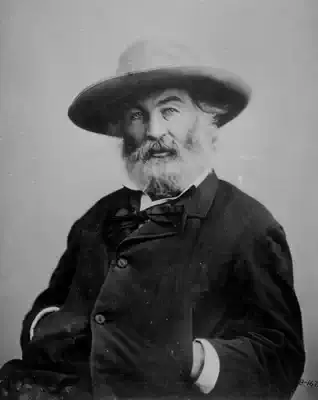
Walt Whitman
With Antecedents
WITH antecedents;
With my fathers and mothers, and the accumulations of past ages;
With all which, had it not been, I would not now be here, as I am:
With Egypt, India, Phenicia, Greece and Rome;
With the Kelt, the Scandinavian, the Alb, and the Saxon;
With antique maritime ventures,--with laws, artizanship, wars and
journeys;
With the poet, the skald, the saga, the myth, and the oracle;
With the sale of slaves--with enthusiasts--with the troubadour, the
crusader, and the monk;
With those old continents whence we have come to this new continent;
With the fading kingdoms and kings over there;
With the fading religions and priests;
With the small shores we look back to from our own large and present
shores;
With countless years drawing themselves onward, and arrived at these
years;
You and Me arrived--America arrived, and making this year;
This year! sending itself ahead countless years to come.
O but it is not the years--it is I--it is You;
We touch all laws, and tally all antecedents;
We are the skald, the oracle, the monk, and the knight--we easily
include them, and more;
We stand amid time, beginningless and endless--we stand amid evil and
good;
All swings around us--there is as much darkness as light;
The very sun swings itself and its system of planets around us;
Its sun, and its again, all swing around us.
As for me, (torn, stormy, even as I, amid these vehement days,)
I have the idea of all, and am all, and believe in all;
I believe materialism is true, and spiritualism is true--I reject no
part.
Have I forgotten any part?
Come to me, whoever and whatever, till I give you recognition.
I respect Assyria, China, Teutonia, and the Hebrews;
I adopt each theory, myth, god, and demi-god;
I see that the old accounts, bibles, genealogies, are true, without
exception;
I assert that all past days were what they should have been;
And that they could no-how have been better than they were,
And that to-day is what it should be--and that America is,
And that to-day and America could no-how be better than they are.
In the name of These States, and in your and my name, the Past,
And in the name of These States, and in your and my name, the Present
time.
I know that the past was great, and the future will be great,
And I know that both curiously conjoint in the present time,
(For the sake of him I typify--for the common average man's sake-
your sake, if you are he;)
And that where I am, or you are, this present day, there is the
centre of all days, all races,
And there is the meaning, to us, of all that has ever come of races
and days, or ever will come.
Read more →
473
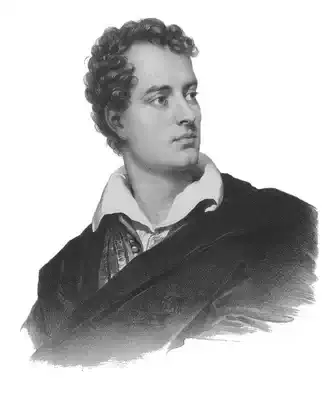
Lord Byron
The Conquest
The Son of Love and Lord of War I sing;
Him who bade England bow to Normandy
And left the name of conqueror more than king
To his unconquerable dynasty.
Not fann'd alone by Victory's fleeting wing,
He rear'd his bold and brilliant throne on high:
The Bastard kept, like lions, his prey fast,
And Britain's bravest victor was the last.
Read more →
472
Walt Whitman
A Promise To California
A PROMISE to California,
Also to the great Pastoral Plains, and for Oregon:
Sojourning east a while longer, soon I travel toward you, to remain,
to teach robust American love;
For I know very well that I and robust love belong among you, inland,
and along the Western Sea;
For These States tend inland, and toward the Western Sea--and I will
also.
Read more →
474
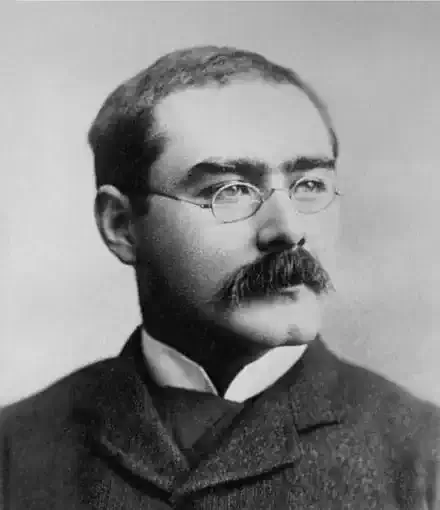
Rudyard Kipling
Romulus and Remus
Canadian
Oh, little did the Wolf-Child care--
When first he planned his home,
What City should arise and bear
The weight and state of Rome.
A shiftless, westward-wandering tramp,
Checked by the Tiber flood,
He reared a wall around his camp
Of uninspired mud.
But when his brother leaped the Wall
And mocked its height and make,
He guessed the future of it all
And slew him for its sake.
Swift was the blow--swift as the thought
Which showed him in that hour
How unbelief may bring to naught
The early steps of Power.
Foreseeing Time's imperilled hopes
Of Glory, Grace, and Love--
All singers, Caesars, artists, Popes--
Would fail if Remus throve,
He sent his brother to the Gods,
And, when the fit was o'er,
Went on collecting turves and clods
To build the Wall once more!
Read more →
472
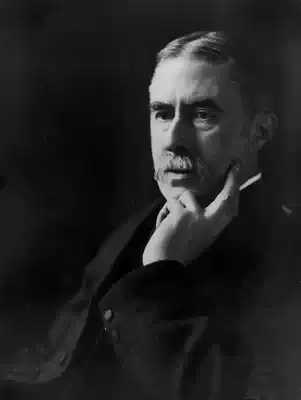
Alfred Edward Housman
From Clee to heaven the beacon burns
From Clee to heaven the beacon burns,
The shires have seen it plain,
From north and south the sign returns
And beacons burn again.
Look left, look right, the hills are bright,
The dales are light between,
Because 'tis fifty years to-night
That God has saved the Queen.
Now, when the flame they watch not towers
About the soil they trod,
Lads, we'll remember friends of ours
Who shared the work with God.
To skies that knit their heartstrings right,
To fields that bred them brave,
The saviours come not home to-night:
Themselves they could not save.
It dawns in Asia, tombstones show
And Shropshire names are read;
And the Nile spills his overflow
Beside the Severn's dead.
We pledge in peace by farm and town
The Queen they served in war,
And fire the beacons up and down
The land they perished for.
"God save the Queen" we living sing,
From height to height 'tis heard;
And with the rest your voices ring,
Lads of the Fifty-third.
Oh, God will save her, fear you not:
Be you the men you've been,
Get you the sons your fathers got,
And God will save the Queen.
Read more →
466
Rudyard Kipling
The Song of the English
Fair is our lot -- O goodly is our heritage!
(Humble ye, my people, and be fearful in your mirth!)
For the Lord our God Most High
He hath made the deep as dry,
He hath smote for us a pathway to the ends of all the Earth!
Yea, though we sinned -- and our rulers went from righteousness --
Deep in all dishonour though we stained our garments' hem.
Oh be ye not dismayed,
Though we stumbled and we strayed,
We were led by evil counsellors -- the Lord shall deal with them!
Hold ye the Faith -- the Faith our Fathers seal]\ed us;
Whoring not with visions -- overwise and overstale.
Except ye pay the Lord
Single heart and single sword,
Of your children in their bondage shall He ask them treble-tale!
Keep ye the Law -- be swift in all obedience --
Clear the land of evil, drive the road and bridge the ford.
Make ye sure to each his own
That he reap where he hath sown;
By the peace among Our peoples let men know we serve the Lord!
. . . . .
Hear now a song -- a song of broken interludes --
A song of little cunning; of a singer nothing worth.
Through the naked words and mean
May ye see the truth between
As the singer knew and touched it in the ends of all the Earth!
Read more →
465
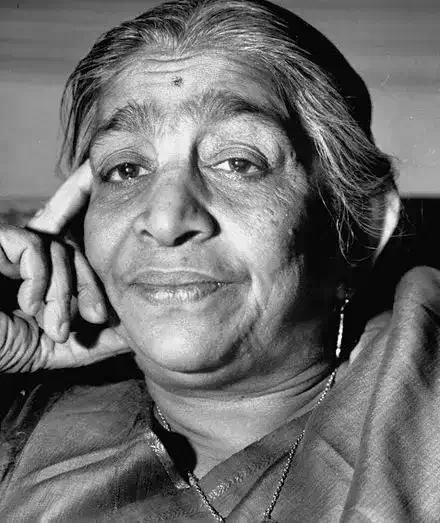
Sarojini Naidu
To My Children
Jaya Surya
GOLDEN sun of victory, born
In my life's unclouded morn,
In my lambent sky of love,
May your growing glory prove
Sacred to your consecration,
To my heart and to my nation.
Sun of victory, may you be
Sun of song and liberty.
Padmaja
Lotus-maiden, you who claim
All the sweetness of your name,
Lakshmi, fortune's queen, defend you,
Lotus-born like you, and send you
Balmy moons of love to bless you,
Gentle joy-winds to caress you.
Lotus-maiden, may you be
Fragrant of all ecstasy.
Ranadheera
Little lord of battle, hail
In your newly-tempered mail!
Learn to conquer, learn to fight
In the foremost flanks of right,
Like Valmiki's heroes bold,
Rubies girt in epic gold.
Lord of battle, may you be,
Lord of love and chivalry.
Lilamani
Limpid jewel of delight
Severed from the tender night
Of your sheltering mother-mine,
Leap and sparkle, dance and shine,
Blithely and securely set
In love's magic coronet.
Living jewel, may you be
Laughter-bound and sorrow-free.
Read more →
463

Claude Mckay
Africa
The sun sought thy dim bed and brought forth light,
The sciences were sucklings at thy breast;
When all the world was young in pregnant night
Thy slaves toiled at thy monumental best.
Thou ancient treasure-land, thou modern prize,
New peoples marvel at thy pyramids!
The years roll on, thy sphinx of riddle eyes
Watches the mad world with immobile lids.
The Hebrews humbled them at Pharaoh's name.
Cradle of Power! Yet all things were in vain!
Honor and Glory, Arrogance and Fame!
They went. The darkness swallowed thee again.
Thou art the harlot, now thy time is done,
Of all the mighty nations of the sun.
Read more →
461
Rudyard Kipling
The Return
Peace is declared, and I return
To 'Ackneystadt, but not the same;
Things 'ave transpired which made me learn
The size and meanin' of the game.
I did no more than others did,
I don't know where the change began;
I started as a average kid,
I finished as a thinkin' man.
If England was what England seems
An' not the England of our dreams,
But only putty, brass, an' paint,
'Ow quick we'd drop 'er! But she ain't!
Before my gappin' mouth could speak
I 'eard it in my comrade's tone;
I saw it on my neighbour's cheek
Before I felt it flush my own.
An' last it come to me--not pride,
Nor yet conceit, but on the 'ole
(If such a term may be applied),
The makin's of a bloomin' soul.
Rivers at night that cluck an' jeer,
Plains which the moonshine turns to sea,
Mountains that never let you near,
An' stars to all eternity;
An' the quick-breathin' dark that fills
The 'ollows of the wilderness,
When the wind worries through the 'ills--
These may 'ave taught me more or less.
Towns without people, ten times took,
An' ten times left an' burned at last;
An' starvin' dogs that come to look
For owners when a column passed;
An' quiet, 'omesick talks between
Men, met by night, you never knew
Until--'is face--by shellfire seen--
Once--an' struck off. They taught me, too.
The day's lay-out--the mornin' sun
Beneath your 'at-brim as you sight;
The dinner-'ush from noon till one,
An' the full roar that lasts till night;
An' the pore dead that look so old
An' was so young an hour ago,
An' legs tied down before they're cold--
These are the things which make you know.
Also Time runnin' into years--
A thousand Places left be'ind--
An' Men from both two 'emispheres
Discussin' things of every kind;
So much more near than I 'ad known,
So much more great than I 'ad guessed--
An' me, like all the rest, alone--
But reachin' out to all the rest!
So 'ath it come to me--not pride,
Nor yet conceit, but on the 'ole
(If such a term may be applied),
The makin's of a bloomin' soul.
But now, discharged, I fall away
To do with little things again....
Gawd, 'oo knows all I cannot say,
Look after me in Thamesfontein!
If England was what England seems
An' not the England of our dreams,
But only putty, brass, an' paint,
'Ow quick we'd chuck 'er! But she ain't!
Read more →
462
Walt Whitman
I Was Looking A Long While
I WAS looking a long while for a clue to the history of the past for
myself, and for these chants--and now I have found it;
It is not in those paged fables in the libraries, (them I neither
accept nor reject;)
It is no more in the legends than in all else;
It is in the present--it is this earth to-day;
It is in Democracy--(the purport and aim of all the past;)
It is the life of one man or one woman to-day--the average man of
to-day;
It is in languages, social customs, literatures, arts;
It is in the broad show of artificial things, ships, machinery,
politics, creeds, modern improvements, and the interchange of
nations,
All for the average man of to-day.
Read more →
461
Lord Byron
On The Death Of Mr. Fox
The following iiliberal impromptu appeared in a morning papaer:
'Our nation's foes lament on Fox's death,
But bless the hour when PITT resign'd his breath:
These feelings wide, let sense and truth unclue,
We give the palm where Justice points its due.'
To which the author of these pieces sent the following reply :
Oh factious viper! whose envenom'd tooth
Would mangle still the dead, perverting truth;
What though our 'nation's foes' lament the fate
With generous' feeling, of the good and great'
Shall dastard tongues essay to blast the name
Of him whose meed exists in endless fame?
When PITT expired in plenitude of power,
Though Ilisuccess obscured his dying hour,
Pity her dewy wings before him spread,
For noble spirits 'war not with the dead:'
His friends, in tears, a last sad requiem gave,
As all his errors slumber'd in the grave;
He sunk, an Atlas bending 'neath the weight
Of cares o'erwhelmlng our conflicting state:
When, lo! a Hercules in FOX appear'd
Who for a time the ruin'd fabric rear'd:
He, too, is fall'n, who Britain's loss supplied,
With him our fast reviving hopes have died;
Not one great people only raise his urn,
All Europe's farextended
regions mourn.
'These feelings wide, let sense and truth unclue,
To give the palm where Justice points its due;'
Yet let not canker'd Calumny assail,
Or round our statesman wind her gloomy veil.
FOX o'er whose corse a mourning world must weep,
Whose dear remains in honour'd marble sleep;
For whom, at last, e'en hostile nations groan,
While friends and foes alike his talents own;
FOX shall in Britain's future annals shine,
Nor e'en to PITT the patriot's palm resign;
Which Envy, wearing Candour's sacred mask,
For PITT, and PITT alone, has dared to ask.
Read more →
457
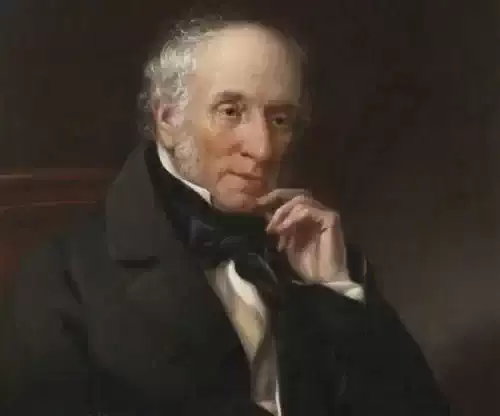
William Wordsworth
It is not to be Thought of
. It is not to be thought of that the Flood
Of British freedom, which, to the open sea
Of the world's praise, from dark antiquity
Hath flowed, "with pomp of waters, unwithstood,"
Roused though it be full often to a mood
Which spurns the check of salutary bands,
That this most famous Stream in bogs and sands
Should perish; and to evil and to good
Be lost for ever. In our halls is hung
Armoury of the invincible Knights of old:
We must be free or die, who speak the tongue
That Shakespeare spake; the faith and morals hold
Which Milton held.--In every thing we are sprung
Of Earth's first blood, have titles manifold.
Read more →
458

Henry Wadsworth Longfellow
Introduction To The Song Of Hiawatha
Should you ask me,
whence these stories?
Whence these legends and traditions,
With the odors of the forest
With the dew and damp of meadows,
With the curling smoke of wigwams,
With the rushing of great rivers,
With their frequent repetitions,
And their wild reverberations
As of thunder in the mountains?
I should answer, I should tell you,
"From the forests and the prairies,
From the great lakes of the Northland,
From the land of the Ojibways,
From the land of the Dacotahs,
From the mountains, moors, and fen-lands
Where the heron, the Shuh-shuh-gah,
Feeds among the reeds and rushes.
I repeat them as I heard them
From the lips of Nawadaha,
The musician, the sweet singer."
Should you ask where Nawadaha
Found these songs so wild and wayward,
Found these legends and traditions,
I should answer, I should tell you,
"In the bird's-nests of the forest,
In the lodges of the beaver,
In the hoofprint of the bison,
In the eyry of the eagle!
"All the wild-fowl sang them to him,
In the moorlands and the fen-lands,
In the melancholy marshes;
Chetowaik, the plover, sang them,
Mahng, the loon, the wild-goose, Wawa,
The blue heron, the Shuh-shuh-gah,
And the grouse, the Mushkodasa!"
If still further you should ask me,
Saying, "Who was Nawadaha?
Tell us of this Nawadaha,"
I should answer your inquiries
Straightway in such words as follow.
"In the vale of Tawasentha,
In the green and silent valley,
By the pleasant water-courses,
Dwelt the singer Nawadaha.
Round about the Indian village
Spread the meadows and the corn-fields,
And beyond them stood the forest,
Stood the groves of singing pine-trees,
Green in Summer, white in Winter,
Ever sighing, ever singing.
"And the pleasant water-courses,
You could trace them through the valley,
By the rushing in the Spring-time,
By the alders in the Summer,
By the white fog in the Autumn,
By the black line in the Winter;
And beside them dwelt the singer,
In the vale of Tawasentha,
In the green and silent valley.
"There he sang of Hiawatha,
Sang the Song of Hiawatha,
Sang his wondrous birth and being,
How he prayed and how be fasted,
How he lived, and toiled, and suffered,
That the tribes of men might prosper,
That he might advance his people!"
Ye who love the haunts of Nature,
Love the sunshine of the meadow,
Love the shadow of the forest,
Love the wind among the branches,
And the rain-shower and the snow-storm,
And the rushing of great rivers
Through their palisades of pine-trees,
And the thunder in the mountains,
Whose innumerable echoes
Flap like eagles in their eyries;-
Listen to these wild traditions,
To this Song of Hiawatha!
Ye who love a nation's legends,
Love the ballads of a people,
That like voices from afar off
Call to us to pause and listen,
Speak in tones so plain and childlike,
Scarcely can the ear distinguish
Whether they are sung or spoken;-
Listen to this Indian Legend,
To this Song of Hiawatha!
Ye whose hearts are fresh and simple,
Who have faith in God and Nature,
Who believe that in all ages
Every human heart is human,
That in even savage bosoms
There are longings, yearnings, strivings
For the good they comprehend not,
That the feeble hands and helpless,
Groping blindly in the darkness,
Touch God's right hand in that darkness
And are lifted up and strengthened;-
Listen to this simple story,
To this Song of Hiawatha!
Ye, who sometimes, in your rambles
Through the green lanes of the country,
Where the tangled barberry-bushes
Hang their tufts of crimson berries
Over stone walls gray with mosses,
Pause by some neglected graveyard,
For a while to muse, and ponder
On a half-effaced inscription,
Written with little skill of song-craft,
Homely phrases, but each letter
Full of hope and yet of heart-break,
Full of all the tender pathos
Of the Here and the Hereafter;
Stay and read this rude inscription,
Read this Song of Hiawatha!
Read more →
453

William Butler Yeats
Three Marching Songs
REMEMBER all those renowned generations,
They left their bodies to fatten the wolves,
They left their homesteads to fatten the foxes,
Fled to far countries, or sheltered themselves
In cavern, crevice, or hole,
Defending Ireland's soul.
Be still, be still, what can be said?
My father sang that song,
But time amends old wrong,
All that is finished, let it fade.
Remember all those renowned generations,
Remember all that have sunk in their blood,
Remember all that have died on the scaffold,
Remember all that have fled, that have stood,
Stood, took death like a tune
On an old,tambourine.
Be still, be still, what can be said?
My father sang that song,
But time amends old wrong,
And all that's finished, let it fade.
Fail, and that history turns into rubbish,
All that great past to a trouble of fools;
Those that come after shall mock at O'Donnell,
Mock at the memory of both O'Neills,
Mock Emmet, mock Parnell,
All the renown that fell.
Be still, be still, what can be said?
My father sang that song,
but time amends old wrong,
And all that's finished, let it fade.
The soldier takes pride in saluting his Captain,
The devotee proffers a knee to his Lord,
Some back a mare thrown from a thoroughbred,,
Troy backed its Helen; Troy died and adored;
Great nations blossom above;
A slave bows down to a slave.
What marches through the mountain pass?
No, no, my son, not yet;
That is an airy spot,
And no man knows what treads the grass.
We know what rascal might has defiled,
The lofty innocence that it has slain,
Were we not born in the peasant's cot
Where men forgive if the belly gain?
More dread the life that we live,
How can the mind forgive?
What marches down the mountain pass?
No, no, my son, not yet;
That is an airy spot,
And no man knows what treads the grass.
What if there's nothing up there at the top?
Where are the captains that govern mankind?
What tears down a tree that has nothing within it?
A blast of the wind, O a marching wind,
March wind, and any old tune.
March, march, and how does it run?
What marches down the mountain pass?
No, no, my son, not yet;
That is an airy spot,
And no man knows what treads the grass.
III
Grandfather sang it under the gallows:
'Hear, gentlemen, ladies, and all mankind:
Money is good and a girl might be better,
But good strong blows are delights to the mind.'
There, standing on the cart,
He sang it from his heart.
<1Robbers had taken his old tambourine,
But he took down the moon
And rattled out a tunc;
Robbers had taken his old tambourinc.>1
'A girl I had, but she followed another,
Money I had, and it went in the night,
Strong drink I had, and it brought me to sorrow,
But a good strong cause and blows are delight.'
All there caught up the tune:
'Oh, on, my darling man.'
Robbers had taken his old tambourine,
But he took down the moon
And rattled out a tune;>1
Robbers had taken his old tambourine.
'Money is good and a girl might be better,
No matter what happens and who takes the fall,
But a good strong cause' -- the rope gave a jerk there,
No more sang he, for his throat was too small;
But he kicked before he died,
He did it out of pride.
<1Robbers had taken his old tambourine,
But he took down the moon
And rattled out a tune;
Robbers had taken his old tambourine.
Read more →
453
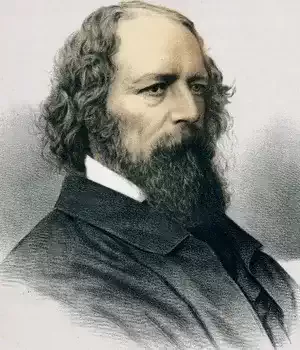
Alfred Lord Tennyson
You Ask Me, Why, Tho' Ill at Ease
You ask me, why, tho' ill at ease,
Within this region I subsist,
Whose spirits falter in the mist,
And languish for the purple seas.
It is the land that freemen till,
That sober-suited Freedom chose,
The land, where girt with friends or foes
A man may speak the thing he will;
A land of settled government,
A land of just and old renown,
Where Freedom slowly broadens down
From precedent to precedent:
Where faction seldom gathers head,
But by degrees to fullness wrought,
The strength of some diffusive thought
Hath time and space to work and spread.
Should banded unions persecute
Opinion, and induce a time
When single thought is civil crime,
And individual freedom mute;
Tho' Power should make from land to land
The name of Britain trebly great-Tho'
every channel of the State
Should fill and choke with golden sand-
Yet waft me from the harbour-mouth,
Wild wind! I seek a warmer sky,
And I will see before I die
The palms and temples of the South.
Read more →
450
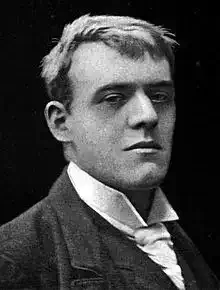
Hilaire Belloc
[Month of] September
I, from a window where the Meuse is wide,
Looked eastward out to the September night;
The men that in the hopeless battle died
Rose, and deployed, and stationed for the fight;
A brumal army, vague and ordered large
For mile on mile by some pale general,-
I saw them lean by companies to the charge,
But no man living heard the bugle-call.
And fading still, and pointing to their scars,
They fled in lessening clouds, where gray and high
Dawn lay along the heaven in misty bars;
But watching from that eastern casement, I
Saw the Republic splendid in the sky,
And round her terrible head the morning stars.
Read more →
451
Walt Whitman
From Far Dakota's Canons
FROM far Dakota's cañons,
Lands of the wild ravine, the dusky Sioux, the lonesome stretch, the
silence,
Haply to-day a mournful wail, haply a trumpet-note for heroes.
The battle-bulletin,
The Indian ambuscade, the craft, the fatal environment,
The cavalry companies fighting to the last in sternest heroism,
In the midst of their little circle, with their slaughter'd horses
for breastworks,
The fall of Custer and all his officers and men.
Continues yet the old, old legend of our race,
The loftiest of life upheld by death,
The ancient banner perfectly maintain'd,
O lesson opportune, O how I welcome thee!
As sitting in dark days,
Lone, sulky, through the time's thick murk looking in vain for light,
for hope,
From unsuspected parts a fierce and momentary proof,
(The sun there at the centre though conceal'd,
Electric life forever at the centre,)
Breaks forth a lightning flash.
Thou of the tawny flowing hair in battle,
I erewhile saw, with erect head, pressing ever in front, bearing a
bright sword in thy hand,
Now ending well in death the splendid fever of thy deeds,
(I bring no dirge for it or thee, I bring a glad triumphal sonnet,)
Desperate and glorious, aye in defeat most desperate, most glorious,
After thy many battles in which never yielding up a gun or a color
Leaving behind thee a memory sweet to soldiers,
Thou yieldest up thyself.
Read more →
449

Ella Wheeler Wilcox
The Khaki Boys Who Were Not At The Front
Oh! it is not just the men who face the guns,
Not the fighters at the Front alone, to-day
Who will bring the longed-for close to the bloody fray, for those
Could not carry on that fray without the ones
Who are working at war's problems far away.
You are all our splendid heroes in the strife,
And we class you with the warriors maimed and scarred,
Though you never have been near enough the battle din to hear,
While you laboured in the dull routine of life
In your khaki suits with sleeves that are not barred.
You have offered up yourselves to save the world;
You have felt the abnegation of the Christ:
And whatever work you do is a noble work and true;
Though it be not done with banners all unfurled,
You will find it has, in sight of God, sufficed.
While you carry back no medals when you go,
Not without you had the fighters borne war's brunt:
So just lift your heads uncowed, for your country will be proud
And its lasting love and honour will bestow
On the khaki boys who were not at the Front.
Read more →
451
Walt Whitman
From Paumanok Starting
FROM Paumanock starting, I fly like a bird,
Around and around to soar, to sing the idea of all;
To the north betaking myself, to sing there arctic songs,
To Kanada, till I absorb Kanada in myself--to Michigan then,
To Wisconsin, Iowa, Minnesota, to sing their songs, (they are
inimitable;)
Then to Ohio and Indiana to sing theirs--to Missouri and Kansas and
Arkansas, to sing theirs,
To Tennessee and Kentucky--to the Carolinas and Georgia, to sing
theirs,
To Texas, and so along up toward California, to roam accepted
everywhere;
To sing first, (to the tap of the war-drum, if need be,)
The idea of all--of the western world, one and inseparable.
And then the song of each member of These States.
Read more →
447

Robert Browning
Cavalier Tunes
. MARCHING ALONG.
I.
Kentish Sir Byng stood for his King,
Bidding the crop-headed Parliament swing:
And, pressing a troop unable to stoop
And see the rogues flourish and honest folk droop,
Marched them along, fifty-score strong,
Great-hearted gentlemen, singing this song.
II.
God for King Charles! Pym and such carles
To the Devil that prompts 'em their treasonous parles!
Cavaliers, up! Lips from the cup,
Hands from the pasty, nor bite take nor sup
Till you're---
CHORUS.---Marching along, fifty-score strong,
Great-hearted gentlemen, singing this song.
III.
Hampden to hell, and his obsequies' knell
Serve Hazelrig, Fiennes, and young Harry as well!
England, good cheer! Rupert is near!
Kentish and loyalists, keep we not here
CHORUS.---Marching along, fifty-score strong,
Great-hearted gentlemen, singing this song?
IV.
Then, God for King Charles! Pym and his snarls
To the Devil that pricks on such pestilent carles!
Hold by the right, you double your might;
So, onward to Nottingham, fresh for the fight,
CHORUS.---March we along, fifty-score strong,
Great-hearted gentlemen, singing this song!
II. GIVE A ROUSE.
I.
King Charles, and who'll do him right now?
King Charles, and who's ripe for fight now?
Give a rouse: here's, in hell's despite now,
King Charles!
II.
Who gave me the goods that went since?
Who raised me the house that sank once?
Who helped me to gold I spent since?
Who found me in wine you drank once?
CHORUS.---King Charles, and who'll do him right now?
King Charles, and who's ripe for fight now?
Give a rouse: here's, in hell's despite now,
King Charles!
III.
To whom used my boy George quaff else,
By the old fool's side that begot him?
For whom did he cheer and laugh else,
While Noll's damned troopers shot him?
CHORUS.---King Charles, and who'll do him right now?
King Charles, and who's ripe for fight now?
Give a rouse: here's, in hell's despite now,
King Charles!
III. BOOT AND SADDLE.
I.
Boot, saddle, to horse, and away!
Rescue my castle before the hot day
Brightens to blue from its silvery grey,
CHORUS.---Boot, saddle, to horse, and away!
II.
Ride past the suburbs, asleep as you'd say;
Many's the friend there, will listen and pray
``God's luck to gallants that strike up the lay---
CHORUS.---``Boot, saddle, to horse, and away!''
III.
Forty miles off, like a roebuck at bay,
Flouts Castle Brancepeth the Roundheads' array:
Who laughs, ``Good fellows ere this, by my fay,
CHORUS.---``Boot, saddle, to horse, and away!''
IV.
Who? My wife Gertrude; that, honest and gay,
Laughs when you talk of surrendering, ``Nay!
``I've better counsellors; what counsel they?
CHORUS.---``Boot, saddle, to horse, and away!''
Read more →
445
Rudyard Kipling
Two Kopjes
(Made Yeomanry towards End of Boer War)
Only two African kopjes,
Only the cart-tracks that wind
Empty and open between 'em,
Only the Transvaal behind;
Only an Aldershot column
Marching to conquer the land . . .
Only a sudden and solemn
Visit, unarmed, to the Rand.
Then scorn not the African kopje,
The kopje that smiles in the heat,
The wholly unoccupied kopje,
The home of Cornelius and Piet.
You can never be sure of your kopje,
But of this be you blooming well sure,
A kopje is always a kopje,
And a Boojer is always a Boer!
Only two African kopjes,
Only the vultures above,
Only baboons--at the bottom,
Only some buck on the move;
Only a Kensington draper
Only pretending to scout . . .
.Only bad news for the paper,
Only another knock-out.
Then mock not the African kopje,
And rub not your flank on its side,
The silent and simmering kopje,
The kopje beloved by the guide.
You can never be, etc.
Only two African kopjes,
Only the dust of their wheels,
Only a bolted commando,
Only our guns at their heels . . .
Only a little barb-wire,
Only a natural fort,
Only "by sections retire,"
Only "regret to report! "
Then mock not the .African kopje,
Especially when it is twins,
One sharp and one table-topped kopje
For that's where the trouble begins.
You never can be, etc.
Only two African kopjes
Baited the same as before--
Only we've had it so often,
Only we're taking no more . . .
Only a wave to our troopers,
Only our flanks swinging past,
Only a dozen voorloopers,.
Only we've learned it at last!
Then mock not the African kopje,
But take off your hat to the same,
The patient, impartial old kopje,
The kopje that taught us the game!
For all that we knew in the Columns,
And all they've forgot on the Staff,
We learned at the Fight o' Two Kopjes,
Which lasted two years an' a half.
mock not the African kopje,
Not even when peace has been signed--
The kopje that isn't a kopje--
The kopje that copies its kind.
You can never be sure of your kopje,
But of this be you blooming well sure,
That a kopje is always a kopje,
And a Boojer is always a Boer!
Read more →
446
Walt Whitman
As A Strong Bird On Pinious Free
AS a strong bird on pinions free,
Joyous, the amplest spaces heavenward cleaving,
Such be the thought I'd think to-day of thee, America,
Such be the recitative I'd bring to-day for thee.
The conceits of the poets of other lands I bring thee not,
Nor the compliments that have served their turn so long,
Nor rhyme--nor the classics--nor perfume of foreign court, or indoor
library;
But an odor I'd bring to-day as from forests of pine in the north, in
Maine--or breath of an Illinois prairie,
With open airs of Virginia, or Georgia, or Tennessee--or from Texas
uplands, or Florida's glades,
With presentment of Yellowstone's scenes, or Yosemite;
And murmuring under, pervading all, I'd bring the rustling sea-sound,
That endlessly sounds from the two great seas of the world.
And for thy subtler sense, subtler refrains, O Union!
Preludes of intellect tallying these and thee--mind-formulas fitted
for thee--real, and sane, and large as these and thee;
Thou, mounting higher, diving deeper than we knew--thou
transcendental Union!
By thee Fact to be justified--blended with Thought;
Thought of Man justified--blended with God:
Through thy Idea--lo! the immortal Reality!
Through thy Reality--lo! the immortal Idea!
Brain of the New World! what a task is thine!
To formulate the Modern.....Out of the peerless grandeur of the
modern,
Out of Thyself--comprising Science--to recast Poems, Churches, Art,
(Recast--may-be discard them, end them--May-be their work is done-
who knows?)
By vision, hand, conception, on the background of the mighty past,
the dead,
To limn, with absolute faith, the mighty living present.
(And yet, thou living, present brain! heir of the dead, the Old World
brain!
Thou that lay folded, like an unborn babe, within its folds so long!
Thou carefully prepared by it so long!--haply thou but unfoldest it-
only maturest it;
It to eventuate in thee--the essence of the by-gone time contain'd in
thee;
Its poems, churches, arts, unwitting to themselves, destined with
reference to thee,
The fruit of all the Old, ripening to-day in thee.)
Sail--sail thy best, ship of Democracy!
Of value is thy freight--'tis not the Present only,
The Past is also stored in thee!
Thou holdest not the venture of thyself alone--not of thy western
continent alone;
Earth's résumé entire floats on thy keel, O ship--is steadied by thy
spars;
With thee Time voyages in trust--the antecedent nations sink or swim
with thee;
With all their ancient struggles, martyrs, heroes, epics, wars, thou
bear'st the other continents;
Theirs, theirs as much as thine, the destination-port triumphant:
--Steer, steer with good strong hand and wary eye, O helmsman--thou
carryest great companions,
Venerable, priestly Asia sails this day with thee,
And royal, feudal Europe sails with thee.
Beautiful World of new, superber Birth, that rises to my eyes,
Like a limitless golden cloud, filling the western sky;
Emblem of general Maternity, lifted above all;
Sacred shape of the bearer of daughters and sons;
Out of thy teeming womb, thy giant babes in ceaseless procession
issuing,
Acceding from such gestation, taking and giving continual strength
and life;
World of the Real! world of the twain in one!
World of the Soul--born by the world of the real alone--led to
identity, body, by it alone;
Yet in beginning only--incalculable masses of composite, precious
materials,
By history's cycles forwarded--by every nation, language, hither
sent,
Ready, collected here--a freer, vast, electric World, to be
constructed here,
(The true New World--the world of orbic Science, Morals, Literatures
to come,)
Thou Wonder World, yet undefined, unform'd--neither do I define thee;
How can I pierce the impenetrable blank of the future?
I feel thy ominous greatness, evil as well as good;
I watch thee, advancing, absorbing the present, transcending the
past;
I see thy light lighting and thy shadow shadowing, as if the entire
globe;
But I do not undertake to define thee--hardly to comprehend thee;
I but thee name--thee prophecy--as now!
I merely thee ejaculate!
Thee in thy future;
Thee in thy only permanent life, career--thy own unloosen'd mind--thy
soaring spirit;
Thee as another equally needed sun, America--radiant, ablaze, swiftmoving,
fructifying all;
Thee! risen in thy potent cheerfulness and joy--thy endless, great
hilarity!
(Scattering for good the cloud that hung so long--that weigh'd so
long upon the mind of man,
The doubt, suspicion, dread, of gradual, certain decadence of man;)
Thee in thy larger, saner breeds of Female, Male--thee in thy
athletes, moral, spiritual, South, North, West, East,
(To thy immortal breasts, Mother of All, thy every daughter, son,
endear'd alike, forever equal;)
Thee in thy own musicians, singers, artists, unborn yet, but certain;
Thee in thy moral wealth and civilization (until which thy proudest
material wealth and civilization must remain in vain;)
Thee in thy all-supplying, all-enclosing Worship--thee in no single
bible, saviour, merely,
Thy saviours countless, latent within thyself--thy bibles incessant,
within thyself, equal to any, divine as any;
Thee in an education grown of thee--in teachers, studies, students,
born of thee;
Thee in thy democratic fetes, en masse--thy high original festivals,
operas, lecturers, preachers;
Thee in thy ultimata, (the preparations only now completed--the
edifice on sure foundations tied,)
Thee in thy pinnacles, intellect, thought--thy topmost rational
joys--thy love, and godlike aspiration,
In thy resplendent coming literati--thy full-lung'd orators--thy
sacerdotal bards--kosmic savans,
These! these in thee, (certain to come,) to-day I prophecy.
Land tolerating all--accepting all--not for the good alone--all good
for thee;
Land in the realms of God to be a realm unto thyself;
Under the rule of God to be a rule unto thyself.
(Lo! where arise three peerless stars,
To be thy natal stars, my country--Ensemble--Evolution--Freedom,
Set in the sky of Law.)
Land of unprecedented faith--God's faith!
Thy soil, thy very subsoil, all upheav'd;
The general inner earth, so long, so sedulously draped over, now and
hence for what it is, boldly laid bare,
Open'd by thee to heaven's light, for benefit or bale.
Not for success alone;
Not to fair-sail unintermitted always;
The storm shall dash thy face--the murk of war, and worse than war,
shall cover thee all over;
(Wert capable of war--its tug and trials? Be capable of peace, its
trials;
For the tug and mortal strain of nations come at last in peace--not
war;)
In many a smiling mask death shall approach, beguiling thee--thou in
disease shalt swelter;
The livid cancer spread its hideous claws, clinging upon thy breasts,
seeking to strike thee deep within;
Consumption of the worst--moral consumption--shall rouge thy face
with hectic:
But thou shalt face thy fortunes, thy diseases, and surmount them
all,
Whatever they are to-day, and whatever through time they may be,
They each and all shall lift, and pass away, and cease from thee;
While thou, Time's spirals rounding--out of thyself, thyself still
extricating, fusing,
Equable, natural, mystical Union thou--(the mortal with immortal
blent,)
Shalt soar toward the fulfilment of the future--the spirit of the
body and the mind,
The Soul--its destinies.
The Soul, its destinies--the real real,
(Purport of all these apparitions of the real;)
In thee, America, the Soul, its destinies;
Thou globe of globes! thou wonder nebulous!
By many a throe of heat and cold convuls'd--(by these thyself
solidifying;)
Thou mental, moral orb! thou New, indeed new, Spiritual World!
The Present holds thee not--for such vast growth as thine--for such
unparallel'd flight as thine,
The Future only holds thee, and can hold thee.
Read more →
444
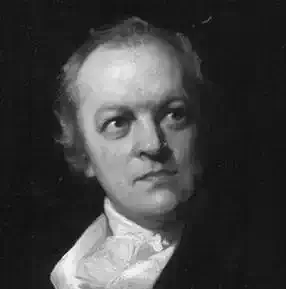
William Blake
England! awake! awake! awake!
England! awake! awake! awake!
Jerusalem thy Sister calls!
Why wilt thou sleep the sleep of death
And close her from thy ancient walls?
Thy hills and valleys felt her feet
Gently upon their bosoms move:
Thy gates beheld sweet Zion's ways:
Then was a time of joy and love.
And now the time returns again:
Our souls exult, and London's towers
Receive the Lamb of God to dwell
In England's green and pleasant bowers.
Read more →
441