
Nation and Patriotism
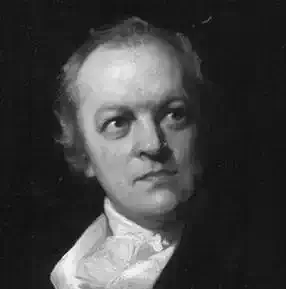
William Blake
England! awake! awake! awake!
England! awake! awake! awake!
Jerusalem thy Sister calls!
Why wilt thou sleep the sleep of death
And close her from thy ancient walls?
Thy hills and valleys felt her feet
Gently upon their bosoms move:
Thy gates beheld sweet Zion's ways:
Then was a time of joy and love.
And now the time returns again:
Our souls exult, and London's towers
Receive the Lamb of God to dwell
In England's green and pleasant bowers.
Read more →
441
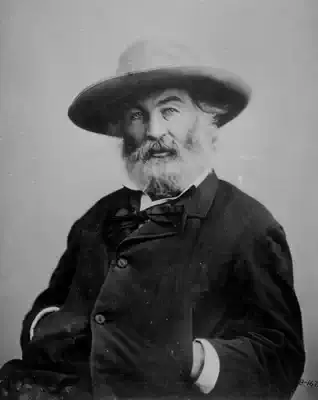
Walt Whitman
To The East And To The West
TO the East and to the West;
To the man of the Seaside State, and of Pennsylvania,
To the Kanadian of the North--to the Southerner I love;
These, with perfect trust, to depict you as myself--the germs are in
all men;
I believe the main purport of These States is to found a superb
friendship, exalté, previously unknown,
Because I perceive it waits, and has been always waiting, latent in
all men.
Read more →
440

Ella Wheeler Wilcox
Independence Ode
Columbia, fair queen in your glory!
Columbia, the pride of the earth!
We crown you with song- wreath and story;
We honour the day of your birth!
The wrath of a king and his minions
You braved, to be free, on that day;
And the eagle sailed up on strong pinions,
And frightened the lion at bay.
Since the chains and the shackles are broken,
And citizens now replace slaves,
Since the hearts of your heros have spoken
How dear they held freedom - by graves.
Your beautiful banner is blotless
As it floats to the breezes unfurled,
And but for one blemish, all spotless
Is the record you show to the world.
Like a scar on the features of beauty,
Lies Utah, sin-cursed to the west.
Columbia! Columbia! your duty
Is to wipe out that stain with the rest!
Not only in freedom, and science,
And letters, should you lead the earth;
But let the earth learn your reliance
In honour and true moral worth.
When Liberty's torch shall be lighted,
Let her brightest most far-reaching rays
Discover no wrong thats unrighted Go
challenge the jealous world's gaze!
Columbia, your star is ascending!
Columbia, all lands own your sway!
May your reign be as proud and unrending
As your glory is brilliant today.
Read more →
438

William Butler Yeats
The Ghost Of Roger Casement
O WHAT has made that sudden noise?
What on the threshold stands?
It never crossed the sea because
John Bull and the sea are friends;
But this is not the old sea
Nor this the old seashore.
What gave that roar of mockery,
That roar in the sea's roar?
The ghost of Roger Casement
Is beating on the door.
John Bull has stood for Parliament,
A dog must have his day,
The country thinks no end of him,
For he knows how to say,
At a beanfeast or a banquet,
That all must hang their trust
Upon the British Empire,
Upon the Church of Christ.
The ghost of Roger Casement
Is beating on the door.
John Bull has gone to India
And all must pay him heed,
For histories are there to prove
That none of another breed
Has had a like inheritance,
Or sucked such milk as he,
And there's no luck about a house
If it lack honesty.
The ghost of Roger Casement
Is beating on the door.
I poked about a village church
And found his family tomb
And copied out what I could read
In that religious gloom;
Found many a famous man there;
But fame and virtue rot.
Draw round, beloved and bitter men,
Draw round and raise a shout;
The ghost of Roger Casement
Is beating on the door.
Read more →
437
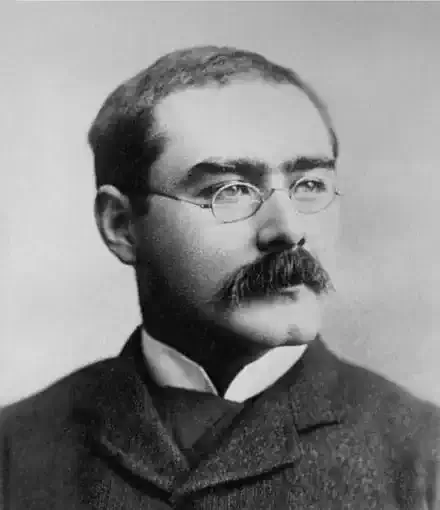
Rudyard Kipling
The Heritage
Our Fathers in a wondrous age,
Ere yet the Earth was small,
Ensured to us a heritage,
And doubted not at all
That we the children of their heart,
Which then did beat so high,
In later rime should play like part
For our posterity.
A thousand years they steadfast built,
To 'vantage us and ours,
The Walls that were a world's despair,
The sea-constraining Towers:
Yet in their midmost pride they knew,
And unto Kings made known,
Not all from these their strength they drew,
Their faith from brass or stone.
Youth's passion, manhood's fierce intent,
With age's judgment wise,
They spent, and counted not they spent,
At daily sacrifice.
Not lambs alone nor purchased doves .
Or tithe of trader's gold--
Their lives most dear, their dearer loves,
They offered up of old.
Refraining e'en from lawful things,
They bowed the neck to bear
The unadorned yoke that brings
Stark toil and sternest care.
Wherefore through them is Freedom sure;
Wherefore through them we stand,
From all but sloth and pride secure,
In a delightsome land.
Then, fretful, murmur not they gave
So great a charge to keep,
Nor dream that awestruck Time shall save
Their labour while we sleep.
Dear-bought and clear, a thousand year,
Our fathers' title runs.
Make we likewise their sacrifice,
Defrauding not our sons.
Read more →
438

Robert Browning
The Flight Of The Duchess
I.
You're my friend:
I was the man the Duke spoke to;
I helped the Duchess to cast off his yoke, too;
So here's the tale from beginning to end,
My friend!
II.
Ours is a great wild country:
If you climb to our castle's top,
I don't see where your eye can stop;
For when you've passed the cornfield country,
Where vineyards leave off, flocks are packed,
And sheep-range leads to cattle-tract,
And cattle-tract to open-chase,
And open-chase to the very base
Of the mountain where, at a funeral pace,
Round about, solemn and slow,
One by one, row after row,
Up and up the pine-trees go,
So, like black priests up, and so
Down the other side again
To another greater, wilder country,
That's one vast red drear burnt-up plain,
Branched through and through with many a vein
Whence iron's dug, and copper's dealt;
Look right, look left, look straight before,---
Beneath they mine, above they smelt,
Copper-ore and iron-ore,
And forge and furnace mould and melt,
And so on, more and ever more,
Till at the last, for a bounding belt,
Comes the salt sand hoar of the great sea-shore,
---And the whole is our Duke's country.
III.
I was born the day this present Duke was---
(And O, says the song, ere I was old!)
In the castle where the other Duke was---
(When I was happy and young, not old!)
I in the kennel, he in the bower:
We are of like age to an hour.
My father was huntsman in that day;
Who has not heard my father say
That, when a boar was brought to bay,
Three times, four times out of five,
With his huntspear he'd contrive
To get the killing-place transfixed,
And pin him true, both eyes betwixt?
And that's why the old Duke would rather
He lost a salt-pit than my father,
And loved to have him ever in call;
That's why my father stood in the hall
When the old Duke brought his infant out
To show the people, and while they passed
The wondrous bantling round about,
Was first to start at the outside blast
As the Kaiser's courier blew his horn
Just a month after the babe was born.
``And,'' quoth the Kaiser's courier, ``since
``The Duke has got an heir, our Prince
``Needs the Duke's self at his side: ''
The Duke looked down and seemed to wince,
But he thought of wars o'er the world wide,
Castles a-fire, men on their march,
The toppling tower, the crashing arch;
And up he looked, and awhile he eyed
The row of crests and shields and banners
Of all achievements after all manners,
And ``ay,'' said the Duke with a surly pride.
The more was his comfort when he died
At next year's end, in a velvet suit,
With a gilt glove on his hand, his foot
In a silken shoe for a leather boot,
Petticoated like a herald,
In a chamher next to an ante-room,
Where he breathed the breath of page and groom,
What he called stink, and they, perfume:
---They should have set him on red Berold
Mad with pride, like fire to manage!
They should have got his cheek fresh tannage
Such a day as to-day in the merry sunshine!
Had they stuck on his fist a rough-foot merlin!
(Hark, the wind's on the heath at its game!
Oh for a noble falcon-lanner
To flap each broad wing like a banner,
And turn in the wind, and dance like flame!)
Had they broached a white-beer cask from Berlin
---Or if you incline to prescribe mere wine
Put to his lips, when they saw him pine,
A cup of our own Moldavia fine,
Cotnar for instance, green as May sorrel
And ropy with sweet,---we shall not quarrel.
IV.
So, at home, the sick tall yellow Duchess
Was left with the infant in her clutches,
She being the daughter of God knows who:
And now was the time to revisit her tribe.
Abroad and afar they went, the two,
And let our people rail and gibe
At the empty hall and extinguished fire,
As loud as we liked, but ever in vain,
Till after long years we had our desire,
And back came the Duke and his mother again.
V.
And he came back the pertest little ape
That ever affronted human shape;
Full of his travel, struck at himself.
You'd say, he despised our bluff old ways?
---Not he! For in Paris they told the elf
Our rough North land was the Land of Lays,
The one good thing left in evil days;
Since the Mid-Age was the Heroic Time,
And only in wild nooks like ours
Could you taste of it yet as in its prime,
And see true castles, with proper towers,
Young-hearted women, old-minded men,
And manners now as manners were then.
So, all that the old Dukes had been, without knowing it,
This Duke would fain know he was, without being it;
'Twas not for the joy's self, but the joy of his showing it,
Nor for the pride's self, but the pride of our seeing it,
He revived all usages thoroughly worn-out,
The souls of them fumed-forth, the hearts of them torn-out:
And chief in the chase his neck he perilled
On a lathy horse, all legs and length,
With blood for bone, all speed, no strength;
---They should have set him on red Berold
With the red eye slow consuming in fire,
And the thin stiff ear like an abbey-spire!
VI.
Well, such as he was, he must marry, we heard:
And out of a convent, at the word,
Came the lady, in time of spring.
---Oh, old thoughts they cling, they cling!
That day, I know, with a dozen oaths
I clad myself in thick hunting-clothes
Fit for the chase of urochs or buffle
In winter-time when you need to muffle.
But the Duke had a mind we should cut a figure,
And so we saw the lady arrive:
My friend, I have seen a white crane bigger!
She was the smallest lady alive,
Made in a piece of nature's madness,
Too small, almost, for the life and gladness
That over-filled her, as some hive
Out of the bears' reach on the high trees
Is crowded with its safe merry bees:
In truth, she was not hard to please!
Up she looked, down she looked, round at the mead,
Straight at the castle, that's best indeed
To look at from outside the walls:
As for us, styled the ``serfs and thralls,''
She as much thanked me as if she had said it,
(With her eyes, do you understand?)
Because I patted her horse while I led it;
And Max, who rode on her other hand,
Said, no bird flew past but she inquired
What its true name was, nor ever seemed tired---
If that was an eagle she saw hover,
And the green and grey bird on the field was the plover.
When suddenly appeared the Duke:
And as down she sprung, the small foot pointed
On to my hand,---as with a rebuke,
And as if his backbone were not jointed,
The Duke stepped rather aside than forward,
And welcomed her with his grandest smile;
And, mind you, his mother all the while
Chilled in the rear, like a wind to Nor'ward;
And up, like a weary yawn, with its pullies
Went, in a shriek, the rusty portcullis;
And, like a glad sky the north-wind sullies,
The lady's face stopped its play,
As if her first hair had grown grey;
For such things must begin some one day.
VII.
In a day or two she was well again;
As who should say, ``You labour in vain!
``This is all a jest against God, who meant
``I should ever be, as I am, content
`` And glad in his sight; therefore, glad I will be.''
So, smiling as at first went she.
VIII.
She was active, stirring, all fire---
Could not rest, could not tire---
To a stone she might have given life!
(I myself loved once, in my day)
---For a shepherd's, miner's, huntsman's wife,
(I had a wife, I know what I say)
Never in all the world such an one!
And here was plenty to be done,
And she that could do it, great or small,
She was to do nothing at all.
There was already this man in his post,
This in his station, and that in his office,
And the Duke's plan admitted a wife, at most,
To meet his eye, with the other trophies,
Now outside the hall, now in it,
To sit thus, stand thus, see and be seen,
At the proper place in the proper minute,
And die away the life between.
And it was amusing enough, each infraction
Of rule---(but for after-sadness that came)
To hear the consummate self-satisfaction
With which the young Duke and the old dame
Would let her advise, and criticise,
And, being a fool, instruct the wise,
And, child-like, parcel out praise or blame:
They bore it all in complacent guise,
As though an artificer, after contriving
A wheel-work image as if it were living,
Should find with delight it could motion to strike him!
So found the Duke, and his mother like him:
The lady hardly got a rebuff---
That had not been contemptuous enough,
With his cursed smirk, as he nodded applause,
And kept off the old mother-cat's claws.
IX.
So, the little lady grew silent and thin,
Paling and ever paling,
As the way is with a hid chagrin;
And the Duke perceived that she was ailing,
And said in his heart, ``'Tis done to spite me,
``But I shall find in my power to right me!''
Don't swear, friend! The old one, many a year,
Is in hell, and the Duke's self . . . you shall hear.
X.
Well, early in autumn, at first winter-warning,
When the stag had to break with his foot, of a morning,
A drinking-hole out of the fresh tender ice
That covered the pond till the sun, in a trice,
Loosening it, let out a ripple of gold,
And another and another, and faster and faster,
Till, dimpling to blindness, the wide water rolled:
Then it so chanced that the Duke our master
Asked himself what were the pleasures in season,
And found, since the calendar bade him be hearty,
He should do the Middle Age no treason
In resolving on a hunting-party.
Always provided, old books showed the way of it!
What meant old poets by their strictures?
And when old poets had said their say of it,
How taught old painters in their pictures?
We must revert to the proper channels,
Workings in tapestry, paintings on panels,
And gather up woodcraft's authentic traditions:
Here was food for our various ambitions,
As on each case, exactly stated---
To encourage your dog, now, the properest chirrup,
Or best prayer to Saint Hubert on mounting your stirrup---
We of the house hold took thought and debated.
Blessed was he whose back ached with the jerkin
His sire was wont to do forest-work in;
Blesseder he who nobly sunk ``ohs''
And ``ahs'' while he tugged on his grand-sire's trunk-hose;
What signified hats if they had no rims on,
Each slouching before and behind like the scallop,
And able to serve at sea for a shallop,
Loaded with lacquer and looped with crimson?
So that the deer now, to make a short rhyme on't,
What with our Venerers, Prickers and Yerderers,
Might hope for real hunters at length and not murderers,
And oh the Duke's tailor, he had a hot time on't!
XI.
Now you must know that when the first dizziness
Of flap-hats and buff-coats and jack-boots subsided,
The Duke put this question, ``The Duke's part provided,
``Had not the Duchess some share in the business?''
For out of the mouth of two or three witnesses
Did he establish all fit-or-unfitnesses:
And, after much laying of heads together,
Somebody's cap got a notable feather
By the announcement with proper unction
That he had discovered the lady's function;
Since ancient authors gave this tenet,
``When horns wind a mort and the deer is at siege,
``Let the dame of the castle prick forth on her jennet,
``And, with water to wash the hands of her liege
``In a clean ewer with a fair toweling,
`` Let her preside at the disemboweling.''
Now, my friend, if you had so little religion
As to catch a hawk, some falcon-lanner,
And thrust her broad wings like a banner
Into a coop for a vulgar pigeon;
And if day by day and week by week
You cut her claws, and sealed her eyes,
And clipped her wings, and tied her beak,
Would it cause you any great surprise
If, when you decided to give her an airing,
You found she needed a little preparing?
---I say, should you be such a curmudgeon,
If she clung to the perch, as to take it in dudgeon?
Yet when the Duke to his lady signified,
Just a day before, as he judged most dignified,
In what a pleasure she was to participate,---
And, instead of leaping wide in flashes,
Her eyes just lifted their long lashes,
As if pressed by fatigue even he could not dissipate,
And duly acknowledged the Duke's forethought,
But spoke of her health, if her health were worth aught,
Of the weight by day and the watch by night,
And much wrong now that used to be right,
So, thanking him, declined the hunting,---
Was conduct ever more affronting?
With all the ceremony settled---
With the towel ready, and the sewer
Polishing up his oldest ewer,
And the jennet pitched upon, a piebald,
Black-barred, cream-coated and pink eye-balled,---
No wonder if the Duke was nettled
And when she persisted nevertheless,---
Well, I suppose here's the time to confess
That there ran half round our lady's chamber
A balcony none of the hardest to clamber;
And that Jacynth the tire-woman, ready in waiting,
Stayed in call outside, what need of relating?
And since Jacynth was like a June rose, why, a fervent
Adorer of Jacynth of course was your servant;
And if she had the habit to peep through the casement,
How could I keep at any vast distance?
And so, as I say, on the lady's persistence,
The Duke, dumb-stricken with amazement,
Stood for a while in a sultry smother,
And then, with a smile that partook of the awful,
Turned her over to his yellow mother
To learn what was held decorous and lawful;
And the mother smelt blood with a cat-like instinct,
As her cheek quick whitened thro' all its quince-tinct.
Oh, but the lady heard the whole truth at once!
What meant she?--Who was she?---Her duty and station,
The wisdom of age and the folly of youth, at once,
Its decent regard and its fitting relation---
In brief, my friend, set all the devils in hell free
And turn them out to carouse in a belfry
And treat the priests to a fifty-part canon,
And then you may guess how that tongue of hers ran on!
Well, somehow or other it ended at last
And, licking her whiskers, out she passed;
And after her,---making (he hoped) a face
Like Emperor Nero or Sultan Saladin,
Stalked the Duke's self with the austere grace
Of ancient hero or modern paladin,
From door to staircase---oh such a solemn
Unbending of the vertebral column!
XII.
However, at sunrise our company mustered;
And here was the huntsman bidding unkennel,
And there 'neath his bonnet the pricker blustered,
With feather dank as a bough of wet fennel;
For the court-yard walls were filled with fog
You might have cut as an axe chops a log---
Like so much wool for colour and bulkiness;
And out rode the Duke in a perfect sulkiness,
Since, before breakfast, a man feels but queasily,
And a sinking at the lower abdomen
Begins the day with indifferent omen.
And lo, as he looked around uneasily,
The sun ploughed the fog up and drove it asunder
This way and that from the valley under;
And, looking through the court-yard arch,
Down in the valley, what should meet him
But a troop of Gipsies on their march?
No doubt with the annual gifts to greet him.
XIII.
Now, in your land, Gipsies reach you, only
After reaching all lands beside;
North they go, South they go, trooping or lonely,
And still, as they travel far and wide,
Catch they and keep now a trace here, trace there,
That puts you in mind of a place here, a place there.
But with us, I believe they rise out of the ground,
And nowhere else, I take it, are found
With the earth-tint yet so freshly embrowned:
Born, no doubt, like insects which breed on
The very fruit they are meant to feed on.
For the earth---not a use to which they don't turn it,
The ore that grows in the mountain's womb,
Or the sand in the pits like a honeycomb,
They sift and soften it, bake it and burn it---
Whether they weld you, for instance, a snaffle
With side-bars never a brute can baffle;
Or a lock that's a puzzle of wards within wards;
Or, if your colt's fore-foot inclines to curve inwards,
Horseshoes they hammer which turn on a swivel
And won't allow the hoof to shrivel.
Then they cast bells like the shell of the winkle
That keep a stout heart in the ram with their tinkle;
But the sand---they pinch and pound it like otters;
Commend me to Gipsy glass-makers and potters!
Glasses they'll blow you, crystal-clear,
Where just a faint cloud of rose shall appear,
As if in pure water you dropped and let die
A bruised black-blooded mulberry;
And that other sort, their crowning pride,
With long white threads distinct inside,
Like the lake-flower's fibrous roots which dangle
Loose such a length and never tangle,
Where the bold sword-lily cuts the clear waters,
And the cup-lily couches with all the white daughters:
Such are the works they put their hand to,
The uses they turn and twist iron and sand to.
And these made the troop, which our Duke saw sally
Toward his castle from out of the valley,
Men and women, like new-hatched spiders,
Come out with the morning to greet our riders.
And up they wound till they reached the ditch,
Whereat all stopped save one, a witch
That I knew, as she hobbled from the group,
By her gait directly and her stoop,
I, whom Jacynth was used to importune
To let that same witch tell us our fortune.
The oldest Gipsy then above ground;
And, sure as the autumn season came round,
She paid us a visit for profit or pastime,
And every time, as she swore, for the last time.
And presently she was seen to sidle
Up to the Duke till she touched his bridle,
So that the horse of a sudden reared up
As under its nose the old witch peered up
With her worn-out eyes, or rather eye-holes
Of no use now but to gather brine,
And began a kind of level whine
Such as they used to sing to their viols
When their ditties they go grinding
Up and down with nobody minding:
And then, as of old, at the end of the humming
Her usual presents were forthcoming
---A dog-whistle blowing the fiercest of trebles,
(Just a sea-shore stone holding a dozen fine pebbles,)
Or a porcelain mouth-piece to screw on a pipe-end,---
And so she awaited her annual stipend.
But this time, the Duke would scarcely vouchsafe
A word in reply; and in vain she felt
With twitching fingers at her belt
For the purse of sleek pine-martin pelt,
Ready to ptlt what he gave in her pouch safe,---
Till, either to quicken his apprehension,
Or possibly with an after-intention,
She was come, she said, to pay her duty
To the new Duchess, the youthful beauty.
No sooner had she named his lady,
Than a shine lit up the face so shady,
And its smirk returned with a novel meaning---
For it struck him, the babe just wanted weaning;
If one gave her a taste of what life was and sorrow,
She, foolish to-day, would be wiser tomorrow;
And who so fit a teacher of trouble
As this sordid crone bent well-nigh double?
So, glancing at her wolf-skin vesture,
(If such it was, for they grow so hirsute
That their own fleece serves for natural fur-suit)
He was contrasting, 'twas plain from his gesture,
The life of the lady so flower-like and delicate
With the loathsome squalor of this helicat.
I, in brief, was the man the Duke beckoned
From out of the throng, and while I drew near
He told the crone---as I since have reckoned
By the way he bent and spoke into her ear
With circumspection and mystery---
The main of the lady's history,
Her frowardness and ingratitude:
And for all the crone's submissive attitude
I could see round her mouth the loose plaits tightening,
And her brow with assenting intelligence brightening,
As though she engaged with hearty good-will
Whatever he now might enjoin to fulfil,
And promised the lady a thorough frightening.
And so, just giving her a glimpse
Of a purse, with the air of a man who imps
The wing of the hawk that shall fetch the hernshaw,
He bade me take the Gipsy mother
And set her telling some story or other
Of hill or dale, oak-wood or fernshaw,
To wile away a weary hour
For the lady left alone in her bower,
Whose mind and body craved exertion
And yet shrank from all better diversion.
XIV.
Then clapping heel to his horse, the mere curveter,
Out rode the Duke, and after his hollo
Horses and hounds swept, huntsman and servitor,
And back I turned and bade the crone follow.
And what makes me confident what's to be told you
Had all along been of this crone's devising,
Is, that, on looking round sharply, behold you,
There was a novelty quick as surprising:
For first, she had shot up a full head in stature,
And her step kept pace with mine nor faltered,
As if age had foregone its usurpature,
And the ignoble mien was wholly altered,
And the face looked quite of another nature,
And the change reached too, whatever the change meant,
Her shaggy wolf-skin cloak's arrangement:
For where its tatters hung loose like sedges,
Gold coins were glittering on the edges,
Like the band-roll strung with tomans
Which proves the veil a Persian woman's.
And under her brow, like a snail's horns newly
Come out as after the rain he paces,
Two unmistakeable eye-points duly
Live and aware looked out of their places.
So, we went and found Jacynth at the entry
Of the lady's chamber standing sentry;
I told the command and produced my companion,
And Jacynth rejoiced to admit any one,
For since last night, by the same token,
Not a single word had the lady spoken:
They went in both to the presence together,
While I in the balcony watched the weather.
XV.
And now, what took place at the very first of all,
I cannot tell, as I never could learn it:
Jacynth constantly wished a curse to fall
On that little head of hers and burn it
If she knew how she came to drop so soundly
Asleep of a sudden and there continue
The whole time sleeping as profoundly
As one of the boars my father would pin you
'Twixt the eyes where life holds garrison,
---Jacynth forgive me the comparison!
But where I begin asy own narration
Is a little after I took my station
To breathe the fresh air from the balcony,
And, having in those days a falcon eye,
To follow the hunt thro' the open country,
From where the bushes thinlier crested
The hillocks, to a plain where's not one tree.
When, in a moment, my ear was arrested
By---was it singing, or was it saying,
Or a strange musical instrument playing
In the chamber?---and to be certain
I pushed the lattice, pulled the curtain,
And there lay Jacynth asleep,
Yet as if a watch she tried to keep,
In a rosy sleep along the floor
With her head against the door;
While in the midst, on the seat of state,
Was a queen---the Gipsy woman late,
With head and face downbent
On the lady's head and face intent:
For, coiled at her feet like a child at ease,
The lady sat between her knees
And o'er them the lady's clasped hands met,
And on those hands her chin was set,
And her upturned face met the face of the crone
Wherein the eyes had grown and grown
As if she could double and quadruple
At pleasure the play of either pupil
---Very like, by her hands' slow fanning,
As up and down like a gor-crow's flappers
They moved to measure, or bell-clappers.
I said ``Is it blessing, is it banning,
``Do they applaud you or burlesque you---
``Those hands and fingers with no flesh on?''
But, just as I thought to spring in to the rescue,
At once I was stopped by the lady's expression:
For it was life her eyes were drinking
From the crone's wide pair above unwinking,
---Life's pure fire received without shrinking,
Into the heart and breast whose heaving
Told you no single drop they were leaving,
---Life, that filling her, passed redundant
Into her very hair, back swerving
Over each shoulder, loose and abundant,
As her head thrown back showed the white throat curving;
And the very tresses shared in the pleasure,
Moving to the mystic measure,
Bounding as the bosom bounded.
I stopped short, more and more confounded,
As still her cheeks burned and eyes glistened,
As she listened and she listened:
When all at once a hand detained me,
The selfsame contagion gained me,
And I kept time to the wondrous chime,
Making out words and prose and rhyme,
Till it seemed that the music furled
Its wings like a task fulfilled, and dropped
From under the words it first had propped,
And left them midway in the world:
Word took word as hand takes hand,
I could hear at last, and understand,
And when I held the unbroken thread,
The Gipsy said:---
``And so at last we find my tribe.
``And so I set thee in the midst,
``And to one and all of them describe
``What thou saidst and what thou didst,
``Our long and terrible journey through,
``And all thou art ready to say and do
``In the trials that remain:
``I trace them the vein and the other vein
``That meet on thy brow and part again,
``Making our rapid mystic mark;
``And I bid my people prove and probe
``Each eye's profound and glorious globe
``Till they detect the kindred spark
``In those depths so dear and dark,
``Like the spots that snap and burst and flee,
``Circling over the midnight sea.
``And on that round young cheek of thine
``I make them recognize the tinge,
``As when of the costly scarlet wine
``They drip so much as will impinge
``And spread in a thinnest scale afloat
``One thick gold drop from the olive's coat
``Over a silver plate whose sheen
``Still thro' the mixture shall be seen.
``For so I prove thee, to one and all,
``Fit, when my people ope their breast,
``To see the sign, and hear the call,
``And take the vow, and stand the test
``Which adds one more child to the rest---
``When the breast is bare and the arms are wide,
``And the world is left outside.
``For there is probation to decree,
``And many and long must the trials be
``Thou shalt victoriously endure,
``If that brow is true and those eyes are sure;
``Like a jewel-finder's fierce assay
``Of the prize he dug from its mountain-tomb---
``Let once the vindicating ray
``Leap out amid the anxious gloom,
``And steel and fire have done their part
``And the prize falls on its finder's heart;
`'So, trial after trial past,
``Wilt thou fall at the very last
``Breathless, half in trance
``With the thrill of the great deliverance,
``Into our arms for evermore;
``And thou shalt know, those arms once curled
``About thee, what we knew before,
``How love is the only good in the world.
``Henceforth be loved as heart can love,
``Or brain devise, or hand approve!
``Stand up, look below,
``It is our life at thy feet we throw
``To step with into light and joy;
``Not a power of life but we employ
``To satisfy thy nature's want;
``Art thou the tree that props the plant,
``Or the climbing plant that seeks the tree---
``Canst thou help us, must we help thee?
``If any two creatures grew into one,
``They would do more than the world has done.
``Though each apart were never so weak,
``Ye vainly through the world should seek
``For the knowledge and the might
``Which in such union grew their right:
``So, to approach at least that end,
``And blend,---as much as may be, blend
``Thee with us or us with thee,---
``As climbing plant or propping tree,
``Shall some one deck thee, over and down,
``Up and about, with blossoms and leaves?
``Fix his heart's fruit for thy garland crown,
``Cling with his soul as the gourd-vine cleaves,
``Die on thy boughs and disappear
``While not a leaf of thine is sere?
``Or is the other fate in store,
``And art thou fitted to adore,
``To give thy wondrous self away,
``And take a stronger nature's sway?
``I foresee and could foretell
``Thy future portion, sure and well:
``But those passionate eyes speak true, speak true,
``Let them say what thou shalt do!
``Only be sure thy daily life,
``In its peace or in its strife,
``Never shall be unobserved:
``We pursue thy whole career,
``And hope for it, or doubt, or fear,---
``Lo, hast thou kept thy path or swerved,
``We are beside thee in all thy ways,
``With our blame, with our praise,
``Our shame to feel, our pride to show,
``Glad, angry---but indifferent, no!
``Whether it be thy lot to go,
``For the good of us all, where the haters meet
``In the crowded city's horrible street;
``Or thou step alone through the morass
``Where never sound yet was
``Save the dry quick clap of the stork's bill,
``For the air is still, and the water still,
``When the blue breast of the dipping coot
``Dives under, and all is mute.
``So, at the last shall come old age,
``Decrepit as befits that stage;
``How else wouldst thou retire apart
``With the hoarded memories of thy heart,
``And gather all to the very least
``Of the fragments of life's earlier feast,
``Let fall through eagerness to find
``The crowning dainties yet behind?
``Ponder on the entire past
``Laid together thus at last,
``When the twilight helps to fuse
``The first fresh with the faded hues,
``And the outline of the whole,
``As round eve's shades their framework roll,
``Grandly fronts for once thy soul.
``And then as, 'mid the dark, a glean
``Of yet another morning breaks,
``And like the hand which ends a dream,
``Death, with the might of his sunbeam,
``Touches the flesh and the soul awakes,
``Then------''
Ay, then indeed something would happen!
But what? For here her voice changed like a bird's;
There grew more of the music and less of the words;
Had Jacynth only been by me to clap pen
To paper and put you down every syllable
With those clever clerkly fingers,
All I've forgotten as well as what lingers
In this old brain of mine that's but ill able
To give you even this poor version
Of the speech I spoil, as it were, with stammering
---More fault of those who had the hammering
Of prosody into me and syntax,
And did it, not with hobnails but tintacks!
But to return from this excursion,---
Just, do you mark, when the song was sweetest,
The peace most deep and the charm completest,
There came, shall I say, a snap---
And the charm vanished!
And my sense returned, so strangely banished,
And, starting as from a nap,
I knew the crone was bewitching my lady,
With Jacynth asleep; and but one spring made I
Down from the casement, round to the portal,
Another minute and I had entered,---
When the door opened, and more than mortal
Stood, with a face where to my mind centred
All beauties I ever saw or shall see,
The Duchess: I stopped as if struck by palsy.
She was so different, happy and beautiful,
I felt at once that all was best,
And that I had nothing to do, for the rest,
But wait her commands, obey and be dutiful.
Not that, in fact, there was any commanding;
I saw the glory of her eye,
And the brow's height and the breast's expanding,
And I was hers to live or to die.
As for finding what she wanted,
You know God Almighty granted
Such little signs should serve wild creatures
To tell one another all their desires,
So that each knows what his friend requires,
And does its bidding without teachers.
I preceded her; the crone
Followed silent and alone;
I spoke to her, but she merely jabbered
In the old style; both her eyes had slunk
Back to their pits; her stature shrunk;
In short, the soul in its body sunk
Like a blade sent home to its scabbard.
We descended, I preceding;
Crossed the court with nobody heeding,
All the world was at the chase,
The courtyard like a desert-place,
The stable emptied of its small fry;
I saddled myself the very palfrey
I remember patting while it carried her,
The day she arrived and the Duke married her.
And, do you know, though it's easy deceiving
Oneself in such matters, I can't help believing
The lady had not forgotten it either,
And knew the poor devil so much beneath her
Would have been only too glad for her service
To dance on hot ploughshares like a Turk dervise,
But, unable to pay proper duty where owing it,
Was reduced to that pitiful method of showing it:
For though the moment I began setting
His saddle on my own nag of Berold's begetting,
(Not that I meant to be obtrusive)
She stopped me, while his rug was shifting,
By a single rapid finger's lifting,
And, with a gesture kind but conclusive,
And a little shake of the head, refused me,---
I say, although she never used me,
Yet when she was mounted, the Gipsy behind her,
And I ventured to remind her,
I suppose with a voice of less steadiness
Than usual, for my feeling exceeded me,
---Something to the effect that I was in readiness
Whenever God should please she needed me,---
Then, do you know, her face looked down on me
With a look that placed a crown on me,
And she felt in her bosom,---mark, her bosom---
And, as a flower-tree drops its blossom,
Dropped me . . . ah, had it been a purse
Of silver, my friend, or gold that's worse,
Why, you see, as soon as I found myself
So understood,---that a true heart so may gain
Such a reward,---I should have gone home again,
Kissed Jacynth, and soberly drowned myself!
It was a little plait of hair
Such as friends in a convent make
To wear, each for the other's sake,---
This, see, which at my breast I wear,
Ever did (rather to Jacynth's grudgment),
And ever shall, till the Day of Judgment.
And then,---and then,---to cut short,---this is idle,
These are feelings it is not good to foster,---
I pushed the gate wide, she shook the bridle,
And the palfrey bounded,---and so we lost her.
XVI.
When the liquor's out why clink the cannikin?
I did think to describe you the panic in
The redoubtable breast of our master the mannikin,
And what was the pitch of his mother's yellowness,
How she turned as a shark to snap the spare-rib
Clean off, sailors say, from a pearl-diving Carib,
When she heard, what she called the flight of the feloness
---But it seems such child's play,
What they said and did with the lady away!
And to dance on, when we've lost the music,
Always made me---and no doubt makes you---sick.
Nay, to my mind, the world's face looked so stern
As that sweet form disappeared through the postern,
She that kept it in constant good humour,
It ought to have stopped; there seemed nothing to do more.
But the world thought otherwise and went on,
And my head's one that its spite was spent on:
Thirty years are fled since that morning,
And with them all my head's adorning.
Nor did the old Duchess die outright,
As you expect, of suppressed spite,
The natural end of every adder
Not suffered to empty its poison-bladder:
But she and her son agreed, I take it,
That no one should touch on the story to wake it,
For the wound in the Duke's pride rankled fiery,
So, they made no search and small inquiry---
And when fresh Gipsies have paid us a visit, I've
Noticed the couple were never inquisitive,
But told them they're folks the Duke don't want here,
And bade them make haste and cross the frontier.
Brief, the Duchess was gone and the Duke was glad of it,
And the old one was in the young one's stead,
And took, in her place, the household's head,
And a blessed time the household had of it!
And were I not, as a man may say, cautious
How I trench, more than needs, on the nauseous,
I could favour you with sundry touches
Of the paint-smutches with which the Duchess
Heightened the mellowness of her cheek's yellowness
(To get on faster) until at last her
Cheek grew to be one master-plaster
Of mucus and focus from mere use of ceruse:
In short, she grew from scalp to udder
Just the object to make you shudder.
XVII.
You're my friend---
What a thing friendship is, world without end!
How it gives the heart and soul a stir-up
As if somebody broached you a glorious runlet,
And poured out, all lovelily, sparklingly, sunlit,
Our green Moldavia, the streaky syrup,
Cotnar as old as the time of the Druids---
Friendship may match with that monarch of fluids;
Each supples a dry brain, fills you its ins-and-outs,
Gives your life's hour-glass a shake when the thin sand doubts
Whether to run on or stop short, and guarantees
Age is not all made of stark sloth and arrant ease.
I have seen my little lady once more,
Jacynth, the Gipsy, Berold, and the rest of it,
For to me spoke the Duke, as I told you before;
I always wanted to make a clean breast of it:
And now it is made---why, my heart's blood, that went trickle,
Trickle, but anon, in such muddy driblets,
Is pumped up brisk now, through the main ventricle,
And genially floats me about the giblets.
I'll tell you what I intend to do:
I must see this fellow his sad life through---
He is our Duke, after all,
And I, as he says, but a serf and thrall.
My father was born here, and I inherit
His fame, a chain he bound his son with;
Could I pay in a lump I should prefer it,
But there's no mine to blow up and get done with:
So, I must stay till the end of the chapter.
For, as to our middle-age-manners-adapter,
Be it a thing to be glad on or sorry on,
Some day or other, his head in a morion
And breast in a hauberk, his heels he'll kick up,
Slain by an onslaught fierce of hiccup.
And then, when red doth the sword of our Duke rust,
And its leathern sheath lie o'ergrown with a blue crust,
Then I shall scrape together my earnings;
For, you see, in the churchyard Jacynth reposes,
And our children all went the way of the roses:
It's a long lane that knows no turnings.
One needs but little tackle to travel in;
So, just one stout cloak shall I indue:
And for a stall, what beats the javelin
With which his boars my father pinned you?
And then, for a purpose you shall hear presently,
Taking some Cotnar, a tight plump skinful,
I shall go journeying, who but I, pleasantly!
Sorrow is vain and despondency sinful.
What's a man's age? He must hurry more, that's all;
Cram in a day, what his youth took a year to hold.
When we mind labour, then only, we're too old---
What age had Methusalem when he begat Saul?
And at last, as its haven some buffeted ship sees,
(Come all the way from the north-parts with sperm oil)
I hope to get safely out of the turmoil
And arrive one day at the land of the Gipsies,
And find my lady, or hear the last news of her
From some old thief and son of Lucifer,
His forehead chapleted green with wreathy hop,
Sunburned all over like an thiop.
And when my Cotnar begins to operate
And the tongue of the rogue to run at a proper rate,
And our wine-skin, tight once, shows each flaccid dent,
I shall drop in with---as if by accident---
``You never knew, then, how it all ended,
``What fortune good or bad attended
``The little lady your Queen befriended?''
---And when that's told me, what's remaining?
This world's too hard for my explaining.
The same wise judge of matters equine
Who still preferred some slim four-year-old
To the big-boned stock of mighty Berold,
And, fur strong Cotnar, drank French weak wine,
He also umst be such a lady's scorner!
Smooth Jacob still rubs homely Esau:
Now up, now down, the world's one see-saw.
---So, I shall find out some snug corner
Under a hedge, like Orson the wood-knight,
Turn myself round and bid the world good night;
And sleep a sound sleep till the trumpet's blowing
Wakes me (unless priests cheat us laymen)
To a world where will be no furtiner throwing
Pearls befare swine that Can't value them. Amen!
Read more →
437
Walt Whitman
To The Leaven'd Soil They Trod
TO the leaven'd soil they trod, calling, I sing, for the last;
(Not cities, nor man alone, nor war, nor the dead,
But forth from my tent emerging for good--loosing, untying the tent
ropes;)
In the freshness, the forenoon air, in the far-stretching circuits
and vistas, again to peace restored,
To the fiery fields emanative, and the endless vistas beyond--to the
south and the north;
To the leaven'd soil of the general western world, to attest my
songs,
(To the average earth, the wordless earth, witness of war and peace,)
To the Alleghanian hills, and the tireless Mississippi,
To the rocks I, calling, sing, and all the trees in the woods,
To the plain of the poems of heroes, to the prairie spreading
wide,
To the far-off sea, and the unseen winds, and the same impalpable
air;
... And responding, they answer all, (but not in words,)
The average earth, the witness of war and peace, acknowledges mutely;
The prairie draws me close, as the father, to bosom broad, the son;
The Northern ice and rain, that began me, nourish me to the end;
But the hot sun of the South is to ripen my songs.
Read more →
428
Walt Whitman
So Far And So Far, And On Toward The End
SO far, and so far, and on toward the end,
Singing what is sung in this book, from the irresistible impulses of
me;
But whether I continue beyond this book, to maturity,
Whether I shall dart forth the true rays, the ones that wait unfired,
(Did you think the sun was shining its brightest?
No--it has not yet fully risen;)
Whether I shall complete what is here started,
Whether I shall attain my own height, to justify these, yet
unfinished,
Whether I shall make THE POEM OF THE NEW WORLD, transcending all
others--depends, rich persons, upon you,
Depends, whoever you are now filling the current Presidentiad, upon
you,
Upon you, Governor, Mayor, Congressman,
And you, contemporary America.
Whitman, Walt. 1900. Leaves of Grass.
Read more →
430
William Butler Yeats
Three Songs To The One Burden
THE Roaring Tinker if you like,
But Mannion is my name,
And I beat up the common sort
And think it is no shame.
The common breeds the common,
A lout begets a lout,
So when I take on half a score
I knock their heads about.
From mountain to mountain ride the fierce horsemen.
All Mannions come from Manannan,
Though rich on every shore
He never lay behind four walls
He had such character,
Nor ever made an iron red
Nor soldered pot or pan;
His roaring and his ranting
Best please a wandering man.
From mountain to mountain ride the fierce horsemen.
Could Crazy Jane put off old age
And ranting time renew,
Could that old god rise up again
We'd drink a can or two,
And out and lay our leadership
On country and on town,
Throw likely couples into bed
And knock the others down.
From mountain to mountain ride the fierce horsemen.
II
My name is Henry Middleton,
I have a small demesne,
A small forgotten house that's set
On a storm-bitten green.
I scrub its floors and make my bed,
I cook and change my plate,
The post and garden-boy alone
Have keys to my old gate.
From mountain to mountain ride the fierce horsemen.
Though I have locked my gate on them,
I pity all the young,
I know what devil's trade they learn
From those they live among,
Their drink, their pitch-and-toss by day,
Their robbery by night;
The wisdom of the people's gone,
How can the young go straight?
From mountain to mountain ride the fierce horsemen.
When every Sunday afternoon
On the Green Lands I walk
And wear a coat in fashion.
Memories of the talk
Of henwives and of queer old men
Brace me and make me strong;
There's not a pilot on the perch
Knows I have lived so long.
From mountain to mountain ride the fierce horsemen.
III
Come gather round me, players all:
Come praise Nineteen-Sixteen,
Those from the pit and gallery
Or from the painted scene
That fought in the Post Office
Or round the City Hall,
praise every man that came again,
Praise every man that fell.
From mountain to mountain ride the fierce horsemen.
Who was the first man shot that day?
The player Connolly,
Close to the City Hall he died;
Catriage and voice had he;
He lacked those years that go with skill,
But later might have been
A famous, a brilliant figure
Before the painted scene.
From mountain to mountain ride the fierce horsemen.
Some had no thought of victory
But had gone out to die
That Ireland's mind be greater,
Her heart mount up on high;
And yet who knows what's yet to come?
For patrick pearse had said
That in every generation
Must Ireland's blood be shed.
From mountain to mountain ride the fierce horsemen.
Read more →
427
Walt Whitman
Ethiopia Saluting The Colors
WHO are you, dusky woman, so ancient, hardly human,
With your woolly-white and turban'd head, and bare bony feet?
Why, rising by the roadside here, do you the colors greet?
('Tis while our army lines Carolina's sand and pines,
Forth from thy hovel door, thou, Ethiopia, com'st to me,
As, under doughty Sherman, I march toward the sea.)
Me, master, years a hundred, since from my parents sunder'd,
A little child, they caught me as the savage beast is caught;
Then hither me, across the sea, the cruel slaver brought.
No further does she say, but lingering all the day,
Her high-borne turban'd head she wags, and rolls her darkling eye,
And curtseys to the regiments, the guidons moving by.
What is it, fateful woman--so blear, hardly human?
Why wag your head, with turban bound--yellow, red and green?
Are the things so strange and marvelous, you see or have seen?
Read more →
420
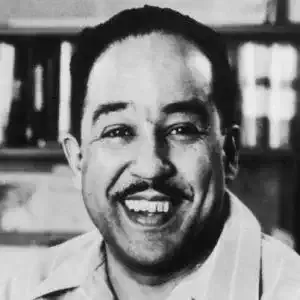
Langston Hughes
My People
The night is beautiful,
So the faces of my people.
The stars are beautiful,
So the eyes of my people.
Beautiful, also, is the sun.
Beautiful, also, are the souls of my people.
Read more →
417
Walt Whitman
Thick-Sprinkled Bunting
THICK-SPRINKLED bunting! Flag of stars!
Long yet your road, fateful flag!--long yet your road, and lined with
bloody death!
For the prize I see at issue, at last is the world!
All its ships and shores I see, interwoven with your threads, greedy
banner!
--Dream'd again the flags of kings, highest born, to flaunt
unrival'd?
O hasten, flag of man! O with sure and steady step, passing highest
flags of kings,
Walk supreme to the heavens, mighty symbol--run up above them all,
Flag of stars! thick-sprinkled bunting!
Read more →
417

Emily Dickinson
To fight aloud, is very brave
To fight aloud, is very brave-
But gallanter, I know
Who charge within the bosom
The Cavalry of Woe-
Who win, and nations do not see-
Who fall-and none observe-
Whose dying eyes, no Country
Regards with patriot love-
We trust, in plumed procession
For such, the Angels go-
Rank after Rank, with even feet-
And Uniforms of Snow.
Read more →
417
Ella Wheeler Wilcox
Canada
England, father and mother in one,
Look on your stalwart son.
Sturdy and strong, with the valour of youth,
Where is another so lusty?
Coated and mailed, with the armour of truth,
Where is another so trusty?
Flesh of your flesh, and bone of your bone,
He is yours alone.
England, father and mother in one,
See the wealth of your son.
Forests primeval, and virginal sod,
Wheat-fields golden and splendid:
Riches of nature and opulent God
For the use of his children intended.
A courage that dares, and a hope that endures,
And a soul all yours.
England, father and mother in one,
Hear the cry of your son.
Little cares he for the glories of earth
Lying around and above him,
Yearning is he for the rights of his birth,
And the heart of his mother to love him.
Vast are your gifts to him, ample his store,
Now open your door.
England, father and mother in one,
Heed the voice of your son.
Proffer him place in your councils of state:
Let him sit near, and attend you.
Ponder his words in the hour of debate,
Strong is his arm to defend you.
Flesh of your flesh, and bone of your bone,
Give him his own.
Read more →
414
William Butler Yeats
Come Gather Round Me, Parnellites
COME gather round me, Parnellites,
And praise our chosen man;
Stand upright on your legs awhile,
Stand upright while you can,
For soon we lie where he is laid,
And he is underground;
Come fill up all those glasses
And pass the bottle round.
And here's a cogent reason,
And I have many more,
He fought the might of England
And saved the Irish poor,
Whatever good a farmer's got
He brought it all to pass;
And here's another reason,
That parnell loved a lass.
And here's a final reason,
He was of such a kind
Every man that sings a song
Keeps Parnell in his mind.
For Parnell was a proud man,
No prouder trod the ground,
And a proud man's a lovely man,
So pass the bottle round.
The Bishops and the party
That tragic story made,
A husband that had sold hiS wife
And after that betrayed;
But stories that live longest
Are sung above the glass,
And Parnell loved his countrey
And parnell loved his lass.
Read more →
408
William Butler Yeats
The Municipal Gallery Revisited
AROUND me the images of thirty years:
An ambush; pilgrims at the water-side;
Casement upon trial, half hidden by the bars,
Guarded; Griffith staring in hysterical pride;
Kevin O'Higgins' countenance that wears
A gentle questioning look that cannot hide
A soul incapable of remorse or rest;
A revolutionary soldier kneeling to be blessed;
An Abbot or Archbishop with an upraised hand
Blessing the Tricolour. 'This is not,' I say,
'The dead Ireland of my youth, but an Ireland
The poets have imagined, terrible and gay.'
Before a woman's portrait suddenly I stand,
Beautiful and gentle in her Venetian way.
I met her all but fifty years ago
For twenty minutes in some studio.
III
Heart-smitten with emotion I Sink down,
My heart recovering with covered eyes;
Wherever I had looked I had looked upon
My permanent or impermanent images:
Augusta Gregory's son; her sister's son,
Hugh Lane, 'onlie begetter' of all these;
Hazel Lavery living and dying, that tale
As though some ballad-singer had sung it all;
Mancini's portrait of Augusta Gregory,
'Greatest since Rembrandt,' according to John Synge;
A great ebullient portrait certainly;
But where is the brush that could show anything
Of all that pride and that humility?
And I am in despair that time may bring
Approved patterns of women or of men
But not that selfsame excellence again.
My mediaeval knees lack health until they bend,
But in that woman, in that household where
Honour had lived so long, all lacking found.
Childless I thought, 'My children may find here
Deep-rooted things,' but never foresaw its end,
And now that end has come I have not wept;
No fox can foul the lair the badger swept --
VI
(An image out of Spenser and the common tongue).
John Synge, I and Augusta Gregory, thought
All that we did, all that we said or sang
Must come from contact with the soil, from that
Contact everything Antaeus-like grew strong.
We three alone in modern times had brought
Everything down to that sole test again,
Dream of the noble and the beggar-man.
VII
And here's John Synge himself, that rooted man,
'Forgetting human words,' a grave deep face.
You that would judge me, do not judge alone
This book or that, come to this hallowed place
Where my friends' portraits hang and look thereon;
Ireland's history in their lineaments trace;
Think where man's glory most begins and ends,
And say my glory was I had such friends.
Read more →
407

Henry Wadsworth Longfellow
Paul Revere's Ride (The Landlord's Tale)
Listen, my children, and you shall hear
Of the midnight ride of Paul Revere,
On the eighteenth of April, in 'Seventy-five;
Hardly a man is now alive
Who remembers that famous day and year.
He said to his friend, "If the British march
By land or sea from the town to-night,
Hang a lantern aloft in the belfry arch
Of the North Church tower as a signal light, --
One, if by land, and two, if by sea;
And I on the opposite shore will be,
Ready to ride and spread the alarm
Through every Middlesex village and farm,
For the country folk to be up and to arm."
Then he said, "Good night!" and with muffled oar
Silently rowed to the Charlestown shore,
Just as the moon rose over the bay,
Where swinging wide at her moorings lay
The somerset, British man-of-war;
A phantom ship, with each mast and spar
Across the moon like a prison bar,
And a huge black hulk, that was magnified
By its own reflection in the tide.
Meanwhile, his friend, through alley and street,
Wanders and watches with eager ears,
Till in the silence around him he hears
The muster of men at the barrack door,
The sound of arms, and the tramp of feet,
And the measured tread of the grenadiers,
Marching down to their boats on the shore.
Then he climbed the tower of the Old North Church
By the wooden stairs, with stealthy tread,
To the belfry-chamber overhead,
And startled the pigeons from their perch
On the sombre rafters, that round him made
Masses and moving shapes of shade, --
By the trembling ladder, steep and tall,
To the highest window in the wall,
Where he paused to listen and look down
A moment on the roofs of the town,
And the moonlight flowing over all.
Beneath, in the churchyard, lay the dead,
In their night-encampment on the hill,
Wrapped in silence so deep and still
That he could hear, like a sentinel's tread,
The watchful night-wind, as it went
Creeping along from tent to tent,
And seeming to whisper, "All is well!"
A moment only he feels the spell
Of the place and the hour, and the secret dread
Of the lonely belfry and the dead;
For suddenly all his thoughts are bent
On a shadowy something far away,
Where the river widens to meet the bay, --
A line of black that bends and floats
On the rising tide, like a bridge of boats.
Meanwhile, impatient to mount and ride,
Booted and spurred, with a heavy stride,
On the opposite shore walked Paul Revere.
Now he patted his horse's side,
Now gazed at the landscape far and near,
Then, impetuous, stamped the earth,
And turned and tightened his saddle-girth;
But mostly he watched with eager search
The belfry-tower of the Old North Church,
As it rose above the graves on the hill,
Lonely and spectral and sombre and still.
And lo! As he looks, on the belfry's height
A glimmer, and then a gleam of light!
He springs to the saddle, the bridle he turns,
But lingers and gazes, till full on his sight
A second lamp in the belfry burns!
A hurry of hoofs in a village street,
A shape in the moonlight, a bulk in the dark,
And beneath, from the pebbles, in passing, a spark
Struck out by a steed flying fearless and fleet:
That was all! And yet, through the gloom and the light,
The fate of a nation was riding that night;
And the spark struck out by that steed, in his flight,
Kindled the land into flame with its heat.
He has left the village and mounted the steep,
And beneath him, tranquil and broad and deep,
Is the Mystic, meeting the ocean tides;
And under the alders, that skirt its edge,
Now soft on the sand, now loud on the ledge,
Is heard the tramp of his steed as he rides.
It was twelve by the village clock
When he crossed the bridge into Medford town.
He heard the crowing of the cock,
And the barking of the farmer's dog,
And felt the damp of the river fog,
That rises after the sun goes down.
It was one by the village clock
When he galloped into Lexington.
He saw the gilded weathercock
Swim in the moonlight as he passed,
And the meeting-house windows, blank and bare,
Gaze at him with a spectral glare,
As if they already stood aghast
At the bloody work they would look upon.
It was two by the village clock
When he came to the bridge in Concord town.
He heard the bleating of the flock,
And the twitter of birds among the trees,
And felt the breath of the morning breeze
Blowing over the meadows brown.
And one was safe and asleep in his bed
Who at the bridge would be first to fall,
Who that day would be lying dead,
Pierced by a British musket-ball.
You know the rest. In the books you have read,
How the British Regulars fired and fled, --
How the farmers gave them ball for ball,
From behind each fence and farm-yard wall,
Chasing the redcoats down the lane,
Then crossing the fields to emerge again
Under the trees at the turn of the road,
And only pausing to fire and load.
So through the night rode Paul Revere;
And so through the night went his cry of alarm
To every Middlesex village and farm, --
A cry of defiance and not of fear,
A voice in the darkness, a knock at the door,
And a word that shall echo forevermore!
For borne on the night-wind of the Past,
Through all our history, to the last,
In the hour of darkness and peril and need,
The people will waken and listen to hear
The hurrying hoof-beats of that steed
And the midnight message of Paul Revere.
Read more →
399
Rudyard Kipling
The Run of the Downs
The Weald is good, the Downs are best---
I'll give you the run of 'em, East to West.
Beachy Head and Winddoor Hill,
They were once and they are still.
Firle Mount Caburn and Mount Harry
Go back as far as sums 'l carry.
Ditchling Beacon and Chanctonbury Ring
They have looked on many a thing,
And what those two have missed between 'em
I reckon Truleigh Hill has seen 'em.
Highden, Bignor and Duncton Down
Knew Old England before the Crown.
Linch Down, Treyford and Sunwood
Knew Old England before the Flood;
And when you end on the Hampshire side--
Butser's old as Time and Tide.
The Downs are sheep, the Weald is corn,
You be glad you are Sussex born!
Read more →
394
Ella Wheeler Wilcox
The Spirit Of Great Joan
Back of each soldier who fights for France,
Aye, back of each woman and man
Who toils and prays through these long tense days.
Is the spirit of Great Joan.
For the love she gave, and the life she gave,
In the eyes of God sufficed
To crown her with light, and power, and might,
That made her second to Christ.
And so in that hour at the Marne she came,
To the seeing eyes of men;
And the blind of view still felt and knew
That her spirit had come again.
And she will come in each crucial hour
And joy shall follow despair,
For Joan sees her France on its knees
And she hears the voice of its prayer.
There is no hate in the heart of France,
But a mighty moral force
That takes its stand for her worshipped land,
And cannot be swerved from its course.
For this is the way with France to-day,
Her courage comes from faith,
And she bends her knee ere she straightens her arm;
In her forward rush toward death.
A jungle of beasts in the heart of the Hun-
War to the world laid bare.
And war has revealed, that France concealed,
Only the lion's lair.
A lioness fighting to save her own,
She fights as a lioness can,
And strength to the end shall the Unseen send,
In the spirit of Great Joan.
Read more →
392

John Greenleaf Whittier
After Election
THE day's sharp strife is ended now,
Our work is done, God knoweth how!
As on the thronged, unrestful town
The patience of the moon looks down,
I wait to hear, beside the wire,
The voices of its tongues of fire.
Slow, doubtful, faint,they seem at first:
Be strong, my heart, to know the worst!
Hark! there the Alleghanies spoke;
That sound from lake and prairie broke,
That sunset-gun of triumph rent
The silence of a continent!
That signal from Nebraska sprung,
This, from Nevada's mountain tongue!
Is that thy answer, strong and free,
O loyal heart of Tennessee?
What strange, glad voice is that which calls
From Wagner's grave and Sumter's walls?
From Mississippi's fountain-head
A sound as of the hisoh's tread!
There rustled freedom's Charter Oak!
In that wild burst the Ozarks spoke!
Cheer answers cheer from rise to set
Of sun. We have a country yet!
The praise, O God, be thine alone!
Thou givest not for bread a stone;
Thou hast not led us through the night
To blind us with returning light;
Not through the furnace have we passed,
To perish at its mouth at last.
O night of peace, thy flight restrain!
November's moon, be slow to wane!
Shine on the freedman's cabin floor,
On brows of prayer a blessing pour;
And give, with full assurance blest,
The weary heart of Freedom rest!
Read more →
386
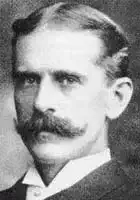
Henry Van Dyke
Victor Hugo
Heart of France for a hundred years,
Passionate, sensitive, proud, and strong,
Quick to throb with her hopes and fears,
Fierce to flame with her sense of wrong!
You, who hailed with a morning song
Dream-light gilding a throne of old:
You, who turned when the dream grew cold,
Singing still, to the light that shone
Pure from Liberty's ancient throne,
Over the human throng!
You, who dared in the dark eclipse,--
When the pygmy heir of a giant name
Dimmed the face of the land with shame,--
Speak the truth with indignant lips,
Call him little whom men called great,
Scoff at him, scorn him, deny him,
Point to the blood on his robe of state,
Fling back his bribes and defy him!
You, who fronted the waves of fate
As you faced the sea from your island home,
Exiled, yet with a soul elate,
Sending songs o'er the rolling foam,
Bidding the heart of man to wait
For the day when all should see
Floods of wrath from the frowning skies
Fall on an Empire founded in lies,
And France again be free!
You, who came in the Terrible Year
Swiftly back to your broken land,
Now to your heart a thousand times more dear,--
Prayed for her, sung to her, fought for her,
Patiently, fervently wrought for her,
Till once again,
After the storm of fear and pain,
High in the heavens the star of France stood clear!
You, who knew that a man must take
Good and ill with a steadfast soul,
Holding fast, while the billows roll
Over his head, to the things that make
Life worth living for great and small,--
Honour and pity and truth,
The heart and the hope of youth,
And the good God over all!
You, to whom work was rest,
Dauntless Toiler of the Sea,
Following ever the joyful quest
Of beauty on the shores of old Romance,
Bard of the poor of France,
And warrior-priest of world-wide charity!
You who loved little children best
Of all the poets that ever sung,
Great heart, golden heart,
Old, and yet ever young,
Minstrel of liberty,
Lover of all free, winged things,
Now at last you are free,--
Your soul has its wings!
Heart of France for a hundred years,
Floating far in the light that never fails you,
Over the turmoil of mortal hopes and fears
Victor, forever victor, the whole world hails you!
Read more →
384
Rudyard Kipling
The Veterans
To-day, across our fathers' graves,
The astonished years reveal
The remnant of that desperate host
Which cleansed our East with steel.
Hail and farewell! We greet you here,
With tears that none will scorn--
O Keepers of the House of old,
Or ever we were born!
One service more we dare to ask--
Pray for us, heroes, pray,
That when Fate lays on us our task
We do not shame the Day!
Read more →
386
Henry Wadsworth Longfellow
The Song Of Hiawatha I: The Peace-Pipe
On the Mountains of the Prairie,
On the great Red Pipe-stone Quarry,
Gitche Manito, the mighty,
He the Master of Life, descending,
On the red crags of the quarry
Stood erect, and called the nations,
Called the tribes of men together.
From his footprints flowed a river,
Leaped into the light of morning,
O'er the precipice plunging downward
Gleamed like Ishkoodah, the comet.
And the Spirit, stooping earthward,
With his finger on the meadow
Traced a winding pathway for it,
Saying to it, 'Run in this way!'
From the red stone of the quarry
With his hand he broke a fragment,
Moulded it into a pipe-head,
Shaped and fashioned it with figures;
From the margin of the river
Took a long reed for a pipe-stem,
With its dark green leaves upon it;
Filled the pipe with bark of willow,
With the bark of the red willow;
Breathed upon the neighboring forest,
Made its great boughs chafe together,
Till in flame they burst and kindled;
And erect upon the mountains,
Gitche Manito, the mighty,
Smoked the calumet, the Peace-Pipe,
As a signal to the nations.
And the smoke rose slowly, slowly,
Through the tranquil air of morning,
First a single line of darkness,
Then a denser, bluer vapor,
Then a snow-white cloud unfolding,
Like the tree-tops of the forest,
Ever rising, rising, rising,
Till it touched the top of heaven,
Till it broke against the heaven,
And rolled outward all around it.
From the Vale of Tawasentha,
From the Valley of Wyoming,
From the groves of Tuscaloosa,
From the far-off Rocky Mountains,
From the Northern lakes and rivers
All the tribes beheld the signal,
Saw the distant smoke ascending,
The Pukwana of the Peace-Pipe.
And the Prophets of the nations
Said: 'Behold it, the Pukwana!
By the signal of the Peace-Pipe,
Bending like a wand of willow,
Waving like a hand that beckons,
Gitche Manito, the mighty,
Calls the tribes of men together,
Calls the warriors to his council!'
Down the rivers, o'er the prairies,
Came the warriors of the nations,
Came the Delawares and Mohawks,
Came the Choctaws and Camanches,
Came the Shoshonies and Blackfeet,
Came the Pawnees and Omahas,
Came the Mandans and Dacotahs,
Came the Hurons and Ojibways,
All the warriors drawn together
By the signal of the Peace-Pipe,
To the Mountains of the Prairie,
To the great Red Pipe-stone Quarry,
And they stood there on the meadow,
With their weapons and their war-gear,
Painted like the leaves of Autumn,
Painted like the sky of morning,
Wildly glaring at each other;
In their faces stem defiance,
In their hearts the feuds of ages,
The hereditary hatred,
The ancestral thirst of vengeance.
Gitche Manito, the mighty,
The creator of the nations,
Looked upon them with compassion,
With paternal love and pity;
Looked upon their wrath and wrangling
But as quarrels among children,
But as feuds and fights of children!
Over them he stretched his right hand,
To subdue their stubborn natures,
To allay their thirst and fever,
By the shadow of his right hand;
Spake to them with voice majestic
As the sound of far-off waters,
Falling into deep abysses,
Warning, chiding, spake in this wise :
'O my children! my poor children!
Listen to the words of wisdom,
Listen to the words of warning,
From the lips of the Great Spirit,
From the Master of Life, who made you!
'I have given you lands to hunt in,
I have given you streams to fish in,
I have given you bear and bison,
I have given you roe and reindeer,
I have given you brant and beaver,
Filled the marshes full of wild-fowl,
Filled the rivers full of fishes:
Why then are you not contented?
Why then will you hunt each other?
'I am weary of your quarrels,
Weary of your wars and bloodshed,
Weary of your prayers for vengeance,
Of your wranglings and dissensions;
All your strength is in your union,
All your danger is in discord;
Therefore be at peace henceforward,
And as brothers live together.
'I will send a Prophet to you,
A Deliverer of the nations,
Who shall guide you and shall teach you,
Who shall toil and suffer with you.
If you listen to his counsels,
You will multiply and prosper;
If his warnings pass unheeded,
You will fade away and perish!
'Bathe now in the stream before you,
Wash the war-paint from your faces,
Wash the blood-stains from your fingers,
Bury your war-clubs and your weapons,
Break the red stone from this quarry,
Mould and make it into Peace-Pipes,
Take the reeds that grow beside you,
Deck them with your brightest feathers,
Smoke the calumet together,
And as brothers live henceforward!'
Then upon the ground the warriors
Threw their cloaks and shirts of deer-skin,
Threw their weapons and their war-gear,
Leaped into the rushing river,
Washed the war-paint from their faces.
Clear above them flowed the water,
Clear and limpid from the footprints
Of the Master of Life descending;
Dark below them flowed the water,
Soiled and stained with streaks of crimson,
As if blood were mingled with it!
From the river came the warriors,
Clean and washed from all their war-paint;
On the banks their clubs they buried,
Buried all their warlike weapons.
Gitche Manito, the mighty,
The Great Spirit, the creator,
Smiled upon his helpless children!
And in silence all the warriors
Broke the red stone of the quarry,
Smoothed and formed it into Peace-Pipes,
Broke the long reeds by the river,
Decked them with their brightest feathers,
And departed each one homeward,
While the Master of Life, ascending,
Through the opening of cloud-curtains,
Through the doorways of the heaven,
Vanished from before their faces,
In the smoke that rolled around him,
The Pukwana of the Peace-Pipe!
Read more →
384

Johann Wolfgang von Goethe
Hermann And Dorothea - VI. Klio
THE AGE.
WHEN the pastor ask'd the foreign magistrate questions,
What the people had suffer'd, how long from their homes they had wander'd,
Then the man replied:--'By no means short are our sorrows,
For we have drunk the bitters of many a long year together,
All the more dreadful, because our fairest hopes have been blighted.
Who can deny that his heart beat wildly and high in his bosom
And that with purer pulses his breast more freely was throbbing,
When the newborn sun first rose in the whole of its glory,
When we heard of the right of man, to have all things in common,
Heard of noble Equality, and of inspiriting Freedom!
Each man then hoped to attain new life for himself, and the fetters
Which had encircled many a land appear'd to be broken,
Fetters held by the hands of sloth and selfish indulgence.
Did not all nations turn their gaze, in those days of emotion,
Tow'rds the world's capital, which so many a long year had been so,
And then more than ever deserved a name so distinguish'd?
Were not the men, who first proclaim'd so noble a message,
Names that are worthy to rank with the highest the sun ever shone on,
Did not each give to mankind his courage and genius and language?
'And we also, as neighbours, at first were warmly excited.
Presently after began the war, and the train of arm'd Frenchmen
Nearer approach'd; at first they appear'd to bring with them friendship,
And they brought it in fact; for all their souls were exalted.
And the gay trees of liberty ev'rywhere gladly they planted,
Promising unto each his own, and the government long'd for.
Greatly at this was youth, and greatly old age was delighted,
And the joyous dance began round the newly-raised standards.
In this manner the overpowering Frenchmen soon conquer'd
First the minds of the men, with their fiery lively proceedings,
Then the hearts of the women, with irresistible graces.
Even the strain of the war, with its many demands, seem'd but trifling,
For before our eyes the distance by hope was illumined,
Luring our gaze far ahead into paths now first open'd before us.
'O how joyful the time, when with his bride the glad bridegroom
Whirls in the dance, awaiting the day that will join them for ever
But more glorious far was the time when the Highest of all things
Which man's mind can conceive, close by and attainable seemed.
Then were the tongues of all loosen'd, and words of wisdom and feeling
Not by greybeards alone, but by men and by striplings were utter'd.
'But the heavens soon clouded became. For the sake of the mast'ry
Strove a contemptible crew, unfit to accomplish good actions.
Then they murder'd each other, and took to oppressing their new-found
Neighbours and brothers, and sent on missions whole herds of selfÄseekers
And the superiors took to carousing and robbing by wholesale,
And the inferiors down to the lowest caroused and robb'd also.
Nobody thought of aught else than having enough for tomorrow.
Terrible was the distress, and daily increased the oppression.
None the cry understood, that they of the day were the masters.
Then even temperate minds were attack'd by sorrow and fury;
Each one reflected, and swore to avenge all the injuries suffer'd,
And to atone for the hitter loss of hopes twice defrauded.
Presently Fortune declared herself on the side of the Germans,
And the French were compell'd to retreat by forced marches before them.
Ah! the sad fate of the war we then for the first time experienced.
For the victor is kind and humane, at least he appears so,
And he spares the man he has vanquish'd, as if he his own were,
When he employs him daily, and with his property helps him.
But the fugitive knows no law; he wards off death only,
And both quickly and recklessly all that he meets with, consumes he.
Then his mind becomes heated apace; and soon desperation
Fills his heart, and impels him to all kinds of criminal actions.
Nothing then holds he respected, he steals It. With furious longing
On the woman he rushes; his lust becomes awful to think of.
Death all around him he sees, his last minutes in cruelty spends he,
Wildly exulting in blood, and exulting in howls and in anguish.
'Then in the minds of our men arose a terrible yearning
That which was lost to avenge, and that which remain'd to defend still.
All of them seized upon arms, lured on by the fugitives' hurry,
By their pale faces, and by their shy, uncertain demeanour.
There was heard the sound of alarm-bells unceasingly ringing,
And the approach of danger restrain'd not their violent fury.
Soon into weapons were turn'd the implements peaceful of tillage,
And with dripping blood the scythe and the pitchfork were cover'd.
Every foeman without distinction was ruthlessly slaughter'd,
Fury was ev'rywhere raging, and artful, cowardly weakness.
May I never again see men in such wretched confusion!
Even the raging wild beast is a better object to gaze on.
Ne'er let them speak of freedom, as if themselves they could govern!
All the evil which Law has driven farback in the corner
Seems to escape, as soon as the fetters which bound it are loosen'd.'
'Excellent man,' replied the pastor, with emphasis speaking
'If you're mistaken in man, 'tis not for me to reprove you.
Evil enough have you suffer'd indeed from his cruel proceedings!
Would you but look back, however, on days so laden with sorrow,
You would yourself confess how much that is good you have witness'd,
Much that is excellent, which remains conceald in the bossom
Till by danger 'tis stirr'd, and till necessity makes man
Show himself as an angel, a tutelar God unto others.'
Then with a smile replied the worthy old magistrate, saying
'Your reminder is wise, like that which they give to the suff'rer
Who has had his dwelling burnt down, that under the ruins,
Gold and silver are lying, though melted and cover'd with ashes.
Little, indeed, it may be, and yet that little is precious,
And the poor man digs it up, and rejoices at finding the treasure.
Gladly, therefore, I turn my thoughts to those few worthy actions
Which my memory still is able to dwell on with pleasure.
Yes, I will not deny it, I saw late foemen uniting
So as to save the town from harm; I saw with devotion
Parents, children and friends impossible actions attempting,
Saw how the youth of a sudden became a man, how the greybeard
Once more was young, how the child as a stripling appear'd in a moment.
Aye, and the weaker sex, as people commonly call it,
Show'd itself brave and daring, with presence of mind all-unwonted.
Let me now, in the first place, describe a deed of rare merit
By a high-spirited girl accomplish'd, an excellent maiden,
Who in the great farmhouse remain'd behind with the servants,
When the whole of the men had departed, to fight with the strangers.
Well, there fell on the court a troop of vagabond scoundrels,
Plund'ring and forcing their way inside the rooms of the women.
Soon they cast their eyes on the forms of the grown-up fair maiden
And of the other dear girls, in age little more than mere children.
Hurried away by raging desire, unfeelingly rush'd they
On the trembling band, and on the high-spirited maiden.
But she instantly seized the sword from the side of a ruffian,
Hew'd him down to the ground; at her feet straight fell he, all bleeding,
Then with doughty strokes the maidens she bravely deliver'd.
Wounded four more of the robbers; with life, however, escaped they.
Then she lock'd up the court, and, arm'd still, waited for succour.
When the pastor heard the praise of the maiden thus utter'd
Feelings of hope for his friend forthwith arose in his bosom,
And he prepared to ask what had been the fate of the damsel,
Whether she, in the sorrowful flight, form'd one of the people?
At this moment, however, the druggist nimbly approach'd them,
Pull'd the sleeve of the pastor, and whisper'd to him as follows
'I have at last pick'd out the maiden from many a hundred
By her description! Pray come and judge for yourself with your own eyes;
Bring the magistrate with you, that we may learn the whole story.'
So they turn'd themselves round; but the magistrate found himself summon'd
By his own followers, who had need of his presence and counsel.
But the pastor forthwith the druggist accompanied, till they
Came to a gap in the hedge, when the latter pointed with slyness,
'See you,' exclaim'd he, 'the maiden? The child's clothes she has been changing.
And I recognise well the old calico--also the cushion--
Cover of blue, which Hermann took in the bundle and gave her.
Quickly and well, of a truth, she has used the presents left with her.
These are evident proofs; and all the rest coincide too;
For a bodice red her well-arch'd bosom upraises,
Prettily tied, while black are the stays fitting close around her.
Then the seams of the ruff she has carefully plaited and folded,
Which, with modest grace, her chin so round is encircling;
Free and joyously rises her head, with its elegant oval,
Strongly round bodkins of silver her back-hair is many times twisted.
When she is sitting, we plainly see her noble proportions,
And the blue well-plaited gown which begins from close to her bosom,
And in rich folds descending, her well-turn'd ankles envelops.
'Tis she, beyond all doubt. So come, that we may examine
Whether she be both a good and a frugal and virtuous maiden.'
Then the pastor rejoin'd, the sitting damsel inspecting
'That she enchanted the youth, I confess is no matter of wonder,
For she stands the test of the gaze of a man of experience.
Happy the person to whom Mother Nature the right face has given!
She recommends him at all times, he never appears as a stranger,
Each one gladly approaches, and each one beside him would linger,
If with his face is combined a pleasant and courteous demeanour.
Yes, I assure you the youth has indeed discover'd a maiden
Who the whole of the days of his life will enliven with gladness,
And with her womanly strength assist him at all times and truly.
Thus a perfect body preserves the soul also in pureness,
And a vigorous youth of a happy old age gives assurance.
After reflecting a little, the druggist made answer as follows:-'
Yet appearances oft are deceitful. I trust not the outside.
Often, indeed, have I found the truth of the proverb which tells us
Ere you share a bushel of salt with a new-found acquaintance,
Do not trust him too readily; time will make you more certain
How you and he will get on, and whether your friendship is lasting.
Let us then, in the first place, inquire amongst the good people
Unto whom the maiden is known, who can tell us about her.'
'Well, of a truth I commend your prudence,' the pastor continued
'Not for ourselves are we wooing! To woo for others is serious.'
So they started to meet the worthy magistrate seeing
How in the course of his business he was ascending the main street.
And the wise pastor straightway address'd him with foresight as follows
'We, by-the-bye, have just seen a girl in the neighbouring garden
Under an apple-tree sitting, and clothes for the children preparing,
Made of worn calico, which for the purpose was doubtless presented.
We were pleased by her face; she appears to be one of the right sort.
Tell us, what know you about her? We ask from a laudable motive.'
When the magistrate came to the garden and peep'd in, exclaimed he
'Well do I know her, in truth; for when I told you the story
Of that noble deed which was done by the maiden I spoke of,
How she seized on the sword, and defended herself, and the servants,
She the heroine was! You can see how active her nature.
But she's as good as she's strong; for her aged kinsman she tended
Until the time of his death, for he died overwhelm'd by affliction
At the distress of his town, and the danger his goods were exposed to.
Also with mute resignation she bore the grievous affliction
Of her betroth'd's sad death, a noble young man who, incited
By the first fire of noble thoughts to struggle for freedom,
Went himself to Paris, and soon found a terrible death there.
For, as at home, so there, he fought 'gainst intrigue and oppression.'
Thus the magistrate spoke. The others departed and thanked him,
And the pastor produced a gold piece (the silver his purse held
He some hours before had with genuine kindness expended
When he saw the fugitives passing in sorrowful masses).
And to the magistrate handed it, saying:--' Divide it, I pray you,
'Mongst those who need it the most. May God give it prosperous increase.'
But the man refused to accept it, and said:--'I assure you,
Many a dollar we've saved, and plenty of clothing and such things,
And I trust we may reach our homes before they are finish'd.'
Then continued the pastor, the gold in his hand once more placing
'None should delay to give in days like the present, and no one
Ought to refuse to receive what is offer'd with liberal kindness.
No one can tell how long he will keep what in peace he possesses,
No one, how long he is doom'd in foreign countries to wander,
While he's deprived of the field and the garden by which he is nurtured.'
'Bravo!' added in turn the druggist, with eagerness speaking
'Had I but money to spare in my pocket, you surely should have it,
Silver and gold alike; for your followers certainly need it.
Yet I'll not leave you without a present, if only to show you
My good will, and I hope you will take the will for the action.'
Thus he spoke, and pull'd out by the strings the leather embroider'd
Pouch, in which he was wont his stock of tobacco to carry,
Daintily open'd and shared its contents--some two or three pipes' full.
'Small in truth is the gift,' he added. The magistrate answered:
'Good tobacco is always a welcome present to trav'llers.'
Then the druggist began his canister to praise very highly.
But the pastor drew him away, and the magistrate left them.
'Come, let us hasten!' exclaimed the sensible man, 'for our young friend
Anxiously waits; without further delay let him hear the good tidings.'
So they hasten'd and came, and found that the youngster was leaning
'Gainst his carriage under the lime-trees. The horses were pawing
Wildly the turf; he held them in check and stood there all pensive,
Silently gazing in front, and saw not his friends coming near him,
Till, as they came, they called him and gave him signals of triumph.
Some way off the druggist already began to address him,
But they approach'd the youth still nearer, and then the good pastor
Seized his hand and spoke and took the word from his comrade
'Friend, I wish you joy! Your eye so true and your true heart
Rightly have chosen! May you and the wife of your young days be happy!
She is full worthy of you; so come and turn around the carriage,
That we may reach without delay the end of the village,
So as to woo her, and shortly escort the dear creature home with us.'
But the youth stood still, and without any token of pleasure
Heard the words of the envoy, though sounding consoling and heav'nly,
Deeply sigh'd and said:--'We came full speed in the carriage
And shall probably go back home ashamed and but slowly;
For, since I have been waiting care has fallen upon me,
Doubt and suspicion and all that a heart full of love is exposed to.
Do you suppose we have only to come, for the maiden to follow,
Just because we are rich, and she poor and wandering in exile?
Poverty, when undeserved, itself makes proud. The fair maiden
Seems to be active and frugal; the world she may claim as her portion.
Do you suppose that a woman of such great beauty and manners
Can have grown up without exciting love in man's bosom?
Do you suppose that her heart until now has to love been fast closed?
Do not drive thither in haste, for perchance to our shame and confusion
We shall have slowly to turn towards home the heads of our horses.
Yes, some youth, I fear me, possesses her heart, and already
She has doubtless promised her hand and her solemn troth plighted,
And I shall stand all ashamed before her, When making my offer.'
Then the pastor proceeded to cheer him with words of good comfort,
But his companion broke in, in his usual talkative manner
'As things used to be, this embarrassment would not have happened,
When each matter was brought to a close in an orthodox fashion.
Then for their son themselves the bride the parents selected,
And a friend of the house was secretly call'd in the first place.
He was then quietly sent as a suitor to visit the parents
Of the selected bride; and, dress'd in his gayest apparel,
Went after dinner some Sunday to visit the excellent burgher,
And began by exchanging polite remarks on all subjects,
Cleverly turning and bending the talk in the proper direction.
After long beating about the bush, he flatter'd the daughter,
And spoke well of the man and the house that gave his commission.
Sensible people soon saw his drift, and the sensible envoy
Watch'd how the notion was taken, and then could explain himself farther.
If they declined the proposal, why then the refusal cost nothing,
But if all prosper'd, why then the suitor for ever thereafter
Play'd the first fiddle at every family feast and rejoicing.
For the married couple remember'd the whole of their lifetime
Whose was the skilful hand by which the marriage knot tied was.
All this now is chang'd, and with many an excellent custom
Has gone quite out of fashion. Each person woos for himself now.
Everyone now must bear the weight of a maiden's refusal
On his own shoulders, and stand all ashamed before her, if needs be.'
'Let that be as it may,' then answered the young man who scarcely
Heard what was said, and his mind had made up already in silence
'I will go myself, and out of the mouth of the maiden
Learn my own fate, for towards her I cherish the most trustful feelings
That any man ever cherish'd towards any woman whatever.
That which she says will be good and sensible,--this I am sure of.
If I am never to see her again, I must once more behold her,
And the ingenuous gaze of her black eyes must meet for the last time.
If to my heart I may clasp her never, her bosom and shoulders
I would once more see, which my arm so longs to encircle:
Once more the mouth I would see, from which one kiss and a Yes will
Make me happy for ever, a No for ever undo me.
But now leave me alone! Wait here no longer. Return you
Straight to my father and mother, in order to tell them in person
That their son was right, and that the maiden is worthy.
And so leave me alone! I myself shall return by the footpath
Over the hill by the pear-tree and then descend through the vineyard,
Which is the shortest way back. Oh may I soon with rejoicing
Take the beloved one home! But perchance all alone I must slink back
By that path to our house and tread it no more with a light heart.'
Thus he spoke, and then placed the reins in the hands of the pastor,
Who, in a knowing way both the foaming horses restraining,
Nimbly mounted the carriage, and took the seat of the driver.
But you still delay'd, good cautious neighbour, and spoke thus
Friend, I will gladly entrust to you soul, and spirit, and mind too,
But my body and bones are not preserved in the best way
When the hand of a parson such worldly matters as reins grasps!'
But you smiled in return, you sensible pastor, replying
'Pray jump in, nor fear with both body and spirit to trust me,
For this hand to hold the reins has long been accustom'd,
And these eyes are train'd to turn the corner with prudence.
For we were wont to drive the carriage, when living at Strasburg,
At the time when with the young baron I went there, for daily,
Driven by me, through the echoing gateway thunder'd the carriage
By the dusty roads to distant meadows and lindens,
Through the crowds of the people who spend their lifetime in walking.'
Partially comforted, then his neighbour mounted the carriage,
Sitting like one prepared to make a wise jump, if needs be,
And the stallions, eager to reach their stables, coursed homewards,
While beneath their powerful hoofs the dust rose in thick clouds.
Long there stood the youth, and saw the dust rise before him,
Saw the dust disperse; but still he stood there, unthinking.
Read more →
380