
Nation and Patriotism
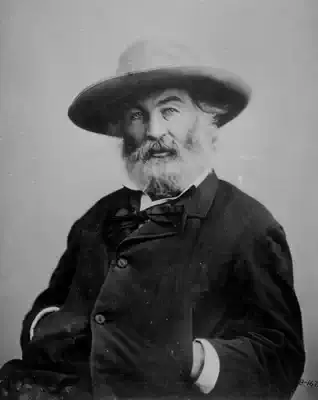
Walt Whitman
Still, Though The One I Sing
STILL, though the one I sing,
(One, yet of contradictions made,) I dedicate to Nationality,
I leave in him Revolt, (O latent right of insurrection! O quenchless,
indispensable fire!)
Read more →
376
Walt Whitman
This Dust Was Once The Man
THIS dust was once the Man,
Gentle, plain, just and resolute--under whose cautious hand,
Against the foulest crime in history known in any land or age,
Was saved the Union of These States.
Read more →
372

William Butler Yeats
The O'Rahilly
SING of the O'Rahilly,
Do not deny his right;
Sing a 'the' before his name;
Allow that he, despite
All those learned historians,
Established it for good;
He wrote out that word himself,
He christened himself with blood.
How goes the weather?
Sing of the O'Rahilly
That had such little sense
He told Pearse and Connolly
He'd gone to great expense
Keeping all the Kerry men
Out of that crazy fight;
That he might be there himself
Had travelled half the night.
How goes the weather?
'Am I such a craven that
I should not get the word
But for what some travelling man
Had heard I had not heard?'
Then on pearse and Connolly
He fixed a bitter look:
'Because I helped to wind the clock
I come to hear it strike.'
How goes the weather?
What remains to sing about
But of the death he met
Stretched under a doorway
Somewhere off Henry Street;
They that found him found upon
The door above his head
'Here died the O'Rahilly.
R.I.P.' writ in blood.
How goes the weather.?
Read more →
372

Henry Wadsworth Longfellow
O Ship of State
Thou, too, sail on, O Ship of State!
Sail on, O Union, strong and great!
Humanity with all its fears,
With all the hopes of future years,
Is hanging breathless on thy fate!
We know what Master laid thy keel,
What Workmen wrought thy ribs of steel,
Who made each mast, and sail, and rope,
What anvils rang, what hammers beat,
In what a forge and what a heat
Were shaped the anchors of thy hope!
Fear not each sudden sound and shock,
'Tis of the wave and not the rock;
'Tis but the flapping of the sail,
And not a rent made by the gale!
In spite of rock and tempest's roar,
In spite of false lights on the shore,
Sail on, nor fear to breast the sea!
Our hearts, our hopes, are all with thee.
Our hearts, our hopes, our prayers, our tears,
Our faith triumphant o'er our fears,
Are all with thee, -are all with thee!
Read more →
373
Walt Whitman
Bathed In War's Perfume
BATHED in war's perfume--delicate flag!
(Should the days needing armies, needing fleets, come again,)
O to hear you call the sailors and the soldiers! flag like a
beautiful woman!
O to hear the tramp, tramp, of a million answering men! O the ships
they arm with joy!
O to see you leap and beckon from the tall masts of ships!
O to see you peering down on the sailors on the decks!
Flag like the eyes of women.
Read more →
373

Mao Tsé-Tung
Reply to Comrade Kuo Mo-Jo
On this tiny globe
A few flies dash themselves against the wall,
Humming without cease,
Sometimes shrilling,
Sometimes moaning.
Ants on the locust tree assume a great-nation swagger
And mayflies lightly plot to topple the giant tree.
The west wind scatters leaves over Changan,
And the arrows are flying, twanging.
So many deeds cry out to be done,
And always urgently;
The world rolls on,
Time presses.
Ten thousand years are too long,
Seize the day, seize the hour!
The Four Seas are rising, clouds and waters raging,
The Five Continents are rocking, wind and thunder roaring.
Our force is irresistible,
Away with all pests!
Read more →
371
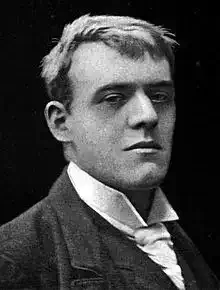
Hilaire Belloc
Ha'nacker Mill
Sally is gone that was so kindly,
Sally is gone from Ha'nacker Hill
And the Briar grows ever since then so blindly;
And ever since then the clapper is still...
And the sweeps have fallen from Ha'nacker Mill.
Ha'nacker Hill is in Desolation:
Ruin a-top and a field unploughed.
And Spirits that call on a fallen nation,
Spirits that loved her calling aloud,
Spirits abroad in a windy cloud.
Spirits that call and no one answers -Ha'nacker's
down and England's done.
Wind and Thistle for pipe and dancers,
And never a ploughman under the Sun:
Never a ploughman. Never a one.
Read more →
371

William Shakespeare
St. Crispin’s Day Speech: from Henry V
WESTMORELAND. O that we now had here
But one ten thousand of those men in England
That do no work to-day!
KING. What’s he that wishes so?
My cousin Westmoreland? No, my fair cousin;
If we are mark’d to die, we are enow
To do our country loss; and if to live,
The fewer men, the greater share of honour.
God’s will! I pray thee, wish not one man more.
By Jove, I am not covetous for gold,
Nor care I who doth feed upon my cost;
It yearns me not if men my garments wear;
Such outward things dwell not in my desires.
But if it be a sin to covet honour,
I am the most offending soul alive.
No, faith, my coz, wish not a man from England.
God’s peace! I would not lose so great an honour
As one man more methinks would share from me
For the best hope I have. O, do not wish one more!
Rather proclaim it, Westmoreland, through my host,
That he which hath no stomach to this fight,
Let him depart; his passport shall be made,
And crowns for convoy put into his purse;
We would not die in that man’s company
That fears his fellowship to die with us.
This day is call’d the feast of Crispian.
He that outlives this day, and comes safe home,
Will stand a tip-toe when this day is nam’d,
And rouse him at the name of Crispian.
He that shall live this day, and see old age,
Will yearly on the vigil feast his neighbours,
And say “To-morrow is Saint Crispian.”
Then will he strip his sleeve and show his scars,
And say “These wounds I had on Crispian’s day.”
Old men forget; yet all shall be forgot,
But he’ll remember, with advantages,
What feats he did that day. Then shall our names,
Familiar in his mouth as household words-
Harry the King, Bedford and Exeter,
Warwick and Talbot, Salisbury and Gloucester-
Be in their flowing cups freshly rememb’red.
This story shall the good man teach his son;
And Crispin Crispian shall ne’er go by,
From this day to the ending of the world,
But we in it shall be remembered-
We few, we happy few, we band of brothers;
For he to-day that sheds his blood with me
Shall be my brother; be he ne’er so vile,
This day shall gentle his condition;
And gentlemen in England now-a-bed
Shall think themselves accurs’d they were not here,
And hold their manhoods cheap whiles any speaks
That fought with us upon Saint Crispin’s day.
Read more →
371

John Donne
Valediction to his Book
I'LL tell thee now (dear love) what thou shalt do
To anger destiny, as she doth us ;
How I shall stay, though she eloign me thus,
And how posterity shall know it too ;
How thine may out-endure
Sibyl's glory, and obscure
Her who from Pindar could allure,
And her, through whose help Lucan is not lame,
And her, whose book (they say) Homer did find, and name.
Study our manuscripts, those myriads
Of letters, which have past 'twixt thee and me ;
Thence write our annals, and in them will be
To all whom love's subliming fire invades,
Rule and example found ;
There the faith of any ground
No schismatic will dare to wound,
That sees, how Love this grace to us affords,
To make, to keep, to use, to be these his records.
This book, as long-lived as the elements,
Or as the world's form, this all-gravèd tome
In cypher writ, or new made idiom ;
We for Love's clergy only are instruments ;
When this book is made thus,
Should again the ravenous
Vandals and Goths invade us,
Learning were safe ; in this our universe,
Schools might learn sciences, spheres music, angels verse.
Here Love's divines—since all divinity
Is love or wonder—may find all they seek,
Whether abstract spiritual love they like,
Their souls exhaled with what they do not see ;
Or, loth so to amuse
Faith's infirmity, they choose
Something which they may see and use ;
For, though mind be the heaven, where love doth sit,
Beauty a convenient type may be to figure it.
Here more than in their books may lawyers find,
Both by what titles mistresses are ours,
And how prerogative these states devours,
Transferr'd from Love himself, to womankind ;
Who, though from heart and eyes,
They exact great subsidies,
Forsake him who on them relies ;
And for the cause, honour, or conscience give ;
Chimeras vain as they or their prerogative.
Here statesmen—or of them, they which can read—
May of their occupation find the grounds ;
Love, and their art, alike it deadly wounds,
If to consider what 'tis, one proceed.
In both they do excel
Who the present govern well,
Whose weakness none doth, or dares tell ;
In this thy book, such will there something see,
As in the Bible some can find out alchemy.
Thus vent thy thoughts ; abroad I'll study thee,
As he removes far off, that great heights takes ;
How great love is, presence best trial makes,
But absence tries how long this love will be ;
To take a latitude
Sun, or stars, are fitliest view'd
At their brightest, but to conclude
Of longitudes, what other way have we,
But to mark when and where the dark eclipses be?
Read more →
364
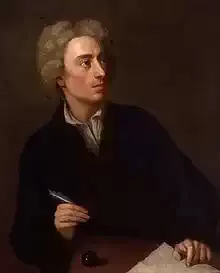
Alexander Pope
Verses Left by Mr. Pope
With no poetic ardour fir'd
I press the bed where Wilmot lay;
That here he lov'd, or here expir'd,
Begets no numbers grave or gay.
Beneath thy roof, Argyle, are bred
Such thoughts as prompt the brave to lie
Stretch'd out in honour's nobler bed,
Beneath a nobler roof - the sky.
Such flames as high in patriots burn,
Yet stoop to bless a child or wife;
And such as wicked kings may mourn,
When freedom is more dear than life.
Read more →
364

John Greenleaf Whittier
Kossuth
Type of two mighty continents!--combining
The strength of Europe with the warmth and glow
Of Asian song and prophecy,--the shining
Of Orient splendors over Northern snow!
Who shall receive him? Who, unblushing, speak
Welcome to him, who, while he strove to break
The Austrian yoke from Magyar necks, smote off
At the same blow the fetters of the serf,
Rearing the altar of his Fatherland
On the firm base of freedom, and thereby
Lifting to Heaven a patriot's stainless hand,
Mocked not the God of Justice with a lie!
Who shall be Freedom's mouthpiece? Who shall give
Her welcoming cheer to the great fugitive?
Not he who, all her sacred trusts betraying,
Is scourging back to slavery's hell of pain
The swarthy Kossuths of our land again!
Not he whose utterance now from lips designed
The bugle-march of Liberty to wind,
And call her hosts beneath the breaking light,
The keen reveille of her morn of fight,
Is but the hoarse note of the blood-hound's baying,
The wolf's long howl behind the bondman's flight!
Oh for the tongue of him who lies at rest
In Quincy's shade of patrimonial trees,
Last of the Puritan tribunes and the best,
To lend a voice to Freedom's sympathies,
And hail the coming of the noblest guest
The Old World's wrong has given the New World of the West!
Read more →
363
John Greenleaf Whittier
Ritner
THANK God for the token! one lip is still free,
One spirit untrammelled, unbending one knee!
Like the oak of the mountain, deep-rooted and firm,
Erect, when the multitude bends to the storm;
When traitors to Freedom, and Honor, and God,
Are bowed at an Idol polluted with blood;
When the recreant North has forgotten her trust,
And the lip of her honor is low in the dust, —
Thank God, that one arm from the shackle has broken!
Thank God, that one man as a freeman has spoken!
O'er thy crags, Alleghany, a blast has been blown!
Down thy tide, Susquehanna, the murmur has gone!
To the land of the South, of the charter and chain,
Of Liberty sweetened with Slavery's pain;
Where the cant of Democracy dwells on the lips
Of the forgers of fetters, and wielders of whips!
Where 'chivalric' honor means really no more
Than scourging of women, and robbing the poor!
Where the Moloch of Slavery sitteth on high,
And the words which he utters, are — Worship, or die!
Right onward, oh, speed it! Wherever the blood
Of the wronged and the guiltless is crying to God;
Wherever a slave in his fetters is pining;
Wherever the lash of the driver is twining;
Wherever from kindred, torn rudely apart,
Comes the sorrowful wail of the broken of heart;
Wherever the shackles of tyranny bind,
In silence and darkness, the God-given mind;
There, God speed it onward! its truth will be felt,
The bonds shall be loosened, the iron shall melt!
And oh, will the land where the free soul of Penn
Still lingers and breathes over mountain and glen;
Will the land where a Benezet's spirit went forth
To the peeled and the meted, and outcast of Earth;
Where the words of the Charter of Liberty first
From the soul of the sage and the patriot burst;
Where first for the wronged and the weak of their kind,
The Christian and statesman their efforts combined;
Will that land of the free and the good wear a chain?
Will the call to the rescue of Freedom be vain?
No, Ritner! her 'Friends' at thy warning shall stand
Erect for the truth, like their ancestral band;
Forgetting the feuds and the strife of past time,
Counting coldness injustice, and silence a crime;
Turning back from the cavil of creeds, to unite
Once again for the poor in defence of the Right;
Breasting calmly, but firmly, the full tide of Wrong,
Overwhelmed, but not borne on its surges along;
Unappalled by the danger, the shame, and the pain,
And counting each trial for Truth as their gain!
And that bold-hearted yeomanry, honest and true,
Who, haters of fraud, give to labor its due;
Whose fathers, of old, sang in concert with thine,
On the banks of Swetara, the songs of the Rhine, —
The German-born pilgrims, who first dared to brave
The scorn of the proud in the cause of the slave;
Will the sons of such men yield the lords of the South
One brow for the brand, for the padlock one mouth?
They cater to tyrants? They rivet the chain,
Which their fathers smote off, on the negro again?
No, never! one voice, like the sound in the cloud,
When the roar of the storm waxes loud and more loud,
Wherever the foot of the freeman hath pressed
From the Delaware's marge to the Lake of the West,
On the South-going breezes shall deepen and grow
Till the land it sweeps over shall tremble below!
The voice of a people, uprisen, awake,
Pennsylvania's watchword, with Freedom at stake,
Thrilling up from each valley, flung down from each height,
'Our Country and Liberty! God for the Right!'
Read more →
363

Robert Browning
De Gustibus---
I.
Your ghost will walk, you lover of trees,
(If our loves remain)
In an English lane,
By a cornfield-side a-flutter with poppies.
Hark, those two in the hazel coppice---
A boy and a girl, if the good fates please,
Making love, say,---
The happier they!
Draw yourself up from the light of the moon,
And let them pass, as they will too soon,
With the bean-flowers' boon,
And the blackbird's tune,
And May, and June!
II.
What I love best in all the world
Is a castle, precipice-encurled,
In a gash of the wind-grieved Apennine
Or look for me, old fellow of mine,
(If I get my head from out the mouth
O' the grave, and loose my spirit's bands,
And come again to the land of lands)---
In a sea-side house to the farther South,
Where the baked cicala dies of drouth,
And one sharp tree---'tis a cypress---stands,
By the many hundred years red-rusted,
Rough iron-spiked, ripe fruit-o'ercrusted,
My sentinel to guard the sands
To the water's edge. For, what expands
Before the house, but the great opaque
Blue breadth of sea without a break?
While, in the house, for ever crumbles
Some fragment of the frescoed walls,
From blisters where a scorpion sprawls.
A girl bare-footed brings, and tumbles
Down on the pavement, green-flesh melons,
And says there's news to-day---the king
Was shot at, touched in the liver-wing,
Goes with his Bourbon arm in a sling:
---She hopes they have not caught the felons.
Italy, my Italy!
Queen Mary's saying serves for me---
(When fortune's malice
Lost her---Calais)---
Open my heart and you will see
Graved inside of it, ``Italy.''
Such lovers old are I and she:
So it always was, so shall ever be!
Read more →
356
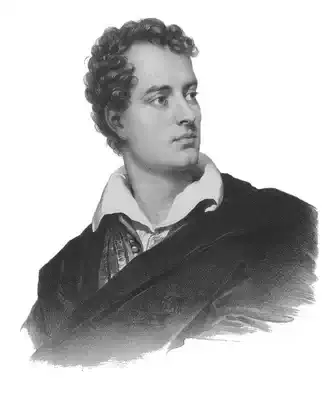
Lord Byron
Epigram: The World Is A Bundle Of Hay
The world is a bundle of hay,
Mankind are the asses who pull;
Each tugs it a different way,
And the greatest of all is John Bull.
Read more →
351

William Wordsworth
On the Extinction of the Venetian Republic
ONCE did she hold the gorgeous East in fee;
And was the safeguard of the West: the worth
Of Venice did not fall below her birth,
Venice, the eldest Child of Liberty.
She was a maiden City, bright and free;
No guile seduced, no force could violate;
And, when she took unto herself a mate,
She must espouse the everlasting Sea.
And what if she had seen those glories fade,
Those titles vanish, and that strength decay;
Yet shall some tribute of regret be paid
When her long life hath reach'd its final day:
Men are we, and must grieve when even the Shade
Of that which once was great is pass'd away.
Read more →
353
Mao Tsé-Tung
Militia Women Inscription on a Photograph
How bright and brave they look, shouldering five-foot rifles
On the parade ground lit up by the first gleams of day.
China's daughters have high-aspiring minds,
They love their battle array, not silks and satins.
Read more →
350
John Greenleaf Whittier
Bryant On His Birthday
We praise not now the poet's art,
The rounded beauty of his song;
Who weighs him from his life apart
Must do his nobler nature wrong.
Not for the eye, familiar grown
With charms to common sight denied,
The marvellous gift he shares alone
With him who walked on Rydal-side;
Not for rapt hymn nor woodland lay,
Too grave for smiles, too sweet for tears;
We speak his praise who wears to-day
The glory of his seventy years.
When Peace brings Freedom in her train,
Let happy lips his songs rehearse;
His life is now his noblest strain,
His manhood better than his verse!
Thank God! his hand on Nature's keys
Its cunning keeps at life's full span;
But, dimmed and dwarfed, in times like these,
The poet seems beside the man!
So be it! let the garlands die,
The singer's wreath, the painter's meed,
Let our names perish, if thereby
Our country may be saved and freed!
Read more →
348
Henry Van Dyke
Jeanne d'Arc Returns
1914-1916
What hast thou done, O womanhood of France,
Mother and daughter, sister, sweetheart, wife,
What hast thou done, amid this fateful strife,
To prove the pride of thine inheritance
In this fair land of freedom and romance?
I hear thy voice with tears and courage rife,--
Smiling against the swords that seek thy life,--
Make answer in a noble utterance:
"I give France all I have, and all she asks.
Would it were more! Ah, let her ask and take:
My hands to nurse her wounded, do her tasks,--
My feet to run her errands through the dark,--
My heart to bleed in triumph for her sake,--
And all my soul to follow thee, Jeanne d'Arc!"
Read more →
346

Gwendolyn Brooks
to the Diaspora
you did not know you were Afrika
When you set out for Afrika
you did not know you were going.
Because
you did not know you were Afrika.
You did not know the Black continent
that had to be reached
was you.
I could not have told you then that some sun
would come,
somewhere over the road,
would come evoking the diamonds
of you, the Black continent-somewhere
over the road.
You would not have believed my mouth.
When I told you, meeting you somewhere close
to the heat and youth of the road,
liking my loyalty, liking belief,
you smiled and you thanked me but very little believed me.
Here is some sun. Some.
Now off into the places rough to reach.
Though dry, though drowsy, all unwillingly a-wobble,
into the dissonant and dangerous crescendo.
Your work, that was done, to be done to be done to be done.
Read more →
346
Mao Tsé-Tung
The People's Liberation Army Captures Nanking
Over Chungshan swept a storm, headlong,
Our mighty army, a million strong, has crossed the Great River.
The City, a tiger crouching, a dragon curling, outshines its ancient glories;
In heroic triumph heaven and earth have been overturned.
With power and to spare we must pursue the tottering foe
And not ape Hsiang Yu the conqueror seeking idle fame.
Were Nature sentient, she too would pass from youth to age,
But Man's world is mutable, seas become mulberry fields.
Read more →
348
John Greenleaf Whittier
Abraham Davenport
In the old days (a custom laid aside
With breeches and cocked hats) the people sent
Their wisest men to make the public laws.
And so, from a brown homestead, where the Sound
Drinks the small tribute of the Mianas,
Waved over by the woods of Rippowams,
And hallowed by pure lives and tranquil deaths,
Stamford sent up to the councils of the State
Wisdom and grace in Abraham Davenport.
'T was on a May-day of the far old year
Seventeen hundred eighty, that there fell
Over the bloom and sweet life of the Spring,
Over the fresh earth and the heaven of noon,
A horror of great darkness, like the night
In day of which the Norland sagas tell,-
The Twilight of the Gods. The low-hung sky
Was black with ominous clouds, save where its rim
Was fringed with a dull glow, like that which climbs
The crater's sides from the red hell below.
Birds ceased to sing, and all the barn-yard fowls
Roosted; the cattle at the pasture bars
Lowed, and looked homeward; bats on leathern wings
Flitted abroad; the sounds of labor died;
Men prayed, and women wept; all ears grew sharp
To hear the doom-blast of the trumpet shatter
The black sky, that the dreadful face of Christ
Might look from the rent clouds, not as he looked
A loving guest at Bethany, but stern
As Justice and inexorable Law.
Meanwhile in the old State House, dim as ghosts,
Sat the lawgivers of Connecticut,
Trembling beneath their legislative robes.
'It is the Lord's Great Day! Let us adjourn,'
Some said; and then, as if with one accord,
All eyes were turned to Abraham Davenport.
He rose, slow cleaving with his steady voice
The intolerable hush. 'This well may be
The Day of Judgment which the world awaits;
But be it so or not, I only know
My present duty, and my Lord's command
To occupy till He come. So at the post
Where He hath set me in His providence,
I choose, for one, to meet Him face to face,-No
faithless servant frightened from my task,
But ready when the Lord of the harvest calls;
And therefore, with all reverence, I would say,
Let God do His work, we will see to ours.
Bring in the candles.' And they brought them in.
Then by the flaring lights the Speaker read,
Albeit with husky voice and shaking hands,
An act to amend an act to regulate
The shad and alewive fisheries. Whereupon
Wisely and well spake Abraham Davenport,
Straight to the question, with no figures of speech
Save the ten Arab signs, yet not without
The shrewd dry humor natural to the man
His awe-struck colleagues listening all the while,
Between the pauses of his argument,
To hear the thunder of the wrath of God
Break from the hollow trumpet of the cloud.
And there he stands in memory to this day,
Erect, self-poised, a rugged face, half seen
Against the background of unnatural dark,
A witness to the ages as they pass,
That simple duty hath no place for fear.
. . . . .
He ceased: just then the ocean seemed
To lift a half-faced moon in sight;
And, shore-ward, o'er the waters gleamed,
From crest to crest, a line of light,
Such as of old, with solemn awe,
The fishers by Gennesaret saw,
When dry-shod o'er it walked the Son of God,
Tracking the waves with light where'er his sandals trod.
Silently for a space each eye
Upon that sudden glory turned
Cool from the land the breeze blew by,
The tent-ropes flapped, the long beach churned
Its waves to foam; on either hand
Stretched, far as sight, the hills of sand;
With bays of marsh, and capes of bush and tree,
The wood's black shore-line loomed beyond the meadowy sea.
The lady rose to leave. 'One song,
Or hymn,' they urged, 'before we part.'
And she, with lips to which belong
Sweet intuitions of all art,
Gave to the winds of night a strain
Which they who heard would hear again;
And to her voice the solemn ocean lent,
Touching its harp of sand, a deep accompaniment.
Read more →
347
William Butler Yeats
The Three Monuments
THEY hold their public meetings where
Our most renowned patriots stand,
One among the birds of the air,
A stumpier on either hand;
And all the popular statesmen say
That purity built up the State
And after kept it from decay;
And let all base ambition be,
For intellect would make us proud
And pride bring in impurity:
The three old rascals laugh aloud.
Read more →
343
Walt Whitman
Other May Praise What They Like
OTHERS may praise what they like;
But I, from the banks of the running Missouri, praise nothing, in
art, or aught else,
Till it has well inhaled the atmosphere of this river--also the
western prairie-scent,
And fully exudes it again.
Read more →
338
Henry Wadsworth Longfellow
The Cumberland
At anchor in Hampton Roads we lay,
On board of the Cumberland sloop-of-war;
And at times from the fortress across the bay
The alarum of drums swept past,
Or a bugle blast
From the camp on the shore.
Then far away to the south uprose
A little feather of snow-white smoke,
And we knew that the iron ship of our foes
Was steadily steering its course
To try the force
Of our ribs of oak.
Down upon us heavily runs,
Silent and sullen, the floating fort;
Then comes a puff of smoke from her guns,
And leaps the terrible death,
With fiery breath,
From each open port.
We are not idle, but send her straight
Defiance back in a full broadside!
As hail rebounds from a roof of slate,
Rebounds our heavier hail
From each iron scale
Of the monster's hide.
'Strike your flag!' the rebel cries,
In his arrogant old plantation strain.
'Never!' our gallant Morris replies:
'It is better to sink than to yield!'
And the whole air is pealed
With the cheers of our men.
Then like a kraken huge and black,
She crushed our ribs in her iron grasp!
Down went the Cumberland all awrack,
With a sudden shudder of death,
And the cannon's breath
For her dying gasp.
Next morn, as the sun rose over the bay,
Still floated our flag at the mainmast-head.
Lord, how beautiful was thy day!
Every waft of the air
Was a whisper of prayer,
Or a dirge for the dead.
Ho! brave hearts that went down in the seas!
Ye are at peace in the troubled stream.
Ho! brave land! with hearts like these,
Thy flag, that is rent in twain,
Shall be one again,
And without a seam.
Read more →
337