
Nostalgia

Henry Lawson
The Old Stockman's Lament
Wrap me up in me stockwhip and blanket,
And bury me deep down below,
Where this piffle and sham won’t disgust me,
In the land where the coolibahs grow;
For I’ve stayed with some well-to-do people,
And I’ve dined with some middle-class folk;
And I’ve sorrowed by clock-tower and steeple
Till my heart for the Commonwealth’s broke.
They have flown in another direction,
Who used to clack-clack by the hour
Of “this awful Freetrade and Protection,”
Of our dear darling member “in power,”
And the Higher Religion for Dossers,
And the Need of an Object for Drunks—
Now they’re all of them Red or Blue Crossers,
With their tails sticking out of their trunks.
There are citified Martins in dozens—
The Darling Point Martins the pick—
Who used to be horrified cousins
Of a Martin we knew as “Mad Mick.”
He is hanging out somewhere where French is;
But they heard he’d enlisted—somehow,
And ’twould paralyse Mick in the trenches
To know how he’s glorified now.
You remember the George Henry Crosses?
They’ve packed up twelve trunks in despair.
He’s the boss of the back-station bosses,
And Ernie’s the son and the heir.
He has never put hands on a wether,
Nor heard a pithed store-bullock grunt;
So they’re taking the mailboat to England
To see Ernie safe to the Front.
And each of the war-going parsons
Costs many a heart-breaking tear—
Like that caddish young cub of old Carson’s,
All found and four hundred a year.
He feels not a word that he preaches,
But he will not be criticised there,
Where, out where the flying shell screeches,
Poor Tommy must fight, sweat and swear.
“Our relatives, too” (hang the Censor!)
Each girl has a tear on her cheek.
Cousin Roger has gone as dispenser
(Expenses and three pounds a week.
More risky than list’ning to sermons,
As some of our fellows will find,
Is a fierce fortnight’s fight with the Germans
In front—and with Roger behind.)
And the Girls, they are writing like blazes,
And Auntie is moaning like hell;
And I wish I was under the daisies—
Or the bluegum would do just as well.
So I want to be wropped in me blanket,
And buried down—deep down—below;
Where this cant and this cackle won’t reach me—
In the land where the coolibahs grow.
264
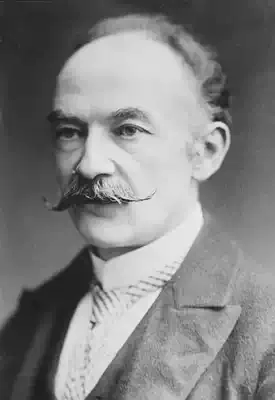
Thomas Hardy
The Rambler
I do not see the hills around,
Nor mark the tints the copses wear;
I do not note the grassy ground
And constellated daisies there.
I hear not the contralto note
Of cuckoos hid on either hand,
The whirr that shakes the nighthawk's throat
When eve's brown awning hoods the land.
Some say each songster, tree and mead--
All eloquent of love divine--
Receives their constant careful heed:
Such keen appraisement is not mine.
The tones around me that I hear,
The aspects, meanings, shapes I see,
Are those far back ones missed when near,
And now perceived too late by me!
265
Henry Lawson
The Bonny Port of Sydney
The lovely Port of Sydney
Lies laughing to the sky,
The bonny Port of Sydney,
Where the ships of nations lie.
You shall never see such beauty,
Though you sail the wide world o’er,
As the sunny Port of Sydney,
As we see it from the Shore.
The shades of night are falling
On many ports of call,
But the harbour lights of Sydney
Are the grandest of them all;
Such a city set in jewels
Has ne’er been seen before
As the harbour lights of Sydney
As we see them from the Shore.
I must sail for gloomy London,
Where there are no harbour lights,
Where no sun is seen in winter,
And there are no starry nights;
And the bonny port of Sydney—
I may never see it more,
But I’ll always dream about it
As we view it from North Shore.
264
Thomas Hardy
To Lizbie Browne
I
Dear Lizbie Browne,
Where are you now?
In sun, in rain? -
Or is your brow
Past joy, past pain,
Dear Lizbie Browne?
II
Sweet Lizbie Browne
How you could smile,
How you could sing! -
How archly wile
In glance-giving,
Sweet Lizbie Browne!
III
And, Lizbie Browne,
Who else had hair
Bay-red as yours,
Or flesh so fair
Bred out of doors,
Sweet Lizbie Browne?
IV
When, Lizbie Browne,
You had just begun
To be endeared
By stealth to one,
You disappeared
My Lizbie Browne!
V
Ay, Lizbie Browne,
So swift your life,
And mine so slow,
You were a wife
Ere I could show
Love, Lizbie Browne.
VI
Still, Lizbie Browne,
You won, they said,
The best of men
When you were wed . . .
Where went you then,
O Lizbie Browne?
VII
Dear Lizbie Browne,
I should have thought,
"Girls ripen fast,"
And coaxed and caught
You ere you passed,
Dear Lizbie Browne!
VIII
But, Lizbie Browne,
I let you slip;
Shaped not a sign;
Touched never your lip
With lip of mine,
Lost Lizbie Browne!
IX
So, Lizbie Browne,
When on a day
Men speak of me
As not, you'll say,
"And who was he?" -
Yes, Lizbie Browne!
Dear Lizbie Browne,
Where are you now?
In sun, in rain? -
Or is your brow
Past joy, past pain,
Dear Lizbie Browne?
II
Sweet Lizbie Browne
How you could smile,
How you could sing! -
How archly wile
In glance-giving,
Sweet Lizbie Browne!
III
And, Lizbie Browne,
Who else had hair
Bay-red as yours,
Or flesh so fair
Bred out of doors,
Sweet Lizbie Browne?
IV
When, Lizbie Browne,
You had just begun
To be endeared
By stealth to one,
You disappeared
My Lizbie Browne!
V
Ay, Lizbie Browne,
So swift your life,
And mine so slow,
You were a wife
Ere I could show
Love, Lizbie Browne.
VI
Still, Lizbie Browne,
You won, they said,
The best of men
When you were wed . . .
Where went you then,
O Lizbie Browne?
VII
Dear Lizbie Browne,
I should have thought,
"Girls ripen fast,"
And coaxed and caught
You ere you passed,
Dear Lizbie Browne!
VIII
But, Lizbie Browne,
I let you slip;
Shaped not a sign;
Touched never your lip
With lip of mine,
Lost Lizbie Browne!
IX
So, Lizbie Browne,
When on a day
Men speak of me
As not, you'll say,
"And who was he?" -
Yes, Lizbie Browne!
262
Henry Lawson
The Memories They Bring
I would never waste the hours
Of the time that is mine own,
Writing verses about flowers
For their own sweet sakes alone;
Gushing as a schoolgirl gushes
Over babies at their best—
Or as poets trill of thrushes,
Larks, and starlings and the rest.
I am not a man who praises
Beauty that he cannot see,
But the buttercups and daisies
Bring my childhood back to me;
And before life’s bitter battle,
That breaks lion hearts and kills,
Oh the waratah and wattle
Saw my boyhood on the hills.
It was “Cissy” or Cecilia,
And I loved her very much,
When I wore the white camelia
That will wither at a touch.
Ah, the fairest chapter closes
With lilies white and blue,
When the wild days with the roses
Cast their glamour over you!
Vine leaves fall and laurels wither
(Madd’ning drink and pride insane),
And the fate that sends us hither
Ever takes us back again.
Fading flowers—slow pulsations—
Flowers pressed for memory
But the red and pink carnations
Speak most bitter things to me.
262

D.H. Lawrence
Kangaroo
Delicate mother Kangaroo
Sitting up there rabbit-wise, but huge, plump-weighted,
And lifting her beautiful slender face, oh! so much more
gently and finely lined than a rabbit's, or than a hare's,
Lifting her face to nibble at a round white peppermint drop
which she loves, sensitive mother Kangaroo.
Her sensitive, long, pure-bred face.
Her full antipodal eyes, so dark,
So big and quiet and remote, having watched so many
empty dawns in silent Australia.
Her little loose hands, and drooping Victorian shoulders.
And then her great weight below the waist, her vast pale belly,
With a thin young yellow little paw hanging out, and
straggle of a long thin ear, like ribbon,
Like a funny trimming to the middle of her belly, thin
little dangle of an immature paw, and one thin ear.
Her belly, her big haunches
And, in addition, the great muscular python-stretch of her tail.
There, she shan't have any more peppermint drops.
So she wistfully, sensitively sniffs the air, and then turns,
goes off in slow sad leaps
On the long flat skis of her legs,
Steered and propelled by that steel-strong snake of a tail.
Stops again, half turns, inquisitive to look back.
While something stirs quickly in her belly, and a lean little
face comes out, as from a window,
Peaked and a bit dismayed,
Only to disappear again quickly away from the sight of the
world, to snuggle down in the warmth,
Leaving the trail of a different paw hanging out.
Still she watches with eternal, cocked wistfulness!
How full her eyes are, like the full, fathomless, shining
eyes of an Australian black-boy
Who has been lost so many centuries on the margins of
existence!
She watches with insatiable wistfulness.
Untold centuries of watching for something to come,
For a new signal from life, in that silent lost land of the
South.
Where nothing bites but insects and snakes and the sun,
small life.
Where no bull roared, no cow ever lowed, no stag cried,
no leopard screeched, no lion coughed, no dog barked,
But all was silent save for parrots occasionally, in the
haunted blue bush.
Wistfully watching, with wonderful liquid eyes.
And all her weight, all her blood, dropping sackwise down
towards the earth's centre,
And the live little-one taking in its paw at the door of her
belly.
262
Horácio
BkI:XXV A Prophecy of Age
Now the young men come less often, violently
beating your shutters, with blow after blow, or
stealing away your sleep, while the door sits tight,
hugging the threshold,
yet was once known to move its hinges, more than
readily. You’ll hear, less and less often now:
‘Are you sleeping, Lydia, while your lover
dies in the long night?’
Old, in your turn, you’ll bemoan coarse adulterers,
as you tremble in some deserted alley,
while the Thracian wind rages, furiously,
through the moonless nights,
while flagrant desire, libidinous passion,
those powers that will spur on a mare in heat,
will storm all around your corrupted heart, ah,
and you’ll complain,
that the youths, filled with laughter, take more delight
in the green ivy, the dark of the myrtle,
leaving the withering leaves to this East wind,
winter’s accomplice.
261

Robert W. Service
The Atavist
What are you doing here, Tom Thorne, on the white top-knot o' the world,
Where the wind has the cut of a naked knife and the stars are rapier keen?
Hugging a smudgy willow fire, deep in a lynx robe curled,
You that's a lord's own son, Tom Thorne -- what does your madness mean?
Go home, go home to your clubs, Tom Thorne! home to your evening dress!
Home to your place of power and pride, and the feast that waits for you!
Why do you linger all alone in the splendid emptiness,
Scouring the Land of the Little Sticks on the trail of the caribou?
Why did you fall off the Earth, Tom Thorne, out of our social ken?
What did your deep damnation prove? What was your dark despair?
Oh with the width of a world between, and years to the count of ten,
If they cut out your heart to-night, Tom Thorne, her name would be graven there!
And you fled afar for the thing called Peace, and you thought you would find it here,
In the purple tundras vastly spread, and the mountains whitely piled;
It's a weary quest and a dreary quest, but I think that the end is near;
For they say that the Lord has hidden it in the secret heart of the Wild.
And you know that heart as few men know, and your eyes are fey and deep,
With a "something lost" come welling back from the raw, red dawn of life:
With woe and pain have you greatly lain, till out of abysmal sleep
The soul of the Stone Age leaps in you, alert for the ancient strife.
And if you came to our feast again, with its pomp and glee and glow,
I think you would sit stone-still, Tom Thorne, and see in a daze of dream,
A mad sun goading to frenzied flame the glittering gems of the snow,
And a monster musk-ox bulking black against the blood-red gleam.
I think you would see berg-battling shores, and stammer and halt and stare,
With a sudden sense of the frozen void, serene and vast and still;
And the aching gleam and the hush of dream, and the track of a great white bear,
And the primal lust that surged in you as you sprang to make your kill.
I think you would hear the bull-moose call, and the glutted river roar;
And spy the hosts of the caribou shadow the shining plain;
And feel the pulse of the Silences, and stand elate once more
On the verge of the yawning vastitudes that call to you in vain.
For I think you are one with the stars and the sun, and the wind and the wave and the
dew;
And the peaks untrod that yearn to God, and the valleys undefiled;
Men soar with wings, and they bridle kings, but what is it all to you,
Wise in the ways of the wilderness, and strong with the strength of the Wild?
You have spent your life, you have waged your strife where never we play a part;
You have held the throne of the Great Unknown, you have ruled a kingdom vast:
. . . . .
But to-night there's a strange, new trail for you, and you go, O weary heart!
To the place and rest of the Great Unguessed . . . at last, Tom Thorne, at last.
262
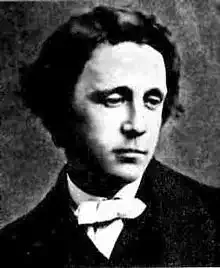
Lewis Carroll
Four Riddles
I
There was an ancient City, stricken down
With a strange frenzy, and for many a day
They paced from morn to eve the crowded town,
And danced the night away.
I asked the cause: the aged man grew sad:
They pointed to a building gray and tall,
And hoarsely answered "Step inside, my lad,
And then you'll see it all."
Yet what are all such gaieties to me
Whose thoughts are full of indices and surds?
x*x + 7x + 53 = 11/3
But something whispered "It will soon be done:
Bands cannot always play, nor ladies smile:
Endure with patience the distasteful fun
For just a little while!"
A change came o'er my Vision it
was night:
We clove a pathway through a frantic throng:
The steeds, wildplunging,
filled us with affright:
The chariots whirled along.
Within a marble hall a river ran A
living tide, half muslin and half cloth:
And here one mourned a broken wreath or fan,
Yet swallowed down her wrath;
And here one offered to a thirsty fair
(His words halfdrowned
amid those thunders tuneful)
Some frozen viand (there were many there),
A toothache
in each spoonful.
There comes a happy pause, for human strength
Will not endure to dance without cessation;
And every one must reach the point at length
Of absolute prostration.
At such a moment ladies learn to give,
To partners who would urge them overmuch,
A flat and yet decided negative Photographers
love such.
There comes a welcome summons hope
revives,
And fading eyes grow bright, and pulses quicken:
Incessant pop the corks, and busy knives
Dispense the tongue and chicken.
Flushed with new life, the crowd flows back again:
And all is tangled talk and mazy motion Much
like a waving field of golden grain,
Or a tempestuous ocean.
And thus they give the time, that Nature meant
For peaceful sleep and meditative snores,
To ceaseless din and mindless merriment
And waste of shoes and floors.
And One (we name him not) that flies the flowers,
That dreads the dances, and that shuns the salads,
They doom to pass in solitude the hours,
Writing acrosticballads.
How late it grows! The hour is surely past
That should have warned us with its double knock?
The twilight wanes, and morning comes at last "
Oh, Uncle, what's o'clock?"
The Uncle gravely nods, and wisely winks.
It MAY mean much, but how is one to know?
He opens his mouth yet
out of it, methinks,
No words of wisdom flow.
II
Empress of Art, for thee I twine
This wreath with all too slender skill.
Forgive my Muse each halting line,
And for the deed accept the will!
O day of tears! Whence comes this spectre grim,
Parting, like Death's cold river, souls that love?
Is not he bound to thee, as thou to him,
By vows, unwhispered here, yet heard above?
And still it lives, that keen and heavenward flame,
Lives in his eye, and trembles in his tone:
And these wild words of fury but proclaim
A heart that beats for thee, for thee alone!
But all is lost: that mighty mind o'erthrown,
Like sweet bells jangled, piteous sight to see!
"Doubt that the stars are fire," so runs his moan,
"Doubt Truth herself, but not my love for thee!"
A sadder vision yet: thine aged sire
Shaming his hoary locks with treacherous wile!
And dost thou now doubt Truth to be a liar?
And wilt thou die, that hast forgot to smile?
Nay, get thee hence! Leave all thy winsome ways
And the faint fragrance of thy scattered flowers:
In holy silence wait the appointed days,
And weep away the leadenfooted
hours.
III.
The air is bright with hues of light
And rich with laughter and with singing:
Young hearts beat high in ecstasy,
And banners wave, and bells are ringing:
But silence falls with fading day,
And there's an end to mirth and play.
Ah, welladay
Rest your old bones, ye wrinkled crones!
The kettle sings, the firelight dances.
Deep be it quaffed, the magic draught
That fills the soul with golden fancies!
For Youth and Pleasance will not stay,
And ye are withered, worn, and gray.
Ah, welladay!
O fair cold face! O form of grace,
For human passion madly yearning!
O weary air of dumb despair,
From marble won, to marble turning!
"Leave us not thus!" we fondly pray.
"We cannot let thee pass away!"
Ah, welladay!
IV.
My First is singular at best:
More plural is my Second:
My Third is far the pluralest So
pluralplural,
I protest
It scarcely can be reckoned!
My First is followed by a bird:
My Second by believers
In magic art: my simple Third
Follows, too often, hopes absurd
And plausible deceivers.
My First to get at wisdom tries A
failure melancholy!
My Second men revered as wise:
My Third from heights of wisdom flies
To depths of frantic folly.
My First is ageing day by day:
My Second's age is ended:
My Third enjoys an age, they say,
That never seems to fade away,
Through centuries extended.
My Whole? I need a poet's pen
To paint her myriad phases:
The monarch, and the slave, of men A
mountainsummit,
and a den
Of dark and deadly mazes
A flashing light a
fleeting shade Beginning,
end, and middle
Of all that human art hath made
Or wit devised! Go, seek HER aid,
If you would read my riddle!
259

Christina Rossetti
A Pause Of Thought
I looked for that which is not, nor can be,
And hope deferred made my heart sick in truth:
But years must pass before a hope of youth
Is resigned utterly.
I watched and waited with a steadfast will:
And though the object seemed to flee away
That I so longed for, ever day by day
I watched and waited still.
Sometimes I said: This thing shall be no more;
My expectation wearies and shall cease;
I will resign it now and be at peace:
Yet never gave it o'er.
Sometimes I said: It is an empty name
I long for; to a name why should I give
The peace of all the days I have to live?—
Yet gave it all the same.
Alas, thou foolish one! alike unfit
For healthy joy and salutary pain:
Thou knowest the chase useless, and again
Turnest to follow it.
259
Henry Lawson
Somewhere Up In Queensland
He's somewhere up in Queensland,
The old folks used to say;
He’s somewhere up in Queensland,
The people say to-day.
But Somewhere (up in Queensland)
That uncle used to know—
That filled our hearts with wonder,
Seems vanished long ago.
He’s gone to Queensland, droving,
The old folks used to say;
He’s gone to Queensland, droving,
The people say to-day.
But “gone to Queensland, droving,”
Might mean, in language plain,
He follows stock in buggies,
And gets supplies by train.
He’s knocking round in Queensland,
The old folks used to say;
He’s gone to Queensland, roving,
His sweetheart says to-day.
But “gone to Queensland, roving”
By mighty plain and scrub,
Might mean he drives a motor-car
For Missus Moneygrub.
He’s looking for new country,
The old folks used to say;
Our boy has gone exploring,
Fond parents say to-day.
“Exploring” out in Queensland
Might only mean to some
He’s salesman in “the drapery”
Of a bush emporium.
To somewhere up in Queensland
Went Tom and Ted and Jack;
From somewhere up in Queensland
The dusty cheques come back:
From somewhere up in Queensland
Brown drovers used to come,
And someone up in Queensland
Kept many a southern home.
Somewhere up in Queensland,
How many black sheep roam,
Who never write a letter,
And never think of home.
For someone up in Queensland
How many a mother spoke;
For someone up in Queensland
How many a girl’s heart broke.
The old folks used to say;
He’s somewhere up in Queensland,
The people say to-day.
But Somewhere (up in Queensland)
That uncle used to know—
That filled our hearts with wonder,
Seems vanished long ago.
He’s gone to Queensland, droving,
The old folks used to say;
He’s gone to Queensland, droving,
The people say to-day.
But “gone to Queensland, droving,”
Might mean, in language plain,
He follows stock in buggies,
And gets supplies by train.
He’s knocking round in Queensland,
The old folks used to say;
He’s gone to Queensland, roving,
His sweetheart says to-day.
But “gone to Queensland, roving”
By mighty plain and scrub,
Might mean he drives a motor-car
For Missus Moneygrub.
He’s looking for new country,
The old folks used to say;
Our boy has gone exploring,
Fond parents say to-day.
“Exploring” out in Queensland
Might only mean to some
He’s salesman in “the drapery”
Of a bush emporium.
To somewhere up in Queensland
Went Tom and Ted and Jack;
From somewhere up in Queensland
The dusty cheques come back:
From somewhere up in Queensland
Brown drovers used to come,
And someone up in Queensland
Kept many a southern home.
Somewhere up in Queensland,
How many black sheep roam,
Who never write a letter,
And never think of home.
For someone up in Queensland
How many a mother spoke;
For someone up in Queensland
How many a girl’s heart broke.
260
Henry Lawson
The Song of a Prison
Now this is the song of a prison—a song of a gaol or jug—
A ballad of quod or of chokey, the ultimate home of the mug.
The yard where the Foolish are drafted; Hell’s school where the harmless are taught;
For the big beast never is captured and the great thief never is caught.
A song of the trollop’s victim, and the dealer in doubtful eggs,
And a song of the man who was ruined by the lie with a thousand legs.
A song of suspected persons and rouge-and-vagabond pals,
And of persons beyond suspicion—the habitual criminals.
’Tis a song of the weary warders, whom prisoners call “the screws”—
A class of men who I fancy would cleave to the “Evening News.”
They look after their treasures sadly. By the screw of their keys they are known,
And they screw them many times daily before they draw their own.
It is written on paper pilfered from the prison printery,
With a stolen stump of a pencil that a felon smuggled for me.
And he’d have got twenty-four hours in the cells if he had been caught,
With bread to eat and water to drink and plenty of food for thought.
And I paid in chews of tobacco from one who is in for life;
But he is a decent fellow—he only murdered his wife.
(He is cherub-like, jolly, good-natured, and frank as the skies above,
And his Christian name is Joseph, and his other, ye gods! is Love!)
The Governor knows, and the Deputy, and all of the warders know,
Once a week, and on Sunday, we sit in a sinful row,
And bargain for chews of tobacco under the cover of prayer—
And the harmless Anglican chaplain is the only innocent there.
Staircase and doors of iron, no sign of a plank or brick,
Ceilings and floors of sandstone, and the cell walls two feet thick;
Cell like a large-sized coffin, or a small-sized tomb, and white,
And it strikes a chill to the backbone on the warmest summer night.
For fifteen hours they leave you to brood in the gloom and cold
On the cheats that you should have cheated, and the lies that you should have told;
On the money that would release you, you lent to many a friend,
And the many a generous action you suffered for in the end.
Grey daylight follows softly the heartless electric light
That printed the bars of the window on the wall of the cell all night
The darkness has vanished “hushing” when there is nothing to hush—
And I think of the old grey daylight on the teamster’s camp in the bush.
I think of the low bark homestead, the yard and the sinister bail,
And the shed in a hole in the gully—a pigsty compared with gaol;
The drought and the rows and the nagging; the hill where a flat grave is—
The gaol of my boyhood as dreadful and barren and grey as this.
We rise at six when the bell rings, and roll up our blankets neat,
Then we pace the cell till seven, brain-dulled, and with leaden feet.
Bolts clank, and the iron doors open, light floods from an iron-barred arch—
And we start with a start galvanic at the passionless, “Left—Quick march!”
Down the crooked and winding staircase in the great wrong-angular well,
Like the crooked stairs that of late years we have stumbled down to Hell;
We empty the tubs and muster, with the prison slouch and tread,
And we take to the cells our breakfast of hominy and of bread.
The church in its squat round tower, with Christ in His thorny wreath—
The reception house is below it, so the gates of Hell are beneath,
Where sinners are clad and numbered, when hope for a while has
And above us the gilded rooster that crowed when Peter lied.
What avail is the prayer of the abbess? Or the raving of Cock-eyed Liz?
The holy hermit in his cell, or the Holy Terror in his?
Brothers and sisters of Heaven, seen through the bars in a wall,
As we see the uncaught sinners—and God have mercy on all.
259

Emily Dickinson
When Roses cease to bloom, Sir
When Roses cease to bloom, Sir,
And Violets are done-
When Bumblebees in solemn flight
Have passed beyond the Sun-
The hand that paused to gather
Upon this Summer's day
Will idle lie-in Auburn-
Then take my flowers-pray!
And Violets are done-
When Bumblebees in solemn flight
Have passed beyond the Sun-
The hand that paused to gather
Upon this Summer's day
Will idle lie-in Auburn-
Then take my flowers-pray!
260
Robert W. Service
Music In The Bush
O'er the dark pines she sees the silver moon,
And in the west, all tremulous, a star;
And soothing sweet she hears the mellow tune
Of cow-bells jangled in the fields afar.
Quite listless, for her daily stent is done,
She stands, sad exile, at her rose-wreathed door,
And sends her love eternal with the sun
That goes to gild the land she'll see no more.
The grave, gaunt pines imprison her sad gaze,
All still the sky and darkling drearily;
She feels the chilly breath of dear, dead days
Come sifting through the alders eerily.
Oh, how the roses riot in their bloom!
The curtains stir as with an ancient pain;
Her old piano gleams from out the gloom
And waits and waits her tender touch in vain.
But now her hands like moonlight brush the keys
With velvet grace -- melodious delight;
And now a sad refrain from over seas
Goes sobbing on the bosom of the night;
And now she sings. (O! singer in the gloom,
Voicing a sorrow we can ne'er express,
Here in the Farness where we few have room
Unshamed to show our love and tenderness,
Our hearts will echo, till they beat no more,
That song of sadness and of motherland;
And, stretched in deathless love to England's shore,
Some day she'll hearken and she'll understand.)
A prima-donna in the shining past,
But now a mother growing old and gray,
She thinks of how she held a people fast
In thrall, and gleaned the triumphs of a day.
She sees a sea of faces like a dream;
She sees herself a queen of song once more;
She sees lips part in rapture, eyes agleam;
She sings as never once she sang before.
She sings a wild, sweet song that throbs with pain,
The added pain of life that transcends art --
A song of home, a deep, celestial strain,
The glorious swan-song of a dying heart.
A lame tramp comes along the railway track,
A grizzled dog whose day is nearly done;
He passes, pauses, then comes slowly back
And listens there -- an audience of one.
She sings -- her golden voice is passion-fraught,
As when she charmed a thousand eager ears;
He listens trembling, and she knows it not,
And down his hollow cheeks roll bitter tears.
She ceases and is still, as if to pray;
There is no sound, the stars are all alight --
Only a wretch who stumbles on his way,
Only a vagrant sobbing in the night.
259

John Greenleaf Whittier
My Playmate
The pines were dark on Ramoth hill,
Their song was soft and low;
The blossoms in the sweet May wind
Were falling like the snow.
The blossoms drifted at our feet,
The orchard birds sang clear;
The sweetest and the saddest day
It seemed of all the year.
For, more to me than birds or flowers,
My playmate left her home,
And took with her the laughing spring,
The music and the bloom.
She kissed the lips of kith and kin,
She laid her hand in mine
What more could ask the bashful boy
Who fed her father's kine?
She left us in the bloom of May
The constant years told o'er
Their seasons with as sweet May morns,
But she came back no more.
I walk, with noiseless feet, the round
Of uneventful years;
Still o'er and o'er I sow the spring
And reap the autumn ears.
She lives where all the golden year
Her summer roses blow;
The dusky children of the sun
Before her come and go.
There haply with her jewelled hands
She smooths her silken gown,
No
more the homespun lap wherein
I shook the walnuts down.
The wild grapes wait us by the brook,
The brown nuts on the hill,
And still the May-day flowers make sweet
The woods of Follymill.
The lilies blossom in the pond,
The bird builds in the tree,
The dark pines sing on Ramoth hill
The slow song of the sea.
I wonder if she thinks of them,
And how the old time seems,
If ever the pines of Ramoth wood
Are sounding in her dreams.
I see her face, I hear her voice;
Does she remember mine?
And what to her is now the boy
Who fed her father's kine?
What cares she that the orioles build
For other eyes than ours,
That
other hands with nuts are filled,
And other laps with flowers?
O playmate in the golden time!
Our mossy seat is green,
Its fringing violets blossom yet,
The old trees o'er it lean.
The winds so sweet with birch and fern
A sweeter memory blow;
And there in spring the veeries sing
The song of long ago.
And still the pines of Ramoth wood
Are moaning like the sea,
The moaning of the sea of change
Between myself and thee!
258
John Greenleaf Whittier
The Pipes At Lucknow
Pipes of the misty moorlands,
Voice of the glens and hills;
The droning of the torrents,
The treble of the rills!
Not the braes of bloom and heather,
Nor the mountains dark with rain,
Nor maiden bower, nor border tower,
Have heard your sweetest strain!
Dear to the Lowland reaper,
And plaided mountaineer, To
the cottage and the castle
The Scottish pipes are dear; Sweet
sounds the ancient pibroch
O'er mountain, loch, and glade;
But the sweetest of all music
The pipes at Lucknow played.
Day by day the Indian tiger
Louder yelled, and nearer crept;
Round and round the jungle-serpent
Near and nearer circles swept.
'Pray for rescue, wives and mothers, Pray
to-day!' the soldier said;
'To-morrow, death's between us
And the wrong and shame we dread.'
Oh, they listened, looked, and waited,
Till their hope became despair;
And the sobs of low bewailing
Filled the pauses of their prayer.
Then up spake a Scottish maiden.
With her ear unto the ground:
'Dinna ye hear it? - dinna ye hear it?
The pipes o' Havelock sound!'
Hushed the wounded man his groaning;
Hushed the wife her little ones;
Alone they heard the drum-roll
And the roar of Sepoy guns.
But to sounds of home and childhood
The Highland ear was true; As
her mother's cradle-crooning
The mountain pipes she knew.
Like the march of soundless music
Through the vision of the seer,
More of feeling than of hearing,
Of the heart than of the ear,
She knew the droning pibroch,
She knew the Campbell's call:
'Hark! hear ye no MacGregor's,
The grandest o' them all!'
Oh, they listened, dumb and breathless,
And they caught the sound at last;
Faint and far beyond the Goomtee
Rose and fell the piper's blast!
Then a burst of wild thanksgiving
Mingled woman's voice and man's;
'God be praised! - the march of Havelock!
The piping of the clans!'
Louder, nearer, fierce as vengeance,
Sharp and shrill as swords at strife,
Came the wild MacGregor's clan-call,
Stinging all the air to life.
But when the far-off dust-cloud
To plaided legions grew,
Full tenderly and blithesomely
The pipes of rescue blew!
Round the silver domes of Lucknow.
Moslem mosque and Pagan shrine,
Breathed the air to Britons dearest,
The air of Auld Lang Syne.
O'er the cruel roll of war-drums
Rose that sweet and homelike strain;
And the tartan clove the turban,
As the Goomtee cleaves the plain.
Dear to the corn-land reaper
And plaided mountaineer, To
the cottage and the castle
The piper's song is dear.
Sweet sounds the Gaelic pibroch
O'er mountain, glen, and glade;
But the sweetest of all music
The pipes at Lucknow played!
258
Henry Lawson
To a Pair of Blucher Boots
OLD acquaintance unforgotten,
Though you may be “ugly brutes”—
Though your leather’s cracked and rotten,
Worn-out pair of Blucher boots.
’Tis the richer man before you,
Dearer leathers grace his feet;
’Twas the better man that wore you
In the tramps through dust and heat!
Oft rebuffed by “super’s” snarling,
When I asked him for a “show”,
On that long tramp to the Darling
In the days of long ago;
Tell me, if you know it, whether,
As I sadly tramped away,
Bore I heavy on your leather,
Worn-out pair of Bluchers, say?
Though your leather’s cracked and rotten,
Though you may be ugly brutes,
I’ll preserve you unforgotten,
Worn-out pair of Blucher boots!
255
Henry Lawson
The Heart of the Swag
Oh, the track through the scrub groweth ever more dreary,
And lower and lower his grey head doth bow;
For the swagman is old and the swagman is weary—
He’s been tramping for over a century now.
He tramps in a worn-out old “side spring” and “blucher,”
His hat is a ruin, his coat is a rag,
And he carries forever, far into the future,
The key of his life in the core of his swag.
There are old-fashioned portraits of girls who are grannies,
There are tresses of dark hair whose owner’s are grey;
There are faded old letters from Marys and Annies,
And Toms, Dicks, and Harrys, dead many a day.
There are broken-heart secrets and bitter-heart reasons—
They are sewn in a canvas or calico bag,
And wrapped up in oilskin through dark rainy seasons,
And he carries them safe in the core of his swag.
There are letters that should have been burnt in the past time,
For he reads them alone, and a devil it brings;
There were farewells that should have been said for the last time,
For, forever and ever the love for her springs.
But he keeps them all precious, and keeps them in order,
And no matter to man how his footsteps may drag,
There’s a friend who will find, when he crosses the Border,
That the Heart of the Man’s in the Heart of his swag.
254
Henry Lawson
Robbie's Statue
Grown tired of mourning for my sins—
And brooding over merits—
The other night with bothered brow
I went amongst the spirits;
And I met one that I knew well:
‘Oh, Scotty’s Ghost, is that you?
‘And did you see the fearsome crowd
‘At Robbie Burns’s statue?
‘They hurried up in hansom cabs,
‘Tall-hatted and frock-coated;
‘They trained it in from all the towns,
‘The weird and hairy-throated;
‘They spoke in some outlandish tongue,
‘They cut some comic capers,
‘And ilka man was wild to get
‘His name in all the papers.
‘They showed no gleam of intellect,
‘Those frauds who rushed before us;
‘They knew one verse of “Auld Lang Syne—”
‘The first one and the chorus:
‘They clacked the clack o’ Scotlan’s Bard,
‘They glibly talked of “Rabby;”
‘But what if he had come to them
‘Without a groat and shabby?
‘They drank and wept for Robbie’s sake,
‘They stood and brayed like asses
‘(The living bard’s a drunken rake,
‘The dead one loved the lasses);
‘If Robbie Burns were here, they’d sit
‘As still as any mouse is;
‘If Robbie Burns should come their way,
‘They’d turn him out their houses.
‘Oh, weep for bonny Scotland’s bard!
‘And praise the Scottish nation,
‘Who made him spy and let him die
‘Heart-broken in privation:
‘Exciseman, so that he might live
‘Through northern winters’ rigours—
‘Just as in southern lands they give
‘The hard-up rhymer figures.
‘We need some songs of stinging fun
‘To wake the States and light ’em;
‘I wish a man like Robert Burns
‘Were here to-day to write ’em!
‘But still the mockery shall survive
‘Till the Day o’ Judgment crashes—
‘The men we scorn when we’re alive
‘With praise insult our ashes.’
And Scotty’s ghost said: ‘Never mind
‘The fleas that you inherit;
‘The living bard can flick them off—
‘They cannot hurt his spirit.
‘The crawlers round the bardie’s name
‘Shall crawl through all the ages;
‘His work’s the living thing, and they
‘Are fly-dirt on the pages.’
250
Robert W. Service
Apollo Belvedere
A-sitttin' on a cracker box an' spittin' in the stove,
I took a sudden notion that I'd kindo' like to rove;
An' so I bought a ticket, jest as easy as could be,
From Pumpkinville in Idaho to Rome in Italy;
An' found myself in seven days of mostly atmosphere
A-starin' at a statoo called Appoller Belvydeer.
Now I'm a rum-soaked sinner, an' religion ain't my plan,
Yet, I was flabbergasted by that gol-darned Vattyican;
An' when I seed Saint Peter's dome, all I could do was swear,
The which I reckon after all may be a form o' prayer;
Abut as I sought amid them sights bewildered to steer,
The king-pin was the one they called Appoller Belvydeer.
Say, I ain't got no culture an' I don't know any art,
But that there statoo got me, standin' in its room apart,
In an alcove draped wi' velvet, lookin' everlastin' bright,
Like the vision o' a poet, full o' beauty, grace an' light;
An' though I know them kind o' words sound sissy in the ear,
It's jest how I was struck by that Appoller Belvydeer.
I've gazed at them depictions in the glossy magazines,
Uv modern Art an' darned if I can make out what it means:
Will any jerk to-day outstand a thousand years of test?
Why, them old Pagans make us look like pikers at the best.
An' maybe, too, their minds was jest as luminous and clear
As that immortal statoo o' Appoller Belvydeer.
An' all yer march o' progress an' machinery as' such,
I wonder if, when all is said, they add up to so much?
An' were not these old fellers in their sweet an' simple way
Serener souled an' happier than we poor mugs to-day?
They have us licked, I thought, an' stood wi' mingled gloom an' cheer
Before that starry statoo o' Appoller Belvydeer.
So I'll go back to Pumpkinville an' to my humble home,
An' dream o' all the sights I saw in everlastin' Rome;
But I will never speak a word o' that enchanted land
That taks you bang into the Past - folks wouldn't understand;
An' midmost in my memories I'll cherish close an' dear
That bit o' frozen music, that Appoller Belvydeer.
249
Thomas Hardy
The Dream-Follower
A dream of mine flew over the mead
To the halls where my old Love reigns;
And it drew me on to follow its lead:
And I stood at her window-panes;
And I saw but a thing of flesh and bone
Speeding on to its cleft in the clay;
And my dream was scared, and expired on a moan,
And I whitely hastened away.
To the halls where my old Love reigns;
And it drew me on to follow its lead:
And I stood at her window-panes;
And I saw but a thing of flesh and bone
Speeding on to its cleft in the clay;
And my dream was scared, and expired on a moan,
And I whitely hastened away.
247
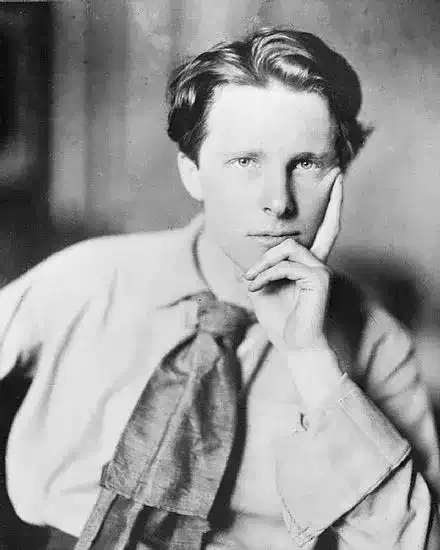
Rupert Brooke
The Old Vicarage, Grantchester
Just now the lilac is in bloom,
All before my little room;
And in my flower-beds, I think,
Smile the carnation and the pink;
And down the borders, well I know,
The poppy and the pansy blow . . .
Oh! there the chestnuts, summer through,
Beside the river make for you
A tunnel of green gloom, and sleep
Deeply above; and green and deep
The stream mysterious glides beneath,
Green as a dream and deep as death.
-- Oh, damn! I know it! and I know
How the May fields all golden show,
And when the day is young and sweet,
Gild gloriously the bare feet
That run to bathe . . .
`Du lieber Gott!'
Here am I, sweating, sick, and hot,
And there the shadowed waters fresh
Lean up to embrace the naked flesh.
Temperamentvoll German Jews
Drink beer around; -- and THERE the dews
Are soft beneath a morn of gold.
Here tulips bloom as they are told;
Unkempt about those hedges blows
An English unofficial rose;
And there the unregulated sun
Slopes down to rest when day is done,
And wakes a vague unpunctual star,
A slippered Hesper; and there are
Meads towards Haslingfield and Coton
Where das Betreten's not verboten.
ei'qe genoi mhn . . . would I were
In Grantchester, in Grantchester! --
Some, it may be, can get in touch
With Nature there, or Earth, or such.
And clever modern men have seen
A Faun a-peeping through the green,
And felt the Classics were not dead,
To glimpse a Naiad's reedy head,
Or hear the Goat-foot piping low: . . .
But these are things I do not know.
I only know that you may lie
Day long and watch the Cambridge sky,
And, flower-lulled in sleepy grass,
Hear the cool lapse of hours pass,
Until the centuries blend and blur
In Grantchester, in Grantchester. . . .
Still in the dawnlit waters cool
His ghostly Lordship swims his pool,
And tries the strokes, essays the tricks,
Long learnt on Hellespont, or Styx.
Dan Chaucer hears his river still
Chatter beneath a phantom mill.
Tennyson notes, with studious eye,
How Cambridge waters hurry by . . .
And in that garden, black and white,
Creep whispers through the grass all night;
And spectral dance, before the dawn,
A hundred Vicars down the lawn;
Curates, long dust, will come and go
On lissom, clerical, printless toe;
And oft between the boughs is seen
The sly shade of a Rural Dean . . .
Till, at a shiver in the skies,
Vanishing with Satanic cries,
The prim ecclesiastic rout
Leaves but a startled sleeper-out,
Grey heavens, the first bird's drowsy calls,
The falling house that never falls.
epsilon-iota'-theta-epsilon gamma-epsilon-nu-omicron-iota -mu-eta-nu
God! I will pack, and take a train,
And get me to England once again!
For England's the one land, I know,
Where men with Splendid Hearts may go;
And Cambridgeshire, of all England,
The shire for Men who Understand;
And of THAT district I prefer
The lovely hamlet Grantchester.
For Cambridge people rarely smile,
Being urban, squat, and packed with guile;
And Royston men in the far South
Are black and fierce and strange of mouth;
At Over they fling oaths at one,
And worse than oaths at Trumpington,
And Ditton girls are mean and dirty,
And there's none in Harston under thirty,
And folks in Shelford and those parts
Have twisted lips and twisted hearts,
And Barton men make Cockney rhymes,
And Coton's full of nameless crimes,
And things are done you'd not believe
At Madingley on Christmas Eve.
Strong men have run for miles and miles,
When one from Cherry Hinton smiles;
Strong men have blanched, and shot their wives,
Rather than send them to St. Ives;
Strong men have cried like babes, bydam,
To hear what happened at Babraham.
But Grantchester! ah, Grantchester!
There's peace and holy quiet there,
Great clouds along pacific skies,
And men and women with straight eyes,
Lithe children lovelier than a dream,
A bosky wood, a slumbrous stream,
And little kindly winds that creep
Round twilight corners, half asleep.
In Grantchester their skins are white;
They bathe by day, they bathe by night;
The women there do all they ought;
The men observe the Rules of Thought.
They love the Good; they worship Truth;
They laugh uproariously in youth;
(And when they get to feeling old,
They up and shoot themselves, I'm told) . . .
Ah God! to see the branches stir
Across the moon at Grantchester!
To smell the thrilling-sweet and rotten
Unforgettable, unforgotten
River-smell, and hear the breeze
Sobbing in the little trees.
Say, do the elm-clumps greatly stand
Still guardians of that holy land?
The chestnuts shade, in reverend dream,
The yet unacademic stream?
Is dawn a secret shy and cold
Anadyomene, silver-gold?
And sunset still a golden sea
From Haslingfield to Madingley?
And after, ere the night is born,
Do hares come out about the corn?
Oh, is the water sweet and cool,
Gentle and brown, above the pool?
And laughs the immortal river still
Under the mill, under the mill?
Say, is there Beauty yet to find?
And Certainty? and Quiet kind?
Deep meadows yet, for to forget
The lies, and truths, and pain? . . . oh! yet
Stands the Church clock at ten to three?
And is there honey still for tea?
246
D.H. Lawrence
Blue
The earth again like a ship steams out of the dark sea over
The edge of the blue, and the sun stands up to see us glide
Slowly into another day; slowly the rover
Vessel of darkness takes the rising tide.
I, on the deck, am startled by this dawn confronting
Me who am issued amazed from the darkness, stripped
And quailing here in the sunshine, delivered from haunting
The night unsounded whereon our days are shipped.
Feeling myself undawning, the day’s light playing upon me,
I who am substance of shadow, I all compact
Of the stuff of the night, finding myself all wrongly
Among the crowds of things in the sunshine jostled and racked.
I with the night on my lips, I sigh with the silence of death;
And what do I care though the very stones should cry me unreal, though the clouds
Shine in conceit of substance upon me, who am less than the rain.
Do I know the darkness within them? What are they but shrouds?
The clouds go down the sky with a wealthy ease
Casting a shadow of scorn upon me for my share in death; but I
Hold my own in the midst of them, darkling, defy
The whole of the day to extinguish the shadow I lift on the breeze.
Yea, though the very clouds have vantage over me,
Enjoying their glancing flight, though my love is dead,
I still am not homeless here, I’ve a tent by day
Of darkness where she sleeps on her perfect bed.
And I know the host, the minute sparkling of darkness
Which vibrates untouched and virile through the grandeur of night,
But which, when dawn crows challenge, assaulting the vivid motes
Of living darkness, bursts fretfully, and is bright:
Runs like a fretted arc-lamp into light,
Stirred by conflict to shining, which else
Were dark and whole with the night.
Runs to a fret of speed like a racing wheel,
Which else were aslumber along with the whole
Of the dark, swinging rhythmic instead of a-reel.
Is chafed to anger, bursts into rage like thunder;
Which else were a silent grasp that held the heavens
Arrested, beating thick with wonder.
Leaps like a fountain of blue sparks leaping
In a jet from out of obscurity,
Which erst was darkness sleeping.
Runs into streams of bright blue drops,
Water and stones and stars, and myriads
Of twin-blue eyes, and crops
Of floury grain, and all the hosts of day,
All lovely hosts of ripples caused by fretting
The Darkness into play.
245
Henry Lawson
Mount Bukaroo
Only one old post is standing -Solid
yet, but only one --
Where the milking, and the branding,
And the slaughtering were done.
Later years have brought dejection,
Care, and sorrow; but we knew
Happy days on that selection
Underneath old Bukaroo.
Then the light of day commencing
Found us at the gully's head,
Splitting timber for the fencing,
Stripping bark to roof the shed.
Hands and hearts the labour strengthened;
Weariness we never knew,
Even when the shadows lengthened
Round the base of Bukaroo.
There for days below the paddock
How the wilderness would yield
To the spade, and pick, and mattock,
While we toiled to win the field.
Bronzed hands we used to sully
Till they were of darkest hue,
`Burning off' down in the gully
At the back of Bukaroo.
When we came the baby brother
Left in haste his broken toys,
Shouted to the busy mother:
`Here is dadda and the boys!'
Strange it seems that she was able
For the work that she would do;
How she'd bustle round the table
In the hut 'neath Bukaroo!
When the cows were safely yarded,
And the calves were in the pen,
All the cares of day discarded,
Closed we round the hut-fire then.
Rang the roof with boyish laughter
While the flames o'er-topped the flue;
Happy days remembered after -Far
away from Bukaroo.
But the years were full of changes,
And a sorrow found us there;
For our home amid the ranges
Was not safe from searching Care.
On he came, a silent creeper;
And another mountain threw
O'er our lives a shadow deeper
Than the shade of Bukaroo.
All the farm is disappearing;
For the home has vanished now,
Mountain scrub has choked the clearing,
Hid the furrows of the plough.
Nearer still the scrub is creeping
Where the little garden grew;
And the old folks now are sleeping
At the foot of Bukaroo.
247