
Nostalgia
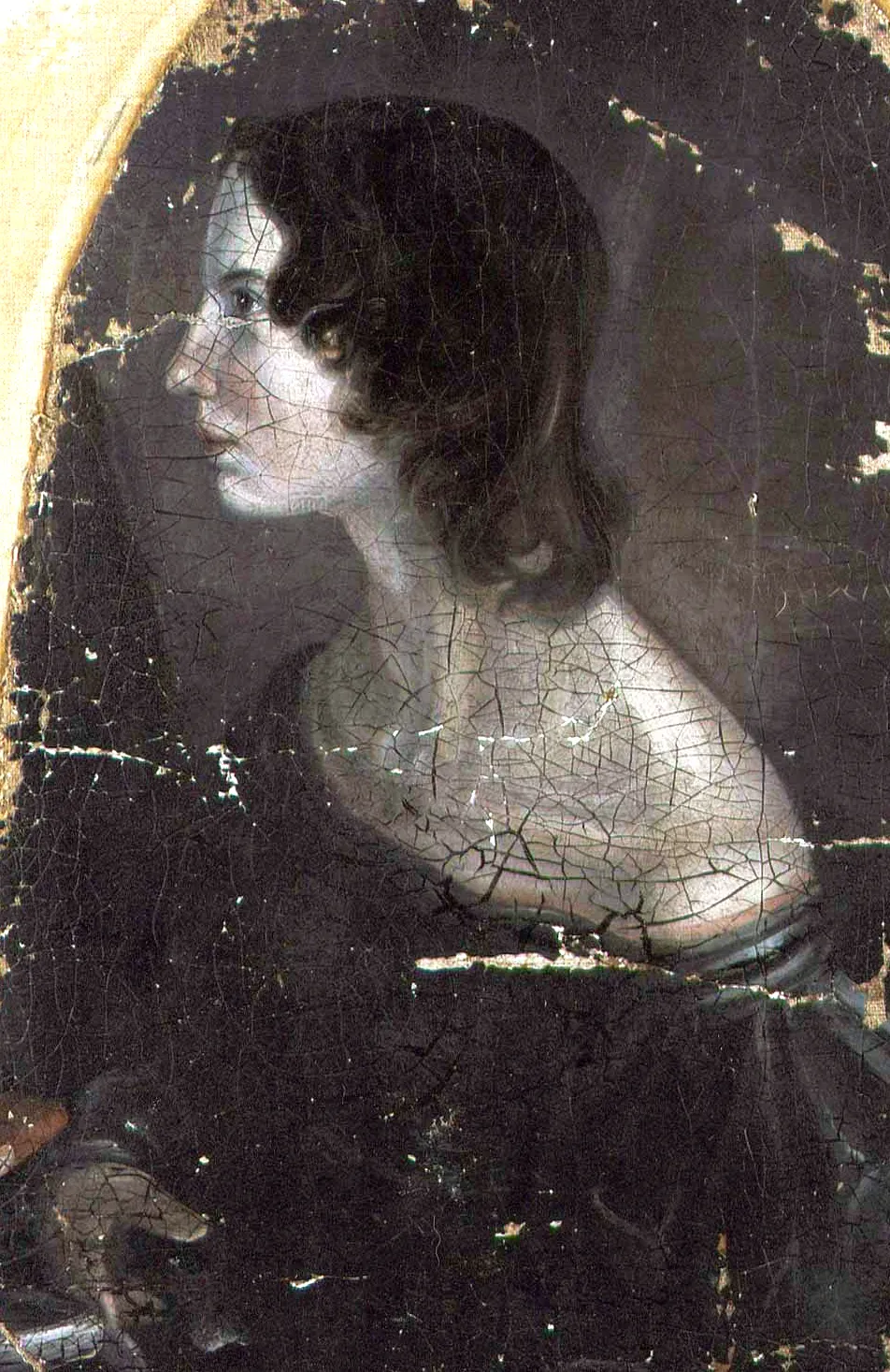
Emily Jane Brontë
Come, Walk With Me
Come, walk with me,
There's only thee
To bless my spirit now -
We used to love on winter nights
To wander through the snow;
Can we not woo back old delights?
The clouds rush dark and wild
They fleck with shade our mountain heights
The same as long ago
And on the horizon rest at last
In looming masses piled;
While moonbeams flash and fly so fast
We scarce can say they smiled -
Come walk with me, come walk with me;
We were not once so few
But Death has stolen our company
As sunshine steals the dew -
He took them one by one and we
Are left the only two;
So closer would my feelings twine
Because they have no stay but thine
'Nay call me not - it may not be
Is human love so true?
Can Friendship's flower droop on for years
And then revive anew?
No, though the soil be wet with tears,
How fair soe'er it grew
The vital sap once perished
Will never flow again
And surer than that dwelling dread,
The narrow dungeon of the dead
Time parts the hearts of men -'
243
Henry Van Dyke
Shelley
Knight-errant of the Never-ending Quest,
And Minstrel of the Unfulfilled Desire;
For ever tuning thy frail earthly lyre
To some unearthly music, and possessed
With painful passionate longing to invest
The golden dream of Love's immortal fire
In mortal robes of beautiful attire,
And fold perfection to thy throbbing breast!
What wonder, Shelley, if the restless wave
Should claim thee and the leaping flame consume
Thy drifted form on Viareggio's beach?
Fate to thy body gave a fitting grave,
And bade thy soul ride on with fiery plume,
Thy wild song ring in ocean's yearning speech!
243
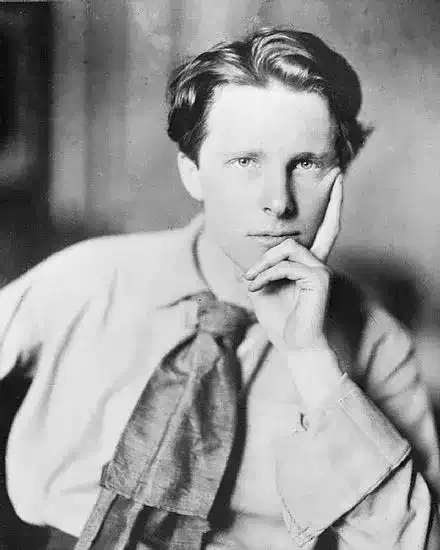
Rupert Brooke
Tiare Tahiti
Mamua, when our laughter ends,
And hearts and bodies, brown as white,
Are dust about the doors of friends,
Or scent ablowing down the night,
Then, oh! then, the wise agree,
Comes our immortality.
Mamua, there waits a land
Hard for us to understand.
Out of time, beyond the sun,
All are one in Paradise,
You and Pupure are one,
And Tau, and the ungainly wise.
There the Eternals are, and there
The Good, the Lovely, and the True,
And Types, whose earthly copies were
The foolish broken things we knew;
There is the Face, whose ghosts we are;
The real, the never-setting Star;
And the Flower, of which we love
Faint and fading shadows here;
Never a tear, but only Grief;
Dance, but not the limbs that move;
Songs in Song shall disappear;
Instead of lovers, Love shall be;
For hearts, Immutability;
And there, on the Ideal Reef,
Thunders the Everlasting Sea!
And my laughter, and my pain,
Shall home to the Eternal Brain.
And all lovely things, they say,
Meet in Loveliness again;
Miri's laugh, Teipo's feet,
And the hands of Matua,
Stars and sunlight there shall meet,
Coral's hues and rainbows there,
And Teura's braided hair;
And with the starred `tiare's' white,
And white birds in the dark ravine,
And `flamboyants' ablaze at night,
And jewels, and evening's after-green,
And dawns of pearl and gold and red,
Mamua, your lovelier head!
And there'll no more be one who dreams
Under the ferns, of crumbling stuff,
Eyes of illusion, mouth that seems,
All time-entangled human love.
And you'll no longer swing and sway
Divinely down the scented shade,
Where feet to Ambulation fade,
And moons are lost in endless Day.
How shall we wind these wreaths of ours,
Where there are neither heads nor flowers?
Oh, Heaven's Heaven! -- but we'll be missing
The palms, and sunlight, and the south;
And there's an end, I think, of kissing,
When our mouths are one with Mouth. . . .
`Tau here', Mamua,
Crown the hair, and come away!
Hear the calling of the moon,
And the whispering scents that stray
About the idle warm lagoon.
Hasten, hand in human hand,
Down the dark, the flowered way,
Along the whiteness of the sand,
And in the water's soft caress,
Wash the mind of foolishness,
Mamua, until the day.
Spend the glittering moonlight there
Pursuing down the soundless deep
Limbs that gleam and shadowy hair,
Or floating lazy, half-asleep.
Dive and double and follow after,
Snare in flowers, and kiss, and call,
With lips that fade, and human laughter
And faces individual,
Well this side of Paradise! . . .
There's little comfort in the wise.
Papeete, February
244

Henry Lawson
The Battling Days
So, sit you down in a straight-backed chair, with your pipe and your wife content,
And cross your knees with your wisest air, and preach of the ‘days mis-spent;’
Grown fat and moral apace, old man! you prate of the change ‘since then’—
In spite of all, I’d as lief be back in those hard old days again.
They were hard old days; they were battling days; they were cruel at times—but then,
In spite of all, I would rather be back in those hard old days again.
The land was barren to sow wild oats in the days when we sowed our own—
(’Twas little we thought or our friends believed that ours would ever be sown)
But the wild oats wave on their stormy path, and they speak of the hearts of men—
I would sow a crop if I had my time in those hard old days again.
We travel first, or we go saloon—on the planned-out trips we go,
With those who are neither rich nor poor, and we find that the life is slow;
It’s ‘a pleasant trip’ where they cried, ‘Good luck!’ There was fun in the steerage then—
In spite of all, I would fain be back in those vagabond days again.
On Saturday night we’ve a pound to spare—a pound for a trip down town—
We took more joy in those hard old days for a hardly spared half-crown;
We took more pride in the pants we patched than the suits we have had since then—
In spite of all, I would rather be back in those comical days again.
’Twas We and the World—and the rest go hang—as the Outside tracks we trod;
Each thought of himself as a man and mate, and not as a martyred god;
The world goes wrong when your heart is strong—and this is the way with men—
The world goes right when your liver is white, and you preach of the change ‘since
then.’
They were hard old days; they were battling days; they were cruel times—but then,
In spite of all, we shall live to-night in those hard old days again.
242

Robert W. Service
Little Moccasins
Come out, O Little Moccasins, and frolic on the snow!
Come out, O tiny beaded feet, and twinkle in the light!
I'll play the old Red River reel, you used to love it so:
Awake, O Little Moccasins, and dance for me to-night!
Your hair was all a gleamy gold, your eyes a corn-flower blue;
Your cheeks were pink as tinted shells, you stepped light as a fawn;
Your mouth was like a coral bud, with seed pearls peeping through;
As gladdening as Spring you were, as radiant as dawn.
Come out, O Little Moccasins! I'll play so soft and low,
The songs you loved, the old heart-songs that in my mem'ry ring;
O child, I want to hear you now beside the campfire glow!
With all your heart a-throbbing in the simple words you sing.
For there was only you and I, and you were all to me;
And round us were the barren lands, but little did we fear;
Of all God's happy, happy folks the happiest were we. . . .
(Oh, call her, poor old fiddle mine, and maybe she will hear!)
Your mother was a half-breed Cree, but you were white all through;
And I, your father was -- but well, that's neither here nor there;
I only know, my little Queen, that all my world was you,
And now that world can end to-night, and I will never care.
For there's a tiny wooden cross that pricks up through the snow:
(Poor Little Moccasins! you're tired, and so you lie at rest.)
And there's a grey-haired, weary man beside the campfire glow:
(O fiddle mine! the tears to-night are drumming on your breast.)
242

Christina Rossetti
Mirage
The hope I dreamed of was a dream,
Was but a dream; and now I wake,
Exceeding comfortless, and worn, and old,
For a dream's sake.
I hang my harp upon a tree,
A weeping willow in a lake;
I hang my silent harp there, wrung and snapped
For a dream's sake.
Lie still, lie still, my breaking heart;
My silent heart, lie still and break:
Life, and the world, and mine own self, are changed
For a dream's sake.
239
Henry Lawson
The Rhyme of the Three Greybeards
He'd been for years in Sydney "a-acting of the goat",
His name was Joseph Swallow, "the Great Australian Pote",
In spite of all the stories and sketches that he wrote.
And so his friends held meetings (Oh, narrow souls were theirs!)
To advertise their little selves and Joseph's own affairs.
They got up a collection for Joseph unawares.
They looked up his connections and rivals by the score –
The wife who had divorced him some twenty years before,
And several politicians he'd made feel very sore.
They sent him down to Coolan, a long train ride from here,
Because of his grey hairs and "pomes" and painted blondes – and beer.
(I mean to say the painted blondes would always give him beer.)
(They loved him for his eyes were dark, and you must not condemn
The love for opposites that mark the everlasting fem.
Besides, he "made up" little bits of poetry for them.)
They sent him "for his own sake", but not for that alone –
A poet's sins are public; his sorrows are his own.
And poets' friends have skins like hides, and mostly hearts of stone.
They said "We'll send some money and you must use your pen.
"So long," they said. "Adoo!" they said. "And don't come back again.
Well, stay at least a twelve-month – we might be dead by then."
Two greybeards down at Coolan – familiar grins they had –
They took delivery of the goods, and also of the bad.
(Some bread and meat had come by train – Joe Swallow was the bad.)
They'd met him shearing west o' Bourke in some forgotten year.
They introduced him to the town and pints of Wagga beer.
(And Wagga pints are very good –- I wish I had some here.)
It was the Busy Bee Hotel where no one worked at all,
Except perhaps to cook the grub and clean the rooms and "hall".
The usual half-wit yardman worked at each one's beck and call.
'Twas "Drink it down!" and "Fillemup!" and "If the pub goes dry,
There's one just two-mile down the road, and more in Gundagai" –
Where married folk by accident get poison in the pie.
The train comes in at eight o'clock – or half-past, I forget,
And when the dinner table at the Busy Bee was set,
Upon the long verandah stool the beards were wagging yet.
They talked of where they hadn't been and what they hadn't won;
They talked of mostly everything that's known beneath the sun.
The things they didn't talk about were big things they had done.
They talked of what they called to mind, and couldn't call to mind;
They talked of men who saw too far and people who were "blind".
Tradition says that Joe's grey beard wagged not so far behind.
They got a horse and sulky and a riding horse as well,
And after three o'clock they left the Busy Bee Hotel –
In case two missuses should send from homes where they did dwell.
No barber bides in Coolan, no baker bakes the bread;
And every local industry, save rabbitin', is dead –
And choppin' wood. The women do all that, be it said.
(I'll add a line and mention that two-up goes ahead.)
The shadows from the sinking sun were long by hill and scrub;
The two-up school had just begun, in spite of beer and grub;
But three greybeards were wagging yet down at the Two-mile pub.
A full, round, placid summer moon was floating in the sky;
They took a demijohn of beer, in case they should go dry;
And three greybeards went wagging down the road to Gundagai.
At Gundagai next morning (which poets call "th' morn")
The greybeards sought a doctor – a friend of the forlorn –
Whose name is as an angel's who sometimes blows a horn.
And Doctor Gabriel fixed 'em up, but 'twas not in the bar.
It wasn't rum or whisky, nor yet was it Three Star.
'Twas mixed up in a chemist's shop, and swifter stuff by far.
They went out to the backyard (to make my meaning plain);
The doctor's stuff wrought mightily, but by no means in vain.
Then they could eat their breakfasts and drink their beer again.
They made a bond between the three, as rock against the wave,
That they'd go to the barber's shop and each have a clean shave,
To show the people how they looked when they were young and brave.
They had the shave and bought three suits (and startling suits in sooth),
And three white shirts and three red ties (to tell the awful truth),
To show the people how they looked in their hilarious youth.
They burnt their old clothes in the yard, and their old hats as well;
The publican kicked up a row because they made a smell.
They put on bran'-new "larstin'-sides" – and, oh, they looked a yell!
Next morning, or the next (or next), from demon-haunted beds,
And very far from feeling like what sporting men call "peds",
The three rode back without their beards, with "boxers" on their heads!
They tried to get Joe lodgings at the Busy Bee in vain;
They did not take him to their homes, they took him to the train;
They sent him back to Sydney till grey beards grew again.
They sent him back to Sydney to keep away a year;
Because of shaven beards and wives they thought him safer here.
And so he cut his friends and stuck to powdered blondes and beer.
Until the finish came at last, as 'twill to any "bloke";
But in Joe's case it chanced to be a paralytic stroke;
The soft heart of a powdered blonde was, as she put it, "broke".
She sought Joe in the hospital and took the choicest food;
She went there very modestly and in a chastened mood,
And timid and respectful-like – because she was no good.
She sat the death-watch out alone on the verandah dim;
And after all was past and gone she dried her eyes abrim,
And sought the head-nurse timidly, and asked "May I see him?"
And then she went back to her bar, where she'd not been for weeks,
To practise there her barmaid's smile and mend and patch the streaks
The only real tears for Joe had left upon her cheeks
239
Henry Lawson
The Pink Carnation
I may walk until I’m fainting, I may write until I’m blinded,
I might drink until my back teeth are afloat,
But I can’t forget my ruin and the happy days behind it,
When I wore a pink carnation in my coat.
Oh, I thought that time could conquer, and I thought my heart would harden,
But it sends a sudden lump into my throat,
When I think of what I have been, and the cottage and the garden,
When I wore a pink carnation in my coat.
God forgive you, girl, and bless you! Let no line of mine distress you –
I am sorry for the bitter lines I wrote;
But remember, and think kindly, for we met and married blindly,
When I wore a pink carnation in my coat.
239
Robert W. Service
Good-Bye, Little Cabin
O dear little cabin, I've loved you so long,
And now I must bid you good-bye!
I've filled you with laughter, I've thrilled you with song,
And sometimes I've wished I could cry.
Your walls they have witnessed a weariful fight,
And rung to a won Waterloo:
But oh, in my triumph I'm dreary to-night -Good-
bye, little cabin, to you!
Your roof is bewhiskered, your floor is a-slant,
Your walls seem to sag and to swing;
I'm trying to find just your faults, but I can't --
You poor, tired, heart-broken old thing!
I've seen when you've been the best friend that I had,
Your light like a gem on the snow;
You're sort of a part of me -- Gee! but I'm sad;
I hate, little cabin, to go.
Below your cracked window red raspberries climb;
A hornet's nest hangs from a beam;
Your rafters are scribbled with adage and rhyme,
And dimmed with tobacco and dream.
"Each day has its laugh", and "Don't worry, just work".
Such mottoes reproachfully shine.
Old calendars dangle -- what memories lurk
About you, dear cabin of mine!
I hear the world-call and the clang of the fight;
I hear the hoarse cry of my kind;
Yet well do I know, as I quit you to-night,
It's Youth that I'm leaving behind.
And often I'll think of you, empty and black,
Moose antlers nailed over your door:
Oh, if I should perish my ghost will come back
To dwell in you, cabin, once more!
How cold, still and lonely, how weary you seem!
A last wistful look and I'll go.
Oh, will you remember the lad with his dream!
The lad that you comforted so.
The shadows enfold you, it's drawing to-night;
The evening star needles the sky:
And huh! but it's stinging and stabbing my sight --
God bless you, old cabin, good-bye!
240
Rupert Brooke
A Memory
(From a sonnet-sequence)
Somewhile before the dawn I rose, and stept
Softly along the dim way to your room,
And found you sleeping in the quiet gloom,
And holiness about you as you slept.
I knelt there; till your waking fingers crept
About my head, and held it. I had rest
Unhoped this side of Heaven, beneath your breast.
I knelt a long time, still; nor even wept.
It was great wrong you did me; and for gain
Of that poor moment’s kindliness, and ease,
And sleepy mother-comfort!
Child, you know
How easily love leaps out to dreams like these,
Who has seen them true. And love that’s wakened so
Takes all too long to lay asleep again.
241
Robert W. Service
The Widower
Oh I have worn my mourning out,
And on her grave the green grass grows;
So I will hang each sorry clout
High in the corn to scare the crows.
And I will buy a peacock tie,
And coat of cloth of Donegal;
Then to the Farmer's Fair I'll hie
And peek in at the Barley Ball.
But though the fiddlers saw a jig
I used to foot when I was wed,
I'll walk me home and feed the pig,
And go a lonesome man to bed.
So I will wait another year,
As any decent chap would do,
Till I can think without a tear
Of her whose eyes were cornflower blue.
Then to the Harvest Ball I'll hie,
And I will wear a flower-sprigged vest;
For Maggie has a nut-brown eyes,
And we will foot it with the best.
And if kind-minded she should be
To wife me - 'tis the will if God . . .
But Oh the broken heart f me
For her who lies below the sod!
238
Robert W. Service
Boon Soul
Behold! I'm old; my hair is white;
My eighty years are in the offing,
And sitting by the fire to-night
I sip a grog to ease my coughing.
It's true I'm raucous as a rook,
But feeling bibulously "bardy,"
These lines I'm scribbling in a book:
The verse complete of Thomas Hardy.
Although to-day he's read by few,
Him have I loved beyond all measure;
So here to-night I riffle through
His pages with the oldtime pleasure;
And with this book upon my knee,
(To-day so woefully neglected)
I muse and think how soon I'll be
Myself among the Great Rejected.
Yet as these lines with zest I write,
Although the hour for me is tardy,
I think: "Of all the world to-night
'Tis I alone am reading Hardy";
And now to me he seems so nigh
I feel I commune with his spirit,
And as none love him more than I,
Thereby I gain a modest merit.
Oh Brother Thomas, glad I'll be,
Though all the world may pass unheeding,
If some greybeard con over me,
As I to-night your rhymes are reading;
Saying: "Old Bastard, you and I
By sin are knit in mind and body. . . ."
So ere to hit the hay I hie
Your ghost I'll toast in midnight toddy.
238

James Whitcomb Riley
What Chris'mas Fetched The Wigginses
Wintertime, er Summertime,
Of late years I notice I'm,
Kindo'-like, more subjec' to
What the _weather_ is. Now, you
Folks 'at lives in town, I s'pose,
Thinks its bully when it snows;
But the chap 'at chops and hauls
Yer wood fer ye, and then stalls,
And snapps tuggs and swingletrees,
And then has to walk er freeze,
Haint so much 'stuck on' the snow
As stuck _in_ it--Bless ye, no!--
When its packed, and sleighin's good,
And _church_ in the neighborhood,
Them 'at's _got_ their girls, I guess,
Takes 'em, likely, more er less,
Tell the plain facts o' the case,
No men-folks about our place
On'y me and Pap--and he
'Lows 'at young folks' company
Allus made him sick! So I
Jes don't want, and jes don't try!
Chinkypin, the dad-burn town,
'S too fur off to loaf aroun'
Either day er night--and no
Law compellin' me to go!-'
Less 'n some Old-Settlers' Day,
Er big-doin's thataway-_
Then_, to tell the p'inted fac',
I've went more so's to come back
By old Guthrie's 'still-house, where
Minors _has_ got licker there-That's
pervidin' we could show 'em
Old folks sent fer it from home!
Visit roun' the neighbors some,
When the boys wants me to come.-Coon-
hunt with 'em; er set traps
Fer mussrats; er jes, perhaps,
Lay in roun' the stove, you know,
And parch corn, and let her snow!
Mostly, nights like these, you'll be
(Ef you' got a writ fer _me_)
Ap' to skeer me up, I guess,
In about the Wigginses.
Nothin' roun' _our_ place to keep
Me at home--with Pap asleep
'Fore it's dark; and Mother in
Mango pickles to her chin;
And the girls, all still as death,
Piecin' quilts.--Sence I drawed breath
Twenty year' ago, and heerd
Some girls whispern' so's it 'peared
Like they had a row o' pins
In their mouth--right there begins
My first rickollections, built
On that-air blame old piece-quilt!
Summertime, it's jes the same-'
Cause I've noticed,--and I claim,
As I said afore, I'm more
Subjec' to the weather, _shore_,
'Proachin' my majority,
Than I ever ust to be!
Callin' back _last_ Summer, say,-Don't
seem hardly past away--
With night closin' in, and all
S' lonesome-like in the dew-fail:
Bats--ad-drat their ugly muggs!--
Flickern' by; and lightnin'-bugs
Huckstern' roun' the airly night
Little sickly gasps o' light;-Whip-
poor-wills, like all possessed,
Moanin' out their mournfullest;--
Frogs and katydids and things
Jes clubs in and sings and sings
Their _ding-dangdest_!--Stock's all fed,
And Pap's washed his feet fer bed;--
Mother and the girls all down
At the milk-shed, foolin' roun'--
No wunder 'at I git blue,
And lite out--and so would you!
I caint stay aroun' no place
Whur they haint no livin' face:-'
Crost the fields and thue the gaps
Of the hills they's friends, perhaps,
Waitin' somers, 'at kin be
Kindo' comfertin' to me!
Neighbors all 'is plenty good,
Scattered thue this neighberhood;
Yit, of all, I like to jes
Drap in on the Wigginses.--
Old man, and old lady too,
'Pear-like, makes so much o' you--,
Least, they've allus pampered me
Like one of the fambily.--
The boys, too, 's all thataway--
Want you jes to come and stay;--
Price, and Chape, and Mandaville,
Poke, Chasteen, and 'Catfish Bill'-Poke's
the runt of all the rest,
But he's jes the beatinest
Little schemer, fer fourteen,
Anybody ever seen!-
'Like his namesake,' old man claims,
'Jeems K. Poke, the first o' names!
Full o' tricks and jokes--and you
Never know what _Poke's_ go' do!'
Genius, too, that-air boy is,
With them awk'ard hands o' his:
Gits this blame pokeberry-juice,
Er some stuff, fer ink--and goose-
Quill pen-p'ints: And then he'll draw
Dogdest pictures yevver saw!
Er make deers and eagles good
As a writin'-teacher could!
Then they's two twin boys they've riz
Of old Coonrod Wigginses
'At's deceast--and glad of it,
'Cause his widder's livin' yit!
Course _the boys_ is mostly jes'
Why I go to Wigginses.---
Though _Melviney_, sometimes, _she_
Gits her slate and algebry
And jes' sets there ciphern' thue
Sums old Ray hisse'f caint do!--
Jes' sets there, and tilts her chair
Forreds tel, 'pear-like, her hair
Jes' _spills_ in her lap--and then
She jes' dips it up again
With her hands, as white, I swan,
As the apern she's got on!
Talk o' hospitality!--
Go to Wigginses with me--
Overhet, or froze plum thue,
You'll find welcome waitin' you:-Th'ow
out yer tobacker 'fore
You set foot acrost that floor,-'
Got to eat whatever's set--
Got to drink whatever's wet!'
Old man's sentimuns--them's his---
And means jes the best they is!
Then he lights his pipe; and she,
The old lady, presen'ly
She lights her'n; and Chape and Poke.
I haint got none, ner don't smoke,-(
In the crick afore their door--
Sorto so's 'at I'd be shore--
Drownded mine one night and says
'I won't smoke at _Wigginses_!')
Price he's mostly talkin' 'bout
Politics, and 'thieves turned out'--
What he's go' to be, ef he
Ever 'gits there'--and 'we'll see!'-
Poke he 'lows they's blame few men
Go' to hold their breath tel then!
Then Melviney smiles, as she
Goes on with her algebry,
And the clouds clear, and the room's
Sweeter 'n crabapple-blooms!
(That Melviney, she' got some
Most surprisin' ways, I gum!-Don't
'pear like she ever _says_
Nothin', yit you'll _listen_ jes
Like she was a-talkin', and
Half-way seem to understand,
But not quite,--_Poke_ does, I know,
'Cause he good as told me so,-Poke's
her favo-rite; and he--
That is, confidentially-He's
_my_ favo-rite--and I
Got my whurfore and my why!)
I haint never ben no hand
Much at talkin', understand,
But they's _thoughts_ o' mine 'at's jes
Jealous o' them Wigginses!--
Gift o' talkin 's what they got,
Whether they want to er not-F'r
instunce, start the old man on
Huntin'-scrapes, 'fore game was gone,
'Way back in the Forties, when
Bears stold pigs right out the pen,
Er went waltzin' 'crost the farm
With a bee-hive on their arm!-And--
sir, _ping_! the old man's gun
Has plumped-over many a one,
Firin' at him from afore
That-air very cabin-door!
Yes--and _painters_, prowlin' 'bout,
Allus darkest nights.--Lay out
Clost yer cattle.--Great, big red
Eyes a-blazin' in their head,
Glittern' 'long the timber-line--
Shine out some, and then _un_-shine,
And shine back--Then, stiddy! whizz!
'N there yer Mr. Painter is
With a hole bored spang between
Them-air eyes! Er start Chasteen,
Say, on blooded racin'-stock,
Ef you want to hear him talk;
Er tobacker--how to raise,
Store, and k-yore it, so's she pays:
The old lady--and she'll cote
Scriptur' tel she'll git yer vote!
Prove to you 'at wrong is right,
Jes as plain as black is white:
Prove when you're asleep in bed
You're a-standin' on yer head,
And yer train 'at's goin' West,
'S goin' East its level best;
And when bees dies, it's their wings
Wears out--and a thousand things!
And the boys is 'chips,' you know;
'Off the old block'--So I go
To the Wigginses, 'cause--jes
'Cause I _like_ the Wigginses--
Even ef Melviney _she_
Hardly 'pears to notice me!
Rid to Chinkypin this week-Yisterd'y.--
No snow to speak
Of, and didn't have no sleigh
Anyhow; so, as I say,
I rid in--and froze one ear
And both heels--and I don't keer!-'
Mother and the girls kin jes
Bother 'bout their Chris'mases
_Next_ time fer _theirse'vs_, I jack!'
Thinks-says-I, a-startin' back,--
Whole durn meal-bag full of things
Wrapped in paper-sacks, and strings
Liable to snap their holt
Jes at any little jolt!
That in front o' me, and _wind_
With _nicks_ in it, 'at jes skinned
Me alive!--I'm here to say
Nine mile' hossback thataway
Would a-walked my log! But, as
Somepin' allus comes to pass,
As I topped old Guthrie's hill.
Saw a buggy, front the 'Still,
P'inted home'ards, and a thin
Little chap jes climbin' in.
Six more minutes I were there
On the groun's'--And course it were--
It were little Poke--and he
Nearly fainted to see me!-'
You ben in to Chinky, too?'
'Yes; and go' ride back with you,'
I-says-I. He he'pped me find
Room fer my things in behind--
Stript my hoss's reins down, and
Put his mitt' on the right hand
So's to lead--'Pile in!' says he,
'But you 've struck pore company!'
Noticed he was pale--looked sick,
Kindo-like, and had a quick
Way o' flickin' them-air eyes
0' his roun' 'at didn't size
Up right with his usual style-s'
I, 'You well?' He tried to smile,
But his chin shuck and tears come.-'_
I've run 'Viney 'way from home_!'
Don't know jes what all occurred
Next ten seconds--Nary word,
But my heart jes drapt, stobbed thue,
And whirlt over and come to.--
Wrenched a big quart bottle from
That fool-boy!--and cut my thumb
On his little fiste-teeth--helt
Him snug in one arm, and felt
That-air little heart o' his
Churn the blood o' Wigginses
Into that old bead 'at spun
Roun' her, spilt at Lexington!
His k'niptions, like enough,
He'pped us both,--though it was rough--
Rough on him, and rougher on
Me when last his nerve was gone,
And he laid there still, his face
Fishin' fer some hidin'-place
Jes a leetle lower down
In my breast than he 'd yit foun'!
Last I kindo' soothed him, so's
He could talk.--And what you s'pose
Them-air revelations of
Poke's was? . . . He'd ben writin' love-
Letters to Melviney, and
Givin her to understand
They was from 'a young man who
Loved her,' and--'the violet's blue
'N sugar's sweet'--and Lord knows what!
Tel, 'peared-like, Melviney got
S' interested in 'the young
Man,' Poke _he_ says, 'at she brung
A' answer onc't fer him to take,
Statin' 'she'd die fer his sake,'
And writ fifty xs 'fer
Love-kisses fer him from her!'
I was standin' in the road
By the buggy, all I knowed
When Poke got that fer.--'That's why,'
Poke says, 'I 'fessed up the lie-_
Had_ to--'cause I see,' says he,
''Viney was in airnest--she
Cried, too, when I told her.--Then
She swore me, and smiled again,
And got Pap and Mother to
Let me hitch and drive her thue
Into Chinkypin, to be
At Aunt 'Rindy's Chris'mas-tree-That's
to-night.' Says I, 'Poke--durn
Your lyin' soul!--'s that beau o' hern--
That--_she_--loves--Does _he_ live in
That hellhole o' Chinkypin?'
'No,' says Poke, 'er 'Viney would
Went some _other_ neighborhood.'
'Who _is_ the blame whelp?' says I.
'Promised 'Viney, hope I'd die
Ef I ever told!' says Poke,
Pittiful and jes heart-broke-''
Sides that's why she left the place,-'
She caint look him in the face
Now no more on earth!' she says.--'
And the child broke down and jes
Sobbed! Says I, 'Poke, I p'tend
T' be _your_ friend, and your _Pap's_ friend,
And your _Mother's_ friend, and all
The _boys_' friend, little, large and small--
The _whole fambily's_ friend--and you
Know that means _Melviney_, too.-Now--
you hush yer troublin!'--I'm
Go' to he'p friends ever' time-On'y
in _this_ case, _you_ got
To he'p _me_--and, like as not
I kin he'p Melviney then,
And we'll have her home again.
And now, Poke, with your consent,
I'm go' go to that-air gent
She's in love with, and confer
With _him_ on his views o' _her_.--
Blast him! give the man _some_ show.--
Who is he?--_I'm go' to know_!'
Somepin' struck the little chap
Funny, 'peared-like.--Give a slap
On his leg--laughed thue the dew
In his eyes, and says: 'It's you!'
Yes, and--'cordin' to the last
Love-letters of ours 'at passed
Thue his hands--we was to be
Married Chris'mas.--'Gee-mun-_nee_!
Poke,' says I, 'it's _suddent_--yit
We _kin_ make it! You're to git
Up tomorry, say, 'bout _three_--
Tell your folks you're go' with me:-We'll
hitch up, and jes drive in
'N take the town o' Chinkypin!'
237
Henry Lawson
Let’s Be Fools To-Night
We, three men of commerce,
Striving wealth to raise,
See but little promise
In the coming days;
Though our hearts are brittle,
Hardened near to stone,
We can think a little
Of the seasons flown.
Lily days and rose days:
Youthful days so bright;
We were fools in those days,
Let’s be fools to-night.
We, three men of commerce,
Men of business we,
Gave but little promise
Of what we would be
When we wandered urchins—
Foes of law and rule—
Fearing only birchings
And the village school.
Lily days and rose days,
Boyhood’s days so bright;
We were fools in those days,
Let’s be fools to-night.
We, three men of commerce,
Men of business we,
Gave but little promise
Of ability
When we lived in riot;
Never drew the line,
Hating peace and quiet,
Loving maids and wine.
Days when money goes—days
When men’s hearts are right;
We were fools in those days,
Let’s be fools to-night.
We must wear to-morrow
All our worldly marks,
Calm looks for our sorrow,
Stern looks for our clerks,
Who, from trouble shrinking,
Tasting earthly joys,
Hate us, little thinking
Ever we were boys.
Days when kindness flows—days
When men’s hearts are white;
We’ve been wise since those days,
Let’s be fools to-night.
237

Henry Wadsworth Longfellow
Ultima Thule: The Tide Rises, The Tide Falls
The tide rises, the tide falls,
The twilight darkens, the curlew calls;
Along the sea-sands damp and brown
The traveller hastens toward the town,
And the tide rises, the tide falls.
Darkness settles on roofs and walls,
But the sea, the sea in the darkness calls;
The little waves, with their soft, white hands,
Efface the footprints in the sands,
And the tide rises, the tide falls.
The morning breaks; the steeds in their stalls
Stamp and neigh, as the hostler calls;
The day returns, but nevermore
Returns the traveller to the shore,
And the tide rises, the tide falls.
234
Christina Rossetti
Three Seasons
'A cup for hope!' she said,
In springtime ere the bloom was old:
The crimson wine was poor and cold
By her mouth's richer red.
'A cup for love!' how low,
How soft the words; and all the while
Her blush was rippling with a smile
Like summer after snow.
'A cup for memory!'
Cold cup that one must drain alone:
While autumn winds are up and moan
Across the barren sea.
Hope, memory, love:
Hope for fair morn, and love for day,
And memory for the evening grey
And solitary dove.
235
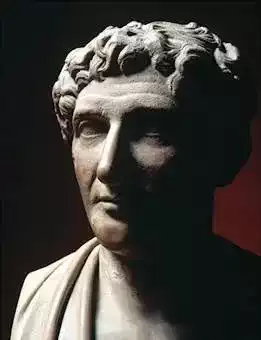
Ovídio
Elegy V
In summer's heat and mid-time of the day
To rest my limbs upon a bed I lay,
One window shut, the other open stood,
Which gave such light, as twinkles in a wood,
Like twilight glimpse at setting of the sun,
Or night being past, and yet not day begun.
Such light to shamefast maidens must be shown,
Where they must sport, and seem to be unknown.
Then came Corinna in a long loose gown,
Her white neck hid with tresses hanging down:
Resembling fair Semiramis going to bed
Or Layis of a thousand wooers sped.
I snatched her gown, being thin, the harm was small,
Yet strived she to be covered there withal.
And striving thus as one that would be chaste,
Betrayed herself, and yeilded at the last.
Stark naked as she stood before mine eye,
Not one wen in her body could I spy.
What arms and shoulders did I touch and see,
How apt her breasts were to be pressed by me.
How smooth a belly under her waist saw I?
How large a leg, and what a lusty thigh?
To leave the rest, all liked me passing well,
I clinged her naked body, down she fell,
Judge you the rest, being tired she bade me kiss,
Jove sent me more such afternoons as this.
234
Christina Rossetti
Last Night
Where were you last night? I watched at the gate;
I went down early, I stayed down late.
Were you snug at home, I should like to know,
Or were you in the coppice wheedling Kate?
She's a fine girl, with a fine clear skin;
Easy to woo, perhaps not hard to win.
Speak up like a man and tell me the truth:
I'm not one to grow downhearted and thin.
If you love her best speak up like a man;
It's not I will stand in the light of your plan:
Some girls might cry and scold you a bit,
And say they couldn't bear it; but I can.
Love was pleasant enough, and the days went fast;
Pleasant while it lasted, but it needn't last;
Awhile on the wax and awhile on the wane,
Now dropped away into the past.
Was it pleasant to you? To me it was;
Now clean gone as an image from glass,
As a goodly rainbow that fades away,
As dew that steams upward from the grass,
As the first spring day, or the last summer day,
As the sunset flush that leaves heaven grey,
As a flame burnt out for lack of oil,
Which no pains relight or ever may.
Good luck to Kate and good luck to you:
I guess she'll be kind when you come to woo.
I wish her a pretty face that will last,
I wish her a husband steady and true.
Hate you? not I, my very good friend;
All things begin and all have an end.
But let broken be broken; I put no faith
In quacks who set up to patch and mend.
Just my love and one word to Kate:
Not to let time slip if she means to mate;—
For even such a thing has been known
As to miss the chance while we weigh and wait.
231
Christina Rossetti
From Sunset to Star Rise
Go from me, summer friends, and tarry not:
I am no summer friend, but wintry cold,
A silly sheep benighted from the fold,
A sluggard with a thorn-choked garden plot.
Take counsel, sever from my lot your lot,
Dwell in your pleasant places, hoard your gold;
Lest you with me should shiver on the wold,
Athirst and hungering on a barren spot.
For I have hedged me with a thorny hedge,
I live alone, I look to die alone:
Yet sometimes, when a wind sighs through the sedge,
Ghosts of my buried years, and friends come back,
My heart goes sighing after swallows flown
On sometime summer's unreturning track.
232
Henry Lawson
Reedy River
Ten miles down Reedy River
A pool of water lies,
And all the year it mirrors
The changes in the skies,
And in that pool's broad bosom
Is room for all the stars;
Its bed of sand has drifted
O'er countless rocky bars.
Around the lower edges
There waves a bed of reeds,
Where water rats are hidden
And where the wild duck breeds;
And grassy slopes rise gently
To ridges long and low,
Where groves of wattle flourish
And native bluebells grow.
Beneath the granite ridges
The eye may just discern
Where Rocky Creek emerges
From deep green banks of fern;
And standing tall between them,
The grassy she-oaks cool
The hard, blue-tinted waters
Before they reach the pool.
Ten miles down Reedy River
One Sunday afternoon,
I rode with Mary Campbell
To that broad, bright lagoon;
We left our horses grazing
Till shadows climbed the peak,
And strolled beneath the she-oaks
On the banks of Rocky Creek.
Then home along the river
That night we rode a race,
And the moonlight lent a glory
To Mary Campbell's face;
And I pleaded for our future
All through that moonlight ride,
Until our weary horses
Drew closer side by side.
Ten miles from Ryan's Crossing
And five miles below the peak,
I built a little homestead
On the banks of Rocky Creek;
I cleared the land and fenced it
And ploughed the rich, red loam,
And my first crop was golden
When I brought my Mary home.
Now still down Reedy River
The grassy she-oaks sigh,
And the water-holes still mirror
The pictures in the sky;
And over all for ever
Go sun and moon and stars,
While the golden sand is drifting
Across the rocky bars
But of the hut I builded
There are no traces now.
And many rains have levelled
The furrows of the plough;
And my bright days are olden,
For the twisted branches wave
And the wattle blossoms golden
On the hill by Mary's grave.
233
Robert W. Service
At Eighty Years
As nothingness draws near
How I can see
Inexorably clear
My vanity.
My sum of worthiness
Always so small,
Dwindles from less to less
To none at all.
As grisly destiny
Claims me at last,
How grievous seem to me
Sins of my past!
How keen a conscience edge
Can come to be!
How pitiless the dredge
Of memory!
Ye proud ones of the earth
Who count your gains,
What cherish you of worth
For all your pains?
E'er death shall slam the door,
Will you, like me,
Face fate and count the score-
FUTILITY.
233
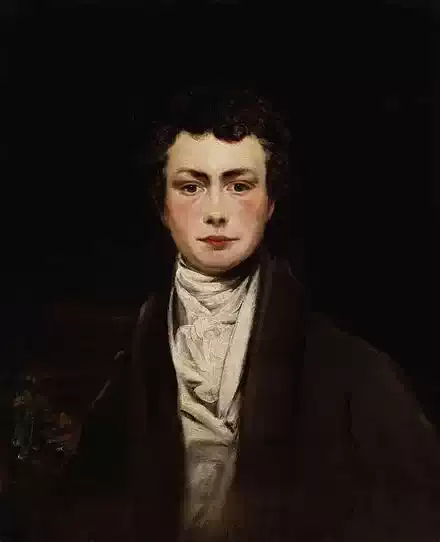
Thomas Moore
Lesbia Hath a Beaming Eye
Lesbia hath a beaming eye,
But no one knows for whom it beameth;
Right and left its arrows fly,
But what they aim at no one dreameth.
Sweeter 'tis to gaze upon
My Nora's lid that seldom rises;
Few its looks, but every one,
Like unexpected light, surprises!
Oh, my Nora Creina, dear,
My gentle, bashful Nora Creina,
Beauty lies
In many eyes,
But Love in yours, my Nora Creina.
Lesbia wears a robe of gold,
But all so close the nymph hath laced it,
Not a charm of beauty's mould
Presumes to stay where Nature placed it.
Oh! my Nora's gown for me,
That floats as wild as mountain breezes,
Leaving every beauty free
To sink or swell as Heaven pleases.
Yes, my Nora Creina, dear,
My simple, graceful Nora Creina,
Nature's dress
Is loveliness --
The dress you wear, my Nora Creina.
Lesbia hath a wit refined,
But, when its points are gleaning round us,
Who can tell if they're design'd
To dazzle merely, or to wound us?
Pillow'd on my Nora's heart,
In safer slumber Love reposes --
Bed of peace! whose roughest part
Is but the crumpling of the roses.
Oh! my Nora Creina, dear,
My mild, my artless Nora Creina!
Wit, though bright,
Hath no such light
As warms your eyes, my Nora Creina.
231

John Greenleaf Whittier
The New Wife and the Old
Dark the halls, and cold the feast,
Gone the bridemaids, gone the priest.
All is over, all is done,
Twain of yesterday are one!
Blooming girl and manhood gray,
Autumn in the arms of May!
Hushed within and hushed without,
Dancing feet and wrestlers' shout;
Dies the bonfire on the hill;
All is dark and all is still,
Save the starlight, save the breeze
Moaning through the graveyard trees,
And the great sea-waves below,
Pulse of the midnight beating slow.
From the brief dream of a bride
She hath wakened, at his side.
With half-uttered shriek and start,
Feels
she not his beating heart?
And the pressure of his arm,
And his breathing near and warm?
Lightly from the bridal bed
Springs that fair dishevelled head,
And a feeling, new, intense,
Half of shame, half innocence,
Maiden fear and wonder speaks
Through her lips and changing cheeks.
From the oaken mantel glowing,
Faintest light the lamp is throwing
On the mirror's antique mould,
High-backed chair, and wainscot old,
And, through faded curtains stealing,
His dark sleeping face revealing.
Listless lies the strong man there,
Silver-streaked his careless hair;
Lips of love have left no trace
On that hard and haughty face;
And that forehead's knitted thought
Love's soft hand hath not unwrought.
'Yet,' she sighs, 'he loves me well,
More than these calm lips will tell.
Stooping to my lowly state,
He hath made me rich and great,
And I bless him, though he be
Hard and stern to all save me!'
While she speaketh, falls the light
O'er her fingers small and white;
Gold and gem, and costly ring
Back the timid lustre fling,
Love's
selectest gifts, and rare,
His proud hand had fastened there.
Gratefully she marks the glow
From those tapering lines of snow;
Fondly o'er the sleeper bending
His black hair with golden blending,
In her soft and light caress,
Cheek and lip together press.
Ha!-that start of horror! why
That wild stare and wilder cry,
Full of terror, full of pain?
Is there madness in her brain?
Hark! that gasping, hoarse and low,
'Spare me,-spare me,-let me go!'
God have mercy!-icy cold
Spectral hands her own enfold,
Drawing silently from them
Love's fair gifts of gold and gem.
'Waken! save me!' still as death
At her side he slumbereth.
Ring and bracelet all are gone,
And that ice-cold hand withdrawn;
But she hears a murmur low,
Full of sweetness, full of woe,
Half a sigh and half a moan
'Fear not! give the dead her own!'
Ah!-the dead wife's voice she knows!
That cold hand whose pressure froze,
Once in warmest life had borne
Gem and band her own hath worn.
'Wake thee! wake thee!' Lo, his eyes
Open with a dull surprise.
In his arms the strong man folds her,
Closer to his breast he holds her;
Trembling limbs his own are meeting,
And he feels her heart's quick beating
'Nay, my dearest, why this fear?'
'Hush!' she saith, 'the dead is here!'
'Nay, a dream,-an idle dream.'
But before the lamp's pale gleam
Tremblingly her hand she raises.
There no more the diamond blazes,
Clasp of pearl, or ring of gold,'
Ah!' she sighs, 'her hand was cold!'
Broken words of cheer he saith,
But his dark lip quivereth,
And as o'er the past he thinketh,
From his young wife's arms he shrinketh;
Can those soft arms round him lie,
Underneath his dead wife's eye?
She her fair young head can rest
Soothed and childlike on his breast,
And in trustful innocence
Draw new strength and courage thence;
He, the proud man, feels within
But the cowardice of sin!
She can murmur in her thought
Simple prayers her mother taught,
And His blessed angels call,
Whose great love is over all;
He, alone, in prayerless pride,
Meets the dark Past at her side!
One, who living shrank with dread
From his look, or word, or tread,
Unto whom her early grave
Was as freedom to the slave,
Moves him at this midnight hour,
With the dead's unconscious power!
Ah, the dead, the unforgot!
From their solemn homes of thought,
Where the cypress shadows blend
Darkly over foe and friend,
Or in love or sad rebuke,
Back upon the living look.
And the tenderest ones and weakest,
Who their wrongs have borne the meekest,
Lifting from those dark, still places,
Sweet and sad-remembered faces,
O'er the guilty hearts behind
An unwitting triumph find.
231

D.H. Lawrence
Brother and Sister
The shorn moon trembling indistinct on her path,
Frail as a scar upon the pale blue sky,
Draws towards the downward slope: some sorrow hath
Worn her down to the quick, so she faintly fares
Along her foot-searched way without knowing why
She creeps persistent down the sky’s long stairs.
Some day they see, though I have never seen,
The dead moon heaped within the new moon’s arms;
For surely the fragile, fine young thing had been
Too heavily burdened to mount the heavens so.
But my heart stands still, as a new, strong dread alarms
Me; might a young girl be heaped with such shadow of woe?
Since Death from the mother moon has pared us down to the quick,
And cast us forth like shorn, thin moons, to travel
An uncharted way among the myriad thick
Strewn stars of silent people, and luminous litter
Of lives which sorrows like mischievous dark mice chavel
To nought, diminishing each star’s glitter,
Since Death has delivered us utterly, naked and white,
Since the month of childhood is over, and we stand alone,
Since the beloved, faded moon that set us alight
Is delivered from us and pays no heed though we moan
In sorrow, since we stand in bewilderment, strange
And fearful to sally forth down the sky’s long range.
We may not cry to her still to sustain us here,
We may not hold her shadow back from the dark.
Oh, let us here forget, let us take the sheer
Unknown that lies before us, bearing the ark
Of the covenant onwards where she cannot go.
Let us rise and leave her now, she will never know.
229