
Nostalgia

Horácio
BkI:VII Tibur
Let others sing in praise of Rhodes, or Mytilene,
or Ephesus, or Corinth on the Isthmus,
or Thebes that’s known for Bacchus, or Apollo’s isle
of Delphi, or Thessalian Tempe.
There’s some whose only purpose is to celebrate
virgin Athene’s city forever,
and set indiscriminately gathered olive on their heads.
Many a poet in honour of Juno
will speak fittingly of horses, Argos, rich Mycenae.
As for me not even stubborn Sparta
or the fields of lush Larisa are quite as striking,
as Albunea’s echoing cavern,
her headlong Anio, and the groves of Tiburnus,
and Tibur’s orchards, white with flowing streams.
Bright Notus from the south often blows away the clouds
from dark skies, without bringing endless rain,
so Plancus, my friend, remember to end a sad life
and your troubles, wisely, with sweet wine,
whether it’s the camp, and gleaming standards, that hold you
or the deep shadows of your own Tibur.
They say that Teucer, fleeing from Salamis and his
father, still wreathed the garlands, leaves of poplar,
round his forehead, flushed with wine, and in speech to his friends
said these words to them as they sorrowed:
‘Wherever fortune carries us, kinder than my father,
there, O friends and comrades, we’ll adventure!
Never despair, if Teucer leads, of Teucer’s omens!
Unerring Apollo surely promised,
in the uncertain future, a second Salamis
on a fresh soil. O you brave heroes, you
who suffered worse with me often, drown your cares with wine:
tomorrow we’ll sail the wide seas again.’
279

James Whitcomb Riley
A Dream Of Long Ago
Lying listless in the mosses
Underneath a tree that tosses
Flakes of sunshine, and embosses
Its green shadow with the snow-Drowsy-
eyed, I sink in slumber
Born of fancies without number--
Tangled fancies that encumber
Me with dreams of long ago.
Ripples of the river singing;
And the water-lilies swinging
Bells of Parian, and ringing
Peals of perfume faint and fine,
While old forms and fairy faces
Leap from out their hiding-places
In the past, with glad embraces
Fraught with kisses sweet as wine.
Willows dip their slender fingers
O'er the little fisher's stringers,
While he baits his hook and lingers
Till the shadows gather dim;
And afar off comes a calling
Like the sounds of water falling,
With the lazy echoes drawling
Messages of haste to him.
Little naked feet that tinkle
Through the stubble-fields, and twinkle
Down the winding road, and sprinkle
Little mists of dusty rain,
While in pasture-lands the cattle
Cease their grazing with a rattle
Of the bells whose clappers tattle
To their masters down the lane.
Trees that hold their tempting treasures
O'er the orchard's hedge embrasures,
Furnish their forbidden pleasures
As in Eden lands of old;
And the coming of the master
Indicates a like disaster
To the frightened heart that faster
Beats pulsations manifold.
Puckered lips whose pipings tingle
In staccato notes that mingle
Musically with the jingle-
Haunted winds that lightly fan
Mellow twilights, crimson-tinted
By the sun, and picture-printed
Like a book that sweetly hinted
Of the Nights Arabian.
Porticoes with columns plaited
And entwined with vines and freighted
With a bloom all radiated
With the light of moon and star;
Where some tender voice is winging
In sad flights of song, and singing
To the dancing fingers flinging
Dripping from the sweet guitar.
Would my dreams were never taken
From me: that with faith unshaken
I might sleep and never waken
On a weary world of woe!
Links of love would never sever
As I dreamed them, never, never!
I would glide along forever
Through the dreams of long ago.
280

Christina Rossetti
Fata Morgana
A blue-eyed phantom far before
Is laughing, leaping toward the sun:
Like lead I chase it evermore,
I pant and run.
It breaks the sunlight bound on bound:
Goes singing as it leaps along
To sheep-bells with a dreamy sound
A dreamy song.
I laugh, it is so brisk and gay;
It is so far before, I weep:
I hope I shall lie down some day,
Lie down and sleep.
276
James Whitcomb Riley
Tom Van Arden
Tom Van Arden, my old friend,
Our warm fellowship is one
Far too old to comprehend
Where its bond was first begun:
Mirage-like before my gaze
Gleams a land of other days,
Where two truant boys, astray,
Dream their lazy lives away.
There's a vision, in the guise
Of Midsummer, where the Past
Like a weary beggar lies
In the shadow Time has cast;
And as blends the bloom of trees
With the drowsy hum of bees,
Fragrant thoughts and murmurs blend,
Tom Van Arden, my old friend.
Tom Van Arden, my old friend,
All the pleasures we have known
Thrill me now as I extend
This old hand and grasp your own--
Feeling, in the rude caress,
All affection's tenderness;
Feeling, though the touch be rough,
Our old souls are soft enough.
So we'll make a mellow hour:
Fill your pipe, and taste the wine--
Warp your face, if it be sour,
I can spare a smile from mine;
If it sharpen up your wit,
Let me feel the edge of it--
I have eager ears to lend,
Tom Van Arden, my old friend.
Tom Van Arden, my old friend,
Are we 'lucky dogs,' indeed?
Are we all that we pretend
In the jolly life we lead?--
Bachelors, we must confess,
Boast of 'single blessedness'
To the world, but not alone-Man's
best sorrow is his own!
And the saddest truth is this,--
Life to us has never proved
What we tasted in the kiss
Of the women we have loved:
Vainly we congratulate
Our escape from such a fate
As their lying lips could send,
Tom Van Arden, my old friend!
Tom Van Arden, my old friend,
Hearts, like fruit upon the stem,
Ripen sweetest, I contend,
As the frost falls over them:
Your regard for me to-day
Makes November taste of May,
And through every vein of rhyme
Pours the blood of summer-time.
When our souls are cramped with youth
Happiness seems far away
In the future, while, in truth,
We look back on it to-day
Through our tears, nor dare to boast,-'
Better to have loved and lost!'
Broken hearts are hard to mend,
Tom Van Arden, my old friend.
Tom Van Arden, my old friend,
I grow prosy, and you tire;
Fill the glasses while I bend
To prod up the failing fire. . . .
You are restless:--I presume
There's a dampness in the room.--
Much of warmth our nature begs,
With rheumatics in our legs! . . .
Humph! the legs we used to fling
Limber-jointed in the dance,
When we heard the fiddle ring
Up the curtain of Romance,
And in crowded public halls
Played with hearts like jugglers' balls.--
FEATS OF MOUNTEBANKS, DEPEND!--
Tom Van Arden, my old friend.
Tom Van Arden, my old friend,
Pardon, then, this theme of mine:
While the firelight leaps to lend
Higher color to the wine,--
I propose a health to those
Who have HOMES, and home's repose,
Wife- and child-love without end!
. . . Tom Van Arden, my old friend.
277

D.H. Lawrence
Dreams Old
I have opened the window to warm my hands on the sill
Where the sunlight soaks in the stone: the afternoon
Is full of dreams, my love, the boys are all still
In a wistful dream of Lorna Doone.
The clink of the shunting engines is sharp and fine,
Like savage music striking far off, and there
On the great, uplifted blue palace, lights stir and shine
Where the glass is domed in the blue, soft air.
There lies the world, my darling, full of wonder and wistfulness and strange
Recognition and greetings of half-acquaint things, as I greet the cloud
Of blue palace aloft there, among misty indefinite dreams that range
At the back of my life’s horizon, where the dreamings of past lives crowd.
Over the nearness of Norwood Hill, through the mellow veil
Of the afternoon glows to me the old romance of David and Dora,
With the old, sweet, soothing tears, and laughter that shakes the sail
Of the ship of the soul over seas where dreamed dreams lure the unoceaned explorer.
All the bygone, hushèd years
Streaming back where the mist distils
Into forgetfulness: soft-sailing waters where fears
No longer shake, where the silk sail fills
With an unfelt breeze that ebbs over the seas, where the storm
Of living has passed, on and on
Through the coloured iridescence that swims in the warm
Wake of the tumult now spent and gone,
Drifts my boat, wistfully lapsing after
The mists of vanishing tears and the echo of laughter.
276

Henry Lawson
Gipsy Too
If they missed my face in Farmers’ Arms
When the landlord lit the lamp,
They would grin and say in their country way,
‘Oh! he’s down at the Gipsy camp!’
But they’d read of things in the Daily Mail
That the wild Australians do,
And I cared no day what the world might say,
For I came of the Gipsies too.
‘Oh! the Gipsy crowd are a mongrel lot,
‘And a thieving lot and sly!’
But I’d dined on fowls in the far-off south,
And a mongrel lot was I.
‘Oh! the Gipsy crowd are a roving gang,
‘And a sulky, silent crew!’
But they managed a smile and a word for me,
For I came of the Gipsies too.
And the old queen looked in my palm one day—
And a shrewd old dame was she:
‘My pretty young gent, you may say your say,
‘You may laugh your laugh at me;
‘But I’ll tell you the tale of your dead, dead past!’
And she told me all too true;
And she said that I’d die in a camp at last,
For I came of the Gipsies too.
And the young queen looked in my eyes that night,
In a nook where the hedge grew tall,
And the sky was swept and the stars were bright,
But her eyes had the sheen of all.
The spring was there, and the fields were fair,
And the world to my heart seemed new.
’Twas ‘A Romany lass to a Romany lad!’
But I came of the Gipsies too.
Now a Summer and Winter have gone between
And wide, wild oceans flow;
And they camp again by the sad old Thames,
Where the blackberry hedges grow.
’Twas a roving star on a land afar
That proved to a maid untrue,
But we’ll meet when they gather the Gipsy souls,
For I came of the Gipsies too.
275
James Whitcomb Riley
Dan Paine
Old friend of mine, whose chiming name
Has been the burthen of a rhyme
Within my heart since first I came
To know thee in thy mellow prime;
With warm emotions in my breast
That can but coldly be expressed,
And hopes and wishes wild and vain,
I reach my hand to thee, Dan Paine.
In fancy, as I sit alone
In gloomy fellowship with care,
I hear again thy cheery tone,
And wheel for thee an easy chair;
And from my hand the pencil falls--
My book upon the carpet sprawls,
As eager soul and heart and brain,
Leap up to welcome thee, Dan Paine.
A something gentle in thy mein,
A something tender in thy voice,
Has made my trouble so serene,
I can but weep, from very choice.
And even then my tears, I guess,
Hold more of sweet than bitterness,
And more of gleaming shine than rain,
Because of thy bright smile, Dan Paine.
The wrinkles that the years have spun
And tangled round thy tawny face,
Are kinked with laughter, every one,
And fashioned in a mirthful grace.
And though the twinkle of thine eyes
Is keen as frost when Summer dies,
It can not long as frost remain
While thy warm soul shines out, Dan Paine.
And so I drain a health to thee;--
May merry Joy and jolly Mirth
Like children clamber on thy knee,
And ride thee round the happy earth!
And when, at last, the hand of Fate
Shall lift the latch of Canaan's gate,
And usher me in thy domain,
Smile on me just as now, Dan Paine.
275
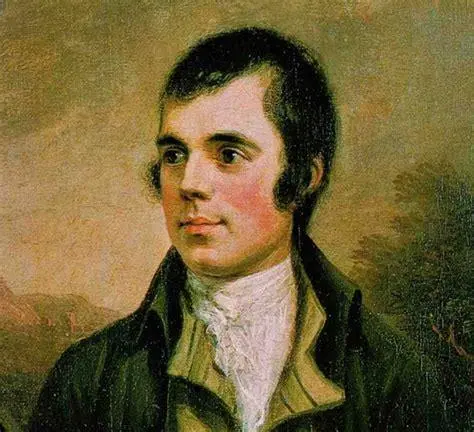
Robert Burns
John Anderson My Jo
John Anderson my jo, John,
When we were first acquent,
Your locks were like the raven,
Your bonny brow was brent;
But now your brow is bled, John,
Your locks are like the straw,
But blessings on your frosty pow,
John Anderson my jo!
John Anderson my jo, John,
We clamb the hill thegither
And monie a cantie day, John,
We've had wi' ane anither;
Now we maun totter down, John,
And hand in hand we'll go,
And sleep thegither at the foot,
John Anderson my jo!
275
Christina Rossetti
The First Day
I wish I could remember the first day,
First hour, first moment of your meeting me;
If bright or dim the season, it might be
Summer or winter for aught I can say.
So unrecorded did it slip away,
So blind was I to see and to foresee,
So dull to mark the budding of my tree
That would not blossom yet for many a May.
If only I could recollect it! Such
A day of days! I let it come and go
As traceless as a thaw of bygone snow.
It seemed to mean so little, meant so much!
If only now I could recall that touch,
First touch of hand in hand! - Did one but know!
276

Robert W. Service
Mazie's Ghost
In London City I evade
For charming Burlington Arcade -
For thee in youth I met a maid
By name of Mazie,
Who lost no time in telling me
The Ritz put up a topping tea,
But having only shillings three
My smile was hazy.
:Instead," said I, "it might be sport
To take a bus to Hampton Court,"
(Her manner, I remarked, was short,)
But she assented.
We climbed on top, and all the way
I held her hand, I felt quite gay,
Bu Mazie, I regret to say,
Seemed discontented.
In fact we almost had a tiff.
It's true it rained and she was stiff,
And all she did was sneeze and sniff
And shudder coldly.
So I said: "Mazzie, there's the maze;
Let's frolic in its leafy ways,"
And buying tickets where one pays
I entered boldly.
The, as the game is, we were lots;
We dashed and darted, crissed and crossed,
But Mazie she got vexed and sauced
Me rather smartly.
There wasn't but us two about;
We hollered, no one heard our shout;
The rain poured down: "Oh let's get out,"
Cried Mazie tartly.
"Keep cool, says I. "You fool," says she;
"I'm sopping wet, I want my tea,
Please take me home," she wailed to me
In accents bitter.
Again we tried, this way and that,
Yet came to where we started at,
And Mazie acted like a cat,
A champion spitter.
She stomped and romped till all was blue,
Then sought herself to find the clue,
And when I saw her next 'twas through
A leafy screening;
"Come on, she cooed, "and join me here;
You'll take me to the Savoy, dear,
And Heidsieck shall our spirits cheer."
I got her meaning.
And yet I sought her everywhere;
I hurried here, I scurried there,
I took each likely lane, I swar,
As I surmised it:
The suddenly I saw once more,
Confronting me, the exit door,
And I was dashing through before
I realized it.
And there I spied a passing bus.
Thinks I: "It's mean to leave her thus,
But after all her fret and fuss
I can't abide her.
So I sped back to London town
And grubbed alone for half-a-crown,
On steak and kidney pie washed down
With sparkling cider.
But since I left that damsel fair,
The thought she may have perished there,
Of cold, starvation and dispair
Nigh drives me crazy.
So, stranger, if you should invade
The charming Burlington Arcade,
Tell me if you behold a shade,
Ghost of a most unhappy maid
By name of Mazie.
273
James Whitcomb Riley
The Harp Of The Minstrel
The harp of the minstrel has never a tone
As sad as the song in his bosom to-night,
For the magical touch of his fingers alone
Can not waken the echoes that breathe it aright;
But oh! as the smile of the moon may impart
A sorrow to one in an alien clime,
Let the light of the melody fall on the heart,
And cadence his grief into musical rhyme.
The faces have faded, the eyes have grown dim
That once were his passionate love and his pride;
And alas! all the smiles that once blossomed for him
Have fallen away as the flowers have died.
The hands that entwined him the laureate's wreath
And crowned him with fame in the long, long ago,
Like the laurels are withered and folded beneath
The grass and the stubble--the frost and the snow.
Then sigh, if thou wilt, as the whispering strings
Strive ever in vain for the utterance clear,
And think of the sorrowful spirit that sings,
And jewel the song with the gem of a tear.
For the harp of the minstrel has never a tone
As sad as the song in his bosom tonight,
And the magical touch of his fingers alone
Can not waken the echoes that breathe it aright.
274

Muhammad Iqbal
The Withered Rose
O withered rose! How can I still call you a rose?
How can I call you the longing of nightingale's heart?
Once the zephyr's movement was your rocking cradle
In the garden's expanse joyous rose was your name
The morning breeze acknowledged your benevolence
The garden was like perfumer's tray by your presence
My weeping eye sheds dew on you
My desolate heart is concealed in your sorrow
You are a tiny picture of my destruction
You are the interpretation of my life's dream
Like a flute to my reed-brake I narrate my story
Listen O rose! I complain about separations!
274
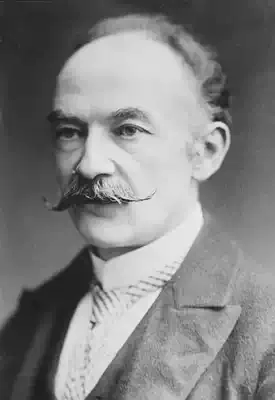
Thomas Hardy
The Self-Unseeing
Here is the ancient floor,
Footworn and hollowed and thin,
Here was the former door
Where the dead feet walked in.
She sat here in her chair,
Smiling into the fire;
He who played stood there,
Bowing it higher and higher.
Childlike, I danced in a dream;
Blessings emblazoned that day;
Everything glowed with a gleam;
Yet we were looking away!
273
James Whitcomb Riley
John McKeen
John McKeen, in his rusty dress,
His loosened collar, and swarthy throat,
His face unshaven, and none the less,
His hearty laugh and his wholesomeness,
And the wealth of a workman's vote!
Bring him, O Memory, here once more,
And tilt him back in his Windsor chair
By the kitchen stove, when the day is o'er
And the light of the hearth is across the floor,
And the crickets everywhere!
And let their voices be gladly blent
With a watery jingle of pans and spoons,
And a motherly chirrup of sweet content,
And neighborly gossip and merriment,
And old-time fiddle-tunes!
Tick the clock with a wooden sound,
And fill the hearing with childish glee
Of rhyming riddle, or story found
In the Robinson Crusoe, leather-bound
Old book of the Used-to-be!
John McKeen of the Past! Ah John,
To have grown ambitious in worldly ways--!
To have rolled your shirt-sleeves down, to don
A broadcloth suit, and forgetful, gone
Out on election days!
John ah, John! Did it prove your worth
To yield you the office you still maintain--?
To fill your pockets, but leave the dearth
Of all the happier things on earth
To the hunger of heart and brain?
Under the dusk of your villa trees,
Edging the drives where your blooded span
Paw the pebbles and wait your ease--,
Where are the children about your knees,
And the mirth, and the happy man?
The blinds of your mansion are battened to;
Your faded wife is a close recluse;
And your 'finished' daughters will doubtless do
Dutifully all that is willed of you,
And marry as you shall choose--!
But O for the old-home voices, blent
With the watery jingle of pans and spoons,
And the motherly chirrup of glad content,
And neighborly gossip and merriment,
And the old-time fiddle-tunes!
273
Henry Lawson
The Last Review
Turn the light down, nurse, and leave me, while I hold my last review,
For
the Bush
is slipping from me, and the town is going too:
Draw the blinds, the streets are lighted, and I hear the tramp of feet—
And I’m weary, very weary, of the
Faces in the Street
.
In the dens of Grind and Heartbreak, in the streets of Never-Rest,
I have lost the scent and colour and the music of the West:
And I would recall old faces with the memories they bring—
Where are Bill and Jim and Mary and the
Songs They used to Sing
?
They are coming! They are coming! they are passing through the room
With the smell of gum leaves burning, and the scent of
Wattle bloom!
And behind them in the timber, after dust and heat and toil,
Others sit beside the camp fire yarning while the billies boil.
In the Gap above the ridges there’s a flash and there’s a glow—
Swiftly down the scrub-clad siding come the
Lights of Cobb and Co
.:
Red face from the box-seat beaming—Oh, how plain those faces come!
From his ‘Golden-Hole’ ’tis Peter M’Intosh who’s going home.
Dusty patch in desolation, bare slab walls and earthen floor,
And a blinding drought is blazing from horizons to the door:
Milkless tea and ration sugar, damper junk and pumpkin mash—
And a
Day on our Selection
passes by me in a flash.
Rush of big wild-eyed store bullocks while the sheep crawl hopelessly,
And the loaded wool teams rolling, lurching on like ships at sea:
With his whip across his shoulder (and the wind just now abeam),
There goes
Jimmy Nowlett
ploughing through the dust beside his team!
Sunrise on the diggings! (Oh! what life and hearts and hopes are here)
From a hundred pointing forges comes a tinkle, tinkle clear—
Strings of drays with wash to puddle, clack of countless windlass boles,
Here and there
the red flag flying
, flying over golden holes.
Picturesque, unreal, romantic, chivalrous, and brave and free;
Clean in living, true in mateship—reckless generosity.
Mates are buried here as comrades who on fields of battle fall—
And—the dreams, the aching, hoping lover hearts beneath it all!
Rough-built theatres and stages where the world’s best actors trod—
Singers bringing reckless rovers nearer boyhood, home and God;
Paid in laughter, tears and nuggets in the play that fortune plays—
’Tis the palmy days of Gulgong—Gulgong in
the Roaring Days.
Pass the same old scenes before me—and again my heart can ache—
There the
Drover’s Wife
sits watching (not as Eve did) for a snake.
And I see the drear deserted goldfields when the night is late,
And the stony face of Mason watching by his
Father’s Mate.
And I see my
Haggard Women
plainly as they were in life,
’Tis the form of Mrs. Spicer and her friend,
Joe Wilson’s wife,
Sitting hand in hand
‘Past Carin
’,’ not a sigh and not a moan,
Staring steadily before her and the tears just trickle down.
It was
No Place for a Woman
—where the women worked like men—
From the Bush and Jones’ Alley come their haunting forms again.
And, let this thing be remembered when I’ve answered to the roll,
That I pitied haggard women—wrote for them with all my soul.
Narrow bed-room in the City in the hard days that are dead—
An alarm clock on the table, and a pale boy on the bed:
Arvie Aspinalls Alarm Clock with its harsh and startling call
Never more shall break his slumbers—I was Arvie Aspinall.
Maoriland
and
Steelman
, cynic, spieler, stiff-lipped, battler-through
(Kept a wife and child in comfort, but of course they never knew—
Thought he was an honest bagman)—Well, old man, you needn’t hug—
Sentimental; you of all men!—Steelman, Oh! I was a mug!
Ghostly lines of scrub at daybreak—dusty daybreak in the drought—
And a lonely swagman tramping on the track to
Further Out
:
Like a shade the form of Mitchell, nose-bag full and bluey up
And between the swag and shoulders lolls his foolish cattle-pup.
Kindly cynic, sad comedian! Mitchell! when you’ve left the Track,
And have shed your load of sorrow as we slipped our swags out back,
We shall have a yarn together in the land of
Rest Awhile
—
And across his ragged shoulder Mitchell smiles his quiet smile.
Shearing sheds and tracks and shanties—girls that wait at homestead gates—
Camps and stern-eyed Union leaders, and
Joe Wilson and his Mates
True and straight, and to my fancy, each one as he passes through
Deftly down upon the table slips a dusty ‘note’ or two.
So at last the end has found me—(end of all the human push)
And again in silence round me come my
Children of the Bush
!—
Listen, who are young, and let them—if I in late and bitter days
Wrote some reckless lines—forget them—there is little there to praise.
I was human, very human, and if in the days misspent
I have injured man or woman, it was done without intent.
If at times I blundered blindly—bitter heart and aching brow—
If I wrote a line unkindly—I am sorry for it now.
Days in London
like a nightmare—dreams of foreign lands and sea—
And
Australia
is the only land that seemeth real to me.
Tell the Bushmen to Australia and each other to be true—
‘Tell the boys to stick together!’ I have held my
Last Review.
272

Ogden Nash
The Sunset Years of Samuel Shy
Master I may be,
But not of my fate.
Now come the kisses, too many too late.
Tell me, O Parcae,
For fain would I know,
Where were these kisses three decades ago?
Girls there were plenty,
Mint julep girls, beer girls,
Gay younger married and headstrong career girls,
The girls of my friends
And the wives of my friends,
Some smugly settled and some at loose ends,
Sad girls, serene girls,
Girls breathless and turbulent,
Debs cosmopolitan, matrons suburbulent,
All of them amiable,
All of them cordial,
Innocent rousers of instincts primordial,
But even though health and wealth
Hadn't yet missed me,
None of them,
Not even Jenny,
Once kissed me.
These very same girls
Who with me have grown older
Now freely relax with a head on my shoulder,
And now come the kisses,
A flood in full spate,
The meaningless kisses, too many too late.
They kiss me hello,
They kiss me goodbye,
Should I offer a light, there's a kiss for reply.
They kiss me at weddings,
They kiss me at wakes,
The drop of a hat is less than it takes.
They kiss me at cocktails,
They kiss me at bridge,
It's all automatic, like slapping a midge.
The sound of their kisses
Is loud in my ears
Like the locusts that swarm every seventeen years.
I'm arthritic, dyspeptic,
Potentially ulcery,
And weary of kisses by custom compulsory.
Should my dear ones commit me
As senile demential,
It's from kisses perfunctory, inconsequential.
Answer, O Parcae,
For fain would I know,
Where were these kisses three decades ago?
272

Emily Dickinson
As if some little Arctic flower
As if some little Arctic flower
Upon the polar hem-
Went wandering down the Latitudes
Until it puzzled came
To continents of summer-
To firmaments of sun-
To strange, bright crowds of flowers-
And birds, of foreign tongue!
I say, As if this little flower
To Eden, wandered in-
What then? Why nothing,
Only, your inference therefrom!
269
James Whitcomb Riley
The Days Gone By
O the days gone by! O the days gone by!
The apples in the orchard, and the pathway through the rye;
The chirrup of the robin, and the whistle of the quail
As he piped across the meadows sweet as any nightingale;
When the bloom was on the clover, and the blue was in the sky,
And my happy heart brimmed over in the days gone by.
In the days gone by, when my naked feet were tripped
By the honey-suckle's tangles where the water-lilies dipped,
And the ripples of the river lipped the moss along the brink
Where the placid-eyed and lazy-footed cattle came to drink,
And the tilting snipe stood fearless of the truant's wayward cry
And the splashing of the swimmer, in the days gone by.
O the days gone by! O the days gone by!
The music of the laughing lip, the luster of the eye;
The childish faith in fairies, and Aladdin's magic ring--
The simple, soul-reposing, glad belief in everything,--
When life was like a story, holding neither sob nor sigh,
In the golden olden glory of the days gone by.
270
James Whitcomb Riley
The Little Fat Doctor
He seemed so strange to me, every way--
In manner, and form, and size,
From the boy I knew but yesterday,--
I could hardly believe my eyes!
To hear his name called over there,
My memory thrilled with glee
And leaped to picture him young and fair
In youth, as he used to be.
But looking, only as glad eyes can,
For the boy I knew of yore,
I smiled on a portly little man
I had never seen before!--
Grave as a judge in courtliness-Professor-
like and bland--
A little fat doctor and nothing less,
With his hat in his kimboed hand.
But how we talked old times, and 'chaffed'
Each other with 'Minnie' and 'Jim'---
And how the little fat doctor laughed,
And how I laughed with him!
'And it's pleasant,' I thought, 'though I yearn to see
The face of the youth that was,
To know no boy could smile on me
As the little fat doctor does!'
267
Henry Lawson
The Old Jimmy Woodser
The old Jimmy Woodser comes into the bar
Unwelcomed, unnoticed, unknown,
Too old and too odd to be drunk with, by far;
So he glides to the end where the lunch baskets are
And they say that he tipples alone.
His frockcoat is green and the nap is no more,
And his hat is not quite at its best;
He wears the peaked collar our grandfathers wore,
The black-ribbon tie that was legal of yore,
And the coat buttoned over his breast.
When first he came in, for a moment I thought
That my vision or wits were astray;
For a picture and page out of Dickens he brought--‘
Twas an old file dropped in from the Chancery Court
To the wine-vault just over the way.
But I dreamed, as he tasted his “bitter” to-night
And the lights in the bar-room grew dim,
That the shades of the friends of that other day’s light,
And of girls that were bright in our grandfathers” sight,
Lifted shadowy glasses to him.
Then I opened the door, and the old man passed out,
With his short, shuffling step and bowed head;
And I sighed; for I felt, as I turned me about,
An odd sense of respect---born of whisky no doubt---
For the life that was fifty years dead.
And I thought---there are times when our memory trends
Through the future, as ‘twere on its own---
That I, out-of-date ere my pilgrimage ends,
In a new-fashioned bar to dead loves and dead friends
Might drink, like the old man, alone.
268
Robert W. Service
The Joy Of Being Poor
I
Let others sing of gold and gear, the joy of being rich;
But oh, the days when I was poor, a vagrant in a ditch!
When every dawn was like a gem, so radiant and rare,
And I had but a single coat, and not a single care;
When I would feast right royally on bacon, bread and beer,
And dig into a stack of hay and doze like any peer;
When I would wash beside a brook my solitary shirt,
And though it dried upon my back I never took a hurt;
When I went romping down the road contemptuous of care,
And slapped Adventure on the back -- by Gad! we were a pair;
When, though my pockets lacked a coin, and though my coat was old,
The largess of the stars was mine, and all the sunset gold;
When time was only made for fools, and free as air was I,
And hard I hit and hard I lived beneath the open sky;
When all the roads were one to me, and each had its allure . . .
Ye Gods! these were the happy days, the days when I was poor.
II
Or else, again, old pal of mine, do you recall the times
You struggled with your storyettes, I wrestled with my rhymes;
Oh, we were happy, were we not? -- we used to live so "high"
(A little bit of broken roof between us and the sky);
Upon the forge of art we toiled with hammer and with tongs;
You told me all your rippling yarns, I sang to you my songs.
Our hats were frayed, our jackets patched, our boots were down at heel,
But oh, the happy men were we, although we lacked a meal.
And if I sold a bit of rhyme, or if you placed a tale,
What feasts we had of tenderloins and apple-tarts and ale!
And yet how often we would dine as cheerful as you please,
Beside our little friendly fire on coffee, bread and cheese.
We lived upon the ragged edge, and grub was never sure,
But oh, these were the happy days, the days when we were poor.
III
Alas! old man, we're wealthy now, it's sad beyond a doubt;
We cannot dodge prosperity, success has found us out.
Your eye is very dull and drear, my brow is creased with care,
We realize how hard it is to be a millionaire.
The burden's heavy on our backs -- you're thinking of your rents,
I'm worrying if I'll invest in five or six per cents.
We've limousines, and marble halls, and flunkeys by the score,
We play the part . . . but say, old chap, oh, isn't it a bore?
We work like slaves, we eat too much, we put on evening dress;
We've everything a man can want, I think . . . but happiness.
Come, let us sneak away, old chum; forget that we are rich,
And earn an honest appetite, and scratch an honest itch.
Let's be two jolly garreteers, up seven flights of stairs,
And wear old clothes and just pretend we aren't millionaires;
And wonder how we'll pay the rent, and scribble ream on ream,
And sup on sausages and tea, and laugh and loaf and dream.
And when we're tired of that, my friend, oh, you will come with me;
And we will seek the sunlit roads that lie beside the sea.
We'll know the joy the gipsy knows, the freedom nothing mars,
The golden treasure-gates of dawn, the mintage of the stars.
We'll smoke our pipes and watch the pot, and feed the crackling fire,
And sing like two old jolly boys, and dance to heart's desire;
We'll climb the hill and ford the brook and camp upon the moor . . .
Old chap, let's haste, I'm mad to taste the Joy of Being Poor.
269
James Whitcomb Riley
When Mother Combed My Hair
When Memory, with gentle hand,
Has led me to that foreign land
Of childhood days, I long to be
Again the boy on bended knee,
With head a-bow, and drowsy smile
Hid in a mother's lap the while,
With tender touch and kindly care,
She bends above and combs my hair.
Ere threats of Time, or ghosts of cares
Had paled it to the hue it wears,
Its tangled threads of amber light
Fell o'er a forehead, fair and white,
That only knew the light caress
Of loving hands, or sudden press
Of kisses that were sifted there
The times when mother combed my hair.
But its last gleams of gold have slipped
Away; and Sorrow's manuscript
Is fashioned of the snowy brow--
So lined and underscored now
That you, to see it, scarce would guess
It e'er had felt the fond caress
Of loving lips, or known the care
Of those dear hands that combed my hair.
. . . . . . . .
I am so tired! Let me be
A moment at my mother's knee;
One moment--that I may forget
The trials waiting for me yet:
One moment free from every pain--
O! Mother! Comb my hair again!
And I will, oh, so humbly bow,
For I've a wife that combs it now.
267
Henry Lawson
The Good Old Concertina
’Twas merry when the hut was full
Of jolly girls and fellows.
We danced and sang until we burst
The concertina’s bellows.
From distant Darling to the sea,
From the Downs to Riverina,
Has e’er a gum in all the west
Not heard the concertina?
’Twas peaceful round the campfire blaze,
The long white branches o’er us;
We’d play the tunes of bygone days,
To some good old bush chorus.
Old Erin’s harp may sweeter be,
The Scottish pipes blow keener;
But sing an old bush song for me
To the good old concertina.
’Twas cosy by the hut-fire bright
When the pint pot passed between us;
We drowned the voice of the stormy night
With the good old concertina’s.
Though trouble drifts along the years,
And the pangs of care grow keener,
My heart is gladdened when it hears
That good old concertina.
265
Robert W. Service
No More Music
The Porch was blazoned with geranium bloom;
Myrtle and jasmine meadows lit the lea;
With rose and violet the vale's perfume
Languished to where the hyacinthine sea
Dreamed tenderly . . . "And I must go," said he.
He spoke in that dim, ghostly voice of his:
"I was a singer; then the Was . . . and GAS."
(I had to lean to him, no word to miss.)
"We bought this little café nigh to Grasse;
With sun and flowers my last few days will pass.
"And music too. I have my mandolin:
Say! Maybe you can strum on your guitar . . .
Come on - we two will make melodious din,
While Madame sings to us behind the bar:
You'll see how sweet Italian folk-songs are."
So he would play and I would thrum the while;
I used to there every lovely day;
His wife would listen with a sunny smile,
And when I left: "Please come again," she'd say.
"He seems quite sad when you have one away."
Alas! I had to leave without good-bye,
And lived in sooty cities for ayear.
Oh, how my heart ached for that happy sky!
Then, then one day my café I drew near -
God! it was strange how I was gripped with fear.
So still it was; I saw no mandolin,
No gay guitar with ribbons blue and red;
Then all in black, stone-faced the wife came in . . .
I did not ask; I looked, she shook her head:
"La musique est fini," was all she said.
263