
Nostalgia

John Greenleaf Whittier
The Pumpkin
Oh, greenly and fair in the lands of the sun,
The vines of the gourd and the rich melon run,
And the rock and the tree and the cottage enfold,
With broad leaves all greenness and blossoms all gold,
Like that which o'er Nineveh's prophet once grew,
While he waited to know that his warning was true,
And longed for the storm-cloud, and listened in vain
For the rush of the whirlwind and red fire-rain.
On the banks of the Xenil the dark Spanish maiden
Comes up with the fruit of the tangled vine laden;
And the Creole of Cuba laughs out to behold
Through orange-leaves shining the broad spheres of gold;
Yet with dearer delight from his home in the North,
On the fields of his harvest the Yankee looks forth,
Where crook-necks are coiling and yellow fruit shines,
And the sun of September melts down on his vines.
Ah! on Thanksgiving day, when from East and from West,
From North and from South comes the pilgrim and guest;
When the gray-haired New Englander sees round his board
The old broken links of affection restored;
When the care-wearied man seeks his mother once more,
And the worn matron smiles where the girl smiled before;
What moistens the lip and what brightens the eye,
What calls back the past, like the rich Pumpkin pie?
Oh, fruit loved of boyhood! the old days recalling,
When wood-grapes were purpling and brown nuts were falling!
When wild, ugly faces we carved in its skin,
Glaring out through the dark with a candle within!
When we laughed round the corn-heap, with hearts all in tune,
Our chair a broad pumpkin, -- our lantern the moon,
Telling tales of the fairy who travelled like steam
In a pumpkin-shell coach, with two rats for her team!
Then thanks for thy present! none sweeter or better
E'er smoked from an oven or circled a platter!
Fairer hands never wrought at a pastry more fine,
Brighter eyes never watched o'er its baking, than thine!
And the prayer, which my mouth is too full to express,
Swells my heart that thy shadow may never be less,
That the days of thy lot may be lengthened below,
And the fame of thy worth like a pumpkin-vine grow,
And thy life be as sweet, and its last sunset sky
Golden-tinted and fair as thy own Pumpkin pie!
291

Thomas Hardy
Ditty
(E. L. G.)
BENEATH a knap where flown
Nestlings play,
Within walls of weathered stone,
Far away
From the files of formal houses,
By the bough the firstling browses,
Lives a Sweet: no merchants meet,
No man barters, no man sells
Where she dwells.
Upon that fabric fair
"Here is she!"
Seems written everywhere
Unto me.
But to friends and nodding neighbors,
Fellow wights in lot and labors,
Who descry the times as I,
No such lucid legend tells
Where she dwells.
Should I lapse to what I was
In days by--
(Such cannot be, but because
Some loves die
Let me feign it)--none would notice
That where she I know by rote is
Spread a strange and withering change,
Like a drying of the wells
Where she dwells.
To feel I might have kissed--
Loved as true--
Otherwhere, nor Mine have missed
My life through,
Had I never wandered near her,
Is a smart severe--severer
In the thought that she is nought,
Even as I, beyond the dells
Where she dwells.
And Devotion droops her glance
To recall
What bond-servants of Chance
We are all.
I but found her in that, going
On my errant path unknowing,
I did not out-skirt the spot
That no spot on earth excels--
Where she dwells!
292
Thomas Hardy
In Vision I Roamed
IN vision I roamed the flashing Firmament,
So fierce in blazon that the Night waxed wan,
As though with an awed sense of such ostent;
And as I thought my spirit ranged on and on
In footless traverse through ghast heights of sky,
To the last chambers of the monstrous Dome,
Where stars the brightest here to darkness die:
Then, any spot on our own Earth seemed Home!
And the sick grief that you were far away
Grew pleasant thankfulness that you were near,
Who might have been, set on some outstep sphere,
Less than a Want to me, as day by day
I lived unware, uncaring all that lay
Locked in that Universe taciturn and drear.
292
Thomas Hardy
The Puzzled Game-Birds
They are not those who used to feed us
When we were young--they cannot be -
These shapes that now bereave and bleed us?
They are not those who used to feed us, -
For would they not fair terms concede us?
- If hearts can house such treachery
They are not those who used to feed us
When we were young--they cannot be!
When we were young--they cannot be -
These shapes that now bereave and bleed us?
They are not those who used to feed us, -
For would they not fair terms concede us?
- If hearts can house such treachery
They are not those who used to feed us
When we were young--they cannot be!
291

Henry Lawson
The Song Of Old Joe Swallow
When I was up the country in the rough and early days,
I used to work along ov Jimmy Nowlett's bullick-drays;
Then the reelroad wasn't heered on, an' the bush was wild an' strange,
An' we useter draw the timber from the saw-pits in the range --
Load provisions for the stations, an' we'd travel far and slow
Through the plains an' 'cross the ranges in the days of long ago.
Then it's yoke up the bullicks and tramp beside 'em slow,
An' saddle up yer horses an' a-ridin' we will go,
To the bullick-drivin', cattle-drovin',
Nigger, digger, roarin', rovin'
Days o' long ago.
Once me and Jimmy Nowlett loaded timber for the town,
But we hadn't gone a dozen mile before the rain come down,
An' me an' Jimmy Nowlett an' the bullicks an' the dray
Was cut off on some risin' ground while floods around us lay;
An' we soon run short of tucker an' terbacca, which was bad,
An' pertaters dipped in honey was the only tuck we had.
An' half our bullicks perished when the drought was on the land,
An' the burnin' heat that dazzles as it dances on the sand;
When the sun-baked clay an' gravel paves for miles the burnin' creeks,
An' at ev'ry step yer travel there a rottin' carcase reeks --
But we pulled ourselves together, for we never used ter know
What a feather bed was good for in those days o' long ago.
But in spite ov barren ridges an' in spite ov mud an' heat,
An' dust that browned the bushes when it rose from bullicks' feet,
An' in spite ov cold and chilblains when the bush was white with frost,
An' in spite of muddy water where the burnin' plain was crossed,
An' in spite of modern progress, and in spite of all their blow,
'Twas a better land to live in, in the days o' long ago.
When the frosty moon was shinin' o'er the ranges like a lamp,
An' a lot of bullick-drivers was a-campin' on the camp,
When the fire was blazin' cheery an' the pipes was drawin' well,
Then our songs we useter chorus an' our yarns we useter tell;
An' we'd talk ov lands we come from, and ov chaps we useter know,
For there always was behind us OTHER days o' long ago.
Ah, them early days was ended when the reelroad crossed the plain,
But in dreams I often tramp beside the bullick-team again:
Still we pauses at the shanty just to have a drop er cheer,
Still I feels a kind ov pleasure when the campin'-ground is near;
Still I smells the old tarpaulin me an' Jimmy useter throw
O'er the timber-truck for shelter in the days ov long ago.
I have been a-driftin' back'ards with the changes ov the land,
An' if I spoke ter bullicks now they wouldn't understand,
But when Mary wakes me sudden in the night I'll often say:
`Come here, Spot, an' stan' up, Bally, blank an' blank an' come-eer-way.'
An' she says that, when I'm sleepin', oft my elerquince 'ill flow
In the bullick-drivin' language ov the days o' long ago.
Well, the pub will soon be closin', so I'll give the thing a rest;
But if you should drop on Nowlett in the far an' distant west --
An' if Jimmy uses doubleyou instead of ar an' vee,
An' if he drops his aitches, then you're sure to know it's he.
An' yer won't forgit to arsk him if he still remembers Joe
As knowed him up the country in the days o' long ago.
Then it's yoke up the bullicks and tramp beside 'em slow,
An' saddle up yer horses an' a-ridin' we will go,
To the bullick-drivin', cattle-drovin',
Nigger, digger, roarin', rovin'
Days o' long ago.
291

William Wordsworth
Yarrow Unvisited
. From Stirling castle we had seen
The mazy Forth unravelled;
Had trod the banks of Clyde, and Tay,
And with the Tweed had travelled;
And when we came to Clovenford,
Then said my "winsome Marrow ,"
"Whate'er betide, we'll turn aside,
And see the Braes of Yarrow."
"Let Yarrow folk, frae Selkirk town,
Who have been buying, selling,
Go back to Yarrow, 'tis their own;
Each maiden to her dwelling!
On Yarrow's banks let her herons feed,
Hares couch, and rabbits burrow!
But we will downward with the Tweed
Nor turn aside to Yarrow.
"There's Galla Water, Leader Haughs,
Both lying right before us;
And Dryborough, where with chiming Tweed
The lintwhites sing in chorus;
There's pleasant Tiviot-dale, a land
Made blithe with plough and harrow:
Why throw away a needful day
To go in search of Yarrow?
"What's Yarrow but a river bare,
That glides the dark hills under?
There are a thousand such elsewhere
As worthy of your wonder."
--Strange words they seemed of slight and scorn;
My True-love sighed for sorrow;
And looked me in the face, to think
I thus could speak of Yarrow!
"Oh! green," said I, "are Yarrow's holms,
And sweet is Yarrow flowing!
Fair hangs the apple frae the rock,
But we will leave it growing.
O'er hilly path, and open Strath,
We'll wander Scotland thorough;
But, though so near, we will not turn
Into the dale of Yarrow.
"Let beeves and home-bred kine partake
The sweets of Burn-mill meadow,
The swan on still St. Mary's Lake
Float double, swan and shadow!
We will not see them; will not go,
To-day, nor yet to-morrow;
Enough if in our hearts we know
There's such a place as Yarrow.
"Be Yarrow stream unseen, unknown!
It must, or we shall rue it:
We have a vision of our own;
Ah! why should we undo it?
The treasured dreams of times long past,
We'll keep them, winsome Marrow!
For when we'er there, although 'tis fair,
'Twill be another Yarrow!
"If Care with freezing years should come,
And wandering seem but folly,--
Should we be loth to stir from home,
And yet be melancholy;
Should life be dull, and spirits low,
'Twill soothe us in our sorrow,
That earth has something yet to show,
The bonny holms of Yarrow!"
289

William Butler Yeats
A Man Young And Old: X. His Wildness
O bid me mount and sail up there
Amid the cloudy wrack,
For peg and Meg and Paris' love
That had so straight a back,
Are gone away, and some that stay
Have changed their silk for sack.
Were I but there and none to hear
I'd have a peacock cry,
For that is natural to a man
That lives in memory,
Being all alone I'd nurse a stone
And sing it lullaby.
289
Henry Lawson
Golden Gully
No one lives in Golden Gully, for its golden days are o’er,
And its clay shall never sully blucher-boots of diggers more,
For the diggers long have vanished — nought but broken shafts remain,
And the bush, by diggers banished, fast reclaims its own again.
Now, when dying Daylight slowly draws her fingers from the “Peak”,
The Weird Empress Melancholy rises from the reedy creek —
In the gap above the gully, while the dismal curlews scream
Loud to welcome her as ruler of the dreary night supreme —
Takes her throne, and by her presence fills the strange, uncertain air
With a ghostly phosphorescence of the horrors hidden there.
None would think, by camp-fire blazy, lighting fitfully the scene,
In the seasons that are hazy, how in seasons gone between,
Diggers yarned or joined in jolly ballads of the field and foam,
Or grew sad and melancholy over songs like “Home, Sweet Home” —
Songs of other times, demanding sullen tears that would not start,
Every digger understanding what was in his comrade’s heart.
It may seem to you a riddle how a poet’s fancies roam,
But methinks I hear a fiddle softly playing “Home, Sweet Home”
’Mid the trees, while meditative diggers round the camp-fire stand.
(Those were days before Australians learned to love their native land.)
Now the dismal curlew screeches round the shafts when night winds sough;
Startling murmurs, broken speeches, shake each twisted, tangled bough,
And whene’er the night comes dreary, darkened by the falling rain,
Voices, loud and dread and eerie, come again and come again —
Come like troubled souls forbidden rest until their tales are told —
Tales of deeds of darkness hidden in the whirl of days of gold —
Come like troubled spirits telling tales of dire and dread mishaps,
Kissing, falling, rising, swelling, dying in the dismal gaps.
When the coming daylight slowly lays her fingers on the “Peak”
Then the Empress Melancholy hurries off to swamps that reek.
But the scene is never cheery, be it sunshine, be it rain,
For the Gully keeps its dreary look till darkness comes again.
As you stand beside the broken shafts, where grass is growing thick,
You can almost hear a spoken word, or hear a thudding pick;
And your very soul seems sinking, foetid grows the morning air,
For you cannot help believing that there’s something buried there.
There’s a ring amid the saplings by a travelling circus worn,
That amused the noisy diggers e’er the rising race was born;
There’s a road where scrub encroaches that was once the main highway,
Over which two rival coaches dashed in glory twice a day;
Gone — all gone from Golden Gully, for its golden days are o’er,
And its clay shall never sully wheels of crowded coaches more.
289

Henry Wadsworth Longfellow
Flower-De-Luce: The Bridge Of Cloud
Burn, O evening hearth, and waken
Pleasant visions, as of old!
Though the house by winds be shaken,
Safe I keep this room of gold!
Ah, no longer wizard Fancy
Builds her castles in the air,
Luring me by necromancy
Up the never-ending stair!
But, instead, she builds me bridges
Over many a dark ravine,
Where beneath the gusty ridges
Cataracts dash and roar unseen.
And I cross them, little heeding
Blast of wind or torrent's roar,
As I follow the receding
Footsteps that have gone before.
Naught avails the imploring gesture,
Naught avails the cry of pain!
When I touch the flying vesture,
'Tis the gray robe of the rain.
Baffled I return, and, leaning
O'er the parapets of cloud,
Watch the mist that intervening
Wraps the valley in its shroud.
And the sounds of life ascending
Faintly, vaguely, meet the ear,
Murmur of bells and voices blending
With the rush of waters near.
Well I know what there lies hidden,
Every tower and town and farm,
And again the land forbidden
Reassumes its vanished charm.
Well I know the secret places,
And the nests in hedge and tree;
At what doors are friendly faces,
In what hearts are thoughts of me.
Through the mist and darkness sinking,
Blown by wind and beaten by shower,
Down I fling the thought I'm thinking,
Down I toss this Alpine flower.
288
Henry Wadsworth Longfellow
Tales Of A Wayside Inn : Part 2. Interlude V.
Well pleased the audience heard the tale.
The Theologian said: 'Indeed,
To praise you there is little need;
One almost hears the farmers flail
Thresh out your wheat, nor does there fail
A certain freshness, as you said,
And sweetness as of home-made bread.
But not less sweet and not less fresh
Are many legends that I know,
Writ by the monks of long-ago,
Who loved to mortify the flesh,
So that the soul might purer grow,
And rise to a diviner state;
And one of these--perhaps of all
Most beautiful--I now recall,
And with permission will narrate;
Hoping thereby to make amends
For that grim tragedy of mine,
As strong and black as Spanish wine,
I told last night, and wish almost
It had remained untold, my friends;
For Torquemada's awful ghost
Came to me in the dreams I dreamed,
And in the darkness glared and gleamed
Like a great lighthouse on the coast.'
The Student laughing said: 'Far more
Like to some dismal fire of bale
Flaring portentous on a hill;
Or torches lighted on a shore
By wreckers in a midnight gale.
No matter; be it as you will,
Only go forward with your tale.'
287

Emily Dickinson
Tho' my destiny be Fustian
Tho' my destiny be Fustian-
Hers be damask fine-
Tho' she wear a silver apron-
I, a less divine-
Still, my little Gypsy being
I would far prefer,
Still, my little sunburnt bosom
To her Rosier,
For, when Frosts, their punctual fingers
On her forehead lay,
You and I, and Dr. Holland,
Bloom Eternally!
Roses of a steadfast summer
In a steadfast land,
Where no Autumn lifts her pencil-
And no Reapers stand!
285
Emily Dickinson
We talked as Girls do
We talked as Girls do-
Fond, and late-
We speculated fair, on every subject, but the Grave-
Of ours, none affair-
We handled Destinies, as cool-
As we-Disposers-be-
And God, a Quiet Party
To our Authority-
But fondest, dwelt upon Ourself
As we eventual-be-
When Girls to Women, softly raised
We-occupy-Degree-
We parted with a contract
To cherish, and to write
But Heaven made both, impossible
Before another night.
286

James Whitcomb Riley
The Good, Old-Fashioned People
When we hear Uncle Sidney tell
About the long-ago
An' old, old friends he loved so well
When _he_ was young--My-oh!--
Us childern all wish _we'd 'a'_ bin
A-livin' then with Uncle,--so
We could a-kindo' happened in
On them old friends he used to know!--
The good, old-fashioned people--
The hale, hard-working people--
The kindly country people
'At Uncle used to know!
They was God's people, Uncle says,
An' gloried in His name,
An' worked, without no selfishness,
An' loved their neighbers same
As they was kin: An' when they biled
Their tree-molasses, in the Spring,
Er butchered in the Fall, they smiled
An' sheered with all jist ever'thing!--
The good, old-fashioned people--
The hale, hard-working people--
The kindly country people
'At Uncle used to know!
He tells about 'em, lots o' times,
Till we'd all ruther hear
About 'em than the Nurs'ry Rhymes
Er Fairies--mighty near!--
Only sometimes he stops so long
An' then talks on so low an' slow,
It's purt'-nigh sad as any song
To listen to him talkin' so
Of the good, old-fashioned people--
The hale, hard-working people--
The kindly country people
'At Uncle used to know!
285
Henry Lawson
The Stringy-Bark Tree
There's the whitebox and pine on the ridges afar,
Where the iron-bark, blue-gum, and peppermint are;
There is many another, but dearest to me,
And the king of them all was the stringy-bark tree.
Then of stringy-bark slabs were the walls of the hut,
And from stringy-bark saplings the rafters were cut;
And the roof that long sheltered my brothers and me
Was of broad sheets of bark from the stringy-bark tree.
And when sawn-timber homes were built out in the West,
Then for walls and for ceilings its wood was the best;
And for shingles and palings to last while men be,
There was nothing on earth like the stringy-bark tree.
Far up the long gullies the timber-trucks went,
Over tracks that seemed hopeless, by bark hut and tent;
And the gaunt timber-finder, who rode at his ease,
Led them on to a gully of stringy-bark trees.
Now still from the ridges, by ways that are dark,
Come the shingles and palings they call stringy-bark;
Though you ride through long gullies a twelve months you’ll see
But the old whitened stumps of the stringy-bark tree.
286
Henry Lawson
Before We Were Married
BLACKSOIL PLAINS were grey soil, grey soil in the drought.
Fifteen years away, and five hundred miles out;
Swag and bag and billy carried all our care
Before we were married, and I wish that I were there.
River banks were grassy—grassy in the bends,
Running through the land where mateship never ends;
We belled the lazy fishing lines and droned the time away
Before we were married, and I wish it were to-day.
Working down the telegraph—winters’ gales and rains
Cross the tumbled scenery of Marlborough “plains”,
Beach and bluff and cook’s tent—and the cook was a “cow”
Before we were married, but I wish that it was now.
The rolling road to Melbourne, and grey-eyed girl in fur—
One arm to a stanchion—and one round her;
Seat abaft the skylight when the moon had set—
Before she was married, and I wish it wasn’t yet.
283
James Whitcomb Riley
Private Theatricals
A quite convincing axiom
Is, 'Life is like a play';
For, turning back its pages some
Few dog-eared years away,
I find where I
Committed my
Love-tale--with brackets where to sigh.
I feel an idle interest
To read again the page;
I enter, as a lover dressed,
At twenty years of age,
And play the part
With throbbing heart,
And all an actor's glowing art.
And she who plays my Lady-love
Excels!--Her loving glance
Has power her audience to move--
I am her audience.--
Her acting tact,
To tell the fact,
'Brings down the house' in every act.
And often we defy the curse
Of storms and thunder-showers,
To meet together and rehearse
This little play of ours--
I think, when she
'Makes love' to me,
She kisses very naturally!
. . . . . .
Yes; it's convincing--rather--
That 'Life is like a play':
I am playing 'Heavy Father'
In a 'Screaming Farce' to-day,
That so 'brings down
The house,' I frown,
And fain would 'ring the curtain down.'
283
Henry Wadsworth Longfellow
Oliver Basselin. (Birds Of Passage. Flight The First)
In the Valley of the Vire
Still is seen an ancient mill,
With its gables quaint and queer,
And beneath the window-sill,
On the stone,
These words alone:
'Oliver Basselin lived here.'
Far above it, on the steep,
Ruined stands the old Chateau;
Nothing but the donjon-keep
Left for shelter or for show.
Its vacant eyes
Stare at the skies,
Stare at the valley green and deep.
Once a convent, old and brown,
Looked, but ah! it looks no more,
From the neighboring hillside down
On the rushing and the roar
Of the stream
Whose sunny gleam
Cheers the little Norman town.
In that darksome mill of stone,
To the water's dash and din,
Careless, humble, and unknown,
Sang the poet Basselin
Songs that fill
That ancient mill
With a splendor of its own.
Never feeling of unrest
Broke the pleasant dream he dreamed;
Only made to be his nest,
All the lovely valley seemed;
No desire
Of soaring higher
Stirred or fluttered in his breast.
True, his songs were not divine;
Were not songs of that high art,
Which, as winds do in the pine,
Find an answer in each heart;
But the mirth
Of this green earth
Laughed and revelled in his line.
From the alehouse and the inn,
Opening on the narrow street,
Came the loud, convivial din,
Singing and applause of feet,
The laughing lays
That in those days
Sang the poet Basselin.
In the castle, cased in steel,
Knights, who fought at Agincourt,
Watched and waited, spur on heel;
But the poet sang for sport
Songs that rang
Another clang,
Songs that lowlier hearts could feel.
In the convent, clad in gray,
Sat the monks in lonely cells,
Paced the cloisters, knelt to pray,
And the poet heard their bells;
But his rhymes
Found other chimes,
Nearer to the earth than they.
Gone are all the barons bold,
Gone are all the knights and squires,
Gone the abbot stern and cold,
And the brotherhood of friars;
Not a name
Remains to fame,
From those mouldering days of old!
But the poet's memory here
Of the landscape makes a part;
Like the river, swift and clear,
Flows his song through many a heart;
Haunting still
That ancient mill,
In the Valley of the Vire.
283
John Greenleaf Whittier
Winter Roses
My garden roses long ago
Have perished from the leaf-strewn walks;
Their pale, fair sisters smile no more
Upon the sweet-brier stalks.
Gone with the flower-time of my life,
Spring's violets, summer's blooming pride,
And Nature's winter and my own
Stand, flowerless, side by side.
So might I yesterday have sung;
To-day, in bleak December's noon,
Come sweetest fragrance, shapes, and hues,
The rosy wealth of June!
Bless the young bands that culled the gift,
And bless the hearts that prompted it;
If undeserved it comes, at least
It seems not all unfit.
Of old my Quaker ancestors
Had gifts of forty stripes save one;
To-day as many roses crown
The gray head of their son.
And with them, to my fancy's eye,
The fresh-faced givers smiling come,
And nine and thirty happy girls
Make glad a lonely room.
They bring the atmosphere of youth;
The light and warmth of long ago
Are in my heart, and on my cheek
The airs of morning blow.
O buds of girlhood, yet unblown,
And fairer than the gift ye chose,
For you may years like leaves unfold
The heart of Sharon's rose
285
James Whitcomb Riley
Kingry's Mill
On old Brandywine-- about
Where White's Lots is now laid out,
And the old crick narries down
To the ditch that splits the town--,
Kingry's Mill stood. Hardly see
Where the old dam ust to be;
Shallor, long, dry trought o' grass
Where the old race ust to pass!
That's be'n forty years ago--
Forty years o' frost and snow--
Forty years o' shade and shine
Sence them boyhood-days o' mine--!
All the old landmarks o' town.
Changed about, er rotted down!
Where's the Tanyard? Where's the Still?
Tell me where's old Kingry's Mill?
Don't seem furder back, to me,
I'll be dogg'd! Than yisterd'y,
Since us fellers, in bare feet
And straw hats, went through the wheat,
Cuttin' 'crost the shortest shoot
Fer that-air old ellum root
Jest above the mill-dam-- where
The blame' cars now crosses there!
Through the willers down the crick
We could see the old mill stick
Its red gable up, as if
It jest knowed we'd stol'd the skiff!
See the winders in the sun
Blink like they wuz wonderun'
What the miller ort to do
With sich boys as me and you!
But old Kingry--! Who could fear
That old chap, with all his cheer--?
Leanin' at the window-sill,
Er the half-door o' the mill,
Swoppin' lies, and pokin' fun,
'N jigglin' like his hoppers done--
Laughin' grists o' gold and red
Right out o' the wagon-bed!
What did he keer where we went--?
'Jest keep out o' devilment,
And don't fool around the belts,
Bolts, ner burrs, ner nothin' else
'Bout the blame machinery,
And that's all I ast!' says-ee.
Then we'd climb the stairs, and play
In the bran-bins half the day!
Rickollect the dusty wall,
And the spider-webs, and all!
Rickollect the trimblin' spout
Where the meal come josslln' out--
Stand and comb yer fingers through
The fool-truck an hour er two--
Felt so sorto' warm-like and
Soothin' to a feller's hand!
Climb, high up above the stream,
And 'coon' out the wobbly beam
And peek down from out the lof'
Where the weather-boards was off-Gee-
mun-nee! w'y, it takes grit
Even jest to think of it--!
Lookin' 'way down there below
On the worter roarin' so!
Rickollect the flume, and wheel,
And the worter slosh and reel
And jest ravel out in froth
Flossier'n satin cloth!
Rickollect them paddles jest
Knock the bubbles galley-west,
And plunge under, and come up
Drippin' like a worter-pup!
And to see them old things gone
That I onc't was bettin' on,
In rale p'int o' fact, I feel
kindo' like that worter-wheel--,
Sorto' drippy-like and wet
Round the eyes-- but paddlin' yet,
And in mem'ry, loafin' still
Down around old Kingry's Mill!
282

Robert W. Service
Old Trouper
I was Mojeska's leading man
And famous parts I used to play,
But now I do the best I can
To earn my bread from day to day;
Here in this Burg of Breaking Hears,
Where one wins as a thousand fail,
I play a score of scurvy parts
Till Time writes Finis to my tale.
My wife is dead, my daughter wed,
With heaps of trouble of their own;
And though I hold aloft my head
I'm humble, scared and all alone . . .
To-night I burn each photograph,
Each record of my former fame,
And oh, how bitterly I laugh
And feed them to the hungry flame!
Behold how handsome I was then -
What glowing eye, what noble mien;
I towered above my fellow men,
And proudly strode the painted scene.
Ah, Vanity! What fools are we,
With empty ends and foolish aims . . .
There now, I fling with savage glee
My David Garrick to the flames.
"Is this a dagger that I see":
Oh, how I used to love that speech;
We were old-fashioned - "hams" maybe,
Yet we Young Arrogance could teach.
"Out, out brief candle!" There are gone
My Lear, my Hamlet and MacBeth;
And now by ashes cold and wan
I wait my cue, my prompter Death.
This life of ours is just a play;
Its end is fashioned from the start;
Fate writes each word we have to say,
And puppet-like we strut our part.
Once I wore laurels on my brow,
But now I wait, a sorry clown,
To make my furtive, farewell bow . . .
Haste Time! Oh, ring the Curtain down.
282
Henry Lawson
The Tracks That Lie By India
Now this is not a dismal song, like some I’ve sung of late,
When I’ve been brooding all day long about my muddled fate;
For though I’ve had a rocky time I’ll never quite forget,
And though I never was so deep in trouble and in debt,
And though I never was so poor nor in a fix so tight—
The tracks that run by India are shining in my sight.
The roads that run by India, and all the ports of call—
I’m going back to London first to raise the wherewithal.
I’ll call at Suez and Port Said as I am going past
(I was too worried to take notes when I was that way last),
At Naples and at Genoa, and, if I get the chance,
Who knows but I might run across the pleasant land of France.
The track that runs by India goes up the hot Red Sea—
The other side of Africa is far too dull for me.
(I fear that I have missed a chance I’ll never get again
To see the land of chivalry and bide awhile in Spain.)
I’ll graft a year in London, and if fortune smiles on me
I’ll take the track to India by France and Italy.
’Tis sweet to court some foreign girl with eyes of lustrous glow,
Who does not know my language and whose language I don’t know;
To loll on gently-rolling decks beneath the softening skies,
While she sits knitting opposite, and make love with our eyes—
The glance that says far more than words, the old half-mystic smile—
The track that runs by India will wait for me awhile.
The tracks that run by India to China and Japan,
The tracks where all the rovers go—the tracks that call a Man!
I’m wearied of the formal lands of parson and of priest,
Of dollars and of fashions, and I’m drifting towards the East;
I’m tired of cant and cackle, and of sordid jobbery—
The mystery of the East hath cast its glamour over me.
282
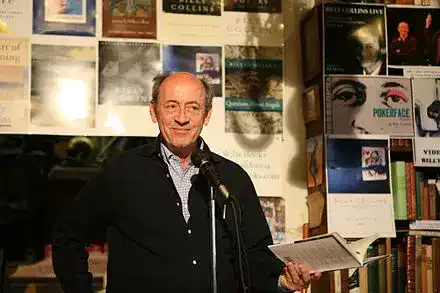
Billy Collins
Reading An Anthology Of Chinese Poems Of The Sung Dynasty, I Pause
It seems these poets have nothing
up their ample sleeves
they turn over so many cards so early,
telling us before the first line
whether it is wet or dry,
night or day, the season the man is standing in,
even how much he has had to drink.
Maybe it is autumn and he is looking at a sparrow.
Maybe it is snowing on a town with a beautiful name.
"Viewing Peonies at the Temple of Good Fortune
on a Cloudy Afternoon" is one of Sun Tung Po's.
"Dipping Water from the River and Simmering Tea"
is another one, or just
"On a Boat, Awake at Night."
And Lu Yu takes the simple rice cake with
"In a Boat on a Summer Evening
I Heard the Cry of a Waterbird.
It Was Very Sad and Seemed To Be Saying
My Woman Is Cruel--Moved, I Wrote This Poem."
There is no iron turnstile to push against here
as with headings like "Vortex on a String,"
"The Horn of Neurosis," or whatever.
No confusingly inscribed welcome mat to puzzle over.
Instead, "I Walk Out on a Summer Morning
to the Sound of Birds and a Waterfall"
is a beaded curtain brushing over my shoulders.
And "Ten Days of Spring Rain Have Kept Me Indoors"
is a servant who shows me into the room
where a poet with a thin beard
is sitting on a mat with a jug of wine
whispering something about clouds and cold wind,
about sickness and the loss of friends.
How easy he has made it for me to enter here,
to sit down in a corner,
cross my legs like his, and listen.
280
Henry Lawson
Mary Called Him 'Mister'
They'd parted but a year before—she never thought he’d come,
She stammer’d, blushed, held out her hand, and called him ‘Mister Gum.’
How could he know that all the while she longed to murmur ‘John.’
He called her ‘Miss le Brook,’ and asked how she was getting on.
They’d parted but a year before; they’d loved each other well,
But he’d been to the city, and he came back such a swell.
They longed to meet in fond embrace, they hungered for a kiss—
But Mary called him ‘Mister,’ and the idiot called her ‘Miss.’
He stood and lean’d against the door—a stupid chap was he—
And, when she asked if he’d come in and have a cup of tea,
He looked to left, he looked to right, and then he glanced behind,
And slowly doffed his cabbage-tree, and said he ‘didn’t mind.’
She made a shy apology because the meat was tough,
And then she asked if he was sure his tea was sweet enough;
He stirred the tea and sipped it twice, and answer’d ‘plenty, quite;’
And cut the smallest piece of beef and said that it was ‘right.’
She glanced at him at times and cough’d an awkward little cough;
He stared at anything but her and said, ‘I must be off.’
That evening he went riding north—a sad and lonely ride—
She locked herself inside her room, and there sat down and cried.
They’d parted but a year before, they loved each other well—
But she was such a country girl and he was such a swell ;
They longed to meet in fond embrace, they hungered for a kiss—
But Mary called him ‘Mister’ and the idiot called her ‘Miss.
280
James Whitcomb Riley
Waitin' Fer The Cat To Die
Lawzy! don't I rickollect
That-'air old swing in the lane!
Right and proper, I expect,
Old times _can't_ come back again;
But I want to state, ef they
_Could_ come back, and I could say
What _my_ pick 'ud be, i jing!
I'd say, Gimme the old swing
'Nunder the old locus'-trees
On the old place, ef you please!--
Danglin' there with half-shet eye,
Waitin' fer the cat to die!
I'd say, Gimme the old gang
Of barefooted, hungry, lean,
Ornry boys you want to hang
When you're growed up twic't as mean!
The old gyarden-patch, the old
Truants, and the stuff we stol'd!
The old stompin'-groun', where we
Wore the grass off, wild and free
As the swoop of the old swing,
Where we ust to climb and cling,
And twist roun', and fight, and lie--
Waitin' fer the cat to die!
'Pears like I 'most allus could
Swing the highest of the crowd--
Jes sail up there tel I stood
Downside-up, and screech out loud,--
Ketch my breath, and jes drap back
Fer to let the old swing slack,
Yit my tow-head dippin' still
In the green boughs, and the chill
Up my backbone taperin' down,
With my shadder on the ground'
Slow and slower trailin' by--
Waitin' fer the cat to die!
Now my daughter's little Jane's
Got a kind o' baby-swing
On the porch, so's when it rains
She kin play there--little thing!
And I'd limped out t'other day
With my old cheer this-a-way,
Swingin' _her_ and rockin' too,
Thinkin' how _I_ ust to do
At _her_ age, when suddently,
'Hey, Gran'pap!' she says to me,
'Why you rock so slow?' ... Says I,
'Waitin' fer the cat to die!'
282