
Nostalgia
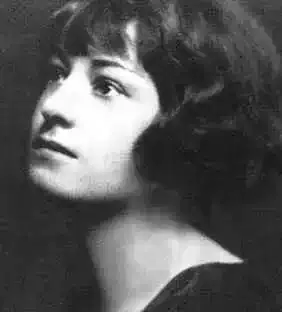
Dorothy Parker
The Small Hours
No more my little song comes back;
And now of nights I lay
My head on down, to watch the black
And wait the unfailing gray.
Oh, sad are winter nights, and slow;
And sad's a song that's dumb;
And sad it is to lie and know
Another dawn will come.
And now of nights I lay
My head on down, to watch the black
And wait the unfailing gray.
Oh, sad are winter nights, and slow;
And sad's a song that's dumb;
And sad it is to lie and know
Another dawn will come.
304

Emily Dickinson
Have any like Myself
Have any like Myself
Investigating March,
New Houses on the Hill descried-
And possibly a Church-
That were not, We are sure-
As lately as the Snow-
And are Today-if We exist-
Though how may this be so?
Have any like Myself
Conjectured Who may be
The Occupants of the Adobes-
So easy to the Sky
'Twould seem that God should be
The nearest Neighbor to-
And Heaven-a convenient Grace
For Show, or Company-
Have any like Myself
Preserved the Charm secure
By shunning carefully the Place
All Seasons of the Year,
Excepting March-'Tis then
My Villages be seen-
And possibly a Steeple-
Not afterward-by Men-
303

James Whitcomb Riley
A Feel In The Chris'mas-Air
They's a kind o' _feel_ in the air, to me.
When the Chris'mas-times sets in.
That's about as much of a mystery
As ever I've run ag'in!--
Fer instunce, now, whilse I gain in weight
And gineral health, I swear
They's a _goneness_ somers I can't quite state--
A kind o' _feel_ in the air.
They's a feel in the Chris'mas-air goes right
To the spot where a man _lives_ at!--
It gives a feller a' appetite--
They ain't no doubt about _that_!--
And yit they's _somepin_'--I don't know what--
That follers me, here and there,
And ha'nts and worries and spares me not--
A kind o' feel in the air!
They's a _feel_, as I say, in the air that's jest
As blame-don sad as sweet!--
In the same ra-sho as I feel the best
And am spryest on my feet,
They's allus a kind o' sort of a' _ache_
That I can't lo-cate no-where;--
But it comes with _Chris'mas_, and no mistake!--
A kind o' feel in the air.
Is it the racket the childern raise?-W'y,
_no_!--God bless 'em!--_no_!--
Is it the eyes and the cheeks ablaze--
Like my _own_ wuz, long ago?--
Is it the bleat o' the whistle and beat
O' the little toy-drum and blare
O' the horn?--_No! no!_--it is jest the sweet--
The sad-sweet feel in the air.
304
James Whitcomb Riley
Old Fashioned Roses
They ain't no style about 'em,
And they're sorto' pale and faded,
Yit the doorway here, without 'em,
Would be lonesomer, and shaded
With a good 'eal blacker shudder
Than the morning-glories makes,
And the sunshine would look sadder
Fer their good old-fashion' sakes.
I like 'em 'cause they kindo'--
Sorto' make a feller like 'em!
And I tell you, when I find a
Bunch out whur the sun kin strike 'em,
It allus sets me thinkin'
O' the ones 'at used to grow
And peek in thro' the chinkin'
O' the cabin, don't you know!
And then I think o' mother,
And how she ust to love 'em--
When they wuzn't any other,
'Less she found 'em up above 'em!
And her eyes, afore she shut 'em,
Whispered with a smile and said
We must pick a bunch and putt 'em
In her hand when she wuz dead.
But as I wuz a-sayin',
They ain't no style about 'em
Very gaudy er displayin',
But I wouldn't be without 'em--,
'Cause I'm happier in these posies,
And the hollyhawks and sich,
Than the hummin'-bird 'at noses
In the roses of the rich.
302
James Whitcomb Riley
The Old Home By The Mill
This is 'The old Home by the Mill'--far we still call it so,
Although the old mill, roof and sill, is all gone long ago.
The old home, though, and old folks, and the old spring, and a few
Old cat-tails, weeds and hartychokes, is left to welcome you!
Here, Marg'et, fetch the man a tin to drink out of' Our spring
Keeps kindo-sorto cavin' in, but don't 'taste' anything!
She's kindo agein', Marg'et is--'the old process,' like me,
All ham-stringed up with rheumatiz, and on in seventy-three.
Jes' me and Marg'et lives alone here--like in long ago;
The childern all put off and gone, and married, don't you know?
One's millin' way out West somewhere; two other miller-boys
In Minnyopolis they air; and one's in Illinoise.
The oldest gyrl--the first that went--married and died right here;
The next lives in Winn's Settlement--for purt' nigh thirty year!
And youngest one--was allus far the old home here--but no!--
Her man turns in and he packs her 'way off to Idyho!
I don't miss them like _Marg'et_ does--'cause I got _her_, you see;
And when she pines for them--that's 'cause _she's_ only jes' got
_me_!
I laugh, and joke her 'bout it all.--But talkin' sense, I'll say,
When she was tuk so bad last Fall, I laughed the t'other way!
I haint so favorble impressed 'bout dyin'; but ef I
Found I was only second-best when _us two_ come to die,
I'd 'dopt the 'new process' in full, ef _Marg'et_ died, you see,-I'd
jes' crawl in my grave and pull the green grass over me!
302
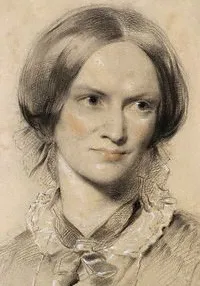
Charlotte Brontë
The Teacher's Monologue
THE room is quiet, thoughts alone
People its mute tranquillity;
The yoke put on, the long task done,
I
am, as it is bliss to be,
Still and untroubled. Now, I see,
For the first time, how soft the day
O'er waveless water, stirless tree,
Silent and sunny, wings its way.
Now, as I watch that distant hill,
So faint, so blue, so far removed,
Sweet dreams of home my heart may fill,
That home where I am known and loved:
It lies beyond; yon azure brow
Parts me from all Earth holds for me;
And, morn and eve, my yearnings flow
Thitherward tending, changelessly.
My happiest hours, aye ! all the time,
I love to keep in memory,
Lapsed among moors, ere life's first prime
Decayed to dark anxiety.
Sometimes, I think a narrow heart
Makes me thus mourn those far away,
And keeps my love so far apart
From friends and friendships of today;
Sometimes, I think 'tis but a dream
I measure up so jealously,
All the sweet thoughts I live on seem
To vanish into vacancy:
And then, this strange, coarse world around
Seems all that's palpable and true;
And every sight, and every sound,
Combines my spirit to subdue
To aching grief, so void and lone
Is Life and Earthso
worse than vain,
The hopes that, in my own heart sown,
And cherished by such sun and rain
As Joy and transient Sorrow shed,
Have ripened to a harvest there:
Alas ! methinks I hear it said,
'Thy golden sheaves are empty air.'
All fades away; my very home
I think will soon be desolate;
I hear, at times, a warning come
Of bitter partings at its gate;
And, if I should return and see
The hearthfire
quenched, the vacant chair;
And hear it whispered mournfully,
That farewells have been spoken there,
What shall I do, and whither turn ?
Where look for peace ? When cease to mourn ?
'Tis not the air I wished to play,
The strain I wished to sing;
My wilful spirit slipped away
And struck another string.
I neither wanted smile nor tear,
Bright joy nor bitter woe,
But just a song that sweet and clear,
Though haply sad, might flow.
A quiet song, to solace me
When sleep refused to come;
A strain to chase despondency,
When sorrowful for home.
In vain I try; I cannot sing;
All feels so cold and dead;
No wild distress, no gushing spring
Of tears in anguish shed;
But all the impatient gloom of one
Who waits a distant day,
When, some great task of suffering done,
Repose shall toil repay.
For youth departs, and pleasure flies,
And life consumes away,
And youth's rejoicing ardour dies
Beneath this drear delay;
And Patience, weary with her yoke,
Is yielding to despair,
And Health's elastic spring is broke
Beneath the strain of care.
Life will be gone ere I have lived;
Where now is Life's first prime ?
I've worked and studied, longed and grieved,
Through all that rosy time.
To toil, to think, to long, to grieve,
Is
such my future fate ?
The morn was dreary, must the eve
Be also desolate ?
Well, such a life at least makes Death
A welcome, wishedfor
friend;
Then, aid me, Reason, Patience, Faith,
To suffer to the end !
302
James Whitcomb Riley
Who Santy-Claus Wuz
Jes' a little bit o' feller--I remember still--
Ust to almost cry fer Christmas, like a youngster will.
Fourth o' July's nothin' to it!--New Year's ain't a smell!
Easter-Sunday--Circus-day--jes' all dead in the shell!
Lawzy, though! at night, you know, to set around an' hear
The old folks work the story off about the sledge an' deer,
An' 'Santy' skootin' round the roof, all wrapt in fur an' fuzz--
Long afore
I knowed who
'Santy-Claus' wuz!
Ust to wait, an' set up late, a week er two ahead;
Couldn't hardly keep awake, ner wouldn't go to bed;
Kittle stewin' on the fire, an' Mother settin' here
Darnin' socks, an' rockin' in the skreeky rockin'-cheer;
Pap gap', an' wonder where it wuz the money went,
An' quar'l with his frosted heels, an' spill his liniment;
An' me a-dreamin' sleigh-bells when the clock 'ud whir an' buzz,
Long afore
I knowed who
'Santy-Claus' wuz!
Size the fire-place up an' figger how 'Ole Santy' could
Manage to come down the chimbly, like they said he would;
Wisht 'at I could hide an' see him--wunderd what he'd say
Ef he ketched a feller layin' fer him thataway!
But I _bet_ on him, an' _liked_ him, same as ef he had
Turned to pat me on the back an' say, 'Look here, my lad,
Here's my pack,--jes' he'p yourse'f, like all good boys does!'
Long afore
I knowed who
'Santy-Claus' wuz!
Wisht that yarn was true about him, as it 'peared to be--
Truth made out o' lies like that-un's good enough fer me!--
Wisht I still wuz so confidin' I could jes' go wild
Over hangin' up my stockin's, like the little child
Climbin' in my lap to-night, an' beggin' me to tell
'Bout them reindeers, and 'Old Santy' that she loves so well
I'm half sorry fer this little-girl-sweetheart of his--
Long afore
She knows who
'Santy-Claus' is!
301
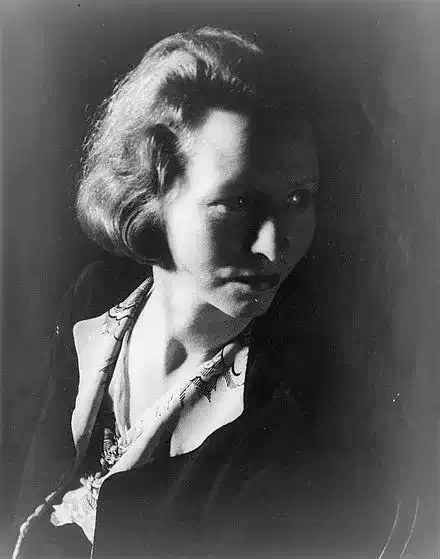
Edna St. Vincent Millay
Sonnets 12: Cherish You Then The Hope I Shall Forget
Cherish you then the hope I shall forget
At length, my lord, Pieria?—put away
For your so passing sake, this mouth of clay
These mortal bones against my body set,
For all the puny fever and frail sweat
Of human love,—renounce for these, I say,
The Singing Mountain's memory, and betray
The silent lyre that hangs upon me yet?
Ah, but indeed, some day shall you awake,
Rather, from dreams of me, that at your side
So many nights, a lover and a bride,
But stern in my soul's chastity, have lain,
To walk the world forever for my sake,
And in each chamber find me gone again!
302
Edna St. Vincent Millay
Sonnets 06: No Rose That In A Garden Ever Grew
No rose that in a garden ever grew,
In Homer's or in Omar's or in mine,
Though buried under centuries of fine
Dead dust of roses, shut from sun and dew
Forever, and forever lost from view,
But must again in fragrance rich as wine
The grey aisles of the air incarnadine
When the old summers surge into a new.
Thus when I swear, "I love with all my heart,"
'Tis with the heart of Lilith that I swear,
'Tis with the love of Lesbia and Lucrece;
And thus as well my love must lose some part
Of what it is, had Helen been less fair,
Or perished young, or stayed at home in Greece.
301
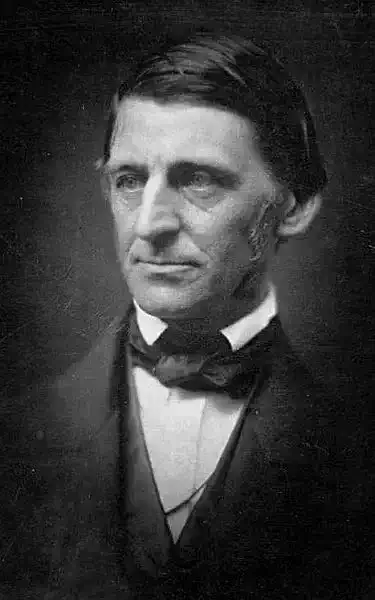
Ralph Waldo Emerson
The Forerunners
Long I followed happy guides,—
I could never reach their sides.
Their step is forth, and, ere the day,
Breaks up their leaguer, and away.
Keen my sense, my heart was young,
Right goodwill my sinews strung,
But no speed of mine avails
To hunt upon their shining trails.
On and away, their hasting feet
Make the morning proud and sweet.
Flowers they strew, I catch the scent,
Or tone of silver instrument
Leaves on the wind melodious trace,
Yet I could never see their face.
On eastern hills I see their smokes
Mixed with mist by distant lochs.
I meet many travellers
Who the road had surely kept,—
They saw not my fine revellers,—
These had crossed them while they slept.
Some had heard their fair report
In the country or the court.
Fleetest couriers alive
Never yet could once arrive,
As they went or they returned,
At the house where these sojourned.
Sometimes their strong speed they slacken,
Though they are not overtaken:
In sleep, their jubilant troop is near,
I tuneful voices overhear,
It may be in wood or waste,—
At unawares 'tis come and passed.
Their near camp my spirit knows
By signs gracious as rainbows.
I thenceforward and long after
Listen for their harplike laughter,
And carry in my heart for days
Peace that hallows rudest ways.—
299

Henry Lawson
Clinging Back
When you see a man come walking down through George Street loose and free,
Suit of saddle tweed and soft shirt, and a belt and cabbagetree,
With the careless swing and carriage, and the confidence you lack—
There is freedom in Australia! he’s a man that’s clinging back.
Clingin’ back,
Holdin’ back,
To the old things and the bold things clinging back.
When you see a woman riding as I saw one ride to-day
Down the street to Milson’s Ferry on a big, upstanding bay,
With her body gently swaying to the horse-shoes’ click-a-clack,
You might lift your hat (with caution)—she’s a girl who’s clinging back.
Clinging back,
Swinging back.
To the old things and the bold things clinging back.
When you see a rich man pulling on the harbour in a boat,
With the motor launches racing till they scarcely seem to float,
And the little skiff is lifting to his muscles tense and slack,
You say “Go it” to a sane man. He’s a man that’s clinging back.
Clinging back,
Swinging back,
To the old things and the bold things clinging back.
When you see two lovers strolling, arm-in-arm—or round the waist,
And they never seem to loiter, and they never seem to haste,
But indifferent to others take the rock or bush-hid track
You be sure about their future, they’re a pair that’s clinging back.
Clinging back,
Holding back,
To the old things and the bold things clinging back.
I, a weary picture writer in a time that’s cruel plain,
Have been clinging all too sadly to what shall not come again,
To what shall not come and should not! for the silver’s mostly black,
And the gold a dull red copper by the springs where I held back.
Clinging back,
Holding back,
To the old things and the cold things clinging back.
But if you should read a writer sending truths home every time,
While his every “point” goes ringing like the grandest prose in rhyme,
Though he writes the people’s grammar, and he spreads the people’s “clack,”
He is stronger than the Public! and he’ll jerk the mad world back.
Yank it back,
Hold it back,
For the love of little children hold it back.
300
James Whitcomb Riley
Let Us Forget
Let us forget. What matters it that we
Once reigned o'er happy realms of long-ago,
And talked of love, and let our voices low,
And ruled for some brief sessions royally?
What if we sung, or laughed, or wept maybe?
It has availed not anything, and so
Let it go by that we may better know
How poor a thing is lost to you and me.
But yesterday I kissed your lips, and yet
Did thrill you not enough to shake the dew
From your drenched lids--and missed, with no regret,
Your kiss shot back, with sharp breaths failing you;
And so, to-day, while our worn eyes are wet
With all this waste of tears, let us forget!
298

William Butler Yeats
The Living Beauty
I BADE, because the wick and oil are spent
And frozen are the channels of the blood,
My discontented heart to draw content
From beauty that is cast out of a mould
In bronze, or that in dazzling marble appears,
Appears, but when wc have gone is gone again,
Being more indifferent to our solitude
Than 'twere an apparition. O heart, we are old;
The living beauty is for younger men:
We cannot pay its rribute of wild tears.
297
James Whitcomb Riley
The Orchard Lands Of Long Ago
The orchard lands of Long Ago!
O drowsy winds, awake, and blow
The snowy blossoms back to me,
And all the buds that used to be!
Blow back along the grassy ways
Of truant feet, and lift the haze
Of happy summer from the trees
That trail their tresses in the seas
Of grain that float and overflow
The orchard lands of Long Ago!
Blow back the melody that slips
In lazy laughter from the lips
That marvel much if any kiss
Is sweeter than the apple's is.
Blow back the twitter of the birds--
The lisp, the titter, and the words
Of merriment that found the shine
Of summer-time a glorious wine
That drenched the leaves that loved it so,
In orchard lands of Long Ago!
O memory! alight and sing
Where rosy-bellied pippins cling,
And golden russets glint and gleam,
As, in the old Arabian dream,
The fruits of that enchanted tree
The glad Aladdin robbed for me!
And, drowsy winds, awake and fan
My blood as when it overran
A heart ripe as the apples grow
In orchard lands of Long Ago!
298

John Greenleaf Whittier
To James T. Fields
ON A BLANK LEAF OF 'POEMS PRINTED, NOT PUBLISHED.'
Well thought! who would not rather hear
The songs to Love and Friendship sung
Than those which move the stranger's tongue,
And feed his unselected ear?
Our social joys are more than fame;
Life withers in the public look.
Why mount the pillory of a book,
Or barter comfort for a name?
Who in a house of glass would dwell,
With curious eyes at every pane?
To ring him in and out again,
Who wants the public crier's bell?
To see the angel in one's way,
Who wants to play the ass's part,-Bear
on his back the wizard Art,
And in his service speak or bray?
And who his manly locks would shave,
And quench the eyes of common sense,
To share the noisy recompense
That mocked the shorn and blinded slave?
The heart has needs beyond the head,
And, starving in the plenitude
Of strange gifts, craves its common food,-Our
human nature's daily bread.
We are but men: no gods are we,
To sit in mid-heaven, cold and bleak,
Each separate, on his painful peak,
Thin-cloaked in self-complacency.
Better his lot whose axe is swung
In Wartburg woods, or that poor girl's
Who by the him her spindle whirls
And sings the songs that Luther sung,
Than his who, old, and cold, and vain,
At Weimar sat, a demigod,
And bowed with Jove's imperial nod
His votaries in and out again!
Ply, Vanity, thy winged feet!
Ambition, hew thy rocky stair!
Who envies him who feeds on air
The icy splendor of his seat?
I see your Alps, above me, cut
The dark, cold sky; and dim and lone
I see ye sitting,--stone on stone,-With
human senses dulled and shut.
I could not reach you, if I would,
Nor sit among your cloudy shapes;
And (spare the fable of the grapes
And fox) I would not if I could.
Keep to your lofty pedestals!
The safer plain below I choose
Who never wins can rarely lose,
Who never climbs as rarely falls.
Let such as love the eagle's scream
Divide with him his home of ice
For me shall gentler notes suffice,-The
valley-song of bird and stream;
The pastoral bleat, the drone of bees,
The flail-beat chiming far away,
The cattle-low, at shut of day,
The voice of God in leaf and breeze;
Then lend thy hand, my wiser friend,
And help me to the vales below,
(In truth, I have not far to go,)
Where sweet with flowers the fields extend.
298

D.H. Lawrence
Piano
Softly, in the dusk, a woman is singing to me;
Taking me back down the vista of years, till I see
A child sitting under the piano, in the boom of the tingling strings
And pressing the small, poised feet of a mother who smiles as she sings.
In spite of myself, the insidious mastery of song
Betrays me back, till the heart of me weeps to belong
To the old Sunday evenings at home, with winter outside
And hymns in the cosy parlour, the tinkling piano our guide.
So now it is vain for the singer to burst into clamour
With the great black piano appassionato. The glamour
Of childish days is upon me, my manhood is cast
Down in the flood of remembrance, I weep like a child for the past.
294
Henry Lawson
Old North Sydney
They're shifting old North Sydney—
Perhaps ’tis just as well—
They’re carting off the houses
Where the old folks used to dwell.
Where only ghosts inhabit
They lay the old shops low;
But the Spirit of North Sydney,
It vanished long ago.
The Spirit of North Sydney,
The good old time and style,
It camped, maybe, at Crow’s Nest,
But only for a while.
It left about the season,
Or at the time, perhaps,
When old Inspector Cotter
Transferred his jokes and traps.
A brand new crowd is thronging
The brand new streets aglow
Where the Spirit of North Sydney
Would gossip long ago.
They will not know to-morrow—
Tho’ ’twere but yesterday—
Exactly how McMahon’s Point
And its ferry used to lay.
The good old friendly spirit
Its sorrows would unfold,
When householders were neighbours
And shop-keeping was old;
But now we’re busy strangers,
Our feelings we restrain—
The Spirit of North Sydney
Shall never come again!
295
James Whitcomb Riley
Where The Children Used To Play
The old farm-home is Mother's yet and mine,
And filled it is with plenty and to spare--,
But we are lonely here in life's decline,
Though fortune smiles around us everywhere:
We look across the gold
Of the harvests, as of old--
The corn, the fragrant clover, and the hay;
But most we turn our gaze,
As with eyes of other days,
To the orchard where the children used to play.
O from our life's full measure
And rich hoard of worldly treasure
We often turn our weary eyes away,
And hand in hand we wander
Down the old path winding yonder
To the orchard where the children used to play.
Our sloping pasture-lands are filled with herds;
The barn and granary-bins are bulging o'ver;
The grove's a paradise of singing birds--
The woodland brook leaps laughing by the door;
Yet lonely, lonely still,
Let us prosper as we will,
Our old hearts seem so empty everyway--
We can only through a mist
See the faces we have kissed
In the orchard where the children used to play.
O from our life's full measure
And rich hoard of worldly treasure
We often turn our weary eyes away,
And hand in hand we wander
Down the old path winding yonder
To the orchard where the children used to play.
294
Emily Dickinson
One Year ago—jots what?
One Year ago—jots what?
God—spell the word! I—can't—
Was't Grace? Not that—
Was't Glory? That—will do—
Spell slower—Glory—
Such Anniversary shall be—
Sometimes—not often—in Eternity—
When farther Parted, than the Common Woe—
Look—feed upon each other's faces—so—
In doubtful meal, if it be possible
Their Banquet's true—
I tasted—careless—then—
I did not know the Wine
Came once a World—Did you?
Oh, had you told me so—
This Thirst would blister—easier—now—
You said it hurt you—most—
Mine—was an Acorn's Breast—
And could not know how fondness grew
In Shaggier Vest—
Perhaps—I couldn't—
But, had you looked in—
A Giant—eye to eye with you, had been—
No Acorn—then—
So—Twelve months ago—
We breathed—
Then dropped the Air—
Which bore it best?
Was this—the patientest—
Because it was a Child, you know—
And could not value—Air?
If to be "Elder"—mean most pain—
I'm old enough, today, I'm certain—then—
As old as thee—how soon?
One—Birthday more—or Ten?
Let me—choose!
Ah, Sir, None!
295

Robert W. Service
The Sewing-Girl
The humble garret where I dwell
Is in that Quarter called the Latin;
It isn't spacious -- truth to tell,
There's hardly room to swing a cat in.
But what of that! It's there I fight
For food and fame, my Muse inviting,
And all the day and half the night
You'll find me writing, writing, writing.
Now, it was in the month of May
As, wrestling with a rhyme rheumatic,
I chanced to look across the way,
And lo! within a neighbor attic,
A hand drew back the window shade,
And there, a picture glad and glowing,
I saw a sweet and slender maid,
And she was sewing, sewing, sewing.
So poor the room, so small, so scant,
Yet somehow oh, so bright and airy.
There was a pink geranium plant,
Likewise a very pert canary.
And in the maiden's heart it seemed
Some fount of gladness must be springing,
For as alone I sadly dreamed
I heard her singing, singing, singing.
God love her! how it cheered me then
To see her there so brave and pretty;
So she with needle, I with pen,
We slaved and sang above the city.
And as across my streams of ink
I watched her from a poet's distance,
She stitched and sang . . . I scarcely think
She was aware of my existence.
And then one day she sang no more.
That put me out, there's no denying.
I looked -- she labored as before,
But, bless me! she was crying, crying.
Her poor canary chirped in vain;
Her pink geranium drooped in sorrow;
"Of course," said I, "she'll sing again.
Maybe," I sighed, "she will to-morrow."
Poor child; 'twas finished with her song:
Day after day her tears were flowing;
And as I wondered what was wrong
She pined and peaked above her sewing.
And then one day the blind she drew,
Ah! though I sought with vain endeavor
To pierce the darkness, well I knew
My sewing-girl had gone for ever.
And as I sit alone to-night
My eyes unto her room are turning . . .
I'd give the sum of all I write
Once more to see her candle burning,
Once more to glimpse her happy face,
And while my rhymes of cheer I'm ringing,
Across the sunny sweep of space
To hear her singing, singing, singing.
295
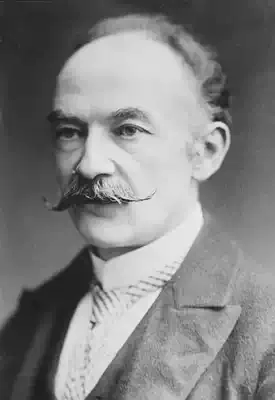
Thomas Hardy
A Spot
In years defaced and lost,
Two sat here, transport-tossed,
Lit by a living love
The wilted world knew nothing of:
Scared momently
By gaingivings,
Then hoping things
That could not be.
Of love and us no trace
Abides upon the place;
The sun and shadows wheel,
Season and season sereward steal;
Foul days and fair
Here, too, prevail,
And gust and gale
As everywhere.
But lonely shepherd souls
Who bask amid these knolls
May catch a faery sound
On sleepy noontides from the ground:
"O not again
Till Earth outwears
Shall love like theirs
Suffuse this glen!"
294

Henry Wadsworth Longfellow
The Haunted Chamber. (Birds Of Passage. Flight The Third)
Each heart has its haunted chamber,
Where the silent moonlight falls!
On the floor are mysterious footsteps,
There are whispers along the walls!
And mine at times is haunted
By phantoms of the Past
As motionless as shadows
By the silent moonlight cast.
A form sits by the window,
That is not seen by day,
For as soon as the dawn approaches
It vanishes away.
It sits there in the moonlight
Itself as pale and still,
And points with its airy finger
Across the window-sill.
Without before the window,
There stands a gloomy pine,
Whose boughs wave upward and downward
As wave these thoughts of mine.
And underneath its branches
Is the grave of a little child,
Who died upon life's threshold,
And never wept nor smiled.
What are ye, O pallid phantoms!
That haunt my troubled brain?
That vanish when day approaches,
And at night return again?
What are ye, O pallid phantoms!
But the statues without breath,
That stand on the bridge overarching
The silent river of death?
293
James Whitcomb Riley
A Spring Song And A Later
She sang a song of May for me,
Wherein once more I heard
The mirth of my glad infancy--
The orchard's earliest bird--
The joyous breeze among the trees
New-clad in leaf and bloom,
And there the happy honey-bees
In dewy gleam and gloom.
So purely, sweetly on the sense
Of heart and spirit fell
Her song of Spring, its influence--
Still irresistible,--
Commands me here--with eyes ablur--
To mate her bright refrain.
Though I but shed a rhyme for her
As dim as Autumn rain.
293
James Whitcomb Riley
The Old Year And The New
I.
As one in sorrow looks upon
The dead face of a loyal friend,
By the dim light of New Year's dawn
I saw the Old Year end.
Upon the pallid features lay
The dear old smile--so warm and bright
Ere thus its cheer had died away
In ashes of delight.
The hands that I had learned to love
With strength of passion half divine,
Were folded now, all heedless of
The emptiness of mine.
The eyes that once had shed their bright
Sweet looks like sunshine, now were dull,
And ever lidded from the light
That made them beautiful.
II.
The chimes of bells were in the air,
And sounds of mirth in hall and street,
With pealing laughter everywhere
And throb of dancing feet:
The mirth and the convivial din
Of revelers in wanton glee,
With tunes of harp and violin
In tangled harmony.
But with a sense of nameless dread,
I turned me, from the merry face
Of this newcomer, to my dead;
And, kneeling there a space,
I sobbed aloud, all tearfully:--
By this dear face so fixed and cold,
O Lord, let not this New Year be
As happy as the old!
293