
Nostalgia

William Butler Yeats
The Meditation Of The Old Fisherman
YOU waves, though you dance by my feet like children at play,
Though you glow and you glance, though you purr and you dart;
In the Junes that were warmer than these are, the waves were more gay,
When I was a boy with never a crack in my heart.
The herring are not in the tides as they were of old;
My sorrow! for many a creak gave the creel in the-cart
That carried the take to Sligo town to be sold,
When I was a boy with never a crack in my heart.
And ah, you proud maiden, you are not so fair when his oar
Is heard on the water, as they were, the proud and apart,
Who paced in the eve by the nets on the pebbly shore,
When I was a boy with never a crack in my heart.
321

Henry Wadsworth Longfellow
The Golden Mile-Stone. (Birds Of Passage. Flight The First)
Leafless are the trees; their purple branches
Spread themselves abroad, like reefs of coral,
Rising silent
In the Red Sea of the winter sunset.
From the hundred chimneys of the village,
Like the Afreet in the Arabian story,
Smoky columns
Tower aloft into the air of amber.
At the window winks the flickering fire-light;
Here and there the lamps of evening glimmer,
Social watch-fires
Answering one another through the darkness.
On the hearth the lighted logs are glowing,
And like Ariel in the cloven pine-tree
For its freedom
Groans and sighs the air imprisoned in them.
By the fireside there are old men seated,
Seeing ruined cities in the ashes,
Asking sadly
Of the Past what it can ne'er restore them.
By the fireside there are youthful dreamers,
Building castles fair, with stately stairways,
Asking blindly
Of the Future what it cannot give them.
By the fireside tragedies are acted
In whose scenes appear two actors only,
Wife and husband,
And above them God the sole spectator.
By the fireside there are peace and comfort,
Wives and children, with fair, thoughtful faces,
Waiting, watching
For a well-known footstep in the passage.
Each man's chimney is his Golden Mile-Stone;
Is the central point, from which he measures
Every distance
Through the gateways of the world around him.
In his farthest wanderings still he sees it;
Hears the talking flame, the answering night-wind,
As he heard them
When he sat with those who were, but are not.
Happy he whom neither wealth nor fashion,
Nor the march of the encroaching city,
Drives an exile
From the hearth of his ancestral homestead.
We may build more splendid habitations,
Fill our rooms with paintings and with sculptures,
But we cannot
Buy with gold the old associations!
321

Carl Sandburg
The Has-Been
A stone face higher than six horses stood five thousand years gazing at the world
seeming to clutch a secret.
A boy passes and throws a niggerhead that chips off the end of the nose from the
stone face; he lets fly a mud ball that spatters the right eye and cheek of the old
looker-on.
The boy laughs and goes whistling “ee-ee-ee ee-ee-ee.” The stone face stands silent,
seeming to clutch a secret.
seeming to clutch a secret.
A boy passes and throws a niggerhead that chips off the end of the nose from the
stone face; he lets fly a mud ball that spatters the right eye and cheek of the old
looker-on.
The boy laughs and goes whistling “ee-ee-ee ee-ee-ee.” The stone face stands silent,
seeming to clutch a secret.
318

John Greenleaf Whittier
The Countess
TO E. W.
I KNOW not, Time and Space so intervene,
Whether, still waiting with a trust serene,
Thou bearest up thy fourscore years and ten,
Or, called at last, art now Heaven's citizen;
But, here or there, a pleasant thought of thee,
Like an old friend, all day has been with me.
The shy, still boy, for whom thy kindly hand
Smoothed his hard pathway to the wonder-land
Of thought and fancy, in gray manhood yet
Keeps green the memory of his early debt.
To-day, when truth and falsehood speak their words
Through hot-lipped cannon and the teeth of swords,
Listening with quickened heart and ear intent
To each sharp clause of that stern argument,
I still can hear at times a softer note
Of the old pastoral music round me float,
While through the hot gleam of our civil strife
Looms the green mirage of a simpler life.
As, at his alien post, the sentinel
Drops the old bucket in the homestead well,
And hears old voices in the winds that toss
Above his head the live-oak's beard of moss,
So, in our trial-time, and under skies
Shadowed by swords like Islam's paradise,
I wait and watch, and let my fancy stray
To milder scenes and youth's Arcadian day;
And howsoe'er the pencil dipped in dreams
Shades the brown woods or tints the sunset streams,
The country doctor in the foreground seems,
Whose ancient sulky down the village lanes
Dragged, like a war-car, captive ills and pains.
I could not paint the scenery of my song,
Mindless of one who looked thereon so long;
Who, night and day, on duty's lonely round,
Made friends o' the woods and rocks, and knew the sound
Of each small brook, and what the hillside trees
Said to the winds that touched their leafy keys;
Who saw so keenly and so well could paint
The village-folk, with all their humors quaint,
The parson ambling on his wall-eyed roan.
Grave and erect, with white hair backward blown;
The tough old boatman, half amphibious grown;
The muttering witch-wife of the gossip's tale,
And the loud straggler levying his blackmail,-Old
customs, habits, superstitions, fears,
All that lies buried under fifty years.
To thee, as is most fit, I bring my lay,
And, grateful, own the debt I cannot pay.
. . . . . . . . . .
Over the wooded northern ridge,
Between its houses brown,
To the dark tunnel of the bridge
The street comes straggling down.
You catch a glimpse, through birch and pine,
Of gable, roof, and porch,
The tavern with its swinging sign,
The sharp horn of the church.
The river's steel-blue crescent curves
To meet, in ebb and flow,
The single broken wharf that serves
For sloop and gundelow.
With salt sea-scents along its shores
The heavy hay-boats crawl,
The long antennae of their oars
In lazy rise and fall.
Along the gray abutment's wall
The idle shad-net dries;
The toll-man in his cobbler's stall
Sits smoking with closed eyes.
You hear the pier's low undertone
Of waves that chafe and gnaw;
You start,--a skipper's horn is blown
To raise the creaking draw.
At times a blacksmith's anvil sounds
With slow and sluggard beat,
Or stage-coach on its dusty rounds
Fakes up the staring street.
A place for idle eyes and ears,
A cobwebbed nook of dreams;
Left by the stream whose waves are years
The stranded village seems.
And there, like other moss and rust,
The native dweller clings,
And keeps, in uninquiring trust,
The old, dull round of things.
The fisher drops his patient lines,
The farmer sows his grain,
Content to hear the murmuring pines
Instead of railroad-train.
Go where, along the tangled steep
That slopes against the west,
The hamlet's buried idlers sleep
In still profounder rest.
Throw back the locust's flowery plume,
The birch's pale-green scarf,
And break the web of brier and bloom
From name and epitaph.
A simple muster-roll of death,
Of pomp and romance shorn,
The dry, old names that common breath
Has cheapened and outworn.
Yet pause by one low mound, and part
The wild vines o'er it laced,
And read the words by rustic art
Upon its headstone traced.
Haply yon white-haired villager
Of fourscore years can say
What means the noble name of her
Who sleeps with common clay.
An exile from the Gascon land
Found refuge here and rest,
And loved, of all the village band,
Its fairest and its best.
He knelt with her on Sabbath morns,
He worshipped through her eyes,
And on the pride that doubts and scorns
Stole in her faith's surprise.
Her simple daily life he saw
By homeliest duties tried,
In all things by an untaught law
Of fitness justified.
For her his rank aside he laid;
He took the hue and tone
Of lowly life and toil, and made
Her simple ways his own.
Yet still, in gay and careless ease,
To harvest-field or dance
He brought the gentle courtesies,
The nameless grace of France.
And she who taught him love not less
From him she loved in turn
Caught in her sweet unconsciousness
What love is quick to learn.
Each grew to each in pleased accord,
Nor knew the gazing town
If she looked upward to her lord
Or he to her looked down.
How sweet, when summer's day was o'er,
His violin's mirth and wail,
The walk on pleasant Newbury's shore,
The river's moonlit sail!
Ah! life is brief, though love be long;
The altar and the bier,
The burial hymn and bridal song,
Were both in one short year!
Her rest is quiet on the hill,
Beneath the locust's bloom
Far off her lover sleeps as still
Within his scutcheoned tomb.
The Gascon lord, the village maid,
In death still clasp their hands;
The love that levels rank and grade
Unites their severed lands.
What matter whose the hillside grave,
Or whose the blazoned stone?
Forever to her western wave
Shall whisper blue Garonne!
O Love!--so hallowing every soil
That gives thy sweet flower room,
Wherever, nursed by ease or toil,
The human heart takes bloom!-
Plant of lost Eden, from the sod
Of sinful earth unriven,
White blossom of the trees of God
Dropped down to us from heaven!
This tangled waste of mound and stone
Is holy for thy sale;
A sweetness which is all thy own
Breathes out from fern and brake.
And while ancestral pride shall twine
The Gascon's tomb with flowers,
Fall sweetly here, O song of mine,
With summer's bloom and showers!
And let the lines that severed seem
Unite again in thee,
As western wave and Gallic stream
Are mingled in one sea!
317
John Greenleaf Whittier
A Memory
Here, while the loom of Winter weaves
The shroud of flowers and fountains,
I think of thee and summer eves
Among the Northern mountains.
When thunder tolled the twilight's close,
And winds the lake were rude on,
And thou wert singing, _Ca' the Yowes_,
The bonny yowes of Cluden!
When, close and closer, hushing breath,
Our circle narrowed round thee,
And smiles and tears made up the wreath
Wherewith our silence crowned thee;
And, strangers all, we felt the ties
Of sisters and of brothers;
Ah! whose of all those kindly eyes
Now smile upon another's?
The sport of Time, who still apart
The waifs of life is flinging;
Oh, nevermore shall heart to heart
Draw nearer for that singing!
Yet when the panes are frosty-starred,
And twilight's fire is gleaming,
I hear the songs of Scotland's bard
Sound softly through my dreaming!
A song that lends to winter snows
The glow of summer weather,-Again
I hear thee ca' the yowes
To Cluden's hills of heather
319
John Greenleaf Whittier
To My Sister
WITH A COPY OF 'THE SUPERNATURALISM OF NEW ENGLAND.'
Dear Sister! while the wise and sage
Turn coldly from my playful page,
And count it strange that ripened age
Should stoop to boyhood's folly;
I know that thou wilt judge aright
Of all which makes the heart more light,
Or lends one star-gleam to the night
Of clouded Melancholy.
Away with weary cares and themes!
Swing wide the moonlit gate of dreams!
Leave free once more the land which teems
With wonders and romances
Where thou, with clear discerning eyes,
Shalt rightly read the truth which lies
Beneath the quaintly masking guise
Of wild and wizard fancies.
Lo! once again our feet we set
On still green wood-paths, twilight wet,
By lonely brooks, whose waters fret
The roots of spectral beeches;
Again the hearth-fire glimmers o'er
Home's whitewashed wall and painted floor,
And young eyes widening to the lore
Of faery-folks and witches.
Dear heart! the legend is not vain
Which lights that holy hearth again,
And calling back from care and pain,
And death's funereal sadness,
Draws round its old familiar blaze
The clustering groups of happier days,
And lends to sober manhood's gaze
A glimpse of childish gladness.
And, knowing how my life hath been
A weary work of tongue and pen,
A long, harsh strife with strong-willed men,
Thou wilt not chide my turning
To con, at times, an idle rhyme,
To pluck a flower from childhood's clime,
Or listen, at Life's noonday chime,
For the sweet bells of Morning!
316

Christina Rossetti
Autumn Violets
Keep love for youth, and violets for the spring:
Of if these bloom when worn-out autumn grieves,
Let them lie hid in double shade of leaves,
Their own, and others dropped down withering;
For violets suit when home birds build and sing,
Not when the outbound bird a passage cleaves;
Not with dry stubble of mown harvest sheaves,
But when the green world buds to blossoming.
Keep violets for the spring, and love for youth,
Love that should dwell with beauty, mirth, and hope:
Or if a later sadder love be born,
Let this not look for grace beyond its scope,
But give itself, nor plead for answering truth—
A grateful Ruth tho' gleaning scanty corn.
315
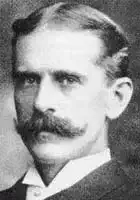
Henry Van Dyke
Autumn in the Garden
When the frosty kiss of Autumn in the dark
Makes its mark
On the flowers, and the misty morning grieves
Over fallen leaves;
Then my olden garden, where the golden soil
Through the toil
Of a hundred years is mellow, rich, and deep,
Whispers in its sleep.
'Mid the crumpled beds of marigold and phlox,
Where the box
Borders with its glossy green the ancient walks,
There's a voice that talks
Of the human hopes that bloomed and withered here
Year by year,--
Dreams of joy, that brightened all the labouring hours,
Fading as the flowers.
Yet the whispered story does not deepen grief;
But relief
For the loneliness of sorrow seems to flow
From the Long-Ago,
When I think of other lives that learned, like mine,
To resign,
And remember that the sadness of the fall
Comes alike to all.
What regrets, what longings for the lost were theirs!
And what prayers
For the silent strength that nerves us to endure
Things we cannot cure!
Pacing up and down the garden where they paced,
I have traced
All their well-worn paths of patience, till I find
Comfort in my mind.
Faint and far away their ancient griefs appear:
Yet how near
Is the tender voice, the careworn, kindly face,
Of the human race!
Let us walk together in the garden, dearest heart,
Not apart!
They who know the sorrows other lives have known
Never walk alone.
316
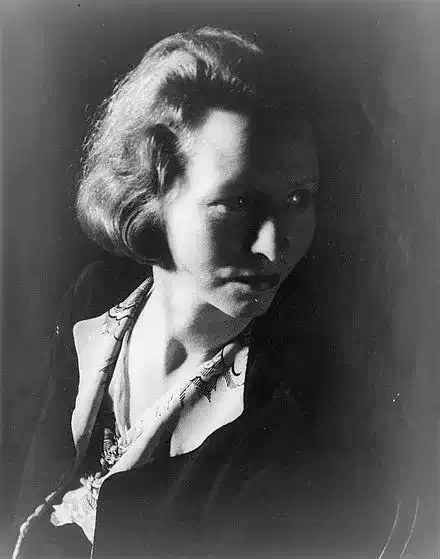
Edna St. Vincent Millay
Pity Me Not Because The Light Of Day
Pity me not because the light of day
At close of day no longer walks the sky;
Pity me not for beauties passed away
From field and thicket as the the year goes by;
Pity me not the waning of the moon,
Nor that the ebbing tide goes out to sea,
Nor that a man's desire is hushed so soon,
And you no longer look with love on me.
This have I known always: Love is no more
Than the wide blossom which the wind assails,
Than the great tide that treads the shifting shore,
Strewing fresh wreckage gathered in the gales:
Pity me that the heart is slow to learn
What the swift mind beholds at ever turn.
314

Claude Mckay
The Tropics in New York
Bananas ripe and green, and ginger-root,
Cocoa in pods and alligator pears,
And tangerines and mangoes and grape fruit,
Fit for the highest prize at parish fairs,
Set in the window, bringing memories
Of fruit-trees laden by low-singing rills,
And dewy dawns, and mystical blue skies
In benediction over nun-like hills.
My eyes grew dim, and I could no more gaze;
A wave of longing through my body swept,
And, hungry for the old, familiar ways,
I turned aside and bowed my head and wept.
312
John Greenleaf Whittier
The Wood Giant
From Alton Bay to Sandwich Dome,
From Mad to Saco river,
For patriarchs of the primal wood
We sought with vain endeavor.
And then we said: 'The giants old
Are lost beyond retrieval;
This pygmy growth the axe has spared
Is not the wood primeval.
'Look where we will o'er vale and hill,
How idle are our searches
For broad-girthed maples, wide-limbed oaks,
Centennial pines and birches.
'Their tortured limbs the axe and saw
Have changed to beams and trestles;
They rest in walls, they float on seas,
They rot in sunken vessels.
'This shorn and wasted mountain land
Of underbrush and boulder,-Who
thinks to see its full-grown tree
Must live a century older.'
At last to us a woodland path,
To open sunset leading,
Revealed the Anakim of pines
Our wildest wish exceeding.
Alone, the level sun before;
Below, the lake's green islands;
Beyond, in misty distance dim,
The rugged Northern Highlands.
Dark Titan on his Sunset Hill
Of time and change defiant
How dwarfed the common woodland seemed,
Before the old-time giant!
What marvel that, in simpler days
Of the world's early childhood,
Men crowned with garlands, gifts, and praise
Such monarchs of the wild-wood?
That Tyrian maids with flower and song
Danced through the hill grove's spaces,
And hoary-bearded Druids found
In woods their holy places?
With somewhat of that Pagan awe
With Christian reverence blending,
We saw our pine-tree's mighty arms
Above our heads extending.
We heard his needles' mystic rune,
Now rising, and now dying,
As erst Dodona's priestess heard
The oak leaves prophesying.
Was it the half-unconscious moan
Of one apart and mateless,
The weariness of unshared power,
The loneliness of greatness?
O dawns and sunsets, lend to him
Your beauty and your wonder!
Blithe sparrow, sing thy summer song
His solemn shadow under!
Play lightly on his slender keys,
O wind of summer, waking
For hills like these the sound of seas
On far-off beaches breaking,
And let the eagle and the crow
Find shelter in his branches,
When winds shake down his winter snow
In silver avalanches.
The brave are braver for their cheer,
The strongest need assurance,
The sigh of longing makes not less
The lesson of endurance.
311

Henry Lawson
My Father-in-Law and I
MY father-in-law is a careworn man,
And a silent man is he;
But he summons a smile as well as he can
Whenever he meets with me.
The sign we make with a silent shake
That speaks of the days gone by—
Like men who meet at a funeral—
My father-in-law and I.
My father-in-law is a sober man
(And a virtuous man, I think);
But we spare a shilling whenever we can,
And we both drop in for a drink.
Our pints they fill, and we say, “Ah, well!”
With the sound of the world-old sigh—
Like the drink that comes after a funeral—
My father-in-law and I.
My father-in-law is a kindly man—
A domestic man is he.
He tries to look cheerful as well as he can
Whenever he meets with me.
But we stand and think till the second drink
In a silence that might imply
That we’d both get over a funeral,
My father-in-law and I.
311
John Greenleaf Whittier
A Welcome To Lowell
Take our hands, James Russell Lowell,
Our hearts are all thy own;
To-day we bid thee welcome
Not for ourselves alone.
In the long years of thy absence
Some of us have grown old,
And some have passed the portals
Of the Mystery untold;
For the hands that cannot clasp thee,
For the voices that are dumb,
For each and all I bid thee
A grateful welcome home!
For Cedarcroft's sweet singer
To the nine-fold Muses dear;
For the Seer the winding Concord
Paused by his door to hear;
For him, our guide and Nestor,
Who the march of song began,
The white locks of his ninety years
Bared to thy winds, Cape Ann!
For him who, to the music
Her pines and hemlocks played,
Set the old and tender story
Of the lorn Acadian maid;
For him, whose voice for freedom
Swayed friend and foe at will,
Hushed is the tongue of silver,
The golden lips are still!
For her whose life of duty
At scoff and menace smiled,
Brave as the wife of Roland,
Yet gentle as a Child.
And for him the three-hilled city
Shall hold in memory long,
Those name is the hint and token
Of the pleasant Fields of Song!
For the old friends unforgotten,
For the young thou hast not known,
I speak their heart-warm greeting;
Come back and take thy own!
From England's royal farewells,
And honors fitly paid,
Come back, dear Russell Lowell,
To Elmwood's waiting shade!
Come home with all the garlands
That crown of right thy head.
I speak for comrades living,
I speak for comrades dead!
312
Henry Wadsworth Longfellow
In The Harbour: From The French
Will ever the dear days come back again,
Those days of June, when lilacs were in bloom,
And bluebirds sang their sonnets in the gloom
Of leaves that roofed them in from sun or rain?
I know not; but a presence will remain
For ever and for ever in this room,
Formless, diffused in air, like a perfume,--
A phantom of the heart, and not the brain.
Delicious days! when every spoken word
Was like a foot-fall nearer and more near
And a mysterious knocking at the gate
Of the heart's secret places, and we heard
In the sweet tumult of delight and fear
A voice that whispered, 'Open, I cannot wait!'
310

James Whitcomb Riley
A Song Of Long Ago
A song of Long Ago:
Sing it lightly--sing it low--
Sing it softly--like the lisping of the lips we used to know
When our baby-laughter spilled
From the glad hearts ever filled
With music blithe as robin ever trilled!
Let the fragrant summer-breeze,
And the leaves of locust-trees,
And the apple-buds and blossoms, and the wings of honey-bees,
All palpitate with glee,
Till the happy harmony
Brings back each childish joy to you and me.
Let the eyes of fancy turn
Where the tumbled pippins burn
Like embers in the orchard's lap of tangled grass and fern,--
There let the old path wind
In and out and on behind
The cider-press that chuckles as we grind.
Blend in the song the moan
Of the dove that grieves alone,
And the wild whir of the locust, and the bumble's drowsy drone;
And the low of cows that call
Through the pasture-bars when all
The landscape fades away at evenfall.
Then, far away and clear,
Through the dusky atmosphere,
Let the wailing of the kildee be the only sound we hear:
O sad and sweet and low
As the memory may know
Is the glad-pathetic song of Long Ago!
310
James Whitcomb Riley
A Tale Of The Airly Days
Oh! tell me a tale of the airly days--
Of the times as they ust to be;
'Piller of Fi-er' and 'Shakespeare's Plays'
Is a' most too deep fer me!
I want plane facts, and I want plane words,
Of the good old-fashioned ways,
When speech run free as the songs of birds
'Way back in the airly days.
Tell me a tale of the timber-lands--
Of the old-time pioneers;
Somepin' a pore man understands
With his feelins's well as ears.
Tell of the old log house,--about
The loft, and the puncheon flore--
The old fi-er-place, with the crane swung out,
And the latch-string thrugh the door.
Tell of the things jest as they was--
They don't need no excuse!-Don't
tech 'em up like the poets does,
Tel theyr all too fine fer use!--
Say they was 'leven in the fambily--
Two beds, and the chist, below,
And the trundle-beds that each helt three,
And the clock and the old bureau.
Then blow the horn at the old back-door
Tel the echoes all halloo,
And the childern gethers home onc't more,
Jest as they ust to do:
Blow fer Pap tel he hears and comes,
With Tomps and Elias, too,
A-marchin' home, with the fife and drums
And the old Red White and Blue!
Blow and blow tel the sound draps low
As the moan of the whipperwill,
And wake up Mother, and Ruth and Jo,
All sleepin' at Bethel Hill:
Blow and call tel the faces all
Shine out in the back-log's blaze,
And the shadders dance on the old hewed wall
As they did in the airly days.
308
James Whitcomb Riley
Wash Lowry's Reminiscence
And you're the poet of this concern?
I've seed your name in print
A dozen times, but I'll be dern
I'd 'a' never 'a' took the hint
O' the size you are--fer I'd pictured you
A kind of a tallish man-Dark-
complected and sallor too,
And on the consumpted plan.
'Stid o' that you're little and small,
With a milk-and-water face-'
Thout no snap in your eyes at all,
Er nothin' to suit the case!
Kind o'look like a--I don't know--
One o' these fair-ground chaps
That runs a thingamajig to blow,
Er a candy-stand perhaps.
'Ll I've allus thought that poetry
Was a sort of a--some disease--
Fer I knowed a poet once, and he
Was techy and hard to please,
And moody-like, and kindo' sad
And didn't seem to mix
With other folks--like his health was bad,
Er his liver out o' fix.
Used to teach fer a livelihood-There's
folks in Pipe Crick yit
Remembers him--and he was good
At cipherin' I'll admit--
And posted up in G'ography
But when it comes to tact,
And gittin' along with the school, you see,
He fizzled, and that's a fact!
Boarded with us fer fourteen months
And in all that time I'll say
We never catched him a-sleepin' once
Er idle a single day.
But shucks! It made him worse and worse
A-writin' rhymes and stuff,
And the school committee used to furse
'At the school warn't good enough.
He warn't as strict as he ought to been,
And never was known to whip,
Or even to keep a scholard in
At work at his penmanship;
'Stid o' that he'd learn 'em notes,
And have 'em every day,
Spilin' hymns and a-splittin' th'oats
With his 'Do-sol-fa-me-ra!'
Tel finally it was jest agreed
We'd have to let him go,
And we all felt bad--we did indeed,
When we come to tell him so;
Fer I remember, he turned so white,
And smiled so sad, somehow,
I someway felt it wasn't right,
And I'm shore it wasn't now!
He hadn't no complaints at all--
He bid the school adieu,
And all o' the scholards great and small
Was mighty sorry too!
And when he closed that afternoon
They sung some lines that he
Had writ a purpose, to some old tune
That suited the case, you see.
And then he lingered and delayed
And wouldn't go away--
And shet himself in his room and stayed
A-writin' from day to day;
And kep' a-gittin' stranger still,
And thinner all the time,
You know, as any feller will
On nothin' else but rhyme.
He didn't seem adzactly right,
Er like he was crossed in love,
He'd work away night after night,
And walk the floor above;
We'd hear him read and talk, and sing
So lonesome-like and low,
My woman's cried like ever'thing-'
Way in the night, you know.
And when at last he tuck to bed
He'd have his ink and pen;
'So's he could coat the muse' he said,
'He'd die contented then';
And jest before he past away
He read with dyin' gaze
The epitaph that stands to-day
To show you where he lays.
And ever sence then I've allus thought
That poetry's some disease,
And them like you that's got it ought
To watch their q's and p's ;
And leave the sweets of rhyme, to sup
On the wholesome draughts of toil,
And git your health recruited up
By plowin' in rougher soil.
309

Emily Jane Brontë
R. Alcona to J. Brenzaida
Cold in the earth, and the deep snow piled above thee!
Far, far removed, cold in the dreary grave!
Have I forgot, my Only Love, to love thee,
Severed at last by Time's all-wearing wave?
Now, when alone, do my thoughts no longer hover
Over the mountains on Angora's shore;
Resting their wings where heath and fern-leaves cover
That noble heart for ever, ever more?
Cold in the earth, and fifteen wild Decembers
From those brown hills have melted into spring--
Faithful indeed is the spirit that remembers
After such years of change and suffering!
Sweet Love of youth, forgive if I forget thee
While the World's tide is bearing me along:
Sterner desires and darker hopes beset me,
Hopes which obscure but cannot do thee wrong.
No other Sun has lightened up my heaven;
No other Star has ever shone for me:
All my life's bliss from thy dear life was given
All my life's bliss is in the grave with thee.
But when the days of golden dreams had perished
And even Despair was powerless to destroy,
Then did I learn how existence could be cherished,
Strengthened and fed without the aid of joy;
Then did I check the tears of useless passion,
Weaned my young soul from yearning after thine;
Sternly denied its burning wish to hasten
Down to that tomb already more than mine!
And even yet, I dare not let it languish,
Dare not indulge in Memory's rapturous pain;
Once drinking deep of that divinest anguish,
How could I seek the empty world again?
(March 3, 1845)
308
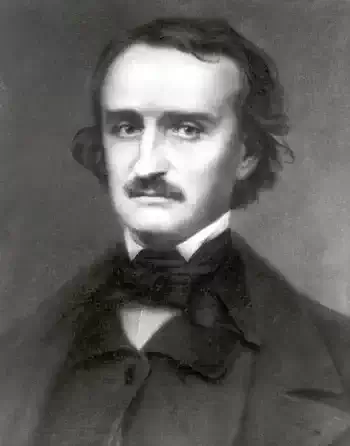
Edgar Allan Poe
To Helen - 1848
I saw thee once- once only- years ago:
I must not say how many- but not many.
It was a July midnight; and from out
A full-orbed moon, that, like thine own soul, soaring,
Sought a precipitate pathway up through heaven,
There fell a silvery-silken veil of light,
With quietude, and sultriness, and slumber,
Upon the upturned faces of a thousand
Roses that grew in an enchanted garden,
Where no wind dared to stir, unless on tiptoe-
Fell on the upturn'd faces of these roses
That gave out, in return for the love-light,
Their odorous souls in an ecstatic death-
Fell on the upturn'd faces of these roses
That smiled and died in this parterre, enchanted
By thee, and by the poetry of thy presence.
Clad all in white, upon a violet bank
I saw thee half reclining; while the moon
Fell on the upturn'd faces of the roses,
And on thine own, upturn'd- alas, in sorrow!
Was it not Fate, that, on this July midnight-
Was it not Fate, (whose name is also Sorrow,)
That bade me pause before that garden-gate,
To breathe the incense of those slumbering roses?
No footstep stirred: the hated world an slept,
Save only thee and me. (Oh, Heaven!- oh, God!
How my heart beats in coupling those two words!)
Save only thee and me. I paused- I looked-
And in an instant all things disappeared.
(Ah, bear in mind this garden was enchanted!)
The pearly lustre of the moon went out:
The mossy banks and the meandering paths,
The happy flowers and the repining trees,
Were seen no more: the very roses' odors
Died in the arms of the adoring airs.
All- all expired save thee- save less than thou:
Save only the divine light in thine eyes-
Save but the soul in thine uplifted eyes.
I saw but them- they were the world to me!
I saw but them- saw only them for hours,
Saw only them until the moon went down.
What wild heart-histories seemed to he enwritten
Upon those crystalline, celestial spheres!
How dark a woe, yet how sublime a hope!
How silently serene a sea of pride!
How daring an ambition; yet how deep-
How fathomless a capacity for love!
But now, at length, dear Dian sank from sight,
Into a western couch of thunder-cloud;
And thou, a ghost, amid the entombing trees
Didst glide away. Only thine eyes remained;
They would not go- they never yet have gone;
Lighting my lonely pathway home that night,
They have not left me (as my hopes have) since;
They follow me- they lead me through the years.
They are my ministers- yet I their slave.
Their office is to illumine and enkindle-
My duty, to be saved by their bright light,
And purified in their electric fire,
And sanctified in their elysian fire.
They fill my soul with Beauty (which is Hope),
And are far up in Heaven- the stars I kneel to
In the sad, silent watches of my night;
While even in the meridian glare of day
I see them still- two sweetly scintillant
Venuses, unextinguished by the sun!
306

Ogden Nash
Children's Party
May I join you in the doghouse, Rover?
I wish to retire till the party's over.
Since three o'clock I've done my best
To entertain each tiny guest. My conscience now I've left behind me,
And if they want me, let them find me.
I blew their bubbles, I sailed their boats,
I kept them from each other's throats. I told them tales of magic lands,
I took them out to wash their hands.
I sorted their rubbers and tied their laces,
I wiped their noses and dried their faces. Of similarities there's lots
Twixt tiny tots and Hottentots.
I've earned repose to heal the ravages
Of these angelic-looking savages. Oh, progeny playing by itself
Is a lonely little elf,
But progeny in roistering batches
Would drive St. francis from here to Natchez. Shunned are the games a parent
proposes,
They prefer to squirt each other with hoses,
Their playmates are their natural foemen
And they like to poke each other's abdomen. Their joy needs another woe's to cushion
it,
Say a puddle, and someone littler to push in it.
They observe with glee the ballistic results
Of ice cream with spoons for catapults, And inform the assembly with tears and glares
That everyone's presents are better than theirs.
Oh, little women and little men,
Someday I hope to love you again, But not till after the party's over,
So give me the key to the doghouse, Rover
307
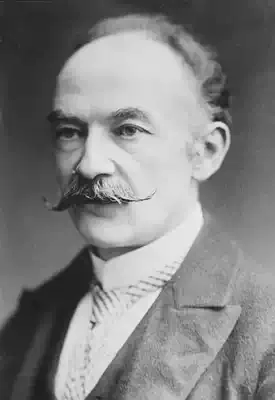
Thomas Hardy
An Ancient to Ancients
Where once we danced, where once we sang,
Gentlemen,
The floors are sunken, cobwebs hang,
And cracks creep; worms have fed upon
The doors. Yea, sprightlier times were then
Than now, with harps and tabrets gone,
Gentlemen!
Where once we rowed, where once we sailed,
Gentlemen,
And damsels took the tiller, veiled
Against too strong a stare (God wot
Their fancy, then or anywhen!)
Upon that shore we are clean forgot,
Gentlemen!
We have lost somewhat of that, afar and near,
Gentlemen,
The thinning of our ranks each year
Affords a hint we are nigh undone,
That shall not be ever again
The marked of many, loved of one,
Gentlemen.
In dance the polka hit our wish,
Gentlemen,
The paced quadrille, the spry schottische,
"Sir Roger."--And in opera spheres
The "Girl" (the famed "Bohemian"),
And "Trovatore" held the ears,
Gentlemen.
This season's paintings do not please,
Gentlemen
Like Etty, Mulready, Maclise;
Throbbing romance had waned and wanned;
No wizard wields the witching pen
Of Bulwer, Scott, Dumas, and Sand,
Gentlemen.
The bower we shrined to Tennyson,
Gentlemen,
Is roof-wrecked; damps there drip upon
Sagged seats, the creeper-nails are rust,
The spider is sole denizen;
Even she who voiced those rhymes is dust,
Gentlemen!
We who met sunrise sanguine-souled,
Gentlemen,
Are wearing weary. We are old;
These younger press; we feel our rout
Is imminent to Aïdes' den,--
That evening shades are stretching out,
Gentlemen!
And yet, though ours be failing frames,
Gentlemen,
So were some others' history names,
Who trode their track light-limbed and fast
As these youth, and not alien
From enterprise, to their long last,
Gentlemen.
Sophocles, Plato, Socrates,
Gentlemen,
Pythagoras, Thucydides,
Herodotus, and Homer,--yea,
Clement, Augustin, Origen,
Burnt brightlier towards their setting-day,
Gentlemen.
And ye, red-lipped and smooth-browed; list,
Gentlemen;
Much is there waits you we have missed;
Much lore we leave you worth the knowing,
Much, much has lain outside our ken;
Nay, rush not: time serves: we are going,
Gentlemen.
Gentlemen,
The floors are sunken, cobwebs hang,
And cracks creep; worms have fed upon
The doors. Yea, sprightlier times were then
Than now, with harps and tabrets gone,
Gentlemen!
Where once we rowed, where once we sailed,
Gentlemen,
And damsels took the tiller, veiled
Against too strong a stare (God wot
Their fancy, then or anywhen!)
Upon that shore we are clean forgot,
Gentlemen!
We have lost somewhat of that, afar and near,
Gentlemen,
The thinning of our ranks each year
Affords a hint we are nigh undone,
That shall not be ever again
The marked of many, loved of one,
Gentlemen.
In dance the polka hit our wish,
Gentlemen,
The paced quadrille, the spry schottische,
"Sir Roger."--And in opera spheres
The "Girl" (the famed "Bohemian"),
And "Trovatore" held the ears,
Gentlemen.
This season's paintings do not please,
Gentlemen
Like Etty, Mulready, Maclise;
Throbbing romance had waned and wanned;
No wizard wields the witching pen
Of Bulwer, Scott, Dumas, and Sand,
Gentlemen.
The bower we shrined to Tennyson,
Gentlemen,
Is roof-wrecked; damps there drip upon
Sagged seats, the creeper-nails are rust,
The spider is sole denizen;
Even she who voiced those rhymes is dust,
Gentlemen!
We who met sunrise sanguine-souled,
Gentlemen,
Are wearing weary. We are old;
These younger press; we feel our rout
Is imminent to Aïdes' den,--
That evening shades are stretching out,
Gentlemen!
And yet, though ours be failing frames,
Gentlemen,
So were some others' history names,
Who trode their track light-limbed and fast
As these youth, and not alien
From enterprise, to their long last,
Gentlemen.
Sophocles, Plato, Socrates,
Gentlemen,
Pythagoras, Thucydides,
Herodotus, and Homer,--yea,
Clement, Augustin, Origen,
Burnt brightlier towards their setting-day,
Gentlemen.
And ye, red-lipped and smooth-browed; list,
Gentlemen;
Much is there waits you we have missed;
Much lore we leave you worth the knowing,
Much, much has lain outside our ken;
Nay, rush not: time serves: we are going,
Gentlemen.
307
Henry Wadsworth Longfellow
Flower-De-Luce: Palingenesis
I lay upon the headland-height, and listened
To the incessant sobbing of the sea
In caverns under me,
And watched the waves, that tossed and fled and glistened,
Until the rolling meadows of amethyst
Melted away in mist.
Then suddenly, as one from sleep, I started;
For round about me all the sunny capes
Seemed peopled with the shapes
Of those whom I had known in days departed,
Apparelled in the loveliness which gleams
On faces seen in dreams.
A moment only, and the light and glory
Faded away, and the disconsolate shore
Stood lonely as before;
And the wild-roses of the promontory
Around me shuddered in the wind, and shed
Their petals of pale red.
There was an old belief that in the embers
Of all things their primordial form exists,
And cunning alchemists
Could re-create the rose with all its members
From its own ashes, but without the bloom,
Without the lost perfume.
Ah me! what wonder-working, occult science
Can from the ashes in our hearts once more
The rose of youth restore?
What craft of alchemy can bid defiance
To time and change, and for a single hour
Renew this phantom-flower?
'O, give me back,' I cried, 'the vanished splendors,
The breath of morn, and the exultant strife,
When the swift stream of life
Bounds o'er its rocky channel, and surrenders
The pond, with all its lilies, for the leap
Into the unknown deep!'
And the sea answered, with a lamentation,
Like some old prophet wailing, and it said,
'Alas! thy youth is dead!
It breathes no more, its heart has no pulsation;
In the dark places with the dead of old
It lies forever cold!'
Then said I, 'From its consecrated cerements
I will not drag this sacred dust again,
Only to give me pain;
But, still remembering all the lost endearments,
Go on my way, like one who looks before,
And turns to weep no more.'
Into what land of harvests, what plantations
Bright with autumnal foliage and the glow
Of sunsets burning low;
Beneath what midnight skies, whose constellations
Light up the spacious avenues between
This world and the unseen!
Amid what friendly greetings and caresses,
What households, though not alien, yet not mine,
What bowers of rest divine;
To what temptations in lone wildernesses,
What famine of the heart, what pain and loss,
The bearing of what cross!
I do not know; nor will I vainly question
Those pages of the mystic book which hold
The story still untold,
But without rash conjecture or suggestion
Turn its last leaves in reverence and good heed,
Until 'The End' I read.
307
James Whitcomb Riley
Blooms Of May
But yesterday!...
O blooms of May,
And summer roses--Where-away?
O stars above,
And lips of love
And all the honeyed sweets thereof!
O lad and lass
And orchard-pass,
And briered lane, and daisied grass!
O gleam and gloom,
And woodland bloom,
And breezy breaths of all perfume!--
No more for me
Or mine shall be
Thy raptures--save in memory,--
No more--no more--
Till through the Door
Of Glory gleam the days of yore.
304

Emily Dickinson
You'll find—it when you try to die
You'll find—it when you try to die—
The Easier to let go—
For recollecting such as went—
You could not spare—you know.
And though their places somewhat filled—
As did their Marble names
With Moss—they never grew so full—
You chose the newer names—
And when this World—sets further back—
As Dying—say it does—
The former love—distincter grows—
And supersedes the fresh—
And Thought of them—so fair invites—
It looks too tawdry Grace
To stay behind—with just the Toys
We bought—to ease their place—
303