
Nostalgia

John Greenleaf Whittier
A Sea Dream
We saw the slow tides go and come,
The curving surf-lines lightly drawn,
The gray rocks touched with tender bloom
Beneath the fresh-blown rose of dawn.
We saw in richer sunsets lost
The sombre pomp of showery noons;
And signalled spectral sails that crossed
The weird, low light of rising moons.
On stormy eves from cliff and head
We saw the white spray tossed and spurned;
While over all, in gold and red,
Its face of fire the lighthouse turned.
The rail-car brought its daily crowds,
Half curious, half indifferent,
Like passing sails or floating clouds,
We saw them as they came and went.
But, one calm morning, as we lay
And watched the mirage-lifted wall
Of coast, across the dreamy bay,
And heard afar the curlew call,
And nearer voices, wild or tame,
Of airy flock and childish throng,
Up from the water's edge there came
Faint snatches of familiar song.
Careless we heard the singer's choice
Of old and common airs; at last
The tender pathos of his voice
In one low chanson held us fast.
A song that mingled joy and pain,
And memories old and sadly sweet;
While, timing to its minor strain,
The waves in lapsing cadence beat.
. . . . .
The waves are glad in breeze and sun;
The rocks are fringed with foam;
I walk once more a haunted shore,
A stranger, yet at home,
A land of dreams I roam.
Is this the wind, the soft sea wind
That stirred thy locks of brown?
Are these the rocks whose mosses knew
The trail of thy light gown,
Where boy and girl sat down?
I see the gray fort's broken wall,
The boats that rock below;
And, out at sea, the passing sails
We saw so long ago
Rose-red in morning's glow.
The freshness of the early time
On every breeze is blown;
As glad the sea, as blue the sky,-The
change is ours alone;
The saddest is my own.
A stranger now, a world-worn man,
Is he who bears my name;
But thou, methinks, whose mortal life
Immortal youth became,
Art evermore the same.
Thou art not here, thou art not there,
Thy place I cannot see;
I only know that where thou art
The blessed angels be,
And heaven is glad for thee.
Forgive me if the evil years
Have left on me their sign;
Wash out, O soul so beautiful,
The many stains of mine
In tears of love divine!
I could not look on thee and live,
If thou wert by my side;
The vision of a shining one,
The white and heavenly bride,
Is well to me denied.
But turn to me thy dear girl-face
Without the angel's crown,
The wedded roses of thy lips,
Thy loose hair rippling down
In waves of golden brown.
Look forth once more through space and time,
And let thy sweet shade fall
In tenderest grace of soul and form
On memory's frescoed wall,
A shadow, and yet all!
Draw near, more near, forever dear!
Where'er I rest or roam,
Or in the city's crowded streets,
Or by the blown sea foam,
The thought of thee is home!
. . . . .
At breakfast hour the singer read
The city news, with comment wise,
Like one who felt the pulse of trade
Beneath his finger fall and rise.
His look, his air, his curt speech, told
The man of action, not of books,
To whom the corners made in gold
And stocks were more than seaside nooks.
Of life beneath the life confessed
His song had hinted unawares;
Of flowers in traffic's ledgers pressed,
Of human hearts in bulls and bears.
But eyes in vain were turned to watch
That face so hard and shrewd and strong;
And ears in vain grew sharp to catch
The meaning of that morning song.
In vain some sweet-voiced querist sought
To sound him, leaving as she came;
Her baited album only caught
A common, unromantic name.
No word betrayed the mystery fine,
That trembled on the singer's tongue;
He came and went, and left no sign
Behind him save the song he sung.
335

Henry Wadsworth Longfellow
To an Old Danish Song-Book
Welcome, my old friend,
Welcome to a foreign fireside,
While the sullen gales of autumn
Shake the windows.
The ungrateful world
Has, it seems, dealt harshly with thee,
Since, beneath the skies of Denmark,
First I met thee.
There are marks of age,
There are thumb-marks on thy margin,
Made by hands that clasped thee rudely,
At the alehouse.
Soiled and dull thou art;
Yellow are thy time-worn pages,
As the russet, rain-molested
Leaves of autumn.
Thou art stained with wine
Scattered from hilarious goblets,
As the leaves with the libations
Of Olympus.
Yet dost thou recall
Days departed, half-forgotten,
When in dreamy youth I wandered
By the Baltic,--
When I paused to hear
The old ballad of King Christian
Shouted from suburban taverns
In the twilight.
Thou recallest bards,
Who in solitary chambers,
And with hearts by passion wasted,
Wrote thy pages.
Thou recallest homes
Where thy songs of love and friendship
Made the gloomy Northern winter
Bright as summer.
Once some ancient Scald,
In his bleak, ancestral Iceland,
Chanted staves of these old ballads
To the Vikings.
Once in Elsinore,
At the court of old King Hamlet
Yorick and his boon companions
Sang these ditties.
Once Prince Frederick's Guard
Sang them in their smoky barracks;--
Suddenly the English cannon
Joined the chorus!
Peasants in the field,
Sailors on the roaring ocean,
Students, tradesmen, pale mechanics,
All have sung them.
Thou hast been their friend;
They, alas! have left thee friendless!
Yet at least by one warm fireside
Art thou welcome.
And, as swallows build
In these wide, old-fashioned chimneys,
So thy twittering songs shall nestle
In my bosom,--
Quiet, close, and warm,
Sheltered from all molestation,
And recalling by their voices
Youth and travel.
333

James Whitcomb Riley
A Passing Hail
Let us rest ourselves a bit!
Worry?-- wave your hand to it --
Kiss your finger-tips and smile
It farewell a little while.
Weary of the weary way
We have come from Yesterday,
Let us fret not, instead,
Of the wary way ahead.
Let us pause and catch our breath
On the hither side of death,
While we see the tender shoots
Of the grasses -- not the roots,--
While we yet look down -- not up --
To seek out the buttercup
And the daisy where they wave
O'er the green home of the grave.
Let us launch us smoothly on
The soft billows of the lawn,
And drift out across the main
Of our childish dreams again:
Voyage off, beneath the trees,
O'er the field's enchanted seas,
Where the lilies are our sails,
And our sea-gulls, nightingales:
Where no wilder storm shall beat
Than the wind that waves the wheat,
And no tempest-burst above
The old laughs we used to love:
Lose all troubles -- gain release,
Languor, and exceeding peace,
Cruising idly o'er the vast,
Calm mid-ocean of the Past.
Let us rest ourselves a bit!
Worry? -- Wave your hand to it --
Kiss your finger-tips and smile
It fare well a little while.
335

Emily Dickinson
Superfluous were the Sun
Superfluous were the Sun
When Excellence be dead
He were superfluous every Day
For every Day be said
That syllable whose Faith
Just saves it from Despair
And whose "I'll meet You" hesitates
If Love inquire "Where"?
Upon His dateless Fame
Our Periods may lie
As Stars that drop anonymous
From an abundant sky.
When Excellence be dead
He were superfluous every Day
For every Day be said
That syllable whose Faith
Just saves it from Despair
And whose "I'll meet You" hesitates
If Love inquire "Where"?
Upon His dateless Fame
Our Periods may lie
As Stars that drop anonymous
From an abundant sky.
333
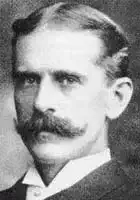
Henry Van Dyke
A Child in the Garden
When to the garden of untroubled thought
I came of late, and saw the open door,
And wished again to enter, and explore
The sweet, wild ways with stainless bloom inwrought,
And bowers of innocence with beauty fraught,
It seemed some purer voice must speak before
I dared to tread that garden loved of yore,
That Eden lost unknown and found unsought.
Then just within the gate I saw a child, --
A stranger-child, yet to my heart most dear;
He held his hands to me, and softly smiled
With eyes that knew no shade of sin or fear:
"Come in," he said, "and play awhile with me;"
"I am the little child you used to be."
334

Ella Wheeler Wilcox
When
I dwell in the western inland,
Afar from the sounding sea,
But I seem to hear it sobbing
And calling aloud to me,
And my heart cries out for the ocean
As a child for its mother's breast,
And I long to lie on its waters
And be lulled in its arms to rest.
I can close my eyes and fancy
That I hear its mighty roar,
And I see its blue waves splashing
And plunging against the shore;
And the white foam caps the billow,
And the sea-gulls wheel and cry,
And the cool wild wind is blowing,
And the ships go sailing by.
Oh, wonderful, mighty ocean!
When shall I ever stand,
Where my heart has gone already,
There on thy gleaming strand!
When shall I ever wander
Away from the inland west,
And strand by thy side, dear ocean,
And rock on thy heaving breast?
331
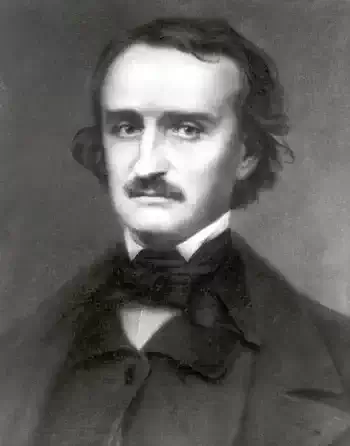
Edgar Allan Poe
To -- -- --. Ulalume: A Ballad
The skies they were ashen and sober;
The leaves they were crisped and sere
The
leaves they were withering and sere;
It was night in the lonesome October
Of my most immemorial year;
It was hard by the dim lake of Auber,
In the misty mid region of WeirIt
was down by the dank tarn of Auber,
In the ghoul-haunted woodland of Weir.
Here once, through an alley Titanic,
Of cypress, I roamed with my SoulOf
cypress, with Psyche, my Soul.
There were days when my heart was volcanic
As the scoriac rivers that roll
As
the lavas that restlessly roll
Their sulphurous currents down Yaanek
In the ultimate climes of the pole
That
groan as they roll down Mount Yaanek
In the realms of the boreal pole.
Our talk had been serious and sober,
But our thoughts they were palsied and sere
Our
memories were treacherous and sere
For we knew not the month was October,
And we marked not the night of the year(
Ah, night of all nights in the year!)
We noted not the dim lake of Auber(
Though once we had journeyed down here),
Remembered not the dank tarn of Auber,
Nor the ghoul-haunted woodland of Weir.
And now, as the night was senescent,
And star-dials pointed to morn
As
the star-dials hinted of morn
At the end of our path a liquescent
And nebulous lustre was born,
Out of which a miraculous crescent
Arose with a duplicate horn
Astarte's
bediamonded crescent
Distinct with its duplicate horn.
And I said- 'She is warmer than Dian:
She rolls through an ether of sighs
She
revels in a region of sighs:
She has seen that the tears are not dry on
These cheeks, where the worm never dies,
And has come past the stars of the Lion,
To point us the path to the skies
To
the Lethean peace of the skies
Come up, in despite of the Lion,
To shine on us with her bright eyes
Come up through the lair of the Lion,
With love in her luminous eyes.'
But Psyche, uplifting her finger,
Said- 'Sadly this star I mistrust
Her
pallor I strangely mistrust:
Oh, hasten!- oh, let us not linger!
Oh, fly!- let us fly!- for we must.'
In terror she spoke, letting sink her
Wings until they trailed in the dust
In agony sobbed, letting sink her
Plumes till they trailed in the dust
Till
they sorrowfully trailed in the dust.
I replied- 'This is nothing but dreaming:
Let us on by this tremulous light!
Let us bathe in this crystalline light!
Its Sybilic splendor is beaming
With Hope and in Beauty to-night:
See!-
it flickers up the sky through the night!
Ah, we safely may trust to its gleaming,
And be sure it will lead us aright
We safely may trust to a gleaming
That cannot but guide us aright,
Since it flickers up to Heaven through the night.'
Thus I pacified Psyche and kissed her,
And tempted her out of her gloom
And
conquered her scruples and gloom;
And we passed to the end of the vista,
But were stopped by the door of a tomb
By
the door of a legended tomb;
And I said- 'What is written, sweet sister,
On the door of this legended tomb?'
She replied- 'Ulalume- Ulalume'
Tis the vault of thy lost Ulalume!'
Then my heart it grew ashen and sober
As the leaves that were crisped and sere
As
the leaves that were withering and sere
And I cried- 'It was surely October
On this very night of last year
That I journeyed- I journeyed down here
That
I brought a dread burden down here
On
this night of all nights in the year,
Ah, what demon has tempted me here?
Well I know, now, this dim lake of AuberThis
misty mid region of WeirWell
I know, now, this dank tarn of Auber,
This ghoul-haunted woodland of Weir.'
330
James Whitcomb Riley
The Sermon Of The Rose
Wilful we are in our infirmity
Of childish questioning and discontent.
Whate'er befalls us is divinely meant--
Thou Truth the clearer for thy mystery!
Make us to meet what is or is to be
With fervid welcome, knowing it is sent
To serve us in some way full excellent,
Though we discern it all belatedly.
The rose buds, and the rose blooms and the rose
Bows in the dews, and in its fulness, lo,
Is in the lover's hand,--then on the breast
Of her he loves,--and there dies.--And who knows
Which fate of all a rose may undergo
Is fairest, dearest, sweetest, loveliest?
Nay, we are children: we will not mature.
A blessed gift must seem a theft; and tears
Must storm our eyes when but a joy appears
In drear disguise of sorrow; and how poor
We seem when we are richest,--most secure
Against all poverty the lifelong years
We yet must waste in childish doubts and fears
That, in despite of reason, still endure!
Alas! the sermon of the rose we will
Not wisely ponder; nor the sobs of grief
Lulled into sighs of rapture; nor the cry
Of fierce defiance that again is still.
Be patient--patient with our frail belief,
And stay it yet a little ere we die.
O opulent life of ours, though dispossessed
Of treasure after treasure! Youth most fair
Went first, but left its priceless coil of hair--
Moaned over sleepless nights, kissed and caressed
Through drip and blur of tears the tenderest.
And next went Love--the ripe rose glowing there
Her very sister!... It is here; but where
Is she, of all the world the first and best?
And yet how sweet the sweet earth after rain--
How sweet the sunlight on the garden wall
Across the roses--and how sweetly flows
The limpid yodel of the brook again!
And yet--and yet how sweeter after all,
The smouldering sweetness of a dead red rose!
331

Thomas Hardy
The Last Chrysanthemum
Why should this flower delay so long
To show its tremulous plumes?
Now is the time of plaintive robin-song,
When flowers are in their tombs.
Through the slow summer, when the sun
Called to each frond and whorl
That all he could for flowers was being done,
Why did it not uncurl?
It must have felt that fervid call
Although it took no heed,
Waking but now, when leaves like corpses fall,
And saps all retrocede.
Too late its beauty, lonely thing,
The season's shine is spent,
Nothing remains for it but shivering
In tempests turbulent.
Had it a reason for delay,
Dreaming in witlessness
That for a bloom so delicately gay
Winter would stay its stress?
- I talk as if the thing were born
With sense to work its mind;
Yet it is but one mask of many worn
By the Great Face behind.
332
Emily Dickinson
Civilization-spurns-the Leopard!
Civilization-spurns-the Leopard!
Was the Leopard-bold?
Deserts-never rebuked her SatinEthiop-
her GoldTawny-
her Customs-
She was ConsciousSpotted-
her Dun Gown-
This was the Leopard's nature-SignorNeed-
a keeper-frown?
Pity-the Pard-that left her AsiaMemories-
of Palm-
Cannot be stifled-with Narcotic-
Nor suppressed-with Balm-
Was the Leopard-bold?
Deserts-never rebuked her SatinEthiop-
her GoldTawny-
her Customs-
She was ConsciousSpotted-
her Dun Gown-
This was the Leopard's nature-SignorNeed-
a keeper-frown?
Pity-the Pard-that left her AsiaMemories-
of Palm-
Cannot be stifled-with Narcotic-
Nor suppressed-with Balm-
331
James Whitcomb Riley
His Room
'I'm home again, my dear old Room,
I'm home again, and happy, too,
As, peering through the brightening gloom,
I find myself alone with you:
Though brief my stay, nor far away,
I missed you--missed you night and day--
As wildly yearned for you as now.--
Old Room, how are you, anyhow?
'My easy chair, with open arms,
Awaits me just within the door;
The littered carpet's woven charms
Have never seemed so bright before,--
The old rosettes and mignonettes
And ivy-leaves and violets,
Look up as pure and fresh of hue
As though baptized in morning dew.
'Old Room, to me your homely walls
Fold round me like the arms of love,
And over all my being falls
A blessing pure as from above--
Even as a nestling child caressed
And lulled upon a loving breast,
With folded eyes, too glad to weep
And yet too sad for dreams or sleep.
'You've been so kind to me, old Room--
So patient in your tender care,
My drooping heart in fullest bloom
Has blossomed for you unaware;
And who but you had cared to woo
A heart so dark, and heavy, too,
As in the past you lifted mine
From out the shadow to the shine?
'For I was but a wayward boy
When first you gladly welcomed me
And taught me work was truer joy
Than rioting incessantly:
And thus the din that stormed within
The old guitar and violin
Has fallen in a fainter tone
And sweeter, for your sake alone.
'Though in my absence I have stood
In festal halls a favored guest,
I missed, in this old quietude,
My worthy work and worthy rest--
By _this_ I know that long ago
You loved me first, and told me so
In art's mute eloquence of speech
The voice of praise may never reach.
'For lips and eyes in truth's disguise
Confuse the faces of my friends,
Till old affection's fondest ties
I find unraveling at the ends;
But as I turn to you, and learn
To meet my griefs with less concern,
Your love seems all I have to keep
Me smiling lest I needs must weep.
'Yet I am happy, and would fain
Forget the world and all its woes;
So set me to my tasks again,
Old Room, and lull me to repose:
And as we glide adown the tide
Of dreams, forever side by side,
I'll hold your hands as lovers do
Their sweethearts' and talk love to you.'
329

William Butler Yeats
Fallen Majesty
Although crowds gathered once if she but showed her face,
And even old men's eyes grew dim, this hand alone,
Like some last courtier at a gypsy camping-place
Babbling of fallen majesty, records what's gone.
The lineaments, a heart that laughter has made sweet,
These, these remain, but I record what's gone. A crowd
Will gather, and not know it walks the very street
Whereon a thing once walked that seemed a burning cloud.
328
James Whitcomb Riley
The Old Guitar
Neglected now is the old guitar
And moldering into decay;
Fretted with many a rift and scar
That the dull dust hides away,
While the spider spins a silver star
In its silent lips to-day.
The keys hold only nerveless strings--
The sinews of brave old airs
Are pulseless now; and the scarf that clings
So closely here declares
A sad regret in its ravelings
And the faded hue it wears.
But the old guitar, with a lenient grace,
Has cherished a smile for me;
And its features hint of a fairer face
That comes with a memory
Of a flower-and-perfume-haunted place
And a moonlit balcony.
Music sweeter than words confess,
Or the minstrel's powers invent,
Thrilled here once at the light caress
Of the fairy hands that lent
This excuse for the kiss I press
On the dear old instrument.
The rose of pearl with the jeweled stem
Still blooms; and the tiny sets
In the circle all are here; the gem
In the keys, and the silver frets;
But the dainty fingers that danced o'er them--
Alas for the heart's regrets!--
Alas for the loosened strings to-day,
And the wounds of rift and scar
On a worn old heart, with its roundelay
Enthralled with a stronger bar
That Fate weaves on, through a dull decay
Like that of the old guitar!
329
Henry Wadsworth Longfellow
Travels By The Fireside. (Birds Of Passage. Flight The Fourth)
The ceaseless rain is falling fast,
And yonder gilded vane,
Immovable for three days past,
Points to the misty main,
It drives me in upon myself
And to the fireside gleams,
To pleasant books that crowd my shelf,
And still more pleasant dreams,
I read whatever bards have sung
Of lands beyond the sea,
And the bright days when I was young
Come thronging back to me.
In fancy I can hear again
The Alpine torrent's roar,
The mule-bells on the hills of Spain,
The sea at Elsinore.
I see the convent's gleaming wall
Rise from its groves of pine,
And towers of old cathedrals tall,
And castles by the Rhine.
I journey on by park and spire,
Beneath centennial trees,
Through fields with poppies all on fire,
And gleams of distant seas.
I fear no more the dust and heat,
No more I feel fatigue,
While journeying with another's feet
O'er many a lengthening league.
Let others traverse sea and land,
And toil through various climes,
I turn the world round with my hand
Reading these poets' rhymes.
From them I learn whatever lies
Beneath each changing zone,
And see, when looking with their eyes,
Better than with mine own.
327
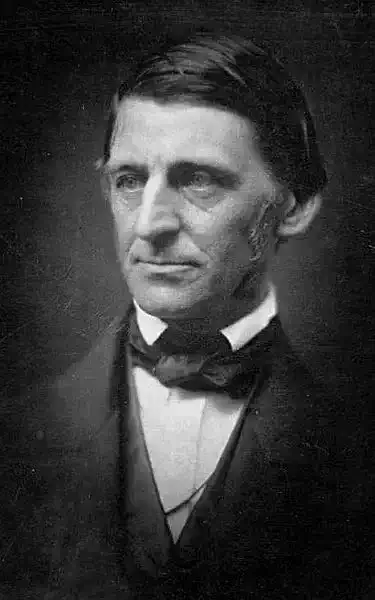
Ralph Waldo Emerson
Dirge
Knows he who tills this lonely field
To reap its scanty corn,
What mystic fruit his acres yield
At midnight and at morn?
In the long sunny afternoon,
The plain was full of ghosts,
I wandered up, I wandered down,
Beset by pensive hosts.
The winding Concord gleamed below,
Pouring as wide a flood
As when my brothers long ago,
Came with me to the wood.
But they are gone,— the holy ones,
Who trod with me this lonely vale,
The strong, star-bright companions
Are silent, low, and pale.
My good, my noble, in their prime,
Who made this world the feast it was,
Who learned with me the lore of time,
Who loved this dwelling-place.
They took this valley for their toy,
They played with it in every mood,
A cell for prayer, a hall for joy,
They treated nature as they would.
They colored the horizon round,
Stars flamed and faded as they bade,
All echoes hearkened for their sound,
They made the woodlands glad or mad.
I touch this flower of silken leaf
Which once our childhood knew
Its soft leaves wound me with a grief
Whose balsam never grew.
Hearken to yon pine warbler
Singing aloft in the tree;
Hearest thou, O traveller!
What he singeth to me?
Not unless God made sharp thine ear
With sorrow such as mine,
Out of that delicate lay couldst thou
The heavy dirge divine.
Go, lonely man, it saith,
They loved thee from their birth,
Their hands were pure, and pure their faith,
There are no such hearts on earth.
Ye drew one mother's milk,
One chamber held ye all;
A very tender history
Did in your childhood fall.
Ye cannot unlock your heart,
The key is gone with them;
The silent organ loudest chants
The master's requiem.
326

Carl Sandburg
Maybe
Maybe he believes me, maybe not.
Maybe I can marry him, maybe not.
Maybe the wind on the prairie,
The wind on the sea, maybe,
Somebody, somewhere, maybe can tell.
I will lay my head on his shoulder
And when he asks me I will say yes,
Maybe.
Maybe I can marry him, maybe not.
Maybe the wind on the prairie,
The wind on the sea, maybe,
Somebody, somewhere, maybe can tell.
I will lay my head on his shoulder
And when he asks me I will say yes,
Maybe.
325
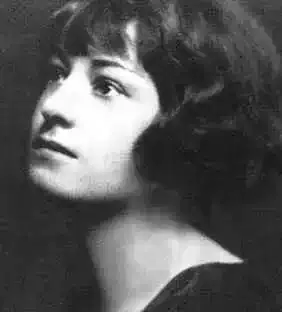
Dorothy Parker
Afternoon
When I am old, and comforted,
And done with this desire,
With Memory to share my bed
And Peace to share my fire,
I'll comb my hair in scalloped bands
Beneath my laundered cap,
And watch my cool and fragile hands
Lie light upon my lap.
And I will have a sprigged gown
With lace to kiss my throat;
I'll draw my curtain to the town,
And hum a purring note.
And I'll forget the way of tears,
And rock, and stir my tea.
But oh, I wish those blessed years
Were further than they be!
325

Mirza Ghalib
Let the ascetics sing of the garden of Paradise --
Let the ascetics sing of the garden of Paradise --
We who dwell in the true ecstasy can forget their vase-tamed bouquet.
In our hall of mirrors, the map of the one Face appears
As the sun's splendor would spangle a world made of dew.
Hidden in this image is also its end,
As peasants' lives harbor revolt and unthreshed corn sparks with fire.
Hidden in my silence are a thousand abandoned longings:
My words the darkened oil lamp on a stranger's unspeaking grave.
Ghalib, the road of change is before you always:
The only line stitching this world's scattered parts.
326
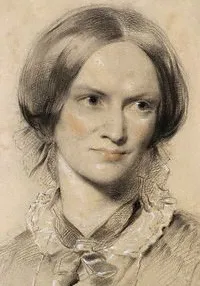
Charlotte Brontë
Mementos
ARRANGING longlocked
drawers and shelves
Of cabinets, shut up for years,
What a strange task we've set ourselves !
How still the lonely room appears !
How strange this mass of ancient treasures,
Mementos of past pains and pleasures;
These volumes, clasped with costly stone,
With print all faded, gilding gone;
These fans of leaves, from Indian trees
These
crimson shells, from Indian seas
These
tiny portraits, set in rings
Once,
doubtless, deemed such precious things;
Keepsakes bestowed by Love on Faith,
And worn till the receiver's death,
Now stored with cameos, china, shells,
In this old closet's dusty cells.
I scarcely think, for ten long years,
A hand has touched these relics old;
And, coating each, slowformed,
appears,
The growth of green and antique mould.
All in this house is mossing over;
All is unused, and dim, and damp;
Nor light, nor warmth, the rooms discover
Bereft
for years of fire and lamp.
The sun, sometimes in summer, enters
The casements, with reviving ray;
But the long rains of many winters
Moulder the very walls away.
And outside all is ivy, clinging
To chimney, lattice, gable grey;
Scarcely one little red rose springing
Through the green moss can force its way.
Unscared, the daw, and starling nestle,
Where the tall turret rises high,
And winds alone come near to rustle
The thick leaves where their cradles lie.
I sometimes think, when late at even
I climb the stair reluctantly,
Some shape that should be well in heaven,
Or ill elsewhere, will pass by me.
I fear to see the very faces,
Familiar thirty years ago,
Even in the old accustomed places
Which look so cold and gloomy now.
I've come, to close the window, hither,
At twilight, when the sun was down,
And Fear, my very soul would wither,
Lest something should be dimly shown.
Too much the buried form resembling,
Of her who once was mistress here;
Lest doubtful shade, or moonbeam trembling,
Might take her aspect, once so dear.
Hers was this chamber; in her time
It seemed to me a pleasant room,
For then no cloud of grief or crime
Had cursed it with a settled gloom;
I had not seen death's image laid
In shroud and sheet, on yonder bed.
Before she married, she was blest
Blest
in her youth, blest in her worth;
Her mind was calm, its sunny rest
Shone in her eyes more clear than mirth.
And when attired in rich array,
Light, lustrous hair about her brow,
She yonder sata
kind of day
Lit upwhat
seems so gloomy now.
These grim oak walls, even then were grim;
That old carved chair, was then antique;
But what around looked dusk and dim
Served as a foil to her fresh cheek;
Her neck, and arms, of hue so fair,
Eyes of unclouded, smiling, light;
Her soft, and curled, and floating hair,
Gems and attire, as rainbow bright.
Reclined in yonder deep recess,
Ofttimes she would, at evening, lie
Watching the sun; she seemed to bless
With happy glance the glorious sky.
She loved such scenes, and as she gazed,
Her face evinced her spirit's mood;
Beauty or grandeur ever raised
In her, a deepfelt
gratitude.
But of all lovely things, she loved
A cloudless moon, on summer night;
Full oft have I impatience proved
To see how long, her still delight
Would find a theme in reverie.
Out on the lawn, or where the trees
Let in the lustre fitfully,
As their boughs parted momently,
To the soft, languid, summer breeze.
Alas ! that she should e'er have flung
Those pure, though lonely joys away
Deceived
by false and guileful tongue,
She gave her hand, then suffered wrong;
Oppressed, illused,
she faded young,
And died of grief by slow decay.
Open that casketlook
how bright
Those jewels flash upon the sight;
The brilliants have not lost a ray
Of lustre, since her wedding day.
But seeupon
that pearly chain
How
dim lies time's discolouring stain !
I've seen that by her daughter worn:
For, e'er she died, a child was born;
A child that ne'er its mother knew,
That lone, and almost friendless grew;
For, ever, when its step drew nigh,
Averted was the father's eye;
And then, a life impure and wild
Made him a stranger to his child;
Absorbed in vice, he little cared
On what she did, or how she fared.
The love withheld, she never sought,
She grew uncherishedlearnt
untaught;
To her the inward life of thought
Full soon was open laid.
I know not if her friendlessness
Did sometimes on her spirit press,
But plaint she never made.
The bookshelves
were her darling treasure,
She rarely seemed the time to measure
While she could read alone.
And she too loved the twilight wood,
And often, in her mother's mood,
Away to yonder hill would hie,
Like her, to watch the setting sun,
Or see the stars born, one by one,
Out of the darkening sky.
Nor would she leave that hill till night
Trembled from pole to pole with light;
Even then, upon her homeward way,
Longlong
her wandering steps delayed
To quit the sombre forest shade,
Through which her eerie pathway lay.
You ask if she had beauty's grace ?
I know notbut
a nobler face
My eyes have seldom seen;
A keen and fine intelligence,
And, better still, the truest sense
Were in her speaking mien.
But bloom or lustre was there none,
Only at moments, fitful shone
An ardour in her eye,
That kindled on her cheek a flush,
Warm as a red sky's passing blush
And quick with energy.
Her speech, too, was not common speech,
No wish to shine, or aim to teach,
Was in her words displayed:
She still began with quiet sense,
But oft the force of eloquence
Came to her lips in aid;
Language and voice unconscious changed,
And thoughts, in other words arranged,
Her fervid soul transfused
Into the hearts of those who heard,
And transient strength and ardour stirred,
In minds to strength unused.
Yet in gay crowd or festal glare,
Grave and retiring was her air;
'Twas seldom, save with me alone,
That fire of feeling freely shone;
She loved not awe's nor wonder's gaze,
Nor even exaggerated praise,
Nor even notice, if too keen
The curious gazer searched her mien.
Nature's own green expanse revealed
The world, the pleasures, she could prize;
On free hillside,
in sunny field,
In quiet spots by woods concealed,
Grew wild and fresh her chosen joys,
Yet Nature's feelings deeply lay
In that endowed and youthful frame;
Shrined in her heart and hid from day,
They burned unseen with silent flame;
In youth's first search for mental light,
She lived but to reflect and learn,
But soon her mind's maturer might
For stronger task did pant and yearn;
And stronger task did fate assign,
Task that a giant's strength might strain;
To suffer long and ne'er repine,
Be calm in frenzy, smile at pain.
Pale with the secret war of feeling,
Sustained with courage, mute, yet high;
The wounds at which she bled, revealing
Only by altered cheek and eye;
She bore in silencebut
when passion
Surged in her soul with ceaseless foam,
The storm at last brought desolation,
And drove her exiled from her home.
And silent still, she straight assembled
The wrecks of strength her soul retained;
For though the wasted body trembled,
The unconquered mind, to quail, disdained.
She crossed the seanow
lone she wanders
By Seine's, or Rhine's, or Arno's flow;
Fain would I know if distance renders
Relief or comfort to her woe.
Fain would I know if, henceforth, ever,
These eyes shall read in hers again,
That light of love which faded never,
Though dimmed so long with secret pain.
She will return, but cold and altered,
Like all whose hopes too soon depart;
Like all on whom have beat, unsheltered,
The bitter blasts that blight the heart.
No more shall I behold her lying
Calm on a pillow, smoothed by me;
No more that spirit, worn with sighing,
Will know the rest of infancy.
If still the paths of lore she follow,
'Twill be with tired and goaded will;
She'll only toil, the aching hollow,
The joyless blank of life to fill.
And oh ! full oft, quite spent and weary,
Her hand will pause, her head decline;
That labour seems so hard and dreary,
On which no ray of hope may shine.
Thus the pale blight of time and sorrow
Will shade with grey her soft, dark hair
Then comes the day that knows no morrow,
And death succeeds to long despair.
So speaks experience, sage and hoary;
I see it plainly, know it well,
Like one who, having read a story,
Each incident therein can tell.
Touch not that ring, 'twas his, the sire
Of that forsaken child;
And nought his relics can inspire
Save memories, sindefiled.
I, who sat by his wife's deathbed,
I, who his daughter loved,
Could almost curse the guilty dead,
For woes, the guiltless proved.
And heaven did cursethey
found him laid,
When crime for wrath was rife,
Coldwith
the suicidal blade
Clutched in his desperate gripe.
'Twas near that long deserted hut,
Which in the wood decays,
Death's axe, selfwielded,
struck his root,
And lopped his desperate days.
You know the spot, where three black trees,
Lift up their branches fell,
And moaning, ceaseless as the seas,
Still seem, in every passing breeze,
The deed of blood to tell.
They named him mad, and laid his bones
Where holier ashes lie;
Yet doubt not that his spirit groans,
In hell's eternity.
But, lo ! night, closing o'er the earth,
Infects our thoughts with gloom;
Come, let us strive to rally mirth,
Where glows a clear and tranquil hearth
In some more cheerful room.
326
James Whitcomb Riley
My Jolly Friend's Secret
Ah, friend of mine, how goes it,
Since you've taken you a mate?--
Your smile, though, plainly shows it
Is a very happy state!
Dan Cupid's necromancy!
You must sit you down and dine,
And lubricate your fancy
With a glass or two of wine.
And as you have 'deserted,'
As my other chums have done,
While I laugh alone diverted,
As you drop off one by one--
And I've remained unwedded,
Till--you see--look here--that I'm,
In a manner, 'snatched bald-headed'
By the sportive hand of Time!
I'm an 'old 'un!' yes, but wrinkles
Are not so plenty, quite,
As to cover up the twinkles
Of the BOY--ain't I right?
Yet, there are ghosts of kisses
Under this mustache of mine
My mem'ry only misses
When I drown 'em out with wine.
From acknowledgment so ample,
You would hardly take me for
What I am--a perfect sample
Of a 'jolly bachelor';
Not a bachelor has being
When he laughs at married life
But his heart and soul's agreeing
That he ought to have a wife!
Ah, ha I old chum, this claret,
Like Fatima, holds the key
Of the old Blue-Beardish garret
Of my hidden mystery!
Did you say you'd like to listen?
Ah, my boy! the 'SAD NO MORE!'
And the tear-drops that will glisten--
TURN THE CATCH UPON THE DOOR,
And sit you down beside me,
And put yourself at ease-I'll
trouble you to slide me
That wine decanter, please;
The path is kind o' mazy
Where my fancies have to go,
And my heart gets sort o' lazy
On the journey--don't you know?
Let me see--when I was twenty-It's
a lordly age, my boy,
When a fellow's money's plenty,
And the leisure to enjoy--
And a girl--with hair as golden
As--THAT; and lips--well--quite
As red as THIS I'm holdin'
Between you and the light.
And eyes and a complexion--
Ah, heavens!--le'-me-see-Well,--
just in this connection,--
DID YOU LOCK THAT DOOR FOR ME?
Did I start in recitation
My past life to recall?
Well, THAT'S an indication
I am purty tight--that's all!
324
James Whitcomb Riley
The Old Swimmin' Hole
2
3
4
6
7
8
Oh! the old swimmin'-hole! whare the crick so still and deep
Looked like a baby-river that was laying half asleep,
And the gurgle of the worter round the drift jest below
Sounded like the laugh of something we onc't ust to know
Before we could remember anything but the eyes
Of the angels lookin' out as we left Paradise;
But the merry days of youth is beyond our controle,
And it's hard to part ferever with the old swimmin'-hole.
9 Oh! the old swimmin'-hole! In the happy days of yore,
When I ust to lean above it on the old sickamore,
11
12
13
14
16
Oh! it showed me a face in its warm sunny tide
That gazed back at me so gay and glorified,
It made me love myself, as I leaped to caress
My shadder smilin' up at me with sich tenderness.
But them days is past and gone, and old Time's tuck his toll
From the old man come back to the old swimmin'-hole.
17
18
19
21
22
23
24
Oh! the old swimmin'-hole! In the long, lazy days
When the humdrum of school made so many run-a-ways,
How plesant was the jurney down the old dusty lane,
Whare the tracks of our bare feet was all printed so plane
You could tell by the dent of the heel and the sole
They was lots o' fun on hands at the old swimmin'-hole.
But the lost joys is past! Let your tears in sorrow roll
Like the rain that ust to dapple up the old swimmin'-hole.
26
Thare the bullrushes growed, and the cattails so tall,
And the sunshine and shadder fell over it all;
27
28
29
31
32
And it mottled the worter with amber and gold
Tel the glad lilies rocked in the ripples that rolled;
And the snake-feeder's four gauzy wings fluttered by
Like the ghost of a daisy dropped out of the sky,
Or a wownded apple-blossom in the breeze's controle
As it cut acrost some orchard to'rds the old swimmin'-hole.
33
34
36
37
38
39
Oh! the old swimmin'-hole! When I last saw the place,
The scenes was all changed, like the change in my face;
The bridge of the railroad now crosses the spot
Whare the old divin'-log lays sunk and fergot.
And I stray down the banks whare the trees ust to be --
But never again will theyr shade shelter me!
And I wish in my sorrow I could strip to the soul,
And dive off in my grave like the old swimmin'-hole.
324
Thomas Hardy
Thoughts of Phena
at news of her death
Not a line of her writing have I
Not a thread of her hair,
No mark of her late time as dame in her dwelling, whereby
I may picture her there;
And in vain do I urge my unsight
To conceive my lost prize
At her close, whom I knew when her dreams were upbrimming with light
And with laughter her eyes.
What scenes spread around her last days,
Sad, shining, or dim?
Did her gifts and compassions enray and enarch her sweet ways
With an aureate nimb?
Or did life-light decline from her years,
And mischances control
Her full day-star; unease, or regret, or forebodings, or fears
Disennoble her soul?
Thus I do but the phantom retain
Of the maiden of yore
As my relic; yet haply the best of her--fined in my brain
It may be the more
That no line of her writing have I,
Nor a thread of her hair,
No mark of her late time as dame in her dwelling, whereby
I may picture her there.
March .
321
James Whitcomb Riley
Nothin' To Say
Nothin' to say, my daughter! Nothin' at all to say!
Gyrls that's in love, I've noticed, ginerly has their way!
Yer mother did, afore you, when her folks objected to me--
Yit here I am, and here you air; and yer mother--where is she?
You look lots like yer mother: Purty much same in size;
And about the same complected; and favor about the eyes:
Like her, too, about _livin_' here,--because _she_ couldn't stay:
It'll 'most seem like you was dead--like her!--But I hain't got nothin' to say!
She left you her little Bible--writ yer name acrost the page--
And left her ear bobs fer you, ef ever you come of age.
I've allus kep' 'em and gyuarded 'em, but ef yer goin' away--
Nothin' to say, my daughter! Nothin' at all to say!
You don't rikollect her, I reckon? No; you wasn't a year old then!
And now yer--how old _air_ you? W'y, child, not '_twenty_!' When?
And yer nex' birthday's in Aprile? and you want to git married that day?
... I wisht yer mother was livin'!--But--I hain't got nothin' to say!
Twenty year! and as good a gyrl as parent ever found!
There's a straw ketched onto yer dress there--I'll bresh it off--turn round.
(Her mother was jes' twenty when us two run away!)
Nothin' to say, my daughter! Nothin' at all to say!
322
John Greenleaf Whittier
In Peace
A track of moonlight on a quiet lake,
Whose small waves on a silver-sanded shore
Whisper of peace, and with the low winds make
Such harmonies as keep the woods awake,
And listening all night long for their sweet sake
A green-waved slope of meadow, hovered o'er
By angel-troops of lilies, swaying light
On viewless stems, with folded wings of white;
A slumberous stretch of mountain-land, far seen
Where the low westering day, with gold and green,
Purple and amber, softly blended, fills
The wooded vales, and melts among the hills;
A vine-fringed river, winding to its rest
On the calm bosom of a stormless sea,
Bearing alike upon its placid breast,
With earthly flowers and heavenly' stars impressed,
The hues of time and of eternity
Such are the pictures which the thought of thee,
O friend, awakeneth,--charming the keen pain
Of thy departure, and our sense of loss
Requiting with the fullness of thy gain.
Lo! on the quiet grave thy life-borne cross,
Dropped only at its side, methinks doth shine,
Of thy beatitude the radiant sign!
No sob of grief, no wild lament be there,
To break the Sabbath of the holy air;
But, in their stead, the silent-breathing prayer
Of hearts still waiting for a rest like thine.
O spirit redeemed! Forgive us, if henceforth,
With sweet and pure similitudes of earth,
We keep thy pleasant memory freshly green,
Of love's inheritance a priceless part,
Which Fancy's self, in reverent awe, is seen
To paint, forgetful of the tricks of art,
With pencil dipped alone in colors of the heart.
320