
Nostalgia

Thomas Hardy
The Voice
Woman much missed, how you call to me, call to me,
Saying that now you are not as you were
When you had changed from the one who was all to me,
But as at first, when our day was fair.
Can it be you that I hear? Let me view you, then,
Standing as when I drew near to the town
Where you would wait for me: yes, as I knew you then,
Even to the original air-blue gown!
Or is it only the breeze, in its listlessness
Travelling across the wet mead to me here,
You being ever dissolved to wan wistlessness,
Heard no more again far or near?
Thus I; faltering forward,
Leaves around me falling,
Wind oozing thin through the thorn from norward,
And the woman calling.
357

James Whitcomb Riley
An Old Sweetheart Of Mine
As one who cons at evening o'er an album all alone,
And muses on the faces of the friends that he has known,
So I turn the leaves of Fancy, till in shadowy design
I find the smiling features of an old sweetheart of mine.
The lamplight seems to glimmer with a flicker of surprise,
As I turn it low, to rest me of the dazzle in my eyes,
And light my pipe in silence, save a sigh that seems to yoke
Its fate with my tobacco, and to vanish with the smoke.
'Tis a fragrant retrospection, for the loving thoughts that start
Into being are like perfumes from the blossom of the heart;
And to dream the old dreams over is a luxury divine—
When my truant fancies wander with that old sweetheart of mine.
Though I hear, beneath my study, like a fluttering of wings,
The voices of my children and the mother as she sings,
I feel no twinge of conscience to deny me any theme
When Care has cast her anchor in the harbor of a dream.
In fact, to speak in earnest, I believe it adds a charm
To spice the good a trifle with a little dust of harm;
For I find an extra flavor in Memory's mellow wine
That makes me drink the deeper to that old sweetheart of mine.
A face of lily-beauty, with a form of airy grace,
Floats out of my tobacco as the genii from the vase;
And I thrill beneath the glances of a pair of azure eyes,
As glowing as the summer and as tender as the skies.
I can see the pink sunbonnet and the little checkered dress
She wore when first I kissed her, and she answered the caress
With the written declaration that, 'as surely as the vine
Grew round the stump,' she loved me,—that old sweetheart of mine!
And again I feel the pressure of her slender little hand,
As we used to talk together of the future we had planned:
When I should be a poet, and with nothing else to do
But write the tender verses that she set the music to;
When we should live together in a cozy little cot,
Hid in a nest of roses, with a fairy garden-spot,
Where the vines were ever fruited, and the weather ever fine,
And the birds were ever singing for that old sweetheart of mine;
And I should be her lover forever and a day,
And she my faithful sweetheart till the golden hair was gray;
And we should be so happy that when either's lips were dumb
They would not smile in heaven till the other's kiss had come.
But ah! my dream is broken by a step upon the stair,
And the door is softly opened, and my wife is standing there!
Yet with eagerness and rapture all my visions I resign
To greet the living presence of that old sweetheart of mine.
357

Henry Lawson
The Lily of St Leonards
’TIS sunrise over Watson,
Where I sailed out to sea,
On that wild run to London
That wrecked and ruined me.
The beauty of the morning
On bluff and point and bay,
But the Lily of St Leonards
Was fairer than the day.
O Lily of St Leonards!
And I was mad to roam—
She died with loving words for me
Three days ere I came home.
As fair as lily whiteness,
As pure as lily gold,
And bright with childlike brightness
And wise as worlds of old.
Her heart for all was beating
And all hearts were her own—
Like sunshine through the Lily
Her purity was shown.
O Lily of St Leonards!
My night is on the track,
’Tis well you never lived to see
The wreck that I came back.
A leaden sky shuts over
A sobbing leaden sea,
For the Lily of St Leonards
Is never more for me.
I seek the wharf of Outward
Where the deck no longer thrills
Where she stood with great tears starting
Like the lights on dark wet hills.
The world was all before me
The laurels on my brow—
’Twas the world-star of the rovers,
’Tis the Star of Exile now.
356
James Whitcomb Riley
The Rose
It tossed its head at the wooing breeze;
And the sun, like a bashful swain,
Beamed on it through the waving trees
With a passion all in vain,--
For my rose laughed in a crimson glee,
And hid in the leaves in wait for me.
The honey-bee came there to sing
His love through the languid hours,
And vaunt of his hives, as a proud old king
Might boast of his palace-towers:
But my rose bowed in a mockery,
And hid in the leaves in wait for me.
The humming-bird, like a courtier gay,
Dipped down with a dalliant song,
And twanged his wings through the roundelay
Of love the whole day long:
Yet my rose turned from his minstrelsy
And hid in the leaves in wait for me.
The firefly came in the twilight dim
My red, red rose to woo--
Till quenched was the flame of love in him,
And the light of his lantern too,
As my rose wept with dewdrops three
And hid in the leaves in wait for me.
And I said: I will cull my own sweet rose--
Some day I will claim as mine
The priceless worth of the flower that knows
No change, but a bloom divine--
The bloom of a fadeless constancy
That hides in the leaves in wait for me!
But time passed by in a strange disguise,
And I marked it not, but lay
In a lazy dream, with drowsy eyes,
Till the summer slipped away,
And a chill wind sang in a minor key:
'Where is the rose that waits for thee?'
. . . . . . . .
I dream to-day, o'er a purple stain
Of bloom on a withered stalk,
Pelted down by the autumn rain
In the dust of the garden-walk,
That an Angel-rose in the world to be
Will hide in the leaves in wait for me.
354

Dorothy Parker
My Own
Then let them point my every tear,
And let them mock and moan;
Another week, another year,
And I'll be with my own
Who slumber now by night and day
In fields of level brown;
Whose hearts within their breasts were clay
Before they laid them down.
And let them mock and moan;
Another week, another year,
And I'll be with my own
Who slumber now by night and day
In fields of level brown;
Whose hearts within their breasts were clay
Before they laid them down.
351

William Wordsworth
On the Extinction of the Venetian Republic
ONCE did she hold the gorgeous East in fee;
And was the safeguard of the West: the worth
Of Venice did not fall below her birth,
Venice, the eldest Child of Liberty.
She was a maiden City, bright and free;
No guile seduced, no force could violate;
And, when she took unto herself a mate,
She must espouse the everlasting Sea.
And what if she had seen those glories fade,
Those titles vanish, and that strength decay;
Yet shall some tribute of regret be paid
When her long life hath reach'd its final day:
Men are we, and must grieve when even the Shade
Of that which once was great is pass'd away.
352
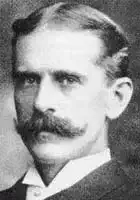
Henry Van Dyke
Undine
'T was far away and long ago,
When I was but a dreaming boy,
This fairy tale of love and woe
Entranced my heart with tearful joy;
And while with white Undine I wept,
Your spirit, -- ah, how strange it seems, --
Was cradled in some star, and slept,
Unconscious of her coming dreams.
When I was but a dreaming boy,
This fairy tale of love and woe
Entranced my heart with tearful joy;
And while with white Undine I wept,
Your spirit, -- ah, how strange it seems, --
Was cradled in some star, and slept,
Unconscious of her coming dreams.
352

Sara Teasdale
September Midnights
Lyric night of the lingering Indian Summer,
Shadowy fields that are scentless but full of singing,
Never a bird, but the passionless chant of insects,
Ceaseless, insistent.
The grasshopper's horn, and far-off, high in the maples,
The wheel of a locust leisurely grinding the silence
Under a moon waning and worn, borken,
Tired with summer.
Let me remember you, voices of little insects,
Weeds in the moonlight, fields that are tangled with asters,
Let me remember, soon will the winter be on us,
Snow-hushed and heavy.
Over my soul murmur your mute benediction,
While I gaze, O fields that rest after harvest,
As those who part look long in the eyes they lean to,
Lest they forget them.
351

Henry Wadsworth Longfellow
In The Harbour: At La Chaudeau. (From The French Of Charles Coran)
At La Chaudeau,--'tis long since then:
I was young,--my years twice ten;
All things smiled on the happy boy,
Dreams of love and songs of joy,
Azure of heaven and wave below,
At La Chaudeau.
At La Chaudeau I come back old:
My head is gray, my blood is cold;
Seeking along the meadow ooze,
Seeking beside the river Seymouse,
The days of my spring-time of long ago
At La Chaudeau.
At La Chaudeau nor heart nor brain
Ever grows old with grief and pain;
A sweet remembrance keeps off age;
A tender friendship doth still assuage
The burden of sorrow that one may know
At La Chaudeau.
At La Chaudeau, had fate decreed
To limit the wandering life I lead,
Peradventure I still, forsooth,
Should have preserved my fresh green youth,
Under the shadows the hill-tops throw
At La Chaudeau.
At La Chaudeau, live on, my friends,
Happy to be where God intends;
And sometimes, by the evening fire,
Think of him whose sole desire
Is again to sit in the old chateau
At La Chaudeau.
350
Henry Wadsworth Longfellow
My Lost Youth
Often I think of the beautiful town
That is seated by the sea;
Often in thought go up and down
The pleasant streets of that dear old town,
And my youth comes back to me.
And a verse of a Lapland song
Is haunting my memory still:
"A boy's will is the wind's will,
And the thoughts of youth are long, long thoughts."
I can see the shadowy lines of its trees,
And catch, in sudden gleams,
The sheen of the far-surrounding seas,
And islands that were the Hesperides
Of all my boyish dreams.
And the burden of that old song,
It murmurs and whispers still:
"A boy's will is the wind's will,
And the thoughts of youth are long, long thoughts."
I remember the black wharves and the ships,
And the sea-tides tossing free;
And Spanish sailors with bearded lips,
And the beauty and mystery of the ships,
And the magic of the sea.
And the voice of that wayward song
Is singing and saying still:
"A boy's will is the wind's will,
And the thoughts of youth are long, long thoughts."
I remember the bulwarks by the shore,
And the fort upon the hill;
The sunrise gun, with its hollow roar,
The drum-beat repeated o'er and o'er,
And the bugle wild and shrill.
And the music of that old song
Throbs in my memory still:
"A boy's will is the wind's will,
And the thoughts of youth are long, long thoughts."
I remember the sea-fight far away,
How it thundered o'er the tide!
And the dead captains, as they lay
In their graves, o'erlooking the tranquil bay
Where they in battle died.
And the sound of that mournful song
Goes through me with a thrill:
"A boy's will is the wind's will,
And the thoughts of youth are long, long thoughts."
I can see the breezy dome of groves,
The shadows of Deering's Woods;
And the friendships old and the early loves
Come back with a Sabbath sound, as of doves
In quiet neighborhoods.
And the verse of that sweet old song,
It flutters and murmurs still:
"A boy's will is the wind's will,
And the thoughts of youth are long, long thoughts."
I remember the gleams and glooms that dart
Across the school-boy's brain;
The song and the silence in the heart,
That in part are prophecies, and in part
Are longings wild and vain.
And the voice of that fitful song
Sings on, and is never still:
"A boy's will is the wind's will,
And the thoughts of youth are long, long thoughts."
There are things of which I may not speak;
There are dreams that cannot die;
There are thoughts that make the strong heart weak,
And bring a pallor into the cheek,
And a mist before the eye.
And the words of that fatal song
Come over me like a chill:
"A boy's will is the wind's will,
And the thoughts of youth are long, long thoughts."
Strange to me now are the forms I meet
When I visit the dear old town;
But the native air is pure and sweet,
And the trees that o'ershadow each well-known street,
As they balance up and down,
Are singing the beautiful song,
Are sighing and whispering still:
"A boy's will is the wind's will,
And the thoughts of youth are long, long thoughts."
And Deering's Woods are fresh and fair,
And with joy that is almost pain
My heart goes back to wander there,
And among the dreams of the days that were,
I find my lost youth again.
And the strange and beautiful song,
The groves are repeating it still:
"A boy's will is the wind's will,
And the thoughts of youth are long, long thoughts."
345
Henry Wadsworth Longfellow
A Song Of Savoy
As the dim twilight shrouds
The mountain's purple crest,
And Summer's white and folded clouds
Are glowing in the west,
Loud shouts come up the rocky dell,
And voices hail the evening-bell.
Faint is the goatherd's song,
And sighing comes the breeze;
The silent river sweeps along
Amid its bending trees -
And the full moon shines faintly there,
And music fills the evening air.
Beneath the waving firs
The tinkling cymbals sound;
And as the wind the foliage stirs,
I see the dancers bound
Where the green branches, arched above,
Bend over this fair scene of love.
And he is there, that sought
My young heart long ago!
But he has left me - though I thought
He ne'er could leave me so.
Ah! lover's vows - how frail are they!
And his - were made but yesterday.
Why comes he not? I call
In tears upon him yet;
'Twere better ne'er to love at all,
Than love, and then forget!
Why comes he not? Alas! I should
Reclaim him still, if weeping could.
But see - he leaves the glade,
And beckons me away:
He comes to seek his mountain maid!
I cannot chide his stay.
Glad sounds along the valley swell,
And voices hail the evening-bell.
341
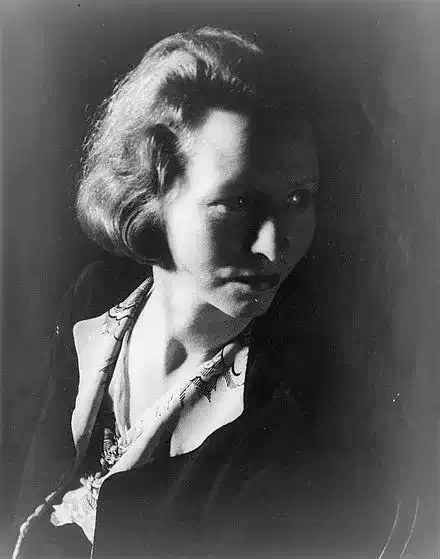
Edna St. Vincent Millay
The Blue Flag in the Bog
God had called us, and we came;
Our loved Earth to ashes left;
Heaven was a neighbor's house,
Open flung to us, bereft.
Gay the lights of Heaven showed,
And 'twas God who walked ahead;
Yet I wept along the road,
Wanting my own house instead.
Wept unseen, unheeded cried,
"All you things my eyes have kissed,
Fare you well! We meet no more,
Lovely, lovely tattered mist!
Weary wings that rise and fall
All day long above the fire !"
Red with heat was every wall,
Rough with heat was every wire
"Fare you well, you little winds
That the flying embers chase!
Fare you well, you shuddering day,
With your hands before your face!
And, ah, blackened by strange blight,
Or to a false sun unfurled,
Now forevermore goodbye,
All the gardens in the world!
On the windless hills of Heaven,
That I have no wish to see,
White, eternal lilies stand,
By a lake of ebony.
But the Earth forevermore
Is a place where nothing grows,
Dawn will come, and no bud break;
Evening, and no blossom close.
Spring will come, and wander slow
Over an indifferent land,
Stand beside an empty creek,
Hold a dead seed in her hand."
God had called us, and we came,
But the blessed road I trod
Was a bitter road to me,
And at heart I questioned God.
"Though in Heaven," I said, "be all
That the heart would most desire,
Held Earth naught save souls of sinners
Worth the saving from a fire?
Withered grass,the wasted growing!
Aimless ache of laden boughs!"
Little things God had forgotten
Called me, from my burning house.
"Though in Heaven," I said, "be all
That the eye could ask to see,
All the things I ever knew
Are this blaze in back of me."
"Though in Heaven," I said, "be all
That the ear could think to lack,
All the things I ever knew
Are this roaring at my back."
It was God who walked ahead,
Like a shepherd to the fold;
In his footsteps fared the weak,
And the weary and the old,
Glad enough of gladness over,
Ready for the peace to be,
But a thing God had forgotten
Was the growing bones of me.
And I drew a bit apart,
And I lagged a bit behind,
And I thought on Peace Eternal,
Lest He look into my mind;
And I gazed upon the sky,
And I thought of Heavenly Rest,
And I slipped away like water
Through the fingers of the blest!
All their eyes were fixed on Glory,
Not a glance brushed over me;
"Alleluia ! Alleluia !"
Up the road,and I was free.
And my heart rose like a freshet,
And it swept me on before,
Giddy as a whirling stick,
Till I felt the earth once more.
All the Earth was charred and black,
Fire had swept from pole to pole;
And the bottom of the sea
Was as brittle as a bowl;
And the timbered mountain-top
Was as naked as a skull,
Nothing left, nothing left,
Of the Earth so beautiful!
"Earth," I said, "how can I leave you?"
"You are all I have," I said;
"What is left to take my mind up,
Living always, and you dead?"
"Speak!" I said, "Oh, tell me something!
Make a sign that I can see!
For a keepsake! To keep always!
Quick! Before God misses me!"
And I listened for a voice;
But my heart was all I heard;
Not a screech-owl, not a loon,
Not a tree-toad said a word.
And I waited for a sign;
Coals and cinders, nothing more;
And a little cloud of smoke
Floating on a valley floor.
And I peered into the smoke
Till it rotted, like a fog:
There, encompassed round by fire,
Stood a blue-flag in a bog!
Little flames came wading out,
Straining, straining towards its stem,
But it was so blue and tall
That it scorned to think of them!
Red and thirsty were their tongues,
As the tongues of wolves must be,
But it was so blue and tall
Oh, I laughed, I cried, to see!
All my heart became a tear,
All my soul became a tower,
Never loved I anything
As I loved that tall blue flower!
It was all the little boats
That had ever sailed the sea,
It was all the little books
That had gone to school with me;
On its roots like iron claws
Rearing up so blue and tall,
It was all the gallant Earth
With its back against a wall!
In a breath, ere I had breathed,
Oh, I laughed, I cried, to see!
I was kneeling at its side,
And it leaned its head on me!
Crumbling stones and sliding sand
Is the road to Heaven now;
Icy at my straining knees
Drags the awful under-tow;
Soon but stepping-stones of dust
Will the road to Heaven be,
Father, Son and Holy Ghost,
Reach a hand and rescue me!
"Therethere, my blue-flag flower;
Hushhushgo to sleep;
That is only God you hear,
Counting up His folded sheep!
Lullabyelullabye
That is only God that calls,
Missing me, seeking me,
Ere the road to nothing falls!
He will set His mighty feet
Firmly on the sliding sand;
Like a little frightened bird
I will creep into His hand;
I will tell Him all my grief,
I will tell Him all my sin;
He will give me half His robe
For a cloak to wrap you in.
Lullabyelullabye"
Rocks the burnt-out planet free!
Father, Son and Holy Ghost,
Reach a hand and rescue me!
Ah, the voice of love at last !
Lo, at last the face of light !
And the whole of His white robe
For a cloak against the night!
And upon my heart asleep
All the things I ever knew!
"Holds Heaven not some cranny, Lord,
For a flower so tall and blue?"
All's well and all's well!
Gay the lights of Heaven show!
In some moist and Heavenly place
We will set it out to grow.
343

William Butler Yeats
A Woman homer Sung
IF any man drew near
When I was young,
I thought, 'He holds her dear,'
And shook with hate and fear.
But O! 'twas bitter wrong
If he could pass her by
With an indifferent eye.
Whereon I wrote and wrought,
And now, being grey,
I dream that I have brought
To such a pitch my thought
That coming time can say,
'He shadowed in a glass
What thing her body was.'
For she had fiery blood
When I was young,
And trod so sweetly proud
As 'twere upon a cloud,
A woman Homer sung,
That life and letters seem
But an heroic dream.
When I was young,
I thought, 'He holds her dear,'
And shook with hate and fear.
But O! 'twas bitter wrong
If he could pass her by
With an indifferent eye.
Whereon I wrote and wrought,
And now, being grey,
I dream that I have brought
To such a pitch my thought
That coming time can say,
'He shadowed in a glass
What thing her body was.'
For she had fiery blood
When I was young,
And trod so sweetly proud
As 'twere upon a cloud,
A woman Homer sung,
That life and letters seem
But an heroic dream.
342
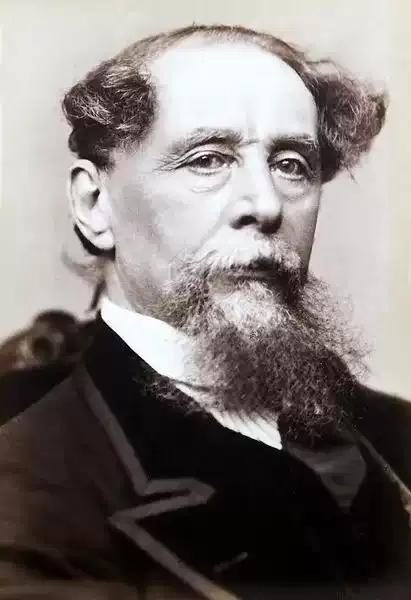
Charles Dickens
George Edmunds' Song
Autumn leaves, autumn leaves, lie strewn around he here;
Autumn leaves, autumn leaves, how sad, how cold, how drear!
How like the hopes of childhood's day,
Thick clust'ring on the bough!
How like those hopes in their decay-
How faded are they now!
Autumn leaves, autumn leaves, lie strewn around me here;
Autumn leaves, autumn leaves, how sad, how cold, how drear!
Wither'd leaves, wither'd leaves, that fly before the gale:
Withered leaves, withered leaves, ye tell a mournful tale,
Of love once true, and friends once kind,
And happy moments fled:
Dispersed by every breath of wind,
Forgotten, changed, or dead!
Autumn leaves, autumn leaves, lie strewn around me here!
Autumn leaves, autumn leaves, how sad, how cold, how drear!
Autumn leaves, autumn leaves, how sad, how cold, how drear!
How like the hopes of childhood's day,
Thick clust'ring on the bough!
How like those hopes in their decay-
How faded are they now!
Autumn leaves, autumn leaves, lie strewn around me here;
Autumn leaves, autumn leaves, how sad, how cold, how drear!
Wither'd leaves, wither'd leaves, that fly before the gale:
Withered leaves, withered leaves, ye tell a mournful tale,
Of love once true, and friends once kind,
And happy moments fled:
Dispersed by every breath of wind,
Forgotten, changed, or dead!
Autumn leaves, autumn leaves, lie strewn around me here!
Autumn leaves, autumn leaves, how sad, how cold, how drear!
341

Ella Wheeler Wilcox
Queries
Well, how has it been with you since we met
That last strange time of a hundred times?
When we met to swear that we could forget—
I your caresses, and you my rhymes—
The rhyme of my lays that rang like a bell,
And the rhyme of my heart with yours, as well?
How has it been since we drank that last kiss,
That was bitter with lees of the wasted wine,
When the tattered remains of a threadbare bliss,
And the worn-out shreds of a joy divine,
With a year's best dreams and hopes, were cast
Into the rag-bag of the Past?
Since Time, the rag-buyer, hurried away,
With a chuckle of glee at a bargain made,
Did you discover, like me, one day,
That, hid in the folds of those garments frayed,
Were priceless jewels and diadems—
The soul's best treasures, the heart's best gems?
Have you, too, found that you could not supply
The place of those jewels so rare and chaste?
Do all that you borrow or beg or buy
Prove to be nothing but skilful paste?
Have you found pleasure, as I found art,
Not all-sufficient to fill your heart?
Do you sometimes sigh for the tattered shreds
Of the old delight that we cast away,
And find no worth in the silken threads
Of newer fabrics we wear to-day?
Have you thought the bitter of that last kiss
Better than sweets of a later bliss?
What idle queries!—or yes or no—
Whatever your answer, I understand
That there is no pathway by which we can go
Back to the dead past's wonderland;
And the gems he purchased from me, from you,
There is no rebuying from Time, the Jew
342
Henry Van Dyke
The Proud Lady
When Stiivoren town was in its prime
And queened the Zuyder Zee,
Its ships went out to every clime
With costly merchantry.
A lady dwelt in that rich town,
The fairest in all the land;
She walked abroad in a velvet gown,
With many rings on her hand.
Her hair was bright as the beaten gold,
Her lips as coral red,
Her roving eyes were blue and bold,
And her heart with pride was fed.
For she was proud of her father's ships,
As she watched them gayly pass;
And pride looked out of her eyes and lips
When she saw herself in the glass.
"Now come," she said to the captains ten,
Who were ready to put to sea,
"Ye are all my men and my father's men,
And what will ye do for me?"
"Go north and south, go east and west,
And get me gifts," she said.
"And he who bringeth me home the best,
With that man will I wed."
So they all fared forth, and sought with care
In many a famous mart,
For satins and silks and jewels rare,
To win that lady's heart.
She looked at them all with never a thought,
And careless put them by;
"I am not fain of the things ye brought,
Enough of these have I."
The last that came was the head of the fleet,
His name was Jan Borel;
He bent his knee at the lady's feet,--
In truth he loved her well.
"I've brought thee home the best i' the world,
A shipful of Danzig corn!"
She stared at him long; her red lips curled,
Her blue eyes filled with scorn.
"Now out on thee, thou feckless kerl,
A loon thou art," she said.
"Am I a starving beggar girl?
Shall I ever lack for bread?"
"Go empty all thy sacks of grain
Into the nearest sea,
And never show thy face again
To make a mock of me."
Then Jan Borel, he hoisted sail,
And out to sea he bore;
He passed the Helder in a gale
And came again no more.
But the grains of corn went drifting down
Like devil-scattered seed,
To sow the harbor of the town
With a wicked growth of weed.
The roots were thick and the silt and sand
Were gathered day by day,
Till not a furlong out from land
A shoal had barred the way.
Then Stavoren town saw evil years,
No ships could out or in,
The boats lay rotting at the piers,
And the mouldy grain in the bin.
The grass-grown streets were all forlorn,
The town in ruin stood,
The lady's velvet gown was torn,
Her rings were sold for food.
Her father had perished long ago,
But the lady held her pride,
She walked with a scornful step and slow,
Till at last in her rags she died.
Yet still on the crumbling piers of the town,
When the midnight moon shines free,
woman walks in a velvet gown
And scatters corn in the sea.
340
James Whitcomb Riley
The Boys
Where are they?--the friends of my childhood enchanted--
The clear, laughing eyes looking back in my own,
And the warm, chubby fingers my palms have so wanted,
As when we raced over
Pink pastures of clover,
And mocked the quail's whir and the bumblebee's drone?
Have the breezes of time blown their blossomy faces
Forever adrift down the years that are flown?
Am I never to see them romp back to their places,
Where over the meadow,
In sunshine and shadow,
The meadow-larks trill, and the bumblebees drone?
Where are they? Ah! dim in the dust lies the clover;
The whippoorwill's call has a sorrowful tone,
And the dove's--I have wept at it over and over;--
I want the glad luster
Of youth, and the cluster
Of faces asleep where the bumblebees drone!
338

Robert Louis Stevenson
As In Their Flight The Birds Of Song
AS in their flight the birds of song
Halt here and there in sweet and sunny dales,
But halt not overlong;
The time one rural song to sing
They pause; then following bounteous gales
Steer forward on the wing:
Sun-servers they, from first to last,
Upon the sun they wait
To ride the sailing blast.
So he awhile in our contested state,
Awhile abode, not longer, for his Sun -
Mother we say, no tenderer name we know -
With whose diviner glow
His early days had shone,
Now to withdraw her radiance had begun.
Or lest a wrong I say, not she withdrew,
But the loud stream of men day after day
And great dust columns of the common way
Between them grew and grew:
And he and she for evermore might yearn,
But to the spring the rivulets not return
Nor to the bosom comes the child again.
And he (O may we fancy so!),
He, feeling time forever flow
And flowing bear him forth and far away
From that dear ingle where his life began
And all his treasure lay -
He, waxing into man,
And ever farther, ever closer wound
In this obstreperous world's ignoble round,
From that poor prospect turned his face away.
337
William Butler Yeats
The Nineteenth Century And After
THOUGH the great song return no more
There's keen delight in what we have:
The rattle of pebbles on the shore
Under the receding wave.
There's keen delight in what we have:
The rattle of pebbles on the shore
Under the receding wave.
337
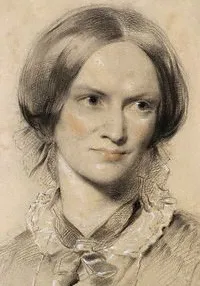
Charlotte Brontë
Regret
Long ago I wished to leave
" The house where I was born; "
Long ago I used to grieve,
My home seemed so forlorn.
In other years, its silent rooms
Were filled with haunting fears;
Now, their very memory comes
O'ercharged with tender tears.
Life and marriage I have known,
Things once deemed so bright;
Now, how utterly is flown
Every ray of light !
'Mid the unknown sea of life
I no blest isle have found;
At last, through all its wild wave's strife,
My bark is homeward bound.
Farewell, dark and rolling deep !
Farewell, foreign shore !
Open, in unclouded sweep,
Thou glorious realm before !
Yet, though I had safely pass'd
That weary, vexed main,
One loved voice, through surge and blast,
Could call me back again.
Though the soul's bright morning rose
O'er Paradise for me,
William ! even from Heaven's repose
I'd turn, invoked by thee !
Storm nor surge should e'er arrest
My soul, exulting then:
All my heaven was once thy breast,
Would it were mine again !
335
Henry Wadsworth Longfellow
Carillon
In the ancient town of Bruges,
In the quaint old Flemish city,
As the evening shades descended,
Low and loud and sweetly blended,
Low at times and loud at times,
And changing like a poet's rhymes,
Rang the beautiful wild chimes
From the Belfry in the market
Of the ancient town of Bruges.
Then, with deep sonorous clangor
Calmly answering their sweet anger,
When the wrangling bells had ended,
Slowly struck the clock eleven,
And, from out the silent heaven,
Silence on the town descended.
Silence, silence everywhere,
On the earth and in the air,
Save that footsteps here and there
Of some burgher home returning,
By the street lamps faintly burning,
For a moment woke the echoes
Of the ancient town of Bruges.
But amid my broken slumbers
Still I heard those magic numbers,
As they loud proclaimed the flight
And stolen marches of the night;
Till their chimes in sweet collision
Mingled with each wandering vision,
Mingled with the fortune-telling
Gypsy-bands of dreams and fancies,
Which amid the waste expanses
Of the silent land of trances
Have their solitary dwelling;
All else seemed asleep in Bruges,
In the quaint old Flemish city.
And I thought how like these chimes
Are the poet's airy rhymes,
All his rhymes and roundelays,
His conceits, and songs, and ditties,
From the belfry of his brain,
Scattered downward, though in vain,
On the roofs and stones of cities!
For by night the drowsy ear
Under its curtains cannot hear,
And by day men go their ways,
Hearing the music as they pass,
But deeming it no more, alas!
Than the hollow sound of brass.
Yet perchance a sleepless wight,
Lodging at some humble inn
In the narrow lanes of life,
When the dusk and hush of night
Shut out the incessant din
Of daylight and its toil and strife,
May listen with a calm delight
To the poet's melodies,
Till he hears, or dreams he hears,
Intermingled with the song,
Thoughts that he has cherished long;
Hears amid the chime and singing
The bells of his own village ringing,
And wakes, and finds his slumberous eyes
Wet with most delicious tears.
Thus dreamed I, as by night I lay
In Bruges, at the Fleur-de-Ble,
Listening with a wild delight
To the chimes that, through the night
Bang their changes from the Belfry
Of that quaint old Flemish city.
335
Henry Van Dyke
Hide and Seek
All the trees are sleeping, all the winds are still,
All the flocks of fleecy clouds have wandered past the hill;
Through the noonday silence, down the woods of June,
Hark, a little hunter's voice comes running with a tune.
"Hide and seek!
"When I speak,
"You must answer me:
"Call again,
"Merry men,
"Coo-ee, coo-ee, coo-ee!"
Now I hear his footsteps, rustling through the grass:
Hidden in my leafy nook, shall I let him pass?
Just a low, soft whistle,--quick the hunter turns,
Leaps upon me laughing, rolls me in the ferns.
"Hold him fast,
"Caught at last!
"Now you're it, you see.
"Hide your eye,
"Till I cry,
"Coo-ee, coo-ee, coo-ee!"
II
Long ago he left me, long and long ago:
Now I wander through the world and seek him high and low;
Hidden safe and happy, in some pleasant place,--
Ah, if I could hear his voice, I soon should find his face.
Far away,
Many a day,
Where can Barney be?
Answer, dear,
Don't you hear?
Coo-ee, coo-ee, coo-ee!
Birds that in the spring-time thrilled his heart with joy,
Flowers he loved to pick for me, mind me of my boy.
Surely he is waiting till my steps come nigh;
Love may hide itself awhile, but love can never die.
Heart, be glad,
The little lad
Will call some day to thee:
"Father dear,
"Heaven is here,
"Coo-ee, coo-ee, coo-ee!"
335
Ella Wheeler Wilcox
Perfectness
All perfect things are saddening in effect.
The autumn wood robed in its scarlet clothes,
The matchless tinting on the royal rose
Whose velvet leaf by no least flaw is flecked,
Love's supreme moment, when the soul unchecked
Soars high as heaven, and its best rapture knows—
These hold a deeper pathos than our woes,
Since they leave nothing better to expect.
Resistless change, when powerless to improve,
Can only mar. The gold will pale to gray;
Nothing remains tomorrow as to-day;
The lose will not seem quite so fait, and love
Must find its measures of delight made less.
Ah, how imperfect is all Perfectness!
337

Johann Wolfgang von Goethe
Happiness And Vision
TOGETHER at the altar we
In vision oft were seen by thee,
Thyself as bride, as bridegroom I.
Oft from thy mouth full many a kiss
In an unguarded hour of bliss
I then would steal, while none were by.
The purest rapture we then knew,
The joy those happy hours gave too,
When tasted, fled, as time fleets on.
What now avails my joy to me?
Like dreams the warmest kisses flee,
Like kisses, soon all joys are gone.
334