
Nostalgia

James Whitcomb Riley
The Home-Going
We must get home--for we have been away
So long it seems forever and a day!
And O so very homesick we have grown,
The laughter of the world is like a moan
In our tired hearing, and its songs as vain,--
We must get home--we must get home again!
We must get home: It hurts so, staying here,
Where fond hearts must be wept out tear by tear,
And where to wear wet lashes means, at best,
When most our lack, the least our hope of rest
When most our need of joy, the more our pain--
We must get home--we must get home again!
We must get home: All is so quiet there:
The touch of loving hands on brow and hair--
Dim rooms, wherein the sunshine is made mild---
The lost love of the mother and the child
Restored in restful lullabies of rain.--
We must get home--we must get home again!
We must get home, where, as we nod and drowse,
Time humors us and tiptoes through the house,
And loves us best when sleeping baby-wise,
With dreams--not tear-drops--brimming our clenched eyes,--
Pure dreams that know nor taint nor earthly stain--
We must get home--we must get home again!
We must get home; and, unremembering there
All gain of all ambitions otherwhere,
Rest--from the feverish victory, and the crown
Of conquest whose waste glory weighs us down.-Fame's
fairest gifts we toss back with disdain--
We must get home--we must get home again!
371
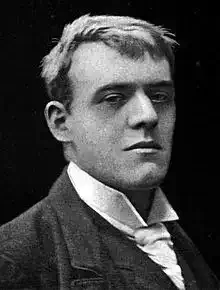
Hilaire Belloc
The Elm
This is the place where Dorothea smiled.
I did not know the reason, nor did she.
But there she stood, and turned, and smiled at me:
A sudden glory had bewitched the child.
The corn at harvest, and a single tree.
This is the place where Dorothea smiled.
I did not know the reason, nor did she.
But there she stood, and turned, and smiled at me:
A sudden glory had bewitched the child.
The corn at harvest, and a single tree.
This is the place where Dorothea smiled.
371

Henry Wadsworth Longfellow
To The River Yvette. (Birds Of Passage. Flight The Fifth)
O lovely river of Yvette!
O darling river! like a bride,
Some dimpled, bashful, fair Lisette,
Thou goest to wed the Orge's tide.
Maincourt, and lordly Dampierre,
See and salute thee on thy way,
And, with a blessing and a prayer,
Ring the sweet bells of St. Forget.
The valley of Chevreuse in vain
Would hold thee in its fond embrace;
Thou glidest from its arms again
And hurriest on with swifter pace.
Thou wilt not stay; with restless feet,
Pursuing still thine onward flight,
Thou goest as one in haste to meet
Her sole desire, her heart's delight.
O lovely river of Yvette!
O darling stream! on balanced wings
The wood-birds sang the chansonnette
That here a wandering poet sings.
368

Robert Louis Stevenson
Air Of Diabelli's
CALL it to mind, O my love.
Dear were your eyes as the day,
Bright as the day and the sky;
Like the stream of gold and the sky above,
Dear were your eyes in the grey.
We have lived, my love, O, we have lived, my love!
Now along the silent river, azure
Through the sky's inverted image,
Softly swam the boat that bore our love,
Swiftly ran the shallow of our love
Through the heaven's inverted image,
In the reedy mazes round the river.
See along the silent river,
See of old the lover's shallop steer.
Berried brake and reedy island,
Heaven below and only heaven above.
Through the sky's inverted image
Swiftly swam the boat that bore our love.
Berried brake and reedy island,
Mirrored flower and shallop gliding by.
All the earth and all the sky were ours,
Silent sat the wafted lovers,
Bound with grain and watched by all the sky,
Hand to hand and eye to . . . eye.
Days of April, airs of Eden,
Call to mind how bright the vanished angel hours,
Golden hours of evening,
When our boat drew homeward filled with flowers.
O darling, call them to mind; love the past, my love.
Days of April, airs of Eden.
How the glory died through golden hours,
And the shining moon arising;
How the boat drew homeward filled with flowers.
Age and winter close us slowly in.
Level river, cloudless heaven,
Islanded reed mazes, silver weirs;
How the silent boat with silver
Threads the inverted forest as she goes,
Broke the trembling green of mirrored trees.
O, remember, and remember
How the berries hung in garlands.
Still in the river see the shallop floats.
Hark! Chimes the falling oar.
Still in the mind
Hark to the song of the past!
Dream, and they pass in their dreams.
Those that loved of yore, O those that loved of yore!
Hark through the stillness, O darling, hark!
Through it all the ear of the mind
Knows the boat of love. Hark!
Chimes the falling oar.
O half in vain they grew old.
Now the halcyon days are over,
Age and winter close us slowly round,
And these sounds at fall of even
Dim the sight and muffle all the sound.
And at the married fireside, sleep of soul and sleep of fancy,
Joan and Darby.
Silence of the world without a sound;
And beside the winter faggot
Joan and Darby sit and dose and dream and wake -
Dream they hear the flowing, singing river,
See the berries in the island brake;
Dream they hear the weir,
See the gliding shallop mar the stream.
Hark! in your dreams do you hear?
Snow has filled the drifted forest;
Ice has bound the . . . stream.
Frost has bound our flowing river;
Snow has whitened all our island brake.
Berried brake and reedy island,
Heaven below and only heaven above azure
Through the sky's inverted image
Safely swam the boat that bore our love.
Dear were your eyes as the day,
Bright ran the stream, bright hung the sky above.
Days of April, airs of Eden.
How the glory died through golden hours,
And the shining moon arising,
How the boat drew homeward filled with flowers.
Bright were your eyes in the night:
We have lived, my love;
O, we have loved, my love.
Now the . . . days are over,
Age and winter close us slowly round.
Vainly time departs, and vainly
Age and winter come and close us round.
Hark the river's long continuous sound.
Hear the river ripples in the reeds.
Lo, in dreams they see their shallop
Run the lilies down and drown the weeds
Mid the sound of crackling faggots.
So in dreams the new created
Happy past returns, to-day recedes,
And they hear once more,
From the old years,
Yesterday returns, to-day recedes,
And they hear with aged hearing warbles
Love's own river ripple in the weeds.
And again the lover's shallop;
Lo, the shallop sheds the streaming weeds;
And afar in foreign countries
In the ears of aged lovers.
And again in winter evens
Starred with lilies . . . with stirring weeds.
In these ears of aged lovers
Love's own river ripples in the reeds.
Dear were your eyes as the day,
Bright as the day and the sky;
Like the stream of gold and the sky above,
Dear were your eyes in the grey.
We have lived, my love, O, we have lived, my love!
Now along the silent river, azure
Through the sky's inverted image,
Softly swam the boat that bore our love,
Swiftly ran the shallow of our love
Through the heaven's inverted image,
In the reedy mazes round the river.
See along the silent river,
See of old the lover's shallop steer.
Berried brake and reedy island,
Heaven below and only heaven above.
Through the sky's inverted image
Swiftly swam the boat that bore our love.
Berried brake and reedy island,
Mirrored flower and shallop gliding by.
All the earth and all the sky were ours,
Silent sat the wafted lovers,
Bound with grain and watched by all the sky,
Hand to hand and eye to . . . eye.
Days of April, airs of Eden,
Call to mind how bright the vanished angel hours,
Golden hours of evening,
When our boat drew homeward filled with flowers.
O darling, call them to mind; love the past, my love.
Days of April, airs of Eden.
How the glory died through golden hours,
And the shining moon arising;
How the boat drew homeward filled with flowers.
Age and winter close us slowly in.
Level river, cloudless heaven,
Islanded reed mazes, silver weirs;
How the silent boat with silver
Threads the inverted forest as she goes,
Broke the trembling green of mirrored trees.
O, remember, and remember
How the berries hung in garlands.
Still in the river see the shallop floats.
Hark! Chimes the falling oar.
Still in the mind
Hark to the song of the past!
Dream, and they pass in their dreams.
Those that loved of yore, O those that loved of yore!
Hark through the stillness, O darling, hark!
Through it all the ear of the mind
Knows the boat of love. Hark!
Chimes the falling oar.
O half in vain they grew old.
Now the halcyon days are over,
Age and winter close us slowly round,
And these sounds at fall of even
Dim the sight and muffle all the sound.
And at the married fireside, sleep of soul and sleep of fancy,
Joan and Darby.
Silence of the world without a sound;
And beside the winter faggot
Joan and Darby sit and dose and dream and wake -
Dream they hear the flowing, singing river,
See the berries in the island brake;
Dream they hear the weir,
See the gliding shallop mar the stream.
Hark! in your dreams do you hear?
Snow has filled the drifted forest;
Ice has bound the . . . stream.
Frost has bound our flowing river;
Snow has whitened all our island brake.
Berried brake and reedy island,
Heaven below and only heaven above azure
Through the sky's inverted image
Safely swam the boat that bore our love.
Dear were your eyes as the day,
Bright ran the stream, bright hung the sky above.
Days of April, airs of Eden.
How the glory died through golden hours,
And the shining moon arising,
How the boat drew homeward filled with flowers.
Bright were your eyes in the night:
We have lived, my love;
O, we have loved, my love.
Now the . . . days are over,
Age and winter close us slowly round.
Vainly time departs, and vainly
Age and winter come and close us round.
Hark the river's long continuous sound.
Hear the river ripples in the reeds.
Lo, in dreams they see their shallop
Run the lilies down and drown the weeds
Mid the sound of crackling faggots.
So in dreams the new created
Happy past returns, to-day recedes,
And they hear once more,
From the old years,
Yesterday returns, to-day recedes,
And they hear with aged hearing warbles
Love's own river ripple in the weeds.
And again the lover's shallop;
Lo, the shallop sheds the streaming weeds;
And afar in foreign countries
In the ears of aged lovers.
And again in winter evens
Starred with lilies . . . with stirring weeds.
In these ears of aged lovers
Love's own river ripples in the reeds.
368

Emily Dickinson
A loss of something ever felt I
A loss of something ever felt I-
The first that I could recollect
Bereft I was-of what I knew not
Too young that any should suspect
A Mourner walked among the children
I notwithstanding went about
As one bemoaning a Dominion
Itself the only Prince cast out-
Elder, Today, a session wiser
And fainter, too, as Wiseness is-
I find myself still softly searching
For my Delinguent Palaces-
And a Suspicion, like a Finger
Touches my Forehead now and then
That I am looking oppositely
For the site of the Kingdom of Heaven-
367

Carl Sandburg
Population Drifts
New-mown hay smell and wind of the plain made her
a woman whose ribs had the power of the hills in
them and her hands were tough for work and there
was passion for life in her womb.
She and her man crossed the ocean and the years that
marked their faces saw them haggling with landlords
and grocers while six children played on the stones
and prowled in the garbage cans.
One child coughed its lungs away, two more have adenoids
and can neither talk nor run like their mother,
one is in jail, two have jobs in a box factory
And as they fold the pasteboard, they wonder what the
wishing is and the wistful glory in them that flutters
faintly when the glimmer of spring comes on
the air or the green of summer turns brown:
They do not know it is the new-mown hay smell calling
and the wind of the plain praying for them to come
back and take hold of life again with tough hands
and with passion.
366

William Butler Yeats
Down By The Salley Gardens
DOWN by the salley gardens my love and I did meet;
She passed the salley gardens with little snow-white feet.
She bid me take love easy, as the leaves grow on the tree;
But I, being young and foolish, with her would not agree.
In a field by the river my love and I did stand,
And on my leaning shoulder she laid her snow-white hand.
She bid me take life easy, as the grass grows on the weirs;
But I was young and foolish, and now am full of tears.
369
Henry Wadsworth Longfellow
Allah. (From The German Of Mahlmann)
Allah gives light in darkness,
Allah gives rest in pain,
Cheeks that are white with weeping
Allah paints red again.
The flowers and the blossoms wither,
Years vanish with flying fleet;
But my heart will live on forever,
That here in sadness beat.
Gladly to Allah's dwelling
Yonder would I take flight;
There will the darkness vanish,
There will my eyes have sight.
366
Henry Van Dyke
Dulcis Memoria
Long, long ago I heard a little song,
(Ah, was it long ago, or yesterday?)
So lowly, slowly wound the tune along,
That far into my heart it found the way:
A melody consoling and endearing;
And still, in silent hours, I'm often hearing
The small, sweet song that does not die away.
Long, long ago I saw a little flower,-(
Ah, was it long ago, or yesterday?)
So fair of face and fragrant for an hour,
That something dear to me it seemed to say:
A thought of joy that blossomed into being
Without a word; and now I'm often seeing
The friendly flower that does not fade away.
Long, long ago we had a little child,-(
Ah, was it long ago, or yesterday?)
Into his mother's eyes and mine he smiled
Unconscious love; warm in our arms he lay.
An angel called! Dear heart, we could not hold him;
Yet secretly your arms and mine infold him--
Our little child who does not go away.
Long, long ago? Ah, memory, make it clear-(
It was not long ago, but yesterday,)
So little and so helpless and so dear
Let not the song be lost, the flower decay!
His voice, his waking eyes, his gentle sleeping:
The smallest things are safest in thy keeping.
Sweet memory, keep our child with us always.
365

Sara Teasdale
Gray Eyes
It was April when you came
The first time to me,
And my first look in your eyes
Was like my first look at the sea.
We have been together
Four Aprils now
Watching for the green
On the swaying willow bough;
Yet whenever I turn
To your gray eyes over me,
It is as though I looked
For the first time at the sea.
The first time to me,
And my first look in your eyes
Was like my first look at the sea.
We have been together
Four Aprils now
Watching for the green
On the swaying willow bough;
Yet whenever I turn
To your gray eyes over me,
It is as though I looked
For the first time at the sea.
366
Emily Dickinson
Exultation is the going
Exultation is the going
Of an inland soul to sea,
Past the houses-past the headlands-
Into deep Eternity-
Bred as we, among the mountains,
Can the sailor understand
The divine intoxication
Of the first league out from land?
Of an inland soul to sea,
Past the houses-past the headlands-
Into deep Eternity-
Bred as we, among the mountains,
Can the sailor understand
The divine intoxication
Of the first league out from land?
365

Ella Wheeler Wilcox
The Yellow-Covered Almanac
I left the farm when mother died and changed my place of dwelling
To daughter Susie’s stylish house right on the city street:
And there was them before I came that sort of scared me, telling
How I would find the town folks’ ways so difficult to meet;
They said I’d have no comfort in the rustling, fixed-up throng,
And I’d have to wear stiff collars every weekday, right along.
I find I take to city ways just like a duck to water;
I like the racket and the noise and never tire of shows;
And there’s no end of comfort in the mansion of my daughter,
And everything is right at hand and money freely flows;
And hired help is all about, just listenin’ to my call –
But I miss the yellow almanac off my old kitchen wall.
The house is full of calendars from the attic to the cellar,
They’re painted in all colours and are fancy like to see,
But in this one in particular I’m not a modern feller,
And the yellow-covered almanac is good enough for me.
I’m used to it, I’ve seen it round from boyhood to old age,
And I rather like the jokin’ at the bottom of the page.
I like the way its ‘S’ stood out to show the week’s beginning,
(In these new-fangled calendars the days seem sort of mixed) ,
And the man upon the cover, though he wa’n’t exactly winnin’,
With lungs and liver all exposed, still showed how we are fixed;
And the letters and credentials hat was writ to Mr. Ayer
I’ve often on a rainy day found readin’ pretty fair.
I tried to buy one recently; there wa’n’t none in the city!
They toted out great calendars, in every shape and style.
I looked at them in cold disdain, and answered ‘em in pity –
‘I’d rather have my almanac than all that costly pile.’
And though I take to city life, I’m lonesome after all
For that old yellow almanac upon my kitchen wall.
364
James Whitcomb Riley
Friday Afternoon
To William Morris Pierson
[1868-1870]
Of the wealth of facts and fancies
That our memories may recall,
The old school-day romances
Are the dearest, after all!--.
When some sweet thought revises
The half-forgotten tune
That opened 'Exercises'
On 'Friday Afternoon.'
We seem to hear the clicking
Of the pencil and the pen,
And the solemn, ceaseless ticking
Of the timepiece ticking then;
And we note the watchful master,
As he waves the warning rod,
With our own heart beating faster
Than the boy's who threw the wad.
Some little hand uplifted,
And the creaking of a shoe:--
A problem left unsifted
For the teacher's hand to do:
The murmured hum of learning--
And the flutter of a book;
The smell of something burning,
And the school's inquiring look.
The bashful boy in blushes;
And the girl, with glancing eyes,
Who hides her smiles, and hushes
The laugh about to rise,--
Then, with a quick invention,
Assumes a serious face,
To meet the words, 'Attention!
Every scholar in his place!'
The opening song, page 20.--
Ah! dear old 'Golden Wreath,'
You willed your sweets in plenty;
And some who look beneath
The leaves of Time will linger,
And loving tears will start,
As Fancy trails her finger
O'er the index of the heart.
'Good News from Home'--We hear it
Welling tremulous, yet clear
And holy as the spirit
Of the song we used to hear-
'Good news for me' (A throbbing
And an aching melody)-'
Has come across the'--(sobbing,
Yea, and salty) 'dark blue sea!'
Or the paean 'Scotland's burning!'
With its mighty surge and swell
Of chorus, still returning
To its universal yell--
Till we're almost glad to drop to
Something sad and full of pain--
And 'Skip verse three,' and stop, too,
Ere our hearts are broke again.
Then 'the big girls'' compositions,
With their doubt, and hope, and glow
Of heart and face,--conditions
Of 'the big boys'--even so,--
When themes of 'Spring,' and 'Summer'
And of 'Fall,' and 'Winter-time'
Droop our heads and hold us dumber
Than the sleigh-bell's fancied chime.
Elocutionary science-(
Still in changeless infancy!)--
With its 'Cataline's Defiance,'
And 'The Banner of the Free':
Or, lured from Grandma's attic,
A ramshackle 'rocker' there,
Adds a skreek of the dramatic
To the poet's 'Old Arm-Chair.'
Or the 'Speech of Logan' shifts us
From the pathos, to the fire;
And Tell (with Gessler) lifts us
Many noble notches higher.--
Till a youngster, far from sunny,
With sad eyes of watery blue,
Winds up with something 'funny,'
Like 'Cock-a-doodle-do!'
Then a dialogue--selected
For its realistic worth:--
The Cruel Boy detected
With a turtle turned to earth
Back downward; and, in pleading,
The Good Boy--strangely gay
At such a sad proceeding--
Says, 'Turn him over, pray!'
So the exercises taper
Through gradations of delight
To the reading of 'The Paper,'
Which is entertaining--quite!
For it goes ahead and mentions
'If a certain Mr. O.
Has serious intentions
That he ought to tell her so.'
It also 'Asks permission
To intimate to 'John'
The dubious condition
Of the ground he's standing on';
And, dropping the suggestion
To 'mind what he's about,'
It stuns him with the question:
'Does his mother know he's out?'
And among the contributions
To this 'Academic Press'
Are 'Versified Effusions'
By--'Our lady editress'--
Which fact is proudly stated
By the CHIEF of the concern,-'
Though the verse communicated
Bears the pen-name 'Fanny Fern.' '
. . . . . .
When all has been recited,
And the teacher's bell is heard,
And visitors, invited,
Have dropped a kindly word,
A hush of holy feeling
Falls down upon us there,
As though the day were kneeling,
With the twilight for the prayer.
. . . . . .
Midst the wealth of facts and fancies
That our memories may recall,
Thus the old school-day romances
Are the dearest, after all!--
When some sweet thought revises
The half-forgotten tune
That opened 'Exercises,'
On 'Friday Afternoon.'
365

Johann Wolfgang von Goethe
The Traveller And The Farm-Maiden
HE.
CANST thou give, oh fair and matchless maiden,
'Neath the shadow of the lindens yonder,--
Where I'd fain one moment cease to wander,--
Food and drink to one so heavy laden?
SHE.
Wouldst thou find refreshment, traveller weary,
Bread, ripe fruit and cream to meet thy wishes,--
None but Nature's plain and homely dishes,--
Near the spring may soothe thy wanderings dreary.
HE.
Dreams of old acquaintance now pass through me,
Ne'er-forgotten queen of hours of blisses.
Likenesses I've often found, but this is
One that quite a marvel seemeth to me!
SHE.
Travellers often wonder beyond measure,
But their wonder soon see cause to smother;
Fair and dark are often like each other,
Both inspire the mind with equal pleasure.
HE.
Not now for the first time I surrender
To this form, in humble adoration;
It was brightest midst the constellation
In the hail adorn'd with festal splendour.
SHE.
Be thou joyful that 'tis in my power
To complete thy strange and merry story!
Silks behind her, full of purple glory,
Floated, when thou saw'st her in that hour.
HE.
No, in truth, thou hast not sung it rightly!
Spirits may have told thee all about it;
Pearls and gems they spoke of, do not doubt it,--
By her gaze eclipsed,--it gleam'd so brightly!
SHE.
This one thing I certainly collected:
That the fair one--(say nought, I entreat thee!)
Fondly hoping once again to meet thee,
Many a castle in the air erected.
HE.
By each wind I ceaselessly was driven,
Seeking gold and honour, too, to capture!
When my wand'rings end, then oh, what rapture,
If to find that form again 'tis given!
SHE.
'Tis the daughter of the race now banish'd
That thou seest, not her likeness only;
Helen and her brother, glad though lonely,
Till this farm of their estate now vanish'd.
HE.
But the owner surely is not wanting
Of these plains, with ev'ry beauty teeming?
Verdant fields, broad meads, and pastures gleaming,
Gushing springs, all heav'nly and enchanting.
SHE.
Thou must hunt the world through, wouldst thou find him!--
We have wealth enough in our possession,
And intend to purchase the succession,
When the good man leaves the world behind him.
HE.
I have learnt the owner's own condition,
And, fair maiden, thou indeed canst buy it;
But the cost is great, I won't deny it,--
Helen is the price,--with thy permission!
SHE.
Did then fate and rank keep us asunder,
And must Love take this road, and no other?
Yonder comes my dear and trusty brother;
What will he say to it all, I wonder?
364
Hilaire Belloc
The Fragment
Towards the evening of her splendid day
Those who are little children now shall say
(Finding this verse),'Who wrote it, Juliet?'
And Juliet answer gently, 'I forget.'
Those who are little children now shall say
(Finding this verse),'Who wrote it, Juliet?'
And Juliet answer gently, 'I forget.'
362
Ella Wheeler Wilcox
The Lady And The Dame
So thou hast the art, good dame, thou swearest,
To keep Time's perishing touch at bay
From the roseate splendor of the cheek so tender,
And the silver threads from the gold away;
And the tell-tale years that have hurried by us
Shall tiptoe back, and, with kind good-will,
They shall take their traces from off our faces,
If we will trust to thy magic skill.
Thou speakest fairly; but if I listen
And buy thy secret and prove its truth,
Hast thou the potion and magic lotion
To give me also the heart of youth?
With the cheek of rose and the eye of beauty,
And the lustrous locks of life's lost prime,
Wilt thou bring thronging each hope and longing
That made the glory of that dead Time?
When the sap in the trees sets young buds bursting,
And the song of the birds fills the air like spray,
Will rivers of feeling come once more stealing
From the beautiful hills of the far-away?
Wilt thou demolish the tower of reason
And fling forever down into the dust,
The caution time brought me, the lessons life taught me,
And put in their places my old sweet trust?
If Time's footprint from my brow is driven,
Canst thou, too, take with thy subtle powers
The burden of thinking, and let me go drinking
The careless pleasures of youth's bright hours?
If silver threads from my tresses vanish,
If a glow once more in my pale cheek gleams,
Wilt thou slay duty and give back the beauty
Of days untroubled by aught but dreams?
When the soft, fair arms of the siren Summer
Encircle the earth in their languorous fold,
Will vast, deep oceans of sweet emotions
Surge through my veins as they surged of old?
Canst thou bring back from a day long vanished
The leaping pulse and the boundless aim?
I will pay thee double for all thy trouble,
If thou wilt restore all these, good dame.
363
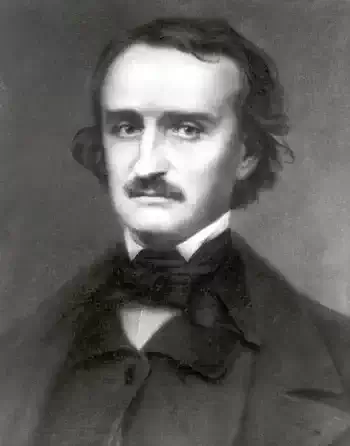
Edgar Allan Poe
Dreams
Oh! that my young life were a lasting dream!
My spirit not awakening, till the beam
Of an Eternity should bring the morrow.
Yes! tho' that long dream were of hopeless sorrow,
'Twere better than the cold reality
Of waking life, to him whose heart must be,
And hath been still, upon the lovely earth,
A chaos of deep passion, from his birth.
But should it be- that dream eternally
Continuing- as dreams have been to me
In my young boyhood- should it thus be given,
'Twere folly still to hope for higher Heaven.
For I have revell'd, when the sun was bright
I' the summer sky, in dreams of living light
And loveliness,- have left my very heart
In climes of my imagining, apart
From mine own home, with beings that have been
Of mine own thought- what more could I have seen?
'Twas once- and only once- and the wild hour
From my remembrance shall not pass- some power
Or spell had bound me- 'twas the chilly wind
Came o'er me in the night, and left behind
Its image on my spirit- or the moon
Shone on my slumbers in her lofty noon
Too coldly- or the stars- howe'er it was
That dream was as that night-wind- let it pass.
I have been happy, tho' in a dream.
I have been happy- and I love the theme:
Dreams! in their vivid coloring of life,
As in that fleeting, shadowy, misty strife
Of semblance with reality, which brings
To the delirious eye, more lovely things
Of Paradise and Love- and all our own!
Than young Hope in his sunniest hour hath known.
359
Henry Wadsworth Longfellow
Italian Scenery
Night rests in beauty on Mont Alto.
Beneath its shade the beauteous Arno sleeps
In vallombrosa's bosom, and dark trees
Bend with a calm and quiet shadow down
Upon the beauty of that silent river.
Still in the west a melancholy smile
Mantles the lips of day, and twilight pale
Moves like a spectre in the dusky sky,
While eve's sweet star on the fast-fading year
Smiles calmly. Music steals at intervals
Across the water, with a tremulous swell,
From out the upland dingle of tall firs;
And a faint footfall sounds, where, dim and dark,
Hangs the gray willow from the river's brink,
O'ershadowing its current. Slowly there
The lover's gondola drops down the stream,
Silent, save when its dipping oar is heard,
Or in its eddy sighs the rippling wave.
Mouldering and moss-grown through the lapse of years,
In motionless beauty stands the giant oak;
Whilst those that saw its green and flourishing youth
Are gone and are forgotten. Soft the fount,
Whose secret springs the star-light pale discloses,
Gushes in hollow music; and beyond
The broader river sweeps its silent way,
Mingling a silver current with that sea,
Whose waters have no tides, coming nor going.
On noiseless wing along that fair blue sea
The halcyon flits; and where the wearied storm
Left a loud moaning, all is peace again.
A calm is on the deep. The winds that came
O'er the dark sea-surge with a tremulous breathing,
And mourned on the dark cliff where weeds grew rank,
And to the autumnal death-dirge the deep sea
Heaved its long billows, with a cheerless song
Have passed away to the cold earth again,
Like a wayfaring mourner. Silently
Up from the calm sea's dim and distant verge,
Full and unveiled, the moon's broad disk emerges.
On Tivoli, and where the fairy hues
Of autumn glow upon Abruzzi's woods,
The silver light is spreading. Far above,
Encompassed with their thin, cold atmosphere,
The Apennines uplift their snowy brows,
Glowing with colder beauty, where unheard
The eagle screams in the fathomless, ether,
And stays his wearied wing. Here let us pause.
The spirit of these solitudes -- the soul
That dwells within these steep and difficult places--
Spearks a mysterious language to mine own,
And brings unutterable musings. Earth
Sleeps in the shades of nightfall, and the sea
Spreads like a thin blue haze beneath my feet;
Whilst the gray columns and the mouldering tombs
Of the Imperial City, hidden deep
Beneath the mantle of their shadows, rest.
My spirit looks on earth. A heavnly voice
Comes silently: 'Dreamer, is earth thy dwelling?
Lo! Nursed within that fair and fruitful bosom,
Which has sustained thy being, and within
The colder breast of Ocean, lie the germs
Of thine own dissolution! E'en the air,
That fans the clear blue sky, and gives thee strength,
Up from the sullen lake of mouldering reeds,
And the wide waste of forest, where the osier
Thrives in the damp and motionless atmosphere,
Shall bring the dire and wasting pestilence,
And blight they cheek. Dram thou of higher things:
This world is not thy home!' And yet my eye
Rests upon earth again. How beautiful,
Where wild Velino heaves its sullen aves
Down the high cliff of gray and shapeless granite,
Hung on the curling mist, the moonlight bow
Arches the perilous river! A soft light
Silvers the Albanian mountains, and the haze
That rests upon their summits mellows down
The austerer features of their beauty. Faint
And dim-discovered glow, the Sabine hills;
And, listening to the sea's monotonous shell,
High on the cliffs of Terracina stands
The castle of the royal Goth* in ruins.
But night is in her wane: day's early flush
Glows like a hectic on her fading cheek,
Wasting its beauty. And the opening dawn
With cheerful luster lights the royal city,
Where, with its proud tiara of dark towers,
It sleeps upon its own romantic bay.
359
Ella Wheeler Wilcox
Two Sunsets
In the fair morning of his life,
When his pure heart lay in his breast,
Panting, with all that wild unrest
To plunge into the great world's strife
That fills young hearts with mad desire,
He saw a sunset. Red and gold
The burning billows surged and rolled,
And upward tossed their caps of fire.
He looked. And as he looked the sight
Sent from his soul through breast and brain
Such intense joy, it hurt like pain.
His heart seemed bursting with delight.
So near the Unknown seemed, so close
He might have grasped it with his hand.
He felt his inmost soul expand,
As sunlight will expand a rose.
One day he heard a singing strain--
A human voice, in bird-like trills.
He paused, and little rapture-rills
Went trickling downward through each vein.
And in his heart the whole day long,
As in a temple veiled and dim,
He kept and bore about with him
The beauty of that singer's song.
And then? But why relate what then?
His smoldering heart flamed into fire--
He had his one supreme desire,
And plunged into the world of men.
For years queen Folly held her sway.
With pleasures of the grosser kind
She fed his flesh and drugged his mind,
Till, shamed, he sated turned away.
He sought his boyhood's home. That hour
Triumphant should have been, in sooth,
Since he went forth an unknown youth,
And came back crowned with wealth and power.
The clouds made day a gorgeous bed;
He saw the splendor of the sky
With unmoved heart and stolid eye;
He knew only West was red.
Then suddenly a fresh young voice
Rose, bird-like, from some hidden place,
He did not even turn his face;
It struck him simply as a noise.
He trod the old paths up and down.
Their ruch-hued leaves by Fall winds whirled--
How dull they were--how dull the world--
Dull even in the pulsing town.
O! worst of punishments, that brings
A blunting of all finer sense,
A loss of feelings keen, intense,
And dulls us to the higher things.
O! penalty most dire, most sure,
Swift following after gross delights,
That we no more see beauteous sights,
Or hear as hear the good and pure.
O! shape more hideous and more dread
Than Vengeance takes in creed-taught minds,
This certain doom that blunts and blinds,
And strikes the holiest feelings dead.
359

Dorothy Parker
Nocturne
Always I knew that it could not last
(Gathering clouds, and the snowflakes flying),
Now it is part of the golden past
(Darkening skies, and the night-wind sighing);
It is but cowardice to pretend.
Cover with ashes our love's cold crater-
Always I've known that it had to end
Sooner or later.
Always I knew it would come like this
(Pattering rain, and the grasses springing),
Sweeter to you is a new love's kiss
(Flickering sunshine, and young birds singing).
Gone are the raptures that once we knew,
Now you are finding a new joy greater-
Well, I'll be doing the same thing, too,
Sooner or later.
361
Henry Wadsworth Longfellow
To The Driving Cloud
Gloomy and dark art thou, O chief of the mighty Omahas;
Gloomy and dark as the driving cloud, whose name thou hast taken!
Wrapped in thy scarlet blanket, I see thee stalk through the city's
Narrow and populous streets, as once by the margin of rivers
Stalked those birds unknown, that have left us only their
footprints.
What, in a few short years, will remain of thy race but the
footprints?
How canst thou walk these streets, who hast trod the green turf
of the prairies!
How canst thou breathe this air, who hast breathed the sweet air
of the mountains!
Ah! 'tis in vain that with lordly looks of disdain thou dost
challenge
Looks of disdain in return, and question these walls and these
pavements,
Claiming the soil for thy hunting-grounds, while down-trodden
millions
Starve in the garrets of Europe, and cry from its caverns that
they, too,
Have been created heirs of the earth, and claim its division!
Back, then, back to thy woods in the regions west of the Wabash!
There as a monarch thou reignest. In autumn the leaves of the
maple
Pave the floors of thy palace-halls with gold, and in summer
Pine-trees waft through its chambers the odorous breath of their
branches.
There thou art strong and great, a hero, a tamer of horses!
There thou chasest the stately stag on the banks of the Elkhorn,
Or by the roar of the Running-Water, or where the Omaha
Calls thee, and leaps through the wild ravine like a brave of the
Blackfeet!
Hark! what murmurs arise from the heart of those mountainous
deserts?
Is it the cry of the Foxes and Crows, or the mighty Behemoth,
Who, unharmed, on his tusks once caught the bolts of the thunder,
And now lurks in his lair to destroy the race of the red man?
Far more fatal to thee and thy race than the Crows and the Foxes,
Far more fatal to thee and thy race than the tread of Behemoth,
Lo! the big thunder-canoe, that steadily breasts the Missouri's
Merciless current! and yonder, afar on the prairies, the
camp-fires
Gleam through the night; and the cloud of dust in the gray of the
daybreak
Marks not the buffalo's track, nor the Mandan's dexterous
horse-race;
It is a caravan, whitening the desert where dwell the Camanches!
Ha! how the breath of these Saxons and Celts, like the blast of
the east-wind,
Drifts evermore to the west the scanty smokes of thy wigwams!
360
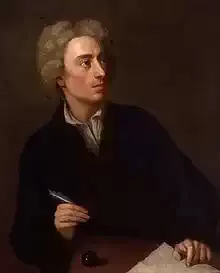
Alexander Pope
Lines Written in Windsor Forest
All hail, once pleasing, once inspiring shade!
Scene of my youthful loves and happier hours!
Where the kind Muses met me as I stray'd,
And gently press'd my hand, and said 'Be ours!-
Take all thou e'er shalt have, a constant Muse:
At Court thou may'st be liked, but nothing gain:
Stock thou may'st buy and sell, but always lose,
And love the brightest eyes, but love in vain.'
359
Henry Van Dyke
New Year's Eve
I
The other night I had a dream, most clear
And comforting, complete
In every line, a crystal sphere,
And full of intimate and secret cheer.
Therefore I will repeat
That vision, dearest heart, to you,
As of a thing not feigned, but very true,
Yes, true as ever in my life befell;
And you, perhaps, can tell
Whether my dream was really sad or sweet.
II
The shadows flecked the elm-embowered street
I knew so well, long, long ago;
And on the pillared porch where Marguerite
Had sat with me, the moonlight lay like snow.
But she, my comrade and my friend of youth,
Most gaily wise,
Most innocently loved, --
She of the blue-grey eyes
That ever smiled and ever spoke the truth, --
From that familiar dwelling, where she moved
Like mirth incarnate in the years before,
Had gone into the hidden house of Death.
I thought the garden wore
White mourning for her blessed innocence,
And the syringa's breath
Came from the corner by the fence,
Where she had made her rustic seat,
With fragrance passionate, intense,
As if it breathed a sigh for Marguerite.
My heart was heavy with a sense
Of something good forever gone. I sought
Vainly for some consoling thought,
Some comfortable word that I could say
To the sad father, whom I visited again
For the first time since she had gone away.
The bell rang shrill and lonely, -- then
The door was opened, and I sent my name
To him, -- but ah! 't was Marguerite who came!
There in the dear old dusky room she stood
Beneath the lamp, just as she used to stand,
In tender mocking mood.
"You did not ask for me," she said,
"And so I will not let you take my hand;
"But I must hear what secret talk you planned
"With father. Come, my friend, be good,
"And tell me your affairs of state:
"Why you have stayed away and made me wait
"So long. Sit down beside me here, -"
And, do you know, it seemed a year
"Since we have talked together, -- why so late?"
Amazed, incredulous, confused with joy
I hardly dared to show,
And stammering like a boy,
I took the place she showed me at her side;
And then the talk flowed on with brimming tide
Through the still night,
While she with influence light
Controlled it, as the moon the flood.
She knew where I had been, what I had done,
What work was planned, and what begun;
My troubles, failures, fears she understood,
And touched them with a heart so kind,
That every care was melted from my mind,
And every hope grew bright,
And life seemed moving on to happy ends.
(Ah, what self-beggared fool was he
That said a woman cannot be
The very best of friends?)
Then there were memories of old times,
Recalled with many a gentle jest;
And at the last she brought the book of rhymes
We made together, trying to translate
The Songs of Heine (hers were always best).
"Now come," she said,
"To-night we will collaborate
"Again; I'll put you to the test.
"Here's one I never found the way to do, -"
The simplest are the hardest ones, you know, -"
I give this song to you."
And then she read:
Mein kind, wir waren Kinder,
Zei Kinder, jung und froh.
* * * * * * * * * *
But all the while a silent question stirred
Within me, though I dared not speak the word:
"Is it herself, and is she truly here,
"And was I dreaming when I heard
"That she was dead last year?
"Or was it true, and is she but a shade
"Who brings a fleeting joy to eye and ear,
"Cold though so kind, and will she gently fade
"When her sweet ghostly part is played
"And the light-curtain falls at dawn of day?"
But while my heart was troubled by this fear
So deeply that I could not speak it out,
Lest all my happiness should disappear,
I thought me of a cunning way
To hide the question and dissolve the doubt.
"Will you not give me now your hand,
"Dear Marguerite," I asked, "to touch and hold,
"That by this token I may understand
"You are the same true friend you were of old?"
She answered with a smile so bright and calm
It seemed as if I saw new stars arise
In the deep heaven of her eyes;
And smiling so, she laid her palm
In mine. Dear God, it was not cold
But warm with vital heat!
"You live!" I cried, "you live, dear Marguerite!"
Then I awoke; but strangely comforted,
Although I knew again that she was dead.
III
Yes, there's the dream! And was it sweet or sad?
Dear mistress of my waking and my sleep,
Present reward of all my heart's desire,
Watching with me beside the winter fire,
Interpret now this vision that I had.
But while you read the meaning, let me keep
The touch of you: for the Old Year with storm
Is passing through the midnight, and doth shake
The corners of the house, -- man oh! my heart would break
Unless both dreaming and awake
My hand could feel your hand was warm, warm, warm!
360
Edgar Allan Poe
Bridal Ballad
The ring is on my hand,
And the wreath is on my brow;
Satin and jewels grand
Are all at my command,
And I am happy now.
And my lord he loves me well;
But, when first he breathed his vow,
I felt my bosom swell
For
the words rang as a knell,
And the voice seemed his who fell
In the battle down the dell,
And who is happy now.
But he spoke to re-assure me,
And he kissed my pallid brow,
While a reverie came o'er me,
And to the church-yard bore me,
And I sighed to him before me,
Thinking him dead D'Elormie,
"Oh, I am happy now!"
And thus the words were spoken,
And this the plighted vow,
And, though my faith be broken,
And, though my heart be broken,
Here is a ring, as token
That I am happy now!
Would God I could awaken!
For I dream I know not how!
And my soul is sorely shaken
Lest an evil step be taken,
Lest the dead who is forsaken
May not be happy now.
356