
Nostalgia

Alfred Lord Tennyson
Recollections of the Arabian Nights.
When the breeze of a joyful dawn blew free
In the silken sail of infancy,
The tide of time flow'd back with me,
The forward-flowing tide of time;
And many a sheeny summer-morn,
Adown the Tigris I was borne,
By Bagdat's shrines of fretted gold,
High-walled gardens green and old;
True Mussulman was I and sworn,
For it was in the golden prime
Of good Haroun Alraschid.
Anight my shallop, rustling thro'
The low and bloomed foliage, drove
The fragrant, glistening deeps, and clove
The citron-shadows in the blue:
By garden porches on the brim,
The costly doors flung open wide,
Gold glittering thro' lamplight dim,
And broider'd sofas on each side:
In sooth it was a goodly time,
For it was in the golden prime
Of good Haroun Alraschid.
Often, where clear-stemm'd platans guard
The outlet, did I turn away
The boat-head down a broad canal
From the main river sluiced, where all
The sloping of the moon-lit sward
Was damask-work, and deep inlay
Of braided blooms unmown, which crept
Adown to where the water slept.
A goodly place, a goodly time,
For it was in the golden prime
Of good Haroun Alraschid.
A motion from the river won
Ridged the smooth level, bearing on
My shallop thro' the star-strown calm,
Until another night in night
I enter'd, from the clearer light,
Imbower'd vaults of pillar'd palm,
Imprisoning sweets, which, as they clomb
Heavenward, were stay'd beneath the dome
Of hollow boughs.--A goodly time,
For it was in the golden prime
Of good Haroun Alraschid.
Still onward; and the clear canal
Is rounded to as clear a lake.
From the green rivage many a fall
Of diamond rillets musical,
Thro' little crystal arches low
Down from the central fountain's flow
Fall'n silver-chiming, seem'd to shake
The sparkling flints beneath the prow.
A goodly place, a goodly time,
For it was in the golden prime
Of good Haroun Alraschid.
Above thro' many a bowery turn
A walk with vary-colour'd shells
Wander'd engrain'd. On either side
All round about the fragrant marge
From fluted vase, and brazen urn
In order, eastern flowers large,
Some dropping low their crimson bells
Half-closed, and others studded wide
With disks and tiars, fed the time
With odour in the golden prime
Of good Haroun Alraschid.
Far off, and where the lemon-grove
In closest coverture upsprung,
The living airs of middle night
Died round the bulbul as he sung;
Not he: but something which possess'd
The darkness of the world, delight,
Life, anguish, death, immortal love,
Ceasing not, mingled, unrepress'd,
Apart from place, withholding time,
But flattering the golden prime
Of good Haroun Alraschid.
Black the garden-bowers and grots
Slumber'd: the solemn palms were ranged
Above, unwoo'd of summer wind:
A sudden splendour from behind
Flush'd all the leaves with rich gold-green,
And, flowing rapidly between
Their interspaces, counterchanged
The level lake with diamond-plots
Of dark and bright. A lovely time,
For it was in the golden prime
Of good Haroun Alraschid.
Dark-blue the deep sphere overhead,
Distinct with vivid stars inlaid,
Grew darker from that under-flame:
So, leaping lightly from the boat,
With silver anchor left afloat,
In marvel whence that glory came
Upon me, as in sleep I sank
In cool soft turf upon the bank,
Entranced with that place and time,
So worthy of the golden prime
Of good Haroun Alraschid.
Thence thro' the garden I was drawn-A
realm of pleasance, many a mound,
And many a shadow-chequer'd lawn
Full of the city's stilly sound,
And deep myrrh-thickets blowing round
The stately cedar, tamarisks,
Thick rosaries of scented thorn,
Tall orient shrubs, and obelisks
Graven with emblems of the time,
In honour of the golden prime
Of good Haroun Alraschid.
With dazed vision unawares
From the long alley's latticed shade
Emerged, I came upon the great
Pavilion of the Caliphat.
Right to the carven cedarn doors,
Flung inward over spangled floors,
Broad-based flights of marble stairs
Ran up with golden balustrade,
After the fashion of the time,
And humour of the golden prime
Of good Haroun Alraschid.
The fourscore windows all alight
As with the quintessence of flame,
A million tapers flaring bright
From twisted silvers look'd to shame
The hollow-vaulted dark, and stream'd
Upon the mooned domes aloof
In inmost Bagdat, till there seem'd
Hundreds of crescents on the roof
Of night new-risen, that marvellous time,
To celebrate the golden prime
Of good Haroun Alraschid.
Then stole I up, and trancedly
Gazed on the Persian girl alone,
Serene with argent-lidded eyes
Amorous, and lashes like to rays
Of darkness, and a brow of pearl
Tressed with redolent ebony,
In many a dark delicious curl,
Flowing beneath her rose-hued zone;
The sweetest lady of the time,
Well worthy of the golden prime
Of good Haroun Alraschid.
Six columns, three on either side,
Pure silver, underpropt a rich
Throne of the massive ore, from which
Down-droop'd, in many a floating fold,
Engarlanded and diaper'd
With inwrought flowers, a cloth of gold.
Thereon, his deep eye laughter-stirr'd
With merriment of kingly pride,
Sole star of all that place and time,
I saw him--in his golden prime,
THE GOOD HAROUN ALRASCHID!
437
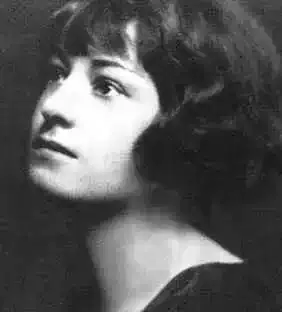
Dorothy Parker
A Well-Worn Story
In April, in April,
My one love came along,
And I ran the slope of my high hill
To follow a thread of song.
His eyes were hard as porphyry
With looking on cruel lands;
His voice went slipping over me
Like terrible silver hands.
Together we trod the secret lane
And walked the muttering town.
I wore my heart like a wet, red stain
On the breast of a velvet gown.
In April, in April,
My love went whistling by,
And I stumbled here to my high hill
Along the way of a lie.
Now what should I do in this place
But sit and count the chimes,
And splash cold water on my face
And spoil a page with rhymes?
434

Lord Byron
Lines Written Beneath An Elm In The Churchyard Of Harrow On The Hill, Sept.
2, 1807
Spot of my youth! whose hoary branches sigh,
Swept by the breeze that fans thy cloudless sky;
Where now alone I muse, who oft have trod,
With those I loved, thy soft and verdant sod;
With those who, scattered far, perchance deplore,
Like me, the happy scenes they knew before:
Oh! as I trace again thy winding hill,
Mine eyes admire, my heart adores thee still,
Thou drooping Elm! beneath whose boughs I lay,
And frequent mused the twilight hours away;
Where, as they once were wont, my limbs recline,
But ah! without the thoughts which then were mine.
How do thy branches, moaning to the blast,
Invite the bosom to recall the past,
And seem to whisper, as the gently swell,
'Take, while thou canst, a lingering, last farewell!'
When fate shall chill, at length, this fevered breast,
And calm its cares and passions into rest,
Oft have I thought, 'twould soothe my dying hour,—
If aught may soothe when life resigns her power,—
To know some humbler grave, some narrow cell,
Would hide my bosom where it loved to dwell.
With this fond dream, methinks, 'twere sweet to die—
And here it lingered, here my heart might lie;
Here might I sleep, where all my hopes arose,
Scene of my youth, and couch of my repose;
For ever stretched beneath this mantling shade,
Pressed by the turf where once my childhood played;
Wrapped by the soil that veils the spot I loved,
Mixed with the earth o'er which my footsteps moved;
Blest by the tongues that charmed my youthful ear,
Mourned by the few my soul acknowledged here;
Deplored by those in early days allied,
And unremembered by the world beside.
433
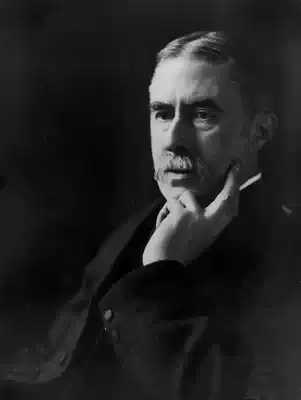
Alfred Edward Housman
Tis Time, I Think, By Wenlock Town
'Tis time, I think, by Wenlock town
The golden broom should blow;
The hawthorn sprinkled up and down
Should charge the land with snow.
Spring will not wait the loiterer's time
Who keeps so long away;
So others wear the broom and climb
The hedgerows heaped with may.
Oh tarnish late on Wenlock Edge,
Gold that I never see;
Lie long, high snowdrifts in the hedge
That will not shower on me.
432

Henry Wadsworth Longfellow
In The Harbour: Memories
Oft I remember those I have known
In other days, to whom my heart was lead
As by a magnet, and who are not dead,
But absent, and their memories overgrown
With other thoughts and troubles of my own,
As graves with grasses are, and at their head
The stone with moss and lichens so o'er spread,
Nothing is legible but the name alone.
And is it so with them? After long years.
Do they remember me in the same way,
And is the memory pleasant as to me?
I fear to ask; yet wherefore are my fears?
Pleasures, like flowers, may wither and decay,
And yet the root perennial may be.
429

William Butler Yeats
The Withering Of The Boughs
I CRIED when the moon was mutmuring to the birds:
'Let peewit call and curlew cry where they will,
I long for your merry and tender and pitiful words,
For the roads are unending, and there is no place to my mind.'
The honey-pale moon lay low on the sleepy hill,
And I fell asleep upon lonely Echtge of streams.
No boughs have withered because of the wintry wind;
The boughs have withered because I have told them my dreams.
I know of the leafy paths that the witches take
Who come with their crowns of pearl and their spindles of wool,
And their secret smile, out of the depths of the lake;
I know where a dim moon drifts, where the Danaan kind
Wind and unwind their dances when the light grows cool
On the island lawns, their feet where the pale foam gleams.
No boughs have withered because of the wintry wind;
The boughs have withered because I have told them my dreams.
I know of the sleepy country, where swans fly round
Coupled with golden chains, and sing as they fly.
A king and a queen are wandering there, and the sound
Has made them so happy and hopeless, so deaf and so blind
With wisdom, they wander till all the years have gone by;
I know, and the curlew and peewit on Echtge of streams.
No boughs have withered because of the wintry wind;
The boughs have withered because I have told them my dreams.
427
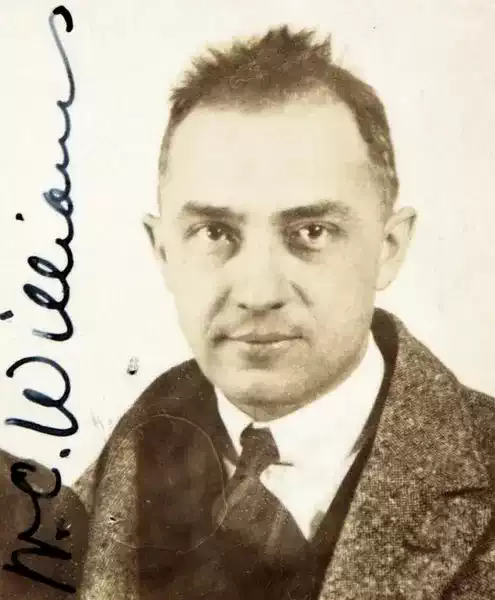
William Carlos Williams
The Lonely Street
School is over. It is too hot
to walk at ease. At ease
in light frocks they walk the streets
to while the time away.
They have grown tall. They hold
pink flames in their right hands.
In white from head to foot,
with sidelong, idle look--
in yellow, floating stuff,
black sash and stockings--
touching their avid mouths
with pink sugar on a stick--
like a carnation each holds in her hand--
they mount the lonely street.
426

Ezra Pound
Impressions Of Francois-Marie Arouet (De Voltaire)
I
Phyllidula and the Spoils of Gouvernet
Where, Lady, are the days
When you could go out in a hired hansom
Without footmen and equipments?
And dine in a soggy, cheap restaurant?
Phyllidula now, with your powdered Swiss footman
Clanking the door shut,
and lying;
And carpets from Savonnier, and from Persia,
And your new service at dinner,
And plates from Germain,
And cabinets and chests from Martin (almost lacquer),
And your white vases from Japan,
And the lustre of diamonds,
Etcetera, etcetera, and etcetera?
II
To Madame du Châtelet
If you'd have me go on loving you
Give me back the time of the thing.
Will you give me dawn light at evening?
Time has driven me out from the fine plaisaunces,
The parks with the swards all over dew,
And grass going glassy with the light on it,
The green stretches where love is and the grapes
Hang in yellow-white and dark clusters ready for pressing.
And if now we can't fit with our time of life
There is not much but its evil left us.
Life gives us two minutes, two seasons
One to be dull in;
Two deaths and to stop loving and being lovable,
That is the real death,
The other is little beside it.
Crying after the follies gone by me,
Quiet talking is all that is left us
Gentle talking, not like the first talking, less lively;
And to follow after friendship, as they call it,
Weeping that we can follow naught else.
III
To Madame Lullin
You'll wonder that an old man of eighty
Can go on writing you verses. . . .
Grass showing under the snow,
Birds singing late in the year!
And Tibullus could say of his death, in his Latin:
'Delia, I would look on you, dying.'
And Delia herself fading out,
Forgetting even her beauty.
427

Ella Wheeler Wilcox
A Fallen Leaf
A trusting little leaf of green,
A bold audacious frost;
A rendezvous, a kiss or two,
And youth for ever lost.
Ah, me!
The bitter, bitter cost.
A flaunting patch of vivid red,
That quivers in the sun;
A windy gust, a grave of dust,
The little race is run.
Ah, me!
Were that the only one.
A bold audacious frost;
A rendezvous, a kiss or two,
And youth for ever lost.
Ah, me!
The bitter, bitter cost.
A flaunting patch of vivid red,
That quivers in the sun;
A windy gust, a grave of dust,
The little race is run.
Ah, me!
Were that the only one.
422
Ella Wheeler Wilcox
But One
The year has but one June, dear friend;
The year has but one June;
And when that perfect month doth end,
The robin's song, though loud, though long,
Seems never quite in tune.
The rose, though still its blushing face
By bee and bird is seen,
May yet have lost that subtle grace—
That nameless spell the winds know
Which makes it garden's queen.
Life's perfect June, love's red, red rose,
Have burned and bloomed for me.
Though still youth's summer sunlight glows;
Though thou art kind, dear friend, I find
I have no heart for thee.
422
William Butler Yeats
On Woman
MAY God be praised for woman
That gives up all her mind,
A man may find in no man
A friendship of her kind
That covers all he has brought
As with her flesh and bone,
Nor quarrels with a thought
Because it is not her own.
Though pedantry denies,
It's plain the Bible means
That Solomon grew wise
While talking with his queens.
Yet never could, although
They say he counted grass,
Count all the praises due
When Sheba was his lass,
When she the iron wrought, or
When from the smithy fire
It shuddered in the water:
Harshness of their desire
That made them stretch and yawn,
pleasure that comes with sleep,
Shudder that made them one.
What else He give or keep
God grant me -- no, not here,
For I am not so bold
To hope a thing so dear
Now I am growing old,
But when, if the tale's true,
The Pestle of the moon
That pounds up all anew
Brings me to birth again --
To find what once I had
And know what once I have known,
Until I am driven mad,
Sleep driven from my bed.
By tenderness and care.
pity, an aching head,
Gnashing of teeth, despair;
And all because of some one
perverse creature of chance,
And live like Solomon
That Sheba led a dance.
420
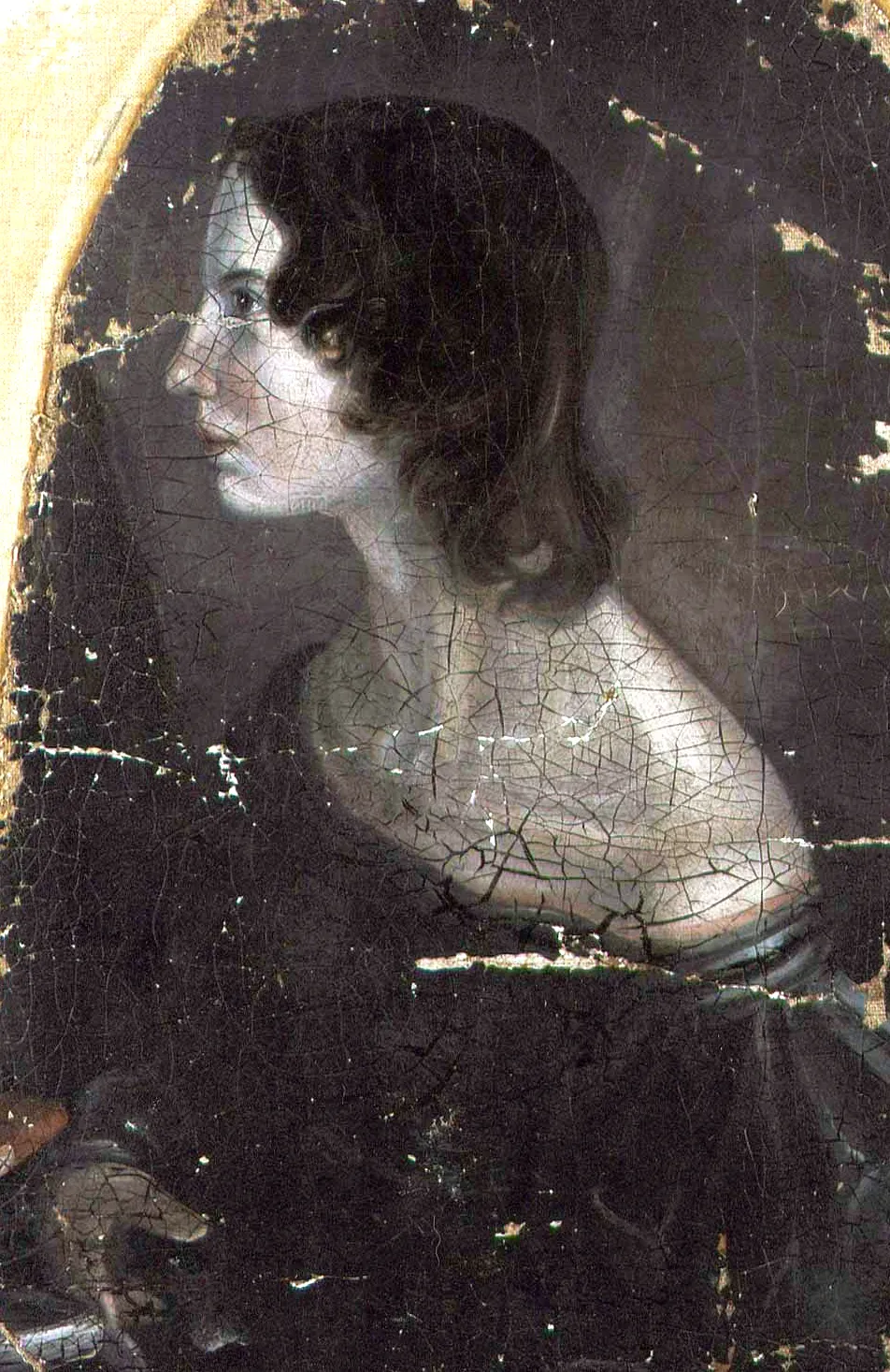
Emily Jane Brontë
Loud Without the Wind Was Roaring
Loud without the wind was roaring
Through th' autumnal sky;
Drenching wet, the cold rain pouring,
Spoke of winter nigh.
All too like that dreary eve,
Did my exiled spirit grieve.
Grieved at first, but grieved not long,
Sweet—how softly sweet!—it came;
Wild words of an ancient song,
Undefined, without a name.
'It was spring, and the skylark was singing';
Those words they awakened a spell;
They unlocked a deep fountain, whose springing,
Nor absence, nor distance can quell.
In the gloom of a cloudy November
They uttered the music of May;
They kindled the perishing ember
Into fervour that could not decay.
Awaken, o'er all my dear moorland,
West-wind, in thy glory and pride!
Oh! call me from valley and lowland,
To walk by the hill-torrent's side!
It is swelled with the first snowy weather;
The rocks they are icy and hoar,
And sullenly waves the long heather,
And the fern leaves are sunny no more.
There are no yellow stars on the mountain
The bluebells have long died away
From the brink of the moss-bedded fountain—
From the side of the wintry brae.
But lovelier than corn-fields all waving
In emerald, and vermeil, and gold,
Are the heights where the north-wind is raving,
And the crags where I wandered of old.
It was morning: the bright sun was beaming;
How sweetly it brought back to me
The time when nor labour nor dreaming
Broke the sleep of the happy and free!
But blithely we rose as the dawn-heaven
Was melting to amber and blue,
And swift were the wings to our feet given,
As we traversed the meadows of dew.
For the moors! For the moors, where the short grass
Like velvet beneath us should lie!
For the moors! For the moors, where each high pass
Rose sunny against the clear sky!
For the moors, where the linnet was trilling
Its song on the old granite stone;
Where the lark, the wild sky-lark, was filling
Every breast with delight like its own!
What language can utter the feeling
Which rose, when in exile afar,
On the brow of a lonely hill kneeling,
I saw the brown heath growing there?
It was scattered and stunted, and told me
That soon even that would be gone:
It whispered, 'The grim walls enfold me,
I have bloomed in my last summer's sun.'
But not the loved music, whose waking
Makes the soul of the Swiss die away,
Has a spell more adored and heartbreaking
Than, for me, in that blighted heath lay.
The spirit which bent 'neath its power,
How it longed—how it burned to be free!
If I could have wept in that hour,
Those tears had been heaven to me.
Well—well; the sad minutes are moving,
Though loaded with trouble and pain;
And some time the loved and the loving
Shall meet on the mountains again!
420

Johann Wolfgang von Goethe
To Charlotte
'MIDST the noise of merriment and glee,
'Midst full many a sorrow, many a care,
Charlotte, I remember, we remember thee,
How, at evening's hour so fair,
Thou a kindly hand didst reach us,
When thou, in some happy place
Where more fair is Nature s face,
Many a lightly-hidden trace
Of a spirit loved didst teach us.
Well 'tis that thy worth I rightly knew,--
That I, in the hour when first we met,
While the first impression fill'd me yet,
Call'd thee then a girl both good and true.
Rear'd in silence, calmly, knowing nought,
On the world we suddenly are thrown;
Hundred thousand billows round us sport;
All things charm us--many please alone,
Many grieve us, and as hour on hour is stealing,
To and fro our restless natures sway;
First we feel, and then we find each feeling
By the changeful world-stream borne away.
Well I know, we oft within us find
Many a hope and many a smart.
Charlotte, who can know our mind?
Charlotte, who can know our heart?
Ah! 'twould fain be understood, 'twould fain o'erflow
In some creature's fellow-feelings blest,
And, with trust, in twofold measure know
All the grief and joy in Nature's breast.
Then thine eye is oft around thee cast,
But in vain, for all seems closed for ever.
Thus the fairest part of life is madly pass'd
Free from storm, but resting never:
To thy sorrow thou'rt to-day repell'd
By what yesterday obey'd thee.
Can that world by thee be worthy held
Which so oft betray'd thee?
Which, 'mid all thy pleasures and thy pains,
Lived in selfish, unconcern'd repose?
See, the soul its secret cells regains,
And the heart--makes haste to close.
Thus found I thee, and gladly went to meet thee;
"She's worthy of all love!" I cried,
And pray'd that Heaven with purest bliss might greet thee,
Which in thy friend it richly hath supplied.
419
Ella Wheeler Wilcox
The Ah Goo Tongue
The queerest languages known to man,
Sanscrit, Hebrew, Hindoostan,
Are all translated and made as free
And comprehensive as A B C.
Yet the oldest language talked or sung,
The strange mysterious Ah Goo tongue,
The royal language of Babyland
No man living can understand.
Every soul in the world to-day
Was one time anchored in Babyland Bay,
And quarantined there for a year or more
Before he even could step on shore.
And everybody in Babyland Bay
Talks the Ah Goo tongue, so people say,
But once on land-why not a word
Do they understand of it when 'tis heard.
For the fairy rulers of Babyland
Who guard the kingdom on every hand,
Have willed that no one shall keep the key
Who crosses into the Grown-up Sea.
So the sweet court language has never been made
A common parlance of strife or trade,
But is kept in the kingdom where natives come
Versed in the language of Babydom.
They are all of them royal and that is how
The Grown-up people all kneel and bow,
When they hear that language talked or sung-
The strange mysterious Ah Goo tongue.
416
Dorothy Parker
Finis
Now it's over, and now it's done;
Why does everything look the same?
Just as bright, the unheeding sun, -Can't
it see that the parting came?
People hurry and work and swear,
Laugh and grumble and die and wed,
Ponder what they will eat and wear, -Don't
they know that our love is dead?
Just as busy, the crowded street;
Cars and wagons go rolling on,
Children chuckle, and lovers meet, -Don't
they know that our love is gone?
No one pauses to pay a tear;
None walks slow, for the love that's through, --
I might mention, my recent dear,
I've reverted to normal, too.
416

Rudyard Kipling
For To Admire
The Injian Ocean sets an' smiles
So sof', so bright, so bloomin' blue;
There aren't a wave for miles an' miles
Excep' the jiggle from the screw.
The ship is swep', the day is done,
The bugle's gone for smoke and play;
An' black agin' the settin' sun
The Lascar sings, "Hum deckty hai!" ["I'm looking out."]
For to admire an' for to see,
For to be'old this world so wide --
It never done no good to me,
But I can't drop it if I tried!
I see the sergeants pitchin' quoits,
I 'ear the women laugh an' talk,
I spy upon the quarter-deck
The orficers an' lydies walk.
I thinks about the things that was,
An' leans an' looks acrost the sea,
Till spite of all the crowded ship
There's no one lef' alive but me.
The things that was which I 'ave seen,
In barrick, camp, an' action too,
I tells them over by myself,
An' sometimes wonders if they're true;
For they was odd -- most awful odd --
But all the same now they are o'er,
There must be 'eaps o' plenty such,
An' if I wait I'll see some more.
Oh, I 'ave come upon the books,
An' frequent broke a barrick rule,
An' stood beside an' watched myself
Be'avin' like a bloomin' fool.
I paid my price for findin' out,
Nor never grutched the price I paid,
But sat in Clink without my boots,
Admirin' 'ow the world was made.
Be'old a crowd upon the beam,
An' 'umped above the sea appears
Old Aden, like a barrick-stove
That no one's lit for years an' years!
I passed by that when I began,
An' I go 'ome the road I came,
A time-expired soldier-man
With six years' service to 'is name.
My girl she said, "Oh, stay with me!"
My mother 'eld me to 'er breast.
They've never written none, an' so
They must 'ave gone with all the rest --
With all the rest which I 'ave seen
An' found an' known an' met along.
I cannot say the things I feel,
And so I sing my evenin' song:
For to admire an' for to see,
For to be'old this world so wide --
It never done no good to me,
But I can't drop it if I tried!
416
Ella Wheeler Wilcox
Leudeman's-on-the-River
Toward even when the day leans down,
To kiss the upturned face of night,
Out just beyond the loud-voiced town
I know a spot of calm delight.
Like crimson arrows from a quiver
The red rays pierce the water flowing,
While we go dreaming, singing, rowing,
To Leudeman's-on-the-River.
The hills, like some glad mocking-bird,
Send back our laughter and our singing,
While faint--and yet more faint is heard
The steeple bells all sweetly ringing.
Some message did the winds deliver
To each glad heart that August night,
All heard, but all heard not aright;
By Leudeman's-on-the-River.
Night falls as in some foreign clime,
Between the hills that slope and rise.
So dusk the shades at landing time,
We could not see each other's eyes.
We only saw the moonbeams quiver
Far down upon the stream! that night
The new moon gave but little light
By Leudeman's-on-the-River.
How dusky were those paths that led
Up from the river to the hall.
The tall trees branching overhead
Invite the early shades that fall.
In all the glad blithe world, oh, never
Were hearts more free from care than when
We wandered through those walks, we ten,
By Leudeman's-on-the-River.
So soon, so soon, the changes came.
This August day we two alone,
On that same river, not the same,
Dream of a night forever flown.
Strange distances have come to sever
The hearts that gayly beat in pleasure,
Long miles we cannot cross or measure--
From Leudeman's-on-the-River.
We'll pluck two leaves, dear friend, to-day.
The green, the russet! seems it strange
So soon, so soon, the leaves can change!
Ah, me! so runs all night away
This night wind chills me, and I shiver;
The summer time is almost past.
One more good-bye--perhaps the last
To Leudeman's-on-the-River.
416
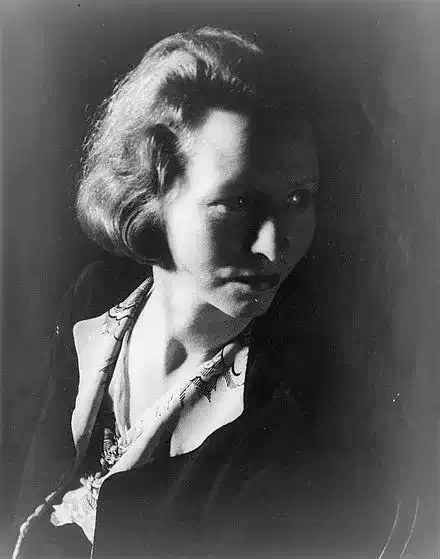
Edna St. Vincent Millay
I Dreamed I Moved Among The Elysian Fields
I dreamed I moved among the Elysian fields,
In converse with sweet women long since dead;
And out of blossoms which that meadow yields
I wove a garland for your living head.
Danai, that was the vessel for a day
Of golden Jove, I saw, and at her side,
Whom Jove the Bull desired and bore away,
Europa stood, and the Swan's featherless bride.
All these were mortal women, yet all these
Above the ground had had a god for guest;
Freely I walked beside them and at ease,
Addressing them, by them again addressed,
And marvelled nothing, for remembering you,
Wherefore I was among them well I knew.
416
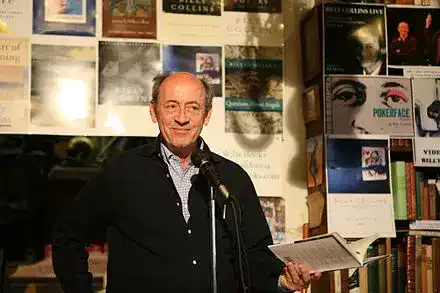
Billy Collins
Nostalgia
Remember the 1340's? We were doing a dance called the Catapult.
You always wore brown, the color craze of the decade,
and I was draped in one of those capes that were popular,
the ones with unicorns and pomegranates in needlework.
Everyone would pause for beer and onions in the afternoon,
and at night we would play a game called "Find the Cow."
Everything was hand-lettered then, not like today.
Where has the summer of 1572 gone? Brocade and sonnet
marathons were the rage. We used to dress up in the flags
of rival baronies and conquer one another in cold rooms of stone.
Out on the dance floor we were all doing the Struggle
while your sister practiced the Daphne all alone in her room.
We borrowed the jargon of farriers for our slang.
These days language seems transparent a badly broken code.
The 1790's will never come again. Childhood was big.
People would take walks to the very tops of hills
and write down what they saw in their journals without speaking.
Our collars were high and our hats were extremely soft.
We would surprise each other with alphabets made of twigs.
It was a wonderful time to be alive, or even dead.
I am very fond of the period between 1815 and 1821.
Europe trembled while we sat still for our portraits.
And I would love to return to 1901 if only for a moment,
time enough to wind up a music box and do a few dance steps,
or shoot me back to 1922 or 1941, or at least let me
recapture the serenity of last month when we picked
berries and glided through afternoons in a canoe.
Even this morning would be an improvement over the present.
I was in the garden then, surrounded by the hum of bees
and the Latin names of flowers, watching the early light
flash off the slanted windows of the greenhouse
and silver the limbs on the rows of dark hemlocks.
As usual, I was thinking about the moments of the past,
letting my memory rush over them like water
rushing over the stones on the bottom of a stream.
I was even thinking a little about the future, that place
where people are doing a dance we cannot imagine,
a dance whose name we can only guess.
413
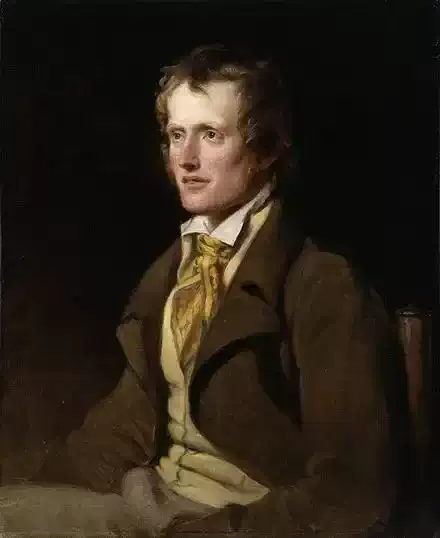
John Clare
The Flitting
I've left my own old home of homes,
Green fields and every pleasant place;
The summer like a stranger comes,
I pause and hardly know her face.
I miss the hazel's happy green,
The blue bell's quiet hanging blooms,
Where envy's sneer was never seen,
Where staring malice never comes.
I miss the heath, its yellow furze,
Molehills and rabbit tracks that lead
Through beesom, ling, and teazel burrs
That spread a wilderness indeed;
The woodland oaks and all below
That their white powdered branches shield,
The mossy paths: the very crow
Croaks music in my native field.
I sit me in my corner chair
That seems to feel itself from home,
And hear bird music here and there
From hawthorn hedge and orchard come;
I hear, but all is strange and new:
I sat on my old bench in June,
The sailing puddock's shrill 'peelew'
On Royce Wood seemed a sweeter tune.
I walk adown the narrow lane,
The nightingale is singing now,
But like to me she seems at loss
For Royce Wood and its shielding bough.
I lean upon the window sill,
The trees and summer happy seem;
Green, sunny green they shine, but still
My heart goes far away to dream.
Of happiness, and thoughts arise
With home-bred pictures many a one,
Green lanes that shut out burning skies
And old crooked stiles to rest upon;
Above them hangs the maple tree,
Below grass swells a velvet hill,
And little footpaths sweet to see
Go seeking sweeter places still,
With bye and bye a brook to cross
Oer which a little arch is thrown:
No brook is here, I feel the loss
From home and friends and all alone.
--The stone pit with its shelvy sides
Seemed hanging rocks in my esteem;
I miss the prospect far and wide
From Langley Bush, and so I seem
Alone and in a stranger scene,
Far, far from spots my heart esteems,
The closen with their ancient green,
Heaths, woods, and pastures, sunny streams.
The hawthorns here were hung with may,
But still they seem in deader green,
The sun een seems to lose its way
Nor knows the quarter it is in.
I dwell in trifles like a child,
I feel as ill becomes a man,
And still my thoughts like weedlings wild
Grow up to blossom where they can.
They turn to places known so long
I feel that joy was dwelling there,
So home-fed pleasure fills the song
That has no present joys to hear.
I read in books for happiness,
But books are like the sea to joy,
They change--as well give age the glass
To hunt its visage when a boy.
For books they follow fashions new
And throw all old esteems away,
In crowded streets flowers never grew,
But many there hath died away.
Some sing the pomps of chivalry
As legends of the ancient time,
Where gold and pearls and mystery
Are shadows painted for sublime;
But passions of sublimity
Belong to plain and simpler things,
And David underneath a tree
Sought when a shepherd Salem's springs,
Where moss did into cushions spring,
Forming a seat of velvet hue,
A small unnoticed trifling thing
To all but heaven's hailing dew.
And David's crown hath passed away,
Yet poesy breathes his shepherd-skill,
His palace lost--and to this day
The little moss is blossoming still.
Strange scenes mere shadows are to me,
Vague impersonifying things;
I love with my old haunts to be
By quiet woods and gravel springs,
Where little pebbles wear as smooth
As hermits' beads by gentle floods,
Whose noises do my spirits soothe
And warm them into singing moods.
Here every tree is strange to me,
All foreign things where eer I go,
There's none where boyhood made a swee
Or clambered up to rob a crow.
No hollow tree or woodland bower
Well known when joy was beating high,
Where beauty ran to shun a shower
And love took pains to keep her dry,
And laid the sheaf upon the ground
To keep her from the dripping grass,
And ran for stocks and set them round
Till scarce a drop of rain could pass
Through; where the maidens they reclined
And sung sweet ballads now forgot,
Which brought sweet memories to the mind,
But here no memory knows them not.
There have I sat by many a tree
And leaned oer many a rural stile,
And conned my thoughts as joys to me,
Nought heeding who might frown or smile.
Twas nature's beauty that inspired
My heart with rapture not its own,
And she's a fame that never tires;
How could I feel myself alone?
No, pasture molehills used to lie
And talk to me of sunny days,
And then the glad sheep resting bye
All still in ruminating praise
Of summer and the pleasant place
And every weed and blossom too
Was looking upward in my face
With friendship's welcome 'how do ye do?'
All tenants of an ancient place
And heirs of noble heritage,
Coeval they with Adam's race
And blest with more substantial age.
For when the world first saw the sun
These little flowers beheld him too,
And when his love for earth begun
They were the first his smiles to woo.
There little lambtoe bunches springs
In red tinged and begolden dye
For ever, and like China kings
They come but never seem to die.
There may-bloom with its little threads
Still comes upon the thorny bowers
And neer forgets those prickly heads
Like fairy pins amid the flowers.
And still they bloom as on the day
They first crowned wilderness and rock,
When Abel haply wreathed with may
The firstlings of his little flock,
And Eve might from the matted thorn
To deck her lone and lovely brow
Reach that same rose that heedless scorn
Misnames as the dog rosey now.
Give me no high-flown fangled things,
No haughty pomp in marching chime,
Where muses play on golden strings
And splendour passes for sublime,
Where cities stretch as far as fame
And fancy's straining eye can go,
And piled until the sky for shame
Is stooping far away below.
I love the verse that mild and bland
Breathes of green fields and open sky,
I love the muse that in her hand
Bears flowers of native poesy;
Who walks nor skips the pasture brook
In scorn, but by the drinking horse
Leans oer its little brig to look
How far the sallows lean across,
And feels a rapture in her breast
Upon their root-fringed grains to mark
A hermit morehen's sedgy nest
Just like a naiad's summer bark.
She counts the eggs she cannot reach
Admires the spot and loves it well,
And yearns, so nature's lessons teach,
Amid such neighbourhoods to dwell.
I love the muse who sits her down
Upon the molehill's little lap,
Who feels no fear to stain her gown
And pauses by the hedgerow gap;
Not with that affectation, praise
Of song, to sing and never see
A field flower grown in all her days
Or een a forest's aged tree.
Een here my simple feelings nurse
A love for every simple weed,
And een this little shepherd's purse
Grieves me to cut it up; indeed
I feel at times a love and joy
For every weed and every thing,
A feeling kindred from a boy,
A feeling brought with every Spring.
And why? this shepherd's purse that grows
In this strange spot, in days gone bye
Grew in the little garden rows
Of my old home now left; and I
Feel what I never felt before,
This weed an ancient neighbour here,
And though I own the spot no more
Its every trifle makes it dear.
The ivy at the parlour end,
The woodbine at the garden gate,
Are all and each affection's friend
That render parting desolate.
But times will change and friends must part
And nature still can make amends;
Their memory lingers round the heart
Like life whose essence is its friends.
Time looks on pomp with vengeful mood
Or killing apathy's disdain;
So where old marble cities stood
Poor persecuted weeds remain.
She feels a love for little things
That very few can feel beside,
And still the grass eternal springs
Where castles stood and grandeur died.
413
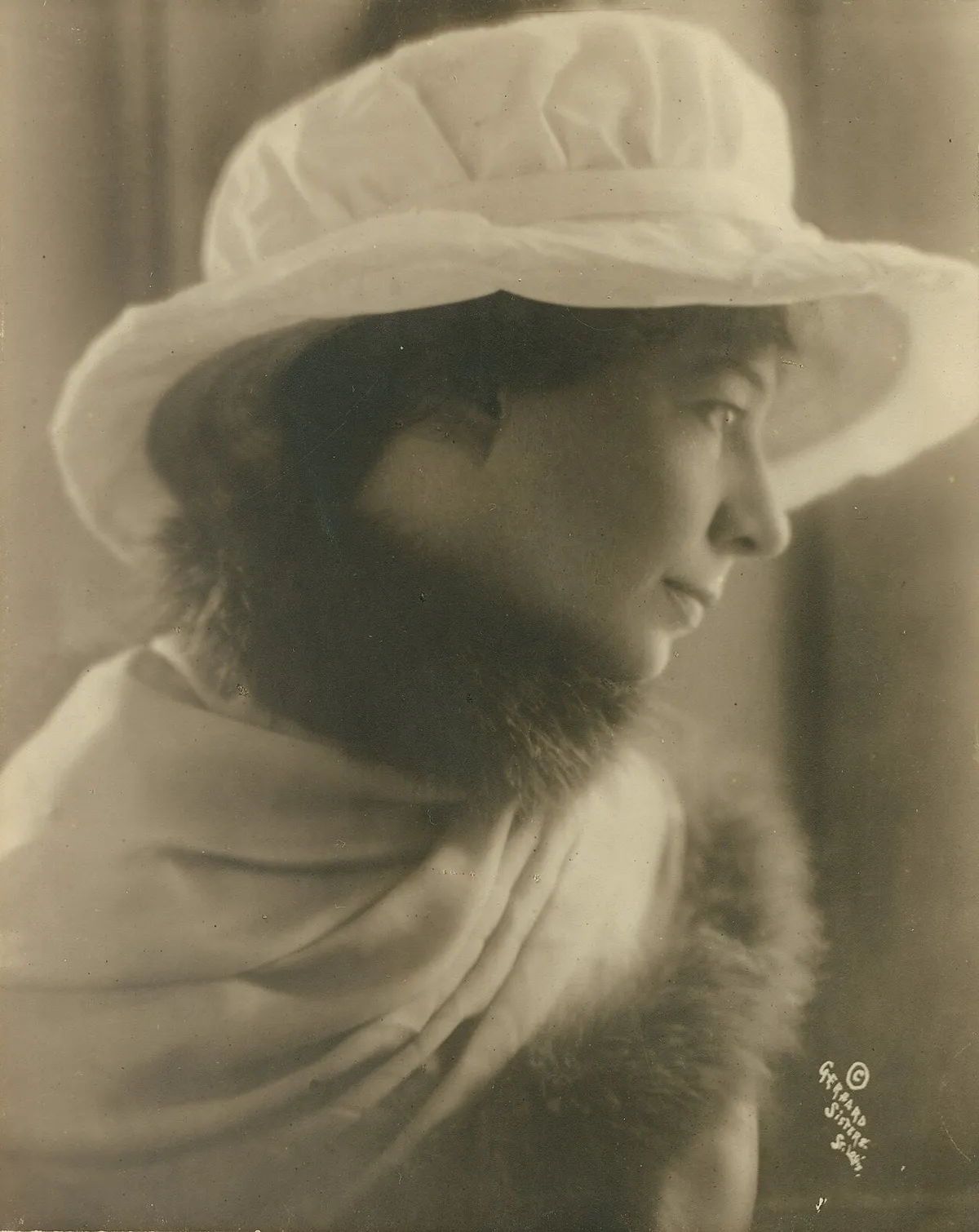
Sara Teasdale
Redbirds
Redbirds, redbirds,
Long and long ago,
What a honey-call you had
In hills I used to know;
Redbud, buckberry,
Wild plum-tree
And proud river sweeping
Southward to the sea,
Brown and gold in the sun
Sparkling far below,
Trailing stately round her bluffs
Where the poplars grow --
Redbirds, redbirds,
Are you singing still
As you sang one May day
On Saxton's Hill?
413
William Butler Yeats
The Fairy Pendant
Scene: A circle of Druidic stones
First Fairy: Afar from our lawn and our levee,
O sister of sorrowful gaze!
Where the roses in scarlet are heavy
And dream of the end of their days,
You move in another dominion
And hang o'er the historied stone:
Unpruned in your beautiful pinion
Who wander and whisper alone.
All: Come away while the moon's in the woodland,
We'll dance and then feast in a dairy.
Though youngest of all in our good band,
You are wasting away, little fairy.
Second Fairy: Ah! cruel ones, leave me alone now
While I murmur a little and ponder
The history here in the stone now;
Then away and away I will wander,
And measure the minds of the flowers,
And gaze on the meadow-mice wary,
And number their days and their hours--
All: You're wasting away, little fairy.
Second Fairy: O shining ones, lightly with song pass,
Ah! leave me, I pray you and beg.
My mother drew forth from the long grass
A piece of a nightingle's egg,
And cradled me here where are sung,
Of birds even, longings for aery
Wild wisdoms of spirit and tongue.
All: You're wasting away, little fairy.
First Fairy [turning away]: Though the tenderest roses were round you,
The soul of this pitiless place
With pitiless magic has bound you--
Ah! woe for the loss of your face,
And the loss of your laugh with its lightness--
Ah! woe for your wings and your head--
Ah! woe for your eyes and their brightness--
Ah! woe for your slippers of red.
We'll dance and then feast in a dairy.
Though youngest of all in our good band,
She's wasting away, little fairy.
415
William Butler Yeats
Mad As The Mist And Snow
Bolt and bar the shutter,
For the foul winds blow:
Our minds are at their best this night,
And I seem to know
That everything outside us is
Mad as the mist and snow.
Horace there by Homer stands,
Plato stands below,
And here is Tully's open page.
How many years ago
Were you and I unlettered lads
Mad as the mist and snow?
You ask what makes me sigh, old friend,
What makes me shudder so?
I shudder and I sigh to think
That even Cicero
And many-minded Homer were
Mad as the mist and snow.
414
Ella Wheeler Wilcox
A Leaf
Somebody said, in the crowd, last eve,
That you were married, or soon to be.
I have not thought of you, I believe,
Since last we parted. Let me see:
Five long Summers have passed since then –
Each has been pleasant in its own way –
And you are but one of a dozen men
Who have played the suitor a Summer day.
But, nevertheless, when I heard your name,
Coupled with some one’s, not my own,
There burned in my bosom a sudden flame,
That carried me back to the day that is flown.
I was sitting again by the laughing brook,
With you at my feet, and the sky above,
And my heart was fluttering under your look –
The unmistakable look of Love.
Again your breath, like a South wind, fanned
My cheek, where the blushes came and went;
And the tender clasp of your strong, warm hand
Sudden thrills through my pulses sent.
Again you were mine by Love’s decree:
So for a moment it seemed last night,
When somebody mentioned your name to me.
Just for the moment I thought you mine –
Loving me, wooing me, as of old.
The tale remembered seemed half divine –
Though I held it lightly enough when told.
The past seemed fairer than when it was near,
As ‘blessings brighten when taking flight, ’
And just for the moment I held you near –
When somebody mentioned your name last night.
412