
Nostalgia

William Blake
Nurse's Song
When voices of children are heard on the green,
And whisperings are in the dale,
The days of my youth rise fresh in my mind,
My face turns green and pale.
Then come home, my children, the sun is gone down,
And the dews of night arise;
Your spring and your day are wasted in play,
And your winter and night in disguise.
And whisperings are in the dale,
The days of my youth rise fresh in my mind,
My face turns green and pale.
Then come home, my children, the sun is gone down,
And the dews of night arise;
Your spring and your day are wasted in play,
And your winter and night in disguise.
411

William Butler Yeats
The Dedication To A Book Of Stories
SELECTED FROM THE IRISH NOVELISTS
THERE was a green branch hung with many a bell
When her own people ruled this tragic Eire;
And from its murmuring greenness, calm of Faery,
A Druid kindness, on all hearers fell.
It charmed away the merchant from his guile,
And turned the farmer's memory from his cattle,
And hushed in sleep the roaring ranks of battle:
And all grew friendly for a little while.
Ah, Exiles wandering over lands and seas,
And planning, plotting always that some morrow
May set a stone upon ancestral Sorrow!
I also bear a bell-branch full of ease.
I tore it from green boughs winds tore and tossed
Until the sap of summer had grown weary!
I tore it from the barren boughs of Eire,
That country where a man can be so crossed;
Can be so battered, badgered and destroyed
That he's a loveless man: gay bells bring laughter
That shakes a mouldering cobweb from the rafter;
And yet the saddest chimes are best enjoyed.
Gay bells or sad, they bring you memories
Of half-forgotten innocent old places:
We and our bitterness have left no traces
On Munster grass and Connemara skies.
407
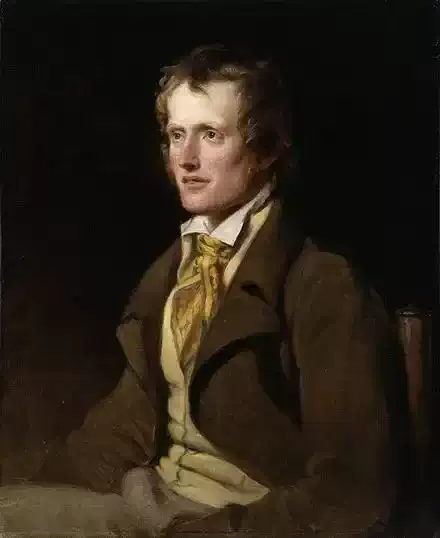
John Clare
The Sleep Of Spring
O for that sweet, untroubled rest
That poets oft have sung!--
The babe upon its mother's breast,
The bird upon its young,
The heart asleep without a pain--
When shall I know that sleep again?
When shall I be as I have been
Upon my mother's breast
Sweet Nature's garb of verdant green
To woo to perfect rest--
Love in the meadow, field, and glen,
And in my native wilds again?
The sheep within the fallow field,
The herd upon the green,
The larks that in the thistle shield,
And pipe from morn to e'en--
O for the pasture, fields, and fen!
When shall I see such rest again?
I love the weeds along the fen,
More sweet than garden flowers,
For freedom haunts the humble glen
That blest my happiest hours.
Here prison injures health and me:
I love sweet freedom and the free.
The crows upon the swelling hills,
The cows upon the lea,
Sheep feeding by the pasture rills,
Are ever dear to me,
Because sweet freedom is their mate,
While I am lone and desolate.
I loved the winds when I was young,
When life was dear to me;
I loved the song which Nature sung,
Endearing liberty;
I loved the wood, the vale, the stream,
For there my boyhood used to dream.
There even toil itself was play;
Twas pleasure een to weep;
Twas joy to think of dreams by day,
The beautiful of sleep.
When shall I see the wood and plain,
And dream those happy dreams again?
406

Robert Louis Stevenson
The Land of Story-Books
At evening when the lamp is lit,
Around the fire my parents sit;
They sit at home and talk and sing,
And do not play at anything.
Now, with my little gun, I crawl
All in the dark along the wall,
And follow round the forest track
Away behind the sofa back.
There, in the night, where none can spy,
All in my hunter's camp I lie,
And play at books that I have read
Till it is time to go to bed.
These are the hills, these are the woods,
These are my starry solitudes;
And there the river by whose brink
The roaring lions come to drink.
I see the others far away
As if in firelit camp they lay,
And I, like to an Indian scout,
Around their party prowled about.
So when my nurse comes in for me,
Home I return across the sea,
And go to bed with backward looks
At my dear land of Story-books.
406
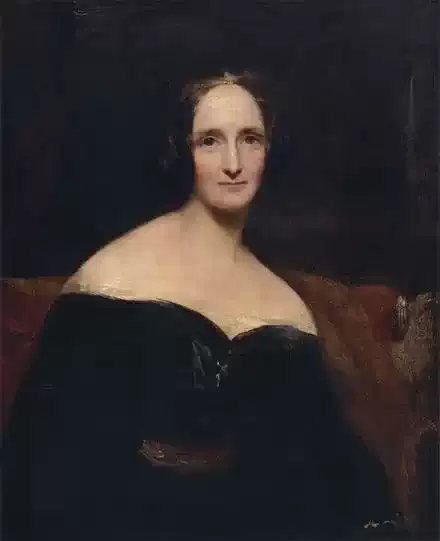
Percy Bysshe Shelley
Time Long Past
Like the ghost of a dear friend dead
Is Time long past.
A tone which is now forever fled,
A hope which is now forever past,
A love so sweet it could not last,
Was Time long past.
There were sweet dreams in the night
Of Time long past:
And, was it sadness or delight,
Each day a shadow onward cast
Which made us wish it yet might last--
That Time long past.
There is regret, almost remorse,
For Time long past.
'Tis like a child's belovèd corse
A father watches, till at last
Beauty is like remembrance, cast
From Time long past.
407
John Clare
An Invite, to Eternity
Wilt thou go with me, sweet maid,
Say, maiden, wilt thou go with me
Through the valley-depths of shade,
Of night and dark obscurity;
Where the path has lost its way,
Where the sun forgets the day,
Where there's nor life nor light to see,
Sweet maiden, wilt thou go with me!
Where stones will turn to flooding streams,
Where plains will rise like ocean waves,
Where life will fade like visioned dreams
And mountains darken into caves,
Say, maiden, wilt thou go with me
Through this sad non-identity,
Where parents live and are forgot,
And sisters live and know us not!
Say, maiden; wilt thou go with me
In this strange death of life to be,
To live in death and be the same,
Without this life or home or name,
At once to be and not to be -
That was and is not -yet to see
Things pass like shadows, and the sky
Above, below, around us lie?
Say, maiden, wilt thou go with me
Through the valley-depths of shade,
Of night and dark obscurity;
Where the path has lost its way,
Where the sun forgets the day,
Where there's nor life nor light to see,
Sweet maiden, wilt thou go with me!
Where stones will turn to flooding streams,
Where plains will rise like ocean waves,
Where life will fade like visioned dreams
And mountains darken into caves,
Say, maiden, wilt thou go with me
Through this sad non-identity,
Where parents live and are forgot,
And sisters live and know us not!
Say, maiden; wilt thou go with me
In this strange death of life to be,
To live in death and be the same,
Without this life or home or name,
At once to be and not to be -
That was and is not -yet to see
Things pass like shadows, and the sky
Above, below, around us lie?
403

Henry Wadsworth Longfellow
Childhood. (From The Danish)
There was a time when I was very small,
When my whole frame was but an ell in height;
Sweetly, as I recall it, tears do fall,
And therefore I recall it with delight.
I sported in my tender mother's arms,
And rode a-horseback on best father's knee;
Alike were sorrows, passions and alarms,
And gold, and Greek, and love, unknown to me,
Then seemed to me this world far less in size,
Likewise it seemed to me less wicked far;
Like points in heaven, I saw the stars arise,
And longed for wings that I might catch a star.
I saw the moon behind the island fade,
And thought, 'Oh, were I on that island there,
I could find out of what the moon is made,
Find out how large it is, how round, how fair!'
Wondering, I saw God's sun, through western skies,
Sink in the ocean's golden lap at night,
And yet upon the morrow early rise,
And paint the eastern heaven with crimson light;
And thought of God, the gracious Heavenly Father,
Who made me, and that lovely sun on high,
And all those pearls of heaven thick-strung together,
Dropped, clustering, from his hand o'er all the sky.
With childish reverence, my young lips did say
The prayer my pious mother taught to me:
'O gentle God! oh, let me strive alway
Still to be wise, and good, and follow Thee!'
So prayed I for my father and my mother,
And for my sister, and for all the town;
The king I knew not, and the beggar-brother,
Who, bent with age, went, sighing, up and down.
They perished, the blithe days of boyhood perished,
And all the gladness, all the peace I knew!
Now have I but their memory, fondly cherished;--
God! may I never lose that too!
405
Alexander Pope
On Certain Ladies
When other fair ones to the shades go down,
Still Chloe, Flavin, Delia, stay in town:
Those ghosts of beauty wandering here reside,
And haunt the places where their honour died.
Still Chloe, Flavin, Delia, stay in town:
Those ghosts of beauty wandering here reside,
And haunt the places where their honour died.
403

Henry Lawson
Never, Never Land
By hut, homestead and shearing shed,
By railroad, coach and track-
By lonely graves where rest the dead,
Up-Country and Out-Back:
To where beneath the clustered stars
The dreamy plains expand-
My home lies wide a thousand miles
In Never-Never Land.
It lies beyond the farming belt,
Wide wastes of scrub and plain,
A blazing desert in the drought,
A lake-land after rain;
To the skyline sweeps the waving grass,
Or whirls the scorching sand-
A phantom land, a mystic realm!
The Never-Never Land.
Where lone Mount Desolation lies
Mounts Dreadful and Despair'
Tis lost beneath the rainless skies
In hopeless deserts there;
It spreads nor-west by No-Man's Land
Where clouds are seldom seen
To where the cattle stations lie
Three hundred miles between.
The drovers of the Great Stock Routes
The strange Gulf country Know
Where, travelling from the southern droughts,
The big lean bullocks go;
And camped by night where plains lie wide,
Like some old ocean's bed,
The watchmen in the starlight ride
Round fifteen hundred head.
Lest in the city I forget
True mateship after all,
My water-bag and billy yet
Are hanging on the wall;
And I, to save my soul again,
Would tramp to sunsets grand
With sad-eyed mates across the plain
In Never-Never Land.
401
William Butler Yeats
I Am Of Ireland
'I am of Ireland,
And the Holy Land of Ireland,
And time runs on,' cried she.
'Come out of charity,
Come dance with me in Ireland.'
One man, one man alone
In that outlandish gear,
One solitary man
Of all that rambled there
Had turned his stately head.
That is a long way off,
And time runs on,' he said,
'And the night grows rough.'
'I am of Ireland,
And the Holy Land of Ireland,
And time runs on,' cried she.
'Come out of charity
And dance with me in Ireland.'
'The fiddlers are all thumbs,
Or the fiddle-string accursed,
The drums and the kettledrums
And the trumpets all are burst,
And the trombone,' cried he,
'The trumpet and trombone,'
And cocked a malicious eye,
'But time runs on, runs on.'
I am of Ireland,
And the Holy Land of Ireland,
And time runs on,' cried she.
"Come out of charity
And dance with me in Ireland.'
And the Holy Land of Ireland,
And time runs on,' cried she.
'Come out of charity,
Come dance with me in Ireland.'
One man, one man alone
In that outlandish gear,
One solitary man
Of all that rambled there
Had turned his stately head.
That is a long way off,
And time runs on,' he said,
'And the night grows rough.'
'I am of Ireland,
And the Holy Land of Ireland,
And time runs on,' cried she.
'Come out of charity
And dance with me in Ireland.'
'The fiddlers are all thumbs,
Or the fiddle-string accursed,
The drums and the kettledrums
And the trumpets all are burst,
And the trombone,' cried he,
'The trumpet and trombone,'
And cocked a malicious eye,
'But time runs on, runs on.'
I am of Ireland,
And the Holy Land of Ireland,
And time runs on,' cried she.
"Come out of charity
And dance with me in Ireland.'
399
Henry Wadsworth Longfellow
Flower-De-Luce: Hawthorne
How beautiful it was, that one bright day
In the long week of rain!
Though all its splendor could not chase away
The omnipresent pain.
The lovely town was white with apple-blooms,
And the great elms o'erhead
Dark shadows wove on their aerial looms
Shot through with golden thread.
Across the meadows, by the gray old manse,
The historic river flowed:
I was as one who wanders in a trance,
Unconscious of his road.
The faces of familiar friends seemed strange;
Their voices I could hear,
And yet the words they uttered seemed to change
Their meaning to my ear.
For the one face I looked for was not there,
The one low voice was mute;
Only an unseen presence filled the air,
And baffled my pursuit.
Now I look back, and meadow, manse, and stream
Dimly my thought defines;
I only see--a dream within a dream--
The hill-top hearsed with pines.
I only hear above his place of rest
Their tender undertone,
The infinite longings of a troubled breast,
The voice so like his own.
There in seclusion and remote from men
The wizard hand lies cold,
Which at its topmost speed let fall the pen,
And left the tale half told.
Ah! who shall lift that wand of magic power,
And the lost clew regain?
The unfinished window in Aladdin's tower
Unfinished must remain!
394

Carl Sandburg
Horses and Men in Rain
Let us sit by a hissing steam radiator a winter's day, gray wind pattering frozen
raindrops on the window,
And let us talk about milk wagon drivers and grocery delivery boys.
Let us keep our feet in wool slippers and mix hot punches--and talk about mail carriers
and
messenger boys slipping along the icy sidewalks.
Let us write of olden, golden days and hunters of the
Holy Grail and men called "knights" riding horses in the rain, in the cold frozen rain for
ladies they loved.
A roustabout hunched on a coal wagon goes by, icicles drip on his hat rim, sheets of ice
wrapping
the hunks of coal, the caravanserai a gray blur in slant of rain.
Let us nudge the steam radiator with our wool slippers and write poems of Launcelot,
the hero, and
Roland, the hero, and all the olden golden men who rode horses in the rain.
394
William Butler Yeats
The Pilgrim
I FASTED for some forty days on bread and buttermilk,
For passing round the bottle with girls in rags or silk,
In country shawl or Paris cloak, had put my wits astray,
And what's the good of women, for all that they can say
Is fol de rol de rolly O.
Round Lough Derg's holy island I went upon the stones,
I prayed at all the Stations upon my matrow-bones,
And there I found an old man, and though, I prayed all day
And that old man beside me, nothing would he say
But fol de rol de rolly O.
All know that all the dead in the world about that place are stuck,
And that should mother seek her son she'd have but little luck
Because the fires of purgatory have ate their shapes away;
I swear to God I questioned them, and all they had to say
Was fol de rol de rolly O.
A great black ragged bird appeared when I was in the boat;
Some twenty feet from tip to tip had it stretched rightly out,
With flopping and with flapping it made a great display,
But I never stopped to question, what could the boatman say
But fol de rol de rolly O.
Now I am in the public-house and lean upon the wall,
So come in rags or come in silk, in cloak or country shawl,
And come with learned lovers or with what men you may,
For I can put the whole lot down, and all I have to say
Is fol de rol de rolly O.
393
Carl Sandburg
And This Will Be All....
And this will be all?
And the gates will never open again?
And the dust and the wind will play around the rusty door hinges and the songs of
October moan, Why-oh, why-oh?
And you will look to the mountains
And the mountains will look to you
And you will wish you were a mountain
And the mountain will wish nothing at all?
This will be all?
The gates will never-never open again?
The dust and the wind only
And the rusty door hinges and moaning October
And Why-oh, why-oh, in the moaning dry leaves,
This will be all?
Nothing in the air but songs
And no singers, no mouths to know the songs?
You tell us a woman with a heartache tells you it is so?
This will be all?
395

William Shakespeare
Sonnet 106: When in the chronicle of wasted time
When in the chronicle of wasted time
I see descriptions of the fairest wights,
And beauty making beautiful old rhyme
In praise of ladies dead and lovely knights,
Then, in the blazon of sweet beauty's best,
Of hand, of foot, of lip, of eye, of brow,
I see their antique pen would have express'd
Even such a beauty as you master now.
So all their praises are but prophecies
Of this our time, all you prefiguring;
And, for they look'd but with divining eyes,
They had not skill enough your worth to sing:
For we, which now behold these present days,
Had eyes to wonder, but lack tongues to praise.
392
Henry Wadsworth Longfellow
In The Harbour: Autumn Within
It is autumn; not without
But within me is the cold.
Youth and spring are all about;
It is I that have grown old.
Birds are darting through the air,
Singing, building without rest;
Life is stirring everywhere,
Save within my lonely breast.
There is silence: the dead leaves
Fall and rustle and are still;
Beats no flail upon the sheaves,
Comes no murmur from the mill.
392
John Clare
Peggy's The Lady Of The Hall
And will she leave the lowly clowns
For silk and satins gay,
Her woollen aprons and drab gowns
For lady's cold array?
And will she leave the wild hedge rose,
The redbreast and the wren,
And will she leave her Sunday beaus
And milk shed in the glen?
And will she leave her kind friends all
To be the Lady of the Hall?
The cowslips bowed their golden drops,
The white thorn white as sheets;
The lamb agen the old ewe stops,
The wren and robin tweets.
And Peggy took her milk pails still,
And sang her evening song,
To milk her cows on Cowslip Hill
For half the summer long.
But silk and satins rich and rare
Are doomed for Peggy still to wear.
But when the May had turned to haws,
The hedge rose swelled to hips,
Peggy was missed without a cause,
And left us in eclipse.
The shepherd in the hovel milks,
Where builds the little wren,
And Peggy's gone, all clad in silks--
Far from the happy glen,
From dog-rose, woodbine, clover, all
To be the Lady of the Hall.
391
Robert Louis Stevenson
The Clock's Clear Voice Into The Clearer Air
THE cock's clear voice into the clearer air
Where westward far I roam,
Mounts with a thrill of hope,
Falls with a sigh of home.
A rural sentry, he from farm and field
The coming morn descries,
And, mankind's bugler, wakes
The camp of enterprise.
He sings the morn upon the westward hills
Strange and remote and wild;
He sings it in the land
Where once I was a child.
He brings to me dear voices of the past,
The old land and the years:
My father calls for me,
My weeping spirit hears.
Fife, fife, into the golden air, O bird,
And sing the morning in;
For the old days are past
And new days begin.
390

Ezra Pound
The City Of Choan
The phoenix are at play on their terrace.
The phoenix are gone, the river Hows on alone.
Flowers and grass
Cover over the dark path
where lay the dynastic house of the Go.
The bright cloths and bright caps of Shin
Are now the base of old hills.
The Three Mountains fall through the far heaven,
The isle of White Heron
splits the two streams apart.
Now the high clouds cover the sun
And I can not see Choan afar
And I am sad.
387
Hilaire Belloc
From: Dedicatory Ode
I will not try the reach again,
I will not set my sail alone,
To moor a boat bereft of men
At Yarnton's tiny docks of stone.
But I will sit beside the fire,
And put my hand before my eyes,
And trace, to fill my heart's desire,
The last of all our Odysseys.
The quiet evening kept her tryst:
Beneath an open sky we rode,
And passed into a wandering mist
Along the perfect Evenlode.
The tender Evenlode that makes
Her meadows hush to hear the sound
Of waters mingling in the brakes,
And binds my heart to English ground.
A lovely river, all alone,
She lingers in the hills and holds
A hundred little towns of stone,
Forgotten in the western wolds.
388

Robert W. Service
Breakfast
Of all the meals that glad my day
My morning one's the best;
Purveyed me on a silver tray,
Immaculately dressed.
I rouse me when the dawn is bright;
I leap into the sea,
Returning with a rare delight
To honey, toast and tea.
My appetite was razor edged
When I was in my prime;
To eggs and bacon I was pledged . . .
Ala! the March of Time;
For now a genial old gent
With journal on my knee,
I sip and take with vast content
My honey, toast and tea.
So set me up for my delight
The harvest of the bee;
Brown, crispy toast with butter bright,
Ceylon - two cups or three.
Let others lunch or dinner praise,
But I regale with glee,
As I regard with grateful gaze
Just honey, toast and tea.
389
William Butler Yeats
Friends
NOW must I these three praise --
Three women that have wrought
What joy is in my days:
One because no thought,
Nor those unpassing cares,
No, not in these fifteen
Many-times-troubled years,
Could ever come between
Mind and delighted mind;
And one because her hand
Had strength that could unbind
What none can understand,
What none can have and thrive,
Youth's dreamy load, till she
So changed me that I live
Labouring in ecstasy.
And what of her that took
All till my youth was gone
With scarce a pitying look?
How could I praise that one?
When day begins to break
I count my good and bad,
Being wakeful for her sake,
Remembering what she had,
What eagle look still shows,
While up from my heart's root
So great a sweetness flows
I shake from head to foot.
388

Ella Wheeler Wilcox
Finis
An idle rhyme of the summer time,
Sweet, and solemn, and tender;
Fair with the haze of the moon's pale rays,
Bright with the sunset's splendour.
Summer and beauty over the lands Careless
hours of pleasure;
A meeting of eyes and a touching of hands A
change in the floating measure.
A deeper hue in the skies of blue,
Winds from the tropics blowing;
A softer grace in the fair moons face,
And the summer going, going.
The leaves drift down, the green grows brown,
And tears with smiles are blended;
A twilight hour and a treasured flower, And
now the poem is ended.
385
William Butler Yeats
At Galway Races
THERE where the course is,
Delight makes all of the one mind,
The riders upon the galloping horses,
The crowd that closes in behind:
We, too, had good attendance once,
Hearers and hearteners of the work;
Aye, horsemen for companions,
Before the merchant and the clerk
Breathed on the world with timid breath.
Sing on: somewhere at some new moon,
We'll learn that sleeping is not death,
Hearing the whole earth change its tune,
Its flesh being wild, and it again
Crying aloud as the racecourse is,
And we find hearteners among men
That ride upon horses.
385