
Politics and Power

Kazi Nazrul Islam
Kings and Subjects
I am the bard of equality.
At the crossroads I sing,
Where pity and sympathy
Have made us all comrades and brother
It is a simple question,
We are all children of this earth,
But can you tell me
Why are some kings, rolling in luxury
And some subjects, starving in gutters?
But it is a queer philosophy,
If I state this simple truth
I am charged with sedition.
The subject can turn a traitor as simply as that.
But whom shall I ask
Why a king should not be condemned
As a traitor to the people
For his thousand crimes and follies
It is the people who create kings
And not the kings the people
Is that the reason
Why the king tortures the people?
Is that the way
They express their gratitude?
How can you smile, friend?
We are only coolies and servants
In our own home and land.
We have given up our manliness,
Our strength, and power.
And what have we got?
Rendered eunuchs we are guarding today
The lascivious harem of the tyrant king.
Whom shall I relate to
This sad and tragic tale?
In our Own land we are the ruled and the oppressed.
Those who make up the very country
Have no right in it
While the rulers enjoy,
The people remain starved and hungry.
Whom shall I complain to
Of this grievous injustice?
All around we hear the sycophants crying
'God save the king, Glory to him',
We the people are always judged.
Is there no Hall of Justice for the kings and the
monarchs?
The war-drums sound deafeningly
And the country's youth rush
To the battle-field to die with smiles on their lips.
But the tender and loving hearts, losing their dear
ones,
Weep bitter tears at home.
And the ravens fly over their roofs.
The royal road is ready..
The victorious chariot will soon pass by
Rejoice, O Citizens!
Have not your sons come back?
Did not your brothers return? Are your husbands dead?
Why weep for them? They sleep in the lap
Of the Goddess of victory.
A dark shadow of gloom and grief
Envelopes the country today,
God save the King, glory to him?
Rejoice, O Citizens,
For the king has come out of his fort today
After so many days.
The King's chariot is flying fast,
Trampling under the wheels
The returned heroes,
Trampling underneath
The brave crippled soldiers and the glorious dead.
O the one-armed and the one-legged
Soldiers of the King,
Keep off the roads and move away
If you want to save your lives today.
Well, friend,
That is exactly what happens,
The people fight and win the battles
And sing the King's praises,
The people provide their rulers
With food and apparel.
The people serve the king with devotion and humility
Only to be rewarded like this.
Isn't that a queer justice, friend?
We have to bow down and make obeisance
To the servants who are paid from our money.
Come, O you all, and have a look
At those glorious Public Servants of our land.
The wheels of Time revolve,
And yet here in our country
Over millions of men
Rule a hundred thieves.
It is no wishful thinking,
Nor is the day very far
When all the kings of the world
Will, in unison, sing
The People's Victory.
[Original: Raja-Proja; Translation: Kabir Chowdhury]
638
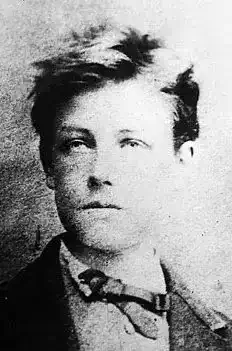
Arthur Rimbaud
The Famous Victory Of Saarbrucken
At centre, the Emperor, blue-yellow, in apotheosis,
Gallops off, ramrod straight, on his fine gee-gee,
Very happy – since everything he sees is rosy,
Fierce as Zeus, and as gentle as a Daddy is:
The brave Infantrymen taking a nap, in vain,
Under the gilded drums and scarlet cannon,
Rise politely. One puts his tunic back on,
And, turns to the Chief, stunned by the big name!
On the right, another, leaning on his rifle butt,
Feeling the hair rise at the back of his neck,
Shouts: ‘Vive L’Empereur!!” – his neighbour’s mute…
A shako rises, like a black sun…– In the midst
The last, a simpleton in red and blue, lying on his gut
Gets up, and, – showing his arse – asks: “On what?”
621
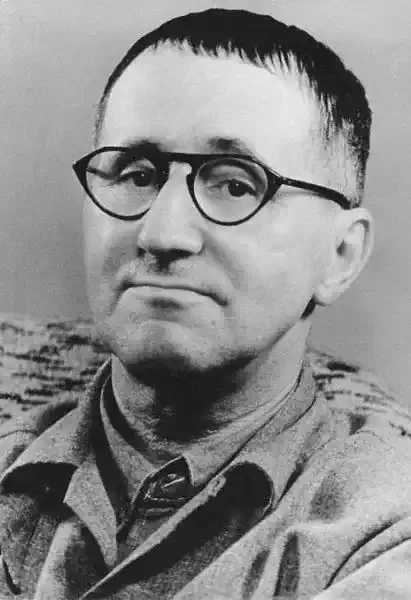
Bertolt Brecht
Not What Was Meant
When the Academy of Arts demanded freedom
Of artistic expression from narrow-minded bureaucrats
There was a howl and a clamour in its immediate vicinity
But roaring above everything
Came a deafening thunder of applause
From beyond the Sector boundary.
Freedom! it roared. Freedom for the artists!
Freedom all round! Freedom for all!
Freedom for the exploiters! Freedom for the warmongers!
Freedom for the Ruhr cartels! Freedom for Hitler's generals!
Softly, my dear fellows...
The Judas kiss for the artists follows
Hard on the Judas kiss for the workers.
The arsonist with his bottle of petrol
Sneaks up grinning to
The Academy of Arts.
But it was not to embrace him, just
To knock the bottle out of his dirty hand that
We asked for elbow room.
Even the narrowest minds
In which peace is harboured
Are more welcome to the arts than the art lover
Who is also a lover of the art of war.
594
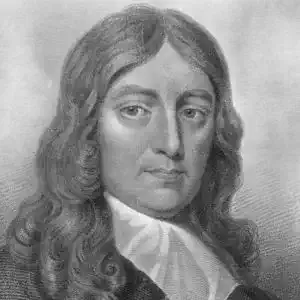
John Milton
Paradise Regained: The Fourth Book
Perplexed and troubled at his bad success
The Tempter stood, nor had what to reply,
Discovered in his fraud, thrown from his hope
So oft, and the persuasive rhetoric
That sleeked his tongue, and won so much on Eve,
So little here, nay lost. But Eve was Eve;
This far his over-match, who, self-deceived
And rash, beforehand had no better weighed
The strength he was to cope with, or his own.
But-as a man who had been matchless held
In cunning, over-reached where least he thought,
To salve his credit, and for very spite,
Still will be tempting him who foils him still,
And never cease, though to his shame the more;
Or as a swarm of flies in vintage-time,
About the wine-press where sweet must is poured,
Beat off, returns as oft with humming sound;
Or surging waves against a solid rock,
Though all to shivers dashed, the assault renew,
(Vain battery!) and in froth or bubbles end-
So Satan, whom repulse upon repulse
Met ever, and to shameful silence brought,
Yet gives not o'er, though desperate of success,
And his vain importunity pursues.
He brought our Saviour to the western side
Of that high mountain, whence he might behold
Another plain, long, but in breadth not wide,
Washed by the southern sea, and on the north
To equal length backed with a ridge of hills
That screened the fruits of the earth and seats of men
From cold Septentrion blasts; thence in the midst
Divided by a river, off whose banks
On each side an Imperial City stood,
With towers and temples proudly elevate
On seven small hills, with palaces adorned,
Porches and theatres, baths, aqueducts,
Statues and trophies, and triumphal arcs,
Gardens and groves, presented to his eyes
Above the highth of mountains interposed-
By what strange parallax, or optic skill
Of vision, multiplied through air, or glass
Of telescope, were curious to enquire.
And now the Tempter thus his silence broke:"
The city which thou seest no other deem
Than great and glorious Rome, Queen of the Earth
So far renowned, and with the spoils enriched
Of nations. There the Capitol thou seest,
Above the rest lifting his stately head
On the Tarpeian rock, her citadel
Impregnable; and there Mount Palatine,
The imperial palace, compass huge, and high
The structure, skill of noblest architects,
With gilded battlements, conspicuous far,
Turrets, and terraces, and glittering spires.
Many a fair edifice besides, more like
Houses of gods-so well I have disposed
My aerie microscope-thou may'st behold,
Outside and inside both, pillars and roofs
Carved work, the hand of famed artificers
In cedar, marble, ivory, or gold.
Thence to the gates cast round thine eye, and see
What conflux issuing forth, or entering in:
Praetors, proconsuls to their provinces
Hasting, or on return, in robes of state;
Lictors and rods, the ensigns of their power;
Legions and cohorts, turms of horse and wings;
Or embassies from regions far remote,
In various habits, on the Appian road,
Or on the AEmilian-some from farthest south,
Syene, and where the shadow both way falls,
Meroe, Nilotic isle, and, more to west,
The realm of Bocchus to the Blackmoor sea;
From the Asian kings (and Parthian among these),
From India and the Golden Chersoness,
And utmost Indian isle Taprobane,
Dusk faces with white silken turbants wreathed;
From Gallia, Gades, and the British west;
Germans, and Scythians, and Sarmatians north
Beyond Danubius to the Tauric pool.
All nations now to Rome obedience pay-
To Rome's great Emperor, whose wide domain,
In ample territory, wealth and power,
Civility of manners, arts and arms,
And long renown, thou justly may'st prefer
Before the Parthian. These two thrones except,
The rest are barbarous, and scarce worth the sight,
Shared among petty kings too far removed;
These having shewn thee, I have shewn thee all
The kingdoms of the world, and all their glory.
This Emperor hath no son, and now is old,
Old and lascivious, and from Rome retired
To Capreae, an island small but strong
On the Campanian shore, with purpose there
His horrid lusts in private to enjoy;
Committing to a wicked favourite
All public cares, and yet of him suspicious;
Hated of all, and hating. With what ease,
Endued with regal virtues as thou art,
Appearing, and beginning noble deeds,
Might'st thou expel this monster from his throne,
Now made a sty, and, in his place ascending,
A victor-people free from servile yoke!
And with my help thou may'st; to me the power
Is given, and by that right I give it thee.
Aim, therefore, at no less than all the world;
Aim at the highest; without the highest attained,
Will be for thee no sitting, or not long,
On David's throne, be prophesied what will."
To whom the Son of God, unmoved, replied:
"Nor doth this grandeur and majestic shew
Of luxury, though called magnificence,
More than of arms before, allure mine eye,
Much less my mind; though thou should'st add to tell
Their sumptuous gluttonies, and gorgeous feasts
On citron tables or Atlantic stone
(For I have also heard, perhaps have read),
Their wines of Setia, Cales, and Falerne,
Chios and Crete, and how they quaff in gold,
Crystal, and myrrhine cups, imbossed with gems
And studs of pearl-to me should'st tell, who thirst
And hunger still. Then embassies thou shew'st
From nations far and nigh! What honour that,
But tedious waste of time, to sit and hear
So many hollow compliments and lies,
Outlandish flatteries? Then proceed'st to talk
Of the Emperor, how easily subdued,
How gloriously. I shall, thou say'st, expel
A brutish monster: what if I withal
Expel a Devil who first made him such?
Let his tormentor, Conscience, find him out;
For him I was not sent, nor yet to free
That people, victor once, now vile and base,
Deservedly made vassal-who, once just,
Frugal, and mild, and temperate, conquered well,
But govern ill the nations under yoke,
Peeling their provinces, exhausted all
By lust and rapine; first ambitious grown
Of triumph, that insulting vanity;
Then cruel, by their sports to blood inured
Of fighting beasts, and men to beasts exposed;
Luxurious by their wealth, and greedier still,
And from the daily Scene effeminate.
What wise and valiant man would seek to free
These, thus degenerate, by themselves enslaved,
Or could of inward slaves make outward free?
Know, therefore, when my season comes to sit
On David's throne, it shall be like a tree
Spreading and overshadowing all the earth,
Or as a stone that shall to pieces dash
All monarchies besides throughout the world;
And of my Kingdom there shall be no end.
Means there shall be to this; but what the means
Is not for thee to know, nor me to tell."
To whom the Tempter, impudent, replied:
"I see all offers made by me how slight
Thou valuest, because offered, and reject'st.
Nothing will please the difficult and nice,
Or nothing more than still to contradict.
On the other side know also thou that I
On what I offer set as high esteem,
Nor what I part with mean to give for naught,
All these, which in a moment thou behold'st,
The kingdoms of the world, to thee I give
(For, given to me, I give to whom I please),
No trifle; yet with this reserve, not else-
On this condition, if thou wilt fall down,
And worship me as thy superior Lord
(Easily done), and hold them all of me;
For what can less so great a gift deserve?"
Whom thus our Saviour answered with disdain:"
I never liked thy talk, thy offers less;
Now both abhor, since thou hast dared to utter
The abominable terms, impious condition.
But I endure the time, till which expired
Thou hast permission on me. It is written,
The first of all commandments, 'Thou shalt worship
The Lord thy God, and only Him shalt serve.'
And dar'st thou to the Son of God propound
To worship thee, accursed? now more accursed
For this attempt, bolder than that on Eve,
And more blasphemous; which expect to rue.
The kingdoms of the world to thee were given!
Permitted rather, and by thee usurped;
Other donation none thou canst produce.
If given, by whom but by the King of kings,
God over all supreme? If given to thee,
By thee how fairly is the Giver now
Repaid! But gratitude in thee is lost
Long since. Wert thou so void of fear or shame
As offer them to me, the Son of God-
To me my own, on such abhorred pact,
That I fall down and worship thee as God?
Get thee behind me! Plain thou now appear'st
That Evil One, Satan for ever damned."
To whom the Fiend, with fear abashed, replied:"
Be not so sore offended, Son of God-
Though Sons of God both Angels are and Men-
If I, to try whether in higher sort
Than these thou bear'st that title, have proposed
What both from Men and Angels I receive,
Tetrarchs of Fire, Air, Flood, and on the Earth
Nations besides from all the quartered winds-
God of this World invoked, and World beneath.
Who then thou art, whose coming is foretold
To me most fatal, me it most concerns.
The trial hath indamaged thee no way,
Rather more honour left and more esteem;
Me naught advantaged, missing what I aimed.
Therefore let pass, as they are transitory,
The kingdoms of this world; I shall no more
Advise thee; gain them as thou canst, or not.
And thou thyself seem'st otherwise inclined
Than to a worldly crown, addicted more
To contemplation and profound dispute;
As by that early action may be judged,
When, slipping from thy mother's eye, thou went'st
Alone into the Temple, there wast found
Among the gravest Rabbies, disputant
On points and questions fitting Moses' chair,
Teaching, not taught. The childhood shews the man,
As morning shews the day. Be famous, then,
By wisdom; as thy empire must extend,
So let extend thy mind o'er all the world
In knowledge; all things in it comprehend.
All knowledge is not couched in Moses' law,
The Pentateuch, or what the Prophets wrote;
The Gentiles also know, and write, and teach
To admiration, led by Nature's light;
And with the Gentiles much thou must converse,
Ruling them by persuasion, as thou mean'st.
Without their learning, how wilt thou with them,
Or they with thee, hold conversation meet?
How wilt thou reason with them, how refute
Their idolisms, traditions, paradoxes?
Error by his own arms is best evinced.
Look once more, ere we leave this specular mount,
Westward, much nearer by south-west; behold
Where on the AEgean shore a city stands,
Built nobly, pure the air and light the soil-
Athens, the eye of Greece, mother of arts
And Eloquence, native to famous wits
Or hospitable, in her sweet recess,
City or suburban, studious walks and shades.
See there the olive-grove of Academe,
Plato's retirement, where the Attic bird
Trills her thick-warbled notes the summer long;
There, flowery hill, Hymettus, with the sound
Of bees' industrious murmur, oft invites
To studious musing; there Ilissus rowls
His whispering stream. Within the walls then view
The schools of ancient sages-his who bred
Great Alexander to subdue the world,
Lyceum there; and painted Stoa next.
There thou shalt hear and learn the secret power
Of harmony, in tones and numbers hit
By voice or hand, and various-measured verse,
AEolian charms and Dorian lyric odes,
And his who gave them breath, but higher sung,
Blind Melesigenes, thence Homer called,
Whose poem Phoebus challenged for his own.
Thence what the lofty grave Tragedians taught
In chorus or iambic, teachers best
Of moral prudence, with delight received
In brief sententious precepts, while they treat
Of fate, and chance, and change in human life,
High actions and high passions best describing.
Thence to the famous Orators repair,
Those ancient whose resistless eloquence
Wielded at will that fierce democraty,
Shook the Arsenal, and fulmined over Greece
To Macedon and Artaxerxes' throne.
To sage Philosophy next lend thine ear,
From heaven descended to the low-roofed house
Of Socrates-see there his tenement-
Whom, well inspired, the Oracle pronounced
Wisest of men; from whose mouth issued forth
Mellifluous streams, that watered all the schools
Of Academics old and new, with those
Surnamed Peripatetics, and the sect
Epicurean, and the Stoic severe.
These here revolve, or, as thou likest, at home,
Till time mature thee to a kingdom's weight;
These rules will render thee a king complete
Within thyself, much more with empire joined."
To whom our Saviour sagely thus replied:"
Think not but that I know these things; or, think
I know them not, not therefore am I short
Of knowing what I ought. He who receives
Light from above, from the Fountain of Light,
No other doctrine needs, though granted true;
But these are false, or little else but dreams,
Conjectures, fancies, built on nothing firm.
The first and wisest of them all professed
To know this only, that he nothing knew;
The next to fabling fell and smooth conceits;
A third sort doubted all things, though plain sense;
Others in virtue placed felicity,
But virtue joined with riches and long life;
In corporal pleasure he, and careless ease;
The Stoic last in philosophic pride,
By him called virtue, and his virtuous man,
Wise, perfect in himself, and all possessing,
Equal to God, oft shames not to prefer,
As fearing God nor man, contemning all
Wealth, pleasure, pain or torment, death and life-
Which, when he lists, he leaves, or boasts he can;
For all his tedious talk is but vain boast,
Or subtle shifts conviction to evade.
Alas! what can they teach, and not mislead,
Ignorant of themselves, of God much more,
And how the World began, and how Man fell,
Degraded by himself, on grace depending?
Much of the Soul they talk, but all awry;
And in themselves seek virtue; and to themselves
All glory arrogate, to God give none;
Rather accuse him under usual names,
Fortune and Fate, as one regardless quite
Of mortal things. Who, therefore, seeks in these
True wisdom finds her not, or, by delusion
Far worse, her false resemblance only meets,
An empty cloud. However, many books,
Wise men have said, are wearisome; who reads
Incessantly, and to his reading brings not
A spirit and judgment equal or superior,
(And what he brings what needs he elsewhere seek?)
Uncertain and unsettled still remains,
Deep-versed in books and shallow in himself,
Crude or intoxicate, collecting toys
And trifles for choice matters, worth a sponge,
As children gathering pebbles on the shore.
Or, if I would delight my private hours
With music or with poem, where so soon
As in our native language can I find
That solace? All our Law and Story strewed
With hymns, our Psalms with artful terms inscribed,
Our Hebrew songs and harps, in Babylon
That pleased so well our victor's ear, declare
That rather Greece from us these arts derived-
Ill imitated while they loudest sing
The vices of their deities, and their own,
In fable, hymn, or song, so personating
Their gods ridiculous, and themselves past shame.
Remove their swelling epithetes, thick-laid
As varnish on a harlot's cheek, the rest,
Thin-sown with aught of profit or delight,
Will far be found unworthy to compare
With Sion's songs, to all true tastes excelling,
Where God is praised aright and godlike men,
The Holiest of Holies and his Saints
(Such are from God inspired, not such from thee);
Unless where moral virtue is expressed
By light of Nature, not in all quite lost.
Their orators thou then extoll'st as those
The top of eloquence-statists indeed,
And lovers of their country, as may seem;
But herein to our Prophets far beneath,
As men divinely taught, and better teaching
The solid rules of civil government,
In their majestic, unaffected style,
Than all the oratory of Greece and Rome.
In them is plainest taught, and easiest learnt,
What makes a nation happy, and keeps it so,
What ruins kingdoms, and lays cities flat;
These only, with our Law, best form a king."
So spake the Son of God; but Satan, now
Quite at a loss (for all his darts were spent),
Thus to our Saviour, with stern brow, replied:
"Since neither wealth nor honour, arms nor arts,
Kingdom nor empire, pleases thee, nor aught
By me proposed in life contemplative
Or active, tended on by glory or fame,
What dost thou in this world? The Wilderness
For thee is fittest place: I found thee there,
And thither will return thee. Yet remember
What I foretell thee; soon thou shalt have cause
To wish thou never hadst rejected, thus
Nicely or cautiously, my offered aid,
Which would have set thee in short time with ease
On David's throne, or throne of all the world,
Now at full age, fulness of time, thy season,
When prophecies of thee are best fulfilled.
Now, contrary-if I read aught in heaven,
Or heaven write aught of fate-by what the stars
Voluminous, or single characters
In their conjunction met, give me to spell,
Sorrows and labours, opposition, hate,
Attends thee; scorns, reproaches, injuries,
Violence and stripes, and, lastly, cruel death.
A kingdom they portend thee, but what kingdom,
Real or allegoric, I discern not;
Nor when: eternal sure-as without end,
Without beginning; for no date prefixed
Directs me in the starry rubric set."
So saying, he took (for still he knew his power
Not yet expired), and to the Wilderness
Brought back, the Son of God, and left him there,
Feigning to disappear. Darkness now rose,
As daylight sunk, and brought in louring Night,
Her shadowy offspring, unsubstantial both,
Privation mere of light and absent day.
Our Saviour, meek, and with untroubled mind
After hisaerie jaunt, though hurried sore,
Hungry and cold, betook him to his rest,
Wherever, under some concourse of shades,
Whose branching arms thick intertwined might shield
From dews and damps of night his sheltered head;
But, sheltered, slept in vain; for at his head
The Tempter watched, and soon with ugly dreams
Disturbed his sleep. And either tropic now
'Gan thunder, and both ends of heaven; the clouds
From many a horrid rift abortive poured
Fierce rain with lightning mixed, water with fire,
In ruin reconciled; nor slept the winds
Within their stony caves, but rushed abroad
From the four hinges of the world, and fell
On the vexed wilderness, whose tallest pines,
Though rooted deep as high, and sturdiest oaks,
Bowed their stiff necks, loaden with stormy blasts,
Or torn up sheer. Ill wast thou shrouded then,
O patient Son of God, yet only stood'st
Unshaken! Nor yet staid the terror there:
Infernal ghosts and hellish furies round
Environed thee; some howled, some yelled, some shrieked,
Some bent at thee their fiery darts, while thou
Sat'st unappalled in calm and sinless peace.
Thus passed the night so foul, till Morning fair
Came forth with pilgrim steps, in amice grey,
Who with her radiant finger stilled the roar
Of thunder, chased the clouds, and laid the winds,
And griesly spectres, which the Fiend had raised
To tempt the Son of God with terrors dire.
And now the sun with more effectual beams
Had cheered the face of earth, and dried the wet
From drooping plant, or dropping tree; the birds,
Who all things now behold more fresh and green,
After a night of storm so ruinous,
Cleared up their choicest notes in bush and spray,
To gratulate the sweet return of morn.
Nor yet, amidst this joy and brightest morn,
Was absent, after all his mischief done,
The Prince of Darkness; glad would also seem
Of this fair change, and to our Saviour came;
Yet with no new device (they all were spent),
Rather by this his last affront resolved,
Desperate of better course, to vent his rage
And mad despite to be so oft repelled.
Him walking on a sunny hill he found,
Backed on the north and west by a thick wood;
Out of the wood he starts in wonted shape,
And in a careless mood thus to him said:"
Fair morning yet betides thee, Son of God,
After a dismal night. I heard the wrack,
As earth and sky would mingle; but myself
Was distant; and these flaws, though mortals fear them,
As dangerous to the pillared frame of Heaven,
Or to the Earth's dark basis underneath,
Are to the main as inconsiderable
And harmless, if not wholesome, as a sneeze
To man's less universe, and soon are gone.
Yet, as being ofttimes noxious where they light
On man, beast, plant, wasteful and turbulent,
Like turbulencies in the affairs of men,
Over whose heads they roar, and seem to point,
They oft fore-signify and threaten ill.
This tempest at this desert most was bent;
Of men at thee, for only thou here dwell'st.
Did I not tell thee, if thou didst reject
The perfect season offered with my aid
To win thy destined seat, but wilt prolong
All to the push of fate, pursue thy way
Of gaining David's throne no man knows when
(For both the when and how is nowhere told),
Thou shalt be what thou art ordained, no doubt;
For Angels have proclaimed it, but concealing
The time and means? Each act is rightliest done
Not when it must, but when it may be best.
If thou observe not this, be sure to find
What I foretold thee-many a hard assay
Of dangers, and adversities, and pains,
Ere thou of Israel's sceptre get fast hold;
Whereof this ominous night that closed thee round,
So many terrors, voices, prodigies,
May warn thee, as a sure foregoing sign."
So talked he, while the Son of God went on,
And staid not, but in brief him answered thus:
"Me worse than wet thou find'st not; other harm
Those terrors which thou speak'st of did me none.
I never feared they could, though noising loud
And threatening nigh: what they can do as signs
Betokening or ill-boding I contemn
As false portents, not sent from God, but thee;
Who, knowing I shall reign past thy preventing,
Obtrud'st thy offered aid, that I, accepting,
At least might seem to hold all power of thee,
Ambitious Spirit! and would'st be thought my God;
And storm'st, refused, thinking to terrify
Me to thy will! Desist (thou art discerned,
And toil'st in vain), nor me in vain molest."
To whom the Fiend, now swoln with rage, replied:"
Then hear, O Son of David, virgin-born!
For Son of God to me is yet in doubt.
Of the Messiah I have heard foretold
By all the Prophets; of thy birth, at length
Announced by Gabriel, with the first I knew,
And of the angelic song in Bethlehem field,
On thy birth-night, that sung thee Saviour born.
From that time seldom have I ceased to eye
Thy infancy, thy childhood, and thy youth,
Thy manhood last, though yet in private bred;
Till, at the ford of Jordan, whither all
Flocked to the Baptist, I among the rest
(Though not to be baptized), by voice from Heaven
Heard thee pronounced the Son of God beloved.
Thenceforth I thought thee worth my nearer view
And narrower scrutiny, that I might learn
In what degree or meaning thou art called
The Son of God, which bears no single sense.
The Son of God I also am, or was;
And, if I was, I am; relation stands:
All men are Sons of God; yet thee I thought
In some respect far higher so declared.
Therefore I watched thy footsteps from that hour,
And followed thee still on to this waste wild,
Where, by all best conjectures, I collect
Thou art to be my fatal enemy.
Good reason, then, if I beforehand seek
To understand my adversary, who
And what he is; his wisdom, power, intent;
By parle or composition, truce or league,
To win him, or win from him what I can.
And opportunity I here have had
To try thee, sift thee, and confess have found thee
Proof against all temptation, as a rock
Of adamant and as a centre, firm
To the utmost of mere man both wise and good,
Not more; for honours, riches, kingdoms, glory,
Have been before contemned, and may again.
Therefore, to know what more thou art than man,
Worth naming the Son of God by voice from Heaven,
Another method I must now begin."
So saying, he caught him up, and, without wing
Of hippogrif, bore through the air sublime,
Over the wilderness and o'er the plain,
Till underneath them fair Jerusalem,
The Holy City, lifted high her towers,
And higher yet the glorious Temple reared
Her pile, far off appearing like a mount
Of alablaster, topt with golden spires:
There, on the highest pinnacle, he set
The Son of God, and added thus in scorn:
"There stand, if thou wilt stand; to stand upright
Will ask thee skill. I to thy Father's house
Have brought thee, and highest placed: highest is best.
Now shew thy progeny; if not to stand,
Cast thyself down. Safely, if Son of God;
For it is written, 'He will give command
Concerning thee to his Angels; in their hands
They shall uplift thee, lest at any time
Thou chance to dash thy foot against a stone.'"
To whom thus Jesus: "Also it is written,
'Tempt not the Lord thy God.'" He said, and stood;
But Satan, smitten with amazement, fell.
As when Earth's son, Antaeus (to compare
Small things with greatest), in Irassa strove
With Jove's Alcides, and, oft foiled, still rose,
Receiving from his mother Earth new strength,
Fresh from his fall, and fiercer grapple joined,
Throttled at length in the air expired and fell,
So, after many a foil, the Tempter proud,
Renewing fresh assaults, amidst his pride
Fell whence he stood to see his victor fall;
And, as that Theban monster that proposed
Her riddle, and him who solved it not devoured,
That once found out and solved, for grief and spite
Cast herself headlong from the Ismenian steep,
So, strook with dread and anguish, fell the Fiend,
And to his crew, that sat consulting, brought
Joyless triumphals of his hoped success,
Ruin, and desperation, and dismay,
Who durst so proudly tempt the Son of God.
So Satan fell; and straight a fiery globe
Of Angels on full sail of wing flew nigh,
Who on their plumy vans received Him soft
From his uneasy station, and upbore,
As on a floating couch, through the blithe air;
Then, in a flowery valley, set him down
On a green bank, and set before him spread
A table of celestial food, divine
Ambrosial fruits fetched from the Tree of Life,
And from the Fount of Life ambrosial drink,
That soon refreshed him wearied, and repaired
What hunger, if aught hunger, had impaired,
Or thirst; and, as he fed, Angelic quires
Sung heavenly anthems of his victory
Over temptation and the Tempter proud:
"True Image of the Father, whether throned
In the bosom of bliss, and light of light
Conceiving, or, remote from Heaven, enshrined
In fleshly tabernacle and human form,
Wandering the wilderness-whatever place,
Habit, or state, or motion, still expressing
The Son of God, with Godlike force endued
Against the attempter of thy Father's throne
And thief of Paradise! Him long of old
Thou didst debel, and down from Heaven cast
With all his army; now thou hast avenged
Supplanted Adam, and, by vanquishing
Temptation, hast regained lost Paradise,
And frustrated the conquest fraudulent.
He never more henceforth will dare set foot
In paradise to tempt; his snares are broke.
For, though that seat of earthly bliss be failed,
A fairer Paradise is founded now
For Adam and his chosen sons, whom thou,
A Saviour, art come down to reinstall;
Where they shall dwell secure, when time shall be,
Of tempter and temptation without fear.
But thou, Infernal Serpent! shalt not long
Rule in the clouds. Like an autumnal star,
Or lightning, thou shalt fall from Heaven, trod down
Under his feet. For proof, ere this thou feel'st
Thy wound (yet not thy last and deadliest wound)
By this repulse received, and hold'st in Hell
No triumph; in all her gates Abaddon rues
Thy bold attempt. Hereafter learn with awe
To dread the Son of God. He, all unarmed,
Shall chase thee, with the terror of his voice,
From thy demoniac holds, possession foul-
Thee and thy legions; yelling they shall fly,
And beg to hide them in a herd of swine,
Lest he command them down into the Deep,
Bound, and to torment sent before their time.
Hail, Son of the Most High, heir of both Worlds,
Queller of Satan! On thy glorious work
Now enter, and begin to save Mankind."
Thus they the Son of God, our Saviour meek,
Sung victor, and, from heavenly feast refreshed,
Brought on his way with joy. He, unobserved,
Home to his mother's house private returned.
599
Bertolt Brecht
The Solution
After the uprising of the 17th June
The Secretary of the Writers Union
Had leaflets distributed in the Stalinallee
Stating that the people
Had forfeited the confidence of the government
And could win it back only
By redoubled efforts. Would it not be easier
In that case for the government
To dissolve the people
And elect another?
The Secretary of the Writers Union
Had leaflets distributed in the Stalinallee
Stating that the people
Had forfeited the confidence of the government
And could win it back only
By redoubled efforts. Would it not be easier
In that case for the government
To dissolve the people
And elect another?
575

Lord Byron
On Chillon
Eternal Spirit of the chainless Mind!
Brightest in dungeons, Liberty, thou art;
For there thy habitation is the heart—
The heart which love of thee alone can bind;
And when thy sons to fetters are consigned,
To
fetters, and the damp vault's dayless gloom—
Their country conquers with their martyrdom,
And Freedom's fame finds wings on every wind.
Chillon! thy prison is a holy place,
And thy sad floor and altar, for 'twas trod,
Until his very steps have left a trace,
Worn, as if thy cold pavement were a sod,
By Bonnivard.—May none those marks efface!
For they appeal from tyranny to God.
578
Lord Byron
Don Juan: Canto The Ninth
Oh, Wellington! (or 'Villainton'for
Fame
Sounds the heroic syllables both ways;
France could not even conquer your great name,
But punn'd it down to this facetious phrase
Beating
or beaten she will laugh the same),
You have obtain'd great pensions and much praise:
Glory like yours should any dare gainsay,
Humanity would rise, and thunder 'Nay!'
I don't think that you used Kinnaird quite well
In Marinet's affairin
fact, 'twas shabby,
And like some other things won't do to tell
Upon your tomb in Westminster's old abbey.
Upon the rest 'tis not worth while to dwell,
Such tales being for the teahours
of some tabby;
But though your years as man tend fast to zero,
In fact your grace is still but a young hero.
Though Britain owes (and pays you too) so much,
Yet Europe doubtless owes you greatly more:
You have repair'd Legitimacy's crutch,
A prop not quite so certain as before:
The Spanish, and the French, as well as Dutch,
Have seen, and felt, how strongly you restore;
And Waterloo has made the world your debtor
(I wish your bards would sing it rather better).
You are 'the best of cutthroats:'
do
not start;
The phrase is Shakspeare's, and not misapplied:
War's a brainspattering,
windpipeslitting
art,
Unless her cause by right be sanctified.
If you have acted once a generous part,
The world, not the world's masters, will decide,
And I shall be delighted to learn who,
Save you and yours, have gain'd by Waterloo?
I am no flattereryou
've supp'd full of flattery:
They say you like it too'
t is no great wonder.
He whose whole life has been assault and battery,
At last may get a little tired of thunder;
And swallowing eulogy much more than satire, he
May like being praised for every lucky blunder,
Call'd 'Saviour of the Nations'not
yet saved,
And 'Europe's Liberator'still
enslaved.
I've done. Now go and dine from off the plate
Presented by the Prince of the Brazils,
And send the sentinel before your gate
A slice or two from your luxurious meals:
He fought, but has not fed so well of late.
Some hunger, too, they say the people feels:
There
is no doubt that you deserve your ration,
But pray give back a little to the nation.
I don't mean to reflecta
man so great as
You, my lord duke! is far above reflection:
The high Roman fashion, too, of Cincinnatus,
With modern history has but small connection:
Though as an Irishman you love potatoes,
You need not take them under your direction;
And half a million for your Sabine farm
Is rather dear!
I'm
sure I mean no harm.
Great men have always scorn'd great recompenses:
Epaminondas saved his Thebes, and died,
Not leaving even his funeral expenses:
George Washington had thanks and nought beside,
Except the allcloudless
glory (which few men's is
To free his country: Pitt too had his pride,
And as a highsoul'd
minister of state is
Renown'd for ruining Great Britain gratis.
Never had mortal man such opportunity,
Except Napoleon, or abused it more:
You might have freed fallen Europe from the unity
Of tyrants, and been blest from shore to shore:
And nowwhat
is your fame? Shall the Muse tune it ye?
Nowthat
the rabble's first vain shouts are o'er?
Go! hear it in your famish'd country's cries!
Behold the world! and curse your victories!
As these new cantos touch on warlike feats,
To you the unflattering Muse deigns to inscribe
Truths, that you will not read in the Gazettes,
But which 'tis time to teach the hireling tribe
Who fatten on their country's gore, and debts,
Must be recited, andwithout
a bribe.
You did great things; but not being great in mind,
Have left undone the greatestand
mankind.
Death laughs
Go
ponder o'er the skeleton
With which men image out the unknown thing
That hides the past world, like to a set sun
Which still elsewhere may rouse a brighter spring
Death
laughs at all you weep for:look
upon
This hourly dread of all! whose threaten'd sting
Turns life to terror, even though in its sheath:
Mark how its lipless mouth grins without breath!
Mark how it laughs and scorns at all you are!
And yet was what you are: from ear to ear
It laughs notthere
is now no fleshy bar
So call'd; the Antic long hath ceased to hear,
But still he smiles; and whether near or far,
He strips from man that mantle (far more dear
Than even the tailor's), his incarnate skin,
White, black, or copperthe
dead bones will grin.
And thus Death laughs,it
is sad merriment,
But still it is so; and with such example
Why should not Life be equally content
With his superior, in a smile to trample
Upon the nothings which are daily spent
Like bubbles on an ocean much less ample
Than the eternal deluge, which devours
Suns as raysworlds
like atomsyears
like hours?
'To be, or not to be? that is the question,'
Says Shakspeare, who just now is much in fashion.
I am neither Alexander nor Hephaestion,
Nor ever had for abstract fame much passion;
But would much rather have a sound digestion
Than Buonaparte's cancer: could I dash on
Through fifty victories to shame or fame
Without
a stomach what were a good name?
'O dura ilia messorum!''
Oh
Ye rigid guts of reapers!' I translate
For the great benefit of those who know
What indigestion isthat
inward fate
Which makes all Styx through one small liver flow.
A peasant's sweat is worth his lord's estate:
Let this one toil for breadthat
rack for rent,
He who sleeps best may be the most content.
'To be, or not to be?'Ere
I decide,
I should be glad to know that which is being?
'T is true we speculate both far and wide,
And deem, because we see, we are allseeing:
For my part, I 'll enlist on neither side,
Until I see both sides for once agreeing.
For me, I sometimes think that life is death,
Rather than life a mere affair of breath.
'Que scaisje?'
was the motto of Montaigne,
As also of the first academicians:
That all is dubious which man may attain,
Was one of their most favourite positions.
There's no such thing as certainty, that's plain
As any of Mortality's conditions;
So little do we know what we're about in
This world, I doubt if doubt itself be doubting.
It is a pleasant voyage perhaps to float,
Like Pyrrho, on a sea of speculation;
But what if carrying sail capsize the boat?
Your wise men don't know much of navigation;
And swimming long in the abyss of thought
Is apt to tire: a calm and shallow station
Well nigh the shore, where one stoops down and gathers
Some pretty shell, is best for moderate bathers.
'But heaven,' as Cassio says, 'is above all
No
more of this, then,let
us pray!' We have
Souls to save, since Eve's slip and Adam's fall,
Which tumbled all mankind into the grave,
Besides fish, beasts, and birds. 'The sparrow's fall
Is special providence,' though how it gave
Offence, we know not; probably it perch'd
Upon the tree which Eve so fondly search'd.
Oh, ye immortal gods! what is theogony?
Oh, thou too, mortal man! what is philanthropy?
Oh, world! which was and is, what is cosmogony?
Some people have accused me of misanthropy;
And yet I know no more than the mahogany
That forms this desk, of what they mean; lykanthropy
I comprehend, for without transformation
Men become wolves on any slight occasion.
But I, the mildest, meekest of mankind,
Like Moses, or Melancthon, who have ne'er
Done anything exceedingly unkind,
And
(though I could not now and then forbear
Following the bent of body or of mind)
Have always had a tendency to spare,
Why
do they call me misanthrope? Because
They hate me, not I them.and
here we'll pause.
'Tis time we should proceed with our good poem,
For
I maintain that it is really good,
Not only in the body but the proem,
However little both are understood
Just now,but
by and by the Truth will show 'em
Herself in her sublimest attitude:
And till she doth, I fain must be content
To share her beauty and her banishment.
Our hero (and, I trust, kind reader, yours)
Was left upon his way to the chief city
Of the immortal Peter's polish'd boors
Who still have shown themselves more brave than witty.
I know its mighty empire now allures
Much flatteryeven
Voltaire's, and that's a pity.
For me, I deem an absolute autocrat
Not a barbarian, but much worse than that.
And I will war, at least in words (andshould
My chance so happendeeds),
with all who war
With Thought;and
of Thought's foes by far most rude,
Tyrants and sycophants have been and are.
I know not who may conquer: if I could
Have such a prescience, it should be no bar
To this my plain, sworn, downright detestation
Of every depotism in every nation.
It is not that I adulate the people:
Without me, there are demagogues enough,
And infidels, to pull down every steeple,
And set up in their stead some proper stuff.
Whether they may sow scepticism to reap hell,
As is the Christian dogma rather rough,
I do not know;
I
wish men to be free
As much from mobs as kingsfrom
you as me.
The consequence is, being of no party,
I shall offend all parties: never mind!
My words, at least, are more sincere and hearty
Than if I sought to sail before the wind.
He who has nought to gain can have small art: he
Who neither wishes to be bound nor bind,
May still expatiate freely, as will I,
Nor give my voice to slavery's jackal cry.
That's an appropriate simile, that jackal;
I
've heard them in the Ephesian ruins howl
By night, as do that mercenary pack all,
Power's base purveyors, who for pickings prowl,
And scent the prey their masters would attack all.
However, the poor jackals are less foul
(As being the brave lions' keen providers)
Than human insects, catering for spiders.
Raise but an arm! 'twill brush their web away,
And without that, their poison and their claws
Are useless. Mind, good people! what I say
(Or rather peoples)go
on without pause!
The web of these tarantulas each day
Increases, till you shall make common cause:
None, save the Spanish fly and Attic bee,
As yet are strongly stinging to be free.
Don Juan, who had shone in the late slaughter,
Was left upon his way with the despatch,
Where blood was talk'd of as we would of water;
And carcasses that lay as thick as thatch
O'er silenced cities, merely served to flatter
Fair Catherine's pastimewho
look'd on the match
Between these nations as a main of cocks,
Wherein she liked her own to stand like rocks.
And there in a kibitka he roll'd on
(A cursed sort of carriage without springs,
Which on rough roads leaves scarcely a whole bone),
Pondering on glory, chivalry, and kings,
And orders, and on all that he had done
And
wishing that posthorses
had the wings
Of Pegasus, or at the least postchaises
Had feathers, when a traveller on deep ways is.
At every joltand
they were manystill
He turn'd his eyes upon his little charge,
As if he wish'd that she should fare less ill
Than he, in these sad highways left at large
To ruts, and flints, and lovely Nature's skill,
Who is no paviour, nor admits a barge
On her canals, where God takes sea and land,
Fishery and farm, both into his own hand.
At least he pays no rent, and has best right
To be the first of what we used to call
'Gentlemen farmer'a
race worn out quite,
Since lately there have been no rents at all,
And 'gentlemen' are in a piteous plight,
And 'farmers' can't raise Ceres from her fall:
She fell with BuonaparteWhat
strange thoughts
Arise, when we see emperors fall with oats!
But Juan turn'd his eyes on the sweet child
Whom he had saved from slaughterwhat
a trophy
Oh! ye who build up monuments, defiled
With gore, like Nadir Shah, that costive sophy,
Who, after leaving Hindostan a wild,
And scarce to the Mogul a cup of coffee
To soothe his woes withal, was slain, the sinner!
Because he could no more digest his dinner;
Oh ye! or we! or he! or she! reflect,
That one life saved, especially if young
Or pretty, is a thing to recollect
Far sweeter than the greenest laurels sprung
From the manure of human clay, though deck'd
With all the praises ever said or sung:
Though hymn'd by every harp, unless within
Your heart joins chorus, Fame is but a din.
Oh! ye great authors luminous, voluminous!
Ye twice ten hundred thousand daily scribes!
Whose pamphlets, volumes, newspapers, illumine us!
Whether you're paid by government in bribes,
To prove the public debt is not consuming us
Or,
roughly treading on the 'courtier's kibes'
With clownish heel, your popular circulation
Feeds you by printing half the realm's starvation;
Oh, ye great authors!'
Apropos des bottes,'I
have forgotten what I meant to say,
As sometimes have been greater sages' lots;
'Twas something calculated to allay
All wrath in barracks, palaces, or cots:
Certes it would have been but thrown away,
And that's one comfort for my lost advice,
Although no doubt it was beyond all price.
But let it go:it
will one day be found
With other relics of 'a former world,'
When this world shall be former, underground,
Thrown topsyturvy,
twisted, crisp'd, and curl'd,
Baked, fried, or burnt, turn'd insideout,
or drown'd,
Like all the worlds before, which have been hurl'd
First out of, and then back again to chaos,
The superstratum which will overlay us.
So Cuvier says;and
then shall come again
Unto the new creation, rising out
From our old crash, some mystic, ancient strain
Of things destroy'd and left in airy doubt:
Like to the notions we now entertain
Of Titans, giants, fellows of about
Some hundred feet in height, not to say miles,
And mammoths, and your winged crocodiles.
Think if then George the Fourth should be dug up!
How the new worldlings of the then new East
Will wonder where such animals could sup!
(For they themselves will be but of the least:
Even worlds miscarry, when too oft they pup,
And every new creation hath decreased
In size, from overworking the material
Men
are but maggots of some huge Earth's burial.)
How willto
these young people, just thrust out
From some fresh Paradise, and set to plough,
And dig, and sweat, and turn themselves about,
And plant, and reap, and spin, and grind, and sow,
Till all the arts at length are brought about,
Especially of war and taxing,how,
I say, will these great relics, when they see 'em,
Look like the monsters of a new museum?
But I am apt to grow too metaphysical:
'The time is out of joint,'and
so am I;
I quite forget this poem's merely quizzical,
And deviate into matters rather dry.
I ne'er decide what I shall say, and this I cal
Much too poetical: men should know why
They write, and for what end; but, note or text,
I never know the word which will come next.
So on I ramble, now and then narrating,
Now pondering:it
is time we should narrate.
I left Don Juan with his horses baiting
Now
we 'll get o'er the ground at a great rate.
I shall not be particular in stating
His journey, we 've so many tours of late:
Suppose him then at Petersburgh; suppose
That pleasant capital of painted snows;
Suppose him in a handsome uniform,
A
scarlet coat, black facings, a long plume,
Waving, like sails new shiver'd in a storm,
Over a cock'd hat in a crowded room,
And brilliant breeches, bright as a Cairn Gorme,
Of yellow casimere we may presume,
White stocking drawn uncurdled as new milk
O'er limbs whose symmetry set off the silk;
Suppose him sword by side, and hat in hand,
Made up by youth, fame, and an army tailor
That
great enchanter, at whose rod's command
Beauty springs forth, and Nature's self turns paler,
Seeing how Art can make her work more grand
(When she don't pin men's limbs in like a gaoler),Behold
him placed as if upon a pillar! He
Seems Love turn'd a lieutenant of artillery:
His bandage slipp'd down into a cravat;
His wings subdued to epaulettes; his quiver
Shrunk to a scabbard, with his arrows at
His side as a small sword, but sharp as ever;
His bow converted into a cock'd hat;
But still so like, that Psyche were more clever
Than some wives (who make blunders no less stupid),
If she had not mistaken him for Cupid.
The courtiers stared, the ladies whisper'd, and
The empress smiled: the reigning favourite frown'dI
quite forget which of them was in hand
Just then; as they are rather numerous found,
Who took by turns that difficult command
Since first her majesty was singly crown'd:
But they were mostly nervous sixfoot
fellows,
All fit to make a Patagonian jealous.
Juan was none of these, but slight and slim,
Blushing and beardless; and yet ne'ertheless
There was a something in his turn of limb,
And still more in his eye, which seem'd to express,
That though he look'd one of the seraphim,
There lurk'd a man beneath the spirit's dress.
Besides, the empress sometimes liked a boy,
And had just buried the fairfaced
Lanskoi.
No wonder then that Yermoloff, or Momonoff,
Or Scherbatoff, or any other off
Or on, might dread her majesty had not room enough
Within her bosom (which was not too tough)
For a new flame; a thought to cast of gloom enough
Along the aspect, whether smooth or rough,
Of him who, in the language of his station,
Then held that 'high official situation.'
O, gentle ladies! should you seek to know
The import of this diplomatic phrase,
Bid Ireland's Londonderry's Marquess show
His parts of speech; and in the strange displays
Of that odd string of words, all in a row,
Which none divine, and every one obeys,
Perhaps you may pick out some queer no meaning,
Of that weak wordy harvest the sole gleaning.
I think I can explain myself without
That sad inexplicable beast of prey
That
Sphinx, whose words would ever be a doubt,
Did not his deeds unriddle them each day
That
monstrous hieroglyphicthat
long spout
Of blood and water, leaden Castlereagh!
And here I must an anecdote relate,
But luckily of no great length or weight.
An English lady ask'd of an Italian,
What were the actual and official duties
Of the strange thing some women set a value on,
Which hovers oft about some married beauties,
Called 'Cavalier servente?'a
Pygmalion
Whose statues warm (I fear, alas! too true 'tis)
Beneath his art. The dame, press'd to disclose them,
Said'
Lady, I beseech you to suppose them.'
And thus I supplicate your supposition,
And mildest, matronlike
interpretation,
Of the imperial favourite's condition.
'T was a high place, the highest in the nation
In fact, if not in rank; and the suspicion
Of any one's attaining to his station,
No doubt gave pain, where each new pair of shoulders,
If rather broad, made stocks rise and their holders.
Juan, I said, was a most beauteous boy,
And had retain'd his boyish look beyond
The usual hirsute seasons which destroy,
With beards and whiskers, and the like, the fond
Parisian aspect which upset old Troy
And founded Doctors' Commons:I
have conn'd
The history of divorces, which, though chequer'd,
Calls Ilion's the first damages on record.
And Catherine, who loved all things (save her lord,
Who was gone to his place), and pass'd for much
Admiring those (by dainty dames abhorr'd)
Gigantic gentlemen, yet had a touch
Of sentiment; and he she most adored
Was the lamented Lanskoi, who was such
A lover as had cost her many a tear,
And yet but made a middling grenadier.
Oh thou 'teterrima causa' of all 'belli'Thou
gate of life and deaththou
nondescript!
Whence is our exit and our entrance,well
I
May pause in pondering how all souls are dipt
In thy perennial fountain:how
man fell I
Know not, since knowledge saw her branches stript
Of her first fruit; but how he falls and rises
Since, thou hast settled beyond all surmises.
Some call thee 'the worst cause of war,' but I
Maintain thou art the best: for after all
From thee we come, to thee we go, and why
To get at thee not batter down a wall,
Or waste a world? since no one can deny
Thou dost replenish worlds both great and small:
With, or without thee, all things at a stand
Are, or would be, thou sea of life's dry land!
Catherine, who was the grand epitome
Of that great cause of war, or peace, or what
You please (it causes all the things which be,
So you may take your choice of this or that)Catherine,
I say. was very glad to see
The handsome herald, on whose plumage sat
Victory; and pausing as she saw him kneel
With his despatch, forgot to break the seal.
Then recollecting the whole empress, nor
forgetting quite the woman (which composed
At least three parts of this great whole), she tore
The letter open with an air which posed
The court, that watch'd each look her visage wore,
Until a royal smile at length disclosed
Fair weather for the day. Though rather spacious,
Her face was noble, her eyes fine, mouth gracious.
Great joy was hers, or rather joys: the first
Was a ta'en city, thirty thousand slain.
Glory and triumph o'er her aspect burst,
As an East Indian sunrise on the main.
These quench'd a moment her ambition's thirst
So
Arab deserts drink in summer's rain:
In vain!
As
fall the dews on quenchless sands,
Blood only serves to wash Ambition's hands!
Her next amusement was more fanciful;
She smiled at mad Suwarrow's rhymes, who threw
Into a Russian couplet rather dull
The whole gazette of thousands whom he slew.
Her third was feminine enough to annul
The shudder which runs naturally through
Our veins, when things call'd sovereigns think it best
To kill, and generals turn it into jest.
The two first feelings ran their course complete,
And lighted first her eye, and then her mouth:
The whole court look'd immediately most sweet,
Like flowers well water'd after a long drouth.
But when on the lieutenant at her feet
Her majesty, who liked to gaze on youth
Almost as much as on a new despatch,
Glanced mildly, all the world was on the watch.
Though somewhat large, exuberant, and truculent,
When wrothwhile
pleased, she was as fine a figure
As those who like things rosy, ripe, and succulent,
Would wish to look on, while they are in vigour.
She could repay each amatory look you lent
With interest, and in turn was wont with rigour
To exact of Cupid's bills the full amount
At sight, nor would permit you to discount.
With her the latter, though at times convenient,
Was not so necessary; for they tell
That she was handsome, and though fierce look'd lenient,
And always used her favourites too well.
If once beyond her boudoir's precincts in ye went,
Your 'fortune' was in a fair way 'to swell
A man' (as Giles says); for though she would widow all
Nations, she liked man as an individual.
What a strange thing is man? and what a stranger
Is woman! What a whirlwind is her head,
And what a whirlpool full of depth and danger
Is all the rest about her! Whether wed
Or widow, maid or mother, she can change her
Mind like the wind: whatever she has said
Or done, is light to what she'll say or do;
The
oldest thing on record, and yet new!
Oh Catherine! (for of all interjections,
To thee both oh! and ah! belong of right
In love and war) how odd are the connections
Of human thoughts, which jostle in their flight!
Just now yours were cut out in different sections:
First Ismail's capture caught your fancy quite;
Next of new knights, the fresh and glorious batch;
And thirdly he who brought you the despatch!
Shakspeare talks of 'the herald Mercury
New lighted on a heavenkissing
hill;'
And some such visions cross'd her majesty,
While her young herald knelt before her still.
'Tis very true the hill seem'd rather high,
For a lieutenant to climb up; but skill
Smooth'd even the Simplon's steep, and by God's blessing
With youth and health all kisses are 'heavenkissing.'
Her majesty look'd down, the youth look'd up
And
so they fell in love;she
with his face,
His grace, his Godknowswhat:
for Cupid's cup
With the first draught intoxicates apace,
A quintessential laudanum or 'black drop,'
Which makes one drunk at once, without the base
Expedient of full bumpers; for the eye
In love drinks all life's fountains (save tears) dry.
He, on the other hand, if not in love,
Fell into that no less imperious passion,
Selflovewhich,
when some sort of thing above
Ourselves, a singer, dancer, much in fashion,
Or duchess, princess, empress, 'deigns to prove'
('Tis Pope's phrase) a great longing, though a rash one,
For one especial person out of many,
Makes us believe ourselves as good as any.
Besides, he was of that delighted age
Which makes all female ages equalwhen
We don't much care with whom we may engage,
As bold as Daniel in the lion's den,
So that we can our native sun assuage
In the next ocean, which may flow just then,
To make a twilight in, just as Sol's heat is
Quench'd in the lap of the salt sea, or Thetis.
And Catherine (we must say thus much for Catherine),
Though bold and bloody, was the kind of thing
Whose temporary passion was quite flattering,
Because each lover look'd a sort of king,
Made up upon an amatory pattern,
A royal husband in all save the ring
Which,
being the damn'dest part of matrimony,
Seem'd taking out the sting to leave the honey.
And when you add to this, her womanhood
In its meridian, her blue eyes or gray
(The last, if they have soul, are quite as good,
Or better, as the best examples say:
Napoleon's, Mary's (queen of Scotland), should
Lend to that colour a transcendent ray;
And Pallas also sanctions the same hue,
Too wise to look through optics black or blue)
Her sweet smile, and her then majestic figure,
Her plumpness, her imperial condescension,
Her preference of a boy to men much bigger
(Fellows whom Messalina's self would pension),
Her prime of life, just now in juicy vigour,
With other extras, which we need not mention,
All
these, or any one of these, explain
Enough to make a stripling very vain.
And that's enough, for love is vanity,
Selfish in its beginning as its end,
Except where 't is a mere insanity,
A maddening spirit which would strive to blend
Itself with beauty's frail inanity,
On which the passion's self seems to depend:
And hence some heathenish philosophers
Make love the main spring of the universe.
Besides Platonic love, besides the love
Of God, the love of sentiment, the loving
Of faithful pairs (I needs must rhyme with dove,
That good old steamboat
which keeps verses moving
'Gainst reason
Reason
ne'er was handandglove
With rhyme, but always leant less to improving
The sound than sense)beside
all these pretences
To love, there are those things which words name senses;
Those movements, those improvements in our bodies
Which make all bodies anxious to get out
Of their own sandpits,
to mix with a goddess,
For such all women are at first no doubt.
How beautiful that moment! and how odd is
That fever which precedes the languid rout
Of our sensations! What a curious way
The whole thing is of clothing souls in clay!
The noblest kind of love is love Platonical,
To end or to begin with; the next grand
Is that which may be christen'd love canonical,
Because the clergy take the thing in hand;
The third sort to be noted in our chronicle
As flourishing in every Christian land,
Is when chaste matrons to their other ties
Add what may be call'd marriage in disguise.
Well, we won't analyseour
story must
Tell for itself: the sovereign was smitten,
Juan much flatter'd by her love, or lust;
I
cannot stop to alter words once written,
And the two are so mix'd with human dust,
That he who names one, both perchance may hit on:
But in such matters Russia's mighty empress
Behaved no better than a common sempstress.
The whole court melted into one wide whisper,
And all lips were applied unto all ears!
The elder ladies' wrinkles curl'd much crisper
As they beheld; the younger cast some leers
On one another, and each lovely lisper
Smiled as she talk'd the matter o'er; but tears
Of rivalship rose in each clouded eye
Of all the standing army who stood by.
All the ambassadors of all the powers
Enquired, Who was this very new young man,
Who promised to be great in some few hours?
Which is full soonthough
life is but a span.
Already they beheld the silver showers
Of rubles rain, as fast as specie can,
Upon his cabinet, besides the presents
Of several ribands, and some thousand peasants.
Catherine was generous,all
such ladies are:
Love, that great opener of the heart and all
The ways that lead there, be they near or far,
Above, below, by turnpikes great or small,
Love
(though she had a cursed taste for war,
And was not the best wife, unless we call
Such Clytemnestra, though perhaps 't is better
That one should die, than two drag on the fetter)
Love had made Catherine make each lover's fortune,
Unlike our own halfchaste
Elizabeth,
Whose avarice all disbursements did importune,
If history, the grand liar, ever saith
The truth; and though grief her old age might shorten,
Because she put a favourite to death,
Her vile, ambiguous method of flirtation,
And stinginess, disgrace her sex and station.
But when the levee rose, and all was bustle
In the dissolving circle, all the nations'
Ambassadors began as 'twere to hustle
Round the young man with their congratulations.
Also the softer silks were heard to rustle
Of gentle dames, among whose recreations
It is to speculate on handsome faces,
Especially when such lead to high places.
Juan, who found himself, he knew not how,
A general object of attention, made
His answers with a very graceful bow,
As if born for the ministerial trade.
Though modest, on his unembarrass'd brow
Nature had written 'gentleman.' He said
Little, but to the purpose; and his manner
Flung hovering graces o'er him like a banner.
An order from her majesty consign'd
Our young lieutenant to the genial care
Of those in office: all the world look'd kind
(As it will look sometimes with the first stare,
Which youth would not act ill to keep in mind),
As also did Miss Protasoff then there,
Named from her mystic office 'l'Eprouveuse,'
A term inexplicable to the Muse.
With her then, as in humble duty bound,
Juan retired,and
so will I, until
My Pegasus shall tire of touching ground.
We have just lit on a 'heavenkissing
hill,'
So lofty that I feel my brain turn round,
And all my fancies whirling like a mill;
Which is a signal to my nerves and brain,
To take a quiet ride in some green Lane.
567

Rudyard Kipling
The King's Job
The Tudor Monarchy
Once on a time was a King anxious to understand
What was the wisest thing a man could do for his land.
Most of his population hurried to answer the question,
Each with a long oration, each with a new suggestion.
They interrupted his meals--he wasn't safe in his bed from 'em--
They hung round his neck and heels, and at last His Majesty fled
from 'em.
He put on a leper's cloak (people leave lepers alone),
Out of the window he broke, and abdicated his throne.
All that rapturous day, while his Court and his ministers mourn
him,
He danced on his own highway till his own Policeman warned
him.
Gay and cheerful he ran (lepers don't cheer as a rule)
Till he found a philosopher-man teaching an infant-school.
The windows were open wide, the King sat down on the grass,
And heard the children inside reciting "Our King is an ass."
The King popped in his head: "Some people would call this
treason,
But I think you are right," he said; "Will you kindly give me your
reason?"
Lepers in school are as rare as kings with a leper's dress on,
But the class didn't stop or stare; it calmly went on with the
lesson:
"The wisest thing, we suppose, that a man can do for his land.
Is the work that lies under his nose, with the tools that lie under
his hand."
The King whipped off his cloak, and stood in his crown before
'em.
He said: "My dear little folk, Ex ore parvulorum--."
(Which is Latin for "Children know more than grown-ups would
credit")
You have shown me the road to go, and I propose to tread it."
Back to his Kingdom he ran, and issued a Proclamation,
"Let every living man return to his occupation!"
Then he explained to the mob who cheered in his palace and round it,
"I've been to look for a job, and Heaven be praised I've found it!"
554
John Milton
Sonnet XVI: Cromwell, our chief of men
To the Lord General Cromwell
On the Proposals of Certain Ministers of the Committee
for the Propagation of the Gospel
Cromwell, our chief of men, who through a cloud
Not of war only, but detractions rude,
Guided by faith and matchless fortitude,
To peace and truth thy glorious way hast ploughed,
And on the neck of crowned Fortune proud
Hast reared God's trophies, and his work pursued,
While Darwen stream with blood of Scots imbrued,
And Dunbar field resounds thy praises loud,
And Worcester's laureate wreath. Yet much remains
To conquer still; peace hath her victories
No less renowned than war: new foes arise,
Threat'ning to bind our souls with secular chains:
Help us to save free conscience from the paw
Of hireling wolves, whose gospel is their maw.
551
Rudyard Kipling
One Viceroy Resigns
(Lord Dufferin to Lord Lansdowne)
So here's your Empire. No more wine, then?
Good.
We'll clear the Aides and khitmatgars away.
(You'll know that fat old fellow with the knife --
He keeps the Name Book, talks in English too,
And almost thinks himself the Government.)
O Youth, Youth, Youth! Forgive me, you're so young.
Forty from sixty -- twenty years of work
And power to back the working. Ay def mi!
You want to know, you want to see, to touch,
And, by your lights, to act. It's natural.
I wonder can I help you. Let me try.
You saw -- what did you see from Bombay east?
Enough to frighten any one but me?
Neat that! It frightened Me in Eighty-Four!
You shouldn't take a man from Canada
And bid him smoke in powder-magazines;
Nor with a Reputation such as -- Bah!
That ghost has haunted me for twenty years,
My Reputation now full blown -- Your fault --
Yours, with your stories of the strife at Home,
Who's up, who's down, who leads and who is led --
One reads so much, one hears so little here.
Well, now's your turn of exile. I go back
To Rome and leisure. All roads lead to Rome,
Or books -- the refuge of the destitute.
When you ... that brings me back to India. See!
Start clear. I couldn't. Egypt served my turn.
You'll never plumb the Oriental mind,
And if you did it isn't worth the toil.
Think of a sleek French priest in Canada;
Divide by twenty half-breeds. Multiply
By twice the Sphinx's silence. There's your East,
And you're as wise as ever. So am I.
Accept on trust and work in darkness, strike
At venture, stumble forward, make your mark,
(It's chalk on granite), then thank God no flame
Leaps from the rock to shrivel mark and man.
I'm clear -- my mark is made. Three months of drought
Had ruined much. It rained and washed away
The specks that might have gathered on my Name.
I took a country twice the size of France,
And shuttered up one doorway in the North.
I stand by those. You'll find that both will pay,
I pledged my Name on both -- they're yours to-night.
Hold to them -- they hold fame enough for two.
I'm old, but I shall live till Burma pays.
Men there -- not German traders -- Crsthw-te knows --
You'll find it in my papers. For the North
Guns always -- quietly -- but always guns.
You've seen your Council? Yes, they'll try to rule,
And prize their Reputations. Have you met
A grim lay-reader with a taste for coins,
And faith in Sin most men withhold from God?
He's gone to England. R-p-n knew his grip
And kicked. A Council always has its H-pes.
They look for nothing from the West but Death
Or Bath or Bournemouth. Here's their ground.
They fight
Until the middle classes take them back,
One of ten millions plus a C.S.I.
Or drop in harness. Legion of the Lost?
Not altogether -- earnest, narrow men,
But chiefly earnest, and they'll do your work,
And end by writing letters to the Times,
(Shall I write letters, answering H-nt-r -- fawn
With R-p-n on the Yorkshire grocers? Ugh!)
They have their Reputations. Look to one --
I work with him -- the smallest of them all,
White-haired, red-faced, who sat the plunging horse
Out in the garden. He's your right-hand man,
And dreams of tilting W-ls-y from the throne,
But while he dreams gives work we cannot buy;
He has his Reputation -- wants the Lords
By way of Frontier Roads. Meantime, I think,
He values very much the hand that falls
Upon his shoulder at the Council table --
Hates cats and knows his business; which is yours.
Your business! twice a hundered million souls.
Your business! I could tell you what I did
Some nights of Eighty-Five, at Simla, worth
A Kingdom's ransom. When a big ship drives,
God knows to what new reef the man at the whee!
Prays with the passengers. They lose their lives,
Or rescued go their way; but he's no man
To take his trick at the wheel again -- that's worse
Than drowning. Well, a galled Mashobra mule
(You'll see Mashobra) passed me on the Mall,
And I was -- some fool's wife and ducked and bowed
To show the others I would stop and speak.
Then the mule fell -- three galls, a hund-breadth each,
Behind the withers. Mrs. Whatsisname
Leers at the mule and me by turns, thweet thoul!
"How could they make him carry such a load!"
I saw -- it isn't often I dream dreams --
More than the mule that minute -- smoke and flame
From Simla to the haze below. That's weak.
You're younger. You'll dream dreams before you've done.
You've youth, that's one -- good workmen -- that means two
Fair chances in your favor. Fate's the third.
I know what I did. Do you ask me, "Preach"?
I answer by my past or else go back
To platitudes of rule -- or take you thus
In confidence and say: "You know the trick:
You've governed Canada. You know. You know!"
And all the while commend you to Fate's hand
(Here at the top on loses sight o' God),
Commend you, then, to something more than you --
The Other People's blunders and
. . . that's all.
I'd agonize to serve you if I could.
It's incommunicable, like the cast
That drops the tackle with the gut adry.
Too much -- too little -- there's your salmon lost!
And so I tell you nothing --with you luck,
And wonder -- how I wonder! -- for your sake
And triumph for my own. You're young, you're young,
You hold to half a hundred Shibboleths.
I'm old. I followed Power to the last,
Gave her my best, and Power followed Me.
It's worth it -- on my sould I'm speaking plain,
Here by the claret glasses! -- worth it all.
I gave -- no matter what I gave -- I win.
I know I win. Mine's work, good work that lives!
A country twice the size of France -- the North
Safeguarded. That's my record: sink the rest
And better if you can. The Rains may serve,
Rupees may rise -- three pence will give you Fame --
It's rash to hope for sixpence -- If they rise
Get guns, more guns, and lift the salt-tax.
Oh!
I told you what the Congress meant or thought?
I'll answer nothing. Half a year will prove
The full extent of time and thought you'll spare
To Congress. Ask a Lady Doctor once
How little Begums see the light -- deduce
Thence how the True Reformer's child is born.
It's interesting, curious . . . and vile.
I told the Turk he was a gentlman.
I told the Russian that his Tartar veins
Bled pure Parisian ichor; and he purred.
The Congress doesn't purr. I think it swears.
You're young -- you'll swear to ere you've reached the end.
The End! God help you, if there be a God.
(There must be one to startle Gl-dst-ne's soul
In that new land where all the wires are cut.
And Cr-ss snores anthems on the asphodel.)
God help you! And I'd help you if I could,
But that's beyond me. Yes, your speech was crude.
Sound claret after olives -- yours and mine;
But Medoc slips into vin ordinaire.
(I'll drink my first at Genoa to your health.)
Raise it to Hock. You'll never catch my style.
And, after all, the middle-classes grip
The middle-class -- for Brompton talk Earl's Court.
Perhaps you're right. I'll see you in the Times --
A quarter-column of eye-searing print,
A leader once a quarter -- then a war;
The Strand abellow through the fog: "Defeat!"
"'Orrible slaughter!" While you lie awake
And wonder. Oh, you'll wonder ere you're free!
I wonder now. The four years slide away
So fast, so fast, and leave me here alone.
R-y, C-lv-n, L-l, R-b-rts, B-ck, the rest,
Princes and Powers of Darkness troops and trains,
(I cannot sleep in trains), land piled on land,
Whitewash and weariness, red rockets, dust,
White snows that mocked me, palaces -- with draughts,
And W-stl-nd with the drafts he couldn't pay,
Poor W-ls-n reading his obituary.
Before he died, and H-pe, the man with bones,
And A-tch-s-n a dripping mackintosh
At Council in the Rains, his grating "Sirrr"
Half drowned by H-nt-r's silky: "Bat my lahnd."
Hunterian always: M-rsh-l spinning plates
Or standing on his head; the Rent Bill's roar,
A hundred thousand speeches, must red cloth,
And Smiths thrice happy if I call them Jones,
(I can't remember half their names) or reined
My pony on the Mall to greet their wives.
More trains, more troops, more dust, and then all's done.
Four years, and I forget. If I forget
How will they bear me in their minds? The North
Safeguarded -- nearly (R-b-rts knows the rest),
A country twice the size of France annexed.
That stays at least. The rest may pass -- may pass --
Your heritage -- and I can teach you nought.
"High trust," "vast honor," "interests twice as vast,"
"Due reverence to your Council" -- keep to those.
I envy you the twenty years you've gained,
But not the five to follow. What's that? One?
Two! -- Surely not so late. Good-night. Don't dream.
551
Lord Byron
Ode To Napoleon Buonaparte
'Expends Annibalem:quot
libras in duce summo
Invenies? — JUVENAL., Sat. X.
I.
Tis donebut
yesterday a King!
And arm'd with Kings to strive
And
now thou art a nameless thing:
So abjectyet
alive!
Is this the man of thousand thrones,
Who strew'd our earth with hostile bones,
And can he thus survive?
Since he, miscall'd the Morning Star,
Nor man nor fiend bath fallen so far.
II.
Illminded
man! why scourge thy kind
Who bow'd so low the knee?
By gazing on thyself grown blind,
Thou taught'st the rest to see.
With might unquestion'd,power
to save,
Thine
only gift hath been the grave
To those that worshipp'd thee;
Nor till thy fall could mortals guess
Ambition's less than littleness!
III.
Thanks for that lesson
It
will teach
To afterwarriors
more
Than high Philosophy can preach,
And vainly preach 'd before.
That spell upon the minds of men
Breaks never to unite again,
That led them to adore
Those Pagod things of sabre sway
With fronts of brass, and feet of clay.
IV.
The triumph and the vanity,
The rapture of the strife
The
earthquake voice of Victory,
To thee the breath of life;
The sword, the sceptre, and that sway
Which man seem'd made but to obey,
Wherewith renown was rife
All
quell'd!Dark
Spirit! what must be
The madness of thy memory!
V.
The Desolator desolate!
The Victor overthrown!
The Arbiter of others' fate
A Suppliant for his own!
Is it some yet imperial hope
That with such change can calmly cope?
Or dread of death alone?
To die a princeor
live a slave
Thy
choice is most ignobly brave!
VI.
He who of old would rend the oak,
Dream'd not of the rebound:
Chain'd by the trunk he vainly broke
Alonehow
look'd he round?
Thou, in the sternness of thy strength,
An equal deed halt done at length,
And darker fate hast found:
He fell, the forest prowlers' prey;
But thou must eat thy heart away!
VII.
The Roman, when his burning heart
Was slaked with blood of Rome,
Threw down the daggerdared
depart,
In savage grandeur, home
He
dared depart in utter scorn
Of men that such a yoke had borne,
Yet left him such a doom!
His only glory was that hour
Of selfupheld
abandon'd power.
VIII.
The Spaniard, when the lust of sway
Had lost its quickening spell,
Cast crowns for rosaries away,
An empire for a cell;
A strict accountant of his beads,
A subtle disputant on creeds,
His dotage trifled well:
Yet better had he neither known
A bigot's shrine, nor despot's throne.
IX.
But thoufrom
thy reluctant hand
The thunderbolt is wrung
Too
late thou leav'st the high command
To which thy weakness clung;
All Evil Spirit as thou art,
It is enough to grieve the heart
To see thine own unstrung;
To think that God's fair world hath been
The footstool of a thing so mean;
X.
And Earth hath spilt her blood for him,
Who thus can hoard his own!
And Monarchs bow'd the trembling limb,
And thank'd him for a throne!
Fair Freedom! we may hold thee dear,
When thus thy mightiest foes their fear
In humblest guise have shown.
Oh! ne'er may tyrant leave behind
A brighter name to lure mankind!
XI.
Thine evil deeds are writ in gore,
Nor written thus in vain
Thy
triumphs tell of fame no more,
Or deepen every stain:
If thou hadst died as honour dies,
Some new Napoleon might arise,
To shame the world again
But
who would soar the solar height,
To set in such a starless night?
XII.
Weigh'd in the balance, hero dust
Is vile as vulgar clay;
Thy scales, Mortality! are just
To all that pass away:
But yet methought the living great
Some higher sparks should animate,
To dazzle and dismay:
Nor deem'd Contempt could thus make mirth
Of these, the Conquerors of the earth.
XIII.
And she, proud Austria's mournful flower,
Thy still imperial bride;
How bears her breast the torturing hour?
Still clings she to thy side?
Must she too bend, must she too share
Thy late repentance, long despair,
Thou throneless Homicide?
If still she loves thee, hoard that gem,'
Tisworth thy vanish'd diadem!
XIV.
Then haste thee to thy sullen Isle,
And gaze upon the sea;
That element may meet thy smile
It
ne'er was ruled by thee!
Or trace with thine all idle hand
In loitering mood upon the sand
That Earth is now as free!
That Corinth's pedagogue hath now
Transferr'd his byword
to thy brow.
XV.
Thou Timour! in his captive's cage
What thoughts will there be thine,
While brooding in thy prison'd rage?
But one'
The world was mine!'
Unless, like he of Babylon,
All sense is with thy sceptre gone,
Life will not long confine
That spirit pour'd so widely forth
So
long obey'dso
little worth!
XVI.
Or, like the thief of fire from heaven,
Wilt thou withstand the shock?
And share with him the unforgiven,
His vulture and his rock!
Foredoom'd by Godby
man accurst,
And that last act, though not thy worst,
The very Fiend's arch mock
He in his fall preserved his pride,
And, if a mortal, had as proudly died!
XVII.
There was a daythere
was an hour,
While earth was Gaul'sGaul
thine
When
that immeasurable power
Unsated to resign
Had been an act of purer fame
Than gathers round Marengo's name,
And gilded thy decline,
Through the long twilight of all time,
Despite some passing clouds of crime.
XVIII.
But thou forsooth must be a king,
And don the purple vest,
As !f that foolish robe could wring
Remembrance from thy breast.
Where is that faded garment? where
The gewgaws thou Overt fond to wear,
The star, the string the crest?
Vain froward child of empire! say,
Are all thy playthings snatched away?
XIX.
Where may the wearied eye repose
When gazing on the Great;
Where neither guilty glory glows,
Nor despicable state?
Yesonethe
firstthe
lastthe
best
The
Cincinnatus of the West,
Whom envy dared not hate,
Bequeath'd the name of Washington,
To make man blush there was but one!
543
William Blake
The French Revolution (excerpt)
Thee the ancientest peer, Duke of Burgundy, rose from the monarch's right hand, red
as wines
From his mountains; an odor of war, like a ripe vineyard, rose from his garments,
And the chamber became as a clouded sky; o'er the council he stretch'd his red limbs,
Cloth'd in flames of crimson; as a ripe vineyard stretches over sheaves of corn,
The fierce Duke hung over the council; around him crowd, weeping in his burning robe,
A bright cloud of infant souls; his words fall like purple autumn on the sheaves:
'Shall this marble built heaven become a clay cottage, this earth an oak stool and
these mowers
From the Atlantic mountains mow down all this great starry harvest of six thousand
years?
And shall Necker, the hind of Geneva, stretch out his crook'd sickle o'er fertile
France
Till our purple and crimson is faded to russet, and the kingdoms of earth bound in
sheaves,
And the ancient forests of chivalry hewn, and the joys of the combat burnt for
fuel;
Till the power and dominion is rent from the pole, sword and sceptre from sun and
moon,
The law and gospel from fire and air, and eternal reason and science
From the deep and the solid, and man lay his faded head down on the rock
Of eternity, where the eternal lion and eagle remain to devour?
This to prevent--urg'd by cries in day, and prophetic dreams hovering in night,
To enrich the lean earth that craves, furrow'd with plows, whose seed is
departing from her--
Thy nobles have gather'd thy starry hosts round this rebellious city,
To rouze up the ancient forests of Europe, with clarions of cloud breathing war,
To hear the horse neigh to the drum and trumpet, and the trumpet and war
shout reply.
Stretch the hand that beckons the eagles of heaven; they cry over Paris, and
wait
Till Fayette point his finger to Versailles; the eagles of heaven must have their
prey!'
He ceas'd, and burn'd silent; red clouds roll round Necker; a weeping is heard
o'er the palace.
Like a dark cloud Necker paus'd, and like thunder on the just man's burial day he
paus'd;
Silent sit the winds, silent the meadows, while the husbandman and woman of
weakness
And bright children look after him into the grave, and water his clay with love,
Then turn towards pensive fields; so Necker paus'd, and his visage was covered
with clouds.
The King lean'd on his mountains, then lifted his head and look'd on his armies,
that shone
Through heaven, tinging morning with beams of blood; then turning to Burgundy,
troubled:
'Burgundy, thou wast born a lion! My soul is o'ergrown with distress.
For the nobles of France, and dark mists roll round me and blot the writing of
God
Written in my bosom. Necker rise! leave the kingdom, thy life is surrounded with
snares.
We have call'd an Assembly, but not to destroy; we have given gifts, not to the
weak;
I hear rushing of muskets, and bright'ning of swords, and visages redd'ning with
war,
Frowning and looking up from brooding villages and every dark'ning city.
Ancient wonders frown over the kingdom, and cries of women and babes are
heard,
And tempests of doubt roll around me, and fierce sorrows, because of the nobles
of France.
Depart! answer not! for the tempest must fall, as in years that are passed away.'
541
John Milton
Psalm 02
Done Aug. 8. 1653. Terzetti.
Why do the Gentiles tumult, and the Nations
Muse a vain thing, the Kings of th'earth upstand
With power, and Princes in their Congregations
Lay deep their plots together through each Land,
Against the Lord and his Messiah dear.
Let us break off; say they, by strength of hand
Their bonds, and cast from us, no more to wear,
Their twisted cords: he who in Heaven doth dwell
Shall laugh, the Lord shall scoff them, then severe
Speak to them in his wrath, and in his fell
And fierce ire trouble them; but I saith hee
Anointed have my King (though ye rebell)
On Sion my holi' hill. A firm decree
I will declare; the Lord to me hath say'd
Thou art my Son I have begotten thee
This day, ask of me, and the grant is made;
As thy possession I on thee bestow
Th'Heathen, and as thy conquest to be sway'd
Earths utmost bounds: them shalt thou bring full low
With Iron Sceptir bruis'd, and them disperse
Like to a potters vessel shiver'd so.
And now be wise at length ye Kings averse
Be taught ye Judges of the earth; with fear
Jehovah serve and let your joy converse
With trembling; Kiss the Son least he appear
In anger and ye perish in the way
If once his wrath take fire like fuel sere.
Happy all those who have in him their stay.
547
William Blake
The Human Abstract
Pity would be no more
If we did not make somebody Poor;
And Mercy no more could be
If all were as happy as we.
And mutual fear brings peace,
Till the selfish loves increase:
Then Cruelty knits a snare,
And spreads his baits with care.
He sits down with holy fears,
And waters the grounds with tears;
Then Humility takes its root
Underneath his foot.
Soon spreads the dismal shade
Of Mystery over his head;
And the Catterpiller and Fly
Feed on the Mystery.
And it bears the fruit of Deceit,
Ruddy and sweet to eat;
And the Raven his nest has made
In its thickest shade.
The Gods of the earth and sea
Sought thro' Nature to find this Tree;
But their search was all in vain:
There grows one in the Human Brain.
523
Elizabeth Barrett Browning
A Curse For A Nation
I heard an angel speak last night,
And he said 'Write!
Write a Nation's curse for me,
And send it over the Western Sea.'
I faltered, taking up the word:
'Not so, my lord!
If curses must be, choose another
To send thy curse against my brother.
'For I am bound by gratitude,
By love and blood,
To brothers of mine across the sea,
Who stretch out kindly hands to me.'
'Therefore,' the voice said, 'shalt thou write
My curse to-night.
From the summits of love a curse is driven,
As lightning is from the tops of heaven.'
'Not so,' I answered. 'Evermore
My heart is sore
For my own land's sins: for little feet
Of children bleeding along the street:
'For parked-up honors that gainsay
The right of way:
For almsgiving through a door that is
Not open enough for two friends to kiss:
'For love of freedom which abates
Beyond the Straits:
For patriot virtue starved to vice on
Self-praise, self-interest, and suspicion:
'For an oligarchic parliament,
And bribes well-meant.
What curse to another land assign,
When heavy-souled for the sins of mine?'
'Therefore,' the voice said, 'shalt thou write
My curse to-night.
Because thou hast strength to see and hate
A foul thing done within thy gate.'
'Not so,' I answered once again.
'To curse, choose men.
For I, a woman, have only known
How the heart melts and the tears run down.'
'Therefore,' the voice said, 'shalt thou write
My curse to-night.
Some women weep and curse, I say
(And no one marvels), night and day.
'And thou shalt take their part to-night,
Weep and write.
A curse from the depths of womanhood
Is very salt, and bitter, and good.'
So thus I wrote, and mourned indeed,
What all may read.
And thus, as was enjoined on me,
I send it over the Western Sea.
The Curse
Because ye have broken your own chain
With the strain
Of brave men climbing a Nation's height,
Yet thence bear down with brand and thong
On souls of others, -- for this wrong
This is the curse. Write.
Because yourselves are standing straight
In the state
Of Freedom's foremost acolyte,
Yet keep calm footing all the time
On writhing bond-slaves, -- for this crime
This is the curse. Write.
Because ye prosper in God's name,
With a claim
To honor in the old world's sight,
Yet do the fiend's work perfectly
In strangling martyrs, -- for this lie
This is the curse. Write.
Ye shall watch while kings conspire
Round the people's smouldering fire,
And, warm for your part,
Shall never dare -- O shame!
To utter the thought into flame
Which burns at your heart.
This is the curse. Write.
Ye shall watch while nations strive
With the bloodhounds, die or survive,
Drop faint from their jaws,
Or throttle them backward to death;
And only under your breath
Shall favor the cause.
This is the curse. Write.
Ye shall watch while strong men draw
The nets of feudal law
To strangle the weak;
And, counting the sin for a sin,
Your soul shall be sadder within
Than the word ye shall speak.
This is the curse. Write.
When good men are praying erect
That Christ may avenge His elect
And deliver the earth,
The prayer in your ears, said low,
Shall sound like the tramp of a foe
That's driving you forth.
This is the curse. Write.
When wise men give you their praise,
They shall praise in the heat of the phrase,
As if carried too far.
When ye boast your own charters kept true,
Ye shall blush; for the thing which ye do
Derides what ye are.
This is the curse. Write.
When fools cast taunts at your gate,
Your scorn ye shall somewhat abate
As ye look o'er the wall;
For your conscience, tradition, and name
Explode with a deadlier blame
Than the worst of them all.
This is the curse. Write.
Go, wherever ill deeds shall be done,
Go, plant your flag in the sun
Beside the ill-doers!
And recoil from clenching the curse
Of God's witnessing Universe
With a curse of yours.
This is the curse. Write.
523
Alfred Lord Tennyson
Merlin And Vivien
A storm was coming, but the winds were still,
And in the wild woods of Broceliande,
Before an oak, so hollow, huge and old
It looked a tower of ivied masonwork,
At Merlin's feet the wily Vivien lay.
For he that always bare in bitter grudge
The slights of Arthur and his Table, Mark
The Cornish King, had heard a wandering voice,
A minstrel of Caerlon by strong storm
Blown into shelter at Tintagil, say
That out of naked knightlike purity
Sir Lancelot worshipt no unmarried girl
But the great Queen herself, fought in her name,
Sware by her--vows like theirs, that high in heaven
Love most, but neither marry, nor are given
In marriage, angels of our Lord's report.
He ceased, and then--for Vivien sweetly said
(She sat beside the banquet nearest Mark),
'And is the fair example followed, Sir,
In Arthur's household?'--answered innocently:
'Ay, by some few--ay, truly--youths that hold
It more beseems the perfect virgin knight
To worship woman as true wife beyond
All hopes of gaining, than as maiden girl.
They place their pride in Lancelot and the Queen.
So passionate for an utter purity
Beyond the limit of their bond, are these,
For Arthur bound them not to singleness.
Brave hearts and clean! and yet--God guide them--young.'
Then Mark was half in heart to hurl his cup
Straight at the speaker, but forbore: he rose
To leave the hall, and, Vivien following him,
Turned to her: 'Here are snakes within the grass;
And you methinks, O Vivien, save ye fear
The monkish manhood, and the mask of pure
Worn by this court, can stir them till they sting.'
And Vivien answered, smiling scornfully,
'Why fear? because that fostered at THY court
I savour of thy--virtues? fear them? no.
As Love, if Love is perfect, casts out fear,
So Hate, if Hate is perfect, casts out fear.
My father died in battle against the King,
My mother on his corpse in open field;
She bore me there, for born from death was I
Among the dead and sown upon the wind--
And then on thee! and shown the truth betimes,
That old true filth, and bottom of the well
Where Truth is hidden. Gracious lessons thine
And maxims of the mud! "This Arthur pure!
Great Nature through the flesh herself hath made
Gives him the lie! There is no being pure,
My cherub; saith not Holy Writ the same?"--
If I were Arthur, I would have thy blood.
Thy blessing, stainless King! I bring thee back,
When I have ferreted out their burrowings,
The hearts of all this Order in mine hand-Ay--
so that fate and craft and folly close,
Perchance, one curl of Arthur's golden beard.
To me this narrow grizzled fork of thine
Is cleaner-fashioned--Well, I loved thee first,
That warps the wit.'
Loud laughed the graceless Mark,
But Vivien, into Camelot stealing, lodged
Low in the city, and on a festal day
When Guinevere was crossing the great hall
Cast herself down, knelt to the Queen, and wailed.
'Why kneel ye there? What evil hath ye wrought?
Rise!' and the damsel bidden rise arose
And stood with folded hands and downward eyes
Of glancing corner, and all meekly said,
'None wrought, but suffered much, an orphan maid!
My father died in battle for thy King,
My mother on his corpse--in open field,
The sad sea-sounding wastes of Lyonnesse--
Poor wretch--no friend!--and now by Mark the King
For that small charm of feature mine, pursued--
If any such be mine--I fly to thee.
Save, save me thou--Woman of women--thine
The wreath of beauty, thine the crown of power,
Be thine the balm of pity, O Heaven's own white
Earth-angel, stainless bride of stainless King--
Help, for he follows! take me to thyself!
O yield me shelter for mine innocency
Among thy maidens!
Here her slow sweet eyes
Fear-tremulous, but humbly hopeful, rose
Fixt on her hearer's, while the Queen who stood
All glittering like May sunshine on May leaves
In green and gold, and plumed with green replied,
'Peace, child! of overpraise and overblame
We choose the last. Our noble Arthur, him
Ye scarce can overpraise, will hear and know.
Nay--we believe all evil of thy Mark--
Well, we shall test thee farther; but this hour
We ride a-hawking with Sir Lancelot.
He hath given us a fair falcon which he trained;
We go to prove it. Bide ye here the while.'
She past; and Vivien murmured after 'Go!
I bide the while.' Then through the portal-arch
Peering askance, and muttering broken-wise,
As one that labours with an evil dream,
Beheld the Queen and Lancelot get to horse.
'Is that the Lancelot? goodly--ay, but gaunt:
Courteous--amends for gauntness--takes her hand--
That glance of theirs, but for the street, had been
A clinging kiss--how hand lingers in hand!
Let go at last!--they ride away--to hawk
For waterfowl. Royaller game is mine.
For such a supersensual sensual bond
As that gray cricket chirpt of at our hearth--
Touch flax with flame--a glance will serve--the liars!
Ah little rat that borest in the dyke
Thy hole by night to let the boundless deep
Down upon far-off cities while they dance--
Or dream--of thee they dreamed not--nor of me
These--ay, but each of either: ride, and dream
The mortal dream that never yet was mine--
Ride, ride and dream until ye wake--to me!
Then, narrow court and lubber King, farewell!
For Lancelot will be gracious to the rat,
And our wise Queen, if knowing that I know,
Will hate, loathe, fear--but honour me the more.'
Yet while they rode together down the plain,
Their talk was all of training, terms of art,
Diet and seeling, jesses, leash and lure.
'She is too noble' he said 'to check at pies,
Nor will she rake: there is no baseness in her.'
Here when the Queen demanded as by chance
'Know ye the stranger woman?' 'Let her be,'
Said Lancelot and unhooded casting off
The goodly falcon free; she towered; her bells,
Tone under tone, shrilled; and they lifted up
Their eager faces, wondering at the strength,
Boldness and royal knighthood of the bird
Who pounced her quarry and slew it. Many a time
As once--of old--among the flowers--they rode.
But Vivien half-forgotten of the Queen
Among her damsels broidering sat, heard, watched
And whispered: through the peaceful court she crept
And whispered: then as Arthur in the highest
Leavened the world, so Vivien in the lowest,
Arriving at a time of golden rest,
And sowing one ill hint from ear to ear,
While all the heathen lay at Arthur's feet,
And no quest came, but all was joust and play,
Leavened his hall. They heard and let her be.
Thereafter as an enemy that has left
Death in the living waters, and withdrawn,
The wily Vivien stole from Arthur's court.
She hated all the knights, and heard in thought
Their lavish comment when her name was named.
For once, when Arthur walking all alone,
Vext at a rumour issued from herself
Of some corruption crept among his knights,
Had met her, Vivien, being greeted fair,
Would fain have wrought upon his cloudy mood
With reverent eyes mock-loyal, shaken voice,
And fluttered adoration, and at last
With dark sweet hints of some who prized him more
Than who should prize him most; at which the King
Had gazed upon her blankly and gone by:
But one had watched, and had not held his peace:
It made the laughter of an afternoon
That Vivien should attempt the blameless King.
And after that, she set herself to gain
Him, the most famous man of all those times,
Merlin, who knew the range of all their arts,
Had built the King his havens, ships, and halls,
Was also Bard, and knew the starry heavens;
The people called him Wizard; whom at first
She played about with slight and sprightly talk,
And vivid smiles, and faintly-venomed points
Of slander, glancing here and grazing there;
And yielding to his kindlier moods, the Seer
Would watch her at her petulance, and play,
Even when they seemed unloveable, and laugh
As those that watch a kitten; thus he grew
Tolerant of what he half disdained, and she,
Perceiving that she was but half disdained,
Began to break her sports with graver fits,
Turn red or pale, would often when they met
Sigh fully, or all-silent gaze upon him
With such a fixt devotion, that the old man,
Though doubtful, felt the flattery, and at times
Would flatter his own wish in age for love,
And half believe her true: for thus at times
He wavered; but that other clung to him,
Fixt in her will, and so the seasons went.
Then fell on Merlin a great melancholy;
He walked with dreams and darkness, and he found
A doom that ever poised itself to fall,
An ever-moaning battle in the mist,
World-war of dying flesh against the life,
Death in all life and lying in all love,
The meanest having power upon the highest,
And the high purpose broken by the worm.
So leaving Arthur's court he gained the beach;
There found a little boat, and stept into it;
And Vivien followed, but he marked her not.
She took the helm and he the sail; the boat
Drave with a sudden wind across the deeps,
And touching Breton sands, they disembarked.
And then she followed Merlin all the way,
Even to the wild woods of Broceliande.
For Merlin once had told her of a charm,
The which if any wrought on anyone
With woven paces and with waving arms,
The man so wrought on ever seemed to lie
Closed in the four walls of a hollow tower,
From which was no escape for evermore;
And none could find that man for evermore,
Nor could he see but him who wrought the charm
Coming and going, and he lay as dead
And lost to life and use and name and fame.
And Vivien ever sought to work the charm
Upon the great Enchanter of the Time,
As fancying that her glory would be great
According to his greatness whom she quenched.
There lay she all her length and kissed his feet,
As if in deepest reverence and in love.
A twist of gold was round her hair; a robe
Of samite without price, that more exprest
Than hid her, clung about her lissome limbs,
In colour like the satin-shining palm
On sallows in the windy gleams of March:
And while she kissed them, crying, 'Trample me,
Dear feet, that I have followed through the world,
And I will pay you worship; tread me down
And I will kiss you for it;' he was mute:
So dark a forethought rolled about his brain,
As on a dull day in an Ocean cave
The blind wave feeling round his long sea-hall
In silence: wherefore, when she lifted up
A face of sad appeal, and spake and said,
'O Merlin, do ye love me?' and again,
'O Merlin, do ye love me?' and once more,
'Great Master, do ye love me?' he was mute.
And lissome Vivien, holding by his heel,
Writhed toward him, slided up his knee and sat,
Behind his ankle twined her hollow feet
Together, curved an arm about his neck,
Clung like a snake; and letting her left hand
Droop from his mighty shoulder, as a leaf,
Made with her right a comb of pearl to part
The lists of such a board as youth gone out
Had left in ashes: then he spoke and said,
Not looking at her, 'Who are wise in love
Love most, say least,' and Vivien answered quick,
'I saw the little elf-god eyeless once
In Arthur's arras hall at Camelot:
But neither eyes nor tongue--O stupid child!
Yet you are wise who say it; let me think
Silence is wisdom: I am silent then,
And ask no kiss;' then adding all at once,
'And lo, I clothe myself with wisdom,' drew
The vast and shaggy mantle of his beard
Across her neck and bosom to her knee,
And called herself a gilded summer fly
Caught in a great old tyrant spider's web,
Who meant to eat her up in that wild wood
Without one word. So Vivien called herself,
But rather seemed a lovely baleful star
Veiled in gray vapour; till he sadly smiled:
'To what request for what strange boon,' he said,
'Are these your pretty tricks and fooleries,
O Vivien, the preamble? yet my thanks,
For these have broken up my melancholy.'
And Vivien answered smiling saucily,
'What, O my Master, have ye found your voice?
I bid the stranger welcome. Thanks at last!
But yesterday you never opened lip,
Except indeed to drink: no cup had we:
In mine own lady palms I culled the spring
That gathered trickling dropwise from the cleft,
And made a pretty cup of both my hands
And offered you it kneeling: then you drank
And knew no more, nor gave me one poor word;
O no more thanks than might a goat have given
With no more sign of reverence than a beard.
And when we halted at that other well,
And I was faint to swooning, and you lay
Foot-gilt with all the blossom-dust of those
Deep meadows we had traversed, did you know
That Vivien bathed your feet before her own?
And yet no thanks: and all through this wild wood
And all this morning when I fondled you:
Boon, ay, there was a boon, one not so strange--
How had I wronged you? surely ye are wise,
But such a silence is more wise than kind.'
And Merlin locked his hand in hers and said:
'O did ye never lie upon the shore,
And watch the curled white of the coming wave
Glassed in the slippery sand before it breaks?
Even such a wave, but not so pleasurable,
Dark in the glass of some presageful mood,
Had I for three days seen, ready to fall.
And then I rose and fled from Arthur's court
To break the mood. You followed me unasked;
And when I looked, and saw you following me still,
My mind involved yourself the nearest thing
In that mind-mist: for shall I tell you truth?
You seemed that wave about to break upon me
And sweep me from my hold upon the world,
My use and name and fame. Your pardon, child.
Your pretty sports have brightened all again.
And ask your boon, for boon I owe you thrice,
Once for wrong done you by confusion, next
For thanks it seems till now neglected, last
For these your dainty gambols: wherefore ask;
And take this boon so strange and not so strange.'
And Vivien answered smiling mournfully:
'O not so strange as my long asking it,
Not yet so strange as you yourself are strange,
Nor half so strange as that dark mood of yours.
I ever feared ye were not wholly mine;
And see, yourself have owned ye did me wrong.
The people call you prophet: let it be:
But not of those that can expound themselves.
Take Vivien for expounder; she will call
That three-days-long presageful gloom of yours
No presage, but the same mistrustful mood
That makes you seem less noble than yourself,
Whenever I have asked this very boon,
Now asked again: for see you not, dear love,
That such a mood as that, which lately gloomed
Your fancy when ye saw me following you,
Must make me fear still more you are not mine,
Must make me yearn still more to prove you mine,
And make me wish still more to learn this charm
Of woven paces and of waving hands,
As proof of trust. O Merlin, teach it me.
The charm so taught will charm us both to rest.
For, grant me some slight power upon your fate,
I, feeling that you felt me worthy trust,
Should rest and let you rest, knowing you mine.
And therefore be as great as ye are named,
Not muffled round with selfish reticence.
How hard you look and how denyingly!
O, if you think this wickedness in me,
That I should prove it on you unawares,
That makes me passing wrathful; then our bond
Had best be loosed for ever: but think or not,
By Heaven that hears I tell you the clean truth,
As clean as blood of babes, as white as milk:
O Merlin, may this earth, if ever I,
If these unwitty wandering wits of mine,
Even in the jumbled rubbish of a dream,
Have tript on such conjectural treachery--
May this hard earth cleave to the Nadir hell
Down, down, and close again, and nip me flat,
If I be such a traitress. Yield my boon,
Till which I scarce can yield you all I am;
And grant my re-reiterated wish,
The great proof of your love: because I think,
However wise, ye hardly know me yet.'
And Merlin loosed his hand from hers and said,
'I never was less wise, however wise,
Too curious Vivien, though you talk of trust,
Than when I told you first of such a charm.
Yea, if ye talk of trust I tell you this,
Too much I trusted when I told you that,
And stirred this vice in you which ruined man
Through woman the first hour; for howsoe'er
In children a great curiousness be well,
Who have to learn themselves and all the world,
In you, that are no child, for still I find
Your face is practised when I spell the lines,
I call it,--well, I will not call it vice:
But since you name yourself the summer fly,
I well could wish a cobweb for the gnat,
That settles, beaten back, and beaten back
Settles, till one could yield for weariness:
But since I will not yield to give you power
Upon my life and use and name and fame,
Why will ye never ask some other boon?
Yea, by God's rood, I trusted you too much.'
And Vivien, like the tenderest-hearted maid
That ever bided tryst at village stile,
Made answer, either eyelid wet with tears:
'Nay, Master, be not wrathful with your maid;
Caress her: let her feel herself forgiven
Who feels no heart to ask another boon.
I think ye hardly know the tender rhyme
Of "trust me not at all or all in all."
I heard the great Sir Lancelot sing it once,
And it shall answer for me. Listen to it.
"In Love, if Love be Love, if Love be ours,
Faith and unfaith can ne'er be equal powers:
Unfaith in aught is want of faith in all.
"It is the little rift within the lute,
That by and by will make the music mute,
And ever widening slowly silence all.
"The little rift within the lover's lute
Or little pitted speck in garnered fruit,
That rotting inward slowly moulders all.
"It is not worth the keeping: let it go:
But shall it? answer, darling, answer, no.
And trust me not at all or all in all."
O Master, do ye love my tender rhyme?'
And Merlin looked and half believed her true,
So tender was her voice, so fair her face,
So sweetly gleamed her eyes behind her tears
Like sunlight on the plain behind a shower:
And yet he answered half indignantly:
'Far other was the song that once I heard
By this huge oak, sung nearly where we sit:
For here we met, some ten or twelve of us,
To chase a creature that was current then
In these wild woods, the hart with golden horns.
It was the time when first the question rose
About the founding of a Table Round,
That was to be, for love of God and men
And noble deeds, the flower of all the world.
And each incited each to noble deeds.
And while we waited, one, the youngest of us,
We could not keep him silent, out he flashed,
And into such a song, such fire for fame,
Such trumpet-glowings in it, coming down
To such a stern and iron-clashing close,
That when he stopt we longed to hurl together,
And should have done it; but the beauteous beast
Scared by the noise upstarted at our feet,
And like a silver shadow slipt away
Through the dim land; and all day long we rode
Through the dim land against a rushing wind,
That glorious roundel echoing in our ears,
And chased the flashes of his golden horns
Till they vanished by the fairy well
That laughs at iron--as our warriors did--
Where children cast their pins and nails, and cry,
"Laugh, little well!" but touch it with a sword,
It buzzes fiercely round the point; and there
We lost him: such a noble song was that.
But, Vivien, when you sang me that sweet rhyme,
I felt as though you knew this cursd charm,
Were proving it on me, and that I lay
And felt them slowly ebbing, name and fame.'
And Vivien answered smiling mournfully:
'O mine have ebbed away for evermore,
And all through following you to this wild wood,
Because I saw you sad, to comfort you.
Lo now, what hearts have men! they never mount
As high as woman in her selfless mood.
And touching fame, howe'er ye scorn my song,
Take one verse more--the lady speaks it--this:
'"My name, once mine, now thine, is closelier mine,
For fame, could fame be mine, that fame were thine,
And shame, could shame be thine, that shame were mine.
So trust me not at all or all in all."
'Says she not well? and there is more--this rhyme
Is like the fair pearl-necklace of the Queen,
That burst in dancing, and the pearls were spilt;
Some lost, some stolen, some as relics kept.
But nevermore the same two sister pearls
Ran down the silken thread to kiss each other
On her white neck--so is it with this rhyme:
It lives dispersedly in many hands,
And every minstrel sings it differently;
Yet is there one true line, the pearl of pearls:
"Man dreams of Fame while woman wakes to love."
Yea! Love, though Love were of the grossest, carves
A portion from the solid present, eats
And uses, careless of the rest; but Fame,
The Fame that follows death is nothing to us;
And what is Fame in life but half-disfame,
And counterchanged with darkness? ye yourself
Know well that Envy calls you Devil's son,
And since ye seem the Master of all Art,
They fain would make you Master of all vice.'
And Merlin locked his hand in hers and said,
'I once was looking for a magic weed,
And found a fair young squire who sat alone,
Had carved himself a knightly shield of wood,
And then was painting on it fancied arms,
Azure, an Eagle rising or, the Sun
In dexter chief; the scroll "I follow fame."
And speaking not, but leaning over him
I took his brush and blotted out the bird,
And made a Gardener putting in a graff,
With this for motto, "Rather use than fame."
You should have seen him blush; but afterwards
He made a stalwart knight. O Vivien,
For you, methinks you think you love me well;
For me, I love you somewhat; rest: and Love
Should have some rest and pleasure in himself,
Not ever be too curious for a boon,
Too prurient for a proof against the grain
Of him ye say ye love: but Fame with men,
Being but ampler means to serve mankind,
Should have small rest or pleasure in herself,
But work as vassal to the larger love,
That dwarfs the petty love of one to one.
Use gave me Fame at first, and Fame again
Increasing gave me use. Lo, there my boon!
What other? for men sought to prove me vile,
Because I fain had given them greater wits:
And then did Envy call me Devil's son:
The sick weak beast seeking to help herself
By striking at her better, missed, and brought
Her own claw back, and wounded her own heart.
Sweet were the days when I was all unknown,
But when my name was lifted up, the storm
Brake on the mountain and I cared not for it.
Right well know I that Fame is half-disfame,
Yet needs must work my work. That other fame,
To one at least, who hath not children, vague,
The cackle of the unborn about the grave,
I cared not for it: a single misty star,
Which is the second in a line of stars
That seem a sword beneath a belt of three,
I never gazed upon it but I dreamt
Of some vast charm concluded in that star
To make fame nothing. Wherefore, if I fear,
Giving you power upon me through this charm,
That you might play me falsely, having power,
However well ye think ye love me now
(As sons of kings loving in pupilage
Have turned to tyrants when they came to power)
I rather dread the loss of use than fame;
If you--and not so much from wickedness,
As some wild turn of anger, or a mood
Of overstrained affection, it may be,
To keep me all to your own self,--or else
A sudden spurt of woman's jealousy,--
Should try this charm on whom ye say ye love.'
And Vivien answered smiling as in wrath:
'Have I not sworn? I am not trusted. Good!
Well, hide it, hide it; I shall find it out;
And being found take heed of Vivien.
A woman and not trusted, doubtless I
Might feel some sudden turn of anger born
Of your misfaith; and your fine epithet
Is accurate too, for this full love of mine
Without the full heart back may merit well
Your term of overstrained. So used as I,
My daily wonder is, I love at all.
And as to woman's jealousy, O why not?
O to what end, except a jealous one,
And one to make me jealous if I love,
Was this fair charm invented by yourself?
I well believe that all about this world
Ye cage a buxom captive here and there,
Closed in the four walls of a hollow tower
From which is no escape for evermore.'
Then the great Master merrily answered her:
'Full many a love in loving youth was mine;
I needed then no charm to keep them mine
But youth and love; and that full heart of yours
Whereof ye prattle, may now assure you mine;
So live uncharmed. For those who wrought it first,
The wrist is parted from the hand that waved,
The feet unmortised from their ankle-bones
Who paced it, ages back: but will ye hear
The legend as in guerdon for your rhyme?
'There lived a king in the most Eastern East,
Less old than I, yet older, for my blood
Hath earnest in it of far springs to be.
A tawny pirate anchored in his port,
Whose bark had plundered twenty nameless isles;
And passing one, at the high peep of dawn,
He saw two cities in a thousand boats
All fighting for a woman on the sea.
And pushing his black craft among them all,
He lightly scattered theirs and brought her off,
With loss of half his people arrow-slain;
A maid so smooth, so white, so wonderful,
They said a light came from her when she moved:
And since the pirate would not yield her up,
The King impaled him for his piracy;
Then made her Queen: but those isle-nurtured eyes
Waged such unwilling though successful war
On all the youth, they sickened; councils thinned,
And armies waned, for magnet-like she drew
The rustiest iron of old fighters' hearts;
And beasts themselves would worship; camels knelt
Unbidden, and the brutes of mountain back
That carry kings in castles, bowed black knees
Of homage, ringing with their serpent hands,
To make her smile, her golden ankle-bells.
What wonder, being jealous, that he sent
His horns of proclamation out through all
The hundred under-kingdoms that he swayed
To find a wizard who might teach the King
Some charm, which being wrought upon the Queen
Might keep her all his own: to such a one
He promised more than ever king has given,
A league of mountain full of golden mines,
A province with a hundred miles of coast,
A palace and a princess, all for him:
But on all those who tried and failed, the King
Pronounced a dismal sentence, meaning by it
To keep the list low and pretenders back,
Or like a king, not to be trifled with--
Their heads should moulder on the city gates.
And many tried and failed, because the charm
Of nature in her overbore their own:
And many a wizard brow bleached on the walls:
And many weeks a troop of carrion crows
Hung like a cloud above the gateway towers.'
And Vivien breaking in upon him, said:
'I sit and gather honey; yet, methinks,
Thy tongue has tript a little: ask thyself.
The lady never made UNWILLING war
With those fine eyes: she had her pleasure in it,
And made her good man jealous with good cause.
And lived there neither dame nor damsel then
Wroth at a lover's loss? were all as tame,
I mean, as noble, as the Queen was fair?
Not one to flirt a venom at her eyes,
Or pinch a murderous dust into her drink,
Or make her paler with a poisoned rose?
Well, those were not our days: but did they find
A wizard? Tell me, was he like to thee?
She ceased, and made her lithe arm round his neck
Tighten, and then drew back, and let her eyes
Speak for her, glowing on him, like a bride's
On her new lord, her own, the first of men.
He answered laughing, 'Nay, not like to me.
At last they found--his foragers for charms--
A little glassy-headed hairless man,
Who lived alone in a great wild on grass;
Read but one book, and ever reading grew
So grated down and filed away with thought,
So lean his eyes were monstrous; while the skin
Clung but to crate and basket, ribs and spine.
And since he kept his mind on one sole aim,
Nor ever touched fierce wine, nor tasted flesh,
Nor owned a sensual wish, to him the wall
That sunders ghosts and shadow-casting men
Became a crystal, and he saw them through it,
And heard their voices talk behind the wall,
And learnt their elemental secrets, powers
And forces; often o'er the sun's bright eye
Drew the vast eyelid of an inky cloud,
And lashed it at the base with slanting storm;
Or in the noon of mist and driving rain,
When the lake whitened and the pinewood roared,
And the cairned mountain was a shadow, sunned
The world to peace again: here was the man.
And so by force they dragged him to the King.
And then he taught the King to charm the Queen
In such-wise, that no man could see her more,
Nor saw she save the King, who wrought the charm,
Coming and going, and she lay as dead,
And lost all use of life: but when the King
Made proffer of the league of golden mines,
The province with a hundred miles of coast,
The palace and the princess, that old man
Went back to his old wild, and lived on grass,
And vanished, and his book came down to me.'
And Vivien answered smiling saucily:
'Ye have the book: the charm is written in it:
Good: take my counsel: let me know it at once:
For keep it like a puzzle chest in chest,
With each chest locked and padlocked thirty-fold,
And whelm all this beneath as vast a mound
As after furious battle turfs the slain
On some wild down above the windy deep,
I yet should strike upon a sudden means
To dig, pick, open, find and read the charm:
Then, if I tried it, who should blame me then?'
And smiling as a master smiles at one
That is not of his school, nor any school
But that where blind and naked Ignorance
Delivers brawling judgments, unashamed,
On all things all day long, he answered her:
'Thou read the book, my pretty Vivien!
O ay, it is but twenty pages long,
But every page having an ample marge,
And every marge enclosing in the midst
A square of text that looks a little blot,
The text no larger than the limbs of fleas;
And every square of text an awful charm,
Writ in a language that has long gone by.
So long, that mountains have arisen since
With cities on their flanks--thou read the book!
And ever margin scribbled, crost, and crammed
With comment, densest condensation, hard
To mind and eye; but the long sleepless nights
Of my long life have made it easy to me.
And none can read the text, not even I;
And none can read the comment but myself;
And in the comment did I find the charm.
O, the results are simple; a mere child
Might use it to the harm of anyone,
And never could undo it: ask no more:
For though you should not prove it upon me,
But keep that oath ye sware, ye might, perchance,
Assay it on some one of the Table Round,
And all because ye dream they babble of you.'
And Vivien, frowning in true anger, said:
'What dare the full-fed liars say of me?
THEY ride abroad redressing human wrongs!
They sit with knife in meat and wine in horn!
THEY bound to holy vows of chastity!
Were I not woman, I could tell a tale.
But you are man, you well can understand
The shame that cannot be explained for shame.
Not one of all the drove should touch me: swine!'
Then answered Merlin careless of her words:
'You breathe but accusation vast and vague,
Spleen-born, I think, and proofless. If ye know,
Set up the charge ye know, to stand or fall!'
And Vivien answered frowning wrathfully:
'O ay, what say ye to Sir Valence, him
Whose kinsman left him watcher o'er his wife
And two fair babes, and went to distant lands;
Was one year gone, and on returning found
Not two but three? there lay the reckling, one
But one hour old! What said the happy sire?'
A seven-months' babe had been a truer gift.
Those twelve sweet moons confused his fatherhood.'
Then answered Merlin, 'Nay, I know the tale.
Sir Valence wedded with an outland dame:
Some cause had kept him sundered from his wife:
One child they had: it lived with her: she died:
His kinsman travelling on his own affair
Was charged by Valence to bring home the child.
He brought, not found it therefore: take the truth.'
'O ay,' said Vivien, 'overtrue a tale.
What say ye then to sweet Sir Sagramore,
That ardent man? "to pluck the flower in season,"
So says the song, "I trow it is no treason."
O Master, shall we call him overquick
To crop his own sweet rose before the hour?'
And Merlin answered, 'Overquick art thou
To catch a loathly plume fallen from the wing
Of that foul bird of rapine whose whole prey
Is man's good name: he never wronged his bride.
I know the tale. An angry gust of wind
Puffed out his torch among the myriad-roomed
And many-corridored complexities
Of Arthur's palace: then he found a door,
And darkling felt the sculptured ornament
That wreathen round it made it seem his own;
And wearied out made for the couch and slept,
A stainless man beside a stainless maid;
And either slept, nor knew of other there;
Till the high dawn piercing the royal rose
In Arthur's casement glimmered chastely down,
Blushing upon them blushing, and at once
He rose without a word and parted from her:
But when the thing was blazed about the court,
The brute world howling forced them into bonds,
And as it chanced they are happy, being pure.'
'O ay,' said Vivien, 'that were likely too.
What say ye then to fair Sir Percivale
And of the horrid foulness that he wrought,
The saintly youth, the spotless lamb of Christ,
Or some black wether of St Satan's fold.
What, in the precincts of the chapel-yard,
Among the knightly brasses of the graves,
And by the cold Hic Jacets of the dead!'
And Merlin answered careless of her charge,
'A sober man is Percivale and pure;
But once in life was flustered with new wine,
Then paced for coolness in the chapel-yard;
Where one of Satan's shepherdesses caught
And meant to stamp him with her master's mark;
And that he sinned is not believable;
For, look upon his face!--but if he sinned,
The sin that practice burns into the blood,
And not the one dark hour which brings remorse,
Will brand us, after, of whose fold we be:
Or else were he, the holy king, whose hymns
Are chanted in the minster, worse than all.
But is your spleen frothed out, or have ye more?'
And Vivien answered frowning yet in wrath:
'O ay; what say ye to Sir Lancelot, friend
Traitor or true? that commerce with the Queen,
I ask you, is it clamoured by the child,
Or whispered in the corner? do ye know it?'
To which he answered sadly, 'Yea, I know it.
Sir Lancelot went ambassador, at first,
To fetch her, and she watched him from her walls.
A rumour runs, she took him for the King,
So fixt her fancy on him: let them be.
But have ye no one word of loyal praise
For Arthur, blameless King and stainless man?'
She answered with a low and chuckling laugh:
'Man! is he man at all, who knows and winks?
Sees what his fair bride is and does, and winks?
By which the good King means to blind himself,
And blinds himself and all the Table Round
To all the foulness that they work. Myself
Could call him (were it not for womanhood)
The pretty, popular cause such manhood earns,
Could call him the main cause of all their crime;
Yea, were he not crowned King, coward, and fool.'
Then Merlin to his own heart, loathing, said:
'O true and tender! O my liege and King!
O selfless man and stainless gentleman,
Who wouldst against thine own eye-witness fain
Have all men true and leal, all women pure;
How, in the mouths of base interpreters,
From over-fineness not intelligible
To things with every sense as false and foul
As the poached filth that floods the middle street,
Is thy white blamelessness accounted blame!'
But Vivien, deeming Merlin overborne
By instance, recommenced, and let her tongue
Rage like a fire among the noblest names,
Polluting, and imputing her whole self,
Defaming and defacing, till she left
Not even Lancelot brave, nor Galahad clean.
Her words had issue other than she willed.
He dragged his eyebrow bushes down, and made
A snowy penthouse for his hollow eyes,
And muttered in himself, 'Tell HER the charm!
So, if she had it, would she rail on me
To snare the next, and if she have it not
So will she rail. What did the wanton say?
"Not mount as high;" we scarce can sink as low:
For men at most differ as Heaven and earth,
But women, worst and best, as Heaven and Hell.
I know the Table Round, my friends of old;
All brave, and many generous, and some chaste.
She cloaks the scar of some repulse with lies;
I well believe she tempted them and failed,
Being so bitter: for fine plots may fail,
Though harlots paint their talk as well as face
With colours of the heart that are not theirs.
I will not let her know: nine tithes of times
Face-flatterer and backbiter are the same.
And they, sweet soul, that most impute a crime
Are pronest to it, and impute themselves,
Wanting the mental range; or low desire
Not to feel lowest makes them level all;
Yea, they would pare the mountain to the plain,
To leave an equal baseness; and in this
Are harlots like the crowd, that if they find
Some stain or blemish in a name of note,
Not grieving that their greatest are so small,
Inflate themselves with some insane delight,
And judge all nature from her feet of clay,
Without the will to lift their eyes, and see
Her godlike head crowned with spiritual fire,
And touching other worlds. I am weary of her.'
He spoke in words part heard, in whispers part,
Half-suffocated in the hoary fell
And many-wintered fleece of throat and chin.
But Vivien, gathering somewhat of his mood,
And hearing 'harlot' muttered twice or thrice,
Leapt from her session on his lap, and stood
Stiff as a viper frozen; loathsome sight,
How from the rosy lips of life and love,
Flashed the bare-grinning skeleton of death!
White was her cheek; sharp breaths of anger puffed
Her fairy nostril out; her hand half-clenched
Went faltering sideways downward to her belt,
And feeling; had she found a dagger there
(For in a wink the false love turns to hate)
She would have stabbed him; but she found it not:
His eye was calm, and suddenly she took
To bitter weeping like a beaten child,
A long, long weeping, not consolable.
Then her false voice made way, broken with sobs:
'O crueller than was ever told in tale,
Or sung in song! O vainly lavished love!
O cruel, there was nothing wild or strange,
Or seeming shameful--for what shame in love,
So love be true, and not as yours is--nothing
Poor Vivien had not done to win his trust
Who called her what he called her--all her crime,
All--all--the wish to prove him wholly hers.'
She mused a little, and then clapt her hands
Together with a wailing shriek, and said:
'Stabbed through the heart's affections to the heart!
Seethed like the kid in its own mother's milk!
Killed with a word worse than a life of blows!
I thought that he was gentle, being great:
O God, that I had loved a smaller man!
I should have found in him a greater heart.
O, I, that flattering my true passion, saw
The knights, the court, the King, dark in your light,
Who loved to make men darker than they are,
Because of that high pleasure which I had
To seat you sole upon my pedestal
Of worship--I am answered, and henceforth
The course of life that seemed so flowery to me
With you for guide and master, only you,
Becomes the sea-cliff pathway broken short,
And ending in a ruin--nothing left,
But into some low cave to crawl, and there,
If the wolf spare me, weep my life away,
Killed with inutterable unkindliness.'
She paused, she turned away, she hung her head,
The snake of gold slid from her hair, the braid
Slipt and uncoiled itself, she wept afresh,
And the dark wood grew darker toward the storm
In silence, while his anger slowly died
Within him, till he let his wisdom go
For ease of heart, and half believed her true:
Called her to shelter in the hollow oak,
'Come from the storm,' and having no reply,
Gazed at the heaving shoulder, and the face
Hand-hidden, as for utmost grief or shame;
Then thrice essayed, by tenderest-touching terms,
To sleek her ruffled peace of mind, in vain.
At last she let herself be conquered by him,
And as the cageling newly flown returns,
The seeming-injured simple-hearted thing
Came to her old perch back, and settled there.
There while she sat, half-falling from his knees,
Half-nestled at his heart, and since he saw
The slow tear creep from her closed eyelid yet,
About her, more in kindness than in love,
The gentle wizard cast a shielding arm.
But she dislinked herself at once and rose,
Her arms upon her breast across, and stood,
A virtuous gentlewoman deeply wronged,
Upright and flushed before him: then she said:
'There must now be no passages of love
Betwixt us twain henceforward evermore;
Since, if I be what I am grossly called,
What should be granted which your own gross heart
Would reckon worth the taking? I will go.
In truth, but one thing now--better have died
Thrice than have asked it once--could make me stay--
That proof of trust--so often asked in vain!
How justly, after that vile term of yours,
I find with grief! I might believe you then,
Who knows? once more. Lo! what was once to me
Mere matter of the fancy, now hath grown
The vast necessity of heart and life.
Farewell; think gently of me, for I fear
My fate or folly, passing gayer youth
For one so old, must be to love thee still.
But ere I leave thee let me swear once more
That if I schemed against thy peace in this,
May yon just heaven, that darkens o'er me, send
One flash, that, missing all things else, may make
My scheming brain a cinder, if I lie.'
Scarce had she ceased, when out of heaven a bolt
(For now the storm was close above them) struck,
Furrowing a giant oak, and javelining
With darted spikes and splinters of the wood
The dark earth round. He raised his eyes and saw
The tree that shone white-listed through the gloom.
But Vivien, fearing heaven had heard her oath,
And dazzled by the livid-flickering fork,
And deafened with the stammering cracks and claps
That followed, flying back and crying out,
'O Merlin, though you do not love me, save,
Yet save me!' clung to him and hugged him close;
And called him dear protector in her fright,
Nor yet forgot her practice in her fright,
But wrought upon his mood and hugged him close.
The pale blood of the wizard at her touch
Took gayer colours, like an opal warmed.
She blamed herself for telling hearsay tales:
She shook from fear, and for her fault she wept
Of petulancy; she called him lord and liege,
Her seer, her bard, her silver star of eve,
Her God, her Merlin, the one passionate love
Of her whole life; and ever overhead
Bellowed the tempest, and the rotten branch
Snapt in the rushing of the river-rain
Above them; and in change of glare and gloom
Her eyes and neck glittering went and came;
Till now the storm, its burst of passion spent,
Moaning and calling out of other lands,
Had left the ravaged woodland yet once more
To peace; and what should not have been had been,
For Merlin, overtalked and overworn,
Had yielded, told her all the charm, and slept.
Then, in one moment, she put forth the charm
Of woven paces and of waving hands,
And in the hollow oak he lay as dead,
And lost to life and use and name and fame.
Then crying 'I have made his glory mine,'
And shrieking out 'O fool!' the harlot leapt
Adown the forest, and the thicket closed
Behind her, and the forest echoed 'fool.'
517
Rudyard Kipling
Macdonough's Song
Whether the State can loose and bind
In Heaven as well as on Earth:
If it be wiser to kill mankind
Before or after the birth--
These are matters of high concern
Where State-kept schoolmen are;
But Holy State (we have lived to learn)
Endeth in Holy War.
Whether The People be led by The Lord,
Or lured by the loudest throat:
If it be quicker to die by the sword
Or cheaper to die by vote--
These are things we have dealt with once,
(And they will not rise from their grave)
For Holy People, however it runs,
Endeth in wholly Slave.
Whatsoever, for any cause,
Seeketh to take or give
Power above or beyond the Laws,
Suffer it not to live!
Holy State or Holy King--
Or Holy People's Will--
Have no truck with the senseless thing.
Order the guns and kill!
Saying --after--me:--
Once there was The People--Terror gave it birth;
Once there was The People and it made a Hell of Earth.
Earth arose and crushed it. Listen, O ye slain!
Once there was The People--it shall never be again!
517
Rudyard Kipling
A General Summary
We are very slightly changed
From the semi-apes who ranged
India's Prehistoric clay;
He that drew the longest bow
Ran his brother down, you know,
As we run men down to-day.
"Dowb," the first of all his race,
Met the Mammoth face to face
On the lake or in the cave:
Stole the steadiest canoe,
Ate the quarry others slew,
Died -- and took the finest grave.
When they scratched the reindeer-bone,
Some one made the sketch his own,
Filched it from the artist -- then,
Even in those early days,
Won a simple Viceroy's praise
Through the toil of other men.
Ere they hewed the Sphinx's visage
Favouritism governed kissage,
Even as it does in this age.
Who shall doubt "the secret hid
Under Cheops' pyramid"
Was that the contractor did
Cheops out of several millions?
Or that Joseph's sudden rise
To comptroller of Supplies
Was a fraud of monstrous size
On King Pharaoh's swart Civilians?
Thus, the artless songs I sing
Do not deal with anything
New or never said before.
As it was in the beginning
Is to-day official sinning,
And shall be for evermore!
517
Percy Bysshe Shelley
Feelings Of A Republican On The Fall Of Bonaparte
I hated thee, fallen tyrant! I did groan
To think that a most unambitious slave,
Like thou, shouldst dance and revel on the grave
Of Liberty. Thou mightst have built thy throne
Where it had stood even now: thou didst prefer
A frail and bloody pomp which Time has swept
In fragments towards Oblivion. Massacre,
For this I prayed, would on thy sleep have crept,
Treason and Slavery, Rapine, Fear, and Lust,
And stifled thee, their minister. I know
Too late, since thou and France are in the dust,
That Virtue owns a more eternal foe
Than Force or Fraud: old Custom, legal Crime,
And bloody Faith the foulest birth of Time.
511
Rudyard Kipling
An Imperial Rescript
Now this is the tale of the Council the German Kaiser decreed,
To ease the strong of their burden, to help the weak in their need,
He sent a word to the peoples, who struggle, and pant, and sweat,
That the straw might be counted fairly and the tally of bricks be set.
The Lords of Their Hands assembled; from the East and the West they drew --
Baltimore, Lille, and Essen, Brummagem, Clyde, and Crewe.
And some were black from the furnace, and some were brown from the soil,
And some were blue from the dye-vat; but all were wearied of toil.
And the young King said: -- "I have found it, the road to the rest ye seek:
The strong shall wait for the weary, the hale shall halt for the weak;
With the even tramp of an army where no man breaks from the line,
Ye shall march to peace and plenty in the bond of brotherhood -- sign!"
The paper lay on the table, the strong heads bowed thereby,
And a wail went up from the peoples: -- "Ay, sign -- give rest, for we die!"
A hand was stretched to the goose-quill, a fist was cramped to scrawl,
When -- the laugh of a blue-eyed maiden ran clear through the council-hall.
And each one heard Her laughing as each one saw Her plain --
Saidie, Mimi, or Olga, Gretchen, or Mary Jane.
And the Spirit of Man that is in Him to the light of the vision woke;
And the men drew back from the paper, as a Yankee delegate spoke: --
"There's a girl in Jersey City who works on the telephone;
We're going to hitch our horses and dig for a house of our own,
With gas and water connections, and steam-heat through to the top;
And, W. Hohenzollern, I guess I shall work till I drop."
And an English delegate thundered: -- "The weak an' the lame be blowed!
I've a berth in the Sou'-West workshops, a home in the Wandsworth Road;
And till the 'sociation has footed my buryin' bill,
I work for the kids an' the missus. Pull up? I be damned if I will!"
And over the German benches the bearded whisper ran: --
"Lager, der girls und der dollars, dey makes or dey breaks a man.
If Schmitt haf collared der dollars, he collars der girl deremit;
But if Schmitt bust in der pizness, we collars der girl from Schmitt."
They passed one resolution: -- "Your sub-committee believe
You can lighten the curse of Adam when you've lightened the curse of Eve.
But till we are built like angels, with hammer and chisel and pen,
We will work for ourself and a woman, for ever and ever, amen."
Now this is the tale of the Council the German Kaiser held --
The day that they razored the Grindstone, the day that the Cat was belled,
The day of the Figs from Thistles, the day of the Twisted Sands,
The day that the laugh of a maiden made light of the Lords of Their Hands.
505
Rudyard Kipling
Dane-Geld
A.D. -
It is always a temptation to an armed and agile nation
To call upon a neighbour and to say:--
"We invaded you last night--we are quite prepared to fight,
Unless you pay us cash to go away."
And that is called asking for Dane-geld,
And the people who ask it explain
That you've only to pay 'em the Dane-geld
And then you'll get rid of the Dane!
It is always a temptation for a reach and lazy nation,
To puff and look important and to say:--
"Though we know we should defeat you, we have not the
time to meet you.
We will therefore pay you cash to go away."
And that is called paying the Dane-geld;
But we've proved it again and again,
That if once you have paid him the Dane-geld
You never get rid of the Dane.
It is wrong to put temptation in the path of any nation,
For fear they should succumb and go astray;
So when you are requested to pay up or be molested,
You will find it better policy to say:--
"We never pay any-one Dane-geld,
No matter how trifling the cost;
For the end of that game is oppression and shame,
And the nation that plays it is lost!"
506
Percy Bysshe Shelley
English In
An old, mad, blind, despised, and dying king,--
Princes, the dregs of their dull race, who
Through public scorn,--mud from a muddy spring,--
Rulers who neither see, nor feel, nor know,
But leech-like to their fainting country cling,
Till they drop, blind in blood, without a blow,--
A people starved and stabbed in the untilled field,--
An army, which liberticide and prey
Makes as a two-edged sword to all who wield,--
Golden and sanguine laws which tempt and slay;
Religion Christless, Godless--a book sealed;
A Senate, Time's worst statute unrepealed,--
Are graves, from which a glorious Phantom may
Burst, to illumine our tempestuous day.
506
John Milton
Sonnet 12
XII. On the same.
I did but prompt the age to quit their cloggs
By the known rules of antient libertie,
When strait a barbarous noise environs me
Of Owles and Cuckoes, Asses, Apes and Doggs.
As when those Hinds that were transform'd to Froggs
Raild at Latona's twin-born progenie
Which after held the Sun and Moon in fee.
But this is got by casting Pearl to Hoggs;
That bawle for freedom in their senceless mood,
And still revolt when truth would set them free.
Licence they mean when they cry libertie;
For who loves that, must first be wise and good;
But from that mark how far they roave we see
For all this wast of wealth, and loss of blood.
504
Kazi Nazrul Islam
O Destitutes!
With the curved smile on your tender lips, O crescent, is it a crooked suggestion?
Are you looking for companions to join you to loot every home in desperation?
As if at the command of Allah you are proclaiming from the sky,
O martyrs, why the rich do not pay zakat any more - ask, ask them why?
In surplus of these wealthy and rich, there is definitely a right
of all those hungry and deprived: this is Allah's message, so clear and trite.
Take away their surplus and their undeserving wealth; yes, take away!
You will be fulfilling a divine command, who stands in the way?
Why are you like living dead, imprisoned by powerlessness or decrepitude,
The plate of food rests close to you, yet why embracing death in hunger is your
attitude?
Have you no courage to extend your hand! Is your hand disabled or feeble?
I am, the bandit, here to collect the poor-due; get up and join me, don't quibble!
I have brought the message of Allah through the Eid's crescent that shines above,
We will break our fast with all those treasured surplus during this Ramadan - a month
we all love.
Everyone will eat and satisfy their hunger during this Eid celebration,
Don't despair and resign; rather loot your share of the blessings of God in rightful
jubilation.
[Original: Sharbohara (eid) by Kazi Nazrul Islam; Translation: Mohammad Omar
Farooq]
501