
Politics and Power

Kazi Nazrul Islam
Beware My Captain
You have to cross the darkness of the night
A desert vast and a hill of great height,
And an ocean, fathomless and dark.
Travellers, beware and look sharp.
The boat is trembling,
The water is swelling,
The sail is torn asunder,
And the boatman is losing his way,
Who will sit at the helm at this hour?
Who has the courage and the power?
The future calls your,
Come forward, all who are bold and true.
The night is dark, the storm is great,
You must look sharp, there is no time to hesitate.
You must make haste or it would be too late
To ferry the boat across the other side.
The night is dark, Be your own guard.
your, soldiers of the country,
Age old grievances have declared a fight,
The deprived heart is demanding its right.
You must take them along, the poor and the weak,
You must make them strong, no longer mild and meek
You must lead them to victory.
O Captain, my captain,
The helpless nation is going under water,
It does not know how to swim.
I shall watch tonight
Your determination, grim yet bright,
To free the country from slavery.
'Are they Hindus or Muslims? '
Who ask this question, I say.
Tell him, my Captain,
The children of the motherland are drowning today.
Doubts assail the mind of the travelers still,
There is thunder in the sky and danger over the hill.
Captain, will you lose the way
And leave us in the lurch?
You must not waver or sway,
You must carry on the march.
Those who sang the victory of life
With the nose of the gallows round their neck
Come and gather round quietly today.
What price do you pay for that, friends,
What sacrifice do you make?
It is a test, dear Captain,
Do you save the country or the cast at this hour?
The boat is trembling,
The water is swelling,
Beware, my Captain, beware.
[Translation: Kabir Chowdhury]
3,076
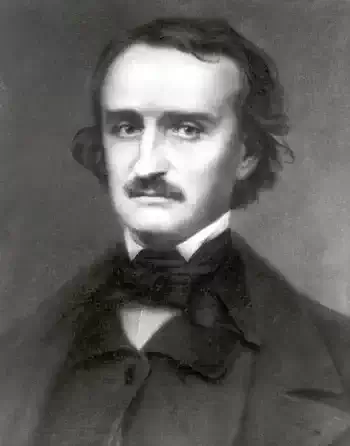
Edgar Allan Poe
The Divine Right Of Kings
The only king by right divine
Is Ellen King, and were she mine
I'd strive for liberty no more,
But hug the glorious chains I wore.
Her bosom is an ivory throne,
Where tyrant virtue reigns alone ;
No subject vice dare interfere,
To check the power that governs here.
O! would she deign to rule my fate,
I'd worship Kings and kingly state,
And hold this maxim all life long,
The King — my King — can do no wrong. P
1845
1,218

Lord Byron
The Vision of Judgment
I
Saint Peter sat by the celestial gate:
His keys were rusty, and the lock was dull,
So little trouble had been given of late;
Not that the place by any means was full,
But since the Gallic era 'eighteight'
The devils had ta'en a longer, stronger pull,
And 'a pull altogether,' as they say
At sea — which drew most souls another way.
II
The angels all were singing out of tune,
And hoarse with having little else to do,
Excepting to wind up the sun and moon,
Or curb a runaway young star or two,
Or wild colt of a comet, which too soon
Broke out of bounds o'er th' ethereal blue,
Splitting some planet with its playful tail,
As boats are sometimes by a wanton whale.
III
The guardian seraphs had retired on high,
Finding their charges past all care below;
Terrestrial business fill'd nought in the sky
Save the recording angel's black bureau;
Who found, indeed, the facts to multiply
With such rapidity of vice and woe,
That he had stripp'd off both his wings in quills,
And yet was in arrear of human ills.
IV
His business so augmented of late years,
That he was forced, against his will no doubt,
(Just like those cherubs, earthly ministers,)
For some resource to turn himself about,
And claim the help of his celestial peers,
To aid him ere he should be quite worn out
By the increased demand for his remarks:
Six angels and twelve saints were named his clerks.
V
This was a handsome board — at least for heaven;
And yet they had even then enough to do,
So many conqueror's cars were daily driven,
So many kingdoms fitted up anew;
Each day too slew its thousands six or seven,
Till at the crowning carnage, Waterloo,
They threw their pens down in divine disgust —
The page was so besmear'd with blood and dust.
VI
This by the way: 'tis not mine to record
What angels shrink Wrom: ZAAFXISHJEXXIMQZUIVO
On this occasion his own work abhorr'd,
So surfeited with the infernal revel:
Though he himself had sharpen'd every sword,
It almost quench'd his innate thirst of evil.
(Here Satan's sole good work deserves insertion —
'Tis, that he has both generals in reveration.)
VII
Let's skip a few short years of hollow peace,
Which peopled earth no better, hell as wont,
And heaven none — they form the tyrant's lease,
With nothing but new names subscribed upon't;
'Twill one day finish: meantime they increase,
'With seven heads and ten horns,' and all in front,
Like Saint John's foretold beast; but ours are born
Less formidable in the head than horn.
VIII
In the first year of freedom's second dawn
Died George the Third; although no tyrant, one
Who shielded tyrants, till each sense withdrawn
Left him nor mental nor external sun:
A better farmer ne'er brush'd dew from lawn,
A worse king never left a realm undone!
He died — but left his subjects still behind,
One half as mad — and t'other no less blind.
IX
He died! his death made no great stir on earth:
His burial made some pomp; there was profusion
Of velvet, gilding, brass, and no great dearth
Of aught but tears — save those shed by collusion.
For these things may be bought at their true worth;
Of elegy there was the due infusion —
Bought also; and the torches, cloaks, and banners,
Heralds, and relics of old Gothic manners,
X
Form'd a sepulchral melodrame.
Of all
The fools who flack's to swell or see the show,
Who cared about the corpse? The funeral
Made the attraction, and the black the woe.
There throbbed not there a thought which pierced the pall;
And when the gorgeous coffin was laid low,
It seamed the mockery of hell to fold
The rottenness of eighty years in gold.
XI
So mix his body with the dust! It might
Return to what it must far sooner, were
The natural compound left alone to fight
Its way back into earth, and fire, and air;
But the unnatural balsams merely blight
What nature made him at his birth, as bare
As the mere million's base unmarried clay —
Yet all his spices but prolong decay.
XII
He's dead — and upper earth with him has done;
He's buried; save the undertaker's bill,
Or lapidary scrawl, the world is gone
For him, unless he left a German will:
But where's the proctor who will ask his son?
In whom his qualities are reigning still,
Except that household virtue, most uncommon,
Of constancy to a bad, ugly woman.
XIII
'God save the king!' It is a large economy
In God to save the like; but if he will
Be saving, all the better; for not one am I
Of those who think damnation better still:
I hardly know too if not quite alone am I
In this small hope of bettering future ill
By circumscribing, with some slight restriction,
The eternity of hell's hot jurisdiction.
XIV
I know this is unpopular; I know
'Tis blasphemous; I know one may be damned
For hoping no one else may ever be so;
I know my catechism; I know we're caromed
With the best doctrines till we quite o'erflow;
I know that all save England's church have shamm'd,
And that the other twice two hundred churches
And synagogues have made a damn'd bad purchase.
XV
God help us all! God help me too! I am,
God knows, as helpless as the devil can wish,
And not a whit more difficult to damn,
Than is to bring to land a latehook'd
fish,
Or to the butcher to purvey the lamb;
Not that I'm fit for such a noble dish,
As one day will be that immortal fry
Of almost everybody born to die.
XVI
Saint Peter sat by the celestial gate,
And nodded o'er his keys; when, lo! there came
A wondrous noise he had not heard of late —
A rushing sound of wind, and stream, and flame;
In short, a roar of things extremely great,
Which would have made aught save a saint exclaim;
But he, with first a start and then a wink,
Said, 'There's another star gone out, I think!'
XVII
But ere he could return to his repose,
A cherub flapp'd his right wing o'er his eyes —
At which St. Peter yawn'd, and rubb'd his hose:
'Saint porter,' said the angel, 'prithee rise!'
Waving a goodly wing, which glow'd, as glows
An earthly peacock's tail, with heavenly dyes;
To which the saint replied, 'Well, what's the matter?
'Is Lucifer come back with all this clatter?'
XVIII
'No,' quoth the cherub; 'George the Third is dead.'
'And who is George the Third?' replied the apostle;
'What George? what Third?' 'The king of England,' said
The angel. 'Well, he won't find kings to jostle
Him on his way; but does he wear his head?
Because the last we saw here had a tussle,
And ne'er would have got into heaven's good graces,
Had he not flung his head in all our faces.
XIX
'He was, if I remember, king of France;
That head of his, which could not keep a crown
On earth, yet ventured in my face to advance
A claim to those of martyrs — like my own:
If I had had my sword, as I had once
When I cut ears off, I had cut him down;
But having but my keys, and not my brand,
I only knock'd his head from out his hand.
XX
'And then he set up such a headless howl,
That all the saints came out and took him in;
And there he sits by St. Paul, cheek by jowl;
That fellow Paul— the parvenù! The skin
Of St. Bartholomew, which makes his cowl
In heaven, and upon earth redeem'd his sin,
So as to make a martyr, never sped
Better than did this weak and wooden head.
XXI
'But had it come up here upon its shoulders,
There would have been a different tale to tell;
The fellowfeeling
in the saint's beholders
Seems to have acted on them like a spell,
And so this very foolish head heaven solders
Back on its trunk: it may be very well,
And seems the custom here to overthrow
Whatever has been wisely done below.'
XXII
The angel answer'd, 'Peter! do not pout:
The king who comes has head and all entire,
And never knew much what it was about —
He did as doth the puppet — by its wire,
And will be judged like all the rest, no doubt:
My business and your own is not to inquire
Into such matters, but to mind our cue —
Which is to act as we are bid to do.'
XXIII
While thus they spake, the angelic caravan,
Arriving like a rush of mighty wind,
Cleaving the fields of space, as doth the swan
Some silver stream (say Ganges, Nile, or Inde,
Or Thames, or Tweed), and 'midst them an old man
With an old soul, and both extremely blind,
Halted before the gate, and in his shroud
Seated their fellow traveller on a cloud.
XXIV
But bringing up the rear of this bright host
A Spirit of a different aspect waves
His wings, like thunderclouds
above some coast
Whose barren beach with frequent wrecks is paved;
His brow was like the deep when tempesttoss'd;
Fierce and unfathomable thoughts engraved
Eternal wrath on his immortal face,
And where he gazed a gloom pervaded space.
XXV
As he drew near, he gazed upon the gate
Ne'er to be enter'd more by him or Sin,
With such a glance of supernatural hate,
As made Saint Peter wish himself within;
He potter'd with his keys at a great rate,
And sweated through his apostolic skin:
Of course his perspiration was but ichor,
Or some such other spiritual liquor.
XXIV
The very cherubs huddled all together,
Like birds when soars the falcon; and they felt
A tingling to the top of every feather,
And form'd a circle like Orion's belt
Around their poor old charge; who scarce knew whither
His guards had led him, though they gently dealt
With royal manes (for by many stories,
And true, we learn the angels all are Tories.)
XXVII
As things were in this posture, the gate flew
Asunder, and the flashing of its hinges
Flung over space an universal hue
Of manycolour'd
flame, until its tinges
Reach'd even our speck of earth, and made a new
Aurora borealis spread its fringes
O'er the North Pole; the same seen, when icebound,
By Captain Parry's crew, in 'Melville's Sound.'
XXVIII
And from the gate thrown open issued beaming
A beautiful and mighty Thing of Light,
Radiant with glory, like a banner streaming
Victorious from some worldo'erthrowing
fight:
My poor comparisons must needs be teeming
With earthly likenesses, for here the night
Of clay obscures our best conceptions, saving
Johanna Southcote, or Bob Southey raving.
XXIX
'Twas the archangel Michael; all men know
The make of angels and archangels, since
There's scarce a scribbler has not one to show,
From the fiends' leader to the angels' prince;
There also are some altarpieces,
though
I really can't say that they much evince
One's inner notions of immortal spirits;
But let the connoisseurs explain their merits.
XXX
Michael flew forth in glory and in good;
A goodly work of him from whom all glory
And good arise; the portal past — he stood;
Before him the young cherubs and saints hoary —
(I say young, begging to be understood
By looks, not years; and should be very sorry
To state, they were not older than St. Peter,
But merely that they seem'd a little sweeter.
XXXI
The cherubs and the saints bow'd down before
That archangelic
Hierarch, the first
Of essences angelical, who wore
The aspect of a god; but this ne'er nursed
Pride in his heavenly bosom, in whose core
No thought, save for his Master's service, durst
Intrude, however glorified and high;
He knew him but the viceroy of the sky.
XXXII
He and the sombre, silent Spirit met —
They knew each other both for good and ill;
Such was their power, that neither could forget
His former friend and future foe; but still
There was a high, immortal, proud regret
In either's eye, as if 'twere less their will
Than destiny to make the eternal years
Their date of war, and their 'champ clos' the spheres.
XXXIII
But here they were in neutral space: we know
From Job, that Satan hath the power to pay
A heavenly visit thrice a year or so;
And that the 'sons of God', like those of clay,
Must keep him company; and we might show
From the same book, in how polite a way
The dialogue is held between the Powers
Of Good and Evil — but 'twould take up hours.
XXXIV
And this is not a theologic tract,
To prove with Hebrew and with Arabic,
If Job be allegory or a fact,
But a true narrative; and thus I pick
From out the whole but such and such an act
As sets aside the slightest thought of trick.
'Tis every tittle true, beyond suspicion,
And accurate as any other vision.
XXXV
The spirits were in neutral space, before
The gates of heaven; like eastern thresholds is
The place where Death's grand cause is argued o'er,
And souls despatch'd to that world or to this;
And therefore Michael and the other wore
A civil aspect: though they did not kiss,
Yet still between his Darkness and his Brightness
There pass'd a mutual glance of great politeness.
XXXVI
The Archangel bow'd, not like a modern beau,
But with a graceful Oriental bend,
Pressing one radiant arm just where below
The heart in good men is supposed to tend;
He turn'd as to an equal, not too low,
But kindly; Satan met his ancient friend
With more hauteur, as might an old Castilian
Poor noble meet a mushroom rich civilian.
XXXVII
He merely bent his diabolic brow
An instant; and then raising it, he stood
In act to assert his right or wrong, and show
Cause why King George by no means could or should
Make out a case to be exempt from woe
Eternal, more than other kings, endued
With better sense and hearts, whom history mentions,
Who long have 'paved hell with their good intentions.'
XXXVIII
Michael began: 'What wouldst thou with this man,
Now dead, and brought before the Lord? What ill
Hath he wrought since his mortal race began,
That thou cans't claim him? Speak! and do thy will,
If it be just: if in this earthly span
He hath been greatly failing to fulfil
His duties as a king and mortal, say,
And he is thine; if not, let him have way.'
XXXIX
'Michael!' replied the Prince of Air, 'even here,
Before the Gate of him thou servest, must
I claim my subject: and will make appear
That as he was my worshipper in dust,
So shall he be in spirit, although dear
To thee and thine, because nor wine nor lust
Were of his weaknesses; yet on the throne
He reign'd o'er millions to serve me alone.
XL
'Look to our earth, or rather mine; it was,
Once, more thy master's: but I triumph not
In this poor planet's conquest; nor, alas!
Need he thou servest envy me my lot:
With all the myriads of bright worlds which pass
In worship round him, he may have forgot
Yon weak creation of such paltry things;
I think few worth damnation save their kings, —
XLI
'And these but as a kind of quitrent,
to
Assert my right as lord: and even had
I such an inclination, 'twere (as you
Well know) superfluous; they are grown so bad,
That hell has nothing better left to do
Than leave them to themselves: so much more mad
And evil by their own internal curse,
Heaven cannot make them better, nor I worse.
XLII
'Look to the earth, I said, and say again:
When this old, blind, mad, helpless, weak, poor worm
Began in youth's first bloom and flush to reign,
The world and he both wore a different form,
And must of earth and all the watery plain
Of ocean call'd him king: through many a storm
His isles had floated on the abyss of time;
For the rough virtues chose them for their clime.
XLIII
'He came to his sceptre young: he leaves it old:
Look to the state in which he found his realm,
And left it; and his annals too behold,
How to a minion first he gave the helm;
How grew upon his heart a thirst for gold,
The beggar's vice, which can but overwhelm
The meanest of hearts; and for the rest, but glance
Thine eye along America and France.
XLIV
'Tis true, he was a tool from first to last
(I have the workmen safe); but as a tool
So let him be consumed. From out the past
Of ages, since mankind have known the rule
Of monarchs — from the bloody rolls amass'd
Of sin and slaughter — from the Cæsar's school,
Take the worst pupil; and produce a reign
More drench'd with gore, more cumber'd with the slain.
XLV
'He ever warr'd with freedom and the free:
Nations as men, home subjects, foreign foes,
So that they utter'd the word "Liberty!"
Found George the Third their first opponent. Whose
History was ever stain'd as his will be
With national and individual woes?
I grant his household abstinence; I grant
His neutral virtues, which most monarchs want;
XLVI
'I know he was a constant consort; own
He was a decent sire, and middling lord.
All this is much, and most upon a throne;
As temperance, if at Apicius' board,
Is more than at an anchorite's supper shown.
I grant him all the kindest can accord;
And this was well for him, but not for those
Millions who found him what oppression chose.
XLVII
'The New World shook him off; the Old yet groans
Beneath what he and his prepared, if not
Completed: he leaves heirs on many thrones
To all his vices, without what begot
Compassion for him — his tame virtues; drones
Who sleep, or despots who have not forgot
A lesson which shall be retaught
them, wake
Upon the thrones of earth; but let them quake!
XLVIII
'Five millions of the primitive, who hold
The faith which makes ye great on earth, implored
A part of that vast all they held of old, —
Freedom to worship — not alone your Lord,
Michael, but you, and you, Saint Peter! Cold
Must be your souls, if you have not abhorr'd
The foe to Catholic participation
In all the license of a Christian nation.
XLIX
'True! he allow'd them to pray God; but as
A consequence of prayer, refused the law
Which would have placed them upon the same base
With those who did not hold the saints in awe.'
But here Saint Peter started from his place,
And cried, 'You may the prisoner withdraw:
Ere heaven shall ope her portals to this Guelph,
While I am guard, may I be damn'd myself!
L
'Sooner will I with Cerberus exchange
My office (and his no sinecure)
Than see this royal Bedlam bigot range
The azure fields of heaven, of that be sure!'
'Saint!' replied Satan, 'you do well to avenge
The wrongs he made your satellites endure;
And if to this exchange you should be given,
I'll try to coax our Cerberus up to heaven!'
LI
Here Michael interposed: 'Good saint! and devil!
Pray, not so fast; you both outrun discretion.
Saint Peter! you were wont to be more civil!
Satan! excuse this warmth of his expression,
And condescension to the vulgar's level:
Event saints sometimes forget themselves in session.
Have you got more to say?' — 'No.' — If you please
I'll trouble you to call your witnesses.'
LII
Then Satan turn'd and waved his swarthy hand,
Which stirr'd with its electric qualities
Clouds farther off than we can understand,
Although we find him sometimes in our skies;
Infernal thunder shook both sea and land
In all the planets, and hell's batteries
Let off the artillery, which Milton mentions
As one of Satan's most sublime inventions.
LIII
This was a signal unto such damn'd souls
As have the privilege of their damnation
Extended far beyond the mere controls
Of worlds past, present, or to come; no station
Is theirs particularly in the rolls
Of hell assign'd; but where their inclination
Or business carries them in search of game,
They may range freely — being damn'd the same.
LIV
They're proud of this — as very well they may,
It being a sort of knighthood, or gilt key
Stuck in their loins; or like to an 'entré'
Up the back stairs, or such freemasonry.
I borrow my comparisons from clay,
Being clay myself. Let not those spirits be
Offended with such base low likenesses;
We know their posts are nobler far than these.
LV
When the great signal ran from heaven to hell —
About ten million times the distance reckon'd
From our sun to its earth, as we can tell
How much time it takes up, even to a second,
For every ray that travels to dispel
The fogs of London, through which, dimly beacon'd,
The weathercocks are gilt some thrice a year,
If that the summer is not too severe;
LVI
I say that I can tell — 'twas half a minute;
I know the solar beams take up more time
Ere, pack'd up for their journey, they begin it;
But then their telegraph is less sublime,
And if they ran a race, they would not win it
'Gainst Satan's couriers bound for their own clime.
The sun takes up some years for every ray
To reach its goal — the devil not half a day.
LVII
Upon the verge of space, about the size
Of halfacrown,
a little speck appear'd
(I've seen a something like it in the skies
In the Ægean, ere a squall); it near'd,
And growing bigger, took another guise;
Like an aërial ship it tack'd, and steer'd,
Or was steer'd (I am doubtful of the grammar
Of the last phrase, which makes the stanza stammer; —
LVIII
But take your choice): and then it grew a cloud;
And so it was — a cloud of witnesses.
But such a cloud! No land e'er saw a crowd
Of locusts numerous as the heavens saw these;
They shadow'd with their myriads space; their loud
And varied cries were like those of wild geese
(If nations may be liken'd to a goose),
And realised the phrase of 'hell broke loose.'
LIX
Here crash'd a sturdy oath of stout John Bull,
Who damn'd away his eyes as heretofore:
There Paddy brogued, 'By Jasus!' — 'What's your wull?'
The temperate Scot exclaim'd: the French ghost swore
In certain terms I shan't translate in full,
As the first coachman will; and 'midst the roar,
The voice of Jonathan was heard to express,
'Our president is going to war, I guess.'
LX
Besides there were the Spaniard, Dutch, and Dane;
In short, an universal shoal of shades,
From Otaheite's isle to Salisbury Plain,
Of all climes and professions, years and trades,
Ready to swear against the good king's reign,
Bitter as clubs in cards are against spades:
All summon'd by this grand 'subpoena,' to
Try if kings mayn't be damn'd like me or you.
LXI
When Michael saw this host, he first grew pale,
As angels can; next, like Italian twilight,
He turn'd all colours — as a peacock's tail,
Or sunset streaming through a Gothic skylight
In some old abbey, or a trout not stale,
Or distant lightning on the horizon by night,
Or a fresh rainbow, or a grand review
Of thirty regiments in red, green, and blue.
LXII
Then he address'd himself to Satan: 'Why —
My good old friend, for such I deem you, though
Our different parties make us fight so shy,
I ne'er mistake you for a personal foe;
Our difference is political, and I
Trust that, whatever may occur below,
You know my great respect for you; and this
Makes me regret whate'er you do amiss —
LXIII
'Why, my dear Lucifer, would you abuse
My call for witnesses? I did not mean
That you should half of earth and hell produce;
'Tis even superfluous, since two honest, clean
True testimonies are enough: we lose
Our time, nay, our eternity, between
The accusation and defence: if we
Hear both, 'twill stretch our immortality.'
LXIV
Satan replied, 'To me the matter is
Indifferent, in a personal point of view;
I can have fifty better souls than this
With far less trouble than we have gone through
Already; and I merely argued his
Late majesty of Britain's case with you
Upon a point of form: you may dispose
Of him; I've kings enough below, God knows!'
LXV
Thus spoke the Demon (late call'd 'multifaced'
By multoscribbling
Southey). 'Then we'll call
One or two persons of the myriads placed
Around our congress, and dispense with all
The rest,' quoth Michael: 'Who may be so graced
As to speak first? there's choice enough — who shall
It be?' Then Satan answer'd, 'There are many;
But you may choose Jack Wilkes as well as any.'
LXVI
A merry, cockeyed,
curiouslooking
sprite
Upon the instant started from the throng,
Dress'd in a fashion now forgotten quite;
For all the fashions of the flesh stick long
By people in the next world; where unite
All the costumes since Adam's, right or wrong,
From Eve's figleaf
down to the petticoat,
Almost as scanty, of days less remote.
LXVII
The spirit look'd around upon the crowds
Assembled, and exclaim'd, 'My friends of all
The spheres, we shall catch cold amongst these clouds;
So let's to business: why this general call?
If those are freeholders I see in shrouds,
And 'tis for an election that they bawl,
Behold a candidate with unturn'd coat!
Saint Peter, may I count upon your vote?'
LXVIII
'Sir,' replied Michael, 'you mistake; these things
Are of a former life, and what we do
Above is more august; to judge of kings
Is the tribunal met: so now you know.'
'Then I presume those gentlemen with wings,'
Said Wilkes, 'are cherubs; and that soul below
Looks much like George the Third, but to my mind
A good deal older — Bless me! is he blind?'
LXIX
'He is what you behold him, and his doom
Depends upon his deeds,' the Angel said;
'If you have aught to arraign in him, the tomb
Give licence to the humblest beggar's head
To lift itself against the loftiest.' — 'Some,'
Said Wilkes, 'don't wait to see them laid in lead,
For such a liberty — and I, for one,
Have told them what I though beneath the sun.'
LXX
'Above the sun repeat, then, what thou hast
To urge against him,' said the Archangel. 'Why,'
Replied the spirit, 'since old scores are past,
Must I turn evidence? In faith, not I.
Besides, I beat him hollow at the last,
With all his Lords and Commons: in the sky
I don't like ripping up old stories, since
His conduct was but natural in a prince.
LXXI
'Foolish, no doubt, and wicked, to oppress
A poor unlucky devil without a shilling;
But then I blame the man himself much less
Than Bute and Grafton, and shall be unwilling
To see him punish'd here for their excess,
Since they were both damn'd long ago, and still in
Their place below: for me, I have forgiven,
And vote his "habeas corpus" into heaven.'
LXXII
'Wilkes,' said the Devil, 'I understand all this;
You turn'd to half a courtier ere you died,
And seem to think it would not be amiss
To grow a whole one on the other side
Of Charon's ferry; you forget that his
Reign is concluded; whatso'er betide,
He won't be sovereign more: you've lost your labor,
For at the best he will be but your neighbour.
LXXIII
'However, I knew what to think of it,
When I beheld you in your jesting way,
Flitting and whispering round about the spit
Where Belial, upon duty for the day,
With Fox's lard was basting William Pitt,
His pupil; I knew what to think, I say:
That fellow even in hell breeds farther ills;
I'll have him gagg'd — 'twas one of his own bills.
LXXIV
'Call Junius!' From the crowd a shadow stalk'd,
And at the same there was a general squeeze,
So that the very ghosts no longer walk'd
In comfort, at their own aërial ease,
But were all ramm'd, and jamm'd (but to be balk'd,
As we shall see), and jostled hands and knees,
Like wind compress'd and pent within a bladder,
Or like a human colic, which is sadder.
LXXV
The shadow came — a tall, thin, greyhair'd
figure,
That look'd as it had been a shade on earth;
Quick in it motions, with an air of vigour,
But nought to mar its breeding or its birth;
Now it wax'd little, then again grew bigger,
With now an air of gloom, or savage mirth;
But as you gazed upon its features, they
Changed every instant — to what, none could say.
LXXVI
The more intently the ghosts gazed, the less
Could they distinguish whose the features were;
The Devil himself seem'd puzzled even to guess;
They varied like a dream — now here, now there;
And several people swore from out the press
They knew him perfectly; and one could swear
He was his father: upon which another
Was sure he was his mother's cousin's brother:
LXXVII
Another, that he was a duke, or a knight,
An orator, a lawyer, or a priest,
A nabob, a manmidwife;
but the wight
Mysterious changed his countenance at least
As oft as they their minds; though in full sight
He stood, the puzzle only was increased;
The man was a phantasmagoria in
Himself — he was so volatile and thin.
LXXVIII
The moment that you had pronounce him one,
Presto! his face change'd and he was another;
And when that change was hardly well put on,
It varied, till I don't think his own mother
(If that he had a mother) would her son
Have known, he shifted so from one to t'other;
Till guessing from a pleasure grew a task,
At this epistolary 'Iron Mask.'
LXXIX
For sometimes he like Cerberus would seem —
'Three gentlemen at once' (as sagely says
Good Mrs. Malaprop); then you might deem
That he was not even one; now many rays
Were flashing round him; and now a thick steam
Hid him from sight — like fogs on London days:
Now Burke, now Tooke he grew to people's fancies,
And certes often like Sir Philip Francis.
LXXX
I've an hypothesis — 'tis quite my own;
I never let it out till now, for fear
Of doing people harm about the throne,
And injuring some minister or peer,
On whom the stigma might perhaps be blown;
It is — my gentle public, lend thine ear!
'Tis, that what Junius we are wont to call
Was really, truly, nobody at all.
LXXXI
I don't see wherefore letters should not be
Written without hands, since we daily view
Them written without heads; and books, we see,
Are fill'd as well without the latter too:
And really till we fix on somebody
For certain sure to claim them as his due,
Their author, like the Niger's mouth, will bother
The world to say if there be mouth or author.
LXXXII
'And who and what art thou?' the Archangel said.
'For that you may consult my titlepage,'
Replied this mighty shadow of a shade:
'If I have kept my secret half an age,
I scarce shall tell it now.' — 'Canst thou upbraid,'
Continued Michael, 'George Rex, or allege
Aught further?' Junius answer'd, 'You had better
First ask him for his answer to my letter:
LXXXIII
'My charges upon record will outlast
The brass of both his epitaph and tomb.'
'Repent'st thou not,' said Michael, 'of some past
Exaggeration? something which may doom
Thyself if false, as him if true? Thou wast
Too bitter — is it not so? — in thy gloom
Of passion?' — 'Passion!' cried the phantom dim,
'I loved my country, and I hated him.
LXXXIV
'What I have written, I have written: let
The rest be on his head or mine!' So spoke
Old 'Nominis Umbra'; and while speaking yet,
Away he melted in celestial smoke.
Then Satan said to Michael, 'Don't forget
To call George Washington, and John Horne Tooke,
And Franklin;' — but at this time was heard
A cry for room, though not a phantom stirr'd.
LXXXV
At length with jostling, elbowing, and the aid
Of cherubim appointed to that post,
The devil Asmodeus to the circle made
His way, and look'd as if his journey cost
Some trouble. When his burden down he laid,
'What's this?' cried Michael; 'why, 'tis not a ghost?'
'I know it,' quoth the incubus; 'but he
Shall be one, if you leave the affair to me.
LXXXVI
'Confound the renegado! I have sprain'd
My left wing, he's so heavy; one would think
Some of his works about his neck were chain'd.
But to the point; while hovering o'er the brink
Of Skiddaw (where as usual it still rain'd),
I saw a taper, far below me, wink,
And stooping, caught this fellow at a libel —
No less on history than the Holy Bible.
LXXXVII
'The former is the devil's scripture, and
The latter yours, good Michael: so the affair
Belongs to all of us, you understand.
I snatch'd him up just as you see him there,
And brought him off for sentence out of hand:
I've scarcely been ten minutes in the air —
At least a quarter it can hardly be:
I dare say that his wife is still at tea.'
LXXXVIII
Here Satan said, 'I know this man of old,
And have expected him for some time here;
A sillier fellow you will scarce behold,
Or more conceited in his petty sphere:
But surely it was not worth while to fold
Such trash below your wing, Asmodeus dear:
We had the poor wretch safe (without being bored
With carriage) coming of his own accord.
LXXXIX
'But since he's here, let's see what he has done.'
'Done!' cried Asmodeus, 'he anticipates
The very business you are now upon,
And scribbles as if head clerk to the Fates,
Who knows to what his ribaldry may run,
When such an ass as this, like Balaam's, prates?'
'Let's hear,' quoth Michael, 'what he has to say;
You know we're bound to that in every way.'
XC
Now the bard, glad to get an audience which
By no means oft was his case below,
Began to cough, and hawk, and hem, and pitch
His voice into that awful note of woe
To all unhappy hearers within reach
Of poets when the tide of rhyme's in flow;
But stuck fast with his first hexameter,
Not one of all whose gouty feet would stir.
XCI
But ere the spavin'd dactyls could be spurr'd
Into recitative, in great dismay
Both cherubim and seraphim were heard
To murmur loudly through their long array:
And Michael rose ere he could get a word
Of all his founder'd verses under way.
And cried, 'For God's sake stop, my friend! 'twere best —
Non Di, non homines —you
know the rest.'
XCII
A general bustle spread throughout the throng.
Which seem'd to hold all verse in detestation;
The angels had of course enough of song
When upon service; and the generation
Of ghosts had heard too much in life, not long
Before, to profit by a new occasion;
The monarch, mute till then, exclaim'd, 'What! What!
Pye come again? No more — no more of that!'
XCIII
The tumult grew; an universal cough
Convulsed the skies, as during a debate
When Castlereagh has been up long enough
(Before he was first minister of state,
I mean — the slaves hear now); some cried 'off, off!'
As at a farce; till, grown quite desperate,
The bard Saint Peter pray'd to interpose
(Himself an author) only for his prose.
XCIV
The varlet was not an illfavour'd
knave;
A good deal like a vulture in the face,
With a hook nose and a hawk'd eye, which gave
A smart and sharperlooking
sort of grace
To his whole aspect, which, though rather grave,
Was by no means so ugly as his case;
But that, indeed, was hopeless as can be,
Quite a poetic felony, 'de se.'
XCV
Then Michael blew his trump, and still'd the noise
With one still greater, as is yet the mode
On earth besides; except some grumbling voice,
Which now and then will make a slight inroad
Upon decorous silence, few will twice
Lift up their lungs when fairly overcrow'd;
And now the bard could plead his own bad cause,
With all the attitudes of selfapplause.
XCVI
He said — (I only give the heads) — he said,
He meant no harm in scribbling; 'twas his way
Upon all topics; 'twas, besides, his bread,
Of which he butter'd both sides; 'twould delay
Too long the assembly (he was pleased to dread),
And take up rather more time than a day,
To name his works — he would but cite a few —
'Wat Tyler' — 'Rhymes on Blenheim' — 'Waterloo.'
XCVII
He had written praises of a regicide:
He had written praises of all kings whatever;
He had written for republics far and wide;
And then against them bitterer than ever;
For pantisocracy he once had cried
Aloud, a scheme less moral than 'twas clever;
Then grew a hearty antiJacobin
—
Had turn'd his coat — and would have turn'd his skin.
XCVIII
He had sung against all battles, and again
In their high praise and glory; he had call'd
Reviewing (1)'the ungentle craft,' and then
Become as base a critic as e'er crawl'd —
Fed, paid, and pamper'd by the very men
By whom his muse and morals had been maul'd:
He had written much blank verse, and blanker prose,
And more of both than anybody knows.
XCIX
He had written Wesley's life: — here turning round
To Satan, 'Sir, I'm ready to write yours,
In two octavo volumes, nicely bound,
With notes and preface, all that most allures
The pious purchaser; and there's no ground
For fear, for I can choose my own reviews:
So let me have the proper documents,
That I may add you to my other saints.'
C
Satan bow'd, and was silent. 'Well, if you,
With amiable modesty, decline
My offer, what says Michael? There are few
Whose memoirs could be render'd more divine.
Mine is a pen of all work; not so new
As it once was, but I would make you shine
Like your own trumpet. By the way, my own
Has more of brass in it, and is as well blown.
CI
'But talking about trumpets, here's my Vision!
Now you shall judge, all people; yes, you shall
Judge with my judgment, and by my decision
Be guided who shall enter heaven or fall.
I settle all these things by intuition,
Times present, past, to come, heaven, hell, and all,
Like King Alfonso(2). When I thus see double,
I save the Deity some worlds of trouble.'
CII
He ceased, and drew forth an MS.; and no
Persuasion on the part of devils, saints,
Or angels, now could stop the torrent; so
He read the first three lines of the contents;
But at the fourth, the whole spiritual show
Had vanish'd, with variety of scents,
Ambrosial and sulphureous, as they sprang,
Like lightning, off from his 'melodious twang.' (3)
CIII
Those grand heroics acted as a spell:
The angels stopp'd their ears and plied their pinions;
The devils ran howling, deafen'd, down to hell;
The ghosts fled, gibbering, for their own dominions —
(For 'tis not yet decided where they dwell,
And I leave every man to his opinions);
Michael took refuge in his trump — but, lo!
His teeth were set on edge, he could not blow!
CIV
Saint Peter, who has hitherto been known
For an impetuous saint, upraised his keys,
And at the fifth line knock'd the poet down;
Who fell like Phaeton, but more at ease,
Into his lake, for there he did not drown;
A different web being by the Destinies
Woven for the Laureate's final wreath, whene'er
Reform shall happen either here or there.
CV
He first sank to the bottom like
his works,
But soon rose to the surface — like himself;
For all corrupted things are bouy'd like corks,(4)
By their own rottenness, light as an elf,
Or wisp that flits o'er a morass: he lurks,
It may be, still, like dull books on a shelf,
In his own den, to scrawl some 'Life' or 'Vision,'
As Welborn says — 'the devil turn'd precisian.'
CVI
As for the rest, to come to the conclusion
Of this true dream, the telescope is gone
Which kept my optics free from all delusion,
And show'd me what I in my turn have shown;
All I saw farther, in the last confusion,
Was, that King George slipp'd into heaven for one;
And when the tumult dwindled to a calm,
I left him practising the hundredth psalm.
1,065
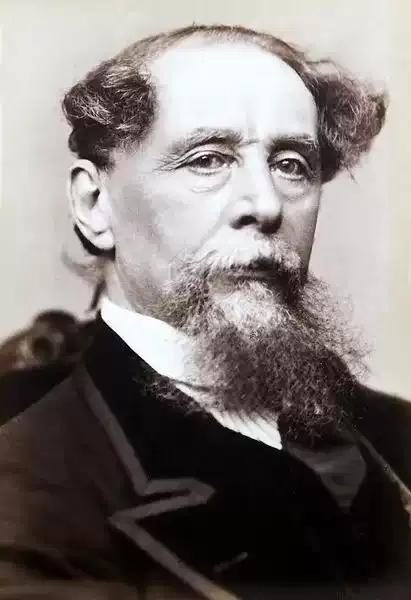
Charles Dickens
A fine Old English Gentleman
I'll sing you a new ballad, and I'll warrant it first-rate,
Of the days of that old gentleman who had that old estate;
When they spent the public money at a bountiful old rate
On ev'ry mistress, pimp, and scamp, at ev'ry noble gate,
In the fine old English Tory times;
Soon may they come again!
The good old laws were garnished well with gibbets, whips, and chains,
With fine old English penalties, and fine old English pains,
With rebel heads, and seas of blood once hot in rebel veins;
For all these things were requisite to guard the rich old gains
Of the fine old English Tory times;
Soon may they come again!
This brave old code, like Argus, had a hundred watchful eyes,
And ev'ry English peasant had his good old English spies,
To tempt his starving discontent with fine old English lies,
Then call the good old Yeomanry to stop his peevish cries,
In the fine old English Tory times;
Soon may they come again!
The good old times for cutting throats that cried out in their need,
The good old times for hunting men who held their fathers' creed,
The good old times when William Pitt, as all good men agreed,
Came down direct from Paradise at more than railroad speed. . . .
Oh the fine old English Tory times;
When will they come again!
In those rare days, the press was seldom known to snarl or bark,
But sweetly sang of men in pow'r, like any tuneful lark;
Grave judges, too, to all their evil deeds were in the dark;
And not a man in twenty score knew how to make his mark.
Oh the fine old English Tory times;
Soon may they come again!
Those were the days for taxes, and for war's infernal din;
For scarcity of bread, that fine old dowagers might win;
For shutting men of letters up, through iron bars to grin,
Because they didn't think the Prince was altogether thin,
In the fine old English Tory times;
Soon may they come again!
But Tolerance, though slow in flight, is strong-wing'd in the main;
That night must come on these fine days, in course of time was plain;
The pure old spirit struggled, but Its struggles were in vain;
A nation's grip was on it, and it died in choking pain,
With the fine old English Tory days,
All of the olden time.
The bright old day now dawns again; the cry runs through the land,
In England there shall be dear bread -- in Ireland, sword and brand;
And poverty, and ignorance, shall swell the rich and grand,
So, rally round the rulers with the gentle iron hand,
Of the fine old English Tory days; Hail to the coming time!
924
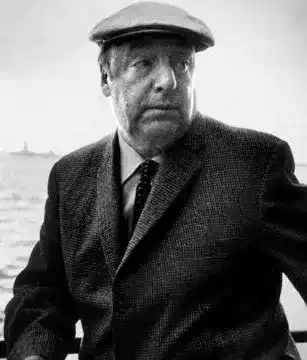
Pablo Neruda
The Dictators
An odor has remained among the sugarcane:
a mixture of blood and body, a penetrating
petal that brings nausea.
Between the coconut palms the graves are full
of ruined bones, of speechless death-rattles.
The delicate dictator is talking
with top hats, gold braid, and collars.
The tiny palace gleams like a watch
and the rapid laughs with gloves on
cross the corridors at times
and join the dead voices
and the blue mouths freshly buried.
The weeping cannot be seen, like a plant
whose seeds fall endlessly on the earth,
whose large blind leaves grow even without light.
Hatred has grown scale on scale,
blow on blow, in the ghastly water of the swamp,
with a snout full of ooze and silence
860
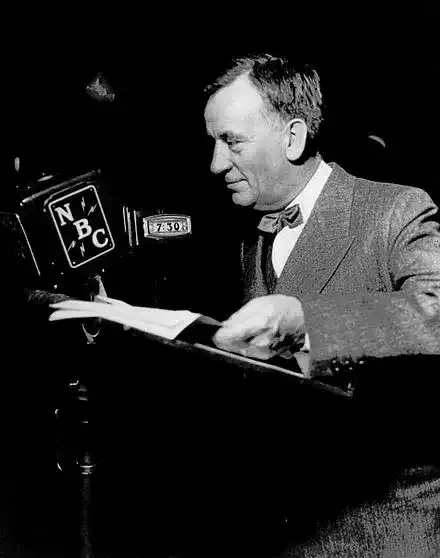
Edgar Albert Guest
Father
My father knows the proper way
The nation should be run;
He tells us children every day
Just what should now be done.
He knows the way to fix the trusts,
He has a simple plan;
But if the furnace needs repairs,
We have to hire a man.
My father, in a day or two
Could land big thieves in jail;
There's nothing that he cannot do,
He knows no word like "fail."
"Our confidence" he would restore,
Of that there is no doubt;
But if there is a chair to mend,
We have to send it out.
All public questions that arise,
He settles on the spot;
He waits not till the tumult dies,
But grabs it while it's hot.
In matters of finance he can
Tell Congress what to do;
But, O, he finds it hard to meet
His bills as they fall due.
It almost makes him sick to read
The things law-makers say;
Why, father's just the man they need,
He never goes astray.
All wars he'd very quickly end,
As fast as I can write it;
But when a neighbor starts a fuss,
'Tis mother has to fight it.
In conversation father can
Do many wondrous things;
He's built upon a wiser plan
Than presidents or kings.
He knows the ins and outs of each
And every deep transaction;
We look to him for theories,
But look to ma for action.
852
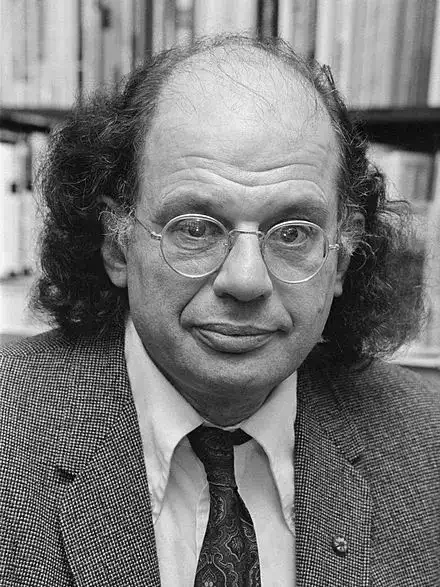
Allen Ginsberg
Kral Majales (King of May)
And the Communists have nothing to offer but fat cheeks and eyeglasses and
lying policemen
and the Capitalists proffer Napalm and money in green suitcases to the
Naked,
and the Communists create heavy industry but the heart is also heavy
and the beautiful engineers are all dead, the secret technicians conspire for
their own glamour
in the Future, in the Future, but now drink vodka and lament the Security
Forces,
and the Capitalists drink gin and whiskey on airplanes but let Indian brown
millions starve
and when Communist and Capitalist assholes tangle the Just man is arrested
or robbed or has his head cut off,
but not like Kabir, and the cigarette cough of the Just man above the clouds
in the bright sunshine is a salute to the health of the blue sky.
For I was arrested thrice in Prague, once for singing drunk on Narodni
street,
once knocked down on the midnight pavement by a mustached agent who
screamed out BOUZERANT,
once for losing my notebooks of unusual sex politics dream opinions,
and I was sent from Havana by planes by detectives in green uniform,
and I was sent from Prague by plane by detectives in Czechoslovakian
business suits,
Cardplayers out of Cezanne, the two strange dolls that entered Joseph K's
room at morn
also entered mine and ate at my table, and examined my scribbles,
and followed me night and morn from the houses of the lovers to the cafes of
Centrum -
And I am the King of May, which is the power of sexual youth,
and I am the King of May, which is long hair of Adam and Beard of my
own body
and I am the King of May, which is Kral Majales in the Czechoslovakian
tongue,
and I am the King of May, which is old Human poesy, and 100,000 people
chose my name,
and I am the King of May, and in a few minutes I will land at London
Airport,
and I am the King of May, naturally, for I am of Slavic parentage and a
Buddhist Jew
who whorships the Sacred Heart of Christ the blue body of Krishna the
straight back of Ram
the beads of Chango the Nigerian singing Shiva Shiva in a manner which
I have invented,
and the King of May is a middleeuropean honor, mine in the XX century
despite space ships and the Time Machine, because I have heard the voice of Blake
in a vision
and repeat that voice. And I am the King of May that sleeps with teenagers
laughing.
And I am the King of May, that I may be expelled from my Kingdom with
Honor, as of old,
To show the difference between Caesar's Kingdom and the Kingdom of the
May of Man
and I am the King of May because I touched my finger to my forehead
saluting
a luminous heavy girl trembling hands who said 'one moment Mr. Ginsberg'
before a fat young Plainclothesman stepped between our bodies - I was
going to England and
I am the King of May, in a giant jetplane touching Albion's airfield
trembling in fear
as the plane roars to a landing on the gray concrete, shakes & expels air,
and rolls slowly to a stop under the clouds with part of blue heaven still
visible.
And tho' I am the King of May, the Marxists have beat me upon the street,
kept me up all night in Police Station, followed me thru Springtime
Prague, detained me in secret and deported me from our kingdom by
airplane.
This I have written this poem on a jet seat in mid Heaven.
829
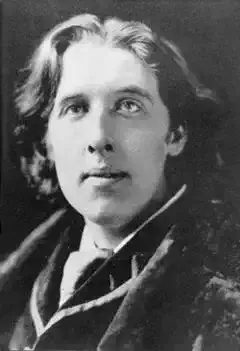
Oscar Wilde
Libertatis Sacra Fames
Albeit nurtured in democracy,
And liking best that state republican
Where every man is Kinglike and no man
Is crowned above his fellows, yet I see,
Spite of this modern fret for Liberty,
Better the rule of One, whom all obey,
Than to let clamorous demagogues betray
Our freedom with the kiss of anarchy.
Wherefore I love them not whose hands profane
Plant the red flag upon the piled-up street
For no right cause, beneath whose ignorant reign
Arts, Culture, Reverence, Honour, all things fade,
Save Treason and the dagger of her trade,
Or Murder with his silent bloody feet.
761
Oscar Wilde
Louis Napoleon
Eagle of Austerlitz! where were thy wings
When far away upon a barbarous strand,
In fight unequal, by an obscure hand,
Fell the last scion of thy brood of Kings!
Poor boy! thou shalt not flaunt thy cloak of red,
Or ride in state through Paris in the van
Of thy returning legions, but instead
Thy mother France, free and republican,
Shall on thy dead and crownless forehead place
The better laurels of a soldier's crown,
That not dishonoured should thy soul go down
To tell the mighty Sire of thy race
That France hath kissed the mouth of Liberty,
And found it sweeter than his honied bees,
And that the giant wave Democracy
Breaks on the shores where Kings lay couched at ease.
912
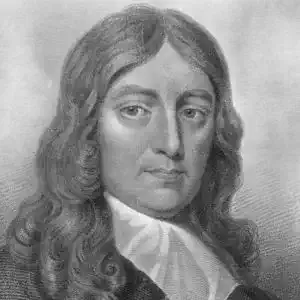
John Milton
Paradise Lost: Book 12
As one who in his journey bates at noon,
Though bent on speed; so here the Arch-Angel paused
Betwixt the world destroyed and world restored,
If Adam aught perhaps might interpose;
Then, with transition sweet, new speech resumes.
Thus thou hast seen one world begin, and end;
And Man, as from a second stock, proceed.
Much thou hast yet to see; but I perceive
Thy mortal sight to fail; objects divine
Must needs impair and weary human sense:
Henceforth what is to come I will relate;
Thou therefore give due audience, and attend.
This second source of Men, while yet but few,
And while the dread of judgement past remains
Fresh in their minds, fearing the Deity,
With some regard to what is just and right
Shall lead their lives, and multiply apace;
Labouring the soil, and reaping plenteous crop,
Corn, wine, and oil; and, from the herd or flock,
Oft sacrificing bullock, lamb, or kid,
With large wine-offerings poured, and sacred feast,
Shall spend their days in joy unblamed; and dwell
Long time in peace, by families and tribes,
Under paternal rule: till one shall rise
Of proud ambitious heart; who, not content
With fair equality, fraternal state,
Will arrogate dominion undeserved
Over his brethren, and quite dispossess
Concord and law of nature from the earth;
Hunting (and men not beasts shall be his game)
With war, and hostile snare, such as refuse
Subjection to his empire tyrannous:
A mighty hunter thence he shall be styled
Before the Lord; as in despite of Heaven,
Or from Heaven, claiming second sovranty;
And from rebellion shall derive his name,
Though of rebellion others he accuse.
He with a crew, whom like ambition joins
With him or under him to tyrannize,
Marching from Eden towards the west, shall find
The plain, wherein a black bituminous gurge
Boils out from under ground, the mouth of Hell:
Of brick, and of that stuff, they cast to build
A city and tower, whose top may reach to Heaven;
And get themselves a name; lest, far dispersed
In foreign lands, their memory be lost;
Regardless whether good or evil fame.
But God, who oft descends to visit men
Unseen, and through their habitations walks
To mark their doings, them beholding soon,
Comes down to see their city, ere the tower
Obstruct Heaven-towers, and in derision sets
Upon their tongues a various spirit, to rase
Quite out their native language; and, instead,
To sow a jangling noise of words unknown:
Forthwith a hideous gabble rises loud,
Among the builders; each to other calls
Not understood; till hoarse, and all in rage,
As mocked they storm: great laughter was in Heaven,
And looking down, to see the hubbub strange,
And hear the din: Thus was the building left
Ridiculous, and the work Confusion named.
Whereto thus Adam, fatherly displeased.
O execrable son! so to aspire
Above his brethren; to himself assuming
Authority usurped, from God not given:
He gave us only over beast, fish, fowl,
Dominion absolute; that right we hold
By his donation; but man over men
He made not lord; such title to himself
Reserving, human left from human free.
But this usurper his encroachment proud
Stays not on Man; to God his tower intends
Siege and defiance: Wretched man!what food
Will he convey up thither, to sustain
Himself and his rash army; where thin air
Above the clouds will pine his entrails gross,
And famish him of breath, if not of bread?
To whom thus Michael. Justly thou abhorrest
That son, who on the quiet state of men
Such trouble brought, affecting to subdue
Rational liberty; yet know withal,
Since thy original lapse, true liberty
Is lost, which always with right reason dwells
Twinned, and from her hath no dividual being:
Reason in man obscured, or not obeyed,
Immediately inordinate desires,
And upstart passions, catch the government
From reason; and to servitude reduce
Man, till then free. Therefore, since he permits
Within himself unworthy powers to reign
Over free reason, God, in judgement just,
Subjects him from without to violent lords;
Who oft as undeservedly enthrall
His outward freedom: Tyranny must be;
Though to the tyrant thereby no excuse.
Yet sometimes nations will decline so low
From virtue, which is reason, that no wrong,
But justice, and some fatal curse annexed,
Deprives them of their outward liberty;
Their inward lost: Witness the irreverent son
Of him who built the ark; who, for the shame
Done to his father, heard this heavy curse,
Servant of servants, on his vicious race.
Thus will this latter, as the former world,
Still tend from bad to worse; till God at last,
Wearied with their iniquities, withdraw
His presence from among them, and avert
His holy eyes; resolving from thenceforth
To leave them to their own polluted ways;
And one peculiar nation to select
From all the rest, of whom to be invoked,
A nation from one faithful man to spring:
Him on this side Euphrates yet residing,
Bred up in idol-worship: O, that men
(Canst thou believe?) should be so stupid grown,
While yet the patriarch lived, who 'scaped the flood,
As to forsake the living God, and fall
To worship their own work in wood and stone
For Gods! Yet him God the Most High vouchsafes
To call by vision, from his father's house,
His kindred, and false Gods, into a land
Which he will show him; and from him will raise
A mighty nation; and upon him shower
His benediction so, that in his seed
All nations shall be blest: he straight obeys;
Not knowing to what land, yet firm believes:
I see him, but thou canst not, with what faith
He leaves his Gods, his friends, and native soil,
Ur of Chaldaea, passing now the ford
To Haran; after him a cumbrous train
Of herds and flocks, and numerous servitude;
Not wandering poor, but trusting all his wealth
With God, who called him, in a land unknown.
Canaan he now attains; I see his tents
Pitched about Sechem, and the neighbouring plain
Of Moreh; there by promise he receives
Gift to his progeny of all that land,
From Hameth northward to the Desart south;
(Things by their names I call, though yet unnamed;)
From Hermon east to the great western Sea;
Mount Hermon, yonder sea; each place behold
In prospect, as I point them; on the shore
Mount Carmel; here, the double-founted stream,
Jordan, true limit eastward; but his sons
Shall dwell to Senir, that long ridge of hills.
This ponder, that all nations of the earth
Shall in his seed be blessed: By that seed
Is meant thy great Deliverer, who shall bruise
The Serpent's head; whereof to thee anon
Plainlier shall be revealed. This patriarch blest,
Whom faithful Abraham due time shall call,
A son, and of his son a grand-child, leaves;
Like him in faith, in wisdom, and renown:
The grandchild, with twelve sons increased, departs
From Canaan to a land hereafter called
Egypt, divided by the river Nile
See where it flows, disgorging at seven mouths
Into the sea. To sojourn in that land
He comes, invited by a younger son
In time of dearth, a son whose worthy deeds
Raise him to be the second in that realm
Of Pharaoh. There he dies, and leaves his race
Growing into a nation, and now grown
Suspected to a sequent king, who seeks
To stop their overgrowth, as inmate guests
Too numerous; whence of guests he makes them slaves
Inhospitably, and kills their infant males:
Till by two brethren (these two brethren call
Moses and Aaron) sent from God to claim
His people from enthralment, they return,
With glory and spoil, back to their promised land.
But first, the lawless tyrant, who denies
To know their God, or message to regard,
Must be compelled by signs and judgements dire;
To blood unshed the rivers must be turned;
Frogs, lice, and flies, must all his palace fill
With loathed intrusion, and fill all the land;
His cattle must of rot and murren die;
Botches and blains must all his flesh emboss,
And all his people; thunder mixed with hail,
Hail mixed with fire, must rend the Egyptians sky,
And wheel on the earth, devouring where it rolls;
What it devours not, herb, or fruit, or grain,
A darksome cloud of locusts swarming down
Must eat, and on the ground leave nothing green;
Darkness must overshadow all his bounds,
Palpable darkness, and blot out three days;
Last, with one midnight stroke, all the first-born
Of Egypt must lie dead. Thus with ten wounds
The river-dragon tamed at length submits
To let his sojourners depart, and oft
Humbles his stubborn heart; but still, as ice
More hardened after thaw; till, in his rage
Pursuing whom he late dismissed, the sea
Swallows him with his host; but them lets pass,
As on dry land, between two crystal walls;
Awed by the rod of Moses so to stand
Divided, till his rescued gain their shore:
Such wondrous power God to his saint will lend,
Though present in his Angel; who shall go
Before them in a cloud, and pillar of fire;
By day a cloud, by night a pillar of fire;
To guide them in their journey, and remove
Behind them, while the obdurate king pursues:
All night he will pursue; but his approach
Darkness defends between till morning watch;
Then through the fiery pillar, and the cloud,
God looking forth will trouble all his host,
And craze their chariot-wheels: when by command
Moses once more his potent rod extends
Over the sea; the sea his rod obeys;
On their embattled ranks the waves return,
And overwhelm their war: The race elect
Safe toward Canaan from the shore advance
Through the wild Desart, not the readiest way;
Lest, entering on the Canaanite alarmed,
War terrify them inexpert, and fear
Return them back to Egypt, choosing rather
Inglorious life with servitude; for life
To noble and ignoble is more sweet
Untrained in arms, where rashness leads not on.
This also shall they gain by their delay
In the wide wilderness; there they shall found
Their government, and their great senate choose
Through the twelve tribes, to rule by laws ordained:
God from the mount of Sinai, whose gray top
Shall tremble, he descending, will himself
In thunder, lightning, and loud trumpets' sound,
Ordain them laws; part, such as appertain
To civil justice; part, religious rites
Of sacrifice; informing them, by types
And shadows, of that destined Seed to bruise
The Serpent, by what means he shall achieve
Mankind's deliverance. But the voice of God
To mortal ear is dreadful: They beseech
That Moses might report to them his will,
And terrour cease; he grants what they besought,
Instructed that to God is no access
Without Mediator, whose high office now
Moses in figure bears; to introduce
One greater, of whose day he shall foretel,
And all the Prophets in their age the times
Of great Messiah shall sing. Thus, laws and rites
Established, such delight hath God in Men
Obedient to his will, that he vouchsafes
Among them to set up his tabernacle;
The Holy One with mortal Men to dwell:
By his prescript a sanctuary is framed
Of cedar, overlaid with gold; therein
An ark, and in the ark his testimony,
The records of his covenant; over these
A mercy-seat of gold, between the wings
Of two bright Cherubim; before him burn
Seven lamps as in a zodiack representing
The heavenly fires; over the tent a cloud
Shall rest by day, a fiery gleam by night;
Save when they journey, and at length they come,
Conducted by his Angel, to the land
Promised to Abraham and his seed:--The rest
Were long to tell; how many battles fought
How many kings destroyed; and kingdoms won;
Or how the sun shall in mid Heaven stand still
A day entire, and night's due course adjourn,
Man's voice commanding, 'Sun, in Gibeon stand,
'And thou moon in the vale of Aialon,
'Till Israel overcome! so call the third
From Abraham, son of Isaac; and from him
His whole descent, who thus shall Canaan win.
Here Adam interposed. O sent from Heaven,
Enlightener of my darkness, gracious things
Thou hast revealed; those chiefly, which concern
Just Abraham and his seed: now first I find
Mine eyes true-opening, and my heart much eased;
Erewhile perplexed with thoughts, what would become
Of me and all mankind: But now I see
His day, in whom all nations shall be blest;
Favour unmerited by me, who sought
Forbidden knowledge by forbidden means.
This yet I apprehend not, why to those
Among whom God will deign to dwell on earth
So many and so various laws are given;
So many laws argue so many sins
Among them; how can God with such reside?
To whom thus Michael. Doubt not but that sin
Will reign among them, as of thee begot;
And therefore was law given them, to evince
Their natural pravity, by stirring up
Sin against law to fight: that when they see
Law can discover sin, but not remove,
Save by those shadowy expiations weak,
The blood of bulls and goats, they may conclude
Some blood more precious must be paid for Man;
Just for unjust; that, in such righteousness
To them by faith imputed, they may find
Justification towards God, and peace
Of conscience; which the law by ceremonies
Cannot appease; nor Man the mortal part
Perform; and, not performing, cannot live.
So law appears imperfect; and but given
With purpose to resign them, in full time,
Up to a better covenant; disciplined
From shadowy types to truth; from flesh to spirit;
From imposition of strict laws to free
Acceptance of large grace; from servile fear
To filial; works of law to works of faith.
And therefore shall not Moses, though of God
Highly beloved, being but the minister
Of law, his people into Canaan lead;
But Joshua, whom the Gentiles Jesus call,
His name and office bearing, who shall quell
The adversary-Serpent, and bring back
Through the world's wilderness long-wandered Man
Safe to eternal Paradise of rest.
Mean while they, in their earthly Canaan placed,
Long time shall dwell and prosper, but when sins
National interrupt their publick peace,
Provoking God to raise them enemies;
From whom as oft he saves them penitent
By Judges first, then under Kings; of whom
The second, both for piety renowned
And puissant deeds, a promise shall receive
Irrevocable, that his regal throne
For ever shall endure; the like shall sing
All Prophecy, that of the royal stock
Of David (so I name this king) shall rise
A Son, the Woman's seed to thee foretold,
Foretold to Abraham, as in whom shall trust
All nations; and to kings foretold, of kings
The last; for of his reign shall be no end.
But first, a long succession must ensue;
And his next son, for wealth and wisdom famed,
The clouded ark of God, till then in tents
Wandering, shall in a glorious temple enshrine.
Such follow him, as shall be registered
Part good, part bad; of bad the longer scroll;
Whose foul idolatries, and other faults
Heaped to the popular sum, will so incense
God, as to leave them, and expose their land,
Their city, his temple, and his holy ark,
With all his sacred things, a scorn and prey
To that proud city, whose high walls thou sawest
Left in confusion; Babylon thence called.
There in captivity he lets them dwell
The space of seventy years; then brings them back,
Remembering mercy, and his covenant sworn
To David, stablished as the days of Heaven.
Returned from Babylon by leave of kings
Their lords, whom God disposed, the house of God
They first re-edify; and for a while
In mean estate live moderate; till, grown
In wealth and multitude, factious they grow;
But first among the priests dissention springs,
Men who attend the altar, and should most
Endeavour peace: their strife pollution brings
Upon the temple itself: at last they seise
The scepter, and regard not David's sons;
Then lose it to a stranger, that the true
Anointed King Messiah might be born
Barred of his right; yet at his birth a star,
Unseen before in Heaven, proclaims him come;
And guides the eastern sages, who inquire
His place, to offer incense, myrrh, and gold:
His place of birth a solemn Angel tells
To simple shepherds, keeping watch by night;
They gladly thither haste, and by a quire
Of squadroned Angels hear his carol sung.
A virgin is his mother, but his sire
The power of the Most High: He shall ascend
The throne hereditary, and bound his reign
With Earth's wide bounds, his glory with the Heavens.
He ceased, discerning Adam with such joy
Surcharged, as had like grief been dewed in tears,
Without the vent of words; which these he breathed.
O prophet of glad tidings, finisher
Of utmost hope! now clear I understand
What oft my steadiest thoughts have searched in vain;
Why our great Expectation should be called
The seed of Woman: Virgin Mother, hail,
High in the love of Heaven; yet from my loins
Thou shalt proceed, and from thy womb the Son
Of God Most High: so God with Man unites!
Needs must the Serpent now his capital bruise
Expect with mortal pain: Say where and when
Their fight, what stroke shall bruise the victor's heel.
To whom thus Michael. Dream not of their fight,
As of a duel, or the local wounds
Of head or heel: Not therefore joins the Son
Manhood to Godhead, with more strength to foil
Thy enemy; nor so is overcome
Satan, whose fall from Heaven, a deadlier bruise,
Disabled, not to give thee thy death's wound:
Which he, who comes thy Saviour, shall recure,
Not by destroying Satan, but his works
In thee, and in thy seed: Nor can this be,
But by fulfilling that which thou didst want,
Obedience to the law of God, imposed
On penalty of death, and suffering death;
The penalty to thy transgression due,
And due to theirs which out of thine will grow:
So only can high Justice rest appaid.
The law of God exact he shall fulfil
Both by obedience and by love, though love
Alone fulfil the law; thy punishment
He shall endure, by coming in the flesh
To a reproachful life, and cursed death;
Proclaiming life to all who shall believe
In his redemption; and that his obedience,
Imputed, becomes theirs by faith; his merits
To save them, not their own, though legal, works.
For this he shall live hated, be blasphemed,
Seised on by force, judged, and to death condemned
A shameful and accursed, nailed to the cross
By his own nation; slain for bringing life:
But to the cross he nails thy enemies,
The law that is against thee, and the sins
Of all mankind, with him there crucified,
Never to hurt them more who rightly trust
In this his satisfaction; so he dies,
But soon revives; Death over him no power
Shall long usurp; ere the third dawning light
Return, the stars of morn shall see him rise
Out of his grave, fresh as the dawning light,
Thy ransom paid, which Man from death redeems,
His death for Man, as many as offered life
Neglect not, and the benefit embrace
By faith not void of works: This God-like act
Annuls thy doom, the death thou shouldest have died,
In sin for ever lost from life; this act
Shall bruise the head of Satan, crush his strength,
Defeating Sin and Death, his two main arms;
And fix far deeper in his head their stings
Than temporal death shall bruise the victor's heel,
Or theirs whom he redeems; a death, like sleep,
A gentle wafting to immortal life.
Nor after resurrection shall he stay
Longer on earth, than certain times to appear
To his disciples, men who in his life
Still followed him; to them shall leave in charge
To teach all nations what of him they learned
And his salvation; them who shall believe
Baptizing in the profluent stream, the sign
Of washing them from guilt of sin to life
Pure, and in mind prepared, if so befall,
For death, like that which the Redeemer died.
All nations they shall teach; for, from that day,
Not only to the sons of Abraham's loins
Salvation shall be preached, but to the sons
Of Abraham's faith wherever through the world;
So in his seed all nations shall be blest.
Then to the Heaven of Heavens he shall ascend
With victory, triumphing through the air
Over his foes and thine; there shall surprise
The Serpent, prince of air, and drag in chains
Through all his realm, and there confounded leave;
Then enter into glory, and resume
His seat at God's right hand, exalted high
Above all names in Heaven; and thence shall come,
When this world's dissolution shall be ripe,
With glory and power to judge both quick and dead;
To judge the unfaithful dead, but to reward
His faithful, and receive them into bliss,
Whether in Heaven or Earth; for then the Earth
Shall all be Paradise, far happier place
Than this of Eden, and far happier days.
So spake the Arch-Angel Michael; then paused,
As at the world's great period; and our sire,
Replete with joy and wonder, thus replied.
O Goodness infinite, Goodness immense!
That all this good of evil shall produce,
And evil turn to good; more wonderful
Than that which by creation first brought forth
Light out of darkness! Full of doubt I stand,
Whether I should repent me now of sin
By me done, and occasioned; or rejoice
Much more, that much more good thereof shall spring;
To God more glory, more good-will to Men
From God, and over wrath grace shall abound.
But say, if our Deliverer up to Heaven
Must re-ascend, what will betide the few
His faithful, left among the unfaithful herd,
The enemies of truth? Who then shall guide
His people, who defend? Will they not deal
Worse with his followers than with him they dealt?
Be sure they will, said the Angel; but from Heaven
He to his own a Comforter will send,
The promise of the Father, who shall dwell
His Spirit within them; and the law of faith,
Working through love, upon their hearts shall write,
To guide them in all truth; and also arm
With spiritual armour, able to resist
Satan's assaults, and quench his fiery darts;
What man can do against them, not afraid,
Though to the death; against such cruelties
With inward consolations recompensed,
And oft supported so as shall amaze
Their proudest persecutors: For the Spirit,
Poured first on his Apostles, whom he sends
To evangelize the nations, then on all
Baptized, shall them with wonderous gifts endue
To speak all tongues, and do all miracles,
As did their Lord before them. Thus they win
Great numbers of each nation to receive
With joy the tidings brought from Heaven: At length
Their ministry performed, and race well run,
Their doctrine and their story written left,
They die; but in their room, as they forewarn,
Wolves shall succeed for teachers, grievous wolves,
Who all the sacred mysteries of Heaven
To their own vile advantages shall turn
Of lucre and ambition; and the truth
With superstitions and traditions taint,
Left only in those written records pure,
Though not but by the Spirit understood.
Then shall they seek to avail themselves of names,
Places, and titles, and with these to join
Secular power; though feigning still to act
By spiritual, to themselves appropriating
The Spirit of God, promised alike and given
To all believers; and, from that pretence,
Spiritual laws by carnal power shall force
On every conscience; laws which none shall find
Left them inrolled, or what the Spirit within
Shall on the heart engrave. What will they then
But force the Spirit of Grace itself, and bind
His consort Liberty? what, but unbuild
His living temples, built by faith to stand,
Their own faith, not another's? for, on earth,
Who against faith and conscience can be heard
Infallible? yet many will presume:
Whence heavy persecution shall arise
On all, who in the worship persevere
Of spirit and truth; the rest, far greater part,
Will deem in outward rites and specious forms
Religion satisfied; Truth shall retire
Bestuck with slanderous darts, and works of faith
Rarely be found: So shall the world go on,
To good malignant, to bad men benign;
Under her own weight groaning; till the day
Appear of respiration to the just,
And vengeance to the wicked, at return
Of him so lately promised to thy aid,
The Woman's Seed; obscurely then foretold,
Now ampler known thy Saviour and thy Lord;
Last, in the clouds, from Heaven to be revealed
In glory of the Father, to dissolve
Satan with his perverted world; then raise
From the conflagrant mass, purged and refined,
New Heavens, new Earth, ages of endless date,
Founded in righteousness, and peace, and love;
To bring forth fruits, joy and eternal bliss.
He ended; and thus Adam last replied.
How soon hath thy prediction, Seer blest,
Measured this transient world, the race of time,
Till time stand fixed! Beyond is all abyss,
Eternity, whose end no eye can reach.
Greatly-instructed I shall hence depart;
Greatly in peace of thought; and have my fill
Of knowledge, what this vessel can contain;
Beyond which was my folly to aspire.
Henceforth I learn, that to obey is best,
And love with fear the only God; to walk
As in his presence; ever to observe
His providence; and on him sole depend,
Merciful over all his works, with good
Still overcoming evil, and by small
Accomplishing great things, by things deemed weak
Subverting worldly strong, and worldly wise
By simply meek: that suffering for truth's sake
Is fortitude to highest victory,
And, to the faithful, death the gate of life;
Taught this by his example, whom I now
Acknowledge my Redeemer ever blest.
To whom thus also the Angel last replied.
This having learned, thou hast attained the sum
Of wisdom; hope no higher, though all the stars
Thou knewest by name, and all the ethereal powers,
All secrets of the deep, all Nature's works,
Or works of God in Heaven, air, earth, or sea,
And all the riches of this world enjoyedst,
And all the rule, one empire; only add
Deeds to thy knowledge answerable; add faith,
Add virtue, patience, temperance; add love,
By name to come called charity, the soul
Of all the rest: then wilt thou not be loth
To leave this Paradise, but shalt possess
A Paradise within thee, happier far.--
Let us descend now therefore from this top
Of speculation; for the hour precise
Exacts our parting hence; and see!the guards,
By me encamped on yonder hill, expect
Their motion; at whose front a flaming sword,
In signal of remove, waves fiercely round:
We may no longer stay: go, waken Eve;
Her also I with gentle dreams have calmed
Portending good, and all her spirits composed
To meek submission: thou, at season fit,
Let her with thee partake what thou hast heard;
Chiefly what may concern her faith to know,
The great deliverance by her seed to come
(For by the Woman's seed) on all mankind:
That ye may live, which will be many days,
Both in one faith unanimous, though sad,
With cause, for evils past; yet much more cheered
With meditation on the happy end.
He ended, and they both descend the hill;
Descended, Adam to the bower, where Eve
Lay sleeping, ran before; but found her waked;
And thus with words not sad she him received.
Whence thou returnest, and whither wentest, I know;
For God is also in sleep; and dreams advise,
Which he hath sent propitious, some great good
Presaging, since with sorrow and heart's distress
Wearied I fell asleep: But now lead on;
In me is no delay; with thee to go,
Is to stay here; without thee here to stay,
Is to go hence unwilling; thou to me
Art all things under $Heaven, all places thou,
Who for my wilful crime art banished hence.
This further consolation yet secure
I carry hence; though all by me is lost,
Such favour I unworthy am vouchsafed,
By me the Promised Seed shall all restore.
So spake our mother Eve; and Adam heard
Well pleased, but answered not: For now, too nigh
The Arch-Angel stood; and, from the other hill
To their fixed station, all in bright array
The Cherubim descended; on the ground
Gliding meteorous, as evening-mist
Risen from a river o'er the marish glides,
And gathers ground fast at the labourer's heel
Homeward returning. High in front advanced,
The brandished sword of God before them blazed,
Fierce as a comet; which with torrid heat,
And vapour as the Libyan air adust,
Began to parch that temperate clime; whereat
In either hand the hastening Angel caught
Our lingering parents, and to the eastern gate
Led them direct, and down the cliff as fast
To the subjected plain; then disappeared.
They, looking back, all the eastern side beheld
Of Paradise, so late their happy seat,
Waved over by that flaming brand; the gate
With dreadful faces thronged, and fiery arms:
Some natural tears they dropt, but wiped them soon;
The world was all before them, where to choose
Their place of rest, and Providence their guide:
They, hand in hand, with wandering steps and slow,
Through Eden took their solitary way.
THE END
686

Rudyard Kipling
The Decline of the West
Now it is not good for the Christian's health to hustle the Aryan
brown,
For the Christian riles, and the Aryan smiles, and he weareth the
Christian down;
And the end of the fight is a tombstone white with the name of
the late deceased,
And the epitaph drear: "A Fool lies here who tried to hustle the
East."
brown,
For the Christian riles, and the Aryan smiles, and he weareth the
Christian down;
And the end of the fight is a tombstone white with the name of
the late deceased,
And the epitaph drear: "A Fool lies here who tried to hustle the
East."
664
Oscar Wilde
Italia
Italia! thou art fallen, though with sheen
Of battle-spears thy clamorous armies stride
From the north Alps to the Sicilian tide!
Ay! fallen, though the nations hail thee Queen
Because rich gold in every town is seen,
And on thy sapphire-lake in tossing pride
Of wind-filled vans thy myriad galleys ride
Beneath one flag of red and white and green.
O Fair and Strong! O Strong and Fair in vain!
Look southward where Rome's desecrated town
Lies mourning for her God-anointed King!
Look heaven-ward! shall God allow this thing?
Nay! but some flame-girt Raphael shall come down,
And smite the Spoiler with the sword of pain.
VENICE.
666
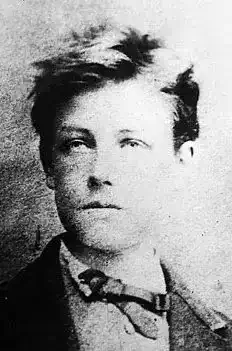
Arthur Rimbaud
Le Forgeron (The Blacksmith)
Le bras sur un marteau gigantesque, effrayant
D'ivresse et de grandeur, le front large, riant
Comme un clairon d'airain, avec toute sa bouche,
Et prenant ce gros-là dans son regard farouche,
Le Forgeron parlait à Louis Seize, un jour
Que le Peuple était là, se tordant tout autour,
Et sur les lambris d'or traînait sa veste sale.
Or le bon roi, debout sur son ventre, était pâle
Pâle comme un vaincu qu'on prend pour le gibet,
Et, soumis comme un chien, jamais ne regimbait,
Car ce maraud de forge aux énormes épaules
Lui disait de vieux mots et des choses si drôles,
Que cela l'empoignait au front, comme cela !
'Donc, Sire, tu sais bien, nous chantions tra la la
Et nous piquions les boeufs vers les sillons des autres :
Le Chanoine au soleil disait ses patenôtres
Sur des chapelets clairs grenés de pièces d'or.
Le Seigneur, à cheval, passait, sonnant du cor,
Et l'un avec la hart, l'autre avec la cravache,
Nous fouaillaient ; Hébétés comme des yeux de vache,
Nos yeux ne pleuraient pas : nous allions ! nous allions !
Et quand nous avions mis le pays en sillons,
Quand nous avions laissé dans cette terre noire
Un peu de notre chair... nous avions un pourboire :
-Nous venions voir flamber nos taudis dans la nuit ;
Nos enfants y faisaient un gâteau fort bien cuit !...
'Oh ! je ne me plains pas. Je te dis mes bêtises :
-C'est entre nous. J'admets que tu me contredises...
Or, n'est-ce pas joyeux de voir, au mois de juin
Dans les granges entrer des voitures de foin
Enormes ? De sentir l'odeur de ce qui pousse,
Des vergers quand il pleut un peu, de l'herbe rousse ?
De voir les champs de blé, les épis pleins de grain,
De penser que cela prépare bien du pain ?...
-Oui, l'on pourrait, plus fort, au fourneau qui s'allume,
Chanter joyeusement en martelant l'enclume,
Si l'on était certain qu'on pourrait prendre un peu,
Étant homme, à la fin !, de ce que donne Dieu !...
-Mais voilà, c'est toujours la même vieille histoire !
'... Oh ! je sais, maintenant ! Moi, je ne peux plus croire,
Quand j'ai deux bonnes mains, mon front et mon marteau,
Qu'un homme vienne là, dague sous le manteau
Et me dise : Maraud, ensemence ma terre ;
Que l'on arrive encor, quand ce serait la guerre,
Me prendre mon garçon comme cela, chez moi !...
-Moi, je serais un homme, et toi tu serais roi,
Tu me dirais : Je veux ! - Tu vois bien, c'est stupide !...
Tu crois que j'aime à voir ta baraque splendide,
Tes officiers dorés, tes mille chenapans,
Tes palsembleu bâtards tournant comme des paons ?
Ils ont rempli ton nid de l'odeur de nos filles,
Et de petits billets pour nous mettre aux Bastilles,
Et nous dirions : C'est bien : les pauvres à genoux !...
Nous dorerions ton Louvre en donnant nos gros sous,
Et tu te soûlerais, tu ferais belle fête,
Et tes Messieurs riraient, les reins sur notre tête !...
'Non ! Ces saletés-là datent de nos papas !
Oh ! Le Peuple n'est plus une putain ! Trois pas,
Et, tous, nous avons mis ta Bastille en poussière !
Cette bête suait du sang à chaque pierre...
Et c'était dégoûtant, la Bastille debout
Avec ses murs lépreux qui nous rappelaient tout
Et, toujours, nous tenaient enfermés dans leur ombre !
-Citoyen ! citoyen ! c'était le passé sombre
Qui croulait, qui râlait, quand nous prîmes la tour !
Nous avions quelque chose au coeur comme l'amour :
Nous avions embrassé nos fils sur nos poitrines,
Et, comme des chevaux, en soufflant des narines,
Nous marchions, nous chantions, et ça nous battait là,
Nous allions au soleil, front haut, comme cela,
Dans Paris accourant devant nos vestes sales !...
Enfin ! Nous nous sentions hommes ! Nous étions pâles,
Sire ; nous étions soûls de terribles espoirs,
Et quand nous fûmes là, devant les donjons noirs,
Agitant nos clairons et nos feuilles de chêne,
Les piques à la main ; nous n'eûmes pas de haine :
-Nous nous sentions si forts ! nous voulions être doux !
'Et depuis ce jour-là, nous sommes comme fous...
Le flot des ouvriers a monté dans la rue
Et ces maudits s'en vont, foule toujours accrue,
Comme des revenants, aux portes des richards !...
Moi, je cours avec eux assommer les mouchards,
Et je vais dans Paris le marteau sur l'épaule,
Farouche, à chaque coin balayant quelque drôle,
Et, si tu me riais au nez, je te tuerais !...
-Puis, tu dois y compter, tu te feras des frais
Avec tes avocats, qui prennent nos requêtes
Pour se les renvoyer comme sur des raquettes,
Et, tout bas, les malins ! Nous traitant de gros sots !
Pour mitonner des lois, ranger des de petits pots
Pleins de menus décrets, de méchantes droguailles,
S'amuser à couper proprement quelques tailles,
Puis se boucher le nez quand nous passons près d'eux,
- Ces chers avocassiers qui nous trouvent crasseux ! -
Pour débiter là-bas des milliers de sornettes
Et ne rien redouter sinon les baïonnettes,
Nous en avons assez, de tous ces cerveaux plats !
Ils embêtent le peuple !... Ah ! ce sont là les plats
Que tu nous sers, bourgeois, quand nous sommes féroces,
Quand nous cassons déjà les sceptres et les crosses !...'
Puis il le prend au bras, arrache le velours
Des rideaux, et lui montre, en bas, les larges cours
Où fourmille, où fourmille, où se lève la foule,
La foule épouvantable avec des bruits de houle,
Hurlant comme une chienne, hurlant comme une mer,
Avec ses bâtons forts et ses piques de fer,
Ses clameurs, ses grands cris de halles et de bouges,
Tas sombre de haillons taché de bonnets rouges !
L'Homme, par la fenêtre ouverte, montre tout
Au Roi pâle, suant qui chancelle debout,
Malade à regarder cela !...
spacespacespacespacespacespacespacespace'C'est la Crapule,
Sire ! ça bave aux murs, ça roule, ça pullule...
-Puisqu'ils ne mangent pas, Sire, ce sont les gueux !
-Je suis un forgeron : ma femme est avec eux :
Folle ! Elle vient chercher du pain aux Tuileries :
-On ne veut pas de nous dans les boulangeries !...
J'ai trois petits ; -Je suis crapule ! - Je connais
Des vieilles qui s'en vont pleurant sous leurs bonnets,
Parce qu'on leur a pris leur garçon ou leur fille :
-C'est la crapule. - Un homme était à la bastille,
D'autres étaient forçats ; c'étaient des citoyens
Honnêtes ; Libérés, ils sont comme des chiens ;
On les insulte ! Alors, ils ont là quelque chose
Qui leur fait mal, allez ! C'est terrible, et c'est cause
Que, se sentant brisés, que, se sentant damnés,
Ils viennent maintenant hurler sous votre nez !...
-Crapules : - Là-dedans sont des filles, infâmes
Parce que -, sachant bien que c'est faible, les femmes,
Messeigneurs de la cour, que ça veut toujours bien, -
Vous leur avez sali leur âme, comme rien !
Vos belles, aujourd'hui, sont là : - C'est la Crapule...
'Oh ! tous les Malheureux, tout ceux dont le dos brûle
Sous le soleil féroce, et qui vont, et qui vont,
Et dans ce travail-là sentent crever leur front,
Chapeau bas, mes bourgeois ! Oh ! ceux-là sont les hommes !
-Nous sommes Ouvriers ! Sire, Ouvriers ! - nous sommes
Pour les grands temps nouveaux où l'on voudra savoir,
Où l'homme forgera du matin jusqu'au soir,
Où, lentement vainqueur, il chassera les choses
Poursuivant les grands buts, cherchant les grandes causes,
Et montera sur Tout comme sur un cheval !
Oh ! nous sommes contents, nous aurons bien du mal !
-Tout ce qu'on ne sait pas, c'est peut-être terrible.
Nous pendrons nos marteaux, nous passerons au crible
Tout ce que nous savons, puis, Frères, en avant !...
-Nous faisons quelquefois ce grand rêve émouvant
De vivre simplement, ardemment, sans rien dire
De mauvais, travaillant sous l'auguste sourire
D'une femme qu'on aime avec un noble amour !
Et l'on travaillerait fièrement tout le jour,
Ecoutant le devoir comme un clairon qui sonne :
Et l'on se trouverait fort heureux, et personne,
Oh ! personne ! surtout, ne vous ferait plier !...
On aurait un fusil au-dessus du foyer....
'Oh ! mais ! l'air est tout plein d'une odeur de bataille !
Que te disais-je donc ? Je suis de la canaille !'
Translation by A. S. Kline
His hand on a gigantic hammer, terrifying
In size and drunkenness, vast-browed, laughing
Like a bronze trumpet, his whole mouth displayed,
Devouring the fat man, now, with his wild gaze,
The Blacksmith spoke with Louis, with the king,
The People there, all around him, cavorting,
Trailing their dirty coats down gilded panels.
But the dear king, belly upright, was pallid,
Pale as the victim led to the guillotine,
Submissive like a dog, cowed by the scene,
Since that wide-shouldered forge-black soul
Spoke of things past and other things so droll,
He had him by the short hairs, just like that!
‘Now, Sir, you know how we’d sing tra-la-la,
And drive the ox down other people’s furrows:
The Canon spun paternosters in the shadows
On rosaries bright with golden coins adorned,
Some Lord, astride, passed blowing on his horn,
One with the noose, another with whip-blows
Lashed us on. – Dazed like the eyes of cows,
Our eyes no longer wept; on and on we went,
And when we’d ploughed a whole continent,
When we had left behind in that black soil
A little of our own flesh…to reward our toil:
They’d set alight our hovels in the night;
Our little ones made burnt cakes alright.
…Oh, I’m not complaining! All my follies,
They’re between us. I’ll let you contradict.
But, isn’t it fine to see, in the month of June,
The enormous hay-wains entering the barns?
To smell the odour of burgeoning things,
The orchards in fine rain, the oats reddening?
To see wheat, wheat, ears filled with grain,
To think it promises us good bread again?...
Oh! You’d go to the forge, be more cheerful,
Sing and hammer joyfully at the anvil,
If you were sure to gain a little in the end –
Being, in fact, a man – of what God intends!
– But there it is, always the same old story!...
But now I know! I don’t credit it any more,
Owning two strong hands, a head, a hammer,
That a man in a cloak, wearing a dagger
Can say: go and sow my land, there, fellow;
Or that another, if maybe war should follow,
Can take my son like that, from where I’m living!
– Suppose I were a man, and you a king,
You’d say: I will it!... – What stupidity.
You think your splendid barn pleases me,
Your gilded servants, your thousand rogues,
Your fancy bastards, peacocks in a row:
Filling your nest with our daughters’ odour,
Warrants to the Bastille for us, moreover
That we should say: fine: make the poor poorer!
We’ll give you our last sous to gild the Louvre!
While you get drunk and enjoy the feast,
– And they all laugh, riding our backs beneath!
No. Those puerilities were our fathers!
The People is no one’s whore now, three steps further
And then, we razed your Bastille to the ground.
That monster sweated blood from every mound,
Was an abomination, that Bastille standing,
With leprous walls its every story yielding,
And, we forever held fast in its shadow!
– Citizen! That was the past, its sorrow,
That broke, and died, when we stormed the tower!
We had something in our hearts like true ardour.
We had clutched our children to our breast.
And like chargers, snorting at the contest,
We went, proud and strong, beating here inside…
We marched in the sun – like this – heads high
Into Paris! They greeted us in our ragged clothes.
At last! We felt ourselves Men! We were sallow,
Sire, drunk, and pallid with terrifying hopes:
And there, in front of those black prison slopes,
Waving our bugles and our sprigs of oak,
Pikes in our fists; did we feel hatred, no!
– We felt such strength we wanted to be gentle! ...
And since that day, we have proved elementals!
A mass of workers sprang up in the street,
And, cursed, are gone, a swelling crowd replete
With ghostly shades, to haunt the rich man’s gate.
I, I run with them, and set informers straight:
I scour Paris, dark-faced, wild, hammer on shoulder,
Sweeping something droll out of every corner,
And, if you smile at me, then I’ll do for you!
– Well, count on it: all this is going to cost you
And your men in black, culling our requests
To bat them about on their racquets all in jest,
And whisper, the rascals, softly: “Oh, what sots!”
To cook up laws, and stick up little pots,
Filled with cute pink decrees, and sugar pills,
Cutting us down to size, to amuse themselves,
Then they hold their noses when we pass by,
– Our kind representatives who hate the sty! –
Fearful of nothing, nothing, but bayonets….
That’s fine. Enough of snuff and lorgnettes!
We’ve had our fill, here, of those dull heads
And bellies of gods. Ah! That’s the bread
You serve us, bourgeoisie, while we rage here,
While we shatter the sceptre and the crozier!...’
He takes his arm, tears back the velvet curtain
And shows the vast courtyards beneath them,
Where the mob swarms, and seethes, where rise,
Out of the frightful mob those storm-filled cries,
Howling as bitches howl, or like the sea,
With their knotted stakes, their pikes of steel,
With the clamour of their market-halls and slums,
A ragged mass of blood-stained caps, and drums:
The Man, through the open window, shows all
To the pale sweating king, reeling, about to fall,
Sick at the sight of it!
‘Those are the Scum, Sire.
Licking the walls, seething, rising higher:
– But then they’ve not eaten, Sire, these beggars!
I’m a blacksmith: my wife, madwoman, is there!
She thinks she’ll get bread at the Tuileries!
– They’ll have none of us in the bakeries.
I’ve three youngsters. I’m scum, too – I know
Old women weeping under their bonnets so
Because they’ve taken a daughter or a son:
One man was in the Bastille – oh, they’re scum –
Another the galleys: both honest citizens.
Freed, they’re treated like dogs, these men:
Insulted! Then, they have something here
That hurts them, see! It’s terrible, it’s clear
They feel broken, feel themselves damned,
There, screaming beneath you where you stand!
Scum. – Down there girls, infamous, shriek,
Because – well, you knew girls were weak –
Gentlemen of the court – gave all you sought –
You’d spit on their souls, as if they were naught!
Now, your pretty ones are there. They’re scum.
Oh, all the Wretched, whose backs, in the fierce sun
Burn, and yet they still work on and on,
Feeling their heads burst with their exertion,
Hats off, you bourgeoisie! Those are Men.
We are the Workers, Sire! Workers! And then
We’re for the great new age, of knowledge, light,
When Man will forge from morning to night,
Pursuing great effects, chasing great causes,
When he will tame things, slowly victorious,
And like a horse, mount the mighty All!
Oh! Splendour of the forges! And no more
Evil, then! – What’s unknown, its terror maybe
We’ll know! – Hammer in hand, let’s sieve freely
All that we know: then, Brothers, we’ll go on!
Sometimes we dream that dream’s vast emotion
Of the simple ardent life, where you revile
All evil, working beneath the august smile,
Of a woman you love with love’s nobility:
And all day long you labour on proudly,
Hearing the clarion call of duty sounding!
And you feel so happy; and nothing, nothing,
Oh, above all, no-one makes you kneel!
Over the fireplace, there, you’d have a rifle…
Oh! But the air is filled with the scent of battle.
What did I say? I too am one of the rascals!
And there are still sharks and informers.
But we are free! With our moments of terror
When we feel we are great, so great! Just now
I was talking of peaceful work, of how…
Look at that sky! – Too small for us, you see,
If we feared the heat, we’d live on our knees!
Look at that sky! – I’ll return to the crowd,
To the vast fearful mob who cry aloud
And roll your cannon through the cobbles’ sty;
– Oh! We will wash them clean when we die!
– And if, against our cries and our vengeance,
The claws of old gilded kings, all over France,
Urge on their regiments in full battle-dress,
Well then, you lot? Shit to those dogs, no less!’
– He shoulders his hammer once more.
The crowd
Feels soul-drunk close to that man, and now
Through the great courtyard, all those rooms,
Where Paris pants and the voices boom,
A shudder shakes the immense populace.
Then, with his broad hand, its grimy grace
Gilded, while the pot-bellied king sweats,
The Blacksmith set his red cap on that head!
654
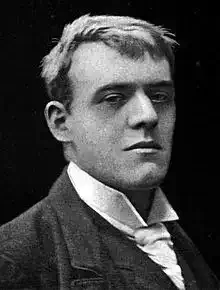
Hilaire Belloc
Epitah on the Politician Himself
Here richly, with ridiculous display,
The Politician's corpse was laid away.
While all of his acquaintance sneered and slanged
I wept: for I had longed to see him hanged.
Another on the Same
This, the last ornament among the peers,
Bribed, bullied, swindled and blackmailed for years:
But Death's what even Politicians fail
To bribe or swindle, bully or blackmail.
On Another Politician
The Politician, dead and turned to clay,
Will make a clout to keep the wind away.
I am not fond of draughts, and yet I doubt
If I could get myself to touch that clout.
On Yet Another
Fame to her darling Shifter glory gives;
And Shifter is immortal while he lives.
Epitah Upon Himself
Lauda tu Ilarion audacem et splendidum,
Who was always beginning things and never ended 'em.
647
Kazi Nazrul Islam
Kings and Subjects
I am the bard of equality.
At the crossroads I sing,
Where pity and sympathy
Have made us all comrades and brother
It is a simple question,
We are all children of this earth,
But can you tell me
Why are some kings, rolling in luxury
And some subjects, starving in gutters?
But it is a queer philosophy,
If I state this simple truth
I am charged with sedition.
The subject can turn a traitor as simply as that.
But whom shall I ask
Why a king should not be condemned
As a traitor to the people
For his thousand crimes and follies
It is the people who create kings
And not the kings the people
Is that the reason
Why the king tortures the people?
Is that the way
They express their gratitude?
How can you smile, friend?
We are only coolies and servants
In our own home and land.
We have given up our manliness,
Our strength, and power.
And what have we got?
Rendered eunuchs we are guarding today
The lascivious harem of the tyrant king.
Whom shall I relate to
This sad and tragic tale?
In our Own land we are the ruled and the oppressed.
Those who make up the very country
Have no right in it
While the rulers enjoy,
The people remain starved and hungry.
Whom shall I complain to
Of this grievous injustice?
All around we hear the sycophants crying
'God save the king, Glory to him',
We the people are always judged.
Is there no Hall of Justice for the kings and the
monarchs?
The war-drums sound deafeningly
And the country's youth rush
To the battle-field to die with smiles on their lips.
But the tender and loving hearts, losing their dear
ones,
Weep bitter tears at home.
And the ravens fly over their roofs.
The royal road is ready..
The victorious chariot will soon pass by
Rejoice, O Citizens!
Have not your sons come back?
Did not your brothers return? Are your husbands dead?
Why weep for them? They sleep in the lap
Of the Goddess of victory.
A dark shadow of gloom and grief
Envelopes the country today,
God save the King, glory to him?
Rejoice, O Citizens,
For the king has come out of his fort today
After so many days.
The King's chariot is flying fast,
Trampling under the wheels
The returned heroes,
Trampling underneath
The brave crippled soldiers and the glorious dead.
O the one-armed and the one-legged
Soldiers of the King,
Keep off the roads and move away
If you want to save your lives today.
Well, friend,
That is exactly what happens,
The people fight and win the battles
And sing the King's praises,
The people provide their rulers
With food and apparel.
The people serve the king with devotion and humility
Only to be rewarded like this.
Isn't that a queer justice, friend?
We have to bow down and make obeisance
To the servants who are paid from our money.
Come, O you all, and have a look
At those glorious Public Servants of our land.
The wheels of Time revolve,
And yet here in our country
Over millions of men
Rule a hundred thieves.
It is no wishful thinking,
Nor is the day very far
When all the kings of the world
Will, in unison, sing
The People's Victory.
[Original: Raja-Proja; Translation: Kabir Chowdhury]
638
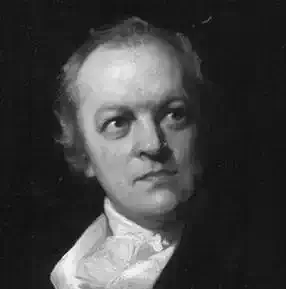
William Blake
The Song of Los
AFRICA
I will sing you a song of Los. the Eternal Prophet:
He sung it to four harps at the tables of Eternity.
In heart-formed Africa.
Urizen faded! Ariston shudderd!
And thus the Song began
Adam stood in the garden of Eden:
And Noah on the mountains of Ararat;
They saw Urizen give his Laws to the Nations
By the hands of the children of Los.
Adam shudderd! Noah faded! black grew the sunny African
When Rintrah gave Abstract Philosophy to Brama in the East:
(Night spoke to the Cloud!
Lo these Human form'd spirits in smiling hipocrisy. War
Against one another; so let them War on; slaves to the eternal Elements)
Noah shrunk, beneath the waters;
Abram fled in fires from Chaldea;
Moses beheld upon Mount Sinai forms of dark delusion:
To Trismegistus. Palamabron gave an abstract Law:
To Pythagoras Socrates & Plato.
Times rolled on o'er all the sons of Har, time after time
Orc on Mount Atlas howld, chain'd down with the Chain of Jealousy
Then Oothoon hoverd over Judah & Jerusalem
And Jesus heard her voice (a man of sorrows) he recievd
A Gospel from wretched Theotormon.
The human race began to wither, for the healthy built
Secluded places, fearing the joys of Love
And the disease'd only propagated:
So Antamon call'd up Leutha from her valleys of delight:
And to Mahomet a loose Bible gave.
But in the North, to Odin, Sotha gave a Code of War,
Because of Diralada thinking to reclaim his joy.
These were the Churches: Hospitals: Castles: Palaces:
Like nets & gins & traps to catch the joys of Eternity
And all the rest a desart;
Till like a dream Eternity was obliterated & erased.
Since that dread day when Har and Heva fled.
Because their brethren & sisters liv'd in War & Lust;
And as they fled they shrunk
Into two narrow doleful forms:
Creeping in reptile flesh upon
The bosom of the ground:
And all the vast of Nature shrunk
Before their shrunken eyes.
Thus the terrible race of Los & Enitharmon gave
Laws & Religions to the sons of Har binding them more
And more to Earth: closing and restraining:
Till a Philosophy of Five Senses was complete
Urizen wept & gave it into the hands of Newton & Locke
Clouds roll heavy upon the Alps round Rousseau & Voltaire:
And on the mountains of Lebanon round the deceased Gods
Of Asia; & on the deserts of Africa round the Fallen Angels
The Guardian Prince of Albion burns in his nightly tent
ASIA
The Kings of Asia heard
The howl rise up from Europe!
And each ran out from his Web;
From his ancient woven Den;
For the darkness of Asia was startled
At the thick-flaming, thought-creating fires of Orc.
And the Kings of Asia stood
And cried in bitterness of soul.
Shall not the King call for Famine from the heath?
Nor the Priest, for Pestilence from the fen?
To restrain! to dismay! to thin!
The inhabitants of mountain and plain;
In the day, of full-feeding prosperity;
And the night of delicious songs.
Shall not the Councellor throw his curb
Of Poverty on the laborious?
To fix the price of labour;
To invent allegoric riches:
And the privy admonishers of men
Call for fires in the City
For heaps of smoking ruins,
In the night of prosperity & wantonness
To turn man from his path,
To restrain the child from the womb,
To cut off the bread from the city,
That the remnant may learn to obey.
That the pride of the heart may fail;
That the lust of the eyes may be quench'd:
That the delicate ear in its infancy
May be dull'd; and the nostrils clos'd up;
To teach mortal worms the path
That leads from the gates of the Grave.
Urizen heard them cry!
And his shudd'ring waving wings
Went enormous above the red flames
Drawing clouds of despair thro' the heavens
Of Europe as he went:
And his Books of brass iron & gold
Melted over the land as he flew,
Heavy-waving, howling, weeping.
And he stood over Judea:
And stay'd in his ancient place:
And stretch'd his clouds over Jerusalem;
For Adam, a mouldering skeleton
Lay bleach'd on the garden of Eden;
And Noah as white as snow
On the mountains of Ararat.
Then the thunders of Urizen bellow'd aloud
From his woven darkness above.
Orc raging in European darkness
Arose like a pillar of fire above the Alps
Like a serpent of fiery flame!
The sullen Earth
Shrunk!
Forth from the dead dust rattling bones to bones
Join: shaking convuls'd the shivring clay breathes
And all flesh naked stands: Fathers and Friends;
Mothers & Infants; Kings & Warriors:
The Grave shrieks with delight, & shakes
Her hollow womb, & clasps the solid stem:
Her bosom swells with wild desire:
And milk & blood & glandous wine.
643
Lord Byron
Ode (From The French)
I.
We do not curse thee, Waterloo!
Though Freedom's blood thy plain bedew;
There 'twas shed, but is not sunkRising
from each gory trunk,
Like the waterspout
from ocean,
With a strong and growing motionIt
soars, and mingles in the air,
With that of lost LabedoyèreWith
that of him whose honour'd grave
Contains the 'bravest of the brave.
A crimson cloud it spreads and glows,
But shall return to whence it rose;
When 'tis full 'twill burst asunderNever
yet was heard such thunder
As then shall shake the world with wonder
Never yet was seen such lightning
As o'er heaven shall then be bright'ning!
Like the Wormwood Star foretold
By the sainted Seer of old,
Show'ring down a fiery flood,
Turning rivers into blood.
II.
The Chief has fallen, but not by you,
Vanquishers of Waterloo!
When the soldier citizen
Sway'd not o'er his fellowmenSave
in deeds that led them on
Where Glory smiled on Freedom's sonWho,
of all the despots banded,
With that youthful chief competed?
Who could boast o'er France defeated,
Till lone Tyranny commanded?
Till, goaded by ambition's sting,
The Hero sunk into the King?
Then he fell:so
perish all,
Who would men by man enthral!
III.
And thou, too, of the snowwhite
plume!
Whose realm refused thee ev'n a tomb;
Better hadst thou still been leading
France o'er hosts of hirelings bleeding,
Than sold thyself to death and shame
For a meanly royal name;
Such as he of Naples wears,
Who thy bloodbought
title bears.
Little didst thou deem, when dashing
On thy warhorse
through the ranks,
Like a stream which burst its banks,
While helmets cleft, and sabres clashing,
Shone and shiver'd fast around theeOf
the fate at last which found thee:
Was that haughty plume laid low
By a slave's dishonest blow?
Once as
the moon sways o'er the tide;
It roll'd in air, the warrior's guide;
Through the smokecreated
night
Of the black and sulphurous fight,
The soldier raised his seeking eye
To catch that crest's ascendancy,And,
as it onward rolling rose
So moved his heart upon our foes.
There, where death's brief pang was quickest,
And the battle's wreck lay thickest,
Strew 'd beneath the advancing banner
Of the eagles burning crest(
There thunderclouds
to fan her,
Who could then her wing arrestVictory
beaming from her breast?)
While the broken line enlarging
Fell, or fled along the plain;
There be sure was Murat charging!
There he ne'er shall charge again!
IV.
O'er glories gone the invaders march,
Weeps Triumph o'er each levell'd archBut
let Freedom rejoice,
With her heart in her voice
But, her hand on her sword,
Doubly shall she be adored
France hath twice too well been taught
The 'moral lesson' dearly boughtHer
safety sits not on a throne,
With Capet or Napoleon!
But in equal rights and laws,
Hearts and hands in one great causeFreedom,
such as God hath given
Unto all beneath his heaven,
With their breath, and from their birth,
Though guilt would sweep it from the earth;
With a fierce and lavish hand
Scattering nations' wealth like sand;
Pouring nations' blood like water,
In imperial seas of slaughter!
V.
But the heart and the mind,
And the voice of mankind,
Shall arise in communionAnd
who shall resist that proud union?
The time is past when swords subduedwww.
PoemHunter.com The
World's Poetry Archive
Man may die the
soul's renew'd:
Even in this low world of care
Freedom ne'er shall want an heir;
Millions breathe but to inherit
Her for ever bounding spiritWhen
once more her hosts assemble,
Tyrants shall believe and trembleSmile
they at this idle threat?
Crimson tears will follow yet.
633
Oscar Wilde
Quantum Mutata
There was a time in Europe long ago
When no man died for freedom anywhere,
But England's lion leaping from its lair
Laid hands on the oppressor! it was so
While England could a great Republic show.
Witness the men of Piedmont, chiefest care
Of Cromwell, when with impotent despair
The Pontiff in his painted portico
Trembled before our stern ambassadors.
How comes it then that from such high estate
We have thus fallen, save that Luxury
With barren merchandise piles up the gate
Where noble thoughts and deeds should enter by:
Else might we still be Milton's heritors.
857
Arthur Rimbaud
The Famous Victory Of Saarbrucken
At centre, the Emperor, blue-yellow, in apotheosis,
Gallops off, ramrod straight, on his fine gee-gee,
Very happy – since everything he sees is rosy,
Fierce as Zeus, and as gentle as a Daddy is:
The brave Infantrymen taking a nap, in vain,
Under the gilded drums and scarlet cannon,
Rise politely. One puts his tunic back on,
And, turns to the Chief, stunned by the big name!
On the right, another, leaning on his rifle butt,
Feeling the hair rise at the back of his neck,
Shouts: ‘Vive L’Empereur!!” – his neighbour’s mute…
A shako rises, like a black sun…– In the midst
The last, a simpleton in red and blue, lying on his gut
Gets up, and, – showing his arse – asks: “On what?”
621
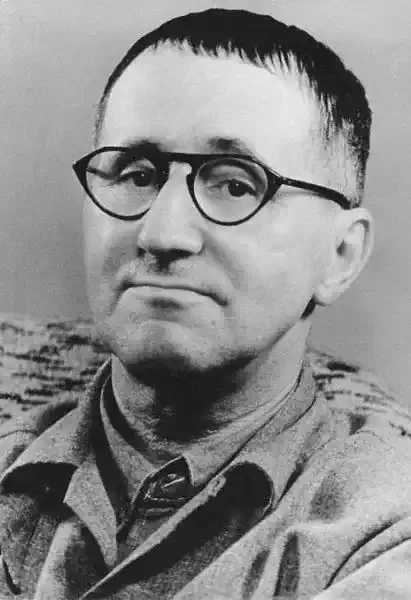
Bertolt Brecht
Not What Was Meant
When the Academy of Arts demanded freedom
Of artistic expression from narrow-minded bureaucrats
There was a howl and a clamour in its immediate vicinity
But roaring above everything
Came a deafening thunder of applause
From beyond the Sector boundary.
Freedom! it roared. Freedom for the artists!
Freedom all round! Freedom for all!
Freedom for the exploiters! Freedom for the warmongers!
Freedom for the Ruhr cartels! Freedom for Hitler's generals!
Softly, my dear fellows...
The Judas kiss for the artists follows
Hard on the Judas kiss for the workers.
The arsonist with his bottle of petrol
Sneaks up grinning to
The Academy of Arts.
But it was not to embrace him, just
To knock the bottle out of his dirty hand that
We asked for elbow room.
Even the narrowest minds
In which peace is harboured
Are more welcome to the arts than the art lover
Who is also a lover of the art of war.
594
John Milton
Paradise Regained: The Fourth Book
Perplexed and troubled at his bad success
The Tempter stood, nor had what to reply,
Discovered in his fraud, thrown from his hope
So oft, and the persuasive rhetoric
That sleeked his tongue, and won so much on Eve,
So little here, nay lost. But Eve was Eve;
This far his over-match, who, self-deceived
And rash, beforehand had no better weighed
The strength he was to cope with, or his own.
But-as a man who had been matchless held
In cunning, over-reached where least he thought,
To salve his credit, and for very spite,
Still will be tempting him who foils him still,
And never cease, though to his shame the more;
Or as a swarm of flies in vintage-time,
About the wine-press where sweet must is poured,
Beat off, returns as oft with humming sound;
Or surging waves against a solid rock,
Though all to shivers dashed, the assault renew,
(Vain battery!) and in froth or bubbles end-
So Satan, whom repulse upon repulse
Met ever, and to shameful silence brought,
Yet gives not o'er, though desperate of success,
And his vain importunity pursues.
He brought our Saviour to the western side
Of that high mountain, whence he might behold
Another plain, long, but in breadth not wide,
Washed by the southern sea, and on the north
To equal length backed with a ridge of hills
That screened the fruits of the earth and seats of men
From cold Septentrion blasts; thence in the midst
Divided by a river, off whose banks
On each side an Imperial City stood,
With towers and temples proudly elevate
On seven small hills, with palaces adorned,
Porches and theatres, baths, aqueducts,
Statues and trophies, and triumphal arcs,
Gardens and groves, presented to his eyes
Above the highth of mountains interposed-
By what strange parallax, or optic skill
Of vision, multiplied through air, or glass
Of telescope, were curious to enquire.
And now the Tempter thus his silence broke:"
The city which thou seest no other deem
Than great and glorious Rome, Queen of the Earth
So far renowned, and with the spoils enriched
Of nations. There the Capitol thou seest,
Above the rest lifting his stately head
On the Tarpeian rock, her citadel
Impregnable; and there Mount Palatine,
The imperial palace, compass huge, and high
The structure, skill of noblest architects,
With gilded battlements, conspicuous far,
Turrets, and terraces, and glittering spires.
Many a fair edifice besides, more like
Houses of gods-so well I have disposed
My aerie microscope-thou may'st behold,
Outside and inside both, pillars and roofs
Carved work, the hand of famed artificers
In cedar, marble, ivory, or gold.
Thence to the gates cast round thine eye, and see
What conflux issuing forth, or entering in:
Praetors, proconsuls to their provinces
Hasting, or on return, in robes of state;
Lictors and rods, the ensigns of their power;
Legions and cohorts, turms of horse and wings;
Or embassies from regions far remote,
In various habits, on the Appian road,
Or on the AEmilian-some from farthest south,
Syene, and where the shadow both way falls,
Meroe, Nilotic isle, and, more to west,
The realm of Bocchus to the Blackmoor sea;
From the Asian kings (and Parthian among these),
From India and the Golden Chersoness,
And utmost Indian isle Taprobane,
Dusk faces with white silken turbants wreathed;
From Gallia, Gades, and the British west;
Germans, and Scythians, and Sarmatians north
Beyond Danubius to the Tauric pool.
All nations now to Rome obedience pay-
To Rome's great Emperor, whose wide domain,
In ample territory, wealth and power,
Civility of manners, arts and arms,
And long renown, thou justly may'st prefer
Before the Parthian. These two thrones except,
The rest are barbarous, and scarce worth the sight,
Shared among petty kings too far removed;
These having shewn thee, I have shewn thee all
The kingdoms of the world, and all their glory.
This Emperor hath no son, and now is old,
Old and lascivious, and from Rome retired
To Capreae, an island small but strong
On the Campanian shore, with purpose there
His horrid lusts in private to enjoy;
Committing to a wicked favourite
All public cares, and yet of him suspicious;
Hated of all, and hating. With what ease,
Endued with regal virtues as thou art,
Appearing, and beginning noble deeds,
Might'st thou expel this monster from his throne,
Now made a sty, and, in his place ascending,
A victor-people free from servile yoke!
And with my help thou may'st; to me the power
Is given, and by that right I give it thee.
Aim, therefore, at no less than all the world;
Aim at the highest; without the highest attained,
Will be for thee no sitting, or not long,
On David's throne, be prophesied what will."
To whom the Son of God, unmoved, replied:
"Nor doth this grandeur and majestic shew
Of luxury, though called magnificence,
More than of arms before, allure mine eye,
Much less my mind; though thou should'st add to tell
Their sumptuous gluttonies, and gorgeous feasts
On citron tables or Atlantic stone
(For I have also heard, perhaps have read),
Their wines of Setia, Cales, and Falerne,
Chios and Crete, and how they quaff in gold,
Crystal, and myrrhine cups, imbossed with gems
And studs of pearl-to me should'st tell, who thirst
And hunger still. Then embassies thou shew'st
From nations far and nigh! What honour that,
But tedious waste of time, to sit and hear
So many hollow compliments and lies,
Outlandish flatteries? Then proceed'st to talk
Of the Emperor, how easily subdued,
How gloriously. I shall, thou say'st, expel
A brutish monster: what if I withal
Expel a Devil who first made him such?
Let his tormentor, Conscience, find him out;
For him I was not sent, nor yet to free
That people, victor once, now vile and base,
Deservedly made vassal-who, once just,
Frugal, and mild, and temperate, conquered well,
But govern ill the nations under yoke,
Peeling their provinces, exhausted all
By lust and rapine; first ambitious grown
Of triumph, that insulting vanity;
Then cruel, by their sports to blood inured
Of fighting beasts, and men to beasts exposed;
Luxurious by their wealth, and greedier still,
And from the daily Scene effeminate.
What wise and valiant man would seek to free
These, thus degenerate, by themselves enslaved,
Or could of inward slaves make outward free?
Know, therefore, when my season comes to sit
On David's throne, it shall be like a tree
Spreading and overshadowing all the earth,
Or as a stone that shall to pieces dash
All monarchies besides throughout the world;
And of my Kingdom there shall be no end.
Means there shall be to this; but what the means
Is not for thee to know, nor me to tell."
To whom the Tempter, impudent, replied:
"I see all offers made by me how slight
Thou valuest, because offered, and reject'st.
Nothing will please the difficult and nice,
Or nothing more than still to contradict.
On the other side know also thou that I
On what I offer set as high esteem,
Nor what I part with mean to give for naught,
All these, which in a moment thou behold'st,
The kingdoms of the world, to thee I give
(For, given to me, I give to whom I please),
No trifle; yet with this reserve, not else-
On this condition, if thou wilt fall down,
And worship me as thy superior Lord
(Easily done), and hold them all of me;
For what can less so great a gift deserve?"
Whom thus our Saviour answered with disdain:"
I never liked thy talk, thy offers less;
Now both abhor, since thou hast dared to utter
The abominable terms, impious condition.
But I endure the time, till which expired
Thou hast permission on me. It is written,
The first of all commandments, 'Thou shalt worship
The Lord thy God, and only Him shalt serve.'
And dar'st thou to the Son of God propound
To worship thee, accursed? now more accursed
For this attempt, bolder than that on Eve,
And more blasphemous; which expect to rue.
The kingdoms of the world to thee were given!
Permitted rather, and by thee usurped;
Other donation none thou canst produce.
If given, by whom but by the King of kings,
God over all supreme? If given to thee,
By thee how fairly is the Giver now
Repaid! But gratitude in thee is lost
Long since. Wert thou so void of fear or shame
As offer them to me, the Son of God-
To me my own, on such abhorred pact,
That I fall down and worship thee as God?
Get thee behind me! Plain thou now appear'st
That Evil One, Satan for ever damned."
To whom the Fiend, with fear abashed, replied:"
Be not so sore offended, Son of God-
Though Sons of God both Angels are and Men-
If I, to try whether in higher sort
Than these thou bear'st that title, have proposed
What both from Men and Angels I receive,
Tetrarchs of Fire, Air, Flood, and on the Earth
Nations besides from all the quartered winds-
God of this World invoked, and World beneath.
Who then thou art, whose coming is foretold
To me most fatal, me it most concerns.
The trial hath indamaged thee no way,
Rather more honour left and more esteem;
Me naught advantaged, missing what I aimed.
Therefore let pass, as they are transitory,
The kingdoms of this world; I shall no more
Advise thee; gain them as thou canst, or not.
And thou thyself seem'st otherwise inclined
Than to a worldly crown, addicted more
To contemplation and profound dispute;
As by that early action may be judged,
When, slipping from thy mother's eye, thou went'st
Alone into the Temple, there wast found
Among the gravest Rabbies, disputant
On points and questions fitting Moses' chair,
Teaching, not taught. The childhood shews the man,
As morning shews the day. Be famous, then,
By wisdom; as thy empire must extend,
So let extend thy mind o'er all the world
In knowledge; all things in it comprehend.
All knowledge is not couched in Moses' law,
The Pentateuch, or what the Prophets wrote;
The Gentiles also know, and write, and teach
To admiration, led by Nature's light;
And with the Gentiles much thou must converse,
Ruling them by persuasion, as thou mean'st.
Without their learning, how wilt thou with them,
Or they with thee, hold conversation meet?
How wilt thou reason with them, how refute
Their idolisms, traditions, paradoxes?
Error by his own arms is best evinced.
Look once more, ere we leave this specular mount,
Westward, much nearer by south-west; behold
Where on the AEgean shore a city stands,
Built nobly, pure the air and light the soil-
Athens, the eye of Greece, mother of arts
And Eloquence, native to famous wits
Or hospitable, in her sweet recess,
City or suburban, studious walks and shades.
See there the olive-grove of Academe,
Plato's retirement, where the Attic bird
Trills her thick-warbled notes the summer long;
There, flowery hill, Hymettus, with the sound
Of bees' industrious murmur, oft invites
To studious musing; there Ilissus rowls
His whispering stream. Within the walls then view
The schools of ancient sages-his who bred
Great Alexander to subdue the world,
Lyceum there; and painted Stoa next.
There thou shalt hear and learn the secret power
Of harmony, in tones and numbers hit
By voice or hand, and various-measured verse,
AEolian charms and Dorian lyric odes,
And his who gave them breath, but higher sung,
Blind Melesigenes, thence Homer called,
Whose poem Phoebus challenged for his own.
Thence what the lofty grave Tragedians taught
In chorus or iambic, teachers best
Of moral prudence, with delight received
In brief sententious precepts, while they treat
Of fate, and chance, and change in human life,
High actions and high passions best describing.
Thence to the famous Orators repair,
Those ancient whose resistless eloquence
Wielded at will that fierce democraty,
Shook the Arsenal, and fulmined over Greece
To Macedon and Artaxerxes' throne.
To sage Philosophy next lend thine ear,
From heaven descended to the low-roofed house
Of Socrates-see there his tenement-
Whom, well inspired, the Oracle pronounced
Wisest of men; from whose mouth issued forth
Mellifluous streams, that watered all the schools
Of Academics old and new, with those
Surnamed Peripatetics, and the sect
Epicurean, and the Stoic severe.
These here revolve, or, as thou likest, at home,
Till time mature thee to a kingdom's weight;
These rules will render thee a king complete
Within thyself, much more with empire joined."
To whom our Saviour sagely thus replied:"
Think not but that I know these things; or, think
I know them not, not therefore am I short
Of knowing what I ought. He who receives
Light from above, from the Fountain of Light,
No other doctrine needs, though granted true;
But these are false, or little else but dreams,
Conjectures, fancies, built on nothing firm.
The first and wisest of them all professed
To know this only, that he nothing knew;
The next to fabling fell and smooth conceits;
A third sort doubted all things, though plain sense;
Others in virtue placed felicity,
But virtue joined with riches and long life;
In corporal pleasure he, and careless ease;
The Stoic last in philosophic pride,
By him called virtue, and his virtuous man,
Wise, perfect in himself, and all possessing,
Equal to God, oft shames not to prefer,
As fearing God nor man, contemning all
Wealth, pleasure, pain or torment, death and life-
Which, when he lists, he leaves, or boasts he can;
For all his tedious talk is but vain boast,
Or subtle shifts conviction to evade.
Alas! what can they teach, and not mislead,
Ignorant of themselves, of God much more,
And how the World began, and how Man fell,
Degraded by himself, on grace depending?
Much of the Soul they talk, but all awry;
And in themselves seek virtue; and to themselves
All glory arrogate, to God give none;
Rather accuse him under usual names,
Fortune and Fate, as one regardless quite
Of mortal things. Who, therefore, seeks in these
True wisdom finds her not, or, by delusion
Far worse, her false resemblance only meets,
An empty cloud. However, many books,
Wise men have said, are wearisome; who reads
Incessantly, and to his reading brings not
A spirit and judgment equal or superior,
(And what he brings what needs he elsewhere seek?)
Uncertain and unsettled still remains,
Deep-versed in books and shallow in himself,
Crude or intoxicate, collecting toys
And trifles for choice matters, worth a sponge,
As children gathering pebbles on the shore.
Or, if I would delight my private hours
With music or with poem, where so soon
As in our native language can I find
That solace? All our Law and Story strewed
With hymns, our Psalms with artful terms inscribed,
Our Hebrew songs and harps, in Babylon
That pleased so well our victor's ear, declare
That rather Greece from us these arts derived-
Ill imitated while they loudest sing
The vices of their deities, and their own,
In fable, hymn, or song, so personating
Their gods ridiculous, and themselves past shame.
Remove their swelling epithetes, thick-laid
As varnish on a harlot's cheek, the rest,
Thin-sown with aught of profit or delight,
Will far be found unworthy to compare
With Sion's songs, to all true tastes excelling,
Where God is praised aright and godlike men,
The Holiest of Holies and his Saints
(Such are from God inspired, not such from thee);
Unless where moral virtue is expressed
By light of Nature, not in all quite lost.
Their orators thou then extoll'st as those
The top of eloquence-statists indeed,
And lovers of their country, as may seem;
But herein to our Prophets far beneath,
As men divinely taught, and better teaching
The solid rules of civil government,
In their majestic, unaffected style,
Than all the oratory of Greece and Rome.
In them is plainest taught, and easiest learnt,
What makes a nation happy, and keeps it so,
What ruins kingdoms, and lays cities flat;
These only, with our Law, best form a king."
So spake the Son of God; but Satan, now
Quite at a loss (for all his darts were spent),
Thus to our Saviour, with stern brow, replied:
"Since neither wealth nor honour, arms nor arts,
Kingdom nor empire, pleases thee, nor aught
By me proposed in life contemplative
Or active, tended on by glory or fame,
What dost thou in this world? The Wilderness
For thee is fittest place: I found thee there,
And thither will return thee. Yet remember
What I foretell thee; soon thou shalt have cause
To wish thou never hadst rejected, thus
Nicely or cautiously, my offered aid,
Which would have set thee in short time with ease
On David's throne, or throne of all the world,
Now at full age, fulness of time, thy season,
When prophecies of thee are best fulfilled.
Now, contrary-if I read aught in heaven,
Or heaven write aught of fate-by what the stars
Voluminous, or single characters
In their conjunction met, give me to spell,
Sorrows and labours, opposition, hate,
Attends thee; scorns, reproaches, injuries,
Violence and stripes, and, lastly, cruel death.
A kingdom they portend thee, but what kingdom,
Real or allegoric, I discern not;
Nor when: eternal sure-as without end,
Without beginning; for no date prefixed
Directs me in the starry rubric set."
So saying, he took (for still he knew his power
Not yet expired), and to the Wilderness
Brought back, the Son of God, and left him there,
Feigning to disappear. Darkness now rose,
As daylight sunk, and brought in louring Night,
Her shadowy offspring, unsubstantial both,
Privation mere of light and absent day.
Our Saviour, meek, and with untroubled mind
After hisaerie jaunt, though hurried sore,
Hungry and cold, betook him to his rest,
Wherever, under some concourse of shades,
Whose branching arms thick intertwined might shield
From dews and damps of night his sheltered head;
But, sheltered, slept in vain; for at his head
The Tempter watched, and soon with ugly dreams
Disturbed his sleep. And either tropic now
'Gan thunder, and both ends of heaven; the clouds
From many a horrid rift abortive poured
Fierce rain with lightning mixed, water with fire,
In ruin reconciled; nor slept the winds
Within their stony caves, but rushed abroad
From the four hinges of the world, and fell
On the vexed wilderness, whose tallest pines,
Though rooted deep as high, and sturdiest oaks,
Bowed their stiff necks, loaden with stormy blasts,
Or torn up sheer. Ill wast thou shrouded then,
O patient Son of God, yet only stood'st
Unshaken! Nor yet staid the terror there:
Infernal ghosts and hellish furies round
Environed thee; some howled, some yelled, some shrieked,
Some bent at thee their fiery darts, while thou
Sat'st unappalled in calm and sinless peace.
Thus passed the night so foul, till Morning fair
Came forth with pilgrim steps, in amice grey,
Who with her radiant finger stilled the roar
Of thunder, chased the clouds, and laid the winds,
And griesly spectres, which the Fiend had raised
To tempt the Son of God with terrors dire.
And now the sun with more effectual beams
Had cheered the face of earth, and dried the wet
From drooping plant, or dropping tree; the birds,
Who all things now behold more fresh and green,
After a night of storm so ruinous,
Cleared up their choicest notes in bush and spray,
To gratulate the sweet return of morn.
Nor yet, amidst this joy and brightest morn,
Was absent, after all his mischief done,
The Prince of Darkness; glad would also seem
Of this fair change, and to our Saviour came;
Yet with no new device (they all were spent),
Rather by this his last affront resolved,
Desperate of better course, to vent his rage
And mad despite to be so oft repelled.
Him walking on a sunny hill he found,
Backed on the north and west by a thick wood;
Out of the wood he starts in wonted shape,
And in a careless mood thus to him said:"
Fair morning yet betides thee, Son of God,
After a dismal night. I heard the wrack,
As earth and sky would mingle; but myself
Was distant; and these flaws, though mortals fear them,
As dangerous to the pillared frame of Heaven,
Or to the Earth's dark basis underneath,
Are to the main as inconsiderable
And harmless, if not wholesome, as a sneeze
To man's less universe, and soon are gone.
Yet, as being ofttimes noxious where they light
On man, beast, plant, wasteful and turbulent,
Like turbulencies in the affairs of men,
Over whose heads they roar, and seem to point,
They oft fore-signify and threaten ill.
This tempest at this desert most was bent;
Of men at thee, for only thou here dwell'st.
Did I not tell thee, if thou didst reject
The perfect season offered with my aid
To win thy destined seat, but wilt prolong
All to the push of fate, pursue thy way
Of gaining David's throne no man knows when
(For both the when and how is nowhere told),
Thou shalt be what thou art ordained, no doubt;
For Angels have proclaimed it, but concealing
The time and means? Each act is rightliest done
Not when it must, but when it may be best.
If thou observe not this, be sure to find
What I foretold thee-many a hard assay
Of dangers, and adversities, and pains,
Ere thou of Israel's sceptre get fast hold;
Whereof this ominous night that closed thee round,
So many terrors, voices, prodigies,
May warn thee, as a sure foregoing sign."
So talked he, while the Son of God went on,
And staid not, but in brief him answered thus:
"Me worse than wet thou find'st not; other harm
Those terrors which thou speak'st of did me none.
I never feared they could, though noising loud
And threatening nigh: what they can do as signs
Betokening or ill-boding I contemn
As false portents, not sent from God, but thee;
Who, knowing I shall reign past thy preventing,
Obtrud'st thy offered aid, that I, accepting,
At least might seem to hold all power of thee,
Ambitious Spirit! and would'st be thought my God;
And storm'st, refused, thinking to terrify
Me to thy will! Desist (thou art discerned,
And toil'st in vain), nor me in vain molest."
To whom the Fiend, now swoln with rage, replied:"
Then hear, O Son of David, virgin-born!
For Son of God to me is yet in doubt.
Of the Messiah I have heard foretold
By all the Prophets; of thy birth, at length
Announced by Gabriel, with the first I knew,
And of the angelic song in Bethlehem field,
On thy birth-night, that sung thee Saviour born.
From that time seldom have I ceased to eye
Thy infancy, thy childhood, and thy youth,
Thy manhood last, though yet in private bred;
Till, at the ford of Jordan, whither all
Flocked to the Baptist, I among the rest
(Though not to be baptized), by voice from Heaven
Heard thee pronounced the Son of God beloved.
Thenceforth I thought thee worth my nearer view
And narrower scrutiny, that I might learn
In what degree or meaning thou art called
The Son of God, which bears no single sense.
The Son of God I also am, or was;
And, if I was, I am; relation stands:
All men are Sons of God; yet thee I thought
In some respect far higher so declared.
Therefore I watched thy footsteps from that hour,
And followed thee still on to this waste wild,
Where, by all best conjectures, I collect
Thou art to be my fatal enemy.
Good reason, then, if I beforehand seek
To understand my adversary, who
And what he is; his wisdom, power, intent;
By parle or composition, truce or league,
To win him, or win from him what I can.
And opportunity I here have had
To try thee, sift thee, and confess have found thee
Proof against all temptation, as a rock
Of adamant and as a centre, firm
To the utmost of mere man both wise and good,
Not more; for honours, riches, kingdoms, glory,
Have been before contemned, and may again.
Therefore, to know what more thou art than man,
Worth naming the Son of God by voice from Heaven,
Another method I must now begin."
So saying, he caught him up, and, without wing
Of hippogrif, bore through the air sublime,
Over the wilderness and o'er the plain,
Till underneath them fair Jerusalem,
The Holy City, lifted high her towers,
And higher yet the glorious Temple reared
Her pile, far off appearing like a mount
Of alablaster, topt with golden spires:
There, on the highest pinnacle, he set
The Son of God, and added thus in scorn:
"There stand, if thou wilt stand; to stand upright
Will ask thee skill. I to thy Father's house
Have brought thee, and highest placed: highest is best.
Now shew thy progeny; if not to stand,
Cast thyself down. Safely, if Son of God;
For it is written, 'He will give command
Concerning thee to his Angels; in their hands
They shall uplift thee, lest at any time
Thou chance to dash thy foot against a stone.'"
To whom thus Jesus: "Also it is written,
'Tempt not the Lord thy God.'" He said, and stood;
But Satan, smitten with amazement, fell.
As when Earth's son, Antaeus (to compare
Small things with greatest), in Irassa strove
With Jove's Alcides, and, oft foiled, still rose,
Receiving from his mother Earth new strength,
Fresh from his fall, and fiercer grapple joined,
Throttled at length in the air expired and fell,
So, after many a foil, the Tempter proud,
Renewing fresh assaults, amidst his pride
Fell whence he stood to see his victor fall;
And, as that Theban monster that proposed
Her riddle, and him who solved it not devoured,
That once found out and solved, for grief and spite
Cast herself headlong from the Ismenian steep,
So, strook with dread and anguish, fell the Fiend,
And to his crew, that sat consulting, brought
Joyless triumphals of his hoped success,
Ruin, and desperation, and dismay,
Who durst so proudly tempt the Son of God.
So Satan fell; and straight a fiery globe
Of Angels on full sail of wing flew nigh,
Who on their plumy vans received Him soft
From his uneasy station, and upbore,
As on a floating couch, through the blithe air;
Then, in a flowery valley, set him down
On a green bank, and set before him spread
A table of celestial food, divine
Ambrosial fruits fetched from the Tree of Life,
And from the Fount of Life ambrosial drink,
That soon refreshed him wearied, and repaired
What hunger, if aught hunger, had impaired,
Or thirst; and, as he fed, Angelic quires
Sung heavenly anthems of his victory
Over temptation and the Tempter proud:
"True Image of the Father, whether throned
In the bosom of bliss, and light of light
Conceiving, or, remote from Heaven, enshrined
In fleshly tabernacle and human form,
Wandering the wilderness-whatever place,
Habit, or state, or motion, still expressing
The Son of God, with Godlike force endued
Against the attempter of thy Father's throne
And thief of Paradise! Him long of old
Thou didst debel, and down from Heaven cast
With all his army; now thou hast avenged
Supplanted Adam, and, by vanquishing
Temptation, hast regained lost Paradise,
And frustrated the conquest fraudulent.
He never more henceforth will dare set foot
In paradise to tempt; his snares are broke.
For, though that seat of earthly bliss be failed,
A fairer Paradise is founded now
For Adam and his chosen sons, whom thou,
A Saviour, art come down to reinstall;
Where they shall dwell secure, when time shall be,
Of tempter and temptation without fear.
But thou, Infernal Serpent! shalt not long
Rule in the clouds. Like an autumnal star,
Or lightning, thou shalt fall from Heaven, trod down
Under his feet. For proof, ere this thou feel'st
Thy wound (yet not thy last and deadliest wound)
By this repulse received, and hold'st in Hell
No triumph; in all her gates Abaddon rues
Thy bold attempt. Hereafter learn with awe
To dread the Son of God. He, all unarmed,
Shall chase thee, with the terror of his voice,
From thy demoniac holds, possession foul-
Thee and thy legions; yelling they shall fly,
And beg to hide them in a herd of swine,
Lest he command them down into the Deep,
Bound, and to torment sent before their time.
Hail, Son of the Most High, heir of both Worlds,
Queller of Satan! On thy glorious work
Now enter, and begin to save Mankind."
Thus they the Son of God, our Saviour meek,
Sung victor, and, from heavenly feast refreshed,
Brought on his way with joy. He, unobserved,
Home to his mother's house private returned.
THE END
598
Lord Byron
On Chillon
Eternal Spirit of the chainless Mind!
Brightest in dungeons, Liberty, thou art;
For there thy habitation is the heart—
The heart which love of thee alone can bind;
And when thy sons to fetters are consigned,
To
fetters, and the damp vault's dayless gloom—
Their country conquers with their martyrdom,
And Freedom's fame finds wings on every wind.
Chillon! thy prison is a holy place,
And thy sad floor and altar, for 'twas trod,
Until his very steps have left a trace,
Worn, as if thy cold pavement were a sod,
By Bonnivard.—May none those marks efface!
For they appeal from tyranny to God.
578

Robert Browning
The Lost Leader
I.
Just for a handful of silver he left us,
Just for a riband to stick in his coat---
Found the one gift of which fortune bereft us,
Lost all the others she lets us devote;
They, with the gold to give, doled him out silver,
So much was theirs who so little allowed:
How all our copper had gone for his service!
Rags---were they purple, his heart had been proud!
We that had loved him so, followed him, honoured him,
Lived in his mild and magnificent eye,
Learned his great language, caught his clear accents,
Made him our pattern to live and to die!
Shakespeare was of us, Milton was for us,
Burns, Shelley, were with us,---they watch from their graves!
He alone breaks from the van and the free-men,
---He alone sinks to the rear and the slaves!
II.
We shall march prospering,---not thro' his presence;
Songs may inspirit us,---not from his lyre;
Deeds will be done,---while he boasts his quiescence,
Still bidding crouch whom the rest bade aspire:
Blot out his name, then, record one lost soul more,
One task more declined, one more foot-path untrod,
One more devils'-triumph and sorrow for angels,
One wrong more to man, one more insult to God!
Life's night begins: let him never come back to us!
There would be doubt, hesitation and pain,
Forced praise on our part---the glimmer of twilight,
Never glad confident morning again!
Best fight on well, for we taught him---strike gallantly,
Menace our heart ere we master his own;
Then let him receive the new knowledge and wait us,
Pardoned in heaven, the first by the throne!
925
Bertolt Brecht
The Solution
After the uprising of the 17th June
The Secretary of the Writers Union
Had leaflets distributed in the Stalinallee
Stating that the people
Had forfeited the confidence of the government
And could win it back only
By redoubled efforts. Would it not be easier
In that case for the government
To dissolve the people
And elect another?
The Secretary of the Writers Union
Had leaflets distributed in the Stalinallee
Stating that the people
Had forfeited the confidence of the government
And could win it back only
By redoubled efforts. Would it not be easier
In that case for the government
To dissolve the people
And elect another?
575
Page 1
Next