
Purpose and Meaning of Life
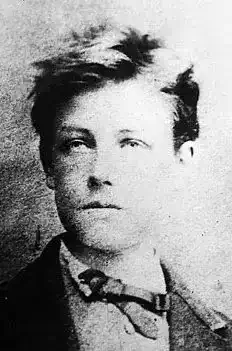
Arthur Rimbaud
Genie
He is love and the present because he has opened our house
to winter's foam and to the sound of summer,
He who purified all that we drink and tea;
He is the charm of passing places,
the incarnate delight of all things that abide.
He is affection and the future,
the strength and love that we,
standing surrounded by anger and weariness,
See passing in the storm-filled sky and in banners of ecstasy.
He is love, perfect and rediscovered measure,
Reason, marvelous and unforeseen,
Eternity: beloved prime mover of the elements, of destinies.
We all know the terror of his yielding, and of ours:
Oh delight of our well-being, brilliance of our faculties,
selfish affection and passion for him, who loves us forever...
And we remember him, and he goes on his way...
And if Adoration departs, then it sounds, his promise sounds:
'Away with these ages and superstitions,
These couplings, these bodies of old!
All our age has submerged.' He will not go away,
will not come down again from some heave.
He will not fulfill the redemption of women's fury
nor the gaiety of men nor the rest of this sin:
For he is and he is loved, and so it is already done.
Oh, his breathing, the turn of his head when he runs:
Terrible speed of perfection in action and form!
Fecundity of spirit and vastness of the universe! His body!
Release so long desired, The splintering of grace before a new violence!
Oh, the sight, the sight of him!
All ancient genuflections, all sorrows are lifted as he passes.
The light of his day! All moving and sonorous
suffering dissolves in more intense music.
In his step there are vaster migrations than the old invasions were.
Oh, He and we! a pride more benevolent than charities lost.
Oh, world! and the shining song of new sorrows.
He has known us all and has loved us.
Let us discover how, this winter night, to hail him from cape to cape,
from the unquiet pole to the château,
from crowded cities to the empty coast,
from glance to glance, with our strength and our feelings exhausted,
To see him, and to send him once again away...
And beneath the tides and over high deserts of snow
To follow his image, his breathing, his body, the light of his day.
740

Paul Laurence Dunbar
The Paradox
I am the mother of sorrows,
I am the ender of grief;
I am the bud and the blossom,
I am the late-falling leaf.
I am thy priest and thy poet,
I am thy serf and thy king;
I cure the tears of the heartsick,
When I come near they shall sing.
White are my hands as the snowdrop;
Swart are my fingers as clay;
Dark is my frown as the midnight,
Fair is my brow as the day.
Battle and war are my minions,
Doing my will as divine;
I am the calmer of passions,
Peace is a nursling of mine.
Speak to me gently or curse me,
Seek me or fly from my sight;
I am thy fool in the morning,
Thou art my slave in the night.
Down to the grave I will take thee,
Out from the noise of the strife,
Then shalt thou see me and know me--
Death, then, no longer, but life.
Then shalt thou sing at my coming,
Kiss me with passionate breath,
Clasp me and smile to have thought me
Aught save the foeman of death.
Come to me, brother, when weary,
Come when thy lonely heart swells;
I'll guide thy footsteps and lead thee
Down where the Dream Woman dwells.
735

William Wordsworth
Ode, On Intimations Of Immortality
I
There was a time when meadow, grove, and stream,
The earth, and every common sight,
To me did seem
Apparelled in celestial light,
The glory and the freshness of a dream.
It is not now as it hath been of yore;--
Turn wheresoe'er I may,
By night or day,
The things which I have seen I now can see no more.
II
The Rainbow comes and goes,
And lovely is the Rose,
The Moon doth with delight
Look round her when the heavens are bare,
Waters on a starry night
Are beautiful and fair;
The sunshine is a glorious birth;
But yet I know, where'er I go,
That there hath past away a glory from the earth.
III
Now, while the birds thus sing a joyous song,
And while the young lambs bound
As to the tabor's sound,
To me alone there came a thought of grief:
A timely utterance gave that thought relief,
And I again am strong:
The cataracts blow their trumpets from the steep;
No more shall grief of mine the season wrong;
I hear the Echoes through the mountains throng,
The Winds come to me from the fields of sleep,
And all the earth is gay;
Land and sea
Give themselves up to jollity,
And with the heart of May
Doth every Beast keep holiday;--
Thou Child of Joy,
Shout round me, let me hear thy shouts, thou happy
Shepherd-boy!
IV
Ye blessed Creatures, I have heard the call
Ye to each other make; I see
The heavens laugh with you in your jubilee;
My heart is at your festival,
My head hath its coronal,
The fulness of your bliss, I feel--I feel it all.
Oh evil day! if I were sullen
While Earth herself is adorning,
This sweet May-morning,
And the Children are culling
On every side,
In a thousand valleys far and wide,
Fresh flowers; while the sun shines warm,
And the Babe leaps up on his Mother's arm:--
I hear, I hear, with joy I hear!
--But there's a Tree, of many, one,
A single Field which I have looked upon,
Both of them speak of something that is gone:
The Pansy at my feet
Doth the same tale repeat:
Whither is fled the visionary gleam?
Where is it now, the glory and the dream?
V
Our birth is but a sleep and a forgetting:
The Soul that rises with us, our life's Star,
Hath had elsewhere its setting,
And cometh from afar:
Not in entire forgetfulness,
And not in utter nakedness,
But trailing clouds of glory do we come
From God, who is our home:
Heaven lies about us in our infancy!
Shades of the prison-house begin to close
Upon the growing Boy,
But He beholds the light, and whence it flows,
He sees it in his joy;
The Youth, who daily farther from the east
Must travel, still is Nature's Priest,
And by the vision splendid
Is on his way attended;
At length the Man perceives it die away,
And fade into the light of common day.
VI
Earth fills her lap with pleasures of her own;
Yearnings she hath in her own natural kind,
And, even with something of a Mother's mind,
And no unworthy aim,
The homely Nurse doth all she can
To make her Foster-child, her Inmate Man,
Forget the glories he hath known,
And that imperial palace whence he came.
VII
Behold the Child among his new-born blisses,
A six years' Darling of a pigmy size!
See, where 'mid work of his own hand he lies,
Fretted by sallies of his mother's kisses,
With light upon him from his father's eyes!
See, at his feet, some little plan or chart,
Some fragment from his dream of human life,
Shaped by himself with newly-learned art;
A wedding or a festival,
A mourning or a funeral;
And this hath now his heart,
And unto this he frames his song:
Then will he fit his tongue
To dialogues of business, love, or strife;
But it will not be long
Ere this be thrown aside,
And with new joy and pride
The little Actor cons another part;
Filling from time to time his "humorous stage"
With all the Persons, down to palsied Age,
That Life brings with her in her equipage;
As if his whole vocation
Were endless imitation.
VIII
Thou, whose exterior semblance doth belie
Thy Soul's immensity;
Thou best Philosopher, who yet dost keep
Thy heritage, thou Eye among the blind,
That, deaf and silent, read'st the eternal deep,
Haunted for ever by the eternal mind,--
Mighty Prophet! Seer blest!
On whom those truths do rest,
Which we are toiling all our lives to find,
In darkness lost, the darkness of the grave;
Thou, over whom thy Immortality
Broods like the Day, a Master o'er a Slave,
A Presence which is not to be put by;
Thou little Child, yet glorious in the might
Of heaven-born freedom on thy being's height,
Why with such earnest pains dost thou provoke
The years to bring the inevitable yoke,
Thus blindly with thy blessedness at strife?
Full soon thy Soul shall have her earthly freight,
And custom lie upon thee with a weight
Heavy as frost, and deep almost as life!
IX
O joy! that in our embers
Is something that doth live,
That nature yet remembers
What was so fugitive!
The thought of our past years in me doth breed
Perpetual benediction: not indeed
For that which is most worthy to be blest--
Delight and liberty, the simple creed
Of Childhood, whether busy or at rest,
With new-fledged hope still fluttering in his breast:--
Not for these I raise
The song of thanks and praise;
But for those obstinate questionings
Of sense and outward things,
Fallings from us, vanishings;
Blank misgivings of a Creature
Moving about in worlds not realised,
High instincts before which our mortal Nature
Did tremble like a guilty Thing surprised:
But for those first affections,
Those shadowy recollections,
Which, be they what they may,
Are yet the fountain light of all our day,
Are yet a master light of all our seeing;
Uphold us, cherish, and have power to make
Our noisy years seem moments in the being
Of the eternal Silence: truths that wake,
To perish never;
Which neither listlessness, nor mad endeavour,
Nor Man nor Boy,
Nor all that is at enmity with joy,
Can utterly abolish or destroy!
Hence in a season of calm weather
Though inland far we be,
Our Souls have sight of that immortal sea
Which brought us hither,
Can in a moment travel thither,
And see the Children sport upon the shore,
And hear the mighty waters rolling evermore.
X
Then sing, ye Birds, sing, sing a joyous song!
And let the young Lambs bound
As to the tabor's sound!
We in thought will join your throng,
Ye that pipe and ye that play,
Ye that through your hearts to-day
Feel the gladness of the May!
What though the radiance which was once so bright
Be now for ever taken from my sight,
Though nothing can bring back the hour
Of splendour in the grass, of glory in the flower;
We will grieve not, rather find
Strength in what remains behind;
In the primal sympathy
Which having been must ever be;
In the soothing thoughts that spring
Out of human suffering;
In the faith that looks through death,
In years that bring the philosophic mind.
XI
And O, ye Fountains, Meadows, Hills, and Groves,
Forebode not any severing of our loves!
Yet in my heart of hearts I feel your might;
I only have relinquished one delight
To live beneath your more habitual sway.
I love the Brooks which down their channels fret,
Even more than when I tripped lightly as they;
The innocent brightness of a new-born Day
Is lovely yet;
The Clouds that gather round the setting sun
Do take a sober colouring from an eye
That hath kept watch o'er man's mortality;
Another race hath been, and other palms are won.
Thanks to the human heart by which we live,
Thanks to its tenderness, its joys, and fears,
To me the meanest flower that blows can give
Thoughts that do often lie too deep for tears.
732
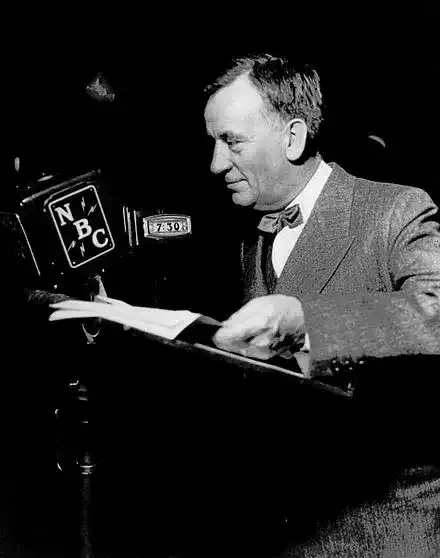
Edgar Albert Guest
Ideals
Better than land or gold or trade
Are a high ideal and a purpose true;
Better than all of the wealth we've made
Is the work for others that now we do.
For Rome grew rich and she turned to song
And danced to music and drank her wine,
But she sapped the strength of her fibres strong
And a gilded shroud was her splendor fine.
The Rome of old with its wealth and wine
Was the handiwork of a sturdy race;
They builded well and they made it fine
And they dreamed of it as their children's place.
They thought the joys they had won to give,
And which seemed so certain and fixed and sure,
To the end of time in the world would live
And the Rome they'd fashioned would long endure.
They passed to their children the hoarded gold,
Their marble halls and their fertile fields!
But not the spirit of Rome of old,
Nor the Roman courage that never yields.
They left them the wealth that their hands had won,
But they failed to leave them a purpose true.
They left them thinking life's work all done,
And Rome went down and was lost to view.
We must guard ourselves lest we follow Rome.
We must leave our children the finer things.
We must teach them love of the spot called home
And the lasting joy that a purpose brings.
For vain are our Flag and our battles won,
And vain are our lands and our stores of gold,
If our children feel that life's work is done.
We must give them a high ideal to hold.
748
Edgar Albert Guest
He Who Serves
He has not served who gathers gold,
Nor has he served, whose life is told
In selfish battles he has won,
Or deeds of skill that he has done;
But he has served who now and then
Has helped along his fellow men.
The world needs many men today;
Red-blooded men along life's way,
With cheerful smiles and helping hands,
And with the faith that understands
The beauty of the simple deed
Which serves another's hour of need.
Strong men to stand beside the weak,
Kind men to hear what others speak;
True men to keep our country's laws
And guard its honor and its cause;
Men who will bravely play life's game
Nor ask rewards of gold and fame.
Teach me to do the best I can
To help and cheer our fellow man;
Teach me to lose my selfish need
And glory in the larger deed
Which smoothes the road, and lights the day
For all who chance to come my way.
714
Edgar Albert Guest
Life's Slacker
The saddest sort of death to die
Would be to quit the game called life
And know, beneath the gentle sky,
You'd lived a slacker in the strife.
That nothing men on earth would find
To mark the spot that you had filled;
That you must go and leave behind
No patch of soil your hands had tilled.
I know no greater shame than this:
To feel that yours were empty years;
That after death no man would miss
Your presence in this vale of tears;
That you had breathed the fragrant air
And sat by kindly fires that burn,
And in earth's riches had a share
But gave no labor in return.
Yet some men die this way, nor care:
They enter and they leave life's door
And at the end, their record's bare—
The world's no better than before.
A few false tears are shed, and then,
In busy service, they're forgot.
We have no time to mourn for men
Who lived on earth but served it not.
A man in perfect peace to die
Must leave some mark of toil behind,
Some building towering to the sky,
Some symbol that his heart was kind,
Some roadway where strange feet may tread
That out of gratitude he made;
He cannot bravely look ahead
Unless his debt to life is paid.
693
Edgar Albert Guest
Compensation
I'd like to think when life is done
That I had filled a needed post.
That here and there I'd paid my fare
With more than idle talk and boast;
That I had taken gifts divine.
The breath of life and manhood fine,
And tried to use them now and then
In service for my fellow men.
I'd hate to think when life is through
That I had lived my round of years
A useless kind, that leaves behind
No record in this vale of tears;
That I had wasted all my days
By treading only selfish ways,
And that this world would be the same
If it had never known my name.
I'd like to think that here and there,
When I am gone, there shall remain
A happier spot that might have not
Existed had I toiled for gain;
That someone's cheery voice and smile
Shall prove that I had been worth while;
That I had paid with something fine
My debt to God for life divine.
688
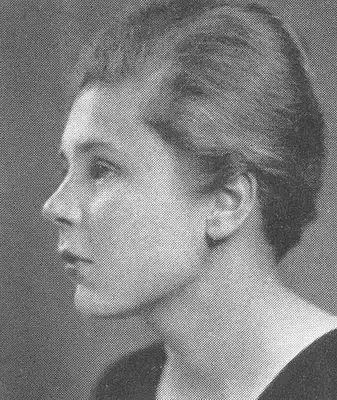
Elizabeth Bishop
Questions of Travel
There are too many waterfalls here; the crowded streams
hurry too rapidly down to the sea,
and the pressure of so many clouds on the mountaintops
makes them spill over the sides in soft slow-motion,
turning to waterfalls under our very eyes.
--For if those streaks, those mile-long, shiny, tearstains,
aren't waterfalls yet,
in a quick age or so, as ages go here,
they probably will be.
But if the streams and clouds keep travelling, travelling,
the mountains look like the hulls of capsized ships,
slime-hung and barnacled.
Think of the long trip home.
Should we have stayed at home and thought of here?
Where should we be today?
Is it right to be watching strangers in a play
in this strangest of theatres?
What childishness is it that while there's a breath of life
in our bodies, we are determined to rush
to see the sun the other way around?
The tiniest green hummingbird in the world?
To stare at some inexplicable old stonework,
inexplicable and impenetrable,
at any view,
instantly seen and always, always delightful?
Oh, must we dream our dreams
and have them, too?
And have we room
for one more folded sunset, still quite warm?
But surely it would have been a pity
not to have seen the trees along this road,
really exaggerated in their beauty,
not to have seen them gesturing
like noble pantomimists, robed in pink.
--Not to have had to stop for gas and heard
the sad, two-noted, wooden tune
of disparate wooden clogs
carelessly clacking over
a grease-stained filling-station floor.
(In another country the clogs would all be tested.
Each pair there would have identical pitch.)
--A pity not to have heard
the other, less primitive music of the fat brown bird
who sings above the broken gasoline pump
in a bamboo church of Jesuit baroque:
three towers, five silver crosses.
--Yes, a pity not to have pondered,
blurr'dly and inconclusively,
on what connection can exist for centuries
between the crudest wooden footwear
and, careful and finicky,
the whittled fantasies of wooden footwear
and, careful and finicky,
the whittled fantasies of wooden cages.
--Never to have studied history in
the weak calligraphy of songbirds' cages.
--And never to have had to listen to rain
so much like politicians' speeches:
two hours of unrelenting oratory
and then a sudden golden silence
in which the traveller takes a notebook, writes:
"Is it lack of imagination that makes us come
to imagined places, not just stay at home?
Or could Pascal have been not entirely right
about just sitting quietly in one's room?
Continent, city, country, society:
the choice is never wide and never free.
And here, or there . . . No. Should we have stayed at home,
wherever that may be?"
665
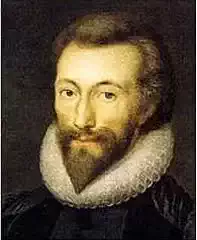
John Donne
Holy Sonnet X: Death Be Not Proud
Death, be not proud, though some have callèd thee
Mighty and dreadful, for thou art not so;
For those whom thou think'st thou dost overthrow
Die not, poor death, nor yet canst thou kill me.
From rest and sleep, which yet thy pictures be,
Much pleasure, then from thee much more, must low
And soonest our best men with thee do go,
Rest of their bones and soul's delivery.
Thou art slave to fate, chance, kings and desperate men
And dost with poison, war and sickness dwell,
And poppy or charms can make us sleep as well
And better than thy stroke; why swell'st thou then ?
One short sleep past, we wake eternally,
And death shall be no more; death, thou shalt die.
653

Emily Dickinson
Faith is a fine invention
"Faith" is a fine invention
When Gentlemen can see-
But Microscopes are prudent
In an Emergency.
When Gentlemen can see-
But Microscopes are prudent
In an Emergency.
650
Arthur Rimbaud
The Soul
Eternal Undines, split the pure water.
Venus, sister of azure, stir up the clear wave.
Wandering Jews of Norway, tell me of snow;
old beloved exiles tell me of the sea.
Myself: No, no more of these pure drinks,
these water-flowers for glasses;
neither legends nor faces quench my thirst;
singer, your god-child is my thirst so mad,
a mouthless intimate hydra
which consumes and ravages.
626

Robert Browning
A Grammarian's Funeral
SHORTLY AFTER THE REVIVAL OF
LEARNING IN EUROPE.
Let us begin and carry up this corpse,
Singing together.
Leave we the common crofts, the vulgar thorpes
Each in its tether
Sleeping safe on the bosom of the plain,
Cared-for till cock-crow:
Look out if yonder be not day again
Rimming the rock-row!
That's the appropriate country; there, man's thought,
Rarer, intenser,
Self-gathered for an outbreak, as it ought,
Chafes in the censer.
Leave we the unlettered plain its herd and crop;
Seek we sepulture
On a tall mountain, citied to the top,
Crowded with culture!
All the peaks soar, but one the rest excels;
Clouds overcome it;
No! yonder sparkle is the citadel's
Circling its summit.
Thither our path lies; wind we up the heights:
Wait ye the warning?
Our low life was the level's and the night's;
He's for the morning.
Step to a tune, square chests, erect each head,
'Ware the beholders!
This is our master, famous calm and dead,
Borne on our shoulders.
Sleep, crop and herd! sleep, darkling thorpe and croft,
Safe from the weather!
He, whom we convoy to his grave aloft,
Singing together,
He was a man born with thy face and throat,
Lyric Apollo!
Long he lived nameless: how should spring take note
Winter would follow?
Till lo, the little touch, and youth was gone!
Cramped and diminished,
Moaned he, ``New measures, other feet anon!
``My dance is finished?''
No, that's the world's way: (keep the mountain-side,
Make for the city!)
He knew the signal, and stepped on with pride
Over men's pity;
Left play for work, and grappled with the world
Bent on escaping:
``What's in the scroll,'' quoth he, ``thou keepest furled?
``Show me their shaping,
``Theirs who most studied man, the bard and sage,---
``Give!''---So, he gowned him,
Straight got by heart that hook to its last page:
Learned, we found him.
Yea, but we found him bald too, eyes like lead,
Accents uncertain:
``Time to taste life,'' another would have said,
``Up with the curtain!''
This man said rather, ``Actual life comes next?
``Patience a moment!
``Grant I have mastered learning's crabbed text,
``Still there's the comment.
``Let me know all! Prate not of most or least,
``Painful or easy!
``Even to the crumbs I'd fain eat up the feast,
``Ay, nor feel queasy.''
Oh, such a life as he resolved to live,
When he had learned it,
When he had gathered all books had to give!
Sooner, he spurned it.
Image the whole, then execute the parts---
Fancy the fabric
Quite, ere you build, ere steel strike fire from quartz,
Ere mortar dab brick!
(Here's the town-gate reached: there's the market-place
Gaping before us.)
Yea, this in him was the peculiar grace
(Hearten our chorus!)
That before living he'd learn how to live---
No end to learning:
Earn the means first---God surely will contrive
Use for our earning.
Others mistrust and say, ``But time escapes:
``Live now or never!''
He said, ``What's time? Leave Now for dogs and apes!
``Man has Forever.''
Back to his book then: deeper drooped his head
_Calculus_ racked him:
Leaden before, his eyes grew dross of lead:
_Tussis_ attacked him.
``Now, master, take a little rest!''---not he!
(Caution redoubled,
Step two abreast, the way winds narrowly!)
Not a whit troubled
Back to his studies, fresher than at first,
Fierce as a dragon
He (soul-hydroptic with a sacred thirst)
Sucked at the flagon.
Oh, if we draw a circle premature,
Heedless of far gain,
Greedy for quick returns of profit, sure
Bad is our bargain!
Was it not great? did not he throw on God,
(He loves the burthen)---
God's task to make the heavenly period
Perfect the earthen?
Did not he magnify the mind, show clear
Just what it all meant?
He would not discount life, as fools do here,
Paid by instalment.
He ventured neck or nothing---heaven's success
Found, or earth's failure:
``Wilt thou trust death or not?'' He answered ``Yes:
``Hence with life's pale lure!''
That low man seeks a little thing to do,
Sees it and does it:
This high man, with a great thing to pursue,
Dies ere he knows it.
That low man goes on adding nine to one,
His hundred's soon hit:
This high man, aiming at a million,
Misses an unit.
That, has the world here---should he need the next,
Let the world mind him!
This, throws himself on God, and unperplexed
Seeking shall find him.
So, with the throttling hands of death at strife,
Ground he at grammar;
Still, thro' the rattle, parts of speech were rife:
While he could stammer
He settled _Hoti's_ business---let it be!---
Properly based _Oun_---
Gave us the doctrine of the enclitic _De_,
Dead from the waist down.
Well, here's the platform, here's the proper place:
Hail to your purlieus,
All ye highfliers of the feathered race,
Swallows and curlews!
Here's the top-peak; the multitude below
Live, for they can, there:
This man decided not to Live but Know---
Bury this man there?
Here---here's his place, where meteors shoot, clouds form,
Lightnings are loosened,
Stars come and go! Let joy break with the storm,
Peace let the dew send!
Lofty designs must close in like effects
Loftily lying,
Leave him---still loftier than the world suspects,
Living and dying.
629

Ella Wheeler Wilcox
Life Is A Privilege
Life is a privilege. Its youthful days
Shine with the radiance of continuous Mays.
To live, to breathe, to wonder and desire,
To feed with dreams the heart’s perpetual fire,
To thrill with virtuous passions, and to glow
With great ambitions – in one hour to know
The depths and heights of feeling – God! in truth,
How beautiful, how beautiful is youth!
Life is a privilege. Like some rare rose
The mysteries of the human mind unclose.
What marvels lie in the earth, and air, and sea!
What stores of knowledge wait our opening key!
What sunny roads of happiness lead out
Beyond the realms of indolence and doubt!
And what large pleasures smile upon and bless
The busy avenues of usefulness!
Life is a privilege. Thought the noontide fades
And shadows fall along the winding glades,
Though joy-blooms wither in the autumn air,
Yet the sweet scent of sympathy is there.
Pale sorrow leads us closer to our kind,
And in the serious hours of life we find
Depths in the souls of men which lend new worth
And majesty to this brief span of earth.
Life is a privilege. If some sad fate
Sends us alone to seek the exit gate,
If men forsake us and as shadows fall,
Still does the supreme privilege of all
Come in that reaching upward of the soul
To find the welcoming Presence at the goal,
And in the Knowledge that our feet have trod
Paths that led from, and must wind back, to God.
624

Alexander Pope
Essay on Man
The First Epistle
Awake, my ST. JOHN!(1) leave all meaner things
To low ambition, and the pride of Kings.
Let us (since Life can little more supply
Than just to look about us and to die)
Expatiate(2) free o'er all this scene of Man;
A mighty maze! but not without a plan;
A Wild, where weeds and flow'rs promiscuous shoot,
Or Garden, tempting with forbidden fruit.
Together let us beat this ample field,
Try what the open, what the covert yield;
The latent tracts(3), the giddy heights explore
Of all who blindly creep, or sightless soar;
Eye Nature's walks, shoot Folly as it flies,
And catch the Manners living as they rise;
Laugh where we must, be candid where we can;
But vindicate(4) the ways of God to Man.
1. Say first, of God above, or Man below,
What can we reason, but from what we know?
Of Man what see we, but his station here,
From which to reason, or to which refer?
Thro' worlds unnumber'd tho' the God be known,
'Tis ours to trace him only in our own.
He, who thro' vast immensity can pierce,
See worlds on worlds compose one universe,
Observe how system into system runs,
What other planets circle other suns,
What vary'd being peoples ev'ry star,
May tell why Heav'n has made us as we are.
But of this frame the bearings, and the ties,
The strong connections, nice dependencies,
Gradations just, has thy pervading soul
Look'd thro'? or can a part contain the whole?
Is the great chain, that draws all to agree,
And drawn supports, upheld by God, or thee?
II. Presumptuous Man! the reason wouldst thou find,
Why form'd so weak, so little, and so blind!
First, if thou canst, the harder reason guess,
Why form'd no weaker, blinder, and no less!
Ask of thy mother earth, why oaks are made
Taller or stronger than the weeds they shade?
Or ask of yonder argent fields(5) above,
Why JOVE'S Satellites are less than JOVE?(6)
Of Systems possible, if 'tis confest
That Wisdom infinite must form the best,
Where all must full or not coherent be,
And all that rises, rise in due degree;
Then, in the scale of reas'ning life, 'tis plain
There must be, somewhere, such rank as Man;
And all the question (wrangle e'er so long)
Is only this, if God has plac'd him wrong?
Respecting Man, whatever wrong we call,
Nay, must be right, as relative to all.
In human works, tho' labour'd on with pain,
A thousand movements scarce one purpose gain;
In God's, one single can its end produce;
Yet serves to second too some other use.
So Man, who here seems principal alone,
Perhaps acts second to some sphere unknown,
Touches some wheel, or verges to some goal;
'Tis but a part we see, and not a whole.
When the proud steed shall know why Man restrains
His fiery course, or drives him o'er the plains;
When the dull Ox, why now he breaks the clod,
Is now a victim, and now Egypt's God:(7)
Then shall Man's pride and dullness comprehend
His actions', passions', being's, use and end;
Why doing, suff'ring, check'd, impell'd; and why
This hour a slave, the next a deity.
Then say not Man's imperfect, Heav'n in fault;
Say rather, Man's as perfect as he ought;
His knowledge measur'd to his state and place,
His time a moment, and a point his space.
If to be perfect in a certain sphere,
What matter, soon or late, or here or there?
The blest today is as completely so,
As who began a thousand years ago.
III. Heav'n from all creatures hides the book of Fate,
All but the page prescrib'd, their present state;
From brutes what men, from men what spirits know:
Or who could suffer Being here below?
The lamb thy riot dooms to bleed to-day,
Had he thy Reason, would he skip and play?
Pleas'd to the last, he crops the flow'ry food,
And licks the hand just rais'd to shed his blood.
Oh blindness to the future! kindly giv'n,
That each may fill the circle mark'd by Heav'n;
Who sees with equal eye, as God of all,
A hero perish, or a sparrow fall,
Atoms or systems into ruin hurl'd,
And now a bubble burst, and now a world.
Hope humbly then; with trembling pinions soar;
Wait the great teacher Death, and God adore!
What future bliss, he gives not thee to know,
But gives that Hope to be thy blessing now.
Hope springs eternal in the human breast:
Man never Is, but always To be blest:
The soul, uneasy and confin'd from home,
Rests and expatiates in a life to come.
Lo! the poor Indian, whose untutor'd mind
Sees God in clouds, or hears him in the wind;
His soul proud Science never taught to stray
Far as the solar walk, or milky way;
Yet simple Nature to his hope has giv'n,
Behind the cloud-topt hill, an humbler heav'n;
Some safer world in depth of woods embrac'd,
Some happier island in the watry waste,
Where slaves once more their native land behold,
No fiends torment, no Christians thirst for gold!
To Be, contents his natural desire,
He asks no Angel's wing, no Seraph's(8) fire;
But thinks, admitted to that equal sky,
His faithful dog shall bear him company.
IV. Go, wiser thou! and in thy scale of sense
Weigh thy Opinion against Providence;
Call Imperfection what thou fancy'st such,
Say, here he gives too little, there too much;
Destroy all creatures for thy sport or gust,(9)
Yet cry, If Man's unhappy, God's unjust;
If Man alone ingross not Heav'n's high care,
Alone made perfect here, immortal there:
Snatch from his hand the balance(10) and the rod,
Re-judge his justice, be the GOD of GOD!
In Pride, in reas'ning Pride, our error lies;
All quit their sphere, and rush into the skies.
Pride still is aiming at the blest abodes,
Men would be Angels, Angels would be Gods.
Aspiring to be Gods, if Angels fell,
Aspiring to be Angels, Men rebel;
And who but wishes to invert the laws
Of ORDER, sins against th' Eternal Cause.
V. Ask for what end the heav'nly bodies shine,
Earth for whose use? Pride answers, "Tis for mine:
For me kind Nature wakes her genial pow'r,
Suckles each herb, and spreads out ev'ry flow'r;
Annual for me, the grape, the rose renew
The juice nectareous, and the balmy dew;
For me, the mine a thousand treasures brings;
For me, health gushes from a thousand springs;
Seas roll to waft me, suns to light me rise;
My foot-stool earth, my canopy the skies."
But errs not Nature from this gracious end,
From burning suns when livid deaths descend,
When earthquakes swallow, or when tempests sweep
Towns to one grave, whole nations to the deep?
"No ('tis reply'd) the first Almighty Cause
Acts not by partial, but by gen'ral laws;
Th' exceptions few; some change since all began,
And what created perfect?" -- Why then Man?
If the great end be human Happiness,
Then Nature deviates; and can Man do less?
As much that end a constant course requires
Of show'rs and sun-shine, as of Man's desires;
As much eternal springs and cloudless skies,
As Men for ever temp'rate, calm, and wise.
If plagues or earthquakes break not Heav'n's design,
Why then a Borgia,(11) or a Catiline?(12)
Who knows but he, whose hand the light'ning forms,
Who heaves old Ocean, and who wings the storms,
Pours fierce Ambition in a Caesar's(13) mind,
Or turns young Ammon(14) loose to scourge mankind?
From pride, from pride, our very reas'ning springs;
Account for moral as for nat'ral things:
Why charge we Heav'n in those, in these acquit?
In both, to reason right is to submit.
Better for Us, perhaps, it might appear,
Were there all harmony, all virtue here;
That never air or ocean felt the wind;
That never passion discompos'd the mind:
But ALL subsists by elemental strife;
and Passions are the elements of Life.
The gen'ral ORDER, since the whole began,
Is kept in Nature, and is kept in Man.
VI. What would this Man? Now upward will he soar,
And little less than Angel,(15) would be more;
Now looking downwards, just as griev'd appears
To want the strength of bulls, the fur of bears.
Made for his use all creatures if he call,
Say what their use, had he the pow'rs of all?
Nature to these, without profusion kind,
The proper organs, proper pow'rs assign'd;
Each seeming want compensated of course,
Here with degrees of swiftness, there of force;
All in exact proportion to the state;
Nothing to add, and nothing to abate.
Each beast, each insect, happy in its own;
Is Heav'n unkind to Man, and Man alone?
Shall he alone, whom rational we call,
Be pleas'd with nothing, if not bless'd with all?
The bliss of Man (could Pride that blessing find)
Is not to act or think beyond mankind;
No pow'rs of body or of soul to share,
But what his nature and his state can bear.
Why has not Man a microscopic eye?
For this plain reason, Man is not a Fly.
Say what the use, were finer optics giv'n,
T' inspect a mite,(16) not comprehend the heav'n?
Or touch, if tremblingly alive all o'er,
To smart and agonize at ev'ry pore?
Or quick effluvia(17) darting thro' the brain,
Die of a rose in aromatic pain?
If nature thunder'd in his op'ning ears,
And stunn'd him with the music of the spheres,
How would he wish that Heav'n had left him still
The whisp'ring Zephyr,(18) and the purling rill?(19)
Who finds not Providence all good and wise,
Alike in what it gives, and what denies?
VII. Far as Creation's ample range extends,
The scale of sensual, mental pow'rs ascends:
Mark how it mounts, to Man's imperial race,
From the green myriads in the people grass:
What modes of sight betwixt each wide extreme,
The mole's dim curtain, and the lynx's beam:
Of smell, the headlong lioness between,
And hound sagacious(20) on the tainted(21) green:
Of hearing, from the life that fills the flood,(22)
To that which warbles thro' the vernal(23) wood:
The spider's touch, how exquisitely fine!
Feels at each thread, and lives along the line:
In the nice bee, what sense so subtly true
From pois'nous herbs extracts the healing dew:(24)
How Instinct varies in the grov'ling swine,
Compar'd, half-reas'ning elephant, with thine:
'Twixt that, and Reason, what a nice barrier;
For ever sep'rate, yet for ever near!
Remembrance and Reflection how ally'd;
What thin partitions Sense from Thought divide:
And Middle natures,(25) how they long to join,
Yet never pass th' insuperable line!
Without this just gradation, could they be
Subjected these to those, or all to thee?
The pow'rs of all subdu'd by thee alone,
Is not thy Reason all these pow'rs in one?
VIII. See, thro' this air, this ocean, and this earth,
All matter quick, and bursting into birth.
Above, how high progressive life may go!
Around, how wide! how deep extend below!
Vast chain of being, which from God began,
Natures ethereal,(26) human, angel, man
Beast, bird, fish, insect! what no eye can see,
No glass can reach! from Infinite to thee,
From thee to Nothing! -- On superior pow'rs
Were we to press, inferior might on ours:
Or in the full creation leave a void,
Where, one step broken, the great scale's destoy'd:
From Nature's chain whatever link you strike,
Tenth or ten thousandth, breaks the chain alike.
And if each system in gradation roll,
Alike essential to th' amazing whole;
The least confusion but in one, not all
That system only, but the whole must fall.
Let Earth unbalanc'd from her orbit fly,
Planets and Suns run lawless thro' the sky,
Let ruling Angels from their spheres be hurl'd,
Being on being wreck'd, and world on world,
Heav'n's whole foundations to their centre nod,
And Nature tremble to the throne of God:
All this dread ORDER break -- for whom? for thee?
Vile worm! -- oh, Madness, Pride, Impiety!
IX. What if the foot, ordain'd the dust to tread,
Or hand to toil, aspir'd to be the head?
What if the head, the eye, or ear repin'd(27)
To serve mere engines to the ruling Mind?
Just as absurd, to mourn the tasks or pains
The great directing MIND of ALL ordains.
All are but parts of one stupendous whole,
Whose body, Nature is, and God the soul;
That, chang'd thro' all, and yet in all the same,
Great in the earth, as in th' ethereal frame,
Warms in the sun, refreshes in the breeze,
Glows in the stars, and blossoms in the trees,
Lives thro' all life, extends thro' all extent,
Spreads undivided, operates unspent,
Breathes in our soul, informs our mortal parts,
As full, as perfect, in a hair as heart;
As full, as perfect, in vile Man that mourns,
As the rapt Seraph that adores and burns;
To him no high, no low, no great, no small;
He fills, he bounds, connects, and equals all.
X. Cease then, nor ORDER Imperfection name:
Our proper bliss depends on what we blame.
Know thy own point: This kind, this due degree
Of blindness, weakness, Heav'n bestows on thee.
Submit -- In this, or any other sphere,
Secure to be as blest as thou canst bear:
Safe in the hand of one disposing Pow'r,
Or in the natal, or the mortal hour.
All Nature is but Art, unknown to thee;
All Chance, Direction, which thou canst not see;
All Discord, Harmony, not understood;
All partial Evil, universal Good:
And, spite of Pride, in erring Reason's spite,
One truth is clear, "Whatever IS, is RIGHT."
Argument of the Second Epistle:
Of the Nature and State of Man, with respect to Himself, as an Individual. The business
of Man not to pry into God, but
to study himself.
Know then thyself, presume not God to scan;
The proper study of Mankind is Man.
Plac'd on this isthmus of a middle state,(28)
A being darkly wise, and rudely great:
With too much knowledge for the Sceptic side,
With too much weakness for the Stoic's pride,
He hangs between; in doubt to act, or rest,
In doubt to deem himself a God, or Beast;
In doubt his Mind or Body to prefer,
Born but to die, and reas'ning but to err;
Alike in ignorance, his reason such,
Whether he thinks too little, or too much:
Chaos of Thought and Passion, all confus'd;
Still by himself abus'd, or disabus'd;
Created half to rise, and half to fall;
Great lord of all things, yet a prey to all;
Sole judge of Truth, in endless Error hurl'd:
The glory, jest, and riddle of the world!
ENDNOTES:
1[His friend, Henry St. John, Lord Bolingbroke]
2[to wander]
3[hidden areas]
4[explain or defend]
5[silvery fields, i.e., the heavens]
6[the planet Jupiter]
7[ancient Egyptians sometimes worshipped oxen]
8[the highest level of angels]
9[pleasure]
10[the balance used to weigh justice]
11[Caesar Borgia (1476-1507) who used any cruelty to achieve his ends]
12[Lucious Sergius Catilina (108-62 B.C.) who was a traitor to Rome]
13[Julius Caesar (100-44 B.C.) who was thought to be overly ambitious Roman]
14[Alexander the Great (356-323 B.C.)]
15[Psalm 8:5--"Thou hast made him [man] a little lower than the angels...."]
16[small insect]
17[vapors which were believed to pass odors to the brain]
18[the West Wind]
19[stream]
20[able to pick up a scent]
21[having the odor of an animal]
22[ocean]
23[green]
24[honey was thought to have medicinal properties]
25[Animals slightly below humans on the chain of being]
26[heavenly]
27[complained]
28[i.e., on the chain of being between angels and animals]
617

Kazi Nazrul Islam
God
Who are you, my friend,
searching for God in heaven
and the underworld?
Who are you-searching
through the wilderness
and mountain peaks?
It's a pity-O Rishis and Dervishes,
you go on searching for Him
from country to country
while holding the Jewel of the Heart
in your own heart!
The whole creation looks at you
while your own eyes are shut.
You search for the creator
instead of searching for your self.
O self-inflicted Blind-open your eyes,
look at yourself in the mirror.
You'll see-His shadow falls on your body.
Don't shudder, Hero,
don't be intimidated
by the scholars of the scripturesthey're
not God's 'private secretaries'
We all are His manifestation,
He is present in us all.
Seeing myself, I see the unseen Creator..
The merchants at the seaport trade in gems.
But never ask them where the gems are mined.
They are merely traders of gems,
but they think that they know where the mine is too!
They have never taken a dive
into the fathomless depth of the gem-bearing ocean.
Instead of messing with the scriptures,
my friend, dive right into
the ocean of Truth!
[Translation: Sajed Kamal]
626
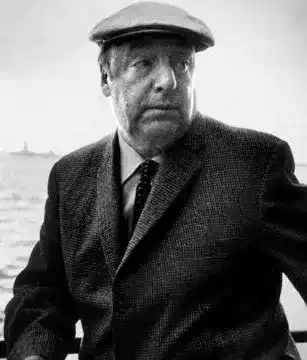
Pablo Neruda
‘Perhaps not to be is to be without your being.’
Perhaps not to be is to be without your being,
without your going, that cuts noon light
like a blue flower, without your passing
later through fog and stones,
without the torch you lift in your hand
that others may not see as golden,
that perhaps no one believed blossomed
the glowing origin of the rose,
without, in the end, your being, your coming
suddenly, inspiringly, to know my life,
blaze of the rose-tree, wheat of the breeze:
and it follows that I am, because you are:
it follows from ‘you are’, that I am, and we:
and, because of love, you will, I will,
We will, come to be.
605
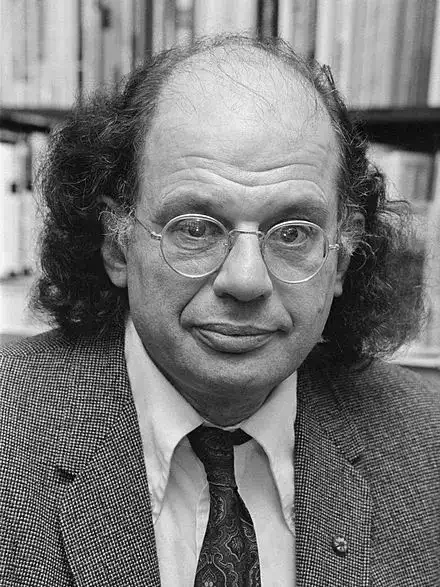
Allen Ginsberg
When the Light Appears
You'll bare your bones you'll grow you'll pray you'll only know
When the light appears, boy, when the light appears
You'll sing & you'll love you'll praise blue heavens above
When the light appears, boy, when the light appears
You'll whimper & you'll cry you'll get yourself sick and sigh
You'll sleep & you'll dream you'll only know what you mean
When the light appears, boy, when the light appears
You'll come & you'll go, you'll wander to and fro
You'll go home in despair you'll wonder why'd you care
You'll stammer & you'll lie you'll ask everybody why
You'll cough and you'll pout you'll kick your toe with gout
You'll jump you'll shout you'll knock you're friends about
You'll bawl and you'll deny & announce your eyes are dry
You'll roll and you'll rock you'll show your big hard cock
You'll love and you'll grieve & one day you'll come believe
As you whistle & you smile the lord made you worthwhile
You'll preach and you'll glide on the pulpit in your pride
Sneak & slide across the stage like a river in high tide
You'll come fast or come on slow just the same you'll never know
When the light appears, boy, when the light appears
When the light appears, boy, when the light appears
You'll sing & you'll love you'll praise blue heavens above
When the light appears, boy, when the light appears
You'll whimper & you'll cry you'll get yourself sick and sigh
You'll sleep & you'll dream you'll only know what you mean
When the light appears, boy, when the light appears
You'll come & you'll go, you'll wander to and fro
You'll go home in despair you'll wonder why'd you care
You'll stammer & you'll lie you'll ask everybody why
You'll cough and you'll pout you'll kick your toe with gout
You'll jump you'll shout you'll knock you're friends about
You'll bawl and you'll deny & announce your eyes are dry
You'll roll and you'll rock you'll show your big hard cock
You'll love and you'll grieve & one day you'll come believe
As you whistle & you smile the lord made you worthwhile
You'll preach and you'll glide on the pulpit in your pride
Sneak & slide across the stage like a river in high tide
You'll come fast or come on slow just the same you'll never know
When the light appears, boy, when the light appears
607
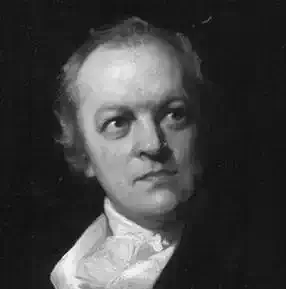
William Blake
Four Zoas, The (excerpt)
. "What is the price of Experience? do men buy it for a song?
. Or wisdom for a dance in the street? No, it is bought with the price
. Of all that a man hath, his house, his wife, his children.
. Wisdom is sold in the desolate market where none come to buy,
. And in the wither'd field where the farmer plows for bread in vain.
. It is an easy thing to triumph in the summer's sun
. And in the vintage and to sing on the waggon loaded with corn.
. It is an easy thing to talk of patience to the afflicted,
. To speak the laws of prudence to the houseless wanderer,
. To listen to the hungry raven's cry in wintry season
. When the red blood is fill'd with wine and with the marrow of lambs.
. It is an easy thing to laugh at wrathful elements,
. To hear the dog howl at the wintry door, the ox in the slaughter house moan;
. To see a god on every wind and a blessing on every blast;
. To hear sounds of love in the thunder storm that destroys our enemies' house;
. To rejoice in the blight that covers his field, and the sickness that cuts off his
children,
. While our olive and vine sing and laugh round our door, and our children bring
fruits and flowers.
. Then the groan and the dolor are quite forgotten, and the slave grinding at the
mill,
. And the captive in chains, and the poor in the prison, and the soldier in the field
. When the shatter'd bone hath laid him groaning among the happier dead.
. It is an easy thing to rejoice in the tents of prosperity:
. Thus could I sing and thus rejoice: but it is not so with me."
. "Compel the poor to live upon a crust of bread, by soft mild arts.
. Smile when they frown, frown when they smile; and when a man looks pale
. With labour and abstinence, say he looks healthy and happy;
. And when his children sicken, let them die; there are enough
. Born, even too many, and our earth will be overrun
. Without these arts. If you would make the poor live with temper,
. With pomp give every crust of bread you give; with gracious cunning
. Magnify small gifts; reduce the man to want a gift, and then give with pomp.
. Say he smiles if you hear him sigh. If pale, say he is ruddy.
. Preach temperance: say he is overgorg'd and drowns his wit
. In strong drink, though you know that bread and water are all
. He can afford. Flatter his wife, pity his children, till we can
. Reduce all to our will, as spaniels are taught with art."
. The sun has left his blackness and has found a fresher morning,
. And the mild moon rejoices in the clear and cloudless night,
. And Man walks forth from midst of the fires: the evil is all consum'd.
. His eyes behold the Angelic spheres arising night and day;
. The stars consum'd like a lamp blown out, and in their stead, behold
. The expanding eyes of Man behold the depths of wondrous worlds!
. One Earth, one sea beneath; nor erring globes wander, but stars
. Of fire rise up nightly from the ocean; and one sun
. Each morning, like a new born man, issues with songs and joy
. Calling the Plowman to his labour and the Shepherd to his rest.
. He walks upon the Eternal Mountains, raising his heavenly voice,
. Conversing with the animal forms of wisdom night and day,
. That, risen from the sea of fire, renew'd walk o'er the Earth;
. For Tharmas brought his flocks upon the hills, and in the vales
. Around the Eternal Man's bright tent, the little children play
. Among the woolly flocks. The hammer of Urthona sounds
. In the deep caves beneath; his limbs renew'd, his Lions roar
. Around the Furnaces and in evening sport upon the plains.
. They raise their faces from the earth, conversing with the Man:
. "How is it we have walk'd through fires and yet are not consum'd?
. How is it that all things are chang'd, even as in ancient times?"
604
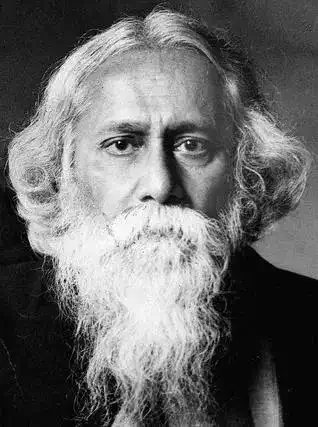
Rabindranath Tagore
Prisoner
`Prisoner, tell me, who was it that bound you?'
`It was my master,' said the prisoner.
`I thought I could outdo everybody in the world in wealth and power,
and I amassed in my own treasure-house the money due to my king.
When sleep overcame me I lay upon the bed that was for my lord,
and on waking up I found I was a prisoner in my own treasure-house.'
`Prisoner, tell me, who was it that wrought this unbreakable chain?'
`It was I,' said the prisoner, `who forged this chain very carefully.
I thought my invincible power would hold the world captive
leaving me in a freedom undisturbed.
Thus night and day I worked at the chain
with huge fires and cruel hard strokes.
When at last the work was done
and the links were complete and unbreakable,
I found that it held me in its grip.'
608
Allen Ginsberg
The Terms In Which I Think Of Reality
Reality is a question
of realizing how real
the world is already.
Time is Eternity,
ultimate and immovable;
everyone's an angel.
It's Heaven's mystery
of changing perfection :
absolute Eternity
changes! Cars are always
going down the street,
lamps go off and on.
It's a great flat plain;
we can see everything
on top of a table.
Clams open on the table,
lambs are eaten by worms
on the plain. The motion
of change is beautiful,
as well as form called
in and out of being.
Next : to distinguish process
in its particularity with
an eye to the initiation
of gratifying new changes
desired in the real world.
Here we're overwhelmed
with such unpleasant detail
we dream again of Heaven.
For the world is a mountain
of shit : if it's going to
be moved at all, it's got
to be taken by handfuls.
Man lives like the unhappy
whore on River Street who
in her Eternity gets only
a couple of bucks and a lot
of snide remarks in return
for seeking physical love
the best way she knows how,
never really heard of a glad
job or joyous marriage or
a difference in the heart :
or thinks it isn't for her,
which is her worst misery.
593

Lord Byron
Sonnet to Lake Leman
Rousseau Voltaire
our
Gibbon De
Staël Leman!
these names are worthy of thy shore,
Thy shore of names like these! wert thou no more,
Their memory thy remembrance would recall:
To them thy banks were lovely as to all,
But they have made them lovelier, for the lore
Of mighty minds doth hallow in the core
Of human hearts the ruin of a wall
Where dwelt the wise and wondrous; but by thee
How much more, Lake of Beauty! do we feel,
In sweetly gliding o'er thy crystal sea,
The wild glow of that not ungentle zeal,
Which of the heirs of immortality
Is proud, and makes the breath of glory real!
591

William Shakespeare
Sonnet 11: As fast as thou shalt wane, so fast thou grow'st
As fast as thou shalt wane, so fast thou grow'st
In one of thine, from that which thou departest,
And that fresh blood which youngly thou bestow'st,
Thou mayst call thine when thou from youth convertest.
Herein lives wisdom, beauty, and increase;
Without this folly, age, and cold decay,
If all were minded so, the times should cease,
And threescore year would make the world away.
Let those whom Nature hath not made for store,
Harsh, featureless, and rude, barrenly perish;
Look whom she best endowed, she gave the more,
Which bounteous gift thou shouldst in bounty cherish.
She carved thee for her seal, and meant thereby,
Thou shouldst print more, not let that copy die.
595

Rudyard Kipling
The Legend of Mirth
The Four Archangels, so the legends tell,
Raphael, Gabriel, Michael, Azrael,
Being first of those to whom the Power was shown
Stood first of all the Host before The Throne,
And, when the Charges were allotted, burst
Tumultuous-winged from out the assembly first.
Zeal was their spur that bade them strictly heed
Their own high judgment on their lightest deed.
Zeal was their spur that, when relief was given,
Urged them unwearied to new toils in Heaven;
For Honour's sake perfecting every task
Beyond what e 'en Perfection's self could ask. . .
And Allah, Who created Zeal and Pride,
Knows how the twain are perilous-near allied.
It chanced on one of Heaven's long-lighted days,
The Four and all the Host being gone their ways
Each to his Charge, the shining Courts were void
Save for one Seraph whom no charge employed,
With folden wings and slumber-threatened brow,
To whom The Word: "Beloved, what dost thou?"
"By the Permission," came the answer soft,
Little I do nor do that little oft.
As is The Will in Heaven so on Earth
Where by The Will I strive to make men mirth"
He ceased and sped, hearing The Word once more:
" Beloved, go thy way and greet the Four."
Systems and Universes overpast,
The Seraph came upon the Four, at last,
Guiding and guarding with devoted mind
The tedious generations of mankind
Who lent at most unwilling ear and eye
When they could not escape the ministry. . . .
Yet, patient, faithful, firm, persistent, just
Toward all that gross, indifferent, facile dust,
The Archangels laboured to discharge their trust
By precept and example, prayer and law,
Advice, reproof, and rule, but, labouring, saw
Each in his fellows' countenance confessed,
The Doubt that sickens: "Have I done my best?"
Even as they sighed and turned to toil anew,
The Seraph hailed them with observance due;
And, after some fit talk of higher things,
Touched tentative on mundane happenings.
This they permitting, he, emboldened thus,
Prolused of humankind promiscuous,
And, since the large contention less avails
Than instances observed, he told them tales--
Tales of the shop, the bed, the court, the street,
Intimate, elemental, indiscreet:
Occasions where Confusion smiting swift
Piles jest on jest as snow-slides pile the drift
Whence, one by one, beneath derisive skies,
The victims' bare, bewildered heads arise--
Tales of the passing of the spirit, graced
With humour blinding as the doom it faced--
Stark tales of ribaldy that broke aside
To tears, by laughter swallowed ere they dried-
Tales to which neither grace nor gain accrue,
But Only (Allah be exalted!) true,
And only, as the Seraph showed that night,
Delighting to the limits of delight.
These he rehearsed with artful pause and halt,
And such pretence of memory at fault,
That soon the Four--so well the bait was thrown--
Came to his aid with memories of their own--
Matters dismissed long since as small or vain,
Whereof the high significance had lain
Hid, till the ungirt glosses made it plain.
Then, as enlightenment came broad and fast,
Each marvelled at his own oblivious past
Until--the Gates of Laughter opened wide--
The Four, with that bland Seraph at their side,
While they recalled, compared, and amplified,
In utter mirth forgot both Zeal and Pride!
High over Heaven the lamps of midnight burned
Ere, weak with merriment, the Four returned,
Not in that order they were wont to keep--
Pinion to pinion answering, sweep for sweep,
In awful diapason heard afar--
But shoutingly adrift 'twixt star and star;
Reeling a planet's orbit left or right
As laughter took them in the abysmal Night;
Or, by the point of some remembered jest,
Winged and brought helpless down through gulfs unguessed,
Where the blank worlds that gather to the birth
Leaped in the Womb of Darkness at their mirth,
And e'en Gehenna's bondsmen understood.
They were not damned from human brotherhood . . .
Not first nor last of Heaven's high Host, the Four
That night took place beneath The Throne once more.
lovelier than their morning majesty,
The understanding light behind the eye!
more compelling than their old command,
The new-learned friendly gesture of the hand!
sweeter than their zealous fellowship,
The wise half-smile that passed from lip to lip!
well and roundly, when Command was given,
They told their tale against themselves to Heaven,
And in the silence, waiting on The Word,
Received the Peace and Pardon of The Lord!
599
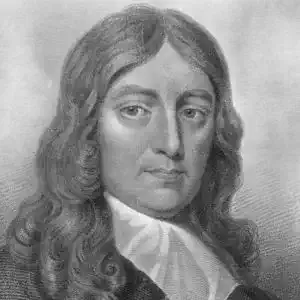
John Milton
Sonnet 16
XVI
When I consider how my light is spent,
E're half my days, in this dark world and wide,
And that one Talent which is death to hide,
Lodg'd with me useless, though my Soul more bent
To serve therewith my Maker, and present
My true account, least he returning chide,
Doth God exact day-labour, light deny'd,
I fondly ask; But patience to prevent
That murmur, soon replies, God doth not need
Either man's work or his own gifts, who best
Bear his milde yoak, they serve him best, his State
Is Kingly. Thousands at his bidding speed
And post o're Land and Ocean without rest:
They also serve who only stand and waite.
595