
Animals and Nature
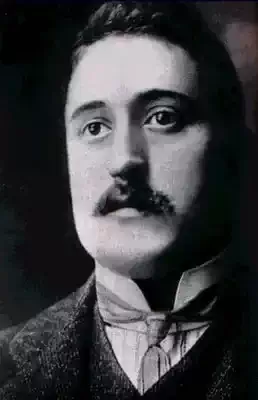
Guillaume Apollinaire
The Bestiary: or Orpheus’s Procession
(Le Bestiaire ou Cortège d’Orphée)
Orpheus
Admire the vital power
And nobility of line:
It’s the voice that the light made us understand here
That Hermes Trismegistus writes of in Pimander.
The Tortoise
From magic Thrace, O delerium!
My sure fingers sound the strings.
The creatures pass to the sounds
Of my tortoise, and the songs I sing.
The Horse
My harsh dreams knew the riding of you
My gold-charioted fate will be your lovely car
That for reins will hold tight to frenzy,
My verses, the patterns of all poetry.
The Tibetan Goat
The fleece of this goat and even
That gold one which cost such pain
To Jason’s not worth a sou towards
The tresses with which I’m taken.
The Serpent
You set yourself against beauty.
And how many women have been
victims of your cruelty!
Eve, Eurydice, Cleopatra:
I know three or four more after.
The Cat
I wish there to be in my house:
A woman possessing reason,
A cat among books passing by,
Friends for every season
Lacking whom I’m barely alive.
The Lion
O lion, miserable image
Of kings lamentably chosen,
Now you’re only born in a cage
In Hamburg, among the Germans.
The Hare
Don’t be fearful and lascivious
Like the hare and the amorous.
But always let your brain weave
The full form that conceives.
The Rabbit
There’s another cony I remember
That I’d so like to take alive.
Its haunt is there among the thyme
In the valleys of the Land of Tender.
The Dromedary
With his four dromedaries
Don Pedro of Alfaroubeira
Travels the world and admires her.
He does what I would rather
If I’d those four dromedaries.
The Mouse
Sweet days, the mice of time,
You gnaw my life, moon by moon.
God! I’ve twenty eight years soon,
and badly spent ones I imagine.
The Elephant
I carry treasure in my mouth,
As an elephant his ivory.
At the price of flowing words,
Purple death!…I buy my glory.
Orpheus
Look at this pestilential tribe
Its thousand feet, its hundred eyes:
Beetles, insects, lice
And microbes more amazing
Than the world’s seventh wonder
And the palace of Rosamunde!
The Caterpillar
Work leads us to riches.
Poor poets, work on!
The caterpillar’s endless sigh
Becomes the lovely butterfly.
The Fly
The songs that our flies know
Were taught to them in Norway
By flies who are they say
Divinities of snow.
The Flea
Fleas, friends, lovers too,
How cruel are those who love us!
All our blood pours out for them.
The well-beloved are wretched then.
The Grasshopper
Here’s the slender grasshopper
The food that fed Saint John.
May my verse be similar,
A treat for the best of men.
Orpheus
His heart was the bait: the heavens were the pond!
For, fisherman, what fresh or seawater catch
equals him, either in form or savour,
that lovely divine fish, Jesus, My Saviour?
The Dolphin
Dolphins, playing in the sea
The wave is bitter gruel.
Does my joy sometimes erupt?
Yet life is still so cruel.
The Octopus
Hurling his ink at skies above,
Sucking the blood of what he loves
And finding it delicious,
Is myself the monster, vicious.
The Jellyfish
Medusas, miserable heads
With hairs of violet
You enjoy the hurricane
And I enjoy the very same.
The Lobster
Uncertainty, O my delights
You and I we go
As lobsters travel onwards, quite
Backwards, Backwards, O.
The Carp
In your pools, and in your ponds,
Carp, you indeed live long!
Is it that death forgets to free
You fishes of melancholy?
Orpheus
The female of the Halcyon,
Love, the seductive Sirens,
All know the fatal songs
Dangerous and inhuman.
Don’t listen to those cursed birds
But Paradisial Angels’ words.
The Sirens
Do I know where your ennui’s from, Sirens,
When you grieve so widely under the stars?
Sea, I am like you, filled with broken voices,
And my ships, singing, give a name to the years.
The Dove
Dove, both love and spirit
Who engendered Jesus Christ,
Like you I love a Mary.
And so with her I marry.
The Peacock
In spreading out his fan, this bird,
Whose plumage drags on earth, I fear,
Appears more lovely than before,
But makes his derrière appear.
The Owl
My poor heart’s an owl
One woos, un-woos, re-woos.
Of blood, of ardour, he’s the fowl.
I praise those who love me, too.
Ibis
Yes, I’ll pass fearful shadows
O certain death, let it be so!
Latin mortal dreadful word,
Ibis, Nile’s native bird.
The Ox
This cherubim sings the praises
Of Paradise where, with Angels,
We’ll live once more, dear friends,
When the good God intends.
Orpheus
Admire the vital power
And nobility of line:
It’s the voice that the light made us understand here
That Hermes Trismegistus writes of in Pimander.
The Tortoise
From magic Thrace, O delerium!
My sure fingers sound the strings.
The creatures pass to the sounds
Of my tortoise, and the songs I sing.
The Horse
My harsh dreams knew the riding of you
My gold-charioted fate will be your lovely car
That for reins will hold tight to frenzy,
My verses, the patterns of all poetry.
The Tibetan Goat
The fleece of this goat and even
That gold one which cost such pain
To Jason’s not worth a sou towards
The tresses with which I’m taken.
The Serpent
You set yourself against beauty.
And how many women have been
victims of your cruelty!
Eve, Eurydice, Cleopatra:
I know three or four more after.
The Cat
I wish there to be in my house:
A woman possessing reason,
A cat among books passing by,
Friends for every season
Lacking whom I’m barely alive.
The Lion
O lion, miserable image
Of kings lamentably chosen,
Now you’re only born in a cage
In Hamburg, among the Germans.
The Hare
Don’t be fearful and lascivious
Like the hare and the amorous.
But always let your brain weave
The full form that conceives.
The Rabbit
There’s another cony I remember
That I’d so like to take alive.
Its haunt is there among the thyme
In the valleys of the Land of Tender.
The Dromedary
With his four dromedaries
Don Pedro of Alfaroubeira
Travels the world and admires her.
He does what I would rather
If I’d those four dromedaries.
The Mouse
Sweet days, the mice of time,
You gnaw my life, moon by moon.
God! I’ve twenty eight years soon,
and badly spent ones I imagine.
The Elephant
I carry treasure in my mouth,
As an elephant his ivory.
At the price of flowing words,
Purple death!…I buy my glory.
Orpheus
Look at this pestilential tribe
Its thousand feet, its hundred eyes:
Beetles, insects, lice
And microbes more amazing
Than the world’s seventh wonder
And the palace of Rosamunde!
The Caterpillar
Work leads us to riches.
Poor poets, work on!
The caterpillar’s endless sigh
Becomes the lovely butterfly.
The Fly
The songs that our flies know
Were taught to them in Norway
By flies who are they say
Divinities of snow.
The Flea
Fleas, friends, lovers too,
How cruel are those who love us!
All our blood pours out for them.
The well-beloved are wretched then.
The Grasshopper
Here’s the slender grasshopper
The food that fed Saint John.
May my verse be similar,
A treat for the best of men.
Orpheus
His heart was the bait: the heavens were the pond!
For, fisherman, what fresh or seawater catch
equals him, either in form or savour,
that lovely divine fish, Jesus, My Saviour?
The Dolphin
Dolphins, playing in the sea
The wave is bitter gruel.
Does my joy sometimes erupt?
Yet life is still so cruel.
The Octopus
Hurling his ink at skies above,
Sucking the blood of what he loves
And finding it delicious,
Is myself the monster, vicious.
The Jellyfish
Medusas, miserable heads
With hairs of violet
You enjoy the hurricane
And I enjoy the very same.
The Lobster
Uncertainty, O my delights
You and I we go
As lobsters travel onwards, quite
Backwards, Backwards, O.
The Carp
In your pools, and in your ponds,
Carp, you indeed live long!
Is it that death forgets to free
You fishes of melancholy?
Orpheus
The female of the Halcyon,
Love, the seductive Sirens,
All know the fatal songs
Dangerous and inhuman.
Don’t listen to those cursed birds
But Paradisial Angels’ words.
The Sirens
Do I know where your ennui’s from, Sirens,
When you grieve so widely under the stars?
Sea, I am like you, filled with broken voices,
And my ships, singing, give a name to the years.
The Dove
Dove, both love and spirit
Who engendered Jesus Christ,
Like you I love a Mary.
And so with her I marry.
The Peacock
In spreading out his fan, this bird,
Whose plumage drags on earth, I fear,
Appears more lovely than before,
But makes his derrière appear.
The Owl
My poor heart’s an owl
One woos, un-woos, re-woos.
Of blood, of ardour, he’s the fowl.
I praise those who love me, too.
Ibis
Yes, I’ll pass fearful shadows
O certain death, let it be so!
Latin mortal dreadful word,
Ibis, Nile’s native bird.
The Ox
This cherubim sings the praises
Of Paradise where, with Angels,
We’ll live once more, dear friends,
When the good God intends.
950

William Wordsworth
To The Daisy
IN youth from rock to rock I went
From hill to hill in discontent
Of pleasure high and turbulent,
Most pleased when most uneasy;
But now my own delights I make,---
Thirst at every rill can slake,
And gladly Nature's love partake,
Of Thee, sweet Daisy!
Thee Winter in the garland wears
That thinly decks his few gray hairs;
Spring parts the clouds with softest airs,
That she may sun thee;
Whole Summer-fields are thine by right;
And Autumn, melancholy Wight!
Doth in thy crimson head delight
When rains are on thee.
In shoals and bands, a morrice train,
Thou greet'st the traveller in the lane;
Pleased at his greeting thee again;
Yet nothing daunted,
Nor grieved if thou be set at nought:
And oft alone in nooks remote
We meet thee, like a pleasant thought,
When such are wanted.
Be violets in their secret mews
The flowers the wanton Zephyrs choose;
Proud be the rose, with rains and dew
Her head impearling,
Thou liv'st with less ambitious aim,
Yet hast not gone without thy fame;
Thou art indeed by many a claim
The Poet's darling.
If to a rock from rain he fly,
Or, some bright day of April sky,
Imprisoned by hot sunshine lie
Near the green holly,
And wearily at length should fare;
He need but look about, and there
Thou art!---a friend at hand, to care
His melancholy.
A hundred times, by rock or bower,
Ere thus I have lain couched an hour,
Have I derived from thy sweet power
Some apprehension
Some steady love; some brief delight;
Some memory that had taken flight;
Some chime of fancy wrong or right;
Of stray invention.
If stately passions in me burn,
And one chance look to Thee should turn,
I drink out of an humbler urn
A lowlier pleasure;
The homely sympathy that heeds
The common life, our nature breeds;
A wisdom fitted to the needs
Of hearts at leisure.
Fresh-smitten by the morning ray,
When thou art up, alert and gay,
Then, cheerful Flower! my spirits play
With kindred gladness:
And when, at dusk, by dews opprest
Thou sink'st, the image of thy rest
Hath often eased my pensive breast
Of careful sadness.
And all day long I number yet,
All seasons through, another debt,
Which I, wherever thou art met,
To thee am owing;
An instinct call it, a blind sense;
A happy, genial influence,
Coming one knows not how, nor whence,
Nor whither going.
Child of the Year! that round dost run
Thy pleasant course,---when day's begun
As ready to salute the sun
As lark or leveret,
Thy long-lost praise thou shalt regain;
Nor be less dear to future men
Than in old time;---thou not in vain
Art Nature's favourite.
1,019

Walter de la Mare
Silver
Slowly, silently, now the moon
Walks the night in her silver shoon;
This way, and that, she peers, and sees
Silver fruit upon silver trees;
One by one the casements catch
Her beams beneath the silvery thatch;
Couched in his kennel, like a log,
With paws of silver sleeps the dog;
From their shadowy cote the white breasts peep
Of doves in silver feathered sleep
A harvest mouse goes scampering by,
With silver claws, and silver eye;
And moveless fish in the water gleam,
By silver reeds in a silver stream.
1,027
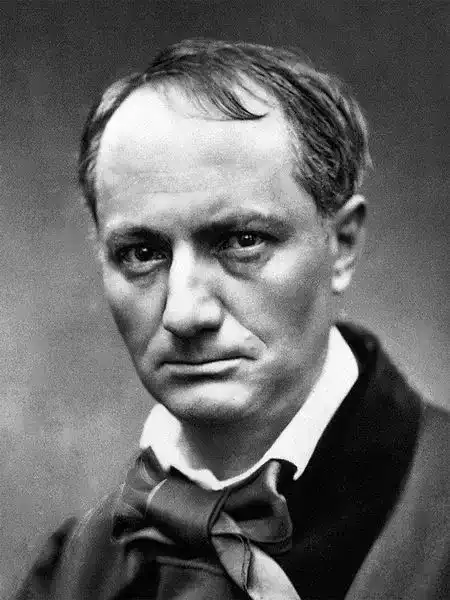
Charles Baudelaire
The Carcass
Remember that object we saw, dear soul,
In the sweetness of a summer morn:
At a bend of the path a loathsome carrion
On a bed with pebbles strewn,
With legs raised like a lustful woman,
Burning and sweating poisons,
It spread open, nonchalant and scornful,
Its belly, ripe with exhalations.
The sun shone onto the rotting heap,
As if to bring it to the boil,
And tender a hundredfold to vast Nature
All that together she had joined;
And the sky watched that superb carcass
Like a flower blossom out.
The stench was so strong that on the grass
You thought you would pass out.
Flies hummed upon the putrid belly,
Whence larvae in black battalions spread
And like a heavy liquid flowed
Along the tatters deliquescing.
All together it unfurled, and rose like a wave
And bubbling it sprang forth;
One might have believed that, with a faint breath filled,
The body, multiplying, lived.
And this world gave out a strange music
Like of running water and of wind,
Or of grain in a winnow
Rhythmically shaken and tossed.
Form was erased and all but a vision,
A sketch slow to take shape
On a forgotten canvas, which the artist finishes
From memory alone.
Behind the rocks a fretting bitch
Looked at us with fierce mien
Anxious to retrieve from the corpse
A morsel that she had dropped.
Yet to this rot you shall be like,
To this horrid corruption,
Star of my eyes, sun of desire,
You, my angel and my passion!
Yes, such you shall be, you, queen of all graces,
After the last sacraments,
When you go beneath the grass and waxy flowers,
To mold among the skeletons.
Then, oh my beauty! You must tell the vermin,
As it eats you up with kisses,
That I have preserved the form and essence divine
Of my decayed loves.
966
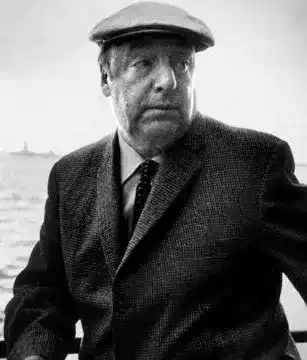
Pablo Neruda
A Lemon
Out of lemon flowers
loosed
on the moonlight, love's
lashed and insatiable
essences,
sodden with fragrance,
the lemon tree's yellow
emerges,
the lemons
move down
from the tree's planetarium
Delicate merchandise!
The harbors are big with itbazaars
for the light and the
barbarous gold.
We open
the halves
of a miracle,
and a clotting of acids
brims
into the starry
divisions:
creation's
original juices,
irreducible, changeless,
alive:
so the freshness lives on
in a lemon,
in the sweet-smelling house of the rind,
the proportions, arcane and acerb.
Cutting the lemon
the knife
leaves a little cathedral:
alcoves unguessed by the eye
that open acidulous glass
to the light; topazes
riding the droplets,
altars,
aromatic facades.
So, while the hand
holds the cut of the lemon,
half a world
on a trencher,
the gold of the universe
wells
to your touch:
a cup yellow
with miracles,
a breast and a nipple
perfuming the earth;
a flashing made fruitage,
the diminutive fire of a planet.
986

Emily Dickinson
Arcturus is his other name
"Arcturus" is his other name
I'd
rather call him "Star."
It's very mean of Science
To go and interfere!
I slew a worm the other day-
A "Savant" passing by
Murmured "Resurgam"-"Centipede"!
"Oh Lord-how frail are we"!
I pull a flower from the woods-
A monster with a glass
Computes the stamens in a breath-
And has her in a "class"!
Whereas I took the Butterfly
Aforetime in my hat-
He sits erect in "Cabinets"-
The Clover bells forgot.
What once was "Heaven"
Is "Zenith" now-
Where I proposed to go
When Time's brief masquerade was done
Is mapped and charted too.
What if the poles should frisk about
And stand upon their heads!
I hope I'm ready for "the worst"-
Whatever prank betides!
Perhaps the "Kingdom of Heaven's" changed-
I hope the "Children" there Won't be "new fashioned" when I come-
And laugh at me-and stare-
I hope the Father in the skies
Will lift his little girl-
Old fashioned-naught-everything-
Over the stile of "Pearl."
1,006
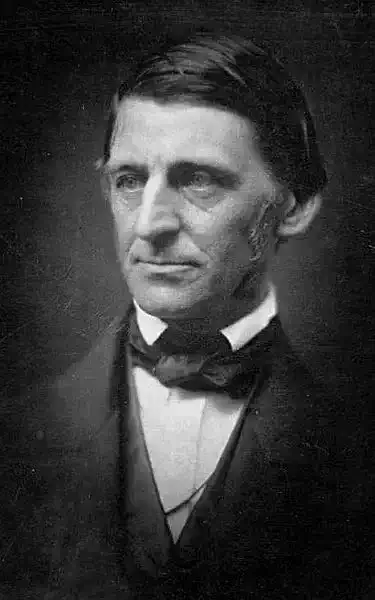
Ralph Waldo Emerson
Fable
The mountain and the squirrel
Had a quarrel;
And the former called the latter "Little Prig."
Bun replied,
"You are doubtless very big;
But all sorts of things and weather
Must be taken in together
To make up a year
And a sphere.
And I think it's no disgrace
To occupy my place.
If I'm not so large as you,
You are not so small as I,
And not half so spry.
I'll not deny you make
A very pretty squirrel track;
Talents differ: all is well and wisely put;
If I cannot carry forests on my back,
Neither can you crack a nut."
901

Antonio Roberval Miketen
It is Late to be Morning
For Simone
Poor little helpless baby chick,
leaning against the thrash can,
at ease in a coat of sheer luxury,
derived from a secret sable fur,
finer
than human skin.
High up, the clouds
are becoming the color
of the yellow of your softness.
The evening turned the morning late.
Your little eyes still open
want my hands
touching the back of your feathers.
They want me to be a small boy,
a small boy offering my innocence
to the little child that chirps inside you.
Sweet was your tameness
bent over a defeated rose,
while you rested your eternity
on a bouquet of roses, despised
because withered.
But under you each petal bleeded,
leaving a stain of wine
in the rniddle of your belly.
I then passed by,
you were already dead when I passed by
enamored of the sunset,
oblivious of the morning
that was rising in your little eyes.
941
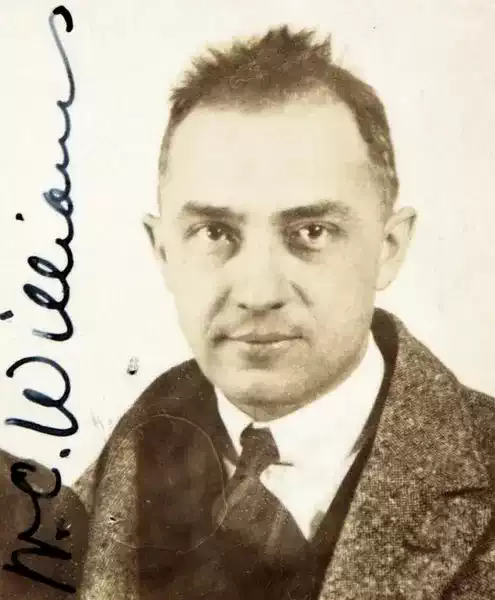
William Carlos Williams
The Red Wheelbarrow
so much depends
upon
a red wheel
barrow
glazed with rain
water
beside the white
chickens.
upon
a red wheel
barrow
glazed with rain
water
beside the white
chickens.
932
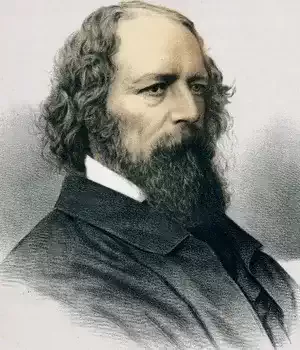
Alfred Lord Tennyson
Come down, O Maid
COME down, O maid, from yonder mountain height:
What pleasure lives in height (the shepherd sang),
In height and cold, the splendour of the hills?
But cease to move so near the Heavens, and cease
To glide a sunbeam by the blasted Pine,
To sit a star upon the sparkling spire;
And come, for Love is of the valley, come,
For Love is of the valley, come thou down
And find him; by the happy threshold, he,
Or hand in hand with Plenty in the maize,
Or red with spirted purple of the vats,
Or foxlike in the vine; nor cares to walk
With Death and Morning on the silver horns,
Nor wilt thou snare him in the white ravine,
Nor find him dropt upon the firths of ice,
That huddling slant in furrow-cloven falls
To roll the torrent out of dusky doors:
But follow; let the torrent dance thee down
To find him in the valley; let the wild
Lean-headed Eagles yelp alone, and leave
The monstrous ledges there to slope, and spill
Their thousand wreaths of dangling water-smoke,
That like a broken purpose waste in air:
So waste not thou; but come; for all the vales
Await thee; azure pillars of the hearth
Arise to thee; the children call, and I
Thy shepherd pipe, and sweet is every sound,
Sweeter thy voice, but every sound is sweet;
Myriads of rivulets hurrying thro' the lawn,
The moan of doves in immemorial elms,
And murmuring of innumerable bees.
918
Antonio Roberval Miketen
Mendes and the Bullfight in the Round
To yield silk for silk,
millimeter by millimeter,
the petal-like tissue
to the finest needles.
To weave, weave, weave,
weave the bull in pink,
without yielding the very terrain
of the matador.
In the smothness of the silk,
in the cutting edge of a glimpse,
to slide over the sword
the purity of fire.
To retain the fate of the bull,
to feel the vein on the fingertip,
to bring the leather close to the body
without a flip of fear.
With the thinness of the needle,
even if the blood chills,
retain the dark rose
on the petal-like skin.
In the bullfight in the round,
to spill blood and salt,
weaving a rose
of fatal red color.
Millimeter by millimeter,
to yield, yield, yieid,
to yield until the very minute
when feeling that death has come.
940
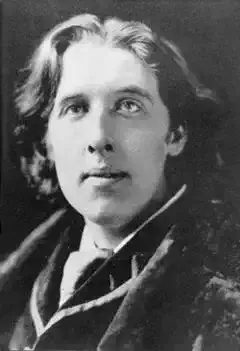
Oscar Wilde
Impression De Voyage
The sea was sapphire coloured, and the sky
Burned like a heated opal through the air;
We hoisted sail; the wind was blowing fair
For the blue lands that to the eastward lie.
From the steep prow I marked with quickening eye
Zakynthos, every olive grove and creek,
Ithaca's cliff, Lycaon's snowy peak,
And all the flower-strewn hills of Arcady.
The flapping of the sail against the mast,
The ripple of the water on the side,
The ripple of girls' laughter at the stern,
The only sounds:- when 'gan the West to burn,
And a red sun upon the seas to ride,
I stood upon the soil of Greece at last!
KATAKOLO.
906
Pablo Neruda
Bird
It was passed from one bird to another,
the whole gift of the day.
The day went from flute to flute,
went dressed in vegetation,
in flights which opened a tunnel
through the wind would pass
to where birds were breaking open
the dense blue air and
there, night came in.
When I returned from so many journeys,
I stayed suspended and green
between sun and geography -
I saw how wings worked,
how perfumes are transmitted
by feathery telegraph,
and from above I saw the path,
the springs and the roof tiles,
the fishermen at their trades,
the trousers of the foam;
I saw it all from my green sky.
I had no more alphabet
than the swallows in their courses,
the tiny, shining water
of the small bird on fire
which dances out of the pollen.
935
Guillaume Apollinaire
Moonlight
Mellifluent moon on the lips of the maddened
The orchards and towns are greedy tonight
The stars appear like the image of bees
Of this luminous honey that offends the vines
For now all sweet in their fall from the sky
Each ray of moonlight’s a ray of honey
Now hid I conceive the sweetest adventure
I fear stings of fire from this Polar bee
that sets these deceptive rays in my hands
And takes its moon-honey to the rose of the winds
884
Oscar Wilde
Magdalen Walks
THE little white clouds are racing over the sky,
And the fields are strewn with the gold of the flower of March,
The daffodil breaks under foot, and the tasselled larch
Sways and swings as the thrush goes hurrying by.
A delicate odour is borne on the wings of the morning breeze,
The odour of leaves, and of grass, and of newly up-turned earth,
The birds are singing for joy of the Spring's glad birth,
Hopping from branch to branch on the rocking trees.
And all the woods are alive with the murmur and sound of Spring,
And the rosebud breaks into pink on the climbing briar,
And the crocus-bed is a quivering moon of fire
Girdled round with the belt of an amethyst ring.
And the plane to the pine-tree is whispering some tale of love
Till it rustles with laughter and tosses its mantle of green,
And the gloom of the wych-elm's hollow is lit with the iris sheen
Of the burnished rainbow throat and the silver breast of a dove.
See! the lark starts up from his bed in the meadow there,
Breaking the gossamer threads and the nets of dew,
And flashing a-down the river, a flame of blue!
The kingfisher flies like an arrow, and wounds the air.
882
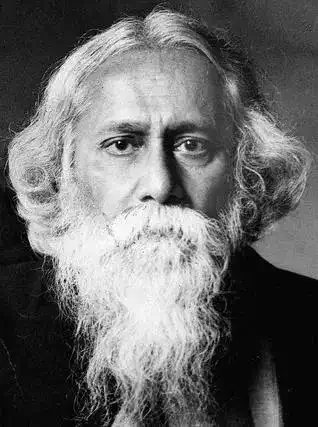
Rabindranath Tagore
The Flower-School
When storm-clouds rumble in the sky and June showers come down.
The moist east wind comes marching over the heath to blow its
bagpipes among the bamboos.
Then crowds of flowers come out of a sudden, from nobody knows
where, and dance upon the grass in wild glee.
Mother, I really think the flowers go to school underground.
They do their lessons with doors shut, and if they want to
come out to play before it is time, their master makes them stand
in a corner.
When the rain come they have their holidays.
Branches clash together in the forest, and the leaves rustle
in the wild wind, the thunder-clouds clap their giant hands and the
flower children rush out in dresses of pink and yellow and white.
Do you know, mother, their home is in the sky, where the stars
are.
Haven't you see how eager they are to get there? Don't you
know why they are in such a hurry?
Of course, I can guess to whom they raise their arms; they
have their mother as I have my own.
861
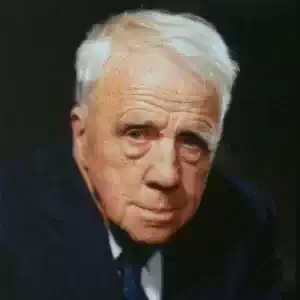
Robert Frost
In White: Frost's Early Version Of Design
A dented spider like a snow drop white
On a white Heal-all, holding up a moth
Like a white piece of lifeless satin cloth -
Saw ever curious eye so strange a sight? -
Portent in little, assorted death and blight
Like the ingredients of a witches' broth? -
The beady spider, the flower like a froth,
And the moth carried like a paper kite.
What had that flower to do with being white,
The blue prunella every child's delight.
What brought the kindred spider to that height?
(Make we no thesis of the miller's plight.)
What but design of darkness and of night?
Design, design! Do I use the word aright?
Anonymous submission.
892

William Butler Yeats
Introductory Lines (The Shadowy Waters)
I walked among the seven woods of Coole:
Shan-walla, where a willow-hordered pond
Gathers the wild duck from the winter dawn;
Shady Kyle-dortha; sunnier Kyle-na-no,
Where many hundred squirrels are as happy
As though they had been hidden by green bough's
Where old age cannot find them; Paire-na-lee,
Where hazel and ash and privet blind the paths:
Dim Paire-na-carraig, where the wild bees fling
Their sudden fragrances on the green air;
Dim Paire-na-tarav, where enchanted eyes
Have seen immortal, mild, proud shadows walk;
Dim Inchy wood, that hides badger and fox
And marten-cat, and borders that old wood
Wise Buddy Early called the wicked wood:
Seven odours, seven murmurs, seven woods.
I had not eyes like those enchanted eyes,
Yet dreamed that beings happier than men
Moved round me in the shadows, and at night
My dreams were clown by voices and by fires;
And the images I have woven in this story
Of Forgael and Dectora and the empty waters
Moved round me in the voices and the fires,
And more I may not write of, for they that cleave
The waters of sleep can make a chattering tongue
Heavy like stone, their wisdom being half silence.
How shall I name you, immortal, mild, proud shadows?
I only know that all we know comes from you,
And that you come from Eden on flying feet.
Is Eden far away, or do you hide
From human thought, as hares and mice and coneys
That run before the reaping-hook and lie
In the last ridge of the barley? Do our woods
And winds and ponds cover more quiet woods,
More shining winds, more star-glimmering ponds?
Is Eden out of time and out of space?
And do you gather about us when pale light
Shining on water and fallen among leaves,
And winds blowing from flowers, and whirr of feathers
And the green quiet, have uplifted the heart?
I have made this poem for you, that men may read it
Before they read of Forgael and Dectora,
As men in the old times, before the harps began,
Poured out wine for the high invisible ones.
872
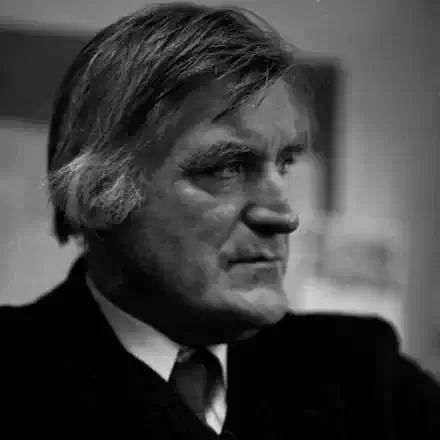
Ted Hughes
Pike
Pike, three inches long, perfect
Pike in all parts, green tigering the gold.
Killers from the egg: the malevolent aged grin.
They dance on the surface among the flies.
Or move, stunned by their own grandeur,
Over a bed of emerald, silhouette
Of submarine delicacy and horror.
A hundred feet long in their world.
In ponds, under the heat-struck lily pads-
Gloom of their stillness:
Logged on last year's black leaves, watching upwards.
Or hung in an amber cavern of weeds
The jaws' hooked clamp and fangs
Not to be changed at this date:
A life subdued to its instrument;
The gills kneading quietly, and the pectorals.
Three we kept behind glass,
Jungled in weed: three inches, four,
And four and a half: red fry to them-
Suddenly there were two. Finally one
With a sag belly and the grin it was born with.
And indeed they spare nobody.
Two, six pounds each, over two feet long
High and dry and dead in the willow-herb-
One jammed past its gills down the other's gullet:
The outside eye stared: as a vice locks-
The same iron in this eye
Though its film shrank in death.
A pond I fished, fifty yards across,
Whose lilies and muscular tench
Had outlasted every visible stone
Of the monastery that planted them-
Stilled legendary depth:
It was as deep as England. It held
Pike too immense to stir, so immense and old
That past nightfall I dared not cast
But silently cast and fished
With the hair frozen on my head
For what might move, for what eye might move.
The still splashes on the dark pond,
Owls hushing the floating woods
Frail on my ear against the dream
Darkness beneath night's darkness had freed,
That rose slowly toward me, watching.
845

Allen Ginsberg
Sunflower Sutra
I walked on the banks of the tincan banana dock and sat down under the huge shade
of a Southern Pacific locomotive to look for the sunset over the box house hills and cry.
Jack Kerouac sat beside me on a busted rusty iron pole, companion, we thought the
same thoughts of the soul, bleak and blue and sad-eyed, surrounded by the gnarled
steel roots of trees of machinery.
The only water on the river mirrored the red sky, sun sank on top of final Frisco peaks,
no fish in that stream, no hermit in those mounts, just ourselves rheumy-eyed and
hung-over like old bums on the riverbank, tired and wily.
Look at the Sunflower, he said, there was a dead gray shadow against the sky, big as a
man, sitting dry on top of a pile of ancient sawdust-
--I rushed up enchanted--it was my first sunflower, memories of Blake--my
visions--Harlem
and Hells of the Eastern rivers, bridges clanking Joes greasy Sandwiches, dead baby
carriages, black treadless tires forgotten and unretreaded, the poem of the riverbank,
condoms & pots, steel knives, nothing stainless, only the dank muck and the
razor-sharp artifacts passing into the past-
and the gray Sunflower poised against the sunset, crackly bleak and dusty with the
smut and smog and smoke of olden locomotives in its eye-
corolla of bleary spikes pushed down and broken like a battered crown, seeds fallen out
of its face, soon-to-be-toothless mouth of sunny air, sunrays obliterated on its hairy
head like a dried wire spiderweb,
leaves stuck out like arms out of the stem, gestures from the sawdust root, broke
pieces of plaster fallen out of the black twigs, a dead fly in its ear,
Unholy battered old thing you were, my sunflower O my soul, I loved you then!
The grime was no man's grime but death and human locomotives,
all that dress of dust, that veil of darkened railroad skin, that smog of cheek, that
eyelid of black mis'ry, that sooty hand or phallus or protuberance of artificial
worse-than-dirt--industrial--modern--all that civilization spotting your crazy golden
crown-
and those blear thoughts of death and dusty loveless eyes and ends and withered roots
below, in the home-pile of sand and sawdust, rubber dollar bills, skin of machinery, the
guts and innards of the weeping coughing car, the empty lonely tincans with their rusty
tongues alack, what more could I name, the smoked ashes of some cock cigar, the
cunts of wheelbarrows and the milky breasts of cars, wornout asses out of chairs &
sphincters of dynamos--all these
entangled in your mummied roots--and you standing before me in the sunset, all your
glory in your form!
A perfect beauty of a sunflower! a perfect excellent lovely sunflower existence! a sweet
natural eye to the new hip moon, woke up alive and excited grasping in the sunset
shadow sunrise golden monthly breeze!
How many flies buzzed round you innocent of your grime, while you cursed the
heavens of your railroad and your flower soul?
Poor dead flower? when did you forget you were a flower? when did you look at your
skin and decide you were an impotent dirty old locomotive? the ghost of a locomotive?
the specter and shade of a once powerful mad American locomotive?
You were never no locomotive, Sunflower, you were a sunflower!
And you Locomotive, you are a locomotive, forget me not!
So I grabbed up the skeleton thick sunflower and stuck it at my side like a scepter,
and deliver my sermon to my soul, and Jack's soul too, and anyone who'll listen,
--We're not our skin of grime, we're not our dread bleak dusty imageless locomotive,
we're all golden sunflowers inside, blessed by our own seed & hairy naked
accomplishment-bodies growing into mad black formal sunflowers in the sunset, spied
on by our eyes under the shadow of the mad locomotive riverbank sunset Frisco hilly
tincan evening sitdown vision.
884
Robert Frost
Mowing
There was never a sound beside the wood but one,
And that was my long scythe whispering to the ground.
What was it it whispered? I knew not well myself;
Perhaps it was something about the heat of the sun,
Something, perhaps, about the lack of sound--
And that was why it whispered and did not speak.
It was no dream of the gift of idle hours,
Or easy gold at the hand of fay or elf:
Anything more than the truth would have seemed too weak
To the earnest love that laid the swale in rows,
Not without feeble-pointed spikes of flowers
(Pale orchises), and scared a bright green snake.
The fact is the sweetest dream that labour knows.
My long scythe whispered and left the hay to make.
827
Emily Dickinson
His Bill an Auger is
His Bill an Auger is,
His Head, a Cap and Frill.
He laboreth at every Tree
A Worm, His utmost Goal.
His Head, a Cap and Frill.
He laboreth at every Tree
A Worm, His utmost Goal.
840
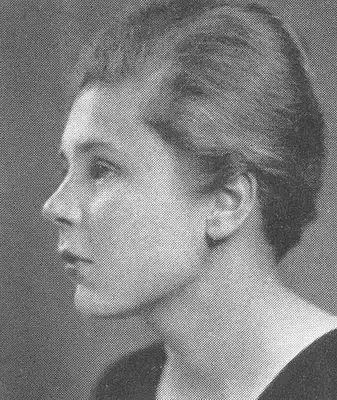
Elizabeth Bishop
The Fish
I caught a tremendous fish
and held him beside the boat
half out of water, with my hook
fast in a corner of his mouth.
He didn't fight.
He hadn't fought at all.
He hung a grunting weight,
battered and venerable
and homely. Here and there
his brown skin hung in strips
like ancient wallpaper,
and its pattern of darker brown
was like wallpaper:
shapes like full-blown roses
stained and lost through age.
He was speckled and barnacles,
fine rosettes of lime,
and infested
with tiny white sea-lice,
and underneath two or three
rags of green weed hung down.
While his gills were breathing in
the terrible oxygen
--the frightening gills,
fresh and crisp with blood,
that can cut so badly--
I thought of the coarse white flesh
packed in like feathers,
the big bones and the little bones,
the dramatic reds and blacks
of his shiny entrails,
and the pink swim-bladder
like a big peony.
I looked into his eyes
which were far larger than mine
but shallower, and yellowed,
the irises backed and packed
with tarnished tinfoil
seen through the lenses
of old scratched isinglass.
They shifted a little, but not
to return my stare.
--It was more like the tipping
of an object toward the light.
I admired his sullen face,
the mechanism of his jaw,
and then I saw
that from his lower lip
--if you could call it a lip
grim, wet, and weaponlike,
hung five old pieces of fish-line,
or four and a wire leader
with the swivel still attached,
with all their five big hooks
grown firmly in his mouth.
A green line, frayed at the end
where he broke it, two heavier lines,
and a fine black thread
still crimped from the strain and snap
when it broke and he got away.
Like medals with their ribbons
frayed and wavering,
a five-haired beard of wisdom
trailing from his aching jaw.
I stared and stared
and victory filled up
the little rented boat,
from the pool of bilge
where oil had spread a rainbow
around the rusted engine
to the bailer rusted orange,
the sun-cracked thwarts,
the oarlocks on their strings,
the gunnels--until everything
was rainbow, rainbow, rainbow!
And I let the fish go.
825

John Keats
Sonnet XV. On The Grasshopper And Cricket
The poetry of earth is never dead:
When all the birds are faint with the hot sun,
And hide in cooling trees, a voice will run
From hedge to hedge about the new-mown mead;
That is the Grasshopper's -- he takes the lead
In summer luxury, -- he has never done
With his delights; for when tired out with fun
He rests at ease beneath some pleasant weed.
The poetry of earth is ceasing never:
On a lone winter evening, when the frost
Has wrought a silence, from the stove there shrills
The Cricket's song, in warmth increasing ever,
And seems to one in drowsiness half lost,
The Grasshopper's among some grassy hills.
822