
Animals and Nature

Emily Dickinson
His Bill an Auger is
His Bill an Auger is,
His Head, a Cap and Frill.
He laboreth at every Tree
A Worm, His utmost Goal.
His Head, a Cap and Frill.
He laboreth at every Tree
A Worm, His utmost Goal.
840

Robert Frost
Mowing
There was never a sound beside the wood but one,
And that was my long scythe whispering to the ground.
What was it it whispered? I knew not well myself;
Perhaps it was something about the heat of the sun,
Something, perhaps, about the lack of sound--
And that was why it whispered and did not speak.
It was no dream of the gift of idle hours,
Or easy gold at the hand of fay or elf:
Anything more than the truth would have seemed too weak
To the earnest love that laid the swale in rows,
Not without feeble-pointed spikes of flowers
(Pale orchises), and scared a bright green snake.
The fact is the sweetest dream that labour knows.
My long scythe whispered and left the hay to make.
827

William Wordsworth
To A Butterfly ()
I'VE watched you now a full half-hour,
Self-poised upon that yellow flower;
And, little Butterfly! indeed
I know not if you sleep or feed.
How motionless!---not frozen seas
More motionless! and then
What joy awaits you, when the breeze
Hath found you out among the trees,
And calls you forth again !
This plot of orchard-ground is ours;
My trees they are, my Sister's flowers;
Here rest your wing when they are weary;
Here lodge as in a sanctuary!
Come often to us, fear no wrong;
Sit near us on the bough!
We'll talk of sunshine and of song,
And summer days, when we were young;
Sweet childish days, that were as long
As twenty days are now.
837

Rudyard Kipling
The Law of the Jungle
Now this is the Law of the Jungle -- as old and as true as the sky; And the Wolf
that shall keep it may prosper, but the Wolf that shall break it must die. AAs the
creeper that girdles the tree-trunk the Law runneth forward and back --
For the strength of the Pack is the Wolf, and the strength of the Wolf is the Pack.
Wash daily from nose-tip to tail-tip; drink deeply, but never too deep;
And remember the night is for hunting, and forget not the day is for sleep.
The Jackal may follow the Tiger, but, Cub, when thy whiskers are grown,
Remember the Wolf is a Hunter -- go forth and get food of thine own.
Keep peace withe Lords of the Jungle -- the Tiger, the Panther, and Bear.
And trouble not Hathi the Silent, and mock not the Boar in his lair.
When Pack meets with Pack in the Jungle, and neither will go from the trail,
Lie down till the leaders have spoken -- it may be fair words shall prevail.
When ye fight with a Wolf of the Pack, ye must fight him alone and afar,
Lest others take part in the quarrel, and the Pack be diminished by war.
The Lair of the Wolf is his refuge, and where he has made him his home,
Not even the Head Wolf may enter, not even the Council may come.
The Lair of the Wolf is his refuge, but where he has digged it too plain,
The Council shall send him a message, and so he shall change it again.
If ye kill before midnight, be silent, and wake not the woods with your bay,
Lest ye frighten the deer from the crop, and your brothers go empty away.
Ye may kill for yourselves, and your mates, and your cubs as they need, and ye can;
But kill not for pleasure of killing, and seven times never kill Man!
If ye plunder his Kill from a weaker, devour not all in thy pride;
Pack-Right is the right of the meanest; so leave him the head and the hide.
The Kill of the Pack is the meat of the Pack. Ye must eat where it lies;
And no one may carry away of that meat to his lair, or he dies.
The Kill of the Wolf is the meat of the Wolf. He may do what he will;
But, till he has given permission, the Pack may not eat of that Kill.
Cub-Right is the right of the Yearling. From all of his Pack he may claim
Full-gorge when the killer has eaten; and none may refuse him the same.
Lair-Right is the right of the Mother. From all of her year she may claim
One haunch of each kill for her litter, and none may deny her the same.
Cave-Right is the right of the Father -- to hunt by himself for his own:
He is freed of all calls to the Pack; he is judged by the Council alone.
Because of his age and his cunning, because of his gripe and his paw,
In all that the Law leaveth open, the word of your Head Wolf is Law.
Now these are the Laws of the Jungle, and many and mighty are they;
But the head and the hoof of the Law and the haunch and the hump is -- Obey!
820
William Wordsworth
The World Is To Much With Us; Late and Soon
The world is too much with us; late and soon,
Getting and spending, we lay waste our powers:
Little we see in Nature that is ours;
We have given our hearts away, a sordid boon!
This Sea that bares her bosom to the moon;
The winds that will be howling at all hours,
And are up-gathered now like sleeping flowers;
For this, for everything, we are out of tune,
It moves us not.--Great God! I'd rather be
A Pagan suckled in a creed outworn;
So might I, standing on this pleasant lea,
Have glimpses that would make me less forlorn;
Have sight of Proteus rising from the sea;
Or hear old Triton blow his wreathed horn.
785

Ella Wheeler Wilcox
A Naughty Little Comet
There was a little comet who lived near the Milky Way!
She loved to wander out at night and jump about and play.
The mother of the comet was a very good old star;
She used to scold her reckless child for venturing out too far.
She told her of the ogre, Sun, who loved on stars to sup,
And who asked no better pastime than in gobbling comets up.
But instead of growing cautious and of showing proper fear,
The foolish little comet edged up nearer, and more near.
She switched her saucy tail along right where the Sun could see,
And flirted with old Mars, and was as bold as bold could be.
She laughed to scorn the quiet stars who never frisked about;
She said there was no fun in life unless you ventured out.
She liked to make the planets stare, and wished no better mirth
Than just to see the telescopes aimed at her from the Earth.
She wondered how so many stars could mope through nights and days,
And let the sickly faced old Moon get all the love and praise.
And as she talked and tossed her head and switched her shining trail
The staid old mother star grew sad, her cheek grew wan and pale.
For she had lived there in the skies a million years or more,
And she had heard gay comets talk in just this way before.
And by and by there came an end to this gay comet's fun.
She went a tiny bit too far-and vanished in the Sun!
No more she swings her shining trail before the whole world's sight,
But quiet stars she laughed to scorn are twinkling every night.
786
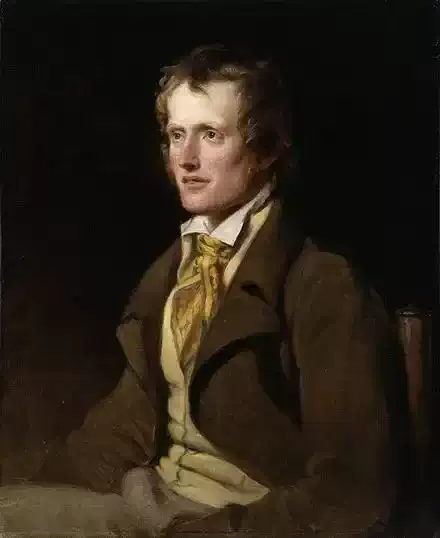
John Clare
The Shepherds Calendar - May
Come queen of months in company
Wi all thy merry minstrelsy
The restless cuckoo absent long
And twittering swallows chimney song
And hedge row crickets notes that run
From every bank that fronts the sun
And swathy bees about the grass
That stops wi every bloom they pass
And every minute every hour
Keep teazing weeds that wear a flower
And toil and childhoods humming joys
For there is music in the noise
The village childern mad for sport
In school times leisure ever short
That crick and catch the bouncing ball
And run along the church yard wall
Capt wi rude figured slabs whose claims
In times bad memory hath no names
Oft racing round the nookey church
Or calling ecchos in the porch
And jilting oer the weather cock
Viewing wi jealous eyes the clock
Oft leaping grave stones leaning hights
Uncheckt wi mellancholy sights
The green grass swelld in many a heap
Where kin and friends and parents sleep
Unthinking in their jovial cry
That time shall come when they shall lye
As lowly and as still as they
While other boys above them play
Heedless as they do now to know
The unconcious dust that lies below
The shepherd goes wi happy stride
Wi moms long shadow by his side
Down the dryd lanes neath blooming may
That once was over shoes in clay
While martins twitter neath his eves
Which he at early morning leaves
The driving boy beside his team
Will oer the may month beauty dream
And cock his hat and turn his eye
On flower and tree and deepning skye
And oft bursts loud in fits of song
And whistles as he reels along
Crack[ing] his whip in starts of joy
A happy dirty driving boy
The youth who leaves his corner stool
Betimes for neighbouring village school
While as a mark to urge him right
The church spires all the way in sight
Wi cheerings from his parents given
Starts neath the joyous smiles of heaven
And sawns wi many an idle stand
Wi bookbag swinging in his hand
And gazes as he passes bye
On every thing that meets his eye
Young lambs seem tempting him to play
Dancing and bleating in his way
Wi trembling tails and pointed ears
They follow him and loose their fears
He smiles upon their sunny faces
And feign woud join their happy races
The birds that sing on bush and tree
Seem chirping for his company
And all in fancys idle whim
Seem keeping holiday but him
He lolls upon each resting stile
To see the fields so sweetly smile
To see the wheat grow green and long
And list the weeders toiling song
Or short not[e] of the changing thrush
Above him in the white thorn bush
That oer the leaning stile bends low
Loaded wi mockery of snow
Mozzld wi many a lushing thread
Of crab tree blossoms delicate red
He often bends wi many a wish
Oer the brig rail to view the fish
Go sturting by in sunny gleams
And chucks in the eye dazzld streams
Crumbs from his pocket oft to watch
The swarming struttle come to catch
Them where they to the bottom sile
Sighing in fancys joy the while
Hes cautiond not to stand so nigh
By rosey milkmaid tripping bye
Where he admires wi fond delight
And longs to be there mute till night
He often ventures thro the day
At truant now and then to play
Rambling about the field and plain
Seeking larks nests in the grain
And picking flowers and boughs of may
To hurd awhile and throw away
Lurking neath bushes from the sight
Of tell tale eyes till schools noon night
Listing each hour for church clocks hum
To know the hour to wander home
That parents may not think him long
Nor dream of his rude doing wrong
Dreading thro the night wi dreaming pain
To meet his masters wand again
Each hedge is loaded thick wi green
And where the hedger late hath been
Tender shoots begin to grow
From the mossy stumps below
While sheep and cow that teaze the grain
will nip them to the root again
They lay their bill and mittens bye
And on to other labours hie
While wood men still on spring intrudes
And thins the shadow solitudes
Wi sharpend axes felling down
The oak trees budding into brown
Where as they crash upon the ground
A crowd of labourers gather round
And mix among the shadows dark
To rip the crackling staining bark
From off the tree and lay when done
The rolls in lares to meet the sun
Depriving yearly where they come
The green wood pecker of its home
That early in the spring began
Far from the sight of troubling man
And bord their round holes in each tree
In fancys sweet security
Till startld wi the woodmans noise
It wakes from all its dreaming joys
The blue bells too that thickly bloom
Where man was never feared to come
And smell smocks that from view retires
Mong rustling leaves and bowing briars
And stooping lilys of the valley
That comes wi shades and dews to dally
White beady drops on slender threads
Wi broad hood leaves above their heads
Like white robd maids in summer hours
Neath umberellas shunning showers
These neath the barkmens crushing treads
Oft perish in their blooming beds
Thus stript of boughs and bark in white
Their trunks shine in the mellow light
Beneath the green surviving trees
That wave above them in the breeze
And waking whispers slowly bends
As if they mournd their fallen friends
Each morning now the weeders meet
To cut the thistle from the wheat
And ruin in the sunny hours
Full many wild weeds of their flowers
Corn poppys that in crimson dwell
Calld 'head achs' from their sickly smell
And carlock yellow as the sun
That oer the may fields thickly run
And 'iron weed' content to share
The meanest spot that spring can spare
Een roads where danger hourly comes
Is not wi out its purple blooms
And leaves wi points like thistles round
Thickset that have no strength to wound
That shrink to childhoods eager hold
Like hair-and with its eye of gold
And scarlet starry points of flowers
Pimpernel dreading nights and showers
Oft calld 'the shepherds weather glass'
That sleep till suns have dyd the grass
Then wakes and spreads its creeping bloom
Till clouds or threatning shadows come
Then close it shuts to sleep again
Which weeders see and talk of rain
And boys that mark them shut so soon
will call them 'John go bed at noon
And fumitory too a name
That superstition holds to fame
Whose red and purple mottled flowers
Are cropt by maids in weeding hours
To boil in water milk and way1
For washes on an holiday
To make their beauty fair and sleak
And scour the tan from summers cheek
And simple small forget me not
Eyd wi a pinshead yellow spot
I'th'2 middle of its tender blue
That gains from poets notice due
These flowers the toil by crowds destroys
And robs them of their lowly joys
That met the may wi hopes as sweet
As those her suns in gardens meet
And oft the dame will feel inclind
As childhoods memory comes to mind
To turn her hook away and spare
The blooms it lovd to gather there
My wild field catalogue of flowers
Grows in my ryhmes as thick as showers
Tedious and long as they may be
To some, they never weary me
The wood and mead and field of grain
I coud hunt oer and oer again
And talk to every blossom wild
Fond as a parent to a child
And cull them in my childish joy
By swarms and swarms and never cloy
When their lank shades oer morning pearls
Shrink from their lengths to little girls
And like the clock hand pointing one
Is turnd and tells the morning gone
They leave their toils for dinners hour
Beneath some hedges bramble bower
And season sweet their savory meals
Wi joke and tale and merry peals
Of ancient tunes from happy tongues
While linnets join their fitful songs
Perchd oer their heads in frolic play
Among the tufts of motling may
The young girls whisper things of love
And from the old dames hearing move
Oft making 'love knotts' in the shade
Of blue green oat or wheaten blade
And trying simple charms and spells
That rural superstition tells
They pull the little blossom threads
From out the knapweeds button heads
And put the husk wi many a smile
In their white bosoms for awhile
Who if they guess aright the swain
That loves sweet fancys trys to gain
Tis said that ere its lain an hour
Twill blossom wi a second flower
And from her white breasts hankerchief
Bloom as they ne'er had lost a leaf
When signs appear that token wet
As they are neath the bushes met
The girls are glad wi hopes of play
And harping of the holiday
A hugh blue bird will often swim
Along the wheat when skys grow dim
Wi clouds-slow as the gales of spring
In motion wi dark shadowd wing
Beneath the coming storm it sails
And lonly chirps the wheat hid quails
That came to live wi spring again
And start when summer browns the grain
They start the young girls joys afloat
Wi 'wet my foot' its yearly note
So fancy doth the sound explain
And proves it oft a sign of rain
About the moor 'mong sheep and cow
The boy or old man wanders now
Hunting all day wi hopful pace
Each thick sown rushy thistly place
For plover eggs while oer them flye
The fearful birds wi teazing cry
Trying to lead their steps astray
And coying him another way
And be the weather chill or warm
Wi brown hats truckd beneath his arm
Holding each prize their search has won
They plod bare headed to the sun
Now dames oft bustle from their wheels
Wi childern scampering at their heels
To watch the bees that hang and swive
In clumps about each thronging hive
And flit and thicken in the light
While the old dame enjoys the sight
And raps the while their warming pans
A spell that superstition plans
To coax them in the garden bounds
As if they lovd the tinkling sounds
And oft one hears the dinning noise
Which dames believe each swarm decoys
Around each village day by day
Mingling in the warmth of may
Sweet scented herbs her skill contrives
To rub the bramble platted hives
Fennels thread leaves and crimpld balm
To scent the new house of the swarm
The thresher dull as winter days
And lost to all that spring displays
Still mid his barn dust forcd to stand
Swings his frail round wi weary hand
While oer his head shades thickly creep
And hides the blinking owl asleep
And bats in cobweb corners bred
Sharing till night their murky bed
The sunshine trickles on the floor
Thro every crevice of the door
And makes his barn where shadows dwell
As irksome as a prisoners cell
And as he seeks his daily meal
As schoolboys from their tasks will steal
ile often stands in fond delay
To see the daisy in his way
And wild weeds flowering on the wall
That will his childish sports recall
Of all the joys that came wi spring
The twirling top the marble ring
The gingling halfpence hussld up
At pitch and toss the eager stoop
To pick up heads, the smuggeld plays
Neath hovels upon sabbath days
When parson he is safe from view
And clerk sings amen in his pew
The sitting down when school was oer
Upon the threshold by his door
Picking from mallows sport to please
Each crumpld seed he calld a cheese
And hunting from the stackyard sod
The stinking hen banes belted pod
By youths vain fancys sweetly fed
Christning them his loaves of bread
He sees while rocking down the street
Wi weary hands and crimpling feet
Young childern at the self same games
And hears the self same simple names
Still floating on each happy tongue
Touchd wi the simple scene so strong
Tears almost start and many a sigh
Regrets the happiness gone bye
And in sweet natures holiday
His heart is sad while all is gay
How lovly now are lanes and balks
For toils and lovers sunday walks
The daisey and the buttercup
For which the laughing childern stoop
A hundred times throughout the day
In their rude ramping summer play
So thickly now the pasture crowds
In gold and silver sheeted clouds
As if the drops in april showers
Had woo'd the sun and swoond to flowers
The brook resumes its summer dresses
Purling neath grass and water cresses
And mint and flag leaf swording high
Their blooms to the unheeding eye
And taper bowbent hanging rushes
And horse tail childerns bottle brushes
And summer tracks about its brink
Is fresh again where cattle drink
And on its sunny bank the swain
Stretches his idle length again
Soon as the sun forgets the day
The moon looks down on the lovly may
And the little star his friend and guide
Travelling together side by side
And the seven stars and charleses wain1
Hangs smiling oer green woods agen
The heaven rekindles all alive
Wi light the may bees round the hive
Swarm not so thick in mornings eye
As stars do in the evening skye
All all are nestling in their joys
The flowers and birds and pasture boys
The firetail, long a stranger, comes
To his last summer haunts and homes
To hollow tree and crevisd wall
And in the grass the rails odd call
That featherd spirit stops the swain
To listen to his note again
And school boy still in vain retraces
The secrets of his hiding places
In the black thorns crowded copse
Thro its varied turns and stops
The nightingale its ditty weaves
Hid in a multitude of leaves
The boy stops short to hear the strain
And 'sweet jug jug' he mocks again
The yellow hammer builds its nest
By banks where sun beams earliest rest
That drys the dews from off the grass
Shading it from all that pass
Save the rude boy wi ferret gaze
That hunts thro evry secret maze
He finds its pencild eggs agen
All streakd wi lines as if a pen
By natures freakish hand was took
To scrawl them over like a book
And from these many mozzling marks
The school boy names them 'writing larks'
Bum barrels twit on bush and tree
Scarse bigger then a bumble bee
And in a white thorns leafy rest
It builds its curious pudding-nest
Wi hole beside as if a mouse
Had built the little barrel house
Toiling full many a lining feather
And bits of grey tree moss together
Amid the noisey rooky park
Beneath the firdales branches dark
The little golden crested wren
Hangs up his glowing nest agen
And sticks it to the furry leaves
As martins theirs beneath the eaves
The old hens leave the roost betimes
And oer the garden pailing climbs
To scrat the gardens fresh turnd soil
And if unwatchd his crops to spoil
Oft cackling from the prison yard
To peck about the houseclose sward
Catching at butterflys and things
Ere they have time to try their wings
The cattle feels the breath of may
And kick and toss their heads in play
The ass beneath his bags of sand
Oft jerks the string from leaders hand
And on the road will eager stoop
To pick the sprouting thistle up
Oft answering on his weary way
Some distant neighbours sobbing bray
Dining the ears of driving boy
As if he felt a fit of joy
Wi in its pinfold circle left
Of all its company bereft
Starvd stock no longer noising round
Lone in the nooks of foddering ground
Each skeleton of lingering stack
By winters tempests beaten black
Nodds upon props or bolt upright
Stands swarthy in the summer light
And oer the green grass seems to lower
Like stump of old time wasted tower
All that in winter lookd for hay
Spread from their batterd haunts away
To pick the grass or lye at lare
Beneath the mild hedge shadows there
Sweet month that gives a welcome call
To toil and nature and to all
Yet one day mid thy many joys
Is dead to all its sport and noise
Old may day where's thy glorys gone
All fled and left thee every one
Thou comst to thy old haunts and homes
Unnoticd as a stranger comes
No flowers are pluckt to hail the now
Nor cotter seeks a single bough
The maids no more on thy sweet morn
Awake their thresholds to adorn
Wi dewey flowers-May locks new come
And princifeathers cluttering bloom
And blue bells from the woodland moss
And cowslip cucking balls to toss
Above the garlands swinging hight
Hang in the soft eves sober light
These maid and child did yearly pull
By many a folded apron full
But all is past the merry song
Of maidens hurrying along
To crown at eve the earliest cow
Is gone and dead and silent now
The laugh raisd at the mocking thorn
Tyd to the cows tail last that morn
The kerchief at arms length displayd
Held up by pairs of swain and maid
While others bolted underneath
Bawling loud wi panting breath
'Duck under water' as they ran
Alls ended as they ne'er began
While the new thing that took thy place
Wears faded smiles upon its face
And where enclosure has its birth
It spreads a mildew oer her mirth
The herd no longer one by one
Goes plodding on her morning way
And garlands lost and sports nigh gone
Leaves her like thee a common day
Yet summer smiles upon thee still
Wi natures sweet unalterd will
And at thy births unworshipd hours
Fills her green lap wi swarms of flowers
To crown thee still as thou hast been
Of spring and summer months the queen.
797

Henry Wadsworth Longfellow
The Song Of Hiawatha XX: The Famine
Oh the long and dreary Winter!
Oh the cold and cruel Winter!
Ever thicker, thicker, thicker
Froze the ice on lake and river,
Ever deeper, deeper, deeper
Fell the snow o'er all the landscape,
Fell the covering snow, and drifted
Through the forest, round the village.
Hardly from his buried wigwam
Could the hunter force a passage;
With his mittens and his snow-shoes
Vainly walked he through the forest,
Sought for bird or beast and found none,
Saw no track of deer or rabbit,
In the snow beheld no footprints,
In the ghastly, gleaming forest
Fell, and could not rise from weakness,
Perished there from cold and hunger.
Oh the famine and the fever!
Oh the wasting of the famine!
Oh the blasting of the fever!
Oh the wailing of the children!
Oh the anguish of the women!
All the earth was sick and famished;
Hungry was the air around them,
Hungry was the sky above them,
And the hungry stars in heaven
Like the eyes of wolves glared at them!
Into Hiawatha's wigwam
Came two other guests, as silent
As the ghosts were, and as gloomy,
Waited not to be invited
Did not parley at the doorway
Sat there without word of welcome
In the seat of Laughing Water;
Looked with haggard eyes and hollow
At the face of Laughing Water.
And the foremost said: 'Behold me!
I am Famine, Bukadawin!'
And the other said: 'Behold me!
I am Fever, Ahkosewin!'
And the lovely Minnehaha
Shuddered as they looked upon her,
Shuddered at the words they uttered,
Lay down on her bed in silence,
Hid her face, but made no answer;
Lay there trembling, freezing, burning
At the looks they cast upon her,
At the fearful words they uttered.
Forth into the empty forest
Rushed the maddened Hiawatha;
In his heart was deadly sorrow,
In his face a stony firmness;
On his brow the sweat of anguish
Started, but it froze and fell not.
Wrapped in furs and armed for hunting,
With his mighty bow of ash-tree,
With his quiver full of arrows,
With his mittens, Minjekahwun,
Into the vast and vacant forest
On his snow-shoes strode he forward.
'Gitche Manito, the Mighty!'
Cried he with his face uplifted
In that bitter hour of anguish,
'Give your children food, O father!
Give us food, or we must perish!
Give me food for Minnehaha,
For my dying Minnehaha!'
Through the far-resounding forest,
Through the forest vast and vacant
Rang that cry of desolation,
But there came no other answer
Than the echo of his crying,
Than the echo of the woodlands,
'Minnehaha! Minnehaha!'
All day long roved Hiawatha
In that melancholy forest,
Through the shadow of whose thickets,
In the pleasant days of Summer,
Of that ne'er forgotten Summer,
He had brought his young wife homeward
From the land of the Dacotahs;
When the birds sang in the thickets,
And the streamlets laughed and glistened,
And the air was full of fragrance,
And the lovely Laughing Water
Said with voice that did not tremble,
'I will follow you, my husband!'
In the wigwam with Nokomis,
With those gloomy guests that watched her,
With the Famine and the Fever,
She was lying, the Beloved,
She, the dying Minnehaha.
'Hark!' she said; 'I hear a rushing,
Hear a roaring and a rushing,
Hear the Falls of Minnehaha
Calling to me from a distance!'
'No, my child!' said old Nokomis,
'`T is the night-wind in the pine-trees!'
'Look!' she said; 'I see my father
Standing lonely at his doorway,
Beckoning to me from his wigwam
In the land of the Dacotahs!'
'No, my child!' said old Nokomis.
'`T is the smoke, that waves and beckons!'
'Ah!' said she, 'the eyes of Pauguk
Glare upon me in the darkness,
I can feel his icy fingers
Clasping mine amid the darkness!
Hiawatha! Hiawatha!'
And the desolate Hiawatha,
Far away amid the forest,
Miles away among the mountains,
Heard that sudden cry of anguish,
Heard the voice of Minnehaha
Calling to him in the darkness,
'Hiawatha! Hiawatha!'
Over snow-fields waste and pathless,
Under snow-encumbered branches,
Homeward hurried Hiawatha,
Empty-handed, heavy-hearted,
Heard Nokomis moaning, wailing:
'Wahonowin! Wahonowin!
Would that I had perished for you,
Would that I were dead as you are!
Wahonowin!. Wahonowin!'
And he rushed into the wigwam,
Saw the old Nokomis slowly
Rocking to and fro and moaning,
Saw his lovely Minnehaha
Lying dead and cold before him,
And his bursting heart within him
Uttered such a cry of anguish,
That the forest moaned and shuddered,
That the very stars in heaven
Shook and trembled with his anguish.
Then he sat down, still and speechless,
On the bed of Minnehaha,
At the feet of Laughing Water,
At those willing feet, that never
More would lightly run to meet him,
Never more would lightly follow.
With both hands his face he covered,
Seven long days and nights he sat there,
As if in a swoon he sat there,
Speechless, motionless, unconscious
Of the daylight or the darkness.
Then they buried Minnehaha;
In the snow a grave they made her
In the forest deep and darksome
Underneath the moaning hemlocks;
Clothed her in her richest garments
Wrapped her in her robes of ermine,
Covered her with snow, like ermine;
Thus they buried Minnehaha.
And at night a fire was lighted,
On her grave four times was kindled,
For her soul upon its journey
To the Islands of the Blessed.
From his doorway Hiawatha
Saw it burning In the forest,
Lighting up the gloomy hemlocks;
From his sleepless bed uprising,
From the bed of Minnehaha,
Stood and watched it at the doorway,
That it might not be extinguished,
Might not leave her in the darkness.
'Farewell!' said he, 'Minnehaha!
Farewell, O my Laughing Water!
All my heart is buried with you,
All my thoughts go onward with you!
Come not back again to labor,
Come not back again to suffer,
Where the Famine and the Fever
Wear the heart and waste the body.
Soon my task will be completed,
Soon your footsteps I shall follow
To the Islands of the Blessed,
To the Kingdom of Ponemah,
To the Land of the Hereafter!'
783

Antonio Roberval Miketen
Opportunioty of the Rose
I
The Song of João Moura
The bullfighter shouted in the center of the arena
and the horse danced in the depth of fear.
II
Picasso wanted to paint an arena,
full-sized, accurate,
with miuras with needle-sharp horns, carved
under the sleek black mountains.
On the canvas of the painter bad omens show:
in Guernica, did he paint the victory of the bull?
Consider that the arenas are human roses
ready to burst with the rage of the blood.
If Picassos dream were not so absurd,
Manolete, for sure, in his gala outfit
remembering Linares, would give himself to the bull:
would he repeat, once again, the faena of the rose?
III
Why do we trust the bull with the evidence of the wait,
on this chancy dove, innocent yet a beast?
IV
At the very moment when the body is dressed in gala
the heat of the shroud increases its nakednes.
V
Tragedy of "YIYO"
The mortal spike ripping the flesh
of the bullfighter makes sprout a brutal beauty.
VI
Will I see the day when the bull will find its luck
in the prime of the fake womb of the reckless veronica?
765
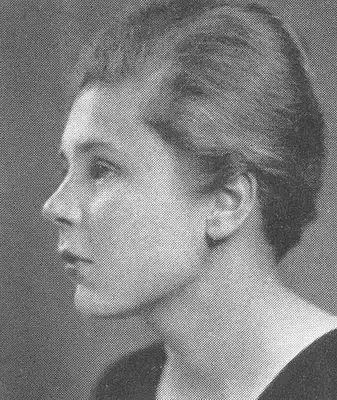
Elizabeth Bishop
A Prodigal
The brown enormous odor he lived by
was too close, with its breathing and thick hair,
for him to judge. The floor was rotten; the sty
was plastered halfway up with glass-smooth dung.
Light-lashed, self-righteous, above moving snouts,
the pigs' eyes followed him, a cheerful stare-even
to the sow that always ate her young-till,
sickening, he leaned to scratch her head.
But sometimes mornings after drinking bouts
(he hid the pints behind the two-by-fours),
the sunrise glazed the barnyard mud with red
the burning puddles seemed to reassure.
And then he thought he almost might endure
his exile yet another year or more.
But evenings the first star came to warn.
The farmer whom he worked for came at dark
to shut the cows and horses in the barn
beneath their overhanging clouds of hay,
with pitchforks, faint forked lightnings, catching light,
safe and companionable as in the Ark.
The pigs stuck out their little feet and snored.
The lantern--like the sun, going away-laid
on the mud a pacing aureole.
Carrying a bucket along a slimy board,
he felt the bats' uncertain staggering flight,
his shuddering insights, beyond his control,
touching him. But it took him a long time
finally to make up his mind to go home.
761
Elizabeth Bishop
Cape Breton
Out on the high "bird islands," Ciboux and Hertford,
the razorbill auks and the silly-looking puffins all stand
with their backs to the mainland
in solemn, uneven lines along the cliff's brown grass-frayed edge,
while the few sheep pastured there go "Baaa, baaa."
(Sometimes, frightened by aeroplanes, they stampede
and fall over into the sea or onto the rocks.)
The silken water is weaving and weaving,
disappearing under the mist equally in all directions,
lifted and penetrated now and then
by one shag's dripping serpent-neck,
and somewhere the mist incorporates the pulse,
rapid but unurgent, of a motor boat.
The same mist hangs in thin layers
among the valleys and gorges of the mainland
like rotting snow-ice sucked away
almost to spirit; the ghosts of glaciers drift
among those folds and folds of fir: spruce and hackmatack-dull,
dead, deep pea-cock colors,
each riser distinguished from the next
by an irregular nervous saw-tooth edge,
alike, but certain as a stereoscopic view.
The wild road clambers along the brink of the coast.
On it stand occasional small yellow bulldozers,
but without their drivers, because today is Sunday.
The little white churches have been dropped into the matted hills
like lost quartz arrowheads.
The road appears to have been abandoned.
Whatever the landscape had of meaning appears to have been abandoned,
unless the road is holding it back, in the interior,
where we cannot see,
where deep lakes are reputed to be,
and disused trails and mountains of rock
and miles of burnt forests, standing in gray scratches
like the admirable scriptures made on stones by stones-and
these regions now have little to say for themselves
except in thousands of light song-sparrow songs floating upward
freely, dispassionately, through the mist, and meshing
in brown-wet, fine torn fish-nets.
A small bus comes along, in up-and-down rushes,
packed with people, even to its step.
(On weekdays with groceries, spare automobile parts, and pump parts,
but today only two preachers extra, one carrying his frock coat on a
hanger.)
It passes the closed roadside stand, the closed schoolhouse,
where today no flag is flying
from the rough-adzed pole topped with a white china doorknob.
It stops, and a man carrying a bay gets off,
climbs over a stile, and goes down through a small steep meadow,
which establishes its poverty in a snowfall of daisies,
to his invisible house beside the water.
The birds keep on singing, a calf bawls, the bus starts.
The thin mist follows
the white mutations of its dream;
an ancient chill is rippling the dark brooks.
795
William Wordsworth
The Kitten And Falling Leaves
THAT way look, my Infant, lo!
What a pretty baby-show!
See the kitten on the wall,
Sporting with the leaves that fall,
Withered leaves---one---two---and three---
From the lofty elder-tree!
Through the calm and frosty air
Of this morning bright and fair,
Eddying round and round they sink
Softly, slowly: one might think,
From the motions that are made,
Every little leaf conveyed
Sylph or Faery hither tending,---
To this lower world descending,
Each invisible and mute,
In his wavering parachute.
---But the Kitten, how she starts,
Crouches, stretches, paws, and darts!
First at one, and then its fellow
Just as light and just as yellow;
There are many now---now one---
Now they stop and there are none
What intenseness of desire
In her upward eye of fire!
With a tiger-leap half way
Now she meets the coming prey,
Lets it go as fast, and then
Has it in her power again:
Now she works with three or four,
Like an Indian conjurer;
Quick as he in feats of art,
Far beyond in joy of heart.
Were her antics played in the eye
Of a thousand standers-by,
Clapping hands with shout and stare,
What would little Tabby care
For the plaudits of the crowd?
Over happy to be proud,
Over wealthy in the treasure
Of her own exceeding pleasure!
'Tis a pretty baby-treat;
Nor, I deem, for me unmeet;
Here, for neither Babe nor me,
Other play-mate can I see.
Of the countless living things,
That with stir of feet and wings
(In the sun or under shade,
Upon bough or grassy blade)
And with busy revellings,
Chirp and song, and murmurings,
Made this orchard's narrow space,
And this vale so blithe a place;
Multitudes are swept away
Never more to breathe the day:
Some are sleeping; some in bands
Travelled into distant lands;
Others slunk to moor and wood,
Far from human neighborhood;
And, among the Kinds that keep
With us closer fellowship,
With us openly abide,
All have laid their mirth aside.
Where is he that giddy Sprite,
Blue-cap, with his colors bright,
Who was blest as bird could be,
Feeding in the apple-tree;
Made such wanton spoil and rout,
Turning blossoms inside out;
Hung---head pointing towards the ground---
Fluttered, perched, into a round
Bound himself, and then unbound;
Lithest, gaudiest Harlequin!
Prettiest Tumbler ever seen!
Light of heart and light of limb;
What is now become of Him?
Lambs, that through the mountains went
Frisking, bleating merriment,
When the year was in its prime,
They are sobered by this time.
If you look to vale or hill,
If you listen, all is still,
Save a little neighboring rill,
That from out the rocky ground
Strikes a solitary sound.
Vainly glitter hill and plain,
And the air is calm in vain;
Vainly Morning spreads the lure
Of a sky serene and pure;
Creature none can she decoy
Into open sign of joy:
Is it that they have a fear
Of the dreary season near?
Or that other pleasures be
Sweeter even than gaiety ?
Yet, whate'er enjoyments dwell
In the impenetrable cell
Of the silent heart which Nature
Furnishes to every creature;
Whatsoe'er we feel and know
Too sedate for outward show,
Such a light of gladness breaks,
Pretty Kitten! from thy freaks,---
Spreads with such a living grace
O'er my little Dora's face;
Yes, the sight so stirs and charms
Thee, Baby, laughing in my arms,
That almost I could repine
That your transports are not mine,
That I do not wholly fare
Even as ye do, thoughtless pair!
And I will have my careless season
Spite of melancholy reason,
Will walk through life in such a way
That, when time brings on decay,
Now and then I may possess
Hours of perfect gladsomeness.
---Pleased by any random toy;
By a kitten's busy joy,
Or an infant's laughing eye
Sharing in the ecstasy;
I would fare like that or this,
Find my wisdom in my bliss;
Keep the sprightly soul awake,
And have faculties to take,
Even from things by sorrow wrought,
Matter for a jocund thought,
Spite of care, and spite of grief,
To gambol with Life's falling Leaf.
761
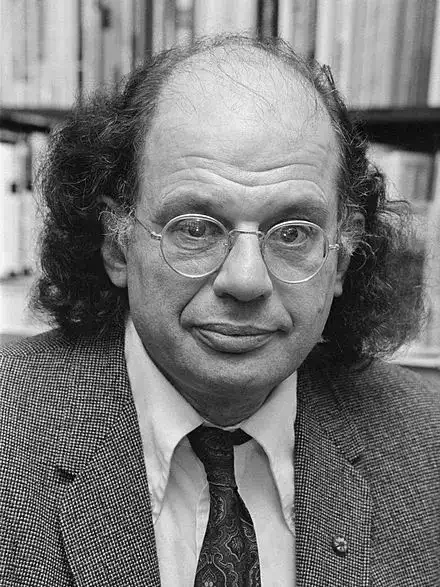
Allen Ginsberg
Wales Visitation
White fog lifting & falling on mountain-brow
Trees moving in rivers of wind
The clouds arise
as on a wave, gigantic eddy lifting mist
above teeming ferns exquisitely swayed
along a green crag
glimpsed thru mullioned glass in valley raine—
Bardic, O Self, Visitacione, tell naught
but what seen by one man in a vale in Albion,
of the folk, whose physical sciences end in Ecology,
the wisdom of earthly relations,
of mouths & eyes interknit ten centuries visible
orchards of mind language manifest human,
of the satanic thistle that raises its horned symmetry
flowering above sister grass-daisies’ pink tiny
bloomlets angelic as lightbulbs—
Remember 160 miles from London’s symmetrical thorned tower
& network of TV pictures flashing bearded your Self
the lambs on the tree-nooked hillside this day bleating
heard in Blake’s old ear, & the silent thought of Wordsworth in eld Stillness
clouds passing through skeleton arches of Tintern Abbey—
Bard Nameless as the Vast, babble to Vastness!
All the Valley quivered, one extended motion, wind
undulating on mossy hills
a giant wash that sank white fog delicately down red runnels
on the mountainside
whose leaf-branch tendrils moved asway
in granitic undertow down—
and lifted the floating Nebulous upward, and lifted the arms of the trees
and lifted the grasses an instant in balance
and lifted the lambs to hold still
and lifted the green of the hill, in one solemn wave
A solid mass of Heaven, mist-infused, ebbs thru the vale,
a wavelet of Immensity, lapping gigantic through Llanthony Valley,
the length of all England, valley upon valley under Heaven’s ocean
tonned with cloud-hang,
—Heaven balanced on a grassblade.
Roar of the mountain wind slow, sigh of the body,
One Being on the mountainside stirring gently
Exquisite scales trembling everywhere in balance,
one motion thru the cloudy sky-floor shifting on the million feet of daisies,
one Majesty the motion that stirred wet grass quivering
to the farthest tendril of white fog poured down
through shivering flowers on the mountain’s head—
No imperfection in the budded mountain,
Valleys breathe, heaven and earth move together,
daisies push inches of yellow air, vegetables tremble,
grass shimmers green
sheep speckle the mountainside, revolving their jaws with empty eyes,
horses dance in the warm rain,
tree-lined canals network live farmland,
blueberries fringe stone walls on hawthorn’d hills,
pheasants croak on meadows haired with fern—
Out, out on the hillside, into the ocean sound, into delicate gusts of wet air,
Fall on the ground, O great Wetness, O Mother, No harm on your body!
Stare close, no imperfection in the grass,
each flower Buddha-eye, repeating the story,
myriad-formed—
Kneel before the foxglove raising green buds, mauve bells dropped
doubled down the stem trembling antennae,
& look in the eyes of the branded lambs that stare
breathing stockstill under dripping hawthorn—
I lay down mixing my beard with the wet hair of the mountainside,
smelling the brown vagina-moist ground, harmless,
tasting the violet thistle-hair, sweetness—
One being so balanced, so vast, that its softest breath
moves every floweret in the stillness on the valley floor,
trembles lamb-hair hung gossamer rain-beaded in the grass,
lifts trees on their roots, birds in the great draught
hiding their strength in the rain, bearing same weight,
Groan thru breast and neck, a great Oh! to earth heart
Calling our Presence together
The great secret is no secret
Senses fit the winds,
Visible is visible,
rain-mist curtains wave through the bearded vale,
gray atoms wet the wind’s kabbala
Crosslegged on a rock in dusk rain,
rubber booted in soft grass, mind moveless,
breath trembles in white daisies by the roadside,
Heaven breath and my own symmetric
Airs wavering thru antlered green fern
drawn in my navel, same breath as breathes thru Capel-Y-Ffn,
Sounds of Aleph and Aum
through forests of gristle,
my skull and Lord Hereford’s Knob equal,
All Albion one.
What did I notice? Particulars! The
vision of the great One is myriad—
smoke curls upward from ashtray,
house fire burned low,
The night, still wet & moody black heaven
starless
upward in motion with wet wind.
757

Lord Byron
The Giaour
A Fragment of a Turkish Tale
The tale which these disjointed fragments present, is founded upon circumstances now
less common in the East than formerly; either because the ladies are more circumspect
than in the 'olden time', or because the Christians have better fortune, or less
enterprise. The story, when entire, contained the adventures of a female slave, who
was thrown, in the Mussulman manner, into the sea for infidelity, and avenged by a
young Venetian, her lover, at the time the Seven Islands were possessed by the
Republic of Venice, and soon after the Arnauts were beaten back from the Morea,
which they had ravaged for some time subsequent to the Russian invasion. The
desertion of the Mainotes on being refused the plunder of Misitra, led to the
abandonment of that enterprise, and to the desolation of the Morea,during which the
cruelty exercised on all sides was unparalleled even in the annals of the faithful.
No breath of air to break the wave
That rolls below the Athenian's grave,
That tomb which, gleaming o'er the cliff
First greets the homewardveering
skiff
High o'er the land he saved in vain;
When shall such Hero live again?
Fair clime! where every season smiles
Benignant o'er those blesséd isles,
Which, seen from far Colonna's height,
Make glad the heart that hails the sight,
And lend to lonliness delight.
There mildly dimpling, Ocean's cheek
Reflects the tints of many a peak
Caught by the laughing tides that lave
These Edens of the Eastern wave:
And if at times a transient breeze
Break the blue crystal of the seas,
Or sweep one blossom from the trees,
How welcome is each gentle air
That waves and wafts the odours there!
For there the Rose, o'er crag or vale,
Sultana of the Nightingale,
The maid for whom his melody,
His thousand songs are heard on high,
Blooms blushing to her lover's tale:
His queen, the garden queen, his Rose,
Unbent by winds, unchilled by snows,
Far from winters of the west,
By every breeze and season blest,
Returns the sweets by Nature given
In soft incense back to Heaven;
And gratefu yields that smiling sky
Her fairest hue and fragrant sigh.
And many a summer flower is there,
And many a shade that Love might share,
And many a grotto, meant by rest,
That holds the pirate for a guest;
Whose bark in sheltering cove below
Lurks for the pasiing peaceful prow,
Till the gay mariner's guitar
Is heard, and seen the Evening Star;
Then stealing with the muffled oar,
Far shaded by the rocky shore,
Rush the nightprowlers
on the prey,
And turns to groan his roudelay.
Strandethat
where Nature loved to trace,
As if for Gods, a dwelling place,
And every charm and grace hath mixed
Within the Paradise she fixed,
There man, enarmoured of distress,
Shoul mar it into wilderness,
And trample, brutelike,
o'er each flower
That tasks not one labourious hour;
Nor claims the culture of his hand
To blood along the fairy land,
But springs as to preclude his care,
And sweetly woos himbut
to spare!
Strangethat
where all is Peace beside,
There Passion riots in her pride,
And Lust and Rapine wildly reign
To darken o'er the fair domain.
It is as though the Fiends prevailed
Against the Seraphs they assailed,
And, fixed on heavenly thrones, should dwell
The freed inheritors of Hell;
So soft the scene, so formed for joy,
So curst the tyrants that destroy!
He who hath bent him o'er the dead
Ere the first day of Death is fled,
The first dark day of Nothingness,
The last of Danger and Distress,
(Before Decay's effacing fingers
Have swept the lines where Beauty lingers,)
And marked the mild angelic air,
The rapture of Repose that's there,
The fixed yet tender thraits that streak
The languor of the placid cheek,
Andbut
for that sad shrouded eye,
That fires not, wins not, weeps not, now,
And but for that chill, changeless brow,
Where cold Obstruction's apathy
Appals the gazing mourner's heart,
As if to him it could impart
The doom he dreads, yet dwells upon;
Yes, but for these and these alone,
Some moments, aye, one treacherous hour,
He still might doubt the Tyrant's power;
So fair, so calm, so softly sealed,
The first, last look by Death revealed!
Such is the aspect of his shore;
'T is Greece, but living Greece no more!
So coldly sweet, so deadly fair,
We start, for Soul is wanting there.
Hers is the loveliness in death,
That parts not quite with parting breath;
But beauty with that fearful bloom,
That hue which haunts it to the tomb,
Expression's last receding ray,
A gilded Halo hovering round decay,
The farewell beam of Feeling past away!
Spark of that flame, perchance of heavenly birth,
Which gleams, but warms no more its cherished earth!
Clime of the unforgotten brave!
Whose land from plain to mountaincave
Was Freedom;s home or Glory's grave!
Shrine of the mighty! can it be,
That this is all remains of thee?
Approach, thou craven crouching slave:
Say, is this not Thermopylæ?
These waters blue that round you lave,
Of servile offspring of the free
Pronounce
what sea, what shore is this?
The gulf, the rock of Salamis!
These scenes, their story yet unknown;
Arise, and make again your own;
Snatch from the ashes of your Sires
The embers of their former fires;
And he who in the strife expires
Will add to theirs a name of fear
That Tyranny shall quake to hear,
And leave his sons a hope, a fame,
They too will rather die than shame:
For Freedom's battle once begun,
Bequeathed by bleeding Sire to Son,
Though baffled oft is ever won.
Bear witness, Greece, thy living page!
Attest it many a deathless age!
While Kings, in dusty darkness hid,
Have left a namesless pyramid,
Thy Heroes, though the general doom
Hath swept the column from their tomb,
A mightier monument command,
The mountains of thy native land!
There points thy Muse to stranger's eye
The graves of those that cannot die!
'T were long to tell, and sad to trace,
Each step from Spledour to Disgrace;
Enoughno
foreign foe could quell
Thy soul, till from itself it fell;
Yet! Selfabasement
paved the way
To villainbonds
and despot sway.
What can he tell who tread thy shore?
No legend of thine olden time,
No theme on which the Muse might soar
High as thine own days of yore,
When man was worthy of thy clime.
The hearts within thy valleys bred,
The fiery souls that might have led
Thy sons to deeds sublime,
Now crawl from cradle to the Grave,
Slavesnay,
the bondsmen of a Slave,
And callous, save to crime.
Stained with each evil that pollutes
Mankind, where least above the brutes;
Without even savage virtue blest,
Without one free or valiant breast,
Still to the neighbouring ports tey waft
Proverbial wiles, and ancient craft;
In this subtle Greek is found,
For this, and this alown, renowned.
In vain might Liberty invoke
The spirit to its bondage broke
Or raise the neck that courts the yoke:
No more her sorrows I bewail,
Yet this will be a mournful tale,
And they who listen may believe,
Who heard it first had cause to grieve.
Far, dark, along the blue sea glancing,
The shadows of the rocks advancing
Start on the fisher's eye like boat
Of islandpirate
or Mainote;
And fearful for his light caïque,
He shuns the near but doubtful creek:
Though worn and weary with his toil,
And cumbered with his scaly spoil,
Slowly, yet strongly, plies the oar,
Till Port Leone's safer shore
Receives him by the lovely light
That best becomes an Eastern night.
... Who thundering comes on blackest steed,
With slackened bit and hoof of speed?
Beneath the clattering iron's sound
The caverned echoes wake around
In lash for lash, and bound for bound;
The foam that streaks the courser's side
Seems gathered from the oceantide:
Though weary waves are sunk to rest,
There's none within his rider's breast;
And though tomorrow's tempest lower,
'Tis calmer than thy heart, young Giaour!
I know thee not, I loathe thy race,
But in thy lineaments I trace
What time shall strengthen, not efface:
Though young and pale, that sallow front
Is scathed by fiery passion's brunt;
Though bent on earth thine evil eye,
As meteorlike
thou glidest by,
Right well I view thee and deem thee one
Whom Othman's sons should slay or shun.
On on
he hastened, and he drew
My gaze of wonder as he flew:
Though like a demon of the night
He passed, and vanished from my sight,
His aspect and his air impressed
A troubled memory on my breast,
And long upon my startled ear
Rung his dark courser's hoofs of fear.
He spurs his steed; he nears the steep,
That, jutting, shadows o'er the deep;
He winds around; he hurries by;
The rock relieves him from mine eye;
For, well I ween, unwelcome he
Whose glance is fixed on those that flee;
And not a start that shines too bright
On him who takes such timeless flight.
He wound along; but ere he passed
One glance he snatched, as if his last,
A moment checked his wheeling steed,
A moment breathed him from his speed,
A moment on his stirrup stood
Why looks he o'er the olive wood?
The crescent glimmers on the hill,
The mosque's high lamps are quivering still
Though too remote for sound to wake
In echoes of far tophaike,
The flashes of each joyous peal
Are seen to prove the Moslem's zeal,
Tonight, set Rhamazani's sun;
Tonight the Bairam feast's begun;
Tonight but
who and what art thou
Of foreign garb and fearful brow?
That thou should'st either pause or flee?
He stood some
dread was on his face,
Soon hatred settled in its place:
It rose not with the reddening flush
Of transient anger's hasty blush,
But pale as marble o'er the tomb,
Whose ghastly whiteness aids its gloom.
His brow was bent, his eye was glazed;
He raised his arm, and fiercely raised,
And sternly shook his hand on high,
As doubting to return or fly;
Impatient of his flight delayed,
Here loud his raven charger neighed
Down glanced that hand and, and grasped his blade;
That sound had burst his waking dream,
As slumber starts at owlet's scream.
The spur hath lanced his courser's sides;
Away, away, for life he rides:
Swift as the hurled on high jerreed
Springs to the touch his startled steed;
The rock is doubled, and the shore
Shakes with the clattering tramp no more;
The crag is won, no more is seen
His Christian crest and haughty mien.
'Twas but an instant he restrained
That fiery barb so sternly reined;
'Twas but a moment that he stood,
Then sped as if by death pursued;
But in that instant 0'er his soul
Winters of memory seemed to roll,
And gather in that drop of time
A life of pain, an age of crime.
O'er him who loves, or hates, or fears,
Such moment pours the grief of years:
What felt he then, at once opprest
By all that most distracts the breast?
That pause, which pondered o'er his fate,
Oh, who its dreary length shall date!
Though in time's record nearly nought,
It was eternity to thought!
For infinite as boundless space
The thought that conscience must embrace,
Which in itself can comprehend
Woe without name, or hope, or end.
The hour is past, the Giaour is gone;
And did he fly or fall alone?
Woe to that hour he came or went!
The curse for Hassan’s sin was sent
To turn a palace to a tomb:
He came, he went, like the Simoom,
That harbinger of fate and gloom,
Beneath whose widely wasting
breath
The very cypress droops to death Dark
tree, still sad when others’ grief is fled,
The only constant mourner o’er the dead!
The steed is vanished from the stall;
No serf is seen in Hassan’s hall;
The lonely spider’s thin grey pall
Waves slowly widening o’er the wall;
The bat builds in his harem bower,
And in the fortress of his power
The owl usurps the beacontower;
The wilddog
howls o’er the fountain’s brim,
With baffled thirst and famine, grim;
For the stream has shrunk from its marble bed,
Where the weeds and the desolate dust are spread.
‘Twas sweet of yore to see it play
And chase the sultriness of day,
As springing high the silver dew
In whirls fantastically flew,
And flung luxurious coolness round
The air, and verdure o’er the ground.
‘Twas sweet, when cloudless stars were bright,
To view the wave of watery light,
And hear its melody by night.
And oft had Hassan’s childhood played
Around the verge of that cascade;
And oft upon his mother’s breast
That sound had harmonized his rest;
And oft had Hassan’s youth along
Its bank been soothed by beauty’s song;
And softer seem’d each melting tone
Of music mingled with its own.
But ne’er shall Hassan’s age repose
Along the brink at twilight’s close:
The stream that filled that font is fled
The blood that warmed his heart is shed!
And here no more shall human voice
Be heard to rage, regret, rejoice.
The last sad note that swelled the gale
Was woman’s wildest funeral wall:
That quenched in silence all is still,
But the lattice that flaps when the wind is shrill:
Though raves the gust, and floods the rain,
No hand shall clasp its clasp again.
On desert sands ‘twere joy to scan
The rudest steps of fellow man,
So here the very voice of grief
Might wake an echo like relief
At least ‘twould say, ‘All are not gone;
There lingers life, though but in one’
For many a gilded chamber’s there,
Which solitude might well forbear;
Within that dome as yet decay
Hath slowly worked her cankering way But
gloom is gathered o’er the gate,
Nor there the fakir’s self will wait;
Nor there will wandering dervise stay,
For bounty cheers not his delay;
Nor there will weary stranger halt
To bless the sacred ‘bread and salt’.
Alike must wealth and poverty
Pass heedless and unheeded by,
For courtesy and pity died
With Hassan on the mountain side.
His roof, that refuge unto men,
Is desolation’s hungry den.
The guest flies the hall, and the vassal from labour,
Since his turban was cleft by the infidel’s sabre!
I hear the sound of coming feet,
But not a voice mine ear to greet;
More near each
turban I can scan,
And silversheathed
ataghan;
The foremost of the band is seen
An emir by his garb of green:
‘Ho! Who art thou?’ ‘
This low salam
Replies of Moslem faith I am.’
‘The burden ye so gently bear,
Seems one that claims your utmost care,
And, doubtless, holds some precious freight,
My humble bark would gladly wait.’
‘Thou speakest sooth; they skiff unmoor,
And waft us from the silent shore;
Nay, leave the sail still furled, and ply
The nearest oar that’s scattered by,
And midway to those rocks where sleep
The channeled waters dark and deep.
Rest from your task so
bravely
done,
Of course had been right swiftly run;
Yet ‘tis the longest voyage, I trow,
That one of
Sullen it plunged, and slowly sank,
The calm wave rippled to the bank;
I watched it as it sank, methought
Some motion from the current caught
Bestirred it more, ‘
twas but the beam
That checkered o’er the living stream:
I gazed, till vanishing from view,
Like lessening pebble it withdrew;
Still less and less, a speck of white
That gemmed the tide, then mocked the sight;
And all its hidden secrets sleep,
Known but to Genii of the deep,
Which, trembling in their coral caves,
They dare not whisper to the waves.
As rising on its purple wing
The insectqueen
of eastern spring,
O’er emerald meadows of Kashmeer
Invites the young pursuer near,
And leads him on from flower to flower
A weary chase and wasted hour,
Then leaves him, as it soars on high,
With panting heart and tearful eye:
So beauty lures the fullgrown
child,
With hue as bright, and wing as wild:
A chase of idle hopes and fears,
Begun in folly, closed in tears.
If won, to equal ills betrayed,
Woe waits the insect and the maid;
A life of pain, the loss of peace,
From infant’s play and man’s caprice:
The lovely toy so fiercely sought
Hath lost its charm by being caught,
For every touch that wooed its stay
Hath brushed its brightest hues away,
Till charm, and hue, and beauty gone,
‘Tis left to fly or fall alone.
With wounded wing, or bleeding breast,
Ah! Where shall either victim rest?
Can this with faded pinion soar
From rose to tulip as before?
Or beauty, blighted in an hour,
Find joy within her broken bower?
No: gayer insects fluttering by
Ne’er droop the wing o’er those that die,
And lovelier things have mercy shown
To every failing but their own,
And every woe a tear can claim
Except an erring sister’s shame.
The mind that broods o’er guilty woes,
Is like the scorpion girt by fire;
In circle narrowing as it glows,
The flames around their captive close,
Till inly searched by thousand throes,
And maddening in her ire,
One sad and sole relief she knows,
The sting she nourished for her foes,
Whose venom never yet was vain,
Gives but one pang, and cures all pain,
So do the dark in soul expire,
Or live like scorpion girt by fire;
So writhes the mind remorse hath riven,
Unfit for earth, undoomed for heaven,
Darkness above, despair beneath,
Around it flame, within it death!
Black Hassan from the harem flies,
Nor bends on woman’s form his eyes;
The unwonted chase each hour employs,
Yet shares he not the hunter’s joys.
Not thus was Hassan wont to fly
When Leila dwelt in his Serai.
Doth Leila there no longer dwell?
That tale can only Hassan tell:
Strange rumours in our city say
Upon that eve she fled away
When Rhamazan’s last sun was set,
And flashing from each minaret
Millions of lamps proclaimed the feast
Of Bairam through the boundless East.
‘Twas then she went as to the bath,
Which Hassan vainly searched in wrath;
For she was flown her master’s rage
In likeness of a Georgian page,
And far beyond the Moslem’s power
Had wronged him with the faithless Giaour.
Somewhat of this had Hassan deemed;
But still so fond, so fair she seemed,
Too well he trusted to the slave
Whose treachery deserved a grave:
And on that eve had gone to mosque,
And thence to feast in his kiosk.
Such is the tale his Nubians tell,
Who did not watch their charge too well;
But others say, that on that night,
By pale Phingari’s trembling light,
The Giaour upon his jetblack
steed
Was seen, but seen alone to speed
With bloody spur along the shore,
Nor maid nor page behind him bore.
Her eye’s dark charm ‘twere vain to tell,
But gaze on that of the gazelle,
It will assist thy fancy well;
As large, as languishingly dark,
But soul beamed forth in every spark
That darted from beneath the lid,
Bright as the jewel of Giamschild.
Yea, Soul, and should our prophet say
That form was nought but breathing clay,
By Allah! I would answer nay;
Though on AlSirat’s
arch I stood,
Which totters o’er the fiery flood,
With Paradise within my view,
And all his Houris beckoning through.
Oh! Who young Leila’s glance could read
And keep that portion of his creed,
Which saith that woman is but dust,
A soulless toy for tyrant’s lust?
On her might Muftis might gaze, and own
That through her eye the Immortal shone;
On her fair cheek’s unfading hue
The young pomegranate’s blossoms strew
Their bloom in blushes ever new;
Her hair in hyacinthine flow,
When left to roll its folds below,
As midst her handmaids in the hall
She stood superior to them all,
Hath swept the marble where her feet
Gleamed whiter than the mountain sleet
Ere from the cloud that gave it birth
It fell, and caught one stain of earth.
The cygnet nobly walks the water;
So moved on earth Circassia’s daughter,
The loveliest bird of Franguestan!
As rears her crest the ruffled swan,
And spurns the wave with wings of pride,
When pass the steps of stranger man
Along the banks that bound her tide;
Thus rose fair Leila’s whiter neck:
Thus
armed with beauty would she check
Intrusion’s glance, till folly’s gaze
Shrunk from the charms it meant to praise:
Thus high and graceful as her gait;
Her heart as tender to her mate;
Her mate stern
Hassan, who was he?
Alas! That name was not for thee!
Stern Hassan hath a journey ta'en
With twenty vassals in his train,
Each armed, as best becomes a man,
With arquebuss and ataghan;
The chief before, as decked for war,
Bears in his belt the scimitar
Stain'd with the best of Amaut blood
When in the pass the rebels stood,
And few returned to tell the tale
Of what befell in Parne's vale.
The pistols which his girdle bore
Were those that once a pasha wore,
Which still, though gemmed and bossed with gold,
Even robbers tremble to behold.
'Tis said he goes to woo a bride
More true than her who left his side;
The faithless slave that broke her bower,
And worse
than faithless for
a Giaour!
The sun's last rays are on the hill,
And sparkle in the fountain rill,
Whose welcome waters, cool and clear,
Draw blessings from the mountaineer:
Here may the loitering merchant Greek
Find that repose 'twere vain to seek
In cities lodged too near his lord,
And trembling for his secret hoard Here
may he rest where none can see,
In crowds a slave, in deserts free;
And with forbidden wine may stain
The bowl a Moslem must not drain.
The foremost Tartar's in the gap,
Conspicuous by his yellow cap;
The rest in lengthening line the while
Wind slowly through the long defile:
Above, the mountain rears a peak,
Where vultures whet the thirsty beak,
And theirs may be a feast tonight,
Shall tempt them down ere morrow's light;
Beneath, a river's wintry stream
Has shrunk before the summer beam,
And left a channel bleak and bare,
Save shrubs that spring to perish there:
Each side the midway path there lay
Small broken crags of granite grey
By time, or mountain lightning, riven
From summits clad in mists of heaven;
For where is he that hath beheld
The peak of Liakura unveiled?
They reach the grove of pine at last:
'Bismillah! now the peril's past;
For yonder view the opening plain,
And there we'll prick our steeds amain.'
The Chiaus spake, and as he said,
A bullet whistled o'er his head;
The foremost Tartar bites the ground!
Scarce had they time to check the rein,
Swift from their steeds the riders bound;
But three shall never mount again:
Unseen the foes that gave the wound,
The dying ask revenge in vain.
With steel unsheathed, and carbine bent,
Some o'er their courser's harness leant,
Half sheltered by the steed;
Some fly behind the nearest rock,
And there await the coming shock,
Nor tamely stand to bleed
Beneath the shaft of foes unseen,
Who dare not quit their craggy screen.
Stern Hassan only from his horse
Disdains to light, and keeps his course,
Till fiery flashes in the van
Proclaim too sure the robberclan
Have well secured the only way
Could now avail the promised prey;
Then curled his very beard with ire,
And glared his eye with fiercer fire:
‘Though far and near the bullets hiss,
I've 'scaped a bloodier hour than this.'
And now the foe their covert quit,
And call his vassals to submit;
But Hassan's frown and furious word
Are dreaded more than hostile sword,
Nor of his little band a man
Resigned carbine or ataghan,
Nor raised the craven cry, Amaun!
In fuller sight, more near and near,
The lately ambushed foes appear,
And, issuing from the grove, advance
Some who on battlecharger
prance.
Who leads them on with foreign brand,
Far flashing in his red right hand?
"Tis he! 'tis he! I know him now;
I know him by his pallid brow;
I know him by the evil eye
That aids his envious treachery;
I know him by his jetblack
barb:
Though now arrayed in Arnaut garb
Apostate from his own vile faith,
It shall not save him from the death:
'Tis he! well met in any hour,
Lost Leila's love, accursed Giaour!
As rolls the river into ocean,
In sable torrent wildly streaming;
As the seatide's
opposing motion,
In azure column Proudly gleaming
Beats back the current many a rood,
In curling foam and mingling flood,
While eddying whirl, and breaking wave,
Roused by the blast of winter, rave;
Through sparkling spray, in thundering clash,
The lightnings of the waters flash
In awful whiteness o'er the shore,
That shines and shakes beneath the roar;
Thus as
the stream, and Ocean greet,
With waves that madden as they meet Thus
join the bands, whom mutual wrong,
And fate, and fury, drive along.
The bickering sabres’ shivering jar;
And pealing wide or ringing near
Its echoes on the throbbing ear,
The deathshot hissing from afar;
The shock, the shout, the groan of war,
Reverberate along that vale
More suited to the shepherds tale:
Though few the numbers theirs
the strife
That neither spares nor speaks for life!
Ah! fondly youthful hearts can press,
To seize and share the dear caress;
But love itself could never pant
For all that beauty sighs to grant
With half the fervour hate bestows
Upon the last embrace of foes,
When grappling in the fight they fold
Those arms that ne'er shall lose their hold:
Friends meet to part; love laughs at faith;
True foes, once met, are joined till death!
With sabre shivered to the hilt,
Yet dripping with the blood he spilt;
Yet strained within the severed hand
Which quivers round that faithless brand;
His turban far behind him rolled,
And cleft in twain its firmest fold;
His flowing robe by falchion torn,
And crimson as those clouds of morn
That, streaked with dusky red, portend
The day shall have a stormy end;
A stain on every bush that bore
A fragment of his palampore
His breast with wounds unnumbered riven,
His back to earth, his face to heaven,
Fallen Hassan lies his
unclosed eye
Yet lowering on his enemy,
As if the hour that sealed his fate
Surviving left his quenchless hate;
And o'er him bends that foe with brow
As dark as his that bled below.
'Yes, Leila sleeps beneath the wave,
But his shall be a redder grave;
Her spirit pointed well the steel
Which taught that felon heart to feel.
He called the Prophet, but his power
Was vain against the vengeful Giaour:
He called on Allah but
the word.
Arose unheeded or unheard.
Thou Paynim fool! could Leila's prayer
Be passed, and thine accorded there?
I watched my time, I leagued with these,
The traitor in his turn to seize;
My wrath is wreaked, the deed is done,
And now I go but
go alone.'
The browsing camels' bells are tinkling:
His mother looked from her lattice high She
saw the dews of eve besprinkling
The pasture green beneath her eye,
She saw the planets faintly twinkling:
''Tis twilight sure
his train is nigh.'
She could not rest in the gardenbower,
But gazed through the grate of his steepest tower:
'Why comes he not? his steeds are fleet,
Nor shrink they from the summer heat;
Why sends not the bridegroom his promised gift?
Is his heart more cold, or his barb less swift?
Oh, false reproach! yon Tartar now
Has gained our nearest mountain's brow,
And warily the steep descends,
And now within the valley bends;
And he bears the gift at his saddle bow
How could I deem his courser slow?
Right well my largess shall repay
His welcome speed, and weary way.'
The Tartar lighted at the gate,
But scarce upheld his fainting weight!
His swarthy visage spake distress,
But this might be from weariness;
His garb with sanguine spots was dyed,
But these might be from his courser's side;
He drew the token from his vest
Angel of Death! 'tis Hassan's cloven crest!
His calpac rent his
caftan red
'Lady, a fearful bride thy son hath wed:
Me, not from mercy, did they spare,
But this empurpled pledge to bear.
Peace to the brave! whose blood is spilt:
Woe to the Giaour! for his the guilt.'
A turban carved in coarsest stone,
A pillar with rank weeds o'ergrown,
Whereon can now be scarcely read
The Koran verse that mourns the dead,
Point out the spot where Hassan fell
A victim in that lonely dell.
There sleeps as true an Osmanlie
As e'er at Mecca bent the knee;
As ever scorned forbidden wine,
Or prayed with face towards the shrine,
In orisons resumed anew
At solemn sound of 'Allah Hu!'
Yet died he by a stranger's hand,
And stranger in his native land;
Yet died he as in arms he stood,
And unavenged, at least in blood.
But him the maids of Paradise
Impatient to their halls invite,
And the dark Heaven of Houris' eyes
On him shall glance for ever bright;
They come their
kerchiefs green they wave,
And welcome with a kiss the brave!
Who falls in battle 'gainst a Giaour
Is worthiest an immortal bower.
But thou, false Infidel! shalt writhe
Beneath avenging Monkir's scythe;
And from its torment 'scape alone
To wander round lost Eblis' throne;
And fire unquenched, unquenchable,
Around, within, thy heart shall dwell;
Nor ear can hear nor tongue can tell
The tortures of that inward hell!
But first, on earth as vampire sent,
Thy corse shall from its tomb be rent:
Then ghastly haunt thy native place,
And suck the blood of all thy race;
There from thy daughter, sister, wife,
At midnight drain the stream of life;
Yet loathe the banquet which perforce
Must feed thy livid living corse:
Thy victims ere they yet expire
Shall know the demon for their sire,
As cursing thee, thou cursing them,
Thy flowers are withered on the stem.
But one that for thy crime must fall,
The youngest, most beloved of all,
Shall bless thee with a father's name That
word shall wrap thy heart in flame!
Yet must thou end thy task, and mark
Her cheek's last tinge, her eye's last spark,
And the last glassy glance must view
Which freezes o'er its lifeless blue;
Then with unhallowed hand shalt tear
The tresses of her yellow hair,
Of which in life a lock when shorn
Affection's fondest pledge was worn,
But now is borne away by thee,
Memorial of thine agony!
Wet with thine own best blood shall drip
Thy gnashing tooth and haggard lip;
Then stalking to thy sullen grave,
Go and
with Gouls and Afrits rave;
Till these in horror shrink away
From spectre more accursed than they!
'How name ye yon lone Caloyer?
His features I have scanned before
In mine own land: 'tis many a year,
Since, dashing by the lonely shore,
I saw him urge as fleet a steed
As ever served a horseman's need.
But once I saw that face, yet then
It was so marked with inward pain,
I could not pass it by again;
It breathes the same dark spirit now,
As death were stamped upon his brow.
''Tis twice three years at summer tide
Since first among our freres he came;
And here it soothes him to abide
For some dark deed he will not name.
But never at our vesper prayer,
Nor e'er before confession chair
Kneels he, nor recks he when arise
Incense or anthem to the skies,
But broods within his cell alone,
His faith and race alike unknown.
The sea from Paynim land he crost,
And here ascended from the coast;
Yet seems he not of Othman race,
But only Christian in his face:
I'd judge him some stray renegade,
Repentant of the change he made,
Save that he shuns our holy shrine,
Nor tastes the sacred bread and wine.
Great largess to these walls he brought,
And thus our abbot's favour bought;
But were I prior, not a day
Should brook such stranger's further stay,
Or pent within our penance cell
Should doom him there for aye to dwell.
Much in his visions mutters he
Of maiden whelmed beneath the sea;
Of sabres clashing, foemen flying,
Wrongs avenged, and Moslem dying.
On cliff he hath been known to stand,
And rave as to some bloody hand
Fresh severed from its parent limb,
Invisible to all but him,
Which beckons onward to his grave,
And lures to leap into the wave.'
Dark and unearthly is the scowl
That glares beneath his dusky cowl:
The flash of that dilating eye
Reveals too much of times gone by;
Though varying, indistinct its hue,
Oft will his glance the gazer rue,
For in it lurks that nameless spell,
Which speaks, itself unspeakable,
A spirit yet unquelled and high,
That claims and keeps ascendency;
And like the bird whose pinions quake,
But cannot fly the gazing snake,
Will others quail beneath his look,
Nor 'scape the glance they scarce can brook.
From him the halfaffrighted
friar
When met alone would fain retire,
As if that eye and bitter smile
Transferred to others fear and guile:
Not oft to smile descendeth he,
And when he doth 'tis sad to see
That he but mocks at misery.
How that pale lip will curl and quiver!
Then fix once more as if for ever;
As if his sorrow or disdain
Forbade him e'er to smile again.
Well were it so such
ghastly mirth
From joyaunce ne'er derived its birth.
But sadder still it were to trace
What once were feelings in that face:
Time hath not yet the features fixed,
But brighter traits with evil mixed;
And there are hues not always faded,
Which speak a mind not all degraded
Even by the crimes through which it waded:
The common crowd but see the gloom
Of wayward deeds, and fitting doom;
The close observer can espy
A noble soul, and lineage high:
Alas! though both bestowed in vain,
Which grief could change, and guilt could stain,
It was no vulgar tenement
To which such lofty gifts were lent,
And still with little less than dread
On such the sight is riveted.
The roofless cot, decayed and rent,
Will scarce delay the passerby;
The tower by war or tempest bent,
While yet may frown one battlement,
Demands and daunts the stranger's eye;
Each ivied arch, and pillar lone,
Pleads haughtily for glories gone!
'His floating robe around him folding,
Slow sweeps he through the columned aisle;
With dread beheld, with gloom beholding
The rites that sanctify the pile.
But when the anthem shakes the choir,
And kneel the monks, his steps retire;
By yonder lone and wavering torch
His aspect glares within the porch;
There will he pause till all is done
And hear the prayer, but utter none.
See by
the halfillumined
wall
His hood fly back, his dark hair fall,
That pale brow wildly wreathing round,
As if the Gorgon there had bound
The sablest of the serpentbraid
That o'er her fearful forehead strayed:
For he declines the convent oath
And leaves those locks unhallowed growth,
But wears our garb in all beside;
And, not from piety but pride,
Gives wealth to walls that never heard
Of his one holy vow nor word.
Lo! mark
ye, as the harmony
Peals louder praises to the sky,
That livid cheek, that stony air
Of mixed defiance and despair!
Saint Francis, keep him from the shrine!
Else may we dread the wrath divine
Made manifest by awful sign.
If ever evil angel bore
The form of mortal, such he wore:
By all my hope of sins forgiven,
Such looks are not of earth nor heaven!'
To love the softest hearts are prone,
But such can ne'er be all his own;
Too timid in his woes to share,
Too meek to meet, or brave despair;
And sterner hearts alone may feel
The wound that time can never heal.
The rugged metal of the mine,
Must burn before its surface shine,
But plunged within the furnaceflame,
It bends and melts though
still the same;
Then tempered to thy want, or will,
'Twill serve thee to defend or kill;
A breastplate
for thine hour of need,
Or blade to bid thy foeman bleed;
But if a dagger's form it bear,
Let those who shape its edge, beware!
Thus passion's fire, and woman's art,
Can turn and tame the sterner heart;
From these its form and tone are ta'en,
And what they make it, must remain,
But break before
it bend again.
If solitude succeed to grief,
Release from pain is slight relief;
The vacant bosom's wilderness
Might thank the pang that made it less.
We loathe what none are left to share:
Even bliss '
twere woe alone to bear;
The heart once left thus desolate
Must fly at last for ease to
hate.
It is as if the dead could feel
The icy worm around them steal,
And shudder, as the reptiles creep
To revel o'er their rotting sleep,
Without the power to scare away
The cold consumers of their clay I
It is as if the desertbird,
Whose beak unlocks her bosom's stream
To still her famished nestlings' scream,
Nor mourns a life to them transferred,
Should rend her rash devoted breast,
And find them flown her empty nest.
The keenest pangs the wretched find
Are rapture to the dreary void,
The leafless desert of the mind,
The waste of feelings unemployed.
Who would be doomed to gaze upon
A sky without a cloud or sun?
Less hideous far the tempest's roar
Than ne'er to brave the billows more
Thrown, when the war of winds is o'er,
A lonely wreck on fortune's shore,
'Mid sullen calm, and silent bay,
Unseen to drop by dull decay; Better
to sink beneath the shock
Than moulder piecemeal on the rock!
'Father! thy days have passed in peace,
'Mid counted beads, and countless prayer;
To bid the sins of others cease
Thyself without a crime or care,
Save transient ills that all must bear,
Has been thy lot from youth to age;
And thou wilt bless thee from the rage
Of passions fierce and uncontrolled,
Such as thy penitents unfold,
Whose secret sins and sorrows rest
Within thy pure and pitying breast. My days, though few, have passed below
In much of joy, but more of woe;
Yet still in hours of love or strife,
I've 'scaped the weariness of life:
Now leagued with friends, now girt by foes,
I loathed the languor of repose.
Now nothing left to love or hate,
No more with hope or pride elate,
I'd rather be the thing that crawls
Most noxious o'er a dungeon's walls,
Than pass my dull, unvarying days,
Condemned to meditate and gaze.
Yet, lurks a wish within my breast
For rest but
not to feel 'tis rest
Soon shall my fate that wish fulfil;
And I shall sleep without the dream
Of what I was, and would be still,
Dark as to thee my deeds may seem:
My memory now is but the tomb
Of joys long dead; my hope, their doom:
Though better to have died with those
Than bear a life of lingering woes.
My spirit shrunk not to sustain
The searching throes of ceaseless pain;
Nor sought the selfaccorded
grave
Of ancient fool and modern knave:
Yet death I have not feared to meet;
And the field it had been sweet,
Had danger wooed me on to move
The slave of glory, not of love.
I've braved it not
for honour's boast;
I smile at laurels won or lost;
To such let others carve their way,
For high renown, or hireling pay:
But place again before my eyes
Aught that I deem a worthy prize
The maid I love, the man I hate,
And I will hunt the steps of fate,
To save or slay, as these require,
Through rending steel, and rolling fire:
Nor needest thou doubt this speech from one
Who would but do — what he hath done.
Death is but what the haughty brave,
The weak must bear, the wretch must crave;
Then let life go to him who gave:
I have not quailed to danger's brow
When high and happy need
I now?
'I loved her, Friar! nay, adored But
these are words that all can use
I proved it more in deed than word;
There's blood upon that dinted sword,
A stain its steel can never lose:
'Twas shed for her, who died for me,
It warmed the heart of one abhorred:
Nay, start not no
nor
bend thy knee,
Nor midst my sins such act record;
Thou wilt absolve me from the deed,
For he was hostile to thy creed!
The very name of Nazarene
Was wormwood to his Paynim spleen.
Ungrateful fool! since but for brands
Well wielded in some hardy hands,
And wounds by Galileans given
The surest pass to Turkish heaven
For him his Houris still might wait
Impatient at the Prophet's gate.
I loved her love
will find its way
Through paths where wolves would fear to prey;
And if it dares enough, 'twere hard
If passion met not some reward
No matter how, or where, or why,
I did not vainly seek, nor sigh:
Yet sometimes, with remorse, in vain
I wish she had not loved again.
She died I
dare not tell thee how;
But look '
tis written on my brow!
There read of Cain the curse and crime,
In characters unworn by time:
Still, ere thou dost condemn me, pause;
Not mine the act, though I the cause.
Yet did he but what I had done
Had she been false to more than one.
Faithless to him, he gave the blow;
But true to me, I laid him low:
Howe'er deserved her doom might be,
Her treachery was truth to me;
To me she gave her heart, that all
Which tyranny can ne'er enthral;
And I, alas! too late to save!
Yet all I then could give, I gave,
'Twas some relief, our foe a grave.
His death sits lightly; but her fate
Has made me what
thou well mayest hate.
His doom was sealed he
knew it well
Warned by the voice of stern Taheer,
Deep in whose darkly boding ear
The deathshot pealed of murder near,
As filed the troop to where they fell!
He died too in the battle broil,
A time that heeds nor pain nor toil;
One cry to Mahomet for aid,
One prayer to Allah all he made:
He knew and crossed me in the fray
I gazed upon him where he lay,
And watched his spirit ebb away:
Though pierced like pard by hunters' steel,
He felt not half that now I feel.
I searched, but vainly searched, to find
The workings of a wounded mind;
Each feature of that sullen corse
Betrayed his rage, but no remorse.
Oh, what had vengeance given to trace
Despair upon his dying face I
The late repentance of that hour,
When penitence hath lost her power
To tear one terror from the grave,
And will not soothe, and cannot save.
'The cold in clime are cold in blood,
Their love can scarce deserve the name;
But mine was like a lava flood
That boils in Etna's breast of flame.
I cannot prate in puling strain
Of ladyelove,
and beauty's chain:
If changing cheek, and searching vein,
Lips taught to writhe, but not complain,
If bursting heart, and maddening brain,
And daring deed, and vengeful steel,
And all that I have felt, and feel,
Betoken love that
love was mine,
And shown by many a bitter sign.
'Tis true, I could not whine nor sigh,
I knew but to obtain or die.
I die but
first I have possessed,
And come what may, I have been blessed.
Shall I the doom I sought upbraid?
No reft
of all, yet undismayed
But for the thought of Leila slain,
Give me the pleasure with the pain,
So would I live and love again.
I grieve, but not, my holy guide!
For him who dies, but her who died:
She sleeps beneath the wandering wave
Ah! had she but an earthly grave,
This breaking heart and throbbing head
Should seek and share her narrow bed.
She was a form of life and light,
That, seen, became a part of sight;
And rose, where'er I turned mine eye,
The morningstar
of memory!
'Yes, love indeed is light from heaven..
A spark of that immortal fire
With angels shared, by Allah given,
To lift from earth our low desire.
Devotion wafts the mind above,
But Heaven itself descends in love;
A feeling from the Godhead caught,
To wean from self each sordid thought;
A ray of him who formed the whole;
A glory circling round the soul !
I grant my love imperfect, all
That mortals by the name miscall;
Then deem it evil, what thou wilt;
But say, oh say, hers was not guilt !
She was my life's unerring light:
That quenched, what beam shall break my night?
Oh! would it shone to lead me still,
Although to death or deadliest ill!
Why marvel ye, if they who lose
This present joy, this future hope,
No more with sorrow meekly cope;
In phrensy then their fate accuse;
In madness do those fearful deeds
That seem to add but guilt to woe?
Alas! the breast that inly bleeds
Hath nought to dread from outward blow;
Who falls from all he knows of bliss,
Cares little into what abyss.
Fierce as the gloomy vulture's now
To thee, old man, my deeds appear:
I read abhorrence on thy brow,
And this too was I born to bear!
'Tis true, that, like that bird of prey,
With havock have I marked my way:
But this was taught me by the dove,
To die and
know no second love.
This lesson yet hath man to learn,
Taught by the thing he dares to spurn:
The bird that sings within the brake,
The swan that swims upon the lake,
One mate, and one alone, will take.
And let the fool still prone to range,
And sneer on all who cannot change,
Partake his jest with boasting boys;
I envy not his varied joys,
But deem such feeble, heartless man,
Less than yon solitary swan;
Far, far beneath the shallow maid
He left believing and betrayed.
Such shame at least was never mine Leila!
each thought was only thine!
My good, my guilt, my weal, my woe,
My hope on high my
all below.
Earth holds no other like to thee,
Or, if it doth, in vain for me:
For worlds I dare not view the dame
Resembling thee, yet not the same.
The very crimes that mar my youth,
This bed of death attest
my truth!
'Tis all too late thou
wert, thou art
The cherished madness of my heart!
'And she was lost and
yet I breathed,
But not the breath of human life:
A serpent round my heart was wreathed,
And stung my every thought to strife.
Alike all time, abhorred all place,
Shuddering I shrunk from Nature's face,
Where every hue that charmed before
The blackness of my bosom wore.
The rest thou dost already know,
And all my sins, and half my woe.
But talk no more of penitence;
Thou see'st I soon shall part from hence:
And if thy holy tale were true,
The deed that's done canst thou undo?
Think me not thankless but
this grief
Looks not to priesthood for relief.
My soul's estate in secret guess:
But wouldst thou pity more, say less.
When thou canst bid my Leila live,
Then will I sue thee to forgive;
Then plead my cause in that high place
Where purchased masses proffer grace.
Go, when the hunter's hand hath wrung
From forestcave
her shrieking young,
And calm the lonely lioness:
But soothe not mock
not my distress!
'In earlier days, and calmer hours,
When heart with heart delights to blend,
Where bloom my native valley's bowers
I had Ah!
have I now? a
friend!
To him this pledge I charge thee send,
Memorial of a youthful vow;
I would remind him of my end:
Though souls absorbed like mine allow
Brief thought to distant friendship's claim,
Yet dear to him my blighted name.
'Tis strange he
prophesied my doom,
And I have smiled I
then could smile When
prudence would his voice assume,
And warn I
recked not what the
while:
But now remembrance whispers o'er
Those accents scarcely marked before.
Say that
his bodings came to pass,
And he will start to hear their truth,
And wish his words had not been sooth:
Tell him, unheeding as I was,
Through many a busy bitter scene
Of all our golden youth had been,
In pain, my faltering tongue had tried
To bless his memory ere I died;
But Heaven in wrath would turn away,
If guilt should for the guiltless pray.
I do not ask him not to blame,
Too gentle he to wound my name;
And what have I to do with fame?
I do not ask him not to mourn,
Such cold request might sound like scorn;
And what than friendship's manly tear
May better grace a brother's bier?
But bear this ring, his own of old,
And tell him what
thou dost behold!
The withered frame, the ruined mind,
The wrack by passion left behind,
A shrivelled scroll, a scattered leaf,
Seared by the autumn blast of grief!
'Tell me no more of fancy's gleam,
No, father, no, 'twas not a dream;
Alas! the dreamer first must sleep.
I only watched, and wished to weep;
But could not, for my burning brow
Throbbed to the very brain as now:
I wished but for a single tear,
As something welcome, new, and dear;
I wished it then, I wish it still;
Despair is stronger than my will.
Waste not thine orison, despair
Is mightier than thy pious prayer:
I would not if I might, be blest;
I want no paradise, but rest.
'Twas then, I tell thee, father! then
I saw her; yes, she lived again;
And shining in her white symar,
As through yon pale grey cloud the star
Which now I gaze on, as on her,
Who looked and looks far lovelier;
Dimly I view its trembling spark;
Tomorrow's night shall be more dark;
And I, before its rays appear,
That lifeless thing the living fear.
I wander, father! for my soul
Is fleeting towards the final goal.
I saw her, friar! and I rose
Forgetful of our former woes;
And rushing from my couch, I dart,
And clasp her to my desperate heart;
I clasp what
is it that I clasp?
No breathing form within my grasp,
No heart that beats reply to mine,
Yet, Leila! yet the form is thine!
And art thou, dearest, changed so much,
As meet my eye, yet mock my touch?
Ah! were thy beauties e'er so cold,
I care not; so my arms enfold
The all they ever wished to hold.
Alas! around a shadow prest,
They shrink upon my lonely breast;
Yet still 'tis there! In silence stands,
And beckons with beseeching hands!
With braided hair, and bright black eye I
knew 'twas false she
could not die!
But he is dead! within the dell
I saw him buried where he fell;
He comes not, for he cannot break
From earth; why then art thou awake?
They told me wild waves rolled above
The face I view, the form I love;
They told me '
twas a hideous tale I
I'd tell it, but my tongue would fail:
If true, and from thine oceancave
Thou com'st to claim a calmer grave;
Oh! pass thy dewy fingers o'er
This brow that then will burn no more;
Or place them on my hopeless heart:
But, shape or shade! whate'er thou art,
In mercy ne'er again depart!
Or farther with thee bear my soul
Than winds can waft or waters roll!
'Such is my name, and such my tale.
Confessor ! to thy secret ear
I breathe the sorrows I bewail,
And thank thee for the generous tear
This glazing eye could never shed.
Then lay me with the humblest dead,
And, save the cross above my head,
Be neither name nor emblem spread,
By prying stranger to be read,
Or stay the passing pilgrims tread.'
He passed nor
of his name and race
Hath left a token or a trace,
Save what the father must not say
Who shrived him on his dying day:
This broken tale was all we knew
Of her he loved, or him he slew.
739
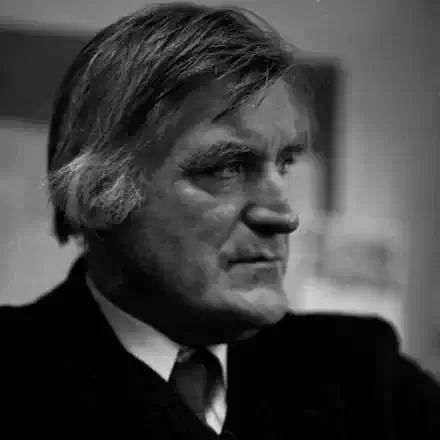
Ted Hughes
The Seven Sorrows
The first sorrow of autumn
Is the slow goodbye
Of the garden who stands so long in the evening-
A brown poppy head,
The stalk of a lily,
And still cannot go.
The second sorrow
Is the empty feet
Of a pheasant who hangs from a hook with his brothers.
The woodland of gold
Is folded in feathers
With its head in a bag.
And the third sorrow
Is the slow goodbye
Of the sun who has gathered the birds and who gathers
The minutes of evening,
The golden and holy
Ground of the picture.
The fourth sorrow
Is the pond gone black
Ruined and sunken the city of water-
The beetle's palace,
The catacombs
Of the dragonfly.
And the fifth sorrow
Is the slow goodbye
Of the woodland that quietly breaks up its camp.
One day it's gone.
It has only left litter-
Firewood, tentpoles.
And the sixth sorrow
Is the fox's sorrow
The joy of the huntsman, the joy of the hounds,
The hooves that pound
Till earth closes her ear
To the fox's prayer.
And the seventh sorrow
Is the slow goodbye
Of the face with its wrinkles that looks through the window
As the year packs up
Like a tatty fairground
That came for the children.
Is the slow goodbye
Of the garden who stands so long in the evening-
A brown poppy head,
The stalk of a lily,
And still cannot go.
The second sorrow
Is the empty feet
Of a pheasant who hangs from a hook with his brothers.
The woodland of gold
Is folded in feathers
With its head in a bag.
And the third sorrow
Is the slow goodbye
Of the sun who has gathered the birds and who gathers
The minutes of evening,
The golden and holy
Ground of the picture.
The fourth sorrow
Is the pond gone black
Ruined and sunken the city of water-
The beetle's palace,
The catacombs
Of the dragonfly.
And the fifth sorrow
Is the slow goodbye
Of the woodland that quietly breaks up its camp.
One day it's gone.
It has only left litter-
Firewood, tentpoles.
And the sixth sorrow
Is the fox's sorrow
The joy of the huntsman, the joy of the hounds,
The hooves that pound
Till earth closes her ear
To the fox's prayer.
And the seventh sorrow
Is the slow goodbye
Of the face with its wrinkles that looks through the window
As the year packs up
Like a tatty fairground
That came for the children.
750

William Butler Yeats
The Stolen Child
Where dips the rocky highland
Of Sleuth Wood in the lake,
There lies a leafy island
Where flapping herons wake
The drowsy water rats;
There we've hid our faery vats,
Full of berrys
And of reddest stolen cherries.
Come away, O human child!
To the waters and the wild
With a faery, hand in hand,
For the world's more full of weeping than you can understand.
Where the wave of moonlight glosses
The dim gray sands with light,
Far off by furthest Rosses
We foot it all the night,
Weaving olden dances
Mingling hands and mingling glances
Till the moon has taken flight;
To and fro we leap
And chase the frothy bubbles,
While the world is full of troubles
And anxious in its sleep.
Come away, O human child!
To the waters and the wild
With a faery, hand in hand,
For the world's more full of weeping than you can understand.
Where the wandering water gushes
From the hills above Glen-Car,
In pools among the rushes
That scarce could bathe a star,
We seek for slumbering trout
And whispering in their ears
Give them unquiet dreams;
Leaning softly out
From ferns that dropp their tears
Over the young streams.
Come away, O human child!
To the waters and the wild
With a faery, hand in hand,
For the world's more full of weeping than you can understand.
Away with us he's going,
The solemn-eyed:
He'll hear no more the lowing
Of the calves on the warm hillside
Or the kettle on the hob
Sing peace into his breast,
Or see the brown mice bob
Round and round the oatmeal chest.
For he comes, the human child,
To the waters and the wild
With a faery, hand in hand,
For the world's more full of weeping than he can understand.
738
Rudyard Kipling
The White Seal
Oh! hush thee, my baby, the night is behind us,
And black are the waters that sparkled so green.
The moon, o'er the combers, looks downward to find us
At rest in the hollows that rustle between.
Where billow meets billow, there soft be thy pillow;
Ah, weary wee flipperling, curl at thy ease!
The storm shall not wake thee, nor shark overtake thee,
Asleep in the arms of the slow-swinging seas.
You mustn't swim till you're six weeks old,
Or your head will be sunk by your heels;
And summer gales and Killer Whales
Are bad for baby seals.
Are bad for baby seals, dear rat,
As bad as bad can be.
But splash and grow strong,
And you can't be wrong,
Child of the Open Sea!
730
Ted Hughes
The Warm and the Cold
Freezing dusk is closing
Like a slow trap of steel
On trees and roads and hills and all
That can no longer feel.
But the carp is in its depth
Like a planet in its heaven.
And the badger in its bedding
Like a loaf in the oven.
And the butterfly in its mummy
Like a viol in its case.
And the owl in its feathers
Like a doll in its lace.
Freezing dusk has tightened
Like a nut screwed tight
On the starry aeroplane
Of the soaring night.
But the trout is in its hole
Like a chuckle in a sleeper.
The hare strays down the highway
Like a root going deeper.
The snail is dry in the outhouse
Like a seed in a sunflower.
The owl is pale on the gatepost
Like a clock on its tower.
Moonlight freezes the shaggy world
Like a mammoth of ice -
The past and the future
Are the jaws of a steel vice.
But the cod is in the tide-rip
Like a key in a purse.
The deer are on the bare-blown hill
Like smiles on a nurse.
The flies are behind the plaster
Like the lost score of a jig.
Sparrows are in the ivy-clump
Like money in a pig.
Such a frost
The flimsy moon
Has lost her wits.
A star falls.
The sweating farmers
Turn in their sleep
Like oxen on spits.
737
Rudyard Kipling
The Power of the Dog
There is sorrow enough in the natural way
From men and women to fill our day;
And when we are certain of sorrow in store,
Why do we always arrange for more?
Brothers and Sisters, I bid you beware
Of giving your heart to a dog to tear.
Buy a pup and your money will buy
Love unflinching that cannot lie--
Perfect passion and worship fed
By a kick in the ribs or a pat on the head.
Nevertheless it is hardly fair
To risk your heart for a dog to tear.
When the fourteen years which Nature permits
Are closing in asthma, or tumour, or fits,
And the vet's unspoken prescription runs
To lethal chambers or loaded guns,
Then you will find--it's your own affair--
But...you've given your heart for a dog to tear.
When the body that lived at your single will,
With its whimper of welcome, is stilled (how still!);
When the spirit that answered your every mood
Is gone--wherever it goes--for good,
You will discover how much you care,
And will give your heart for the dog to tear.
We've sorrow enough in the natural way,
When it comes to burying Christian clay.
Our loves are not given, but only lent,
At compound interest of cent per cent.
Though it is not always the case, I believe,
That the longer we've kept 'em, the more do we grieve:
For, when debts are payable, right or wrong,
A short-time loan is as bad as a long--
So why in Heaven (before we are there)
Should we give our hearts to a dog to tear?
745
Pablo Neruda
Cat's Dream
How neatly a cat sleeps,
sleeps with its paws and its posture,
sleeps with its wicked claws,
and with its unfeeling blood,
sleeps with all the rings-a
series of burnt circles-which
have formed the odd geology
of its sand-colored tail.
I should like to sleep like a cat,
with all the fur of time,
with a tongue rough as flint,
with the dry sex of fire;
and after speaking to no one,
stretch myself over the world,
over roofs and landscapes,
with a passionate desire
to hunt the rats in my dreams.
I have seen how the cat asleep
would undulate, how the night
flowed through it like dark water;
and at times, it was going to fall
or possibly plunge into
the bare deserted snowdrifts.
Sometimes it grew so much in sleep
like a tiger's great-grandfather,
and would leap in the darkness over
rooftops, clouds and volcanoes.
Sleep, sleep cat of the night,
with episcopal ceremony
and your stone-carved moustache.
Take care of all our dreams;
control the obscurity
of our slumbering prowess
with your relentless heart
and the great ruff of your tail.
Translated by Alastair Reid
734

Federico García Lorca
The Old Lizard
In the parched path
I have seen the good lizard
(one dropp of crocodile)
meditating.
With his green frock-coat
of an abbot of the devil,
his correct bearing
and his stiff collar,
he has the sad air
of an old professor.
Those faded eyes
of a broken artist,
how they watch the afternoon
in dismay!
Is this, my friend,
your twilight constitutional?
Please use your cane,
you are very old, Mr. Lizard,
and the children of the village
may startle you.
What are you seeking in the path,
my near-sighted philosopher,
if the wavering phantasm
of the parched afternoon
has broken the horizon?
Are you seeking the blue alms
of the moribund heaven?
A penny of a star?
Or perhaps
you've been reading a volume
of Lamartine, and you relish
the plateresque trills
of the birds?
(You watch the setting sun,
and your eyes shine,
oh, dragon of the frogs,
with a human radiance.
Ideas, gondolas without oars,
cross the shadowy
waters of your
burnt-out eyes.)
Have you come looking
for that lovely lady lizard,
green as the wheatfields
of May,
as the long locks
of sleeping pools,
who scorned you, and then
left you in your field?
Oh, sweet idyll, broken
among the sweet sedges!
But, live! What the devil!
I like you.
The motto 'I oppose
the serpent' triumphs
in that grand double chin
of a Christian archbishop.
Now the sun has dissolved
in the cup of the mountains,
and the flocks
cloud the roadway.
It is the hour to depart:
leave the dry path
and your meditations.
You will have time
to look at the stars
when the worms are eating you
at their leisure.
Go home to your house
by the village, of the crickets!
Good night, my friend
Mr. Lizard!
Now the field is empty,
the mountains dim,
the roadway deserted.
Only, now and again,
a cuckoo sings in the darkness
of the poplar trees.
747

Walt Whitman
Miracles
WHY! who makes much of a miracle?
As to me, I know of nothing else but miracles,
Whether I walk the streets of Manhattan,
Or dart my sight over the roofs of houses toward the sky,
Or wade with naked feet along the beach, just in the edge of the
water,
Or stand under trees in the woods,
Or talk by day with any one I love--or sleep in the bed at night with
any one I love,
Or sit at table at dinner with my mother,
Or look at strangers opposite me riding in the car,
Or watch honey-bees busy around the hive, of a summer forenoon,
Or animals feeding in the fields,
Or birds--or the wonderfulness of insects in the air,
Or the wonderfulness of the sun-down--or of stars shining so quiet
and bright,
Or the exquisite, delicate, thin curve of the new moon in spring;
Or whether I go among those I like best, and that like me best-
mechanics, boatmen, farmers,
Or among the savans--or to the soiree--or to the opera,
Or stand a long while looking at the movements of machinery,
Or behold children at their sports,
Or the admirable sight of the perfect old man, or the perfect old
woman,
Or the sick in hospitals, or the dead carried to burial,
Or my own eyes and figure in the glass;
These, with the rest, one and all, are to me miracles,
The whole referring--yet each distinct, and in its place.
To me, every hour of the light and dark is a miracle,
Every cubic inch of space is a miracle,
Every square yard of the surface of the earth is spread with the
same,
Every foot of the interior swarms with the same;
Every spear of grass--the frames, limbs, organs, of men and women,
and all that concerns them,
All these to me are unspeakably perfect miracles.
To me the sea is a continual miracle;
The fishes that swim--the rocks--the motion of the waves--the ships,
with men in them,
What stranger miracles are there?
741
Henry Wadsworth Longfellow
The Song Of Hiawatha XV: Hiawatha's Lamentation
In those days the Evil Spirits,
All the Manitos of mischief,
Fearing Hiawatha's wisdom,
And his love for Chibiabos,
Jealous of their faithful friendship,
And their noble words and actions,
Made at length a league against them,
To molest them and destroy them.
Hiawatha, wise and wary,
Often said to Chibiabos,
'O my brother! do not leave me,
Lest the Evil Spirits harm you!'
Chibiabos, young and heedless,
Laughing shook his coal-black tresses,
Answered ever sweet and childlike,
'Do not fear for me, O brother!
Harm and evil come not near me!'
Once when Peboan, the Winter,
Roofed with ice the Big-Sea-Water,
When the snow-flakes, whirling downward,
Hissed among the withered oak-leaves,
Changed the pine-trees into wigwams,
Covered all the earth with silence,
Armed with arrows, shod with snow-shoes,
Heeding not his brother's warning,
Fearing not the Evil Spirits,
Forth to hunt the deer with antlers
All alone went Chibiabos.
Right across the Big-Sea-Water
Sprang with speed the deer before him.
With the wind and snow he followed,
O'er the treacherous ice he followed,
Wild with all the fierce commotion
And the rapture of the hunting.
But beneath, the Evil Spirits
Lay in ambush, waiting for him,
Broke the treacherous ice beneath him,
Dragged him downward to the bottom,
Buried in the sand his body.
Unktahee, the god of water,
He the god of the Dacotahs,
Drowned him in the deep abysses
Of the lake of Gitche Gumee.
From the headlands Hiawatha
Sent forth such a wail of anguish,
Such a fearful lamentation,
That the bison paused to listen,
And the wolves howled from the prairies,
And the thunder in the distance
Starting answered 'Baim-wawa!'
Then his face with black he painted,
With his robe his head he covered,
In his wigwam sat lamenting,
Seven long weeks he sat lamenting,
Uttering still this moan of sorrow:
'He is dead, the sweet musician!
He the sweetest of all singers!
He has gone from us forever,
He has moved a little nearer
To the Master of all music,
To the Master of all singing!
O my brother, Chibiabos!'
And the melancholy fir-trees
Waved their dark green fans above him,
Waved their purple cones above him,
Sighing with him to console him,
Mingling with his lamentation
Their complaining, their lamenting.
Came the Spring, and all the forest
Looked in vain for Chibiabos;
Sighed the rivulet, Sebowisha,
Sighed the rushes in the meadow.
From the tree-tops sang the bluebird,
Sang the bluebird, the Owaissa,
'Chibiabos! Chibiabos!
He is dead, the sweet musician!'
From the wigwam sang the robin,
Sang the robin, the Opechee,
'Chibiabos! Chibiabos!
He is dead, the sweetest singer!'
And at night through all the forest
Went the whippoorwill complaining,
Wailing went the Wawonaissa,
'Chibiabos! Chibiabos!
He is dead, the sweet musician!
He the sweetest of all singers!'
Then the Medicine-men, the Medas,
The magicians, the Wabenos,
And the Jossakeeds, the Prophets,
Came to visit Hiawatha;
Built a Sacred Lodge beside him,
To appease him, to console him,
Walked in silent, grave procession,
Bearing each a pouch of healing,
Skin of beaver, lynx, or otter,
Filled with magic roots and simples,
Filled with very potent medicines.
When he heard their steps approaching,
Hiawatha ceased lamenting,
Called no more on Chibiabos;
Naught he questioned, naught he answered,
But his mournful head uncovered,
From his face the mourning colors
Washed he slowly and in silence,
Slowly and in silence followed
Onward to the Sacred Wigwam.
There a magic drink they gave him,
Made of Nahma-wusk, the spearmint,
And Wabeno-wusk, the yarrow,
Roots of power, and herbs of healing;
Beat their drums, and shook their rattles;
Chanted singly and in chorus,
Mystic songs like these, they chanted.
'I myself, myself! behold me!
`T Is the great Gray Eagle talking;
Come, ye white crows, come and hear him!
The loud-speaking thunder helps me;
All the unseen spirits help me;
I can hear their voices calling,
All around the sky I hear them!
I can blow you strong, my brother,
I can heal you, Hiawatha!'
'Hi-au-ha!' replied the chorus,
'Wayha-way!' the mystic chorus.
Friends of mine are all the serpents!
Hear me shake my skin of hen-hawk!
Mahng, the white loon, I can kill him;
I can shoot your heart and kill it!
I can blow you strong, my brother,
I can heal you, Hiawatha !'
'Hi-au-ha!' replied the chorus,
'Wayhaway!' the mystic chorus.
'I myself, myself! the prophet!
When I speak the wigwam trembles,
Shakes the Sacred Lodge with terror,
Hands unseen begin to shake it!
When I walk, the sky I tread on
Bends and makes a noise beneath me!
I can blow you strong, my brother!
Rise and speak, O Hiawatha!'
'Hi-au-ha!' replied the chorus,
'Way-ha-way!' the mystic chorus.
Then they shook their medicine-pouches
O'er the head of Hiawatha,
Danced their medicine-dance around him;
And upstarting wild and haggard,
Like a man from dreams awakened,
He was healed of all his madness.
As the clouds are swept from heaven,
Straightway from his brain departed
All his moody melancholy;
As the ice is swept from rivers,
Straightway from his heart departed
All his sorrow and affliction.
Then they summoned Chibiabos
From his grave beneath the waters,
From the sands of Gitche Gumee
Summoned Hiawatha's brother.
And so mighty was the magic
Of that cry and invocation,
That he heard it as he lay there
Underneath the Big-Sea-Water;
From the sand he rose and listened,
Heard the music and the singing,
Came, obedient to the summons,
To the doorway of the wigwam,
But to enter they forbade him.
Through a chink a coal they gave him,
Through the door a burning fire-brand;
Ruler in the Land of Spirits,
Ruler o'er the dead, they made him,
Telling him a fire to kindle
For all those that died thereafter,
Camp-fires for their night encampments
On their solitary journey
To the kingdom of Ponemah,
To the land of the Hereafter.
From the village of his childhood,
From the homes of those who knew him,
Passing silent through the forest,
Like a smoke-wreath wafted sideways,
Slowly vanished Chibiabos!
Where he passed, the branches moved not,
Where he trod, the grasses bent not,
And the fallen leaves of last year
Made no sound beneath his footstep.
Four whole days he journeyed onward
Down the pathway of the dead men;
On the dead-man's strawberry feasted,
Crossed the melancholy river,
On the swinging log he crossed it,
Came unto the Lake of Silver,
In the Stone Canoe was carried
To the Islands of the Blessed,
To the land of ghosts and shadows.
On that journey, moving slowly,
Many weary spirits saw he,
Panting under heavy burdens,
Laden with war-clubs, bows and arrows,
Robes of fur, and pots and kettles,
And with food that friends had given
For that solitary journey.
'Ay! why do the living,' said they,
'Lay such heavy burdens on us!
Better were it to go naked,
Better were it to go fasting,
Than to bear such heavy burdens
On our long and weary journey!'
Forth then issued Hiawatha,
Wandered eastward, wandered westward,
Teaching men the use of simples
And the antidotes for poisons,
And the cure of all diseases.
Thus was first made known to mortals
All the mystery of Medamin,
All the sacred art of healing.
719
Federico García Lorca
The Gypsy and the Wind
Playing her parchment moon
Precosia comes
along a watery path of laurels and crystal lights.
The starless silence, fleeing
from her rhythmic tambourine,
falls where the sea whips and sings,
his night filled with silvery swarms.
High atop the mountain peaks
the sentinels are weeping;
they guard the tall white towers
of the English consulate.
And gypsies of the water
for their pleasure erect
little castles of conch shells
and arbors of greening pine.
Playing her parchment moon
Precosia comes.
The wind sees her and rises,
the wind that never slumbers.
Naked Saint Christopher swells,
watching the girl as he plays
with tongues of celestial bells
on an invisible bagpipe.
Gypsy, let me lift your skirt
and have a look at you.
Open in my ancient fingers
the blue rose of your womb.
Precosia throws the tambourine
and runs away in terror.
But the virile wind pursues her
with his breathing and burning sword.
The sea darkens and roars,
while the olive trees turn pale.
The flutes of darkness sound,
and a muted gong of the snow.
Precosia, run, Precosia!
Or the green wind will catch you!
Precosia, run, Precosia!
And look how fast he comes!
A satyr of low-born stars
with their long and glistening tongues.
Precosia, filled with fear,
now makes her way to that house
beyond the tall green pines
where the English consul lives.
Alarmed by the anguished cries,
three riflemen come running,
their black capes tightly drawn,
and berets down over their brow.
The Englishman gives the gypsy
a glass of tepid milk
and a shot of Holland gin
which Precosia does not drink.
And while she tells them, weeping,
of her strange adventure,
the wind furiously gnashes
against the slate roof tiles.
716