
Animals and Nature
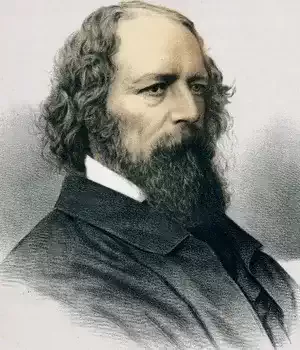
Alfred Lord Tennyson
The Lotos-eaters
"Courage!" he said, and pointed toward the land,
"This mounting wave will roll us shoreward soon."
In the afternoon they came unto a land
In which it seemed always afternoon.
All round the coast the languid air did swoon,
Breathing like one that hath a weary dream.
Full-faced above the valley stood the moon;
And like a downward smoke, the slender stream
Along the cliff to fall and pause and fall did seem.
A land of streams! some, like a downward smoke,
Slow-dropping veils of thinnest lawn, did go;
And some thro' wavering lights and shadows broke,
Rolling a slumbrous sheet of foam below.
They saw the gleaming river seaward flow
From the inner land: far off, three mountain-tops,
Three silent pinnacles of aged snow,
Stood sunset-flush'd: and, dew'd with showery drops,
Up-clomb the shadowy pine above the woven copse.
The charmed sunset linger'd low adown
In the red West: thro' mountain clefts the dale
Was seen far inland, and the yellow down
Border'd with palm, and many a winding vale
And meadow, set with slender galingale;
A land where all things always seem'd the same!
And round about the keel with faces pale,
Dark faces pale against that rosy flame,
The mild-eyed melancholy Lotos-eaters came.
Branches they bore of that enchanted stem,
Laden with flower and fruit, whereof they gave
To each, but whoso did receive of them,
And taste, to him the gushing of the wave
Far far away did seem to mourn and rave
On alien shores; and if his fellow spake,
His voice was thin, as voices from the grave;
And deep-asleep he seem'd, yet all awake,
And music in his ears his beating heart did make.
They sat them down upon the yellow sand,
Between the sun and moon upon the shore;
And sweet it was to dream of Fatherland,
Of child, and wife, and slave; but evermore
Most weary seem'd the sea, weary the oar,
Weary the wandering fields of barren foam.
Then some one said, "We will return no more";
And all at once they sang, "Our island home
Is far beyond the wave; we will no longer roam."CHORIC SONGI
There is sweet music here that softer falls
Than petals from blown roses on the grass,
Or night-dews on still waters between walls
Of shadowy granite, in a gleaming pass;
Music that gentlier on the spirit lies,
Than tir'd eyelids upon tir'd eyes;
Music that brings sweet sleep down from the blissful skies.
Here are cool mosses deep,
And thro' the moss the ivies creep,
And in the stream the long-leaved flowers weep,
And from the craggy ledge the poppy hangs in sleep."II
Why are we weigh'd upon with heaviness,
And utterly consumed with sharp distress,
While all things else have rest from weariness?
All things have rest: why should we toil alone,
We only toil, who are the first of things,
And make perpetual moan,
Still from one sorrow to another thrown:
Nor ever fold our wings,
And cease from wanderings,
Nor steep our brows in slumber's holy balm;
Nor harken what the inner spirit sings,
"There is no joy but calm!"
Why should we only toil, the roof and crown of things?III
Lo! in the middle of the wood,
The folded leaf is woo'd from out the bud
With winds upon the branch, and there
Grows green and broad, and takes no care,
Sun-steep'd at noon, and in the moon
Nightly dew-fed; and turning yellow
Falls, and floats adown the air.
Lo! sweeten'd with the summer light,
The full-juiced apple, waxing over-mellow,
Drops in a silent autumn night.
All its allotted length of days
The flower ripens in its place,
Ripens and fades, and falls, and hath no toil,
Fast-rooted in the fruitful soil.IV
Hateful is the dark-blue sky,
Vaulted o'er the dark-blue sea.
Death is the end of life; ah, why
Should life all labour be?
Let us alone. Time driveth onward fast,
And in a little while our lips are dumb.
Let us alone. What is it that will last?
All things are taken from us, and become
Portions and parcels of the dreadful past.
Let us alone. What pleasure can we have
To war with evil? Is there any peace
In ever climbing up the climbing wave?
All things have rest, and ripen toward the grave
In silence; ripen, fall and cease:
Give us long rest or death, dark death, or dreamful ease.V
How sweet it were, hearing the downward stream,
With half-shut eyes ever to seem
Falling asleep in a half-dream!
To dream and dream, like yonder amber light,
Which will not leave the myrrh-bush on the height;
To hear each other's whisper'd speech;
Eating the Lotos day by day,
To watch the crisping ripples on the beach,
And tender curving lines of creamy spray;
To lend our hearts and spirits wholly
To the influence of mild-minded melancholy;
To muse and brood and live again in memory,
With those old faces of our infancy
Heap'd over with a mound of grass,
Two handfuls of white dust, shut in an urn of brass!VI
Dear is the memory of our wedded lives,
And dear the last embraces of our wives
And their warm tears: but all hath suffer'd change:
For surely now our household hearths are cold,
Our sons inherit us: our looks are strange:
And we should come like ghosts to trouble joy.
Or else the island princes over-bold
Have eat our substance, and the minstrel sings
Before them of the ten years' war in Troy,
And our great deeds, as half-forgotten things.
Is there confusion in the little isle?
Let what is broken so remain.
The Gods are hard to reconcile:
'Tis hard to settle order once again.
There is confusion worse than death,
Trouble on trouble, pain on pain,
Long labour unto aged breath,
Sore task to hearts worn out by many wars
And eyes grown dim with gazing on the pilot-stars.VII
But, propt on beds of amaranth and moly,
How sweet (while warm airs lull us, blowing lowly)
With half-dropt eyelid still,
Beneath a heaven dark and holy,
To watch the long bright river drawing slowly
His waters from the purple hill-To
hear the dewy echoes calling
From cave to cave thro' the thick-twined vine-To
watch the emerald-colour'd water falling
Thro' many a wov'n acanthus-wreath divine!
Only to hear and see the far-off sparkling brine,
Only to hear were sweet, stretch'd out beneath the pine.VIII
The Lotos blooms below the barren peak:
The Lotos blows by every winding creek:
All day the wind breathes low with mellower tone:
Thro' every hollow cave and alley lone
Round and round the spicy downs the yellow Lotos-dust is blown.
We have had enough of action, and of motion we,
Roll'd to starboard, roll'd to larboard, when the surge was seething free,
Where the wallowing monster spouted his foam-fountains in the sea.
Let us swear an oath, and keep it with an equal mind,
In the hollow Lotos-land to live and lie reclined
On the hills like Gods together, careless of mankind.
For they lie beside their nectar, and the bolts are hurl'd
Far below them in the valleys, and the clouds are lightly curl'd
Round their golden houses, girdled with the gleaming world:
Where they smile in secret, looking over wasted lands,
Blight and famine, plague and earthquake, roaring deeps and fiery sands,
Clanging fights, and flaming towns, and sinking ships, and praying hands.
But they smile, they find a music centred in a doleful song
Steaming up, a lamentation and an ancient tale of wrong,
Like a tale of little meaning tho' the words are strong;
Chanted from an ill-used race of men that cleave the soil,
Sow the seed, and reap the harvest with enduring toil,
Storing yearly little dues of wheat, and wine and oil;
Till they perish and they suffer--some, 'tis whisper'd--down in hell
Suffer endless anguish, others in Elysian valleys dwell,
Resting weary limbs at last on beds of asphodel.
Surely, surely, slumber is more sweet than toil, the shore
Than labour in the deep mid-ocean, wind and wave and oar;
O, rest ye, brother mariners, we will not wander more.
707
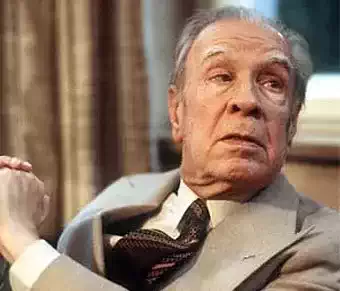
Jorge Luis Borges
To a Cat
Mirrors are not more silent
nor the creeping dawn more secretive;
in the moonlight, you are that panther
we catch sight of from afar.
By the inexplicable workings of a divine law,
we look for you in vain;
More remote, even, than the Ganges or the setting sun,
yours is the solitude, yours the secret.
Your haunch allows the lingering
caress of my hand. You have accepted,
since that long forgotten past,
the love of the distrustful hand.
You belong to another time. You are lord
of a place bounded like a dream.
698
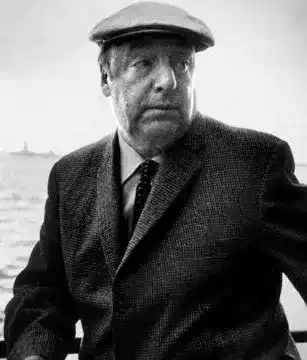
Pablo Neruda
Ode to Salt
This salt
in the salt cellar
I once saw in the salt mines.
I know
you won't
believe me
but
it sings
salt sings, the skin
of the salt mines
sings
with a mouth smothered
by the earth.
I shivered in those
solitudes
when I heard
the voice
of
the salt
in the desert.
Near Antofagasta
the nitrous
pampa
resounds:
a
broken
voice,
a mournful
song.
In its caves
the salt moans, mountain
of buried light,
translucent cathedral,
crystal of the sea, oblivion
of the waves.
And then on every table
in the world,
salt,
we see your piquant
powder
sprinkling
vital light
upon
our food.
Preserver
of the ancient
holds of ships,
discoverer
on
the high seas,
earliest
sailor
of the unknown, shifting
byways of the foam.
Dust of the sea, in you
the tongue receives a kiss
from ocean night:
taste imparts to every seasoned
dish your ocean essence;
the smallest,
miniature
wave from the saltcellar
reveals to us
more than domestic whiteness;
in it, we taste finitude.
700
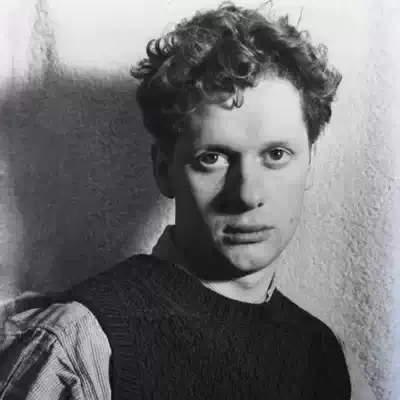
Dylan Thomas
Author's Prologue
This day winding down now
At God speeded summer's end
In the torrent salmon sun,
In my seashaken house
On a breakneck of rocks
Tangled with chirrup and fruit,
Froth, flute, fin, and quill
At a wood's dancing hoof,
By scummed, starfish sands
With their fishwife cross
Gulls, pipers, cockles, and snails,
Out there, crow black, men
Tackled with clouds, who kneel
To the sunset nets,
Geese nearly in heaven, boys
Stabbing, and herons, and shells
That speak seven seas,
Eternal waters away
From the cities of nine
Days' night whose towers will catch
In the religious wind
Like stalks of tall, dry straw,
At poor peace I sing
To you strangers (though song
Is a burning and crested act,
The fire of birds in
The world's turning wood,
For my swan, splay sounds),
Out of these seathumbed leaves
That will fly and fall
Like leaves of trees and as soon
Crumble and undie
Into the dogdayed night.
Seaward the salmon, sucked sun slips,
And the dumb swans drub blue
My dabbed bay's dusk, as I hack
This rumpus of shapes
For you to know
How I, a spining man,
Glory also this star, bird
Roared, sea born, man torn, blood blest.
Hark: I trumpet the place,
From fish to jumping hill! Look:
I build my bellowing ark
To the best of my love
As the flood begins,
Out of the fountainhead
Of fear, rage read, manalive,
Molten and mountainous to stream
Over the wound asleep
Sheep white hollow farms
To Wales in my arms.
Hoo, there, in castle keep,
You king singsong owls, who moonbeam
The flickering runs and dive
The dingle furred deer dead!
Huloo, on plumbed bryns,
O my ruffled ring dove
in the hooting, nearly dark
With Welsh and reverent rook,
Coo rooning the woods' praise,
who moons her blue notes from her nest
Down to the curlew herd!
Ho, hullaballoing clan
Agape, with woe
In your beaks, on the gabbing capes!
Heigh, on horseback hill, jack
Whisking hare! who
Hears, there, this fox light, my flood ship's
Clangour as I hew and smite
(A clash of anvils for my
Hubbub and fiddle, this tune
On atounged puffball)
But animals thick as theives
On God's rough tumbling grounds
(Hail to His beasthood!).
Beasts who sleep good and thin,
Hist, in hogback woods! The haystacked
Hollow farms ina throng
Of waters cluck and cling,
And barnroofs cockcrow war!
O kingdom of neighbors finned
Felled and quilled, flash to my patch
Work ark and the moonshine
Drinking Noah of the bay,
With pelt, and scale, and fleece:
Only the drowned deep bells
Of sheep and churches noise
Poor peace as the sun sets
And dark shoals every holy field.
We will ride out alone then,
Under the stars of Wales,
Cry, Multiudes of arks! Across
The water lidded lands,
Manned with their loves they'll move
Like wooden islands, hill to hill.
Huloo, my prowed dove with a flute!
Ahoy, old, sea-legged fox,
Tom tit and Dai mouse!
My ark sings in the sun
At God speeded summer's end
And the flood flowers now.
At God speeded summer's end
In the torrent salmon sun,
In my seashaken house
On a breakneck of rocks
Tangled with chirrup and fruit,
Froth, flute, fin, and quill
At a wood's dancing hoof,
By scummed, starfish sands
With their fishwife cross
Gulls, pipers, cockles, and snails,
Out there, crow black, men
Tackled with clouds, who kneel
To the sunset nets,
Geese nearly in heaven, boys
Stabbing, and herons, and shells
That speak seven seas,
Eternal waters away
From the cities of nine
Days' night whose towers will catch
In the religious wind
Like stalks of tall, dry straw,
At poor peace I sing
To you strangers (though song
Is a burning and crested act,
The fire of birds in
The world's turning wood,
For my swan, splay sounds),
Out of these seathumbed leaves
That will fly and fall
Like leaves of trees and as soon
Crumble and undie
Into the dogdayed night.
Seaward the salmon, sucked sun slips,
And the dumb swans drub blue
My dabbed bay's dusk, as I hack
This rumpus of shapes
For you to know
How I, a spining man,
Glory also this star, bird
Roared, sea born, man torn, blood blest.
Hark: I trumpet the place,
From fish to jumping hill! Look:
I build my bellowing ark
To the best of my love
As the flood begins,
Out of the fountainhead
Of fear, rage read, manalive,
Molten and mountainous to stream
Over the wound asleep
Sheep white hollow farms
To Wales in my arms.
Hoo, there, in castle keep,
You king singsong owls, who moonbeam
The flickering runs and dive
The dingle furred deer dead!
Huloo, on plumbed bryns,
O my ruffled ring dove
in the hooting, nearly dark
With Welsh and reverent rook,
Coo rooning the woods' praise,
who moons her blue notes from her nest
Down to the curlew herd!
Ho, hullaballoing clan
Agape, with woe
In your beaks, on the gabbing capes!
Heigh, on horseback hill, jack
Whisking hare! who
Hears, there, this fox light, my flood ship's
Clangour as I hew and smite
(A clash of anvils for my
Hubbub and fiddle, this tune
On atounged puffball)
But animals thick as theives
On God's rough tumbling grounds
(Hail to His beasthood!).
Beasts who sleep good and thin,
Hist, in hogback woods! The haystacked
Hollow farms ina throng
Of waters cluck and cling,
And barnroofs cockcrow war!
O kingdom of neighbors finned
Felled and quilled, flash to my patch
Work ark and the moonshine
Drinking Noah of the bay,
With pelt, and scale, and fleece:
Only the drowned deep bells
Of sheep and churches noise
Poor peace as the sun sets
And dark shoals every holy field.
We will ride out alone then,
Under the stars of Wales,
Cry, Multiudes of arks! Across
The water lidded lands,
Manned with their loves they'll move
Like wooden islands, hill to hill.
Huloo, my prowed dove with a flute!
Ahoy, old, sea-legged fox,
Tom tit and Dai mouse!
My ark sings in the sun
At God speeded summer's end
And the flood flowers now.
688
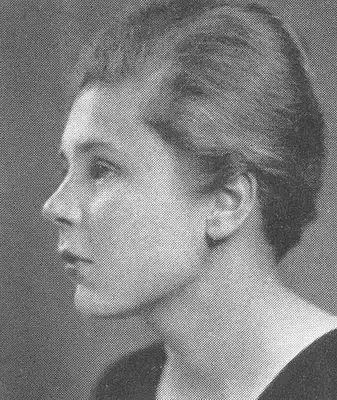
Elizabeth Bishop
Roosters
At four o'clock
in the gun-metal blue dark
we hear the first crow of the first cock
just below
the gun-metal blue window
and immediately there is an echo
off in the distance,
then one from the backyard fence,
then one, with horrible insistence,
grates like a wet match
from the broccoli patch,
flares,and all over town begins to catch.
Cries galore
come from the water-closet door,
from the dropping-plastered henhouse floor,
where in the blue blur
their rusting wives admire,
the roosters brace their cruel feet and glare
with stupid eyes
while from their beaks there rise
the uncontrolled, traditional cries.
Deep from protruding chests
in green-gold medals dressed,
planned to command and terrorize the rest,
the many wives
who lead hens' lives
of being courted and despised;
deep from raw throats
a senseless order floats
all over town. A rooster gloats
over our beds
from rusty irons sheds
and fences made from old bedsteads,
over our churches
where the tin rooster perches,
over our little wooden northern houses,
making sallies
from all the muddy alleys,
marking out maps like Rand McNally's:
glass-headed pins,
oil-golds and copper greens,
anthracite blues, alizarins,
each one an active
displacement in perspective;
each screaming, "This is where I live!"
Each screaming
"Get up! Stop dreaming!"
Roosters, what are you projecting?
You, whom the Greeks elected
to shoot at on a post, who struggled
when sacrificed, you whom they labeled
"Very combative..."
what right have you to give
commands and tell us how to live,
cry "Here!" and "Here!"
and wake us here where are
unwanted love, conceit and war?
The crown of red
set on your little head
is charged with all your fighting blood
Yes, that excrescence
makes a most virile presence,
plus all that vulgar beauty of iridescence
Now in mid-air
by two they fight each other.
Down comes a first flame-feather,
and one is flying,
with raging heroism defying
even the sensation of dying.
And one has fallen
but still above the town
his torn-out, bloodied feathers drift down;
and what he sung
no matter. He is flung
on the gray ash-heap, lies in dung
with his dead wives
with open, bloody eyes,
while those metallic feathers oxidize.
St. Peter's sin
was worse than that of Magdalen
whose sin was of the flesh alone;
of spirit, Peter's,
falling, beneath the flares,
among the "servants and officers."
Old holy sculpture
could set it all together
in one small scene, past and future:
Christ stands amazed,
Peter, two fingers raised
to surprised lips, both as if dazed.
But in between
a little cock is seen
carved on a dim column in the travertine,
explained by gallus canit;
flet Petrus underneath it,
There is inescapable hope, the pivot;
yes, and there Peter's tears
run down our chanticleer's
sides and gem his spurs.
Tear-encrusted thick
as a medieval relic
he waits. Poor Peter, heart-sick,
still cannot guess
those cock-a-doodles yet might bless,
his dreadful rooster come to mean forgiveness,
a new weathervane
on basilica and barn,
and that outside the Lateran
there would always be
a bronze cock on a porphyry
pillar so the people and the Pope might see
that event the Prince
of the Apostles long since
had been forgiven, and to convince
all the assembly
that "Deny deny deny"
is not all the roosters cry.
In the morning
a low light is floating
in the backyard, and gilding
from underneath
the broccoli, leaf by leaf;
how could the night have come to grief?
gilding the tiny
floating swallow's belly
and lines of pink cloud in the sky,
the day's preamble
like wandering lines in marble,
The cocks are now almost inaudible.
The sun climbs in,
following "to see the end,"
faithful as enemy, or friend.
682
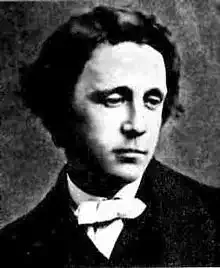
Lewis Carroll
The White Knight's Song
'Haddock's Eyes' or 'The Aged Aged Man' or
'Ways and Means' or 'ASitting
On A Gate'
I'll tell thee everything I can;
There's little to relate.
I saw an aged, aged man,
Asitting
on a gate.
'Who are you, aged man?' I said.
'And how is it you live?'
And his answer trickled through my head
Like water through a sieve.
He said 'I look for butterflies
That sleep among the wheat;
I make them into muttonpies,
And sell them in the street.
I sell them unto men,' he said,
'Who sail on stormy seas;
And that's the way I get my bread
A
trifle, if you please.'
But I was thinking of a plan
To dye one's whiskers green,
And always use so large a fan
That it could not be seen.
So, having no reply to give
To what the old man said,
I cried, 'Come, tell me how you live!'
And thumped him on the head.
His accents mild took up the tale;
He said, 'I go my ways,
And when I find a mountainrill,
I set it in a blaze.
And thence they make a stuff they call
Rowland's Macassar OilYet
twopencehalfpenny
is all
They give me for my toil.'
But I was thinking of a way
To feed oneself on batter,
And so go on from day to day
Getting a little fatter.
I shook him well from side to side,
Until his face was blue;
'Come, tell me how you live,' I cried
'And what it is you do!'
He said, 'I hunt for haddocks' eyes
Among the heather bright,
And work them into waistcoatbuttons
In the silent night.
And these I do not sell for gold
Or coin of silvery shine,
But for a copper halfpenny,
And that will purchase nine.
'I sometimes dig for buttered rolls,
Or set limed twigs for crabs;
I sometimes search the grassy knolls
For wheels of hansomcabs.
And that's the way' (he gave a wink)
'By which I get my wealth
And
very gladly will I drink
Your Honor's noble health.'
I heard him then, for I had just
Completed my design
To keep the Menai bridge from rust
By boiling it in wine.
I thanked him much for telling me
The way he got his wealth,
But chiefly for his wish that he
Might drink my noble health.
And now, if e'er by chance I put
My fingers into glue,
Or madly squeeze a righthand
foot
Into a lefthand
shoe,
Or if I drop upon my toe
A very heavy weight,
I weep, for it reminds me so
Of that old man I used to know
Whose
look was mild, whose speech was slow,
Whose hair was whiter than the snow,
Whose face was very like a crow
With eyes, like cinders, all aglow,
Who seemed distracted with his woe,
Who rocked his body to and fro,
And muttered mumblingly and low,
As if his mouth were full of dough,
Who snorted like a buffalo
That
summer evening long ago
Asitting
on a gate.
685

Kazi Nazrul Islam
Baby Sparrow
From its nest behind the termite-eaten
wooden beams of the huge building
a baby sparrow cried out for its mother.
The mother, catching dragonflies
in the nearby field heard the cry.
'Must be that some mischievous child is trying to
take away my baby,' she thought
and, with her heart overcome with anxiety,
desperately headed back for the nest.
The fledgling saw its mother coming
and thought, 'Why don't I fly to her chest?'
and tried to do just that.
Alas, it hadn't learn to fly yet
and therefore fell all the way down to the floor. T
he mother, with tearful eyes saw this
and without any thoughts for her own life
flew down to her baby, trying
to protect her under her wings.
But soon some children came running,
chasing after them and finally catching the baby.
They showed no concern for
how precious the baby was to its mother.
They kept putting it inside an umbrella,
inside pockets, etc.
They all were laughing, except for one boyhis
eyes were overcome with tears.
His mother had passed away long ago,
he'd even forgotten what it was like
to be loved by his mother,
Yet, he felt a cry of pain deep within his heart.
With a ladder, he put the baby sparrow back in its
The tearful eyes of the baby sparrow
held heartfelt blessings for him.
The mother kept looking at the boy with great surprise,
her eyes too expressing her heartfelt gratitude for him.
These silent blessings that
the mother bird bestowed upon him,
the entire world cannot equal by a single speck.
[Original: Chorui Pakhir Chhana; Translation: Sajed Kamal]
668

Robert Louis Stevenson
The Moon
The moon has a face like the clock in the hall;
She shines on thieves on the garden wall,
On streets and fields and harbour quays,
And birdies asleep in the forks of the trees.
The squalling cat and the squeaking mouse,
The howling dog by the door of the house,
The bat that lies in bed at noon,
All love to be out by the light of the moon.
But all of the things that belong to the day
Cuddle to sleep to be out of her way;
And flowers and children close their eyes
Till up in the morning the sun shall arise.
671
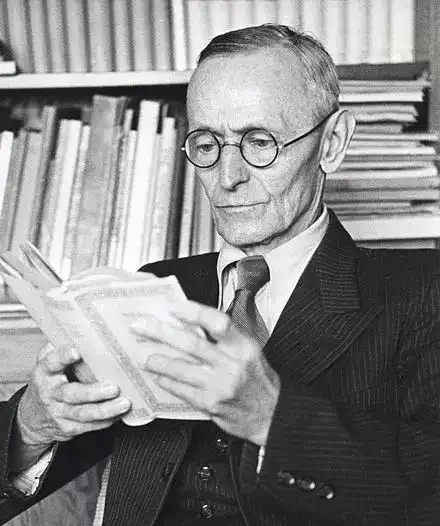
Hermann Hesse
A Swarm Of Gnats
Many thousand glittering motes
Crowd forward greedily together
In trembling circles.
Extravagantly carousing away
For a whole hour rapidly vanishing,
They rave, delirious, a shrill whir,
Shivering with joy against death.
While kingdoms, sunk into ruin,
Whose thrones, heavy with gold, instantly scattered
Into night and legend, without leaving a trace,
Have never known so fierce a dancing.
Translated by James Wright
675

Walt Whitman
Out of the Cradle Endlessly Rocking
Out of the cradle endlessly rocking,
Out of the mocking-bird's throat, the musical shuttle,
Out of the Ninth-month midnight,
Over the sterile sands and the fields beyond, where the child
leaving his bed wander'd alone, bareheaded, barefoot,
Down from the shower'd halo,
Up from the mystic play of shadows twining and twisting as
if they were alive,
Out from the patches of briers and blackberries,
From the memories of the bird that chanted to me,
From your memories sad brother, from the fitful risings and
fallings I heard,
From under that yellow half-moon late-risen and swollen as
if with tears,
From those beginning notes of yearning and love there in
the mist,
From the thousand responses of my heart never to cease,
From the myriad thence-arous'd words,
From the word stronger and more delicious than any,
From such as now they start the scene revisiting,
As a flock, twittering, rising, or overhead passing,
Borne hither, ere all eludes me, hurriedly,
A man, yet by these tears a little boy again,
Throwing myself on the sand, confronting the waves,
I, chanter of pains and joys, uniter of here and hereafter,
Taking all hints to use them, but swiftly leaping beyond them,
A reminiscence sing.
Once Paumanok,
When the lilac-scent was in the air and Fifth-month grass
was growing,
Up this seashore in some briers,
Two feather'd guests from Alabama, two together,
And their nest, and four light-green eggs spotted with brown,
And every day the he-bird to and fro near at hand,
And every day the she-bird crouch'd on her nest, silent, with
bright eyes,
And every day I, a curious boy, never too close, never
disturbing them,
Cautiously peering, absorbing, translating.
Shine! shine! shine!
Pour down your warmth, great sun!
While we bask, we two together.
Two together!
Winds blow south, or winds blow north,
Day come white, or niqht come black,
Home, or rivers and mountains from home,
Singing all time, minding no time,
While we two keep together.
Till of a sudden,
May-be kill'd, unknown to her mate,
One forenoon the she-bird crouch'd not on the nest,
Nor return'd that afternoon, nor the next,
Nor ever appear'd again.
And thenceforward all summer in the sound of the sea,
And at night under the full of the moon in calmer weather,
Over the hoarse surging of the sea,
Or flitting from brier to brier by day,
I saw, I heard at intervals the remaining one, the he-bird,
The solitary guest from Alabama.
Blow! blow! blow!
Blow up sea-winds along Paumanok's shore;
I wait and I wait till you blow my mate to me.
Yes, when the stars glisten'd,
All night long on the prong of a moss-scallop'd stake,
Down almost amid the slapping waves,
Sat the lone singer wonderful causing tears.
He call'd on his mate,
He pour'd forth the meanings which I of all men know.
Yes my brother I know,
The rest might not, but I have treasur'd every note,
For more than once dimly down to the beach gliding,
Silent, avoiding the moonbeams, blending myself with the
shadows,
Recalling now the obscure shapes, the echoes, the sounds
and sights after their sorts,
The white arms out in the breakers tirelessly tossing,
I, with bare feet, a child, the wind wafting my hair,
Listen'd long and long.
Listen'd to keep, to sing, now translating the notes,
Following you my brother.
Soothe! soothe! soothe!
Close on its wave soothes the wave behind,
And again another behind embracing and lapping, every one close,
But my love soothes not me, not me.
Low hangs the moon, it rose late,
It is lagging--O I think it is heavy with love, with love.
O madly the sea pushes upon the land,
With love, with love.
O night! do I not see my love fluttering out among the breakers?
What is that little black thing I see there in the white?
Loud! loud! loud!
Loud I call to you, my love!
Hiqh and clear I shoot my voice over the waves,
Surely you must know who is here, is here,
You must know who I am, my love.
Low-hanging moon!
What is that dusky spot in your brown yellow?
O it is the shape, the shape of my mate!
O moon do not keep her from me any longer.
Land! land! O land!
Whichever way I turn, 0 I think you could give me my mate
back again if you only would,
For I am almost sure I see her dimly whichever way I look.
O rising stars!
Perhaps the one I want so much will rise, will rise with some of you.
O throat! 0 trembling throat!
Sound clearer through the atmosphere!
Pierce the woods, the earth,
Somewhere listening to catch you must be the one I want.
Shake out carols!
Solitary here, the niqht's carols!
Carols of lonesome love! death's carols!
Carols under that lagging, yellow, waning moon!
O under that moon where she droops almost down into the sea!
O reckless despairing carols.
But soft! sink low!
Soft! let me just murmur,
And do you wait a moment you husky-nois'd sea,
For somewhere I believe I heard my mate responding to me,
So faint, I must be still, be still to listen,
But not altogether still, for then she miqht not come immediately
to me.
Hither my love!
Here I am! here!
With this just-sustain'd note I announce myself to you,
This gentle call is for you my love, for you.
Do not be decoy'd elsewhere,
That is the whistle of the wind, it is not my voice,
That is the fluttering, the fluttering of the spray,
Those are the shadows of leaves.
O darkness! 0 in vain!
0 I am very sick and sorrowful.
O brown halo in the sky near the moon, drooping upon the sea!
O troubled reflection in the sea!
O throat! 0 throbbing heart!
And I singing uselessly, uselessly all the niqht.
0 past! 0 happy life! 0 songs of joy!
In the air, in the woods, over fields,
Loved! loved! loved! loved! loved!
But my mate no more, no more with me!
We two together no more.
The aria sinking,
All else continuing, the stars shining,
The winds blowing, the notes of the bird continuous echoing,
With angry moans the fierce old mother incessantly moaning,
On the sands of Paumanok's shore gray and rustling,
The yellow half-moon enlarged, sagging down, drooping,
the face of the sea almost touching,
The boy ecstatic, with his bare feet the waves, with his hair
the atmosphere dallying,
The love in the heart long pent, now loose, now at last
tumultuously bursting,
The aria's meaning, the ears, the soul, swiftly depositing,
The strange tears down the cheeks coursing,
The colloquy there, the trio, each uttering,
The undertone, the savage old mother incessantly crying,
To the boy's soul's questions sullenly timing, some drown'd
secret hissing,
To the outsetting bard.
Demon or bird! (said the boy's soul,)
Is it indeed toward your mate you sing? or is it really to me?
For I, that was a child, my tongue's use sleeping, now I
have heard you,
Now in a moment I know what I am for, I awake,
And already a thousand singers, a thousand songs, clearer,
louder and more sorrowful than yours,
A thousand warbling echoes have started to life within me,
never to die.
O you singer solitary, singing by yourself, projecting me,
O solitary me listening, never more shall I cease
perpetuating you,
Never more shall I escape, never more the reverberations,
Never more the cries of unsatisfied love be absent from me,
Never again leave me to be the peaceful child I was before
what there in the night,
By the sea under the yellow and sagging moon,
The messenger there arous'd, the fire, the sweet hell within,
The unknown want, the destiny of me.
O give me the clew! (it lurks in the night here somewhere,)
O if I am to have so much, let me have more!
A word then, (for I will conquer it,)
The word final, superior to all,
Subtle, sent up--what is it?--I listen;
Are you whispering it, and have been all the time, you seawaves?
Is that it from your liquid rims and wet sands?
Whereto answering, the sea,
Delaying not, hurrying not,
Whisper'd me through the night, and very plainly before
daybreak,
Lisp'd to me the low and delicious word death,
And again death, death, death, death,
Hissing melodious, neither like the bird nor like my arous'd
child's heart,
But edging near as privately for me rustling at my feet,
Creeping thence steadily up to my ears and laving me softly
all over,
Death, death, death, death, death.
Which I do not forget,
But fuse the song of my dusky demon and brother,
That he sang to me in the moonlight on Paumanok's gray
beach,
With the thousand responsive songs at random,
My own songs awaked from that hour,
And with them the key, the word up from the waves,
The word of the sweetest song and all songs,
That strong and delicious word which, creeping to my feet,
(Or like some old crone rocking the cradle, swathed in sweet
garments, bending aside,)
The sea whisper'd me.
674
Percy Bysshe Shelley
Mont Blanc
(Lines written in the Vale of Chamouni)
The everlasting universe of things
Flows through the mind, and rolls its rapid waves,
Now dark - now glittering - now reflecting gloom -
Now lending splendor, where from secret springs
The source of human thought its tribute brings
Of waters, - with a sound but half its own,
Such as a feeble brook will oft assume
In the wild woods, amon the mountains lone,
Where waterfalls around it leap for ever,
Where woods and winds contend, and a vast river
Over its rocks ceaselessly bursts and raves.
Thus thou, Ravine of Arve - dark, deep Ravine-
Thou many-colored, many voiced vale,
Over whose pines, and crags, and caverns sail
Fast cloud-shadows and sunbeams: awful scene,
Where Power in likeness of the Arve comes down
From the ice-gulfs that gird his secret throne,
Bursting through these dark mountains like the flame
Of lightning through the tempest; -thou dost lie,
Thy giant brood of pines around thee clinging,
Children of elder time, in whose devotion
The chainless winds still come and ever came
To drink their odors, and their mighty swinging
To hear - an old and solemn harmony;
Thine earthly rainbows stretched across the sweep
Of the ethereal waterfall, whose veil
Robes some unsculptured image; the strange sleep
Which when the voices of the desert fail
Wraps all in its own deep eternity;-
Thy caverns echoing to the Arve's commotion,
A loud, lone sound no other sound can tame;
Thou art pervaded with that ceaseless motion,
Thou art the path of that unresting sound-
Dizzy Ravine! and when I gaze on thee
I seem as in a trance sublime and strange
To muse on my own separate fantasy,
My own, my human mind, which passively
Now renders and receives fast influencings,
Holding an unremitting interchange
With the clear universe of things around;
One legion of wild thoughts, whose wandering wings
Now float above thy darkness, and now rest
Where that or thou art no unbidden guest,
In the still cave of the witch Poesy,
Seeking among the shadows that pass by
Ghosts of all things that are, some shade of thee,
Some phantom, some faint image; till the breast
From which they fled recalls them, thou art there!
Some say that gleams of a remoter world
Visit the soul in sleep,-that death is slumber,
And that its shapes the busy thoughts outnumber
Of those who wake and live. -I look on high;
Has some unknown omnipotence unfurled
The veil of life and death? or do I lie
In dream, and does the mightier world of sleep
Spread far and round and inaccessibly
Its circles? For the very spirit fails,
Driven like a homeless cloud from steep to steep
That vanishes amon the viewless gales!
Far, far above, piercing the infinite sky,
Mont Blanc appears,-still snowy and serene-
Its subject mountains their unearthly forms
Pile around it, ice and rock; broad vales between
Of frozen floods, unfathomable deeps,
Blue as the overhanging heaven, that spread
And wind among the accumulated steeps;
A desert peopled by the storms alone,
Save when the eagle brings some hunter's bone,
And the wolf tracks her there - how hideously
Its shapes are heaped around! rude, bare, and high,
Ghastly, and scarred, and riven. -Is this the scene
Where the old Earthquake-demon taught her young
Ruin? Were these their toys? or did a sea
Of fire envelop once this silent snow?
None can reply - all seems eternal now.
The wilderness has a mysterious tongue
Which teaches awful doubt, or faith so mild,
So solemn, so serene, that man may be,
But for such faith, with nature reconciled;
Thou hast a voice, great Mountain, to repeal
Large codes of fraud and woe; not understood
By all, but which the wise, and great, and good
Interpret, or make felt, or deeply feel.
The fields, the lakes, the forests, and the streams,
Ocean, and all the living things that dwell
Within the daedal earth; lightning, and rain,
Earthquake, and fiery flood, and hurricane,
The torpor of the year when feeble dreams
Visit the hidden buds, or dreamless sleep
Holds every future leaf and flower; -the bound
With which from that detested trance they leap;
The works and ways of man, their death and birth,
And that of him, and all that his may be;
All things that move and breathe with toil and sound
Are born and die; revolve, subside, and swell.
Power dwells apart in its tranquility,
Remote, serene, and inaccessible:
And this, the naked countenance of earth,
On which I gaze, even these primeval mountains
Teach the adverting mind. The glaciers creep
Like snakes that watch their prey, from their far fountains,
Slow rolling on; there, many a precipice,
Frost and the Sun in scorn of mortal power
Have piled: dome, pyramid, and pinnacle,
A city of death, distinct with many a tower
And wall impregnable of beaming ice.
Yet not a city, but a flood of ruin
Is there, that from the boundaries of the sky
Rolls its perpetual stream; vast pines are strewing
Its destined path, or in the mangled soil
Branchless and shattered stand; the rocks, drawn down
From yon remotest waste, have overthrown
The limits of the dead and living world,
Never to be reclaimed. The dwelling-place
Of insects, beasts, and birds, becomes its spoil
Their food and their retreat for ever gone,
So much of life and joy is lost. The race
Of man flies far in dread; his work and dwelling
Vanish, like smoke before the tempest's stream,
And their place is not known. Below, vast caves
Shine in the rushing torrents' restless gleam,
Which from those secret chasms in tumult welling
Meet in the vale, and one majestic River,
The breath and blood of distant lands , for ever
Rolls its loud waters to the ocean-waves,
Breathes its swift vapors to the circling air.
Mont Blanc yet gleams on high:-the power is there,
The still and solemn power of many sights,
And many sounds, and much of life and death.
In the calm darkness of the moonless nights,
In the lone glare of day, the snows descend
Upon that mountain; none beholds them there,
Nor when the flakes burn in the sinking sun,
Or the star-beams dart through them:-Winds contend
Silently there, and heap the snow with breath
Rapid and strong, but silently! Its home
The voiceless lightning in these solitudes
Keeps innocently, and like vapor broods
Over the snow. The secret Strength of things
Which governs thought, and to the infinite dome
Of Heaven is as a law, inhabits thee!
And what were thou, and earth, and stars, and sea,
If to the human mind's imaginings
Silence and solitude were vacancy?
658

Rudyard Kipling
The Sing-Song of Old Man Kangaroo
This is the mouth-filling song of the race that was run by a Boomer.
Run in a single burst--only event of its kind--
Started by Big God Nqong from Warrigaborrigarooma,
Old Man Kangaroo first, Yellow-Dog Dingo behind.
Kangaroo bounded away, his back-legs working like pistons--
Bounded from morning till dark, twenty-five feet at a bound.
Yellow-Dog Dingo lay like a yellow cloud in the distance--
Much too busy to bark. My! but they covered the ground!
Nobody knows where they went, or followed the track that they flew in,
For that Continent hadn't been given a name.
They ran thirty degrees from Torres Straits to Leeuwin
(Look at the Atlas, please then they ran back as they came.
S'posing you could trot from Adelaide to the Pacific
For an afternoon's run -- half what these gentlemen did--
You would feel rather hot, but your legs would develop terrific,
Yes, my importunate son, you'd be a Marvellous Kid!
666
Pablo Neruda
Ode To Bird Watching
Now
Let's look for birds!
The tall iron branches
in the forest,
The dense
fertility on the ground.
The world
is wet.
A dewdrop or raindrop
shines,
a diminutive star
among the leaves.
The morning time
mother earth
is cool.
The air
is like a river
which shakes
the silence.
It smells of rosemary,
of space
and roots.
Overhead,
a crazy song.
It's a bird.
How
out of its throat
smaller than a finger
can there fall the waters
of its song?
Luminous ease!
Invisible
power
torrent
of music
in the leaves.
Sacred conversations!
Clean and fresh washed
is this
day resounding
like a green dulcimer.
I bury
my shoes
in the mud,
jump over rivulets.
A thorn
bites me and a gust
of air like a crystal
wave
splits up inside my chest.
Where
are the birds?
Maybe it was
that
rustling in the foliage
or that fleeting pellet
of brown velvet
or that displaced
perfume? That
leaf that let loose cinnamon smell
-was that a bird? That dust
from an irritated magnolia
or that fruit
which fell with a thump was
that a flight?
Oh, invisible little
critters
birds of the devil
with their ringing
with their useless feathers.
I only want
to caress them,
to see them resplendent.
I don't want
to see under glass
the embalmed lightning.
I want to see them living.
I want to touch their gloves
of real hide,
which they never forget in
the branches
and to converse with
them
sitting on my shoulders
although they may leave
me like certain statues
undeservedly whitewashed.
Impossible.
You can't touch them.
You can hear them
like a heavenly
rustle or movement.
They converse
with precision.
They repeat
their observations.
They brag
of how much they do.
They comment
on everything that exists.
They learn
certain sciences
like hydrography.
and by a sure science
they know
where there are harvests
of grain
661
Dylan Thomas
We Lying By Seasand
We lying by seasand, watching yellow
And the grave sea, mock who deride
Who follow the red rivers, hollow
Alcove of words out of cicada shade,
For in this yellow grave of sand and sea
A calling for colour calls with the wind
That's grave and gay as grave and sea
Sleeping on either hand.
The lunar silences, the silent tide
Lapping the still canals, the dry tide-master
Ribbed between desert and water storm,
Should cure our ills of the water
With a one-coloured calm;
The heavenly music over the sand
Sounds with the grains as they hurry
Hiding the golden mountains and mansions
Of the grave, gay, seaside land.
Bound by a sovereign strip, we lie,
Watch yellow, wish for wind to blow away
The strata of the shore and drown red rock;
But wishes breed not, neither
Can we fend off rock arrival,
Lie watching yellow until the golden weather
Breaks, O my heart's blood, like a heart and hill.
655
Elizabeth Bishop
The Bight
At low tide like this how sheer the water is.
White, crumbling ribs of marl protrude and glare
and the boats are dry, the pilings dry as matches.
Absorbing, rather than being absorbed,
the water in the bight doesn't wet anything,
the color of the gas flame turned as low as possible.
One can smell it turning to gas; if one were Baudelaire
one could probably hear it turning to marimba music.
The little ocher dredge at work off the end of the dock
already plays the dry perfectly off-beat claves.
The birds are outsize. Pelicans crash
into this peculiar gas unnecessarily hard,
it seems to me, like pickaxes,
rarely coming up with anything to show for it,
and going off with humorous elbowings.
Black-and-white man-of-war birds soar
on impalpable drafts
and open their tails like scissors on the curves
or tense them like wishbones, till they tremble.
The frowsy sponge boats keep coming in
with the obliging air of retrievers,
bristling with jackstraw gaffs and hooks
and decorated with bobbles of sponges.
There is a fence of chicken wire along the dock
where, glinting like little plowshares,
the blue-gray shark tails are hung up to dry
for the Chinese-restaurant trade.
Some of the little white boats are still piled up
against each other, or lie on their sides, stove in,
and not yet salvaged, if they ever will be, from the last bad storm,
like torn-open, unanswered letters.
The bight is littered with old correspondences.
Click. Click. Goes the dredge,
and brings up a dripping jawful of marl.
All the untidy activity continues,
awful but cheerful.
663

Walter de la Mare
Nicholas Nye
Thistle and darnell and dock grew there,
And a bush, in the corner, of may,
On the orchard wall I used to sprawl
In the blazing heat of the day;
Half asleep and half awake,
While the birds went twittering by,
And nobody there my lone to share
But Nicholas Nye.
Nicholas Nye was lean and gray,
Lame of leg and old,
More than a score of donkey's years
He had been since he was foaled;
He munched the thistles, purple and spiked,
Would sometimes stoop and sigh,
And turn to his head, as if he said,
"Poor Nicholas Nye!"
Alone with his shadow he'd drowse in the meadow,
Lazily swinging his tail,
At break of day he used to bray,--
Not much too hearty and hale;
But a wonderful gumption was under his skin,
And a clean calm light in his eye,
And once in a while; he'd smile:--
Would Nicholas Nye.
Seem to be smiling at me, he would,
From his bush in the corner, of may,--
Bony and ownerless, widowed and worn,
Knobble-kneed, lonely and gray;
And over the grass would seem to pass
'Neath the deep dark blue of the sky,
Something much better than words between me
And Nicholas Nye.
But dusk would come in the apple boughs,
The green of the glow-worm shine,
The birds in nest would crouch to rest,
And home I'd trudge to mine;
And there, in the moonlight, dark with dew,
Asking not wherefore nor why,
Would brood like a ghost, and as still as a post,
Old Nicholas Nye.
666
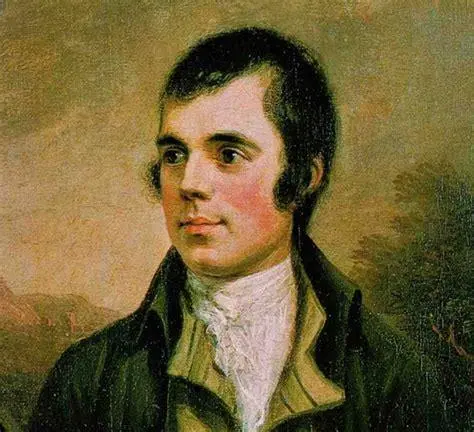
Robert Burns
The Auld Farmer's New-Year-Morning Salutation to His Auld Mare , Maggie
A Guide New-year I wish thee, Maggie!
Hae, there's a ripp to thy auld baggie:
Tho' thou's howe-backit now, an' knaggie,
I've seen the day
There could hae gaen like ony staggie,
Out-owre the lay.
Tho' now thou's dowie, stiff an' crazy,
An' thy auld hide as white's a daisie,
I've seen the dappl't, sleek an' glaizie,
A bonie gray:
He should been tight that daur't to raize thee,
Ance in a day.
Thou ance was i' the foremost rank,
A filly buirdly, steeve an' swank;
An' set weel down a shapely shank,
As e'er tread yird;
An' could hae flown out-owre a stank,
Like ony bird.
It's now some nine-an'-twenty year,
Sin' thou was my guid-father's mear;
He gied me thee, o' tocher clear,
An' fifty mark;
Tho' it was sma', 'twas weel-won gear,
An' thou was stark.
When first I gaed to woo my Jenny,
Ye then was trotting wi' your minnie:
Tho' ye was trickie, slee, an funnie,
Ye ne'er was donsie;
But hamely, tawie, quiet, an' cannie,
An' unco sonsie.
That day, ye pranc'd wi' muckle pride,
When ye bure hame my bonie bride:
An' sweet an' gracefu' she did ride,
Wi' maiden air!
Kyle-Stewart I could bragged wide
For sic a pair.
Tho' now ye dow but hoyte and hobble,
An' wintle like a saumont coble,
That day, ye was a jinker noble,
For heels an' win'!
An' ran them till they a' did wauble,
Far, far, behin'!
When thou an' I were young an' skeigh
An' stable-meals at fairs were dreigh,
How thou wad prance, and snore, an' skreigh
An' tak the road!
Town's-bodies ran, an' stood abeigh,
An' ca't thee mad.
When thou was corn't, an' I was mellow,
We took the road aye like a swallow:
At brooses thou had ne'er a fellow,
For pith an' speed;
But ev'ry tail thou pay't them hollow,
Whare'er thou gaed.
The sma', droop-rumpl't, hunter cattle
Might aiblins waurt thee for a brattle;
But sax Scotch mile, thou try't their mettle,
An' gar't them whaizle:
Nae whip nor spur, but just a wattle
O' saugh or hazel.
Thou was a noble fittie-lan',
As e'er in tug or tow was drawn!
Aft thee an' I, in aught hours' gaun,
In guid March-weather,
Hae turn'd sax rood beside our han',
For days thegither.
Thou never braing't, an' fetch't, an' fliskit;
But thy auld tail thou wad hae whiskit,
An' spread abreed thy weel-fill'd brisket,
Wi' pith an' power;
Till sprittie knowes wad rair't an' riskit
An' slypet owre.
When frosts lay lang, an' snaws were deep,
An' threaten'd labour back to keep,
I gied thy cog a wee bit heap
Aboon the timmer:
I ken'd my Maggie wad na sleep,
For that, or simmer.
In cart or car thou never reestit;
The steyest brae thou wad hae fac't it;
Thou never lap, an' sten't, and breastit,
Then stood to blaw;
But just thy step a wee thing hastit,
Thou snoov't awa.
My pleugh is now thy bairn-time a',
Four gallant brutes as e'er did draw;
Forbye sax mae I've sell't awa,
That thou hast nurst:
They drew me thretteen pund an' twa,
The vera warst.
Mony a sair daurk we twa hae wrought,
An' wi' the weary warl' fought!
An' mony an anxious day, I thought
We wad be beat!
Yet here to crazy age we're brought,
Wi' something yet.
An' think na', my auld trusty servan',
That now perhaps thou's less deservin,
An' thy auld days may end in starvin;
For my last fow,
A heapit stimpart, I'll reserve ane
Laid by for you.
We've worn to crazy years thegither;
We'll toyte about wi' ane anither;
Wi' tentie care I'll flit thy tether
To some hain'd rig,
Whare ye may nobly rax your leather,
Wi' sma' fatigue.
656

Muhammad Iqbal
A Mountain and A Squirrel
A mountain was saying this to a squirrel
'Commit suicide if you have self-respect
You are insignificant, still so arrogant, how strange!
You are neither wise, nor intelligent! not even shrewd!
It is strange when the insignificant pose as important!
When the stupid ones like you pose as intelligent!
You are no match in comparison with my splendor
Even the earth is low compared with my splendor
The grandeur of mine does not fall to your lot
The poor animal cannot equal the great mountain! '
On hearing this the squirrel said, 'Hold your tongue!
These are immature thoughts, expel them from your heart!
I do not care if I am not large like you!
You are not a pretty little thing like me
Everything shows the Omni-potence of God
Some large, some small, is the wisdom of God
He has created you large in the world
And He has taught me climbing large trees
You are unable to walk a single step
Only large size! What other greatness have you?
If you are large show me some of the skills I have
Show me how you break this beetle nut as I can
Nothing is useless in this world
Nothing is bad in God's creation
646
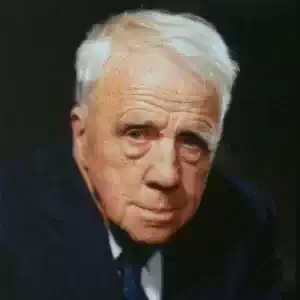
Robert Frost
Putting In The Seed
You come to fetch me from my work to-night
When supper's on the table, and we'll see
If I can leave off burying the white
Soft petals fallen from the apple tree
(Soft petals, yes, but not so barren quite,
Mingled with these, smooth bean and wrinkled pea);
And go along with you ere you lose sight
Of what you came for and become like me,
Slave to a Springtime passion for the earth.
How Love burns through the Putting in the Seed
On through the watching for that early birth
When, just as the soil tarnishes with weed,
The sturdy seedling with arched body comes
Shouldering its way and shedding the earth crumbs.
645
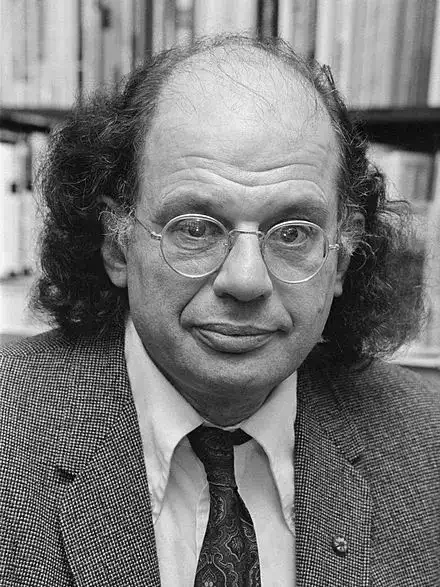
Allen Ginsberg
Syllables at Rocky Mountain Dharma Center
Tail turned to red sunset on a juniper crown a lone magpie cawks.
Mad at Oryoki in the shrine-room -- Thistles blossomed late afternoon.
Put on my shirt and took it off in the sun walking the path to lunch.
A dandelion seed floats above the marsh grass with the mosquitos.
At 4 A.M. the two middleaged men sleeping together holding hands.
In the half-light of dawn a few birds warble under the Pleiades.
Sky reddens behind fir trees, larks twitter, sparrows cheep cheep cheep
cheep cheep.
646
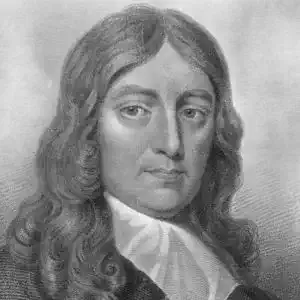
John Milton
Comus (excerpts)
SONG1Sweet
Echo, sweetest nymph that liv'st unseen
-
Within thy airy shell
-
By slow Meander's margent green,
-
And in the violet-imbroider'd vale
-
Where the love-lorn nightingale
-
Nightly to thee her sad song mourneth well:
-
Canst thou not tell me of a gentle pair
-
That likest thy Narcissus are?
-
O if thou have
-
Hid them in some flow'ry cave,
-
Tell me but where
-
Sweet Queen of Parley, Daughter of the Sphere,
-
So mayst thou be translated to the skies,
-
And give resounding grace to all heav'ns harmonies.
SONG
-
Sabrina fair
-
Listen where thou art sitting
-
Under the glassy, cool, translucent wave,
-
In twisted braids of lilies knitting
-
The loose train of thy amber-dropping hair;
-
Listen for dear honour's sake,
-
Goddess of the silver lake,
-
Listen and save.
-
Listen and appear to us
-
In name of great Oceanus,
-
By the earth-shaking Neptune's mace,
-
And Tethys' grave majestic pace;
-
By hoary Nereus' wrinkled look,
-
And the Carpathian wizard's hook;
-
By scaly Triton's winding shell,
-
And old soothsaying Glaucus' spell;
-
By Leucothea's lovely hands,
-
And her son that rules the strands;
-
By Thetis' tinsel-slipper'd feet,
-
And the songs of Sirens sweet;
-
By dead Parthenope's dear tomb,
-
And fair Ligea's golden comb,
-
Wherewith she sits on diamond rocks
-
Sleeking her soft alluring locks;
-
By all the nymphs that nightly dance
-
Upon thy streams with wily glance,
-
Rise, rise, and heave thy rosy head
-
From thy coral-pav'n bed,
-
And bridle in thy headlong wave,
-
Till thou our summons answer'd have.
-
Listen and save.
SABRINA RISES, ATTENDED BY WATER-NYMPHS, AND SINGS
-
By the rushy-fringed bank,
-
Where grows the willow and the osier dank,
-
My sliding chariot stays,
-
Thick set with agate, and the azurn sheen
-
Of turkis blue, and em'rald green
-
That in the channel strays,
-
Whilst from off the waters fleet
-
Thus I set my printless feet
-
O'er the cowslip's velvet head,
-
That bends not as I tread;
-
Gentle swain at thy request
-
I am here.
646

John Clare
Young Lambs
The spring is coming by a many signs;
The trays are up, the hedges broken down,
That fenced the haystack, and the remnant shines
Like some old antique fragment weathered brown.
And where suns peep, in every sheltered place,
The little early buttercups unfold
A glittering star or two--till many trace
The edges of the blackthorn clumps in gold.
And then a little lamb bolts up behind
The hill and wags his tail to meet the yoe,
And then another, sheltered from the wind,
Lies all his length as dead--and lets me go
Close bye and never stirs but baking lies,
With legs stretched out as though he could not rise.
650

John Keats
Endymion: A Poetic Romance (Excerpt)
BOOK I
A thing of beauty is a joy for ever:
Its loveliness increases; it will never
Pass into nothingness; but still will keep
A bower quiet for us, and a sleep
Full of sweet dreams, and health, and quiet breathing.
Therefore, on every morrow, are we wreathing
A flowery band to bind us to the earth,
Spite of despondence, of the inhuman dearth
Of noble natures, of the gloomy days,
Of all the unhealthy and o'er-darkened ways
Made for our searching: yes, in spite of all,
Some shape of beauty moves away the pall
From our dark spirits. Such the sun, the moon,
Trees old and young, sprouting a shady boon
For simple sheep; and such are daffodils
With the green world they live in; and clear rills
That for themselves a cooling covert make
'Gainst the hot season; the mid forest brake,
Rich with a sprinkling of fair musk-rose blooms:
And such too is the grandeur of the dooms
We have imagined for the mighty dead;
All lovely tales that we have heard or read:
An endless fountain of immortal drink,
Pouring unto us from the heaven's brink.
Nor do we merely feel these essences
For one short hour; no, even as the trees
That whisper round a temple become soon
Dear as the temple's self, so does the moon,
The passion poesy, glories infinite,
Haunt us till they become a cheering light
Unto our souls, and bound to us so fast,
That, whether there be shine, or gloom o'ercast;
They always must be with us, or we die.
Therefore, 'tis with full happiness that I
Will trace the story of Endymion.
The very music of the name has gone
Into my being, and each pleasant scene
Is growing fresh before me as the green
Of our own valleys: so I will begin
Now while I cannot hear the city's din;
Now while the early budders are just new,
And run in mazes of the youngest hue
About old forests; while the willow trails
Its delicate amber; and the dairy pails
Bring home increase of milk. And, as the year
Grows lush in juicy stalks, I'll smoothly steer
My little boat, for many quiet hours,
With streams that deepen freshly into bowers.
Many and many a verse I hope to write,
Before the daisies, vermeil rimm'd and white,
Hide in deep herbage; and ere yet the bees
Hum about globes of clover and sweet peas,
I must be near the middle of my story.
O may no wintry season, bare and hoary,
See it half finish'd: but let Autumn bold,
With universal tinge of sober gold,
Be all about me when I make an end.
And now, at once adventuresome, I send
My herald thought into a wilderness:
There let its trumpet blow, and quickly dress
My uncertain path with green, that I may speed
Easily onward, thorough flowers and weed....
627

Claude Mckay
Joy in the Woods
There is joy in the woods just now,
The leaves are whispers of song,
And the birds make mirth on the bough
And music the whole day long,
And God! to dwell in the town
In these springlike summer days,
On my brow an unfading frown
And hate in my heart always—
A machine out of gear, aye, tired,
Yet forced to go on—for I’m hired.
Just forced to go on through fear,
For every day I must eat
And find ugly clothes to wear,
And bad shoes to hurt my feet
And a shelter for work-drugged sleep!
A mere drudge! but what can one do?
A man that’s a man cannot weep!
Suicide? A quitter? Oh, no!
But a slave should never grow tired,
Whom the masters have kindly hired.
But oh! for the woods, the flowers
Of natural, sweet perfume,
The heartening, summer showers
And the smiling shrubs in bloom,
Dust-free, dew-tinted at morn,
The fresh and life-giving air,
The billowing waves of corn
And the birds’ notes rich and clear:—
For a man-machine toil-tired
May crave beauty too—though he’s hired
640