
Animals and Nature

Emily Dickinson
I started Early - Took my Dog
I started Early - Took my Dog -
And visited the Sea -
The Mermaids in the Basement
Came out to look at me -
And Frigates - in the Upper Floor
Extended Hempen Hands -
Presuming Me to be a Mouse -
Aground - upon the Sands -
But no Man moved Me - till the Tide
Went past my simple Shoe -
And past my Apron - and my Belt
And past my Bodice - too -
And made as He would eat me up -
As wholly as a Dew
Upon a Dandelion's Sleeve -
And then - I started - too -
And He - He followed - close behind -
I felt His Silver Heel
Upon my Ankle - Then my Shoes
Would overflow with Pearl -
Until We met the Solid Town -
No One He seemed to know -
And bowing - with a Mighty look -
At me - The Sea withdrew -
635

Rabindranath Tagore
Stray Birds 71 - 80
THE woodcutter's axe begged for its handle from the tree.
The tree gave it.
72
IN my solitude of heart
I feel the sigh of this widowed evening
veiled with mist and rain.
73
CHASTITY
is a wealth that comes from
abundance of love.
74
THE mist,
like love,
plays upon the heart of the hills
and brings out surprises of beauty.
75
WE read the world wrong
and say that it deceives us.
76
THE poet wind is out over the sea
and the forest to seek his own voice.
77
EVERY child
comes with the message
that God is not yet discouraged
of man.
78
THE grass seeks her crowd in the earth.
The tree seeks his solitude of the sky.
79
MAN barricades against himself.
80
YOUR voice, my friend,
wanders in my heart,
like the muffled sound of the sea
among these listening pines.
638

Paul Laurence Dunbar
Summer in the South
The Oriole sings in the greening grove
As if he were half-way waiting,
The rosebuds peep from their hoods of green,
Timid, and hesitating.
The rain comes down in a torrent sweep
And the nights smell warm and pinety,
The garden thrives, but the tender shoots
Are yellow-green and tiny.
Then a flash of sun on a waiting hill,
Streams laugh that erst were quiet,
The sky smiles down with a dazzling blue
And the woods run mad with riot.
638

Claude Mckay
When Dawn Comes to the City
The tired cars go grumbling by,
The moaning, groaning cars,
And the old milk carts go rumbling by
Under the same dull stars.
Out of the tenements, cold as stone,
Dark figures start for work;
I watch them sadly shuffle on,
'Tis dawn, dawn in New York.
But I would be on the island of the sea,
In the heart of the island of the sea,
Where the cocks are crowing, crowing, crowing,
And the hens are cackling in the rose-apple tree,
Where the old draft-horse is neighing, neighing, neighing,
Out on the brown dew-silvered lawn,
And the tethered cow is lowing, lowing, lowing,
And dear old Ned is braying, braying, braying,
And the shaggy Nannie goat is calling, calling, calling
From her little trampled corner of the long wide lea
That stretches to the waters of the hill-stream falling
Sheer upon the flat rocks joyously!
There, oh, there! on the island of the sea,
There would I be at dawn.
The tired cars go grumbling by,
The crazy, lazy cars,
And the same milk carts go rumbling by
Under the dying stars.
A lonely newsboy hurries by,
Humming a recent ditty;
Red streaks strike through the gray of the sky,
The dawn comes to the city.
But I would be on the island of the sea,
In the heart of the island of the sea,
Where the cocks are crowing, crowing, crowing,
And the hens are cackling in the rose-apple tree,
Where the old draft-horse is neighing, neighing, neighing
Out on the brown dew-silvered lawn,
And the tethered cow is lowing, lowing, lowing,
And dear old Ned is braying, braying, braying,
And the shaggy Nannie goat is calling, calling, calling,
From her little trampled corner of the long wide lea
That stretches to the waters of the hill-stream falling
Sheer upon the flat rocks joyously!
There, oh, there! on the island of the sea,
There I would be at dawn.
632
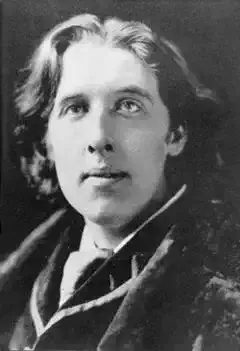
Oscar Wilde
From Spring Days To Winter (For Music)
In the glad springtime when leaves were green,
O merrily the throstle sings!
I sought, amid the tangled sheen,
Love whom mine eyes had never seen,
O the glad dove has golden wings!
Between the blossoms red and white,
O merrily the throstle sings!
My love first came into my sight,
O perfect vision of delight,
O the glad dove has golden wings!
The yellow apples glowed like fire,
O merrily the throstle sings!
O Love too great for lip or lyre,
Blown rose of love and of desire,
O the glad dove has golden wings!
But now with snow the tree is grey,
Ah, sadly now the throstle sings!
My love is dead: ah! well-a-day,
See at her silent feet I lay
A dove with broken wings!
Ah, Love! ah, Love! that thou wert slain -
Fond Dove, fond Dove return again!
O merrily the throstle sings!
I sought, amid the tangled sheen,
Love whom mine eyes had never seen,
O the glad dove has golden wings!
Between the blossoms red and white,
O merrily the throstle sings!
My love first came into my sight,
O perfect vision of delight,
O the glad dove has golden wings!
The yellow apples glowed like fire,
O merrily the throstle sings!
O Love too great for lip or lyre,
Blown rose of love and of desire,
O the glad dove has golden wings!
But now with snow the tree is grey,
Ah, sadly now the throstle sings!
My love is dead: ah! well-a-day,
See at her silent feet I lay
A dove with broken wings!
Ah, Love! ah, Love! that thou wert slain -
Fond Dove, fond Dove return again!
628

Ella Wheeler Wilcox
What Uncle Rob Says
Uncle Rob says,
That once on a time the fire flies
Were stars with the others up in the skies.
They used to shimmer, and dance and play,
Night after night in the Milky Way.
But when their papa, the stern old Sun
Said 'off to bed with you every one,'
These bold little stars refused to obey,
'Let's hide in that cloud and then run away.'
'Let's run to the earth,' these bad stars said
'We are quite too old to be sent to bed.'
So then they were exiled out of the skies,
And that's how we came with the fire flies,
So Uncle Rob says.
621
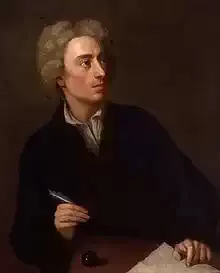
Alexander Pope
Essay on Man
The First Epistle
Awake, my ST. JOHN!(1) leave all meaner things
To low ambition, and the pride of Kings.
Let us (since Life can little more supply
Than just to look about us and to die)
Expatiate(2) free o'er all this scene of Man;
A mighty maze! but not without a plan;
A Wild, where weeds and flow'rs promiscuous shoot,
Or Garden, tempting with forbidden fruit.
Together let us beat this ample field,
Try what the open, what the covert yield;
The latent tracts(3), the giddy heights explore
Of all who blindly creep, or sightless soar;
Eye Nature's walks, shoot Folly as it flies,
And catch the Manners living as they rise;
Laugh where we must, be candid where we can;
But vindicate(4) the ways of God to Man.
1. Say first, of God above, or Man below,
What can we reason, but from what we know?
Of Man what see we, but his station here,
From which to reason, or to which refer?
Thro' worlds unnumber'd tho' the God be known,
'Tis ours to trace him only in our own.
He, who thro' vast immensity can pierce,
See worlds on worlds compose one universe,
Observe how system into system runs,
What other planets circle other suns,
What vary'd being peoples ev'ry star,
May tell why Heav'n has made us as we are.
But of this frame the bearings, and the ties,
The strong connections, nice dependencies,
Gradations just, has thy pervading soul
Look'd thro'? or can a part contain the whole?
Is the great chain, that draws all to agree,
And drawn supports, upheld by God, or thee?
II. Presumptuous Man! the reason wouldst thou find,
Why form'd so weak, so little, and so blind!
First, if thou canst, the harder reason guess,
Why form'd no weaker, blinder, and no less!
Ask of thy mother earth, why oaks are made
Taller or stronger than the weeds they shade?
Or ask of yonder argent fields(5) above,
Why JOVE'S Satellites are less than JOVE?(6)
Of Systems possible, if 'tis confest
That Wisdom infinite must form the best,
Where all must full or not coherent be,
And all that rises, rise in due degree;
Then, in the scale of reas'ning life, 'tis plain
There must be, somewhere, such rank as Man;
And all the question (wrangle e'er so long)
Is only this, if God has plac'd him wrong?
Respecting Man, whatever wrong we call,
Nay, must be right, as relative to all.
In human works, tho' labour'd on with pain,
A thousand movements scarce one purpose gain;
In God's, one single can its end produce;
Yet serves to second too some other use.
So Man, who here seems principal alone,
Perhaps acts second to some sphere unknown,
Touches some wheel, or verges to some goal;
'Tis but a part we see, and not a whole.
When the proud steed shall know why Man restrains
His fiery course, or drives him o'er the plains;
When the dull Ox, why now he breaks the clod,
Is now a victim, and now Egypt's God:(7)
Then shall Man's pride and dullness comprehend
His actions', passions', being's, use and end;
Why doing, suff'ring, check'd, impell'd; and why
This hour a slave, the next a deity.
Then say not Man's imperfect, Heav'n in fault;
Say rather, Man's as perfect as he ought;
His knowledge measur'd to his state and place,
His time a moment, and a point his space.
If to be perfect in a certain sphere,
What matter, soon or late, or here or there?
The blest today is as completely so,
As who began a thousand years ago.
III. Heav'n from all creatures hides the book of Fate,
All but the page prescrib'd, their present state;
From brutes what men, from men what spirits know:
Or who could suffer Being here below?
The lamb thy riot dooms to bleed to-day,
Had he thy Reason, would he skip and play?
Pleas'd to the last, he crops the flow'ry food,
And licks the hand just rais'd to shed his blood.
Oh blindness to the future! kindly giv'n,
That each may fill the circle mark'd by Heav'n;
Who sees with equal eye, as God of all,
A hero perish, or a sparrow fall,
Atoms or systems into ruin hurl'd,
And now a bubble burst, and now a world.
Hope humbly then; with trembling pinions soar;
Wait the great teacher Death, and God adore!
What future bliss, he gives not thee to know,
But gives that Hope to be thy blessing now.
Hope springs eternal in the human breast:
Man never Is, but always To be blest:
The soul, uneasy and confin'd from home,
Rests and expatiates in a life to come.
Lo! the poor Indian, whose untutor'd mind
Sees God in clouds, or hears him in the wind;
His soul proud Science never taught to stray
Far as the solar walk, or milky way;
Yet simple Nature to his hope has giv'n,
Behind the cloud-topt hill, an humbler heav'n;
Some safer world in depth of woods embrac'd,
Some happier island in the watry waste,
Where slaves once more their native land behold,
No fiends torment, no Christians thirst for gold!
To Be, contents his natural desire,
He asks no Angel's wing, no Seraph's(8) fire;
But thinks, admitted to that equal sky,
His faithful dog shall bear him company.
IV. Go, wiser thou! and in thy scale of sense
Weigh thy Opinion against Providence;
Call Imperfection what thou fancy'st such,
Say, here he gives too little, there too much;
Destroy all creatures for thy sport or gust,(9)
Yet cry, If Man's unhappy, God's unjust;
If Man alone ingross not Heav'n's high care,
Alone made perfect here, immortal there:
Snatch from his hand the balance(10) and the rod,
Re-judge his justice, be the GOD of GOD!
In Pride, in reas'ning Pride, our error lies;
All quit their sphere, and rush into the skies.
Pride still is aiming at the blest abodes,
Men would be Angels, Angels would be Gods.
Aspiring to be Gods, if Angels fell,
Aspiring to be Angels, Men rebel;
And who but wishes to invert the laws
Of ORDER, sins against th' Eternal Cause.
V. Ask for what end the heav'nly bodies shine,
Earth for whose use? Pride answers, "Tis for mine:
For me kind Nature wakes her genial pow'r,
Suckles each herb, and spreads out ev'ry flow'r;
Annual for me, the grape, the rose renew
The juice nectareous, and the balmy dew;
For me, the mine a thousand treasures brings;
For me, health gushes from a thousand springs;
Seas roll to waft me, suns to light me rise;
My foot-stool earth, my canopy the skies."
But errs not Nature from this gracious end,
From burning suns when livid deaths descend,
When earthquakes swallow, or when tempests sweep
Towns to one grave, whole nations to the deep?
"No ('tis reply'd) the first Almighty Cause
Acts not by partial, but by gen'ral laws;
Th' exceptions few; some change since all began,
And what created perfect?" -- Why then Man?
If the great end be human Happiness,
Then Nature deviates; and can Man do less?
As much that end a constant course requires
Of show'rs and sun-shine, as of Man's desires;
As much eternal springs and cloudless skies,
As Men for ever temp'rate, calm, and wise.
If plagues or earthquakes break not Heav'n's design,
Why then a Borgia,(11) or a Catiline?(12)
Who knows but he, whose hand the light'ning forms,
Who heaves old Ocean, and who wings the storms,
Pours fierce Ambition in a Caesar's(13) mind,
Or turns young Ammon(14) loose to scourge mankind?
From pride, from pride, our very reas'ning springs;
Account for moral as for nat'ral things:
Why charge we Heav'n in those, in these acquit?
In both, to reason right is to submit.
Better for Us, perhaps, it might appear,
Were there all harmony, all virtue here;
That never air or ocean felt the wind;
That never passion discompos'd the mind:
But ALL subsists by elemental strife;
and Passions are the elements of Life.
The gen'ral ORDER, since the whole began,
Is kept in Nature, and is kept in Man.
VI. What would this Man? Now upward will he soar,
And little less than Angel,(15) would be more;
Now looking downwards, just as griev'd appears
To want the strength of bulls, the fur of bears.
Made for his use all creatures if he call,
Say what their use, had he the pow'rs of all?
Nature to these, without profusion kind,
The proper organs, proper pow'rs assign'd;
Each seeming want compensated of course,
Here with degrees of swiftness, there of force;
All in exact proportion to the state;
Nothing to add, and nothing to abate.
Each beast, each insect, happy in its own;
Is Heav'n unkind to Man, and Man alone?
Shall he alone, whom rational we call,
Be pleas'd with nothing, if not bless'd with all?
The bliss of Man (could Pride that blessing find)
Is not to act or think beyond mankind;
No pow'rs of body or of soul to share,
But what his nature and his state can bear.
Why has not Man a microscopic eye?
For this plain reason, Man is not a Fly.
Say what the use, were finer optics giv'n,
T' inspect a mite,(16) not comprehend the heav'n?
Or touch, if tremblingly alive all o'er,
To smart and agonize at ev'ry pore?
Or quick effluvia(17) darting thro' the brain,
Die of a rose in aromatic pain?
If nature thunder'd in his op'ning ears,
And stunn'd him with the music of the spheres,
How would he wish that Heav'n had left him still
The whisp'ring Zephyr,(18) and the purling rill?(19)
Who finds not Providence all good and wise,
Alike in what it gives, and what denies?
VII. Far as Creation's ample range extends,
The scale of sensual, mental pow'rs ascends:
Mark how it mounts, to Man's imperial race,
From the green myriads in the people grass:
What modes of sight betwixt each wide extreme,
The mole's dim curtain, and the lynx's beam:
Of smell, the headlong lioness between,
And hound sagacious(20) on the tainted(21) green:
Of hearing, from the life that fills the flood,(22)
To that which warbles thro' the vernal(23) wood:
The spider's touch, how exquisitely fine!
Feels at each thread, and lives along the line:
In the nice bee, what sense so subtly true
From pois'nous herbs extracts the healing dew:(24)
How Instinct varies in the grov'ling swine,
Compar'd, half-reas'ning elephant, with thine:
'Twixt that, and Reason, what a nice barrier;
For ever sep'rate, yet for ever near!
Remembrance and Reflection how ally'd;
What thin partitions Sense from Thought divide:
And Middle natures,(25) how they long to join,
Yet never pass th' insuperable line!
Without this just gradation, could they be
Subjected these to those, or all to thee?
The pow'rs of all subdu'd by thee alone,
Is not thy Reason all these pow'rs in one?
VIII. See, thro' this air, this ocean, and this earth,
All matter quick, and bursting into birth.
Above, how high progressive life may go!
Around, how wide! how deep extend below!
Vast chain of being, which from God began,
Natures ethereal,(26) human, angel, man
Beast, bird, fish, insect! what no eye can see,
No glass can reach! from Infinite to thee,
From thee to Nothing! -- On superior pow'rs
Were we to press, inferior might on ours:
Or in the full creation leave a void,
Where, one step broken, the great scale's destoy'd:
From Nature's chain whatever link you strike,
Tenth or ten thousandth, breaks the chain alike.
And if each system in gradation roll,
Alike essential to th' amazing whole;
The least confusion but in one, not all
That system only, but the whole must fall.
Let Earth unbalanc'd from her orbit fly,
Planets and Suns run lawless thro' the sky,
Let ruling Angels from their spheres be hurl'd,
Being on being wreck'd, and world on world,
Heav'n's whole foundations to their centre nod,
And Nature tremble to the throne of God:
All this dread ORDER break -- for whom? for thee?
Vile worm! -- oh, Madness, Pride, Impiety!
IX. What if the foot, ordain'd the dust to tread,
Or hand to toil, aspir'd to be the head?
What if the head, the eye, or ear repin'd(27)
To serve mere engines to the ruling Mind?
Just as absurd, to mourn the tasks or pains
The great directing MIND of ALL ordains.
All are but parts of one stupendous whole,
Whose body, Nature is, and God the soul;
That, chang'd thro' all, and yet in all the same,
Great in the earth, as in th' ethereal frame,
Warms in the sun, refreshes in the breeze,
Glows in the stars, and blossoms in the trees,
Lives thro' all life, extends thro' all extent,
Spreads undivided, operates unspent,
Breathes in our soul, informs our mortal parts,
As full, as perfect, in a hair as heart;
As full, as perfect, in vile Man that mourns,
As the rapt Seraph that adores and burns;
To him no high, no low, no great, no small;
He fills, he bounds, connects, and equals all.
X. Cease then, nor ORDER Imperfection name:
Our proper bliss depends on what we blame.
Know thy own point: This kind, this due degree
Of blindness, weakness, Heav'n bestows on thee.
Submit -- In this, or any other sphere,
Secure to be as blest as thou canst bear:
Safe in the hand of one disposing Pow'r,
Or in the natal, or the mortal hour.
All Nature is but Art, unknown to thee;
All Chance, Direction, which thou canst not see;
All Discord, Harmony, not understood;
All partial Evil, universal Good:
And, spite of Pride, in erring Reason's spite,
One truth is clear, "Whatever IS, is RIGHT."
Argument of the Second Epistle:
Of the Nature and State of Man, with respect to Himself, as an Individual. The business
of Man not to pry into God, but
to study himself.
Know then thyself, presume not God to scan;
The proper study of Mankind is Man.
Plac'd on this isthmus of a middle state,(28)
A being darkly wise, and rudely great:
With too much knowledge for the Sceptic side,
With too much weakness for the Stoic's pride,
He hangs between; in doubt to act, or rest,
In doubt to deem himself a God, or Beast;
In doubt his Mind or Body to prefer,
Born but to die, and reas'ning but to err;
Alike in ignorance, his reason such,
Whether he thinks too little, or too much:
Chaos of Thought and Passion, all confus'd;
Still by himself abus'd, or disabus'd;
Created half to rise, and half to fall;
Great lord of all things, yet a prey to all;
Sole judge of Truth, in endless Error hurl'd:
The glory, jest, and riddle of the world!
ENDNOTES:
1[His friend, Henry St. John, Lord Bolingbroke]
2[to wander]
3[hidden areas]
4[explain or defend]
5[silvery fields, i.e., the heavens]
6[the planet Jupiter]
7[ancient Egyptians sometimes worshipped oxen]
8[the highest level of angels]
9[pleasure]
10[the balance used to weigh justice]
11[Caesar Borgia (1476-1507) who used any cruelty to achieve his ends]
12[Lucious Sergius Catilina (108-62 B.C.) who was a traitor to Rome]
13[Julius Caesar (100-44 B.C.) who was thought to be overly ambitious Roman]
14[Alexander the Great (356-323 B.C.)]
15[Psalm 8:5--"Thou hast made him [man] a little lower than the angels...."]
16[small insect]
17[vapors which were believed to pass odors to the brain]
18[the West Wind]
19[stream]
20[able to pick up a scent]
21[having the odor of an animal]
22[ocean]
23[green]
24[honey was thought to have medicinal properties]
25[Animals slightly below humans on the chain of being]
26[heavenly]
27[complained]
28[i.e., on the chain of being between angels and animals]
617

Walt Whitman
Poems Of Joys
O TO make the most jubilant poem!
Even to set off these, and merge with these, the carols of Death.
O full of music! full of manhood, womanhood, infancy!
Full of common employments! full of grain and trees.
O for the voices of animals! O for the swiftness and balance of
fishes!
O for the dropping of rain-drops in a poem!
O for the sunshine, and motion of waves in a poem.
O the joy of my spirit! it is uncaged! it darts like lightning!
It is not enough to have this globe, or a certain time--I will have
thousands of globes, and all time.
O the engineer's joys!
To go with a locomotive!
To hear the hiss of steam--the merry shriek--the steam-whistle--the
laughing locomotive!
To push with resistless way, and speed off in the distance.
O the gleesome saunter over fields and hill-sides!
The leaves and flowers of the commonest weeds--the moist fresh
stillness of the woods,
The exquisite smell of the earth at day-break, and all through the
forenoon.
O the horseman's and horsewoman's joys!
The saddle--the gallop--the pressure upon the seat--the cool gurgling
by the ears and hair.
O the fireman's joys!
I hear the alarm at dead of night,
I hear bells--shouts!--I pass the crowd--I run!
The sight of the flames maddens me with pleasure.
O the joy of the strong-brawn'd fighter, towering in the arena, in
perfect condition, conscious of power, thirsting to meet his
opponent.
O the joy of that vast elemental sympathy which only the human Soul
is capable of generating and emitting in steady and limitless
floods.
O the mother's joys!
The watching--the endurance--the precious love--the anguish--the
patiently yielded life.
O the joy of increase, growth, recuperation;
The joy of soothing and pacifying--the joy of concord and harmony.
O to go back to the place where I was born!
To hear the birds sing once more!
To ramble about the house and barn, and over the fields, once more,
And through the orchard and along the old lanes once more.
O male and female!
O the presence of women! (I swear there is nothing more exquisite to
me than the mere presence of women;)
O for the girl, my mate! O for the happiness with my mate!
O the young man as I pass! O I am sick after the friendship of him
who, I fear, is indifferent to me.
O the streets of cities!
The flitting faces--the expressions, eyes, feet, costumes! O I cannot
tell how welcome they are to me.
O to have been brought up on bays, lagoons, creeks, or along the
coast!
O to continue and be employ'd there all my life!
O the briny and damp smell--the shore--the salt weeds exposed at low
water,
The work of fishermen--the work of the eel-fisher and clam-fisher.
O it is I!
I come with my clam-rake and spade! I come with my eel-spear;
Is the tide out? I join the group of clam-diggers on the flats,
I laugh and work with them--I joke at my work, like a mettlesome
young man.
In winter I take my eel-basket and eel-spear and travel out on foot
on the ice--I have a small axe to cut holes in the ice;
Behold me, well-clothed, going gaily, or returning in the afternoon-my
brood of tough boys accompaning me,
My brood of grown and part-grown boys, who love to be with no one
else so well as they love to be with me,
By day to work with me, and by night to sleep with me.
Or, another time, in warm weather, out in a boat, to lift the
lobster-pots, where they are sunk with heavy stones, (I know
the buoys;)
O the sweetness of the Fifth-month morning upon the water, as I row,
just before sunrise, toward the buoys;
I pull the wicker pots up slantingly--the dark-green lobsters are
desperate with their claws, as I take them out--I insert wooden
pegs in the joints of their pincers,
I go to all the places, one after another, and then row back to the
shore,
There, in a huge kettle of boiling water, the lobsters shall be
boil'd till their color becomes scarlet.
Or, another time, mackerel-taking,
Voracious, mad for the hook, near the surface, they seem to fill the
water for miles:
Or, another time, fishing for rock-fish, in Chesapeake Bay--I one of
the brown-faced crew:
Or, another time, trailing for blue-fish off Paumanok, I stand with
braced body,
My left foot is on the gunwale--my right arm throws the coils of
slender rope,
In sight around me the quick veering and darting of fifty skiffs, my
companions.
O boating on the rivers!
The voyage down the Niagara, (the St. Lawrence,)--the superb
scenery--the steamers,
The ships sailing--the Thousand Islands--the occasional timber-raft,
and the raftsmen with long-reaching sweep-oars,
The little huts on the rafts, and the stream of smoke when they cook
their supper at evening.
O something pernicious and dread!
Something far away from a puny and pious life!
Something unproved! Something in a trance!
Something escaped from the anchorage, and driving free.
O to work in mines, or forging iron!
Foundry casting--the foundry itself--the rude high roof--the ample
and shadow'd space,
The furnace--the hot liquid pour'd out and running.
O to resume the joys of the soldier:
To feel the presence of a brave general! to feel his sympathy!
To behold his calmness! to be warm'd in the rays of his smile!
To go to battle! to hear the bugles play, and the drums beat!
To hear the crash of artillery! to see the glittering of the bayonets
and musket-barrels in the sun!
To see men fall and die, and not complain!
To taste the savage taste of blood! to be so devilish!
To gloat so over the wounds and deaths of the enemy.
O the whaleman's joys! O I cruise my old cruise again!
I feel the ship's motion under me--I feel the Atlantic breezes
fanning me,
I hear the cry again sent down from the mast-head--There--she blows!
--Again I spring up the rigging, to look with the rest--We see--we
descend, wild with excitement,
I leap in the lower'd boat--We row toward our prey, where he lies,
We approach, stealthy and silent--I see the mountainous mass,
lethargic, basking,
I see the harpooneer standing up--I see the weapon dart from his
vigorous arm:
O swift, again, now, far out in the ocean, the wounded whale,
settling, running to windward, tows me;
--Again I see him rise to breathe--We row close again,
I see a lance driven through his side, press'd deep, turn'd in the
wound,
Again we back off--I see him settle again--the life is leaving him
fast,
As he rises, he spouts blood--I see him swim in circles narrower and
narrower, swiftly cutting the water--I see him die;
He gives one convulsive leap in the centre of the circle, and then
falls flat and still in the bloody foam.
O the old manhood of me, my joy!
My children and grand-children--my white hair and beard,
My largeness, calmness, majesty, out of the long stretch of my life.
O the ripen'd joy of womanhood!
O perfect happiness at last!
I am more than eighty years of age--my hair, too, is pure white--I am
the most venerable mother;
How clear is my mind! how all people draw nigh to me!
What attractions are these, beyond any before? what bloom, more than
the bloom of youth?
What beauty is this that descends upon me, and rises out of me?
O the orator's joys!
To inflate the chest--to roll the thunder of the voice out from the
ribs and throat,
To make the people rage, weep, hate, desire, with yourself,
To lead America--to quell America with a great tongue.
O the joy of my soul leaning pois'd on itself--receiving identity
through materials, and loving them--observing characters, and
absorbing them;
O my soul, vibrated back to me, from them--from facts, sight,
hearing, touch, my phrenology, reason, articulation,
comparison, memory, and the like;
The real life of my senses and flesh, transcending my senses and
flesh;
My body, done with materials--my sight, done with my material
eyes;
Proved to me this day, beyond cavil, that it is not my material
eyes which finally see,
Nor my material body which finally loves, walks, laughs, shouts,
embraces, procreates.
O the farmer's joys!
Ohioan's, Illinoisian's, Wisconsinese', Kanadian's, Iowan's,
Kansian's, Missourian's, Oregonese' joys;
To rise at peep of day, and pass forth nimbly to work,
To plow land in the fall for winter-sown crops,
To plough land in the spring for maize,
To train orchards--to graft the trees--to gather apples in the fall.
O the pleasure with trees!
The orchard--the forest--the oak, cedar, pine, pekan-tree,
The honey-locust, black-walnut, cottonwood, and magnolia.
O Death! the voyage of Death!
The beautiful touch of Death, soothing and benumbing a few moments,
for reasons;
Myself, discharging my excrementitious body, to be burn'd, or
render'd to powder, or buried,
My real body doubtless left to me for other spheres,
My voided body, nothing more to me, returning to the purifications,
further offices, eternal uses of the earth.
O to bathe in the swimming-bath, or in a good place along shore!
To splash the water! to walk ankle-deep--to race naked along the
shore.
O to realize space!
The plenteousness of all--that there are no bounds;
To emerge, and be of the sky--of the sun and moon, and the flying
clouds, as one with them.
O the joy of a manly self-hood!
Personality--to be servile to none--to defer to none--not to any
tyrant, known or unknown,
To walk with erect carriage, a step springy and elastic,
To look with calm gaze, or with a flashing eye,
To speak with a full and sonorous voice, out of a broad chest,
To confront with your personality all the other personalities of the
earth.
Know'st thou the excellent joys of youth?
Joys of the dear companions, and of the merry word, and laughing
face?
Joys of the glad, light-beaming day--joy of the wide-breath'd
games?
Joy of sweet music--joy of the lighted ball-room, and the dancers?
Joy of the friendly, plenteous dinner--the strong carouse, and
drinking?
Yet, O my soul supreme!
Know'st thou the joys of pensive thought?
Joys of the free and lonesome heart--the tender, gloomy heart?
Joy of the solitary walk--the spirit bowed yet proud--the suffering
and the struggle?
The agonistic throes, the extasies--joys of the solemn musings, day
or night?
Joys of the thought of Death--the great spheres Time and Space?
Prophetic joys of better, loftier love's ideals--the Divine Wife--the
sweet, eternal, perfect Comrade?
Joys all thine own, undying one--joys worthy thee, O Soul.
O, while I live, to be the ruler of life--not a slave,
To meet life as a powerful conqueror,
No fumes--no ennui--no more complaints, or scornful criticisms.
O me repellent and ugly!
To these proud laws of the air, the water, and the ground, proving my
interior Soul impregnable,
And nothing exterior shall ever take command of me.
O to attract by more than attraction!
How it is I know not--yet behold! the something which obeys none of
the rest,
It is offensive, never defensive--yet how magnetic it draws.
O joy of suffering!
To struggle against great odds! to meet enemies undaunted!
To be entirely alone with them! to find how much one can stand!
To look strife, torture, prison, popular odium, death, face to face!
To mount the scaffold! to advance to the muzzles of guns with perfect
nonchalance!
To be indeed a God!
O, to sail to sea in a ship!
To leave this steady, unendurable land!
To leave the tiresome sameness of the streets, the sidewalks and the
houses;
To leave you, O you solid motionless land, and entering a ship,
To sail, and sail, and sail!
O to have my life henceforth a poem of new joys!
To dance, clap hands, exult, shout, skip, leap, roll on, float on,
To be a sailor of the world, bound for all ports,
A ship itself, (see indeed these sails I spread to the sun and air,)
A swift and swelling ship, full of rich words--full of joys.
617
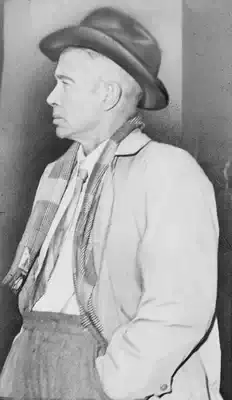
E. E. Cummings
all in green
All in green went my love riding
on a great horse of gold
into the silver dawn.
Four lean hounds crouched low and smiling
the merry deer ran before.
Fleeter be they than dappled dreams
the swift red deer
the red rare deer.
Four red roebuck at a white water
the cruel bugle sang before.
Horn at hip went my love riding
riding the echo down
into the silver dawn.
Four lean hounds crouched low and smiling
the level meadows ran before.
Softer be they than slippered sleep
the lean lithe deer
the fleet flown deer.
Four fleet does at a gold valley
the famished arrow sang before.
Bow at belt went my love riding
riding the mountain down
into the silver dawn.
Four lean hounds crouched low and smiling
the sheer peaks ran before.
Paler be they than daunting death
the sleek slim deer
the tall tense deer.
Four tall stags at the green mountain
the lucky hunter sang before.
All in green went my love riding
on a great horse of gold
into the silver dawn.
Four lean hounds crouched low and smiling
my heart fell dead before.
on a great horse of gold
into the silver dawn.
Four lean hounds crouched low and smiling
the merry deer ran before.
Fleeter be they than dappled dreams
the swift red deer
the red rare deer.
Four red roebuck at a white water
the cruel bugle sang before.
Horn at hip went my love riding
riding the echo down
into the silver dawn.
Four lean hounds crouched low and smiling
the level meadows ran before.
Softer be they than slippered sleep
the lean lithe deer
the fleet flown deer.
Four fleet does at a gold valley
the famished arrow sang before.
Bow at belt went my love riding
riding the mountain down
into the silver dawn.
Four lean hounds crouched low and smiling
the sheer peaks ran before.
Paler be they than daunting death
the sleek slim deer
the tall tense deer.
Four tall stags at the green mountain
the lucky hunter sang before.
All in green went my love riding
on a great horse of gold
into the silver dawn.
Four lean hounds crouched low and smiling
my heart fell dead before.
624
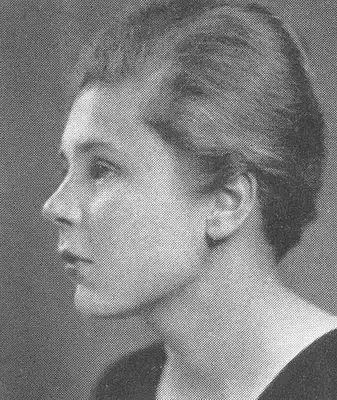
Elizabeth Bishop
The Colder The Air
We must admire her perfect aim,
this huntress of the winter air
whose level weapon needs no sight,
if it were not that everywhere
her game is sure, her shot is right.
The least of us could do the same.
The chalky birds or boats stand still,
reducing her conditions of chance;
air's gallery marks identically
the narrow gallery of her glance.
The target-center in her eye
is equally her aim and will.
Time's in her pocket, ticking loud
on one stalled second. She'll consult
not time nor circumstance. She calls
on atmosphere for her result.
(It is this clock that later falls
in wheels and chimes of leaf and cloud.)
621
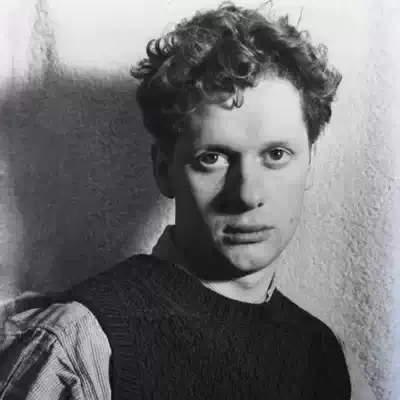
Dylan Thomas
Being But Men
Being but men, we walked into the trees
Afraid, letting our syllables be soft
For fear of waking the rooks,
For fear of coming
Noiselessly into a world of wings and cries.
If we were children we might climb,
Catch the rooks sleeping, and break no twig,
And, after the soft ascent,
Thrust out our heads above the branches
To wonder at the unfailing stars.
Out of confusion, as the way is,
And the wonder, that man knows,
Out of the chaos would come bliss.
That, then, is loveliness, we said,
Children in wonder watching the stars,
Is the aim and the end.
Being but men, we walked into the trees.
617

Christina Rossetti
A Green Cornfield
The earth was green, the sky was blue:
I saw and heard one sunny morn
A skylark hang betweent he two,
A singing speck above the corn;
A stage below, in gay accord,
White butterflies danced on the wing,
And still the singing skylark soared,
And silent sank and soared to sing.
The cornfield stretched a tender green
To right and left beside my walks;
I knew he had a nest unseen
Somewhere among the million stalks.
And as I paused to hear his song
While swift the sunny moments slid,
Perhaps his mate sat listening long,
And listened longer than I did.
617
Elizabeth Bishop
Giant Snail
The rain has stopped. The waterfall will roar like that all
night. I have come out to take a walk and feed. My body--foot,
that is--is wet and cold and covered with sharp gravel. It is
white, the size of a dinner plate. I have set myself a goal, a
certain rock, but it may well be dawn before I get there.
Although I move ghostlike and my floating edges barely graze
the ground, I am heavy, heavy, heavy. My white muscles are
already tired. I give the impression of mysterious ease, but it is
only with the greatest effort of my will that I can rise above the
smallest stones and sticks. And I must not let myself be distracted
by those rough spears of grass. Don't touch them. Draw
back. Withdrawal is always best.
The rain has stopped. The waterfall makes such a noise! (And
what if I fall over it?) The mountains of black rock give off such
clouds of steam! Shiny streamers are hanging down their sides.
When this occurs, we have a saying that the Snail Gods have
come down in haste. I could never descend such steep escarpments,
much less dream of climbing them.
That toad was too big, too, like me. His eyes beseeched my
love. Our proportions horrify our neighbors.
Rest a minute; relax. Flattened to the ground, my body is like
a pallid, decomposing leaf. What's that tapping on my shell?
Nothing. Let's go on.
My sides move in rhythmic waves, just off the ground, from
front to back, the wake of a ship, wax-white water, or a slowly
melting floe. I am cold, cold, cold as ice. My blind, white bull's
head was a Cretan scare-head; degenerate, my four horns that
can't attack. The sides of my mouth are now my hands. They
press the earth and suck it hard. Ah, but I know my shell is
beautiful, and high, and glazed, and shining. I know it well,
although I have not seen it. Its curled white lip is of the finest
enamel. Inside, it is as smooth as silk, and I, I fill it to perfection.
My wide wake shines, now it is growing dark. I leave a lovely
opalescent ribbon: I know this.
But O! I am too big. I feel it. Pity me.
If and when I reach the rock, I shall go into a certain crack
there for the night. The waterfall below will vibrate through
my shell and body all night long. In that steady pulsing I can
rest. All night I shall be like a sleeping ear.
620
Elizabeth Bishop
North Haven
In Memoriam: Robert Lowell
I can make out the rigging of a schooner
a mile off; I can count
the new cones on the spruce. It is so still
the pale bay wears a milky skin; the sky
no clouds except for one long, carded horse¹s tail.
The islands haven't shifted since last summer,
even if I like to pretend they have-drifting,
in a dreamy sort of way,
a little north, a little south, or sidewise-and
that they¹re free within the blue frontiers of bay.
This month our favorite one is full of flowers:
buttercups, red clover, purple vetch,
hackweed still burning, daisies pied, eyebright,
the fragrant bedstraw's incandescent stars,
and more, returned, to paint the meadows with delight.
The goldfinches are back, or others like them,
and the white-throated sparrow's five-note song,
pleading and pleading, brings tears to the eyes.
Nature repeats herself, or almost does:
repeat, repeat, repeat; revise, revise, revise.
Years ago, you told me it was here
(in 1932?) you first "discovered girls"
and learned to sail, and learned to kiss.
You had "such fun," you said, that classic summer.
("Fun"--it always seemed to leave you at a loss...)
You left North Haven, anchored in its rock,
afloat in mystic blue...And now--you've left
for good. You can't derange, or rearrange,
your poems again. (But the sparrows can their song.)
The words won't change again. Sad friend, you cannot change.
625
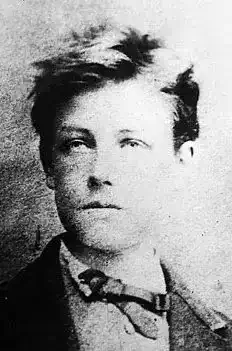
Arthur Rimbaud
Antique
Gracious son of Pan! Around your forehead
crowned with flowerets
and with laurel, restlessly roll
those precious balls, your eyes.
Spotted with brown lees, your cheeks are hollow.
Your fangs gleam. Your breast is like a lyre,
tinklings circulate through your pale arms.
Your heart beats in that belly where sleeps the double sex.
Walk through the night, gently moving that thigh,
that second thigh, and that left leg.
622

John Keats
A Song About Myself
I.
There was a naughty boy,
A naughty boy was he,
He would not stop at home,
He could not quiet be-
He took
In his knapsack
A book
Full of vowels
And a shirt
With some towels,
A slight cap
For night cap,
A hair brush,
Comb ditto,
New stockings
For old ones
Would split O!
This knapsack
Tight at's back
He rivetted close
And followed his nose
To the north,
To the north,
And follow'd his nose
To the north.
II.
There was a naughty boy
And a naughty boy was he,
For nothing would he do
But scribble poetry-
He took
An ink stand
In his hand
And a pen
Big as ten
In the other,
And away
In a pother
He ran
To the mountains
And fountains
And ghostes
And postes
And witches
And ditches
And wrote
In his coat
When the weather
Was cool,
Fear of gout,
And without
When the weather
Was warm-
Och the charm
When we choose
To follow one's nose
To the north,
To the north,
To follow one's nose
To the north!
III.
There was a naughty boy
And a naughty boy was he,
He kept little fishes
In washing tubs three
In spite
Of the might
Of the maid
Nor afraid
Of his Granny-good-
He often would
Hurly burly
Get up early
And go
By hook or crook
To the brook
And bring home
Miller's thumb,
Tittlebat
Not over fat,
Minnows small
As the stall
Of a glove,
Not above
The size
Of a nice
Little baby's
Little fingers-
O he made
'Twas his trade
Of fish a pretty kettle
A kettle-
A kettle
Of fish a pretty kettle
A kettle!
IV.
There was a naughty boy,
And a naughty boy was he,
He ran away to Scotland
The people for to see
There he found
That the ground
Was as hard,
That a yard
Was as long,
That a song
Was as merry,
That a cherry
Was as red,
That lead
Was as weighty,
That fourscore
Was as eighty,
That a door
Was as wooden
As in England-
So he stood in his shoes
And he wonder'd,
He wonder'd,
He stood in his
Shoes and he wonder'd.
There was a naughty boy,
A naughty boy was he,
He would not stop at home,
He could not quiet be-
He took
In his knapsack
A book
Full of vowels
And a shirt
With some towels,
A slight cap
For night cap,
A hair brush,
Comb ditto,
New stockings
For old ones
Would split O!
This knapsack
Tight at's back
He rivetted close
And followed his nose
To the north,
To the north,
And follow'd his nose
To the north.
II.
There was a naughty boy
And a naughty boy was he,
For nothing would he do
But scribble poetry-
He took
An ink stand
In his hand
And a pen
Big as ten
In the other,
And away
In a pother
He ran
To the mountains
And fountains
And ghostes
And postes
And witches
And ditches
And wrote
In his coat
When the weather
Was cool,
Fear of gout,
And without
When the weather
Was warm-
Och the charm
When we choose
To follow one's nose
To the north,
To the north,
To follow one's nose
To the north!
III.
There was a naughty boy
And a naughty boy was he,
He kept little fishes
In washing tubs three
In spite
Of the might
Of the maid
Nor afraid
Of his Granny-good-
He often would
Hurly burly
Get up early
And go
By hook or crook
To the brook
And bring home
Miller's thumb,
Tittlebat
Not over fat,
Minnows small
As the stall
Of a glove,
Not above
The size
Of a nice
Little baby's
Little fingers-
O he made
'Twas his trade
Of fish a pretty kettle
A kettle-
A kettle
Of fish a pretty kettle
A kettle!
IV.
There was a naughty boy,
And a naughty boy was he,
He ran away to Scotland
The people for to see
There he found
That the ground
Was as hard,
That a yard
Was as long,
That a song
Was as merry,
That a cherry
Was as red,
That lead
Was as weighty,
That fourscore
Was as eighty,
That a door
Was as wooden
As in England-
So he stood in his shoes
And he wonder'd,
He wonder'd,
He stood in his
Shoes and he wonder'd.
621
Emily Dickinson
There is another sky
There is another sky,
Ever serene and fair,
And there is another sunshine,
Though it be darkness there;
Never mind faded forests, Austin,
Never mind silent fields-
Here is a little forest,
Whose leaf is ever green;
Here is a brighter garden,
Where not a frost has been;
In its unfading flowers
I hear the bright bee hum:
Prithee, my brother,
Into my garden come!
613

William Wordsworth
Lines Written In Early Spring
I HEARD a thousand blended notes,
While in a grove I sate reclined,
In that sweet mood when pleasant thoughts
Bring sad thoughts to the mind.
To her fair works did Nature link
The human soul that through me ran;
And much it grieved my heart to think
What man has made of man.
Through primrose tufts, in that green bower,
The periwinkle trailed its wreaths;
And 'tis my faith that every flower
Enjoys the air it breathes.
The birds around me hopped and played,
Their thoughts I cannot measure:---
But the least motion which they made,
It seemed a thrill of pleasure.
The budding twigs spread out their fan,
To catch the breezy air;
And I must think, do all I can,
That there was pleasure there.
If this belief from heaven be sent,
If such be Nature's holy plan,
Have I not reason to lament
What man has made of man?
609
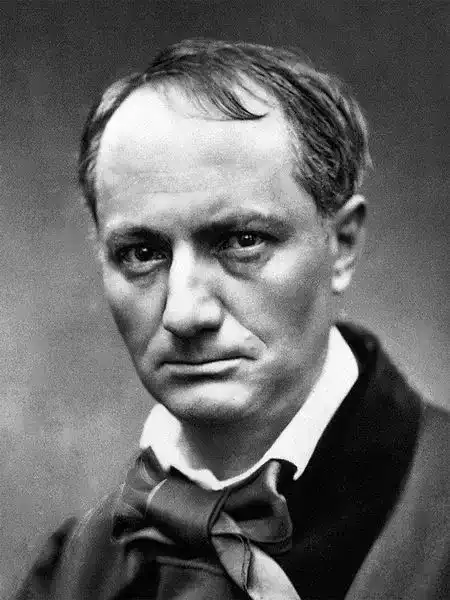
Charles Baudelaire
The Albatross
Often to pass the time on board, the crew
will catch an albatross, one of those big birds
which nonchalently chaperone a ship
across the bitter fathoms of the sea.
Tied to the deck, this sovereign of space,
as if embarrassed by its clumsiness,
pitiably lets its great white wings
drag at its sides like a pair of unshipped oars.
How weak and awkward, even comical
this traveller but lately so adoit -
one deckhand sticks a pipestem in its beak,
another mocks the cripple that once flew!
The Poet is like this monarch of the clouds
riding the storm above the marksman's range;
exiled on the ground, hooted and jeered,
he cannot walk because of his great wings.
601
E. E. Cummings
when serpents bargain
when serpents bargain for the right to squirm
and the sun strikes to gain a living wage when
thorns regard their roses with alarm
and rainbows are insured against old age
when every thrush may sing no new moon in
if all screech-owls have not okayed his voice
-and any wave signs on the dotted line
or else an ocean is compelled to close
when the oak begs permission of the birch
to make an acorn - valleys accuse their
mountains of having altitude - and march
denounces april as a saboteur
then we'll believe in that incredible
unanimal mankind (and not until)
610
Arthur Rimbaud
After The Flood
As soon as the idea of the Deluge had subsided,
A hare stopped in the clover and swaying flowerbells,
and said a prayer to the rainbow,
through the spider's web.
Oh! the precious stones that began to hide,-and
the flowers that already looked around.
In the dirty main street, stalls were set up
and boats were hauled toward the sea,
high tiered as in old prints.
Blood flowed at Blue Beard's,-through
slaughterhouses, in circuses,
where the windows were blanched by God's seal.
Blood and milk flowed. Beavers built.
'Mazagrans' smoked in the little bars.
In the big glass house, still dripping,
children in mourning looked
at the marvelous pictures.
A door banged; and in the village square
the little boy waved his arms,
understood by weather vanes
and cocks on steeples everywhere,
in the bursting shower.
Madame *** installed a piano in the Alps.
Mass and first communions were celebrated
at the hundred thousand altars of the cathedral.
Caravans set out. And Hotel Splendid was built
in the chaos of ice and of the polar night.
Ever after the moon heard jackals howling
across the deserts of thyme,
and eclogues in wooden shoes growling in the orchard.
Then in the violet and budding forest,
Eucharis told me it was spring.
Gush, pond,-- Foam, roll on the bridge and over the woods;-black
palls and organs, lightening and thunder, rise and roll;-waters
and sorrows rise and launch the Floods again.
For since they have been dissipated-oh!
the precious stones being buried and the opened flowers!-it's
unbearable! and the Queen, the Witch who lights her fire
in the earthen pot will never tell us what she knows,
and what we do not know.
602
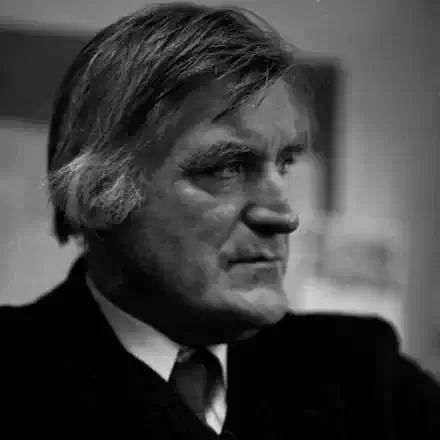
Ted Hughes
Hawk Roosting
I sit in the top of the wood, my eyes closed.
Inaction, no falsifying dream
Between my hooked head and hooked feet:
Or in sleep rehearse perfect kills and eat.
The convenience of the high trees!
The air's buoyancy and the sun's ray
Are of advantage to me;
And the earth's face upward for my inspection.
My feet are locked upon the rough bark.
It took the whole of Creation
To produce my foot, my each feather:
Now I hold Creation in my foot
Or fly up, and revolve it all slowly -
I kill where I please because it is all mine.
There is no sophistry in my body:
My manners are tearing off heads -
The allotment of death.
For the one path of my flight is direct
Through the bones of the living.
No arguments assert my right:
The sun is behind me.
Nothing has changed since I began.
My eye has permitted no change.
I am going to keep things like this.
608

Rudyard Kipling
Lukannon
I met my mates in the morning (and oh, but I am old!)
Where roaring on the ledges the summer ground-swell rolled;
I heard them lift the chorus that dropped the breakers' song --
The beaches of Lukannon -- two million voices strong!
The song of pleasant stations beside the salt lagoons,
The song of blowing squadrons that shuffled down the dunes,
The song of midnight dances that churned the sea to flame --
The beaches of Lukannon -- before the sealers came!
I met my mates in the morning (I'll never meet them more!);
They came and went in legions that darkened all the shore.
And through the foam-flecked offing as far as voice could reach
We hailed the landing-parties and we sang them up the beach.
The beaches of Lukannon -- the winter-wheat so tall --
The dripping, crinkled lichens, and the sea-fog drenching all!
The platforms of our playground, all shining smooth and worn!
The beaches of Lukannon -- the home where we were born!
I meet my mates in the morning, a broken, scattered band.
Men shoot us in the water and club us on the land;
Men drive us to the Salt House like silly sheep and tame,
And still we sing Lukannon -- before the sealers came.
Wheel down, wheel down to southward; oh, Gooverooska go!
And tell the Deep-Sea Viceroys! the story of our woe;
Ere, empty as the shark's egg the tempest flings ashore,
The beaches of Lukannon shall know their sons no more!
601

Robert Browning
The Pied Piper Of Hamelin
A CHILD'S STORY.
(_Written for, and inscribed to, W. M. the Younger._)
I.
Hamelin Town's in Brunswick,
By famous Hanover city;
The river Weser, deep and wide,
Washes its wall on the southern side;
A pleasanter spot you never spied;
But, when begins my ditty,
Almost five hundred years ago,
To see the townsfolk suffer so
From vermin, was a pity.
II.
Rats!
They fought the dogs and killed the cats,
And bit the babies in the cradles,
And ate the cheeses out of the vats,
And licked the soup from the cooks' own ladles,
Split open the kegs of salted sprats,
Made nests inside men's Sunday hats,
And even spoiled the women's chats
By drowning their speaking
With shrieking and squeaking
In fifty different sharps and flats.
III.
At last the people in a body
To the Town Hall came flocking:
``'Tis clear,'' cried they, ``our Mayor's a noddy;
``And as for our Corporation---shocking.
``To think we buy gowns lined with ermine
``For dolts that can't or won't determine
``What's best to rid us of our vermin!
``You hope, because you're old and obese,
``To find in the furry civic robe ease?
``Rouse up, sirs! Give your brains a racking
``To find the remedy we're lacking,
``Or, sure as fate, we'll send you packing!''
At this the Mayor and Corporation
Quaked with a mighty consternation.
IV.
An hour they sat in council,
At length the Mayor broke silence:
``For a guilder I'd my ermine gown sell,
``I wish I were a mile hence!
``It's easy to bid one rack one's brain---
``I'm sure my poor head aches again,
``I've scratched it so, and all in vain.
``Oh for a trap, a trap, a trap!''
Just as he said this, what should hap
At the chamber door but a gentle tap?
``Bless us,'' cried the Mayor, ``what's that?''
(With the Corporation as he sat,
Looking little though wondrous fat;
Nor brighter was his eye, nor moister
Than a too-long-opened oyster,
Save when at noon his paunch grew mutinous
For a plate of turtle green and glutinous)
``Only a scraping of shoes on the mat?
``Anything like the sound of a rat
``Makes my heart go pit-a-pat!''
V.
``Come in!''---the Mayor cried, looking bigger:
And in did come the strangest figure!
His queer long coat from heel to head
Was half of yellow and half of red,
And he himself was tall and thin,
With sharp blue eyes, each like a pin,
And light loose hair, yet swarthy skin,
No tuft on cheek nor beard on chin,
But lips where smiles went out and in;
There was no guessing his kith and kin:
And nobody could enough admire
The tall man and his quaint attire.
Quoth one: ``It's as my great-grandsire,
``Starting up at the Trump of Doom's tone,
``Had walked this way from his painted tombstone!''
VI.
He advanced to the council-table
And, ``Please your honours,'' said he, ``I'm able,
``By means of a secret charm, to draw
``All creatures living beneath the sun,
``That creep or swim or fly or run,
``After me so as you never saw!
``And I chiefly use my charm
``On creatures that do people harm,
``The mole and toad and newt and viper;
``And people call me the Pied Piper.''
(And here they noticed round his neck
A scarf of red and yellow stripe,
To match with his coat of the self-same cheque;
And at the scarf's end hung a pipe;
And his fingers, they noticed, were ever straying
As if impatient to be playing
Upon this pipe, as low it dangled
Over his vesture so old-fangled.)
``Yet,'' said he, ``poor piper as I am,
``In Tartary I freed the Cham,
``Last June, from his huge swarms of gnats;
``I eased in Asia the Nizam
``Of a monstrous brood of vampyre-bats:
``And as for what your brain bewilders,
``If I can rid your town of rats
``Will you give me a thousand guilders?''
``One? fifty thousand!''---was the exclamation
Of the astonished Mayor and Corporation.
VII.
Into the street the Piper stept,
Smiling first a little smile,
As if he knew what magic slept
In his quiet pipe the while;
Then, like a musical adept,
To blow the pipe his lips he wrinkled,
And green and blue his sharp eyes twinkled,
Like a candle-flame where salt is sprinkled;
And ere three shrill notes the pipe uttered,
You heard as if an army muttered;
And the muttering grew to a grumbling;
And the grumbling grew to a mighty rumbling;
And out of the houses the rats came tumbling.
Great rats, small rats, lean rats, brawny rats,
Brown rats, black rats, grey rats, tawny rats,
Grave old plodders, gay young friskers,
Fathers, mothers, uncles, cousins,
Cocking tails and pricking whiskers,
Families by tens and dozens,
Brothers, sisters, husbands, wives---
Followed the Piper for their lives.
From street to street he piped advancing,
And step for step they followed dancing,
Until they came to the river Weser,
Wherein all plunged and perished!
---Save one who, stout as Julius Csar,
Swam across and lived to carry
(As he, the manuscript he cherished)
To Rat-land home his commentary:
Which was, ``At the first shrill notes of the pipe,
``I heard a sound as of scraping tripe,
``And putting apples, wondrous ripe,
``Into a cider-press's gripe:
``And a moving away of pickle-tub-boards,
``And a leaving ajar of conserve-cupboards,
``And a drawing the corks of train-oil-flasks,
``And a breaking the hoops of butter-casks:
``And it seemed as if a voice
``(Sweeter far than b harp or b psaltery
``Is breathed) called out, `Oh rats, rejoice!
`` `The world is grown to one vast drysaltery!
`` `So munch on, crunch on, take your nuncheon,
`` `Breakfast, supper, dinner, luncheon!'
``And just as a bulky sugar-puncheon,
``All ready staved, like a great sun shone
``Glorious scarce an inch before me,
``Just as methought it said, `Come, bore me!'
``---I found the Weser rolling o'er me.''
VIII.
You should have heard the Hamelin people
ringing the bells till they rocked the steeple.
``Go,'' cried the Mayor, ``and get long poles,
``Poke out the nests and block up the holes!
``Consult with carpenters and builders,
``And leave in our town not even a trace
``Of the rats!''---when suddenly, up the face
Of the Piper perked in the market-place,
With a, ``First, if you please, my thousand guilders!''
IX.
A thousand guilders! The Mayor looked blue;
So did the Corporation too.
For council dinners made rare havoc
With Claret, Moselle, Vin-de-Grave, Hock;
And half the money would replenish
Their cellar's biggest butt with Rhenish.
To pay this sum to a wandering fellow
With a gipsy coat of red and yellow!
``Beside,'' quoth the Mayor with a knowing wink,
``Our business was done at the river's brink;
``We saw with our eyes the vermin sink,
``And what's dead can't come to life, I think.
``So, friend, we're not the folks to shrink
``From the duty of giving you something for drink,
``And a matter of money to put in your poke;
``But as for the guilders, what we spoke
``Of them, as you very well know, was in joke.
``Beside, our losses have made us thrifty.
``A thousand guilders! Come, take fifty!''
X.
The Piper's face fell, and he cried
``No trifling! I can't wait, beside!
``I've promised to visit by dinnertime
``Bagdat, and accept the prime
``Of the Head-Cook's pottage, all he's rich in,
``For having left, in the Caliph's kitchen,
``Of a nest of scorpions no survivor:
``With him I proved no bargain-driver,
``With you, don't think I'll bate a stiver!
``And folks who put me in a passion
``May find me pipe after another fashion.''
XI.
``How?'' cried the Mayor, ``d'ye think I brook
``Being worse treated than a Cook?
``Insulted by a lazy ribald
``With idle pipe and vesture piebald?
``You threaten us, fellow? Do your worst,
``Blow your pipe there till you burst!''
XII.
Once more he stept into the street
And to his lips again
Laid his long pipe of smooth straight cane;
And ere he blew three notes (such sweet
Soft notes as yet musician's cunning
Never gave the enraptured air)
There was a rustling that seemed like a bustling
Of merry crowds justling at pitching and hustling,
Small feet were pattering, wooden shoes clattering,
Little hands clapping and little tongues chattering,
And, like fowls in a farm-yard when barley is scattering,
Out came the children running.
All the little boys and girls,
With rosy cheeks and flaxen curls,
And sparkling eyes and teeth like pearls,
Tripping and skipping, ran merrily after
The wonderful music with shouting and laughter.
XIII.
The Mayor was dumb, and the Council stood
As if they were changed into blocks of wood,
Unable to move a step, or cry
To the children merrily skipping by,
---Could only follow with the eye
That joyous crowd at the Piper's back.
But how the Mayor was on the rack,
And the wretched Council's bosoms beat,
As the Piper turned from the High Street
To where the Weser rolled its waters
Right in the way of their sons and daughters!
However be turned from South to West,
And to Koppelberg Hill his steps addressed,
And after him the children pressed;
Great was the joy in every breast.
``He never can cross that mighty top!
``He's forced to let the piping drop,
``And we shall see our children stop!''
When, lo, as they reached the mountain-side,
A wondrous portal opened wide,
As if a cavern was suddenly hollowed;
And the Piper advanced and the children followed,
And when all were in to the very last,
The door in the mountain-side shut fast.
Did I say, all? No! One was lame,
And could not dance the whole of the way;
And in after years, if you would blame
His sadness, he was used to say,---
``It's dull in our town since my playmates left!
``I can't forget that I'm bereft
``Of all the pleasant sights they see,
``Which the Piper also promised me.
``For he led us, he said, to a joyous land,
``Joining the town and just at hand,
``Where waters gushed and fruit-trees grew
``And flowers put forth a fairer hue,
``And everything was strange and new;
``The sparrows were brighter than peacocks here,
``And their dogs outran our fallow deer,
``And honey-bees had lost their stings,
``And horses were born with eagles' wings:
``And just as I became assured
``My lame foot would be speedily cured,
``The music stopped and I stood still,
``And found myself outside the hill,
``Left alone against my will,
``To go now limping as before,
``And never hear of that country more!''
XIV.
Alas, alas for Hamelin!
There came into many a burgher's pate
A text which says that heaven's gate
Opes to the rich at as easy rate
As the needle's eye takes a camel in!
The mayor sent East, West, North and South,
To offer the Piper, by word of mouth,
Wherever it was men's lot to find him,
Silver and gold to his heart's content,
If he'd only return the way he went,
And bring the children behind him.
But when they saw 'twas a lost endeavour,
And Piper and dancers were gone for ever,
They made a decree that lawyers never
Should think their records dated duly
If, after the day of the month and year,
These words did not as well appear,
``And so long after what happened here
``On the Twenty-second of July,
``Thirteen hundred and seventy-six:''
And the better in memory to fix
The place of the children's last retreat,
They called it, the Pied Piper's Street---
Where any one playing on pipe or tabor
Was sure for the future to lose his labour.
Nor suffered they hostelry or tavern
To shock with mirth a street so solemn;
But opposite the place of the cavern
They wrote the story on a column,
And on the great church-window painted
The same, to make the world acquainted
How their children were stolen away,
And there it stands to this very day.
And I must not omit to say
That in Transylvania there's a tribe
Of alien people who ascribe
The outlandish ways and dress
On which their neighbours lay such stress,
To their fathers and mothers having risen
Out of some subterraneous prison
Into which they were trepanned
Long time ago in a mighty band
Out of Hamelin town in Brunswick land,
But how or why, they don't understand.
XV.
So, Willy, let me and you be wipers
Of scores out with all men---especially pipers!
And, whether they pipe us free frm rats or frm mice,
If we've promised them aught, let us keep our promise!
(_Written for, and inscribed to, W. M. the Younger._)
I.
Hamelin Town's in Brunswick,
By famous Hanover city;
The river Weser, deep and wide,
Washes its wall on the southern side;
A pleasanter spot you never spied;
But, when begins my ditty,
Almost five hundred years ago,
To see the townsfolk suffer so
From vermin, was a pity.
II.
Rats!
They fought the dogs and killed the cats,
And bit the babies in the cradles,
And ate the cheeses out of the vats,
And licked the soup from the cooks' own ladles,
Split open the kegs of salted sprats,
Made nests inside men's Sunday hats,
And even spoiled the women's chats
By drowning their speaking
With shrieking and squeaking
In fifty different sharps and flats.
III.
At last the people in a body
To the Town Hall came flocking:
``'Tis clear,'' cried they, ``our Mayor's a noddy;
``And as for our Corporation---shocking.
``To think we buy gowns lined with ermine
``For dolts that can't or won't determine
``What's best to rid us of our vermin!
``You hope, because you're old and obese,
``To find in the furry civic robe ease?
``Rouse up, sirs! Give your brains a racking
``To find the remedy we're lacking,
``Or, sure as fate, we'll send you packing!''
At this the Mayor and Corporation
Quaked with a mighty consternation.
IV.
An hour they sat in council,
At length the Mayor broke silence:
``For a guilder I'd my ermine gown sell,
``I wish I were a mile hence!
``It's easy to bid one rack one's brain---
``I'm sure my poor head aches again,
``I've scratched it so, and all in vain.
``Oh for a trap, a trap, a trap!''
Just as he said this, what should hap
At the chamber door but a gentle tap?
``Bless us,'' cried the Mayor, ``what's that?''
(With the Corporation as he sat,
Looking little though wondrous fat;
Nor brighter was his eye, nor moister
Than a too-long-opened oyster,
Save when at noon his paunch grew mutinous
For a plate of turtle green and glutinous)
``Only a scraping of shoes on the mat?
``Anything like the sound of a rat
``Makes my heart go pit-a-pat!''
V.
``Come in!''---the Mayor cried, looking bigger:
And in did come the strangest figure!
His queer long coat from heel to head
Was half of yellow and half of red,
And he himself was tall and thin,
With sharp blue eyes, each like a pin,
And light loose hair, yet swarthy skin,
No tuft on cheek nor beard on chin,
But lips where smiles went out and in;
There was no guessing his kith and kin:
And nobody could enough admire
The tall man and his quaint attire.
Quoth one: ``It's as my great-grandsire,
``Starting up at the Trump of Doom's tone,
``Had walked this way from his painted tombstone!''
VI.
He advanced to the council-table
And, ``Please your honours,'' said he, ``I'm able,
``By means of a secret charm, to draw
``All creatures living beneath the sun,
``That creep or swim or fly or run,
``After me so as you never saw!
``And I chiefly use my charm
``On creatures that do people harm,
``The mole and toad and newt and viper;
``And people call me the Pied Piper.''
(And here they noticed round his neck
A scarf of red and yellow stripe,
To match with his coat of the self-same cheque;
And at the scarf's end hung a pipe;
And his fingers, they noticed, were ever straying
As if impatient to be playing
Upon this pipe, as low it dangled
Over his vesture so old-fangled.)
``Yet,'' said he, ``poor piper as I am,
``In Tartary I freed the Cham,
``Last June, from his huge swarms of gnats;
``I eased in Asia the Nizam
``Of a monstrous brood of vampyre-bats:
``And as for what your brain bewilders,
``If I can rid your town of rats
``Will you give me a thousand guilders?''
``One? fifty thousand!''---was the exclamation
Of the astonished Mayor and Corporation.
VII.
Into the street the Piper stept,
Smiling first a little smile,
As if he knew what magic slept
In his quiet pipe the while;
Then, like a musical adept,
To blow the pipe his lips he wrinkled,
And green and blue his sharp eyes twinkled,
Like a candle-flame where salt is sprinkled;
And ere three shrill notes the pipe uttered,
You heard as if an army muttered;
And the muttering grew to a grumbling;
And the grumbling grew to a mighty rumbling;
And out of the houses the rats came tumbling.
Great rats, small rats, lean rats, brawny rats,
Brown rats, black rats, grey rats, tawny rats,
Grave old plodders, gay young friskers,
Fathers, mothers, uncles, cousins,
Cocking tails and pricking whiskers,
Families by tens and dozens,
Brothers, sisters, husbands, wives---
Followed the Piper for their lives.
From street to street he piped advancing,
And step for step they followed dancing,
Until they came to the river Weser,
Wherein all plunged and perished!
---Save one who, stout as Julius C
Swam across and lived to carry
(As he, the manuscript he cherished)
To Rat-land home his commentary:
Which was, ``At the first shrill notes of the pipe,
``I heard a sound as of scraping tripe,
``And putting apples, wondrous ripe,
``Into a cider-press's gripe:
``And a moving away of pickle-tub-boards,
``And a leaving ajar of conserve-cupboards,
``And a drawing the corks of train-oil-flasks,
``And a breaking the hoops of butter-casks:
``And it seemed as if a voice
``(Sweeter far than b
``Is breathed) called out, `Oh rats, rejoice!
`` `The world is grown to one vast drysaltery!
`` `So munch on, crunch on, take your nuncheon,
`` `Breakfast, supper, dinner, luncheon!'
``And just as a bulky sugar-puncheon,
``All ready staved, like a great sun shone
``Glorious scarce an inch before me,
``Just as methought it said, `Come, bore me!'
``---I found the Weser rolling o'er me.''
VIII.
You should have heard the Hamelin people
ringing the bells till they rocked the steeple.
``Go,'' cried the Mayor, ``and get long poles,
``Poke out the nests and block up the holes!
``Consult with carpenters and builders,
``And leave in our town not even a trace
``Of the rats!''---when suddenly, up the face
Of the Piper perked in the market-place,
With a, ``First, if you please, my thousand guilders!''
IX.
A thousand guilders! The Mayor looked blue;
So did the Corporation too.
For council dinners made rare havoc
With Claret, Moselle, Vin-de-Grave, Hock;
And half the money would replenish
Their cellar's biggest butt with Rhenish.
To pay this sum to a wandering fellow
With a gipsy coat of red and yellow!
``Beside,'' quoth the Mayor with a knowing wink,
``Our business was done at the river's brink;
``We saw with our eyes the vermin sink,
``And what's dead can't come to life, I think.
``So, friend, we're not the folks to shrink
``From the duty of giving you something for drink,
``And a matter of money to put in your poke;
``But as for the guilders, what we spoke
``Of them, as you very well know, was in joke.
``Beside, our losses have made us thrifty.
``A thousand guilders! Come, take fifty!''
X.
The Piper's face fell, and he cried
``No trifling! I can't wait, beside!
``I've promised to visit by dinnertime
``Bagdat, and accept the prime
``Of the Head-Cook's pottage, all he's rich in,
``For having left, in the Caliph's kitchen,
``Of a nest of scorpions no survivor:
``With him I proved no bargain-driver,
``With you, don't think I'll bate a stiver!
``And folks who put me in a passion
``May find me pipe after another fashion.''
XI.
``How?'' cried the Mayor, ``d'ye think I brook
``Being worse treated than a Cook?
``Insulted by a lazy ribald
``With idle pipe and vesture piebald?
``You threaten us, fellow? Do your worst,
``Blow your pipe there till you burst!''
XII.
Once more he stept into the street
And to his lips again
Laid his long pipe of smooth straight cane;
And ere he blew three notes (such sweet
Soft notes as yet musician's cunning
Never gave the enraptured air)
There was a rustling that seemed like a bustling
Of merry crowds justling at pitching and hustling,
Small feet were pattering, wooden shoes clattering,
Little hands clapping and little tongues chattering,
And, like fowls in a farm-yard when barley is scattering,
Out came the children running.
All the little boys and girls,
With rosy cheeks and flaxen curls,
And sparkling eyes and teeth like pearls,
Tripping and skipping, ran merrily after
The wonderful music with shouting and laughter.
XIII.
The Mayor was dumb, and the Council stood
As if they were changed into blocks of wood,
Unable to move a step, or cry
To the children merrily skipping by,
---Could only follow with the eye
That joyous crowd at the Piper's back.
But how the Mayor was on the rack,
And the wretched Council's bosoms beat,
As the Piper turned from the High Street
To where the Weser rolled its waters
Right in the way of their sons and daughters!
However be turned from South to West,
And to Koppelberg Hill his steps addressed,
And after him the children pressed;
Great was the joy in every breast.
``He never can cross that mighty top!
``He's forced to let the piping drop,
``And we shall see our children stop!''
When, lo, as they reached the mountain-side,
A wondrous portal opened wide,
As if a cavern was suddenly hollowed;
And the Piper advanced and the children followed,
And when all were in to the very last,
The door in the mountain-side shut fast.
Did I say, all? No! One was lame,
And could not dance the whole of the way;
And in after years, if you would blame
His sadness, he was used to say,---
``It's dull in our town since my playmates left!
``I can't forget that I'm bereft
``Of all the pleasant sights they see,
``Which the Piper also promised me.
``For he led us, he said, to a joyous land,
``Joining the town and just at hand,
``Where waters gushed and fruit-trees grew
``And flowers put forth a fairer hue,
``And everything was strange and new;
``The sparrows were brighter than peacocks here,
``And their dogs outran our fallow deer,
``And honey-bees had lost their stings,
``And horses were born with eagles' wings:
``And just as I became assured
``My lame foot would be speedily cured,
``The music stopped and I stood still,
``And found myself outside the hill,
``Left alone against my will,
``To go now limping as before,
``And never hear of that country more!''
XIV.
Alas, alas for Hamelin!
There came into many a burgher's pate
A text which says that heaven's gate
Opes to the rich at as easy rate
As the needle's eye takes a camel in!
The mayor sent East, West, North and South,
To offer the Piper, by word of mouth,
Wherever it was men's lot to find him,
Silver and gold to his heart's content,
If he'd only return the way he went,
And bring the children behind him.
But when they saw 'twas a lost endeavour,
And Piper and dancers were gone for ever,
They made a decree that lawyers never
Should think their records dated duly
If, after the day of the month and year,
These words did not as well appear,
``And so long after what happened here
``On the Twenty-second of July,
``Thirteen hundred and seventy-six:''
And the better in memory to fix
The place of the children's last retreat,
They called it, the Pied Piper's Street---
Where any one playing on pipe or tabor
Was sure for the future to lose his labour.
Nor suffered they hostelry or tavern
To shock with mirth a street so solemn;
But opposite the place of the cavern
They wrote the story on a column,
And on the great church-window painted
The same, to make the world acquainted
How their children were stolen away,
And there it stands to this very day.
And I must not omit to say
That in Transylvania there's a tribe
Of alien people who ascribe
The outlandish ways and dress
On which their neighbours lay such stress,
To their fathers and mothers having risen
Out of some subterraneous prison
Into which they were trepanned
Long time ago in a mighty band
Out of Hamelin town in Brunswick land,
But how or why, they don't understand.
XV.
So, Willy, let me and you be wipers
Of scores out with all men---especially pipers!
And, whether they pipe us free fr
If we've promised them aught, let us keep our promise!
594