
Animals and Nature

Johann Wolfgang von Goethe
River Lilies
Saw a boy three lilies white,
Lilies in the river,
Half heart-open to the light,
Full of golden arrows bright,
Each a silver quiver.
Lilies, lilies, lilies white,
Lilies in the river.
Said the boy, “I’ll pluck you there,
Lilies in the river!”
Said the lilies, “If you dare
You shall drown, or homeward fare
Dripping and a-shiver!”
Lilies, lilies, lilies white,
Lilies in the river.
Wilful still the boy would clasp
Lilies in the river;
Tumbled in ere he could grasp,
Scrambled out with puff and gasp,
Plucked no lilies ever.
Lilies, lilies, lilies white,
Lilies in the river.
344

Henry Wadsworth Longfellow
A Day Of Sunshine. (Birds Of Passage. Flight The Second)
O gift of God! O perfect day:
Whereon shall no man work, but play;
Whereon it is enough for me,
Not to be doing, but to be!
Through every fibre of my brain,
Through every nerve, through every vein,
I feel the electric thrill, the touch
Of life, that seems almost too much.
I hear the wind among the trees
Playing celestial symphonies;
I see the branches downward bent,
Like keys of some great instrument.
And over me unrolls on high
The splendid scenery of the sky,
Where though a sapphire sea the sun
Sails like a golden galleon,
Towards yonder cloud-land in the West,
Towards yonder Islands of the Blest,
Whose steep sierra far uplifts
Its craggy summits white with drifts.
Blow, winds! and waft through all the rooms
The snow-flakes of the cherry-blooms!
Blow, winds! and bend within my reach
The fiery blossoms of the peach!
O Life and Love! O happy throng
Of thoughts, whose only speech is song!
O heart of man! canst thou not be
Blithe as the air is, and as free?
344

Billy Collins
Picnic, Lightning
It is possible to be struck by a
meteor or a single-engine plane while
reading in a chair at home. Pedestrians
are flattened by safes falling from
rooftops mostly within the panels of
the comics, but still, we know it is
possible, as well as the flash of
summer lightning, the thermos toppling
over, spilling out on the grass.
And we know the message can be
delivered from within. The heart, no
valentine, decides to quit after
lunch, the power shut off like a
switch, or a tiny dark ship is
unmoored into the flow of the body's
rivers, the brain a monastery,
defenseless on the shore. This is
what I think about when I shovel
compost into a wheelbarrow, and when
I fill the long flower boxes, then
press into rows the limp roots of red
impatiens -- the instant hand of Death
always ready to burst forth from the
sleeve of his voluminous cloak. Then
the soil is full of marvels, bits of
leaf like flakes off a fresco,
red-brown pine needles, a beetle quick
to burrow back under the loam. Then
the wheelbarrow is a wilder blue, the
clouds a brighter white, and all I
hear is the rasp of the steel edge
against a round stone, the small
plants singing with lifted faces, and
the click of the sundial as one hour
sweeps into the next.
342
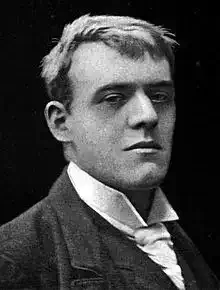
Hilaire Belloc
The Gnu
G stands for Gnu, whose weapon of defence
Are long, sharp, curling horns, and common sense.
To these he adds a name so short and strong,
That even hardy Boers pronounce it wrong.
How often on a bright autumnal day
The pious people of Pretoria say,
'Come, let us hunt the______' Then no more is heard
but sounds of strong men struggling with a word;
Meanwhile the distant Gnu with grateful eyes
Oberserves his opportunity and flies.
341

Ogden Nash
A Caution To Everybody
Consider the auk;
Becoming extinct because he forgot how to fly, and could only walk.
Consider man, who may well become extinct
Because he forgot how to walk and learned how to fly before he thinked.
Becoming extinct because he forgot how to fly, and could only walk.
Consider man, who may well become extinct
Because he forgot how to walk and learned how to fly before he thinked.
343

Emily Dickinson
The Daisy follows soft the Sun
The Daisy follows soft the Sun-
And when his golden walk is done-
Sits shyly at his feet
He-
waking-finds the flower there
Wherefore-
Marauder-art thou here?
Because, Sir, love is sweet!
We are the Flower-Thou the Sun!
Forgive us, if as days decline-
We nearer steal to Thee!
Enamored of the parting West-
The peace-the flight-the AmethystNight's
possibility!
343

Robert Louis Stevenson
Ad Piscatorem
FOR these are sacred fishes all
Who know that lord that is the lord of all;
Come to the brim and nose the friendly hand
That sways and can beshadow all the land.
Nor only so, but have their names, and come
When they are summoned by the Lord of Rome.
Here once his line an impious Lybian threw;
And as with tremulous reed his prey he drew,
Straight, the light failed him.
He groped, nor found the prey that he had ta'en.
Now as a warning to the fisher clan
Beside the lake he sits, a beggarman.
Thou, then, while still thine innocence is pure,
Flee swiftly, nor presume to set thy lure;
Respect these fishes, for their friends are great;
And in the waters empty all thy bait.
341
Henry Van Dyke
The Black Birds
I
Once, only once, I saw it clear, --
That Eden every human heart has dreamed
A hundred times, but always far away!
Ah, well do I remember how it seemed,
Through the still atmosphere
Of that enchanted day,
To lie wide open to my weary feet:
A little land of love and joy and rest,
With meadows of soft green,
Rosy with cyclamen, and sweet
With delicate breath of violets unseen, --
And, tranquil 'mid the bloom
As if it waited for a coming guest,
A little house of peace and joy and love
Was nested like a snow-white dove
From the rough mountain where I stood,
Homesick for happiness,
Only a narrow valley and a darkling wood
To cross, and then the long distress
Of solitude would be forever past, --
I should be home at last.
But not too soon! oh, let me linger here
And feed my eyes, hungry with sorrow,
On all this loveliness, so near,
And mine to-morrow!
Then, from the wood, across the silvery blue,
A dark bird flew,
Silent, with sable wings.
Close in his wake another came, --
Fragments of midnight floating through
The sunset flame, --
Another and another, weaving rings
Of blackness on the primrose sky, --
Another, and another, look, a score,
A hundred, yes, a thousand rising heavily
From that accursed, dumb, and ancient wood, --
They boiled into the lucid air
Like smoke from some deep caldron of despair!
And more, and more, and ever more,
The numberless, ill-omened brood,
Flapping their ragged plumes,
Possessed the landscape and the evening light
With menaces and glooms.
Oh, dark, dark, dark they hovered o'er the place
Where once I saw the little house so white
Amid the flowers, covering every trace
Of beauty from my troubled sight, --
And suddenly it was night!
II
At break of day I crossed the wooded vale;
And while the morning made
A trembling light among the tree-tops pale,
I saw the sable birds on every limb,
Clinging together closely in the shade,
And croaking placidly their surly hymn.
But, oh, the little land of peace and love
That those night-loving wings had poised above, --
Where was it gone?
Lost, lost forevermore!
Only a cottage, dull and gray,
In the cold light of dawn,
With iron bars across the door:
Only a garden where the withering heads
Of flowers, presaging decay,
Hung over barren beds:
Only a desolate field that lay
Untilled beneath the desolate day, --
Where Eden seemed to bloom I found but these!
So, wondering, I passed along my way,
With anger in my heart, too deep for words,
Against that grove of evil-sheltering trees,
And the black magic of the croaking birds.
343
Johann Wolfgang von Goethe
Found
Once through the forest
Alone I went;
To seek for nothing
My thoughts were bent.
I saw i' the shadow
A flower stand there
As stars it glisten'd,
As eyes 'twas fair.
I sought to pluck it,-
It gently said:
'Shall I be gather'd
Only to fade?'
With all its roots
I dug it with care,
And took it home
To my garden fair.
In silent corner
Soon it was set;
There grows it ever,
There blooms it yet.
340
Hilaire Belloc
The Scorpion
The Scorpion is as black as soot,
He dearly loves to bite;
He is a most unpleasant brute
To find in bed at night.
He dearly loves to bite;
He is a most unpleasant brute
To find in bed at night.
340
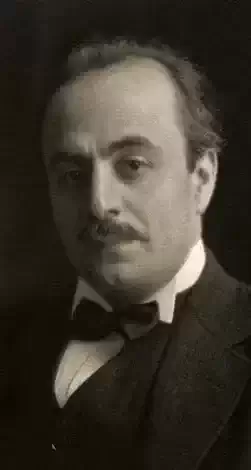
Khalil Gibran
Eating and Drinking chapter VI
Then an old man, a keeper of an inn, said, "Speak to us of Eating and Drinking."
And he said:
Would that you could live on the fragrance of the earth, and like an air plant be
sustained by the light.
But since you must kill to eat, and rob the young of its mother's milk to quench your
thirst, let it then be an act of worship,
And let your board stand an altar on which the pure and the innocent of forest and
plain are sacrificed for that which is purer and still more innocent in many.
When you kill a beast say to him in your heart,
"By the same power that slays you, I to am slain; and I too shall be consumed. For the
law that delivered you into my hand shall deliver me into a mightier hand.
Your blood and my blood is naught but the sap that feeds the tree of heaven."
And when you crush an apple with your teeth, say to it in your heart,
"Your seeds shall live in my body,
And the buds of your tomorrow shall blossom in my heart,
And your fragrance shall be my breath,
And together we shall rejoice through all the seasons."
And in the autumn, when you gather the grapes of your vineyard for the winepress,
say in you heart,
"I too am a vineyard, and my fruit shall be gathered for the winepress,
And like new wine I shall be kept in eternal vessels."
And in winter, when you draw the wine, let there be in your heart a song for each cup;
And let there be in the song a remembrance for the autumn days, and for the vineyard,
and for the winepress.
339
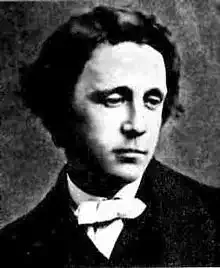
Lewis Carroll
The Hunting of the Snark
Fit the First
THE LANDING
'Just the place for a Snark!' the Bellman cried,
As he landed his crew with care;
Supporting each man on the top of the tide
By a finger entwined in his hair.
'Just the place for a Snark! I have said it twice:
That alone should encourage the crew.
Just the place for a Snark! I have said it thrice:
What i tell you three times is true.'
The crew was complete: it included a BootsA
maker of Bonnets and HoodsA
Barrister, brought to arrange their disputes
And
a Broker, to value their goods.
A Billiardmaker,
whose skill was immense,
Might perhaps have won more than his share
But
a Banker, engaged at enormous expense,
Had the whole of their cash in his care.
There was also a Beaver, that paced on the deck,
Or would sit making lace in the bow:
And had often (the Bellman said) saved them from wreck,
Though none of the sailors knew how.
There was one who was famed for the number of things
He forgot when he entered the ship:
His umbrella, his watch, all his jewels and rings,
And the clothes he had bought for the trip.
He had fortytwo
boxes, all carefully packed,
With his name painted clearly on each:
But, since he omitted to mention the fact,
They were all left behind on the beach.
The loss of his clothes hardly mattered, because
He had seven coats on when he came,
With three pairs of bootsbut
the worst of it was,
He had wholly forgotten his name.
He would answer to 'Hi!' or to any loud cry,
Such as 'Fry me!' or 'Fritter my wig!'
To 'Whatyoumaycallum!'
or 'Whatwashisname!'
But especially 'Thingumajig!'
While, for those who preferred a more forcible word,
He had different names from these:
His intimate friends called him 'Candleends,'
And his enemies 'Toastedcheese.'
'His form in ungainlyhis
intellect small'
(So the Bellman would often remark)
'But his courage is perfect! And that, after all,
Is the thing that one needs with a Snark.'
He would joke with hyenas, returning their stare
With an impudent wag of the head:
And he once went a walk, pawinpaw,
with a bear,
'Just to keep up its spirits,' he said.
He came as a Baker: but owned, when too late
And
it drove the poor Bellman halfmad
He
could only bake Bridecakefor
which, I may state,
No materials were to be had.
The last of the crew needs especial remark,
Though he looked an incredible dunce:
He had just one ideabut,
that one being 'Snark,'
The good Bellman engaged him at once.
He came as a Butcher: but gravely declared,
When the ship had been sailing a week,
He could only kill Beavers. The Bellman looked scared,
And was almost too frightened to speak:
But at length he explained, in a tremulous tone,
There was only one Beaver on board;
And that was a tame one he had of his own,
Whose death would be deeply deplored.
The Beaver, who happened to hear the remark,
Protested, with tears in its eyes,
That not even the rapture of hunting the Snark
Could atone for that dismal surprise!
It strongly advised that the Butcher should be
Conveyed in a separate ship:
But the Bellman declared that would never agree
With the plans he had made for the trip:
Navigation was always a difficult art,
Though with only one ship and one bell:
And he feared he must really decline, for his part,
Undertaking another as well.
The Beaver's best course was, no doubt, to procure
A secondhand
daggerproof
coat
So
the Baker advised itand
next, to insure
Its life in some Office of note:
This the Banker suggested, and offered for hire
(On moderate terms), or for sale,
Two excellent Policies, one Against Fire,
And one Against Damage From Hail.
Yet still, ever after that sorrowful day,
Whenever the Butcher was by,
The Beaver kept looking the opposite way,
And appeared unaccountably shy.
Fit the Second
THE BELLMAN'S SPEECH
The Bellman himself they all praised to the skies
Such
a carriage, such ease and such grace!
Such solemnity, too! One could see he was wise,
The moment one looked in his face!
He had bought a large map representing the sea,
Without the least vestige of land:
And the crew were much pleased when they found it to be
A map they could all understand.
'What's the good of Mercator's North Poles and Equators,
Tropics, Zones, and Meridian Lines?'
So the Bellman would cry: and the crew would reply
'They are merely conventional signs!
'Other maps are such shapes, with their islands and capes!
But we've got our brave Captain to thank:
(So the crew would protest) 'that he's bought us the best
A
perfect and absolute blank!'
This was charming, no doubt; but they shortly found out
That the Captain they trusted so well
Had only one notion for crossing the ocean,
And that was to tingle his bell.
He was thoughtful and gravebut
the orders he gave
Were enough to bewilder a crew.
When he cried 'Steer to starboard, but keep her head larboard!'
What on earth was the helmsman to do?
Then the bowsprit got mixed with the rudder sometimes:
A thing, as the Bellman remarked,
That frequently happens in tropical climes,
When a vessel is, so to speak, 'snarked.'
But the principal failing occurred in the sailing,
And the Bellman, perplexed and distressed,
Said he had hoped, at least, when the wind blew due East,
That the ship would not travel due West!
But the danger was pastthey
had landed at last,
With their boxes, portmanteaus, and bags:
Yet at first sight the crew were not pleased with the view,
Which consisted to chasms and crags.
The Bellman perceived that their spirits were low,
And repeated in musical tone
Some jokes he had kept for a season of woe
But
the crew would do nothing but groan.
He served out some grog with a liberal hand,
And bade them sit down on the beach:
And they could not but own that their Captain looked grand,
As he stood and delivered his speech.
'Friends, Romans, and countrymen, lend me your ears!'
(They were all of them fond of quotations:
So they drank to his health, and they gave him three cheers,
While he served out additional rations).
'We have sailed many months, we have sailed many weeks,
(Four weeks to the month you may mark),
But never as yet ('tis your Captain who speaks)
Have we caught the least glimpse of a Snark!
'We have sailed many weeks, we have sailed many days,
(Seven days to the week I allow),
But a Snark, on the which we might lovingly gaze,
We have never beheld till now!
'Come, listen, my men, while I tell you again
The five unmistakable marks
By which you may know, wheresoever you go,
The warranted genuine Snarks.
'Let us take them in order. The first is the taste,
Which is meager and hollow, but crisp:
Like a coat that is rather too tight in the waist,
With a flavor of Willothewisp.
'Its habit of getting up late you'll agree
That it carries too far, when I say
That it frequently breakfasts at fiveo'clock
tea,
And dines on the following day.
'The third is its slowness in taking a jest.
Should you happen to venture on one,
It will sigh like a thing that is deeply distressed:
And it always looks grave at a pun.
'The fourth is its fondness for bathingmachines,
Which is constantly carries about,
And believes that they add to the beauty of scenes
A
sentiment open to doubt.
'The fifth is ambition. It next will be right
To describe each particular batch:
Distinguishing those that have feathers, and bite,
And those that have whiskers, and scratch.
'For, although common Snarks do no manner of harm,
Yet, I feel it my duty to say,
Some are Boojums'
The Bellman broke off in alarm,
For the Baker had fainted away.
Fit the Third
THE BAKER'S TALE
They roused him with muffinsthey
roused him with ice
They
roused him with mustard and cress
They
roused him with jam and judicious advice
They
set him conundrums to guess.
When at length he sat up and was able to speak,
His sad story he offered to tell;
And the Bellman cried 'Silence! Not even a shriek!'
And excitedly tingled his bell.
There was silence supreme! Not a shriek, not a scream,
Scarcely even a howl or a groan,
As the man they called 'Ho!' told his story of woe
In an antediluvian tone.
'My father and mother were honest, though poor'
'Skip all that!' cried the Bellman in haste.
'If it once becomes dark, there's no chance of a SnarkWe
have hardly a minute to waste!'
'I skip forty years,' said the Baker, in tears,
'And proceed without further remark
To the day when you took me aboard of your ship
To help you in hunting the Snark.
'A dear uncle of mine (after whom I was named)
Remarked, when I bade him farewell'
'Oh, skip your dear uncle!' the Bellman exclaimed,
As he angrily tingled his bell.
'He remarked to me then,' said that mildest of men,
' 'If your Snark be a Snark, that is right:
Fetch it home by all meansyou
may serve it with greens,
And it's handy for striking a light.
' 'You may seek it with thimblesand
seek it with care;
You may hunt it with forks and hope;
You may threaten its life with a railwayshare;
You may charm it with smiles and soap'
'
('That's exactly the method,' the Bellman bold
In a hasty parenthesis cried,
'That's exactly the way I have always been told
That the capture of Snarks should be tried!')
' 'But oh, beamish nephew, beware of the day,
If your Snark be a Boojum! For then
You will softly and suddenly vanish away,
And never be met with again!'
'It is this, it is this that oppresses my soul,
When I think of my uncle's last words:
And my heart is like nothing so much as a bowl
Brimming over with quivering curds!
'It is this, it is this'
'We have had that before!'
The Bellman indignantly said.
And the Baker replied 'Let me say it once more.
It is this, it is this that I dread!
'I engage with the Snarkevery
night after dark
In
a dreamy delirious fight:
I serve it with greens in those shadowy scenes,
And I use it for striking a light:
'But if ever I meet with a Boojum, that day,
In a moment (of this I am sure),
I shall softly and suddenly vanish away
And
the notion I cannot endure!'
Fit the fourth
THE HUNTING
The Bellman looked uffish, and wrinkled his brow.
'If only you'd spoken before!
It's excessively awkward to mention it now,
With the Snark, so to speak, at the door!
'We should all of us grieve, as you well may believe,
If you never were met with again
But
surely, my man, when the voyage began,
You might have suggested it then?
'It's excessively awkward to mention it now
As
I think I've already remarked.'
And the man they called 'Hi!' replied, with a sigh,
'I informed you the day we embarked.
'You may charge me with murderor
want of sense(
We are all of us weak at times):
But the slightest approach to a false pretense
Was never among my crimes!
'I said it in HebrewI
said it in DutchI
said it in German and Greek:
But I wholly forgot (and it vexes me much)
That English is what you speak!'
''Tis a pitiful tale,' said the Bellman, whose face
Had grown longer at every word:
'But, now that you've stated the whole of your case,
More debate would be simply absurd.
'The rest of my speech' (he explained to his men)
'You shall hear when I've leisure to speak it.
But the Snark is at hand, let me tell you again!
'Tis your glorious duty to seek it!
'To seek it with thimbles, to seek it with care;
To pursue it with forks and hope;
To threaten its life with a railwayshare;
To charm it with smiles and soap!
'For the Snark's a peculiar creature, that won't
Be caught in a commonplace way.
Do all that you know, and try all that you don't:
Not a chance must be wasted today!
'For England expects
I
forbear to proceed:
'Tis a maxim tremendous, but trite:
And you'd best be unpacking the things that you need
To rig yourselves out for the fight.'
Then the Banker endorsed a blank check (which he crossed),
And changed his loose silver for notes.
The Baker with care combed his whiskers and hair,
And shook the dust out of his coats.
The Boots and the Broker were sharpening a spade
Each
working the grindstone in turn:
But the Beaver went on making lace, and displayed
No interest in the concern:
Though the Barrister tried to appeal to its pride,
And vainly proceeded to cite
A number of cases, in which making laces
Had been proved an infringement of right.
The maker of Bonnets ferociously planned
A novel arrangement of bows:
While the Billiardmarker
with quivering hand
Was chalking the tip of his nose.
But the Butcher turned nervous, and dressed himself fine,
With yellow kid gloves and a ruff
Said
he felt it exactly like going to dine,
Which the Bellman declared was all 'stuff.'
'Introduce me, now there's a good fellow,' he said,
'If we happen to meet it together!'
And the Bellman, sagaciously nodding his head,
Said 'That must depend on the weather.'
The Beaver went simply galumphing about,
At seeing the Butcher so shy:
And even the Baker, though stupid and stout,
Made an effort to wink with one eye.
'Be a man!' said the Bellman in wrath, as he heard
The Butcher beginning to sob.
'Should we meet with a Jubjub, that desperate bird,
We shall need all our strength for the job!'
Fit the Fifth
THE BEAVER'S LESSON
They sought it with thimbles, they sought it with care;
They pursued it with forks and hope;
They threatened its life with a railwayshare;
They charmed it with smiles and soap.
Then the Butcher contrived an ingenious plan
For making a separate sally;
And fixed on a spot unfrequented by man,
A dismal and desolate valley.
But the very same plan to the Beaver occurred:
It had chosen the very same place:
Yet neither betrayed, by a sign or a word,
The disgust that appeared in his face.
Each thought he was thinking of nothing but 'Snark'
And the glorious work of the day;
And each tried to pretend that he did not remark
That the other was going that way.
But the valley grew narrow and narrower still,
And the evening got darker and colder,
Till (merely from nervousness, not from goodwill)
They marched along shoulder to shoulder.
Then a scream, shrill and high, rent the shuddering sky,
And they knew that some danger was near:
The Beaver turned pale to the tip of its tail,
And even the Butcher felt queer.
He thought of his childhood, left far far behind
That
blissful and innocent state
The
sound so exactly recalled to his mind
A pencil that squeaks on a slate!
''Tis the voice of the Jubjub!' he suddenly cried.
(This man, that they used to call 'Dunce.')
'As the Bellman would tell you,' he added with pride,
'I have uttered that sentiment once.
''Tis the note of the Jubjub! Keep count, I entreat;
You will find I have told it you twice.
'Tis the song of the Jubjub! The proof is complete,
If only I've stated it thrice.'
The Beaver had counted with scrupulous care,
Attending to every word:
But it fairly lost heart, and outgrabe in despair,
When the third repetition occurred.
It felt that, in spite of all possible pains,
It had somehow contrived to lose count,
And the only thing now was to rack its poor brains
By reckoning up the amount.
'Two added to oneif
that could but be done,'
It said, 'with one's fingers and thumbs!'
Recollecting with tears how, in earlier years,
It had taken no pains with its sums.
'The thing can be done,' said the Butcher, 'I think.
The thing must be done, I am sure.
The thing shall be done! Bring me paper and ink,
The best there is time to procure.'
The Beaver brought paper,portfolio, pens,
And ink in unfailing supplies:
While strange creepy creatures came out of their dens,
And watched them with wondering eyes.
So engrossed was the Butcher, he heeded them not,
As he wrote with a pen in each hand,
And explained all the while in a popular style
Which the Beaver could well understand.
'Taking Three as the subject to reason about
A
convenient number to state
We
add Seven, and Ten, and then multiply out
By One Thousand diminished by Eight.
'The result we proceed to divide, as you see,
By Nine Hundred and Ninety Two:
Then subtract Seventeen, and the answer must be
Exactly and perfectly true.
'The method employed I would gladly explain,
While I have it so clear in my head,
If I had but the time and you had but the brain
But
much yet remains to be said.
'In one moment I've seen what has hitherto been
Enveloped in absolute mystery,
And without extra charge I will give you at large
A Lesson in Natural History.'
In his genial way he proceeded to say
(Forgetting all laws of propriety,
And that giving instruction, without introduction,
Would have caused quite a thrill in Society),
'As to temper the Jubjub's a desperate bird,
Since it lives in perpetual passion:
Its taste in costume is entirely absurd
It
is ages ahead of the fashion:
'But it knows any friend it has met once before:
It never will look at a bride:
And in charitymeetings
it stands at the door,
And collectsthough
it does not subscribe.
' Its flavor when cooked is more exquisite far
Than mutton, or oysters, or eggs:
(Some think it keeps best in an ivory jar,
And some, in mahogany kegs:)
'You boil it in sawdust: you salt it in glue:
You condense it with locusts and tape:
Still keeping one principal object in view
To
preserve its symmetrical shape.'
The Butcher would gladly have talked till next day,
But he felt that the lesson must end,
And he wept with delight in attempting to say
He considered the Beaver his friend.
While the Beaver confessed, with affectionate looks
More eloquent even than tears,
It had learned in ten minutes far more than all books
Would have taught it in seventy years.
They returned handinhand,
and the Bellman, unmanned
(For a moment) with noble emotion,
Said 'This amply repays all the wearisome days
We have spent on the billowy ocean!'
Such friends, as the Beaver and Butcher became,
Have seldom if ever been known;
In winter or summer, 'twas always the same
You
could never meet either alone.
And when quarrels aroseas
one frequently finds
Quarrels will, spite of every endeavor
The
song of the Jubjub recurred to their minds,
And cemented their friendship for ever!
Fit the Sixth
THE BARRISTER'S DREAM
They sought it with thimbles, they sought it with care;
They pursued it with forks and hope;
They threatened its life with a railwayshare;
They charmed it with smiles and soap.
But the Barrister, weary of proving in vain
That the Beaver's lacemaking
was wrong,
Fell asleep, and in dreams saw the creature quite plain
That his fancy had dwelt on so long.
He dreamed that he stood in a shadowy Court,
Where the Snark, with a glass in its eye,
Dressed in gown, bands, and wig, was defending a pig
On the charge of deserting its sty.
The Witnesses proved, without error or flaw,
That the sty was deserted when found:
And the Judge kept explaining the state of the law
In a soft undercurrent
of sound.
The indictment had never been clearly expressed,
And it seemed that the Snark had begun,
And had spoken three hours, before any one guessed
What the pig was supposed to have done.
The Jury had each formed a different view
(Long before the indictment was read),
And they all spoke at once, so that none of them knew
One word that the others had said.
'You must know '
said the Judge: but the Snark exclaimed 'Fudge!'
That statute is obsolete quite!
Let me tell you, my friends, the whole question depends
On an ancient manorial right.
'In the matter of Treason the pig would appear
To have aided, but scarcely abetted:
While the charge of Insolvency fails, it is clear,
If you grant the plea 'never indebted.'
'The fact of Desertion I will not dispute;
But its guilt, as I trust, is removed
(So far as related to the costs of this suit)
By the Alibi which has been proved.
'My poor client's fate now depends on you votes.'
Here the speaker sat down in his place,
And directed the Judge to refer to his notes
And briefly to sum up the case.
But the Judge said he never had summed up before;
So the Snark undertook it instead,
And summed it so well that it came to far more
Than the Witnesses ever had said!
When the verdict was called for, the Jury declined,
As the word was so puzzling to spell;
But they ventured to hope that the Snark wouldn't mind
Undertaking that duty as well.
So the Snark found the verdict, although, as it owned,
It was spent with the toils of the day:
When it said the word 'GUILTY!' the Jury all groaned,
And some of them fainted away.
Then the Snark pronounced sentence, the Judge being quite
Too nervous to utter a word:
When it rose to its feet, there was silence like night,
And the fall of a pin might be heard.
'Transportation for lift' was the sentence it gave,
'And *then* to be fined forty pound.'
The Jury all cheered, though the Judge said he feared
That the phrase was not legally sound.
But their wild exultation was suddenly checked
When the jailer informed them, with tears,
Such a sentence would have not the slightest effect,
As the pig had been dead for some years.
The Judge left the Court, looking deeply disgusted:
But the Snark, though a little aghast,
As the lawyer to whom the defense was entrusted,
Went bellowing on to the last.
Thus the Barrister dreamed, while the bellowing seemed
To grow every moment more clear:
Till he woke to the knell of a furious bell,
Which the Bellman rang close at his ear.
Fit the Seventh
THE BANKER'S FATE
They sought it with thimbles, they sought it with care;
They pursued it with forks and hope;
They threatened its life with a railwayshare;
They charmed it with smiles and soap.
And the Banker, inspired with a courage so new
It was matter for general remark,
Rushed madly ahead and was lost to their view
In his zeal to discover the Snark
But while he was seeking with thimbles and care,
A Bandersnatch swiftly drew nigh
And grabbed at the Banker, who shrieked in despair,
For he knew it was useless to fly.
He offered large discounthe
offered a check
(Drawn 'to bearer') for sevenpoundsten:
But the Bandersnatch merely extended its neck
And grabbed at the Banker again.
Without rest or pausewhile
those frumious jaws
Went savagely snapping around
He
skipped and he hopped, and he floundered and flopped,
Till fainting he fell to the ground.
The Bandersnatch fled as the others appeared
Led on by that fearstricken
yell:
And the Bellman remarked 'It is just as I feared!'
And solemnly tolled on his bell.
He was black in the face, and they scarcely could trace
The least likeness to what he had been:
While so great was his fright that his waistcoat turned white
A
wonderful thing to be seen!
To the horror of all who were present that day.
He uprose in full evening dress,
And with senseless grimaces endeavored to say
What his tongue could no longer express.
Down he sank in a chairran
his hands through his hair
And
chanted in mimsiest tones
Words whose utter inanity proved his insanity,
While he rattled a couple of bones.
'Leave him here to his fateit
is getting so late!'
The Bellman exclaimed in a fright.
'We have lost half the day. Any further delay,
And we sha'nt catch a Snark before night!'
Fit the Eighth
THE VANISHING
They sought it with thimbles, they sought it with care;
They pursued it with forks and hope;
They threatened its life with a railwayshare;
They charmed it with smiles and soap.
They shuddered to think that the chase might fail,
And the Beaver, excited at last,
Went bounding along on the tip of its tail,
For the daylight was nearly past.
'There is Thingumbob shouting!' the Bellman said,
'He is shouting like mad, only hark!
He is waving his hands, he is wagging his head,
He has certainly found a Snark!'
They gazed in delight, while the Butcher exclaimed
'He was always a desperate wag!'
They beheld himtheir
Bakertheir
hero unnamed
On
the top of a neighboring crag.
Erect and sublime, for one moment of time.
In the next, that wild figure they saw
(As if stung by a spasm) plunge into a chasm,
While they waited and listened in awe.
'It's a Snark!' was the sound that first came to their ears,
And seemed almost too good to be true.
Then followed a torrent of laughter and cheers:
Then the ominous words 'It's a Boo'
Then, silence. Some fancied they heard in the air
A weary and wandering sigh
Then sounded like 'jum!'
but the others declare
It was only a breeze that went by.
They hunted till darkness came on, but they found
Not a button, or feather, or mark,
By which they could tell that they stood on the ground
Where the Baker had met with the Snark.
In the midst of the word he was trying to say,
In the midst of his laughter and glee,
He had softly and suddenly vanished away
For
the Snark *was* a Boojum, you see.
338


Anonymous
Amergin
I AM the wind which breathes upon the sea,
I am the wave of the ocean,
I am the murmur of the billows,
I am the ox of the seven combats,
I am the vulture upon the rocks,
I am a beam of the sun,
I am the fairest of plants,
I am a wild boar in valour,
I am a salmon in the water,
I am a lake in the plain,
I am a word of science,
I am the point of the lance in battle,
I am the God who creates in the head the fire.
Who is it who throws light into the meeting on the mountain?
Who announces the ages of the moon?
Who teaches the place where couches the sun?
340
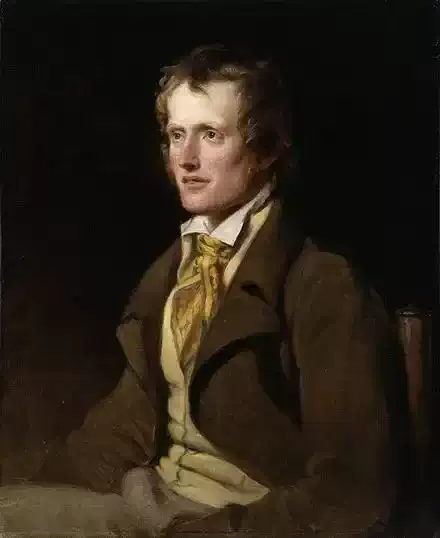
John Clare
The Shepherds Calendar - February - A Thaw
The snow is gone from cottage tops
The thatch moss glows in brighter green
And eves in quick succession drops
Where grinning ides once hath been
Pit patting Wi a pleasant noise
In tubs set by the cottage door
And ducks and geese wi happy joys
Douse in the yard pond brimming oer
The sun peeps thro the window pane
Which childern mark wi laughing eye
And in the wet street steal again
To tell each other spring is nigh
And as young hope the past recalls
In playing groups will often draw
Building beside the sunny walls
Their spring-play-huts of sticks or straw
And oft in pleasures dreams they hie
Round homsteads by the village side
Scratting the hedgrow mosses bye
Where painted pooty shells abide
Mistaking oft the ivy spray
For leaves that come wi budding spring
And wondering in their search for play
Why birds delay to build and sing
The milkmaid singing leaves her bed
As glad as happy thoughts can be
While magpies chatter oer her head
As jocund in the change as she
Her cows around the closes stray
Nor lingering wait the foddering boy
Tossing the molehills in their play
And staring round in frolic joy
Ploughmen go whistling to their toils
And yoke again the rested plough
And mingling oer the mellow soils
Boys' shouts and whips are noising now
The shepherd now is often seen
By warm banks oer his work to bend
Or oer a gate or stile to lean
Chattering to a passing friend
Odd hive bees fancying winter oer
And dreaming in their combs of spring
Creeps on the slab beside their door
And strokes its legs upon its wing
While wild ones half asleep are humming
Round snowdrop bells a feeble note
And pigions coo of summer coming
Picking their feathers on the cote
The barking dogs by lane and wood
Drive sheep afield from foddering ground
And eccho in her summer mood
Briskly mocks the cheery sound
The flocks as from a prison broke
Shake their wet fleeces in the sun
While following fast a misty smoke
Reeks from the moist grass as they run
Nor more behind his masters heels
The dog creeps oer his winter pace
But cocks his tail and oer the fields
Runs many a wild and random chase
Following in spite of chiding calls
The startld cat wi harmless glee
Scaring her up the weed green walls
Or mossy mottld apple tree
As crows from morning perches flye
He barks and follows them in vain
Een larks will catch his nimble eye
And off he starts and barks again
Wi breathless haste and blinded guess
Oft following where the hare hath gone
Forgetting in his joys excess
His frolic puppy days are done
The gossips saunter in the sun
As at the spring from door to door
Of matters in the village done
And secret newsings mutterd oer
Young girls when they each other meet
Will stand their tales of love to tell
While going on errands down the street
Or fetching water from the well
A calm of pleasure listens round
And almost whispers winter bye
While fancy dreams of summer sounds
And quiet rapture fills the eye
The sun beams on the hedges lye
The south wind murmurs summer soft
And maids hang out white cloaths to dry
Around the eldern skirted croft
Each barns green thatch reeks in the sun
Its mate the happy sparrow calls
And as nest building spring begun
Peeps in the holes about the walls
The wren a sunny side the stack
Wi short tail ever on the strunt
Cockd gadding up above his back
Again for dancing gnats will hunt
The gladdend swine bolt from the sty
And round the yard in freedom run
Or stretching in their slumbers lye
Beside the cottage in the sun
The young horse whinneys to its mate
And sickens from the threshers door
Rubbing the straw yards banded gate
Longing for freedom on the moor
Hens leave their roosts wi cackling calls
To see the barn door free from snow
And cocks flye up the mossy walls
To clap their spangld wings and crow
About the steeples sunny top
The jackdaw flocks resemble spring
And in the stone archd windows pop
Wi summer noise and wanton wing
The small birds think their wants are oer
To see the snow hills fret again
And from the barns chaff litterd door
Betake them to the greening plain
The woodmans robin startles coy
Nor longer at his elbow comes
To peck wi hungers eager joy
Mong mossy stulps the litterd crumbs
Neath hedge and walls that screen the wind
The gnats for play will Hock together
And een poor flyes odd hopes will find
To venture in the mocking weather
From out their hiding holes again
Wi feeble pace they often creep
Along the sun warmd window pane
Like dreaming things that walk in sleep
The mavis thrush wi wild delight
Upon the orchards dripping tree
Mutters to see the day so bright
Spring scraps of young hopes poesy
And oft dame stops her burring wheel
To hear the robins note once more
That tutles while he pecks his meal
From sweet briar hips beside the door
The hedghog from its hollow root
Sees the wood moss clear of snow
And hunts each hedge for fallen fruit
Crab hip and winter bitten sloe
And oft when checkd by sudden fears
As shepherd dog his haunt espies
He rolls up in a ball of spears
And all his barking rage defies
Thus nature of the spring will dream
While south winds thaw but soon again
Frost breaths upon the stiffening stream
And numbs it into ice-the plain
Soon wears its merry garb of white
And icicles that fret at noon
Will eke their icy tails at night
Beneath the chilly stars and moon
Nature soon sickens of her joys
And all is sad and dumb again
Save merry shouts of sliding boys
About the frozen furrowd plain
The foddering boy forgets his song
And silent goes wi folded arms
And croodling shepherds bend along
Crouching to the whizzing storms
339

Christina Rossetti
Hurt No Living Thing
Hurt no living thing:
Ladybird, nor butterfly,
Nor moth with dusty wing,
Nor cricket chirping cheerily,
Nor grasshopper so light of leap,
Nor dancing gnat, nor beetle fat,
Nor harmless worms that creep.
Ladybird, nor butterfly,
Nor moth with dusty wing,
Nor cricket chirping cheerily,
Nor grasshopper so light of leap,
Nor dancing gnat, nor beetle fat,
Nor harmless worms that creep.
335
Emily Dickinson
The Lady feeds Her little Bird
The Lady feeds Her little Bird
At rarer intervals-
The little Bird would not dissent
But meekly recognize
The Gulf between the Hand and Her
And crumbless and afar
And fainting, on Her yellow Knee
Fall softly, and adore-
At rarer intervals-
The little Bird would not dissent
But meekly recognize
The Gulf between the Hand and Her
And crumbless and afar
And fainting, on Her yellow Knee
Fall softly, and adore-
335
Henry Wadsworth Longfellow
The Song Of Hiawatha VII: Hiawatha's Sailing
'Give me of your bark, O Birch-tree!
Of your yellow bark, O Birch-tree!
Growing by the rushing river,
Tall and stately in the valley!
I a light canoe will build me,
Build a swift Cheemaun for sailing,
That shall float on the river,
Like a yellow leaf in Autumn,
Like a yellow water-lily!
'Lay aside your cloak, O Birch-tree!
Lay aside your white-skin wrapper,
For the Summer-time is coming,
And the sun is warm in heaven,
And you need no white-skin wrapper!'
Thus aloud cried Hiawatha
In the solitary forest,
By the rushing Taquamenaw,
When the birds were singing gayly,
In the Moon of Leaves were singing,
And the sun, from sleep awaking,
Started up and said, 'Behold me!
Gheezis, the great Sun, behold me!'
And the tree with all its branches
Rustled in the breeze of morning,
Saying, with a sigh of patience,
'Take my cloak, O Hiawatha!'
With his knife the tree he girdled;
Just beneath its lowest branches,
Just above the roots, he cut it,
Till the sap came oozing outward;
Down the trunk, from top to bottom,
Sheer he cleft the bark asunder,
With a wooden wedge he raised it,
Stripped it from the trunk unbroken.
'Give me of your boughs, O Cedar!
Of your strong and pliant branches,
My canoe to make more steady,
Make more strong and firm beneath me!'
Through the summit of the Cedar
Went a sound, a cry of horror,
Went a murmur of resistance;
But it whispered, bending downward,
'Take my boughs, O Hiawatha!'
Down he hewed the boughs of cedar,
Shaped them straightway to a frame-work,
Like two bows he formed and shaped them,
Like two bended bows together.
'Give me of your roots, O Tamarack!
Of your fibrous roots, O Larch-tree!
My canoe to bind together,
So to bind the ends together
That the water may not enter,
That the river may not wet me!'
And the Larch, with all its fibres,
Shivered in the air of morning,
Touched his forehead with its tassels,
Slid, with one long sigh of sorrow.
'Take them all, O Hiawatha!'
From the earth he tore the fibres,
Tore the tough roots of the Larch-tree,
Closely sewed the hark together,
Bound it closely to the frame-work.
'Give me of your balm, O Fir-tree!
Of your balsam and your resin,
So to close the seams together
That the water may not enter,
That the river may not wet me!'
And the Fir-tree, tall and sombre,
Sobbed through all its robes of darkness,
Rattled like a shore with pebbles,
Answered wailing, answered weeping,
'Take my balm, O Hiawatha!'
And he took the tears of balsam,
Took the resin of the Fir-tree,
Smeared therewith each seam and fissure,
Made each crevice safe from water.
'Give me of your quills, O Hedgehog!
All your quills, O Kagh, the Hedgehog!
I will make a necklace of them,
Make a girdle for my beauty,
And two stars to deck her bosom!'
From a hollow tree the Hedgehog
With his sleepy eyes looked at him,
Shot his shining quills, like arrows,
Saying with a drowsy murmur,
Through the tangle of his whiskers,
'Take my quills, O Hiawatha!'
From the ground the quills he gathered,
All the little shining arrows,
Stained them red and blue and yellow,
With the juice of roots and berries;
Into his canoe he wrought them,
Round its waist a shining girdle,
Round its bows a gleaming necklace,
On its breast two stars resplendent.
Thus the Birch Canoe was builded
In the valley, by the river,
In the bosom of the forest;
And the forest's life was in it,
All its mystery and its magic,
All the lightness of the birch-tree,
All the toughness of the cedar,
All the larch's supple sinews;
And it floated on the river
Like a yellow leaf in Autumn,
Like a yellow water-lily.
Paddles none had Hiawatha,
Paddles none he had or needed,
For his thoughts as paddles served him,
And his wishes served to guide him;
Swift or slow at will he glided,
Veered to right or left at pleasure.
Then he called aloud to Kwasind,
To his friend, the strong man, Kwasind,
Saying, 'Help me clear this river
Of its sunken logs and sand-bars.'
Straight into the river Kwasind
Plunged as if he were an otter,
Dived as if he were a beaver,
Stood up to his waist in water,
To his arm-pits in the river,
Swam and scouted in the river,
Tugged at sunken logs and branches,
With his hands he scooped the sand-bars,
With his feet the ooze and tangle.
And thus sailed my Hiawatha
Down the rushing Taquamenaw,
Sailed through all its bends and windings,
Sailed through all its deeps and shallows,
While his friend, the strong man, Kwasind,
Swam the deeps, the shallows waded.
Up and down the river went they,
In and out among its islands,
Cleared its bed of root and sand-bar,
Dragged the dead trees from its channel,
Made its passage safe and certain,
Made a pathway for the people,
From its springs among the mountains,
To the waters of Pauwating,
To the bay of Taquamenaw.
335
Henry Van Dyke
The Hermit Thrush
O wonderful! How liquid clear
The molten gold of that ethereal tone,
Floating and falling through the wood alone,
A hermit-hymn poured out for God to hear!
0 holy, holy, holy! Hyaline,
Long light, low light, glory of eventide!
Love far away, far up. -- up, -- love divine!
Little love, too, for ever, ever, near,
Warm love, earth love, tender love of mine,
In the leafy dark where you hide,
You are mine, -- mine, -- mine!
Ah, my belovèd, do you feel with me
The hidden virtue of that melody,
The rapture and the purity of love,
The heavenly joy that can not find the word?
Then, while we wait again to hear the bird,
Come very near to me, and do not move, --
Now, hermit of the woodland, fill anew
The cool, green cup of air with harmony,
And we will drink the wine of love with you.
336
Robert Louis Stevenson
Duddingstone
WITH caws and chirrupings, the woods
In this thin sun rejoice.
The Psalm seems but the little kirk
That sings with its own voice.
The cloud-rifts share their amber light
With the surface of the mere -
I think the very stones are glad
To feel each other near.
Once more my whole heart leaps and swells
And gushes o'er with glee;
The fingers of the sun and shade
Touch music stops in me.
Now fancy paints that bygone day
When you were here, my fair -
The whole lake rang with rapid skates
In the windless winter air.
You leaned to me, I leaned to you,
Our course was smooth as flight -
We steered - a heel-touch to the left,
A heel-touch to the right.
We swung our way through flying men,
Your hand lay fast in mine:
We saw the shifting crowd dispart,
The level ice-reach shine.
I swear by yon swan-travelled lake,
By yon calm hill above,
I swear had we been drowned that day
We had been drowned in love.
337
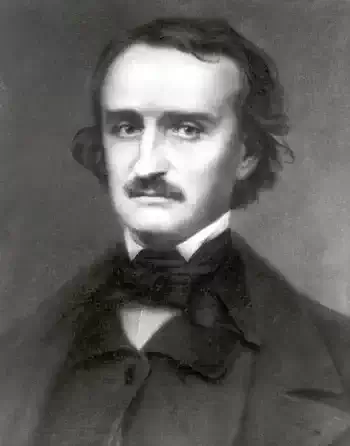
Edgar Allan Poe
In Youth I have Known One
How often we forget all time, when lone
Admiring Nature's universal throne;
Her woods - her winds - her mountains - the intense
Reply of Hers to Our intelligence!
I.
In youth I have known one with whom the Earth
In secret communing held - as he with it,
In daylight, and in beauty, from his birth:
Whose fervid, flickering torch of life was lit
From the sun and stars, whence he had drawn forth
A passionate light - such for his spirit was fit -
And yet that spirit knew - not in the hour
Of its own fervour - what had o'er it power.
II.
Perhaps it may be that my mind is wrought
To a fever by the moonbeam that hangs o'er,
But I will half believe that wild light fraught
With more of sovereignty than ancient lore
Hath ever told - or is it of a thought
The unembodied essence, and no more
That with a quickening spell doth o'er us pass
As dew of the night time, o'er the summer grass?
III.
Doth o'er us pass, when as th' expanding eye
To the loved object - so the tear to the lid
Will start, which lately slept in apathy?
And yet it need not be - (that object) hid
From us in life - but common - which doth lie
Each hour before us - but then only bid
With a strange sound, as of a harpstring broken
T' awake us - 'Tis a symbol and a token
IV.
Of what in other worlds shall be - and given
In beauty by our God, to those alone
Who otherwise would fall from life and Heaven
Drawn by their heart's passion, and that tone,
That high tone of the spirit which hath striven
Though not with Faith - with godliness - whose throne
With desperate energy 't hath beaten down;
Wearing its own deep feeling as a crown.
336
Henry Wadsworth Longfellow
The Fiftieth Birthday Of Agassiz. (Birds Of Passage. Flight The First)
It was fifty years ago
In the pleasant month of May,
In the beautiful Pays de Vaud,
A child in its cradle lay.
And Nature, the old nurse, took
The child upon her knee,
Saying: 'Here is a story-book
Thy Father has written for thee.'
'Come, wander with me,' she said,
'Into regions yet untrod;
And read what is still unread
In the manuscripts of God.'
And he wandered away and away
With Nature, the dear old nurse,
Who sang to him night and day
The rhymes of the universe.
And whenever the way seemed long,
Or his heart began to fail,
She would sing a more wonderful song,
Or tell a more marvellous tale.
So she keeps him still a child,
And will not let him go,
Though at times his heart beats wild
For the beautiful Pays de Vaud;
Though at times he hears in his dreams
The Ranz des Vaches of old,
And the rush of mountain streams
From glaciers clear and cold;
And the mother at home says, 'Hark!
For his voice I listen and yearn;
It is growing late and dark,
And my boy does not return!'
336
Robert Louis Stevenson
The Dumb Soldier
When the grass was closely mown,
Walking on the lawn alone,
In the turf a hole I found
And hid a soldier underground.
Spring and daisies came apace;
Grasses hid my hiding-place;
Grasses run like a green sea
O'er the lawn up to my knee.
Under grass alone he lies,
Looking up with leaden eyes,
Scarlet coat and pointed gun,
To the stars and to the sun.
When the grass is ripe like grain,
When the scythe is stoned again,
When the lawn is shaven clear,
Then my hole shall reappear.
I shall find him, never fear,
I shall find my grenadier;
But, for all that's gone and come,
I shall find my soldier dumb.
He has lived, a little thing,
In the grassy woods of spring;
Done, if he could tell me true,
Just as I should like to do.
He has seen the starry hours
And the springing of the flowers;
And the fairy things that pass
In the forests of the grass.
In the silence he has heard
Talking bee and ladybird,
And the butterfly has flown
O'er him as he lay alone.
Not a word will he disclose,
Not a word of all he knows.
I must lay him on the shelf,
And make up the tale myself.
336

William Shakespeare
Now, my co-mates and brothers in exile
Now, my co-mates and brothers in exile,
Hath not old customs make this life more sweet
Than that of painted pomp? Are not these woods
More free from peril than the envious court!
Here feel we not the penalty of Adam,
The seasons difference; as the icy fang
And churlish chiding of the winters wind,
Which when it bites and blows upon my body,
Even till I shrink with cold, I smile and say
This is no flattery; these are counsellors
That feelingly persuade me what I am.
Sweet are the uses of adversity;
Which, like the toad, ugly and venomous,
Wears yet a precious jewel in his head;
And this our life, exempt from public haunt,
Finds tongues in trees, books in the running brooks,
Sermons in stones, and good in everything.
I would not change it.
334