
Animals and Nature

John Greenleaf Whittier
Sunset On The Bearcamp
A gold fringe on the purpling hem
Of hills the river runs,
As down its long, green valley falls
The last of summer's suns.
Along its tawny gravel-bed
Broad-flowing, swift, and still,
As if its meadow levels felt
The hurry of the hill,
Noiseless between its banks of green
From curve to curve it slips;
The drowsy maple-shadows rest
Like fingers on its lips.
A waif from Carroll's wildest hills,
Unstoried and unknown;
The ursine legend of its name
Prowls on its banks alone.
Yet flowers as fair its slopes adorn
As ever Yarrow knew,
Or, under rainy Irish skies,
By Spenser's Mulla grew;
And through the gaps of leaning trees
Its mountain cradle shows
The gold against the amethyst,
The green against the rose.
Touched by a light that hath no name,
A glory never sung,
Aloft on sky and mountain wall
Are God's great pictures hung.
How changed the summits vast and old!
No longer granite-browed,
They melt in rosy mist; the rock
Is softer than the cloud;
The valley holds its breath; no leaf
Of all its elms is twirled
The silence of eternity
Seems falling on the world.
The pause before the breaking seals
Of mystery is this;
Yon miracle-play of night and day
Makes dumb its witnesses.
What unseen altar crowns the hills
That reach up stair on stair?
What eyes look through, what white wings fan
These purple veils of air?
What Presence from the heavenly heights
To those of earth stoops down?
Not vainly Hellas dreamed of gods
On Ida's snowy crown!
Slow fades the vision of the sky,
The golden water pales,
And over all the valley-land
A gray-winged vapor sails.
I go the common way of all;
The sunset fires will burn,
The flowers will blow, the river flow,
When I no more return.
No whisper from the mountain pine
Nor lapsing stream shall tell
The stranger, treading where I tread,
Of him who loved them well.
But beauty seen is never lost,
God's colors all are fast;
The glory of this sunset heaven
Into my soul has passed,
A sense of gladness unconfined
To mortal date or clime;
As the soul liveth, it shall live
Beyond the years of time.
Beside the mystic asphodels
Shall bloom the home-born flowers,
And new horizons flush and glow
With sunset hues of ours.
Farewell! these smiling hills must wear
Too soon their wintry frown,
And snow-cold winds from off them shake
The maple's red leaves down.
But I shall see a summer sun
Still setting broad and low;
The mountain slopes shall blush and bloom,
The golden water flow.
A lover's claim is mine on all
I see to have and hold,-The
rose-light of perpetual hills,
And sunsets never cold!
289

Ogden Nash
The Praying Mantis
From whence arrived the praying mantis?
From outer space, or lost Atlantis?
glimpse the grin, green metal mug
at masks the pseudo-saintly bug,
Orthopterous, also carnivorous,
And faintly whisper, Lord deliver us.
From outer space, or lost Atlantis?
glimpse the grin, green metal mug
at masks the pseudo-saintly bug,
Orthopterous, also carnivorous,
And faintly whisper, Lord deliver us.
289

Edward Lear
Calicoe Pie
Calico Pie,
The little Birds fly
Down to the calico tree,
Their wings were blue,
And they sang 'Tilly-loo!'
Till away they flew,
And they never came back to me!
They never came back!
They never came back!
They never came back to me!
Calico Jam,
The little Fish swam
Over the syllabub sea,
He took off his hat
To the Sole and the Sprat,
And the Willeby-wat,
But he never came back to me!
He never came back!
He never came back!
He never came back to me!
Calico Ban,
The little Mice ran,
To be ready in time for tea,
Flippity-flup,
They drank it all up,
And danced in the cup,
But they never came back to me!
They never came back!
They never came back!
They never came back to me!
Calico Drum,
The Grasshoppers come,
The Butterfly, Beetle, and Bee,
Over the ground,
Around and around,
With a hop and a bound -
But they never came back!
They never came back!
They never came back!
They never came back to me!
288

Johann Wolfgang von Goethe
Book Of Parables - In The Koran With Strange Delight
In the Koran with strange delight
A peacock's feather met my sight:
Thou'rt welcome in this holy place,
The highest prize on earth's wide face!
As in the stars of heaven, in thee,
God's greatness in the small we see;
For he whose gaze whole worlds bath bless'd
His eye hath even here impress'd,
And the light down in beauty dress'd,
So that e'en monarchs cannot hope
In splendour with the bird to cope.
Meekly enjoy thy happy lot,
And so deserve that holy spot!
288

Emily Dickinson
By my Window have I for Scenery
By my Window have I for Scenery
Just a Sea-with a Stem-
If the Bird and the Farmer-deem it a "Pine"-
The Opinion will serve-for them-
It has no Port, nor a "Line"-but the Jays-
That split their route to the Sky-
Or a Squirrel, whose giddy Peninsula
May be easier reached-this way-
For Inlands-the Earth is the under side-
And the upper side-is the Sun-
And its Commerce-if Commerce it have-
Of Spice-I infer from the Odors borne-
Of its Voice-to affirm-when the Wind is within-
Can the Dumb-define the Divine?
The Definition of Melody-is-
That Definition is none
It-suggests to our FaithThey-
suggest to our Sight-
When the latter-is put away
I shall meet with Conviction I somewhere met
That Immortality-
Was the Pine at my Window a "Fellow
Of the Royal" Infinity?
Apprehensions-are God's introductions-
To be hallowed-accordingly-
288

Robert Browning
Overhead the Tree-Tops Meet
Overhead the tree-tops meet,
Flowers and grass spring 'neath one's feet;
There was nought above me, and nought below,
My childhood had not learned to know:
For what are the voices of birds
—Ay, and of beasts,—but words—our words,
Only so much more sweet?
The knowledge of that with my life begun!
But I had so near made out the sun,
And counted your stars, the Seven and One,
Like the fingers of my hand:
Nay, I could all but understand
Wherefore through heaven the white moon ranges,
And just when out of her soft fifty changes
No unfamiliar face might overlook me—
Suddenly God took me!
286

Robert W. Service
Bird Sanctuary
Between the cliff-rise and the beach
A slip of emerald I own;
With fig and olive, almond, peach,
cherry and plum-tree overgrown;
Glad-watered by a crystal spring
That carols through the silver night,
And populous with birds who sing
Gay madrigals for my delight.
Some merchants fain would buy my land
To build a stately pleasure dome.
Poor fools! they cannot understand
how pricelessly it is my home!
So luminous with living wings,
So musical with feathered joy . . .
Not for all pleasure fortune brings,
Would I such ecstasy destroy.
A thousand birds are in my grove,
Melodious from morn to night;
My fruit trees are their treasure trove,
Their happiness is my delight.
And through the sweet and shining days
They know their lover and their friend;
So I will shield in peace and praise
My innocents unto the end.
287

James Whitcomb Riley
A Voice From The Farm
It is my dream to have you here with me,
Out of the heated city's dust and din--
Here where the colts have room to gambol in,
And kine to graze, in clover to the knee.
I want to see your wan face happily
Lit with the wholesome smiles that have not been
In use since the old games you used to win
When we pitched horseshoes: And I want to be
At utter loaf with you in this dim land
Of grove and meadow, while the crickets make
Our own talk tedious, and the bat wields
His bulky flight, as we cease converse and
In a dusk like velvet smoothly take
Our way toward home across the dewy fields.
287
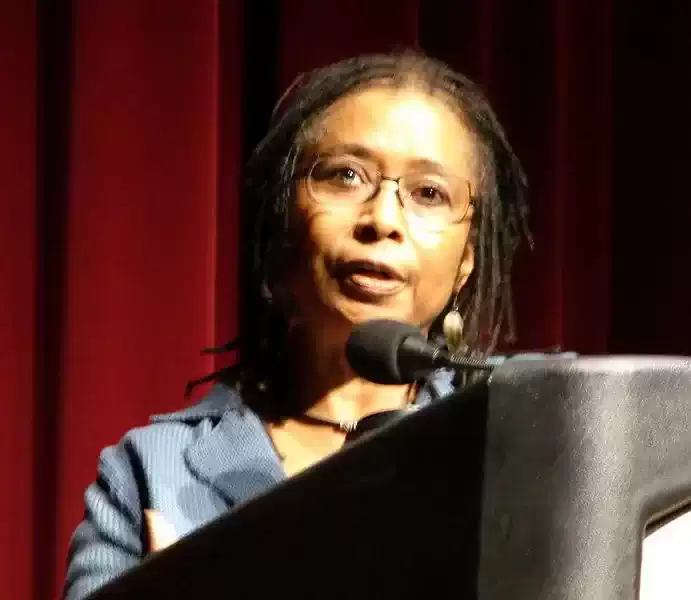
Alice Walker
Working Class Hero
My brothers knew
The things you know.
I did not scorn
learning them;
It’s just my mind
Was busy being trained
For “Other Things”:
Poetry, Philosophy, Literature.
Survival, for a girl.
But now,
What a relief
To see you understand
The ways
Of horses
Their shyness
& hatred
Of
Loneliness:
That you will not
Hesitate
To rescue
An old horse,
Dying on
His feet
&
That you will
Cheerfully
Wash him,
Aged
&
Incontinent
Head
To
Toe. Missing
With your bucket
&
Rag
Not
One
Hidden
Crevice
As he
Trembles
& weeps.
What peace
To see
Raising chickens
Does not
Mystify you
and
Hot water heaters
& their ways
Are well known;
That electricity
& how it
Works
Is something
Within
Your grasp.
That you can
Get a car
To run
By poking
It in
A few mysterious
Places
Under
The hood.
That you can
Fix a
Broken
Anything: battery, truck, stove,
Door, fridge, lamp, chicken coop hinge
While teaching me
The ins and outs
Of Opera
Or
While singing
Lusty
Italian
Tenor
That
Shakes
The walls.
That you can
Sit, comfy,
Unperturbed
By traffic
In the womb-like
Back seat
Of my
Aging
Chariot
While I drive
& you
Ride
The silver
Black
& Golden
Horses
Of
Your
Trumpet.
285
Ogden Nash
The Turtle
The turtle lives 'twixt plated decks
Which practically conceal its sex.
I think it clever of the turtle
such a fix to be so fertile.
Which practically conceal its sex.
I think it clever of the turtle
such a fix to be so fertile.
287
Ogden Nash
The Shrimp
A shrimp who sought his lady shrimp
Could catch no glimpse
Not even a glimp.
At times, translucence
Is rather a nuisance.
Could catch no glimpse
Not even a glimp.
At times, translucence
Is rather a nuisance.
287
Emily Dickinson
Our little Kinsmen—after Rain
Our little Kinsmen—after Rain
In plenty may be seen,
A Pink and Pulpy multitude
The tepid Ground upon.
A needless life, it seemed to me
Until a little Bird
As to a Hospitality
Advanced and breakfasted.
As I of He, so God of Me
I pondered, may have judged,
And left the little Angle Worm
With Modesties enlarged.
In plenty may be seen,
A Pink and Pulpy multitude
The tepid Ground upon.
A needless life, it seemed to me
Until a little Bird
As to a Hospitality
Advanced and breakfasted.
As I of He, so God of Me
I pondered, may have judged,
And left the little Angle Worm
With Modesties enlarged.
282
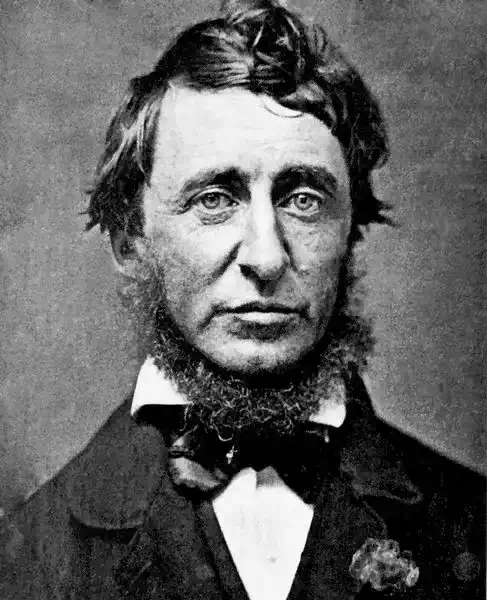
Henry David Thoreau
Song Of Nature
Mine are the night and morning,
The pits of air, the gull of space,
The sportive sun, the gibbous moon,
The innumerable days.
I hide in the solar glory,
I am dumb in the pealing song,
I rest on the pitch of the torrent,
In slumber I am strong.
No numbers have counted my tallies,
No tribes my house can fill,
I sit by the shining Fount of Life
And pour the deluge still;
And ever by delicate powers
Gathering along the centuries
From race on race the rarest flowers,
My wreath shall nothing miss.
And many a thousand summers
My gardens ripened well,
And light from meliorating stars
With firmer glory fell.
I wrote the past in characters
Of rock and fire the scroll,
The building in the coral sea,
The planting of the coal.
And thefts from satellites and rings
And broken stars I drew,
And out of spent and aged things
I formed the world anew;
What time the gods kept carnival,
Tricked out in star and flower,
And in cramp elf and saurian forms
They swathed their too much power.
Time and Thought were my surveyors,
They laid their courses well,
They boiled the sea, and piled the layers
Of granite, marl and shell.
But he, the man-child glorious, -
Where tarries he the while?
The rainbow shines his harbinger,
The sunset gleams his smile.
My boreal lights leap upward,
Forthright my planets roll,
And still the man-child is not born,
The summit of the whole.
Must time and tide forever run?
Will never my winds go sleep in the west?
Will never my wheels which whirl the sun
And satellites have rest?
Too much of donning and doffing,
Too slow the rainbow fades,
I weary of my robe of snow,
My leaves and my cascades;
I tire of globes and races,
Too long the game is played;
What without him is summer's pomp,
Or winter's frozen shade?
I travail in pain for him,
My creatures travail and wait;
His couriers come by squadrons,
He comes not to the gate.
Twice I have moulded an image,
And thrice outstretched my hand,
Made one of day and one of night
And one of the salt sea-sand.
One in a Judaean manger,
And one by Avon stream,
One over against the mouths of Nile,
And one in the Academe.
I moulded kings and saviors,
And bards o'er kings to rule; -
But fell the starry influence short,
The cup was never full.
Yet whirl the glowing wheels once more,
And mix the bowl again;
Seethe, Fate! the ancient elements,
Heat, cold, wet, dry, and peace, and pain.
Let war and trade and creeds and song
Blend, ripen race on race,
The sunburnt world a man shall breed
Of all the zones and countless days.
No ray is dimmed, no atom worn,
My oldest force is good as new,
And the fresh rose on yonder thorn
Gives back the bending heavens in dew.
283
Emily Dickinson
The Judge is like the Owl
The Judge is like the OwlI've
heard my Father tell-
And Owls do build in Oaks-
So here's an Amber Sill-
That slanted in my Path-
When going to the Barn-
And if it serve You for a House-
Itself is not in vain-
About the price-'tis small-
I only ask a Tune
At Midnight-Let the Owl select
His favorite Refrain.
heard my Father tell-
And Owls do build in Oaks-
So here's an Amber Sill-
That slanted in my Path-
When going to the Barn-
And if it serve You for a House-
Itself is not in vain-
About the price-'tis small-
I only ask a Tune
At Midnight-Let the Owl select
His favorite Refrain.
282

Anonymous
Ding Dong Bell
Ding dong bell,
The cat is in the well.
Who put her in?
Little Johnny Green.
What a naughty boy was that,
To drown poor Pussy cat.
Who never did any harm,
And kill'd the mice in his father's barn.
The cat is in the well.
Who put her in?
Little Johnny Green.
What a naughty boy was that,
To drown poor Pussy cat.
Who never did any harm,
And kill'd the mice in his father's barn.
283
Emily Dickinson
The Bee is not afraid of me
The Bee is not afraid of me.
I know the Butterfly.
The pretty people in the Woods
Receive me cordially-
The Brooks laugh louder when I come-
The Breezes madder play;
Wherefore mine eye thy silver mists,
Wherefore, Oh Summer's Day?
I know the Butterfly.
The pretty people in the Woods
Receive me cordially-
The Brooks laugh louder when I come-
The Breezes madder play;
Wherefore mine eye thy silver mists,
Wherefore, Oh Summer's Day?
281
Henry David Thoreau
Light-Winged Smoke
LIGHT-WINGED Smoke, Icarian bird,
Melting thy pinions in thy upward flight,
Lark without song, and the messenger of dawn,
Circling above the hamlets as thy nest;
Or else, departing dream, and shadowy form
Of midnight vision, gathering up thy skirts;
By night star-veiling, and by day
Darkening the light and blotting out the sun;
Go thou my incense upward from this hearth,
And ask the gods to pardon this clear flame.
281

D.H. Lawrence
Bat
At evening, sitting on this terrace,
When the sun from the west, beyond Pisa, beyond the mountains of Carrara
Departs, and the world is taken by surprise ...
When the tired flower of Florence is in gloom beneath the glowing
Brown hills surrounding ...
When under the arches of the Ponte Vecchio
A green light enters against stream, flush from the west,
Against the current of obscure Arno ...
Look up, and you see things flying
Between the day and the night;
Swallows with spools of dark thread sewing the shadows together.
A circle swoop, and a quick parabola under the bridge arches
Where light pushes through;
A sudden turning upon itself of a thing in the air.
A dip to the water.
And you think:
'The swallows are flying so late!'
Swallows?
Dark air-life looping
Yet missing the pure loop ...
A twitch, a twitter, an elastic shudder in flight
And serrated wings against the sky,
Like a glove, a black glove thrown up at the light,
And falling back.
Never swallows!
Bats!
The swallows are gone.
At a wavering instant the swallows gave way to bats
By the Ponte Vecchio ...
Changing guard.
Bats, and an uneasy creeping in one's scalp
As the bats swoop overhead!
Flying madly.
Pipistrello!
Black piper on an infinitesimal pipe.
Little lumps that fly in air and have voices indefinite, wildly vindictive;
Wings like bits of umbrella.
Bats!
Creatures that hang themselves up like an old rag, to sleep;
And disgustingly upside down.
Hanging upside down like rows of disgusting old rags
And grinning in their sleep.
Bats!
Not for me!
280

Spike Milligan
Maveric
Maveric Prowles
Had Rumbling Bowles
That thundered in the night.
It shook the bedrooms all around
And gave the folks a fright.
The doctor called;
He was appalled
When through his stethoscope
He heard the sound of a baying hound,
And the acrid smell of smoke.
Was there a cure?
'The higher the fewer'
The learned doctor said,
Then turned poor Maveric inside out
And stood him on his head.
'Just as I though
You've been and caught
An Asiatic flu -
You musn't go near dogs I fear
Unless they come near you.'
Poor Maveric cried.
He went cross-eyed,
His legs went green and blue.
The doctor hit him with a club
And charged him one and two.
And so my friend
This is the end,
A warning to the few:
Stay clear of doctors to the end
Or they'll get rid of you.
282
Edward Lear
The New Vestments
There lived an old man in the kingdom of Tess,
Who invented a purely original dress;
And when it was perfectly made and complete,
He opened the door, and walked into the street.
By way of a hat, he'd a loaf of Brown Bread,
In the middle of which he inserted his head;--
His Shirt was made up of no end of dead Mice,
The warmth of whose skins was quite fluffy and nice;--
His Drawers were of Rabit-skins, -- but it is not known whose;--
His Waistcoat and Trowsers were made of Pork Chops;--
His Buttons were Jujubes, and Chocolate Drops;--
His Coat was all Pancakes with Jam for a border,
And a girdle of Biscuits to keep it in order;
And he wore over all, as a screen from bad weather,
A Cloak of green Cabbage-leaves stitched all together.
He had walked a short way, when he heard a great noise,
Of all sorts of Beasticles, Birdlings, and Boys;--
And from every long street and dark lane in the town
Beasts, Birdles, and Boys in a tumult rushed down.
Two Cows and a half ate his Cabbage-leaf Cloak;--
Four Apes seized his Girdle, which vanished like smoke;--
Three Kids ate up half of his Pancaky Coat,--
And the tails were devour'd by an ancient He Goat;--
An army of Dogs in a twinkling tore up his
Pork Waistcoat and Trowsers to give to their Puppies;--
And while they were growling, and mumbling the Chops,
Ten boys prigged the Jujubes and Chocolate Drops.--
He tried to run back to his house, but in vain,
Four Scores of fat Pigs came again and again;--
They rushed out of stables and hovels and doors,--
They tore off his stockings, his shoes, and his drawers;--
And now from the housetops with screechings descend,
Striped, spotted, white, black, and gray Cats without end,
They jumped on his shoulders and knocked off his hat,--
When Crows, Ducks, and Hens made a mincemeat of that;--
They speedily flew at his sleeves in trice,
And utterly tore up his Shirt of dead Mice;--
They swallowed the last of his Shirt with a squall,--
Whereon he ran home with no clothes on at all.
And he said to himself as he bolted the door,
'I will not wear a similar dress any more,
'Any more, any more, any morre, never more!'
279
Emily Dickinson
She hideth Her the last
She hideth Her the last-
And is the first, to rise-
Her Night doth hardly recompense
The Closing of Her eyes-
She doth Her Purple Work-
And putteth Her away
In low Apartments in the Sod -
As worthily as We.
To imitate her life
As impotent would be
As make of Our imperfect Mints,
The Julep-of the Bee-
And is the first, to rise-
Her Night doth hardly recompense
The Closing of Her eyes-
She doth Her Purple Work-
And putteth Her away
In low Apartments in the Sod -
As worthily as We.
To imitate her life
As impotent would be
As make of Our imperfect Mints,
The Julep-of the Bee-
279
Anonymous
Two Rivers
SAYS Tweed to Till--
'What gars ye rin sae still?'
Says Till to Tweed--
'Though ye rin with speed
And I rin slaw,
For ae man that ye droon
I droon twa.'
'What gars ye rin sae still?'
Says Till to Tweed--
'Though ye rin with speed
And I rin slaw,
For ae man that ye droon
I droon twa.'
278
John Greenleaf Whittier
Andrew Rykman’s Prayer
Andrew Rykman's dead and gone;
You can see his leaning slate
In the graveyard, and thereon
Read his name and date.
Trust is truer than our fears
Runs the legend through the moss,
Gain is not in added years,
Nor in death is loss
Still the feet that thither trod,
All the friendly eyes are dim;
Only Nature, now, and God
Have a care for him.
There the dews of quiet fall,
Singing birds and soft winds stray:
Shall the tender Heart of all
Be less kind than they?
What he was and what he is
They who ask may haply find,
If they read this prayer of his
Which he left behind.
. . . .
Pardon, Lord, the lips that dare
Shape in words a mortal's prayer!
Prayer, that, when my day is done,
And I see its setting sun,
Shorn and beamless, cold and dim,
Sink beneath the horizon's rim,-When
this ball of rock and clay
Crumbles from my feet away,
And the solid shores of sense
Melt into the vague immense,
Father! I may come to Thee
Even with the beggar's plea,
As the poorest of Thy poor,
With my needs, and nothing more.
Not as one who seeks his home
With a step assured I come;
Still behind the tread I hear
Of my life-companion, Fear;
Still a shadow deep and vast
From my westering feet is cast,
Wavering, doubtful, undefined,
Never shapen nor outlined
From myself the fear has grown,
And the shadow is my own.
Yet, O Lord, through all a sense
Of Thy tender providence
Stays my failing heart on Thee,
And confirms the feeble knee;
And, at times, my worn feet press
Spaces of cool quietness,
Lilied whiteness shone upon
Not by light of moon or sun.
Hours there be of inmost calm,
Broken but by grateful psalm,
When I love Thee more than fear Thee,
And Thy blessed Christ seems near me,
With forgiving look, as when
He beheld the Magdalen.
Well I know that all things move
To the spheral rhythm of love,-That
to Thee, O Lord of all!
Nothing can of chance befall
Child and seraph, mote and star,
Well Thou knowest what we are
Through Thy vast creative plan
Looking, from the worm to man,
There is pity in Thine eyes,
But no hatred nor surprise.
Not in blind caprice of will,
Not in cunning sleight of skill,
Not for show of power, was wrought
Nature's marvel in Thy thought.
Never careless hand and vain
Smites these chords of joy and pain;
No immortal selfishness
Plays the game of curse and bless
Heaven and earth are witnesses
That Thy glory goodness is.
Not for sport of mind and force
Hast Thou made Thy universe,
But as atmosphere and zone
Of Thy loving heart alone.
Man, who walketh in a show,
Sees before him, to and fro,
Shadow and illusion go;
All things flow and fluctuate,
Now contract and now dilate.
In the welter of this sea,
Nothing stable is but Thee;
In this whirl of swooning trance,
Thou alone art permanence;
All without Thee only seems,
All beside is choice of dreams.
Never yet in darkest mood
Doubted I that Thou wast good,
Nor mistook my will for fate,
Pain of sin for heavenly hate,-Never
dreamed the gates of pearl
Rise from out the burning marl,
Or that good can only live
Of the bad conservative,
And through counterpoise of hell
Heaven alone be possible.
For myself alone I doubt;
All is well, I know, without;
I alone the beauty mar,
I alone the music jar.
Yet, with hands by evil stained,
And an ear by discord pained,
I am groping for the keys
Of the heavenly harmonies;
Still within my heart I bear
Love for all things good and fair.
Hands of want or souls in pain
Have not sought my door in vain;
I have kept my fealty good
To the human brotherhood;
Scarcely have I asked in prayer
That which others might not share.
I, who hear with secret shame
Praise that paineth more than blame,
Rich alone in favors lent,
Virtuous by accident,
Doubtful where I fain would rest,
Frailest where I seem the best,
Only strong for lack of test,-What
am I, that I should press
Special pleas of selfishness,
Coolly mounting into heaven
On my neighbor unforgiven?
Ne'er to me, howe'er disguised,
Comes a saint unrecognized;
Never fails my heart to greet
Noble deed with warmer beat;
Halt and maimed, I own not less
All the grace of holiness;
Nor, through shame or self-distrust,
Less I love the pure and just.
Lord, forgive these words of mine
What have I that is not Thine?
Whatsoe'er I fain would boast
Needs Thy pitying pardon most.
Thou, O Elder Brother! who
In Thy flesh our trial knew,
Thou, who hast been touched by these
Our most sad infirmities,
Thou alone the gulf canst span
In the dual heart of man,
And between the soul and sense
Reconcile all difference,
Change the dream of me and mine
For the truth of Thee and Thine,
And, through chaos, doubt, and strife,
Interfuse Thy calm of life.
Haply, thus by Thee renewed,
In Thy borrowed goodness good,
Some sweet morning yet in God's
Dim, veonian periods,
Joyful I shall wake to see
Those I love who rest in Thee,
And to them in Thee allied
Shall my soul be satisfied.
Scarcely Hope hath shaped for me
What the future life may be.
Other lips may well be bold;
Like the publican of old,
I can only urge the plea,
'Lord, be merciful to me!'
Nothing of desert I claim,
Unto me belongeth shame.
Not for me the, crowns of gold,
Palms, and harpings manifold;
Not for erring eye and feet
Jasper wall and golden street.
What thou wilt, O Father, give I
All is gain that I receive.
If my voice I may not raise
In the elders' song of praise,
If I may not, sin-defiled,
Claim my birthright as a child,
Suffer it that I to Thee
As an hired servant be;
Let the lowliest task be mine,
Grateful, so the work be Thine;
Let me find the humblest place
In the shadow of Thy grace
Blest to me were any spot
Where temptation whispers not.
If there be some weaker one,
Give me strength to help him on
If a blinder soul there be,
Let me guide him nearer Thee.
Make my mortal dreams come true
With the work I fain would do;
Clothe with life the weak intent,
Let me be the thing I meant;
Let me find in Thy employ
Peace that dearer is than joy;
Out of self to love be led
And to heaven acclimated,
Until all things sweet and good
Seem my natural habitude.
. . . .
So we read the prayer of him
Who, with John of Labadie,
Trod, of old, the oozy rim
Of the Zuyder Zee.
Thus did Andrew Rykman pray.
Are we wiser, better grown,
That we may not, in our day,
Make his prayer our own?
279
James Whitcomb Riley
Green Fields And Running Brooks
Ho! green fields and running brooks!
Knotted strings and fishing-hooks
Of the truant, stealing down
Weedy backways of the town.
Where the sunshine overlooks,
By green fields and running brooks,
All intruding guests of chance
With a golden tolerance,
Cooing doves, or pensive pair
Of picnickers, straying there--
By green fields and running brooks,
Sylvan shades and mossy nooks!
And--O Dreamer of the Days,
Murmurer of roundelays
All unsung of words or books,
Sing green fields and running brooks!
280