
Animals and Nature
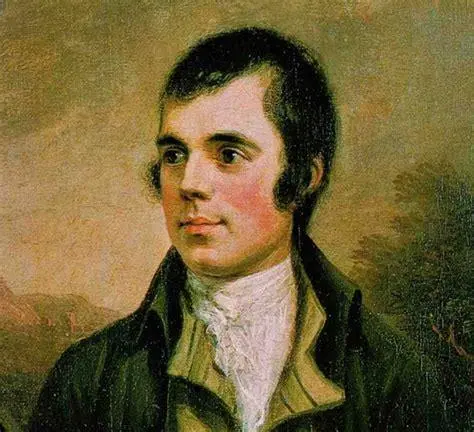
Robert Burns
The Wounded Hare
Inhuman man! curse on thy barb'rous art,
And blasted by thy murder-aiming eye;
May never pity soothe thee with a sigh,
Nor never pleasure glad thy cruel heart!
Go live, poor wanderer of the wood and field,
The bitter little of life that remains!
No more the thickening brakes and verdant plains
To thee shall home, or food, or pastime yield.
Seek, mangled wretch, some place of wonted rest,
No more of rest, but now of dying bed!
The sheltering rushes whistling o'er thy head,
The cold earth with thy bloody bosom Crest.
Oft as by winding Nith I, musing, wait
The sober eve, or hail the cheerful dawn,
I'll miss thee sporting o'er the dewy lawn,
And curse the ruffian's aim, and mourn thy hapless fate.
296

William Butler Yeats
The Fish
ALTHOUGH you hide in the ebb and flow
Of the pale tide when the moon has set,
The people of coming days will know
About the casting out of my net,
And how you have leaped times out of mind
Over the little silver cords,
And think that you were hard and unkind,
And blame you with many bitter words.
Of the pale tide when the moon has set,
The people of coming days will know
About the casting out of my net,
And how you have leaped times out of mind
Over the little silver cords,
And think that you were hard and unkind,
And blame you with many bitter words.
298

James Whitcomb Riley
Dreamer, Say
Dreamer, say, will you dream for me
A wild sweet dream of a foreign land,
Whose border sips of a foaming sea
With lips of coral and silver sand;
Where warm winds loll on the shady deeps,
Or lave themselves in the tearful mist
The great wild wave of the breaker weeps
O'er crags of opal and amethyst?
Dreamer, say, will you dream a dream
Of tropic shades in the lands of shine,
Where the lily leans o'er an amber stream
That flows like a rill of wasted wine,--
Where the palm-trees, lifting their shields of green,
Parry the shafts of the Indian sun
Whose splintering vengeance falls between
The reeds below where the waters run?
Dreamer, say, will you dream of love
That lives in a land of sweet perfume,
Where the stars drip down from the skies above
In molten spatters of bud and bloom?
Where never the weary eyes are wet,
And never a sob in the balmy air,
And only the laugh of the paroquet
Breaks the sleep of the silence there?
295
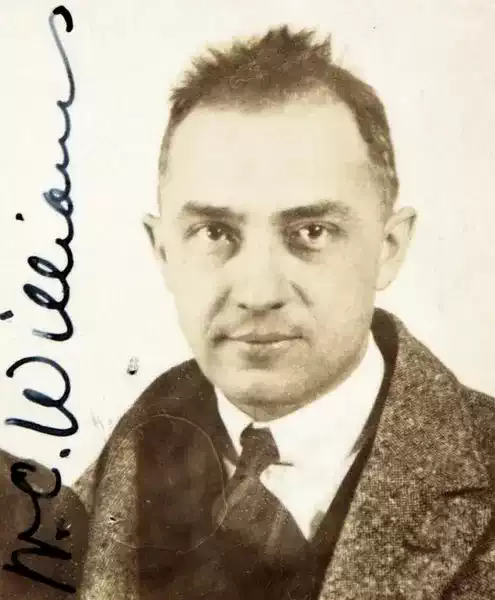
William Carlos Williams
Poem
As the cat
climbed over
the top of
the jamcloset
first the right
forefoot
carefully
then the hind
stepped down
into the pit of
the empty
flowerpot.
climbed over
the top of
the jamcloset
first the right
forefoot
carefully
then the hind
stepped down
into the pit of
the empty
flowerpot.
294

Henry Lawson
Dawgs of War
Comes the British bulldog first—solid as a log—
He’s so ugly in repose that he’s a handsome dog;
Full of mild benevolence as his years increase;
Silent as a china dog on the mantelpiece.
Rub his sides and point his nose,
Click your tongue and in he goes,
To the thick of Britain’s foes—
Enemies behind him close—
(
Silence for a while
).
Comes a very different dog—tell him at a glance.
Clipped and trimmed and frilled all round. Dandy dog of France.
(Always was a dandy dog, no matter what his age)
Now his every hair and frill is stiff as wire with rage.
Rub his sides and point his nose,
Click your tongue and in he goes,
While behind him France’s foes
Reel and surge and pack and close.
(
Silence for a while
.)
Next comes Belgium’s market dog—hard to realise.
Go-cart dog and barrow dog—he’s a great surprise.
Dog that never hurt a cat, did no person harm;
Friendly, kindly, round and fat as a “Johnny Darm.”
Rub his sides and point his nose,
Click your tongue and in he goes,
At the flank of Belgium’s foes
Who could not behind him close—
(
Silence for a while
).
Next comes Servia’s mongrel pup—mongrel dawgs can fight;
Up or down, or down or up, whether wrong or right.
He was mad the other day—he is mad today,
Hustling round and raising dust in his backyard way.
Rub his sides and point his nose,
Click your tongue and in he goes,
’Twixt the legs of Servia’s foes,
Biting tails and rearmost toes—
(
Silence for a while
.)
There are various terrier dawgs mixed up in the scrap,
Much too small for us to see, and too mad to yap.
Each one, on his frantic own—heard the row commence—
Tore with tooth and claw a hole in the backyard fence.
No one called, but in they go,
Dogs with many a nameless woe,
Tripping up their common foe—
(
Silence for a while
).
From the snows of Canada, dragging box and bale,
Comes the sledge-dog toiling on, sore-foot from the trail.
He’ll be useful in the trench, when the nose is blue—
Winter dog that knows the French and the English too.
Rub his sides and point his nose,
Click your tongue and in he goes,
At his father’s country’s foes,
And his mother’s country’s foes.
(
Silence for a while
.)
See, in sunny Southern France a dog that runs by sight,
Lean and yellow, sharp of nose, long of leg and light,
Silent and bloodthirsty, too; Distance in his eyes,
Leaping high to gain his view, the Kangaroo Dog flies!
Rub his sides and point his nose,
Click your tongue and up he goes,
Lands amongst his country’s foes—
And his country’s country’s foes;
While they sway and while they close—
(
Silence for a while
).
See across the early snow, far across the plain,
Where the clouds are grey and low and winter comes again;
By the sand-dune and the marsh—and forest black and dumb—
As dusky white as their winter’s night, the Russian wolf-hounds come!
(
Silence for a while
.)
295
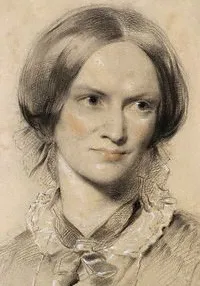
Charlotte Brontë
Speak of the North! A Lonely Moor
Speak of the North! A lonely moor
Silent and dark and tractless swells,
The waves of some wild streamlet pour
Hurriedly through its ferny dells.
Profoundly still the twilight air,
Lifeless the landscape; so we deem
Till like a phantom gliding near
A stag bends down to drink the stream.
And far away a mountain zone,
A cold, white waste of snowdrifts
lies,
And one star, large and soft and lone,
Silently lights the unclouded skies.
294

Emily Dickinson
The wind begun to rock the grass
The wind begun to rock the grass
With threatening tunes and low,--
He flung a menace at the earth,
A menace at the sky.
The leaves unhooked themselves from trees
And started all abroad;
The dust did scoop itself like hands
And throw away the road.
The wagons quickened on the streets,
The thunder hurried slow;
The lightning showed a yellow beak,
And then a livid claw.
The birds put up the bars to nests,
The cattle fled to barns;
There came one drop of giant rain,
And then, as if the hands
That held the dams had parted hold,
The waters wrecked the sky
But overlooked my father's house,
lust quartering a tree.
295

Henry Wadsworth Longfellow
Tales Of A Wayside Inn : Part 1. The Student's Tale; The Falcon of Ser Federigo
One summer morning, when the sun was hot,
Weary with labor in his garden-plot,
On a rude bench beneath his cottage eaves,
Ser Federigo sat among the leaves
Of a huge vine, that, with its arms outspread,
Hung its delicious clusters overhead.
Below him, through the lovely valley flowed
The river Arno, like a winding road,
And from its banks were lifted high in air
The spires and roofs of Florence called the Fair;
To him a marble tomb, that rose above
His wasted fortunes and his buried love.
For there, in banquet and in tournament,
His wealth had lavished been, his substance spent,
To woo and lose, since ill his wooing sped,
Monna Giovanna, who his rival wed,
Yet ever in his fancy reigned supreme,
The ideal woman of a young man's dream.
Then he withdrew, in poverty and pain,
To this small farm, the last of his domain,
His only comfort and his only care
To prune his vines, and plant the fig and pear;
His only forester and only guest
His falcon, faithful to him, when the rest,
Whose willing hands had found so light of yore
The brazen knocker of his palace door,
Had now no strength to lift the wooden latch,
That entrance gave beneath a roof of thatch.
Companion of his solitary ways,
Purveyor of his feasts on holidays,
On him this melancholy man bestowed
The love with which his nature overflowed.
And so the empty-handed years went round,
Vacant, though voiceful with prophetic sound,
And so, that summer morn, he sat and mused
With folded, patient hands, as he was used,
And dreamily before his half-closed sight
Floated the vision of his lost delight.
Beside him, motionless, the drowsy bird
Dreamed of the chase, and in his slumber heard
The sudden, scythe-like sweep of wings, that dare
The headlong plunge through eddying gulfs of air,
Then, starting broad awake upon his perch,
Tinkled his bells, like mass-bells in a church,
And, looking at his master, seemed to say,
'Ser Federigo, shall we hunt to-day?'
Ser Federigo thought not of the chase;
The tender vision of her lovely face,
I will not say he seems to see, he sees
In the leaf-shadows of the trellises,
Herself, yet not herself; a lovely child
With flowing tresses, and eyes wide and wild,
Coming undaunted up the garden walk,
And looking not at him, but at the hawk.
'Beautiful falcon!' said he, 'would that I
Might hold thee on my wrist, or see thee fly!'
The voice was hers, and made strange echoes start
Through all the haunted chambers of his heart,
As an aeolian harp through gusty doors
Of some old ruin its wild music pours.
'Who is thy mother, my fair boy?' he said,
His hand laid softly on that shining head.
'Monna Giovanna. Will you let me stay
A little while, and with your falcon play?
We live there, just beyond your garden wall,
In the great house behind the poplars tall.'
So he spake on; and Federigo heard
As from afar each softly uttered word,
And drifted onward through the golden gleams
And shadows of the misty sea of dreams,
As mariners becalmed through vapors drift,
And feel the sea beneath them sink and lift,
And hear far off the mournful breakers roar,
And voices calling faintly from the shore!
Then, waking from his pleasant reveries
He took the little boy upon his knees,
And told him stories of his gallant bird,
Till in their friendship he became a third.
Monna Giovanna, widowed in her prime,
Had come with friends to pass the summer time
In her grand villa, half-way up the hill,
O'erlooking Florence, but retired and still;
With iron gates, that opened through long lines
Of sacred ilex and centennial pines,
And terraced gardens, and broad steps of stone,
And sylvan deities, with moss o'ergrown,
And fountains palpitating in the heat,
And all Val d'Arno stretched beneath its feet.
Here in seclusion, as a widow may,
The lovely lady whiled the hours away,
Pacing in sable robes the statued hall,
Herself the stateliest statue among all,
And seeing more and more, with secret joy,
Her husband risen and living in her boy,
Till the lost sense of life returned again,
Not as delight, but as relief from pain.
Meanwhile the boy, rejoicing in his strength,
Stormed down the terraces from length to length;
The screaming peacock chased in hot pursuit,
And climbed the garden trellises for fruit.
But his chief pastime was to watch the flight
Of a gerfalcon, soaring into sight,
Beyond the trees that fringed the garden wall,
Then downward stooping at some distant call;
And as he gazed full often wondered he
Who might the master of the falcon be,
Until that happy morning, when he found
Master and falcon in the cottage ground.
And now a shadow and a terror fell
On the great house, as if a passing-bell
Tolled from the tower, and filled each spacious room
With secret awe, and preternatural gloom;
The petted boy grew ill, and day by day
Pined with mysterious malady away.
The mother's heart would not be comforted;
Her darling seemed to her already dead,
And often, sitting by the sufferer's side,
'What can I do to comfort thee?' she cried.
At first the silent lips made no reply,
But moved at length by her importunate cry,
'Give me,' he answered, with imploring tone,
'Ser Federigo's falcon for my own!'
No answer could the astonished mother make;
How could she ask, e'en for her darling's sake,
Such favor at a luckless lover's hand,
Well knowing that to ask was to command?
Well knowing, what all falconers confessed,
In all the land that falcon was the best,
The master's pride and passion and delight,
And the sole pursuivant of this poor knight.
But yet, for her child's sake, she could no less
Than give assent to soothe his restlessness,
So promised, and then promising to keep
Her promise sacred, saw him fall asleep.
The morrow was a bright September morn;
The earth was beautiful as if new-born;
There was that nameless splendor everywhere,
That wild exhilaration in the air,
Which makes the passers in the city street
Congratulate each other as they meet.
Two lovely ladies, clothed in cloak and hood,
Passed through the garden gate into the wood,
Under the lustrous leaves, and through the sheen
Of dewy sunshine showering down between.
The one, close-hooded, had the attractive grace
Which sorrow sometimes lends a woman's face;
Her dark eyes moistened with the mists that roll
From the gulf-stream of passion in the soul;
The other with her hood thrown back, her hair
Making a golden glory in the air,
Her cheeks suffused with an auroral blush,
Her young heart singing louder than the thrush.
So walked, that morn, through mingled light and shade,
Each by the other's presence lovelier made,
Monna Giovanna and her bosom friend,
Intent upon their errand and its end.
They found Ser Federigo at his toil,
Like banished Adam, delving in the soil;
And when he looked and these fair women spied,
The garden suddenly was glorified;
His long-lost Eden was restored again,
And the strange river winding through the plain
No longer was the Arno to his eyes,
But the Euphrates watering Paradise!
Monna Giovanna raised her stately head,
And with fair words of salutation said:
'Ser Federigo, we come here as friends,
Hoping in this to make some poor amends
For past unkindness. I who ne'er before
Would even cross the threshold of your door,
I who in happier days such pride maintained,
Refused your banquets, and your gifts disdained,
This morning come, a self-invited guest,
To put your generous nature to the test,
And breakfast with you under your own vine.'
To which he answered: 'Poor desert of mine,
Not your unkindness call it, for if aught
Is good in me of feeling or of thought,
From you it comes, and this last grace outweighs
All sorrows, all regrets of other days.'
And after further compliment and talk,
Among the asters in the garden walk
He left his guests; and to his cottage turned,
And as he entered for a moment yearned
For the lost splendors of the days of old,
The ruby glass, the silver and the gold,
And felt how piercing is the sting of pride,
By want embittered and intensified.
He looked about him for some means or way
To keep this unexpected holiday;
Searched every cupboard, and then searched again,
Summoned the maid, who came, but came in vain;
'The Signor did not hunt to-day,' she said,
'There's nothing in the house but wine and bread.'
Then suddenly the drowsy falcon shook
His little bells, with that sagacious look,
Which said, as plain as language to the ear,
'If anything is wanting, I am here!'
Yes, everything is wanting, gallant bird!
The master seized thee without further word.
Like thine own lure, he whirled thee round; ah me!
The pomp and flutter of brave falconry,
The bells, the jesses, the bright scarlet hood,
The flight and the pursuit o'er field and wood,
All these forevermore are ended now;
No longer victor, but the victim thou!
Then on the board a snow-white cloth he spread,
Laid on its wooden dish the loaf of bread,
Brought purple grapes with autumn sunshine hot,
The fragrant peach, the juicy bergamot;
Then in the midst a flask of wine he placed,
And with autumnal flowers the banquet graced.
Ser Federigo, would not these suffice
Without thy falcon stuffed with cloves and spice?
When all was ready, and the courtly dame
With her companion to the cottage came,
Upon Ser Federigo's brain there fell
The wild enchantment of a magic spell!
The room they entered, mean and low and small,
Was changed into a sumptuous banquet-hall,
With fanfares by aerial trumpets blown;
The rustic chair she sat on was a throne;
He ate celestial food, and a divine
Flavor was given to his country wine,
And the poor falcon, fragrant with his spice,
A peacock was, or bird of paradise!
When the repast was ended, they arose
And passed again into the garden-close.
Then said the lady, 'Far too well I know,
Remembering still the days of long ago,
Though you betray it not with what surprise
You see me here in this familiar wise.
You have no children, and you cannot guess
What anguish, what unspeakable distress
A mother feels, whose child is lying ill,
Nor how her heart anticipates his will.
And yet for this, you see me lay aside
All womanly reserve and check of pride,
And ask the thing most precious in your sight,
Your falcon, your sole comfort and delight,
Which if you find it in your heart to give,
My poor, unhappy boy perchance may live.'
Ser Federigo listens, and replies,
With tears of love and pity in his eyes:
'Alas, dear lady! there can be no task
So sweet to me, as giving when you ask.
One little hour ago, if I had known
This wish of yours, it would have been my own.
But thinking in what manner I could best
Do honor to the presence of my guest,
I deemed that nothing worthier could be
Than what most dear and precious was to me,
And so my gallant falcon breathed his last
To furnish forth this morning our repast.'
In mute contrition, mingled with dismay,
The gentle lady turned her eyes away,
Grieving that he such sacrifice should make,
And kill his falcon for a woman's sake,
Yet feeling in her heart a woman's pride,
That nothing she could ask for was denied;
Then took her leave, and passed out at the gate
With footstep slow and soul disconsolate.
Three days went by, and lo! a passing-bell
Tolled from the little chapel in the dell;
Ten strokes Ser Federigo heard, and said,
Breathing a prayer, 'Alas! her child is dead!'
Three months went by; and lo! a merrier chime
Rang from the chapel bells at Christmas-time;
The cottage was deserted, and no more
Ser Federigo sat beside its door,
But now, with servitors to do his will,
In the grand villa, half-way up the hill,
Sat at the Christmas feast, and at his side
Monna Giovanna, his beloved bride,
Never so beautiful, so kind, so fair,
Enthroned once more in the old rustic chair,
High-perched upon the back of which there stood
The image of a falcon carved in wood,
And underneath the inscription, with date,
'All things come round to him who will but wait.'
294

Christina Rossetti
Spring Quiet
Gone were but the Winter,
Come were but the Spring,
I would go to a covert
Where the birds sing;
Where in the whitethorn
Singeth a thrush,
And a robin sings
In the holly-bush.
Full of fresh scents
Are the budding boughs
Arching high over
A cool green house:
Full of sweet scents,
And whispering air
Which sayeth softly:
"We spread no snare;
"Here dwell in safety,
Here dwell alone,
With a clear stream
And a mossy stone.
"Here the sun shineth
Most shadily;
Here is heard an echo
Of the far sea,
Though far off it be."
293
Emily Dickinson
Papa above!
Papa above!
Regard a Mouse
O'erpowered by the Cat!
Reserve within thy kingdom
A "Mansion" for the Rat!
Snug in seraphic Cupboards
To nibble all the day
While unsuspecting Cycles
Wheel solemnly away!
Regard a Mouse
O'erpowered by the Cat!
Reserve within thy kingdom
A "Mansion" for the Rat!
Snug in seraphic Cupboards
To nibble all the day
While unsuspecting Cycles
Wheel solemnly away!
292
Emily Dickinson
This Bauble was preferred of Bees
This Bauble was preferred of Bees-
By Butterflies admired
At Heavenly-Hopeless Distances-
Was justified of Bird-
Did Noon-enamel-in Herself
Was Summer to a Score
Who only knew of Universe-
It had created Her.
By Butterflies admired
At Heavenly-Hopeless Distances-
Was justified of Bird-
Did Noon-enamel-in Herself
Was Summer to a Score
Who only knew of Universe-
It had created Her.
292

William Wordsworth
The Idiot Boy
'Tis eight o'clock,--a clear March night,
The moon is up,--the sky is blue,
The owlet, in the moonlight air,
Shouts from nobody knows where;
He lengthens out his lonely shout,
Halloo! halloo! a long halloo!
--Why bustle thus about your door,
What means this bustle, Betty Foy?
Why are you in this mighty fret?
And why on horseback have you set
Him whom you love, your Idiot Boy?
Scarcely a soul is out of bed;
Good Betty, put him down again;
His lips with joy they burr at you;
But, Betty! what has he to do
With stirrup, saddle, or with rein?
But Betty's bent on her intent;
For her good neighbour, Susan Gale,
Old Susan, she who dwells alone,
Is sick, and makes a piteous moan
As if her very life would fail.
There's not a house within a mile,
No hand to help them in distress;
Old Susan lies a-bed in pain,
And sorely puzzled are the twain,
For what she ails they cannot guess.
And Betty's husband's at the wood,
Where by the week he doth abide,
A woodman in the distant vale;
There's none to help poor Susan Gale;
What must be done? what will betide?
And Betty from the lane has fetched
Her Pony, that is mild and good;
Whether he be in joy or pain,
Feeding at will along the lane,
Or bringing faggots from the wood.
And he is all in travelling trim,--
And, by the moonlight, Betty Foy
Has on the well-girt saddle set
(The like was never heard of yet)
Him whom she loves, her Idiot Boy.
And he must post without delay
Across the bridge and through the dale,
And by the church, and o'er the down,
To bring a Doctor from the town,
Or she will die, old Susan Gale.
There is no need of boot or spur,
There is no need of whip or wand;
For Johnny has his holly-bough,
And with a 'hurly-burly' now
He shakes the green bough in his hand.
And Betty o'er and o'er has told
The Boy, who is her best delight,
Both what to follow, what to shun,
What do, and what to leave undone,
How turn to left, and how to right.
And Betty's most especial charge,
Was, "Johnny! Johnny! mind that you
Come home again, nor stop at all,--
Come home again, whate'er befall,
My Johnny, do, I pray you do."
To this did Johnny answer make,
Both with his head and with his hand,
And proudly shook the bridle too;
And then! his words were not a few,
Which Betty well could understand.
And now that Johnny is just going,
Though Betty's in a mighty flurry,
She gently pats the Pony's side,
On which her Idiot Boy must ride,
And seems no longer in a hurry.
But when the Pony moved his legs,
Oh! then for the poor Idiot Boy!
For joy he cannot hold the bridle,
For joy his head and heels are idle,
He's idle all for very joy.
And while the Pony moves his legs,
In Johnny's left hand you may see
The green bough motionless and dead:
The Moon that shines above his head
Is not more still and mute than he.
His heart it was so full of glee,
That till full fifty yards were gone,
He quite forgot his holly whip,
And all his skill in horsemanship:
Oh! happy, happy, happy John.
And while the Mother, at the door,
Stands fixed, her face with joy o'erflows,
Proud of herself, and proud of him,
She sees him in his travelling trim,
How quietly her Johnny goes.
The silence of her Idiot Boy,
What hopes it sends to Betty's heart!
He's at the guide-post--he turns right;
She watches till he's out of sight,
And Betty will not then depart.
Burr, burr--now Johnny's lips they burr,
As loud as any mill, or near it;
Meek as a lamb the Pony moves,
And Johnny makes the noise he loves,
And Betty listens, glad to hear it.
Away she hies to Susan Gale:
Her Messenger's in merry tune;
The owlets hoot, the owlets curr,
And Johnny's lips they burr, burr, burr,
As on he goes beneath the moon.
His steed and he right well agree;
For of this Pony there's a rumour,
That, should he lose his eyes and ears,
And should he live a thousand years,
He never will be out of humour.
But then he is a horse that thinks!
And when he thinks, his pace is slack;
Now, though he knows poor Johnny well,
Yet, for his life, he cannot tell
What he has got upon his back.
So through the moonlight lanes they go,
And far into the moonlight dale,
And by the church, and o'er the down,
To bring a Doctor from the town,
To comfort poor old Susan Gale.
And Betty, now at Susan's side,
Is in the middle of her story,
What speedy help her Boy will bring,
With many a most diverting thing,
Of Johnny's wit, and Johnny's glory.
And Betty, still at Susan's side,
By this time is not quite so flurried:
Demure with porringer and plate
She sits, as if in Susan's fate
Her life and soul were buried.
But Betty, poor good woman! she,
You plainly in her face may read it,
Could lend out of that moment's store
Five years of happiness or more
To any that might need it.
But yet I guess that now and then
With Betty all was not so well;
And to the road she turns her ears,
And thence full many a sound she hears,
Which she to Susan will not tell.
Poor Susan moans, poor Susan groans;
"As sure as there's a moon in heaven,"
Cries Betty, "he'll be back again;
They'll both be here--'tis almost ten--
Both will be here before eleven."
Poor Susan moans, poor Susan groans;
The clock gives warning for eleven;
'Tis on the stroke--"He must be near,"
Quoth Betty, "and will soon be here,
As sure as there's a moon in heaven."
The clock is on the stroke of twelve,
And Johnny is not yet in sight:
--The Moon's in heaven, as Betty sees,
But Betty is not quite at ease;
And Susan has a dreadful night.
And Betty, half an hour ago,
On Johnny vile reflections cast:
"A little idle sauntering Thing!"
With other names, an endless string;
But now that time is gone and past.
And Betty's drooping at the heart,
That happy time all past and gone,
"How can it be he is so late?
The Doctor, he has made him wait;
Susan! they'll both be here anon."
And Susan's growing worse and worse,
And Betty's in a sad 'quandary';
And then there's nobody to say
If she must go, or she must stay!
--She's in a sad 'quandary'.
The clock is on the stroke of one;
But neither Doctor nor his Guide
Appears along the moonlight road;
There's neither horse nor man abroad,
And Betty's still at Susan's side.
And Susan now begins to fear
Of sad mischances not a few,
That Johnny may perhaps be drowned;
Or lost, perhaps, and never found;
Which they must both for ever rue.
She prefaced half a hint of this
With, "God forbid it should be true!"
At the first word that Susan said
Cried Betty, rising from the bed,
"Susan, I'd gladly stay with you.
"I must be gone, I must away:
Consider, Johnny's but half-wise;
Susan, we must take care of him,
If he is hurt in life or limb"--
"Oh God forbid!" poor Susan cries.
"What can I do?" says Betty, going,
"What can I do to ease your pain?
Good Susan tell me, and I'll stay;
I fear you're in a dreadful way,
But I shall soon be back again."
"Nay, Betty, go! good Betty, go!
There's nothing that can ease my pain,"
Then off she hies, but with a prayer
That God poor Susan's life would spare,
Till she comes back again.
So, through the moonlight lane she goes,
And far into the moonlight dale;
And how she ran, and how she walked,
And all that to herself she talked,
Would surely be a tedious tale.
In high and low, above, below,
In great and small, in round and square,
In tree and tower was Johnny seen,
In bush and brake, in black and green;
'Twas Johnny, Johnny, every where.
And while she crossed the bridge, there came
A thought with which her heart is sore--
Johnny perhaps his horse forsook,
To hunt the moon within the brook,
And never will be heard of more.
Now is she high upon the down,
Alone amid a prospect wide;
There's neither Johnny nor his Horse
Among the fern or in the gorse;
There's neither Doctor nor his Guide.
"O saints! what is become of him?
Perhaps he's climbed into an oak,
Where he will stay till he is dead;
Or, sadly he has been misled,
And joined the wandering gipsy-folk.
"Or him that wicked Pony's carried
To the dark cave, the goblin's hall;
Or in the castle he's pursuing
Among the ghosts his own undoing;
Or playing with the waterfall."
At poor old Susan then she railed,
While to the town she posts away;
"If Susan had not been so ill,
Alas! I should have had him still,
My Johnny, till my dying day."
Poor Betty, in this sad distemper,
The Doctor's self could hardly spare:
Unworthy things she talked, and wild;
Even he, of cattle the most mild,
The Pony had his share.
But now she's fairly in the town,
And to the Doctor's door she hies;
'Tis silence all on every side;
The town so long, the town so wide,
Is silent as the skies.
And now she's at the Doctor's door,
She lifts the knocker, rap, rap, rap;
The Doctor at the casement shows
His glimmering eyes that peep and doze!
And one hand rubs his old night-cap.
"O Doctor! Doctor! where's my Johnny?"
"I'm here, what is't you want with me?"
"O Sir! you know I'm Betty Foy,
And I have lost my poor dear Boy,
You know him--him you often see;
"He's not so wise as some folks be:"
"The devil take his wisdom!" said
The Doctor, looking somewhat grim,
"What, Woman! should I know of him?"
And, grumbling, he went back to bed!
"O woe is me! O woe is me!
Here will I die, here will I die;
I thought to find my lost one here,
But he is neither far nor near,
Oh! what a wretched Mother I!"
She stops, she stands, she looks about;
Which way to turn she cannot tell.
Poor Betty! it would ease her pain
If she had heart to knock again;
--The clock strikes three--a dismal knell!
Then up along the town she hies,
No wonder if her senses fail;
This piteous news so much it shocked her,
She quite forgot to send the Doctor,
To comfort poor old Susan Gale.
And now she's high upon the down,
And she can see a mile of road:
"O cruel! I'm almost threescore;
Such night as this was ne'er before,
There's not a single soul abroad."
She listens, but she cannot hear
The foot of horse, the voice of man;
The streams with softest sound are flowing,
The grass you almost hear it growing,
You hear it now, if e'er you can.
The owlets through the long blue night
Are shouting to each other still:
Fond lovers! yet not quite hob nob,
They lengthen out the tremulous sob,
That echoes far from hill to hill.
Poor Betty now has lost all hope,
Her thoughts are bent on deadly sin,
A green-grown pond she just has past,
And from the brink she hurries fast,
Lest she should drown herself therein.
And now she sits her down and weeps;
Such tears she never shed before;
"Oh dear, dear Pony! my sweet joy!
Oh carry back my Idiot Boy!
And we will ne'er o'erload thee more."
A thought is come into her head:
The Pony he is mild and good,
And we have always used him well;
Perhaps he's gone along the dell,
And carried Johnny to the wood.
Then up she springs as if on wings;
She thinks no more of deadly sin;
If Betty fifty ponds should see,
The last of all her thoughts would be
To drown herself therein.
O Reader! now that I might tell
What Johnny and his Horse are doing
What they've been doing all this time,
Oh could I put it into rhyme,
A most delightful tale pursuing!
Perhaps, and no unlikely thought!
He with his Pony now doth roam
The cliffs and peaks so high that are,
To lay his hands upon a star,
And in his pocket bring it home.
Perhaps he's turned himself about,
His face unto his horse's tail,
And, still and mute, in wonder lost,
All silent as a horseman-ghost,
He travels slowly down the vale.
And now, perhaps, is hunting sheep,
A fierce and dreadful hunter he;
Yon valley, now so trim and green,
In five months' time, should he be seen,
A desert wilderness will be!
Perhaps, with head and heels on fire,
And like the very soul of evil,
He's galloping away, away,
And so will gallop on for aye,
The bane of all that dread the devil!
I to the Muses have been bound
These fourteen years, by strong indentures:
O gentle Muses! let me tell
But half of what to him befell;
He surely met with strange adventures.
O gentle Muses! is this kind?
Why will ye thus my suit repel?
Why of your further aid bereave me?
And can ye thus unfriended leave me
Ye Muses! whom I love so well?
Who's yon, that, near the waterfall,
Which thunders down with headlong force,
Beneath the moon, yet shining fair,
As careless as if nothing were,
Sits upright on a feeding horse?
Unto his horse--there feeding free,
He seems, I think, the rein to give;
Of moon or stars he takes no heed;
Of such we in romances read:
--'Tis Johnny! Johnny! as I live.
And that's the very Pony, too!
Where is she, where is Betty Foy?
She hardly can sustain her fears;
The roaring waterfall she hears,
And cannot find her Idiot Boy.
Your Pony's worth his weight in gold:
Then calm your terrors, Betty Foy!
She's coming from among the trees,
And now all full in view she sees
Him whom she loves, her Idiot Boy.
And Betty sees the Pony too:
Why stand you thus, good Betty Foy?
It is no goblin, 'tis no ghost,
'Tis he whom you so long have lost,
He whom you love, your Idiot Boy.
She looks again--her arms are up--
She screams--she cannot move for joy;
She darts, as with a torrent's force,
She almost has o'erturned the Horse,
And fast she holds her Idiot Boy.
And Johnny burrs, and laughs aloud;
Whether in cunning or in joy
I cannot tell; but while he laughs,
Betty a drunken pleasure quaffs
To hear again her Idiot Boy.
And now she's at the Pony's tail,
And now is at the Pony's head,--
On that side now, and now on this;
And, almost stifled with her bliss,
A few sad tears does Betty shed.
She kisses o'er and o'er again
Him whom she loves, her Idiot Boy;
She's happy here, is happy there,
She is uneasy every where;
Her limbs are all alive with joy.
She pats the Pony, where or when
She knows not, happy Betty Foy!
The little Pony glad may be,
But he is milder far than she,
You hardly can perceive his joy.
"Oh! Johnny, never mind the Doctor;
You've done your best, and that is all:"
She took the reins, when this was said,
And gently turned the Pony's head
From the loud waterfall.
By this the stars were almost gone,
The moon was setting on the hill,
So pale you scarcely looked at her:
The little birds began to stir,
Though yet their tongues were still.
The Pony, Betty, and her Boy,
Wind slowly through the woody dale;
And who is she, betimes abroad,
That hobbles up the steep rough road?
Who is it, but old Susan Gale?
Long time lay Susan lost in thought;
And many dreadful fears beset her,
Both for her Messenger and Nurse;
And, as her mind grew worse and worse,
Her body--it grew better.
She turned, she tossed herself in bed,
On all sides doubts and terrors met her;
Point after point did she discuss;
And, while her mind was fighting thus,
Her body still grew better.
"Alas! what is become of them?
These fears can never be endured;
I'll to the wood."--The word scarce said,
Did Susan rise up from her bed,
As if by magic cured.
Away she goes up hill and down,
And to the wood at length is come;
She spies her Friends, she shouts a greeting;
Oh me! it is a merry meeting
As ever was in Christendom.
The owls have hardly sung their last,
While our four travellers homeward wend;
The owls have hooted all night long,
And with the owls began my song,
And with the owls must end.
For while they all were travelling home,
Cried Betty, "Tell us, Johnny, do,
Where all this long night you have been,
What you have heard, what you have seen:
And, Johnny, mind you tell us true."
Now Johnny all night long had heard
The owls in tuneful concert strive;
No doubt too he the moon had seen;
For in the moonlight he had been
From eight o'clock till five.
And thus, to Betty's question, he
Made answer, like a traveller bold,
(His very words I give to you,)
"The cocks did crow to-whoo, to-whoo,
And the sun did shine so cold!"
--Thus answered Johnny in his glory,
And that was all his travel's story,
294
Robert Burns
Lines on the Fall of Fyers Near Loch Ness
Among the heathy hills and ragged woods
The roaring Fyers pours his mossy floods;
Till full he dashes on the rocky mounds,
Where, thro' a shapeless breach, his stream resounds.
As high in air the bursting torrents flow,
As deep recoiling surges foam below,
Prone down the rock the whitening sheet descends,
And viewless Echo's ear, astonished, rends.
Dim-seen, through rising mists and ceaseless show'rs,
The hoary cavern, wide surrounding, lours:
Still thro' the gap the struggling river toils,
And still, below, the horrid cauldron boils -
293

Robert W. Service
The Ballad Of The Black Fox Skin
I
There was Claw-fingered Kitty and Windy Ike living the life of shame,
When unto them in the Long, Long Night came the man-who-had-no-name;
Bearing his prize of a black fox pelt, out of the Wild he came.
His cheeks were blanched as the flume-head foam when the brown spring freshets
flow;
Deep in their dark, sin-calcined pits were his sombre eyes aglow;
They knew him far for the fitful man who spat forth blood on the snow.
"Did ever you see such a skin?" quoth he; "there's nought in the world so fine--
Such fullness of fur as black as the night, such lustre, such size, such shine;
It's life to a one-lunged man like me; it's London, it's women, it's wine.
"The Moose-hides called it the devil-fox, and swore that no man could kill;
That he who hunted it, soon or late, must surely suffer some ill;
But I laughed at them and their old squaw-tales. Ha! Ha! I'm laughing still.
"For look ye, the skin--it's as smooth as sin, and black as the core of the Pit.
By gun or by trap, whatever the hap, I swore I would capture it;
By star and by star afield and afar, I hunted and would not quit.
"For the devil-fox, it was swift and sly, and it seemed to fleer at me;
I would wake in fright by the camp-fire light, hearing its evil glee;
Into my dream its eyes would gleam, and its shadow would I see.
"It sniffed and ran from the ptarmigan I had poisoned to excess;
Unharmed it sped from my wrathful lead ('twas as if I shot by guess);
Yet it came by night in the stark moonlight to mock at my weariness.
"I tracked it up where the mountains hunch like the vertebrae of the world;
I tracked it down to the death-still pits where the avalanche is hurled;
From the glooms to the sacerdotal snows, where the carded clouds are curled.
"From the vastitudes where the world protrudes through clouds like seas up-shoaled,
I held its track till it led me back to the land I had left of old--
The land I had looted many moons. I was weary and sick and cold.
"I was sick, soul-sick, of the futile chase, and there and then I swore
The foul fiend fox might scathless go, for I would hunt no more;
Then I rubbed mine eyes in a vast surprise--it stood by my cabin door.
"A rifle raised in the wraith-like gloom, and a vengeful shot that sped;
A howl that would thrill a cream-faced corpse-- and the demon fox lay dead. . . .
Yet there was never a sign of wound, and never a drop he bled.
"So that was the end of the great black fox, and here is the prize I've won;
And now for a drink to cheer me up--I've mushed since the early sun;
We'll drink a toast to the sorry ghost of the fox whose race is run."
II
Now Claw-fingered Kitty and Windy Ike, bad as the worst were they;
In their road-house down by the river-trail they waited and watched for prey;
With wine and song they joyed night long, and they slept like swine by day.
For things were done in the Midnight Sun that no tongue will ever tell;
And men there be who walk earth-free, but whose names are writ in hell--
Are writ in flames with the guilty names of Fournier and Labelle.
Put not your trust in a poke of dust would ye sleep the sleep of sin;
For there be those who would rob your clothes ere yet the dawn comes in;
And a prize likewise in a woman's eyes is a peerless black fox skin.
Put your faith in the mountain cat if you lie within his lair;
Trust the fangs of the mother-wolf, and the claws of the lead-ripped bear;
But oh, of the wiles and the gold-tooth smiles of a dance-hall wench beware!
Wherefore it was beyond all laws that lusts of man restrain,
A man drank deep and sank to sleep never to wake again;
And the Yukon swallowed through a hole the cold corpse of the slain.
III
The black fox skin a shadow cast from the roof nigh to the floor;
And sleek it seemed and soft it gleamed, and the woman stroked it o'er;
And the man stood by with a brooding eye, and gnashed his teeth and swore.
When thieves and thugs fall out and fight there's fell arrears to pay;
And soon or late sin meets its fate, and so it fell one day
That Claw-fingered Kitty and Windy Ike fanged up like dogs at bay.
"The skin is mine, all mine," she cried; "I did the deed alone."
"It's share and share with a guilt-yoked pair", he hissed in a pregnant tone;
And so they snarled like malamutes over a mildewed bone.
And so they fought, by fear untaught, till haply it befell
One dawn of day she slipped away to Dawson town to sell
The fruit of sin, this black fox skin that had made their lives a hell.
She slipped away as still he lay, she clutched the wondrous fur;
Her pulses beat, her foot was fleet, her fear was as a spur;
She laughed with glee, she did not see him rise and follow her.
The bluffs uprear and grimly peer far over Dawson town;
They see its lights a blaze o' nights and harshly they look down;
They mock the plan and plot of man with grim, ironic frown.
The trail was steep; 'twas at the time when swiftly sinks the snow;
All honey-combed, the river ice was rotting down below;
The river chafed beneath its rind with many a mighty throe.
And up the swift and oozy drift a woman climbed in fear,
Clutching to her a black fox fur as if she held it dear;
And hard she pressed it to her breast--then Windy Ike drew near.
She made no moan--her heart was stone--she read his smiling face,
And like a dream flashed all her life's dark horror and disgrace;
A moment only--with a snarl he hurled her into space.
She rolled for nigh an hundred feet; she bounded like a ball;
From crag to crag she carromed down through snow and timber fall; . . .
A hole gaped in the river ice; the spray flashed--that was all.
A bird sang for the joy of spring, so piercing sweet and frail;
And blinding bright the land was dight in gay and glittering mail;
And with a wondrous black fox skin a man slid down the trail.
IV
A wedge-faced man there was who ran along the river bank,
Who stumbled through each drift and slough, and ever slipped and sank,
And ever cursed his Maker's name, and ever "hooch" he drank.
He travelled like a hunted thing, hard harried, sore distrest;
The old grandmother moon crept out from her cloud-quilted nest;
The aged mountains mocked at him in their primeval rest.
Grim shadows diapered the snow; the air was strangely mild;
The valley's girth was dumb with mirth, the laughter of the wild;
The still, sardonic laughter of an ogre o'er a child.
The river writhed beneath the ice; it groaned like one in pain,
And yawning chasms opened wide, and closed and yawned again;
And sheets of silver heaved on high until they split in twain.
From out the road-house by the trail they saw a man afar
Make for the narrow river-reach where the swift cross-currents are;
Where, frail and worn, the ice is torn and the angry waters jar.
But they did not see him crash and sink into the icy flow;
They did not see him clinging there, gripped by the undertow,
Clawing with bleeding finger-nails at the jagged ice and snow.
They found a note beside the hole where he had stumbled in:
"Here met his fate by evil luck a man who lived in sin,
And to the one who loves me least I leave this black fox skin."
And strange it is; for, though they searched the river all around,
No trace or sign of black fox skin was ever after found;
Though one man said he saw the tread of HOOFS deep in the ground.
293
James Whitcomb Riley
While The Musician Played
O it was but a dream I had
While the musician played!--
And here the sky, and here the glad
Old ocean kissed the glade--
And here the laughing ripples ran,
And here the roses grew
That threw a kiss to every man
That voyaged with the crew.
Our silken sails in lazy folds
Drooped in the breathless breeze:
As o'er a field of marigolds
Our eyes swam o'er the seas;
While here the eddies lisped and purled
Around the island's rim,
And up from out the underworld
We saw the mermen swim.
And it was dawn and middle-day
And midnight--for the moon
On silver rounds across the bay
Had climbed the skies of June--
And there the glowing, glorious king
Of day ruled o'er his realm,
With stars of midnight glittering
About his diadem.
The seagull reeled on languid wing
In circles round the mast,
We heard the songs the sirens sing
As we went sailing past;
And up and down the golden sands
A thousand fairy throngs
Flung at us from their flashing hands
The echoes of their songs.
O it was but a dream I had
While the musician played--
For here the sky, and here the glad
Old ocean kissed the glade;
And here the laughing ripples ran,
And here the roses grew
That threw a kiss to every man
That voyaged with the crew.
292
Henry Lawson
Watching The Crows
A bushman got lost in a scrub in the North,
And all the long morning the searchers went forth.
They swore at the rain that had washed out the tracks
And left not a trace for the eyes of the blacks;
But, trusting the signs that the blackfellow knows,
A quiet old darkey stood watching the crows.
The solemn old blackman stood silently by;
He stood like a statue, his face to the sky.
Black Billy was out of the bearings—we thought—
If he looked above for the bushman we sought;
For we rather suspected the spirit would go
In—well, quite another direction, you know.
Most bushmen on solemn occasions will joke,
And unto Black Bill ’twas the super who spoke.
He asked, as he cocked his red nose in the air—
“You think it old Harrison sit down up there?”
“I’m watching the crows. Where the white man lies dead
The crows will fly over,” the blackfellow said.
The blackfellow died, and long years have gone round
Since the day when old Harrison’s body was found;
But still do I see, in my vision at night,
A faint figure come like a shadow in sight,
And nearer and nearer it comes till it grows
Like the form of that blackfellow—“watching the crows”.
292
Robert W. Service
Old Codger
Of garden truck he made his fare,
As his bright eyes bore witness;
Health was his habit and his care,
His hobby human fitness.
He sang the praise of open sky,
The gladth of Nature's giving;
And when at last he came to die
It was of too long living.
He held aloof from hate and strife,
Drank peace in dreamful doses;
He never voted in his life,
Loved children, dogs and roses.
Let tyrants romp in gory glee,
And revolutions roister,
He passed his days as peacefully
As friar in a cloister.
So fellow sinners, should you choose
Of doom to be a dodger,
At eighty be a bland recluse
Like this serene old codger,
Who turned his back on fear and fret,
And died nigh eighty-seven . . .
His name was--Robert Service: let
Us hope he went to Heaven
292
Emily Dickinson
Perhaps you'd like to buy a flower
Perhaps you'd like to buy a flower,
But I could never sell-
If you would like to borrow,
Until the Daffodil
Unties her yellow Bonnet
Beneath the village door,
Until the Bees, from Clover rows
Their Hock, and Sherry, draw,
Why, I will lend until just then,
But not an hour more!
But I could never sell-
If you would like to borrow,
Until the Daffodil
Unties her yellow Bonnet
Beneath the village door,
Until the Bees, from Clover rows
Their Hock, and Sherry, draw,
Why, I will lend until just then,
But not an hour more!
290
Robert Burns
To a Mouse, on Turning Up Her Nest With the Plough
Wee, sleeket, cowrin, tim'rous beastie,
Oh, what a panic's in thy breastie!
Thou need na start awa sae hasty
Wi' bickerin brattle!
I wad be laith to rin an' chase thee
Wi' murd'ring pattle!
I'm truly sorry man's dominion
Has broken Nature's social union,
An' justifies that ill opinion
Which makes thee startle
At me, thy poor earth-born companion,
An' fellow-mortal!
I doubt na, whyles, but thou may thieve:
What then? poor beastie, thou maun live!
A daimen icker in a thrave
'S a sma' request;
I'll get a blessin wi' the lave,
An' never miss 't!
Thy wee bit housie, too, in ruin!
Its silly wa's the win's are strewin!
An' naething, now, to big a new ane,
O' foggage green!
An' bleak December's winds ensuin
Baith snell an' keen!
Thou saw the fields laid bare an' wast,
An' weary winter comin fast,
An' cozie here beneath the blast
Thou thought to dwell,
Till crash! the cruel coulter past
Out thro' thy cell.
That wee bit heap o' leaves an' stibble
Has cost thee monie a weary nibble!
Now thou's turn'd out for a' thy trouble,
But house or hald,
To thole the winter's sleety dribble
An' cranreuch cauld!
But, Mousie, thou art no thy lane
In proving foresight may be vain:
The best laid schemes o' mice an' men
Gang aft agley,
An' lea'e us nought but grief an' pain
For promis'd joy.
Still thou art blest, compar'd wi' me!
The present only toucheth thee:
But, och! I backward cast my e'e
On prospects drear!
An' forward, tho' I canna see,
I guess an' fear!
291
Emily Dickinson
South Winds jostle them
South Winds jostle them-
Bumblebees come
Hover-
hesitate-
Drink, and are gone-
Butterflies pause
On their passage CashmereI-
softly plucking,
Present them here!
Bumblebees come
Hover-
hesitate-
Drink, and are gone-
Butterflies pause
On their passage CashmereI-
softly plucking,
Present them here!
290

Ogden Nash
The Germ
A mighty creature is the germ,
Though smaller than the pachyderm.
His customary dwelling place
Is deep within the human race.
His childish pride he often pleases
By giving people strange diseases.
Do you, my poppet, feel infirm?
You probably contain a germ.
Though smaller than the pachyderm.
His customary dwelling place
Is deep within the human race.
His childish pride he often pleases
By giving people strange diseases.
Do you, my poppet, feel infirm?
You probably contain a germ.
292
Emily Dickinson
How the Waters closed above Him
How the Waters closed above Him
We shall never know-
How He stretched His Anguish to us
That-is covered too-
Spreads the Pond Her Base of Lilies
Bold above the Boy
Whose unclaimed Hat and Jacket
Sum the History-
We shall never know-
How He stretched His Anguish to us
That-is covered too-
Spreads the Pond Her Base of Lilies
Bold above the Boy
Whose unclaimed Hat and Jacket
Sum the History-
291
Emily Dickinson
There is a flower that Bees prefer
There is a flower that Bees prefer-
And Butterflies-desire-
To gain the Purple Democrat
The Humming Bird-aspire-
And Whatsoever Insect pass-
A Honey bear away
Proportioned to his several dearth
And her-capacity-
Her face be rounder than the Moon
And ruddier than the Gown
Or Orchis in the Pasture-
Or Rhododendron-worn-
She doth not wait for June-
Before the World be Green-
Her sturdy little Countenance
Against the Wind-be seen-
Contending with the Grass-
Near Kinsman to Herself-
For Privilege of Sod and Sun-
Sweet Litigants for Life-
And when the Hills be full-
And newer fashions blow-
Doth not retract a single spice
For pang of jealousy-
Her Public-be the Noon-
Her Providence-the Sun-
Her Progress-by the Bee-proclaimed-
In sovereign-Swerveless Tune-
The Bravest-of the HostSurrendering-
the last-
Nor even of Defeat-aware-
What cancelled by the Frost-
289

John Greenleaf Whittier
Our River
FOR A SUMMER FESTIVAL AT 'THE LAURELS' ON THE MERRIMAC.
Once more on yonder laurelled height
The summer flowers have budded;
Once more with summer's golden light
The vales of home are flooded;
And once more, by the grace of Him
Of every good the Giver,
We sing upon its wooded rim
The praises of our river,
Its pines above, its waves below,
The west-wind down it blowing,
As fair as when the young Brissot
Beheld it seaward flowing,-And
bore its memory o'er the deep,
To soothe a martyr's sadness,
And fresco, hi his troubled sleep,
His prison-walls with gladness.
We know the world is rich with streams
Renowned in song and story,
Whose music murmurs through our dreams
Of human love and glory
We know that Arno's banks are fair,
And Rhine has castled shadows,
And, poet-tuned, the Doon and Ayr
Go singing down their meadows.
But while, unpictured and unsung
By painter or by poet,
Our river waits the tuneful tongue
And cunning hand to show it,-We
only know the fond skies lean
Above it, warm with blessing,
And the sweet soul of our Undine
Awakes to our caressing.
No fickle sun-god holds the flocks
That graze its shores in keeping;
No icy kiss of Dian mocks
The youth beside it sleeping
Our Christian river loveth most
The beautiful and human;
The heathen streams of Naiads boast,
But ours of man and woman.
The miner in his cabin hears
The ripple we are hearing;
It whispers soft to homesick ears
Around the settler's clearing
In Sacramento's vales of corn,
Or Santee's bloom of cotton,
Our river by its valley-born
Was never yet forgotten.
The drum rolls loud, the bugle fills
The summer air with clangor;
The war-storm shakes the solid hills
Beneath its tread of anger;
Young eyes that last year smiled in ours
Now point the rifle's barrel,
And hands then stained with fruits and flowers
Bear redder stains of quarrel.
But blue skies smile, and flowers bloom on,
And rivers still keep flowing,
The dear God still his rain and sun
On good and ill bestowing.
His pine-trees whisper, 'Trust and wait!'
His flowers are prophesying
That all we dread of change or fate
His live is underlying.
And thou, O Mountain-born!--no more
We ask the wise Allotter
Than for the firmness of thy shore,
The calmness of thy water,
The cheerful lights that overlay,
Thy rugged slopes with beauty,
To match our spirits to our day
And make a joy of duty.
289