
Animals and Nature

Kazi Nazrul Islam
The Run-Away
O Chakravaki! What distant melodious
call of a known flute hast thou heard?
O my fugitive Bird!
What lost abode dost thou remember?
What paradise of thy dream?
O my Fugitive!
Tears flood thy unsteady eyes,
Tell, O tell me hat long-lost mother
calleth thee?
There under the shades of dusk from
the distant horizon some deep magic
spell beckoneth thee
Dost thou know who it is? O my wayward one!
Out of the fullness of heart and from the
depths of love it seems to call, Come,
Come, O Come,
Be in my lap, O my tyrant child,
O my fugitive Bird!
The south wind blowing over the forest,
Dose thy mother call thee now by raising
her hand, O Dear?
Dost thou, after all, distinguish thy kin
from one who isn't thy kin?
So, at the very peep of dawn descends
dusk on my low-roofed house!
The sheaves of paddy, or the secret call of Shyama
Dear! prey, tell me
What startled thee and made thee break thy bonds?
The eyes are overflowed with tears,
Who hath made thee drink Hemlock
. of evergreen tender love?
It seems of a sudden some young hare
startles and cries
'O Come, come, come
Come, O my dear Child,'
To the forest come back, O thou
Chakrabaki of the wood!
O Fickle Fugitive! . ,
[Translation: Abdul Hakim]
549
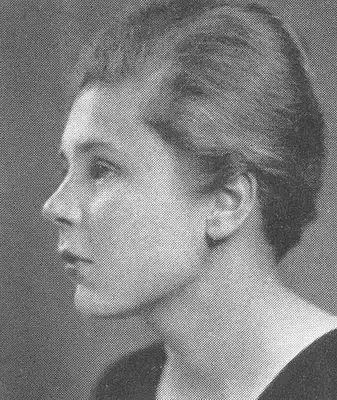
Elizabeth Bishop
Suicide of a Moderate Dictator
This is a day when truths will out, perhaps;
leak from the dangling telephone earphones
sapping the festooned switchboards' strength;
fall from the windows, blow from off the sills,
—the vague, slight unremarkable contents
of emptying ash-trays; rub off on our fingers
like ink from the un-proof-read newspapers,
crocking the way the unfocused photographs
of crooked faces do that soil our coats,
our tropical-weight coats, like slapped-at moths.
Today's a day when those who work
are idling. Those who played must work
and hurry, too, to get it done,
with little dignity or none.
The newspapers are sold; the kiosk shutters
crash down. But anyway, in the night
the headlines wrote themselves, see, on the streets
and sidewalks everywhere; a sediment's splashed
even to the first floors of apartment houses.
This is a day that's beautiful as well,
and warm and clear. At seven o'clock I saw
the dogs being walked along the famous beach
as usual, in a shiny gray-green dawn,
leaving their paw prints draining in the wet.
The line of breakers was steady and the pinkish,
segmented rainbow steadily hung above it.
At eight two little boys were flying kites.
549

William Blake
The Little Girl Found
All the night in woe,
Lyca's parents go:
Over vallies deep.
While the desarts weep.
Tired and woe-begone.
Hoarse with making moan:
Arm in arm seven days.
They trac'd the desert ways.
Seven nights they sleep.
Among shadows deep:
And dream they see their child
Starvdd in desart wild.
Pale thro' pathless ways
The fancied image strays.
Famish'd, weeping, weak
With hollow piteous shriek
Rising from unrest,
The trembling woman prest,
With feet of weary woe;
She could no further go.
In his arms he bore.
Her arm'd with sorrow sore:
Till before their way
A couching lion lay.
Turning back was vain,
Soon his heavy mane.
Bore them to the ground;
Then he stalk'd around.
Smelling to his prey,
But their fears allay,
When he licks their hands:
And silent by them stands.
They look upon his eyes
Fill'd with deep surprise:
And wondering behold.
A spirit arm'd in gold.
On his head a crown
On his shoulders down,
Flow'd his golden hair.
Gone was all their care.
Follow me he said,
Weep not for the maid;
In my palace deep.
Lyca lies asleep.
Then they followed,
Where the vision led;
And saw their sleeping child,
Among tygers wild.
To this day they dwell
In a lonely dell
Nor fear the wolvish howl,
Nor the lion's growl.
550
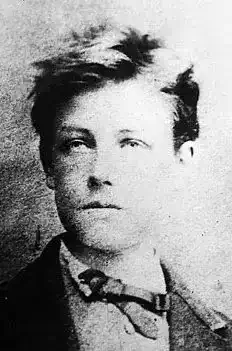
Arthur Rimbaud
Blackcurrant River
Blackcurrant river rolls unknown in strange valleys;
the voices of a hundred rooks go with it,
the true benevolent voice of angles:
with the wide movements of the fir woods
when several winds sweep down.
Everything flows with [the] horrible mysteries of ancient landscapes;
of strongholds visited, of large estates:
it is along these banks that you can hear
the dead passions of errant knights:
but how the wind is wholesome!
Let the traveler look through these clerestories:
he will journey on more bravely.
Forest soldiers whom the Lord sends,
dear delightful rooks! Drive away from here the crafty peasant,
clinking glasses with his old stump of an arm.
551

John Greenleaf Whittier
Funeral Tree of the Sokokis
Around Sebago's lonely lake
There lingers not a breeze to break
The mirror which its waters make.
The solemn pines along its shore,
The firs which hang its gray rocks o'er,
Are painted on its glassy floor.
The sun looks o'er, with hazy eye,
The snowy mountain-tops which lie
Piled coldly up against the sky.
Dazzling and white! save where the bleak,
Wild winds have bared some splintering peak,
Or snow-slide left its dusky streak.
Yet green are Saco's banks below,
And belts of spruce and cedar show,
Dark fringing round those cones of snow.
The earth hath felt the breath of spring,
Though yet on her deliverer's wing
The lingering frosts of winter cling.
Fresh grasses fringe the meadow-brooks,
And mildly from its sunny nooks
The blue eye of the violet looks.
And odors from the springing grass,
The sweet birch and the sassafras,
Upon the scarce-felt breezes pass.
Her tokens of renewing care
Hath Nature scattered everywhere,
In bud and flower, and warmer air.
But in their hour of bitterness,
What reek the broken Sokokis,
Beside their slaughtered chief, of this?
The turf's red stain is yet undried,
Scarce have the death-shot echoes died
Along Sebago's wooded side;
And silent now the hunters stand,
Grouped darkly, where a swell of land
Slopes upward from the lake's white sand.
Fire and the axe have swept it bare,
Save one lone beech, unclosing there
Its light leaves in the vernal air.
With grave, cold looks, all sternly mute,
They break the damp turf at its foot,
And bare its coiled and twisted root.
They heave the stubborn trunk aside,
The firm roots from the earth divide,-The
rent beneath yawns dark and wide.
And there the fallen chief is laid,
In tasselled garb of skins arrayed,
And girded with his wampum-braid.
The silver cross he loved is pressed
Beneath the heavy arms, which rest
Upon his scarred and naked breast.
'T is done: the roots are backward sent,
The beechen-tree stands up unbent,
The Indian's fitting monument!
When of that sleeper's broken race
Their green and pleasant dwelling-place,
Which knew them once, retains no trace;
Oh, long may sunset's light be shed
As now upon that beech's head,
A green memorial of the dead!
There shall his fitting requiem be,
In northern winds, that, cold and free,
Howl nightly in that funeral tree.
To their wild wail the waves which break
Forever round that lonely lake
A solemn undertone shall make!
And who shall deem the spot unblest,
Where Nature's younger children rest,
Lulled on their sorrowing mother's breast?
Deem ye that mother loveth less
These bronzed forms of the wilderness
She foldeth in her long caress?
As sweet o'er them her wild-flowers blow,
As if with fairer hair and brow
The blue-eyed Saxon slept below.
What though the places of their rest
No priestly knee hath ever pressed,-No
funeral rite nor prayer hath blessed?
What though the bigot's ban be there,
And thoughts of wailing and despair,
And cursing in the place of prayer.
Yet Heaven hath angels watching round
The Indian's lowliest forest-mound,-And
they have made it holy ground.
There ceases man's frail judgment; all
His powerless bolts of cursing fall
Unheeded on that grassy pall.
O peeled and hunted and reviled,
Sleep on, dark tenant of the wild!
Great Nature owns her simple child!
And Nature's God, to whom alone
The secret of the heart is known,-The
hidden language traced thereon;
Who from its many cumberings
Of form and creed, and outward things,
To light the naked spirit brings;
Not with our partial eye shall scan,
Not with our pride and scorn shall ban,
The spirit of our brother man!
548
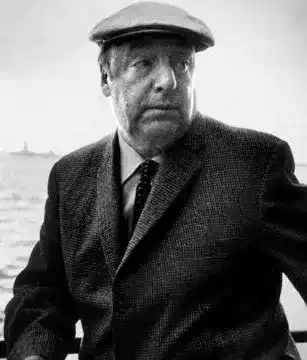
Pablo Neruda
Ode to a Large Tuna in the Market
Among the market greens,
a bullet
from the ocean
depths,
a swimming
projectile,
I saw you,
dead.
All around you
were lettuces,
sea foam
of the earth,
carrots,
grapes,
but
of the ocean
truth,
of the unknown,
of the
unfathomable
shadow, the
depths
of the sea,
the abyss,
only you had survived,
a pitch-black, varnished
witness
to deepest night.
Only you, well-aimed
dark bullet
from the abyss,
mangled
at one tip,
but constantly
reborn,
at anchor in the current,
winged fins
windmilling
in the swift
flight
of
the
marine
shadow,
a mourning arrow,
dart of the sea,
olive, oily fish.
I saw you dead,
a deceased king
of my own ocean,
green
assault, silver
submarine fir,
seed
of seaquakes,
now
only dead remains,
yet
in all the market
yours
was the only
purposeful form
amid
the bewildering rout
of nature;
amid the fragile greens
you were
a solitary ship,
armed
among the vegetables
fin and prow black and oiled,
as if you were still
the vessel of the wind,
the one and only
pure
ocean
machine:
unflawed, navigating
the waters of death.
550

Walt Whitman
A Farm-Picture
THROUGH the ample open door of the peaceful country barn,
A sun-lit pasture field, with cattle and horses feeding;
And haze, and vista, and the far horizon, fading away.
A sun-lit pasture field, with cattle and horses feeding;
And haze, and vista, and the far horizon, fading away.
545
Kazi Nazrul Islam
Ting-A-Ling, Ting-A-Ling, Ting-A-Ling
Ting-a-ling, ting-a-ling, ting-a-ling,
Who goes there stepping over the date leaves
Raising a melodious jingling?
Her scarf flutters in the dancing wind,
Her steps scatter flowers on the rocky road.
As she trips gaily on
Her arched eyebrows sparkle like a sword,
And her feet kick tiny stones
Scattering them like a jewelled necklace.
She is pretty as the peach blossoms,
And even the young Eid-moon is in love with her.
It pines for her rosy cheeks.
She is a, mirage and a vision rare
Many a prince riding an Arab mare
Sought her in vain in Sahara's desert sands.
For her many a young traveller
Lost their lives in strange, far-off lands.
And, lured by her haunting charm,
Died, many a forest deer.
[Original: Rum jhum jhum jhum; Translation: Kabir Chowdhury]
542

Matsuo Bashō
Bush warbler
Bush warbler:
shits on the rice cakes
on the porch rail.
Translated by Robert Hass
shits on the rice cakes
on the porch rail.
Translated by Robert Hass
545
Arthur Rimbaud
May Banners
In the bright lime-tree branches
Dies a fainting mort. But lively song
Flutters among the currant bushes.
So that our bloods may laugh in our veins,
See the vines tangling themselves.
The sky is as pretty as an angel,
The azure and the wave commune.
I go out. If a sunbeam wounds me
I shall succumb on the moss.
Being patient and being bored
Are too simple. To the devil with my cares.
I want dramatic summer
To bind me to its chariot of fortune.
Let me most because of you, o Nature, -
Ah ! less alone and less useless ! - die.
There where the Shepherds, it's strange,
Die more or less because of the world.
I am willing that the seasons should wear me out.
To you, Nature, I surrender ;
With my hunger and all my thirst.
And, if it please you, feed and water me.
Nothing, nothing at all deceives me ;
To laugh at the sun is to laugh at one's parents,
But I do not wish to laugh at anything ;
And may this misfortune go free.
~~
May Banners
(alternative translation
)
In the bright branches of the lindens dies a sickly hunting call.
But the lively songs fly about in the currant bushes.
So that our blood will laugh in our veins, here are the vines all entangled.
The sky is pretty as an angel.
The azure and the wave commune.
I go out. If a ray of light wounds me, I will expire on the moss
To be patient and to be bored are to simple. Fie* on my cares.
I want a dramatic summer to bind me to it's chariot of fortune.
Let me, o nature, mostly through you
-Ah ! less alone and less worthless ! - die.
In the place where the shepherds, it is strange,
die approximately through out the world
I am willing that the seasons wear me out.
To you nature, I give myself over;
And my hunger and all my thirst.
And, if you will, feed and water me.
Nothing at all deceives me;
To laugh at the sun is to laugh at one's parents,
but I do not want to laugh at anything;
And may this misfortune be free.
538
Walt Whitman
Proud Music Of The Storm
PROUD music of the storm!
Blast that careers so free, whistling across the prairies!
Strong hum of forest tree-tops! Wind of the mountains!
Personified dim shapes! you hidden orchestras!
You serenades of phantoms, with instruments alert,
Blending, with Nature's rhythmus, all the tongues of nations;
You chords left us by vast composers! you choruses!
You formless, free, religious dances! you from the Orient!
You undertone of rivers, roar of pouring cataracts;
You sounds from distant guns, with galloping cavalry!
Echoes of camps, with all the different bugle-calls!
Trooping tumultuous, filling the midnight late, bending me powerless,
Entering my lonesome slumber-chamber--Why have you seiz'd me?
Come forward, O my Soul, and let the rest retire;
Listen--lose not--it is toward thee they tend;
Parting the midnight, entering my slumber-chamber,
For thee they sing and dance, O Soul.
A festival song!
The duet of the bridegroom and the bride--a marriage-march,
With lips of love, and hearts of lovers, fill'd to the brim with
love;
The red-flush'd cheeks, and perfumes--the cortege swarming, full of
friendly faces, young and old,
To flutes' clear notes, and sounding harps' cantabile.
Now loud approaching drums!
Victoria! see'st thou in powder-smoke the banners torn but flying?
the rout of the baffled?
Hearest those shouts of a conquering army?
(Ah, Soul, the sobs of women--the wounded groaning in agony,
The hiss and crackle of flames--the blacken'd ruins--the embers of
cities,
The dirge and desolation of mankind.)
Now airs antique and medieval fill me!
I see and hear old harpers with their harps, at Welsh festivals:
I hear the minnesingers, singing their lays of love,
I hear the minstrels, gleemen, troubadours, of the feudal ages.
Now the great organ sounds,
Tremulous--while underneath, (as the hid footholds of the earth,
On which arising, rest, and leaping forth, depend,
All shapes of beauty, grace and strength--all hues we know,
Green blades of grass, and warbling birds--children that gambol and
play--the clouds of heaven above,)
The strong base stands, and its pulsations intermits not,
Bathing, supporting, merging all the rest--maternity of all the rest;
And with it every instrument in multitudes,
The players playing--all the world's musicians,
The solemn hymns and masses, rousing adoration,
All passionate heart-chants, sorrowful appeals,
The measureless sweet vocalists of ages,
And for their solvent setting, Earth's own diapason,
Of winds and woods and mighty ocean waves;
A new composite orchestra--binder of years and climes--ten-fold
renewer,
As of the far-back days the poets tell--the Paradiso,
The straying thence, the separation long, but now the wandering done,
The journey done, the Journeyman come home,
And Man and Art, with Nature fused again.
Tutti! for Earth and Heaven!
The Almighty Leader now for me, for once has signal'd with his wand.
The manly strophe of the husbands of the world,
And all the wives responding.
The tongues of violins!
(I think, O tongues, ye tell this heart, that cannot tell itself;
This brooding, yearning heart, that cannot tell itself.)
Ah, from a little child,
Thou knowest, Soul, how to me all sounds became music;
My mother's voice, in lullaby or hymn;
(The voice--O tender voices--memory's loving voices!
Last miracle of all--O dearest mother's, sister's, voices;)
The rain, the growing corn, the breeze among the long-leav'd corn,
The measur'd sea-surf, beating on the sand,
The twittering bird, the hawk's sharp scream,
The wild-fowl's notes at night, as flying low, migrating north or
south,
The psalm in the country church, or mid the clustering trees, the
open air camp-meeting,
The fiddler in the tavern--the glee, the long-strung sailor-song,
The lowing cattle, bleating sheep--the crowing cock at dawn.
All songs of current lands come sounding 'round me,
The German airs of friendship, wine and love,
Irish ballads, merry jigs and dances--English warbles,
Chansons of France, Scotch tunes--and o'er the rest,
Italia's peerless compositions.
Across the stage, with pallor on her face, yet lurid passion,
Stalks Norma, brandishing the dagger in her hand.
I see poor crazed Lucia's eyes' unnatural gleam;
Her hair down her back falls loose and dishevell'd.
I see where Ernani, walking the bridal garden,
Amid the scent of night-roses, radiant, holding his bride by the
hand,
Hears the infernal call, the death-pledge of the horn.
To crossing swords, and grey hairs bared to heaven,
The clear, electric base and baritone of the world,
The trombone duo--Libertad forever!
From Spanish chestnut trees' dense shade,
By old and heavy convent walls, a wailing song,
Song of lost love--the torch of youth and life quench'd in despair,
Song of the dying swan--Fernando's heart is breaking.
Awaking from her woes at last, retriev'd Amina sings;
Copious as stars, and glad as morning light, the torrents of her joy.
(The teeming lady comes!
The lustrious orb--Venus contralto--the blooming mother,
Sister of loftiest gods--Alboni's self I hear.)
I hear those odes, symphonies, operas;
I hear in the William Tell, the music of an arous'd and angry people;
I hear Meyerbeer's Huguenots, the Prophet, or Robert;
Gounod's Faust, or Mozart's Don Juan.
I hear the dance-music of all nations,
The waltz, (some delicious measure, lapsing, bathing me in
bliss;)
The bolero, to tinkling guitars and clattering castanets.
I see religious dances old and new,
I hear the sound of the Hebrew lyre,
I see the Crusaders marching, bearing the cross on high, to the
martial clang of cymbals;
I hear dervishes monotonously chanting, interspers'd with frantic
shouts, as they spin around, turning always towards Mecca;
I see the rapt religious dances of the Persians and the Arabs;
Again, at Eleusis, home of Ceres, I see the modern Greeks dancing,
I hear them clapping their hands, as they bend their bodies,
I hear the metrical shuffling of their feet.
I see again the wild old Corybantian dance, the performers wounding
each other;
I see the Roman youth, to the shrill sound of flageolets, throwing
and catching their weapons,
As they fall on their knees, and rise again.
I hear from the Mussulman mosque the muezzin calling;
I see the worshippers within, (nor form, nor sermon, argument, nor
word,
But silent, strange, devout--rais'd, glowing heads--extatic faces.)
I hear the Egyptian harp of many strings,
The primitive chants of the Nile boatmen;
The sacred imperial hymns of China,
To the delicate sounds of the king, (the stricken wood and stone;)
Or to Hindu flutes, and the fretting twang of the vina,
A band of bayaderes.
Now Asia, Africa leave me--Europe, seizing, inflates me;
To organs huge, and bands, I hear as from vast concourses of voices,
Luther's strong hymn, Eine feste Burg ist unser Gott;
Rossini's Stabat Mater dolorosa;
Or, floating in some high cathedral dim, with gorgeous color'd
windows,
The passionate Agnus Dei, or Gloria in Excelsis.
Composers! mighty maestros!
And you, sweet singers of old lands--Soprani! Tenori! Bassi!
To you a new bard, carolling free in the west,
Obeisant, sends his love.
(Such led to thee, O Soul!
All senses, shows and objects, lead to thee,
But now, it seems to me, sound leads o'er all the rest.)
I hear the annual singing of the children in St. Paul's Cathedral;
Or, under the high roof of some colossal hall, the symphonies,
oratorios of Beethoven, Handel, or Haydn;
The Creation, in billows of godhood laves me.
Give me to hold all sounds, (I, madly struggling, cry,)
Fill me with all the voices of the universe,
Endow me with their throbbings--Nature's also,
The tempests, waters, winds--operas and chants--marches and
dances,
Utter--pour in--for I would take them all.
Then I woke softly,
And pausing, questioning awhile the music of my dream,
And questioning all those reminiscences--the tempest in its fury,
And all the songs of sopranos and tenors,
And those rapt oriental dances, of religious fervor,
And the sweet varied instruments, and the diapason of organs,
And all the artless plaints of love, and grief and death,
I said to my silent, curious Soul, out of the bed of the slumber
chamber,
Come, for I have found the clue I sought so long,
Let us go forth refresh'd amid the day,
Cheerfully tallying life, walking the world, the real,
Nourish'd henceforth by our celestial dream.
And I said, moreover,
Haply, what thou hast heard, O Soul, was not the sound of winds,
Nor dream of raging storm, nor sea-hawk's flapping wings, nor harsh
scream,
Nor vocalism of sun-bright Italy,
Nor German organ majestic--nor vast concourse of voices--nor layers
of harmonies;
Nor strophes of husbands and wives--nor sound of marching soldiers,
Nor flutes, nor harps, nor the bugle-calls of camps;
But, to a new rhythmus fitted for thee,
Poems, bridging the way from Life to Death, vaguely wafted in night
air, uncaught, unwritten,
Which, let us go forth in the bold day, and write.
537
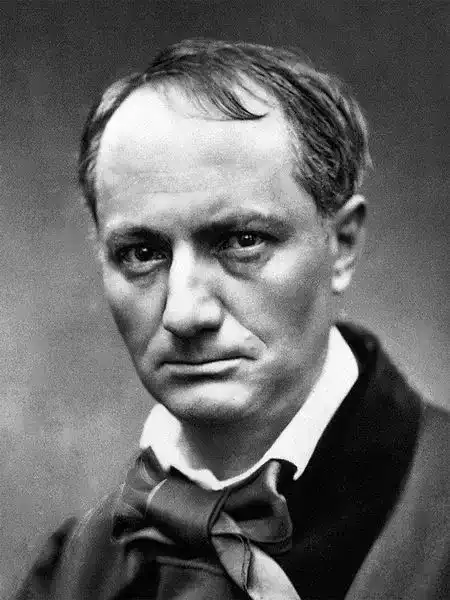
Charles Baudelaire
Correspondences
Nature is a temple whose living colonnades
Breathe forth a mystic speech in fitful sighs;
Man wanders among symbols in those glades
Where all things watch him with familiar eyes.
Like dwindling echoes gathered far away
Into a deep and thronging unison
Huge as the night or as the light of day,
All scents and sounds and colors meet as one.
Perfumes there are as sweet as the oboe's sound,
Green as the prairies, fresh as a child's caress,
- And there are others, rich, corrupt, profound
And of an infinite pervasiveness,
Like myrrh, or musk, or amber, the excite
The ecstasies of sense, the soul's delight.
533
William Blake
The Birds
He. Where thou dwellest, in what grove,
Tell me Fair One, tell me Love;
Where thou thy charming nest dost build,
O thou pride of every field!
She. Yonder stands a lonely tree,
There I live and mourn for thee;
Morning drinks my silent tear,
And evening winds my sorrow bear.
He. O thou summer's harmony,
I have liv'd and mourn'd for thee;
Each day I mourn along the wood,
And night hath heard my sorrows loud.
She. Dost thou truly long for me?
And am I thus sweet to thee?
Sorrow now is at an end,
O my Lover and my Friend!
He. Come, on wings of joy we'll fly
To where my bower hangs on high;
Come, and make thy calm retreat
Among green leaves and blossoms sweet.
539
Walt Whitman
Starting From Paumanok
STARTING from fish-shape Paumanok, where I was born,
Well-begotten, and rais'd by a perfect mother;
After roaming many lands--lover of populous pavements;
Dweller in Mannahatta, my city--or on
southern savannas;
Or a soldier camp'd, or carrying my knapsack and gun--or a miner in
California;
Or rude in my home in Dakota's woods, my diet meat, my drink from the
spring;
Or withdrawn to muse and meditate in some deep recess,
Far from the clank of crowds, intervals passing, rapt and happy;
Aware of the fresh free giver, the flowing Missouri--aware of mighty
Niagara;
Aware of the buffalo herds, grazing the plains--the hirsute and
strong-breasted bull;
Of earth, rocks, Fifth-month flowers, experienced--stars, rain, snow,
my amaze;
Having studied the mocking-bird's tones, and the mountainhawk's,
And heard at dusk the unrival'd one, the hermit thrush from the
swamp-cedars,
Solitary, singing in the West, I strike up for a New World.
Victory, union, faith, identity, time,
The indissoluble compacts, riches, mystery,
Eternal progress, the kosmos, and the modern reports.
This, then, is life;
Here is what has come to the surface after so many throes and
convulsions.
How curious! how real!
Underfoot the divine soil--overhead the sun.
See, revolving, the globe;
The ancestor-continents, away, group'd together;
The present and future continents, north and south, with the isthmus
between.
See, vast, trackless spaces;
As in a dream, they change, they swiftly fill;
Countless masses debouch upon them;
They are now cover'd with the foremost people, arts, institutions,
known.
See, projected, through time,
For me, an audience interminable.
With firm and regular step they wend--they never stop,
Successions of men, Americanos, a hundred millions;
One generation playing its part, and passing on;
Another generation playing its part, and passing on in its turn,
With faces turn'd sideways or backward towards me, to listen,
With eyes retrospective towards me,
Americanos! conquerors! marches humanitarian;
Foremost! century marches! Libertad! masses!
For you a programme of chants.
Chants of the prairies;
Chants of the long-running Mississippi, and down to the Mexican sea;
Chants of Ohio, Indiana, Illinois, Iowa, Wisconsin and Minnesota;
Chants going forth from the centre, from Kansas, and thence, equi
distant,
Shooting in pulses of fire, ceaseless, to vivify all.
In the Year 80 of The States,
My tongue, every atom of my blood, form'd from this soil, this air,
Born here of parents born here, from parents the same, and their
parents the same,
I, now thirty-six years old, in perfect health, begin,
Hoping to cease not till death.
Creeds and schools in abeyance,
(Retiring back a while, sufficed at what they are, but never
forgotten,)
I harbor, for good or bad--I permit to speak, at every hazard,
Nature now without check, with original energy.
Take my leaves, America! take them, South, and take them, North!
Make welcome for them everywhere, for they are your own offspring;
Surround them, East and West! for they would surround you;
And you precedents! connect lovingly with them, for they connect
lovingly with you.
I conn'd old times;
I sat studying at the feet of the great masters:
Now, if eligible, O that the great masters might return and study
me!
In the name of These States, shall I scorn the antique?
Why These are the children of the antique, to justify it.
Dead poets, philosophs, priests,
Martyrs, artists, inventors, governments long since,
Language-shapers, on other shores,
Nations once powerful, now reduced, withdrawn, or desolate,
I dare not proceed till I respectfully credit what you have left,
wafted hither:
I have perused it--own it is admirable,
(moving awhile among it;)
Think nothing can ever be greater--nothing can ever deserve more than
it deserves;
Regarding it all intently a long while--then dismissing it,
I stand in my place, with my own day, here.
Here lands female and male;
Here the heir-ship and heiress-ship of the world--here the flame of
materials;
Here Spirituality, the translatress, the openly-avow'd,
The ever-tending, the finale of visible forms;
The satisfier, after due long-waiting, now advancing,
Yes, here comes my mistress, the Soul.
The SOUL:
Forever and forever--longer than soil is brown and solid--longer than
water ebbs and flows.
I will make the poems of materials, for I think they are to be the
most spiritual poems;
And I will make the poems of my body and of mortality,
For I think I shall then supply myself with the poems of my Soul, and
of immortality.
I will make a song for These States, that no-one State may under any
circumstances be subjected to another State;
And I will make a song that there shall be comity by day and by night
between all The States, and between any two of them:
And I will make a song for the ears of the President, full of weapons
with menacing points,
And behind the weapons countless dissatisfied faces:
--And a song make I, of the One form'd out of all;
The fang'd and glittering One whose head is over all;
Resolute, warlike One, including and over all;
(However high the head of any else, that head is over all.)
I will acknowledge contemporary lands;
I will trail the whole geography of the globe, and salute courteously
every city large and small;
And employments! I will put in my poems, that with you is heroism,
upon land and sea;
And I will report all heroism from an American point of view.
I will sing the song of companionship;
I will show what alone must finally compact These;
I believe These are to found their own ideal of manly love,
indicating it in me;
I will therefore let flame from me the burning fires that were
threatening to consume me;
I will lift what has too long kept down those smouldering fires;
I will give them complete abandonment;
I will write the evangel-poem of comrades, and of love;
(For who but I should understand love, with all its sorrow and joy?
And who but I should be the poet of comrades?)
I am the credulous man of qualities, ages, races;
I advance from the people in their own spirit;
Here is what sings unrestricted faith.
Omnes! Omnes! let others ignore what they may;
I make the poem of evil also--I commemorate that part also;
I am myself just as much evil as good, and my nation is--And I say
there is in fact no evil;
(Or if there is, I say it is just as important to you, to the land,
or to me, as anything else.)
I too, following many, and follow'd by many, inaugurate a Religion--I
descend into the arena;
(It may be I am destin'd to utter the loudest cries there, the
winner's pealing shouts;
Who knows? they may rise from me yet, and soar above every thing.)
Each is not for its own sake;
I say the whole earth, and all the stars in the sky, are for
Religion's sake.
I say no man has ever yet been half devout enough;
None has ever yet adored or worship'd half enough;
None has begun to think how divine he himself is, and how certain the
future is.
I say that the real and permanent grandeur of These States must be
their Religion;
Otherwise there is no real and permanent grandeur:
(Nor character, nor life worthy the name, without Religion;
Nor land, nor man or woman, without Religion.)
What are you doing, young man?
Are you so earnest--so given up to literature, science, art, amours?
These ostensible realities, politics, points?
Your ambition or business, whatever it may be?
It is well--Against such I say not a word--I am their poet also;
But behold! such swiftly subside--burnt up for Religion's sake;
For not all matter is fuel to heat, impalpable flame, the essential
life of the earth,
Any more than such are to Religion.
What do you seek, so pensive and silent?
What do you need, Camerado?
Dear son! do you think it is love?
Listen, dear son--listen, America, daughter or son!
It is a painful thing to love a man or woman to excess--and yet it
satisfies--it is great;
But there is something else very great--it makes the whole coincide;
It, magnificent, beyond materials, with continuous hands, sweeps and
provides for all.
Know you! solely to drop in the earth the germs of a greater
Religion,
The following chants, each for its kind, I sing.
My comrade!
For you, to share with me, two greatnesses--and a third one, rising
inclusive and more resplendent,
The greatness of Love and Democracy--and the greatness of Religion.
Melange mine own! the unseen and the seen;
Mysterious ocean where the streams empty;
Prophetic spirit of materials shifting and flickering around me;
Living beings, identities, now doubtless near us, in the air, that we
know not of;
Contact daily and hourly that will not release me;
These selecting--these, in hints, demanded of me.
Not he, with a daily kiss, onward from childhood kissing me,
Has winded and twisted around me that which holds me to him,
Any more than I am held to the heavens, to the spiritual world,
And to the identities of the Gods, my lovers, faithful and true,
After what they have done to me, suggesting themes.
O such themes! Equalities!
O amazement of things! O divine average!
O warblings under the sun--usher'd, as now, or at noon, or setting!
O strain, musical, flowing through ages--now reaching hither!
I take to your reckless and composite chords--I add to them, and
cheerfully pass them forward.
As I have walk'd in Alabama my morning walk,
I have seen where the she-bird, the mocking-bird, sat on her nest in
the briers, hatching her brood.
I have seen the he-bird also;
I have paused to hear him, near at hand, inflating his throat, and
joyfully singing.
And while I paused, it came to me that what he really sang for was
not there only,
Nor for his mate, nor himself only, nor all sent back by the echoes;
But subtle, clandestine, away beyond,
A charge transmitted, and gift occult, for those being born.
Democracy!
Near at hand to you a throat is now inflating itself and joyfully
singing.
Ma femme!
For the brood beyond us and of us,
For those who belong here, and those to come,
I, exultant, to be ready for them, will now shake out carols stronger
and haughtier than have ever yet been heard upon earth.
I will make the songs of passion, to give them their way,
And your songs, outlaw'd offenders--for I scan you with kindred eyes,
and carry you with me the same as any.
I will make the true poem of riches,
To earn for the body and the mind whatever adheres, and goes forward,
and is not dropt by death.
I will effuse egotism, and show it underlying all--and I will be the
bard of personality;
And I will show of male and female that either is but the equal of
the other;
And sexual organs and acts! do you concentrate in me--for I am
determin'd to tell you with courageous clear voice, to prove
you illustrious;
And I will show that there is no imperfection in the present--and can
be none in the future;
And I will show that whatever happens to anybody, it may be turn'd to
beautiful results--and I will show that nothing can happen more
beautiful than death;
And I will thread a thread through my poems that time and events are
compact,
And that all the things of the universe are perfect miracles, each as
profound as any.
I will not make poems with reference to parts;
But I will make leaves, poems, poemets, songs, says, thoughts with
reference to ensemble:
And I will not sing with reference to a day, but with reference to
all days;
And I will not make a poem, nor the least part of a poem, but has
reference to the Soul;
(Because, having look'd at the objects of the universe, I find there
is no one, nor any particle of one, but has reference to the
Soul.)
Was somebody asking to see the Soul?
See! your own shape and countenance--persons, substances, beasts, the
trees, the running rivers, the rocks and sands.
All hold spiritual joys, and afterwards loosen them:
How can the real body ever die, and be buried?
Of your real body, and any man's or woman's real body,
Item for item, it will elude the hands of the corpse-cleaners, and
pass to fitting spheres,
Carrying what has accrued to it from the moment of birth to the
moment of death.
Not the types set up by the printer return their impression, the
meaning, the main concern,
Any more than a man's substance and life, or a woman's substance and
life, return in the body and the Soul,
Indifferently before death and after death.
Behold! the body includes and is the meaning, the main concern--and
includes and is the Soul;
Whoever you are! how superb and how divine is your body, or any part
of it.
Whoever you are! to you endless announcements.
Daughter of the lands, did you wait for your poet?
Did you wait for one with a flowing mouth and indicative hand?
Toward the male of The States, and toward the female of The States,
Live words--words to the lands.
O the lands! interlink'd, food-yielding lands!
Land of coal and iron! Land of gold! Lands of cotton, sugar, rice!
Land of wheat, beef, pork! Land of wool and hemp! Land of the apple
and grape!
Land of the pastoral plains, the grass-fields of the world! Land of
those sweet-air'd interminable plateaus!
Land of the herd, the garden, the healthy house of adobie!
Lands where the northwest Columbia winds, and where the southwest
Colorado winds!
Land of the eastern Chesapeake! Land of the Delaware!
Land of Ontario, Erie, Huron, Michigan!
Land of the Old Thirteen! Massachusetts land! Land of Vermont and
Connecticut!
Land of the ocean shores! Land of sierras and peaks!
Land of boatmen and sailors! Fishermen's land!
Inextricable lands! the clutch'd together! the passionate ones!
The side by side! the elder and younger brothers! the bony-limb'd!
The great women's land! the feminine! the experienced sisters and the
inexperienced sisters!
Far breath'd land! Arctic braced! Mexican breez'd! the diverse! the
compact!
The Pennsylvanian! the Virginian! the double Carolinian!
O all and each well-loved by me! my intrepid nations! O I at any rate
include you all with perfect love!
I cannot be discharged from you! not from one, any sooner than
another!
O Death! O for all that, I am yet of you, unseen, this hour, with
irrepressible love,
Walking New England, a friend, a traveler,
Splashing my bare feet in the edge of the summer ripples, on
Paumanok's sands,
Crossing the prairies--dwelling again in Chicago--dwelling in every
town,
Observing shows, births, improvements, structures, arts,
Listening to the orators and the oratresses in public halls,
Of and through The States, as during life--each man and woman my
neighbor,
The Louisianian, the Georgian, as near to me, and I as near to him
and her,
The Mississippian and Arkansian yet with me--and I yet with any of
them;
Yet upon the plains west of the spinal river--yet in my house of
adobie,
Yet returning eastward--yet in the Sea-Side State, or in Maryland,
Yet Kanadian, cheerily braving the winter--the snow and ice welcome
to me,
Yet a true son either of Maine, or of the Granite State, or of the
Narragansett Bay State, or of the Empire State;
Yet sailing to other shores to annex the same--yet welcoming every
new brother;
Hereby applying these leaves to the new ones, from the hour they
unite with the old ones;
Coming among the new ones myself, to be their companion and equal-coming
personally to you now;
Enjoining you to acts, characters, spectacles, with me.
With me, with firm holding--yet haste, haste on.
For your life, adhere to me!
Of all the men of the earth, I only can unloose you and toughen you;
I may have to be persuaded many times before I consent to give myself
really to you--but what of that?
Must not Nature be persuaded many times?
No dainty dolce affettuoso I;
Bearded, sun-burnt, gray-neck'd, forbidding, I have arrived,
To be wrestled with as I pass, for the solid prizes of the universe;
For such I afford whoever can persevere to win them.
On my way a moment I pause;
Here for you! and here for America!
Still the Present I raise aloft--Still the Future of The States I
harbinge, glad and sublime;
And for the Past, I pronounce what the air holds of the red
aborigines.
The red aborigines!
Leaving natural breaths, sounds of rain and winds, calls as of birds
and animals in the woods, syllabled to us for names;
Okonee, Koosa, Ottawa, Monongahela, Sauk, Natchez, Chattahoochee,
Kaqueta, Oronoco,
Wabash, Miami, Saginaw, Chippewa, Oshkosh, Walla-Walla;
Leaving such to The States, they melt, they depart, charging the
water and the land with names.
O expanding and swift! O henceforth,
Elements, breeds, adjustments, turbulent, quick, and audacious;
A world primal again--Vistas of glory, incessant and branching;
A new race, dominating previous ones, and grander far--with new
contests,
New politics, new literatures and religions, new inventions and arts.
These! my voice announcing--I will sleep no more, but arise;
You oceans that have been calm within me! how I feel you, fathomless,
stirring, preparing unprecedented waves and storms.
See! steamers steaming through my poems!
See, in my poems immigrants continually coming and landing;
See, in arriere, the wigwam, the trail, the hunter's hut, the
flatboat, the maize-leaf, the claim, the rude fence, and the
backwoods village;
See, on the one side the Western Sea, and on the other the Eastern
Sea, how they advance and retreat upon my poems, as upon their
own shores.
See, pastures and forests in my poems--See, animals, wild and tame-See,
beyond the Kanzas, countless herds of buffalo, feeding on
short curly grass;
See, in my poems, cities, solid, vast, inland, with paved streets,
with iron and stone edifices, ceaseless vehicles, and commerce;
See, the many-cylinder'd steam printing-press--See, the electric
telegraph, stretching across the Continent, from the Western
Sea to Manhattan;
See, through Atlantica's depths, pulses American, Europe reaching-pulses
of Europe, duly return'd;
See, the strong and quick locomotive, as it departs, panting, blowing
the steam-whistle;
See, ploughmen, ploughing farms--See, miners, digging mines--See, the
numberless factories;
See, mechanics, busy at their benches, with tools--See from among
them, superior judges, philosophs, Presidents, emerge, drest in
working dresses;
See, lounging through the shops and fields of The States, me, wellbelov'd,
close-held by day and night;
Hear the loud echoes of my songs there! Read the hints come at last.
O Camerado close!
O you and me at last--and us two only.
O a word to clear one's path ahead endlessly!
O something extatic and undemonstrable! O music wild!
O now I triumph--and you shall also;
O hand in hand--O wholesome pleasure--O one more desirer and lover!
O to haste, firm holding--to haste, haste on with me.
535

William Wordsworth
The Old Cumberland Beggar
I saw an aged Beggar in my walk;
And he was seated, by the highway side,
On a low structure of rude masonry
Built at the foot of a huge hill, that they
Who lead their horses down the steep rough road
May thence remount at ease. The aged Man
Had placed his staff across the broad smooth stone
That overlays the pile; and, from a bag
All white with flour, the dole of village dames,
He drew his scraps and fragments, one by one;
And scanned them with a fixed and serious look
Of idle computation. In the sun,
Upon the second step of that small pile,
Surrounded by those wild unpeopled hills,
He sat, and ate his food in solitude:
And ever, scattered from his palsied hand,
That, still attempting to prevent the waste,
Was baffled still, the crumbs in little showers
Fell on the ground; and the small mountain birds,
Not venturing yet to peck their destined meal,
Approached within the length of half his staff.
Him from my childhood have I known; and then
He was so old, he seems not older now;
He travels on, a solitary Man,
So helpless in appearance, that for him
The sauntering Horseman throws not with a slack
And careless hand his alms upon the ground,
But stops,--that he may safely lodge the coin
Within the old Man's hat; nor quits him so,
But still, when he has given his horse the rein,
Watches the aged Beggar with a look
Sidelong, and half-reverted. She who tends
The toll-gate, when in summer at her door
She turns her wheel, if on the road she sees
The aged beggar coming, quits her work,
And lifts the latch for him that he may pass.
The post-boy, when his rattling wheels o'ertake
The aged Beggar in the woody lane,
Shouts to him from behind; and if, thus warned,
The old man does not change his course, the boy
Turns with less noisy wheels to the roadside,
And passes gently by, without a curse
Upon his lips, or anger at his heart.
He travels on, a solitary Man;
His age has no companion. On the ground
His eyes are turned, and, as he moves along
'They' move along the ground; and, evermore,
Instead of common and habitual sight
Of fields with rural works, of hill and dale,
And the blue sky, one little span of earth
Is all his prospect. Thus, from day to day,
Bow-bent, his eyes for ever on the ground,
He plies his weary journey; seeing still,
And seldom knowing that he sees, some straw,
Some scattered leaf, or marks which, in one track,
The nails of cart or chariot-wheel have left
Impressed on the white road,--in the same line,
At distance still the same. Poor Traveller!
His staff trails with him; scarcely do his feet
Disturb the summer dust; he is so still
In look and motion, that the cottage curs,
Ere he has passed the door, will turn away,
Weary of barking at him. Boys and girls,
The vacant and the busy, maids and youths,
And urchins newly breeched--all pass him by:
Him even the slow-paced waggon leaves behind.
But deem not this Man useless.--Statesmen! ye
Who are so restless in your wisdom, ye
Who have a broom still ready in your hands
To rid the world of nuisances; ye proud,
Heart-swoln, while in your pride ye contemplate
Your talents, power, or wisdom, deem him not
A burthen of the earth! 'Tis Nature's law
That none, the meanest of created things,
Or forms created the most vile and brute,
The dullest or most noxious, should exist
Divorced from good--a spirit and pulse of good,
A life and soul, to every mode of being
Inseparably linked. Then be assured
That least of all can aught--that ever owned
The heaven-regarding eye and front sublime
Which man is born to--sink, howe'er depressed,
So low as to be scorned without a sin;
Without offence to God cast out of view;
Like the dry remnant of a garden-flower
Whose seeds are shed, or as an implement
Worn out and worthless. While from door to door,
This old Man creeps, the villagers in him
Behold a record which together binds
Past deeds and offices of charity,
Else unremembered, and so keeps alive
The kindly mood in hearts which lapse of years,
And that half-wisdom half-experience gives,
Make slow to feel, and by sure steps resign
To selfishness and cold oblivious cares.
Among the farms and solitary huts,
Hamlets and thinly-scattered villages,
Where'er the aged Beggar takes his rounds,
The mild necessity of use compels
To acts of love; and habit does the work
Of reason; yet prepares that after-joy
Which reason cherishes. And thus the soul,
By that sweet taste of pleasure unpursued,
Doth find herself insensibly disposed
To virtue and true goodness.
Some there are,
By their good works exalted, lofty minds
And meditative, authors of delight
And happiness, which to the end of time
Will live, and spread, and kindle: even such minds
In childhood, from this solitary Being,
Or from like wanderer, haply have received
(A thing more precious far than all that books
Or the solicitudes of love can do!)
That first mild touch of sympathy and thought,
In which they found their kindred with a world
Where want and sorrow were. The easy man
Who sits at his own door,--and, like the pear
That overhangs his head from the green wall,
Feeds in the sunshine; the robust and young,
The prosperous and unthinking, they who live
Sheltered, and flourish in a little grove
Of their own kindred;--all behold in him
A silent monitor, which on their minds
Must needs impress a transitory thought
Of self-congratulation, to the heart
Of each recalling his peculiar boons,
His charters and exemptions; and, perchance,
Though he to no one give the fortitude
And circumspection needful to preserve
His present blessings, and to husband up
The respite of the season, he, at least,
And 'tis no vulgar service, makes them felt.
Yet further.----Many, I believe, there are
Who live a life of virtuous decency,
Men who can hear the Decalogue and feel
No self-reproach; who of the moral law
Established in the land where they abide
Are strict observers; and not negligent
In acts of love to those with whom they dwell,
Their kindred, and the children of their blood.
Praise be to such, and to their slumbers peace!
--But of the poor man ask, the abject poor;
Go, and demand of him, if there be here
In this cold abstinence from evil deeds,
And these inevitable charities,
Wherewith to satisfy the human soul?
No--man is dear to man; the poorest poor
Long for some moments in a weary life
When they can know and feel that they have been,
Themselves, the fathers and the dealers-out
Of some small blessings; have been kind to such
As needed kindness, for this single cause,
That we have all of us one human heart.
--Such pleasure is to one kind Being known,
My neighbour, when with punctual care, each week
Duly as Friday comes, though pressed herself
By her own wants, she from her store of meal
Takes one unsparing handful for the scrip
Of this old Mendicant, and, from her door
Returning with exhilarated heart,
Sits by her fire, and builds her hope in heaven.
Then let him pass, a blessing on his head!
And while in that vast solitude to which
The tide of things has borne him, he appears
To breathe and live but for himself alone,
Unblamed, uninjured, let him bear about
The good which the benignant law of Heaven
Has hung around him: and, while life is his,
Still let him prompt the unlettered villagers
To tender offices and pensive thoughts.
--Then let him pass, a blessing on his head!
And, long as he can wander, let him breathe
The freshness of the valleys; let his blood
Struggle with frosty air and winter snows;
And let the chartered wind that sweeps the heath
Beat his grey locks against his withered face.
Reverence the hope whose vital anxiousness
Gives the last human interest to his heart.
May never HOUSE, misnamed of INDUSTRY,
Make him a captive!--for that pent-up din,
Those life-consuming sounds that clog the air,
Be his the natural silence of old age!
Let him be free of mountain solitudes;
And have around him, whether heard or not,
The pleasant melody of woodland birds.
Few are his pleasures: if his eyes have now
Been doomed so long to settle upon earth
That not without some effort they behold
The countenance of the horizontal sun,
Rising or setting, let the light at least
Find a free entrance to their languid orbs.
And let him, 'where' and 'when' he will, sit down
Beneath the trees, or on a grassy bank
Of highway side, and with the little birds
Share his chance-gathered meal; and, finally,
As in the eye of Nature he has lived,
So in the eye of Nature let him die!
538
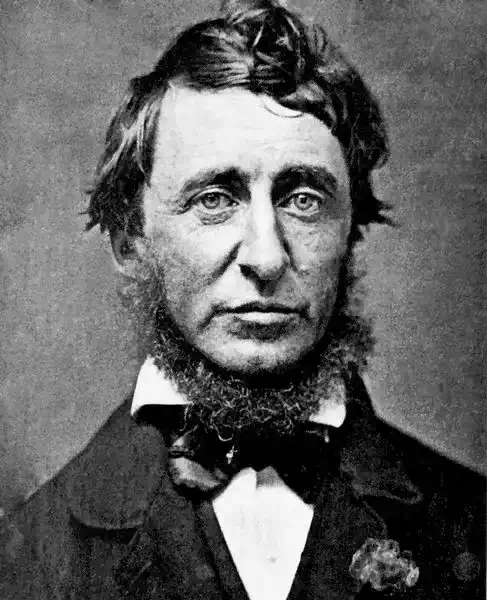
Henry David Thoreau
Mist
Low-anchored cloud,
Newfoundland air,
Fountain head and source of rivers,
Dew-cloth, dream drapery,
And napkin spread by fays;
Drifting meadow of the air,
Where bloom the dasied banks and violets,
And in whose fenny labyrinth
The bittern booms and heron wades;
Spirit of the lake and seas and rivers,
Bear only purfumes and the scent
Of healing herbs to just men's fields!
531
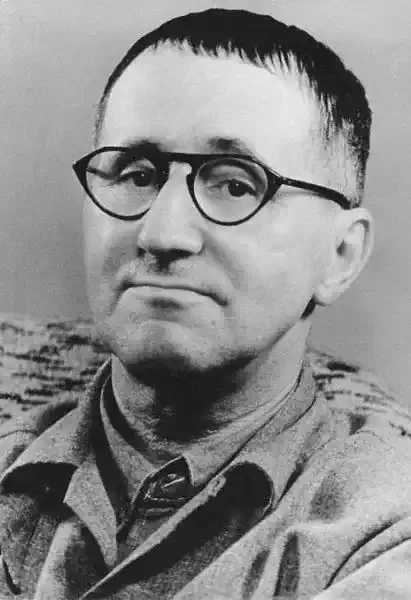
Bertolt Brecht
Der Pflaumenbaum (The Plum Tree, translation)
Im Hofe steht ein Pflaumenbaum,
Der ist so klein, man glaubt es kaum.
Er hat ein Gitter drum,
So tritt ihn keiner um.
Der Kleine kann nicht größer wer'n,
Ja - größer wer'n, das möcht' er gern!
's ist keine Red davon:
Er hat zu wenig Sonn'.
Dem Pflaumenbaum, man glaubt ihm kaum,
Weil er nie eine Pflaume hat.
Doch er ist ein Pflaumenbaum:
Man kennt es an dem Blatt.
The Plum Tree
In the courtyard stands a plum tree,
It's so small, no one believes it.
It has a fence around it,
So no one can stomp on it.
The little tree can't grow,
Yes – it wants to grow!
No one talks about it;
It gets too little sun.
No one believes it's a plum tree
Because it doesn't have a single plum.
But it is a plum tree;
You can tell by its leaf.
The Plum Tree
A plum tree in the courtyard stands
so small no one believes it can.
There is a fence surrounds
so no one stomps it down.
The little tree can't grow
although it wants to so!
There is no talk thereon
and much too little sun.
No one believes in the tree
because no plums do they see.
But it's a plum tree;
you can tell by its leaf.
531
William Wordsworth
Ode, Composed On A May Morning
While from the purpling east departs
The star that led the dawn,
Blithe Flora from her couch upstarts,
For May is on the lawn.
A quickening hope, a freshening glee,
Foreran the expected Power,
Whose first-drawn breath, from bush and tree,
Shakes off that pearly shower.
All Nature welcomes Her whose sway
Tempers the year's extremes;
Who scattereth lustres o'er noon-day,
Like morning's dewy gleams;
While mellow warble, sprightly trill,
The tremulous heart excite;
And hums the balmy air to still
The balance of delight.
Time was, blest Power! when youth and maids
At peep of dawn would rise,
And wander forth, in forest glades
Thy birth to solemnize.
Though mute the song---to grace the rite
Untouched the hawthorn bough,
Thy Spirit triumphs o'er the slight;
Man changes, but not Thou!
Thy feathered Lieges bill and wings
In love's disport employ;
Warmed by thy influence, creeping things
Awake to silent joy:
Queen art thou still for each gay plant
Where the slim wild deer roves;
And served in depths where fishes haunt
Their own mysterious groves.
Cloud-piercing peak, and trackless heath,
Instinctive homage pay;
Nor wants the dim-lit cave a wreath
To honor thee, sweet May!
Where cities fanned by thy brisk airs
Behold a smokeless sky,
Their puniest flower-pot-nursling dares
To open a bright eye.
And if, on this thy natal morn,
The pole, from which thy name
Hath not departed, stands forlorn
Of song and dance and game;
Still from the village-green a vow
Aspires to thee addrest,
Wherever peace is on the brow,
Or love within the breast.
Yes! where Love nestles thou canst teach
The soul to love the more;
Hearts also shall thy lessons reach
That never loved before.
Stript is the haughty one of pride,
The bashful freed from fear,
While rising, like the ocean-tide,
In flow the joyous year.
Hush, feeble lyre! weak words refuse
The service to prolong!
To yon exulting thrush the Muse
Entrusts the imperfect song;
His voice shall chant, in accents clear,
Throughout the live-long day,
Till the first silver star appear,
The sovereignty of May.
531
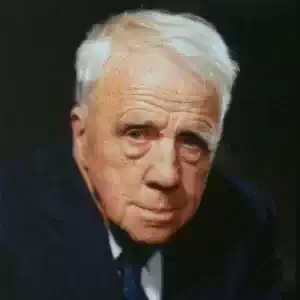
Robert Frost
The Bear
The bear puts both arms around the tree above her
And draws it down as if it were a lover
And its chokecherries lips to kiss good-by,
Then lets it snap back upright in the sky.
Her next step rocks a boulder on the wall
(She's making her cross-country in the fall).
Her great weight creaks the barbed wire in its staples
As she flings over and off down through the maples,
Leaving on one wire tooth a lock of hair.
Such is the uncaged progress of the bear.
The world has room to make a bear feel free;
The universe seems cramped to you and me.
Man acts more like the poor bear in a cage,
That all day fights a nervous inward rage,
His mood rejecting all his mind suggests.
He paces back and forth and never rests
The me-nail click and shuffle of his feet,
The telescope at one end of his beat,
And at the other end the microscope,
Two instruments of nearly equal hope,
And in conjunction giving quite a spread.
Or if he rests from scientific tread,
'Tis only to sit back and sway his head
Through ninety-odd degrees of arc, it seems,
Between two metaphysical extremes.
He sits back on his fundamental butt
With lifted snout and eyes (if any) shut
(He almost looks religious but he's not),
And back and forth he sways from cheek to cheek,
At one extreme agreeing with one Greek
At the other agreeing with another Greek
Which may be thought, but only so to speak.
A baggy figure, equally pathetic
When sedentary and when peripatetic.
528
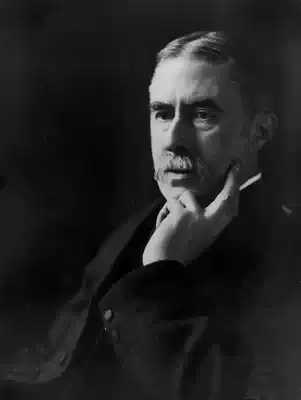
Alfred Edward Housman
The Stinging Nettle
The stinging nettle only
Will still be found to stand:
The numberless, the lonely,
The thronger of the land,
The leaf that hurts the hand.
That thrives, come sun, come showers;
Blow east, blow west, it springs;
It peoples towns, and towers
Above the courts of Kings,
And touch it and it stings.
Will still be found to stand:
The numberless, the lonely,
The thronger of the land,
The leaf that hurts the hand.
That thrives, come sun, come showers;
Blow east, blow west, it springs;
It peoples towns, and towers
Above the courts of Kings,
And touch it and it stings.
530

John Clare
Evening Primrose
When once the sun sinks in the west,
And dewdrops pearl the evening's breast;
Almost as pale as moonbeams are,
Or its companionable star,
The evening primrose opes anew
Its delicate blossoms to the dew;
And, hermit-like, shunning the light,
Wastes its fair bloom upon the night,
Who, blindfold to its fond caresses,
Knows not the beauty it possesses;
Thus it blooms on while night is by;
When day looks out with open eye,
Bashed at the gaze it cannot shun,
It faints and withers and is gone.
528

Rudyard Kipling
Mowgli's Song
THAT HE SANG AT THE COUNCIL ROCK WHEN HE DANCED ON SHERE KHAN'S
HIDE
The Song of Mowgli -- I, Mowgli, am singing. Let
the jungle listen to the things I have done.
Shere Khan said he would kill -- would kill! At the
gates in the twilight he would kill Mowgli, the
Frog!
He ate and he drank. Drink deep, Shere Khan, for
when wilt thou drink again? Sleep and dream
of the kill.
I am alone on the grazing-grounds. Gray Brother,
come to me! Come to me, Lone Wolf, for there
is big game afoot.
Bring up the great bull-buffaloes, the blue-skinned
herd-bulls with the angry eyes. Drive them to
and fro as I order.
Sleepest thou still, Shere Khan? Wake, O wake!
Here come I, and the bulls are behind.
Rama, the King of the Buffaloes, stamped with his
foot. Waters of the Waingunga, whither went
Shere Khan?
He is not Ikki to dig holes, nor Mao, the Peacock, that
he should fly. He is not Mang, the Bat, to hang
in the branches. Little bamboos that creak together,
tell me where he ran?
Ow! He is there. Ahoo! He is there. Under the
feet of Rama lies the Lame One! Up, Shere
Khan! Up and kill! Here is meat; break the
necks of the bulls!
Hsh! He is asleep. We will not wake him, for his
strength is very great. The kites have come down
to see it. The black ants have come up to know
it. There is a great assembly in his honour.
Alala! I have no cloth to wrap me. The kites will
see that I am naked. I am ashamed to meet all
these people.
Lend me thy coat, Shere Khan. Lend me thy gay
striped coat that I may go to the Council Rock.
By the Bull that bought me I have made a promise --
a little promise. Only thy coat is lacking before I
keep my word.
With the knife -- with the knife that men use -- with
the knife of the hunter, the man, I will stoop down
for my gift.
Waters of the Waingunga, bear witness that Shere
Khan gives me his coat for the love that he bears
me. Pull, Gray Brother! Pull, Akela! Heavy is
the hide of Shere Khan.
The Man Pack are angry. They throw stones and talk
child's talk. My mouth is bleeding. Let us run
away.
Through the night, through the hot night, run swiftly
with me, my brothers. We will leave the lights
of the village and go to the low moon.
Waters of the Waingunga, the Man Pack have cast me
out. I did them no harm, but they were afraid of
me. Why?
Wolf Pack, ye have cast me out too. The jungle is
shut to me and the village gates are shut. Why?
As Mang flies between the beasts and the birds so fly
I between the village and the jungle. Why?
I dance on the hide of Shere Khan, but my heart is
very heavy. My mouth is cut and wounded with
the stones from the village, but my heart is very
light because I have come back to the jungle.
Why?
These two things fight together in me as the snakes
fight in the spring. The water comes out of my
eyes; yet I laugh while it falls. Why?
I am two Mowglis, but the hide of Shere Khan is under
my feet.
All the jungle knows that I have killed Shere Khan.
Look -- look well, O Wolves!
Ahae! My heart is heavy with the things that I do
not understand.
Oh! hush thee, my baby, the night is behind us,
And black are the waters that sparkled so green.
The moon, o'er the combers, looks downward to find us
At rest in the hollows that rustle between.
Where billow meets billow, there soft be thy pillow;
Ah, weary wee flipperling, curl at thy ease!
The storm shall not wake thee, nor shark overtake thee,
Asleep in the arms of the slow-swinging seas.
530
Walt Whitman
We Two-How Long We Were Fool'd
WE two--how long we were fool'd!
Now transmuted, we swiftly escape, as Nature escapes;
We are Nature--long have we been absent, but now we return;
We become plants, leaves, foliage, roots, bark;
We are bedded in the ground--we are rocks;
We are oaks--we grow in the openings side by side;
We browse--we are two among the wild herds, spontaneous as any;
We are two fishes swimming in the sea together;
We are what the locust blossoms are--we drop scent around the lanes,
mornings and evenings;
We are also the coarse smut of beasts, vegetables, minerals;
We are two predatory hawks--we soar above, and look down;
We are two resplendent suns--we it is who balance ourselves, orbic
and stellar--we are as two comets;
We prowl fang'd and four-footed in the woods--we spring on prey;
We are two clouds, forenoons and afternoons, driving overhead;
We are seas mingling--we are two of those cheerful waves, rolling
over each other, and interwetting each other;
We are what the atmosphere is, transparent, receptive, pervious,
impervious:
We are snow, rain, cold, darkness--we are each product and influence
of the globe;
We have circled and circled till we have arrived home again--we two
have;
We have voided all but freedom, and all but our own joy.
529