
Animals and Nature

Alfred Lord Tennyson
The Coming Of Arthur
Leodogran, the King of Cameliard,
Had one fair daughter, and none other child;
And she was the fairest of all flesh on earth,
Guinevere, and in her his one delight.
For many a petty king ere Arthur came
Ruled in this isle, and ever waging war
Each upon other, wasted all the land;
And still from time to time the heathen host
Swarmed overseas, and harried what was left.
And so there grew great tracts of wilderness,
Wherein the beast was ever more and more,
But man was less and less, till Arthur came.
For first Aurelius lived and fought and died,
And after him King Uther fought and died,
But either failed to make the kingdom one.
And after these King Arthur for a space,
And through the puissance of his Table Round,
Drew all their petty princedoms under him.
Their king and head, and made a realm, and reigned.
And thus the land of Cameliard was waste,
Thick with wet woods, and many a beast therein,
And none or few to scare or chase the beast;
So that wild dog, and wolf and boar and bear
Came night and day, and rooted in the fields,
And wallowed in the gardens of the King.
And ever and anon the wolf would steal
The children and devour, but now and then,
Her own brood lost or dead, lent her fierce teat
To human sucklings; and the children, housed
In her foul den, there at their meat would growl,
And mock their foster mother on four feet,
Till, straightened, they grew up to wolf-like men,
Worse than the wolves. And King Leodogran
Groaned for the Roman legions here again,
And Csar's eagle: then his brother king,
Urien, assailed him: last a heathen horde,
Reddening the sun with smoke and earth with blood,
And on the spike that split the mother's heart
Spitting the child, brake on him, till, amazed,
He knew not whither he should turn for aid.
But--for he heard of Arthur newly crowned,
Though not without an uproar made by those
Who cried, `He is not Uther's son'--the King
Sent to him, saying, `Arise, and help us thou!
For here between the man and beast we die.'
And Arthur yet had done no deed of arms,
But heard the call, and came: and Guinevere
Stood by the castle walls to watch him pass;
But since he neither wore on helm or shield
The golden symbol of his kinglihood,
But rode a simple knight among his knights,
And many of these in richer arms than he,
She saw him not, or marked not, if she saw,
One among many, though his face was bare.
But Arthur, looking downward as he past,
Felt the light of her eyes into his life
Smite on the sudden, yet rode on, and pitched
His tents beside the forest. Then he drave
The heathen; after, slew the beast, and felled
The forest, letting in the sun, and made
Broad pathways for the hunter and the knight
And so returned.
For while he lingered there,
A doubt that ever smouldered in the hearts
Of those great Lords and Barons of his realm
Flashed forth and into war: for most of these,
Colleaguing with a score of petty kings,
Made head against him, crying, `Who is he
That he should rule us? who hath proven him
King Uther's son? for lo! we look at him,
And find nor face nor bearing, limbs nor voice,
Are like to those of Uther whom we knew.
This is the son of Gorlos, not the King;
This is the son of Anton, not the King.'
And Arthur, passing thence to battle, felt
Travail, and throes and agonies of the life,
Desiring to be joined with Guinevere;
And thinking as he rode, `Her father said
That there between the man and beast they die.
Shall I not lift her from this land of beasts
Up to my throne, and side by side with me?
What happiness to reign a lonely king,
Vext--O ye stars that shudder over me,
O earth that soundest hollow under me,
Vext with waste dreams? for saving I be joined
To her that is the fairest under heaven,
I seem as nothing in the mighty world,
And cannot will my will, nor work my work
Wholly, nor make myself in mine own realm
Victor and lord. But were I joined with her,
Then might we live together as one life,
And reigning with one will in everything
Have power on this dark land to lighten it,
And power on this dead world to make it live.'
Thereafter--as he speaks who tells the tale--
When Arthur reached a field-of-battle bright
With pitched pavilions of his foe, the world
Was all so clear about him, that he saw
The smallest rock far on the faintest hill,
And even in high day the morning star.
So when the King had set his banner broad,
At once from either side, with trumpet-blast,
And shouts, and clarions shrilling unto blood,
The long-lanced battle let their horses run.
And now the Barons and the kings prevailed,
And now the King, as here and there that war
Went swaying; but the Powers who walk the world
Made lightnings and great thunders over him,
And dazed all eyes, till Arthur by main might,
And mightier of his hands with every blow,
And leading all his knighthood threw the kings
Cardos, Urien, Cradlemont of Wales,
Claudias, and Clariance of Northumberland,
The King Brandagoras of Latangor,
With Anguisant of Erin, Morganore,
And Lot of Orkney. Then, before a voice
As dreadful as the shout of one who sees
To one who sins, and deems himself alone
And all the world asleep, they swerved and brake
Flying, and Arthur called to stay the brands
That hacked among the flyers, `Ho! they yield!'
So like a painted battle the war stood
Silenced, the living quiet as the dead,
And in the heart of Arthur joy was lord.
He laughed upon his warrior whom he loved
And honoured most. `Thou dost not doubt me King,
So well thine arm hath wrought for me today.'
`Sir and my liege,' he cried, `the fire of God
Descends upon thee in the battle-field:
I know thee for my King!' Whereat the two,
For each had warded either in the fight,
Sware on the field of death a deathless love.
And Arthur said, `Man's word is God in man:
Let chance what will, I trust thee to the death.'
Then quickly from the foughten field he sent
Ulfius, and Brastias, and Bedivere,
His new-made knights, to King Leodogran,
Saying, `If I in aught have served thee well,
Give me thy daughter Guinevere to wife.'
Whom when he heard, Leodogran in heart
Debating--`How should I that am a king,
However much he holp me at my need,
Give my one daughter saving to a king,
And a king's son?'--lifted his voice, and called
A hoary man, his chamberlain, to whom
He trusted all things, and of him required
His counsel: `Knowest thou aught of Arthur's birth?'
Then spake the hoary chamberlain and said,
`Sir King, there be but two old men that know:
And each is twice as old as I; and one
Is Merlin, the wise man that ever served
King Uther through his magic art; and one
Is Merlin's master (so they call him) Bleys,
Who taught him magic, but the scholar ran
Before the master, and so far, that Bleys,
Laid magic by, and sat him down, and wrote
All things and whatsoever Merlin did
In one great annal-book, where after-years
Will learn the secret of our Arthur's birth.'
To whom the King Leodogran replied,
`O friend, had I been holpen half as well
By this King Arthur as by thee today,
Then beast and man had had their share of me:
But summon here before us yet once more
Ulfius, and Brastias, and Bedivere.'
Then, when they came before him, the King said,
`I have seen the cuckoo chased by lesser fowl,
And reason in the chase: but wherefore now
Do these your lords stir up the heat of war,
Some calling Arthur born of Gorlos,
Others of Anton? Tell me, ye yourselves,
Hold ye this Arthur for King Uther's son?'
And Ulfius and Brastias answered, `Ay.'
Then Bedivere, the first of all his knights
Knighted by Arthur at his crowning, spake--
For bold in heart and act and word was he,
Whenever slander breathed against the King-
`Sir, there be many rumours on this head:
For there be those who hate him in their hearts,
Call him baseborn, and since his ways are sweet,
And theirs are bestial, hold him less than man:
And there be those who deem him more than man,
And dream he dropt from heaven: but my belief
In all this matter--so ye care to learn--
Sir, for ye know that in King Uther's time
The prince and warrior Gorlos, he that held
Tintagil castle by the Cornish sea,
Was wedded with a winsome wife, Ygerne:
And daughters had she borne him,--one whereof,
Lot's wife, the Queen of Orkney, Bellicent,
Hath ever like a loyal sister cleaved
To Arthur,--but a son she had not borne.
And Uther cast upon her eyes of love:
But she, a stainless wife to Gorlos,
So loathed the bright dishonour of his love,
That Gorlos and King Uther went to war:
And overthrown was Gorlos and slain.
Then Uther in his wrath and heat besieged
Ygerne within Tintagil, where her men,
Seeing the mighty swarm about their walls,
Left her and fled, and Uther entered in,
And there was none to call to but himself.
So, compassed by the power of the King,
Enforced was she to wed him in her tears,
And with a shameful swiftness: afterward,
Not many moons, King Uther died himself,
Moaning and wailing for an heir to rule
After him, lest the realm should go to wrack.
And that same night, the night of the new year,
By reason of the bitterness and grief
That vext his mother, all before his time
Was Arthur born, and all as soon as born
Delivered at a secret postern-gate
To Merlin, to be holden far apart
Until his hour should come; because the lords
Of that fierce day were as the lords of this,
Wild beasts, and surely would have torn the child
Piecemeal among them, had they known; for each
But sought to rule for his own self and hand,
And many hated Uther for the sake
Of Gorlos. Wherefore Merlin took the child,
And gave him to Sir Anton, an old knight
And ancient friend of Uther; and his wife
Nursed the young prince, and reared him with her own;
And no man knew. And ever since the lords
Have foughten like wild beasts among themselves,
So that the realm has gone to wrack: but now,
This year, when Merlin (for his hour had come)
Brought Arthur forth, and set him in the hall,
Proclaiming, "Here is Uther's heir, your king,"
A hundred voices cried, "Away with him!
No king of ours! a son of Gorlos he,
Or else the child of Anton, and no king,
Or else baseborn." Yet Merlin through his craft,
And while the people clamoured for a king,
Had Arthur crowned; but after, the great lords
Banded, and so brake out in open war.'
Then while the King debated with himself
If Arthur were the child of shamefulness,
Or born the son of Gorlos, after death,
Or Uther's son, and born before his time,
Or whether there were truth in anything
Said by these three, there came to Cameliard,
With Gawain and young Modred, her two sons,
Lot's wife, the Queen of Orkney, Bellicent;
Whom as he could, not as he would, the King
Made feast for, saying, as they sat at meat,
`A doubtful throne is ice on summer seas.
Ye come from Arthur's court. Victor his men
Report him! Yea, but ye--think ye this king--
So many those that hate him, and so strong,
So few his knights, however brave they be--
Hath body enow to hold his foemen down?'
`O King,' she cried, `and I will tell thee: few,
Few, but all brave, all of one mind with him;
For I was near him when the savage yells
Of Uther's peerage died, and Arthur sat
Crowned on the das, and his warriors cried,
"Be thou the king, and we will work thy will
Who love thee." Then the King in low deep tones,
And simple words of great authority,
Bound them by so strait vows to his own self,
That when they rose, knighted from kneeling, some
Were pale as at the passing of a ghost,
Some flushed, and others dazed, as one who wakes
Half-blinded at the coming of a light.
`But when he spake and cheered his Table Round
With large, divine, and comfortable words,
Beyond my tongue to tell thee--I beheld
From eye to eye through all their Order flash
A momentary likeness of the King:
And ere it left their faces, through the cross
And those around it and the Crucified,
Down from the casement over Arthur, smote
Flame-colour, vert and azure, in three rays,
One falling upon each of three fair queens,
Who stood in silence near his throne, the friends
Of Arthur, gazing on him, tall, with bright
Sweet faces, who will help him at his need.
`And there I saw mage Merlin, whose vast wit
And hundred winters are but as the hands
Of loyal vassals toiling for their liege.
`And near him stood the Lady of the Lake,
Who knows a subtler magic than his own--
Clothed in white samite, mystic, wonderful.
She gave the King his huge cross-hilted sword,
Whereby to drive the heathen out: a mist
Of incense curled about her, and her face
Wellnigh was hidden in the minster gloom;
But there was heard among the holy hymns
A voice as of the waters, for she dwells
Down in a deep; calm, whatsoever storms
May shake the world, and when the surface rolls,
Hath power to walk the waters like our Lord.
`There likewise I beheld Excalibur
Before him at his crowning borne, the sword
That rose from out the bosom of the lake,
And Arthur rowed across and took it--rich
With jewels, elfin Urim, on the hilt,
Bewildering heart and eye--the blade so bright
That men are blinded by it--on one side,
Graven in the oldest tongue of all this world,
"Take me," but turn the blade and ye shall see,
And written in the speech ye speak yourself,
"Cast me away!" And sad was Arthur's face
Taking it, but old Merlin counselled him,
"Take thou and strike! the time to cast away
Is yet far-off." So this great brand the king
Took, and by this will beat his foemen down.'
Thereat Leodogran rejoiced, but thought
To sift his doubtings to the last, and asked,
Fixing full eyes of question on her face,
`The swallow and the swift are near akin,
But thou art closer to this noble prince,
Being his own dear sister;' and she said,
`Daughter of Gorlos and Ygerne am I;'
`And therefore Arthur's sister?' asked the King.
She answered, `These be secret things,' and signed
To those two sons to pass, and let them be.
And Gawain went, and breaking into song
Sprang out, and followed by his flying hair
Ran like a colt, and leapt at all he saw:
But Modred laid his ear beside the doors,
And there half-heard; the same that afterward
Struck for the throne, and striking found his doom.
And then the Queen made answer, `What know I?
For dark my mother was in eyes and hair,
And dark in hair and eyes am I; and dark
Was Gorlos, yea and dark was Uther too,
Wellnigh to blackness; but this King is fair
Beyond the race of Britons and of men.
Moreover, always in my mind I hear
A cry from out the dawning of my life,
A mother weeping, and I hear her say,
"O that ye had some brother, pretty one,
To guard thee on the rough ways of the world."'
`Ay,' said the King, `and hear ye such a cry?
But when did Arthur chance upon thee first?'
`O King!' she cried, `and I will tell thee true:
He found me first when yet a little maid:
Beaten I had been for a little fault
Whereof I was not guilty; and out I ran
And flung myself down on a bank of heath,
And hated this fair world and all therein,
And wept, and wished that I were dead; and he--
I know not whether of himself he came,
Or brought by Merlin, who, they say, can walk
Unseen at pleasure--he was at my side,
And spake sweet words, and comforted my heart,
And dried my tears, being a child with me.
And many a time he came, and evermore
As I grew greater grew with me; and sad
At times he seemed, and sad with him was I,
Stern too at times, and then I loved him not,
But sweet again, and then I loved him well.
And now of late I see him less and less,
But those first days had golden hours for me,
For then I surely thought he would be king.
`But let me tell thee now another tale:
For Bleys, our Merlin's master, as they say,
Died but of late, and sent his cry to me,
To hear him speak before he left his life.
Shrunk like a fairy changeling lay the mage;
And when I entered told me that himself
And Merlin ever served about the King,
Uther, before he died; and on the night
When Uther in Tintagil past away
Moaning and wailing for an heir, the two
Left the still King, and passing forth to breathe,
Then from the castle gateway by the chasm
Descending through the dismal night--a night
In which the bounds of heaven and earth were lost--
Beheld, so high upon the dreary deeps
It seemed in heaven, a ship, the shape thereof
A dragon winged, and all from stern to stern
Bright with a shining people on the decks,
And gone as soon as seen. And then the two
Dropt to the cove, and watched the great sea fall,
Wave after wave, each mightier than the last,
Till last, a ninth one, gathering half the deep
And full of voices, slowly rose and plunged
Roaring, and all the wave was in a flame:
And down the wave and in the flame was borne
A naked babe, and rode to Merlin's feet,
Who stoopt and caught the babe, and cried "The King!
Here is an heir for Uther!" And the fringe
Of that great breaker, sweeping up the strand,
Lashed at the wizard as he spake the word,
And all at once all round him rose in fire,
So that the child and he were clothed in fire.
And presently thereafter followed calm,
Free sky and stars: "And this the same child," he said,
"Is he who reigns; nor could I part in peace
Till this were told." And saying this the seer
Went through the strait and dreadful pass of death,
Not ever to be questioned any more
Save on the further side; but when I met
Merlin, and asked him if these things were truth--
The shining dragon and the naked child
Descending in the glory of the seas--
He laughed as is his wont, and answered me
In riddling triplets of old time, and said:
`"Rain, rain, and sun! a rainbow in the sky!
A young man will be wiser by and by;
An old man's wit may wander ere he die.
Rain, rain, and sun! a rainbow on the lea!
And truth is this to me, and that to thee;
And truth or clothed or naked let it be.
Rain, sun, and rain! and the free blossom blows:
Sun, rain, and sun! and where is he who knows?
From the great deep to the great deep he goes."
`So Merlin riddling angered me; but thou
Fear not to give this King thy only child,
Guinevere: so great bards of him will sing
Hereafter; and dark sayings from of old
Ranging and ringing through the minds of men,
And echoed by old folk beside their fires
For comfort after their wage-work is done,
Speak of the King; and Merlin in our time
Hath spoken also, not in jest, and sworn
Though men may wound him that he will not die,
But pass, again to come; and then or now
Utterly smite the heathen underfoot,
Till these and all men hail him for their king.'
She spake and King Leodogran rejoiced,
But musing, `Shall I answer yea or nay?'
Doubted, and drowsed, nodded and slept, and saw,
Dreaming, a slope of land that ever grew,
Field after field, up to a height, the peak
Haze-hidden, and thereon a phantom king,
Now looming, and now lost; and on the slope
The sword rose, the hind fell, the herd was driven,
Fire glimpsed; and all the land from roof and rick,
In drifts of smoke before a rolling wind,
Streamed to the peak, and mingled with the haze
And made it thicker; while the phantom king
Sent out at times a voice; and here or there
Stood one who pointed toward the voice, the rest
Slew on and burnt, crying, `No king of ours,
No son of Uther, and no king of ours;'
Till with a wink his dream was changed, the haze
Descended, and the solid earth became
As nothing, but the King stood out in heaven,
Crowned. And Leodogran awoke, and sent
Ulfius, and Brastias and Bedivere,
Back to the court of Arthur answering yea.
Then Arthur charged his warrior whom he loved
And honoured most, Sir Lancelot, to ride forth
And bring the Queen;--and watched him from the gates:
And Lancelot past away among the flowers,
(For then was latter April) and returned
Among the flowers, in May, with Guinevere.
To whom arrived, by Dubric the high saint,
Chief of the church in Britain, and before
The stateliest of her altar-shrines, the King
That morn was married, while in stainless white,
The fair beginners of a nobler time,
And glorying in their vows and him, his knights
Stood around him, and rejoicing in his joy.
Far shone the fields of May through open door,
The sacred altar blossomed white with May,
The Sun of May descended on their King,
They gazed on all earth's beauty in their Queen,
Rolled incense, and there past along the hymns
A voice as of the waters, while the two
Sware at the shrine of Christ a deathless love:
And Arthur said, `Behold, thy doom is mine.
Let chance what will, I love thee to the death!'
To whom the Queen replied with drooping eyes,
`King and my lord, I love thee to the death!'
And holy Dubric spread his hands and spake,
`Reign ye, and live and love, and make the world
Other, and may thy Queen be one with thee,
And all this Order of thy Table Round
Fulfil the boundless purpose of their King!'
So Dubric said; but when they left the shrine
Great Lords from Rome before the portal stood,
In scornful stillness gazing as they past;
Then while they paced a city all on fire
With sun and cloth of gold, the trumpets blew,
And Arthur's knighthood sang before the King:-
`Blow, trumpet, for the world is white with May;
Blow trumpet, the long night hath rolled away!
Blow through the living world--"Let the King reign."
`Shall Rome or Heathen rule in Arthur's realm?
Flash brand and lance, fall battleaxe upon helm,
Fall battleaxe, and flash brand! Let the King reign.
`Strike for the King and live! his knights have heard
That God hath told the King a secret word.
Fall battleaxe, and flash brand! Let the King reign.
`Blow trumpet! he will lift us from the dust.
Blow trumpet! live the strength and die the lust!
Clang battleaxe, and clash brand! Let the King reign.
`Strike for the King and die! and if thou diest,
The King is King, and ever wills the highest.
Clang battleaxe, and clash brand! Let the King reign.
`Blow, for our Sun is mighty in his May!
Blow, for our Sun is mightier day by day!
Clang battleaxe, and clash brand! Let the King reign.
`The King will follow Christ, and we the King
In whom high God hath breathed a secret thing.
Fall battleaxe, and flash brand! Let the King reign.'
So sang the knighthood, moving to their hall.
There at the banquet those great Lords from Rome,
The slowly-fading mistress of the world,
Strode in, and claimed their tribute as of yore.
But Arthur spake, `Behold, for these have sworn
To wage my wars, and worship me their King;
The old order changeth, yielding place to new;
And we that fight for our fair father Christ,
Seeing that ye be grown too weak and old
To drive the heathen from your Roman wall,
No tribute will we pay:' so those great lords
Drew back in wrath, and Arthur strove with Rome.
And Arthur and his knighthood for a space
Were all one will, and through that strength the King
Drew in the petty princedoms under him,
Fought, and in twelve great battles overcame
The heathen hordes, and made a realm and reigned.
525

Muhammad Iqbal
A Longing
O Lord! I have become weary of human assemblages!
When the heart is sad no pleasure in assemblages can be
I seek escape from tumult, my heart desires
The silence which speech may ardently love!
I vehemently desire silence, I strongly long that
A small hut in the mountain's side may there be
Freed from worry I may live in retirement
Freed from the cares of the world I may be
Birds chirping may give the pleasure of the lyre
In the spring's noise may the orchestra's melody be
The flower bud bursting may give God's message to me
Showing the whole world 1 to me this small wine-cup may be
My arm may be my pillow, and the green grass my bed be
Putting the congregation to shame my solitude's quality be
The nightingale be so familiar with my face that
Her little heart harboring no fear from me may be
Avenues of green trees standing on both sides be
The spring's clear water providing a beautiful picture be
The view of the mountain range may be so beautiful
To see it the waves of water again and again rising be
The verdure may be asleep in the lap of the earth
Water running through the bushes may glistening be
Again and again the flowered boughs touching the water be
As if some beauty looking at itself in mirror be
When the sun apply myrtle to the evening's bride
The tunic of every flower may pinkish golden be
When night's travellers falter behind with fatigue
Their only hope my broken earthenware lamp may be
May the lightning lead them to my hut
When clouds hovering over the whole sky be.
The early dawn's cuckoo, that morning's mu'adhdhin2
May my confidante he be, and may his confidante I be
May I not be obligated to the temple or to the mosque
May the hut's hole alone herald of morning's arrival be
When the dew may come to perform the flowers' ablution
May wailing my supplication, weeping my ablution be
In this silence may my heart's wailing rise so high
That for stars' caravan the clarion's call my wailing be
May every compassionate heart weeping with me be
Perhaps it may awaken those who may unconscious be
523
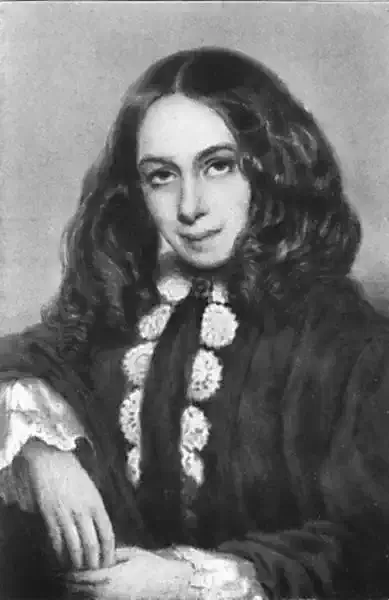
Elizabeth Barrett Browning
Patience Taught By Nature
'O DREARY life,' we cry, ' O dreary life ! '
And still the generations of the birds
Sing through our sighing, and the flocks and herds
Serenely live while we are keeping strife
With Heaven's true purpose in us, as a knife
Against which we may struggle ! Ocean girds
Unslackened the dry land, savannah-swards
Unweary sweep, hills watch unworn, and rife
Meek leaves drop year]y from the forest-trees
To show, above, the unwasted stars that pass
In their old glory: O thou God of old,
Grant me some smaller grace than comes to these !--
But so much patience as a blade of grass
Grows by, contented through the heat and cold.
525

Henry Wadsworth Longfellow
The Leap Of Roushan Beg. (Birds Of Passage. Flight The Fifth)
Mounted on Kyrat strong and fleet,
His chestnut steed with four white feet,
Roushan Beg, called Kurroglou,
Son of the road and bandit chief,
Seeking refuge and relief,
Up the mountain pathway flew.
Such was Kyrat's wondrous speed,
Never yet could any steed
Reach the dust-cloud in his course.
More than maiden, more than wife,
More than gold and next to life
Roushan the Robber loved his horse.
In the land that lies beyond
Erzeroum and Trebizond,
Garden-girt his fortress stood;
Plundered khan, or caravan
Journeying north from Koordistan,
Gave him wealth and wine and food.
Seven hundred and fourscore
Men at arms his livery wore,
Did his bidding night and day;
Now, through regions all unknown,
He was wandering, lost, alone,
Seeking without guide his way.
Suddenly the pathway ends,
Sheer the precipice descends,
Loud the torrent roars unseen;
Thirty feet from side to side
Yawns the chasm; on air must ride
He who crosses this ravine.
Following close in his pursuit,
At the precipice's foot,
Reyhan the Arab of Orfah
Halted with his hundred men,
Shouting upward from the glen,
'La Illáh illa Alláh!'
Gently Roushan Beg caressed
Kyrat's forehead, neck, and breast;
Kissed him upon both his eyes,
Sang to him in his wild way,
As upon the topmost spray
Sings a bird before it flies.
'O my Kyrat, O my steed,
Round and slender as a reed,
Carry me this peril through!
Satin housings shall be thine,
Shoes of gold, O Kyrat mine,
O thou soul of Kurroglou!
'Soft thy skin as silken skein,
Soft as woman's hair thy mane,
Tender are thine eyes and true;
All thy hoofs like ivory shine,
Polished bright; O, life of mine,
Leap, and rescue Kurroglou!'
Kyrat, then, the strong and fleet,
Drew together his four white feet,
Paused a moment on the verge,
Measured with his eye the space,
And into the air's embrace
Leaped as leaps the ocean surge.
As the ocean surge o'er sand
Bears a swimmer safe to land,
Kyrat safe his rider bore;
Rattling down the deep abyss
Fragments of the precipice
Rolled like pebbles on a shore.
Roushan's tasselled cap of red
Trembled not upon his head,
Careless sat he and upright;
Neither hand nor bridle shook,
Nor his head he turned to look,
As he galloped out of sight.
Flash of harness in the air,
Seen a moment like the glare
Of a sword drawn from its sheath;
Thus the phantom horseman passed,
And the shadow that he cast
Leaped the cataract underneath.
Reyhan the Arab held his breath
While this vision of life and death
Passed above him. 'Allahu!'
Cried he. 'In all Koordistan
Lives there not so brave a man
As this Robber Kurroglou!'
525
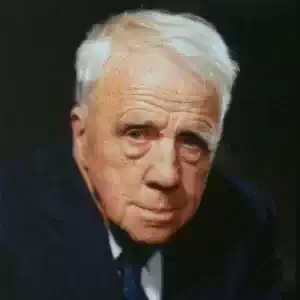
Robert Frost
Never Again Would Bird's Song Be the Same
He would declare and could himself believe
That the birds there in all the garden round
From having heard the daylong voice of Eve
Had added to their own an oversound,
Her tone of meaning but without the words.
Admittedly an eloquence so soft
Could only have had an influence on birds
When call or laughter carried it aloft.
Be that as may be, she was in their song.
Moreover her voice upon their voices crossed
Had now persisted in the woods so long
That probably it never would be lost.
Never again would birds' song be the same.
And to do that to birds was why she came.
524

Walt Whitman
A Paumanok Picture
TWO boats with nets lying off the sea-beach, quite still,
Ten fishermen waiting--they discover a thick school of mossbonkers-they
drop the join'd seine-ends in the water,
The boats separate and row off, each on its rounding course to the
beach, enclosing the mossbonkers,
The net is drawn in by a windlass by those who stop ashore,
Some of the fishermen lounge in their boats, others stand ankle-deep
in the water, pois'd on strong legs,
The boats partly drawn up, the water slapping against them,
Strew'd on the sand in heaps and windrows, well out from the water,
the green-back'd spotted mossbonkers.
520
Henry Wadsworth Longfellow
The Emperor's Bird's-Nest. (Birds Of Passage. Flight The First)
Once the Emperor Charles of Spain,
With his swarthy, grave commanders,
I forget in what campaign,
Long besieged, in mud and rain,
Some old frontier town of Flanders.
Up and down the dreary camp,
In great boots of Spanish leather,
Striding with a measured tramp,
These Hidalgos, dull and damp,
Cursed the Frenchmen, cursed the weather.
Thus as to and fro they went,
Over upland and through hollow,
Giving their impatience vent,
Perched upon the Emperor's tent,
In her nest, they spied a swallow.
Yes, it was a swallow's nest,
Built of clay and hair of horses,
Mane, or tail, or dragoon's crest,
Found on hedge-rows east and west,
After skirmish of the forces.
Then an old Hidalgo said,
As he twirled his gray mustachio,
'Sure this swallow overhead
Thinks the Emperor's tent a shed,
And the Emperor but a Macho!'
Hearing his imperial name
Coupled with those words of malice,
Half in anger, half in shame,
Forth the great campaigner came
Slowly from his canvas palace.
'Let no hand the bird molest,'
Said he solemnly, 'nor hurt her!'
Adding then, by way of jest,
'Golondrina is my guest,
'T is the wife of some deserter!'
Swift as bowstring speeds a shaft,
Through the camp was spread the rumor,
And the soldiers, as they quaffed
Flemish beer at dinner, laughed
At the Emperor's pleasant humor.
So unharmed and unafraid
Sat the swallow still and brooded,
Till the constant cannonade
Through the walls a breach had made,
And the siege was thus concluded.
Then the army, elsewhere bent,
Struck its tents as if disbanding,
Only not the Emperor's tent,
For he ordered, ere he went,
Very curtly, 'Leave it standing!'
So it stood there all alone,
Loosely flapping, torn and tattered,
Till the brood was fledged and flown,
Singing o'er those walls of stone
Which the cannon-shot had shattered.
519

William Wordsworth
Nutting
---------------------It seems a day
(I speak of one from many singled out)
One of those heavenly days that cannot die;
When, in the eagerness of boyish hope,
I left our cottage-threshold, sallying forth
With a huge wallet o'er my shoulders slung,
A nutting-crook in hand; and turned my steps
Tow'rd some far-distant wood, a Figure quaint,
Tricked out in proud disguise of cast-off weeds
Which for that service had been husbanded,
By exhortation of my frugal Dame--
Motley accoutrement, of power to smile
At thorns, and brakes, and brambles,--and, in truth,
More ragged than need was! O'er pathless rocks,
Through beds of matted fern, and tangled thickets,
Forcing my way, I came to one dear nook
Unvisited, where not a broken bough
Drooped with its withered leaves, ungracious sign
Of devastation; but the hazels rose
Tall and erect, with tempting clusters hung,
A virgin scene!--A little while I stood,
Breathing with such suppression of the heart
As joy delights in; and, with wise restraint
Voluptuous, fearless of a rival, eyed
The banquet;--or beneath the trees I sate
Among the flowers, and with the flowers I played;
A temper known to those, who, after long
And weary expectation, have been blest
With sudden happiness beyond all hope.
Perhaps it was a bower beneath whose leaves
The violets of five seasons re-appear
And fade, unseen by any human eye;
Where fairy water-breaks do murmur on
For ever; and I saw the sparkling foam,
And--with my cheek on one of those green stones
That, fleeced with moss, under the shady trees,
Lay round me, scattered like a flock of sheep--
I heard the murmur and the murmuring sound,
In that sweet mood when pleasure loves to pay
Tribute to ease; and, of its joy secure,
The heart luxuriates with indifferent things,
Wasting its kindliness on stocks and stones,
And on the vacant air. Then up I rose,
And dragged to earth both branch and bough, with crash
And merciless ravage: and the shady nook
Of hazels, and the green and mossy bower,
Deformed and sullied, patiently gave up
Their quiet being: and, unless I now
Confound my present feelings with the past;
Ere from the mutilated bower I turned
Exulting, rich beyond the wealth of kings,
I felt a sense of pain when I beheld
The silent trees, and saw the intruding sky--
Then, dearest Maiden, move along these shades
In gentleness of heart; with gentle hand
Touch--for there is a spirit in the woods.
519

Ezra Pound
Meditatio
When I carefully consider the curious habits of dogs
I am compelled to conclude
That man is the superior animal.
When I consider the curious habits of man
I confess, my friend, I am puzzled.
I am compelled to conclude
That man is the superior animal.
When I consider the curious habits of man
I confess, my friend, I am puzzled.
520
Robert Frost
The Vantage Point
If tires of trees I seek again mankind, Well I know where to hie me--in the dawn, To a
slope where the cattle keep the lawn. There amid loggin juniper reclined, Myself
unseen, I see in white defined Far off the homes of men, and farther still, The graves
of men on an opposing hill, Living or dead, whichever are to mind. And if by noon I
have too much of these, I have but to turn on my arm, and lo, The sun-burned hillside
sets my face aglow, My breathing shakes the bluet like a breeze, I smell the earth, I
smell the bruisèd plant, I look into the crater of the ant.
521
Elizabeth Barrett Browning
To Flush, My Dog
Loving friend, the gift of one
Who her own true faith has run
Through thy lower nature,
Be my benediction said
With my hand upon thy head,
Gentle fellow-creature!
Like a lady's ringlets brown,
Flow thy silken ears adown
Either side demurely
Of thy silver-suited breast
Shining out from all the rest
Of thy body purely.
Darkly brown thy body is,
Till the sunshine striking this
Alchemise its dullness,
When the sleek curls manifold
Flash all over into gold
With a burnished fulness.
Underneath my stroking hand,
Startled eyes of hazel bland
Kindling, growing larger,
Up thou leapest with a spring,
Full of prank and curveting,
Leaping like a charger.
Leap! thy broad tail waves a light,
Leap! thy slender feet are bright,
Canopied in fringes;
Leap! those tasselled ears of thine
Flicker strangely, fair and fine
Down their golden inches
Yet, my pretty, sportive friend,
Little is't to such an end
That I praise thy rareness;
Other dogs may be thy peers
Haply in these drooping ears
And this glossy fairness.
But of thee it shall be said,
This dog watched beside a bed
Day and night unweary,
Watched within a curtained room
Where no sunbeam brake the gloom
Round the sick and dreary.
Roses, gathered for a vase,
In that chamber died apace,
Beam and breeze resigning;
This dog only, waited on,
Knowing that when light is gone
Love remains for shining.
Other dogs in thymy dew
Tracked the hares and followed through
Sunny moor or meadow;
This dog only, crept and crept
Next a languid cheek that slept,
Sharing in the shadow.
Other dogs of loyal cheer
Bounded at the whistle clear,
Up the woodside hieing;
This dog only, watched in reach
Of a faintly uttered speech
Or a louder sighing.
And if one or two quick tears
Dropped upon his glossy ears
Or a sigh came double,
Up he sprang in eager haste,
Fawning, fondling, breathing fast,
In a tender trouble.
And this dog was satisfied
If a pale thin hand would glide
Down his dewlaps sloping, --
Which he pushed his nose within,
After, -- platforming his chin
On the palm left open.
This dog, if a friendly voice
Call him now to blither choice
Than such chamber-keeping,
'Come out!' praying from the door, --
Presseth backward as before,
Up against me leaping.
Therefore to this dog will I,
Tenderly not scornfully,
Render praise and favor:
With my hand upon his head,
Is my benediction said
Therefore and for ever.
And because he loves me so,
Better than his kind will do
Often man or woman,
Give I back more love again
Than dogs often take of men,
Leaning from my Human.
Blessings on thee, dog of mine,
Pretty collars make thee fine,
Sugared milk make fat thee!
Pleasures wag on in thy tail,
Hands of gentle motion fail
Nevermore, to pat thee
Downy pillow take thy head,
Silken coverlid bestead,
Sunshine help thy sleeping!
No fly's buzzing wake thee up,
No man break thy purple cup
Set for drinking deep in.
Whiskered cats arointed flee,
Sturdy stoppers keep from thee
Cologne distillations;
Nuts lie in thy path for stones,
And thy feast-day macaroons
Turn to daily rations!
Mock I thee, in wishing weal? --
Tears are in my eyes to feel
Thou art made so straitly,
Blessing needs must straiten too, --
Little canst thou joy or do,
Thou who lovest greatly.
Yet be blessed to the height
Of all good and all delight
Pervious to thy nature;
Only loved beyond that line,
With a love that answers thine,
Loving fellow-creature!
520

Rudyard Kipling
The Land
When Julius Fabricius, Sub-Prefect of the Weald,
In the days of Diocletian owned our Lower River-field,
He called to him Hobdenius-a Briton of the Clay,
Saying: "What about that River-piece for layin' in to hay?"
And the aged Hobden answered: "I remember as a lad
My father told your father that she wanted dreenin' bad.
An' the more that you neeglect her the less you'll get her clean.
Have it jest as you've a mind to, but, if I was you, I'd dreen."
So they drained it long and crossways in the lavish Roman style--
Still we find among the river-drift their flakes of ancient tile,
And in drouthy middle August, when the bones of meadows show,
We can trace the lines they followed sixteen hundred years ago.
Then Julius Fabricius died as even Prefects do,
And after certain centuries, Imperial Rome died too.
Then did robbers enter Britain from across the Northern main
And our Lower River-field was won by Ogier the Dane.
Well could Ogier work his war-boat --well could Ogier wield his brand--
Much he knew of foaming waters--not so much of farming land.
So he called to him a Hobden of the old unaltered blood,
Saying: "What about that River-piece; she doesn't look no good?"
And that aged Hobden answered "'Tain't for me not interfere.
But I've known that bit o' meadow now for five and fifty year.
Have it jest as you've a mind to, but I've proved it time on ' time,
If you want to change her nature you have got to give her lime!"
Ogier sent his wains to Lewes, twenty hours' solemn walk,
And drew back great abundance of the cool, grey, healing chalk.
And old Hobden spread it broadcast, never heeding what was in't.--
Which is why in cleaning ditches, now and then we find a flint.
Ogier died. His sons grew English -- Anglo-Saxon was their name--
Till out of blossomed Normandy another pirate came;
For Duke William conquered England and divided with his men,
And our Lower River-field he gave to William of Warenne.
But the Brook (you know her habit) rose one rainy autumn night
And tore down sodden flitches of the bank to left and right.
So, said William to his Bailiff as they rode their dripping rounds:
"Hob, what about that River-bit--the Brook's got up no bounds? "
And that aged Hobden answered: "'Tain't my business to advise,
But ye might ha' known 'twould happen from the way the valley lies.
Where ye can't hold back the water you must try and save the sile.
Hev it jest as you've a mind to, but, if I was you, I'd spile!"
They spiled along the water-course with trunks of willow-trees,
And planks of elms behind 'em and immortal oaken knees.
And when the spates of Autumn whirl the gravel-beds away
You can see their faithful fragments, iron-hard in iron clay.
. . . . . . . . . .
Georgii Quinti Anno Sexto, I, who own the River-field,
Am fortified with title-deeds, attested, signed and sealed,
Guaranteeing me, my assigns, my executors and heirs
All sorts of powers and profits which-are neither mine nor theirs,
I have rights of chase and warren, as my dignity requires.
I can fish-but Hobden tickles--I can shoot--but Hobden wires.
I repair, but he reopens, certain gaps which, men allege,
Have been used by every Hobden since a Hobden swapped a hedge.
Shall I dog his morning progress o'er the track-betraying dew?
Demand his dinner-basket into which my pheasant flew?
Confiscate his evening faggot under which my conies ran,
And summons him to judgment? I would sooner summons Pan.
His dead are in the churchyard--thirty generations laid.
Their names were old in history when Domesday Book was made;
And the passion and the piety and prowess of his line
Have seeded, rooted, fruited in some land the Law calls mine.
Not for any beast that burrows, not for any bird that flies,
Would I lose his large sound council, miss his keen amending eyes.
He is bailiff, woodman, wheelwright, field-surveyor, engineer,
And if flagrantly a poacher--'tain't for me to interfere.
"Hob, what about that River-bit?" I turn to him again,
With Fabricius and Ogier and William of Warenne.
"Hev it jest as you've a mind to, but"-and here he takes command.
For whoever pays the taxes old Mus' Hobden owns the land.
517
Henry Wadsworth Longfellow
An April Day
When the warm sun, that brings
Seed-time and harvest, has returned again,
'T is sweet to visit the still wood, where springs
The first flower of the plain.
I love the season well,
When forest glades are teeming with bright forms,
Nor dark and many-folded clouds foretell
The coming-on of storms.
From the earth's loosened mould
The sapling draws its sustenance, and thrives;
Though stricken to the heart with winter's cold,
The drooping tree revives.
The softly-warbled song
Comes from the pleasant woods, and colored wings
Glance quick in the bright sun, that moves along
The forest openings.
When the bright sunset fills
The silver woods with light, the green slope throws
Its shadows in the hollows of the hills,
And wide the upland glows.
And when the eve is born,
In the blue lake the sky, o'er-reaching far,
Is hollowed out and the moon dips her horn,
And twinkles many a star.
Inverted in the tide
Stand the gray rocks, and trembling shadows throw,
And the fair trees look over, side by side,
And see themselves below.
Sweet April! many a thought
Is wedded unto thee, as hearts are wed;
Nor shall they fail, till, to its autumn brought,
Life's golden fruit is shed.
513

Matsuo Bashō
The dragonfly
The dragonfly
can't quite land
on that blade of grass.
Translated by Robert Hass
can't quite land
on that blade of grass.
Translated by Robert Hass
514

Paul Laurence Dunbar
Signs of the Times
Air a-gittin' cool an' coolah,
Frost a-comin' in de night,
Hicka' nuts an' wa'nuts fallin',
Possum keepin' out o' sight.
Tu'key struttin' in de ba'nya'd,
Nary a step so proud ez his;
Keep on struttin', Mistah Tu'key,
Yo' do' know whut time it is.
Cidah press commence a-squeakin'
Eatin' apples sto'ed away,
Chillun swa'min' 'roun' lak ho'nets,
Huntin' aigs ermung de hay.
Mistah Tu'key keep on gobblin'
At de geese a-flyin' souf,
Oomph! dat bird do' know whut's comin';
Ef he did he'd shet his mouf.
Pumpkin gittin' good an' yallah
Mek me open up my eyes;
Seems lak it's a-lookin' at me
Jes' a-la'in' dah sayin' "Pies."
Tu'key gobbler gwine 'roun' blowin',
Gwine 'roun' gibbin' sass an' slack;
Keep on talkin', Mistah Tu'key,
You ain't seed no almanac.
Fa'mer walkin' th'oo de ba'nya'd
Seein' how things is comin' on,
Sees ef all de fowls is fatt'nin' --
Good times comin' sho's you bo'n.
Hyeahs dat tu'key gobbler braggin',
Den his face break in a smile --
Nebbah min', you sassy rascal,
He's gwine nab you atter while.
Choppin' suet in de kitchen,
Stonin' raisins in de hall,
Beef a-cookin' fu' de mince meat,
Spices groun' -- I smell 'em all.
Look hyeah, Tu'key, stop dat gobblin',
You ain' luned de sense ob feah,
You ol' fool, yo' naik's in dangah,
Do' you know Thanksgibbin's hyeah?
514
Rudyard Kipling
The Morning Song of the Jungle
One moment past our bodies cast
No shadow on the plain;
Now clear and black they stride our track,
And we run home again.
In morning-hush, each rock and bush
Stands hard, and high, and raw:
Then give the Call: "Good rest to all
That keep the Jungle Law!"
Now horn and pelt our peoples melt
In covert to abide;
Now, crouched and still, to cave and hill
Our Jungle Barons glide.
Now, stark and plain, Man's oxen strain,
That draw the new-yoked plough;
Now, stripped and dread, the dawn is red
Above the lit talao.
Ho! Get to lair! The sun's aflare
Behind the breathing grass:
And creaking through the young bamboo
The warning whispers pass.
By day made strange, the woods we range
With blinking eyes we scan;
While down the skies the wild duck cries:
"The Day--the Day to Man!"
The dew is dried that drenched our hide,
Or washed about our way;
And where we drank, the puddled bank
Is crisping into clay.
The traitor Dark gives up each mark
Of stretched or hooded claw:
Then hear the Call: "Good rest to all
That keep the Jungle Law!"
511
Rudyard Kipling
Hunting Song of the Seeonee Pack
As the dawn was breaking the Sambhur belled
Once, twice, and again!
And a doe leaped up -- and a doe leaped up
From the pond in the wood where the wild deer sup.
This I, scouting alone, beheld,
Once, twice, and again!
As the dawn was breaking the Sambhur belled
Once, twice, and again!
And a wolf stole back -- and a wolf stole back
To carry the word to the waiting Pack;
And we sought and we found and we bayed on his track
Once, twice, and again!
As the dawn was breaking the Wolf-pack yelled
Once, twice, and again!
Feet in the jungle that leave no mark!
Eyes that can see in the dark -- the dark!
Tongue -- give tongue to it! Hark! O Hark!
Once, twice, and again!
His spots are the joy of the Leopard: his horns are the Buffalo's pride --
Be clean, for the strength of the hunter is known by the gloss of his hide.
If ye find that the Bullock can toss you, or the heavy-browed Sambhur can gore;
Ye need not stop work to inform us; we knew it ten seasons before.
Oppress not the cubs of the stranger, but hail them as Sister and Brother,
For though they are little and fubsy, it may be the Bear is their mother.
"There is none like to me!" says the Cub in the pride of his earliest kill;
But the Jungle is large and the Cub he is small. Let him think and be still.
Once, twice, and again!
And a doe leaped up -- and a doe leaped up
From the pond in the wood where the wild deer sup.
This I, scouting alone, beheld,
Once, twice, and again!
As the dawn was breaking the Sambhur belled
Once, twice, and again!
And a wolf stole back -- and a wolf stole back
To carry the word to the waiting Pack;
And we sought and we found and we bayed on his track
Once, twice, and again!
As the dawn was breaking the Wolf-pack yelled
Once, twice, and again!
Feet in the jungle that leave no mark!
Eyes that can see in the dark -- the dark!
Tongue -- give tongue to it! Hark! O Hark!
Once, twice, and again!
His spots are the joy of the Leopard: his horns are the Buffalo's pride --
Be clean, for the strength of the hunter is known by the gloss of his hide.
If ye find that the Bullock can toss you, or the heavy-browed Sambhur can gore;
Ye need not stop work to inform us; we knew it ten seasons before.
Oppress not the cubs of the stranger, but hail them as Sister and Brother,
For though they are little and fubsy, it may be the Bear is their mother.
"There is none like to me!" says the Cub in the pride of his earliest kill;
But the Jungle is large and the Cub he is small. Let him think and be still.
513
Alfred Lord Tennyson
OEnone
. There lies a vale in Ida, lovelier
Than all the valleys of Ionian hills.
The swimming vapour slopes athwart the glen,
Puts forth an arm, and creeps from pine to pine,
And loiters, slowly drawn. On either hand
The lawns and meadow-ledges midway down
Hang rich in flowers, and far below them roars
The long brook falling thro' the clov'n ravine
In cataract after cataract to the sea.
Behind the valley topmost Gargarus
Stands up and takes the morning: but in front
The gorges, opening wide apart, reveal
Troas and Ilion's column'd citadel,
The crown of Troas. Hither came at noon
Mournful OEnone, wandering forlorn
Of Paris, once her playmate on the hills.
Her cheek had lost the rose, and round her neck
Floated her hair or seem'd to float in rest.
She, leaning on a fragment twined with vine,
Sang to the stillness, till the mountain-shade
Sloped downward to her seat from the upper cliff.
'O mother Ida, many-fountain'd Ida,
Dear mother Ida, harken ere I die.
For now the noonday quiet holds the hill:
The grasshopper is silent in the grass:
The lizard, with his shadow on the stone,
Rests like a shadow, and the winds are dead.
The purple flower droops: the golden bee
Is lily-cradled: I alone awake.
My eyes are full of tears, my heart of love,
My heart is breaking, and my eyes are dim,
And I am all aweary of my life.
'O mother Ida, many-fountain'd Ida,
Dear mother Ida, harken ere I die.
Hear me, O Earth, hear me, O Hills, O Caves
That house the cold crown'd snake! O mountain brooks,
I am the daughter of a River-God,
Hear me, for I will speak, and build up all
My sorrow with my song, as yonder walls
Rose slowly to a music slowly breathed,
A cloud that gather'd shape: for it may be
That, while I speak of it, a little while
My heart may wander from its deeper woe.
'O mother Ida, many-fountain'd Ida,
Dear mother Ida, harken ere I die.
I waited underneath the dawning hills,
Aloft the mountain lawn was dewy-dark,
And dewy-dark aloft the mountain pine:
Beautiful Paris, evil-hearted Paris,
Leading a jet-black goat white-horn'd, white-hooved,
Came up from reedy Simois all alone.
'O mother Ida, harken ere I die.
Far-off the torrent call'd me from the cleft:
Far up the solitary morning smote
The streaks of virgin snow. With down-dropt eyes
I sat alone: white-breasted like a star
Fronting the dawn he moved; a leopard skin
Droop'd from his shoulder, but his sunny hair
Cluster'd about his temples like a God's:
And his cheek brighten'd as the foam-bow brightens
When the wind blows the foam, and all my heart
Went forth to embrace him coming ere he came.
'Dear mother Ida, harken ere I die.
He smiled, and opening out his milk-white palm
Disclosed a fruit of pure Hesperian gold,
That smelt ambrosially, and while I look'd
And listen'd, the full-flowing river of speech
Came down upon my heart. `My own OEnone,
Beautiful-brow'd OEnone, my own soul,
Behold this fruit, whose gleaming rind ingrav'n
'For the most fair,' would seem to award it thine,
As lovelier than whatever Oread haunt
The knolls of Ida, loveliest in all grace
Of movement, and the charm of married brows.'
'Dear mother Ida, harken ere I die.
He prest the blossom of his lips to mine,
And added 'This was cast upon the board,
When all the full-faced presence of the Gods
Ranged in the halls of Peleus; whereupon
Rose feud, with question unto whom 'twere due:
But light-foot Iris brought it yester-eve,
Delivering that to me, by common voice
Elected umpire, Herè comes to-day,
Pallas and Aphroditè, claiming each
This meed of fairest. Thou, within the cave
Behind yon whispering tuft of oldest pine,
Mayst well behold them unbeheld, unheard
Hear all, and see thy Paris judge of Gods.'
'Dear mother Ida, harken ere I die.
It was the deep midnoon: one silvery cloud
Had lost his way between the piney sides
Of this long glen. Then to the bower they came,
Naked they came to that smooth-swarded bower,
And at their feet the crocus brake like fire,
Violet, amaracus, and asphodel,
Lotos and lilies: and a wind arose,
And overhead the wandering ivy and vine,
This way and that, in many a wild festoon
Ran riot, garlanding the gnarled boughs
With bunch and berry and flower thro' and thro'.
'O mother Ida, harken ere I die.
On the tree-tops a crested peacock lit,
And o'er him flow'd a golden cloud, and lean'd
Upon him, slowly dropping fragrant dew.
Then first I heard the voice of her, to whom
Coming thro' Heaven, like a light that grows
Larger and clearer, with one mind the Gods
Rise up for reverence. She to Paris made
Proffer of royal power, ample rule
Unquestion'd, overflowing revenue
Wherewith to embellish state, 'from many a vale
And river-sunder'd champaign clothed with corn,
Or labour'd mine undrainable of ore.
Honour,' she said, 'and homage, tax and toll,
From many an inland town and haven large,
Mast-throng'd beneath her shadowing citadel
In glassy bays among her tallest towers.'
'O mother Ida, harken ere I die.
Still she spake on and still she spake of power,
'Which in all action is the end of all;
Power fitted to the season; wisdom-bred
And throned of wisdom-from all neighbour crowns
Alliance and allegiance, till thy hand
Fail from the sceptre-staff. Such boon from me,
From me, Heaven's Queen, Paris, to thee king-born,
A shepherd all thy life but yet king-born,
Should come most welcome, seeing men, in power
Only, are likest Gods, who have attain'd
Rest in a happy place and quiet seats
Above the thunder, with undying bliss
In knowledge of their own supremacy.'
'Dear mother Ida, harken ere I die.
She ceased, and Paris held the costly fruit
Out at arm's-length, so much the thought of power
Flatter'd his spirit; but Pallas where she stood
Somewhat apart, her clear and bared limbs
O'erthwarted with the brazen-headed spear
Upon her pearly shoulder leaning cold,
The while, above, her full and earnest eye
Over her snow-cold breast and angry cheek
Kept watch, waiting decision, made reply.
'`Self-reverence, self-knowledge, self-control,
These three alone lead life to sovereign power.
Yet not for power (power of herself
Would come uncall'd for) but to live by law,
Acting the law we live by without fear;
And, because right is right, to follow right
Were wisdom in the scorn of consequence.'
'Dear mother Ida, harken ere I die.
Again she said: 'I woo thee not with gifts.
Sequel of guerdon could not alter me
To fairer. Judge thou me by what I am,
So shalt thou find me fairest. Yet, indeed,
If gazing on divinity disrobed
Thy mortal eyes are frail to judge of fair,
Unbias'd by self-profit, oh! rest thee sure
That I shall love thee well and cleave to thee,
So that my vigour, wedded to thy blood,
Shall strike within thy pulses, like a God's,
To push thee forward thro' a life of shocks,
Dangers, and deeds, until endurance grow
Sinew'd with action, and the full-grown will,
Circled thro' all experiences, pure law,
Commeasure perfect freedom.' Here she ceas'd
And Paris ponder'd, and I cried, 'O Paris,
Give it to Pallas!' but he heard me not,
Or hearing would not hear me, woe is me!
'O mother Ida, many-fountain'd Ida,
Dear mother Ida, harken ere I die.
Italian Aphroditè beautiful,
Fresh as the foam, new-bathed in Paphian wells,
With rosy slender fingers backward drew
From her warm brows and bosom her deep hair
Ambrosial, golden round her lucid throat
And shoulder: from the violets her light foot
Shone rosy-white, and o'er her rounded form
Between the shadows of the vine-bunches
Floated the glowing sunlights, as she moved.
'Dear mother Ida, harken ere I die.
She with a subtle smile in her mild eyes,
The herald of her triumph, drawing nigh
Half-whisper'd in his ear, 'I promise thee
The fairest and most loving wife in Greece.'
She spoke and laugh'd: I shut my sight for fear:
But when I look'd, Paris had raised his arm,
And I beheld great Herè's angry eyes,
As she withdrew into the golden cloud,
And I was left alone within the bower;
And from that time to this I am alone,
And I shall be alone until I die.
'Yet, mother Ida, harken ere I die.
Fairest-why fairest wife? am I not fair?
My love hath told me so a thousand times.
Methinks I must be fair, for yesterday,
When I past by, a wild and wanton pard,
Eyed like the evening star, with playful tail
Crouch'd fawning in the weed. Most loving is she?
Ah me, my mountain shepherd, that my arms
Were wound about thee, and my hot lips prest
Close, close to thine in that quick-falling dew
Of fruitful kisses, thick as Autumn rains
Flash in the pools of whirling Simois!
'O mother, hear me yet before I die.
They came, they cut away my tallest pines,
My tall dark pines, that plumed the craggy ledge
High over the blue gorge, and all between
The snowy peak and snow-white cataract
Foster'd the callow eaglet-from beneath
Whose thick mysterious boughs in the dark morn
The panther's roar came muffled, while I sat
Low in the valley. Never, never more
Shall lone OEnone see the morning mist
Sweep thro' them; never see them overlaid
With narrow moon-lit slips of silver cloud,
Between the loud stream and the trembling stars.
'O mother, hear me yet before I die.
I wish that somewhere in the ruin'd folds,
Among the fragments tumbled from the glens,
Or the dry thickets, I could meet with her
The Abominable, that uninvited came
Into the fair Pele{:i}an banquet-hall,
And cast the golden fruit upon the board,
And bred this change; that I might speak my mind,
And tell her to her face how much I hate
Her presence, hated both of Gods and men.
'O mother, hear me yet before I die.
Hath he not sworn his love a thousand times,
In this green valley, under this green hill,
Ev'n on this hand, and sitting on this stone?
Seal'd it with kisses? water'd it with tears?
O happy tears, and how unlike to these!
O happy Heaven, how canst thou see my face?
O happy earth, how canst thou bear my weight?
O death, death, death, thou ever-floating cloud,
There are enough unhappy on this earth,
Pass by the happy souls, that love to live:
I pray thee, pass before my light of life,
And shadow all my soul, that I may die.
Thou weighest heavy on the heart within,
Weigh heavy on my eyelids: let me die.
'O mother, hear me yet before I die.
I will not die alone, for fiery thoughts
Do shape themselves within me, more and more,
Whereof I catch the issue, as I hear
Dead sounds at night come from the inmost hills,
Like footsteps upon wool. I dimly see
My far-off doubtful purpose, as a mother
Conjectures of the features of her child
Ere it is born: her child!-a shudder comes
Across me: never child be born of me,
Unblest, to vex me with his father's eyes!
'O mother, hear me yet before I die.
Hear me, O earth. I will not die alone,
Lest their shrill happy laughter come to me
Walking the cold and starless road of death
Uncomforted, leaving my ancient love
With the Greek woman. I will rise and go
Down into Troy, and ere the stars come forth
Talk with the wild Cassandra, for she says
A fire dances before her, and a sound
Rings ever in her ears of armed men.
What this may be I know not, but I know
That, wheresoe'er I am by night and day,
All earth and air seem only burning fire.'
513
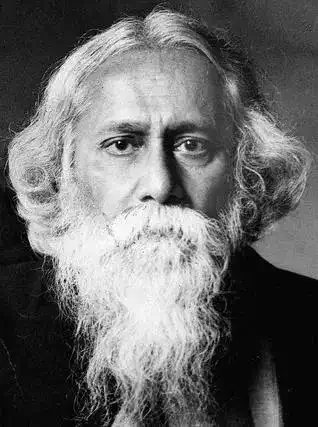
Rabindranath Tagore
The Gardener LXXIX: I Often Wonder
I often wonder where lie hidden
the boundaries of recognition between
man and the beast whose heart knows
no spoken language.
Through what primal paradise in a
remote morning of creation ran the
simple path by which their hearts
visited each other.
Those marks of their constant tread
have not been effaced though their
kinship has been long forgotten.
Yet suddenly in some wordless
music the dim memory wakes up
and the beast gazes into the man's
face with a tender trust, and the
man looks down into its eyes with
amused affection.
It seems that the two friends meet
masked, and vaguely know each other
through the disguise.
515

Christina Rossetti
Paradise: In A Symbol
Golden-winged, silver-winged,
Winged with flashing flame,
Such a flight of birds I saw,
Birds without a name:
Singing songs in their own tongue
(Song of songs) they came.
One to another calling,
Each answering each,
One to another calling
In their proper speech:
High above my head they wheeled,
Far out of reach.
On wings of flame they went and came
With a cadenced clang,
Their silver wings tinkled,
Their golden wings rang,
The wind it whistled through their wings
Where in Heaven they sang.
They flashed and they darted
Awhile before mine eyes,
Mounting, mounting, mounting still
In haste to scale the skies—
Birds without a nest on earth,
Birds of Paradise.
Where the moon riseth not,
Nor sun seeks the west,
There to sing their glory
Which they sing at rest,
There to sing their love-song
When they sing their best:
Not in any garden
That mortal foot hath trod,
Not in any flowering tree
That springs from earthly sod,
But in the garden where they dwell,
The Paradise of God.
508
Ezra Pound
Sennin Poem By Kakuhaku
The red and green kingfishers
flash between the orchids and clover,
One bird casts its gleam on another.
Green vines hang through the high forest,
They weave a whole roof to the mountain,
The lone man sits with shut speech,
He purrs and pats the clear strings.
He throws his heart up through the sky,
He bites through the flower pistil
and brings up a fine fountain.
The red-pine-tree god looks at him and wonders.
He rides through the purple smoke to visit the sennin,
He takes 'Floating Hill' by the sleeve,
He claps his hand on the back of the great water sennin.
But you, you dam'd crowd of gnats,
Can you even tell the age of a turtle?
507

Spike Milligan
Jumbo Jet
I saw a little elephant standing in my garden,
I said 'You don't belong in here', he said 'I beg you pardon?',
I said 'This place is England, what are you doing here?',
He said 'Ah, then I must be lost' and then 'Oh dear, oh dear'.
'I should be back in Africa, on Saranghetti's Plain',
'Pray, where is the nearest station where I can catch a train?'.
He caught the bus to Finchley and then to Mincing lane,
And over the Embankment, where he got lost, again.
The police they put him in a cell, but it was far too small,
So they tied him to a lampost and he slept against the wall.
But as the policemen lay sleeping by the twinkling light of dawn,
The lampost and the wall were there, but the elephant was gone!
So if you see an elephant, in a Jumbo Jet,
You can be sure that Africa's the place he's trying to get!
505

John Keats
Character Of Charles Brown
I.
He is to weet a melancholy carle:
Thin in the waist, with bushy head of hair
As hath the seeded thistle when in parle
It holds the Zephyr, ere it sendeth fair
Its light balloons into the summer air;
Therto his beard had not begun to bloom,
No brush had touch'd his chin or razor sheer;
No care had touch'd his cheek with mortal doom,
But new he was and bright as scarf from Persian loom.
II.
Ne cared he for wine, or half-and-half;
Ne cared he for fish or flesh or fowl,
And sauces held he worthless as the chaff,
He 'sdeigned the swine-head at the wassail-bowl;
Ne with lewd ribbalds sat he cheek by jowl,
Ne with sly Lemans in the scorner's chair;
But after water-brooks this Pilgrim's soul
Panted, and all his food was woodland air
Though he would oft-times feast on gilliflowers rare.
III.
The slang of cities in no wise he knew,
Tipping the wink to him was heathen Greek;
He sipp'd no olden Tom or ruin blue,
Or nantz or cherry-brandy drank full meek
By many a damsel hoarse and rouge of cheek;
Nor did he know each aged watchman's beat,
Nor in obscured purlieus would he seek
For curled Jewesses with ankles neat,
Who as they walk abroad make tinkling with their feet.
507
Robert Frost
Stars
How countlessly they congregate
O'er our tumultuous snow,
Which flows in shapes as tall as trees
When wintry winds do blow!--
As if with keenness for our fate,
Our faltering few steps on
To white rest, and a place of rest
Invisible at dawn,--
And yet with neither love nor hate,
Those stars like some snow-white
Minerva's snow-white marble eyes
Without the gift of sight.
510